

The DOI matches its Crossref record; 20 of the 21 references it cites were found in a registry or an index.
Differential privacy EV charging data release based on variable window
Open accessAbstract
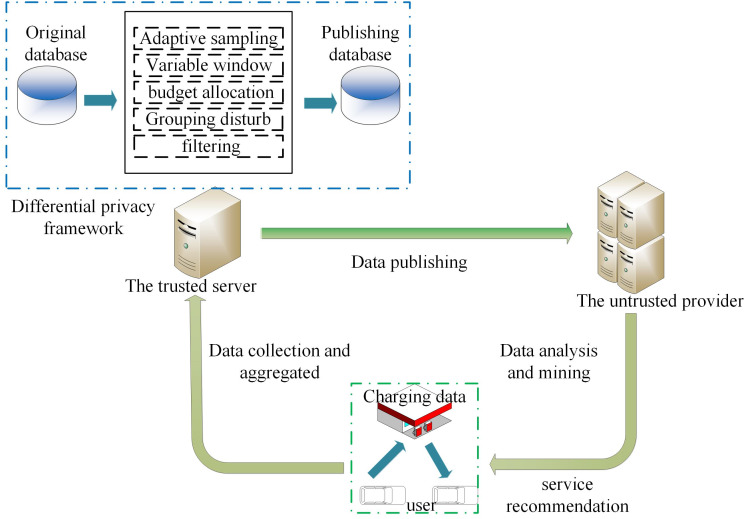
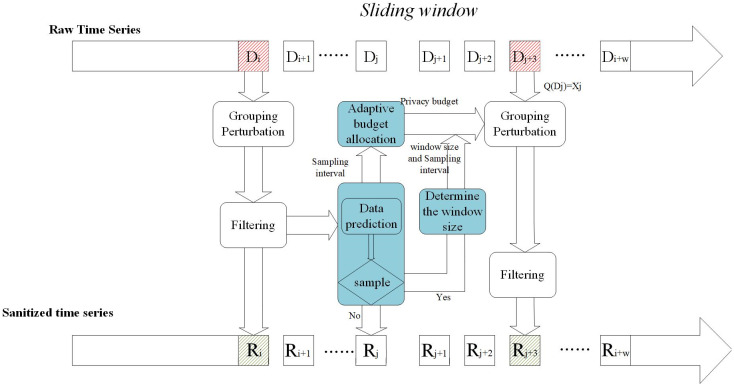
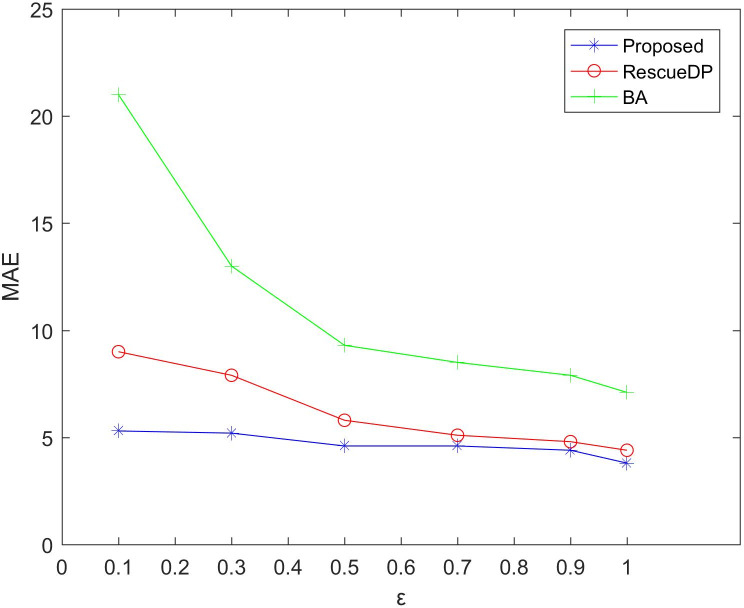
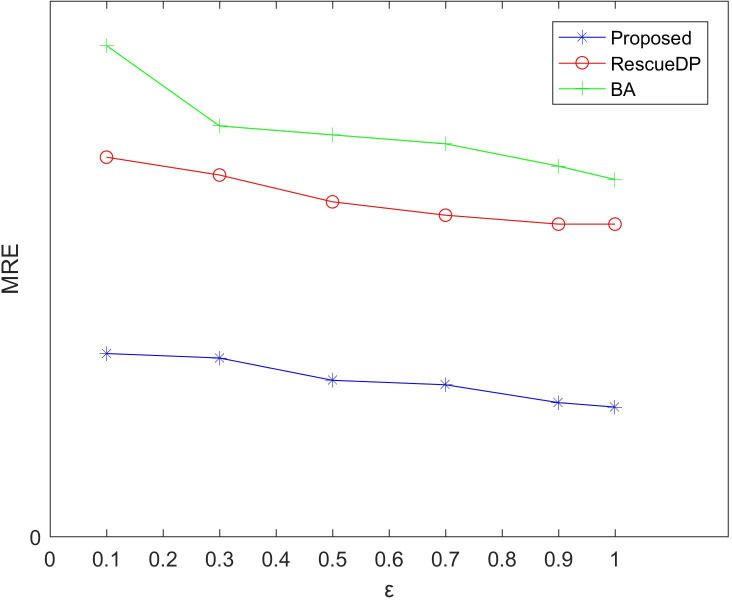
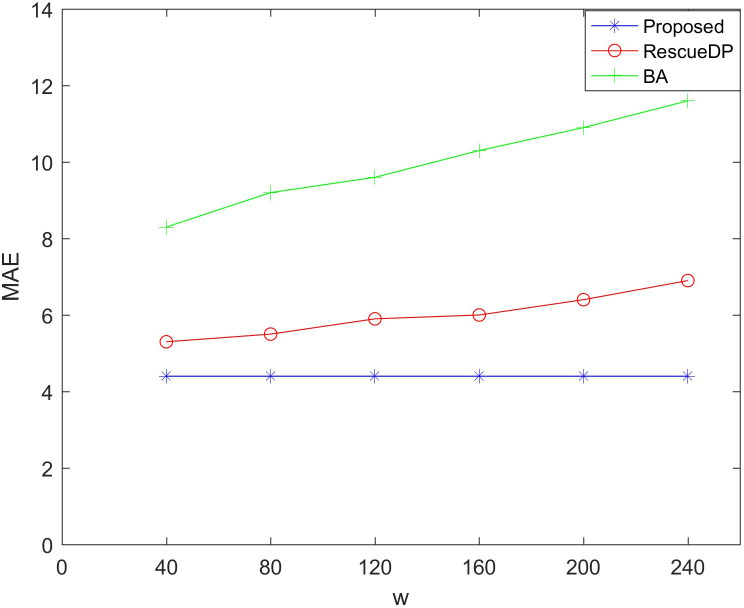
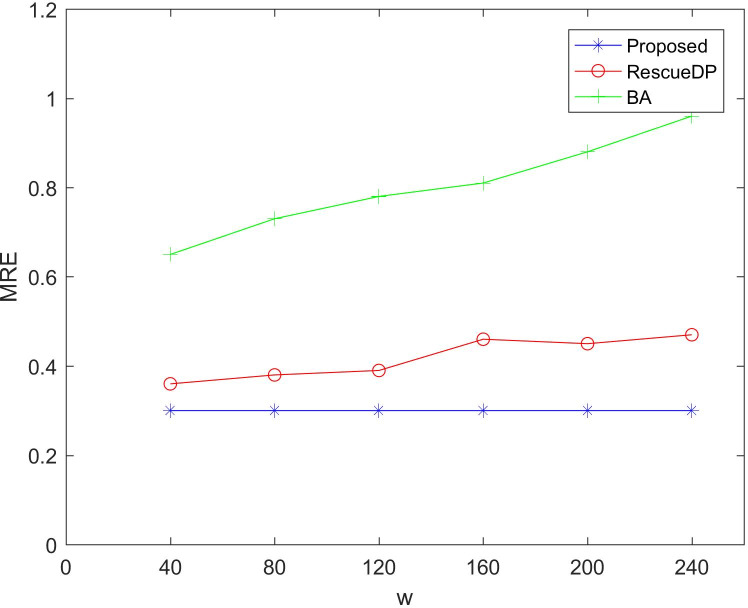
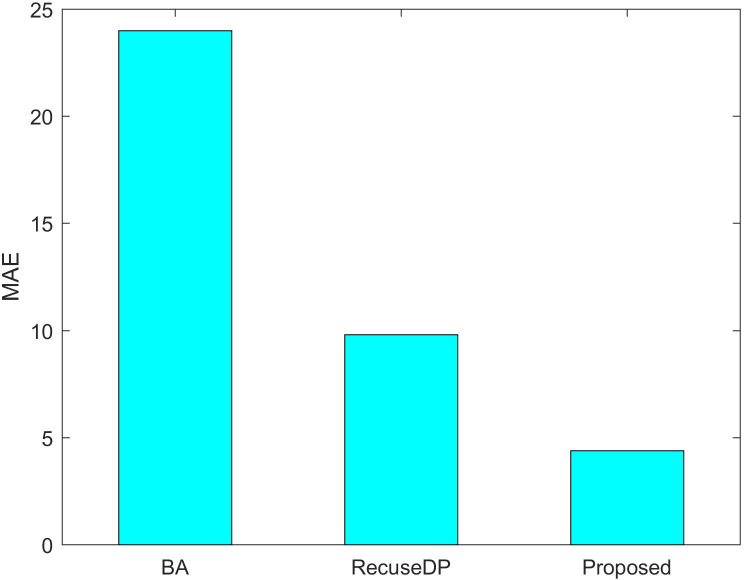
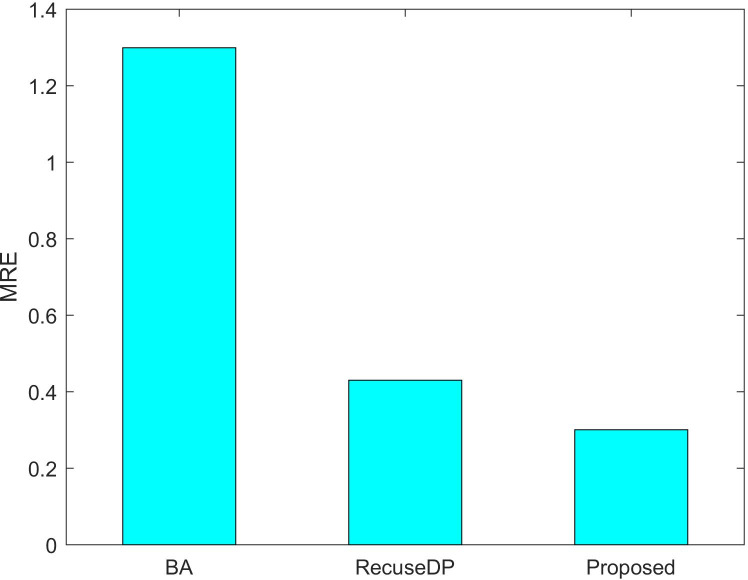
In the V2G network, the release and sharing of real-time data are of great value for data mining. However, publishing these data directly to service providers may reveal the privacy of users. Therefore, it is necessary that the data release model with a privacy protection mechanism protects user privacy in the case of data utility. In this paper, we propose a privacy protection mechanism based on differential privacy to protect the release of data in V2G networks. To improve the utility of the data, we define a variable sliding window, which can dynamically and adaptively adjust the size according to the data. Besides, to allocate the privacy budget reasonably in the variable window, we consider the sampling interval and the proportion of the window. Through experimental analysis on real data sets, and comparison with two representative w event privacy protection methods, we prove that the method in this paper is superior to the existing schemes and improves the utility of the data.
Overview
The claims and statistics of this paper haven’t been checked yet.
Run the check — free, no account needed. It reads the open-access text and checks the sources it cites.
Integrity signals
Registry
Cites
Statistics
Figures
Verification
Claims the paper makes
The claims and statistics of this paper haven’t been checked yet.
Run the check — free, no account needed. It reads the open-access text and checks the sources it cites.
Claims other papers make about this one
Each is checked against this paper’s own text: does it say what the citing paper says it does?
The cited source says what the claim attributes to it.
In the citing paper
“Authors in [111] proposed differential privacy mechanism for protecting sensitive EV charging data in V2G networks, using sampling intervals and sliding windows.”
From Privacy-preserving Machine Learning in Internet of Vehicle Applications: Fundamentals, Recent Advances, and Future Direction (2025) · cites this paper as [111]
Self-check
Percentages, sums and reported differences re-computed from the paper’s own numbers.
The self-check needs the paper’s full text.
Citations
Cites
Calibrating Noise to Sensitivity in Private Data Analysis
Dwork, C., McSherry, F., Nissim, K., & Smith, A. (2006) · Lecture Notes in Computer Science · doi:10.1007/11681878_14 · Cited by 7,272
Differentially Private Data Publishing and Analysis: A Survey
Zhu, T., Li, G., Zhou, W., & Yu, P. S. (2017) · IEEE Transactions on Knowledge and Data Engineering · doi:10.1109/tkde.2017.2697856 · Cited by 334
Differentially private event sequences over infinite streams
Kellaris, G., Papadopoulos, S., Xiao, X., & Dimitris Papadias, C. (2014) · Proceedings of the VLDB Endowment · doi:10.14778/2732977.2732989 · Cited by 254
Real-time and Spatio-temporal Crowd-sourced Social Network Data Publishing with Differential Privacy
Wang, Q., Yan, Z., Lu, X. L., Wang, Z., Qin, Z., & Ren, K. (2016) · IEEE Transactions on Dependable and Secure Computing · doi:10.1109/tdsc.2016.2599873 · Cited by 198
Privacy preservation for V2G networks in smart grid: A survey
Han, W., & Xiao, Y. (2016) · Computer Communications · doi:10.1016/j.comcom.2016.06.006 · Cited by 152
Quantifying Differential Privacy in Continuous Data Release Under Temporal Correlations
Cao, Y., Yoshikawa, M., Xiao, Y., & Xiong, L. (2018) · IEEE Transactions on Knowledge and Data Engineering · doi:10.1109/tkde.2018.2824328 · Cited by 118
An introductory survey of probability density function control
Ren, M., Zhang, Q., & Zhang, J. (2019) · Systems Science & Control Engineering · doi:10.1080/21642583.2019.1588804 · Cited by 118
Towards an axiomatization of statistical privacy and utility
Kifer, D., & Lin, B.-R. (2010) · ACM SIGACT-SIGMOD-SIGART Symposium on Principles of Database Systems (PODS) · doi:10.1145/1807085.1807106 · Cited by 114
Ács, G., & Castelluccia, C. (2014) · ACM SIGKDD Conference on Knowledge Discovery and Data Mining (KDD) · doi:10.1145/2623330.2623361 · Cited by 110
Real-Time Privacy-Preserving Data Release Over Vehicle Trajectory
Ma, Z., Zhang, T., Liu, X., Li, X., & Ren, K. (2019) · IEEE Transactions on Vehicular Technology · doi:10.1109/tvt.2019.2924679 · Cited by 65
Self-citationPrivacy-preserving data publishing for multiple numerical sensitive attributes
Liu, Q., Shen, H., & Sang, Y. (2015) · Tsinghua Science & Technology · doi:10.1109/tst.2015.7128936 · Cited by 37
Tang, X., Zhang, Q., & Hu, L. (2020) · IEEE Access · doi:10.1109/access.2020.2984744 · Cited by 31
Improved Kalman filter based differentially private streaming data release in cognitive computing
Wang, J., Luo, J., Liu, X., Li, Y., Liu, S., Zhu, R., & Anjum, A. (2019) · Future Generation Computer Systems · doi:10.1016/j.future.2019.03.050 · Cited by 28
Self-citationAnonymizing Healthcare Records: A Study of Privacy Preserving Data Publishing Techniques
Jayabalan, M., & Rana, M. E. (2018) · Advanced Science Letters · doi:10.1166/asl.2018.11139 · Cited by 28
Editorial [State of the Transactions]
Pei, J. (2013) · IEEE Transactions on Knowledge and Data Engineering · doi:10.1109/tkde.2014.3 · Cited by 28
Privacy-protected statistics publication over social media user trajectory streams
Wang, S., Sinnott, R., & Nepal, . (2017) · Future Generation Computer Systems · doi:10.1016/j.future.2017.08.002 · Cited by 27
Privacy issues of smart e-mobility
Langer, L., Skopik, F., Kienesberger, G., & Li, Q. (2013) · Annual Conference of the IEEE Industrial Electronics Society (IECON) · doi:10.1109/iecon.2013.6700238 · Cited by 24
Jo, G., Jung, K., & Park, S. (2018) · Journal of Advanced Transportation · doi:10.1155/2018/8297678 · Cited by 6
SRS-LM: differentially private publication for infinite streaming data
Wang, H., & Li, K. (2018) · Journal of Ambient Intelligence and Humanized Computing · doi:10.1007/s12652-018-0922-0 · Cited by 5
A real-time aggregate data publishing scheme with adaptive ω-event differential privacy
Yong, C., Huo, Y., Hu, C., Lu, Y., & Jing, G. (2018) · Mathematical Foundations of Computing · doi:10.3934/mfc.2018014 · Cited by 3
Research works printed but not linked: 4
- Kang, 2016, Algorithm for differential privacy histogram publication with non-uniform private budget, Journal of Frontiers of Computer Science and Technology, 10, 0786-13
- Lu, 2016, Research on privacy preserving data publishing for multi-sensitive attribute based on clustering, 21
- Wu, 2019, ARIMA combination forecasting model based on BP neural network error correction, Statistics and Decision, 35, 67
- Zheng, 2020, Research on the recognition of abnormal electricity consumption behavior based on fuzzy clustering, Electrical Measurement and Instrumentation, 57, 40
Cited by
Sorted by citations
Differential Privacy for IoT-Enabled Critical Infrastructure: A Comprehensive Survey
Husnoo, M. A., Anwar, A., Chakrabortty, R. K., Doss, R., & Ryan, M. J. (2021) · IEEE Access · doi:10.1109/access.2021.3124309 · Cited by 74
Yao, A., Li, G., Li, X., Jiang, F., Jia, X., & Liu, X. (2023) · Array · doi:10.1016/j.array.2023.100293 · Cited by 58
Self-citationSung, G., & Park, E. (2024) · Biomedical Signal Processing and Control · doi:10.1016/j.bspc.2024.106068 · Cited by 12
Private Metering in EV Charging Infrastructure: An OCPP Extension
Kamal, N. F., Sharida, A., Bayhan, S., Alnuweiri, H., & Abu‐Rub, H. (2024) · IEEE Transactions on Vehicular Technology · doi:10.1109/tvt.2024.3403455 · Cited by 7
Islam, N., & Zulkernine, M. (2025) · arXiv · doi:10.48550/arxiv.2503.01089 · Cited by 9
“The literature is categorized into the three key IoV domains: (1) intelligent transportation and traffic management, (2) autonomous driving and safety-critical applications, and (3) communication infrastructure and smart services.”
Metadata
- Authors
- Qiu, R., Liu, X., Huang, R., Zheng, F., Liang, L., & Li, Y.
- Affiliations
- State Grid Corporation of China (China) (CN)
- North China Electric Power University (CN)
- Corresponding author
- Li, Yuancheng
- Venue
- PeerJ Computer Science
- Publisher
- PeerJ
- Published
- 2021-04-22
- Volume
- 7
- Pages
- e481
- ISSN
- 2376-5992 (ISSN-L)
- PMC
- PMC8080421
- OpenAlex
- W3162032561
- Cited by
- 7
- References
- 21
- Citations by year
- 2026: 3 · 2024: 2 · 2023: 1 · 2021: 1
- FWCI
- 0.35
- Type
- journal article
- Language
- en
- Open access
- gold
- doi.org
- Locations
- PeerJ Computer Science (publishedVersion, cc-by)
- PubMed Central (publishedVersion, cc-by)
- PubMed (publishedVersion)
- DOAJ (DOAJ: Directory of Open Access Journals) (submittedVersion, cc-by-sa)
- Funders
- State Grid Jiangxi Information & Telecommunication Company Project “Research on Key Technology of Privacy-preserving for the Edge of Ubiqui-tous Electric Internet of Things” (521835200034)
- Topics
- Physical Sciences › Computer Science › Artificial Intelligence › Privacy-Preserving Technologies in Data
- Physical Sciences › Engineering › Electrical and Electronic Engineering › Electric Vehicles and Infrastructure
- Physical Sciences › Computer Science › Artificial Intelligence › Internet Traffic Analysis and Secure E-voting
- Keywords
- differential privacy, privacy preservation, privacy budget allocation, data utility, data release, privacy-preserving data sharing
About these checks
Registry, retraction, Cites and statistics results are computed, not judged, with one exception: a printed reference that no index lists is read once by a model before it counts as a citation error. Claims are extracted by a model and kept only when their quote appears verbatim in the text; each cited source is then checked, with a model’s help, for whether it says what the claim relies on. Those verdicts can be wrong — read the claim’s quote and the cited source before relying on one.
Statistics and arithmetic are recomputed, not judged.
Confidence bands are shown only for fields calibrated on our annotated test set. None is calibrated yet, so no band is shown.
What counts as a claim ›How we measure confidence ›How we check this ›
Are you an author, or do you see a problem with this page? Request a review
