

Pre- and postmortem tyrannosaurid bite marks on the remains of Daspletosaurus (Tyrannosaurinae: Theropoda) from Dinosaur Provincial Park, Alberta, Canada
Open accessThe DOI matches its Crossref record; 47 of the 47 references it cites were found in a registry or an index; none of the 27 sources its claims cite is checked for support yet.
Abstract
Trace marks on the bones of non-avian dinosaurs may relate to feeding by large carnivores or as a result of combat. Here the cranium and mandible of a specimen of Daspletosaurus are described that show numerous premortem injuries with evidence of healing and these are inferred to relate primarily to intraspecific combat. In addition, postmortem damage to the mandible is indicative of late stage carcass consumption and the taphonomic context suggests that this was scavenging. These postmortem bites were delivered by a large bodied tyrannosaurid theropod and may have been a second Daspletosaurus, and thus this would be an additional record of tyrannosaurid cannibalism.
Overview
CoChat Summary
TL;DR
The cranium and mandible of an immature *Daspletosaurus* (TMP 1994.143.0001) preserve numerous healed premortem injuries inferred to reflect intraspecific cranio-facial combat, plus postmortem bite marks on the mandible inferred as scavenging by a large tyrannosaurid, possibly a second *Daspletosaurus*. The specimen therefore provides evidence for one large tyrannosaur consuming another and possible cannibalistic scavenging.
Key findings
- The specimen is an osteologically immature *Daspletosaurus* sp.; Currie (2003) estimated total length at 5.8 m, and Erickson et al. (2004) estimated 496 kg and ten years of age. Its frontals are 99 mm versus about 145 mm in adults, and its dentary tooth row is 290 mm versus 430–455 mm in adults; it has 18 dentary alveoli.
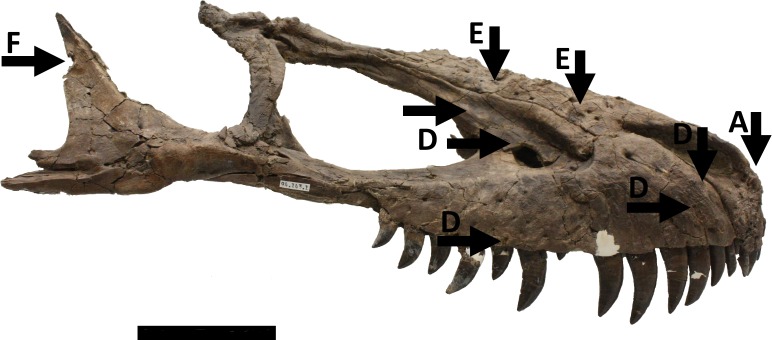
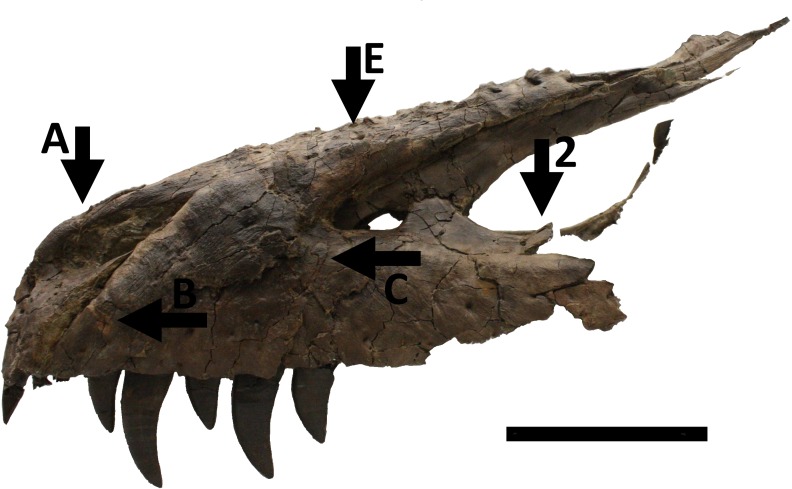
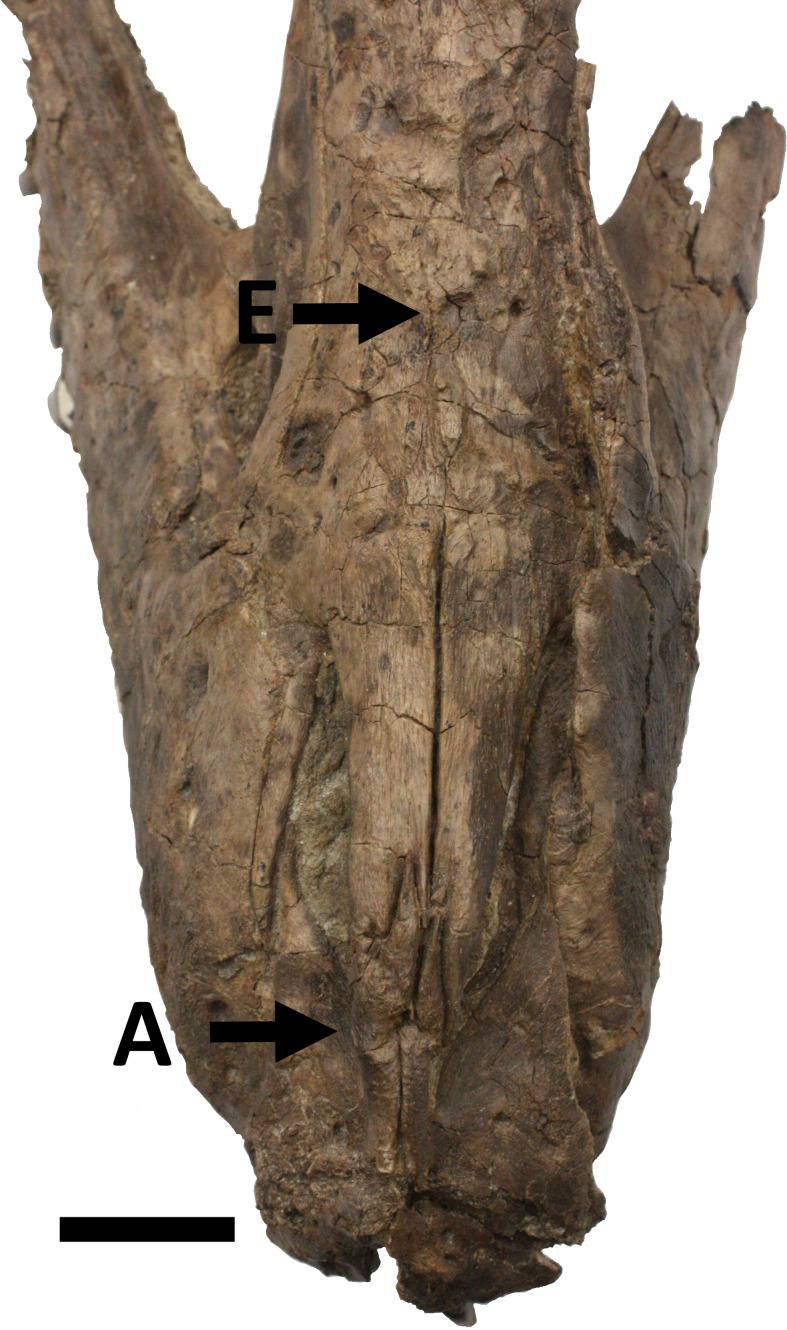
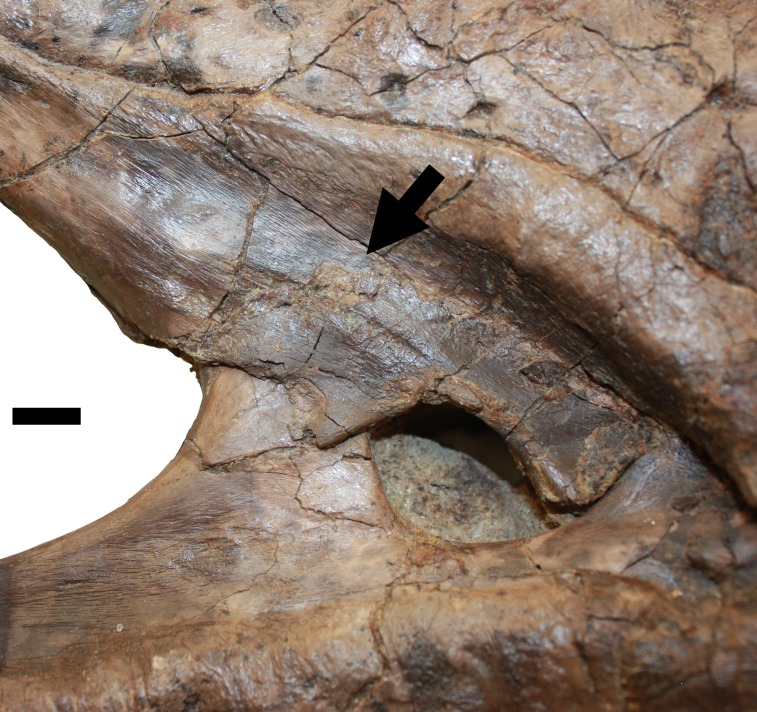
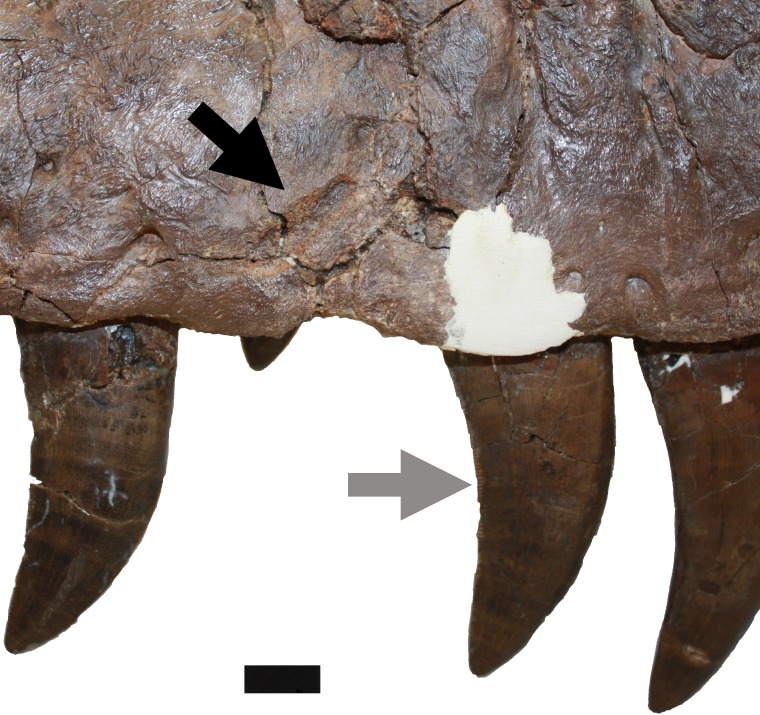
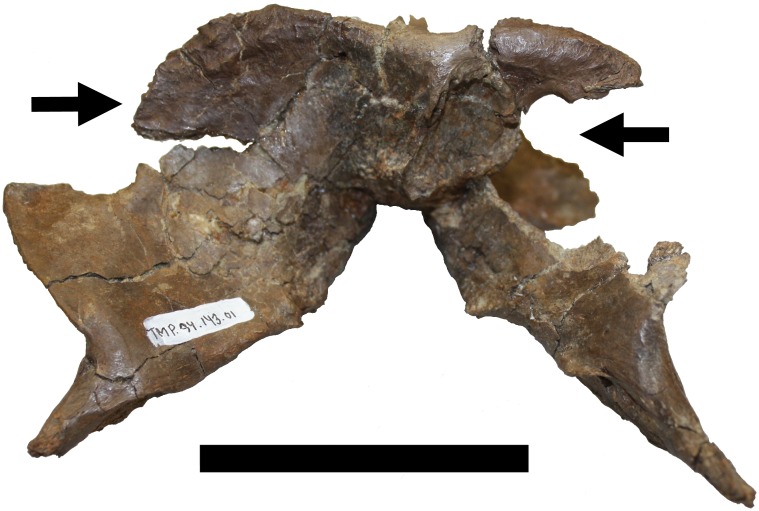
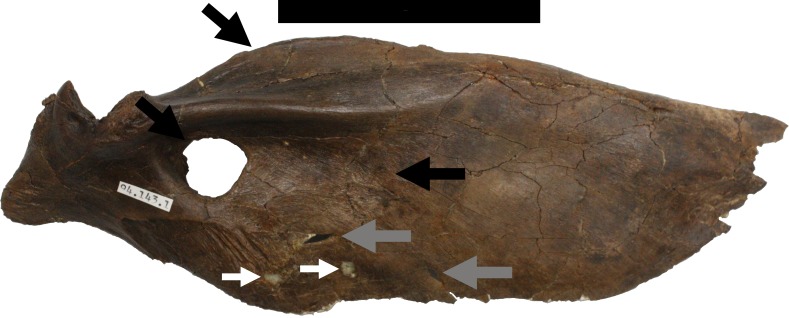
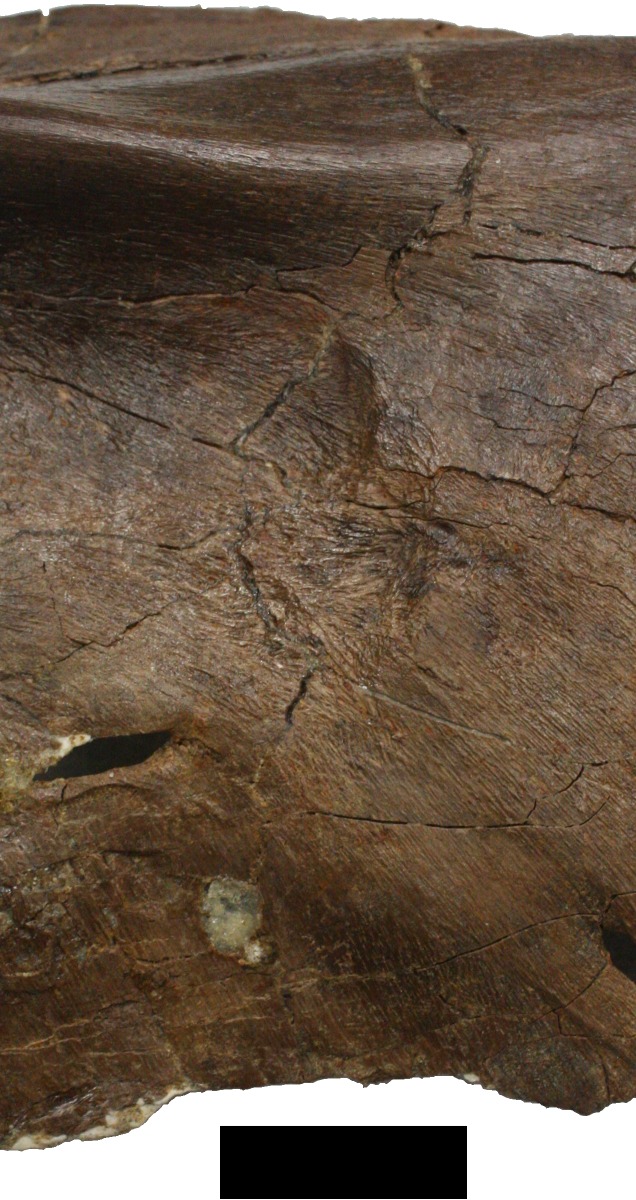
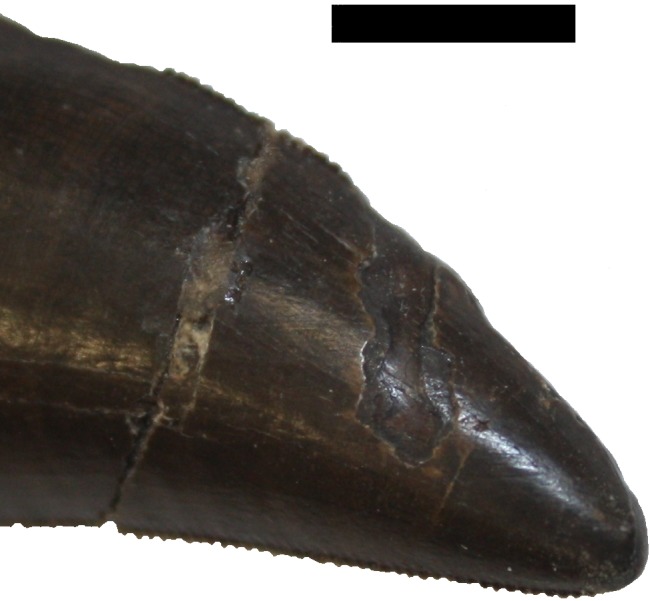
- Premortem damage is widespread on the skull and mandible, including punctures, lesions, scores, and osteomyelitis, with evidence of healing; the authors infer these relate primarily to intraspecific combat with another large tyrannosaurid, likely another *Daspletosaurus*. Examples include a snout bite associated with a subcircular mark approximately 13 mm in diameter and 6 mm deep, and an occipital puncture attributable to a large, subcircular tyrannosaurid tooth.
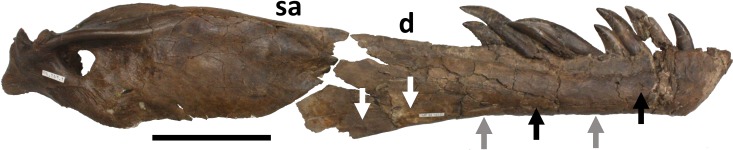
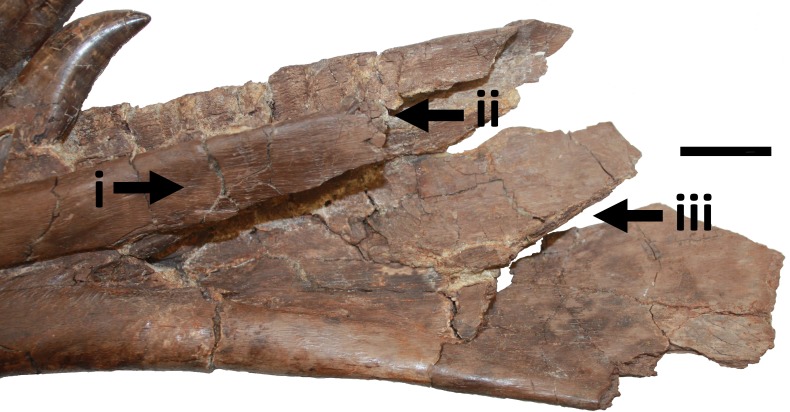
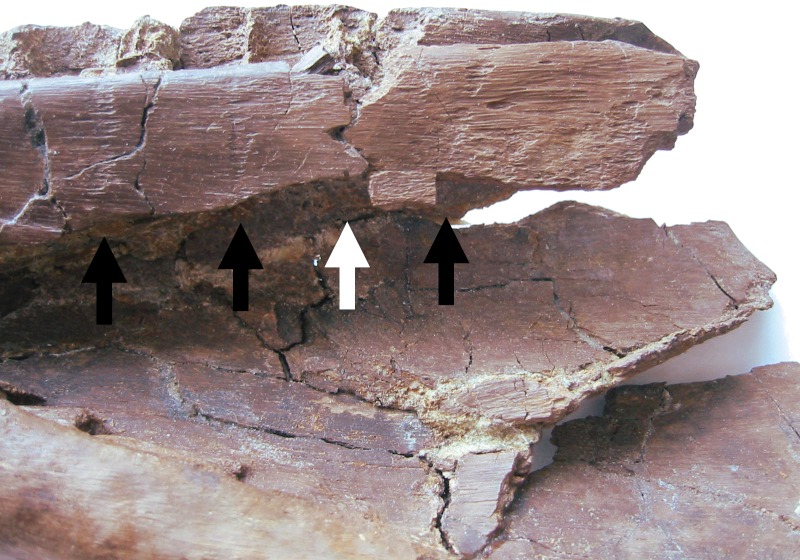
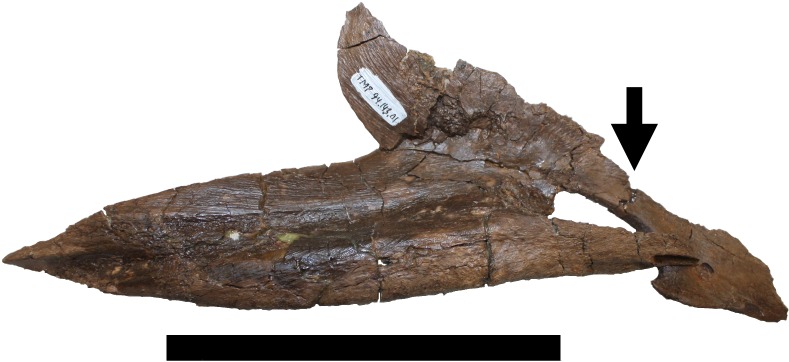
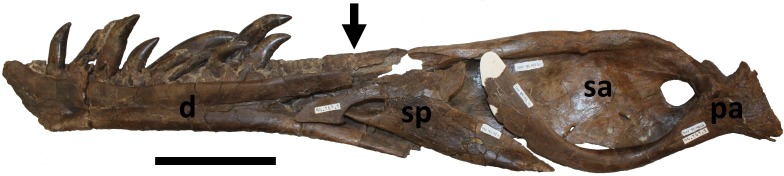
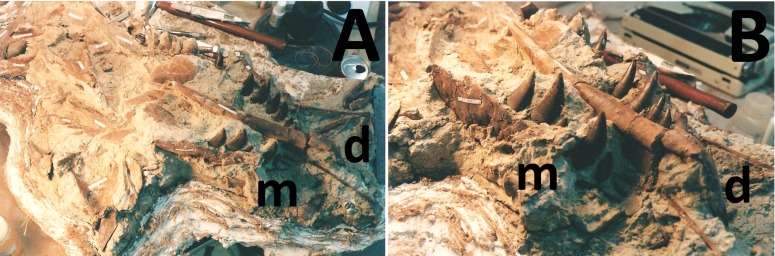
- Postmortem damage includes four tooth marks on the posteromedial part of the right dentary, spaced around 15–20 mm apart and barely grazing the bone, with no healing; a dislodged bone fragment and breaks across the posterior dentary and right splenial align with these marks, suggesting at least one major bite. The authors infer scavenging by a large tyrannosaurid, possibly a second *Daspletosaurus*, and thus a possible record of cannibalism.
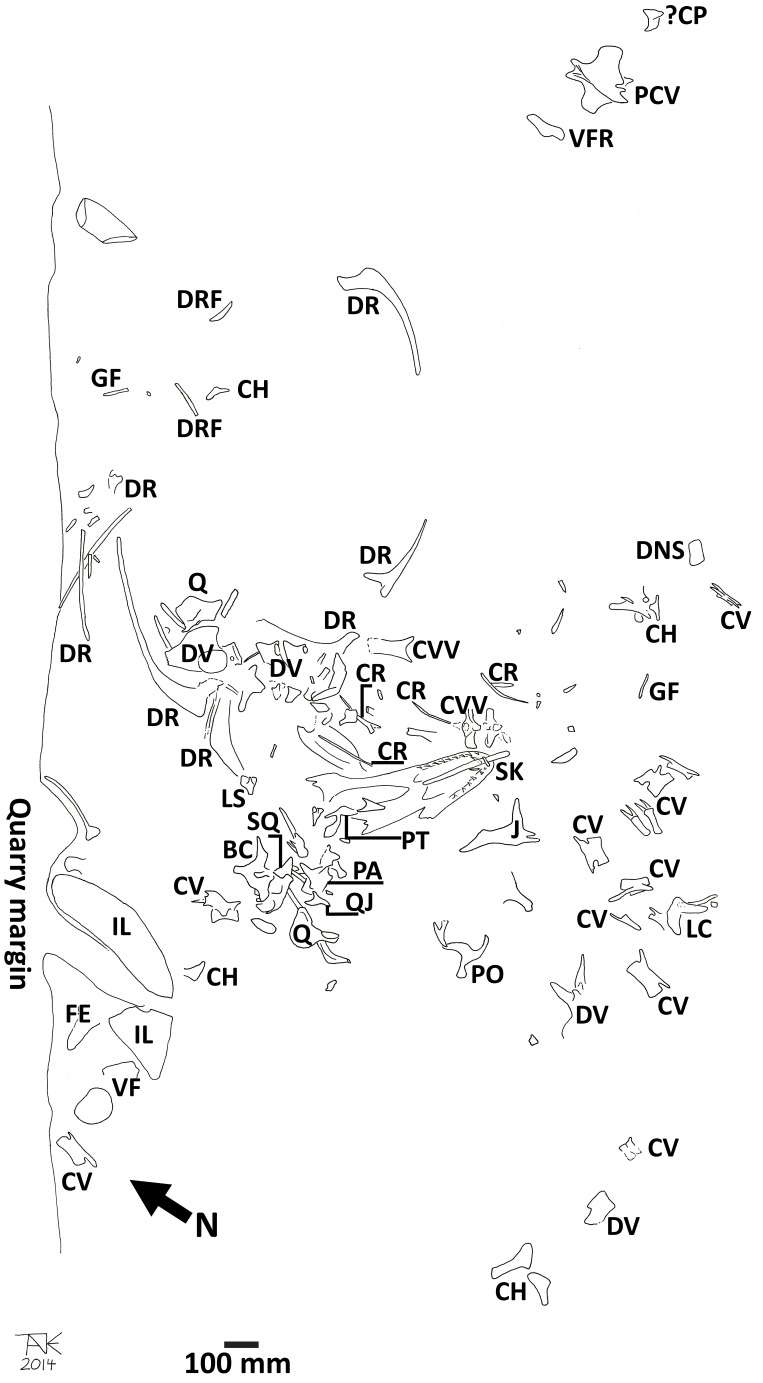
- Taphonomy suggests the carcass arrived mostly intact and disarticulated in a low-energy setting; the skull may have been the most exposed element when scavenged. No bite marks were found on most postcranial material, and no shed teeth were recovered, suggesting the carcass was not fed upon extensively.
Methods
- Every available element and fragment of TMP 1994.143.0001—over a hundred pieces—was examined for bite marks or damage; premortem damage was identified by healing, reactive bone, and anomalous pit directions, while postmortem damage was identified by lack of healing and sub-parallel tooth traces.
- The specimen was excavated from Quarry 215 (locality L0315), lower Dinosaur Park Formation, Dinosaur Provincial Park, Alberta, Canada; quarry maps and element positions were used to reconstruct taphonomy and burial history.
- Tooth spacing was compared using 50 mm thick conservation-grade Ethafoam pressed lightly onto casts of tooth rows from Dinosaur Park Formation theropod skulls; the study is otherwise a qualitative morphological and pathological description, with no quantitative statistical analysis reported.
Limitations
- The paper states that its interpretations must remain tentative and that it is not possible to distinguish easily between cannibalism and feeding by another tyrannosaurid; tooth spacing is described as inexact, and variation within and between taxa makes firm species attribution from bite marks difficult.
- The paper notes that missing material makes it difficult to separate disarticulation and damage caused by feeding from collapse of a decomposing carcass or transport; some damage is treated as indeterminate, and the lack of postcranial bite marks may reflect loss of material that could have borne them.
- Evident from the text: the conclusions rest on a single specimen, the bite-maker’s identity is not directly known, and the missing left dentary limits reconstruction of the full damage pattern.
Model-written summary. Check it against the paper before relying on it.
Integrity signals
Registry
Cites
Statistics
Figures
Verification
Claims the paper makes
0 Valid · 0 Not valid · 20 Not checked · 76 Own results and interpretations
A result the paper reports from its own data — it cites no other source for it, so there is none to check. The quote shows it is in the paper.
In the paper
“Some pieces of the carcass were still articulated when discovered (e.g., two cervicals, several dorsals and some dorsal ribs) indicating limited transport”
§ Pre- and postmortem tyrannosaurid bite marks on the remains of Daspletosaurus (Tyrannosaurinae: Theropoda) from Dinosaur Provincial Park, Alberta, Canada > Introduction > Preservation of material
hedgedstates a causeSingle case- Asserted: passes — The authors put it forward as true.
- Checkable: passes — It can be checked against evidence.
- Load-bearing: unclear — It is unclear whether the paper’s conclusions depend on it.
- Based: passes — The paper gives a reason why it holds.
A result the paper reports from its own data — it cites no other source for it, so there is none to check. The quote shows it is in the paper.
In the paper
“Here the cranium and mandible of a specimen of Daspletosaurus are described that show numerous premortem injuries with evidence of healing”
- Also stated in: § Bite marks and breaks · hedged
“The vast majority of the identified marks on the skull are premortem, indicating that numerous injuries or infections occurred at various times in the life of the individual.”
§ Pre- and postmortem tyrannosaurid bite marks on the remains of Daspletosaurus (Tyrannosaurinae: Theropoda) from Dinosaur Provincial Park, Alberta, Canada > Abstract
plainSingle case- Asserted: passes — The authors put it forward as true.
- Checkable: passes — It can be checked against evidence.
- Load-bearing: passes — The paper’s conclusions depend on it.
- Based: passes — The paper gives a reason why it holds.
- Also stated in: § Bite marks and breaks · hedged
A result the paper states — it cites no source for it, so there is none to check. The quote shows it is in the paper.
In the paper
“there is no evidence of fluvial abrasion to bone surfaces across the specimen as a whole.”
§ Pre- and postmortem tyrannosaurid bite marks on the remains of Daspletosaurus (Tyrannosaurinae: Theropoda) from Dinosaur Provincial Park, Alberta, Canada > Introduction > Preservation of material
plainSingle case- Asserted: passes — The authors put it forward as true.
- Checkable: passes — It can be checked against evidence.
- Load-bearing: passes — The paper’s conclusions depend on it.
- Based: passes — The paper gives a reason why it holds.
A result the paper reports from its own data — it cites no other source for it, so there is none to check. The quote shows it is in the paper.
In the paper
“One clear set of bite-marks appears on the medial face of the posterior part of the right dentary.”
§ Pre- and postmortem tyrannosaurid bite marks on the remains of Daspletosaurus (Tyrannosaurinae: Theropoda) from Dinosaur Provincial Park, Alberta, Canada > Introduction > Bite marks and breaks
hedgedSingle case- Asserted: passes — The authors put it forward as true.
- Checkable: passes — It can be checked against evidence.
- Load-bearing: passes — The paper’s conclusions depend on it.
- Based: passes — The paper gives a reason why it holds.
A result the paper reports from its own data — it cites no other source for it, so there is none to check. The quote shows it is in the paper.
In the paper
“However, the presence and preservation of the small bone fragments that could be identified and restored to various parts of the main skull and dentary especially show that the water movement was slow.”
§ Pre- and postmortem tyrannosaurid bite marks on the remains of Daspletosaurus (Tyrannosaurinae: Theropoda) from Dinosaur Provincial Park, Alberta, Canada > Discussion > Postmortem bites
boostedstates a causeSingle case- Asserted: passes — The authors put it forward as true.
- Checkable: passes — It can be checked against evidence.
- Load-bearing: unclear — It is unclear whether the paper’s conclusions depend on it.
- Based: passes — The paper gives a reason why it holds.
45 more claims
Create a free account to see all 96 claims and to verify the 18 references still open.
- It may state two separate claims as one. 37
- Probably not a substantial claim. 17
Self-check
Percentages, sums and reported differences re-computed from the paper’s own numbers.
Each contradiction between two passages listed here was confirmed by an independent check.
Rated minor: it would not touch a result — a value no result rests on, a p-value that stays on the same side of the significance level, or a conflict that is clerical, resolved elsewhere in the paper, or outside its own findings.
In the paper
“Based on Daspletosaurus having four teeth in each premaxilla, 17 for each maxilla (Currie, 2003, though he notes this specimen has an unusually low maxillary count and it may be as little as 13) and 18 for each dentary, the total number of teeth in the skull would have been up to 74.”
§ Pre- and postmortem tyrannosaurid bite marks on the remains of Daspletosaurus (Tyrannosaurinae: Theropoda) from Dinosaur Provincial Park, Alberta, Canada > Discussion > Postmortem bites
Reported 74 · recomputed 78
Rated minor: it would not touch a result — a value no result rests on, a p-value that stays on the same side of the significance level, or a conflict that is clerical, resolved elsewhere in the paper, or outside its own findings.
In the paper
§ Pre- and postmortem tyrannosaurid bite marks on the remains of Daspletosaurus (Tyrannosaurinae: Theropoda) from Dinosaur Provincial Park, Alberta, Canada > Introduction > Bite marks and breaks
“may be linked to the above described missing portion of the right maxilla and palate (point 2).”
§ Pre- and postmortem tyrannosaurid bite marks on the remains of Daspletosaurus (Tyrannosaurinae: Theropoda) from Dinosaur Provincial Park, Alberta, Canada > Introduction > Bite marks and breaks
“2. The left maxilla shows numerous breaks and damage.”
Rated minor: it would not touch a result — a value no result rests on, a p-value that stays on the same side of the significance level, or a conflict that is clerical, resolved elsewhere in the paper, or outside its own findings.
In the paper
§ Pre- and postmortem tyrannosaurid bite marks on the remains of Daspletosaurus (Tyrannosaurinae: Theropoda) from Dinosaur Provincial Park, Alberta, Canada > Introduction > Bite marks and breaks
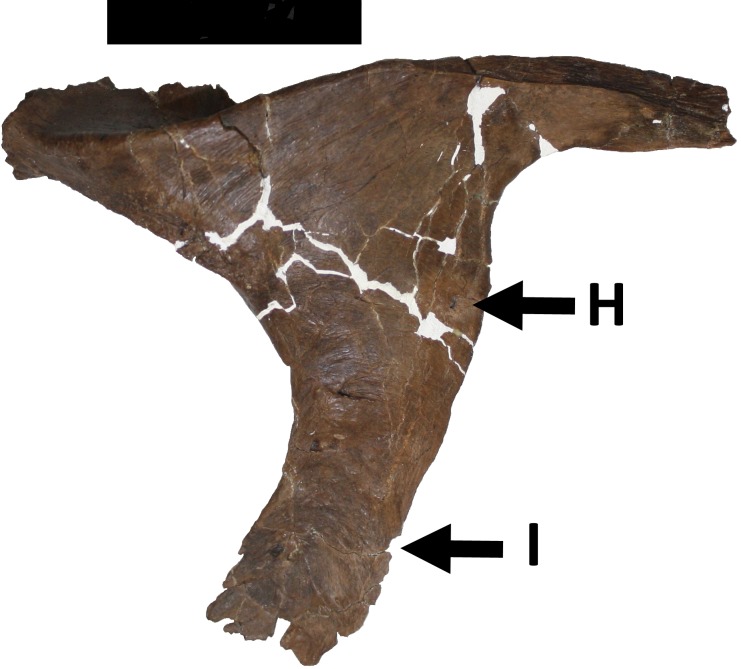
“Figure: Figure 6 Damage to the postorbital. Damage H and I to the left postorbital.”
§ Pre- and postmortem tyrannosaurid bite marks on the remains of Daspletosaurus (Tyrannosaurinae: Theropoda) from Dinosaur Provincial Park, Alberta, Canada > Introduction > Bite marks and breaks
“I. A deep and elongate lesion with a rimmed margin on the right postorbital (Fig. 6).”
Rated minor: it would not touch a result — a value no result rests on, a p-value that stays on the same side of the significance level, or a conflict that is clerical, resolved elsewhere in the paper, or outside its own findings.
In the paper
§ Pre- and postmortem tyrannosaurid bite marks on the remains of Daspletosaurus (Tyrannosaurinae: Theropoda) from Dinosaur Provincial Park, Alberta, Canada > Introduction > Bite marks and breaks
“This is plausible given the clear bite marks to the left dentary that shows postmortem bites to the skull”
§ Pre- and postmortem tyrannosaurid bite marks on the remains of Daspletosaurus (Tyrannosaurinae: Theropoda) from Dinosaur Provincial Park, Alberta, Canada > Introduction > Description
“There is no sign of the left dentary, but this must have originally been present based on the number of isolated teeth recovered (see ‘Discussion’ for details).”
Citations
Cites
Brochu, C. A. (2003) · Journal of Vertebrate Paleontology · doi:10.1080/02724634.2003.10010947 · Cited by 405
Characteristics of an Early Hominid Scavenging Niche [and Comments and Reply]
Blumenschine, R. J., Bunn, H. T., Geist, V., Ikawa-Smith, F., Marean, C. W., Payne, A. G., Tooby, J., & van der Merwe, N. J. (1987) · Current Anthropology · doi:10.1086/203544 · Cited by 332
Gigantism and comparative life-history parameters of tyrannosaurid dinosaurs
Erickson, G. M., Makovicky, P. J., Currie, P. J., Norell, M. A., Yerby, S. A., & Brochu, C. A. (2004) · Nature · doi:10.1038/nature02699 · Cited by 324
Baryonyx walkeri, a fish-eating dinosaur from the Wealden of Surrey
Charig, A. J., & Milner, A. C. (1997) · Biodiversity Heritage Library (Smithsonian Institution) · doi:10.5281/zenodo.16492064 · Cited by 297
Brochu, C. A. (2003) · Memoir. Society of Vertebrate Paleontology · doi:10.2307/3889334 · Cited by 281
Paleopathology Disease in the Fossil Record
Rothscbild, B. M., Martin, L. D., & Schwartz, J. H. (1992) · Cited by 249
Tyrannosaur Paleobiology: New Research on Ancient Exemplar Organisms
Brusatte, S. L., Norell, M. A., Carr, T. D., Erickson, G. M., Hutchinson, J. R., Balanoff, A. M., Bever, G. S., Choiniere, J. N., Makovicky, P. J., & Xu, X. (2010) · Science · doi:10.1126/science.1193304 · Cited by 226
Diversity of late Maastrichtian Tyrannosauridae (Dinosauria: Theropoda) from western North America
CARR, T. D., & WILLIAMSON, T. E. (2004) · Zoological Journal of the Linnean Society · doi:10.1111/j.1096-3642.2004.00130.x · Cited by 189
Cranial mechanics and feeding in Tyrannosaurus rex
Rayfield, E. J. (2004) · Proceedings of the Royal Society of London. Series B: Biological Sciences · doi:10.1098/rspb.2004.2755 · Cited by 182
The Osteology of Compsognathus longipes WAGNER
Ostrom, J. H. (1978) · Biodiversity Heritage Library (Smithsonian Institution) · doi:10.5281/zenodo.16246150 · Cited by 170
Research works printed but not linked: 6
- Chin K Farlow JO Brett-Surman MK What did dinosaurs eat? Coprolites and other direct evidence of dinosaur diets The complete dinosaur 1997 Bloomington Indiana University Press 371 382
- Currie PJ Currie PJ Koppelhus EB Theropods, including birds Dinosaur Provincal Park 2005 Bloomington Indiana University Press 367 397
- Larsson HCE Hone DWE Dececchi TA Sullivan C Xu X The winged non-avian dinosaur Microraptor fed on mammals: implications for the Jehol Biota ecosystems Journal of Vertebrate Paleontology 2010 30 39A
- Rothschild BM Parrish JM Molnar RE Currie PJ Koppelhus EB Clawing their way to the top: tyrannosaurid pathology and lifestyle Tyrannosaurid paleobiology 2013 Bloomington Indiana University Press 211 221
- Tanke DH Rothschild BM Dinosores: an annotated bibliography of dinosaur paleopathology and related topics New Mexico Museum of Natural History and Science Bulletin 2002 20 1839 1999
- Wu X Currie PJ Koppelhus EB Crocodylians Dinosaur Provincial Park 2005 Bloomington Indiana University Press 277 291
Cited by
Drumheller, S. K., McHugh, J., Kane, M., Riedel, A., & D’Amore, D. C. (2020) · PLoS ONE · doi:10.1371/journal.pone.0233115 · Cited by 76
Foth, C., Evers, S., Pabst, B., Mateus, O., Flisch, A., Patthey, M., & Rauhut, O. W. M. (2015) · PeerJ · doi:10.7717/peerj.940 · Cited by 71
Ceratosaur palaeobiology: new insights on evolution and ecology of the southern rulers
Delcourt, R. (2018) · Scientific Reports · doi:10.1038/s41598-018-28154-x · Cited by 70
Brown, C. M., Currie, P. J., & Therrien, F. (2021) · Paleobiology · doi:10.1017/pab.2021.29 · Cited by 52
Xing, L., Parkinson, A. H., Ran, H., Pirrone, C. A., Roberts, E. M., Zhang, J., Burns, M. E., Wang, T., & Choiniere, J. N. (2015) · Historical Biology · doi:10.1080/08912963.2015.1111884 · Cited by 44
Metadata
- Authors
- Hone, D., & Tanke, D.
- Affiliations
- Queen Mary University of London (GB)
- Royal Tyrrell Museum, Drumheller, Alberta, Canada
- Corresponding author
- Hone, DWE
- Venue
- PeerJ
- Publisher
- PeerJ
- Published
- 2015-04-09
- Volume
- 3
- Pages
- e885
- ISSN
- 2167-8359 (ISSN-L)
- PMC
- PMC4393819
- OpenAlex
- W2091091862
- Cited by
- 69
- References
- 47
- Citations by year
- 2026: 10 · 2025: 7 · 2024: 7 · 2023: 5 · 2022: 2 · 2021: 10 · 2020: 6 · 2019: 7 · 2018: 8 · 2017: 2 · 2016: 3 · 2015: 2
- FWCI
- 2.22
- Type
- journal article
- Language
- en
- Open access
- gold
- doi.org
- Licence
- cc-by
- Locations
- PeerJ (publishedVersion, cc-by)
- PubMed Central (publishedVersion, cc-by)
- PubMed (publishedVersion)
- DOAJ (DOAJ: Directory of Open Access Journals) (submittedVersion)
- Topics
- Physical Sciences › Earth and Planetary Sciences › Paleontology › Paleontology and Evolutionary Biology
- Physical Sciences › Earth and Planetary Sciences › Paleontology › Evolution and Paleontology Studies
- Social Sciences › Anthropology › Pleistocene-Era Hominins and Archaeology
- Keywords
- Daspletosaurus, Tyrannosauridae, bite marks, intraspecific combat, cannibalism, scavenging, carcass consumption, taphonomy, postmortem damage, skull, mandible, Dinosaur Provincial Park
About these checks
Registry, retraction, Cites and statistics results are computed, not judged, with one exception: a printed reference that no index lists is read once by a model before it counts as a citation error. Claims are extracted by a model and kept only when their quote appears verbatim in the text; each cited source is then checked, with a model’s help, for whether it says what the claim relies on. Those verdicts can be wrong — read the claim’s quote and the cited source before relying on one.
A language model drew the claims from the paper on 2026-11-23, under version 3 of the claim definition (model deepseek-v4.1-flash, prompt extract-v3).
A second model labelled each claim on 2026-11-23 (model jev-1.13-20260917, definition revision gold-guideline-v0.2).
Statistics and arithmetic are recomputed, not judged.
Confidence bands are shown only for fields calibrated on our annotated test set. None is calibrated yet, so no band is shown.
What counts as a claim ›How we measure confidence ›How we check this ›
Are you an author, or do you see a problem with this page? Request a review
Data sources
Bibliographic data: Semantic Scholar, OpenAlex, Crossref.
Contains information from the Semantic Scholar Academic Graph Datasets, made available under the ODC Attribution License (ODC-BY 1.0).
Semantic Scholar’s data is described in: Kinney, R., et al. (2023). The Semantic Scholar Open Data Platform. arXiv:2301.10140.
