

The DOI matches its Crossref record.
Habitual and ready positions in female table tennis players and their relation to the prevalence of back pain
Open accessAbstract
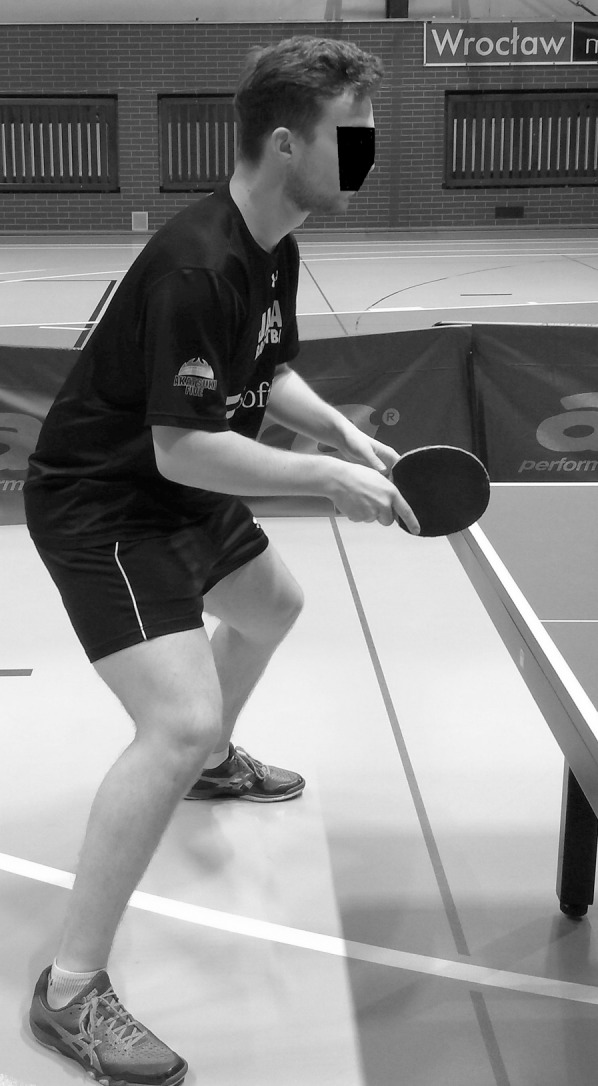
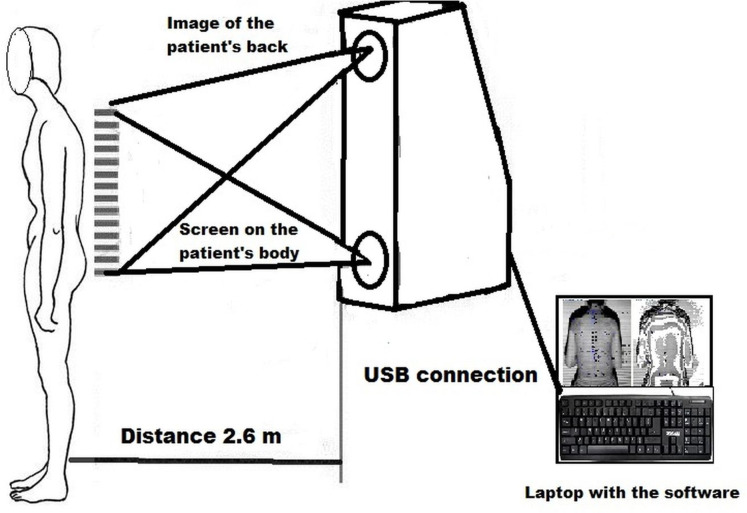
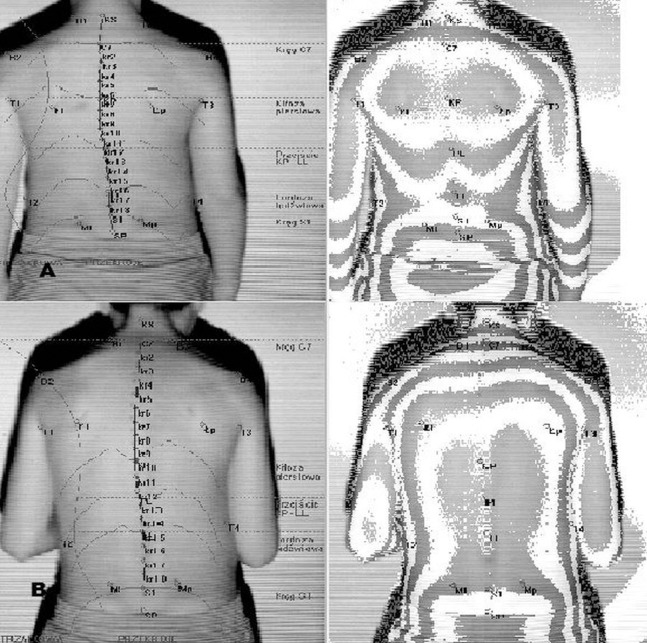
Background: The current body of knowledge shows that there is very little research into the occurrence and scale of asymmetry or postural defects in table tennis. It is interesting which regions of the spine are exposed to the greatest changes in the shape of its curvatures and whether the asymmetrical position of the shoulder and pelvic girdles in table tennis players changes when adopting the ready position. Consequently, can overload occur in certain parts of the spine and can the asymmetry deepen as a response of adopting this position? The reply to these questions may be an indication of the need for appropriate compensatory or corrective measures. Therefore, the aim of the study was to evaluate the effect of body position during play on the change in the shape of anterior–posterior spinal curvatures and trunk asymmetry in table tennis players. Methods: To evaluate body posture the photogrammetric method based on the Moiré phenomenon with equipment by CQ electronic was applied. The study involved 22 female players practicing competitive table tennis (the age of 17 ± 4.5, with the average training experience of 7 ± 4.3 years, body mass of 47.8 ± 15.8, and body height of 161.2 ± 10.4). Each participant completed an author’s own questionnaire on spinal pain. The shape of curvatures in the sagittal and frontal plane was evaluated in the participant in the habitual standing position and in the table tennis ready position. Descriptive statistical analysis was performed and the significance of differences was tested using the Mann–Whitney U test. Results and Conclusions: This study demonstrated the dominance of kyphotic body posture in table tennis players, which can be caused by many hours of using the ready position during playing. After adopting this position, there are significant differences in the angles of anterior and posterior spinal curvatures compared to the habitual posture. This may be the cause of overloads and pain complaints reported by the study participants. Adopting the ready position is also associated with an increase in asymmetry in the position (rotation) of the pelvis and spinous processes (frontal plane). Therefore, training programs should be extended with exercises that relieve the spine in the vertical line and exercises that improve symmetry of the work of the upper limbs, body trunk muscles and the pelvis.
Overview
The claims and statistics of this paper haven’t been checked yet.
Run the check — free, no account needed. It reads the open-access text and checks the sources it cites.
Integrity signals
Registry
Cites
Statistics
Figures
Verification
Claims the paper makes
The claims and statistics of this paper haven’t been checked yet.
Run the check — free, no account needed. It reads the open-access text and checks the sources it cites.
Claims other papers make about this one
Each is checked against this paper’s own text: does it say what the citing paper says it does?
The cited source says what the claim attributes to it.
In the citing paper
“Bańkosz & Barczyk-Pawelec (2020) studied the posture difference between table tennis players in normal standing and the preparation posture, and showed that when in the preparing posture, the inclination angle of trunk increased.”
From Influence of long-term participation in amateur sports on physical posture of teenagers (2022) · cites this paper as Bańkosz & Barczyk-Pawelec (2020)
Self-check
Percentages, sums and reported differences re-computed from the paper’s own numbers.
The self-check needs the paper’s full text.
Citations
Cites
No references could be resolved yet.
Research works printed but not linked: 36
- Barczyk-Pawelec, 2017, Active self-correction of spinal posture in pain-free women in response to the command “straighten your back”, Women & Health, 57, 1098, 10.1080/03630242.2016.1243605 · DOI
- Bańkosz, 2017, The kinematics of table tennis racquet. The differences between topspin strokes, The Journal of Sports Medicine and Physical Fitness., 57, 202, 10.23736/S0022-4707.16.06104-1 · DOI
- Bańkosz, 2018, The evaluation of changes of angles in selected joints during topspin forehand in table tennis, Motor Control, 22, 1, 10.1123/mc.2017-0057 · DOI
- Bibrowicz, 1995, Elementy wczesnej diagnostyki bocznych skrzywień kręgosłupa-asymetria tułowia w płaszczyźnie czołowej (Elements of early diagnosis of lateral curvatures of the spine—asymmetry of the trunk in the frontal plane, in Polish), Fizjoterapia, 3, 7
- Bussey, 2010, Does the demand for asymmetric functional lower body postures in lateral sports relate to structural asymmetry of the pelvis?, Journal of Science and Medicine in Sport, 13, 360, 10.1016/j.jsams.2009.02.010 · DOI
- Drzał-Grabiec, 2014, Evaluation of selected postural parameters in children who practice kyokushin karate, Biomedical Human Kinetics, 6, 69, 10.2478/bhk-2014-0013 · DOI
- Fett, 2017, Back pain in elite sports: a cross-sectional study on 1114 athletes, PLOS ONE, 12, e0180130, 10.1371/journal.pone.0180130 · DOI
- Grabara, 2012, Analysis of body posture between young football players and their untrained peers, Human Movement, 13, 120, 10.2478/v10038-012-0012-7 · DOI · Paper page
- Grabara, 2014, A comparison of the posture between young female handball players and non-training peers, Journal of Back and Musculoskeletal Rehabilitation, 27, 85, 10.3233/BMR-130423 · DOI
- Grabara, 2018, The posture of adolescent male handball players: a two-year study, Journal of Back and Musculoskeletal Rehabilitation, 31, 183, 10.3233/BMR-170792 · DOI
- Grabara, 2009, The body posture in young athletes compared to their peers, Polish Journal of Sports Medicine, 25, 115
- Heneweer, 2009, Physical activity and low back pain: a U-shaped relation?, Pain, 143, 21, 10.1016/j.pain.2008.12.033 · DOI
- Hobbs, 2014, Posture, flexibility and grip strength in horse riders, Journal of Human Kinetics, 42, 113, 10.2478/hukin-2014-0066 · DOI
- Hudetz, 2005, Tenis stołowy 2000
- Iino, 2009, Kinematics of table tennis topspin forehands: effects of performance level and ball spin, Journal of Sports Sciences, 27, 1311, 10.1080/02640410903264458 · DOI
- Iino, 2011, Kinetics of the upper limb during table tennis topspin forehands in advanced and intermediate players, Sports Biomechanics, 10, 361, 10.1080/14763141.2011.629304 · DOI
- Iino, 2016, Mechanical energy generation and transfer in the racket arm during table tennis topspin backhands, Sports Biomechanics., 15, 1, 10.1080/14763141.2016.1159722 · DOI
- Kondric, 2013, The physiological demands of table tennis: a review, Journal of Sports Science & Medicine, 12, 362
- Krzykała, 2018, Does field hockey increase morphofunctional asymmetry? A pilot study, HOMO—Journal of Comparative Human Biology, 69, 43, 10.1016/j.jchb.2018.03.003 · DOI
- Maloney, 2019, The relationship between asymmetry and athletic performance: a critical review, Journal of Strength and Conditioning Research, 33, 2579, 10.1519/JSC.0000000000002608 · DOI
- Morton, 2010, Influence of posture and body type on the experience of exercise-related transient abdominal pain, Journal of Science and Medicine in Sports, 13, 485, 10.1016/j.jsams.2009.10.487 · DOI
- Mrozkowiak, 2012, Projection moiré as a modern tool for diagnosis of body posture (in Polish, Abstract in English), Antropomotoryka, 60, 33
- Nachemson, 1987, Lumbar intradiscal pressure
- O’Sullivan, 2002, The effect of different standing and sitting postures on trunk muscle activity in a pain-free population, Spine, 27, 1238, 10.1097/00007632-200206010-00019 · DOI
- Porto, 2010, Moiré topography: characteristics and clinical application, Gait & Posture, 32, 422, 10.1016/j.gaitpost.2010.06.017 · DOI
- Radaŝ, 2011, Posture in top-level Croatian rhythmic gymnasts and non-trainees, Kinesiology, 43, 64
- Read, 2017, A prospective investigation to evaluate risk factors for lower extremity injury risk in male youth soccer players, Scandinavian Journal of Medicine & Science in Sports, 28, 1244, 10.1111/sms.13013 · DOI
- Saragiotto, 2014, Risk factors and injury prevention in elite athletes: a descriptive study of the opinions of physical therapists, doctors and trainers, Brazilian Journal of Physical Therapy, 18, 137, 10.1590/S1413-35552012005000147 · DOI
- Toraman, 2001, Postural deviations and sports injuries among physically active and sedentary college students, Turkish Journal of Sports Medicine, 36, 131
- Trompeter, 2019, Back pain in rowers. A cross-section study on prevelence, pain characteristics and risk factors, Sportverletz Sportschaden, 33, 51, 10.1055/a-0648-8387 · DOI
- Watson, 1995, Sports injuries in footballers related to defects of posture and body mechanics, Journal of Sports Medicine & Physical Fitness, 35, 289
- Wojtys, 2019, The association between athletic training time and the sagittal curvature of the immature spine, American Journal of Sports Medicine, 28, 490, 10.1177/03635465000280040801 · DOI · Paper page
- Wąsik, 2015, Comparative analysis of body posture in child and adolescent taekwon-do practitioners and non-practitioners, Ido Movement for Culture, 15, 35
- Zeylan-Malawka, 1999, Klasyfikacja i ocena postawy ciała w modyfikacji metody Wolańskiego i Nowojorskiego Testu Klasyfikacyjnego, Fizjoterapia, 4, 52
- Zeyland-Malawka, 2006, Symptoms of asymmetry in the posture of children and young people—a threat to a fully efficient locomotor system and to health, Nowiny Lekarskie, 75, 394
- Żuk, 2019, Posture correctness of young female soccer players, Scientific Reports, 9, 11179, 10.1038/s41598-019-47619-1 · DOI
Cited by
Sorted by citations
Influence of long-term participation in amateur sports on physical posture of teenagers
Huang, Y., Zhai, M., Zhou, S., Jin, Y., Wen, L., Zhao, Y., & Han, X. (2022) · PeerJ · doi:10.7717/peerj.14520 · Cited by 8
“Bańkosz & Barczyk-Pawelec (2020) studied the posture difference between table tennis players in normal standing and the preparation posture, and showed that when in the preparing posture, the inclination angle of trunk increased.”
Background
Metadata
- Authors
- Bańkosz, Z., & Barczyk-Pawelec, K.
- Affiliations
- University of Wrocław (PL)
- Faculty of Physiotherapy, University School of Physical Education in Wrocław, Wrocław, Poland
- Corresponding author
- Bańkosz, Ziemowit
- ORCID
- Bańkosz, Ziemowit
- Venue
- PeerJ
- Publisher
- PeerJ
- Published
- 2020-06-17
- Volume
- 8
- Pages
- e9170
- ISSN
- 2167-8359 (ISSN-L)
- PMC
- PMC7305769
- OpenAlex
- W3035767205
- Cited by
- 21
- References
- 0
- Citations by year
- 2025: 3 · 2024: 4 · 2023: 1 · 2022: 8 · 2021: 4 · 2020: 1
- FWCI
- 3.83
- Type
- journal article
- Language
- en
- Open access
- gold
- doi.org
- Locations
- PeerJ (publishedVersion, cc-by)
- PubMed Central (publishedVersion, cc-by)
- PubMed (publishedVersion)
- DOAJ (DOAJ: Directory of Open Access Journals) (submittedVersion, cc-by-sa)
- Topics
- Social Sciences › Human Factors and Ergonomics › Ergonomics and Musculoskeletal Disorders
- Health Sciences › Medicine › Surgery › Scoliosis diagnosis and treatment
- Physical Sciences › Engineering › Biomedical Engineering › Sports Dynamics and Biomechanics
- Keywords
- table tennis, female athletes, back pain, spinal curvature, kyphosis, trunk asymmetry, pelvic asymmetry, postural defects
About these checks
Registry, retraction, Cites and statistics results are computed, not judged, with one exception: a printed reference that no index lists is read once by a model before it counts as a citation error. Claims are extracted by a model and kept only when their quote appears verbatim in the text; each cited source is then checked, with a model’s help, for whether it says what the claim relies on. Those verdicts can be wrong — read the claim’s quote and the cited source before relying on one.
Statistics and arithmetic are recomputed, not judged.
Confidence bands are shown only for fields calibrated on our annotated test set. None is calibrated yet, so no band is shown.
What counts as a claim ›How we measure confidence ›How we check this ›
Are you an author, or do you see a problem with this page? Request a review
How to cite
Cite CoChat for the checks on this page, and the paper for its own findings.
- This page
- CoChat. (2026). Citation check: Habitual and ready positions in female table tennis players and their relation to the prevalence of back pain. https://app.cochat.ai/papers/10.7717/peerj.9170
- The paper
- Bańkosz, Z., & Barczyk-Pawelec, K. (2020). Habitual and ready positions in female table tennis players and their relation to the prevalence of back pain. PeerJ. https://doi.org/10.7717/peerj.9170
