

The DOI matches its Crossref record; 8 of the 8 references it cites were found in a registry or an index.
Hypokalemic Periodic Paralysis Exacerbated by Carbohydrate Load: A Case Report
Open accessAbstract
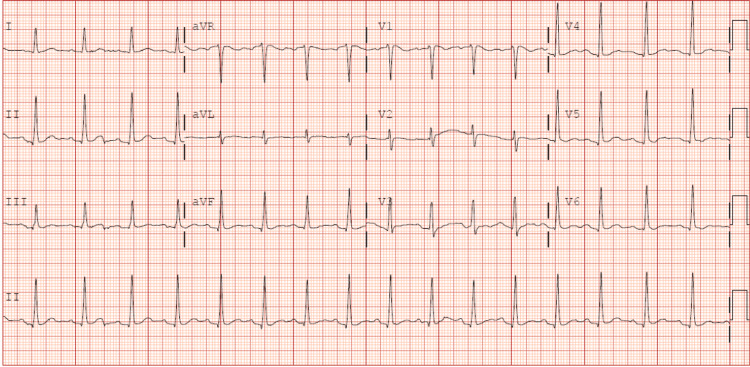
A 35-year-old male presented with weakness in all four extremities rendering him unable to ambulate. The patient stated the symptoms began after consuming an unknown, large amount of Oreo cookies; thus, a high carbohydrate load likely caused him to exceed the recommended dietary allowance (RDA) of 225-325 grams of carbohydrates per day, depending on one's daily caloric intake. Lab workup revealed a potassium level of 2.1 mmol/L. Upon potassium replacement, the patient's symptoms improved to baseline, and he was discharged home with follow-up instructions that included a referral for genetic testing. Hypokalemic periodic paralysis (HPP) is a rare condition that, despite having a relatively simple solution for treatment, can lead to an extensive and expensive workup if not considered early on the list of differential diagnoses. Herein, we will discuss the pathophysiology, clinical signs/symptoms, and management of HPP.
Overview
The claims and statistics of this paper haven’t been checked yet.
Run the check — free, no account needed. It reads the open-access text and checks the sources it cites.
Integrity signals
Registry
Cites
Statistics
Figures
Verification
Claims the paper makes
The claims and statistics of this paper haven’t been checked yet.
Run the check — free, no account needed. It reads the open-access text and checks the sources it cites.
Claims other papers make about this one
Each is checked against this paper’s own text: does it say what the citing paper says it does?
The source backs part of the claim, not all of it — or backs it for a different population, condition or comparison.
In the citing paper
“This insulin-driven shift exacerbates hypokalemia in predisposed individuals and can precipitate paralytic episodes in THPP [30].”
From Thyrotoxic Hypokalemic Periodic Paralysis: Pathophysiological Mechanisms (2025) · cites this paper as [30]
Experimental — accuracy not yet measuredThe cited source says what the claim attributes to it.
In the citing paper
“Consumption of carbohydrate-rich meals, especially those high in simple sugars, causes rapid elevations in blood glucose, stimulating insulin secretion from pancreatic β-cells. The resulting insulin surge promotes glucose and potassium uptake into skeletal muscle, potentially precipitating hypokalemic paralysis in predisposed individuals [30].”
From Thyrotoxic Hypokalemic Periodic Paralysis: Pathophysiological Mechanisms (2025) · cites this paper as [30]
Self-check
Percentages, sums and reported differences re-computed from the paper’s own numbers.
The self-check needs the paper’s full text.
Citations
Cites
Dietary Guidelines for Americans, 2020–2025
Phillips, J. A. (2021) · Workplace Health & Safety · doi:10.1177/21650799211026980 · Cited by 696
Dihydropyridine receptor mutations cause hypokalemic periodic paralysis
Ptáček, L. J. (1994) · Cell · doi:10.1016/0092-8674(94)90135-x · Cited by 426
Review of the Diagnosis and Treatment of Periodic Paralysis
Statland, J. M., Fontaine, B., Hanna, M. G., Johnson, N. E., Kissel, J. T., Sansone, V., Shieh, P. B., Tawil, R., Trivedi, J. R., Cannon, S. C., et al. (2017) · Muscle & Nerve · doi:10.1002/mus.26009 · Cited by 274
Lin, S.-H. (2001) · QJM · doi:10.1093/qjmed/94.3.133 · Cited by 173
Intravenous Treatment of Hypokalemic Periodic Paralysis
Griggs, R. C., Resnick, J. S., & Engel, W. K. (1983) · Archives of Neurology · doi:10.1001/archneur.1983.04050080039005 · Cited by 58
Clinical perspectives on the rationale for potassium supplementation
Weir, M. R., & Espaillat, R. (2015) · Postgraduate Medicine · doi:10.1080/00325481.2015.1045814 · Cited by 39
Insulin for the treatment of hyperkalemia: a double-edged sword?
Li, T., & Vijayan, A. (2014) · Clinical Kidney Journal · doi:10.1093/ckj/sfu049 · Cited by 38
Levis, J. T. (2012) · The Permanente Journal · doi:10.7812/tpp/12-015 · Cited by 38
Cited by
Sorted by citations
Thyrotoxic Hypokalemic Periodic Paralysis: Pathophysiological Mechanisms
Qing, G., Zakaria, W. N. A., Rom, F. Z. M., Nik, W. N. F. H. W., Zulkeflee, H. A., & Rahim, S. N. A. (2025) · Endocrinology and Metabolism · doi:10.3803/enm.2025.2554 · Cited by 5
“This insulin-driven shift exacerbates hypokalemia in predisposed individuals and can precipitate para-lytic episodes in THPP [30].”
Metadata
- Authors
- Blanton, R., & Afzal, S.
- Affiliations
- Campbell University (US)
- Corresponding author
- Blanton, Ryan
- Venue
- Cureus
- Published
- 2022-09-06
- Volume
- 14
- Issue
- 9
- Pages
- e28851-e28851
- ISSN
- 2168-8184 (ISSN-L)
- PMC
- PMC9536358
- OpenAlex
- W4294811886
- Cited by
- 3
- References
- 8
- Citations by year
- 2026: 1 · 2025: 1 · 2024: 1
- FWCI
- 0.32
- Type
- journal article
- Language
- en
- Open access
- diamond
- doi.org
- Licence
- cc-by
- Locations
- Cureus (publishedVersion, cc-by)
- PubMed Central (publishedVersion, cc-by)
- PubMed (publishedVersion)
- Topics
- Health Sciences › Medicine › Nephrology › Potassium and Related Disorders
- Life Sciences › Biochemistry, Genetics and Molecular Biology › Molecular Biology › Ion channel regulation and function
- Health Sciences › Medicine › Cardiology and Cardiovascular Medicine › Cardiac electrophysiology and arrhythmias
- Keywords
- hypokalemic periodic paralysis, carbohydrate load, hypokalemia, muscle weakness, potassium supplementation, dietary triggers, differential diagnosis, pathophysiology, genetic testing
About these checks
Registry, retraction, Cites and statistics results are computed, not judged, with one exception: a printed reference that no index lists is read once by a model before it counts as a citation error. Claims are extracted by a model and kept only when their quote appears verbatim in the text; each cited source is then checked, with a model’s help, for whether it says what the claim relies on. Those verdicts can be wrong — read the claim’s quote and the cited source before relying on one.
Statistics and arithmetic are recomputed, not judged.
Confidence bands are shown only for fields calibrated on our annotated test set. None is calibrated yet, so no band is shown.
What counts as a claim ›How we measure confidence ›How we check this ›
Are you an author, or do you see a problem with this page? Request a review
