

The DOI matches its Crossref record; the references it cites are not checked yet.
Simulation-Based Education in the Artificial Intelligence Era
Open accessAbstract
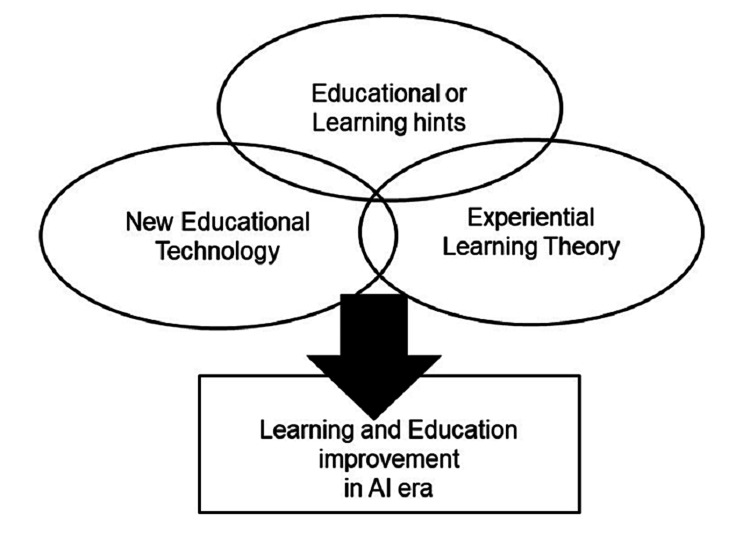
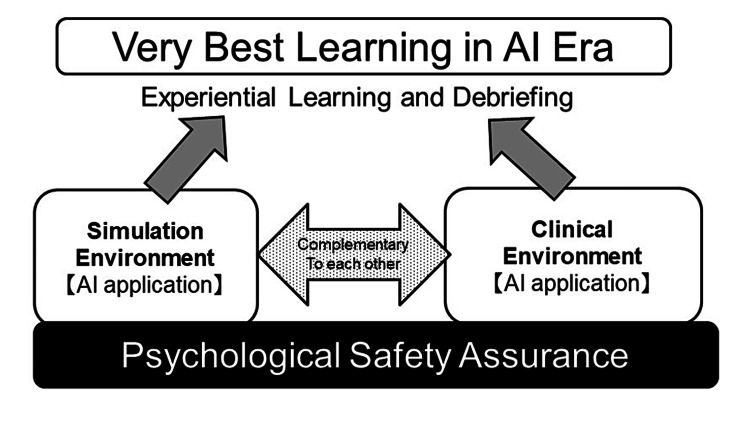
Simulation-based medical education (SBME) has been widely implemented in skill training in various clinical specialties. SBME has contributed not only to patient and medical safety but also to undergraduate and specialist education in the healthcare field. In this review, we discuss the challenges and future directions of SBME in the artificial intelligence (AI) era. While SBME fidelity or methods may become highly complicated in the AI era, the fact is that learners play a central role. As SBME and clinical education are complementary, mutual feedback and improvement are essential, especially in non-technical skill development. For the development of sustainable SBME in the clinical field in the AI era, continuous improvement is needed by academia, educators, and learners.
Overview
The claims and statistics of this paper haven’t been checked yet.
Run the check — free, no account needed. It reads the open-access text and checks the sources it cites.
Integrity signals
Registry
Cites
Statistics
Figures
Verification
Claims the paper makes
The claims and statistics of this paper haven’t been checked yet.
Run the check — free, no account needed. It reads the open-access text and checks the sources it cites.
Claims other papers make about this one
Each is checked against this paper’s own text: does it say what the citing paper says it does?
The source backs part of the claim, not all of it — or backs it for a different population, condition or comparison.
In the citing paper
“Completely replacing traditional instructor-led training with AI carries risks, and further studies thereon are required [13,21].”
From Enhancing Medical Interview Skills Through AI-Simulated Patient Interactions: Nonrandomized Controlled Trial (2024) · cites this paper as [13]
Experimental — accuracy not yet measuredThe check wasn’t confident either way, so it gives no verdict — never disputed.
In the citing paper
“However, research integrating LLMs into simulation education remains in its developmental phase [13].”
From Enhancing Medical Interview Skills Through AI-Simulated Patient Interactions: Nonrandomized Controlled Trial (2024) · cites this paper as [13]
Experimental — accuracy not yet measured
Self-check
Percentages, sums and reported differences re-computed from the paper’s own numbers.
The self-check needs the paper’s full text.
Citations
The citation lists haven’t been fetched yet
References 27 · Cited by 64
Research works printed but not linked: 24
- Novais F, Ganança L, Barbosa M, Telles-Correia D. Communication skills in psychiatry for undergraduate students: a scoping review. Front Psychiatry. 2022, 13:972703. 10.3389/fpsyt.2022.972703 · DOI
- Bienstock J, Heuer A. A review on the evolution of simulation-based training to help build a safer future. Medicine (Baltimore). 2022, 101:e29503. 10.1097/MD.0000000000029503 · DOI
- Kumar AH, Sultan E, Mariano ER, Udani AD. A modern roadmap for the use of simulation in regional anesthesiology training. Curr Opin Anaesthesiol. 2022, 35:654-9. 10.1097/ACO.0000000000001179 · DOI
- Schmidt E, Goldhaber-Fiebert SN, Ho LA, McDonald KM. Simulation exercises as a patient safety strategy: a systematic review. Ann Intern Med. 2013, 158:426-32. 10.7326/0003-4819-158-5-201303051-00010 · DOI
- Greif R, Egger L, Basciani RM, Lockey A, Vogt A. Emergency skill training--a randomized controlled study on the effectiveness of the 4-stage approach compared to traditional clinical teaching. Resuscitation. 2010, 81:1692-7. 10.1016/j.resuscitation.2010.09.478 · DOI
- Cheng A, Grant V, Huffman J, Burgess G, Szyld D, Robinson T, Eppich W. Coaching the debriefer: peer coaching to improve debriefing quality in simulation programs. Simul Healthc. 2017, 12:319-25. 10.1097/SIH.0000000000000232 · DOI
- Mahmoudi E, Kamdar N, Kim N, Gonzales G, Singh K, Waljee AK. Use of electronic medical records in development and validation of risk prediction models of hospital readmission: systematic review. BMJ. 2020, 369:m958. 10.1136/bmj.m958 · DOI
- Paranjape K, Schinkel M, Nannan Panday R, Car J, Nanayakkara P. Introducing artificial intelligence training in medical education. JMIR Med Educ. 2019, 5:e16048. 10.2196/16048 · DOI · Paper page
- Cheng D, Liu D, Philpotts LL, et al.. Current state of science in machine learning methods for automatic infant pain evaluation using facial expression information: study protocol of a systematic review and meta-analysis. BMJ Open. 2019, 9:e030482. 10.1136/bmjopen-2019-030482 · DOI
- Nakawala H, Ferrigno G, De Momi E. Development of an intelligent surgical training system for thoracentesis. Artif Intell Med. 2018, 84:50-63. 10.1016/j.artmed.2017.10.004 · DOI
- de Bruijne M. Machine learning approaches in medical image analysis: from detection to diagnosis. Med Image Anal. 2016, 33:94-7. 10.1016/j.media.2016.06.032 · DOI
- Ajab S, Pearson E, Dumont S, Mitchell A, Kastelik J, Balaji P, Hepburn D. An alternative to traditional bedside teaching during COVID-19: high-fidelity simulation-based study. JMIR Med Educ. 2022, 8:e33565. 10.2196/33565 · DOI
- Narang P, Raju B, Jumah F, Konar SK, Nagaraj A, Gupta G, Nanda A. The evolution of 3D anatomical models: a brief historical overview. World Neurosurg. 2021, 155:135-43. 10.1016/j.wneu.2021.07.133 · DOI
- Steadman R. Improving on reality: can simulation facilitate practice change?. Anesthesiology. 2010, 112:775-76. 10.1097/ALN.0b013e3181d3e337 · DOI
- Nhan VK, Tam LT, Dung HT, Vu NT. A conceptual model for studying the immersive mobile augmented reality application-enhanced experience. Heliyon. 2022, 8:e10141. 10.1016/j.heliyon.2022.e10141 · DOI
- Eppich W, Cheng A. Promoting Excellence and Reflective Learning in Simulation (PEARLS): development and rationale for a blended approach to health care simulation debriefing. Simul Healthc. 2015, 10:106-15. 10.1097/SIH.0000000000000072 · DOI · Paper page
- Hatala R, Cook DA, Zendejas B, Hamstra SJ, Brydges R. Feedback for simulation-based procedural skills training: a meta-analysis and critical narrative synthesis. Adv Health Sci Educ Theory Pract. 2014, 19:251-72. 10.1007/s10459-013-9462-8 · DOI
- Garden AL, Le Fevre DM, Waddington HL, Weller JM. Debriefing after simulation-based non-technical skill training in healthcare: a systematic review of effective practice. Anaesth Intensive Care. 2015, 43:300-8. 10.1177/0310057X1504300303 · DOI
- Naik VN, Brien SE. Review article: simulation: a means to address and improve patient safety. Can J Anaesth. 2013, 60:192-200. 10.1007/s12630-012-9860-z · DOI
- Komasawa N, Berg BW. Interprofessional simulation training for perioperative management team development and patient safety. J Perioper Pract. 2016, 26:250-3. 10.1177/175045891602601103 · DOI
- Davitadze M, Ooi E, Ng CY, et al.. SIMBA: using Kolb's learning theory in simulation-based learning to improve participants' confidence. BMC Med Educ. 2022, 22:116. 10.1186/s12909-022-03176-2 · DOI
- Lawaetz J, Skovbo Kristensen JS, Nayahangan LJ, Van Herzeele I, Konge L, Eiberg JP. Simulation based training and assessment in open vascular surgery: a systematic review. Eur J Vasc Endovasc Surg. 2021, 61:502-9. 10.1016/j.ejvs.2020.11.003 · DOI
- Esteva A, Kuprel B, Novoa RA, Ko J, Swetter SM, Blau HM, Thrun S. Dermatologist-level classification of skin cancer with deep neural networks. Nature. 2017, 542:115-8. 10.1038/nature21056 · DOI · Paper page
- Kohli M, Prevedello LM, Filice RW, Geis JR. Implementing machine learning in radiology practice and research. AJR Am J Roentgenol. 2017, 208:754-60. 10.2214/AJR.16.17224 · DOI
Metadata
- Authors
- Komasawa, N., & Yokohira, M.
- Affiliations
- Kagawa University (JP)
- Corresponding author
- Komasawa, Nobuyasu
- Venue
- Cureus
- Published
- 2023-06-25
- Volume
- 15
- Issue
- 6
- Pages
- e40940-e40940
- ISSN
- 2168-8184 (ISSN-L)
- PMC
- PMC10368461
- OpenAlex
- W4381988172
- Cited by
- 64
- References
- 27
- Citations by year
- 2026: 13 · 2025: 24 · 2024: 23 · 2023: 4
- FWCI
- 11.37
- Type
- journal article
- Language
- en
- Open access
- diamond
- doi.org
- Licence
- cc-by
- Locations
- Cureus (publishedVersion, cc-by)
- PubMed Central (publishedVersion, cc-by)
- PubMed (publishedVersion)
- Topics
- Social Sciences › Education › Simulation-Based Education in Healthcare
- Health Sciences › Medicine › Surgery › Surgical Simulation and Training
- Health Sciences › Medicine › Health Informatics › Artificial Intelligence in Healthcare and Education
- Keywords
- simulation-based medical education, artificial intelligence, clinical skills training, student-centered learning, non-technical skills, simulation fidelity, medical education challenges
About these checks
Registry, retraction, Cites and statistics results are computed, not judged, with one exception: a printed reference that no index lists is read once by a model before it counts as a citation error. Claims are extracted by a model and kept only when their quote appears verbatim in the text; each cited source is then checked, with a model’s help, for whether it says what the claim relies on. Those verdicts can be wrong — read the claim’s quote and the cited source before relying on one.
Statistics and arithmetic are recomputed, not judged.
Confidence bands are shown only for fields calibrated on our annotated test set. None is calibrated yet, so no band is shown.
What counts as a claim ›How we measure confidence ›How we check this ›
Are you an author, or do you see a problem with this page? Request a review
How to cite
Cite CoChat for the checks on this page, and the paper for its own findings.
- This page
- CoChat. (2026). Citation check: Simulation-Based Education in the Artificial Intelligence Era. https://app.cochat.ai/papers/10.7759/cureus.40940
- The paper
- Komasawa, N., & Yokohira, M. (2023). Simulation-Based Education in the Artificial Intelligence Era. Cureus. https://doi.org/10.7759/cureus.40940
