

Quantifying bile acid malabsorption helps predict response and tailor sequestrant therapy
Open accessThe DOI matches its Crossref record; 36 of the 37 references it cites were found in a registry or an index.
Abstract
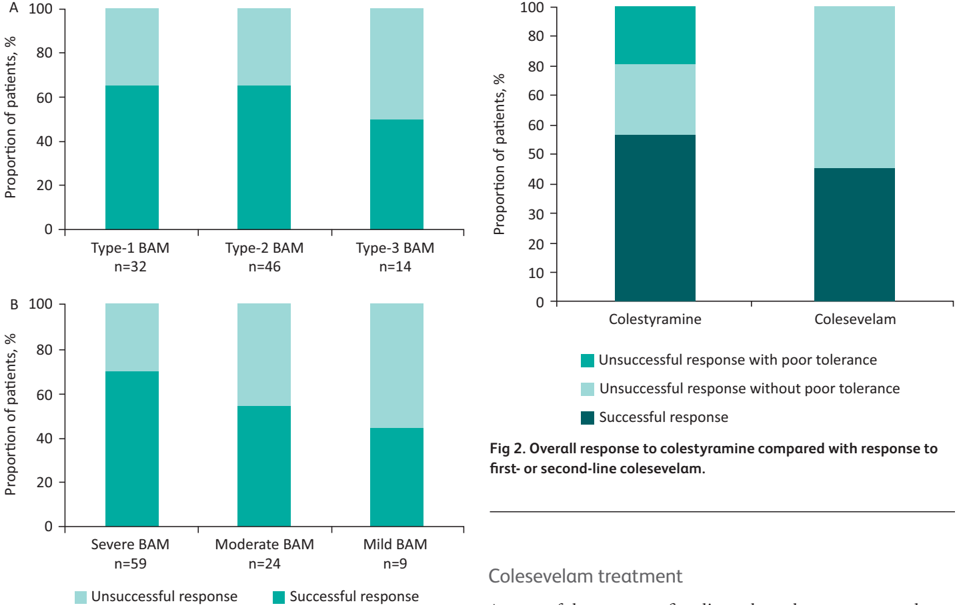
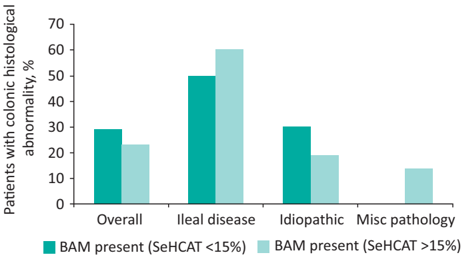
Although recognised as a cause of chronic diarrhoea for over forty years, diagnostic tests and treatments for bile acid malabsorption (BAM) remain controversial. Recent National Institute for Health and Care Excellence (NICE) guidelines highlighted the lack of evidence in the field, and called for further research. This retrospective study explores the BAM subtype and severity, the use and response to bile acid sequestrants (BAS) and the prevalence of abnormal colonic histology. 264 selenium-75-labelled homocholic acid conjugated taurine (SeHCAT)-tested patient records were reviewed and the severity and subtype of BAM, presence of colonic histopathology and response to BAS were recorded. 53% of patients tested had BAM, with type-2 BAM in 45% of patients with presumed irritable bowel syndrome. Colonic histological abnormalities were similar overall between patients with (29%) or without (23%) BAM (p = 0.46) and between BAM subtypes, with no significant presence of inflammatory changes. 63% of patients with BAM had a successful BAS response which showed a trend to decreased response with reduced severity. Colestyramine was unsuccessful in 44% (38/87) and 45% of these (17/38) were related to medication intolerance, despite a positive SeHCAT. 47% (7/15) of colestyramine failures had a successful colesevelam response. No patient reported colesevelam intolerance. Quantifying severity of BAM appears to be useful in predicting BAS response. Colesevelam was better tolerated than colestyramine and showed some efficacy in colestyramine failures. Colestyramine failure should not be used to exclude BAM. Colonic histology is of no relevance.
Overview
The claims and statistics of this paper haven’t been checked yet.
Free: it reads the open-access text and checks the first 5 claims that cite a source we can check. Create a free account to check every claim.
Integrity signals
Registry
Cites
Statistics
Figures

Verification
Claims the paper makes
The claims and statistics of this paper haven’t been checked yet.
Free: it reads the open-access text and checks the first 5 claims that cite a source we can check. Create a free account to check every claim.
Self-check
Percentages, sums and reported differences re-computed from the paper’s own numbers.
The self-check needs the paper’s full text.
Citations
Cites
WEDLAKE, L., A’HERN, R., RUSSELL, D., THOMAS, K., WALTERS, J. R. F., & ANDREYEV, H. J. N. (2009) · Alimentary Pharmacology & Therapeutics · doi:10.1111/j.1365-2036.2009.04081.x · Cited by 435
A New Mechanism for Bile Acid Diarrhea: Defective Feedback Inhibition of Bile Acid Biosynthesis
Walters, J. R. F., Tasleem, A. M., Omer, O. S., Brydon, W. G., Dew, T., & le Roux, C. W. (2009) · Clinical Gastroenterology and Hepatology · doi:10.1016/j.cgh.2009.04.024 · Cited by 318
The Syndrome of Ileal Disease and the Broken Enterohepatic Circulation: Cholerheic Enteropathy
Hofmann, A. F. (1967) · Gastroenterology · doi:10.1016/s0016-5085(67)80140-9 · Cited by 306
CHADWICK, V. S., Gaginella, T. S., Carlson, G. L., Debongnie, J. C., Phillips, S. F., & Hofmann, A. F. (1979) · PubMed · Cited by 271
Fernández-Bañares, F., Esteve, M., Salas, A., Forné, M., Espinós, J. C., Martín-Comín, J., & Viver, J. M. (2001) · Digestive Diseases and Sciences · doi:10.1023/a:1011927302076 · Cited by 169
Merrick, M. V., Eastwood, M. A., & Ford, M. J. (1985) · BMJ · doi:10.1136/bmj.290.6469.665 · Cited by 152
Williams, A. J., Merrick, M. V., & Eastwood, M. A. (1991) · Gut · doi:10.1136/gut.32.9.1004 · Cited by 144
Systematic review: the management of chronic diarrhoea due to bile acid malabsorption
Wilcox, C., Turner, J., & Green, J. (2014) · Alimentary Pharmacology & Therapeutics · doi:10.1111/apt.12684 · Cited by 137
Fromm, H., & Malavolti, M. (1986) · Clinics in Gastroenterology · doi:10.1016/s0300-5089(21)00739-2 · Cited by 127
Methods for Diagnosis of Bile Acid Malabsorption in Clinical Practice
Vijayvargiya, P., Camilleri, M., Shin, A., & Saenger, A. (2013) · Clinical Gastroenterology and Hepatology · doi:10.1016/j.cgh.2013.04.029 · Cited by 126
Research works printed but not linked: 1
- Aldridge MA, Ito MK. Colesevelam hydrochloride: a novel bile acid-binding resin. Ann Pharmacother 2001;35:898-907. · doi:10.1345/aph.10263 · Paper page
Cited by
Ford, A. C., Sperber, A. D., Corsetti, M., & Camilleri, M. (2020) · The Lancet · doi:10.1016/s0140-6736(20)31548-8 · Cited by 818
British Society of Gastroenterology guidelines on the management of irritable bowel syndrome
Vasant, D. H., Paine, P. A., Black, C. J., Houghton, L. A., Everitt, H. A., Corsetti, M., Agrawal, A., Aziz, I., Farmer, A. D., Eugenicos, M. P., et al. (2021) · Gut · doi:10.1136/gutjnl-2021-324598 · Cited by 592
“132 Symptoms of BAD can mimic IBS-D, with between one- in-three and one- in-four patients with suspected IBS-D having an abnormal SeHCAT retention, 133 134 and response rates to a bile acid sequestrant are higher at reten-tions of 10% or 5%.”
Self-citationArasaradnam, R. P., Brown, S., Forbes, A., Fox, M. R., Hungin, P., Kelman, L., Major, G., O’Connor, M., Sanders, D. S., Sinha, R., et al. (2018) · Gut · doi:10.1136/gutjnl-2017-315909 · Cited by 332
Savarino, E., Zingone, F., Barberio, B., Marasco, G., Akyuz, F., Akpinar, H., Barboi, O., Bodini, G., Bor, S., Chiarioni, G., et al. (2022) · United European Gastroenterology Journal · doi:10.1002/ueg2.12259 · Cited by 146
“Colesevelam may be more acceptable in those who fail colestyramine.(170,175) Long‐term use of sequestrants is affected by their poor tolerability.”
BackgroundNew treatments and therapeutic targets for IBS and other functional bowel disorders
Simrén, M., & Tack, J. F. (2018) · Nature Reviews Gastroenterology & Hepatology · doi:10.1038/s41575-018-0034-5 · Cited by 162
Review article: bile acid diarrhoea – pathogenesis, diagnosis and management
Mottacki, N., Simrén, M., & Bajor, A. (2016) · Alimentary Pharmacology & Therapeutics · doi:10.1111/apt.13570 · Cited by 110
The Role of Bile Acids in Chronic Diarrhea
Camilleri, M., & Vijayvargiya, P. (2020) · The American Journal of Gastroenterology · doi:10.14309/ajg.0000000000000696 · Cited by 112
“Since severity of BAM can predict response to treatment, there is strong rationale to measure BAM rather than just empiric treatment (17,59).”
BackgroundBlack, C. J., Craig, O., Gracie, D. J., & Ford, A. C. (2021) · Gut · doi:10.1136/gutjnl-2020-322519 · Cited by 86
Sadowski, D. C., Camilleri, M., Chey, W. D., Leontiadis, G. I., Marshall, J. K., Shaffer, E. A., Tse, F., & Walters, J. R. F. (2020) · Clinical Gastroenterology and Hepatology · doi:10.1016/j.cgh.2019.08.062 · Cited by 74
Kårhus, M. L., Brønden, A., Forman, J. L., Haaber, A. B., Knudsen, E., Langholz, E., Dragsted, L. O., Hansen, S. H., Krakauer, M., Vilsbøll, T., et al. (2022) · The Lancet. Gastroenterology & hepatology · doi:10.1016/s2468-1253(22)00198-4 · Cited by 70
Schiller, L. R. (2018) · The American Journal of Gastroenterology · doi:10.1038/s41395-018-0032-9 · Cited by 54
Ruiz‐Campos, L., Gisbert, J. P., Ysamat, M., Arau, B., Loras, C., Esteve, M., & Fernández‐Bañares, F. (2018) · Alimentary Pharmacology & Therapeutics · doi:10.1111/apt.15099 · Cited by 54
Diagnosis and management of bile acid diarrhoea: a survey of UK expert opinion and practice
Walters, J. R. F., Arasaradnam, R. P., Andreyev, J. N., & for the UK Bile Acid Related Diarrhoea Network (2019) · Frontline Gastroenterology · doi:10.1136/flgastro-2019-101301 · Cited by 51
Update on Bile Acid Malabsorption: Finally Ready for Prime Time?
Vijayvargiya, P., & Camilleri, M. (2018) · Current Gastroenterology Reports · doi:10.1007/s11894-018-0615-z · Cited by 47
Bile acid diarrhoea: pathophysiology, diagnosis and management
Farrugia, A., & Arasaradnam, R. P. (2020) · Frontline Gastroenterology · doi:10.1136/flgastro-2020-101436 · Cited by 51
Barrett, J., & Brown, M. (2016) · BMJ · doi:10.1136/bmj.i1937 · Cited by 40
Lacy, B. E. (2018) · Alimentary Pharmacology & Therapeutics · doi:10.1111/apt.14948 · Cited by 50
Long-term outcomes in patients diagnosed with bile-acid diarrhoea
Lin, S., Sanders, D. S., Gleeson, J. T., Osborne, C., Messham, L., & Kurien, M. (2015) · European Journal of Gastroenterology & Hepatology · doi:10.1097/meg.0000000000000541 · Cited by 35
Sadowski, D. C., Camilleri, M., Chey, W. D., Leontiadis, G. I., Marshall, J. K., Shaffer, E. A., Tse, F., & Walters, J. R. F. (2019) · Journal of the Canadian Association of Gastroenterology · doi:10.1093/jcag/gwz038 · Cited by 38
Bile Acid Diarrhea in Adults and Adolescents
Camilleri, M., & Nurko, S. (2021) · Neurogastroenterology & Motility · doi:10.1111/nmo.14287 · Cited by 32
Pathophysiology and Clinical Management of Bile Acid Diarrhea
Marasco, G., Cremon, C., Barbaro, M. R., Falangone, F., Montanari, D., Capuani, F., Mastel, G., Stanghellini, V., & Barbara, G. (2022) · Journal of Clinical Medicine · doi:10.3390/jcm11113102 · Cited by 38
Advances in the Comprehensive Management of Postoperative Crohn’s Disease
Battat, R. J., & Sandborn, W. J. (2021) · Clinical Gastroenterology and Hepatology · doi:10.1016/j.cgh.2021.03.048 · Cited by 32
An evidence-based update on the diagnosis and management of irritable bowel syndrome
Black, C. J., & Ford, A. C. (2025) · Expert Review of Gastroenterology & Hepatology · doi:10.1080/17474124.2025.2455586 · Cited by 27
“…bile acid testing, a serum 7α-hydroxy-4-cholesten-3-one, or a therapeutic trial of a bile acid sequestrant are possible alternatives, although the latter is not recommended because no response to bile acid sequestrants does not exclude BAD and bile acid sequestrants can be tolerated poorly [48].”
Lickteig, A. J., Csanaky, I. L., Pratt-Hyatt, M., & Klaassen, C. D. (2016) · Toxicological Sciences · doi:10.1093/toxsci/kfw054 · Cited by 26
“Accurate identification and quantification of individual BA concentrations is also a critical step in the diagnosis and therapeutic monitoring of BA malabsorption and inborn errors of BA metabolism (Daugherty et al., 1993; Heubi et al., 2015; Orekoya et al., 2015; Zhang et al., 2015).”
BackgroundMulticentre prospective survey of SeHCAT provision and practice in the UK
Summers, J. A., Peacock, J. L., Coker, B., McMillan, V., Ofuya, M., Lewis, C., Keevil, S., Logan, R., McLaughlin, J. T., & Reid, F. (2016) · BMJ Open Gastroenterology · doi:10.1136/bmjgast-2016-000091 · Cited by 26
Self-citationAliu, A., Bosch, D. H. C. A., Keszthelyi, D., Ardabili, A. R., Colombel, J., Sawyer, R., Törnblom, H., Hart, A. L., Jonkers, D. M. A. E., Pierik, M. J., et al. (2024) · Alimentary Pharmacology & Therapeutics · doi:10.1111/apt.17988 · Cited by 36
“38,39”
Prospective comparison of diagnostic tests for bile acid diarrhoea
Borup, C., Vinter‐Jensen, L., Jørgensen, S. P., Wildt, S., Graff, J., Gregersen, T., Zaremba, A., Andersen, T. B., Nøjgaard, C., Timm, H. B., et al. (2023) · Alimentary Pharmacology & Therapeutics · doi:10.1111/apt.17739 · Cited by 30
“15,17,18,44 A notion underlined by the substantial rates of false negative and false positive tests of 38 and 35%, respectively, that we here report (Table 3 ).”
BackgroundWhat is the cost of delayed diagnosis of bile acid malabsorption and bile acid diarrhoea?
Fernandes, D., Poon, D., White, L. L., & Andreyev, J. N. (2018) · Frontline Gastroenterology · doi:10.1136/flgastro-2018-101011 · Cited by 27
Bile acid–gut microbiota crosstalk in irritable bowel syndrome
Gu, Y., Li, L., Yang, M., Liu, T., Song, X., Qin, X., Xu, X. J., Liu, J., Wang, B., & Cao, H. (2022) · Critical Reviews in Microbiology · doi:10.1080/1040841x.2022.2058353 · Cited by 30
“However, higher therapeutic response rate of cholestyramine was accompanied with increased risk of adverse events (nausea, bloating, abdominal pain, etc.), which limited its clinical application (Orekoya et al. 2015; Lacy 2018).”
BackgroundRational investigations in irritable bowel syndrome
Black, C. J., & Ford, A. C. (2019) · Frontline Gastroenterology · doi:10.1136/flgastro-2019-101211 · Cited by 28
“61 One study demonstrated that higher body mass index predicted presence of BAD in IBS-D 58 ; however, it is unclear which other patient characteristics, if any, can discriminate patients with BAD from IBS-D.”
BackgroundReview article: Diagnosis and investigation of irritable bowel syndrome
Black, C. J. (2021) · Alimentary Pharmacology & Therapeutics · doi:10.1111/apt.16597 · Cited by 32
Challenging current views on bile acid diarrhoea and malabsorption
Kurien, M., Thurgar, E., Davies, A., Akehurst, R. L., & Andreyev, J. N. (2017) · Frontline Gastroenterology · doi:10.1136/flgastro-2017-100808 · Cited by 23
Ciaula, A. D., Khalil, M., Baffy, G., & Portincasa, P. (2024) · European Journal of Internal Medicine · doi:10.1016/j.ejim.2024.07.008 · Cited by 22
Borup, C., Wildt, S., Rumessen, J. J., Graff, J., Bouchelouche, P. N., Andersen, T. B., Vinter‐Jensen, L., Zaremba, A., Jørgensen, S. P., Gregersen, T., et al. (2020) · The American Journal of Gastroenterology · doi:10.14309/ajg.0000000000000772 · Cited by 21
“However, the interpretation of this is difficult and recent guidelines do not recommend empirical treatment for primary diagnosis (37,38).”
BackgroundCurrent and emerging drug options in the treatment of diarrhea predominant irritable bowel syndrome
Nee, J. W., Zakari, M., & Lembo, A. J. (2015) · Expert Opinion on Pharmacotherapy · doi:10.1517/14656566.2015.1101449 · Cited by 23
Borup, C., Wildt, S., Rumessen, J. J., Bouchelouche, P. N., Graff, J., Damgaard, M., McQuitty, C., Rainteau, D. P., & Munck, L. K. (2017) · Alimentary Pharmacology & Therapeutics · doi:10.1111/apt.14056 · Cited by 16
The Epidemiology of Bile Acid Diarrhea in Denmark
Kårhus, M. L., Ellegaard, A., Winther‐Jensen, M., Hansen, S., Knop, F. K., & Kårhus, L. L. (2023) · Clinical Epidemiology · doi:10.2147/clep.s442054 · Cited by 16
Lim, S. J., Gracie, D. J., Kane, J. S., Mumtaz, S., Scarsbrook, A. F., Chowdhury, F. U., Ford, A. C., & Black, C. J. (2019) · Neurogastroenterology & Motility · doi:10.1111/nmo.13666 · Cited by 16
Conley, T. E., White, K., Bond, A., Harrison, S. J., McLaughlin, J. T., & Lal, S. (2023) · Frontline Gastroenterology · doi:10.1136/flgastro-2023-102402 · Cited by 16
Self-citationHvas, C. L., Ott, P., Paine, P., Lal, S., Jørgensen, S. P., & Dahlerup, J. F. (2018) · World Journal of Gastroenterology · doi:10.3748/wjg.v24.i21.2320 · Cited by 16
Self-citationPrevalence and clinical features of bile acid diarrhea in patients with chronic diarrhea
Costa, S., Gattoni, S., Nicolardi, M. L., Costetti, M., Maimaris, S., Schiepatti, A., & Biagi, F. (2021) · Journal of Digestive Diseases · doi:10.1111/1751-2980.12969 · Cited by 15
“A nuclear medicine investigation, the selenium-75-homocholic acid taurine (SeHCAT) test, is the preferred method for diagnosing BAD.(7-9) Although SeHCAT gives a quantitative assessment of BAD severity and may be helpful to predict the response to therapy, its use in everyday clinical practice is hampered by its cost,…”
BackgroundMethodInfluentialNovel Therapies in IBS-D Treatment
Nee, J. W., Zakari, M., & Lembo, A. J. (2015) · Current Treatment Options in Gastroenterology · doi:10.1007/s11938-015-0068-5 · Cited by 19
Kårhus, M. L., Sonne, D. P., THOMASEN, M. L., Ellegaard, A., Holst, J. J., Rehfeld, J. F., Chávez‐Talavera, O., Tailleux, A., Staels, B., Nielsen, D. S., et al. (2022) · Gastro Hep Advances · doi:10.1016/j.gastha.2021.12.007 · Cited by 14
Serum lipidome unravels a diagnostic potential in bile acid diarrhoea
Lewińska, M., Kårhus, M. L., Ellegaard, A., Romero‐Gómez, M., Macías, R. I. R., Andersen, J. B., & Knop, F. K. (2023) · Gut · doi:10.1136/gutjnl-2022-329213 · Cited by 14
“1 18 Recently, a new treatment strategy based on the glucagon-like peptide 1 (GLP-1) receptor agonist liraglutide has shown promising results.”
Managing bile acid diarrhea: aspects of contention
Walters, J. R. F., & Sikafi, R. (2024) · Expert Review of Gastroenterology & Hepatology · doi:10.1080/17474124.2024.2402353 · Cited by 14
“Colesevelam is better tolerated than colestyramine [60].”
Bile acid malabsorption in patients with chronic diarrhea and Crohn�s disease
Bares, L. M. M., Cantero, J. M. B., Flores, E. I., Gros, B., Ortega, E. M., Muret, F. R. M., Asenjo, E. C., Sánchez, M. V. G., & Casas, J. A. V. (2018) · Revista Española de Enfermedades Digestivas · doi:10.17235/reed.2018.5376/2017 · Cited by 12
Barbara, G., Bellini, M., Portincasa, P., Stanghellini, V., Annibale, B., Benedetti, A., Cammarota, G., Fries, W., Usai–Satta, P., & Corazziari, E. S. (2025) · Digestive and Liver Disease · doi:10.1016/j.dld.2024.12.019 · Cited by 15
McKenzie, Y. A., Sremanakova, J., Todd, C. J., & Burden, S. T. (2022) · Journal of Human Nutrition and Dietetics · doi:10.1111/jhn.13005 · Cited by 10
Chen, W., Xie, Y., Li, Q., Zhu, Z., Li, X., & Zhu, H. Y. (2025) · PLoS ONE · doi:10.1371/journal.pone.0328371 · Cited by 11
“…high reporting rates of gastrointestinal disorders across all three BAS agents, establishing these as core adverse reactions mainly manifesting as diarrhea, constipation, flatulence, and abdominal pain, consistent with drug labeling information and existing clinical trial evidence [33,34].”
Gammagrafía con 75SeHCAT en la diarrea crónica por malabsorción de ácidos biliares
Bares, L. M. M., Asenjo, E. C., Sánchez, M. V. G., Ortega, E. M., Muret, F. R. M., Moreno, M. V. G., Bueno, A. M. S., Flores, E. I., Cantero, J. M. B., & Casas, J. A. V. (2016) · Revista Española de Medicina Nuclear e Imagen Molecular · doi:10.1016/j.remn.2016.08.005 · Cited by 13
75SeHCAT scan in bile acid malabsorption in chronic diarrhea
Bares, L. M. M., Asenjo, E. C., Sánchez, M. V. G., Ortega, E. M., Muret, F. R. M., Moreno, M. V. G., Bueno, A. M. S., Flores, E. I., Cantero, J. M. B., & Casas, J. A. V. (2016) · Revista Española de Medicina Nuclear e Imagen Molecular (English Edition) · doi:10.1016/j.remnie.2016.11.005 · Cited by 9
Schiller, L. R. (2019) · Clinical Gastroenterology and Hepatology · doi:10.1016/j.cgh.2019.10.031 · Cited by 11
Toresson, L., Blake, A. B., Sung, C., Ölmedal, G., Ludvigsson, U., Giaretta, P. R., Tolbert, M. K., & Suchodolski, J. S. (2025) · Journal of Veterinary Internal Medicine · doi:10.1111/jvim.70206 · Cited by 12
“Cholestyramine is associated with a high rate of discontinuation in people because of adverse events, even in patients who have clinical improvement of diarrhea [35, 52, 53].”
InfluentialGarcía, Á. B., Palma, F. P., Martínez, S. G., Candau, M. D. B., & Vinardell, M. P. (2019) · Revista Española de Medicina Nuclear e Imagen Molecular (English Edition) · doi:10.1016/j.remnie.2019.02.008 · Cited by 8
Schiepatti, A., Bossert, I., Cincotta, M., Zanini, C. A., Maimaris, S., D’Ambrosio, D., Trifirò, G., & Biagi, F. (2024) · Journal of Digestive Diseases · doi:10.1111/1751-2980.13289 · Cited by 6
Németh, K., Tóth, I., Lányi, K., Schilling-Tóth, B. M., Csorba, S., Žaja, I. Ž., & Sterczer, Á. (2026) · Veterinary Sciences · doi:10.3390/vetsci13020182 · Cited by 7
García, Á. B., Palma, F. P., Martínez, S. G., Candau, M. D. B., & Vinardell, M. P. (2019) · Revista Española de Medicina Nuclear e Imagen Molecular · doi:10.1016/j.remn.2018.12.005 · Cited by 7
Diarrhea in adults. Clinical guidelines. Project
Sarsenbaeva, A. S., & Lazebnik, L. B. (2020) · Экспериментальная и клиническая гастроэнтерология · doi:10.31146/1682-8658-ecg-178-6-4-41 · Cited by 5
Tawil, J., Vaca, F., & Schmulson, M. J. (2023) · NeuroGastroLATAM Reviews · doi:10.24875/ngl.21000003 · Cited by 6
Meta‐Analysis: Efficacy and Safety of Sequestrants for Bile Acid Diarrhoea
Dilmaghani, S., BouSaba, J., Lupianez‐Merly, C., Prokop, L. J., Murad, M. H., & Camilleri, M. (2025) · Alimentary Pharmacology & Therapeutics · doi:10.1111/apt.70390 · Cited by 3
Marasco, G., Cremon, C., Barbaro, M. R., Stanghellini, V., & Barbara, G. (2024) · Journal of Clinical Gastroenterology · doi:10.1097/mcg.0000000000001964 · Cited by 5
“126,128 Unfortunately, these drugs are not available in all countries.”
BackgroundBile acid diarrhoea: a clinical conundrum in primary care
Thirkettle, J., McLaughlin, J. T., & Raza, M. (2026) · British Journal of General Practice · doi:10.3399/bjgp.2025.0613 · Cited by 1
Self-citationBile Acid Dysregulation: Pathophysiology and Therapeutic Approaches to Bile Acid Diarrhea
Winston, J. A. (2026) · Veterinary Clinics of North America Small Animal Practice · doi:10.1016/j.cvsm.2026.01.010 · Cited by 1
Westwood, M. E., Ramos, I. C., Armstrong, N., Ryczek, E., Penton, H., Holleman, M. S., Noake, C., & Al, M. (2022) · Health Technology Assessment · doi:10.3310/jtfo0945 · Cited by 2
The Role of Bile Acid Sequestrant in Diarrhea Management: Too Good to Be True?
Senderovich, H., & Khani, E. G. (2018) · Journal of Clinical Gastroenterology and Hepatology · doi:10.21767/2575-7733.1000048 · Cited by 1
“Low tolerability of BAS by patients due to adverse effects of this drug was the main reason for discontinuation of treatment and as a result, a full response to BAS was difficult to assess in the selected studies [11,22].”
BackgroundDie chologene Diarrhö - Diagnose statt Probetherapie
Wenzel, H. (2021) · Gastro-News · doi:10.1007/s15036-021-2310-4 · Cited by 1
“Ansonsten bleiben herkömmliche Mittel wie Loperamid und/ oder die Empfehlung einer fettarmen Diät (40 g/Tag) [31].”
BackgroundSlattery, S. A., Niaz, O., Aziz, Q., Ford, A. C., & Farmer, A. D. (2015) · Alimentary Pharmacology & Therapeutics · doi:10.1111/apt.13337 · Cited by 1
“native bile acid sequestrants, is not currently licensed to treat BAM.(4) We would concur with the recent National Institute for Health and Care Excellence guidelines that have highlighted the paucity of evidence in the field thereby warranting further research.”
BackgroundSarchet, D., & Bold, J. (2022) · Advances in Integrative Medicine · doi:10.1016/j.aimed.2022.04.002
Rahman, M. M., & Ghoshal, U. C. (2019) · Elsevier eBooks · doi:10.1016/b978-0-12-813037-7.00034-0
Compreensão da diarreia em pacientes colecistectomizados: artigo de revisão bibliográfica
Vilela, D. G. J., Santos, A. M., Silva, T. C. S., Pedreira, R. C., & de Moraes, V. R. M. U. (2022) · Revista de Medicina · doi:10.11606/issn.1679-9836.v101i3e-194771
Kim, H., & Kim, H. J. (2024) · Korean Journal of Gastroenterology · doi:10.4166/kjg.2023.119
Vulsteke, F., Gersem, R. D., Arts, J., & Vanuytsel, T. (2024) · Acta gastro-enterologica belgica · doi:10.51821/87.3.13036 · Cited by 1
Management of bile acid diarrhea in Italy: a survey
Marasco, G., Barbara, G., Bellini, M., Portincasa, P., Stanghellini, V., Annibale, B., Benedetti, A., Cammarota, G., Fries, W., Usai–Satta, P., et al. (2025) · Internal and Emergency Medicine · doi:10.1007/s11739-025-04060-9
“Coleseve-lam seems to gain some therapeutic response in BAD in patients nonrespondent to cholestyramine according to a trial published in 2015, where colestyramine was unsuccessful in 44% of cases, 47% of which responded to colesevelam [29].”
Diagnosis and management of bile acid diarrhoea: current practice and future directions
Sulaivany, S., Weerakoon, M., Harvey, P., & Kumar, A. (2026) · Frontline Gastroenterology · doi:10.1136/flgastro-2026-103929
Metadata
- Authors
- Orekoya, O., McLaughlin, J., Leitao, E., Johns, W., Lal, S., & Paine, P.
- Affiliations
- Bolton NHS Foundation Trust (GB)
- Salford Royal NHS Foundation Trust (GB)
- Venue
- Clinical Medicine
- Publisher
- Elsevier BV
- Published
- 2015-06
- Volume
- 15
- Issue
- 3
- Pages
- 252-257
- ISSN
- 1470-2118 (ISSN-L)
- PMC
- PMC4953109
- OpenAlex
- W2616787139
- Cited by
- 74
- References
- 37
- Citations by year
- 2026: 4 · 2025: 6 · 2024: 7 · 2023: 4 · 2022: 9 · 2021: 7 · 2020: 6 · 2019: 9 · 2018: 10 · 2017: 2 · 2016: 6 · 2015: 4
- FWCI
- 7.64
- Type
- journal article
- Language
- en
- Open access
- gold
- doi.org
- Licence
- cc-by-nc-nd
- www.elsevier.com/tdm/userlicense/1.0/ (tdm)
- www.elsevier.com/legal/tdmrep-license (tdm)
- creativecommons.org/licenses/by-nc-nd/4.0/ (vor, 3225 d)
- Locations
- Clinical Medicine (publishedVersion, cc-by-nc-nd)
- Europe PMC (PubMed Central) (publishedVersion)
- PubMed Central (publishedVersion)
- PubMed (publishedVersion)
- Research Explorer (The University of Manchester) (submittedVersion)
- Topics
- Health Sciences › Medicine › Gastroenterology › Gastrointestinal motility and disorders
- Health Sciences › Medicine › Gastroenterology › Digestive system and related health
- Life Sciences › Biochemistry, Genetics and Molecular Biology › Molecular Biology › Gut microbiota and health
- Keywords
- bile acid malabsorption, bile acid sequestrants, SeHCAT test, irritable bowel syndrome, chronic diarrhea, cholestyramine, colesevelam, treatment response prediction, colonic histology, drug intolerance
- MeSH terms
- Colesevelam Hydrochloride, Adolescent, Adult, Aged, Aged, 80 and over, Allylamine, Anticholesteremic Agents, Bile Acids and Salts, Cholestyramine Resin, Colon, Diarrhea, Female, Humans, Male, Middle Aged, Retrospective Studies, Taurocholic Acid, Steatorrhea, Young Adult
About these checks
Registry, retraction, Cites and statistics results are computed, not judged, with one exception: a printed reference that no index lists is read once by a model before it counts as a citation error. Claims are extracted by a model and kept only when their quote appears verbatim in the text; each cited source is then checked, with a model’s help, for whether it says what the claim relies on. Those verdicts can be wrong — read the claim’s quote and the cited source before relying on one.
Statistics and arithmetic are recomputed, not judged.
Confidence bands are shown only for fields calibrated on our annotated test set. None is calibrated yet, so no band is shown.
What counts as a claim ›How we measure confidence ›How we check this ›
Are you an author, or do you see a problem with this page? Request a review
Data sources
Bibliographic data: Semantic Scholar, OpenAlex, Crossref.
Contains information from the Semantic Scholar Academic Graph Datasets, made available under the ODC Attribution License (ODC-BY 1.0).
Semantic Scholar’s data is described in: Kinney, R., et al. (2023). The Semantic Scholar Open Data Platform. arXiv:2301.10140.
