

The DOI matches its Crossref record; 34 of the 36 references it cites were found in a registry or an index.
Generative Artificial Intelligence to Transform Inpatient Discharge Summaries to Patient-Friendly Language and Format
Open accessAbstract
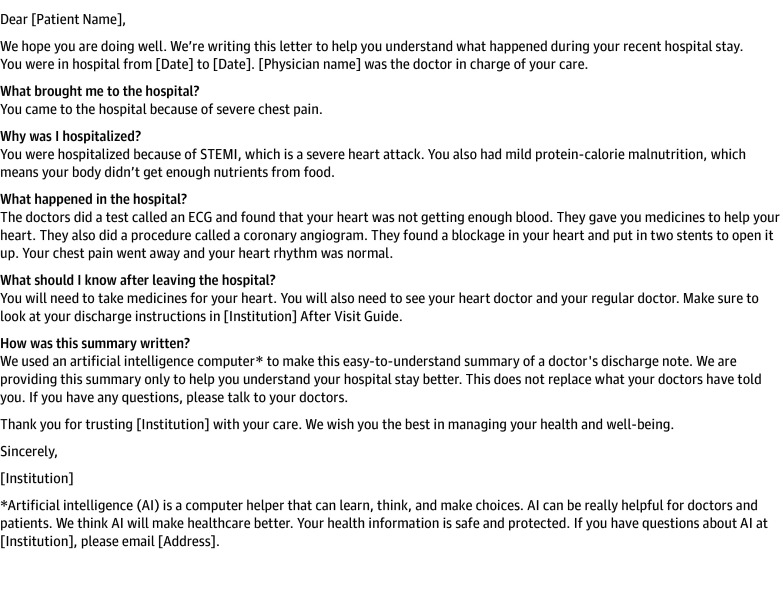
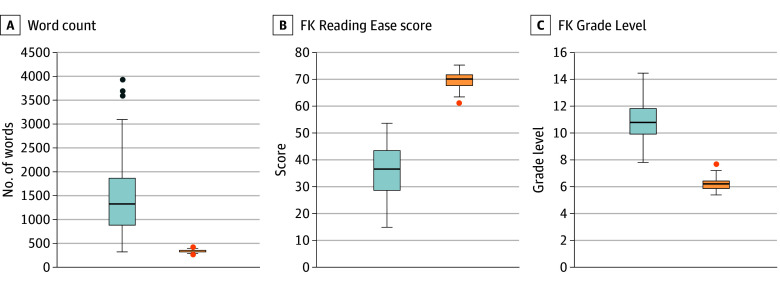
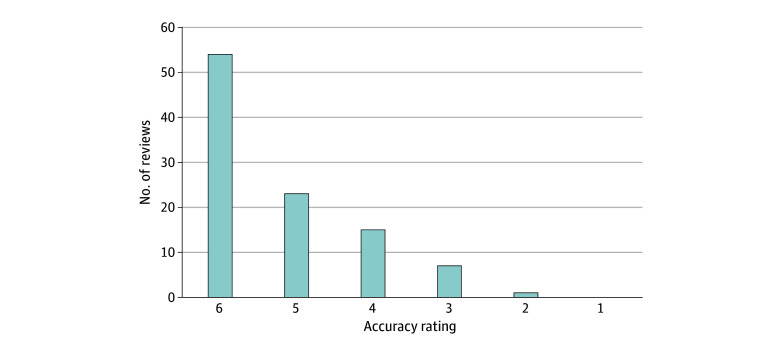
Importance: By law, patients have immediate access to discharge notes in their medical records. Technical language and abbreviations make notes difficult to read and understand for a typical patient. Large language models (LLMs [eg, GPT-4]) have the potential to transform these notes into patient-friendly language and format. Objective: To determine whether an LLM can transform discharge summaries into a format that is more readable and understandable. Design, Setting, and Participants: This cross-sectional study evaluated a sample of the discharge summaries of adult patients discharged from the General Internal Medicine service at NYU (New York University) Langone Health from June 1 to 30, 2023. Patients discharged as deceased were excluded. All discharge summaries were processed by the LLM between July 26 and August 5, 2023. Interventions: A secure Health Insurance Portability and Accountability Act-compliant platform, Microsoft Azure OpenAI, was used to transform these discharge summaries into a patient-friendly format between July 26 and August 5, 2023. Main Outcomes and Measures: Outcomes included readability as measured by Flesch-Kincaid Grade Level and understandability using Patient Education Materials Assessment Tool (PEMAT) scores. Readability and understandability of the original discharge summaries were compared with the transformed, patient-friendly discharge summaries created through the LLM. As balancing metrics, accuracy and completeness of the patient-friendly version were measured. Results: Discharge summaries of 50 patients (31 female [62.0%] and 19 male [38.0%]) were included. The median patient age was 65.5 (IQR, 59.0-77.5) years. Mean (SD) Flesch-Kincaid Grade Level was significantly lower in the patient-friendly discharge summaries (6.2 [0.5] vs 11.0 [1.5]; P < .001). PEMAT understandability scores were significantly higher for patient-friendly discharge summaries (81% vs 13%; P < .001). Two physicians reviewed each patient-friendly discharge summary for accuracy on a 6-point scale, with 54 of 100 reviews (54.0%) giving the best possible rating of 6. Summaries were rated entirely complete in 56 reviews (56.0%). Eighteen reviews noted safety concerns, mostly involving omissions, but also several inaccurate statements (termed hallucinations). Conclusions and Relevance: The findings of this cross-sectional study of 50 discharge summaries suggest that LLMs can be used to translate discharge summaries into patient-friendly language and formats that are significantly more readable and understandable than discharge summaries as they appear in electronic health records. However, implementation will require improvements in accuracy, completeness, and safety. Given the safety concerns, initial implementation will require physician review.
Overview
The claims and statistics of this paper haven’t been checked yet.
Run the check — free, no account needed. It reads the open-access text and checks the sources it cites.
Integrity signals
Registry
Cites
Statistics
Figures
Verification
Claims the paper makes
The claims and statistics of this paper haven’t been checked yet.
Run the check — free, no account needed. It reads the open-access text and checks the sources it cites.
Claims other papers make about this one
Each is checked against this paper’s own text: does it say what the citing paper says it does?
The source backs part of the claim, not all of it — or backs it for a different population, condition or comparison.
In the citing paper
“However, variability in output quality, including hallucinations and incomplete contextualization, necessitates human oversight.42”
From Artificial Intelligence in Oncology: Practical Applications Across Clinical Care, Scholarship, and Translation. (2026) · cites this paper as [42]
Experimental — accuracy not yet measured
Self-check
Percentages, sums and reported differences re-computed from the paper’s own numbers.
The self-check needs the paper’s full text.
Citations
Cites
Kung, T. H., Cheatham, M., Medenilla, A., Sillos, C., De Leon, L., Elepaño, C., Madriaga, M., Aggabao, R., Diaz-Candido, G., Maningo, J., et al. (2023) · PLOS Digital Health · doi:10.1371/journal.pdig.0000198 · Cited by 4,115
Ayers, J. W., Poliak, A., Dredze, M., Leas, E. C., Zhu, Z., Kelley, J. B., Faix, D. J., Goodman, A. M., Longhurst, C. A., Hogarth, M., et al. (2023) · JAMA Internal Medicine · doi:10.1001/jamainternmed.2023.1838 · Cited by 2,613
Benefits, Limits, and Risks of GPT-4 as an AI Chatbot for Medicine
Lee, P., Bubeck, S., & Petro, J. (2023) · New England Journal of Medicine · doi:10.1056/nejmsr2214184 · Cited by 1,738
Shoemaker, S. J., Wolf, M. S., & Brach, C. (2014) · Patient Education and Counseling · doi:10.1016/j.pec.2014.05.027 · Cited by 1,422
Interventions to Reduce 30-Day Rehospitalization: A Systematic Review
Hansen, L. O., Young, R. S., Hinami, K., Leung, A., & Williams, M. V. (2011) · Annals of Internal Medicine · doi:10.7326/0003-4819-155-8-201110180-00008 · Cited by 1,182
Greene, J., & Hibbard, J. H. (2011) · Journal of General Internal Medicine · doi:10.1007/s11606-011-1931-2 · Cited by 1,028
Do increases in patient activation result in improved self-management behaviors?
Hibbard, J. H., Mahoney, E. R., Stock, R., & Tusler, M. (2007) · Health Services Research · doi:10.1111/j.1475-6773.2006.00669.x · Cited by 906
Addressing bias in artificial intelligence in health care
Parikh, R. B., Teeple, S., & Navathe, A. S. (2019) · JAMA · doi:10.1001/jama.2019.18058 · Cited by 764
Readability Standards for Informed-Consent Forms as Compared with Actual Readability
Paasche‐Orlow, M. K., Taylor, H. A., & Brancati, F. L. (2003) · New England Journal of Medicine · doi:10.1056/nejmsa021212 · Cited by 763
Johnson, D., Goodman, R., Patrinely, J., Stone, C., Zimmerman, E., Donald, R., Chang, S., Berkowitz, S., Finn, A., Jahangir, E., et al. (2023) · doi:10.21203/rs.3.rs-2566942/v1 · Cited by 598
Research works printed but not linked: 1
- Weiss, 2003, Health Literacy: A Manual for Clinicians, 51
Cited by
Sorted by citations
The TRIPOD-LLM reporting guideline for studies using large language models
Gallifant, J., Afshar, M., Ameen, S., Aphinyanaphongs, Y., Chen, S., Cacciamani, G., Demner-Fushman, D., Dligach, D., Daneshjou, R., Fernandes, C., et al. (2025) · Nature Medicine · doi:10.1038/s41591-024-03425-5 · Cited by 615
Self-citationLarge language models in patient education: a scoping review of applications in medicine
Aydin, S., Karabacak, M., Vlachos, V., & Margetis, K. (2024) · Frontiers in Medicine · doi:10.3389/fmed.2024.1477898 · Cited by 318
Invasion and metastasis in cancer: molecular insights and therapeutic targets
Li, Y., Liu, F., Cai, Q., Deng, L., Ouyang, Q., Zhang, X. H.-F., & Zheng, J. (2025) · Signal Transduction and Targeted Therapy · doi:10.1038/s41392-025-02148-4 · Cited by 314
Liu, S., McCoy, A. B., & Wright, A. (2025) · Journal of the American Medical Informatics Association · doi:10.1093/jamia/ocaf008 · Cited by 200
Vrdoljak, J., Boban, Z., Vilović, M., Kumrić, M., & Božić, J. (2025) · Healthcare · doi:10.3390/healthcare13060603 · Cited by 202
Will, J., Gupta, M., Zaretsky, J., Dowlath, A., Testa, P. A., & Feldman, J. (2025) · Journal of Medical Internet Research · doi:10.2196/69955 · Cited by 139
Self-citationNg, K. K. Y., Matsuba, I., & Zhang, P. C. (2025) · NEJM AI · doi:10.1056/aira2400380 · Cited by 107
The generative era of medical AI
Fahrner, J., Chen, E., Topol, E. J., & Rajpurkar, P. (2025) · Cell · doi:10.1016/j.cell.2025.05.018 · Cited by 120
Rabbani, S. A., El‐Tanani, M., Sharma, S., Rabbani, S. S., El‐Tanani, Y., Kumar, R. R., & Saini, M. (2025) · BioMedInformatics · doi:10.3390/biomedinformatics5030037 · Cited by 119
Swisher, A. R., Wu, A. W., Liu, G. C., Lee, M., Carle, T. R., & Tang, D. M. (2024) · Otolaryngology · doi:10.1002/ohn.927 · Cited by 80
Developing and evaluating large language model–generated emergency medicine handoff notes
Hartman, V., Zhang, X., Poddar, R., McCarty, M., Fortenko, A., Sholle, E., Sharma, R., Campion, T., & Steel, P. A. D. (2024) · JAMA Network Open · doi:10.1001/jamanetworkopen.2024.48723 · Cited by 76
Evaluating large language models and agents in healthcare: key challenges in clinical applications
Chen, X., Xiang, J., Lu, S., Liu, Y., He, M., & Shi, D. (2025) · Intelligent Medicine · doi:10.1016/j.imed.2025.03.002 · Cited by 97
Jung, K.-H. (2025) · Healthcare Informatics Research · doi:10.4258/hir.2025.31.2.114 · Cited by 84
Generative AI in Medicine — Evaluating Progress and Challenges
Maddox, T. M., Embí, P. J., Gerhart, J., Goldsack, J. C., Parikh, R. B., & Sarich, T. C. (2025) · New England Journal of Medicine · doi:10.1056/nejmsb2503956 · Cited by 69
Lee, C., Britto, S. S., & Diwan, K. (2024) · Cureus · doi:10.7759/cureus.73994 · Cited by 69
Ong, J. C. L., Jin, L., Elangovan, K., Lim, G. Y. S., Lim, D. Y. Z., Sng, G. G. R., Ke, Y. H., Tung, J. Y. M., Zhong, R. J., Koh, C. M. Y., et al. (2025) · Cell Reports Medicine · doi:10.1016/j.xcrm.2025.102323 · Cited by 58
Using Large Language Models to Generate Educational Materials on Childhood Glaucoma
Dihan, Q. A., Chauhan, M. Z., Eleiwa, T. K., Hassan, A. K., Sallam, A. B., Khouri, A. S., Chang, T. C., & Elhusseiny, A. M. (2024) · American Journal of Ophthalmology · doi:10.1016/j.ajo.2024.04.004 · Cited by 55
Zhou, J., Zhang, J., Wan, R., Cui, X., Liu, Q., Guo, H., Shi, X., Fu, B., Meng, J., Yue, B., et al. (2025) · BMC Medical Education · doi:10.1186/s12909-025-06916-2 · Cited by 61
Sushil, M., Zack, T. I., Mandair, D., Zheng, Z., Wali, A., Yu, Y.-N., Quan, Y., Lituiev, D., & Butte, A. J. (2024) · Journal of the American Medical Informatics Association · doi:10.1093/jamia/ocae146 · Cited by 64
Markowitz, D. M. (2024) · PNAS Nexus · doi:10.1093/pnasnexus/pgae387 · Cited by 68
A strategy for cost-effective large language model use at health system-scale
Klang, E., Apakama, D. U., Abbott, E. E., Vaid, A., Lampert, J. M., Sakhuja, A., Freeman, R., Charney, A. W., Reich, D. L., Kraft, M., et al. (2024) · npj Digital Medicine · doi:10.1038/s41746-024-01315-1 · Cited by 56
Subramanian, C. R., Yang, D. A., & Khanna, R. R. (2024) · JAMA Network Open · doi:10.1001/jamanetworkopen.2024.0347 · Cited by 47
Red teaming ChatGPT in medicine to yield real-world insights on model behavior
Chang, C. T., Farah, H., Gui, H., Rezaei, S. J., Bou-Khalil, C., Park, Y., Swaminathan, A., Omiye, J. A., Kolluri, A., Chaurasia, A., et al. (2025) · npj Digital Medicine · doi:10.1038/s41746-025-01542-0 · Cited by 52
Li, H., Fu, J., & Python, A. (2025) · Journal of Medical Internet Research · doi:10.2196/71916 · Cited by 49
Large Language Models for Simplified Interventional Radiology Reports: A Comparative Analysis
Can, E., Uller, W., Vogt, K., Doppler, M. C., Busch, F., Bayerl, N., Ellmann, S., Kader, A., Elkilany, A., Makowski, M. R., et al. (2024) · Academic Radiology · doi:10.1016/j.acra.2024.09.041 · Cited by 38
Large language models in critical care
Biesheuvel, L. A., Workum, J. D., Reuland, M., van Genderen, M. E., Thoral, P., Dongelmans, D., & Elbers, P. (2025) · Journal of Intensive Medicine · doi:10.1016/j.jointm.2024.12.001 · Cited by 36
Evaluating Hospital Course Summarization by an Electronic Health Record–Based Large Language Model
Small, W. R., Austrian, J. S., O’Donnell, L., Burk‐Rafel, J., Hochman, K. A., Goodman, A. J., Zaretsky, J., Martin, J. A., Johnson, S. B., Major, V. J., et al. (2025) · JAMA Network Open · doi:10.1001/jamanetworkopen.2025.26339 · Cited by 40
Self-citationHuang, T. Y., Safranek, C. W., Socrates, V., Chartash, D., Wright, D., Dilip, M., Sangal, R. B., & Taylor, R. A. (2024) · Journal of Medical Internet Research · doi:10.2196/60336 · Cited by 37
Large language models to process, analyze, and synthesize biomedical texts: a scoping review
Doneva, S. E., Qin, S., Sick, B., Ellendorff, T., Goldman, J.-P., Schneider, G., & Ineichen, B. V. (2024) · Discover Artificial Intelligence · doi:10.1007/s44163-024-00197-2 · Cited by 47
A review of ophthalmology education in the era of generative artificial intelligence
Heinke, A., Radgoudarzi, N., Huang, B. B., & Baxter, S. L. (2024) · Asia-Pacific Journal of Ophthalmology · doi:10.1016/j.apjo.2024.100089 · Cited by 39
Human–large language model collaboration in clinical medicine: a systematic review and meta-analysis
Wang, G., Zhang, K., Jiang, J., Wang, C., Bi, H., Liang, H., Qi, Z., Huang, Y., Li, Y., & Yang, X. (2026) · npj Digital Medicine · doi:10.1038/s41746-026-02382-2 · Cited by 48
The U.S. Radiologist Workforce: AJR Expert Panel Narrative Review
Rozenshtein, A., Findeiss, L., Wood, M. J., Shih, G., & Parikh, J. R. (2024) · American Journal of Roentgenology · doi:10.2214/ajr.24.32085 · Cited by 36
Ray, M., Kats, D. J., Moorkens, J., Rai, D., Shaar, N., Quinones, D., Vermeulen, A., Mateo, C. M., Brewster, R., Khan, A., et al. (2025) · Archives of Pediatrics and Adolescent Medicine · doi:10.1001/jamapediatrics.2025.1729 · Cited by 31
Development and evaluation of a clinical note summarization system using large language models
Oliveira, J. D., dos Santos, H. D. P., Ulbrich, A. H. D. P. S., Couto, J., Arocha, M., Santos, J., Costa, M. M., Faccio, D., Tabalipa, F. D. O., & Nogueira, R. F. (2025) · Communications Medicine · doi:10.1038/s43856-025-01091-3 · Cited by 31
Crowe, B., Shah, S., Teng, D., Ma, S. P., DeCamp, M. W., Rosenberg, E. I., Rodriguez, J. A., Collins, B. X., Huber, K., Karches, K. E., et al. (2024) · Journal of General Internal Medicine · doi:10.1007/s11606-024-09102-0 · Cited by 34
The use of large language models in clinical documentation: A scoping review
Woo, B., Cato, K., Cho, H., You, S. B., & Song, J. (2025) · International Journal of Nursing Studies · doi:10.1016/j.ijnurstu.2025.105322 · Cited by 37
Du, X.-S., Zhou, Z., Wang, Y.-F., Chuang, Y.-W., Li, Y.-M., Yang, R., Zhang, W., Wang, X., Chen, X.-Y., Guan, H., et al. (2024) · medRxiv · doi:10.1101/2024.08.11.24311828 · Cited by 36
Levin, C., Suliman, M., Naimi, E., & Saban, M. (2024) · Journal of Clinical Nursing · doi:10.1111/jocn.17384 · Cited by 26
Du, X., Zhou, Z., Wang, Y., Chuang, Y.-W., Li, Y., Yang, R. C., Zhang, W., Wang, X., Chen, X., Guan, H., et al. (2025) · Journal of the American Medical Informatics Association · doi:10.1093/jamia/ocaf233 · Cited by 56
Implementation of large language models in electronic health records
Griot, M., Vanderdonckt, J., & Yuksel, D. (2025) · PLOS Digital Health · doi:10.1371/journal.pdig.0001141 · Cited by 23
Du, X., Zhou, Z., Wang, Y., Chuang, Y.-W., Li, Y., Yang, R., Hong, P., Bates, D. W., & Zhou, L. (2026) · International Journal of Medical Informatics · doi:10.1016/j.ijmedinf.2025.106091 · Cited by 26
Zeng, S., Kong, Q., Wu, X., Ma, T., Wang, L., Xu, L., Kou, G., Zhang, M., Yang, X., Zuo, X., et al. (2024) · Helicobacter · doi:10.1111/hel.13115 · Cited by 22
Rust, P., Frings, J., Meister, S., & Fehring, L. (2025) · Communications Medicine · doi:10.1038/s43856-025-00927-2 · Cited by 23
Chung, P., Swaminathan, A., Goodell, A. J., Kim, Y., Reincke, S. M., Han, L., Deverett, B., Sadeghi, M. A., Ariss, A.-B., Ghanem, M., et al. (2025) · NEJM AI · doi:10.1056/aidbp2500418 · Cited by 58
Eisinger, F., Holderried, F., Mahling, M., Stegemann–Philipps, C., Herrmann‐Werner, A., Nazarenus, E., Sonanini, A., Guthoff, M., Eickhoff, C., & Holderried, M. (2024) · Journal of Medical Internet Research · doi:10.2196/67143 · Cited by 22
Generative Artificial Intelligence in Clinical Medicine and Impact on Gastroenterology
Soroush, A., Giuffrè, M., Chung, S., & Shung, D. L. (2025) · Gastroenterology · doi:10.1053/j.gastro.2025.03.038 · Cited by 23
MacKay, E. J., Goldfinger, S., Chan, T. J., Grasfield, R. H., Eswar, V., Li, K., Cao, Q., & Pouch, A. M. (2025) · British Journal of Anaesthesia · doi:10.1016/j.bja.2025.01.028 · Cited by 16
Ethical Assessment of Generative AI Tools for Clinical Summarization Tasks
Char, D. S., Downing, N. L., Youssef, A., & Mello, M. M. (2026) · The American Journal of Bioethics · doi:10.1080/15265161.2026.2657875 · Cited by 17
Large language models in traditional Chinese medicine: a systematic review
Chen, Z., Wang, H., Li, C., Liu, C., Yang, F., Zhang, D., Fauci, A. J., & Zhang, J. (2025) · Acupuncture and Herbal Medicine · doi:10.1097/hm9.0000000000000143 · Cited by 20
Artificial intelligence in primary care: innovation at a crossroads
Laranjo, L., Car, L. T., Payne, R. E., Neves, A. L., Kidd, M. R., & Miranda, J. J. (2025) · The Lancet Primary Care · doi:10.1016/j.lanprc.2025.100078 · Cited by 28
Generating product reviews from aspect-based ratings using large language models
Pandey, P., & Singh, J. P. (2025) · Journal of Retailing and Consumer Services · doi:10.1016/j.jretconser.2025.104244 · Cited by 19
Evaluation of AI Summaries on Interdisciplinary Understanding of Ophthalmology Notes
Tailor, P. D., D’Souza, H. S., Becerra, C. M. C., Dahl, H. M., Patel, N. R., Kaplan, T. M., Kohli, D., Bothun, E. D., Mohney, B. G., Tooley, A. A., et al. (2025) · JAMA Ophthalmology · doi:10.1001/jamaophthalmol.2025.0351 · Cited by 14
Large language models and global health equity: a roadmap for equitable adoption in LMICs
Chen, H., Zeng, D., Qin, Y., Fan, Z., Ci, F. N. Y., Klonoff, D. C., Ji, J. S., Zhang, S., Amissah-Arthur, K. N., Jiménez, M., et al. (2025) · The Lancet Regional Health - Western Pacific · doi:10.1016/j.lanwpc.2025.101707 · Cited by 22
Reimagining patient-reported outcomes in the age of generative AI
Boyer, L., Fernandes, S., Auquier, P., Falissard, B., & Panch, T. (2025) · npj Digital Medicine · doi:10.1038/s41746-025-02006-1 · Cited by 16
Abdalla, M., Saad, M., Abazia, D. T., Advani, A., Alhammad, A., Bernknopf, A. C., Bitra, V. R., Blommel, M. L., Conn, K. M., Goldwire, M. A., et al. (2025) · JACCP JOURNAL OF THE AMERICAN COLLEGE OF CLINICAL PHARMACY · doi:10.1002/jac5.70131 · Cited by 14
Zhang, Z., Nezhad, M. J. M., Hosseini, S. M. B., Zolnour, A., Zonour, Z., Hosseini, S. M., Topaz, M., & Zolnoori, M. (2025) · International Journal of Medical Informatics · doi:10.1016/j.ijmedinf.2025.106231 · Cited by 14
Charting the ethical landscape of generative AI-augmented clinical documentation
Sun, Q. W., Miller, J. E., & Hull, S. C. (2025) · Journal of Medical Ethics · doi:10.1136/jme-2024-110656 · Cited by 12
Silberlust, J., Solanki, P., Stevens, E. R., Genes, N. G., Lim, E., Sun, K., Lewis, M., Testa, P. A., & Szerencsy, A. C. (2025) · JAMIA Open · doi:10.1093/jamiaopen/ooaf096 · Cited by 11
Alarifi, M. (2025) · Journal of Imaging Informatics in Medicine · doi:10.1007/s10278-025-01454-1 · Cited by 13
Applications of Generative Artificial Intelligence in Electronic Medical Records: A Scoping Review
Morjaria, L., Gandhi, B., Haider, N., Mellon, M., & Sibbald, M. (2025) · Information · doi:10.3390/info16040284 · Cited by 12
Hains, L. R., Kleinig, O., Murugappa, A., Gluck, S., Marks, J., Gilbert, T., & Bacchi, S. (2025) · Internal Medicine Journal · doi:10.1111/imj.70073 · Cited by 10
The premise, promise, and perils of artificial intelligence in critical care cardiology
Huerta, N. H., Rao, S. J., Isath, A. M., Wang, Z., Glicksberg, B. S., & Krittanawong, C. (2024) · Progress in Cardiovascular Diseases · doi:10.1016/j.pcad.2024.06.006 · Cited by 10
Kurland, D. B., Alber, D. A., Palla, A., de Souza, D. N., Lau, D., Laufer, I., Frempong-Boadu, A. K., Kondziolka, D. S., & Oermann, E. K. (2025) · Neurosurgery · doi:10.1227/neu.0000000000003354 · Cited by 10
AI-driven report-generation tools in mental healthcare: A review of commercial tools
Bouguettaya, A., Victoria Team, Stuart, E. M., & Aboujaoude, E. N. (2025) · General Hospital Psychiatry · doi:10.1016/j.genhosppsych.2025.02.018 · Cited by 11
McMinn, D., Grant, T., DeFord-Watts, L., Porkess, V., Lens, M., Rapier, C., Joe, W., Becker, T. A., & Bender, W. R. (2025) · JAMIA Open · doi:10.1093/jamiaopen/ooaf023 · Cited by 12
Lim, B., Seth, I., Maxwell, M., Cuomo, R., Ross, R. J., & Rozen, W. M. (2025) · Aesthetic Plastic Surgery · doi:10.1007/s00266-025-04842-8 · Cited by 10
Application of GenAI in Clinical Administration Support
Taheri, A., Farhadi, A., & Zamanifar, A. (2025) · Springer eBooks · doi:10.1007/978-3-031-82963-5_4 · Cited by 11
Shahnam, A., Nindra, U., Hitchen, N., Tang, J., Hong, M., Hong, J. H., Au‐Yeung, G., Chua, W. M., Ng, W. L., Hopkins, A. M., et al. (2025) · JCO Clinical Cancer Informatics · doi:10.1200/cci-24-00323 · Cited by 10
Agentic LLM Workflows for Generating Patient-Friendly Medical Reports
Sudarshan, M., Shih, S., Yee, E., Yang, A., Zou, J., Chen, C., Zhou, Q., Chen, L., Singhal, C., & Shih, G. (2024) · arXiv · doi:10.48550/arxiv.2408.01112 · Cited by 36
“In recent years, Large Language Models (LLMs) have been increasingly leveraged in healthcare applications, from producing discharge summaries [5] to structured radiology reports [6].”
BackgroundMethodIto, S., Furukawa, E., Okuhara, T., Okada, H., & Kiuchi, T. (2025) · PEC Innovation · doi:10.1016/j.pecinn.2025.100390 · Cited by 10
Operationalizing machine-assisted translation in healthcare
López, I., Velasquez, D. E., Chen, J. H., & Rodriguez, J. A. (2025) · npj Digital Medicine · doi:10.1038/s41746-025-01944-0 · Cited by 9
Hahne, J., & Carpenter, B. D. (2026) · Patient Education and Counseling · doi:10.1016/j.pec.2026.109492 · Cited by 12
Artificial intelligence in forensic pathology: an Australian and New Zealand perspective
Garland, J., Tse, R. D., Stables, S. R., Broi, U. D., & Ondruschka, B. (2025) · Rechtsmedizin · doi:10.1007/s00194-025-00741-z · Cited by 9
BRIDGE: benchmarking large language models for understanding real-world clinical practice texts
Wu, J., Gu, B., Zhou, R., Xie, K., Snyder, D., Jiang, Y., Carducci, V., Wyss, R., Desai, R. J., Alsentzer, E., et al. (2026) · Nature Biomedical Engineering · doi:10.1038/s41551-026-01719-2 · Cited by 28
Large language models and women’s health: a digital companion for informed decision-making
Recker, F., Neubauer, R., Wittek, A., & Scholten, N. (2025) · Archives of Gynecology and Obstetrics · doi:10.1007/s00404-025-08065-9 · Cited by 11
Cork, S. C., & Hopcroft, K. (2025) · BJGP Open · doi:10.3399/bjgpo.2024.0300 · Cited by 9
Text-to-Video Generation—A Cutting-Edge Generative AI Application
Akhlaq, A., & Liu, T. Y. A. (2025) · JAMA Ophthalmology · doi:10.1001/jamaophthalmol.2025.2023 · Cited by 6
Rullo, R., Maatouk, A., Huang, T., Chen, J., Qiu, W., O’Connor, G., Womack, J. A., Sadak, T. I., Rodriguez, C., Carneiro, P. B., et al. (2025) · Journal of Medical Internet Research · doi:10.2196/77053 · Cited by 8
Holderried, F., Sonanini, A., Stegemann–Philipps, C., Herrmann‐Werner, A., Spitzer, P., Guthoff, M., Heyne, N., Sering, K. F., Holderried, M., & Eisinger, F. (2025) · Journal of Medical Internet Research · doi:10.2196/81243 · Cited by 8
Mehri, T., Nadalini, T., Hoekman, A. H., van der Laan, T. P., Kagialari, K., Wagner, R. K., Doornberg, J. N., Schoonbeek, R. C., Bootsma-Robroeks, C. M., Aalderink, M., et al. (2026) · EBioMedicine · doi:10.1016/j.ebiom.2026.106247 · Cited by 6
Lumbiganon, S., Chawareb, E. A., Hammad, M. A. M., Azad, B. K., Shah, D., & Yafi, F. A. (2024) · Current Urology Reports · doi:10.1007/s11934-024-01237-1 · Cited by 6
Sridharan, K., & Sivaramakrishnan, G. (2024) · Expert Review of Clinical Pharmacology · doi:10.1080/17512433.2024.2363840 · Cited by 7
Sands, D. Z., & Finn, N. B. (2025) · Journal of Participatory Medicine · doi:10.2196/68911 · Cited by 5
Hao, W., Chen, C., Chen, K., Li, L., Chiu, C.-C., Yang, T.-Y., Jong, H.-C., Yang, H., Huang, C., Liu, J., et al. (2025) · Healthcare · doi:10.3390/healthcare13131598 · Cited by 6
Hasani, E., Richter, S., Juratli, T. A., Buszello, C. H., Prem, M. G., Willkommen, S., Sandi-Gahun, S., Eyüpoglu, I. Y., & Polanski, W. H. (2025) · JMIR Research Protocols · doi:10.2196/77204 · Cited by 5
Artificial intelligence in kidney disease and dialysis: from data mining to clinical impact
Neri, L., Zhang, H., & Usvyat, L. A. (2025) · Current Opinion in Nephrology & Hypertension · doi:10.1097/mnh.0000000000001132 · Cited by 5
Review of Large Language Models for Patient and Caregiver Support in Cancer Care Delivery
Kouzy, R., Cha, E. E., Rosen, A., & Bitterman, D. S. (2025) · JCO Clinical Cancer Informatics · doi:10.1200/cci-25-00044 · Cited by 10
Merchant, S. A., Merchant, N., Varghese, S. L., & Shaikh, M. J. S. (2025) · World Journal of Radiology · doi:10.4329/wjr.v17.i11.114754 · Cited by 6
Bertin, L., Branchi, F., Ciacci, C., Lee, A. R., Sanders, D. S., Trott, N., & Zingone, F. (2025) · Nutrients · doi:10.3390/nu17243828 · Cited by 6
Wang, M., Ma, H., & Piao, M. (2026) · npj Digital Medicine · doi:10.1038/s41746-025-02302-w · Cited by 6
The utility of artificial intelligence in plain language writing: A scoping review
Ugas, M. A., Huynh, J., Lenarcik-Packham, A., Kukan, A., Deol, A., Fazelzad, R., Fernando, S., Giannopoulos, E., Giuliani, M., Lawrie, K., et al. (2026) · Patient Education and Counseling · doi:10.1016/j.pec.2026.109483 · Cited by 7
The AI Efficiency Paradox: Reclaiming Quality Patient Care in an Era of Optimization
Burwell, J. M. (2025) · Journal of Medical Systems · doi:10.1007/s10916-025-02183-2 · Cited by 6
Shemtob, L., Nouri, A. G., Harvey-Sullivan, A., Qiu, C. S., Martin, J., Martin, M., Noden, S., Rob, T., Neves, A. L., Majeed, A., et al. (2025) · JAMIA Open · doi:10.1093/jamiaopen/ooaf082 · Cited by 9
Telehealth Care for People With Serious Illnesses and Preferred Languages Other Than English
Wang, Y., Sudore, R. L., Zapata, C. B., Martínez, R., Gonzalez, J., Le, V., Quinn, M., Huang, C., Perez-Vaughan, C., Pantilat, S. Z., et al. (2025) · JAMA Network Open · doi:10.1001/jamanetworkopen.2025.29880 · Cited by 5
Korkmaz, F. T., Ok, F., Karip, B., & Keleş, P. (2025) · Anatomical Sciences Education · doi:10.1002/ase.70120 · Cited by 5
Kim, S. I., Park, J., Kim, T., Seo, W., Kim, T., Cha, W. C., & Hong, H. (2025) · Scientific Reports · doi:10.1038/s41598-025-31113-y · Cited by 6
Large Language Models to Summarize Pediatric Admission Notes Into Plain Language
Ebby, C. G., Tse, G., Bethel, J., Zhao, Q., Gerber, D. T., & Kelly, M. M. (2025) · PEDIATRICS · doi:10.1542/peds.2024-069515 · Cited by 5
Prucker, P., Busch, F., Dorfner, F. J., Mertens, C. J., Bayerl, N., Makowski, M. R., Bressem, K. K., & Adams, L. C. (2025) · Clinical Imaging · doi:10.1016/j.clinimag.2025.110557 · Cited by 5
Silver, A. M., Goodman, L. A., Burton, M., Rangan, P., Chadha, R., Thomas, A. K., & O’Donnell, C. (2025) · Journal of General Internal Medicine · doi:10.1007/s11606-025-09740-y · Cited by 5
Leveraging AI to reduce operational healthcare costs: lessons from other industries
Wong, A., Nallamothu, B. K., Longhurst, C., & Singh, K. (2026) · npj Health Systems · doi:10.1038/s44401-026-00070-7 · Cited by 8
Metadata
- Authors
- Zaretsky, J., Kim, J. M., Baskharoun, S., Zhao, Y., Austrian, J., Aphinyanaphongs, Y., Gupta, R., Blecker, S. B., & Feldman, J.
- Affiliations
- NYU Langone Health (US)
- NYU Grossman Long Island School of Medicine (US)
- Corresponding author
- Zaretsky, Jonah
- ORCID
- Venue
- JAMA Network Open
- Publisher
- American Medical Association (AMA)
- Published
- 2024-03-11
- Volume
- 7
- Issue
- 3
- Pages
- e240357
- ISSN
- 2574-3805 (ISSN-L)
- PMC
- PMC10928500
- OpenAlex
- W4392643126
- Cited by
- 303
- References
- 36
- Citations by year
- 2026: 131 · 2025: 136 · 2024: 36
- FWCI
- 28.33
- Type
- journal article
- Language
- en
- Open access
- gold
- doi.org
- Licence
- cc-by
- Locations
- JAMA Network Open (publishedVersion, cc-by)
- PubMed Central (publishedVersion, cc-by)
- PubMed (publishedVersion)
- Topics
- Health Sciences › Medicine › Health Informatics › Artificial Intelligence in Healthcare and Education
- Health Sciences › Health Professions › General Health Professions › Health Literacy and Information Accessibility
- Social Sciences › Linguistics and Language › Text Readability and Simplification
- Keywords
- discharge summaries, large language models, generative AI, readability, comprehensibility, patient education materials, clinical documentation, GPT-4, hallucinations, general internal medicine, patient access to medical records, health information literacy, Flesch-Kincaid Grade Level, PEMAT, natural language processing of clinical notes
- MeSH terms
- Adult, Aged, Artificial Intelligence, Cross-Sectional Studies, Female, Humans, Inpatients, Language, Male, Middle Aged, Patient Discharge, United States, Electronic Health Records
About these checks
Registry, retraction, Cites and statistics results are computed, not judged, with one exception: a printed reference that no index lists is read once by a model before it counts as a citation error. Claims are extracted by a model and kept only when their quote appears verbatim in the text; each cited source is then checked, with a model’s help, for whether it says what the claim relies on. Those verdicts can be wrong — read the claim’s quote and the cited source before relying on one.
Statistics and arithmetic are recomputed, not judged.
Confidence bands are shown only for fields calibrated on our annotated test set. None is calibrated yet, so no band is shown.
What counts as a claim ›How we measure confidence ›How we check this ›
Are you an author, or do you see a problem with this page? Request a review
