

The DOI matches its Crossref record; 42 of the 44 references it cites were found in a registry or an index.
Association of Rare Copy Number Variants With Risk of Depression
Open accessAbstract
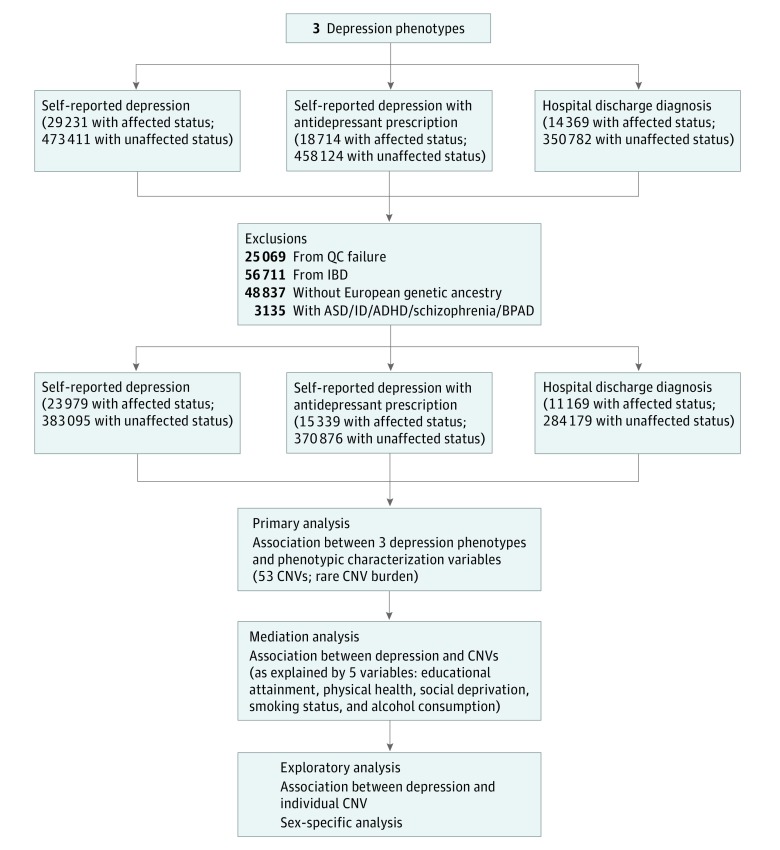
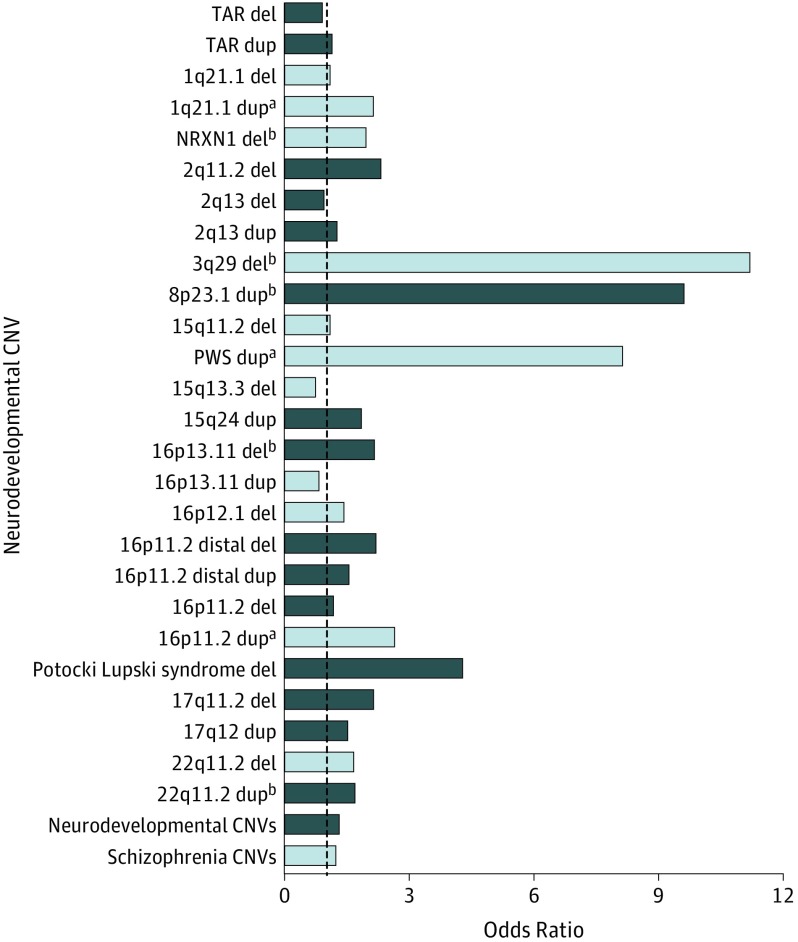
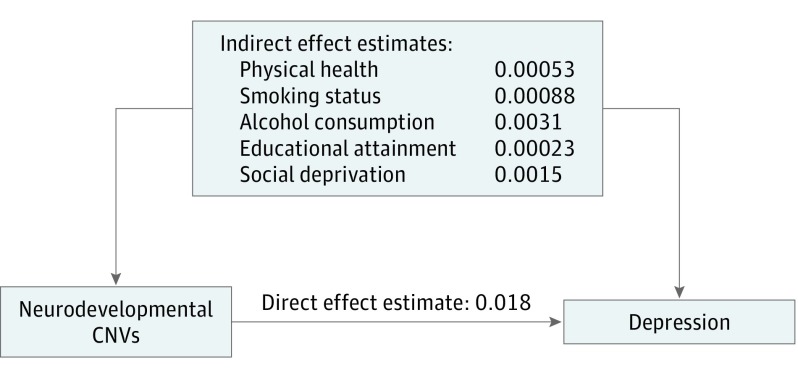
Importance: The role of large, rare copy number variants (CNVs) in neuropsychiatric disorders is well established, but their association with common psychiatric disorders, such as depression, remains unclear. Objective: To examine the association of a group of 53 CNVs associated with neurodevelopmental disorders and burden of rare CNVs with risk of depression. Design, Setting, and Participants: This case-control study used data from the UK Biobank study sample, which comprised 502 534 individuals living in the United Kingdom. Individuals with autism spectrum disorder, intellectual disability, attention-deficit/hyperactivity disorder, schizophrenia, or bipolar affective disorder diagnoses were excluded. Analyses were further restricted to individuals of European genetic ancestry (n = 407 074). The study was conducted from January 2017 to September 2018. Exposures: CNV carrier status. Main Outcomes and Measures: For the primary outcome, individuals who reported that a physician had told them they had a depression diagnosis were defined as cases. Analyses were repeated using 2 alternative depression definitions: self-reported lifetime depression with current antidepressant prescription at the time of visit 1, and hospital discharge diagnosis of depression. Results: Copy number variants were identified in 488 366 individuals aged 37 to 73 years. In total, 407 074 individuals with European genetic ancestry (220 201 female [54.1%]; mean [SD] age of 56.9 [8.0] years) were included in the study. Of these individuals, 23 979 (5.9%) had self-reported lifetime depression and 383 095 (94.1%) reported no lifetime depression. The group of 53 neurodevelopmental CNVs was associated with self-reported depression (odds ratio [OR], 1.34; 95% CI, 1.19-1.49, uncorrected P = 1.38 × 10⁻⁷), and these results were consistent when using 2 alternative definitions of depression. This association was partially explained by physical health, educational attainment, social deprivation, smoking status, and alcohol consumption. A strong independent association remained between the neurodevelopmental CNVs and depression in analyses that incorporated these other measures (OR, 1.26; 95% CI, 1.11-1.43; P = 2.87 × 10⁻⁴). Eight individual CNVs were nominally associated with risk of depression, and 3 of these 8 CNVs (1q21.1 duplication, Prader-Willi syndrome duplication, and 16p11.2 duplication) survived Bonferroni correction for the 53 CNVs tested. After the exclusion of carriers of neurodevelopmental CNVs, no association was found between measures of CNV burden and depression. Conclusions and Relevance: Neurodevelopmental CNVs appear to be associated with depression, extending the spectrum of clinical phenotypes that are associated with CNV carrier status.
Overview
The claims and statistics of this paper haven’t been checked yet.
Run the check — free, no account needed. It reads the open-access text and checks the sources it cites.
Integrity signals
Registry
Cites
Statistics
Figures
Verification
Claims the paper makes
The claims and statistics of this paper haven’t been checked yet.
Run the check — free, no account needed. It reads the open-access text and checks the sources it cites.
Claims other papers make about this one
Each is checked against this paper’s own text: does it say what the citing paper says it does?
In the citing paper
“16p11.2 deletions and duplications are linked to several other psychiatric conditions, including depression [14, 47] and anxiety [12, 14, 18, 19, 23, 34].”
From 16p11.2 Copy Number Variations and Neurodevelopmental Disorders (2020) · cites this paper as [47]
Self-check
Percentages, sums and reported differences re-computed from the paper’s own numbers.
The self-check needs the paper’s full text.
Citations
Cites
1 retracted
Davis, K. A. S., Coleman, J. R. I., Adams, M. J., Allen, N. E., Breen, G. D., Cullen, B., Dickens, C. M., Fox, E., Graham, N., Holliday, J., et al. (2018) · BJPsych Open · doi:10.1192/bjo.2018.12 · Cited by 236
Self-citationRetractedPLINK: a tool set for whole-genome association and population-based linkage analyses.
Purcell, S., Neale, B., Todd-Brown, K., Thomas, L., Ferreira, M. A. R., Bender, D., Maller, J., Sklar, P., de Bakker, P. I. W., Daly, M. J., et al. (2007) · The American Journal of Human Genetics · doi:10.1086/519795 · Cited by 34,089
lavaan : An R Package for Structural Equation Modeling
Rosseel, Y. (2012) · Journal of Statistical Software · doi:10.18637/jss.v048.i02 · Cited by 27,955
Information bias in health research: definition, pitfalls, and adjustment methods
Althubaiti, A. (2016) · Journal of Multidisciplinary Healthcare · doi:10.2147/jmdh.s104807 · Cited by 3,018
(2013) · The Lancet · doi:10.1016/s0140-6736(12)62129-1 · Cited by 3,010
eQTLGen, Wray, N. R., 23andMe, the Major Depressive Disorder Working Group of the Psychiatric Genomics Consortium, Ripke, S., Mattheisen, M., Trzaskowski, M., Byrne, E. M., Abdellaoui, A., Adams, M. J., et al. (2018) · Nature Genetics · doi:10.1038/s41588-018-0090-3 · Cited by 3,005
Socioeconomic inequalities in depression: a meta-analysis
Lorant, V. (2003) · American Journal of Epidemiology · doi:10.1093/aje/kwf182 · Cited by 2,603
Wang, K., Li, M., Hadley, D., Liu, R., Glessner, J., Grant, S. F. A., Hakonarson, H., & Bucan, M. (2007) · Genome Research · doi:10.1101/gr.6861907 · Cited by 1,792
Large recurrent microdeletions associated with schizophrenia.
GROUP, Stefansson, H., Rujescu, D., Cichon, S., Pietiläinen, O. P. H., Ingason, A., Steinberg, S., Fossdal, R., Sigurdsson, E., Sigmundsson, T., et al. (2008) · Nature · doi:10.1038/nature07229 · Cited by 1,745
Rare chromosomal deletions and duplications increase risk of schizophrenia
The International Schizophrenia Consortium (2008) · Nature · doi:10.1038/nature07239 · Cited by 1,475
Cited by
Sorted by citations
Thapar, A., Eyre, O., Patel, V., & Brent, D. (2022) · The Lancet · doi:10.1016/s0140-6736(22)01012-1 · Cited by 869
Andreassen, O. A., Hindley, G., Frei, O., & Smeland, O. B. (2023) · World Psychiatry · doi:10.1002/wps.21034 · Cited by 284
The genetic basis of major depression
Kendall, K. M., Van Assche, E., Andlauer, T. F. M., Choi, K. W., Luykx, J. J., Schulte, E. C., & Lu, Y. (2021) · Psychological Medicine · doi:10.1017/s0033291721000441 · Cited by 213
Self-citation16p11.2 Copy Number Variations and Neurodevelopmental Disorders
Rein, B., & Yan, Z. (2020) · Trends in Neurosciences · doi:10.1016/j.tins.2020.09.001 · Cited by 160
Uncovering the Genetic Architecture of Major Depression
McIntosh, A. M., Sullivan, P. F., & Lewis, C. M. (2019) · Neuron · doi:10.1016/j.neuron.2019.03.022 · Cited by 165
Nemeroff, C. B. (2020) · American Journal of Psychiatry · doi:10.1176/appi.ajp.2020.20060845 · Cited by 158
Association of Genetic Liability to Psychotic Experiences With Neuropsychotic Disorders and Traits
Legge, S. E., Jones, H. J., Kendall, K. M., Pardiñas, A. F., Menzies, G. E., Bracher‐Smith, M., Escott‐Price, V., Rees, E., Davis, K. A. S., Hotopf, M. H., et al. (2019) · JAMA Psychiatry · doi:10.1001/jamapsychiatry.2019.2508 · Cited by 155
Self-citationCopy number variation and neuropsychiatric illness
Rees, E., & Kirov, G. (2021) · Current Opinion in Genetics & Development · doi:10.1016/j.gde.2021.02.014 · Cited by 106
Self-citationThe individual and global impact of copy-number variants on complex human traits
Auwerx, C., Lepamets, M., Sadler, M. C., Patxot, M., Stojanov, M., Baud, D., Mägi, R., Esko, T., Metspalu, A., Milani, L. A., et al. (2022) · The American Journal of Human Genetics · doi:10.1016/j.ajhg.2022.02.010 · Cited by 94
Translating insights from neuropsychiatric genetics and genomics for precision psychiatry
Rees, E., & Owen, M. J. (2020) · Genome Medicine · doi:10.1186/s13073-020-00734-5 · Cited by 86
Self-citationYao, X., Glessner, J., Li, J., Qi, X., Hou, X., Zhu, C., Li, X., March, M., Yang, L., Mentch, F. D., et al. (2021) · Translational Psychiatry · doi:10.1038/s41398-020-01195-5 · Cited by 82
Exome sequencing in obsessive–compulsive disorder reveals a burden of rare damaging coding variants
Halvorsen, M., SAMUELS, J. F., Wang, Y., Greenberg, B. D., Fyer, A. J., McCracken, J. T., GELLER, D. A., Knowles, J. A., Zoghbi, A. W., Pottinger, T. D., et al. (2021) · Nature Neuroscience · doi:10.1038/s41593-021-00876-8 · Cited by 81
The contribution of copy number variants to psychiatric symptoms and cognitive ability
Mollon, J., Almasy, L. A., Jacquemont, S., & Glahn, D. C. (2023) · Molecular Psychiatry · doi:10.1038/s41380-023-01978-4 · Cited by 78
Identification of Neuropsychiatric Copy Number Variants in a Health Care System Population
Martin, C. L., Wain, K. E., Oetjens, M. T., Tolwinski, K., Palen, E., Hare-Harris, A. E., Habegger, L., Maxwell, E. K., Reid, J. G., Walsh, L. K., et al. (2020) · JAMA Psychiatry · doi:10.1001/jamapsychiatry.2020.2159 · Cited by 70
Sønderby, I. E., Ching, C. R. K., Thomopoulos, S. I., van der Meer, D., Sun, D., Villalon‐Reina, J. E., Agartz, I., Amunts, K., Arango, C., Armstrong, N. J., et al. (2022) · Human Brain Mapping · doi:10.1002/hbm.25354 · Cited by 67
Kamran, M., Bibi, F., Rehman, A. U., & Morris, D. W. (2022) · Genes · doi:10.3390/genes13040646 · Cited by 65
Jacquemont, S., Huguet, G., Klein, M., Chawner, S. J. R. A., Donald, K. A., van den Bree, M. B. M., Sebat, J. L., Ledbetter, D. H., Constantino, J. N., Earl, R. K., et al. (2022) · American Journal of Psychiatry · doi:10.1176/appi.ajp.2021.21040432 · Cited by 65
Khramtsova, E. A., Wilson, M. A., Martin, J., Winham, S. J., He, K., Davis, L. K., & Stranger, B. E. (2023) · Cell · doi:10.1016/j.cell.2023.04.014 · Cited by 57
Rare copy-number variants as modulators of common disease susceptibility
Auwerx, C., Lepamets, M., Sadler, M. C., Tesio, N., Ojavee, S. E., Clark, C. J., Mägi, R., Esko, T., Metspalu, A., Milani, L. A., et al. (2024) · Genome Medicine · doi:10.1186/s13073-023-01265-5 · Cited by 53
Comparing Copy Number Variations in a Danish Case Cohort of Individuals With Psychiatric Disorders
Sánchez, X. C., Helenius, D., Bybjerg‐Grauholm, J., Pedersen, C. B., HOUGAARD, D. M., Børglum, A. D., Nordentoft, M., Mors, O. N., Mortensen, P. B., Geschwind, D. H., et al. (2021) · JAMA Psychiatry · doi:10.1001/jamapsychiatry.2021.3392 · Cited by 51
Cognitive impairment in psychiatric diseases: Biomarkers of diagnosis, treatment, and prevention
Wang, Y., Meng, W., Liu, Z., An, Q., & Hu, X. (2022) · Frontiers in Cellular Neuroscience · doi:10.3389/fncel.2022.1046692 · Cited by 51
Birnbaum, R., Mahjani, B., Loos, R. J. F., & Sharp, A. J. (2022) · JAMA Psychiatry · doi:10.1001/jamapsychiatry.2021.4080 · Cited by 48
Alexander‐Bloch, A. F., Huguet, G., Schultz, L. M., Huffnagle, N., Jacquemont, S., Seidlitz, J., Saci, Z., Moore, T. M., Bethlehem, R. A. I., Mollon, J., et al. (2022) · JAMA Psychiatry · doi:10.1001/jamapsychiatry.2022.1017 · Cited by 43
Genomics of schizophrenia, bipolar disorder and major depressive disorder
Owen, M. J., Bray, N. J., Walters, J., & O’Donovan, M. C. (2025) · Nature Reviews Genetics · doi:10.1038/s41576-025-00843-0 · Cited by 44
Self-citation1q21.1 distal copy number variants are associated with cerebral and cognitive alterations in humans
Sønderby, I. E., van der Meer, D., Moreau, C. A., Kaufmann, T., Walters, G. B., Ellegaard, M., Abdellaoui, A., Ames, D. J., Amunts, K., Andersson, M., et al. (2021) · Translational Psychiatry · doi:10.1038/s41398-021-01213-0 · Cited by 39
Copy number variation and neuropsychiatric problems in females and males in the general population
Martin, J., Tammimies, K., Karlsson, R., Lu, Y., Larsson, H., Lichtenstein, P., & Magnusson, P. K. E. (2018) · American Journal of Medical Genetics Part B Neuropsychiatric Genetics · doi:10.1002/ajmg.b.32685 · Cited by 34
Population-Based Risk of Psychiatric Disorders Associated With Recurrent Copy Number Variants
Vaez, M., Montalbano, S., Sánchez, X. C., Hellberg, K.-L. G., Dehkordi, S. R., Krebs, M. D., Meijsen, J. J., Shorter, J. R., Bybjerg‐Grauholm, J., Mortensen, P. B., et al. (2024) · JAMA Psychiatry · doi:10.1001/jamapsychiatry.2024.1453 · Cited by 39
Seol, D., Ko, B. J., Kim, B., Chai, H., Lim, D., & Kim, H. (2019) · Animals · doi:10.3390/ani9100809 · Cited by 31
From genetics to systems biology of stress-related mental disorders
Dalvie, S., Chatzinakos, C., Zoubi, O. A., Georgiadis, F., Lancashire, L., & Daskalakis, N. P. (2021) · Neurobiology of Stress · doi:10.1016/j.ynstr.2021.100393 · Cited by 32
Jalbrzikowski, M., Lin, A., Vajdi, A., Grigoryan, V., Kushan, L., Ching, C. R. K., Schleifer, C. H., Hayes, R. A., Chu, S. A., Sugar, C. A., et al. (2022) · Molecular Psychiatry · doi:10.1038/s41380-022-01681-w · Cited by 28
Clinical evaluation of patients with a neuropsychiatric risk copy number variant
Chawner, S. J. R. A., Watson, C. J., & Owen, M. J. (2021) · Current Opinion in Genetics & Development · doi:10.1016/j.gde.2020.12.012 · Cited by 25
Self-citationSubcortical Brain Alterations in Carriers of Genomic Copy Number Variants
Kumar, K., Modenato, C., Moreau, C. A., Ching, C. R. K., Harvey, A., Martin‐Brevet, S., Huguet, G., Jean‐Louis, M., Douard, E. A., Martin, C.-O., et al. (2023) · American Journal of Psychiatry · doi:10.1176/appi.ajp.20220304 · Cited by 27
Self-citationGenome-wide detection of copy number variation in American mink using whole-genome sequencing
Davoudi, P., Do, D. N., Rathgeber, B., Colombo, S., Sargolzaei, M., Plastow, G., Wang, Z.-Q., Karimi, K., Hu, G.-Y., Valipour, S., et al. (2022) · BMC Genomics · doi:10.1186/s12864-022-08874-1 · Cited by 11
What Do We Know About the Genetic Architecture of Psychopathology?
Giangrande, E. J., Weber, R. S., & Turkheimer, E. (2022) · Annual Review of Clinical Psychology · doi:10.1146/annurev-clinpsy-081219-091234 · Cited by 22
Impact of Copy Number Variants and Polygenic Risk Scores on Psychopathology in the UK BiobankPreprint
Mollon, J., Schultz, L. M., Huguet, G., Knowles, E. E. M., Mathias, S. R., Rodrigue, A., Alexander‐Bloch, A. F., Saci, Z., Jean‐Louis, M., Kumar, K., et al. (2022) · SSRN Electronic Journal · doi:10.1016/j.biopsych.2023.01.028 · Cited by 21
Forrest, M. P., Santos, M. D., Piguel, N. H., Wang, Y., Hawkins, N. A., Bagchi, V. A., Dionisio, L. E., Yoon, S., Simkin, D., Martin‐de‐Saavedra, M. D., et al. (2023) · Nature Communications · doi:10.1038/s41467-023-36087-x · Cited by 22
A burden of rare copy number variants in obsessive-compulsive disorder
Halvorsen, M., de Schipper, E. J., Bäckman, J., Strom, N. I., Hagen, K., Chen, L. L., Djurfeldt, D. R., Höffler, K. D., Kähler, A. K., Lichtenstein, P., et al. (2024) · Molecular Psychiatry · doi:10.1038/s41380-024-02763-7 · Cited by 24
Web-Based Cognitive Testing in Psychiatric Research: Validation and Usability Study
Lynham, A. J., Jones, I. R., & Walters, J. (2022) · Journal of Medical Internet Research · doi:10.2196/28233 · Cited by 18
Self-citationThe impact of 22q11.2 copy-number variants on human traits in the general population
Zamariolli, M., Auwerx, C., Sadler, M. C., van der Graaf, A., Lepik, K., Schoeler, T., Moysés‐Oliveira, M., Dantas, A. G., Melaragno, M. I., & Kutalik, Z. (2023) · The American Journal of Human Genetics · doi:10.1016/j.ajhg.2023.01.005 · Cited by 20
van Calker, D., & Serchov, T. (2021) · Neuroscience & Biobehavioral Reviews · doi:10.1016/j.neubiorev.2021.03.019 · Cited by 19
Dissecting Molecular Genetic Mechanisms of 1q21.1 CNV in Neuropsychiatric Disorders
Yoon, J., & Mao, Y. (2021) · International Journal of Molecular Sciences · doi:10.3390/ijms22115811 · Cited by 19
Shohat, S., Amelan, A., & Shifman, S. (2020) · Biological Psychiatry · doi:10.1016/j.biopsych.2020.05.019 · Cited by 19
Sanchez, M. M., & Whitman, M. C. (2023) · Frontiers in Ophthalmology · doi:10.3389/fopht.2023.1233866 · Cited by 18
The psychiatric phenotypes of 1q21 distal deletion and duplication
Linden, S. C., Watson, C. J., Smith, J., Chawner, S. J. R. A., Lancaster, T. M., Evans, F., Williams, N. M., Skuse, D., Raymond, F. L., Hall, J., et al. (2021) · Translational Psychiatry · doi:10.1038/s41398-021-01226-9 · Cited by 17
Self-citationMartin, J., Asjadi, K., Hubbard, L., Kendall, K. M., Pardiñas, A. F., Jermy, B. S., Lewis, C. M., Baune, B. T., Boomsma, D. I., Hamilton, S. P., et al. (2021) · PLoS ONE · doi:10.1371/journal.pone.0248254 · Cited by 17
Self-citationThe pleiotropic spectrum of proximal 16p11.2 CNVs
Auwerx, C., Kutalik, Z., & Reymond, A. (2024) · The American Journal of Human Genetics · doi:10.1016/j.ajhg.2024.08.015 · Cited by 19
Psychopathology in adults with copy number variants
Adams, R., Baird, A., Smith, J., Williams, N. M., van den Bree, M. B. M., Linden, D. E. J., Owen, M. J., Hall, J., & Linden, S. C. (2022) · Psychological Medicine · doi:10.1017/s0033291721005201 · Cited by 12
Self-citationDeletion of Loss-of-Function–Intolerant Genes and Risk of 5 Psychiatric Disorders
Wainberg, M., Merico, D., Huguet, G., Zarrei, M., Jacquemont, S., Scherer, S. W., & Tripathy, S. J. (2021) · JAMA Psychiatry · doi:10.1001/jamapsychiatry.2021.3211 · Cited by 13
Donnelly, N. A., Cunningham, A. C., Salas, S. M., Bracher‐Smith, M., Chawner, S. J. R. A., Štochl, J., Ford, T. J., Raymond, F. L., Escott‐Price, V., & van den Bree, M. B. M. (2023) · Molecular Autism · doi:10.1186/s13229-023-00549-2 · Cited by 12
Self-citationThe Consequences of Abnormal Gene Dosage: Lessons from Chromosome 18
Cody, J. D. (2020) · Trends in Genetics · doi:10.1016/j.tig.2020.06.006 · Cited by 10
Sønderby, I. E., Ching, C. R. K., Thomopoulos, S. I., van der Meer, D., Villalón‐Reina, J. E., Agartz, I., Amunts, K., Arango, C., Armstrong, N. J., Ayesa‐Arriola, R., et al. (2021) · PsyArXiv (OSF Preprints) · doi:10.31234/osf.io/57erc · Cited by 11
Copy Number Variations in Neuropsychiatric Disorders
Büki, G., Hadzsiev, K., & Bene, J. (2023) · International Journal of Molecular Sciences · doi:10.3390/ijms241813671 · Cited by 12
Jung, B., Ahn, K., Justice, C., Norman, L., Price, J., Sudre, G., & Shaw, P. (2023) · Molecular Psychiatry · doi:10.1038/s41380-022-01906-y · Cited by 10
The burden of illness in Prader-Willi syndrome: a systematic literature review
Dempsey, D., Hall, M., Lanning, B. K., Barron‐Millar, B., Huang, M. S., Cowen, N. M., Nagao, M., Gandhi, R., & Bhatnagar, A. (2025) · Orphanet Journal of Rare Diseases · doi:10.1186/s13023-025-03787-0 · Cited by 10
Translational Study of Copy Number Variations in Schizophrenia
Cheng, M.-C., Chien, W., Huang, Y., Fang, T.-H., & Chen, C. (2021) · International Journal of Molecular Sciences · doi:10.3390/ijms23010457 · Cited by 10
Dennison, C. A., Martin, J., Shakeshaft, A., Riglin, L., Powell, V. E., Kirov, G., Owen, M. J., O’Donovan, M. C., & Thapar, A. (2025) · Biological Psychiatry · doi:10.1016/j.biopsych.2025.03.004 · Cited by 9
Self-citationElevated common variant genetic risk for tourette syndrome in a densely-affected pedigree
Halvorsen, M. W., Szatkiewicz, J., Mudgal, P., Yu, D., Aschauer, H. N., Atzmon, G., Barr, C. L., Barta, C., Barzilai, N., Batterson, J. R., et al. (2021) · Molecular Psychiatry · doi:10.1038/s41380-021-01277-w · Cited by 9
Katzourou, I. K., Barroso, I., Benger, L., Ingason, A., Stow, D., Tsang, R. S. M., Wood, M. L., Kirov, G., Walters, J., Owen, M. J., et al. (2025) · BJPsych Open · doi:10.1192/bjo.2025.43 · Cited by 7
Self-citationNomura, J., Zuko, A., Kishimoto, K., Mutsumine, H., Maegawa, H., Fukatsu, K., Nomura, Y., Liu, X., Nakai, N., Maeda, C., et al. (2025) · Cell Genomics · doi:10.1016/j.xgen.2025.100877 · Cited by 11
Xiong, Y., Krebs, K., Jermy, B. S., Karlsson, R., Pasman, J. A., Nguyen, T.-D., Gong, T., Kowalec, K., Rück, C., Sigström, R., et al. (2025) · Molecular Psychiatry · doi:10.1038/s41380-025-03084-z · Cited by 12
Deng, T., Ma, X., Duan, A., Lu, X., & Abdel-Shafy, H. (2024) · Journal of Dairy Science · doi:10.3168/jds.2023-24614 · Cited by 8
Bakken, N. R., Parker, N., Hannigan, L. J., Hagen, E., Parekh, P., Shadrin, A. A., Jaholkowski, P. P., Frei, E., Birkenæs, V., Hindley, G., et al. (2024) · Journal of Child Psychology and Psychiatry · doi:10.1111/jcpp.14063 · Cited by 8
Tuke, M. A., Tyrrell, J., Ruth, K. S., Beaumont, R. N., Wood, A. R., Murray, A., Frayling, T. M., Weedon, M. N., & Wright, C. F. (2020) · The American Journal of Human Genetics · doi:10.1016/j.ajhg.2020.06.001 · Cited by 8
Detera‐Wadleigh, S. D., Kassem, L., Besancon, E., Lopes, F. L., Akula, N., Sung, H., Blattner, M., Sheridan, L., Lacbawan, L. N., Garcia, J., et al. (2023) · Translational Psychiatry · doi:10.1038/s41398-023-02641-w · Cited by 8
Martin, J., Shameem Agha, S., Eyre, O., Riglin, L., Langley, K., Hubbard, L., Stergiakouli, E., Psychiatric Genomics Consortium ADHD Working Group, O'Donovan, M., & Thapar, A. (2021) · American Journal of Medical Genetics Part B: Neuropsychiatric Genetics · doi:10.1002/ajmg.b.32842 · Cited by 6
Self-citationThe translation of psychiatric genetic findings to the clinic
Kendall, K. M., Duffin, D., Doherty, J. L., Irving, R., Procter, A., & Walters, J. (2023) · Schizophrenia Research · doi:10.1016/j.schres.2023.10.024 · Cited by 6
Self-citationMontalbano, S., Krebs, M. D., Rosengren, A., Vaez, M., Hellberg, K.-L. G., Mortensen, P. B., Børglum, A. D., Geschwind, D. H., iPSYCH Investigators, Hougaard, D. M., et al. (2024) · npj Genomic Medicine · doi:10.1038/s41525-024-00450-8 · Cited by 6
Özaltun, M. F., Geyik, S., & Yılmaz, Ş. G. (2021) · Current Issues in Molecular Biology · doi:10.3390/cimb43020078 · Cited by 6
Putting Genetics to Work in the Psychiatric Clinic
McMahon, F. J. (2022) · American Journal of Psychiatry · doi:10.1176/appi.ajp.2021.22010024 · Cited by 6
Rare copy number variation in posttraumatic stress disorder
Maihofer, A. X., Engchuan, W., Huguet, G., Klein, M., MacDonald, J. R., Shanta, O., Thiruvahindrapuram, B., Jean‐Louis, M., Saci, Z., Jacquemont, S., et al. (2022) · Molecular Psychiatry · doi:10.1038/s41380-022-01776-4 · Cited by 6
Self-citationShanta, O., Klein, M., Sacks, M., MacDonald, J. R., Maihofer, A. X., Ahangari, M. M., Engchuan, W., Thiruvahindrapuram, B., Guevara, J., Hong, O., et al. (2025) · medRxiv · doi:10.1101/2025.07.11.25331310 · Cited by 7
Zhu, T., Mu, D., Hu, Y., Cao, Y., Yuan, M., Xu, J., Ye, H.-Q., & Zhang, W. (2024) · Translational Psychiatry · doi:10.1038/s41398-024-03213-2 · Cited by 7
Dinneen, T. J., Ghrálaigh, F. N., Ormond, C., Heron, E. A., Kirov, G., Lopez, L. M., & Gallagher, L. (2024) · npj Genomic Medicine · doi:10.1038/s41525-024-00426-8 · Cited by 5
Self-citationA cross-comparison of cognitive ability across 8 genomic disorders
Mortillo, M., & Mullé, J. G. (2021) · Current Opinion in Genetics & Development · doi:10.1016/j.gde.2021.04.001 · Cited by 7
Insights into the genomics of affective disorders
Forstner, A. J., Hoffmann, P., Nöthen, M. M., & Cichon, S. (2020) · Medizinische Genetik · doi:10.1515/medgen-2020-2003 · Cited by 6
Jensen, C. Z., la Cour, J. L., Watt, T., Kanters, J. K., Poulsen, H. E., Faber, J. O., Ellervik, C., & Nygaard, B. (2022) · Thyroid · doi:10.1089/thy.2022.0335 · Cited by 5
Psychopathology in mothers of children with pathogenic Copy Number Variants
Niarchou, M., Cunningham, A. C., Chawner, S. J. R. A., Moulding, H., Sopp, M., IMAGINE-ID, Hall, J., Owen, M. J., & van den Bree, M. B. M. (2022) · Journal of Medical Genetics · doi:10.1136/jmg-2022-108752 · Cited by 6
Self-citationPopulation-based Risk of Psychiatric Disorders Associated with Recurrent CNVsPreprint
Vaez, M., Montalbano, S., Sánchez, X. C., Hellberg, K.-L. G., Dehkordi, S. R., Krebs, M. D., Meijsen, J. J., Shorter, J. R., Byberg-Grauholm, J., Mortensen, P. B., et al. (2023) · medRxiv · doi:10.1101/2023.09.04.23294975 · Cited by 5
Persistent tic disorders are associated with 17q12 duplications
Halvorsen, M., Wang, S., Miller‐Fleming, T. W., Yu, D., Topaloudi, A., de Schipper, E. J., Bäckman, J., Mataix‐Cols, D., Rück, C., Mahjani, B., et al. (2026) · Molecular Psychiatry · doi:10.1038/s41380-026-03849-0 · Cited by 4
Rammos, A., Blakey, R., Dennison, C. A., Lewis, S. J., Ali, N. M. H., Davies, A., Wren, Y. E., Humphries, K., Sandy, J. R., Rees, E., et al. (2025) · Human Molecular Genetics · doi:10.1093/hmg/ddaf115 · Cited by 5
Self-citationChang, X., Qu, H., Liu, Y., Glessner, J., & Hakonarson, H. H. (2023) · Biological Psychiatry · doi:10.1016/j.biopsych.2023.10.011 · Cited by 5
Kushima, I., Nakatochi, M., & Ozaki, N. (2024) · Biological Psychiatry · doi:10.1016/j.biopsych.2024.11.019 · Cited by 6
Vaez, M., Montalbano, S., Waples, R. K., Krebs, M. D., Hellberg, K.-L. G., Gådin, J. R., Bybjerg‐Grauholm, J., Mortensen, P. B., Børglum, A. D., Nordentoft, M., et al. (2024) · medRxiv · doi:10.1101/2024.09.23.24314234 · Cited by 4
Recent Advances in Schizophrenia Genomics and Emerging Clinical Implications
Bigdeli, T. B., & Harvey, P. D. (2025) · Psychiatric Clinics of North America · doi:10.1016/j.psc.2025.01.008 · Cited by 3
Alexander, D. R. (2020) · Perspectives on Science and Christian Faith · doi:10.1017/9781108566520 · Cited by 3
Jönsson, L., Martin, J., Lichtenstein, P., Magnusson, P. K. E., Lundström, S., Westberg, L., & Tammimies, K. (2023) · Molecular Genetics & Genomic Medicine · doi:10.1002/mgg3.2191 · Cited by 3
Copy-number variants as modulators of common disease susceptibilityPreprint
Auwerx, C., Jõeloo, M., Sadler, M. C., Tesio, N., Ojavee, S. E., Clark, C. J., Mägi, R., Reymond, A., & Kutalik, Z. (2023) · medRxiv · doi:10.1101/2023.07.31.23293408 · Cited by 3
Zaks, N., Mahjani, B., Reichenberg, A., & Birnbaum, R. (2024) · medRxiv · doi:10.1101/2024.07.16.24310489 · Cited by 3
Dugan, G., Akula, N., Marenco, S., Auluck, P. K., Raznahan, A., Liu, S., DeCasien, A. R., Xu, Q., Feng, N., Kolachana, B. S., et al. (2024) · bioRxiv (Cold Spring Harbor Laboratory) · doi:10.1101/2024.09.19.613680 · Cited by 3
Genomic Analysis of Trichotillomania
Halvorsen, M., Garrett, M. E., Cuccaro, M. L., Ashley‐Koch, A. E., & Crowley, J. J. (2025) · American Journal of Medical Genetics Part B Neuropsychiatric Genetics · doi:10.1002/ajmg.b.33035 · Cited by 5
Kopál, J., Huguet, G., Marotta, J., Aggarwal, S., Osayande, N., Kumar, K., Saci, Z., Jean‐Louis, M., Chai, X. J., Ge, T., et al. (2025) · Nature Biomedical Engineering · doi:10.1038/s41551-025-01454-0 · Cited by 3
The Eating Disorders Genetics Initiative 2 (EDGI2): study protocol
Berthold, N., MacDermod, C. M., Thornton, L. M., Parker, R., Morales, S. A. C., Hog, L., Kennedy, H., Guintivano, J., Sullivan, P. F., Crowley, J. J., et al. (2025) · BMC Psychiatry · doi:10.1186/s12888-025-06777-5 · Cited by 5
Nomura, J., Zuko, A., Kishimoto, K., Mutsumine, H., Fukatsu, K., Nomura, Y., Liu, X., Nakai, N., Takahashi, E., Kouno, T., et al. (2022) · bioRxiv (Cold Spring Harbor Laboratory) · doi:10.1101/2022.02.02.478766 · Cited by 2
A Burden of Rare Copy Number Variants in Obsessive-Compulsive DisorderPreprint
Halvorsen, M., de Schipper, E. J., Boberg, J., Strom, N. I., Hagen, K., Lindblad‐Toh, K., Karlsson, E. K., Pedersen, N. L., Bulik, C. M., Fundín, B. T., et al. (2024) · Research Square · doi:10.21203/rs.3.rs-3749504/v1 · Cited by 2
Katzourou, I. K., Barroso, I., Clayton, J., Khandaker, G. M., Stow, D., Timpson, N. J., Tsang, R. S. M., Underwood, J. F. G., Wood, M. L., Kirov, G., et al. (2025) · medRxiv · doi:10.1101/2025.05.13.25326577 · Cited by 2
Self-citationBattaglia, R. A., Bolshakova, S., Mazureac, I., Liyanage, D., Pettinari, N. L., Johnson, A., Crouse, E., Habib, S., Flessas, I., Nadig, A., et al. (2025) · bioRxiv (Cold Spring Harbor Laboratory) · doi:10.1101/2025.11.08.687374 · Cited by 3
Cortical differences across psychiatric disorders and associated common and rare genetic variantsPreprint
Kumar, K., Liao, Z., Kopál, J., Moreau, C., Ching, C. R. K., Modenato, C., Snyder, W., Kazem, S., Martin, C.-O., Bélanger, A.-M., et al. (2025) · medRxiv · doi:10.1101/2025.04.16.25325971 · Cited by 4
Self-citationKatzourou, I. K., van den Bree, M. B. M., George, K., Owen, M. J., Walters, J. T., Holmans, P., Lynch, J., Katzourou, I. K., Underwood, J. F. J., van Heel, D. A., et al. (2026) · The American Journal of Human Genetics · doi:10.1016/j.ajhg.2026.02.021 · Cited by 3
Self-citationGenetic Information and How It Flows
Alexander, D. R. (2020) · Cambridge University Press eBooks · doi:10.1017/9781108566520.003 · Cited by 1
Genetics of bipolar disorder and schizophrenia
Bigdeli, T. B., & Harvey, P. D. (2022) · Oxford University Press eBooks · doi:10.1093/med/9780197574522.003.0013 · Cited by 1
Metadata
- Authors
- Kendall, K. M., Rees, E., Bracher-Smith, M., Legge, S., Riglin, L., Zammit, S., O’Donovan, M. C., Owen, M. J., Jones, I., Kirov, G., & Walters, J. T. R.
- Affiliations
- Cardiff University (GB)
- MRC Centre for Neuropsychiatric Genetics and Genomics, Division of Psychological Medicine and Clinical Neurosciences, Cardiff University, Cardiff, Wales, United Kingdom
- University of Bristol (GB)
- Corresponding author
- Walters, James Tynan Rhys
- ORCID
- Venue
- JAMA Psychiatry
- Publisher
- American Medical Association (AMA)
- Published
- 2019-08-01
- Volume
- 76
- Issue
- 8
- Pages
- 818
- ISSN
- 2168-622X (ISSN-L)
- PMC
- PMC6583866
- OpenAlex
- W2938501314
- Cited by
- 144
- References
- 44
- Citations by year
- 2026: 10 · 2025: 20 · 2024: 20 · 2023: 16 · 2022: 23 · 2021: 21 · 2020: 29 · 2019: 4
- FWCI
- 11.60
- Type
- journal article
- Language
- en
- Open access
- hybrid
- doi.org
- Licence
- cc-by
- Locations
- JAMA Psychiatry (publishedVersion, cc-by)
- Europe PMC (PubMed Central) (publishedVersion, cc-by)
- PubMed Central (publishedVersion, cc-by)
- PubMed (publishedVersion)
- ORCA Online Research @Cardiff (Cardiff University) (acceptedVersion)
- Explore Bristol Research (submittedVersion, cc-by)
- Bristol Research (University of Bristol) (submittedVersion, cc-by)
- Funders
- Wellcome Trust (201171/Z/16/Z)
- MQ: Transforming Mental Health (MQDS16/36)
- Medical Research Council (MR/L011794/1, MR/P005748/1, MR/L010305/1)
- Topics
- Life Sciences › Biochemistry, Genetics and Molecular Biology › Genetics › Genomic variations and chromosomal abnormalities
- Life Sciences › Biochemistry, Genetics and Molecular Biology › Genetics › Genetic Associations and Epidemiology
- Life Sciences › Biochemistry, Genetics and Molecular Biology › Genetics › Genomics and Rare Diseases
- Keywords
- copy number variation, depression, rare variants, neurodevelopmental disorders, genetic risk factors, mental illness, UK Biobank, antidepressant prescribing, European ancestry, alcohol and tobacco use, educational attainment, social deprivation
- MeSH terms
- Adult, Aged, Alcohol Drinking, Depressive Disorder, Educational Status, Female, United Kingdom, Health Status, Humans, Male, Middle Aged, Psychosocial Deprivation, Risk, Severity of Illness Index, Smoking, Case-Control Studies, Biological Specimen Banks, Genetic Predisposition to Disease, DNA Copy Number Variations, Neurodevelopmental Disorders
About these checks
Registry, retraction, Cites and statistics results are computed, not judged, with one exception: a printed reference that no index lists is read once by a model before it counts as a citation error. Claims are extracted by a model and kept only when their quote appears verbatim in the text; each cited source is then checked, with a model’s help, for whether it says what the claim relies on. Those verdicts can be wrong — read the claim’s quote and the cited source before relying on one.
Statistics and arithmetic are recomputed, not judged.
Confidence bands are shown only for fields calibrated on our annotated test set. None is calibrated yet, so no band is shown.
What counts as a claim ›How we measure confidence ›How we check this ›
Are you an author, or do you see a problem with this page? Request a review
