

The DOI matches its Crossref record; 349 of the 350 references it cites were found in a registry or an index.
Solar‐Driven Biomass Reforming for Hydrogen Generation: Principles, Advances, and Challenges
Open accessAbstract
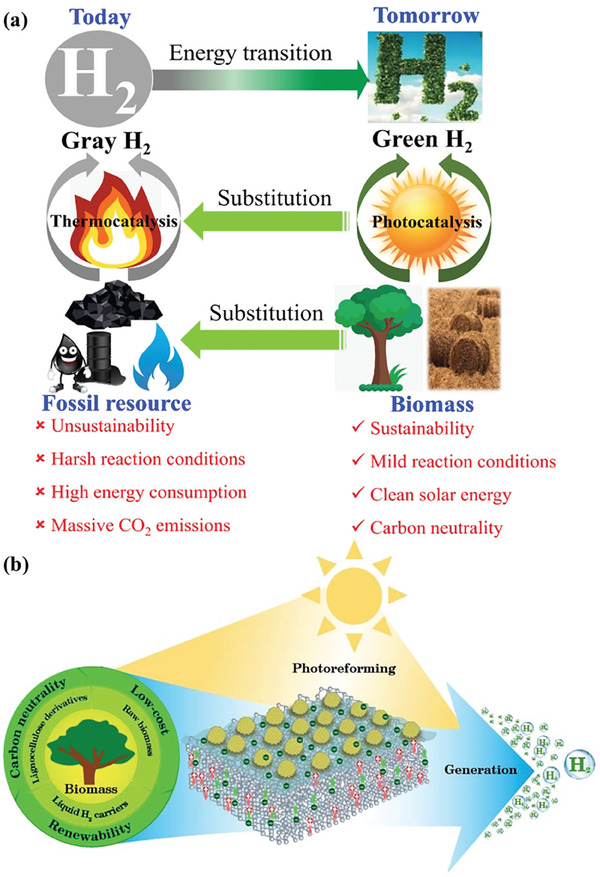
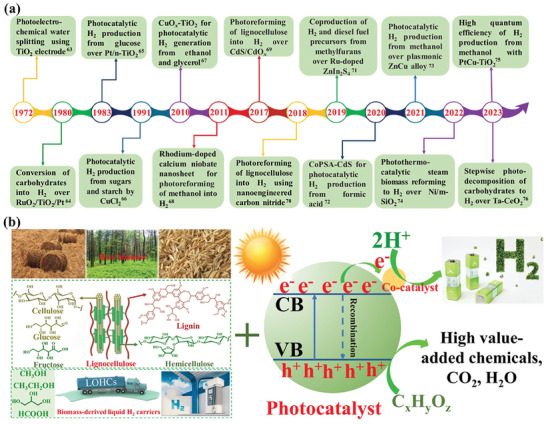
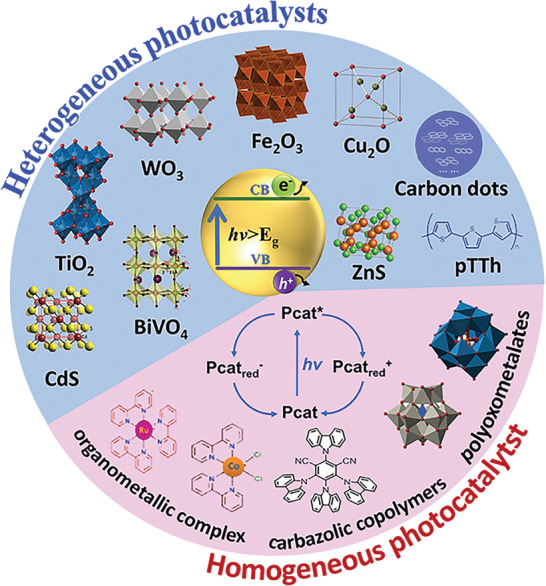
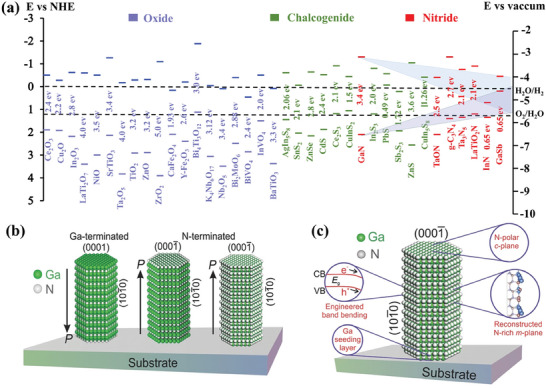
Hydrogen (H 2) has emerged as a clean and versatile energy carrier to power a carbon‐neutral economy for the post‐fossil era. Hydrogen generation from low‐cost and renewable biomass by virtually inexhaustible solar energy presents an innovative strategy to process organic solid waste, combat the energy crisis, and achieve carbon neutrality. Herein, the progress and breakthroughs in solar‐powered H 2 production from biomass are reviewed. The basic principles of solar‐driven H 2 generation from biomass are first introduced for a better understanding of the reaction mechanism. Next, the merits and shortcomings of various semiconductors and cocatalysts are summarized, and the strategies for addressing the related issues are also elaborated. Then, various bio‐based feedstocks for solar‐driven H 2 production are reviewed with an emphasis on the effect of photocatalysts and catalytic systems on performance. Of note, the concurrent generation of value‐added chemicals from biomass reforming is emphasized as well. Meanwhile, the emerging photo‐thermal coupling strategy that shows a grand prospect for maximally utilizing the entire solar energy spectrum is also discussed. Further, the direct utilization of hydrogen from biomass as a green reductant for producing value‐added chemicals via organic reactions is also highlighted. Finally, the challenges and perspectives of photoreforming biomass toward hydrogen are envisioned.
Overview
The claims and statistics of this paper haven’t been checked yet.
Run the check — free, no account needed. It reads the open-access text and checks the sources it cites.
Integrity signals
Registry
Cites
Statistics
Figures
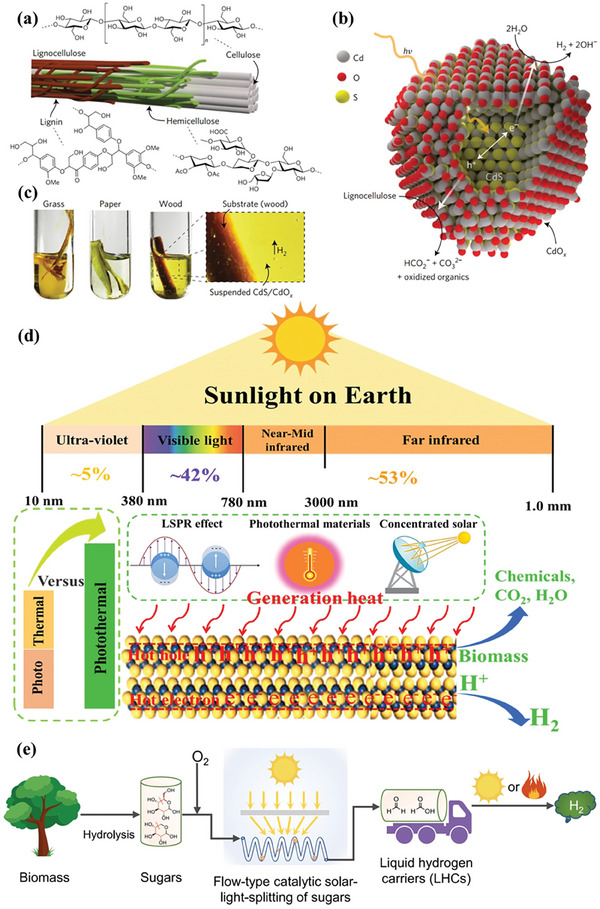
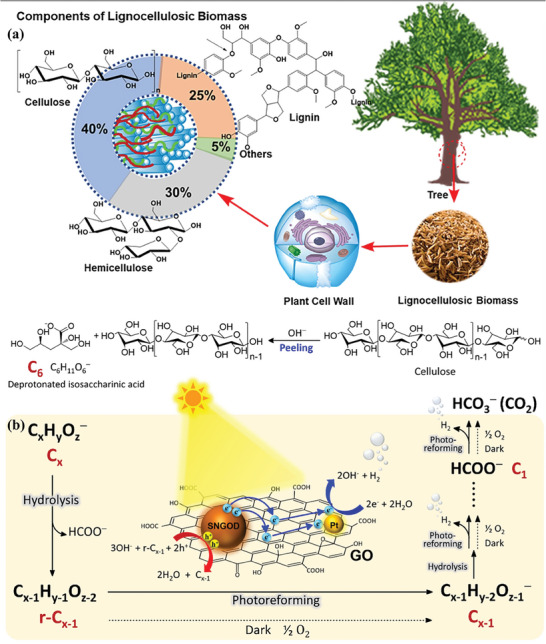
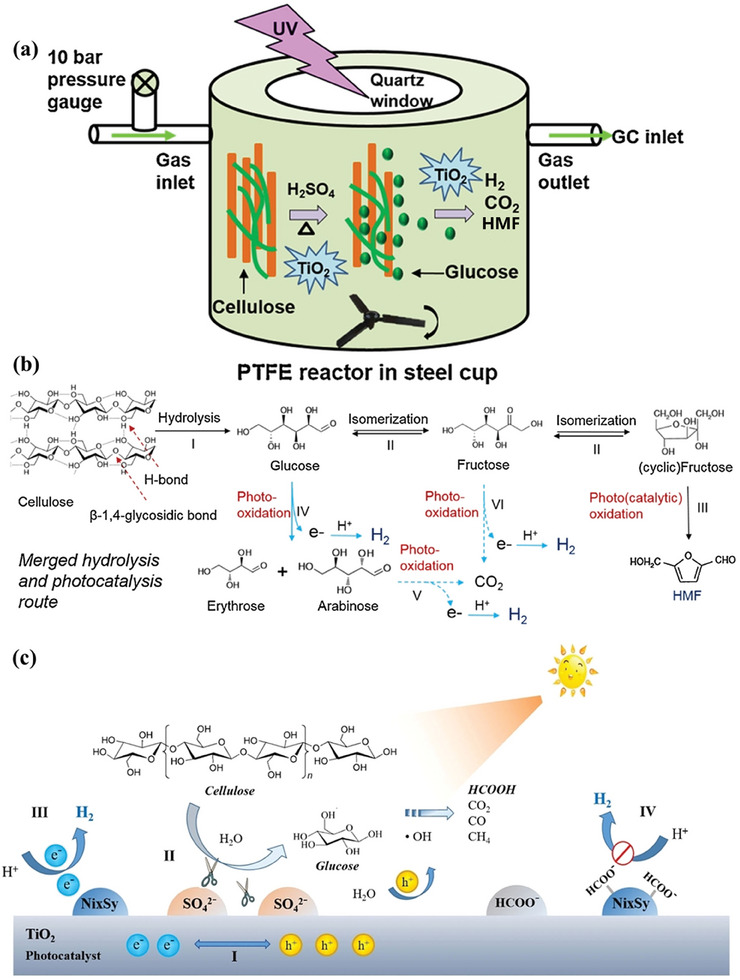
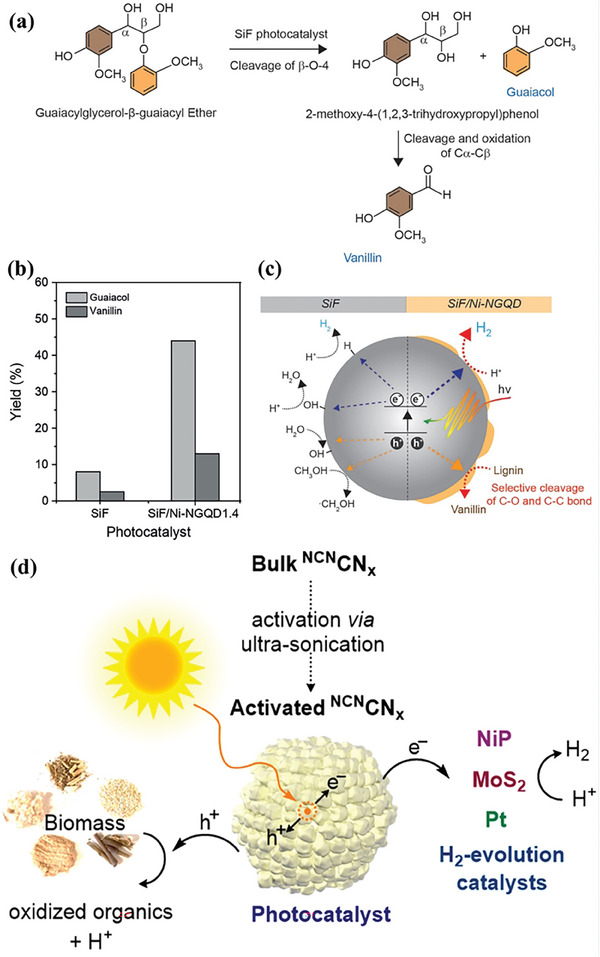
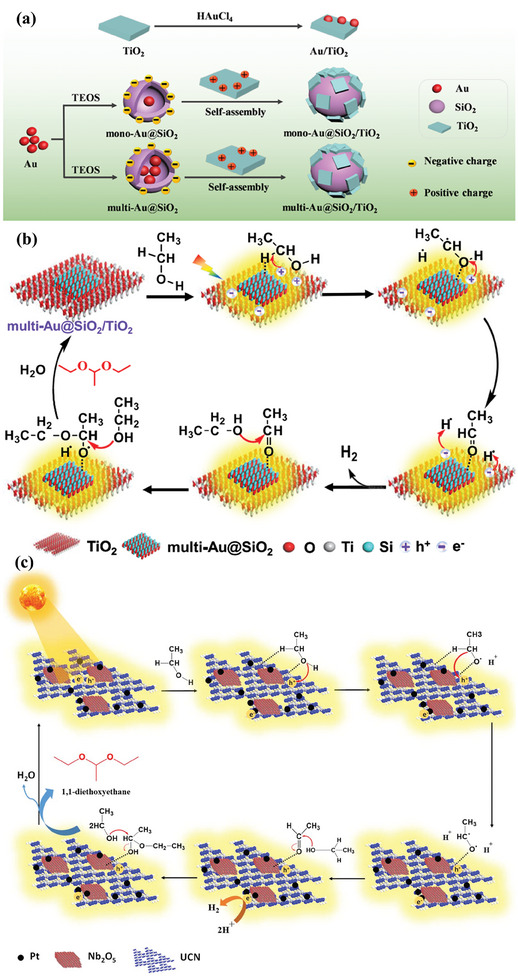
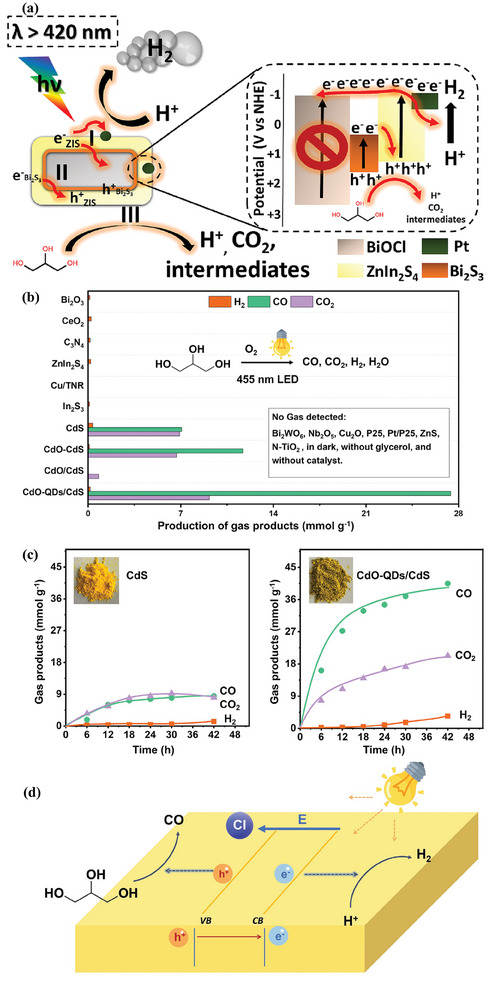
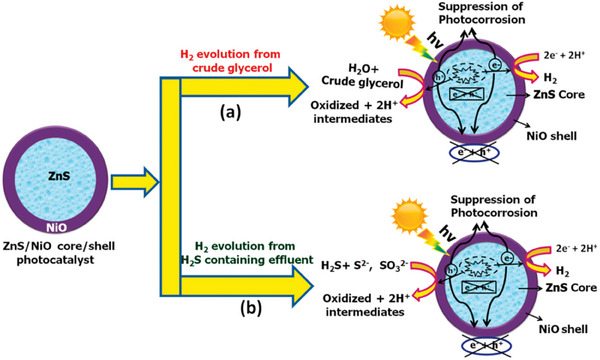
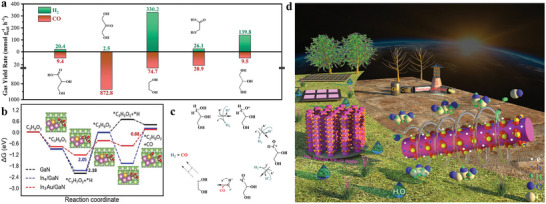
Verification
Claims the paper makes
The claims and statistics of this paper haven’t been checked yet.
Run the check — free, no account needed. It reads the open-access text and checks the sources it cites.
Self-check
Percentages, sums and reported differences re-computed from the paper’s own numbers.
The self-check needs the paper’s full text.
Citations
Cites
Electrochemical Photolysis of Water at a Semiconductor Electrode
FUJISHIMA, A., & HONDA, K. (1972) · Nature · doi:10.1038/238037a0 · Cited by 34,169
Semiconductor-based Photocatalytic Hydrogen Generation
Chen, X., Shen, S., Guo, L., & Mao, S. S. (2010) · Chemical Reviews · doi:10.1021/cr1001645 · Cited by 7,876
Conversion of biomass to selected chemical products
Gallezot, P. (2011) · Chemical Society Reviews · doi:10.1039/c1cs15147a · Cited by 2,588
Earth-abundant cocatalysts for semiconductor-based photocatalytic water splitting
Ran, J., Zhang, J., Yu, J., Jaroniec, M., & Qiao, S. (2014) · Chemical Society Reviews · doi:10.1039/c3cs60425j · Cited by 2,553
Photocatalytic water splitting with a quantum efficiency of almost unity
Takata, T., Jiang, J., Sakata, Y., Nakabayashi, M., Shibata, N., Nandal, V., Seki, K., Hisatomi, T., & Domen, K. (2020) · Nature · doi:10.1038/s41586-020-2278-9 · Cited by 2,316
Particulate photocatalysts for overall water splitting
Chen, S., Takata, T., & Domen, K. (2017) · Nature Reviews Materials · doi:10.1038/natrevmats.2017.50 · Cited by 2,228
Semiconductor-mediated photodegradation of pollutants under visible-light irradiation
Chen, C., Ma, W., & Zhao, J. (2010) · Chemical Society Reviews · doi:10.1039/b921692h · Cited by 2,218
Chatenet, M., Pollet, B. G., Dekel, D. R., Dionigi, F., Deseure, J., Millet, P., Braatz, R. D., Bazant, M. Z., Eikerling, M., Staffell, I., et al. (2022) · Chemical Society Reviews · doi:10.1039/d0cs01079k · Cited by 2,025
Fundamentals of TiO 2 Photocatalysis: Concepts, Mechanisms, and Challenges
Guo, Q., Zhou, C., Ma, Z., & Yang, X. (2019) · Advanced Materials · doi:10.1002/adma.201901997 · Cited by 1,978
Cheng, L., Xiang, Q., Liao, Y., & Zhang, H. (2018) · Energy & Environmental Science · doi:10.1039/c7ee03640j · Cited by 1,745
Lu, Q., Yu, Y., Ma, Q., Chen, B., & Zhang, H. (2016) · Advanced Materials · doi:10.1002/adma.201503270 · Cited by 1,447
Solar-to-hydrogen efficiency of more than 9% in photocatalytic water splitting
Zhou, P. C., Navid, I. A., Ma, Y., Xiao, Y., Wang, P., Ye, Z., Zhou, B., Sun, K., & Mi, Z. (2023) · Nature · doi:10.1038/s41586-022-05399-1 · Cited by 1,384
Self-citationA concise review of current lignin production, applications, products and their environmental impact
Bajwa, D. S., Pourhashem, G., Ullah, A. H., & Bajwa, S. G. (2019) · Industrial Crops and Products · doi:10.1016/j.indcrop.2019.111526 · Cited by 1,355
Hydrogen Production Reactions from Carbon Feedstocks: Fossil Fuels and Biomass
Navarro, R. M., Peña, M. A., & Fierro, J. L. G. (2007) · Chemical Reviews · doi:10.1021/cr0501994 · Cited by 1,335
Covalent Organic Framework Photocatalysts: Structures and Applications
Wang, H., Wang, H., Wang, Z., Tang, L., Zeng, G., Xu, P., Chen, M., Xiong, T., Zhou, C., Li, X., et al. (2020) · Chemical Society Reviews · doi:10.1039/d0cs00278j · Cited by 1,301
Hydrogen storage methods: Review and current status
Usman, M. R. (2022) · Renewable and Sustainable Energy Reviews · doi:10.1016/j.rser.2022.112743 · Cited by 1,292
Murdoch, M., Waterhouse, G. I. N., Nadeem, M. A., Metson, J. B., Keane, M. A., Howe, R. F., Llorca, J., & Idriss, H. (2011) · Nature Chemistry · doi:10.1038/nchem.1048 · Cited by 1,224
Dong, G., Zhang, Y., Pan, Q., & Qiu, J. (2014) · Journal of Photochemistry and Photobiology C Photochemistry Reviews · doi:10.1016/j.jphotochemrev.2014.04.002 · Cited by 1,100
Davda, R. R., Shabaker, J. W., Huber, G. W., Cortright, R. D., & Dumesic, J. A. (2004) · Applied Catalysis B: Environmental · doi:10.1016/j.apcatb.2004.04.027 · Cited by 1,036
α-Fe2O3 as a photocatalytic material: A review
Mishra, M., & Chun, D. (2015) · Applied Catalysis A General · doi:10.1016/j.apcata.2015.03.023 · Cited by 1,003
Photocatalytic hydrogen production using metal doped TiO2: A review of recent advances
Kumaravel, V., Mathew, S., Bartlett, J., & Pillai, S. C. (2018) · Applied Catalysis B: Environmental · doi:10.1016/j.apcatb.2018.11.080 · Cited by 978
Qi, M., Conte, M., Anpo, M., Tang, Z., & Xu, Y. (2021) · Chemical Reviews · doi:10.1021/acs.chemrev.1c00197 · Cited by 977
Low cost hydrogen production by anion exchange membrane electrolysis: A review
Vincent, I., & Bessarabov, D. (2017) · Renewable and Sustainable Energy Reviews · doi:10.1016/j.rser.2017.05.258 · Cited by 928
Solar-Driven Hydrogen Production: Recent Advances, Challenges, and Future Perspectives
Song, H., Luo, S., Huang, H., Deng, B., & Ye, J. (2022) · ACS Energy Letters · doi:10.1021/acsenergylett.1c02591 · Cited by 911
Experimental Realization of the Covalent Solid Carbon Nitride
Niu, C., Lu, Y. Z., & Lieber, C. M. (1993) · Science · doi:10.1126/science.261.5119.334 · Cited by 898
Challenges for photocatalytic overall water splitting
Bie, C., Wang, L., & Yu, J. (2022) · Chem · doi:10.1016/j.chempr.2022.04.013 · Cited by 885
Perspective of the role of hydrogen in the 21st century energy transition
Capurso, T., Stefanizzi, M., Torresi, M., & Camporeale, S. M. (2021) · Energy Conversion and Management · doi:10.1016/j.enconman.2021.114898 · Cited by 882
Recent advances and perspectives for solar-driven water splitting using particulate photocatalysts
Tao, X., Zhao, Y., Wang, S., Li, C., & Li, R. (2022) · Chemical Society Reviews · doi:10.1039/d1cs01182k · Cited by 882
The multiple roles for catalysis in the production of H2
Armor, J. N. (1999) · Applied Catalysis A General · doi:10.1016/s0926-860x(98)00244-0 · Cited by 852
Wang, H., Li, X., Zhao, X., Li, X., Song, X., Zhang, P., Huo, P., & Li, X. (2022) · CHINESE JOURNAL OF CATALYSIS (CHINESE VERSION) · doi:10.1016/s1872-2067(21)63910-4 · Cited by 831
Polymer photocatalysts for solar-to-chemical energy conversion
Banerjee, T., Podjaski, F., Kröger, J., Biswal, B. P., & Lotsch, B. V. (2020) · Nature Reviews Materials · doi:10.1038/s41578-020-00254-z · Cited by 779
Photocatalytic transformations of lignocellulosic biomass into chemicals
Wu, X., Luo, N., Xie, S., Zhang, H., Zhang, Q., Wang, F., & Wang, Y. (2020) · Chemical Society Reviews · doi:10.1039/d0cs00314j · Cited by 715
Self-citationEmerging technologies by hydrogen: A review
Sazali, N. (2020) · International Journal of Hydrogen Energy · doi:10.1016/j.ijhydene.2020.05.021 · Cited by 706
Conversion of carbohydrate into hydrogen fuel by a photocatalytic process
Kawai, T., & Sakata, T. (1980) · Nature · doi:10.1038/286474a0 · Cited by 680
Graphene oxide for photonics, electronics and optoelectronics
Wu, J., Lin, H., Moss, D., Loh, K. P., & Jia, B. (2023) · Nature Reviews Chemistry · doi:10.1038/s41570-022-00458-7 · Cited by 669
Solar-driven reforming of lignocellulose to H2 with a CdS/CdOx photocatalyst
Wakerley, D., Kuehnel, M. F., Orchard, K. L., Ly, K. H., Rosser, T. E., & Reisner, E. (2017) · Nature Energy · doi:10.1038/nenergy.2017.21 · Cited by 653
Advances in porous and nanoscale catalysts for viable biomass conversion
Sudarsanam, P., Peeters, E., Makshina, E. V., Parvulescu, V. I., & Sels, B. F. (2019) · Chemical Society Reviews · doi:10.1039/c8cs00452h · Cited by 652
Photocatalytic water splitting
Nishioka, S., Osterloh, F. E., Wang, X., Mallouk, T. E., & Maeda, K. (2023) · Nature Reviews Methods Primers · doi:10.1038/s43586-023-00226-x · Cited by 633
Oxygen Vacant Semiconductor Photocatalysts
Hao, L., Huang, H., Zhang, Y., & Ma, T. (2021) · Advanced Functional Materials · doi:10.1002/adfm.202100919 · Cited by 585
Metal-free photocatalysts for hydrogen evolution
Rahman, M. Z., Kibria, M. G., & Mullins, C. B. (2020) · Chemical Society Reviews · doi:10.1039/c9cs00313d · Cited by 573
Metal–Organic Frameworks as Photocatalysts for Solar-Driven Overall Water Splitting
Navalón, S., Dhakshinamoorthy, A., Álvaro, M., Ferrer, B., & Garcı́a, H. (2022) · Chemical Reviews · doi:10.1021/acs.chemrev.2c00460 · Cited by 562
Tungsten Oxide Single Crystal Nanosheets for Enhanced Multichannel Solar Light Harvesting
Yan, J., Wang, T., Wu, G., Dai, W., Guan, N., Li, L., & Gong, J. (2015) · Advanced Materials · doi:10.1002/adma.201404792 · Cited by 543
Emerging Chemical Functionalization of g‑C3N4: Covalent/Noncovalent Modifications and Applications
Majdoub, M., Anfar, Z., & Amedlous, A. (2020) · ACS Nano · doi:10.1021/acsnano.0c06116 · Cited by 538
Han, G., Jin, Y.-H., Burgess, R. A., Dickenson, N. E., Cao, X., & Sun, Y. (2017) · Journal of the American Chemical Society · doi:10.1021/jacs.7b08657 · Cited by 536
Interfacing nature’s catalytic machinery with synthetic materials for semi-artificial photosynthesis
Kornienko, N., Zhang, J., Sakimoto, K. K., Yang, P., & Reisner, E. (2018) · Nature Nanotechnology · doi:10.1038/s41565-018-0251-7 · Cited by 531
Water electrolysis for hydrogen production: from hybrid systems to self-powered/catalyzed devices
Ren, J., Chen, L., Wang, H., Tian, W.-W., & Yuan, Z. (2023) · Energy & Environmental Science · doi:10.1039/d3ee02467a · Cited by 529
Towards an electricity-powered world
Armaroli, N., & Balzani, V. (2011) · Energy & Environmental Science · doi:10.1039/c1ee01249e · Cited by 505
From plasmon-enhanced molecular spectroscopy to plasmon-mediated chemical reactions
Zhan, C., Chen, X., Yi, J., Li, J., Wu, D., & Tian, Z. (2018) · Nature Reviews Chemistry · doi:10.1038/s41570-018-0031-9 · Cited by 476
Self-citationLignin: A Review on Structure, Properties, and Applications as a Light-Colored UV Absorber
Zhang, Y., & Naebe, M. (2021) · ACS Sustainable Chemistry & Engineering · doi:10.1021/acssuschemeng.0c06998 · Cited by 475
Luo, H., Barrio, J., Sunny, N., Li, A. Y., Steier, L., Shah, N., Stephens, I. E. L., & Titirici, M. (2021) · Advanced Energy Materials · doi:10.1002/aenm.202101180 · Cited by 460
Hydrogen production from renewable sources: biomass and photocatalytic opportunities
Navarro, R. M., Sánchez-Sánchez, M. C., Alvarez-Galván, M. C., del Valle, F., & Fierro, J. L. G. (2008) · Energy & Environmental Science · doi:10.1039/b808138g · Cited by 452
H2 Evolution with Covalent Organic Framework Photocatalysts
Banerjee, T., Gottschling, K., Savaşçı, G., Ochsenfeld, C., & Lotsch, B. V. (2018) · ACS Energy Letters · doi:10.1021/acsenergylett.7b01123 · Cited by 448
Perspective on the hydrogen economy as a pathway to reach net-zero CO 2 emissions in Europe
van der Spek, M. W., Banet, C., Bauer, C., Gabrielli, P., Goldthorpe, W. H., Mazzotti, M., Munkejord, S. T., Røkke, N. A., Shah, N., Sunny, N., et al. (2022) · Energy & Environmental Science · doi:10.1039/d1ee02118d · Cited by 445
Methane transformation by photocatalysis
Li, X., Wang, C., & Tang, J. (2022) · Nature Reviews Materials · doi:10.1038/s41578-022-00422-3 · Cited by 443
Photocatalytic production of hydrogen from biomass-derived feedstocks
Puga, A. V. (2016) · Coordination Chemistry Reviews · doi:10.1016/j.ccr.2015.12.009 · Cited by 440
Characterization of semiconductor photocatalysts
Zhang, L., Ran, J., Qiao, S., & Jaroniec, M. (2019) · Chemical Society Reviews · doi:10.1039/c9cs00172g · Cited by 434
Luo, N., Montini, T., Zhang, J., Fornasiero, P., Fonda, E., Hou, T., Nie, W., Lü, J., Liu, J., Heggen, M., et al. (2019) · Nature Energy · doi:10.1038/s41560-019-0403-5 · Cited by 428
Recent Progress of Metal Sulfide Photocatalysts for Solar Energy Conversion
Zhu, Q., Xu, Q., Du, M., Zeng, X., Zhong, G., Qiu, B., & Zhang, J. (2022) · Advanced Materials · doi:10.1002/adma.202202929 · Cited by 428
Metal‐Organic Frameworks for Photocatalytic Water Splitting and CO2 Reduction
Sun, K., Qian, Y., & Jiang, H. (2023) · Angewandte Chemie International Edition · doi:10.1002/anie.202217565 · Cited by 425
Al-Azri, Z. H. N., Chen, W., Chan, A., Jovic, V., Ina, T., Idriss, H., & Waterhouse, G. I. N. (2015) · Journal of Catalysis · doi:10.1016/j.jcat.2015.06.005 · Cited by 423
Liu, D., Chen, D., Li, N., Xu, Q., Li, H., He, J., & Lu, J. (2019) · Angewandte Chemie International Edition · doi:10.1002/anie.201914949 · Cited by 420
A homogeneous transition metal complex for clean hydrogen production from methanol–water mixtures
Rodríguez‐Lugo, R. E., Trincado, M., Vogt, M., Tewes, F., Santiso-Quinones, G., & Grützmacher, H. (2013) · Nature Chemistry · doi:10.1038/nchem.1595 · Cited by 416
Photocatalytic H2 Evolution on MoS2/CdS Catalysts under Visible Light Irradiation
Zong, X., Wu, G., Yan, H., Ma, G., Shi, J., Wen, F., Wang, L., & Li, C. (2010) · The Journal of Physical Chemistry C · doi:10.1021/jp904350e · Cited by 408
Wang, J., Lin, S., Tian, N., Ma, T., Zhang, Y., & Huang, H. (2020) · Advanced Functional Materials · doi:10.1002/adfm.202008008 · Cited by 407
Continuous Flow Upgrading of Selected C2–C6 Platform Chemicals Derived from Biomass
Gérardy, R., Debecker, D. P., Estager, J., Luis, P., & Monbaliu, J. M. (2020) · Chemical Reviews · doi:10.1021/acs.chemrev.9b00846 · Cited by 406
Noble-metal single-atoms in thermocatalysis, electrocatalysis, and photocatalysis
Zhang, F.-F., Zhu, Y., Lin, Q., Zhang, L., Zhang, X., & Wang, H. (2021) · Energy & Environmental Science · doi:10.1039/d1ee00247c · Cited by 390
S‐Scheme Heterojunction TiO 2 /CdS Nanocomposite Nanofiber as H 2 ‐Production Photocatalyst
Ge, H., Xu, F., Cheng, B., Yu, J., & Ho, W. (2019) · ChemCatChem · doi:10.1002/cctc.201901486 · Cited by 376
Loow, Y.-L., Wu, T. Y., Jahim, J. M., Mohammad, A. W., & Teoh, W. H. (2016) · Cellulose · doi:10.1007/s10570-016-0936-8 · Cited by 369
Zhang, C., Shen, X., Jin, Y., Cheng, J., Cai, C., & Wang, F. (2023) · Chemical Reviews · doi:10.1021/acs.chemrev.2c00664 · Cited by 361
Ayοdhya, D., & Veerabhadram, G. (2018) · Materials Today Energy · doi:10.1016/j.mtener.2018.05.007 · Cited by 357
Bi, Q., Lin, J., Liu, Y., He, H., Huang, F., & Cao, Y. (2016) · Angewandte Chemie International Edition · doi:10.1002/anie.201605961 · Cited by 356
Solar utilization beyond photosynthesis
Lv, J., Xie, J., Mohamed, A. G. A., Zhang, X., Feng, Y., Jiao, L., Zhou, E., Yuan, D., & Wang, Y. (2022) · Nature Reviews Chemistry · doi:10.1038/s41570-022-00448-9 · Cited by 354
Self-citationPhotocatalytic hydrogen production
Teets, T. S., & Nocera, D. G. (2011) · Chemical Communications · doi:10.1039/c1cc12390d · Cited by 353
Photocatalytic reforming of biomass: A systematic study of hydrogen evolution from glucose solution
FU, X., LONG, J., WANG, X., LEUNG, D., DING, Z., WU, L., ZHANG, Z., LI, Z., & FU, X. (2008) · International Journal of Hydrogen Energy · doi:10.1016/j.ijhydene.2008.07.068 · Cited by 342
Zada, A., Muhammad, P., Ahmad, W., Hussain, Z., Ali, S., Khan, M., Khan, Q., & Maqbool, M. (2019) · Advanced Functional Materials · doi:10.1002/adfm.201906744 · Cited by 338
Recent developments of nanocatalyzed liquid-phase hydrogen generation
Wang, C., & Astruc, D. (2021) · Chemical Society Reviews · doi:10.1039/d0cs00515k · Cited by 336
Zhang, Y., Li, Y., Xin, X., Wang, Y., Guo, P., Wang, R., Wang, B., Huang, W., Sobrido, A. J., & Li, X. (2023) · Nature Energy · doi:10.1038/s41560-023-01242-7 · Cited by 331
Self-citationWang, H., Qi, H., Sun, X. J., Jia, S., Li, X., Miao, T. J., Xiong, L., Wang, S., Zhang, X., Liu, X., et al. (2023) · Nature Materials · doi:10.1038/s41563-023-01519-y · Cited by 324
Liu, H., Li, H., Lü, J., Zeng, S., Wang, M., Luo, N., Xu, S., & Wang, F. (2018) · ACS Catalysis · doi:10.1021/acscatal.8b00022 · Cited by 320
Solar Hydrogen Generation from Lignocellulose
Kuehnel, M. F., & Reisner, E. (2017) · Angewandte Chemie International Edition · doi:10.1002/anie.201710133 · Cited by 309
Metal organic frameworks for biomass conversion
Fang, R., Dhakshinamoorthy, A., Li, Y., & García, H. (2020) · Chemical Society Reviews · doi:10.1039/d0cs00070a · Cited by 296
Ye, H., Shi, R., Yang, X. F., Fu, W., & Chen, Y. (2018) · Applied Catalysis B: Environmental · doi:10.1016/j.apcatb.2018.03.060 · Cited by 290
Thermo-photo catalysis: a whole greater than the sum of its parts
Fang, S., & Hu, Y. H. (2022) · Chemical Society Reviews · doi:10.1039/d1cs00782c · Cited by 288
Luo, N., Wang, M., Li, H., Zhang, J., Hou, T., Chen, H., Zhang, X., Lü, J., & Wang, F. (2017) · ACS Catalysis · doi:10.1021/acscatal.7b01043 · Cited by 284
The roles and mechanism of cocatalysts in photocatalytic water splitting to produce hydrogen
Xiao, N., Li, S., Li, X., Ge, L., Gao, Y., & Li, N. (2020) · CHINESE JOURNAL OF CATALYSIS (CHINESE VERSION) · doi:10.1016/s1872-2067(19)63469-8 · Cited by 280
Emerging heterogeneous catalysts for biomass conversion: studies of the reaction mechanism
Lin, L., Han, X., Han, B., & Yang⧫, S. (2021) · Chemical Society Reviews · doi:10.1039/d1cs00039j · Cited by 276
Recent advances and sustainable development of biofuels production from lignocellulosic biomass
Saravanan, A., Kumar, P. S., Jeevanantham, S., Karishma, S., & Vo, D. N. (2021) · Bioresource Technology · doi:10.1016/j.biortech.2021.126203 · Cited by 276
Abdullah, F. H., Bakar, N. H. H. A., & Bakar, M. A. (2021) · Journal of Hazardous Materials · doi:10.1016/j.jhazmat.2021.127416 · Cited by 274
Xie, J., Shevlin, S. A., Ruan, Q., Moniz, S. J. A., Liu, Y., Liu, X., Li, Y., Lau, C. C., Guo, Z., & Tang, J. (2018) · Energy & Environmental Science · doi:10.1039/c7ee02981k · Cited by 270
Tian, S., Wang, Z., Gong, W., Chen, W., Feng, Q., Xu, Q., Chen, C., Chen, C., Peng, Q., Gu, L., et al. (2018) · Journal of the American Chemical Society · doi:10.1021/jacs.8b06029 · Cited by 267
CuOx−TiO2 Photocatalysts for H2 Production from Ethanol and Glycerol Solutions
Gombac, V., Sordelli, L., Montini, T., Delgado, J. J., Adamski, A., Adami, G., Cargnello, M., Bernal, S., & Fornasiero, P. (2009) · The Journal of Physical Chemistry A · doi:10.1021/jp907242q · Cited by 266
Thote, J. A., Aiyappa, H. B., Deshpande, A., Díaz, D. D., Kurungot, S., & Banerjee, R. (2014) · Chemistry - A European Journal · doi:10.1002/chem.201403800 · Cited by 264
Shen, X., Zhang, C., Han, B., & Wang, F. (2022) · Chemical Society Reviews · doi:10.1039/d1cs00908g · Cited by 261
Potential for hydrogen production from sustainable biomass with carbon capture and storage
Rosa, L., & Mazzotti, M. (2022) · Renewable and Sustainable Energy Reviews · doi:10.1016/j.rser.2022.112123 · Cited by 257
Recent advances in application of transition metal phosphides for photocatalytic hydrogen production
Yang, Y., Zhou, C., Wang, W., Xiong, W., Zeng, G., Huang, D., Zhang, C., Song, B., Xue, W., Li, X., et al. (2020) · Chemical Engineering Journal · doi:10.1016/j.cej.2020.126547 · Cited by 255
Photooxidation of Organic Chemicals Catalyzed by Nanoscale MoS2
Thurston, T. R., & Wilcoxon, J. P. (1998) · The Journal of Physical Chemistry B · doi:10.1021/jp982337h · Cited by 253
Recent progress in ethanol steam reforming using non-noble transition metal catalysts: A review
Ogo, S., & Sekine, Y. (2019) · Fuel Processing Technology · doi:10.1016/j.fuproc.2019.106238 · Cited by 249
Formic Acid to Power towards Low‐Carbon Economy
Dutta, I., Chatterjee, S., Cheng, H., Parsapur, R. K., Liu, Z., Li, Z., Ye, E., Kawanami, H. K., Low, J. S. C., Lai, Z., et al. (2022) · Advanced Energy Materials · doi:10.1002/aenm.202103799 · Cited by 249
Ashraf, M., Ullah, N., Khan, I., Tremel, W., Ahmad, S., & Tahir, M. N. (2023) · Chemical Reviews · doi:10.1021/acs.chemrev.2c00602 · Cited by 247
Li, C., Zhu, D., Cheng, S., Zuo, Y., Wang, Y., Ma, C., & Dong, H. (2021) · Chinese Chemical Letters · doi:10.1016/j.cclet.2021.07.057 · Cited by 245
Self-citationSantamaria, L., López, G., Fernandez, E., Cortazar, M., Arregi, A., Olazar, M., & Bilbao, J. (2021) · Energy & Fuels · doi:10.1021/acs.energyfuels.1c01666 · Cited by 241
Molecular catalysts for hydrogen production from alcohols
Trincado, M., Banerjee, D., & Grützmacher, H. (2014) · Energy & Environmental Science · doi:10.1039/c4ee00389f · Cited by 237
Photoreforming of Lignocellulose into H2 Using Nanoengineered Carbon Nitride under Benign Conditions
Kasap, H., Achilleos, D. S., Huang, A., & Reisner, E. (2018) · Journal of the American Chemical Society · doi:10.1021/jacs.8b07853 · Cited by 236
Radical generation and fate control for photocatalytic biomass conversion
Huang, Z., Luo, N., Zhang, C., & Wang, F. (2022) · Nature Reviews Chemistry · doi:10.1038/s41570-022-00359-9 · Cited by 233
Okamoto, Y., Ida, S., Hyodo, J., Hagiwara, H., & Ishihara, T. (2011) · Journal of the American Chemical Society · doi:10.1021/ja207103j · Cited by 229
Recent progress in the applications of non-metal modified graphitic carbon nitride in photocatalysis
Tang, C., Cheng, M., Lai, C., Li, L., Yang, X., Du, L., Zhang, G., Wang, G., & Yang, L. (2022) · Coordination Chemistry Reviews · doi:10.1016/j.ccr.2022.214846 · Cited by 227
Tiwari, S. K., Bystrzejewski, M., Adhikari, A. D., Huczko, A., & Wang, N. (2022) · Progress in Energy and Combustion Science · doi:10.1016/j.pecs.2022.101023 · Cited by 226
Earth-abundant 3d-transition-metal catalysts for lignocellulosic biomass conversion
Feng, Y., Long, S., Tang, X., Sun, Y. Q., Luque, R., Zeng, X., & Lin, L. (2021) · Chemical Society Reviews · doi:10.1039/d0cs01601b · Cited by 225
Metal Sulfide Photocatalysts for Lignocellulose Valorization
Wu, X., Xie, S., Zhang, H., Zhang, Q., Sels, B. F., & Wang, Y. (2021) · Advanced Materials · doi:10.1002/adma.202007129 · Cited by 219
Self-citationMaking g-C3N4 ultra-thin nanosheets active for photocatalytic overall water splitting
Wu, C., Xue, S., Qin, Z., Nazari, M., Yang, G., Yue, S., Tong, T., Ghasemi, H., Hernandez, F. C. R., Xue, S., et al. (2020) · Applied Catalysis B: Environmental · doi:10.1016/j.apcatb.2020.119557 · Cited by 216
Albert, J., Wölfel, R., Bösmann, A., & Wasserscheid, P. (2012) · Energy & Environmental Science · doi:10.1039/c2ee21428h · Cited by 211
Wen, M., Mori, K., Kuwahara, Y., & Yamashita, H. (2016) · ACS Energy Letters · doi:10.1021/acsenergylett.6b00558 · Cited by 208
Hydrogen generation from biomass by pyrolysis
López, G., Santamaria, L., Lemonidou, A. A., Zhang, S., Wu, C., Sipra, A. T., & Gao, N. (2022) · Nature Reviews Methods Primers · doi:10.1038/s43586-022-00097-8 · Cited by 207
Bao, X., Liu, M., Wang, Z., Dai, D., Wang, P., Cheng, H., Liu, Y., Zheng, Z., Dai, Y., & Huang, B. (2022) · ACS Catalysis · doi:10.1021/acscatal.1c05357 · Cited by 206
Recent Advances in Transition Metal Nitride‐Based Materials for Photocatalytic Applications
Cheng, Z., Qi, W., Pang, C. H., Thomas, T., Wu, T., Liu, S., & Yang, M. (2021) · Advanced Functional Materials · doi:10.1002/adfm.202100553 · Cited by 204
Optimizing the semiconductor–metal-single-atom interaction for photocatalytic reactivity
Zhou, P. C., Luo, M., & Guo, S. (2022) · Nature Reviews Chemistry · doi:10.1038/s41570-022-00434-1 · Cited by 198
Chen, W., Chan, A., Sun‐Waterhouse, D., Moriga, T., Idriss, H., & Waterhouse, G. I. N. (2015) · Journal of Catalysis · doi:10.1016/j.jcat.2015.03.008 · Cited by 196
Miao, Y., Zhao, Y., Waterhouse, G. I. N., Shi, R., Wu, L., & Zhang, T. (2023) · Nature Communications · doi:10.1038/s41467-023-40005-6 · Cited by 195
Li, C., Wang, H., Naghadeh, S. B., Zhang, J. Z., & Fang, P. (2018) · Applied Catalysis B: Environmental · doi:10.1016/j.apcatb.2018.01.038 · Cited by 194
Photocatalytic Hydrogen Evolution from Substoichiometric Colloidal WO 3– x Nanowires
Paik, T., Cargnello, M., Gordon, T. R., Zhang, S., Yun, H., Lee, J. D., Woo, H. Y., Oh, S. J., Kagan, C. R., Fornasiero, P., et al. (2018) · ACS Energy Letters · doi:10.1021/acsenergylett.8b00925 · Cited by 190
Cheng, Q., Yuan, Y., Tang, R., Liu, Q., Bao, L., Wang, P., Zhong, J., Zhao, Z., Yu, Z., & Zou, Z. (2022) · ACS Catalysis · doi:10.1021/acscatal.1c05713 · Cited by 189
Rational highly dispersed ruthenium for reductive catalytic fractionation of lignocellulose
Liu, Z., Li, H., Gao, X., Guo, X., Wang, S., Fang, Y., & Song, G. (2022) · Nature Communications · doi:10.1038/s41467-022-32451-5 · Cited by 184
Fujita, S., Kawamori, H., Honda, D., Yoshida, H., & Arai, M. (2015) · Applied Catalysis B: Environmental · doi:10.1016/j.apcatb.2015.08.048 · Cited by 182
Photocatalytic hydrogen evolution from biomass conversion
Davis, K. A., Yoo, S., Shuler, E. W., Sherman, B. D., Lee, S., & Leem, G. (2021) · Nano Convergence · doi:10.1186/s40580-021-00256-9 · Cited by 182
Recent advances in Metal-Organic Frameworks-based materials for photocatalytic selective oxidation
Lu, G., Chu, F., Huang, X., Li, Y., Liang, K., & Wang, G. (2021) · Coordination Chemistry Reviews · doi:10.1016/j.ccr.2021.214240 · Cited by 182
Photocatalysts for Hydrogen Evolution Coupled with Production of Value‐Added Chemicals
Xia, B., Zhang, Y., Shi, B., Ran, J., Davey, K. R., & Qiao, S. (2020) · Small Methods · doi:10.1002/smtd.202000063 · Cited by 180
Ultrasmall CoP Nanoparticles as Efficient Cocatalysts for Photocatalytic Formic Acid Dehydrogenation
Cao, S., Chen, Y., Wang, H., Chen, J., Shi, X., Li, H., Cheng, P., Liu, X., Liu, M., & Piao, L. (2018) · Joule · doi:10.1016/j.joule.2018.01.007 · Cited by 179
Streamlined hydrogen production from biomass
Zhang, P., Guo, Y., Chen, J., Zhao, Y., Chang, J. S., Junge, H., Beller, M., & Li, Y. (2018) · Nature Catalysis · doi:10.1038/s41929-018-0062-0 · Cited by 179
Qi, Y. L., Xiao, X. H., Mei, Y., Xiong, L., Chen, L., Lin, X., Lin, Z., Sun, S., Han, B., Yang, D., et al. (2022) · Advanced Functional Materials · doi:10.1002/adfm.202111615 · Cited by 177
Sustainable Lactic Acid Production from Lignocellulosic Biomass
Li, Y., Bhagwat, S. S., Cortes-Pena, Y. R., Ki, D., Rao, C. V., Jin, Y., & Guest, J. S. (2021) · ACS Sustainable Chemistry & Engineering · doi:10.1021/acssuschemeng.0c08055 · Cited by 174
Dharmarajan, N. P., Vidyasagar, D., Yang, J., Talapaneni, S. N., Lee, J. M., Ramadass, K., Singh, G., Fawaz, M., Kumar, P., & Vinu, A. (2023) · Advanced Materials · doi:10.1002/adma.202306895 · Cited by 174
Huang, Q., Tao, Z.-J., Ye, L., Yao, H., & Li, Z. (2018) · Applied Catalysis B: Environmental · doi:10.1016/j.apcatb.2018.06.040 · Cited by 173
Luo, S., Lin, H., Wang, Q., Ren, X., Hernández‐Pinilla, D., Nagao, T., Xie, Y., Yang, G., Li, S., Song, H., et al. (2021) · Journal of the American Chemical Society · doi:10.1021/jacs.1c04315 · Cited by 173
Carraro, G., Maccato, C., Gasparotto, A., Montini, T., Turner, S., Lebedev, O. I., Gombac, V., Adami, G., Tendeloo, G. V., Barreca, D., et al. (2013) · Advanced Functional Materials · doi:10.1002/adfm.201302043 · Cited by 172
Blue hydrogen production from natural gas reservoirs: A review of application and feasibility
Massarweh, O., Al-khuzaei, M., AlShafi, M., Biçer, Y., & Abushaikha, A. S. A. (2023) · Journal of CO2 Utilization · doi:10.1016/j.jcou.2023.102438 · Cited by 167
Hole utilization in solar hydrogen production
Rahman, M. Z., Edvinsson, T., & Gascón, J. (2022) · Nature Reviews Chemistry · doi:10.1038/s41570-022-00366-w · Cited by 165
Speltini, A., Sturini, M., Dondi, D., Annovazzi, E., Maraschi, F., Caratto, V., Profumo, A., & Buttafava, A. (2014) · Photochemical & Photobiological Sciences · doi:10.1039/c4pp00128a · Cited by 164
Room-temperature phosphorescent materials derived from natural resources
Luo, X., Tian, B., Zhai, Y., Guo, H., Liu, S., Li, J., Li, S., James, T. D., & Chen, Z. (2023) · Nature Reviews Chemistry · doi:10.1038/s41570-023-00536-4 · Cited by 164
Self-citationSingle-step hydrogen production from NH3, CH4, and biogas in stacked proton ceramic reactors
Clark, D. R., Fjeld, H., Budd, M., Yuste-Tirados, I., Beeaff, D., Aamodt, S., Nguyen, K., Ansaloni, L., Peters, T. A., Vestre, P. K., et al. (2022) · Science · doi:10.1126/science.abj3951 · Cited by 163
Alternative Oxidation Reactions for Solar-Driven Fuel Production
Lhermitte, C. R., & Sivula, K. (2019) · ACS Catalysis · doi:10.1021/acscatal.8b04565 · Cited by 161
Li, Y., Bai, X., Yuan, D., Zhang, F., Li, B., San, X., Liang, B. L., Wang, S., Luo, J., & Fu, G. (2022) · Nature Communications · doi:10.1038/s41467-022-28364-y · Cited by 159
Nuruddin, M., Hosur, M. V., Uddin, M., Baah, D. A., & Jeelani, S. (2015) · Journal of Applied Polymer Science · doi:10.1002/app.42990 · Cited by 158
Present Perspectives of Advanced Characterization Techniques in TiO2-Based Photocatalysts
Luo, C., Ren, X., Dai, Z., Zhang, Y., Qi, X., & Pan, C. (2017) · ACS Applied Materials & Interfaces · doi:10.1021/acsami.7b00496 · Cited by 157
Xie, B., Wong, R. J., Tan, T. H., Higham, M. D., Gibson, E. K., Decarolis, D., Callison, J., Aguey‐Zinsou, K., Bowker, M., Catlow, C. R. A., et al. (2020) · Nature Communications · doi:10.1038/s41467-020-15445-z · Cited by 157
Atomically Dispersed Co–P3 on CdS Nanorods with Electron‐Rich Feature Boosts Photocatalysis
Zhou, P. C., Zhang, Q., Xu, Z., Shang, Q., Wang, L. F., Chao, Y., Li, Y., Chen, H., Lv, F., Zhang, Q., et al. (2019) · Advanced Materials · doi:10.1002/adma.201904249 · Cited by 156
Interface Engineering in 2D/2D Heterogeneous Photocatalysts
Yu, H., Dai, M., Zhang, J., Chen, W., Qiu, J. J., Wang, S., & He, Z. (2022) · Small · doi:10.1002/smll.202205767 · Cited by 155
Li, X., Hu, J., Yang, T., Yang, X., Qu, J., & Li, C. M. (2021) · Nano Energy · doi:10.1016/j.nanoen.2021.106714 · Cited by 151
Photocatalytic hydrogen production using graphitic carbon nitride (GCN): A precise review
Sharma, R., Almáši, M., Nehra, S. P., Rao, V. S., Panchal, P., Paul, D. R., Jain, I. P., & Sharma, A. (2022) · Renewable and Sustainable Energy Reviews · doi:10.1016/j.rser.2022.112776 · Cited by 151
Zhou, B., Ma, Y., Ou, P., Ye, Z., Li, X., Vanka, S., Ma, T., Sun, H., Wang, P., Zhou, P. C., et al. (2023) · Nature Catalysis · doi:10.1038/s41929-023-01023-1 · Cited by 151
Self-citationZhou, B., Ou, P., Pant, N., Cheng, S., Vanka, S., Chu, S., Rashid, R. T., Botton, G. A., Song, J. J., & Mi, Z. (2020) · Proceedings of the National Academy of Sciences · doi:10.1073/pnas.1911159117 · Cited by 148
Self-citationKibria, M. G., Qiao, R., Yang, W., Boukahil, I., Kong, X., Chowdhury, F. A., Trudeau, M. L., Ji, W., Guo, H. Y., Himpsel, F. J., et al. (2016) · Advanced Materials · doi:10.1002/adma.201602274 · Cited by 145
He, T., Zhen, W., Chen, Y., Guo, Y., Li, Z., Huang, N., Li, Z., Liu, R., Liu, Y., Lian, X., et al. (2023) · Nature Communications · doi:10.1038/s41467-023-35999-y · Cited by 145
Pd–WO heterostructures immobilized by MOFs-derived carbon cage for formic acid dehydrogenation
Zhang, A., Xia, J., Yao, Q., & Lu, Z. (2022) · Applied Catalysis B: Environmental · doi:10.1016/j.apcatb.2022.121278 · Cited by 144
Zhao, H., Li, C., Liu, L., Palma, B., Hu, Z., Renneckar, S. H., Larter, S., Li, Y., Kibria, M. G., Hu, J., et al. (2020) · Journal of Colloid and Interface Science · doi:10.1016/j.jcis.2020.10.049 · Cited by 140
Nitrogen Photofixation over III‐Nitride Nanowires Assisted by Ruthenium Clusters of Low Atomicity
Li, L., Wang, Y., Vanka, S., Mu, X., Mi, Z., & LI, C. ‐. (2017) · Angewandte Chemie International Edition · doi:10.1002/anie.201703301 · Cited by 139
Self-citationKinetic and mechanistic study of the photocatalytic reforming of methanol over Pt/TiO2 catalyst
Nomikos, G. N., Panagiotopoulou, P., Kondarides, D. Ι., & Verykios, X. E. (2013) · Applied Catalysis B: Environmental · doi:10.1016/j.apcatb.2013.03.018 · Cited by 138
Wan, C., Zhou, L., Xu, S., Jin, B., Ge, X., Qian, X., Xu, L., Chen, F., Zhan, X., Yang, Y., et al. (2021) · Chemical Engineering Journal · doi:10.1016/j.cej.2021.132388 · Cited by 137
Recent Developments and Current Status of Commercial Production of Fuel Ethanol
Hoang, T., & Nghiem, N. P. (2021) · Fermentation · doi:10.3390/fermentation7040314 · Cited by 135
Metal–Organic Framework‐Based Photocatalysis for Solar Fuel Production
Xiao, J., Li, R., & Jiang, H. (2022) · Small Methods · doi:10.1002/smtd.202201258 · Cited by 134
Li, Z., Zi, J., Luan, X., Zhong, Y., Qu, M., Wang, Y., & Lian, Z. (2023) · Advanced Functional Materials · doi:10.1002/adfm.202303069 · Cited by 132
Self-citationShi, C. J., Kang, F., Zhu, Y., Teng, M., Shi, J., Qi, H., Huang, Z., Si, C., Jiang, F., & Hu, J. (2022) · Chemical Engineering Journal · doi:10.1016/j.cej.2022.138980 · Cited by 131
Recent Progress of Transition Metal Phosphides for Photocatalytic Hydrogen Evolution
Hong, L., Guo, R., Yuan, Y., Ji, X., Lin, Z., Li, Z., & Pan, W. (2020) · ChemSusChem · doi:10.1002/cssc.202002454 · Cited by 129
Solar-Driven Photocatalytic Reforming of Lignocellulose into H 2 and Value-Added Biochemicals
Wang, E., Mahmood, A., Chen, S., Sun, W., Muhmood, T., Yang, X., & Chen, Z. (2022) · ACS Catalysis · doi:10.1021/acscatal.2c02624 · Cited by 129
Huang, H., Jiang, L., Yang, J., Zhou, S., Yuan, X., Liang, J., Wang, H., Wang, H., Bu, Y., & Li, H. (2022) · Renewable and Sustainable Energy Reviews · doi:10.1016/j.rser.2022.113110 · Cited by 129
Photocatalytic Production of Syngas from Biomass
Wang, M., Zhou, H., & Wang, F. (2023) · Accounts of Chemical Research · doi:10.1021/acs.accounts.3c00039 · Cited by 129
Visible-Light-Promoted Photocatalytic Applications of Carbon Dots: A Review
Saini, D., Garg, A. K., Dalal, C., Anand, S. R., Sonkar, S. K., Sonker, A. K., & Westman, G. (2022) · ACS Applied Nano Materials · doi:10.1021/acsanm.1c04142 · Cited by 127
Sun, Z. Z., & Aziz, M. (2021) · Journal of Cleaner Production · doi:10.1016/j.jclepro.2021.129023 · Cited by 126
Liquid Organic Hydrogen Carriers (LOHCs) as H‐Source for Bio‐Derived Fuels and Additives Production
Valentini, F., Marrocchi, A., & Vaccaro, L. (2022) · Advanced Energy Materials · doi:10.1002/aenm.202103362 · Cited by 126
Spraying Water Microdroplets Containing 1,2,3-Triazole Converts Carbon Dioxide into Formic Acid
Song, X., Meng, Y., & Zare, R. N. (2022) · Journal of the American Chemical Society · doi:10.1021/jacs.2c07779 · Cited by 126
Plasmon-mediated chemical reactions
Zhan, C., Yi, J., Hu, S., Zhang, X., Wu, D., & Tian, Z. (2023) · Nature Reviews Methods Primers · doi:10.1038/s43586-023-00195-1 · Cited by 125
Transition‐Metal‐Based Cocatalysts for Photocatalytic Water Splitting
Zhao, H., Jian, L., Gong, M., Jing, M., Li, H., Mao, Q., Lu, T., Guo, Y., Ji, R., Chi, W., et al. (2022) · Small Structures · doi:10.1002/sstr.202100229 · Cited by 124
Caravaca, A., Jones, W., Hardacre, C., & Bowker, M. (2016) · Proceedings of the Royal Society A Mathematical Physical and Engineering Sciences · doi:10.1098/rspa.2016.0054 · Cited by 122
Zhou, B., Kong, X., Vanka, S., Chu, S., Ghamari, P., Wang, Y., Pant, N., Shih, I., Guo, H. Y., & Mi, Z. (2018) · Nature Communications · doi:10.1038/s41467-018-06140-1 · Cited by 120
Self-citationSantos, J. L., Megías‐Sayago, C., Ivanova, S., Centeno, M. Á., & Odriozola, J. A. (2020) · Applied Catalysis B: Environmental · doi:10.1016/j.apcatb.2020.119615 · Cited by 120
Selective biomass photoreforming for valuable chemicals and fuels: A critical review
Nwosu, U., Wang, A., Palma, B., Zhao, H., Khan, M. A., Kibria, M. G., & Hu, J. (2021) · Renewable and Sustainable Energy Reviews · doi:10.1016/j.rser.2021.111266 · Cited by 120
Methyl formate as a hydrogen energy carrier
Sang, R., Wei, Z., Hu, Y., Alberico, E., Wei, D., Tian, X., Ryabchuk, P., Spannenberg, A., Razzaq, R., Jackstell, R., et al. (2023) · Nature Catalysis · doi:10.1038/s41929-023-00959-8 · Cited by 119
da Silva, C. G., Sampaio, M. J., Marques, R. R. N., Ferreira, L. A., Tavares, P. B., Silva, A. M. T., & Faria, J. L. (2014) · Applied Catalysis B: Environmental · doi:10.1016/j.apcatb.2014.10.032 · Cited by 116
Zhao, H., Wang, J., Dong, Y., & Jiang, P. (2017) · ACS Sustainable Chemistry & Engineering · doi:10.1021/acssuschemeng.7b01665 · Cited by 116
Solar Reforming of Biomass with Homogeneous Carbon Dots
Achilleos, D. S., Yang, W., Kasap, H., Savateev, A., Markushyna, Y., Durrant, J. R., & Reisner, E. (2020) · Angewandte Chemie International Edition · doi:10.1002/anie.202008217 · Cited by 116
A strong bimetal-support interaction in ethanol steam reforming
Meng, H., Yang, Y., Shen, T., Liu, W., Wang, L., Yin, P., Ren, Z., Niu, Y., Zhang, B., Zheng, L., et al. (2023) · Nature Communications · doi:10.1038/s41467-023-38883-x · Cited by 116
Zhao, H., Yu, X., Li, C., Yu, W.-B., Wang, A., Hu, Z., Larter, S., Li, Y., Kibria, M. G., & Hu, J. (2021) · Journal of Energy Chemistry · doi:10.1016/j.jechem.2021.04.033 · Cited by 114
Zhao, H., Mao, Q., Jian, L., Dong, Y., & Zhu, Y. (2022) · CHINESE JOURNAL OF CATALYSIS (CHINESE VERSION) · doi:10.1016/s1872-2067(22)64105-6 · Cited by 114
Self-hydrogen transfer hydrogenolysis of native lignin over Pd-PdO/TiO2
Dou, Z., Zhang, Z., & Wang, M. (2021) · Applied Catalysis B: Environmental · doi:10.1016/j.apcatb.2021.120767 · Cited by 113
Wei, D., Shi, X., Qu, R., Junge, K., Junge, H., & Beller, M. (2022) · ACS Energy Letters · doi:10.1021/acsenergylett.2c01850 · Cited by 113
DeLlano-Paz, F., Calvo-Silvosa, A., Antelo, S. I., & Soares, I. (2015) · Renewable and Sustainable Energy Reviews · doi:10.1016/j.rser.2015.03.032 · Cited by 112
Hydrogen generation by photocatalytic oxidation of glucose by platinized n-titania powder
John, M. R. S., Furgala, A. J., & Sammells, A. F. (1983) · The Journal of Physical Chemistry · doi:10.1021/j100228a021 · Cited by 112
Zhou, P. C., Zhang, Q., Chao, Y., Wang, L., Li, Y., Chen, H., Gu, L., & Guo, S. (2021) · Chem · doi:10.1016/j.chempr.2021.01.007 · Cited by 112
Nguyen, V., Nimbalkar, D. B., Nam, L. D., Lee, Y., & Teng, H. (2021) · ACS Catalysis · doi:10.1021/acscatal.1c00217 · Cited by 111
Progress on co-processing of biomass and plastic waste for hydrogen production
Mishra, R., Ong, H. C., & Lin, C. (2023) · Energy Conversion and Management · doi:10.1016/j.enconman.2023.116983 · Cited by 110
Zhang, H., Xie, S., Hu, J., Wu, X., Zhang, Q., Cheng, J. J., & Wang, Y. (2020) · Chemical Communications · doi:10.1039/c9cc09205f · Cited by 109
Self-citationZhou, B., Kong, X., Vanka, S., Cheng, S., Pant, N., Chu, S., Ghamari, P., Wang, Y., Botton, G. A., Cuo, H., et al. (2019) · Energy & Environmental Science · doi:10.1039/c9ee01339c · Cited by 107
Self-citationZhao, H., Li, C., Yong, X., Kumar, P., Palma, B., Hu, Z., TENDELOO, G. V., Siahrostami, S., Larter, S., Zheng, D., et al. (2021) · iScience · doi:10.1016/j.isci.2021.102109 · Cited by 107
Prakash, J., Kumar, P., Saxena, N., Pu, Z., Chen, Z., Tyagi, A., Zhang, G., & Sun, S. (2023) · Journal of Materials Chemistry A · doi:10.1039/d3ta00396e · Cited by 106
Yasuda, M., Matsumoto, T., & Yamashita, T. (2017) · Renewable and Sustainable Energy Reviews · doi:10.1016/j.rser.2017.05.243 · Cited by 105
Singh, A., Das, C., & Indra, A. (2022) · Coordination Chemistry Reviews · doi:10.1016/j.ccr.2022.214516 · Cited by 104
Aboagye, D., Djellabi, R., Medina, F., & Contreras, S. (2023) · Angewandte Chemie International Edition · doi:10.1002/anie.202301909 · Cited by 104
Nagakawa, H., & Nagata, M. (2021) · ACS Applied Materials & Interfaces · doi:10.1021/acsami.1c11888 · Cited by 102
Kim, J., Nguyen, T. V. T., Kim, Y. H., Hollmann, F., & Park, C. B. (2022) · Nature Synthesis · doi:10.1038/s44160-022-00035-2 · Cited by 100
Zou, J., Zhang, G., & Xu, X. (2018) · Applied Catalysis A General · doi:10.1016/j.apcata.2018.06.030 · Cited by 99
Sustainable and energy efficient hydrogen production via glycerol reforming techniques: A review
Qureshi, F., Yusuf, M., Pasha, A. A., Khan, H. W., Imteyaz, B. A., & Irshad, K. (2022) · International Journal of Hydrogen Energy · doi:10.1016/j.ijhydene.2022.04.010 · Cited by 99
Research works printed but not linked: 10
- Melo M. D. O., 2011, J. Brazil. Chem. Soc., 22, 1399
- Zhang Y., 2019, Chem, 1
- Kreft S., 2020, Chem, 2
- Reddy N. S., 2023, Nano Energy, 11
- Zhou B., 2023, Sci. China Chem., 66, 739
- Li X., 2023, J Mater Chem, 11, 3235
- Rodríguez‐Lugo R. E., 2013, Chem, 5, 342
- Jawhari A. H., 2023, Fuel Process. Technol., 344
- Wang Z., 2024, Angew. Chem., Int. Ed.
- Kondarides D., 2010, J. Adv. Oxid. Technol., 13, 116
Cited by
Sorted by citations
Ban, L., Zhang, Y., Sun, D., Zhou, Y., Li, Y., Xu, C. C., Yang, S., & Zhang, H. (2025) · Advanced Functional Materials · doi:10.1002/adfm.202506114 · Cited by 55
Harnessing Renewable Energy for Hydrogen Production: Advances, Challenges, and Opportunities
Avargani, V. M., Habibzadeh, M., Maarof, H. A., Zendehboudi, S., & Duan, X. (2025) · Industrial & Engineering Chemistry Research · doi:10.1021/acs.iecr.5c00061 · Cited by 54
Wei, W., Li, Y., Zeng, L., He, L., Wang, Y., Jiang, T., Li, J., Wan, W., & Gao, Z. (2025) · Journal of Membrane Science · doi:10.1016/j.memsci.2025.123728 · Cited by 22
Self-citationHua, J., Ji, M., Jiao, P., Yin, Z., Xia, Q., Jiang, L., Zhang, J., & Hu, P. (2025) · Catalysts · doi:10.3390/catal15040396 · Cited by 20
Self-citationGreen Syngas Production from Natural Lignin, Sunlight, and Water over Pt‐Decorated InGaN Nanowires
Yu, T., Li, J., Li, Y., Qiu, L., Hu, P., Zhu, L., Huang, Z., & Zhou, B. (2024) · Angewandte Chemie International Edition · doi:10.1002/anie.202405904 · Cited by 20
Self-citation
Metadata
- Authors
- Pan, H., Li, J., Wang, Y., Xia, Q., Qiu, L., & Zhou, B.
- Affiliations
- College of Biological Chemical Science and Engineering Jiaxing University 899 Guangqiong Road Jiaxing Zhejiang 314001 China
- Shanghai Jiao Tong University (CN)
- Jiaxing University (CN)
- Corresponding author
- Wang, Yangang
- Zhou, Baowen
- Venue
- Advanced Science
- Publisher
- Wiley
- Published
- 2024-05-30
- Volume
- 11
- Issue
- 29
- Pages
- e2402651-e2402651
- ISSN
- 2198-3844 (ISSN-L)
- PMC
- PMC11304308
- OpenAlex
- W4399246574
- Cited by
- 67
- References
- 350
- Citations by year
- 2026: 26 · 2025: 32 · 2024: 9
- FWCI
- 1.40
- Type
- journal article
- Language
- en
- Open access
- gold
- doi.org
- Licence
- Locations
- Advanced Science (publishedVersion, cc-by)
- PubMed Central (publishedVersion, cc-by)
- PubMed (publishedVersion)
- DOAJ (DOAJ: Directory of Open Access Journals) (submittedVersion, cc-by-sa)
- Funders
- Natural Science Foundation of Zhejiang Province (LQ22B060008)
- National Natural Science Foundation of China (22109095, 22278176)
- National Key Research and Development Program of China (2023YFB4004900)
- Topics
- Physical Sciences › Energy › Renewable Energy, Sustainability and the Environment › Advanced Photocatalysis Techniques
- Physical Sciences › Chemical Engineering › Catalysis › Catalysis for Biomass Conversion
- Physical Sciences › Energy › Fuel Technology › Thermochemical Biomass Conversion Processes
- Keywords
- solar hydrogen production, photocatalytic hydrogen evolution, semiconductors, cocatalyst, bio-based feedstocks, value-added chemicals, organic reactions, carbon neutrality, organic solid waste
About these checks
Registry, retraction, Cites and statistics results are computed, not judged, with one exception: a printed reference that no index lists is read once by a model before it counts as a citation error. Claims are extracted by a model and kept only when their quote appears verbatim in the text; each cited source is then checked, with a model’s help, for whether it says what the claim relies on. Those verdicts can be wrong — read the claim’s quote and the cited source before relying on one.
Statistics and arithmetic are recomputed, not judged.
Confidence bands are shown only for fields calibrated on our annotated test set. None is calibrated yet, so no band is shown.
What counts as a claim ›How we measure confidence ›How we check this ›
Are you an author, or do you see a problem with this page? Request a review
