The DOI matches its Crossref record; 349 of the 350 references it cites were found in a registry or an index.
Solar‐Driven Biomass Reforming for Hydrogen Generation: Principles, Advances, and Challenges
Open accessAbstract
Hydrogen (H 2) has emerged as a clean and versatile energy carrier to power a carbon‐neutral economy for the post‐fossil era. Hydrogen generation from low‐cost and renewable biomass by virtually inexhaustible solar energy presents an innovative strategy to process organic solid waste, combat the energy crisis, and achieve carbon neutrality. Herein, the progress and breakthroughs in solar‐powered H 2 production from biomass are reviewed. The basic principles of solar‐driven H 2 generation from biomass are first introduced for a better understanding of the reaction mechanism. Next, the merits and shortcomings of various semiconductors and cocatalysts are summarized, and the strategies for addressing the related issues are also elaborated. Then, various bio‐based feedstocks for solar‐driven H 2 production are reviewed with an emphasis on the effect of photocatalysts and catalytic systems on performance. Of note, the concurrent generation of value‐added chemicals from biomass reforming is emphasized as well. Meanwhile, the emerging photo‐thermal coupling strategy that shows a grand prospect for maximally utilizing the entire solar energy spectrum is also discussed. Further, the direct utilization of hydrogen from biomass as a green reductant for producing value‐added chemicals via organic reactions is also highlighted. Finally, the challenges and perspectives of photoreforming biomass toward hydrogen are envisioned.
Overview
The claims and statistics of this paper haven’t been checked yet.
Run the check — free, no account needed. It reads the open-access text and checks the sources it cites.
Integrity signals
Registry
Cites
Statistics
Figures
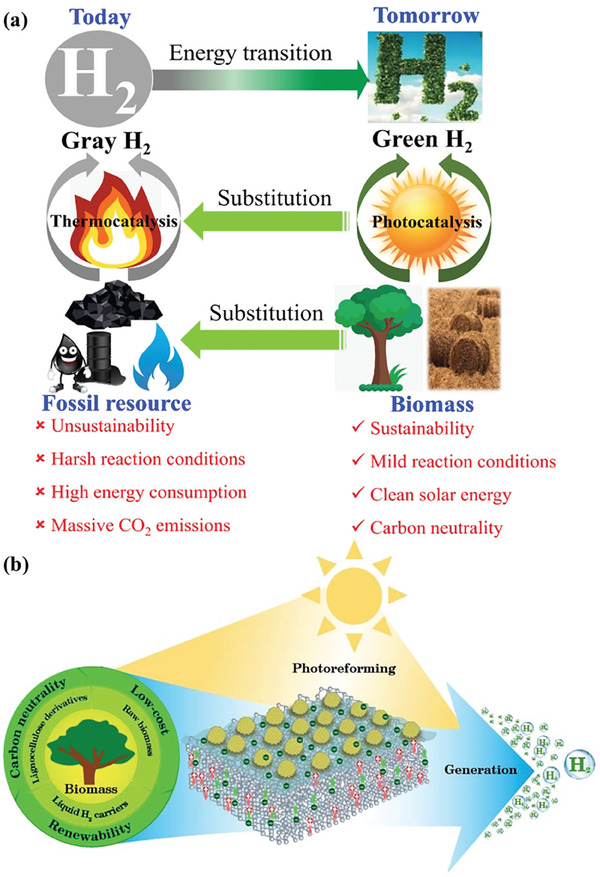
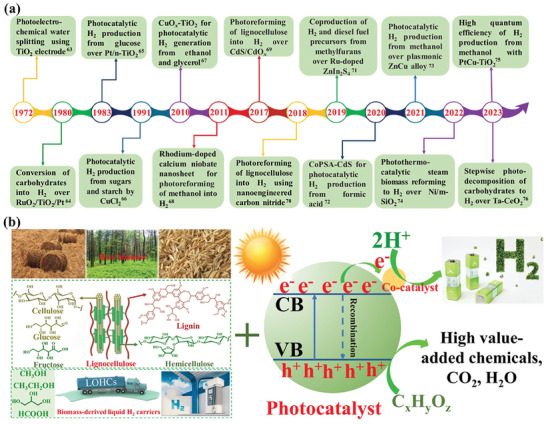
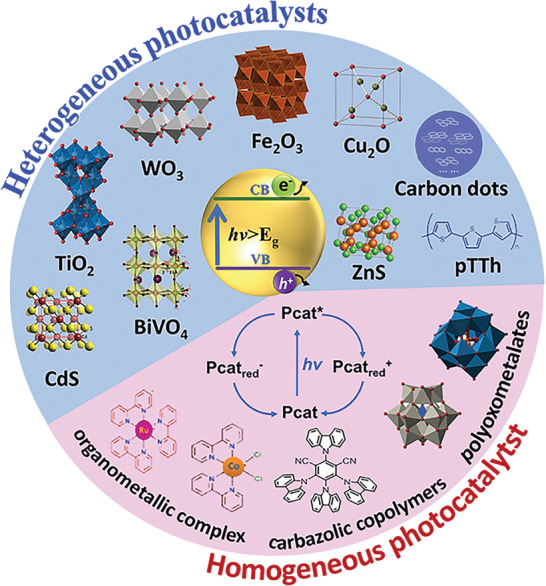
![Figure 3 Potential heterogeneous and homogenous photocatalysts for photoreforming of biomass into H2. Reproduced with permission.[ 88 ] Copyright 2022, Cell Press.](/paper-figures/aefb3c73cd234099b4d1f34641abeffc/solardriven-biomass-reforming-for-hydrogen-generation-principles-advances-and-figure-3.jpg)
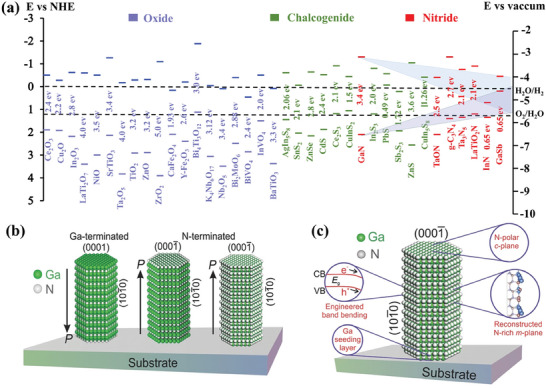
![Figure 4 a) Band edge positions and bandgaps with respect to the vacuum level and the normal hydrogen electrode (NHE) for oxides, chalcogenides, nitrides semiconductors and tunable Ga(In, Sb)N band structures in comparison with various semiconductors. Reproduced with permission.[ 112 ] Copyright 2016, Wiley‐VCH. b) Models for single crystal wurtzite GaN nanowires. c) Schematic of the key atomic and electronic structure of the epitaxial GaN. Reproduced with permission.[ 151 ] Copyright 2016, Wiley‐VCH.](/paper-figures/d944fca6bd8942eba46a5a002c859409/solardriven-biomass-reforming-for-hydrogen-generation-principles-advances-and-figure-4.jpg)
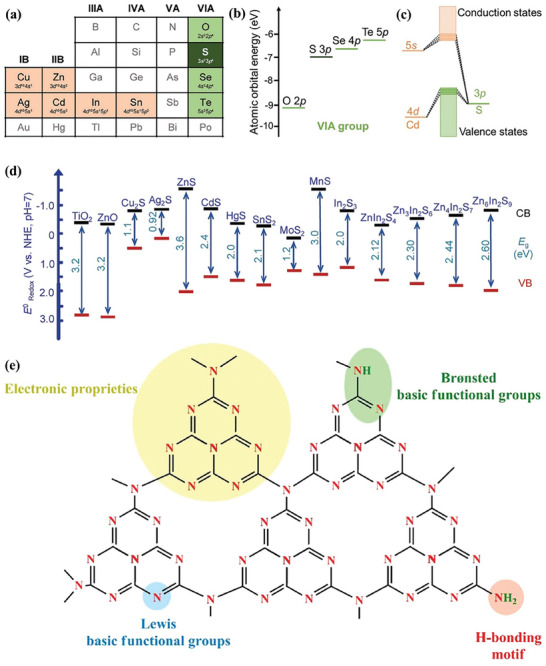
![Figure 5 a) Part of the periodic table with highlighted the metals and chalcogenides for constructing of the metal sulfides, b) atomic orbital energies of O, S, Se, and Te, c) illustrative electronic structure of CdS, and d) band positions of some typical oxides and sulfides. Reproduced with permission.[ 125 ] Copyright 2021, Wiley‐VCH. e) Multifunctional characteristics of C3N4 material. Reproduced with permission.[ 136 ] Copyright 2020, the American Chemical Society.](/paper-figures/6e2fb4bc6c3946e2bca39f54053906c2/solardriven-biomass-reforming-for-hydrogen-generation-principles-advances-and-figure-5.jpg)
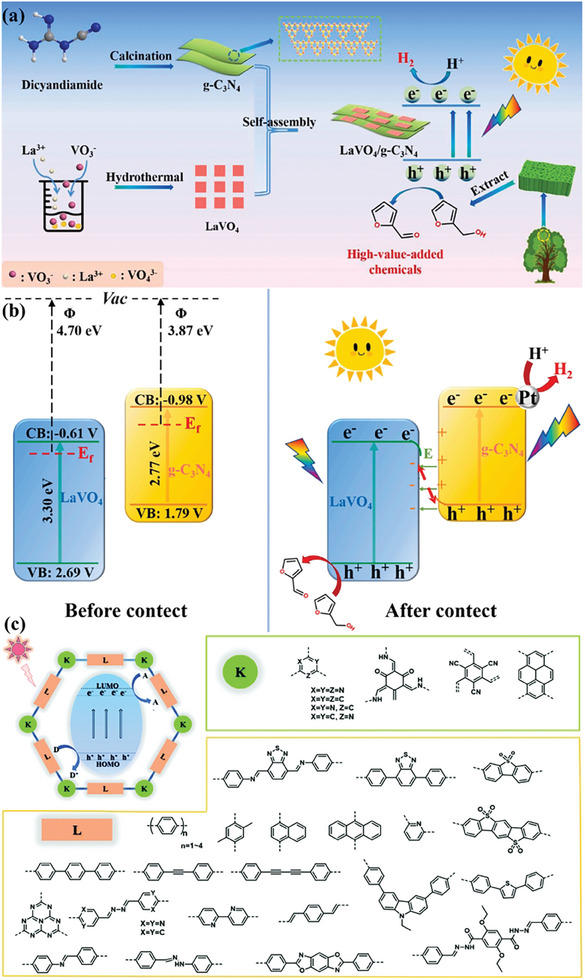
![Figure 6 a) Schematic illustration of preparing 2D/2D LaVO4/g‐C3N4 photocatalyst for H2 evolution from furfuryl alcohol, and b) photocatalytic mechanism of H2 production over 2D/2D LaVO4/g‐C3N4 heterostructure. Reproduced with permission.[ 143 ] Copyright 2022, Elsevier Inc. c) Structures of COF semiconductors (K denotes knots; L denotes linkers). Reproduced with permission.[ 165 ] Copyright 2020, The Royal Society of Chemistry.](/paper-figures/5491dee4f045430481fd9faab4205210/solardriven-biomass-reforming-for-hydrogen-generation-principles-advances-and-figure-6.jpg)
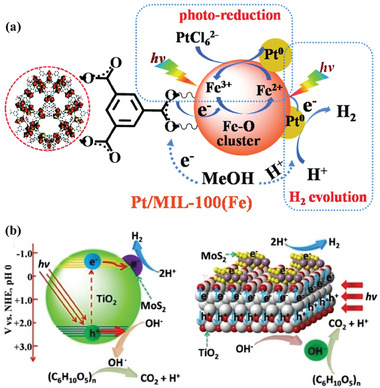
![Figure 7 a) Proposed mechanism for photo‐reduction of deposited Pt nanoparticles and photocatalytic H2 evolution over Pt/MIL‐100(Fe). Reproduced with permission.[ 171 ] Copyright 2016, The Royal Society of Chemistry. b) Photogenerated electron transfer and proposed mechanism for photorefining of lignocellulose into H2 over 2% MoS2/TiO2 photocatalyst. Reproduced with permission.[ 205 ] Copyright 2021, Wiley‐VCH.](/paper-figures/bbfa4801105745a6b873439414c4321e/solardriven-biomass-reforming-for-hydrogen-generation-principles-advances-and-figure-7.jpg)
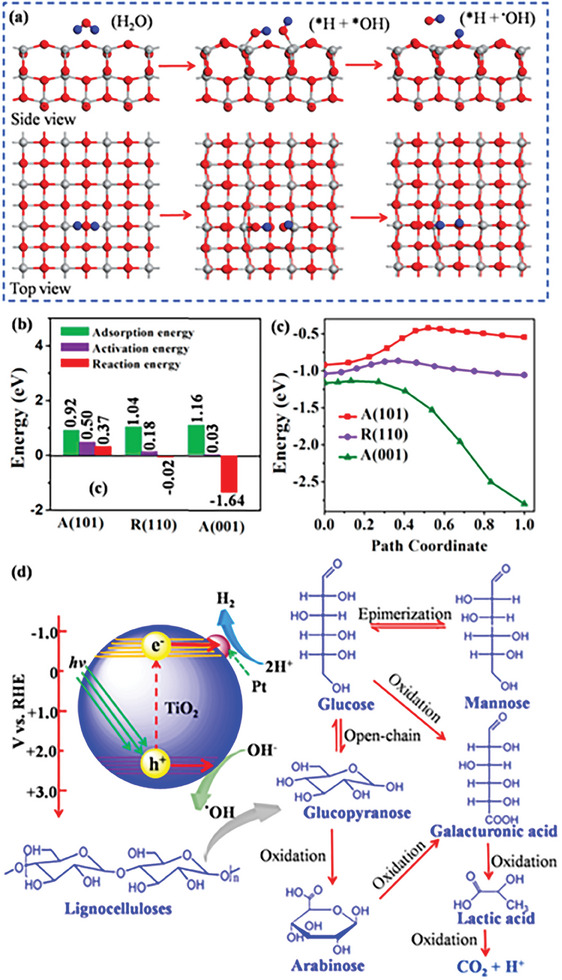
![Figure 8 a) Schematic diagram of the •OH generation on (001) facets of anatase TiO2. b) Comparison of the absorption, activation, and reaction energy for the generation of •OH over (101) and (001) facets of anatase TiO2 and (110) facets of rutile TiO2. c) Reaction path for the generation of •OH over (101) and (001) facets of anatase TiO2 and (110) facets of rutile TiO2. d) Energy diagram of charge transfer and proposed reaction mechanism for photoreforming of lignocelluloses into H2. Reproduced with permission.[ 206 ] Copyright 2022, American Chemical Society.](/paper-figures/ff22761666a74a3d9eb9057156470ed5/solardriven-biomass-reforming-for-hydrogen-generation-principles-advances-and-figure-8.jpg)
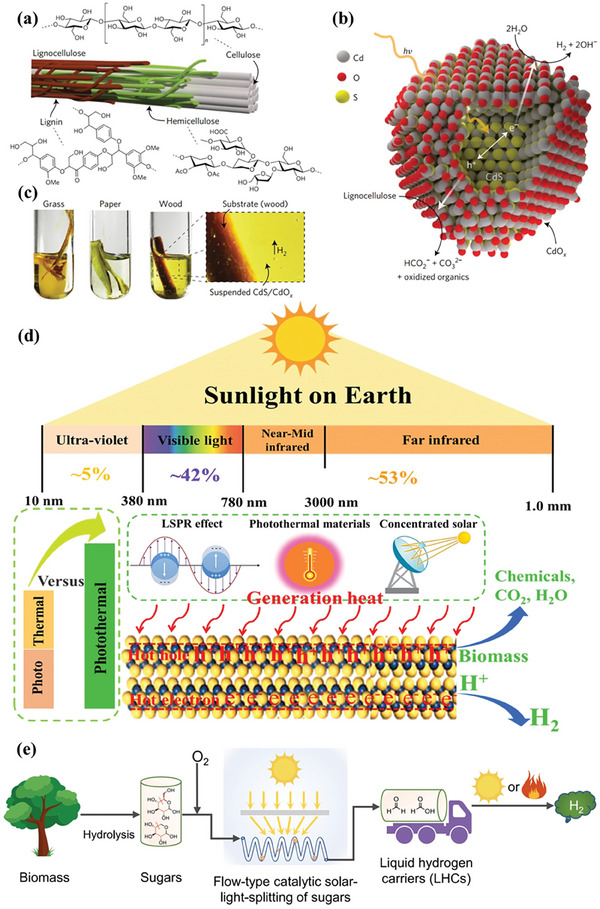
![Figure 9 a) Lignocellulose comprised of cellulose, hemicellulose, and lignin, b) Photoreforming of lignocellulose for H2 production over CdS/CdO x , and c) Various raw biomass is photoreformed into H2 production over CdS/CdO x in the alkaline solution. Reproduced with permission.[ 69 ] Copyright 2017, Springer Nature. d) Schematic illustration of photothermal catalytic biomass for hydrogen production. e) Schematic description of a stepwise photoreforming of raw biomass for H2 production. Reproduced with permission.[ 76 ] Copyright 2023, Cell Press.](/paper-figures/6baadacad8cb4e72847644cf5d8f0e9d/solardriven-biomass-reforming-for-hydrogen-generation-principles-advances-and-figure-9.jpg)
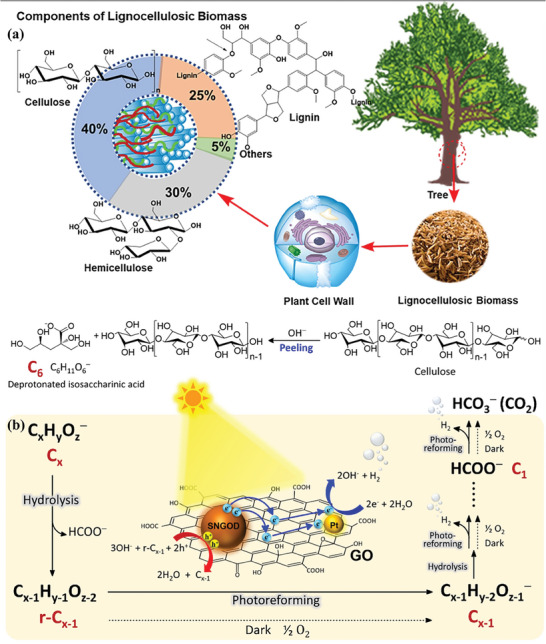
![Figure 10 a) Schematic illustration of lignocellulosic components. Reproduced with permission.[ 218 ] Copyright 2023, American Chemical Society. b) Mechanism of photoreforming of cellulose to H2 in NaOH solution. Reproduced with permission.[ 228 ] Copyright 2021, American Chemical Society.](/paper-figures/320247747d4f4598a82b22bb27b9d299/solardriven-biomass-reforming-for-hydrogen-generation-principles-advances-and-figure-10.jpg)
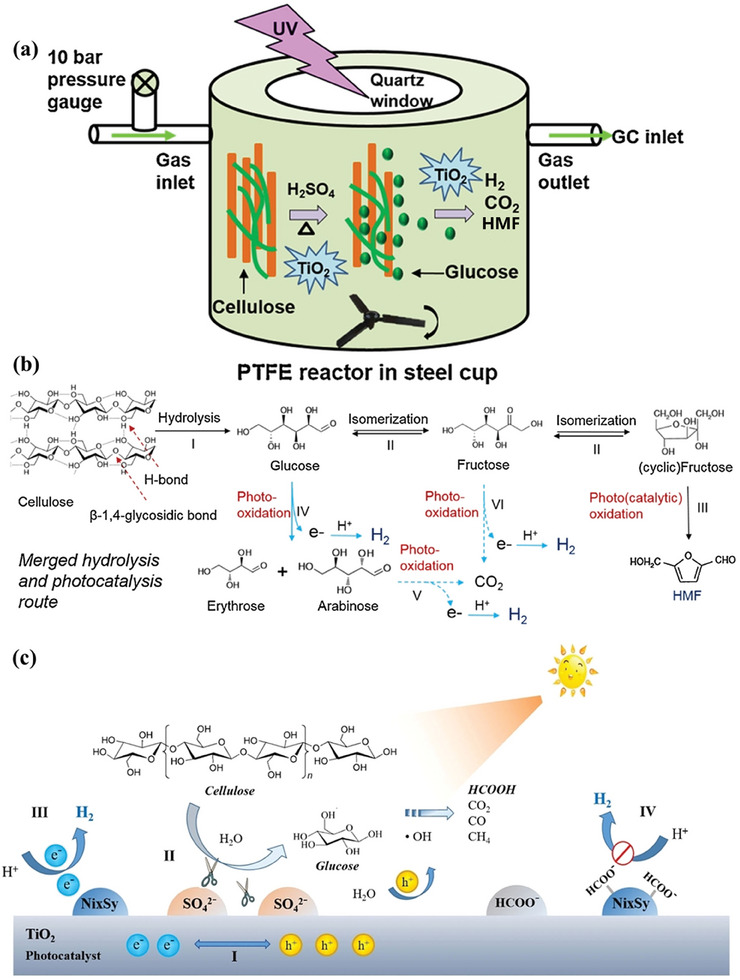
![Figure 11 a) Illustration of experimental reactor used for photoreforming cellulose to hydrogen via the combination of photocatalysis and acid hydrolysis, and b) Proposed pathway of cellulose decomposition in combined processes of hydrolysis and photocatalysis. Reproduced with permission.[ 229 ] Copyright 2018, Elsevier Inc. c) Proposed mechanism of cellulose photoreforming toward H2 over P25‐S‐Ni under solar irradiation. Reproduced with permission.[ 231 ] Copyright 2018, Wiley‐VCH.](/paper-figures/08f445878b4a442fac6c6e3a14dc6230/solardriven-biomass-reforming-for-hydrogen-generation-principles-advances-and-figure-11.jpg)
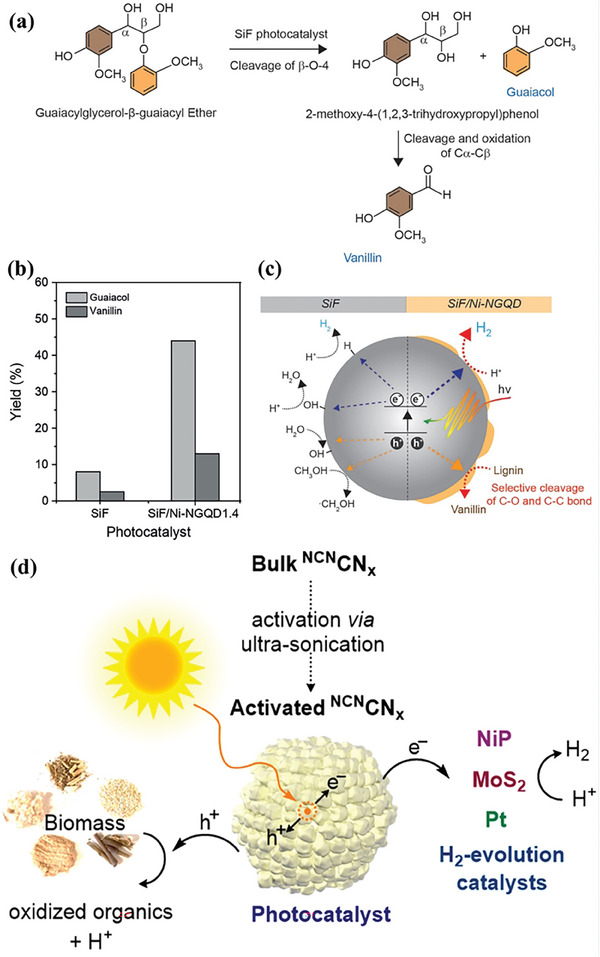
![Figure 12 a) Selective cleavage of β‐aryl ether bond and Cα‐Cβ bond of lignin model compound over SiF/Ni‐NQGDs photocatalysts, b) Products of photoreforming of lignin model compound over SiF/Ni‐NQGDs and SiF, and c) Schematic illustration of lignin photoreforming over SiF/Ni‐NQGDs and SiF. Reproduced with permission.[ 235 ] Copyright 2023, Wiley‐VCH. d) Proposed mechanism of photocatalytic H2 production from biomass over activated NCNCNx with various cocatalysts. Reproduced with permission.[ 70 ] Copyright 2018, American Chemical Society.](/paper-figures/b39dae4a6fba4adab42ec985a059f3a7/solardriven-biomass-reforming-for-hydrogen-generation-principles-advances-and-figure-12.jpg)
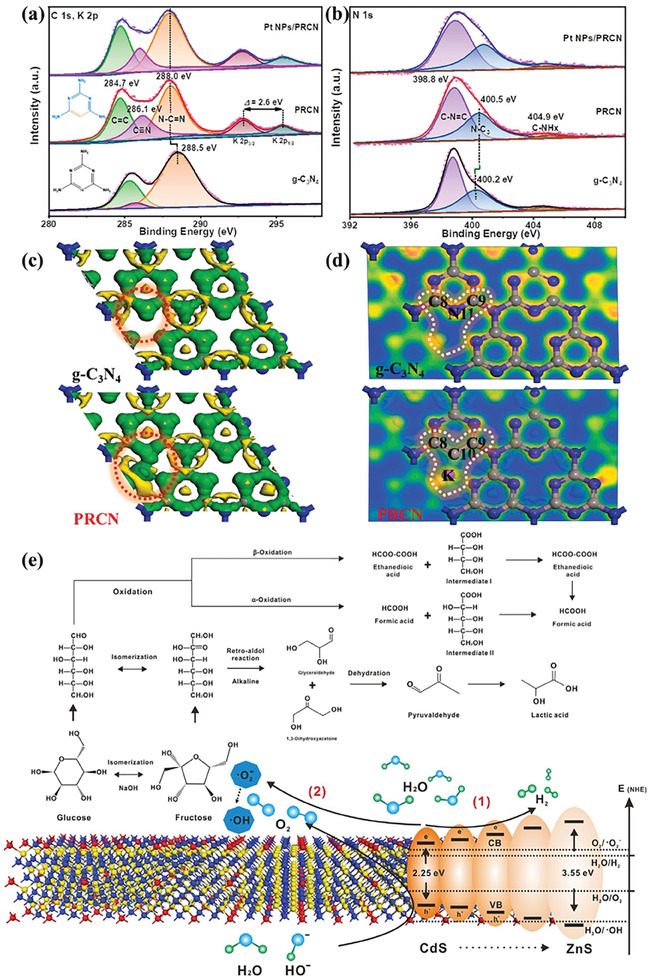
![Figure 13 High‐resolution C 1s (a) and N 1s (b) XPS spectra of g‐C3N4, PRCN, and Pt NPs/PRCN, c) charge density difference (yellow/green: electron cloud density of N/C), and d) orbital population of g‐C3N4 and PRCN (Blue: N, Gray: C, Purple: K). Reproduced with permission.[ 245 ] Copyright 2022, Elsevier Inc. e) proposed reaction mechanism for photocatalysis of glucose into H2 and lactic acid. Reproduced with permission.[ 247 ] Copyright 2021, Cell Press.](/paper-figures/c9e4575938484afab52896ef27f40be6/solardriven-biomass-reforming-for-hydrogen-generation-principles-advances-and-figure-13.jpg)
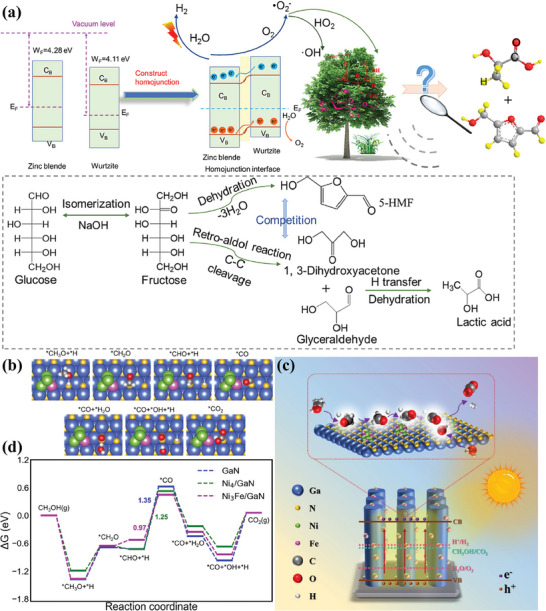
![Figure 14 a) The possible reaction route of glucose photoreforming over Zn0.3Cd0.7S. Reproduced with permission.[ 248 ] Copyright 2023, Elsevier Inc. b) Adsorption configurations for various intermediates of methanol photoreforming toward H2 on Ni3Fe/GaN, c) Schematic illustration of methanol photoreforming to generate H2 using NiFe NPs/GaN NWs/Si architecture, and d) Energy profiles for photoreforming of methanol on GaN(101̅0), Ni4/GaN, and Ni3Fe/GaN. Reproduced with permission.[ 160 ] Copyright 2023, the American Chemical Society.](/paper-figures/026ab2c005e44bb3a78aabf23c04dec5/solardriven-biomass-reforming-for-hydrogen-generation-principles-advances-and-figure-14.jpg)
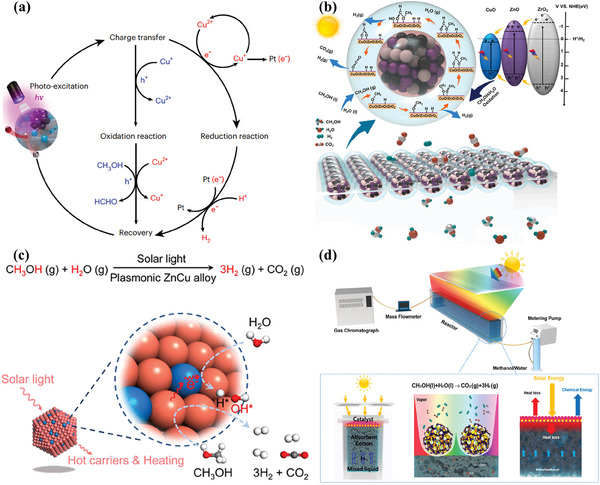
![Figure 15 a) The possible reaction mechanism of CH3OH photoreforming toward H2 and HCHO over PtCu‐TiO2 photocatalyst. Reproduced with permission.[ 75 ] Copyright 2023, Springer Nature. b) Schematic illustration of solar‐driven methanol reforming into hydrogen via synergetic photo‐ and thermocatalysis. Reproduced with permission.[ 272 ] Copyright 2021, Elsevier Inc. c) Triggering water and methanol activation for solar‐driven H2 production over plasmonic ZnCu alloy via photo‐thermal‐catalysis. Reproduced with permission.[ 73 ] Copyright 2021, the American Chemical Society. d) Schematics of the outdoor flow solar‐heating thermocatalysis of methanol reforming into H2. Reproduced with permission.[ 275 ] Copyright 2023, Elsevier Inc.](/paper-figures/7af34ae87910444cb0901fa7257a1969/solardriven-biomass-reforming-for-hydrogen-generation-principles-advances-and-figure-15.jpg)
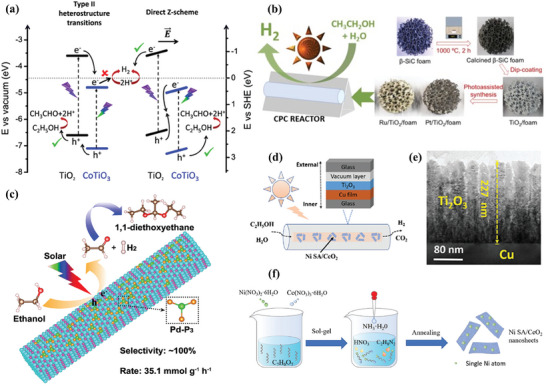
![Figure 16 a) Schematic demonstration of the relative energy levels of TiO2 and CoTiO3 and a charge migration mechanism between TiO2 and CoTiO3 in a type II heterostructure and a direct Z‐scheme. Reproduced with permission.[ 282 ] Copyright 2021, the American Chemical Society. b) Schematic illustration of solar hydrogen production from ethanol‐water over metal/TiO2 photocatalysts supported on β‐SiC alveolar foams. Reproduced with permission.[ 284 ] Copyright 2023, Elsevier Inc. c) Schematic illustration of photoreforming of ethanol into DEE and H2 over PdPSA‐CdS. Reproduced with permission.[ 295 ] Copyright 2021, Cell Press. d) Schematic demonstration of the photothermal device of Ni SA/CeO2‐Ti2O3/Cu for solar‐driven H2 evolution from ethanol, e) TEM cross‐section of a Ti2O3/Cu film, and f) Schematic of the synthesis process for the Ni SA/CeO2 nanosheets. Reproduced with permission.[ 292 ] Copyright 2022, The Royal Society of Chemistry.](/paper-figures/6af93a0b397e48968eaeedef888574eb/solardriven-biomass-reforming-for-hydrogen-generation-principles-advances-and-figure-16.jpg)
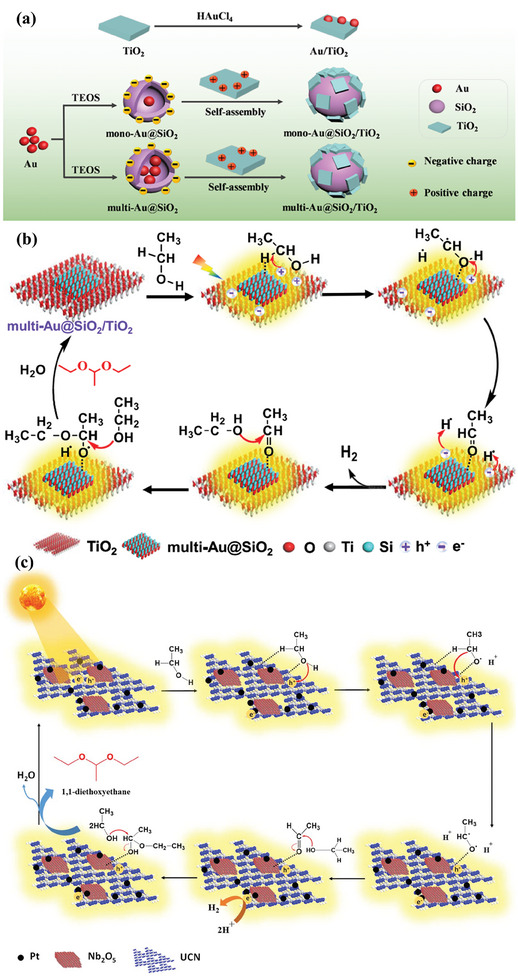
![Figure 17 a) Synthesis routes of Au/TiO2, mono‐Au@SiO2/TiO2, and multi‐Au@SiO2/TiO2, and b) Mechanism of photoreforming ethanol into DEE and H2 over Multi‐Au@SiO2/TiO2. Reproduced with permission.[ 296 ] Copyright 2020, American Chemical Society. c) Mechanistic illustration of photocatalytic co‐production of DEE and H2 over the Pt/UCN/Nb2O5‐(2) photocatalyst. Reproduced with permission.[ 299 ] Copyright 2022, The Royal Society of Chemistry.](/paper-figures/f4c730c656a34120913eca0bb6195698/solardriven-biomass-reforming-for-hydrogen-generation-principles-advances-and-figure-17.jpg)
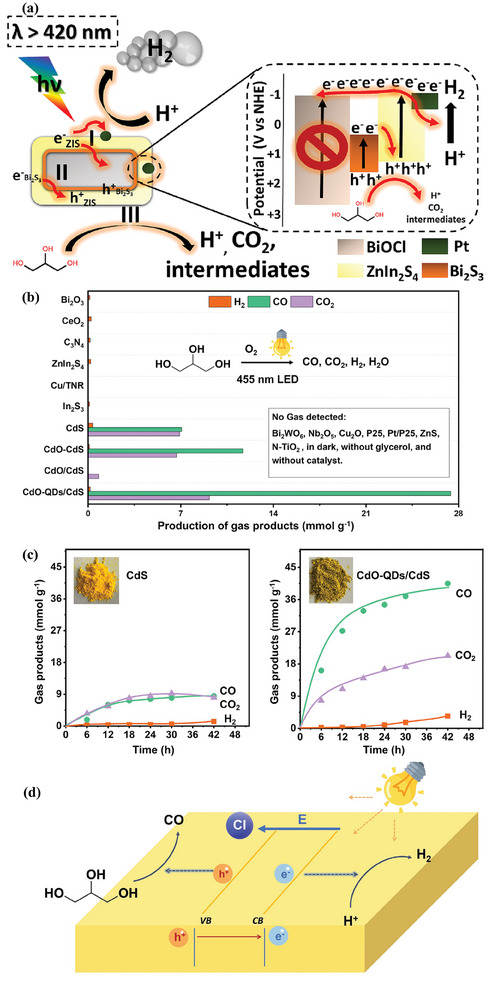
![Figure 18 a) The overall mechanism of PHE over BiOCl@ZIS/Pt composite under visible light irradiation. Reproduced with permission.[ 301 ] Copyright 2023, Elsevier Inc. b) Catalyst screening for photocatalytic glycerol reforming, and c) Comparison of catalytic activity between CdS and CdO‐QDs/CdS catalysts. Reproduced with permission.[ 307 ] Copyright 2022, Cell Press. d) Mechanism of the photocatalytic reforming of glycerol on CdS‐Cl. Reproduced with permission.[ 309 ] Copyright 2023, Wiley‐VCH.](/paper-figures/a7ecf677c0084fd6b79f173924faa1f4/solardriven-biomass-reforming-for-hydrogen-generation-principles-advances-and-figure-18.jpg)
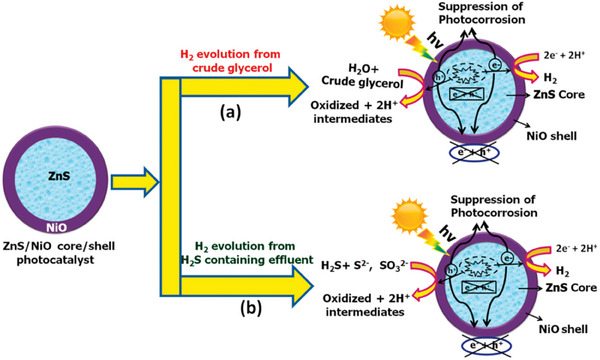
![Figure 19 Proposed reaction mechanism for a) photocatalytic H2 generation from glycerol aqueous solution and b) H2 evolution from H2S over the ZCNS core‐shell nanocomposite. Reproduced with permission.[ 310 ] Copyright 2021, Elsevier Inc.](/paper-figures/182f5a46e84546e58e922d57bc142338/solardriven-biomass-reforming-for-hydrogen-generation-principles-advances-and-figure-19.jpg)
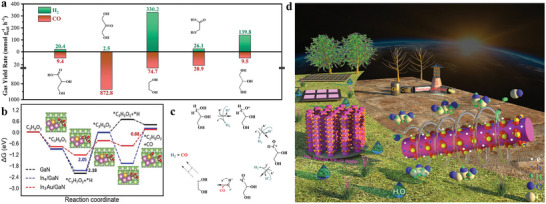
![Figure 20 Green syngas production from glycerol, water, and sunlight over AuIn NPs/GaN NWs/Si. a) The syngas activities of several possible C2 and C3 intermediates. b) Calculated free‐energy diagram for glycerol reforming. c) Photocatalytic glycerol reforming. d) Schematic illustration of syngas production from glycerol and water. Reproduced with permission.[ 314 ] Copyright 2023, The Royal Society of Chemistry.](/paper-figures/dfa0b6293ad14debb9b4491c3e8f64a0/solardriven-biomass-reforming-for-hydrogen-generation-principles-advances-and-figure-20.jpg)
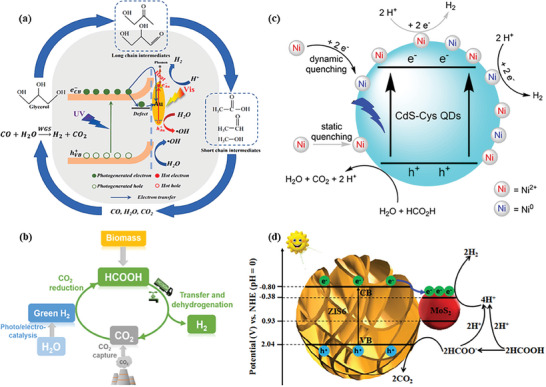
![Figure 21 a) Proposed mechanism of photothermal reforming of glycerol over 2D Au/TiO2. Reproduced with permission.[ 315 ] Copyright 2021, Elsevier Inc. b) Carbon cycle for utilization of formic acid as a LOHC. Reproduced with permission.[ 319 ] Copyright 2023, Cell Press. c) Proposed mechanism for hydrogen production from formic acid photoreforming over Ni/CdS QDs. Reproduced with permission.[ 333 ] Copyright 2023, Wiley‐VCH. d) Proposed mechanism for photocatalytic H2 production from formic acid over 0.5% MoS2/Zn3In2S6. Reproduced with permission.[ 335 ] Copyright 2021, Elsevier Inc.](/paper-figures/93c9f8b0dae7413d9f2679b01fef296a/solardriven-biomass-reforming-for-hydrogen-generation-principles-advances-and-figure-21.jpg)
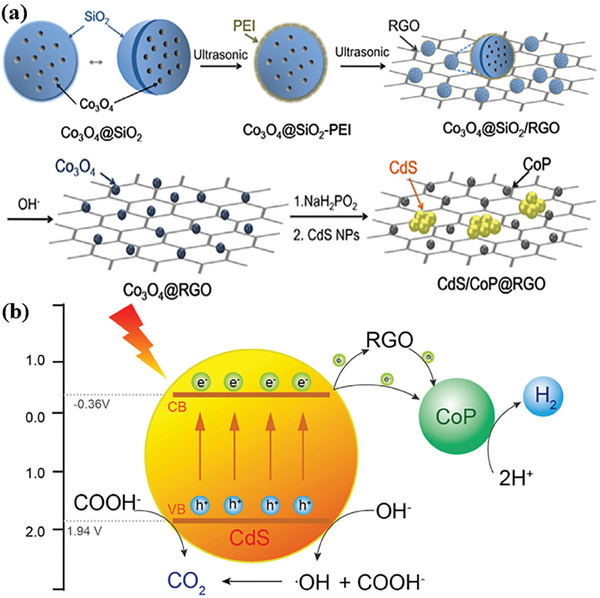
![Figure 22 a) Schematic illustration of the CdS/CoP@RGO. b) Proposed mechanism for photocatalytic H2 production from formic acid over CdS/CoP@RGO. Reproduced with permission.[ 340 ] Copyright 2018, Cell Press.](/paper-figures/82e73a927f12483ca28117845eca4f21/solardriven-biomass-reforming-for-hydrogen-generation-principles-advances-and-figure-22.jpg)
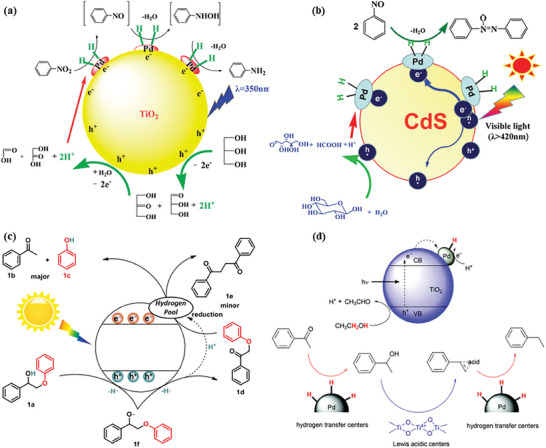
![Figure 23 a) Schematic illustration of photocatalytic reduction of nitrobenzene to aniline coupled with oxidation of glycerol to fine chemicals over Pd/TiO2. Reproduced with permission. Reproduced with permission.[ 349 ] Copyright 2015, The Royal Society of Chemistry. b) Schematic diagram of visible‐light‐driven simultaneous conversion of glucose to arabinose and nitrosobenzene to azoxybenzene over Pd/Meso CdS. Reproduced with permission.[ 350 ] Copyright 2016, The Royal Society of Chemistry. c) Proposed mechanism for photoconversion of the lignin model via self‐hydrogen transfer hydrogenolysis. Reproduced with permission.[ 352 ] Copyright 2017, American Chemical Society. d) Proposed mechanism for photocatalytic deoxygenation of aromatic ketones using ethanol as a hydrogen donor over Pd/TiO2 photocatalyst. Reproduced with permission. Reproduced with permission.[ 353 ] Copyright 2020, The Royal Society of Chemistry.](/paper-figures/560ba63ff2d04caebdbf74e4c8374ee9/solardriven-biomass-reforming-for-hydrogen-generation-principles-advances-and-figure-23.jpg)
Verification
Claims the paper makes
The claims and statistics of this paper haven’t been checked yet.
Run the check — free, no account needed. It reads the open-access text and checks the sources it cites.
Self-check
Percentages, sums and reported differences re-computed from the paper’s own numbers.
The self-check needs the paper’s full text.
Citations
Cites
Electrochemical Photolysis of Water at a Semiconductor Electrode
FUJISHIMA, A., & HONDA, K. (1972) · Nature · doi:10.1038/238037a0 · Cited by 34,169
Semiconductor-based Photocatalytic Hydrogen Generation
Chen, X., Shen, S., Guo, L., & Mao, S. S. (2010) · Chemical Reviews · doi:10.1021/cr1001645 · Cited by 7,876
Conversion of biomass to selected chemical products
Gallezot, P. (2011) · Chemical Society Reviews · doi:10.1039/c1cs15147a · Cited by 2,588
Earth-abundant cocatalysts for semiconductor-based photocatalytic water splitting
Ran, J., Zhang, J., Yu, J., Jaroniec, M., & Qiao, S. (2014) · Chemical Society Reviews · doi:10.1039/c3cs60425j · Cited by 2,553
Photocatalytic water splitting with a quantum efficiency of almost unity
Takata, T., Jiang, J., Sakata, Y., Nakabayashi, M., Shibata, N., Nandal, V., Seki, K., Hisatomi, T., & Domen, K. (2020) · Nature · doi:10.1038/s41586-020-2278-9 · Cited by 2,316
Particulate photocatalysts for overall water splitting
Chen, S., Takata, T., & Domen, K. (2017) · Nature Reviews Materials · doi:10.1038/natrevmats.2017.50 · Cited by 2,228
Semiconductor-mediated photodegradation of pollutants under visible-light irradiation
Chen, C., Ma, W., & Zhao, J. (2010) · Chemical Society Reviews · doi:10.1039/b921692h · Cited by 2,218
Chatenet, M., Pollet, B. G., Dekel, D. R., Dionigi, F., Deseure, J., Millet, P., Braatz, R. D., Bazant, M. Z., Eikerling, M., Staffell, I., et al. (2022) · Chemical Society Reviews · doi:10.1039/d0cs01079k · Cited by 2,025
Fundamentals of TiO 2 Photocatalysis: Concepts, Mechanisms, and Challenges
Guo, Q., Zhou, C., Ma, Z., & Yang, X. (2019) · Advanced Materials · doi:10.1002/adma.201901997 · Cited by 1,978
Cheng, L., Xiang, Q., Liao, Y., & Zhang, H. (2018) · Energy & Environmental Science · doi:10.1039/c7ee03640j · Cited by 1,745
Research works printed but not linked: 10
- Melo M. D. O., 2011, J. Brazil. Chem. Soc., 22, 1399
- Zhang Y., 2019, Chem, 1
- Kreft S., 2020, Chem, 2
- Reddy N. S., 2023, Nano Energy, 11
- Zhou B., 2023, Sci. China Chem., 66, 739
- Li X., 2023, J Mater Chem, 11, 3235
- Rodríguez‐Lugo R. E., 2013, Chem, 5, 342
- Jawhari A. H., 2023, Fuel Process. Technol., 344
- Wang Z., 2024, Angew. Chem., Int. Ed.
- Kondarides D., 2010, J. Adv. Oxid. Technol., 13, 116
Cited by
Sorted by citations
Ban, L., Zhang, Y., Sun, D., Zhou, Y., Li, Y., Xu, C. C., Yang, S., & Zhang, H. (2025) · Advanced Functional Materials · doi:10.1002/adfm.202506114 · Cited by 55
Harnessing Renewable Energy for Hydrogen Production: Advances, Challenges, and Opportunities
Avargani, V. M., Habibzadeh, M., Maarof, H. A., Zendehboudi, S., & Duan, X. (2025) · Industrial & Engineering Chemistry Research · doi:10.1021/acs.iecr.5c00061 · Cited by 54
Wei, W., Li, Y., Zeng, L., He, L., Wang, Y., Jiang, T., Li, J., Wan, W., & Gao, Z. (2025) · Journal of Membrane Science · doi:10.1016/j.memsci.2025.123728 · Cited by 22
Self-citationHua, J., Ji, M., Jiao, P., Yin, Z., Xia, Q., Jiang, L., Zhang, J., & Hu, P. (2025) · Catalysts · doi:10.3390/catal15040396 · Cited by 20
Self-citationGreen Syngas Production from Natural Lignin, Sunlight, and Water over Pt‐Decorated InGaN Nanowires
Yu, T., Li, J., Li, Y., Qiu, L., Hu, P., Zhu, L., Huang, Z., & Zhou, B. (2024) · Angewandte Chemie International Edition · doi:10.1002/anie.202405904 · Cited by 20
Self-citation
Metadata
- Authors
- Pan, H., Li, J., Wang, Y., Xia, Q., Qiu, L., & Zhou, B.
- Affiliations
- College of Biological Chemical Science and Engineering Jiaxing University 899 Guangqiong Road Jiaxing Zhejiang 314001 China
- Shanghai Jiao Tong University (CN)
- Jiaxing University (CN)
- Corresponding author
- Wang, Yangang
- Zhou, Baowen
- Venue
- Advanced Science
- Publisher
- Wiley
- Published
- 2024-05-30
- Volume
- 11
- Issue
- 29
- Pages
- e2402651-e2402651
- ISSN
- 2198-3844 (ISSN-L)
- PMC
- PMC11304308
- OpenAlex
- W4399246574
- Cited by
- 67
- References
- 350
- Citations by year
- 2026: 26 · 2025: 32 · 2024: 9
- FWCI
- 1.40
- Type
- journal article
- Language
- en
- Open access
- gold
- doi.org
- Licence
- Locations
- Advanced Science (publishedVersion, cc-by)
- PubMed Central (publishedVersion, cc-by)
- PubMed (publishedVersion)
- DOAJ (DOAJ: Directory of Open Access Journals) (submittedVersion, cc-by-sa)
- Funders
- Natural Science Foundation of Zhejiang Province (LQ22B060008)
- National Natural Science Foundation of China (22109095, 22278176)
- National Key Research and Development Program of China (2023YFB4004900)
- Topics
- Physical Sciences › Energy › Renewable Energy, Sustainability and the Environment › Advanced Photocatalysis Techniques
- Physical Sciences › Chemical Engineering › Catalysis › Catalysis for Biomass Conversion
- Physical Sciences › Energy › Fuel Technology › Thermochemical Biomass Conversion Processes
- Keywords
- solar hydrogen production, photocatalytic hydrogen evolution, semiconductors, cocatalyst, bio-based feedstocks, value-added chemicals, organic reactions, carbon neutrality, organic solid waste
About these checks
Registry, retraction, Cites and statistics results are computed, not judged, with one exception: a printed reference that no index lists is read once by a model before it counts as a citation error. Claims are extracted by a model and kept only when their quote appears verbatim in the text; each cited source is then checked, with a model’s help, for whether it says what the claim relies on. Those verdicts can be wrong — read the claim’s quote and the cited source before relying on one.
Statistics and arithmetic are recomputed, not judged.
Confidence bands are shown only for fields calibrated on our annotated test set. None is calibrated yet, so no band is shown.
What counts as a claim ›How we measure confidence ›How we check this ›
Are you an author, or do you see a problem with this page? Request a review