

The DOI matches its Crossref record; 32 of the 32 references it cites were found in a registry or an index.
Improving Treatment Adherence in Youths with Multidrug-Resistant Tuberculosis with Psychosocial Intervention
Open accessAbstract
INTRODUCTION: Multidrug-resistant tuberculosis (MDR-TB) deeply impacts the well-being of adolescents and young adults (AYA), resulting in poor treatment adherence. Identifying psychosocial challenges and preferred interventions is essential to enhance treatment adherence and outcomes in this unique group. METHODS: This was a mixed-method study where participants aged between 15 and 24 years, diagnosed with MDR-TB, were recruited for in-depth interviews and a semi-structured questionnaire. RESULTS: The individual-level psychosocial challenges included mental stress, suicidal ideation, reluctance to continue medication, perceived and experienced stigma, and socio-economic burdens. Health system-related challenges encompassed delayed diagnosis, drug stockouts, and negative experiences with Health Care Providers (HCPs). Among 75 participants, the median age was 20.5 years, with 57% (n = 41) females, 85% (n = 62) single, and a median treatment duration of 8 months at the interview. Seventy-two percent (n = 54) of the participants reported psychological issues such as irritation, loneliness, anxiety, sleep disorder, suicidal ideation, and stigma. Individual-level interventions were preferred by 61% (n = 46) of participants, including social media, deep breathing, and exercise training. CONCLUSIONS: To enhance results in MDR-TB, it is crucial to develop and assess personalized psychosocial interventions with tailored adjustments to tackle the psychosocial obstacles encountered by adolescents and young adults with MDR-TB.
Overview
The claims and statistics of this paper haven’t been checked yet.
Run the check — free, no account needed. It reads the open-access text and checks the sources it cites.
Integrity signals
Registry
Cites
Statistics
Figures
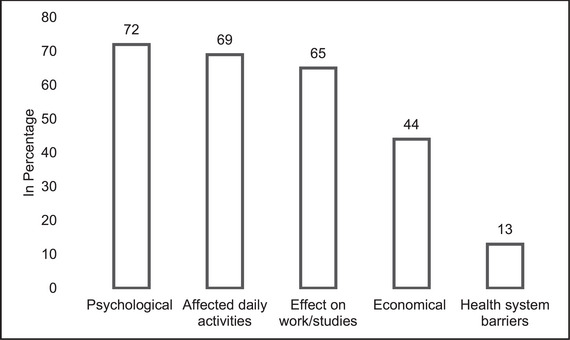
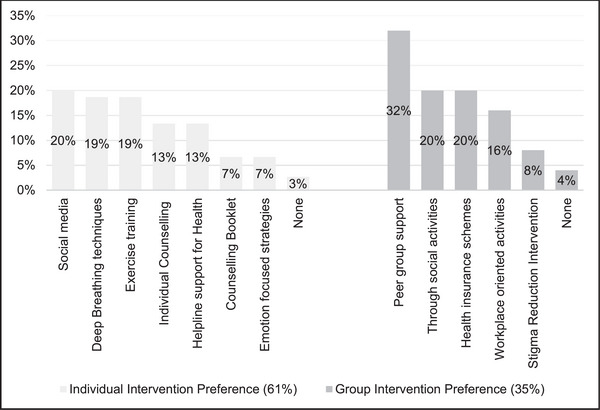
Verification
Claims the paper makes
The claims and statistics of this paper haven’t been checked yet.
Run the check — free, no account needed. It reads the open-access text and checks the sources it cites.
Claims other papers make about this one
Each is checked against this paper’s own text: does it say what the citing paper says it does?
The source backs part of the claim, not all of it — or backs it for a different population, condition or comparison.
In the citing paper
“A scoping review is particularly timely now because the End TB Strategy [13] and the WHO mhGAP framework [17] have explicitly called for the integration of mental health and psychosocial care into TB programs, while the number of primary trials and qualitative studies in this area has expanded substantially over the past five years [18,19,20,21].”
From Psychosocial Interventions for Improving Treatment Adherence in Tuberculosis Patients: A Scoping Review of Evidence-Based Approaches. (2026) · cites this paper as [18]
Experimental — accuracy not yet measuredThe source backs part of the claim, not all of it — or backs it for a different population, condition or comparison.
In the citing paper
“For adolescents and young adults, digital and mobile health components, brief peer-led psychoeducation, and flexible scheduling are particularly aligned with patient preferences and feasible in resource-constrained settings [18].”
From Psychosocial Interventions for Improving Treatment Adherence in Tuberculosis Patients: A Scoping Review of Evidence-Based Approaches. (2026) · cites this paper as [18]
Experimental — accuracy not yet measuredThe source backs part of the claim, not all of it — or backs it for a different population, condition or comparison.
In the citing paper
“Likewise, Dhumal et al. [18] showed that adolescents and young adults with MDR-TB expressed preferences for digital resources, peer counseling, and flexible delivery formats.”
From Psychosocial Interventions for Improving Treatment Adherence in Tuberculosis Patients: A Scoping Review of Evidence-Based Approaches. (2026) · cites this paper as [18]
Experimental — accuracy not yet measured
Self-check
Percentages, sums and reported differences re-computed from the paper’s own numbers.
The self-check needs the paper’s full text.
Citations
Cites
Our future: a Lancet commission on adolescent health and wellbeing
Patton, G. C., Sawyer, S. M., Santelli, J. S., Ross, D. A., Afifi, R., Allen, N. B., Arora, M., Azzopardi, P., Baldwin, W., Bonell, C., et al. (2016) · The Lancet · doi:10.1016/s0140-6736(16)00579-1 · Cited by 3,785
Sawyer, S. M., Azzopardi, P. S., Wickremarathne, D., & Patton, G. C. (2018) · The Lancet Child & Adolescent Health · doi:10.1016/s2352-4642(18)30022-1 · Cited by 3,666
Marais, B. J., Gie, R. P., Schaaf, H. S., Hesseling, A. C., Obihara, C. C., Starke, J., Enarson, D. A., Donald, P. R., & Beyers, N. (2004) · PubMed · Cited by 806
Seeking Help From the Internet During Adolescence
GOULD, M. S., MUNFAKH, J. L. H., LUBELL, K., KLEINMAN, M., & PARKER, S. (2002) · Journal of the American Academy of Child & Adolescent Psychiatry · doi:10.1097/00004583-200210000-00007 · Cited by 250
Risk factors of multidrug-resistant tuberculosis: A global systematic review and meta-analysis
Pradipta, I. S., Forsman, L. D., Bruchfeld, J., Hak, E., & Alffenaar, J. C. (2018) · Journal of Infection · doi:10.1016/j.jinf.2018.10.004 · Cited by 242
Dowshen, N., Kuhns, L. M., Johnson, A. K., Holoyda, B. J., & Garofalo, R. (2012) · Journal of Medical Internet Research · doi:10.2196/jmir.2015 · Cited by 208
Logging into therapy: Adolescent perceptions of online therapies for mental health problems
Sweeney, G. M., Donovan, C. L., March, S., & Forbes, Y. (2016) · Internet Interventions · doi:10.1016/j.invent.2016.12.001 · Cited by 129
Garvie, P. A., Lensing, S., & Rai, S. N. (2007) · PEDIATRICS · doi:10.1542/peds.2006-1488 · Cited by 99
Berrien, V., Salazar, J. C., Reynolds, E., & McKay, K. (2004) · AIDS Patient Care and STDs · doi:10.1089/1087291041444078 · Cited by 99
Lyon, M. E., Trexler, C., Townsend-Akpan, C., Pao, M., Selden, A. K., Fletcher, J., Addlestone, I. C., & D’Angelo, L. J. (2003) · AIDS Patient Care and STDs · doi:10.1089/108729103322108175 · Cited by 94
Isaakidis, P., Paryani, R., Khan, S., Mansoor, H., Manglani, M. V., Valiyakath, A., Saranchuk, P., & Furin, J. J. (2013) · PLoS ONE · doi:10.1371/journal.pone.0068869 · Cited by 71
The impact of skin hyperpigmentation and hyperchromia on quality of life: A cross-sectional study
Maymone, M. B. C., Neamah, H. H., Wirya, S. A., Patzelt, N. M., Secemsky, E. A., Zancanaro, P. Q., & Vashi, N. A. (2017) · Journal of the American Academy of Dermatology · doi:10.1016/j.jaad.2017.05.009 · Cited by 64
Law, S. J., Daftary, A., O’Donnell, M. R., Padayatchi, N., Calzavara, L., & Menzies, D. (2018) · European Respiratory Journal · doi:10.1183/13993003.01030-2018 · Cited by 60
Franck, C., Seddon, J. A., Hesseling, A. C., Schaaf, H. S., Skinner, D. G., & Reynolds, L. (2014) · BMC Infectious Diseases · doi:10.1186/1471-2334-14-426 · Cited by 58
Walker, I. F., Khanal, S., Hicks, J. P., Lamichhane, B., Thapa, A., Elsey, H., Baral, S. C., & Newell, J. N. (2018) · PLOS ONE · doi:10.1371/journal.pone.0201163 · Cited by 46
The Impact of Tuberculosis on the Well-Being of Adolescents and Young Adults
Moscibrodzki, P., Enane, L. A., Hoddinott, G., Brooks, M. B., Byron, V. F., Furin, J. J., Seddon, J. A., Meyersohn, L., & Chiang, S. S. (2021) · Pathogens · doi:10.3390/pathogens10121591 · Cited by 44
Maynard, C., Tariq, S., Sotgiu, G., Migliori, G. B., van den Boom, M., & Field, N. (2023) · eClinicalMedicine · doi:10.1016/j.eclinm.2023.102057 · Cited by 44
Walker, I., Baral, S., Wei, X., Huque, R., Khan, A. H., Walley, J. D., Newell, J. N., Elsey, H., & COMDIS-HSD, O. B. O. (2017) · The International Journal of Tuberculosis and Lung Disease · doi:10.5588/ijtld.17.0135 · Cited by 36
Chiang, S. S., Waterous, P. M., Atieno, V. F., Bernays, S., Bondarenko, Y. V., Cruz, A. T., de Oliveira, M. C. B., Castillo-Barrientos, H. D., Enimil, A. K., Ferlazzo, G., et al. (2023) · Journal of Adolescent Health · doi:10.1016/j.jadohealth.2022.10.036 · Cited by 33
Online Treatment and Virtual Therapists in Child and Adolescent Psychiatry
Schueller, S. M., Stiles‐Shields, C., & Yarosh, S. (2016) · Child and Adolescent Psychiatric Clinics of North America · doi:10.1016/j.chc.2016.07.011 · Cited by 29
Borah, P. K., Kalita, H. C., Paine, S. K., Khaund, P., Bhattacharjee, C. K., Hazarika, D., Sharma, M., & Mahanta, J. (2017) · Indian Heart Journal · doi:10.1016/j.ihj.2017.08.008 · Cited by 29
Gaur, A. H., Belzer, M. E., Britto, P., Garvie, P. A., Hu, C., Graham, B., Neely, M. N., McSherry, G., Spector, S. A., & Flynn, P. M. (2010) · AIDS Research and Human Retroviruses · doi:10.1089/aid.2010.0008 · Cited by 28
Moyo, S., Furin, J. J., Hughes, J. A., Daniels, J., Snyman, L., Muller, O., Cox, V., Shroufi, A., & Cox, H. S. (2014) · Archives of Pediatric Infectious Diseases · doi:10.5812/pedinfect.17934 · Cited by 26
Sutar, R. F., Majumdar, A., Yadav, V., Basera, D. S., & Gupta, H. (2024) · Industrial Psychiatry Journal · doi:10.4103/ipj.ipj_58_23 · Cited by 23
Chiang, S. S., Senador, L. C., Altamirano, E., Wong, M., Beckhorn, C. B., Roche, S. D., Coit, J. M., Rapoport, V. E. O., Lecca, L. W., & Galea, J. T. (2023) · BMJ Open · doi:10.1136/bmjopen-2022-069938 · Cited by 22
Morabia, A. (2014) · American Journal of Epidemiology · doi:10.1093/aje/kwu131 · Cited by 21
Adolescent Females are More Susceptible than Males for Tuberculosis
Thakur, S., Chauhan, V., Kumar, R., & Beri, G. (2021) · Journal of Global Infectious Diseases · doi:10.4103/jgid.jgid_229_20 · Cited by 21
TB patient support systems in Kerala: A qualitative analysis
George, L. S., Rakesh, P. S., Sunilkumar, M., Vijayakumar, K., Kunoor, A., & Kumar, A. (2020) · Indian Journal of Tuberculosis · doi:10.1016/j.ijtb.2020.11.005 · Cited by 12
Children and adolescents’ attitude towards having leprosy in a high endemic district of India
Govindharaj, P., Darlong, J., John, A. S., & Mani, S. (2016) · Leprosy Review · doi:10.47276/lr.87.1.42 · Cited by 11
Multidrug-Resistant Tuberculosis in Child Successfully Treated with 9-Month Drug Regimen
Achar, J., Berry, C., Herboczek, K., Parpieva, N., Tillyashaykhov, M., Nikolaevna, T. Z., Khamraev, A. K., Velivela, K., Seddon, J. A., & du Cros, P. (2015) · Emerging infectious diseases · doi:10.3201/eid2111.151119 · Cited by 10
Sutar, R. F., Chaturvedi, S. K., & Akshata, J. S. (2023) · Psychosomatic Medicine Research · doi:10.53388/psmr2023002 · Cited by 5
Fu'adi, M. J., Widjanarko, B., & Martini, M. (2019) · International Journal of Health, Education & Social (IJHES) · doi:10.1234/ijhes.v2i11.39 · Cited by 4
Research works printed but not linked: 2
- American Psychiatric Association, 2013, DSM‐5‐TR Self‐Rated Level 1 Cross‐Cutting Symptom Measure—Adult, Child Age11–17
- National Statistical Office, 2022, Youth in India 2022
Cited by
Sorted by citations
Bin Qamar, R. A., Pereira, H., & Alckmin-Carvalho, F. (2026) · Advances in respiratory medicine · doi:10.3390/arm94030032 · Cited by 1
“For adolescents and young adults, digital and mobile health components, brief peer-led psychoeducation, and flexible scheduling are particularly aligned with patient preferences and feasible in resource-constrained settings [18].”
InfluentialHuang, J., Zhu, Q., Li, Z., Xie, K., Deng, J., Ma, Q., Su, H., Lu, T.-T., Lu, X.-F., Hu, Y.-L., et al. (2026) · Infection and Drug Resistance · doi:10.2147/idr.s590929
Putra, O. N., Purnamasari, T., Julaeha, Yunita, E. P., & Hidayatullah, A. Y. N. (2026) · Asian Pacific Journal of Tropical Medicine · doi:10.4103/apjtm.apjtm_204_26
Metadata
- Authors
- Dhumal, G., Nevrekar, N., Gupte, N., Shrisunder, R., Kulkarni, P., Sarpotdar, S., PM, A., Hosmani, A., Lokhande, R., Gupta, A., & Suryavanshi, N.
- Affiliations
- Johns Hopkins University (US)
- Aundh Chest Hospital Pune India
- B. J. Medical College & Sassoon Hospital (IN)
- Corresponding author
- Dhumal, Gauri
- ORCID
- Venue
- Brain and Behavior
- Publisher
- Wiley
- Published
- 2025-08
- Volume
- 15
- Issue
- 8
- Pages
- e70665-e70665
- ISSN
- 2157-9032 (ISSN-L)
- 2162-3279
- PMC
- PMC12321948
- OpenAlex
- W4412998198
- Cited by
- 3
- References
- 32
- Citations by year
- 2026: 3
- FWCI
- 2.31
- Type
- journal article
- Language
- en
- Open access
- gold
- doi.org
- Licence
- Locations
- Brain and Behavior (publishedVersion, cc-by)
- PubMed Central (publishedVersion, cc-by)
- PubMed (publishedVersion)
- DOAJ (DOAJ: Directory of Open Access Journals) (submittedVersion, cc-by-sa)
- Funders
- United States Agency for International Development
- Topics
- Health Sciences › Medicine › Infectious Diseases › Tuberculosis Research and Epidemiology
- Health Sciences › Medicine › Family Practice › Medication Adherence and Compliance
- Health Sciences › Medicine › Infectious Diseases › HIV/AIDS Research and Interventions
- Keywords
- multidrug-resistant tuberculosis, adolescents and young adults, medication adherence, psychosocial interventions, stigma, suicidal ideation, psychological stress, social support, drug stock-outs, health professionals' experiences, personalized interventions, social media, exercise training
- MeSH terms
- Psychosocial Intervention, Adolescent, Adult, Female, Humans, Male, Tuberculosis, Multidrug-Resistant, Medication Adherence, Young Adult, Social Stigma, Suicidal Ideation
About these checks
Registry, retraction, Cites and statistics results are computed, not judged, with one exception: a printed reference that no index lists is read once by a model before it counts as a citation error. Claims are extracted by a model and kept only when their quote appears verbatim in the text; each cited source is then checked, with a model’s help, for whether it says what the claim relies on. Those verdicts can be wrong — read the claim’s quote and the cited source before relying on one.
Statistics and arithmetic are recomputed, not judged.
Confidence bands are shown only for fields calibrated on our annotated test set. None is calibrated yet, so no band is shown.
What counts as a claim ›How we measure confidence ›How we check this ›
Are you an author, or do you see a problem with this page? Request a review
