

The DOI matches its Crossref record; 172 of the 172 references it cites were found in a registry or an index; none of the 167 sources its claims cite is checked for support yet.
IWGDF/IDSA guidelines on the diagnosis and treatment of diabetes‐related foot infections (IWGDF/IDSA 2023)
Open accessAbstract
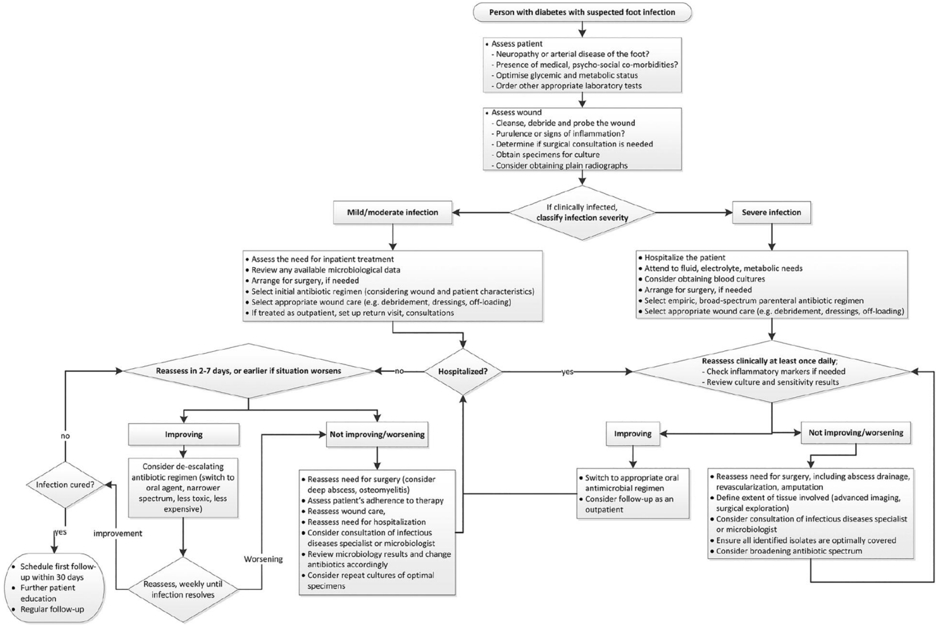
The International Working Group on the Diabetic Foot (IWGDF) has published evidence‐based guidelines on the management and prevention of diabetes‐related foot diseases since 1999. The present guideline is an update of the 2019 IWGDF guideline on the diagnosis and management of foot infections in persons with diabetes mellitus. The Grading of Recommendations, Assessment, Development, and Evaluation (GRADE) framework was used for the development of this guideline. This was structured around identifying clinically relevant questions in the P(A)ICO format, determining patient‐important outcomes, systematically reviewing the evidence, assessing the certainty of the evidence, and finally moving from evidence to the recommendation. This guideline was developed for healthcare professionals involved in diabetes‐related foot care to inform clinical care around patient‐important outcomes. Two systematic reviews from 2019 were updated to inform this guideline, and a total of 149 studies (62 new) meeting inclusion criteria were identified from the updated search and incorporated in this guideline. Updated recommendations are derived from these systematic reviews, and best practice statements made where evidence was not available. Evidence was weighed in light of benefits and harms to arrive at a recommendation. The certainty of the evidence for some recommendations was modified in this update with a more refined application of the GRADE framework centred around patient important outcomes. This is highlighted in the rationale section of this update. A note is also made where the newly identified evidence did not alter the strength or certainty of evidence for previous recommendations. The recommendations presented here continue to cover various aspects of diagnosing soft tissue and bone infections, including the classification scheme for diagnosing infection and its severity. Guidance on how to collect microbiological samples, and how to process them to identify causative pathogens, is also outlined. Finally, we present the approach to treating foot infections in persons with diabetes, including selecting appropriate empiric and definitive antimicrobial therapy for soft tissue and bone infections; when and how to approach surgical treatment; and which adjunctive treatments may or may not affect the infectious outcomes of diabetes‐related foot problems. We believe that following these recommendations will help healthcare professionals provide better care for persons with diabetes and foot infections, prevent the number of foot and limb amputations, and reduce the patient and healthcare burden of diabetes‐related foot disease.
Overview
CoChat Summary
TL;DR
This 2023 IWGDF/IDSA guideline updates recommendations for diagnosing and treating diabetes-related foot infections using GRADE, informed by updated systematic reviews that identified 149 studies (62 new). It emphasizes clinical diagnosis and severity classification, appropriate culture and imaging, pathogen-directed antibiotic therapy, and recommends against several adjunctive or topical treatments.
Key findings
- Diagnosis: diagnose soft-tissue infection clinically and assess severity with the IWGDF/IDSA classification (Strong; Low); consider tissue specimen culture rather than swab (Conditional; Moderate); use conventional rather than molecular microbiology first-line (Strong; Moderate); for osteomyelitis, consider probe-to-bone plus plain X-rays and ESR/CRP/PCT initially (Conditional; Low), MRI if doubt remains (Strong; Moderate), and bone rather than soft-tissue samples for culture (Conditional; Moderate).
- Treatment: for soft-tissue DFI, use any systemic regimen shown effective in RCTs at standard dosing (Strong; High) for 1–2 weeks (Strong; High), possibly up to 3–4 weeks if extensive and resolving slowly or with severe PAD (Conditional; Low); do not treat clinically uninfected ulcers with antibiotics to reduce infection risk or promote healing (Best Practice Statement).
- Osteomyelitis: consider up to 3 weeks of antibiotics after minor amputation with positive bone margin culture and 6 weeks without bone resection or amputation (Conditional; Low); consider surgical resection with systemic antibiotics (Conditional; Low) or antibiotics without surgery for selected forefoot osteomyelitis without immediate drainage need, PAD, or exposed bone (Conditional; Low).
- Adjunctive/topical: suggest not using G-CSF, topical antiseptics, silver preparations, honey, bacteriophage therapy, or negative-pressure wound therapy (Conditional; Low); not using topical antibiotics with systemic antibiotics (Conditional; Low); and not using HBO or topical oxygen therapy solely to treat a DFI (Conditional; Low).
Methods
- GRADE framework was used, structured around P(A)ICO questions, patient-important outcomes, systematic review of evidence, certainty assessment, and moving from evidence to recommendations; a multidisciplinary IWGDF/IDSA working group developed the guideline.
- Two 2019 systematic reviews were updated; 149 studies (62 new) meeting inclusion criteria were identified and incorporated; reviews followed PRISMA and protocols were registered in PROSPERO (CRD42022324795, CRD42022324812).
- Recommendations were discussed and voted on, with a 60% quorum required and majority vote for final decisions; strength was rated strong or conditional and certainty high, moderate, low, or very low.
Limitations
- The paper states many recommendations are conditional with low certainty, and evidence was limited by high risk of bias, inconsistency, imprecision, indirectness, and lack of a definitive criterion standard.
- The paper identifies areas with absent or inconsistent evidence, including rifampicin for diabetes-related foot osteomyelitis, bioactive glass, new antibiotics, molecular microbiology’s impact on management, optimal antibiotic durations, and whether bone biopsy improves outcomes.
- Evident from the text: this is a guideline based on systematic reviews and expert consensus rather than new primary data; the data availability statement says no new data were created or analyzed.
Model-written summary. Check it against the paper before relying on it.
Integrity signals
Registry
Cites
Statistics
Figures

Verification
Claims the paper makes
0 Valid · 2 Not valid · 96 Not checked · 56 Own results and interpretations
In the paper
“However, there is no convincing data (from studies using either conventional culture or molecular methods) supporting this concept.72”
§ IWGDF/IDSA guidelines on the diagnosis and treatment of diabetes-related foot infections (IWGDF/IDSA 2023) > Rationale
What the sources say
- Not matchedcites [72]
Couldn’t be matched to a paper in Crossref, so it can’t be checked.
plain- Asserted: passes — The authors put it forward as true.
- Checkable: passes — It can be checked against evidence.
- Load-bearing: passes — The paper’s conclusions depend on it.
- Based: passes — The paper gives a reason why it holds.
- Not matched
A result the paper states — it cites no source for it, so there is none to check. The quote shows it is in the paper.
In the paper
“While various imaging tests are widely used for diagnosing bone infection (see below), there are few data on their usefulness for softtissue infections.”
§ IWGDF/IDSA guidelines on the diagnosis and treatment of diabetes-related foot infections (IWGDF/IDSA 2023) > Rationale
plain- Asserted: passes — The authors put it forward as true.
- Checkable: passes — It can be checked against evidence.
- Load-bearing: passes — The paper’s conclusions depend on it.
- Based: passes — The paper gives a reason why it holds.
A result the paper states — it cites no source for it, so there is none to check. The quote shows it is in the paper.
In the paper
“Due to their limited specificity and sensitivity, not exceeding 0.85, when used as sole diagnostic tools, inflammatory biomarkers should be used when uncertainty persists after clinical assessment.”
§ IWGDF/IDSA guidelines on the diagnosis and treatment of diabetes-related foot infections (IWGDF/IDSA 2023) > Rationale
plain- Asserted: passes — The authors put it forward as true.
- Checkable: passes — It can be checked against evidence.
- Load-bearing: passes — The paper’s conclusions depend on it.
- Based: passes — The paper gives a reason why it holds.
None of the sources cited for this claim could be matched to a paper in Crossref, so there is nothing to check it against.
In the paper
“Insufficient quality of evidence led us to not consider either laboratory risk indicators for necrotising fasciitis or SIRS as reliable tools for predicting lower extremity amputation, mortality, or other health outcomes.52,53”
§ IWGDF/IDSA guidelines on the diagnosis and treatment of diabetes-related foot infections (IWGDF/IDSA 2023) > Rationale
What the sources say
- Not matchedcites [52]
Couldn’t be matched to a paper in Crossref, so it can’t be checked.
- Not matchedcites [53]
Couldn’t be matched to a paper in Crossref, so it can’t be checked.
plain- Asserted: passes — The authors put it forward as true.
- Checkable: passes — It can be checked against evidence.
- Load-bearing: passes — The paper’s conclusions depend on it.
- Based: passes — The paper gives a reason why it holds.
- Not matched
A result the paper states — it cites no source for it, so there is none to check. The quote shows it is in the paper.
In the paper
“However, there are no data to support changing from using the systemic inflammatory response syndrome (SIRS) that is part of the IWGDF/IDSA classification to any other classification for DFIs.”
§ IWGDF/IDSA guidelines on the diagnosis and treatment of diabetes-related foot infections (IWGDF/IDSA 2023) > Rationale
plain- Asserted: passes — The authors put it forward as true.
- Checkable: passes — It can be checked against evidence.
- Load-bearing: passes — The paper’s conclusions depend on it.
- Based: passes — The paper gives a reason why it holds.
69 more claims
Create a free account to see all 154 claims and every source verdict.
- It may state two separate claims as one. 59
- Probably not a substantial claim. 27
- The quote only partly states this claim. 1
Self-check
Percentages, sums and reported differences re-computed from the paper’s own numbers.
Each contradiction between two passages listed here was confirmed by an independent check.
Rated minor: it would not touch a result — a value no result rests on, a p-value that stays on the same side of the significance level, or a conflict that is clerical, resolved elsewhere in the paper, or outside its own findings.
In the paper
§ IWGDF/IDSA guidelines on the diagnosis and treatment of diabetes-related foot infections (IWGDF/IDSA 2023) > Rationale
“Class 3/4: Moderate/severe Oral/initially iv 2-4 weeks”
§ IWGDF/IDSA guidelines on the diagnosis and treatment of diabetes-related foot infections (IWGDF/IDSA 2023) > CONFLICT OF INTEREST STATEMENT
“Administer antibiotic therapy to a patient with a skin or soft tissue diabetic foot infection for a duration of 1-2 weeks.(Strong; High).”
Citations
Cites
The third international consensus definitions for sepsis and septic shock (Sepsis-3).
Singer, M., Deutschman, C. S., Seymour, C. W., Shankar-Hari, M., Annane, D., Bauer, M., Bellomo, R., Bernard, G. R., Chiche, J.-D., Coopersmith, C. M., et al. (2016) · JAMA · doi:10.1001/jama.2016.0287 · Cited by 28,250
GRADE: an emerging consensus on rating quality of evidence and strength of recommendations
Guyatt, G. H., Oxman, A. D., Vist, G. E., Kunz, R., Falck-Ytter, Y., Alonso-Coello, P., & Schünemann, H. J. (2008) · BMJ · doi:10.1136/bmj.39489.470347.ad · Cited by 23,305 · cited 2×
“35,40 In addition, expert opinion, and aspects relevant to communicating to the reader regarding the intervention or recommendation can be added to these rationales.”
BackgroundPreferred Reporting Items for Systematic Reviews and Meta-Analyses: The PRISMA Statement
Moher, D., Liberati, A., Tetzlaff, J., & Altman, D. G. (2009) · Journal of Clinical Epidemiology · doi:10.1016/j.jclinepi.2009.06.005 · Cited by 19,575
International Diabetes Federation 2017
Carracher, A. M., Marathe, P. H., & Close, K. L. (2018) · Journal of Diabetes · doi:10.1111/1753-0407.12644 · Cited by 13,418
Lipsky, B. A., Berendt, A. R., Cornia, P. B., Pile, J. C., Peters, E. J. G., Armstrong, D. G., Deery, H. G., Embil, J. M., Joseph, W. S., Karchmer, A. W., et al. (2012) · Clinical Infectious Diseases · doi:10.1093/cid/cis346 · Cited by 1,766
Self-citationDiagnosis and Treatment of Diabetic Foot Infections
Lipsky, B. A., Berendt, A. R., Deery, H. G., Embil, J. M., Joseph, W. S., Karchmer, A. W., LeFrock, J. L., Lew, D. P., Mader, J. T., Norden, C. W., et al. (2004) · Clinical Infectious Diseases · doi:10.1086/424846 · Cited by 1,149
Self-citationSmith, G. B., Prytherch, D. R., Meredith, P., Schmidt, P. E., & Featherstone, P. I. (2013) · Resuscitation · doi:10.1016/j.resuscitation.2012.12.016 · Cited by 1,077
Prompers, L., Schaper, N., Apelqvist, J., Edmonds, M., Jude, E., Mauricio, D., Uccioli, L., Urbancic, V., Bakker, K., Holstein, P., et al. (2008) · Diabetologia · doi:10.1007/s00125-008-0940-0 · Cited by 1,019
Lipsky, B. A., Senneville, É., Abbas, Z. G., Aragón‐Sánchez, J., Diggle, M. A., Embil, J. M., Kono, S., Lavery, L. A., Malone, M., van Asten, S. A. V., et al. (2020) · Diabetes/Metabolism Research and Reviews · doi:10.1002/dmrr.3280 · Cited by 864
Self-citationAlonso-Coello, P., Oxman, A. D., Moberg, J., Brignardello-Petersen, R., Akl, E. A., Davoli, M., Treweek, S., Mustafa, R. A., Vandvik, P. O., Meerpohl, J., et al. (2016) · BMJ · doi:10.1136/bmj.i2089 · Cited by 814 · cited 1×
“35,40 In addition, expert opinion, and aspects relevant to communicating to the reader regarding the intervention or recommendation can be added to these rationales.”
Background
Research works printed but not linked: 7
- International Diabetes Federation, 2021, IDF Diabetes Atlas
- Malone M, 2022, A Systematic review of diagnosis of infection of the diabetic foot (soft tissue and bone): update, PROSPERO
- Malone M, 2022, A Systematic review of Interventions for diabetic foot infections (soft tissue and bone): update, PROSPERO
- Royal College of Physicians, 2012, National Early Warning Score (NEWS). Standardising the Assessment of Acute‐Illness Severity in the NHS
- Peters EJG, 2023, Diagnosis of infection in the foot of patients with diabetes: update 2023 systematic review, Diab Metab Res Rev
- 2017, Pexiganan versus placebo control for the treatment of mild infections of diabetic foot ulcers (OneStep‐2), Clinicaltrialsgov
- 2017, Pexiganan versus placebo control for the treatment of mild infections of diabetic foot ulcers (OneStep‐1), Clinicaltrialsgov
Cited by
Items 301–400 of 500
Bonanni, F. R., Meloni, M., Salvi, M., Bellizzi, E., Uccioli, L., Ruotolo, V., Andreadi, A., Bellia, A., & Lauro, D. (2026) · Diabetology · doi:10.3390/diabetology7020039
The Management of chronic wounds: a current review for internal medicine physicians
Buczek, S., Byjoś, E., Fabiś, K., Zbylut, M., Mateja, P., Mstowska, W., Milewska, K., Bury, K., Młynarczyk, K., & Naliuka, H. (2026) · Journal of Education Health and Sport · doi:10.12775/jehs.2026.88.68187
Meloni, M., Uccioli, L., Venanzio, M. D., Salvi, M., Bellizzi, E., Bonanni, F. R., Andreadi, A., Bellia, A., & Lauro, D. (2026) · The International Journal of Lower Extremity Wounds · doi:10.1177/15347346261423281
dos Santos, S. A., da Silva, E. G., Cruz, R. A. D. O., de Araújo, R. F., dos Santos, G. P., de Araújo, C. R. D., da Silva, M. A., & Costa, M. M. L. (2026) · Nursing Edição Brasileira · doi:10.36489/nursing.2026v31i333p12976-12990
Metformin-loaded J-AuPPS for infected diabetic wound treatment
Yin, F., Yang, L., Shan, H., Li, Y., Zhou, Y., & Yu, X. (2026) · Frontiers in Bioengineering and Biotechnology · doi:10.3389/fbioe.2026.1753425
Simplified and Comprehensive Diabetic Foot Offloading and Plantar Pressure Redistribution
Kotru, B., Kozody, L. L., Mark, T. L., Jiang, E., & Sibbald, R. G. (2026) · Advances in Skin & Wound Care · doi:10.1097/asw.0000000000000406
Aragón‐Sánchez, J., Víquez‐Molina, G., Aragón‐Hernández, J., & Rojas‐Bonilla, J. M. (2026) · Advances in Skin & Wound Care · doi:10.1097/asw.0000000000000425
Self-citationHe, X., Li, Y., Chen, Y., Lu, J., Zhang, W., Ning, M., & Han, Z. (2026) · Frontiers in Endocrinology · doi:10.3389/fendo.2026.1780580
Do Immediate Perioperative Glucose Measurements Predict Outcomes in Non-Elective Pedal Amputation?
Girgis, C., Gaynanova, I., Behme, S., Herman, W. H., Holmes, C., & Schmidt, B. M. (2026) · Foot & Ankle Specialist · doi:10.1177/19386400261420316
Raby, E., Manning, L. A., McCarthy, K. L., Hamilton, E. J., Akram, A., Bertschi, N., Bhally, H. S., Choong, K., Donaldson, A. D., Guy, S., et al. (2026) · BMJ Open Diabetes Research & Care · doi:10.1136/bmjdrc-2025-005888
Therapeutic innovations in the treatment of diabetic foot ulcers
Espinosa, A. G. (2025) · e_Buah
Boahen, A., Abdo, A. I., McMillan, N., Pena, G. N., & Richter, K. (2026) · FEMS Microbiology Reviews · doi:10.1093/femsre/fuag051
Song, Y., Cui, Z.-F., Wu, Z.-Q., Liu, X.-B., Li, W., Zhu, C., Que, T., Zhao, S.-S., Wang, X.-L., Yang, G., et al. (2026) · Diabetes Metabolic Syndrome and Obesity · doi:10.2147/dmso.s586150
Systemic antibiotics for diabetes mellitus‐related foot infections: an integrative literature review
dos Santos, C. F., dos Santos, V. P., Ferreira, L. D. M., Prado, N., Queiroz, A. B., Júnior, V. C., Caffaro, R. A., & Alves, C. A. S. (2026) · Jornal Vascular Brasileiro · doi:10.1590/1677-5449.202500972
Diabetes Mellitus and Infection Susceptibility: An Immunometabolic Interface
Zeir, F. A., Hamdi, M., Dawoud, R., Arabi, A., Shibli, K. N. A., Al-Ani, A., Abdelhamid, A., Hadi, H. A., & Ahmed, M. S. (2026) · Microorganisms · doi:10.3390/microorganisms14112530
Supermicrosurgery in Diabetic Foot Management
Chao, S.-C., & Hong, J. P. (2026) · Springer eBooks · doi:10.1007/978-3-032-12753-2_24
Abdulrahman, E. A. M., Wedatalla, M. A. E., Mohammed, A. A. Y., Alabbas, B., Ahmed, Z. K. A., Ahmed, E. A., Idris, Y. M. Y., Eldaw, M. E. S., Suliman, H. O. A., Elfaki, A. M. Y., et al. (2026) · Cureus · doi:10.7759/cureus.106403
Bacteriological Analysis of Wound Biopsies in Patients with Diabetes Mellitus
Railaitė, G. (2025) · Lithuanian University of Health Sciences
A 67-year-old man with diabetes presenting with a foot ulcer
Yadav, K., Nott, C., & Rosenberg, H. (2026) · Canadian Medical Association Journal · doi:10.1503/cmaj.251538
Application of photosensitizers in infectious diabetic chronic wounds
Yao, Y., Jin, Y., Li, Y., Lin, Y., Kong, X., Qiao, J., Wu, Y., Liu, Y., Zhai, A., & Bi, C. (2026) · European journal of medical research · doi:10.1186/s40001-026-04402-z
Karri, D. S., Meenakshi, K., Balakrishna, D. J., & Madhavi.K, D. B. (2025) · Student s Journal of Health Research Africa · doi:10.51168/sjhrafrica.v6i12.2465
Nabizoda, M. K., Abdullozoda, J. A., Joilobov, M. R., & Sultonov, K. K. (2026) · Health care of Tajikistan · doi:10.52888/0514-2515-2026-368-1-60-69
Abdullozoda, J. A., Nabizoda, M. K., & Emomalizoda, J. E. (2026) · Health care of Tajikistan · doi:10.52888/0514-2515-2026-368-1-11-21
Wang, W., Du, L., Ye, H., Liu, W. H., Sun, L., & Wang, H. (2026) · International Journal of Nanomedicine · doi:10.2147/ijn.s598897
Marcasciano, M., Astolfi, M., Nanni, J., Chang, C., Russo, A., Losco, L., Torto, F. L., Fanelli, B., Greco, M., & Casella, D. (2026) · International Wound Journal · doi:10.1111/iwj.70903
Nuermaimaiti, Z., Abudurexiti, G., Simayi, M., & Yibolayin, A. (2026) · BMC Infectious Diseases · doi:10.1186/s12879-026-13386-4
Chen, L., & Zhang, B. (2026) · Vascular Research · doi:10.15302/vr.2025.0006
Risk Factors for Diabetic Foot Ulcers and the Role of Thermal Imaging in Early Detection
Damoune, I., Mandari, O., Douzi, H., Harba, R., Rherissi, B., & Elfahimi, H. (2026) · Cureus · doi:10.7759/cureus.107878
Kandar, D. K., Killi, K., & Chakrabarti, D. (2026) · Journal of Medical Case Reports · doi:10.1186/s13256-026-06059-y
Infection Control in Diabetes: The Role of Antibiotics and Antiseptics
Chakrabarty, S., Dash, B., Oyedemi, S. O., & Swain, S. S. (2026) · Springer eBooks · doi:10.1007/978-981-95-8946-3_11
Fabro, G. D., Casarotto, M., Zanusso, C., Callegari, A., Giovagnorio, F., Zanus-Fortes, A., Abbiati, G., Stramanà, R., Morelli, I., Basaglia, G., et al. (2026) · Global Wound Care Journal · doi:10.63896/gwcj.2.1.48
Biyazin, A. A., Mekonnen, G. B., Anberbr, S. S., Tarekegn, G. Y., Zerihun, T. E., Getahun, A. D., & Abebe, R. B. (2026) · BMJ Open · doi:10.1136/bmjopen-2025-112961
Ma, Q., Liu, B., Zeng, J., & Lu, L. (2026) · Indian Journal of Orthopaedics · doi:10.1007/s43465-026-01806-1
Guedes, M. E. R., Calado, L. R. D. S., Barbosa, C. M., da Costa, L. S., Ferreira, R. C., Pinheiro, R. A. D. A., de Oliveira, O. G., & Santos, T. R. A. D. (2026) · Revista Brasileira de Medicina de Família e Comunidade · doi:10.5712/rbmfc21(48)4751
Zhang, H. R., Chen, D., Qiang, S., Gong, F., Li, P., Li, Y., Fei, L., Yang, Y., & Yu, A. (2026) · Frontiers in Surgery · doi:10.3389/fsurg.2026.1834390
Diabetische Neuropathie und diabetischer Fuß (Update 2026)
Köhler, G., Feder, A., Hochfellner, D. A., & Eichner, M. (2026) · Wiener klinische Wochenschrift · doi:10.1007/s00508-025-02675-8
Snyder, R. (2026) · Medical Research Archives · doi:10.18103/mra.v14i4.7524
Pearpleum, S., Siribumrungwong, B., Chancharoenrat, W., Jantarathaneewat, K., Kaewnil, H., Camins, B. C., & Apisarnthanarak, A. (2026) · American Journal of Infection Control · doi:10.1016/j.ajic.2026.05.014
Ghafri, T. A., Harthi, S. A., Mahrizi, A. A., Ali, F. H., Jalil, H. S., Wahaibi, K. A., Alkhatieb, M. T., Nakhi, M. B., Ghandoura, N. A., Janahi, N., et al. (2026) · Diabetes Research and Clinical Practice · doi:10.1016/j.diabres.2026.113344
Shan, B., Guo, Z. A., Ma, X. P., Jing, S. S., Wu, Y., Pan, H. B., & Zeng, Z. Y. (2026) · PubMed · doi:10.3760/cma.j.cn501225-20250304-00114
Jarošíková, R., Sojáková, D., Antalová, S., Tůma, P., Polak, J., Dubský, M., Němcová, A., Wosková, V., Beca, P., Módos, I., et al. (2026) · Diabetes/Metabolism Research and Reviews · doi:10.1002/dmrr.70185
Morphological features of osteomyelitis in patients with diabetic foot syndrome
Lutsenko, Y. G., Karabak, I. S., & Sycheva, D. R. (2026) · Consilium Medicum · doi:10.26442/20751753.2026.4.203571
Microbiological Signatures and Clinical Predictors of Severity in Diabetic Foot Infection
Molasy, B., Kuszewska, K. E., Piechowska, A., & Wrzosek, M. (2026) · Polish Journal of Surgery · doi:10.5604/01.3001.0055.7787
Chen, S., Lai, Y., Xia, Y., Cheng, Q., Zhang, X., Fang, Y., & Tang, Z. (2026) · Journal of Medical Case Reports · doi:10.1186/s13256-026-06138-0
Ahmad, A. A., Sokhn, E. S., Dib, C., Shuhaiber, P., Issa, M., & Itani, R. (2026) · Journal of Infection and Public Health · doi:10.1016/j.jiph.2026.103282
Zuriegat, L., Itani, R., Hammour, K. A., & Abu-Farha, R. (2026) · PLoS ONE · doi:10.1371/journal.pone.0350837
Nozaka, K., & Miyakoshi, N. (2026) · Clinics and Practice · doi:10.3390/clinpract16060108
Tao, Y., Liu, L., Hou, J., Xiao, L., Zhu, H., Zhou, G., Tian, M., Zhu, D., & Zhang, D. (2026) · Frontiers in Nutrition · doi:10.3389/fnut.2026.1825009
Lu, P.-Y., Hao, Z.-Y., Xing, G.-W., Zhang, P.-F., Liu, Y., Li, W.-Y., & Xu, M. (2026) · World Journal of Diabetes · doi:10.4239/wjd.118576
Diabetic and nondiabetic foot ulcerations are independently associated with spinal infection
Patetta, M. J., Mzeihem, M., Cummings, C., Mardjetko, S. M., Cheng, W., & Danisa, O. (2026) · The Spine Journal · doi:10.1016/j.spinee.2026.06.005
Liu, J., Tan, H., Liu, Y. F., Lu, Z., Zhong, W., & Niu, Z. (2026) · Canadian Journal of Physiology and Pharmacology · doi:10.1139/cjpp-2025-0320
Er:YAG laser Therapy for Diabetic Foot Ulcers: A Pilot Study with Hyperspectral Imaging Assessment
Flores‐Escobar, S., Álvaro‐Afonso, F. J., García‐Álvarez, Y., López‐Moral, M., Sanz‐Corbalán, I., & Lázaro‐Martínez, J. L. (2026) · The International Journal of Lower Extremity Wounds · doi:10.1177/15347346261459556
Afolabi, O. G., Adegbamigbe, A. B., Oluwajuyigbe, M. E., & Ishola, D. T. (2026) · World Journal of Advanced Research and Reviews · doi:10.30574/wjarr.2026.30.3.1695
Parshutina, A. A., Kovalev, S. A., & Parkhisenko, Y. A. (2025) · Russian Journal of Thoracic and Cardiovascular Surgery · doi:10.24022/0236-2791-2025-67-6-721-727
Deng, L., Chen, Y., Fan, Z., Yan, H., & Zhou, J. (2026) · European journal of medical research · doi:10.1186/s40001-026-04677-2
Cas d’un homme diabétique de 67 ans présentant un ulcère au pied
Yadav, K., Nott, C., & Rosenberg, H. (2026) · Canadian Medical Association Journal · doi:10.1503/cmaj.251538-f
Qin, T. H.-Y., Aziz, A., Ling, X.-W., Haseeb, A., Zulkifli, E. M., Kamarul, T., Tan, H.-L., & Wang, A. Y.-F. (2026) · The International Journal of Lower Extremity Wounds · doi:10.1177/15347346261465333
Xiu, L., Liu, T., Ji, Z., Zhang, X., Yuan, G.-H., Li, J., & Yang, P. (2026) · Clinical Interventions in Aging · doi:10.2147/cia.s604608
Ramu, D. A., Rao, D. S. S., & Pativada, D. V. V. (2026) · Student s Journal of Health Research Africa · doi:10.51168/sjhrafrica.v7i2.2683
Efektivitas Workshop Skrining Kaki Diabetik terhadap Pengetahuan Tenaga Kesehatan di Klinik Pratama
Albab, A. U., Ichsan, B., & Sugihanto, E. (2026) · Jurnal Pengabdian Masyarakat Indonesia · doi:10.52436/1.jpmi.4768
Risk stratification nomogram for diabetic foot ulcer recurrence after healing in type 2 diabetes
Dai, B.-W., Qi, F., Xu, G.-Y., Sun, W., Tao, Y.-N., & Ze, K. (2026) · World Journal of Diabetes · doi:10.4239/wjd.121505
Real-time detection and monitoring of bacteria in diabetic wounds using bacterial fluorescence
Sun, X. R., Du, A., Dong, M., Zhang, Y., Zhang, Y., Huang, Y., Huang, X., Cheng, M., Wang, Y., Liu, Y., et al. (2026) · Frontiers in Microbiology · doi:10.3389/fmicb.2026.1867420
Wang, K., Ma, G., Jiang, T., Xue, H.-J., Xia, Z., Wang, T., He, M.-S., Wang, M.-L., Feng, S., Cui, J., et al. (2026) · American Journal of Translational Research · doi:10.62347/ehmk3754
Urbanowicz, T. K., Cielecka‐Piontek, J., Filipiak, K. J., Witkowska, A., Grywalska, E., Rahnama, M., & Krasiński, Z. (2026) · Cells · doi:10.3390/cells15131230
Huynh, T. D., Nguyễn, M. N., & Thanh, T. C. (2026) · Journal of Public Health Research · doi:10.1177/22799036261467465
Li, C.-R., Wang, K. Z., Xia, S., Hu, P., Liu, H., Liu, C., Wang, S. K., 蒋, 先., & Song, H. (2026) · ACS Biomaterials Science & Engineering · doi:10.1021/acsbiomaterials.6c00731
Giurato, L., Meloni, M., Scatena, A., Giglio, R. D., Murdolo, G., Mastinu, M., Gicchino, M., Gabriele, D., Anichini, R., Miranda, C., et al. (2026) · Acta Diabetologica · doi:10.1007/s00592-026-02741-1
Kyriazis, D., Tentolouris, A., Eleftheriadou, I., Manganas, K., Tzeravini, E., & Tentolouris, N. (2026) · Science Progress · doi:10.1177/00368504261465748
The acute diabetic foot: different clinical patterns with a dedicated fast-track pathway
Giurato, L., ROS, R. D., Scatena, A., Giglio, R. D., Murdolo, G., Mastinu, M., Gicchino, M., Gabriele, D., Miranda, C., Uccioli, L., et al. (2026) · Acta Diabetologica · doi:10.1007/s00592-026-02746-w
Li, J., Lian, S., Liu, Y., Yang, X., Liu, D., Chen, J., & Xiong, H. (2026) · Frontiers in Cellular and Infection Microbiology · doi:10.3389/fcimb.2026.1865643
Model‐informed precision dosing of linezolid for the treatment of diabetic foot infections
Yu, X., Chen, C., Ling, R., Chen, Y., Zhang, X., Zhang, C., Zhang, H., & Dai, Y. (2026) · British Journal of Clinical Pharmacology · doi:10.1002/bcp.70641
A Retrospective Study of Infections and Antibiotic Susceptibility in Diabetic Foot Ulcers
Sy, W., Zhao, Z., Meng, X., Guo, H., Sun, Y., & Lv, D. (2026) · Diabetes Therapy · doi:10.1007/s13300-026-01896-y
A Brief Patient‐Reported Symptom Burden Scale for Diabetic Foot Ulcer: Development and Validation
Li, K., Dong, W., Huang, M., Jia, B., Li, B., Zhang, Y., Luo, X., Xd, W., Yan, R., Jiang, X., et al. (2026) · International Wound Journal · doi:10.1111/iwj.70995
Purwaningsih, D., Ko, C. K., Maddeppungeng, N. S., Viqhi, A. V., Karunia, D. S., & Eugenia, A. (2026) · Journal of Biomaterials Science Polymer Edition · doi:10.1080/09205063.2026.2695067
Li, P., Li, Z., & Ju, S. (2026) · Therapeutics and Clinical Risk Management · doi:10.2147/tcrm.s602768
Johannemann, K. M., Jumper, M., Thayer, B., & Tchamba, D. (2026) · Antimicrobial Stewardship & Healthcare Epidemiology · doi:10.1017/ash.2026.10808
Maj, M., & Czupryniak, L. (2026) · Antibiotics · doi:10.3390/antibiotics15080723
Fashe, J., Usaku, R., & Jude, M. (2026) · UMYU Scientifica · doi:10.56919/usci.2653.007
Wu, P., Ni, C., Sun, X., & Xu, W. (2026) · Journal of Clinical Pharmacy and Therapeutics · doi:10.1155/jcpt/5279339
Treatment Delay in Patients With Diabetes‐Related Foot Ulcers: A Walker and Avant Concept Analysis
Zhou, J., Xu, Y., Ding, S., & Pan, H. (2026) · Nursing and Health Sciences · doi:10.1111/nhs.70397
Fanindra, D. T., Ramya, D. S. R., Thakur, D. A. T., Taruni, D., Rao, D. R. K., & Sade, N. (2026) · Student s Journal of Health Research Africa · doi:10.51168/0ng1nn89
Emadi, E., Modaghegh, M.-H. S., Mousavian, A., Rahimi, H. R., & Alamdari, D. H. (2026) · Clinical Cosmetic and Investigational Dermatology · doi:10.2147/ccid.s619005
Temel, B., Aral, H. N. E., Adışen, E., & Aksakal, A. B. (2026) · Journal of Clinical Medicine · doi:10.3390/jcm15156030
Nel, H., Winden, V. V., Hamilton, E. J., Ritter, J. C., Hiew, J., Rolls, A., Mendel, B., Jansen, S. J., Raby, E., Ingram, P. R., et al. (2026) · Clinical Microbiology and Infection · doi:10.1016/j.cmi.2026.07.053
Vaikeiden ihoinfektioiden hoito - puukkoa ja mikrobilääkettä
Jääskeläinen, I. H., & Jahkola, T. (2024) · Työväentutkimus Vuosikirja
Tang, Y., Hou, J., Wu, S., Liu, H., Tong, L., Zhang, Q., Hu, Y., & Gong, H. (2026) · Trials · doi:10.1186/s13063-026-09937-4
Kaminski, M. R., Thong, E. P., Mason, S. A., Abbott, G., Lemoh, C. N., Wong, J., van der Pligt, P., Lu, Z., Golder, J. E., Kwon, J. H., et al. (2026) · Journal of Foot and Ankle Research · doi:10.1002/jfa2.70193
Wei, W., Yi, L., & Zhao, S. (2026) · BMC Endocrine Disorders · doi:10.1186/s12902-026-02431-7
Muhammad, H., Pohan, D. P., & Syahputra, M. A. (2026) · International Journal of Research Publications · doi:10.47119/ijrp1002021820269598
Maduka, C. P., Adesemoye, A. C., Sydney, E., & Ohunyon, G. (2026) · International Journal of Multidisciplinary Research and Growth Evaluation · doi:10.54660/.ijmrge.2026.7.4.722-735
El-Fatah, G. A., Mahmoud, A. M., Ahmed-Anwar, A. A., Farghali, A. A., Mahmoud, R., & Hassouna, M. E. M. (2026) · Scientific Reports · doi:10.1038/s41598-026-65086-3
Hu, Z., Zhu, B., Wu, X., Zhang, X., 闻可, Yang, Q., & Qin, X. (2026) · Journal of Inflammation Research · doi:10.2147/jir.s622999
Farida, L., Sari, D. P., & Johar, H. F. (2026) · Journal of Community Health Provision · doi:10.55885/jchp.v6i2.1070
Wang, L., Yang, X., Wang, Z., & Tan, Y. (2026) · European journal of medical research · doi:10.1186/s40001-026-04853-4
Ye, P., Pan, X., Huang, Y., Zhuang, J., Fan, H., Lin, Y., Yang, X., Wang, D., Zheng, X., Zheng, C., et al. (2026) · Frontiers in Endocrinology · doi:10.3389/fendo.2026.1884667
Hong, Y., Liu, D., Xie, F., 胡万甲, Zhao, X., & Chen, S. (2026) · International Journal of Bioprinting · doi:10.36922/ijb026270280
Irbaz, M., Hamood, Z., Shahid, S., Ghufran, A., Ajmal, A., & Rafiq, I. (2026) · Archives of Microbiology · doi:10.1007/s00203-026-05134-8
Feng, Q., Song, Y., & Ha, X. (2026) · Frontiers in Cellular and Infection Microbiology · doi:10.3389/fcimb.2026.1654595
Heck, R. S., Lins, R. S., Speransa, D. M. R., López, P., & Michelin, L. (2026) · International Journal of Endocrinology · doi:10.1155/ije/6364693
Metadata
- Authors
- Senneville, É., Albalawi, Z., van Asten, S. A., Abbas, Z. G., Allison, G., Aragón‐Sánchez, J., Embil, J. M., Lavery, L. A., Alhasan, M., Oz, O., Uçkay, I., Urbančič‐Rovan, V., Xu, Z., & Peters, E. J. G.
- Affiliations
- Université de Lille (FR)
- Memorial University of Newfoundland (CA)
- Leiden University (NL)
- Muhimbili University of Health and Allied Sciences (TZ)
- Tufts Medical Center (US)
- Hospital La Paloma (ES)
- University of Manitoba (CA)
- The University of Texas Southwestern Medical Center (US)
- Department of Medicine Prisma Health‐Midlands Columbia South Carolina USA
- UT Southwestern Medical Center Dallas Texas USA
- Balgrist University Hospital Zurich Switzerland
- University of Ljubljana (SI)
- Diabetes Centre Beijing China
- Amsterdam University Medical Centers (NL)
- Corresponding author
- Senneville, Éric
- ORCID
- Venue
- Diabetes/Metabolism Research and Reviews
- Publisher
- Wiley
- Published
- 2023-10
- Volume
- 40
- Issue
- 3
- Pages
- e3687-e3687
- ISSN
- 1520-7552 (ISSN-L)
- 1520-7560
- OpenAlex
- W4387241578
- Cited by
- 498
- References
- 172
- Citations by year
- 2026: 266 · 2025: 176 · 2024: 47 · 2023: 9
- FWCI
- 14.75
- Type
- journal article
- Language
- en
- Open access
- hybrid
- doi.org
- Licence
- Locations
- Diabetes/Metabolism Research and Reviews (publishedVersion, cc-by)
- PubMed (publishedVersion)
- Pure Amsterdam UMC (publishedVersion, other-oa)
- Amsterdam UMC (VU Amsterdam) - Institutional Repository (publishedVersion, other-oa)
- Zurich Open Repository and Archive (University of Zurich) (acceptedVersion, cc-by-nc-nd)
- Zurich Open Repository and Archive (University of Zurich) (acceptedVersion, cc-by)
- Leiden Repository (Leiden University) (submittedVersion, cc-by)
- Zurich Open Repository and Archive (University of Zurich) (submittedVersion, cc-by)
- Zurich Open Repository and Archive (University of Zurich)
- Topics
- Health Sciences › Medicine › Endocrinology, Diabetes and Metabolism › Diabetic Foot Ulcer Assessment and Management
- Health Sciences › Medicine › Surgery › Orthopedic Infections and Treatments
- Health Sciences › Medicine › Dermatology › Skin Diseases and Diabetes
- Keywords
- diabetic foot, soft tissue infection, bone infection, infection severity classification, microbiological sampling, antimicrobial therapy, empirical treatment, surgical treatment, adjunctive therapy, limb amputation prevention, foot care
- MeSH terms
- Communicable Diseases, Diabetes Mellitus, Foot, Humans, Diabetic Foot
About these checks
Registry, retraction, Cites and statistics results are computed, not judged, with one exception: a printed reference that no index lists is read once by a model before it counts as a citation error. Claims are extracted by a model and kept only when their quote appears verbatim in the text; each cited source is then checked, with a model’s help, for whether it says what the claim relies on. Those verdicts can be wrong — read the claim’s quote and the cited source before relying on one.
A language model drew the claims from the paper on 2026-11-13, under version 3 of the claim definition (model deepseek-v4.1-flash, prompt extract-v3).
A second model labelled each claim on 2026-11-13 (model jev-1.13-20260917, definition revision gold-guideline-v0.2).
Statistics and arithmetic are recomputed, not judged.
Confidence bands are shown only for fields calibrated on our annotated test set. None is calibrated yet, so no band is shown.
What counts as a claim ›How we measure confidence ›How we check this ›
Are you an author, or do you see a problem with this page? Request a review
Data sources
Bibliographic data: Semantic Scholar, OpenAlex, Crossref.
Contains information from the Semantic Scholar Academic Graph Datasets, made available under the ODC Attribution License (ODC-BY 1.0).
Semantic Scholar’s data is described in: Kinney, R., et al. (2023). The Semantic Scholar Open Data Platform. arXiv:2301.10140.
