

The DOI matches its Crossref record; 61 of the 61 references it cites were found in a registry or an index.
Brain microvessel cross‐presentation is a hallmark of experimental cerebral malaria
Open accessAbstract
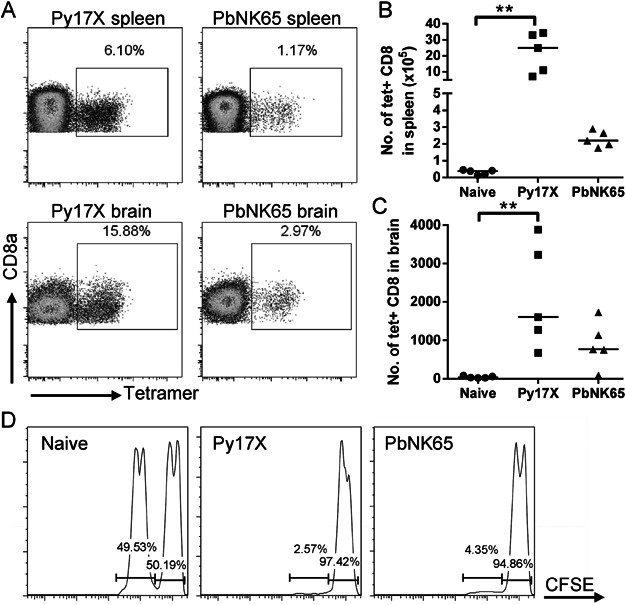
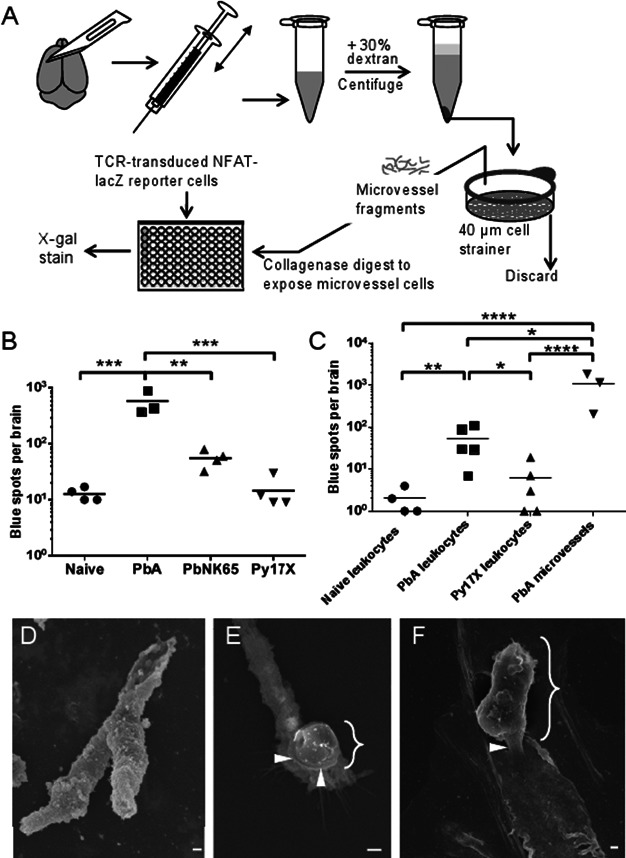
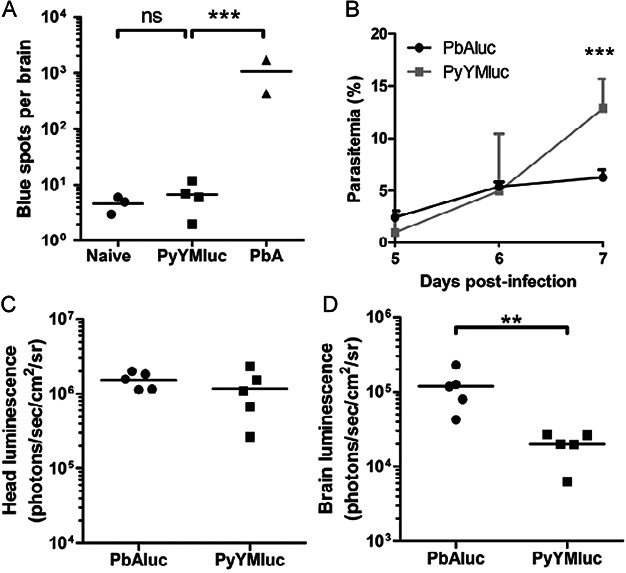
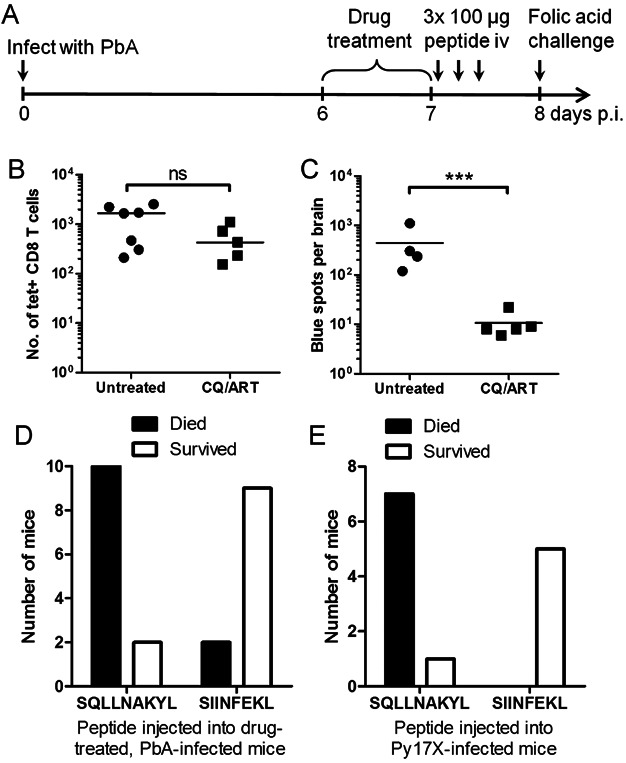
Cerebral malaria is a devastating complication of Plasmodium falciparum infection. Its pathogenesis is complex, involving both parasite‐ and immune‐mediated events. CD8 + T cells play an effector role in murine experimental cerebral malaria (ECM) induced by Plasmodium berghei ANKA (PbA) infection. We have identified a highly immunogenic CD8 epitope in glideosome‐associated protein 50 that is conserved across rodent malaria species. Epitope‐specific CD8 + T cells are induced during PbA infection, migrating to the brain just before neurological signs manifest. They are functional, cytotoxic and can damage the blood–brain barrier in vivo . Such CD8 + T cells are also found in the brain during infection with parasite strains/species that do not induce neuropathology. We demonstrate here that PbA infection causes brain microvessels to cross‐present parasite antigen, while non‐ECM‐causing parasites do not. Further, treatment with fast‐acting anti‐malarial drugs before the onset of ECM reduces parasite load and thus antigen presentation in the brain, preventing ECM death. Thus our data suggest that combined therapies targeting both the parasite and host antigen‐presenting cells may improve the outcome of CM patients.
Overview
The claims and statistics of this paper haven’t been checked yet.
Run the check — free, no account needed. It reads the open-access text and checks the sources it cites.
Integrity signals
Registry
Cites
Statistics
Figures
Verification
Claims the paper makes
The claims and statistics of this paper haven’t been checked yet.
Run the check — free, no account needed. It reads the open-access text and checks the sources it cites.
Claims other papers make about this one
Each is checked against this paper’s own text: does it say what the citing paper says it does?
In the citing paper
“In rodents, it was revealed that BBB breakdown and fatal edema are caused by parasite-specific CD8+ T cell engagement of cerebrovascular endothelial cells that cross-present parasite antigen (157, 158).”
From The anatomy and immunology of vasculature in the central nervous system (2019) · cites this paper as [158]
Self-check
Percentages, sums and reported differences re-computed from the paper’s own numbers.
The self-check needs the paper’s full text.
Citations
Cites
Brochet, X., Lefranc, M., & Giudicelli, V. (2008) · Nucleic Acids Research · doi:10.1093/nar/gkn316 · Cited by 1,220
Limmer, A., Ohl, J., Kurts, C., Ljunggren, H.-G., Reiss, Y., Groettrup, M., Momburg, F., Arnold, B., & Knolle, P. A. (2000) · Nature Medicine · doi:10.1038/82161 · Cited by 758 · cited 1×
“Endothelial cells from a number of organs have been shown to be capable of cross-presentation, including the liver, pancreas, aorta and lymph node (Bagai et al, 2005; Limmer et al, 2000; Lund et al, 2012; Savinov et al, 2003).”
Carlton, J. M., Angiuoli, S. V., Suh, B. B., Kooij, T. W. A., Pertea, M., da Silva, J. C. F., Ermolaeva, M. D., Allen, J., Selengut, J., Koo, H. L., et al. (2002) · Nature · doi:10.1038/nature01099 · Cited by 734
Cross-priming in health and disease
Kurts, C., Robinson, B. W. S., & Knolle, P. A. (2010) · Nature reviews. Immunology · doi:10.1038/nri2780 · Cited by 452
Neurological sequelae of cerebral malaria in children
Brewster, D., Kwiatkowski, D. P., & White, N. J. (1990) · The Lancet · doi:10.1016/0140-6736(90)92498-7 · Cited by 407
LacZ inducible, antigen/MHC-specific T cell hybrids
Sanderson, S., & Shastri, N. (1994) · International Immunology · doi:10.1093/intimm/6.3.369 · Cited by 377
Self-citationLund, A. W., Durães, F. V., Hirosue, S., Raghavan, V. R., Nembrini, C., Thomas, S. N., Issa, A., Hugues, S., & Swartz, M. A. (2012) · Cell Reports · doi:10.1016/j.celrep.2012.01.005 · Cited by 355
Design and use of conditional MHC class I ligands
Toebes, M., Coccoris, M., Bins, A. D., Rodenko, B., Gomez, R., Nieuwkoop, N. J., van de Kasteele, W., Rimmelzwaan, G. F., Haanen, J. B. A. G., Ovaa, H., et al. (2006) · Nature Medicine · doi:10.1038/nm1360 · Cited by 348
On the Pathogenic Role of Brain-Sequestered αβ CD8+ T Cells in Experimental Cerebral Malaria
Belnoue, E., Kayibanda, M., Vigário, A. M., Deschemin, J., van Rooijen, N., Viguier, M., Snounou, G., & Rénia, L. (2002) · The Journal of Immunology · doi:10.4049/jimmunol.169.11.6369 · Cited by 341
Self-citationFranke-Fayard, B. M. D., Janse, C. J., Cunha‐Rodrigues, M., Ramesar, J., Büscher, P., Que, I., Löwik, C. W. G. M., Voshol, P. J., den Boer, M. A. M., van Duinen, S. G., et al. (2005) · Proceedings of the National Academy of Sciences · doi:10.1073/pnas.0503386102 · Cited by 331
Research works printed but not linked: 2
- Engwerda C, Belnoue E, Gruner AC, Renia L (2005) Experimental models of cerebral malaria. Curr Top Microbiol Immunol 297: 103-143
- Song L, Pachter JS (2003) Culture of murine brain microvascular endothelial cells that maintain expression and cytoskeletal association of tight junction‐associated proteins. In Vitro Cell Dev Biol Anim 39: 313-320 · DOI
Cited by
Sorted by citations
The anatomy and immunology of vasculature in the central nervous system
Mastorakos, P., & McGavern, D. (2019) · Science Immunology · doi:10.1126/sciimmunol.aav0492 · Cited by 333
Crompton, P. D., Moebius, J., Portugal, S., Waisberg, M., Hart, G. T., Garver, L. S., Miller, L. H., Barillas-Mury, C. V., & Pierce, S. K. (2014) · Annual Review of Immunology · doi:10.1146/annurev-immunol-032713-120220 · Cited by 341
PD-1 Dependent Exhaustion of CD8+ T Cells Drives Chronic Malaria
Horne‐Debets, J. M., Faleiro, R. J., Karunarathne, D. S., Liu, X. Q., Lineburg, K. E., Poh, C. M., Grotenbreg, G. M., Hill, G. R., MacDonald, K. P. A., Good, M. F., et al. (2013) · Cell Reports · doi:10.1016/j.celrep.2013.11.002 · Cited by 148
Self-citationThe immunological balance between host and parasite in malaria
Deroost, K., Pham, T., Opdenakker, G., & den Steen, P. E. V. (2015) · FEMS Microbiology Reviews · doi:10.1093/femsre/fuv046 · Cited by 155
Groß, C. C., Meyer, C., Bhatia, U., Yshii, L., Kleffner, I., Bauer, J., Tröscher, A. R., Schulte‐Mecklenbeck, A., Herich, S., Schneider‐Hohendorf, T., et al. (2019) · Nature Communications · doi:10.1038/s41467-019-13593-5 · Cited by 158
Metadata
- Authors
- Howland, S. W., Poh, C. M., Gun, S. Y., Claser, C., Malleret, B., Shastri, N., Ginhoux, F., Grotenbreg, G. M., & Rénia, L.
- Affiliations
- Agency for Science, Technology and Research (SG)
- University of California, Berkeley (US)
- National University of Singapore (SG)
- Corresponding author
- Rénia, Laurent
- ORCID
- Venue
- EMBO Molecular Medicine
- Published
- 2013-05-16
- Volume
- 5
- Issue
- 7
- Pages
- 984-99
- ISSN
- 1757-4676 (ISSN-L)
- 1757-4684
- PMC
- PMC3721469
- OpenAlex
- W2114900483
- Cited by
- 150
- References
- 61
- Citations by year
- 2026: 3 · 2025: 11 · 2024: 9 · 2023: 13 · 2022: 5 · 2021: 11 · 2020: 5 · 2019: 16 · 2018: 10 · 2017: 21 · 2016: 12 · 2015: 17 · 2014: 13 · 2013: 4
- FWCI
- 15.64
- Type
- journal article
- Language
- en
- Open access
- gold
- doi.org
- Locations
- EMBO Molecular Medicine (publishedVersion, cc-by)
- Europe PMC (PubMed Central) (publishedVersion, cc-by)
- PubMed Central (publishedVersion, cc-by)
- PubMed (publishedVersion)
- National University of Singapore (submittedVersion)
- DOAJ (DOAJ: Directory of Open Access Journals) (submittedVersion)
- eScholarship (California Digital Library) (submittedVersion)
- eScholarship (California Digital Library) (submittedVersion, cc-by)
- Funders
- Wellcome Trust
- National Research Foundation
- Agency for Science, Technology and Research
- National University of Singapore
- National Research Foundation Singapore (NRF2007NRF-RF001-226)
- National Institute of Allergy and Infectious Diseases (R37AI060040)
- Topics
- Health Sciences › Medicine › Public Health, Environmental and Occupational Health › Malaria Research and Control
- Life Sciences › Immunology and Microbiology › Microbiology › Bacterial Infections and Vaccines
- Life Sciences › Neuroscience › Neurology › Neuroinflammation and Neurodegeneration Mechanisms
- Keywords
- experimental cerebral malaria, Plasmodium falciparum, Plasmodium berghei ANKA, CD8+ T cells, cross-presentation, cerebral microvasculature, blood-brain barrier disruption, infection intensity, neuropathology
- MeSH terms
- Amino Acid Sequence, Animals, Antigens, Protozoan, Antimalarials, Blood-Brain Barrier, Brain, Female, Humans, Mice, Inbred C57BL, Molecular Sequence Data, Plasmodium berghei, Receptors, Antigen, T-Cell, alpha-beta, Malaria, Cerebral, CD8-Positive T-Lymphocytes, Cross-Priming, Mice, Microvessels, Parasite Load
About these checks
Registry, retraction, Cites and statistics results are computed, not judged, with one exception: a printed reference that no index lists is read once by a model before it counts as a citation error. Claims are extracted by a model and kept only when their quote appears verbatim in the text; each cited source is then checked, with a model’s help, for whether it says what the claim relies on. Those verdicts can be wrong — read the claim’s quote and the cited source before relying on one.
Statistics and arithmetic are recomputed, not judged.
Confidence bands are shown only for fields calibrated on our annotated test set. None is calibrated yet, so no band is shown.
What counts as a claim ›How we measure confidence ›How we check this ›
Are you an author, or do you see a problem with this page? Request a review
