

The DOI matches its Crossref record; 38 of the 38 references it cites were found in a registry or an index; none of the 25 sources its claims cite is checked for support yet.
The Effects of Fasting and Caloric Restriction on Reproductive Hormones: A Systematic Review, Meta‐Analysis, and GRADE Assessment
Open accessAbstract
Fasting and caloric restriction (CR) have shown promising effects in body composition management and metabolic health. Both CR and time‐restricted eating (TRE) have been associated with improved insulin sensitivity and lipid profiles. Although dietary and lifestyle interventions for weight management may influence reproductive hormones, the specific impact of these dietary strategies on reproductive hormones is still unclear. This systematic review and meta‐analysis assessed the effects of different types of fasting and CR on reproductive hormones in adults. Parallel or crossover randomized controlled trials published up to April 2025 were identified through PubMed, Scopus, and Google Scholar. Eligible studies included adult participants aged ≥ 18 years undergoing fasting (alternate‐day, TRE, or full‐day fasting) or CR (20%–30% energy reduction). The primary outcomes were changes in reproductive hormones, including testosterone, free testosterone, sex hormone‐binding globulin (SHBG), dehydroepiandrosterone sulfate (DHEA‐S), follicle‐stimulating hormone (FSH), luteinizing hormone (LH), estradiol, estrogen, anti‐Müllerian hormone (AMH), prolactin, and progesterone, analyzed using random‐effects models. The GRADE (Grading of Recommendations Assessment, Development, and Evaluation) approach was used to assess the certainty of evidence. Fifteen randomized trials ( n = 954 participants) were included. Overall, both fasting and CR showed largely neutral effects on reproductive hormones, with no consistent evidence of either detrimental or beneficial changes. Fasting had a non‐significant effect on testosterone (WMD: −0.88 ng/mL; 95% CI: −2.37 to 0.61; p = 0.24), with significant heterogeneity. However, a statistically significant effect on free testosterone was observed (WMD: −4.9 pg/mL; 95% CI: −9.22 to −0.59; p = 0.02), although this finding was based on some of the small trials. Similarly, CR had a non‐significant effect on testosterone (WMD: −0.02 ng/mL; 95% CI: −0.13 to 0.08; p = 0.65), with significant heterogeneity. No significant effects were observed for other outcomes. Current evidence indicates that fasting and CR exert minimal to no statistically significant impact on reproductive hormones in adults. However, these findings should not be interpreted as evidence of clinical neutrality because we didn't assess changes in symptoms. Overall, these dietary strategies appear endocrinologically safe for weight management and metabolic health; however, larger, longer‐term, and population‐specific trials are needed to clarify subgroup‐specific responses.
Overview
CoChat Summary
TL;DR
This systematic review and meta-analysis of 15 randomized trials (n = 954) found that fasting and caloric restriction had largely neutral effects on reproductive hormones in adults, with only free testosterone showing a significant decrease under fasting. Certainty of evidence was mostly very low, and findings were limited by heterogeneity, small trials, and lack of sex-stratified data.
Key findings
- Across 15 RCTs (22 arms; 954 participants: 546 intervention, 408 control), fasting and CR showed largely neutral effects on reproductive hormones, with no consistent evidence of detrimental or beneficial changes.
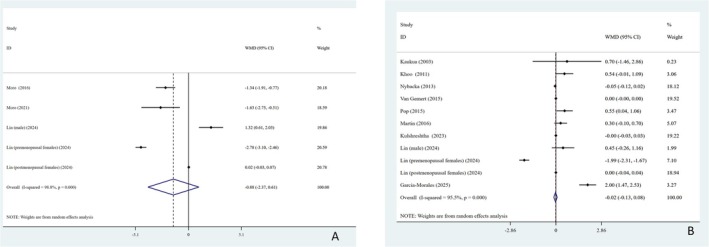
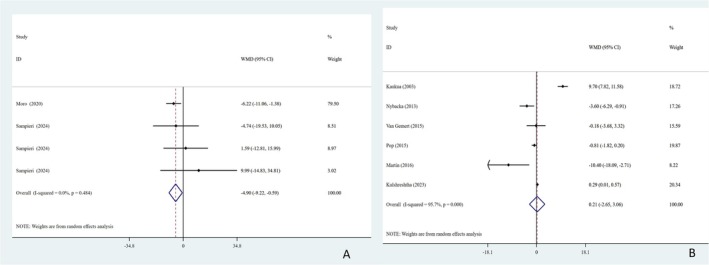
- Fasting had a non-significant effect on testosterone (WMD: −0.88 ng/mL; 95% CI: −2.37 to 0.61; p = 0.24; I² = 98.8%) but a significant decrease in free testosterone (WMD: −4.9 pg/mL; 95% CI: −9.22 to −0.59; p = 0.02; 2 studies, 76 adults; moderate GRADE certainty).
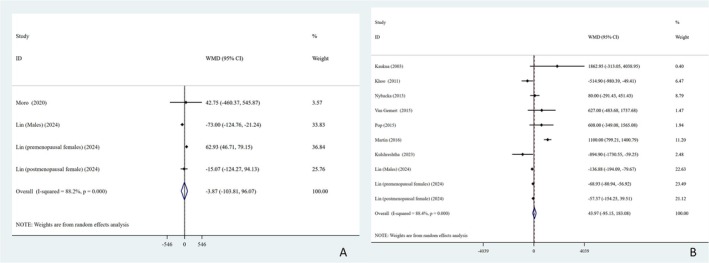
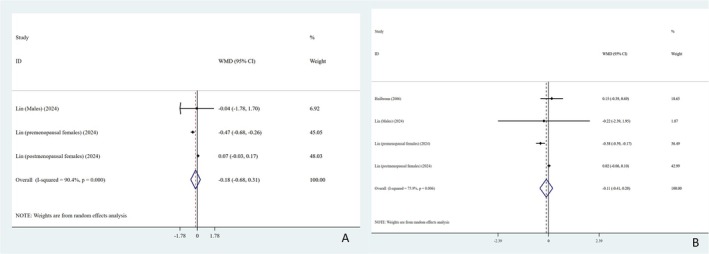
- CR had a non-significant effect on testosterone (WMD: −0.02 ng/mL; 95% CI: −0.13 to 0.08; p = 0.65; I² = 95.5%) and free testosterone (WMD: 0.21 pg/mL; 95% CI: −2.65 to 3.06; p = 0.56); pooled analyses also showed no significant effects for SHBG, DHEA-S, LH, FSH, or estradiol.
- GRADE certainty was very low for most outcomes, low for FSH under CR, and moderate only for free testosterone under fasting; estrogen, AMH, prolactin, and progesterone were not meta-analyzed because too few studies assessed them.
Methods
- Systematic review and meta-analysis following PRISMA 2020, registered in PROSPERO (CRD420251119479); searched PubMed/Medline, Scopus, and Google Scholar through April 2025 for English RCTs (parallel or crossover) in adults ≥ 18 years, duration > 4 weeks, comparing fasting (alternate-day, time-restricted eating, or full-day fasting) or CR (20%–30% energy reduction) with control.
- Included 15 RCTs and 22 study arms comprising 954 participants; outcomes included testosterone, free testosterone, SHBG, DHEA-S, FSH, LH, estradiol, estrogen, AMH, prolactin, and progesterone.
- Random-effects models pooled weighted mean differences; heterogeneity was assessed with I², with subgroup analyses by duration, location, publication year, and sample size; Egger’s and Begg’s tests, funnel plots, sensitivity analyses, and GRADE assessment were used.
Limitations
- The authors state that only a limited number of trials assessed AMH, prolactin, or progesterone; considerable heterogeneity existed across interventions and populations; most studies were short-term; assay variability required unit conversions; and certainty of evidence was very low for most outcomes.
- The authors also state that findings should not be interpreted as evidence of clinical neutrality because changes in symptoms were not assessed.
- Evident from the text: only 3 of 15 trials were judged low risk of bias while 12 were high risk; the significant free testosterone finding under fasting was based on a limited number of small trials; and sex distribution was imbalanced, with most participants male and female-specific data mainly from PCOS or postmenopausal studies, while most trials did not report sex-stratified outcomes.
Model-written summary. Check it against the paper before relying on it.
Integrity signals
Registry
Cites
Statistics
Figures
Verification
Claims the paper makes
0 Valid · 0 Not valid · 19 Not checked · 123 Own results and interpretations
A result the paper reports from its own data — it cites no other source for it, so there is none to check. The quote shows it is in the paper.
In the paper
“However, a statistically significant effect on free testosterone was observed (WMD: −4.9 pg/mL; 95% CI: −9.22 to −0.59; p = 0.02), although this finding was based on some of the small trials.”
- Also stated in: § Meta‐Analysis Results · plain
“Pooling 4 effect sizes from 2 studies, with a total sample size of 76 adults, showed a significant effect of fasting on free testosterone [WMD: −4.9; 95% CI: −9.22, −0.59 pg/mL; p = 0.02] (Figure 2A).”
§ The Effects of Fasting and Caloric Restriction on Reproductive Hormones: A Systematic Review, Meta‐Analysis, and GRADE Assessment > Abstract
plainstates a causen = 76 ·- Asserted: passes — The authors put it forward as true.
- Checkable: passes — It can be checked against evidence.
- Load-bearing: unclear — It is unclear whether the paper’s conclusions depend on it.
- Based: passes — The paper gives a reason why it holds.
- Also stated in: § Meta‐Analysis Results · plain
A result the paper reports from its own data — it cites no other source for it, so there is none to check. The quote shows it is in the paper.
In the paper
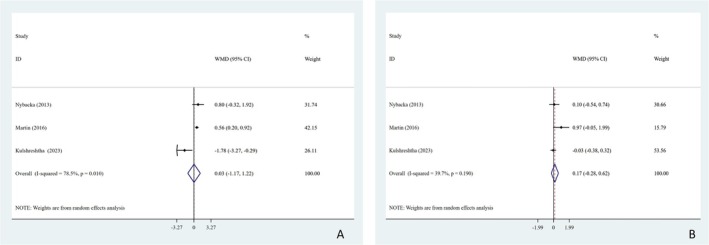
“Combining 3 effect sizes with a total sample size of 381 individuals showed no significant effect of CR on LH [WMD: 0.03 mIU/mL; 95% CI: −1.17 to 1.22; p = 0.96] (Figure 5A).”
§ The Effects of Fasting and Caloric Restriction on Reproductive Hormones: A Systematic Review, Meta‐Analysis, and GRADE Assessment > Results > Meta‐Analysis Results
plainn = 381- Asserted: passes — The authors put it forward as true.
- Checkable: passes — It can be checked against evidence.
- Load-bearing: passes — The paper’s conclusions depend on it.
- Based: passes — The paper gives a reason why it holds.
A result the paper reports from its own data — it cites no other source for it, so there is none to check. The quote shows it is in the paper.
In the paper
“Only free testosterone showed a significant decrease under fasting interventions; however, this finding was based on a limited number of small trials and should be interpreted with caution.”
§ The Effects of Fasting and Caloric Restriction on Reproductive Hormones: A Systematic Review, Meta‐Analysis, and GRADE Assessment > Discussion
plainstates a cause- Asserted: passes — The authors put it forward as true.
- Checkable: passes — It can be checked against evidence.
- Load-bearing: passes — The paper’s conclusions depend on it.
- Based: passes — The paper gives a reason why it holds.
A result the paper reports from its own data — it cites no other source for it, so there is none to check. The quote shows it is in the paper.
In the paper
“Subgroup analyses suggested that location and sample size may explain the heterogeneity (Table S3).”
§ The Effects of Fasting and Caloric Restriction on Reproductive Hormones: A Systematic Review, Meta‐Analysis, and GRADE Assessment > Results > Meta‐Analysis Results
hedgedstates a possible cause- Asserted: passes — The authors put it forward as true.
- Checkable: passes — It can be checked against evidence.
- Load-bearing: unclear — It is unclear whether the paper’s conclusions depend on it.
- Based: passes — The paper gives a reason why it holds.
A result the paper reports from its own data — it cites no other source for it, so there is none to check. The quote shows it is in the paper.
In the paper
“| Estradiol (Studies on fasting diet) | 1 (1), 19 | Mean difference | −0.93 pg/mL (−2.19, 0.33) | — |”
§ The Effects of Fasting and Caloric Restriction on Reproductive Hormones: A Systematic Review, Meta‐Analysis, and GRADE Assessment > Results > Characteristics of Included Studies
plainn = 19- Asserted: passes — The authors put it forward as true.
- Checkable: passes — It can be checked against evidence.
- Load-bearing: unclear — It is unclear whether the paper’s conclusions depend on it.
- Based: passes — The paper gives a reason why it holds.
66 more claims
Create a free account to see all 142 claims and to verify the 20 references still open.
- Probably not a substantial claim. 24
- It may state two separate claims as one. 40
- The quote only partly states this claim. 9
Self-check
Percentages, sums and reported differences re-computed from the paper’s own numbers.
Each contradiction between two passages listed here was confirmed by an independent check.
Rated major: it would touch a result — a value a result rests on, reported and recomputed p-values on opposite sides of the significance level, two passages that conflict with no sign which is right, or a cited work retracted before this paper was published.
In the paper
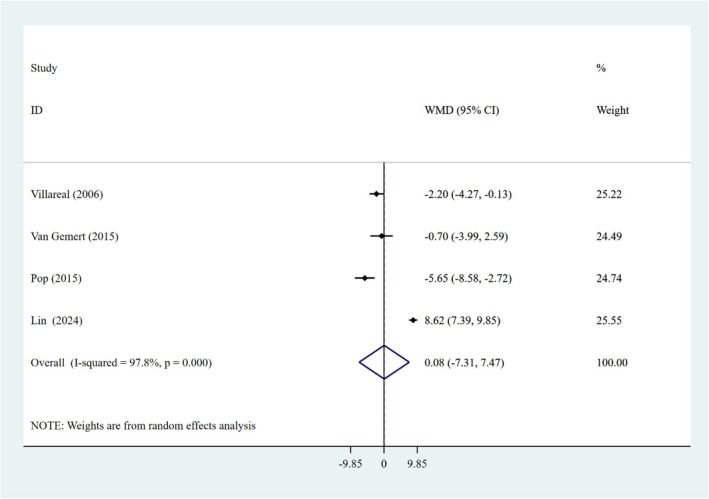
“Sensitivity analysis indicated that exclusion of the Lin et al. (2024) study materially changed the results (WMD: 2.86 pg/mL, 95% CI: −5.48 to −0.24).”
§ The Effects of Fasting and Caloric Restriction on Reproductive Hormones: A Systematic Review, Meta‐Analysis, and GRADE Assessment > Results > Meta‐Analysis Results
Reported 2.86 · recomputed -2.86
Rated major: it would touch a result — a value a result rests on, reported and recomputed p-values on opposite sides of the significance level, two passages that conflict with no sign which is right, or a cited work retracted before this paper was published.
In the paper
§ The Effects of Fasting and Caloric Restriction on Reproductive Hormones: A Systematic Review, Meta‐Analysis, and GRADE Assessment > Conclusions
“with only free testosterone showing a modest decrease under fasting conditions in a limited number of studies.”
§ The Effects of Fasting and Caloric Restriction on Reproductive Hormones: A Systematic Review, Meta‐Analysis, and GRADE Assessment > Results > Characteristics of Included Studies
“| Estrogen (Studies on fasting diet) | 1 (1), 19 | Mean difference | −11.98 pg/mL (−14.92, −9.03) | — |”
Rated major: it would touch a result — a value a result rests on, reported and recomputed p-values on opposite sides of the significance level, two passages that conflict with no sign which is right, or a cited work retracted before this paper was published.
In the paper
§ The Effects of Fasting and Caloric Restriction on Reproductive Hormones: A Systematic Review, Meta‐Analysis, and GRADE Assessment > Abstract
“No significant effects were observed for other outcomes.”
§ The Effects of Fasting and Caloric Restriction on Reproductive Hormones: A Systematic Review, Meta‐Analysis, and GRADE Assessment > Results > Characteristics of Included Studies
“| Progesterone (Studies on calorie restricted diet) | 1 (1), 19 | Mean difference | −0.15 ng/mL (−0.18, −0.11) | — |”
Rated minor: it would not touch a result — a value no result rests on, a p-value that stays on the same side of the significance level, or a conflict that is clerical, resolved elsewhere in the paper, or outside its own findings.
In the paper
§ The Effects of Fasting and Caloric Restriction on Reproductive Hormones: A Systematic Review, Meta‐Analysis, and GRADE Assessment > Methods > Eligibility Criteria
“(3) trials with a duration longer than 4 weeks”
§ The Effects of Fasting and Caloric Restriction on Reproductive Hormones: A Systematic Review, Meta‐Analysis, and GRADE Assessment > Results > Characteristics of Included Studies
“| Moro et al. (2020), Italy | Parallel | Healthy | Healthy young men, 8/8 | 16 (16/0) | Male | 4 | TRE (16/8) | ND | 21.85/22.47 | 19.38/19.38 | Free Testosterone/SHBG | Reduction in Free Testosterone |”
Citations
Cites
The PRISMA 2020 statement: An updated guideline for reporting systematic reviews
Page, M. J., McKenzie, J. E., Bossuyt, P. M., Boutron, I., Hoffmann, T. C., Mulrow, C. D., Shamseer, L., Tetzlaff, J. M., Akl, E. A., Brennan, S. E., et al. (2021) · BMJ · doi:10.1136/bmj.n71 · Cited by 108,283
GRADE: an emerging consensus on rating quality of evidence and strength of recommendations
Guyatt, G. H., Oxman, A. D., Vist, G. E., Kunz, R., Falck-Ytter, Y., Alonso-Coello, P., & Schünemann, H. J. (2008) · BMJ · doi:10.1136/bmj.39489.470347.ad · Cited by 23,305
Estimating the mean and variance from the median, range, and the size of a sample
Hozo, S. P., Djulbegovic, B., & Hozo, I. (2005) · BMC Medical Research Methodology · doi:10.1186/1471-2288-5-13 · Cited by 9,062
Cumpston, M., Li, T., Page, M. J., Chandler, J., Welch, V. A., Higgins, J. P., & Thomas, J. (2019) · Cochrane Database of Systematic Reviews · doi:10.1002/14651858.ed000142 · Cited by 7,218
Heilbronn, L. K., de Jonge, L., Frisard, M. I., DeLany, J. P., Larson-Meyer, D. E., Rood, J., Nguyen, T., Martin, C. K., Volaufova, J., Most, M. M., et al. (2006) · JAMA · doi:10.1001/jama.295.13.1539 · Cited by 969
Sources of estrogen and their importance
Simpson, E. R. (2003) · The Journal of Steroid Biochemistry and Molecular Biology · doi:10.1016/s0960-0760(03)00360-1 · Cited by 936
Moro, T., Tinsley, G., Bianco, A., Marcolin, G., Pacelli, Q. F., Battaglia, G., Palma, A., Gentil, P., Neri, M., & Paoli, A. (2016) · Journal of Translational Medicine · doi:10.1186/s12967-016-1044-0 · Cited by 732
Adipose tissue as a source of hormones
Siiteri, P. K. (1987) · The American Journal of Clinical Nutrition · doi:10.1093/ajcn/45.1.277 · Cited by 599
Calorie restriction with or without time-restricted eating in weight loss
Liu, D., Huang, Y., Huang, C., Yang, S., Wei, X., Zhang, P., Guo, D., Lin, J., Xu, B., Li, C., et al. (2022) · New England Journal of Medicine · doi:10.1056/nejmoa2114833 · Cited by 516
Minozzi, S., Cinquini, M., Gianola, S., Gonzalez-Lorenzo, M., & Banzi, R. (2020) · Journal of Clinical Epidemiology · doi:10.1016/j.jclinepi.2020.06.015 · Cited by 471 · cited 1×
“The quality of the study was evaluated by two independent re-viewers using the modified risk of bias tool from the Cochrane Collaboration (Minozzi et al. 2020).”
Research works printed but not linked: 2
- Chandler J., 2019, Cochrane Handbook for Systematic Reviews of Interventions
- Mirsane S. A., 2017, Can Fasting in the Holy Month of Ramadan Affect on the Levels of Luteinizing Hormone, Follicle‐Stimulating Hormone, and Prolactin?, Journal of Fasting and Health, 5, 1457
Cited by
Still being checked.
Metadata
- Authors
- Ghoreishy, S. M., Rafiei, S., Atabaki, Y., Jafarbeglou, N., Hamidi, N., Noormohammadi, M., Fatahi, P., Ghaemi, S., Shidfar, F., & Shidfar, F.
- Affiliations
- Iran University of Medical Sciences (IR)
- Islamic Azad University, Tehran (IR)
- Research Institute for Gastroenterology and Liver Diseases (IR)
- Tehran University of Medical Sciences (IR)
- Corresponding author
- Shidfar, Farzad
- ORCID
- Venue
- Food Science & Nutrition
- Publisher
- Wiley
- Published
- 2026-07
- Volume
- 14
- Issue
- 7
- Pages
- e72078-e72078
- ISSN
- 2048-7177 (ISSN-L)
- PMC
- PMC13352353
- OpenAlex
- W7167914542
- Cited by
- 0
- References
- 38
- FWCI
- 0.00
- Type
- journal article
- Language
- en
- Open access
- hybrid
- doi.org
- Licence
- cc-by
- creativecommons.org/licenses/by/4.0/ (vor, 9 d)
- doi.wiley.com/10.1002/tdm_license_1.1 (tdm)
- Locations
- Food Science & Nutrition (publishedVersion, cc-by)
- PubMed Central (publishedVersion, cc-by)
- PubMed (publishedVersion)
- Funders
- Iran University of Medical Sciences
- Topics
- Health Sciences › Medicine › Physiology (medical) › Dietary Effects on Health
- Health Sciences › Medicine › Reproductive Medicine › Hypothalamic control of reproductive hormones
- Health Sciences › Medicine › Reproductive Medicine › Ovarian function and disorders
- Keywords
- fasting, caloric restriction, reproductive hormones, testosterone, free testosterone, sex hormone-binding globulin, luteinizing hormone, follicle-stimulating hormone, estradiol, anti-Müllerian hormone, prolactin, progesterone, time-restricted eating, alternate-day fasting, weight management, body composition, insulin sensitivity, lipid profile
About these checks
Registry, retraction, Cites and statistics results are computed, not judged, with one exception: a printed reference that no index lists is read once by a model before it counts as a citation error. Claims are extracted by a model and kept only when their quote appears verbatim in the text; each cited source is then checked, with a model’s help, for whether it says what the claim relies on. Those verdicts can be wrong — read the claim’s quote and the cited source before relying on one.
A language model drew the claims from the paper on 2026-11-14, under version 3 of the claim definition (model deepseek-v4.1-flash, prompt extract-v3).
A second model labelled each claim on 2026-11-14 (model jev-1.13-20260917, definition revision gold-guideline-v0.2).
Statistics and arithmetic are recomputed, not judged.
Confidence bands are shown only for fields calibrated on our annotated test set. None is calibrated yet, so no band is shown.
What counts as a claim ›How we measure confidence ›How we check this ›
Are you an author, or do you see a problem with this page? Request a review
How to cite
Cite CoChat for the checks on this page, and the paper for its own findings.
- This page
- CoChat. (2026). Citation check: The Effects of Fasting and Caloric Restriction on Reproductive Hormones: A Systematic Review, Meta‐Analysis, and GRADE Assessment. https://app.cochat.ai/papers/10.1002/fsn3.72078
- The paper
- Ghoreishy, S. M., Rafiei, S., Atabaki, Y., Jafarbeglou, N., Hamidi, N., Noormohammadi, M., Fatahi, P., Ghaemi, S., Shidfar, F., & Shidfar, F. (2026). The Effects of Fasting and Caloric Restriction on Reproductive Hormones: A Systematic Review, Meta‐Analysis, and GRADE Assessment. Food Science & Nutrition. https://doi.org/10.1002/fsn3.72078
Data sources
Bibliographic data: Semantic Scholar, OpenAlex, Crossref.
Contains information from the Semantic Scholar Academic Graph Datasets, made available under the ODC Attribution License (ODC-BY 1.0).
Semantic Scholar’s data is described in: Kinney, R., et al. (2023). The Semantic Scholar Open Data Platform. arXiv:2301.10140.
