

Plcg2 Deficiency Leads to Sex‐Associated Divergent Effects on Glial Transcriptomes
Open accessThe DOI matches its Crossref record; 77 of the 77 references it cites were found in a registry or an index; 2 of the 89 sources its claims cite were checked for support.
Abstract
Plcg2 encodes an intracellular phospholipase C signaling enzyme expressed predominately in microglia in the brain. Genome‐wide association studies implicate PLCG2 in Alzheimer's disease (AD) risk and loss of Plcg2 alters amyloid pathology in mouse models. However, the physiological impact of Plcg2 loss remains unclear. To address this gap, we performed single‐cell RNA sequencing (scRNA‐seq) of wild‐type, heterozygous, and homozygous Plcg2 ‐deficient mouse brains in the absence of amyloid or tau pathology. Our analyses generated a comprehensive, publicly available atlas of glial transcriptomic states across genotypes and sexes. Genotype‐associated changes in microglia and astrocytes were enriched in neurodegenerative disease‐related pathways, as well as oxidative phosphorylation and proteostasis pathways. Genotype‐by‐sex interaction and sex‐stratified analyses revealed divergent regulation of many of these pathways in males and females, while co‐expression and cell–cell communication analyses identified additional sex‐associated differences in glial signaling networks. Overall, these data provide a framework for understanding how variation in PLCG2 function may shape glial biology and modify pathways relevant to neurodegenerative disease in a sex‐associated manner.
Overview
CoChat Summary
TL;DR
Single-cell RNA sequencing of young wild-type, Plcg2 heterozygous, and Plcg2 knockout mouse brains shows that Plcg2 loss alters microglial and astrocytic transcriptomes, with enrichment of neurodegenerative-disease-associated, oxidative phosphorylation, and proteostasis pathways. The study reports pathway-level genotype-by-sex patterns and pronounced sex-associated directional discordance in glial gene expression despite limited power for individual-gene interactions.
Key findings
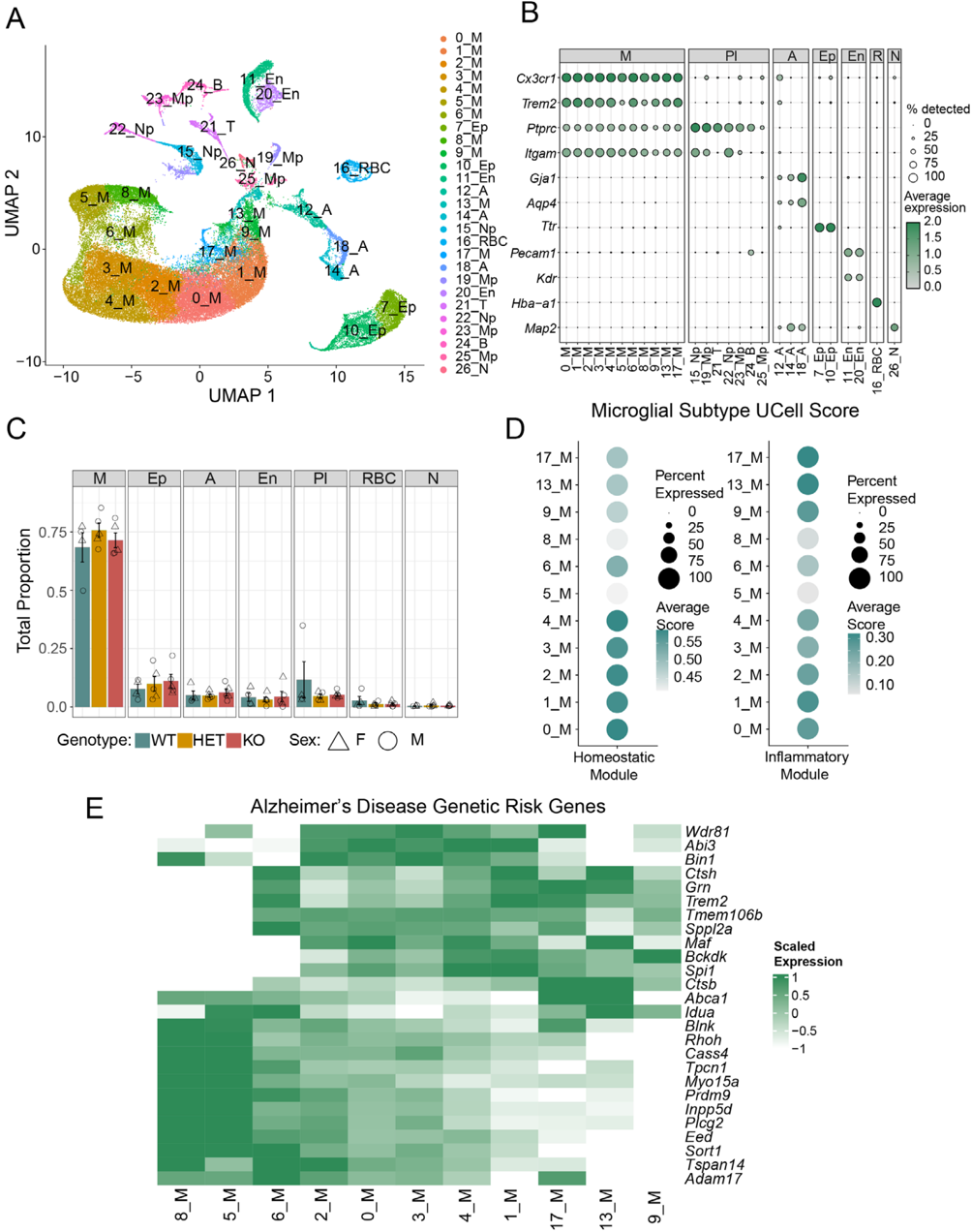
- In 62,303 cells from 14 mice, Plcg2 expression was overwhelmingly enriched in microglia and peripheral immune cells; microglia formed 11 transcriptomically distinct clusters, and high-Plcg2 clusters 5_M and 8_M co-expressed AD risk genes including Inpp5d and Blnk and showed RHO GTPase signatures. Female HET mice showed a significant reduction in cluster 5_M versus WT (adjusted p = 0.034).
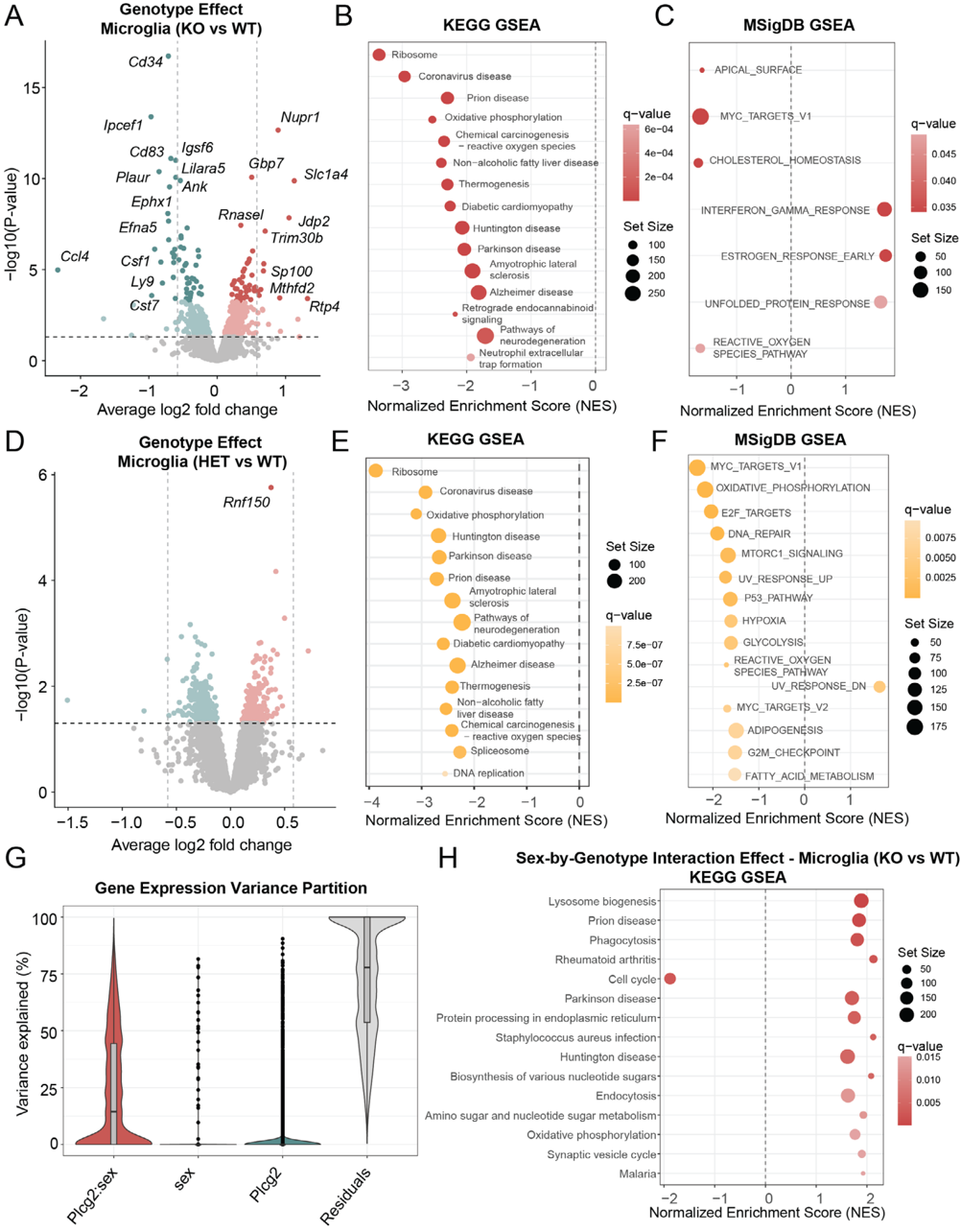
- Microglial pseudobulk KO-versus-WT analysis identified 100 genes at BH-adjusted significance, whereas HET-versus-WT identified only Rnf150. GSEA showed negative enrichment (downregulation) of ribosome, oxidative phosphorylation, and neurodegenerative disease KEGG pathways (Huntington, Parkinson, Alzheimer, ALS, prion) in KO microglia, with weaker but partially concordant pathway effects in HET.
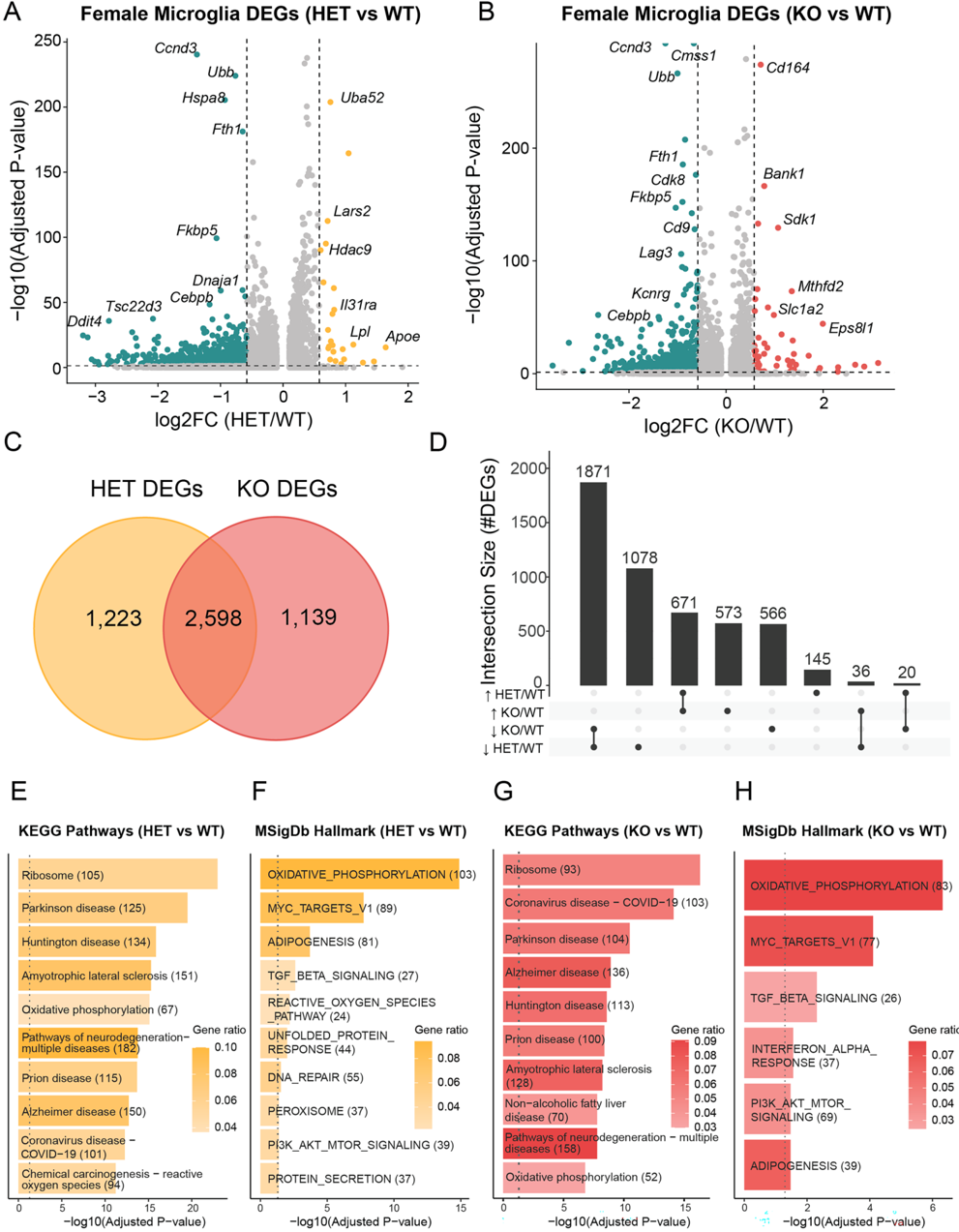
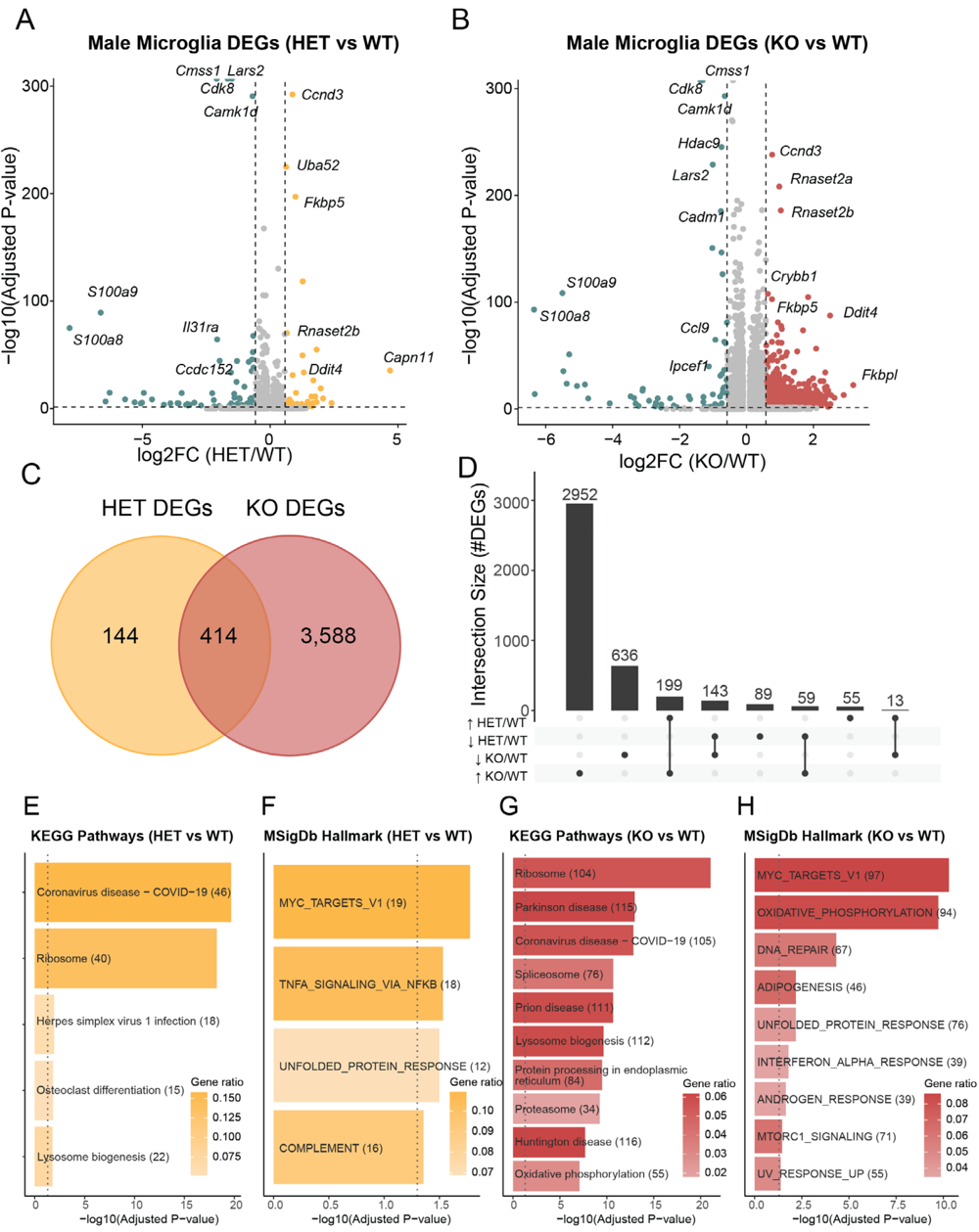
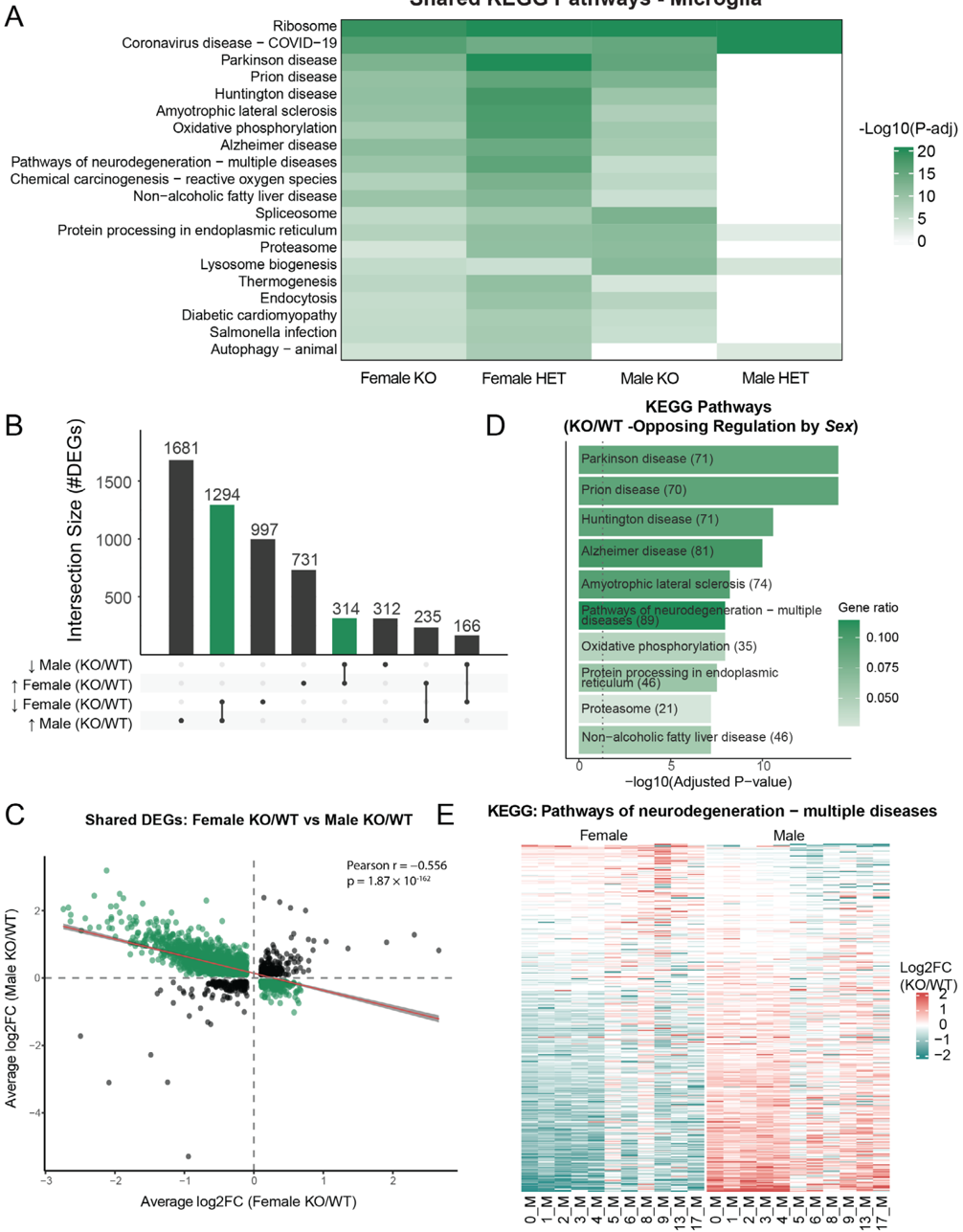
- Formal genotype-by-sex interaction testing found no individual genes surviving multiple-testing correction, but interaction GSEA identified coordinated sex-associated enrichment in phagolysosomal/lysosome, phagocytosis, endocytosis, Parkinson/prion, oxidative phosphorylation, and interferon pathways. Sex-stratified cell-level analyses showed directional discordance: in KO microglia, 1294 genes were upregulated in males but downregulated in females and 314 showed the reciprocal pattern; approximately 80% of shared DEGs changed in opposite directions, with shared DEG log2FC correlation r = −0.556 (p = 1.87 × 10−162) and slope −0.606.
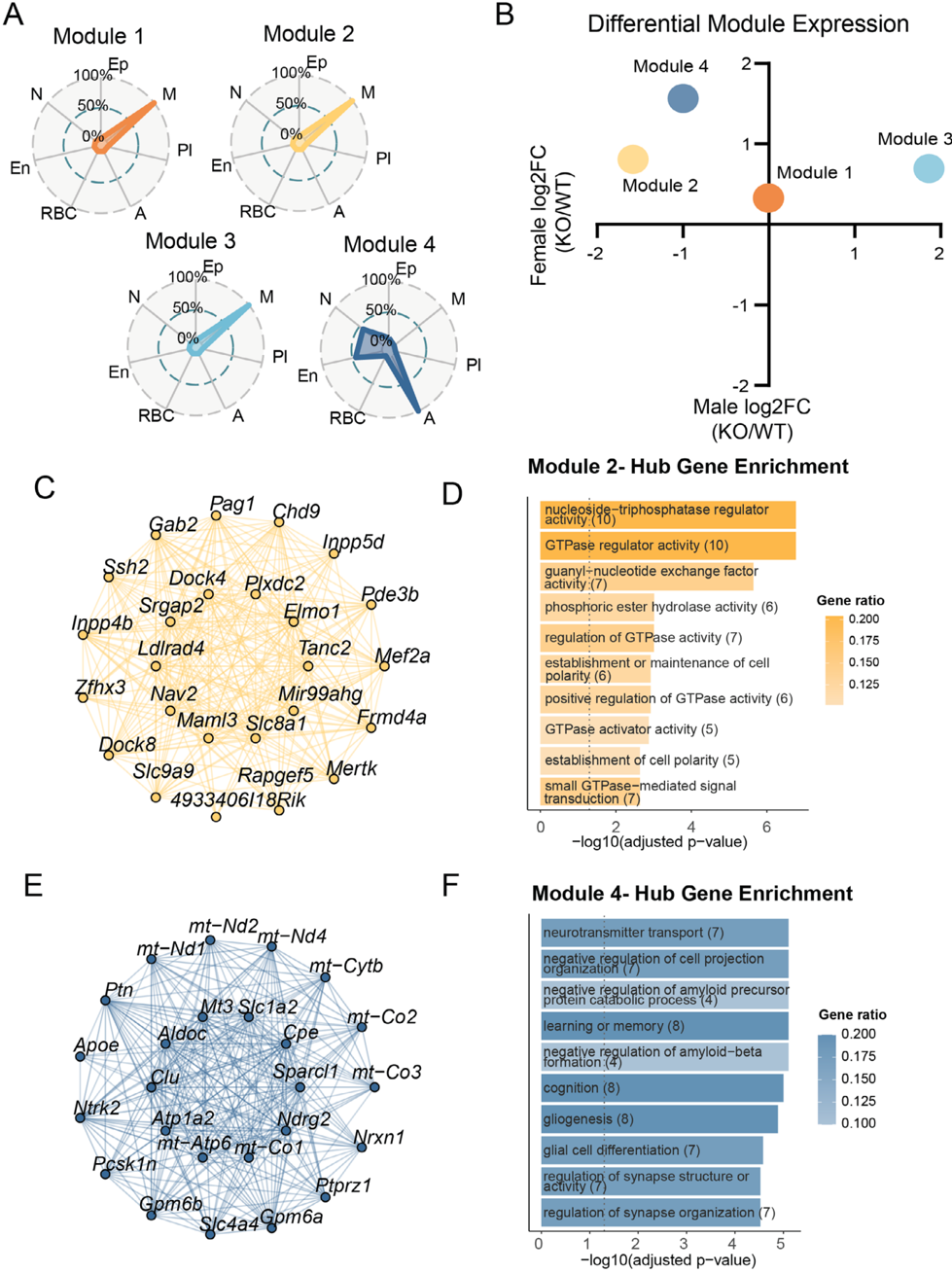
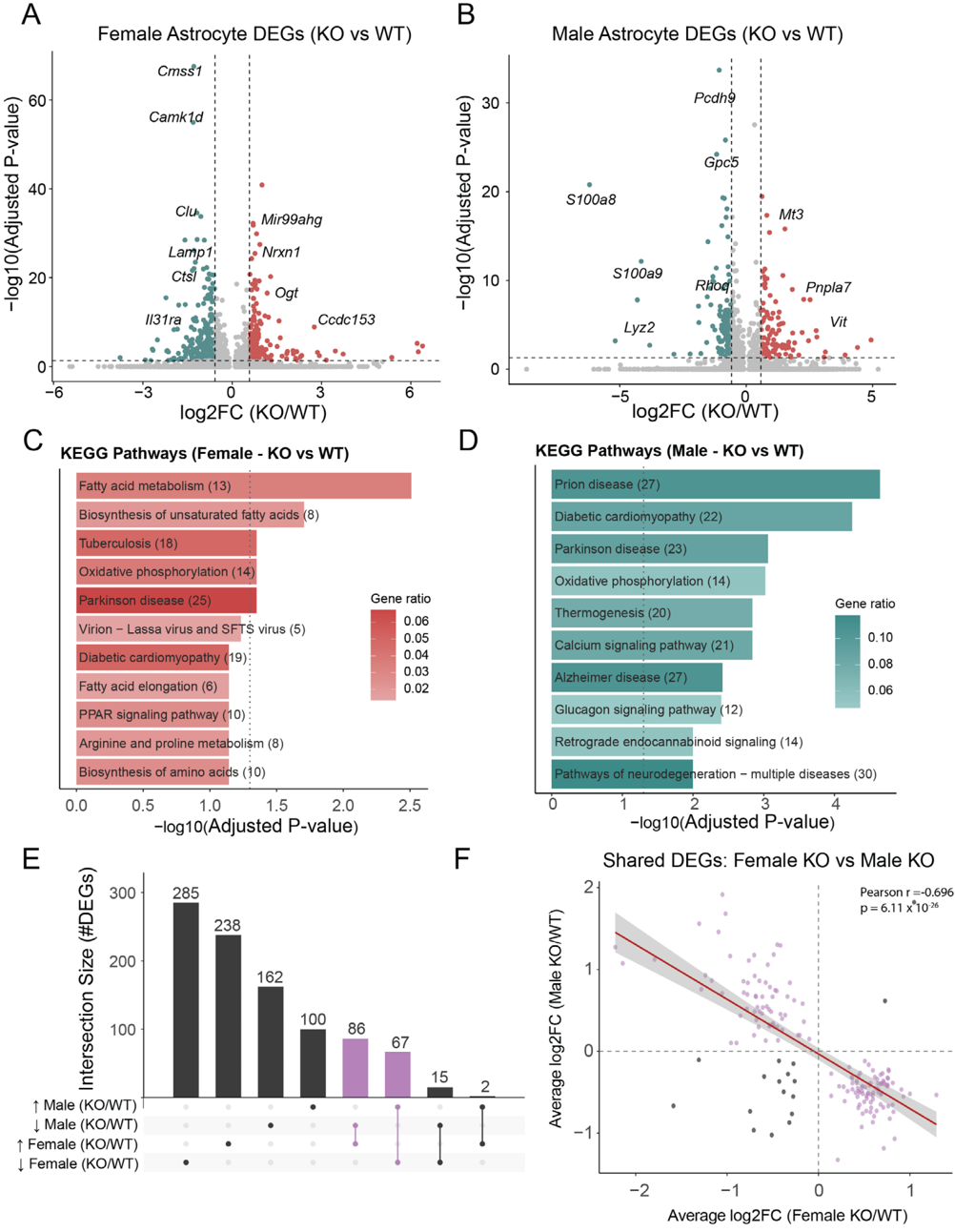
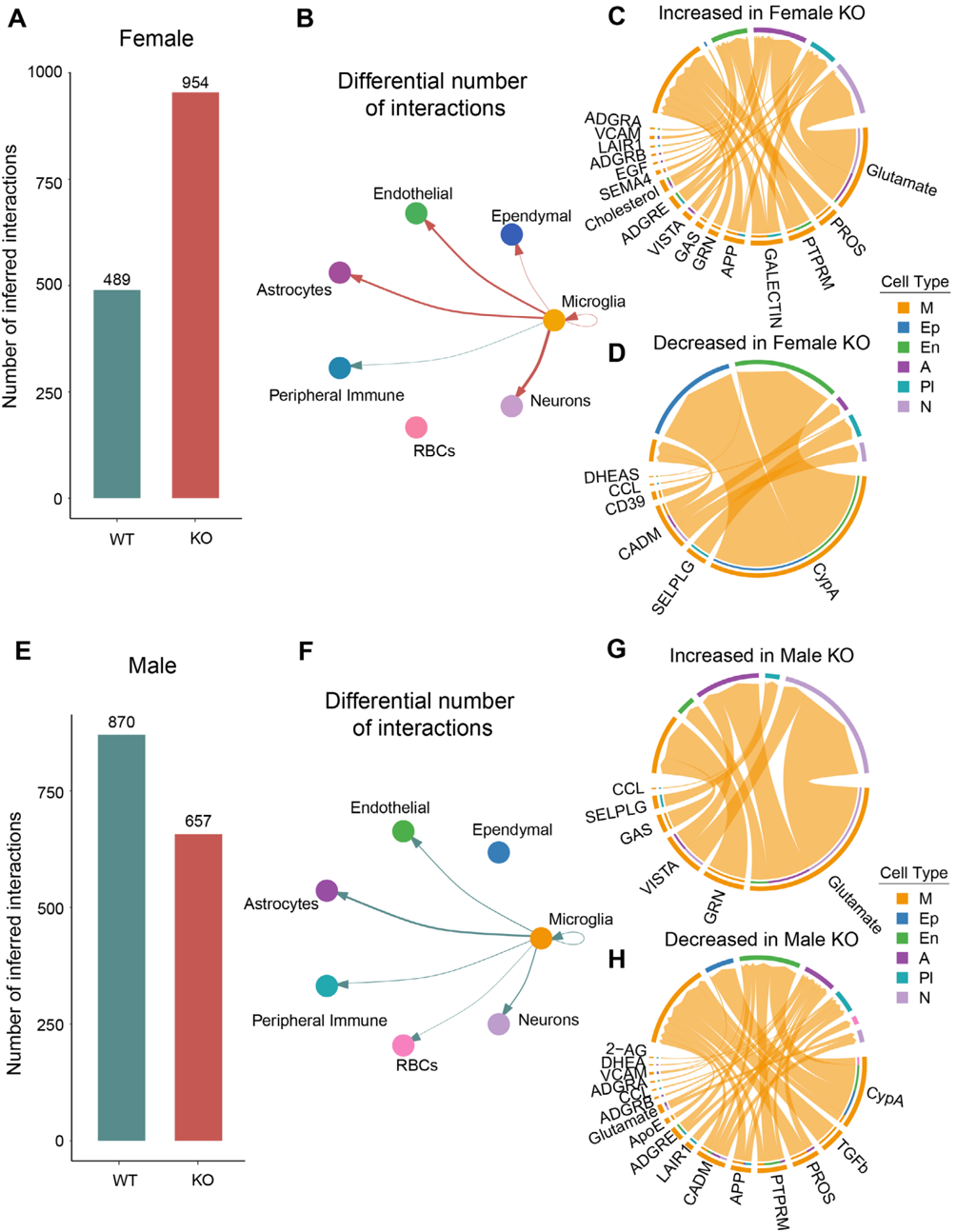
- Astrocytes also showed genotype- and sex-associated changes: Module 4 was an astrocyte-enriched co-expression network of 236 genes including Apoe and Clu, enriched for amyloid-beta regulation and cognition, with opposite module eigengene shifts in male versus female KO mice. KO astrocyte shared DEGs showed ~90% (153/170) opposite directionality between sexes (r = −0.696, p = 6.11 × 10⁻²⁶; slope −0.725), and CellChat predicted more ligand–receptor pairs in female KO (954 vs. 489 WT) but fewer in male KO.
Methods
- scRNA-seq was performed on 6-week-old WT, Plcg2 HET, and Plcg2 KO mice: 14 mice total (4 WT, 5 HET, 5 KO; 2 female and 2–3 male per genotype). The right hemisphere excluding cerebellum and olfactory bulb was dissociated, and libraries were prepared with 10x Genomics Chromium Next GEM v3.1 and sequenced on Illumina NovaSeq 6000 targeting 50,000 reads per cell.
- After QC excluding cells with >10% mitochondrial reads or <200 unique reads, 62,303 cells were retained and clustered into 27 transcriptomically distinct clusters using Seurat/SCTransform and UMAP (first 50 PCs, resolution 0.6). Primary inference used mouse-level pseudobulk DESeq2 models with sex and technical batch covariates, plus formal genotype-by-sex interaction models; GSEA used KEGG and MSigDB Hallmark gene sets, with hdWGCNA, CellChat, and MAST cell-level analyses as complementary/exploratory approaches. Data are deposited in GEO (GSE313890).
Limitations
- Stated: with 2–3 mice per sex-by-genotype group, the study is underpowered to detect moderate individual-gene genotype-by-sex interactions; no individual genes reached FDR significance for the interaction term. Cell-level DEG, cell-level module-trait, and CellChat analyses are exploratory/descriptive and do not model mouse-level replication; CellChat infers communication from expression and does not explicitly model inter-mouse variability.
- Stated: the germline whole-body KO may include developmental and systemic effects, and surviving KO animals may represent a developmentally selected population, with reported lower survival in females in one Plcg2 KO cohort. Whole-hemisphere sampling cannot assign findings to brain regions, and 6-week-old mice lack aging and neurodegenerative pathology; the cross-sectional design cannot determine persistence of patterns.
- Evident from the text: findings are mouse-only with no human validation; neurodegenerative KEGG enrichment in young, pathology-free mice is interpreted as overlap with disease-relevant cellular programs rather than evidence of disease mechanism; predicted cell–cell interactions and astrocytic changes are not functionally validated and may be indirect to microglial Plcg2 loss.
Model-written summary. Check it against the paper before relying on it.
Integrity signals
Registry
Cites
Statistics
Figures
Verification
Claims the paper makes
1 Valid · 1 Not valid · 40 Not checked · 211 Own results and interpretations
The cited sources support only part of this claim — read each source’s verdict below.
In the paper
“with prominent changes more readily observed in females”
§ Plcg2 Deficiency Leads to Sex‐Associated Divergent Effects on Glial Transcriptomes > Background
What the sources say
- Could not verifycites Tsai et al. 2022 matched to “PLCG2 is associated with the inflammatory response and is induced by amyloid plaques in Alzheimer’s disease” (2022) sourceExperimental — accuracy not yet measured
Our copy of Tsai et al. (2022) reports immune/inflammatory differential expression in cognitively normal older adults (ROS/MAP, Results 'Differential expression analysis...', 5047 DEGs, inflammatory response FDR p=5.77E-32) and in Plcg2-inactivated mice, but sex appears only as a covariate (Methods, 'Bulk RNA-Seq data analysis in the post-mortem human brain': 'Age, sex, and APOE ε4 carrier status were used as covariates') and the mouse work used 1-month male animals (Fig. 4 legend). No passage states or compares the prominence of immune gene expression changes in females versus males; searched: 'sex differences female males immune gene expression', 'females more pronounced association stratified by sex', 'sex-stratified analysis', 'female sex difference microglia'. The claim therefore cannot be checked against this paper. (LLM, conf=0.65)
- Partly supportedcites Staley et al. 2024 matched to “Alzheimer’s disease-associated protective variant Plcg2-P522R modulates peripheral macrophage function in a sex-dimorphic manner” (2024) sourceExperimental — accuracy not yet measured
The paper's transcriptomic section (Results, 'Genes selectively upregulated in P522R males/females...') reports genotype-specific DEGs of comparable magnitude in both sexes after LPS (13 specific to P522R males, 21 to WT males; 12 specific to P522R females, 50 to WT females) and describes the female and male DEG sets as qualitatively 'quite distinct' in pathway, not as more prominent in females — the Discussion concludes the mutation 'activates different intracellular signaling pathways and concurrent gene expression' leading to different outcomes between sexes. What the paper does state with more force in females is functional, not transcriptional: cytokine-secretion differences were 'different and more prevalent than in our male cultures' and pMacs from females 'seemed to be more affected by the presence of the mutation'. So the female-dominant part of the claim is supported for cytokine/protein-level responses and for population/functional endpoints, but the specific attribution to immune gene expression changes being more readily observed in females is not stated by this source. (LLM, conf=0.68)
plainstates an association- Asserted: passes — The authors put it forward as true.
- Checkable: passes — It can be checked against evidence.
- Load-bearing: passes — The paper’s conclusions depend on it.
- Based: passes — The paper gives a reason why it holds.
- Could not verify
A result the paper reports from its own data — it cites no other source for it, so there is none to check. The quote shows it is in the paper.
In the paper
“Sample‐aware pseudobulk analysis identified genotype‐dependent pathway alterations despite relatively modest gene‐level effects”
§ Plcg2 Deficiency Leads to Sex‐Associated Divergent Effects on Glial Transcriptomes > Results > Plcg2 Loss Induces Distinct Transcriptomic Changes in Female and Male Microglia at the Cell Level
plainstates an association- Asserted: passes — The authors put it forward as true.
- Checkable: passes — It can be checked against evidence.
- Load-bearing: passes — The paper’s conclusions depend on it.
- Based: passes — The paper gives a reason why it holds.
- Rests on 2 assumptions not shown here.
A result the paper reports from its own data — it cites no other source for it, so there is none to check. The quote shows it is in the paper.
In the paper
“Similarly, the relative abundance of most microglial clusters remained stable across genotypes.”
§ Plcg2 Deficiency Leads to Sex‐Associated Divergent Effects on Glial Transcriptomes > Results > Plcg2 Is Co‐Expressed With Multiple AD Risk Genes
plain- Asserted: passes — The authors put it forward as true.
- Checkable: passes — It can be checked against evidence.
- Load-bearing: unclear — It is unclear whether the paper’s conclusions depend on it.
- Based: passes — The paper gives a reason why it holds.
- Rests on an assumption not shown here.
A result the paper reports from its own data — it cites no other source for it, so there is none to check. The quote shows it is in the paper.
In the paper
“Many of the most strongly enriched pathways were those associated with neurodegenerative diseases, with Parkinson disease (mmu05012), Prion disease (mmu05020), and Huntington disease (mmu05016) among the most significantly enriched programs across female HET, female KO, and male KO microglia relative to sex‐matched WT controls (Figure 5A).”
§ Plcg2 Deficiency Leads to Sex‐Associated Divergent Effects on Glial Transcriptomes > Results > Opposing Directions of Expression Change in Male and Female Plcg2‐Deficient Microglia Converge on Neurodegeneration‐Related Pathways
plainstates an association- Asserted: passes — The authors put it forward as true.
- Checkable: passes — It can be checked against evidence.
- Load-bearing: passes — The paper’s conclusions depend on it.
- Based: passes — The paper gives a reason why it holds.
A result the paper reports from its own data — it cites no other source for it, so there is none to check. The quote shows it is in the paper.
In the paper
“Consistent with the expanded KO transcriptomic profile, direct genotype comparison identified substantial expression profile divergence between heterozygous and complete loss‐of‐function states in males.”
§ Plcg2 Deficiency Leads to Sex‐Associated Divergent Effects on Glial Transcriptomes > Results > Plcg2 Loss Induces Distinct Transcriptomic Changes in Female and Male Microglia at the Cell Level
plainstates an association- Asserted: passes — The authors put it forward as true.
- Checkable: passes — It can be checked against evidence.
- Load-bearing: passes — The paper’s conclusions depend on it.
- Based: passes — The paper gives a reason why it holds.
155 more claims
Create a free account to see all 253 claims and to verify the 75 references still open.
- Probably not a substantial claim. 45
- It may state two separate claims as one. 59
Citations
Cites
Moderated estimation of fold change and dispersion for RNA-seq data with DESeq2
Love, M. I., Huber, W., & Anders, S. (2014) · Genome Biology · doi:10.1186/s13059-014-0550-8 · Cited by 95,106
Robinson, M. D., McCarthy, D. J., & Smyth, G. K. (2010) · Bioinformatics · doi:10.1093/bioinformatics/btp616 · Cited by 41,364
The Molecular Signatures Database Hallmark Gene Set Collection
Liberzon, A., Birger, C., Thorvaldsdóttir, H., Ghandi, M., Mesirov, J. P., & Tamayo, P. (2015) · Cell Systems · doi:10.1016/j.cels.2015.12.004 · Cited by 13,807
clusterProfiler 4.0: A universal enrichment tool for interpreting omics data
(2021) · doi:10.1016/j.xinn.2021.100141 · Cited by 12,455
Enrichr: a comprehensive gene set enrichment analysis web server 2016 update
Kuleshov, M. V., Jones, M. R., Rouillard, A. D., Fernandez, N. F., Duan, Q., Wang, Z., Koplev, S., Jenkins, S. L., Jagodnik, K. M., Lachmann, A., et al. (2016) · Nucleic Acids Research · doi:10.1093/nar/gkw377 · Cited by 10,799
Dictionary learning for integrative, multimodal and scalable single-cell analysis
Hao, Y., Stuart, T., Kowalski, M. H., Choudhary, S., Hoffman, P., Hartman, A., Srivastava, A., Molla, G., Madad, S., Fernandez-Granda, C., et al. (2024) · Nature Biotechnology · doi:10.1038/s41587-023-01767-y · Cited by 5,631
Finak, G., McDavid, A., Yajima, M., Deng, J., Gersuk, V., Shalek, A. K., Slichter, C. K., Miller, H. W., McElrath, M. J., Prlic, M., et al. (2015) · Genome Biology · doi:10.1186/s13059-015-0844-5 · Cited by 3,159
New insights into the genetic etiology of Alzheimer’s disease and related dementias
Bellenguez, C., Küçükali, F., Jansen, I. E., Kleineidam, L., Moreno-Grau, S., Amin, N., Naj, A. C., Campos-Martin, R., Grenier-Boley, B., Andrade, V., et al. (2022) · Nature Genetics · doi:10.1038/s41588-022-01024-z · Cited by 2,498
Hammond, T. R., Dufort, C., Dissing-Olesen, L., Giera, S., Young, A., Wysoker, A., Walker, A. J., Segel, M., Nemesh, J., Saunders, A., et al. (2018) · doi:10.1101/406140 · Cited by 2,225
SoupX removes ambient RNA contamination from droplet-based single-cell RNA sequencing data
Young, M. D., & Behjati, S. (2020) · GigaScience · doi:10.1093/gigascience/giaa151 · Cited by 1,739
Metadata
- Authors
- Hartigan, K. A., Dabin, L. C., Kersey, H. N., Jury‐Garfe, N., Sharify, A. D., Kim, B., Lamb, B. T., Bissel, S. J., Lasagna‐Reeves, C., & Kim, J.
- Affiliations
- Indiana University School of Medicine (US)
- Indiana University Indianapolis (US)
- Department of Neurology Baylor College of Medicine Houston Texas USA
- Indiana University School of Medicine, Stark Neuroscience Research Institute Indianapolis Indiana USA
- Baylor College of Medicine (US)
- Corresponding author
- Kim, Jungsu
- ORCID
- Venue
- Glia
- Publisher
- Wiley
- Published
- 2026-11-09
- Volume
- 75
- Issue
- 1
- Pages
- e70252
- ISSN
- 0894-1491 (ISSN-L)
- 1098-1136
- PMC
- PMC13746375
- OpenAlex
- W7225614507
- Semantic Scholar
- be82ff97da652a1a566e5a181d8508cbf918de0a
- Cited by
- 0
- References
- 76
- FWCI
- 0.00
- Type
- journal article
- Language
- en
- Open access
- hybrid
- doi.org
- Licence
- cc-by
- creativecommons.org/licenses/by/4.0/ (vor)
- doi.wiley.com/10.1002/tdm_license_1.1 (tdm)
- Locations
- Glia (publishedVersion, cc-by)
- PubMed Central (publishedVersion, cc-by)
- PubMed (publishedVersion)
- Funders
- National Center for Advancing Translational Sciences (UM1TR004402)
- Topics
- Life Sciences › Neuroscience › Neurology › Neuroinflammation and Neurodegeneration Mechanisms
- Life Sciences › Neuroscience › Cellular and Molecular Neuroscience › Alzheimer's disease research and treatments
- Life Sciences › Biochemistry, Genetics and Molecular Biology › Molecular Biology › Single-cell and spatial transcriptomics
- Keywords
- PLCγ2, microglia, astrocytes, sex differences, genotype by sex interaction, neurodegenerative diseases, oxidative phosphorylation, proteostasis, single-cell RNA sequencing, Alzheimer's disease risk, phospholipase C signaling
- MeSH terms
- Animals, Brain, Female, Male, Neuroglia, Sex Characteristics, Signal Transduction, Mice, Knockout, Mice, Phospholipase C gamma, Transcriptome
About these checks
Registry, retraction, Cites and statistics results are computed, not judged, with one exception: a printed reference that no index lists is read once by a model before it counts as a citation error. Claims are extracted by a model and kept only when their quote appears verbatim in the text; each cited source is then checked, with a model’s help, for whether it says what the claim relies on. Those verdicts can be wrong — read the claim’s quote and the cited source before relying on one.
The claim verdicts this report counts are experimental: their accuracy is not yet measured.
A language model drew the claims from the paper on 2026-11-26, under version 3 of the claim definition (model deepseek-v4.1-flash, prompt extract-v3).
A second model labelled each claim on 2026-11-26 (model jev-1.13-20260917, definition revision gold-guideline-v0.2).
Cited sources are checked with a language model’s help (qwen3.8-omni-flash).
Statistics and arithmetic are recomputed, not judged.
Confidence bands are shown only for fields calibrated on our annotated test set. None is calibrated yet, so no band is shown.
What counts as a claim ›How we measure confidence ›How we check this ›
Are you an author, or do you see a problem with this page? Request a review
Data sources
Bibliographic data: Semantic Scholar, OpenAlex, Crossref.
Contains information from the Semantic Scholar Academic Graph Datasets, made available under the ODC Attribution License (ODC-BY 1.0).
Semantic Scholar’s data is described in: Kinney, R., et al. (2023). The Semantic Scholar Open Data Platform. arXiv:2301.10140.
