

The DOI matches its Crossref record; 3 of the 3 references it cites were found in a registry or an index.
Knot or not? Identifying unknotted proteins in knotted families with sequence‐based Machine Learning model
Open accessPublished version of a preprint
Abstract
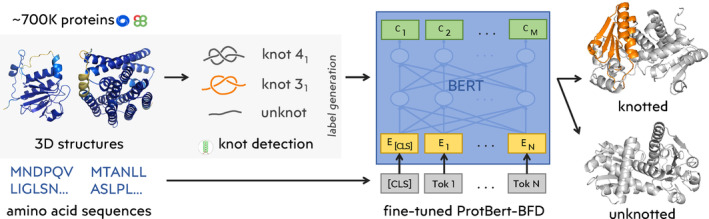
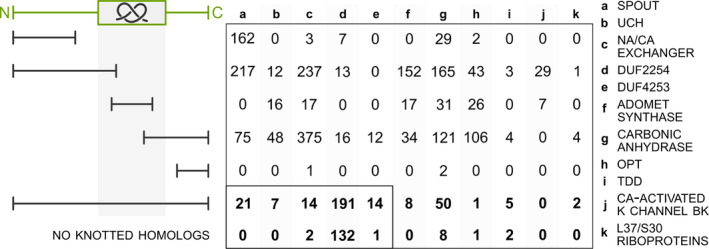
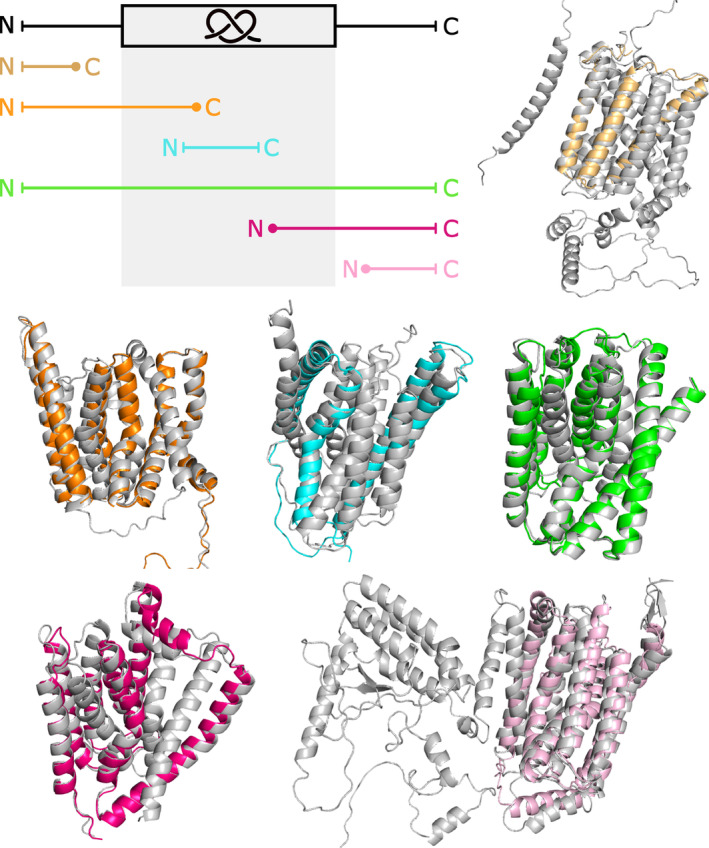
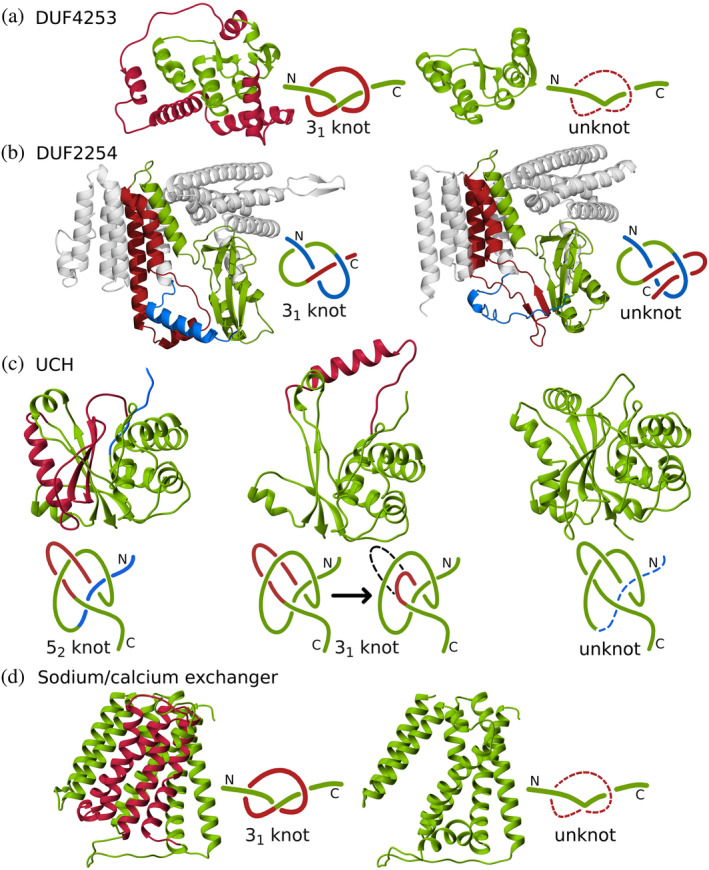
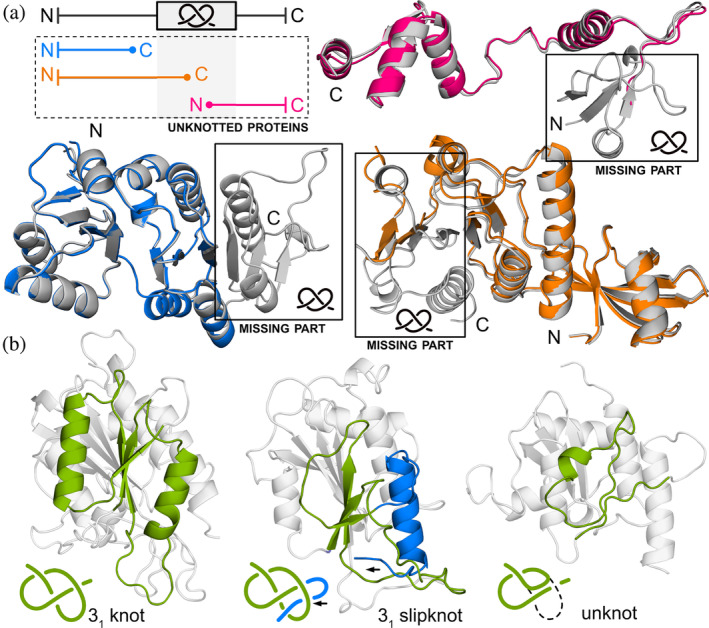
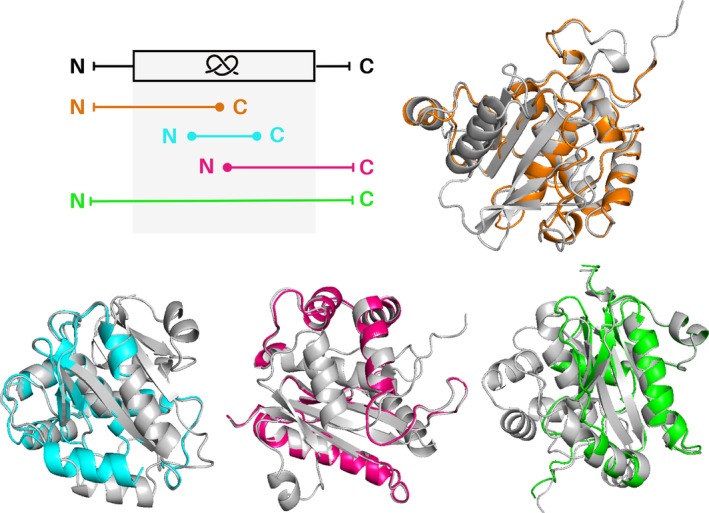
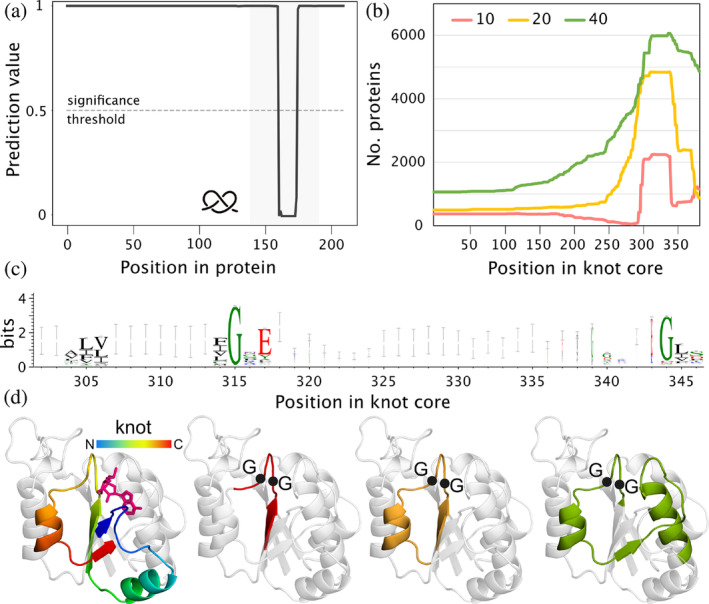
Knotted proteins, although scarce, are crucial structural components of certain protein families, and their roles continue to be a topic of intense research. Capitalizing on the vast collection of protein structure predictions offered by AlphaFold (AF), this study computationally examines the entire UniProt database to create a robust dataset of knotted and unknotted proteins. Utilizing this dataset, we develop a machine learning (ML) model capable of accurately predicting the presence of knots in protein structures solely from their amino acid sequences. We tested the model's capabilities on 100 proteins whose structures had not yet been predicted by AF and found agreement with our local prediction in 92% cases. From the point of view of structural biology, we found that all potentially knotted proteins predicted by AF can be classified only into 17 families. This allows us to discover the presence of unknotted proteins in families with a highly conserved knot. We found only three new protein families: UCH, DUF4253, and DUF2254, that contain both knotted and unknotted proteins, and demonstrate that deletions within the knot core could potentially account for the observed unknotted (trivial) topology. Finally, we have shown that in the majority of knotted families (11 out of 15), the knotted topology is strictly conserved in functional proteins with very low sequence similarity. We have conclusively demonstrated that proteins AF predicts as unknotted are structurally accurate in their unknotted configurations. However, these proteins often represent nonfunctional fragments, lacking significant portions of the knot core (amino acid sequence).
Overview
The claims and statistics of this paper haven’t been checked yet.
Run the check — free, no account needed. It reads the open-access text and checks the sources it cites.
Integrity signals
Registry
Cites
Statistics
Figures
Verification
Claims the paper makes
The claims and statistics of this paper haven’t been checked yet.
Run the check — free, no account needed. It reads the open-access text and checks the sources it cites.
Self-check
Percentages, sums and reported differences re-computed from the paper’s own numbers.
The self-check needs the paper’s full text.
Citations
Cites
Highly accurate protein structure prediction with AlphaFold
Jumper, J., Evans, R., Pritzel, A., Green, T., Figurnov, M., Ronneberger, O., Tunyasuvunakool, K., Bates, R., Žídek, A., Potapenko, A., et al. (2021) · Nature · doi:10.1038/s41586-021-03819-2 · Cited by 43,764
ProtTrans: Toward Understanding the Language of Life Through Self-Supervised Learning
Elnaggar, A., Heinzinger, M., Dallago, C., Rehawi, G., Wang, Y., Jones, L., Gibbs, T., Feher, T., Angerer, C., Steinegger, M., et al. (2022) · IEEE Transactions on Pattern Analysis and Machine Intelligence · doi:10.1109/tpami.2021.3095381 · Cited by 2,329
Alternative splicing and evolution: diversification, exon definition and function
Keren, H., Lev-Maor, G., & Ast, G. (2010) · Nature Reviews Genetics · doi:10.1038/nrg2776 · Cited by 1,082
Research works printed but not linked: 60
- 10.1371/journal.pcbi.1003002 · DOI
- 10.1111/j.1742-4658.2009.06990.x · DOI
- 10.1038/s41598-019-44928-3 · DOI
- 10.1002/pro.4380 · DOI
- 10.1038/s41467-017-01691-1 · DOI
- 10.1038/nsmb.3282 · DOI
- CikI RasamoelinaAD MachM SincakP.Explaining deep neural network using layer‐wise relevance propagation and integrated gradients.2021https://doi.org/10.1109/SAMI50585.2021.9378686 · DOI
- 10.1101/2023.03.13.532328 · DOI
- 10.1093/nar/gky1140 · DOI
- 10.1093/bib/bbaa196 · DOI
- 10.1371/journal.pone.0165986 · DOI
- 10.1038/s41467-023-42388-y · DOI
- 10.1016/j.csbj.2015.08.003 · DOI
- 10.1016/j.csbj.2022.07.027 · DOI
- 10.1073/pnas.1808312116 · DOI
- 10.1021/acs.jpcb.1c00898 · DOI
- 10.1090/S0273-0979-1985-15361-3 · DOI
- 10.1093/bioinformatics/bts565 · DOI · Paper page
- 10.1038/s42003-023-05489-4 · DOI
- 10.1016/j.jbc.2023.105553 · DOI
- 10.1016/j.sbi.2023.102709 · DOI
- 10.1016/j.sbi.2016.10.002 · DOI
- 10.1093/bioinformatics/bty334 · DOI
- 10.1016/j.jmb.2018.10.012 · DOI
- 10.1073/pnas.1007602107 · DOI
- 10.1016/j.jmb.2007.07.042 · DOI
- 10.1016/j.jmb.2014.09.007 · DOI
- 10.1038/nsb0494-213 · DOI
- 10.1016/b978-0-12-824406-7.00008-7 · DOI
- 10.3389/fmolb.2023.1223830 · DOI
- 10.1093/nar/gkac388 · DOI
- Paszke A, 2019, Advances in neural information processing systems 32, 8024
- 10.1093/nar/gkac993 · DOI
- 10.1021/acscatal.0c00059 · DOI
- 10.1002/pro.4631 · DOI
- 10.1371/journal.pcbi.1007904 · DOI
- 10.1371/journal.pcbi.1000864 · DOI
- 10.48550/ARXIV.1610.06679 · DOI
- 10.1038/268495a0 · DOI
- 10.1038/s41598-020-66258-5 · DOI
- 10.3390/ijms160818836 · DOI
- 10.1101/2023.06.16.545156 · DOI
- 10.1007/s00894-022-05094-y · DOI
- 10.1371/journal.pcbi.1002504 · DOI
- 10.1038/nbt.3988 · DOI · Paper page
- 10.1038/s41467-018-04964-5 · DOI · Paper page
- 10.1016/j.jbc.2022.102393 · DOI
- 10.1073/pnas.0805468105 · DOI
- 10.1016/j.sbi.2020.01.007 · DOI
- 10.1073/pnas.1205918109 · DOI
- 10.1073/pnas.0811147106 · DOI
- 10.1021/ja961147m · DOI
- 10.1186/1471-2105-8-73 · DOI
- 10.1093/nar/gkab1061 · DOI · Paper page
- 10.1371/journal.pcbi.0020122 · DOI
- 10.1016/j.jmb.2007.02.035 · DOI
- 10.1039/D0SC02796K · DOI
- 10.1021/jp511029s · DOI
- 10.1039/c6mb00214e · DOI
- 10.1371/journal.pcbi.1009502 · DOI
Metadata
- Authors
- Sikora, M., Klimentova, E., Uchal, D., Sramkova, D., Perlinska, A. P., Nguyen, M. L., Korpacz, M., Malinowska, R., Nowakowski, S., Rubach, P., Simecek, P., & Sulkowska, J. I.
- Affiliations
- University of Warsaw (PL)
- Central European Institute of Technology, Masaryk University Brno Czech Republic
- Centre of New Technologies, University of Warsaw Warsaw Poland
- Corresponding author
- Sulkowska, Joanna I.
- ORCID
- Venue
- Protein Science
- Publisher
- Wiley
- Published
- 2024-06-18
- Volume
- 33
- Issue
- 7
- Pages
- e4998-e4998
- ISSN
- 0961-8368 (ISSN-L)
- 1469-896X
- PMC
- PMC11184937
- OpenAlex
- W4399776685
- Cited by
- 13
- References
- 3
- Citations by year
- 2026: 3 · 2025: 5 · 2024: 5
- FWCI
- 1.77
- Type
- journal article
- Language
- en
- Open access
- hybrid
- doi.org
- Licence
- Locations
- Protein Science (publishedVersion, cc-by)
- bioRxiv (Cold Spring Harbor Laboratory) (acceptedVersion, cc-by-nd)
- PubMed Central (publishedVersion, cc-by)
- PubMed (publishedVersion)
- ReIn UW (University of Warsaw) (submittedVersion, cc-by-nc-nd)
- Funders
- Narodowe Centrum Nauki (UMO‐2018/31/B/NZ1/04016, 2021/43/I/NZ1/03341)
- Grantová Agentura České Republiky (23‐04260L)
- Topics
- Life Sciences › Biochemistry, Genetics and Molecular Biology › Molecular Biology › Protein Structure and Dynamics
- Life Sciences › Biochemistry, Genetics and Molecular Biology › Molecular Biology › Machine Learning in Bioinformatics
- Physical Sciences › Mathematics › Geometry and Topology › Geometric and Algebraic Topology
- Keywords
- knotted proteins, sequence-based prediction, protein topology, AlphaFold, UniProt
- MeSH terms
- Machine Learning, Amino Acid Sequence, Models, Molecular, Protein Conformation, Proteins, Databases, Protein
About these checks
Registry, retraction, Cites and statistics results are computed, not judged, with one exception: a printed reference that no index lists is read once by a model before it counts as a citation error. Claims are extracted by a model and kept only when their quote appears verbatim in the text; each cited source is then checked, with a model’s help, for whether it says what the claim relies on. Those verdicts can be wrong — read the claim’s quote and the cited source before relying on one.
Statistics and arithmetic are recomputed, not judged.
Confidence bands are shown only for fields calibrated on our annotated test set. None is calibrated yet, so no band is shown.
What counts as a claim ›How we measure confidence ›How we check this ›
Are you an author, or do you see a problem with this page? Request a review
