

The DOI matches its Crossref record; 50 of the 50 references it cites were found in a registry or an index.
PBPK Models for CYP3A4 and P‐gp DDI Prediction: A Modeling Network of Rifampicin, Itraconazole, Clarithromycin, Midazolam, Alfentanil, and Digoxin
Open accessAbstract
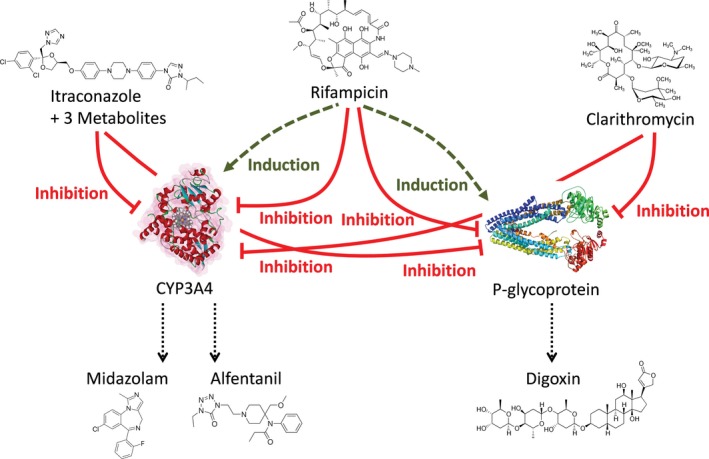
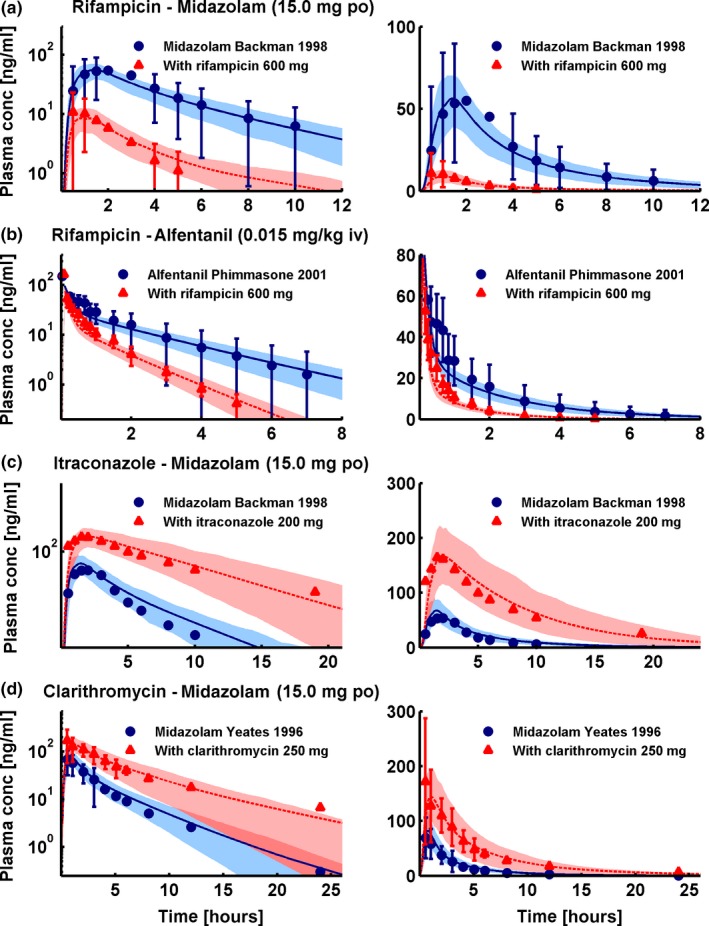
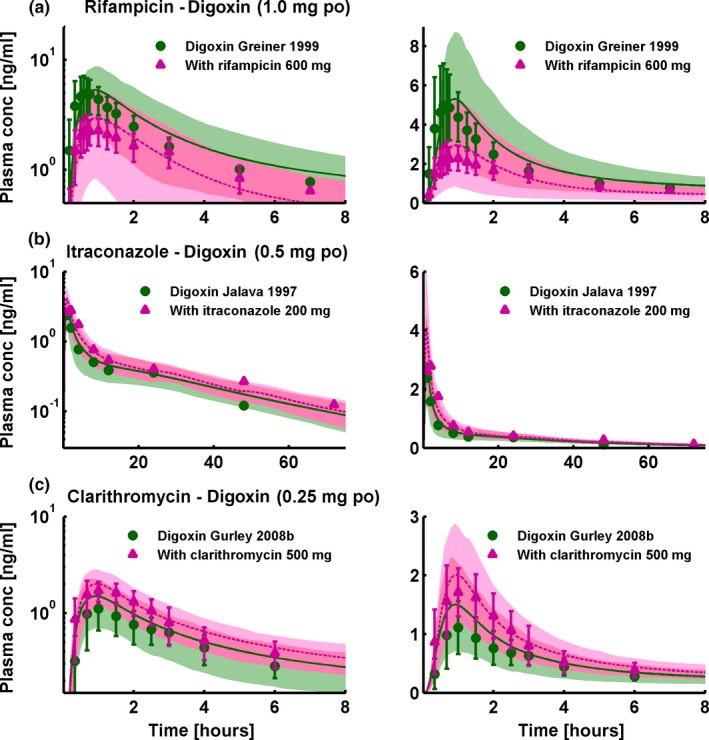
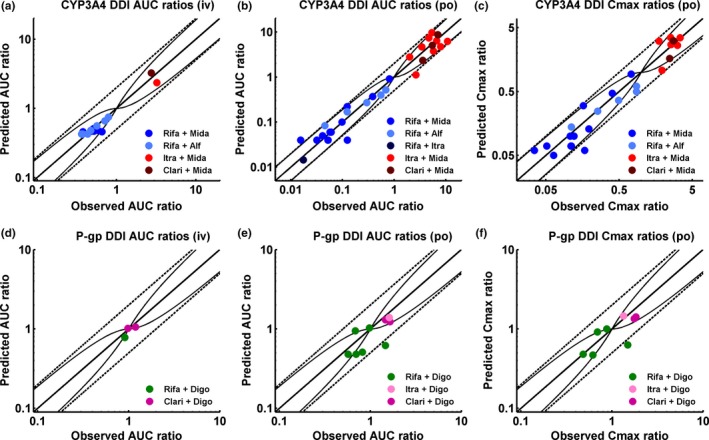
According to current US Food and Drug Administration ( FDA ) and European Medicines Agency ( EMA ) guidance documents, physiologically based pharmacokinetic ( PBPK ) modeling is a powerful tool to explore and quantitatively predict drug‐drug interactions ( DDI s) and may offer an alternative to dedicated clinical trials. This study provides whole‐body PBPK models of rifampicin, itraconazole, clarithromycin, midazolam, alfentanil, and digoxin within the Open Systems Pharmacology ( OSP ) Suite. All models were built independently, coupled using reported interaction parameters, and mutually evaluated to verify their predictive performance by simulating published clinical DDI studies. In total, 112 studies were used for model development and 57 studies for DDI prediction. 93% of the predicted area under the plasma concentration‐time curve ( AUC ) ratios and 94% of the peak plasma concentration (C max ) ratios are within twofold of the observed values. This study lays a cornerstone for the qualification of the OSP platform with regard to reliable PBPK predictions of enzyme‐mediated and transporter‐mediated DDI s during model‐informed drug development. All presented models are provided open‐source and transparently documented.
Overview
The claims and statistics of this paper haven’t been checked yet.
Run the check — free, no account needed. It reads the open-access text and checks the sources it cites.
Integrity signals
Registry
Cites
Statistics
Figures
Verification
Claims the paper makes
The claims and statistics of this paper haven’t been checked yet.
Run the check — free, no account needed. It reads the open-access text and checks the sources it cites.
Claims other papers make about this one
Each is checked against this paper’s own text: does it say what the citing paper says it does?
In the citing paper
“These findings overall were within the regulatory acceptance margin of error which is 20% to 50% for these types of DDI assessments.12”
From GLP-1RA-induced delays in gastrointestinal motility: Predicted effects on coadministered drug absorption by PBPK analysis (2025) · cites this paper as [12]
In the citing paper
“For reference, PBPK models generally achieve AUC ratio predictions within 20% to 50% error for well-characterized DDIs.12”
From GLP-1RA-induced delays in gastrointestinal motility: Predicted effects on coadministered drug absorption by PBPK analysis (2025) · cites this paper as [12]
Self-check
Percentages, sums and reported differences re-computed from the paper’s own numbers.
The self-check needs the paper’s full text.
Citations
Cites
Basic anatomical and physiological data for use in radiological protection: reference values
Valentin, J. (2002) · Annals of the ICRP · doi:10.1016/s0146-6453(03)00002-2 · Cited by 2,024
CYTOCHROME P-450 3A4: Regulation and Role in Drug Metabolism
Guengerich, F. P. (1999) · The Annual Review of Pharmacology and Toxicology · doi:10.1146/annurev.pharmtox.39.1.1 · Cited by 1,271
The role of intestinal P-glycoprotein in the interaction of digoxin and rifampin
Greiner, B., Eichelbaum, M. F., Fritz, P., Kreichgauer, H. P., von Richter, O., Zundler, J., & Kroemer, H. K. (1999) · Journal of Clinical Investigation · doi:10.1172/jci6663 · Cited by 917
Lown, K. S., Mayo, R. R., Leichtman, A. B., Hsiao, H.-L., Turgeon, D. K., Schmiedlin‐Ren, P., Brown, M. B., Guo, W.-S., Rossi, S. J., Benet, L. Z., et al. (1997) · Clinical Pharmacology & Therapeutics · doi:10.1016/s0009-9236(97)90027-8 · Cited by 679
Applied Concepts in PBPK Modeling: How to Build a PBPK/PD Model
Kuepfer, L., Niederalt, C., Wendl, T., Schlender, J., Willmann, S., Lippert, J., Block, M., Eissing, T., & Teutonico, D. (2016) · CPT: Pharmacometrics & Systems Pharmacology · doi:10.1002/psp4.12134 · Cited by 425
Self-citationOlkkola, K. T., Backman, J. T., & Neuvonen, P. J. (1994) · Clinical Pharmacology & Therapeutics · doi:10.1038/clpt.1994.60 · Cited by 413
Gorski, J. C., Jones, D. R., HAEHNERDANIELS, B., Hamman, M. A., O'Mara, E. M., & Hall, S. D. (1998) · Clinical Pharmacology & Therapeutics · doi:10.1016/s0009-9236(98)90146-1 · Cited by 409
Nishimura, M., YAGUTI, H., YOSHITSUGU, H., Naito, S., & Satoh, T. (2003) · YAKUGAKU ZASSHI · doi:10.1248/yakushi.123.369 · Cited by 313
ROLE OF ITRACONAZOLE METABOLITES IN CYP3A4 INHIBITION
Isoherranen, N., Kunze, K. L., Allen, K. E., Nelson, W. L., & Thummel, K. E. (2004) · Drug Metabolism and Disposition · doi:10.1124/dmd.104.000315 · Cited by 276
Research works printed but not linked: 2
- U.S. Food and Drug Administration, 2017, Clinical Drug Interaction Studies – Study Design, Data Analysis, and Clinical Implications
- European Medicines Agency, 2012, Guideline on the Investigation of Drug Interactions. CPMP/EWP/560/95/Rev. 1 Corr. 2**
Cited by
Sorted by citations
Lin, W., Chen, Y., Unadkat, J. D., Zhang, X., Wu, D., & Heimbach, T. (2022) · Pharmaceutical Research · doi:10.1007/s11095-022-03274-2 · Cited by 137
“In addition, each pathway needs to be assessed both individually and in combination (50).”
BackgroundWojtyniak, J., Britz, H., Selzer, D., Schwab, M. G., & Lehr, T. (2020) · CPT Pharmacometrics & Systems Pharmacology · doi:10.1002/psp4.12511 · Cited by 111
Self-citationAntifungal Drugs TDM: Trends and Update
Kably, B., Launay, M., Derobertmasure, A., Lefeuvre, S., Dannaoui, E., & Billaud, E. M. (2022) · Therapeutic Drug Monitoring · doi:10.1097/ftd.0000000000000952 · Cited by 81
Li, X., Frechen, S., Moj, D., Lehr, T., Taubert, M., Hsin, C., Mikus, G., Neuvonen, P. J., Olkkola, K. T., Saari, T. I., et al. (2019) · Clinical Pharmacokinetics · doi:10.1007/s40262-019-00856-z · Cited by 69
Self-citationYamazaki, S., Costales, C., Lazzaro, S., Eatemadpour, S., Kimoto, E., & Varma, M. V. S. (2019) · CPT Pharmacometrics & Systems Pharmacology · doi:10.1002/psp4.12458 · Cited by 60
“5-fold.(45) Increases in intestinal Pgp expression levels measured by immunohistochemical and Western blot assays were reported to be 1.”
Abouir, K., Samer, C. F., Gloor, Y. S., Desmeules, J. A., & Daali, Y. (2021) · Frontiers in Pharmacology · doi:10.3389/fphar.2021.708299 · Cited by 60
“PK and PD interactions may enhance activity (synergism) or decrease the effects (antagonism), affecting plasma drug levels and effects and having more or less severe consequences depending on the therapeutic margin of a drug (Hanke et al., 2018).”
BackgroundKapetas, A. J., Sorich, M. J., Rodrigues, A. D., & Rowland, A. (2019) · The AAPS Journal · doi:10.1208/s12248-019-0341-y · Cited by 55
Rodrigues, A. D., Lai, Y., Shen, H., Varma, M. V. S., Rowland, A., & Oswald, S. (2019) · Drug Metabolism and Disposition · doi:10.1124/dmd.119.089615 · Cited by 50
“38) induction signature based on available biopsy data and in vitro data (Hanke et al., 2018; Türk et al., 2019).”
BackgroundMethodTürk, D., Hanke, N., Wolf, S., Frechen, S., Eißing, T., Wendl, T., Schwab, M. G., & Lehr, T. (2019) · Clinical Pharmacokinetics · doi:10.1007/s40262-019-00777-x · Cited by 48
Self-citationStorelli, F., Yin, M., Kumar, A. R., Ladumor, M. K., Evers, R., Chothe, P. P., Enogieru, O. J., Liang, X., Lai, Y., & Unadkat, J. D. (2022) · Pharmacology & Therapeutics · doi:10.1016/j.pharmthera.2022.108271 · Cited by 43
Kovar, L., Schräpel, C., Selzer, D., Kohl, Y., Bals, R., Schwab, M. G., & Lehr, T. (2020) · Pharmaceutics · doi:10.3390/pharmaceutics12060578 · Cited by 41
“Furthermore, the DDI assessment could only be carried out with the adult PBPK model due to the fact that the incorporated perpetrator drug PBPK models were developed for the application in non-pediatric populations [22].”
BackgroundMethodInfluentialSelf-citationBritz, H., Hanke, N., Volz, A., Spigset, O., Schwab, M. G., Eißing, T., Wendl, T., Frechen, S., & Lehr, T. (2019) · CPT Pharmacometrics & Systems Pharmacology · doi:10.1002/psp4.12397 · Cited by 39
Self-citationHanke, N., Gómez‐Mantilla, J. D., Ishiguro, N., Stopfer, P., & Nock, V. (2021) · Pharmaceutical Research · doi:10.1007/s11095-021-03109-6 · Cited by 38
Self-citationWojtyniak, J., Selzer, D., Schwab, M., & Lehr, T. (2021) · Clinical Pharmacology & Therapeutics · doi:10.1002/cpt.2111 · Cited by 38
Self-citationAsaumi, R., Menzel, K., Lee, W., Nunoya, K., Imawaka, H., Kusuhara, H., & Sugiyama, Y. (2019) · CPT Pharmacometrics & Systems Pharmacology · doi:10.1002/psp4.12457 · Cited by 37
Bolleddula, J., Gopalakrishnan, S., Hu, P., Dong, J. Q., & Venkatakrishnan, K. (2022) · Clinical and Translational Science · doi:10.1111/cts.13357 · Cited by 35
Britz, H., Hanke, N., Taub, M. E., Wang, T., Prasad, B., Fernandez, É., Stopfer, P., Nock, V., & Lehr, T. (2020) · Pharmaceutical Research · doi:10.1007/s11095-020-02964-z · Cited by 34
Self-citationSimon, F., Gautier‐Veyret, E., Truffot, A., Chenel, M., Payen, L. F., Stanke‐Labesque, F., & Tod, M. M. (2021) · Pharmaceutical Research · doi:10.1007/s11095-021-03019-7 · Cited by 34
The Pharmacokinetics of the Nonsteroidal Mineralocorticoid Receptor Antagonist Finerenone
Heinig, R., & Eißing, T. (2023) · Clinical Pharmacokinetics · doi:10.1007/s40262-023-01312-9 · Cited by 38
Wiesinger, H., Klein, S., Rottmann, A., Nowotny, B., Riecke, K., Gashaw, I., Brudny-Kloeppel, M., Fricke, R., Höchel, J., & Friedrich, C. (2020) · Clinical Pharmacology & Therapeutics · doi:10.1002/cpt.1848 · Cited by 33
Frechen, S., Solodenko, J., Wendl, T., Dallmann, A., Ince, I., Lehr, T., Lippert, J., & Burghaus, R. (2021) · CPT Pharmacometrics & Systems Pharmacology · doi:10.1002/psp4.12636 · Cited by 32
Self-citationHooper, L., Liu, S., & Pai, M. P. (2025) · Pharmacotherapy: The Journal of Human Pharmacology and Drug Therapy · doi:10.1002/phar.70007 · Cited by 32
Fendt, R., Hofmann, U., Schneider, A. R. P., Schaeffeler, E., Burghaus, R., Yılmaz, A., Blank, L. M., Kerb, R., Lippert, J., Schlender, J., et al. (2021) · CPT Pharmacometrics & Systems Pharmacology · doi:10.1002/psp4.12646 · Cited by 30
Gerner, B., & Scherf‐Clavel, O. (2021) · Pharmaceutics · doi:10.3390/pharmaceutics13060778 · Cited by 28
“to simulate DDI between CAB and RIF [36].”
InfluentialHybridML: Open source platform for hybrid modeling
Merkelbach, K., Schweidtmann, A. M., Müller, Y., Schwoebel, P., Mhamdi, A., Mitsos, A., Schuppert, A., Mrziglod, T., & Schneckener, S. (2022) · Computers & Chemical Engineering · doi:10.1016/j.compchemeng.2022.107736 · Cited by 32
Bhardwaj, R., Collins, J. L., Stringfellow, J., Madonia, J., Anderson, M. S., Finley, J., Stock, D. A., Coric, V., Croop, R. S., & Bertz, R. (2022) · Clinical Pharmacology in Drug Development · doi:10.1002/cpdd.1088 · Cited by 27
Asaumi, R., Nunoya, K., Yamaura, Y., Taskar, K. S., & Sugiyama, Y. (2022) · CPT Pharmacometrics & Systems Pharmacology · doi:10.1002/psp4.12807 · Cited by 27
Marok, F. Z., Wojtyniak, J., Fuhr, L. M., Selzer, D., Schwab, M. G., Weiß, J., Haefeli, W. E., & Lehr, T. (2023) · Pharmaceutics · doi:10.3390/pharmaceutics15020679 · Cited by 26
“Similarly, a successfully developed parent–metabolites PBPK model for itraconazole included its three metabolites that participated in the DDIs as well [22].”
BackgroundMethodSelf-citationOtsuka, Y., Choules, M. P., Bonate, P. L., & Komatsu, K. (2020) · CPT Pharmacometrics & Systems Pharmacology · doi:10.1002/psp4.12562 · Cited by 26
Fuhr, L., Marok, F., Fuhr, U., Selzer, D., & Lehr, T. (2023) · Clinical pharmacology and therapy · doi:10.1002/cpt.2968 · Cited by 21
Self-citationBettonte, S., Berton, M., Stader, F., Battegay, M., & Marzolini, C. (2023) · European Journal of Drug Metabolism and Pharmacokinetics · doi:10.1007/s13318-023-00833-9 · Cited by 24
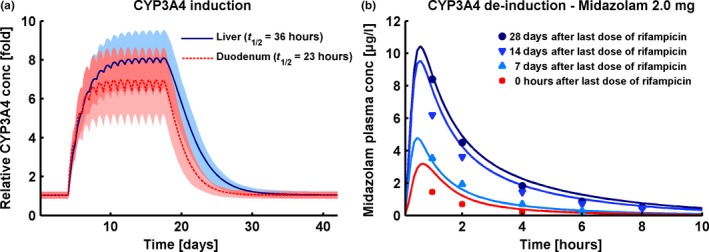
“The disappearance of the inducing effect is governed by the t1⁄2 of the perpetrator and by the degradation constant (Kdeg) of the enzyme, which correlates with t1⁄2 of the enzyme [31].”
BackgroundLiu, L., Li, W., Yang, L., Guo, Z., Xue, H., Xie, N., & Chen, X. (2021) · Acta Pharmacologica Sinica · doi:10.1038/s41401-021-00710-8 · Cited by 24
Zheng, L., Yang, H., Dallmann, A., Jiang, X., Wang, L., & Hu, W. M. (2022) · Frontiers in Pharmacology · doi:10.3389/fphar.2021.793346 · Cited by 24
“A sensitivity value of +1.0 denotes that a 10% increase of the examined parameter causes a 10% increase of the simulated AUC (Hanke et al., 2018).”
BackgroundInfluentialMontanha, M. C., Fàbrega, F., Howarth, A., Cottura, N., Kinvig, H., Bunglawala, F., Lloyd, A. W., Denti, P., Waitt, C. J., & Siccardi, M. (2021) · Clinical Pharmacokinetics · doi:10.1007/s40262-021-01067-1 · Cited by 23
Loer, H. L. H., Feick, D., Rüdesheim, S., Selzer, D., Schwab, M. G., Teutonico, D., Frechen, S., van der Lee, M., Moes, D. J. A. R., Swen, J. J., et al. (2023) · CPT Pharmacometrics & Systems Pharmacology · doi:10.1002/psp4.12946 · Cited by 23
“Table S12: Drug-dependent parameters of the itraconazole PBPK model [7]”
BackgroundInfluentialSelf-citationIn Silico Clinical Trials: Is It Possible?
Arsène, S., Parès, Y., Tixier, E., Granjeon-Noriot, S., Martin, B., Bruezière, L., Couty, C., Courcelles, E., Kahoul, R., Pitrat, J., et al. (2023) · Methods in molecular biology · doi:10.1007/978-1-0716-3449-3_4 · Cited by 26
Moj, D., Maas, H. J., Schaeftlein, A., Hanke, N., Gómez‐Mantilla, J. D., & Lehr, T. (2019) · Clinical Pharmacokinetics · doi:10.1007/s40262-019-00776-y · Cited by 23
Self-citationMultiscale modelling of drug mechanism and safety
Zhang, J. D., Sach-Peltason, L., Krämer, C., Wang, K., & Ebeling, M. (2019) · Drug Discovery Today · doi:10.1016/j.drudis.2019.12.009 · Cited by 21
Hanke, N., Türk, D., Selzer, D., Wiebe, S. T., Fernandez, É., Stopfer, P., Nock, V., & Lehr, T. (2020) · Pharmaceutics · doi:10.3390/pharmaceutics12060556 · Cited by 22
“(a) (b) 1 The rifampicin-verapamil DDI was predicted as induction of CYP3A4 verapamil metabolism and Pgp verapamil transport by rifampicin, with simultaneous competitive inhibition of CYP3A4 and Pgp [49].”
MethodInfluentialSelf-citationThe Combination of Cell Cultured Technology and In Silico Model to Inform the Drug Development
Zhou, Z., Zhu, J., Jiang, M., Sang, L., Hao, K., & He, H. (2021) · Pharmaceutics · doi:10.3390/pharmaceutics13050704 · Cited by 23
Yamazaki, S., Evers, R., & Zwart, L. D. (2021) · CPT Pharmacometrics & Systems Pharmacology · doi:10.1002/psp4.12733 · Cited by 22
Dong, J., Liu, S., Jony, M. R., Huang, C., & Miao, L.-Y. (2022) · Pharmaceutical Research · doi:10.1007/s11095-022-03289-9 · Cited by 22
“These values for the midazolam and alfentanil models (Supplementary Table S2 and S3) were taken from the publication (14).”
BackgroundCicali, B., Lingineni, K., Cristofoletti, R., Wendl, T., Hoechel, J., Wiesinger, H., Chaturvedula, A., Vozmediano, V., & Schmidt, S. (2020) · CPT Pharmacometrics & Systems Pharmacology · doi:10.1002/psp4.12572 · Cited by 22
“Sensitivity of a parameter was calculated as a ratio of AUC change to the relative variation of that parameter, as previously reported by Hanke et al.25 Briefly, local parameter sensitivity analysis was conducted by varying each parameter of interest by +/− 10%, while keeping all other parameters constant, and recordi…”
BackgroundMethodInfluentialSelf-citationNajjar, A., Hamadeh, A., Krause, S., Schepky, A. G., & Edginton, A. N. (2024) · CPT Pharmacometrics & Systems Pharmacology · doi:10.1002/psp4.13256 · Cited by 21
Rodrigues, A. D., & Rowland, A. (2019) · Journal of Pharmacology and Experimental Therapeutics · doi:10.1124/jpet.119.262972 · Cited by 21
“As discussed in the following sections, there are examples of published reports describing biopsy data to assess CYP3A4 inhibition after dosing of a mechanism-based inhibitor drug, modeling of rifampicin autoinduction by considering the induction of P-glycoprotein (Pgp), and studying the impact of CYP3A5 genotype on P…”
BackgroundWendl, T., Frechen, S., Gerisch, M., Heinig, R., & Eißing, T. (2021) · CPT Pharmacometrics & Systems Pharmacology · doi:10.1002/psp4.12746 · Cited by 20
Self-citationWen, H., He, Q., Xiang, X., Jiao, Z., & Yu, J. (2022) · Thrombosis Research · doi:10.1016/j.thromres.2022.08.007 · Cited by 20
Krstevska, A., Djuriš, J., Ibric, S. R., & Cvijić, S. (2022) · Pharmaceutics · doi:10.3390/pharmaceutics15010107 · Cited by 20
Yang, H., Yang, L., Zhong, X., Jiang, X., Zheng, L., & Wang, L. (2022) · European Journal of Pharmaceutical Sciences · doi:10.1016/j.ejps.2022.106258 · Cited by 20
Fuhr, L. M., Marok, F. Z., Mees, M., Mahfoud, F., Selzer, D., & Lehr, T. (2022) · Pharmaceutics · doi:10.3390/pharmaceutics14071474 · Cited by 19
“For erythromycin [30], itraconazole [31], carbamazepine [32], and phenytoin (unpublished, in-house), we used available PBPK models that have been previously evaluated for DDI predictions as CYP3A4 perpetrator models.”
MethodSelf-citationShen, C., Shao, W., Wang, W., Sun, H., Wang, X., Geng, K., Wang, X., & Xie, H. (2023) · CPT Pharmacometrics & Systems Pharmacology · doi:10.1002/psp4.12971 · Cited by 18
Marok, F., Fuhr, L., Hanke, N., Selzer, D., & Lehr, T. (2021) · Pharmaceutics · doi:10.3390/pharmaceutics13030331 · Cited by 16
“rifampicin [60], fluvoxamine [61], and voriconazole [59] are listed in the parameter tables in Section 4 of the Supplementary Materials.”
BackgroundSelf-citationHuang, W., Czuba, L. C., & Isoherranen, N. (2020) · Journal of Pharmacology and Experimental Therapeutics · doi:10.1124/jpet.120.264994 · Cited by 18
“In contrast, mechanistic modeling can be used to extrapolate drug disposition from known settings to unstudied scenarios, such as unstudied populations and unstudied drug coadministration (Wagner et al., 2015; Huang et al., 2017; Zhang et al., 2017; Hanke et al., 2018) and likely unstudied urine pH conditions.”
BackgroundLoer, H. L. H., Türk, D., Gómez‐Mantilla, J. D., Selzer, D., & Lehr, T. (2022) · Pharmaceutics · doi:10.3390/pharmaceutics14050915 · Cited by 16
Self-citationSharma, S., Singh, D. K., Mettu, V. S., Yue, G., Ahire, D. S., Basit, A., Heyward, S. A., & Prasad, B. (2023) · Molecular Pharmaceutics · doi:10.1021/acs.molpharmaceut.2c00950 · Cited by 16
Li, G., Yi, B., Liu, J., Jiang, X., Pan, F., Yang, W., Liu, H., Liu, Y., & Wang, G. (2021) · Frontiers in Pharmacology · doi:10.3389/fphar.2021.746594 · Cited by 16
“Clinical PK studies of ketoconazole, delavirdine, and rifampicin were taken from the published literature2, 3(Hanke et al., 2018), which could be used in their respective PBPK model establishment and verification.”
BackgroundRüdesheim, S., Loer, H. L. H., Feick, D., Marok, F., Fuhr, L., Selzer, D., Teutonico, D., Schneider, A. R. P., Solodenko, J., Frechen, S., et al. (2025) · Clinical pharmacology and therapy · doi:10.1002/cpt.3604 · Cited by 16
Self-citationCho, C., Kang, P., Jang, C., Lee, S., Lee, Y. J., Bae, J., & Choi, C. (2024) · Archives of Pharmacal Research · doi:10.1007/s12272-024-01495-0 · Cited by 15
“In the present study, the template clarithromycin model which is available in PK-Sim ® (Hanke et al. 2018) was leveraged without any adjustment and the previously established paroxetine model by Rüdesheim et al. (2022) was utilized with slight modification to the inhibition constant (K i ) of…”
Türk, D., Hanke, N., & Lehr, T. (2020) · Pharmaceutics · doi:10.3390/pharmaceutics12111074 · Cited by 15
“The parameter values to model these interactions were taken from literature (values and references are listed in the rifampicin drug-dependent parameter Table S17 in the Supplementary Materials) and have been evaluated in previous DDI analyses [21,22].”
MethodSelf-citationVu, N.-A. T., Song, Y.-M., Tran, Q., Yun, H.-Y., Kim, S. K., Chae, J., & Kim, J. K. (2022) · Clinical pharmacology and therapy · doi:10.1002/cpt.2824 · Cited by 13
Rüdesheim, S., Selzer, D., Mürdter, T. E., Igel, S., Kerb, R., Schwab, M. G., & Lehr, T. (2022) · Pharmaceutics · doi:10.3390/pharmaceutics14081734 · Cited by 14
Self-citationAldibani, H. K. A., Rajput, A. J., & Rostami‐Hodjegan, A. (2023) · Biopharmaceutics & Drug Disposition · doi:10.1002/bdd.2360 · Cited by 13
Ueno, T., Miyajima, Y., Landry, I. S., Lalovic, B. B., & Schuck, E. L. (2021) · CPT Pharmacometrics & Systems Pharmacology · doi:10.1002/psp4.12606 · Cited by 14
Shriya, V. A., Nayak, U. Y., Sathyanarayana, M. B., Chaudhari, B. B., & Bhat, K. (2025) · AAPS PharmSciTech · doi:10.1208/s12249-025-03093-9 · Cited by 15
“In such case the integration of Ki,u in PBPK model becomes necessary to address drugs impact on exposure of victim drug [98].”
Taneja, A., Desrivot, J., Diderichsen, P. M., Blanqué, R., Allamassey, L., Fagard, L., Fieuw, A. M., van der Aar, E., & Namour, F. (2019) · Clinical Pharmacokinetics · doi:10.1007/s40262-019-00755-3 · Cited by 13
Karnati, P., Murthy, A. N., Gundeti, M., & Ahmed, T. (2023) · The AAPS Journal · doi:10.1208/s12248-023-00831-4 · Cited by 13
“In the drug development process, PBPK modeling is frequently applied to waive off drug-drug interaction studies [11, 61].”
BackgroundLoer, H. L. H., Kovar, C., Rüdesheim, S., Marok, F., Fuhr, L., Selzer, D., Schwab, M., & Lehr, T. (2024) · CPT: Pharmacometrics & Systems Pharmacology · doi:10.1002/psp4.13127 · Cited by 7
Self-citationWeiß, J., Foerster, K. I., Weber, M., Burhenne, J., Mikus, G., Lehr, T., & Haefeli, W. E. (2021) · European Journal of Pharmaceutical Sciences · doi:10.1016/j.ejps.2021.106076 · Cited by 13
“…based pharmacokinetic (PBPK) model for drug-drug interactions suggested that the inhibitor action cannot be fully explained by the parent compound (Lehr et al., unpublished data) and is possibly related to metabolites with inhibitory potential, as seen for itraconazole (Hanke et al., 2018).”
BackgroundSelf-citationSimon, F., Guyot, L., Garcia, J., Vilchez, G., Bardel, C., Chenel, M., Tod, M., & Payen, L. (2020) · Fundamental & Clinical Pharmacology · doi:10.1111/fcp.12596 · Cited by 11
Rodrigues, D., Gibson, C. R., & Isoherranen, N. (2025) · Clinical and Translational Science · doi:10.1111/cts.70299 · Cited by 12
“Therefore, induction of CYP3A4 in the intestine versus liver by different agents has garnered the attention of various investigators [59, 61–66].”
Zhang, J., Song, C., Wu, M., Yue, J., Zhu, S., Zhu, P., Oo, C., Schlender, J., Lv, Z., Zhu, Y., et al. (2023) · European Journal of Pharmaceutical Sciences · doi:10.1016/j.ejps.2023.106443 · Cited by 12
Yin, X., Cicali, B., Rodríguez‐Vera, L., Lukáčová, V., Cristofoletti, R., & Schmidt, S. (2024) · Pharmaceutics · doi:10.3390/pharmaceutics16060737 · Cited by 12
“The sensitivity of a parameter was calculated based on Equation (2), reported by Hanke et al. [44].”
MethodDubinsky, S., Malik, P. R. V., Hajducek, D. M., & Edginton, A. N. (2022) · Clinical Pharmacokinetics · doi:10.1007/s40262-022-01121-6 · Cited by 13
Feick, D., Rüdesheim, S., Marok, F. Z., Selzer, D., Loer, H. L. H., Teutonico, D., Frechen, S., van der Lee, M., Moes, D. J. A. R., Swen, J. J., et al. (2023) · CPT Pharmacometrics & Systems Pharmacology · doi:10.1002/psp4.12981 · Cited by 12
Self-citationLiu, W., Yan, T., Chen, K., Yang, L., Benet, L. Z., & Zhai, S. (2020) · Pharmacotherapy The Journal of Human Pharmacology and Drug Therapy · doi:10.1002/phar.2380 · Cited by 12
Asai, Y., Tashiro, T., Kondo, Y., Hayashi, M., Arihara, H., Omote, S., Tanio, E., Yamashita, S., Higuchi, T., Hashimoto, E., et al. (2023) · Biological and Pharmaceutical Bulletin · doi:10.1248/bpb.b22-00823 · Cited by 11
Reddy, M. B., Cabalu, T. D., Zwart, L. D., Ramsden, D., Dowty, M. E., Taskar, K. S., Badée, J., Bolleddula, J., Boulu, L. G., Fu, Q., et al. (2024) · Clinical Pharmacology & Therapeutics · doi:10.1002/cpt.3477 · Cited by 11
Saleh, A., Schulz, J., Schlender, J., Aulin, L. B. S., Konrad, A.-P., Kluwe, F., Mikus, G., Huisinga, W., Kloft, C., & Michelet, R. (2024) · Clinical Pharmacokinetics · doi:10.1007/s40262-024-01434-8 · Cited by 11
Wang, Z., Liu, W., Li, X., Chen, H.-J., Qi, D., Pan, F., Liu, H., Yu, S., Yi, B., Wang, G., et al. (2022) · Regulatory Toxicology and Pharmacology · doi:10.1016/j.yrtph.2022.105210 · Cited by 11
Heinig, R., Fricke, R., Wertz, S., Nagelschmitz, J., & Loewen, S. (2022) · European Journal of Drug Metabolism and Pharmacokinetics · doi:10.1007/s13318-022-00794-5 · Cited by 11
Ngo, L. T., Lee, J., Yun, H., & Chae, J. (2023) · Pharmaceutics · doi:10.3390/pharmaceutics15010182 · Cited by 11
Han, D., Kwak, J., Choi, E., Seo, S.-W., Васильева, Е. А., Mishchenko, N. P., Fedoreyev, S. A., Stonik, V. A., Kim, H. K., Han, J., et al. (2023) · Biomedicine & Pharmacotherapy · doi:10.1016/j.biopha.2023.114589 · Cited by 11
Xiao, J., Shi, J., Thompson, B., Smith, D. E., Zhang, T., & Zhu, H. (2022) · Journal of Pharmaceutical Sciences · doi:10.1016/j.xphs.2022.04.019 · Cited by 10
PBTK modeling of the pyrrolizidine alkaloid retrorsine to predict liver toxicity in mouse and rat
Lehmann, A., Geburek, I., These, A., Hessel‐Pras, S., Hengstler, J. G., Albrecht, W., Mielke, H., Müller‐Graf, C., Yang, X., Kloft, C., et al. (2023) · Archives of Toxicology · doi:10.1007/s00204-023-03453-z · Cited by 10
“Physiologically-based toxicokinetic (PBTK) models have demonstrated their capability to mechanistically understand the interplay of hepatic metabolism and transport (Hanke et al. 2018).”
BackgroundWu, Y., Sinclair, G., Avanasi, R., & Pecquet, A. M. (2024) · Environment International · doi:10.1016/j.envint.2024.108804 · Cited by 10
Salerno, S. N., Capparelli, E. V., McIlleron, H., Gerhart, J. G., Dumond, J. B., Kashuba, A. D. M., Denti, P., & González, D. (2022) · Pharmacotherapy The Journal of Human Pharmacology and Drug Therapy · doi:10.1002/phar.2703 · Cited by 10
An Overview of Physiologically-Based Pharmacokinetic Models for Forensic Science
Fairman, K., Choi, M.-K., Gonnabathula, P., Lumen, A., Worth, A. P., Paini, A., & Li, M. (2023) · Toxics · doi:10.3390/toxics11020126 · Cited by 11
Gao, D., Wang, G., Wu, H., Wu, J., & Zhao, X. (2023) · ACS Omega · doi:10.1021/acsomega.2c07967 · Cited by 10
Jogiraju, V. K., Heimbach, T., Toderika, Y., & Taft, D. R. (2020) · Drug Metabolism and Pharmacokinetics · doi:10.1016/j.dmpk.2020.100375 · Cited by 10
Kwon, M., Park, J. B., Kwon, M., Song, J.-H., Yeo, C. S., & Bae, S. H. (2021) · Archives of Toxicology · doi:10.1007/s00204-021-03041-z · Cited by 9
Miyamoto, M., Kosugi, Y., Iwasaki, S., Chisaki, I., Nakagawa, S., Amano, N., & Hirabayashi, H. (2020) · Xenobiotica · doi:10.1080/00498254.2020.1808735 · Cited by 8
Zhu, J., Zhao, Y., Wang, L., Zhou, C., Zhou, S., Chen, T., Chen, J., Zhang, Z., Zhu, Y., Ding, S., et al. (2021) · European Journal of Pharmaceutical Sciences · doi:10.1016/j.ejps.2021.106006 · Cited by 8
Cicali, B., Silva, L. D., Sarayani, A., Lingineni, K., Pressly, M. A., Kim, S., Wendl, T., Hoechel, J., Vozmediano, V., Winterstein, A. G., et al. (2022) · Clinical Pharmacology & Therapeutics · doi:10.1002/cpt.2690 · Cited by 8
“, ketoconazole, carbamazepine, rifampicin, and efavirenz) to quantify the maximum impact of strongly inhibiting or inducing the CYP3A4mediated metabolic pathway on systemic exposure of progestins.(10,11) Carbamazepine and efavirenz are strong and moderate CYP3A4 inducers, respectively, showing time- dependent PK due t…”
BackgroundSelf-citationKovar, C., Loer, H. L. H., Rüdesheim, S., Fuhr, L., Marok, F., Selzer, D., Schwab, M., & Lehr, T. (2024) · CPT: Pharmacometrics & Systems Pharmacology · doi:10.1002/psp4.13146
Self-citationYadav, J., Maldonato, B. J., Roesner, J. M., Vergara, A. G., Paragas, E. M., Aliwarga, T., & Humphreys, S. C. (2024) · Drug Metabolism Reviews · doi:10.1080/03602532.2024.2381021 · Cited by 8
“Alternative methods, like physiologically-based pharmacokinetic (PBPK) modeling, are an additional strategy currently being utilized to predict DDi potential (Hanke et al. 2018).”
Li, Y., Shao, W., Wang, X., Geng, K., Wang, W., Liu, Z., Chen, Y., Shen, C., & Xie, H. (2024) · Journal of Pharmaceutical Sciences · doi:10.1016/j.xphs.2024.08.022 · Cited by 7
Du, P., Wang, A., Ma, Y., Jia, A., Li, Y., & Li, X. (2020) · Clinical Therapeutics · doi:10.1016/j.clinthera.2020.07.011 · Cited by 7
Li, B., Liu, S., Feng, H., Du, C., Wei, L., Zhang, J., Jia, G., & Wu, C. (2023) · Frontiers in Pharmacology · doi:10.3389/fphar.2023.1234262 · Cited by 6
Mehta, K., Narayanan, N., Heysell, S. K., Bisson, G. P., Subbian, S., Kurepina, N. E., Kreiswirth, B. N., & Vinnard, C. (2022) · Tuberculosis · doi:10.1016/j.tube.2022.102271 · Cited by 6
Kovar, C., Kovar, L., Rüdesheim, S., Selzer, D., Ganchev, B., Kröner, P., Igel, S., Kerb, R., Schaeffeler, E., Mürdter, T. E., et al. (2022) · Pharmaceutics · doi:10.3390/pharmaceutics14122604 · Cited by 6
“Predictions for DD(G)I scenarios of (E)-Clom and the investigated metabolites were performed for all CYP2D6 AS by coupling the developed parent–metabolite PBPK model with previously published PBPK models of the perpetrator drugs clarithromycin [16] and paroxetine [30].”
BackgroundMethodInfluentialSelf-citation
Metadata
- Authors
- Hanke, N., Frechen, S., Moj, D., Britz, H., Eissing, T., Wendl, T., & Lehr, T.
- Affiliations
- Saarland University (DE)
- Bayer (Germany) (DE)
- Corresponding author
- Lehr, Thorsten
- Venue
- CPT: Pharmacometrics & Systems Pharmacology
- Publisher
- Wiley
- Published
- 2018-09-07
- Volume
- 7
- Issue
- 10
- Pages
- 647-659
- ISSN
- 2163-8306 (ISSN-L)
- PMC
- PMC6202474
- OpenAlex
- W2885852526
- Cited by
- 169
- References
- 48
- Citations by year
- 2026: 14 · 2025: 23 · 2024: 22 · 2023: 24 · 2022: 29 · 2021: 27 · 2020: 18 · 2019: 12
- FWCI
- 15.68
- Type
- journal article
- Language
- en
- Open access
- gold
- doi.org
- Licence
- Locations
- CPT Pharmacometrics & Systems Pharmacology (publishedVersion, cc-by-nc)
- Europe PMC (PubMed Central) (publishedVersion, other-oa)
- PubMed Central (publishedVersion, cc-by-nc)
- PubMed (publishedVersion)
- Publications of the UdS (Saarland University)
- Funders
- Bayer
- Topics
- Life Sciences › Pharmacology, Toxicology and Pharmaceutics › Pharmacology › Pharmacogenetics and Drug Metabolism
- Health Sciences › Medicine › Pediatrics, Perinatology and Child Health › Pharmaceutical studies and practices
- Health Sciences › Medicine › Oncology › Drug Transport and Resistance Mechanisms
- Keywords
- physiologically based pharmacokinetic modeling, drug-drug interactions, CYP3A4, P-glycoprotein, rifampicin, itraconazole, clarithromycin, midazolam, alfentanil, digoxin, model-informed drug development
- MeSH terms
- Digoxin, Drug Interactions, Humans, Midazolam, Models, Biological, Rifampin, Alfentanil, Clarithromycin, Itraconazole, ATP Binding Cassette Transporter, Subfamily B, Member 1, Cytochrome P-450 CYP3A
About these checks
Registry, retraction, Cites and statistics results are computed, not judged, with one exception: a printed reference that no index lists is read once by a model before it counts as a citation error. Claims are extracted by a model and kept only when their quote appears verbatim in the text; each cited source is then checked, with a model’s help, for whether it says what the claim relies on. Those verdicts can be wrong — read the claim’s quote and the cited source before relying on one.
Statistics and arithmetic are recomputed, not judged.
Confidence bands are shown only for fields calibrated on our annotated test set. None is calibrated yet, so no band is shown.
What counts as a claim ›How we measure confidence ›How we check this ›
Are you an author, or do you see a problem with this page? Request a review
