

The DOI matches its Crossref record; 1 of the 1 references it cites were found in a registry or an index.
The Changing Meanings of ‘Responsible University’. From a Nordic-Keynesian Welfare State to a Schumpeterian Competition State
Abstract
In the Nordic countries, a gradual restructuring from a Nordic-Keynesian welfare state towards a more international, Schumpeterian competition state model began in the 1980s and the early 1990s. This transformation affected socio-spatial discourses and ways of thinking about the responsibility of universities. Whereas the strategies of the Nordic-Keynesian welfare state regime aimed towards de-centralized socio-spatial formations based on regional political ideas emphasizing national integrity, the Schumpeterian competition state strategies put less stress on territorial and social equalization processes and focused, instead, on competitiveness, specialization, and a more centralized or urbanized state territory. This chapter aims to investigate the evolution of the meaning of socio-spatially responsible university in Finnish higher education policy from the late 1950s to the 2010s. Firstly, we describe how the idea of spatial (regional) responsibility of universities has been conceptualized during the Nordic-Keynesian welfare state era and the following Schumpeterian competition state period. Secondly, within the above-mentioned spatial and temporal framework, we analyse how changes in the socio-economic background of students and admission processes of university applicants have influenced the redefinition of a socio-spatially responsible university.
Overview
The claims and statistics of this paper haven’t been checked yet.
Run the check — free, no account needed. It reads the open-access text and checks the sources it cites.
Integrity signals
Registry
Cites
Statistics
Figures
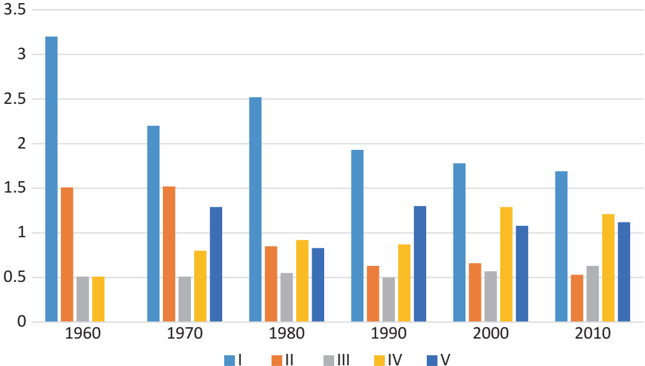
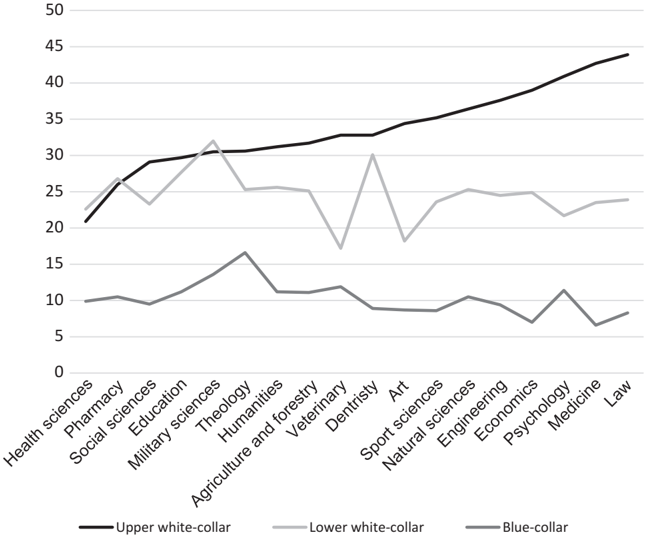
Verification
Claims the paper makes
The claims and statistics of this paper haven’t been checked yet.
Run the check — free, no account needed. It reads the open-access text and checks the sources it cites.
Claims other papers make about this one
Each is checked against this paper’s own text: does it say what the citing paper says it does?
In the citing paper
“However, in Finland, the differences between universities are relatively small compared to many other countries (Kohvakka et al., 2019), so there are presumably no major university-specific differences in the background and experience of doctoral students.”
From Too stupid for PhD? Doctoral impostor syndrome among Finnish PhD students (2023) · cites this paper as Kohvakka et al., 2019
Self-check
Percentages, sums and reported differences re-computed from the paper’s own numbers.
The self-check needs the paper’s full text.
Citations
Cites
Brubaker, R., & Cooper, F. (2000) · Theory and Society · doi:10.1023/a:1007068714468 · Cited by 3,139
Research works printed but not linked: 54
- Aarrevaara, T., Dobson, I. R., & Elander, C. (2009). Brave New World: Higher Education Reform in Finland. Higher Education Management and Policy, 21(2), 2–18. · DOI
- Ahola, S. (1995). Eliitin yliopistosta massojen korkeakoulutukseen. Korkeakoulutuksen muuttuva asema yhteiskunnallisen valikoinnin järjestelmänä [From Elite to Mass Higher Education. Changing Structures of Selection in Finnish Higher Education]. Turku: Turun yliopiston koulutussosiologian tutkimuskeskuksen raportti n:o 30.
- Alestalo, M., Hort, S. E. O., & Kuhnle, S. (2009). The Nordic Model: Conditions, Origins, Outcomes, Lessons. Berlin: Hertie School of Governance.
- Allardt, E. (2000). Yhteiskuntatieteet [Social Sciences]. In P. Tommila & A. Tiitta (Eds.), Suomen tieteen historia 2: Humanistiset ja yhteiskuntatieteet [History of Finnish Science, Part 2: Humanities and Social Sciences] (pp. 477–535). Porvoo: WSOY.
- Brenner, N. (2004). Urban Governance and the Production of New State Spaces in Western Europe, 1960–2000. Review of International Political Economy, 11(3), 447–488. · DOI
- Dahllöf, U. (1994). A Short Introduction to the Nordic Scene. In U. Dahllöf & S. Selander (Eds.), New Universities and Regional Context (pp. 207–211). Uppsala: Uppsala University.
- Degn, L., & Sørensen, M. P. (2015). From Collegial Governance to Conduct of Conduct: Danish Universities Set Free in the Service of the State. Higher Education, 69(6), 931–946. · DOI
- Demographic Statistics of Finland, years 1960–2010. · DOI
- Dhondt, P., & Nevala, A. (2015). The Typical Dilemma Between University Expansion and Rationalization: Belgium (and Finland) Since the 1960s. Kasvatus & Aika, 9(3), 21–36.
- Erikson, R., & Jonsson, J. O. (1996). Can Education Be Equalized? The Swedish Case in Comparative Perspective. Boulder, CO: Westview Press.
- Giddens, A. (1985). The Nation State and Violence. Cambridge: Polity Press.
- Giulianotti, R., Itkonen, H., Nevala, A., & Salmikangas, A.-K. (2017). Sport and Civil Society in the Nordic Region. Sport in Society. https://doi.org/10.1080/17430437.2017.1390906. · DOI
- Haltia, N., Jauhiainen, A., & Isopahkala-Bouret, U. (2017). Ei-ylioppilastaustaiset korkeakouluopiskelijat [Non-upper Secondary School Graduates in Higher Education]. Helsinki: Opetus- ja kulttuuriministeriö.
- Hansen, H. (1990). Implementation of Modernization: Paradoxes in the Public Control of Higher Educational Institutions—The Case of Denmark. Scandinavian Political Studies, 13(1), 37–56. · DOI
- Harrison, J., Smith, D. P., & Kinton, C. (2017). Relational Regions in ‘in the Making’: Institutionalizing New Regional Geographies of Higher Education. Regional Studies, 51(7), 1020–1034. · DOI
- Harvey, D. A. (2005). Brief History of Neo-Liberalism. Oxford: Oxford University Press. · DOI · Paper page
- Heiskala, R., & Hämäläinen, T. J. (2007). Social Innovation or Hegemonic Change? Rapid Paradigm Change in Finland in the 1980s and 1990s. In T. J. Hämäläinen & R. Heiskala (Eds.), Social Innovations, Institutional Change and Economic Performance. Making Sense of Structural Adjustment Processes in Industrial Sectors, Regions and Societies (pp. 80–94). Cheltenham: Edward Elgar.
- Hölttä, S. (1999). Regional Cooperation in Postsecondary Education in Europe—The Case of Nordic Countries. Journal of Institutional Research in Australasia, 8(2), 31–46.
- Husso, K., & Raento, P. (2002). Science Policy and Research in Finland. Fennia—International Journal of Geography, 180(1–2), 261–274.
- Jalava, M. (2012). The University in the Making of the Welfare State. The 1970s Degree Reform in Finland. Frankfurt am Main: Peter Lang.
- Kettunen, P. (2012, November 1–4). The Conceptualization of the Social in the Making of a Welfare State—Finland as a Nordic Case. Science History Association Conference, Vancouver.
- Kivinen, O., & Rinne, R. (1995). The Social Inheritance of Education. Equality of Educational Opportunity Among Young People in Finland. Helsinki: Statistics Finland.
- Kivinen, O., Hedman, J., & Kaipainen, P. (2012). Koulutusmahdollisuuksien yhdenvertaisuus Suomessa. Eriarvoisuuden uudet ja vanhat muodot [Equality of Schooling Possibilities in Finland. New and Old Modes of Inequality]. Yhteiskuntapolitiikka, 77(5), 579–586.
- Kogan, M., & Bauer, M. (2000). Higher Education Policies. Historical Overview. In M. Kogan, M. Bauer, I. Bleiklie, & M. Henkel (Eds.), Transforming Higher Education. A Comparative Study (pp. 37–54). London: Jessica Kingsley.
- Kohvakka, M. (2015). The Scalar Logics of Universities as Part of Statehood Transformation in Finland, 1970–1990. Fennia—International Journal of Geography, 193(1), 117–133.
- Koselleck, R. (2002). The Practice of Conceptual History: Timing History, Spacing Concepts. Stanford: Stanford University Press. · DOI
- Kyvik, S. (2004). Structural Changes in Higher Education Systems in Western Europe. Higher Education in Europe, 29(3), 393–409. · DOI
- Michelsen, K.-E. (1994). Lappeenrannan teknillinen korkeakoulu 1969–1994 [Lappeenranta University of Technology 1969–1994]. Lappeenranta: Lappeenrannan teknillinen korkeakoulu.
- Ministry of Education. (1991). Koulutuksen ja korkeakouluissa harjoitettavan tutkimuksen kehittämissuunnitelma vuosille 1991–1996 [Development Plan for Education and Research Conducted in Universities 1991–1996]. Helsinki: Ministry of Education.
- Ministry of Education. (1996). Koulutus ja tutkimus 2000. Koulutuksen ja korkeakouluissa harjoitettavan tutkimuksen kehittämissuunnitelma vuosille 1995–2000 [Education and Research 2000. Development Plan for Education and Research Conducted in Universities 1991–1996]. Helsinki: Ministry of Education.
- Ministry of Education and Culture. (2016). Valmiina valintoihin. Ylioppilastutkinnon parempi hyödyntäminen korkeakoulujen opiskelijavalinnoissa [Ready for Admissions. Making Better Use of the Matriculation Examination in Student Admissions]. Helsinki: Publications of the Ministry of Education and Culture.
- Moisio, S. (2012). Valtio, alue, politiikka. Suomen tilasuhteiden sääntely toisesta maailmansodasta nykypäivään [State, Region, Politics. The Regulation of Spatial Relations in Finland from the Second World War to the Present]. Tampere: Vastapaino.
- Moisio, S., & Leppänen, L. (2007). Towards a Nordic Competition State? Politico-Economic Transformation of Statehood in Finland, 1965–2005. Fennia—International Journal of Geography, 185(2), 63–87.
- Moisio, S., Kohvakka, M., & Norola, M. (2018) Kaupungin ja yliopiston vuorovaikutus Suomessa [City-University Interaction in Finland]. Hallinnon tutkimus, 37(1), 22–36.
- Nevala, A. (1999). Korkeakouluksen kasvu, lohkoutuminen ja eriarvoisuus Suomessa [Growth, Fragmentation and Inequality in Higher Education in Finland]. Helsinki: SKS.
- Nevala, A., & Nori, H. (2017). Osallisuuden vanhat ja uudet jakolinjat. Yliopisto-opiskelijoiden sosioekonomisen taustan muutokset ja koulutuksellinen tasa-arvo [Old and New Dividing Lines of Involvement. Changes in the Socio-economic Background of University Students and Educational Equality]. In A. Toom, M. Rautiainen, & J. Tähtinen (Eds.), Toiveet ja todellisuus—kasvatus osallisuutta ja oppimista rakentamassa [Hopes and Reality—Growth in Building Involvement and Learning]. Jyväskylä: Suomen kasvatustieteellinen seura.
- Nevala, A., & Rinne, R. (2012). Korkeakoulutuksen muodonmuutos [Changing Higher Education]. In P. Kettunen & H. Simola (Eds.), Tiedon ja osaamisen Suomi. Kasvatus ja koulutus Suomessa 1960-luvulta 2010-luvulle [Knowledge and Expertise in Finland. Education and Training in Finland from the 1960s to 2000s] (pp. 203–228). Helsinki: SKS.
- Nokkala, T., & Välimaa, J. (2017). Finnish Mergers: Change in the Context of Continuity. In H. de Boer, J. File, J. Huisman, M. Seeber, M. Vukasovic, & D. F. Westerheijden (Eds.), Policy Analysis of Structural Reforms in Higher Education: Processes and Outcomes (pp. 225–244). Cham: Palgrave Macmillan. · DOI
- Nori, H. (2018). Kiipijöitä ja Uusintajia—Keitä ovat 2010-luvun yliopisto-opiskelijat? [Who are the university students of the 2010s?]. In R. Rinne, N. Haltia, S. Lempinen, & T. Kaunisto (Eds.), Eriarvoistuva maailma—tasa-arvoistava koulu? [Unequalising World—Equalising School?] (pp. 205–222). Jyväskylä: Kasvatusalan tutkimuksia.
- Pihkala, E. (2000). Taloustieteet [Economics]. In P. Tommila & A. Tiitta (Eds.), Suomen tieteen historia 2: Humanistiset ja yhteiskuntatieteet [History of Finnish Science, Part 2: Humanities and Social Sciences] (pp. 536–611). Porvoo: WSOY.
- Rinne, R. (2012). The Nordic University Model from a Comparative and Historical Perspective. In J. Kauko, R. Rinne, & H. Kynkäänniemi (Eds.), Restructuring the Truth of Schooling—Essays on Discursive Practices in the Sociology and Politics of Education (pp. 85–112). Jyväskylä: Finnish Education Research Association.
- Rose, N. (1999). Powers of Freedom. Reframing Political Thought. Cambridge: Cambridge University Press. · DOI
- Saari, J., Aarnio, L., & Rytkönen, M. (2015). Kolme näkökulmaa koulutuksen valikoivuuteen: Nuorten koulutusvalinnat tilastojen ja kertomusten valossa [Three Perspectives on the Selectivity of Schooling: Young People’s Study Choices in the Light of Statistics and Narratives]. Helsinki: Opiskelun ja koulutuksen tutkimussäätiö.
- Saari, J., Inkinen, A., & Mikkonen, J. (2016). Korkeakoulutuksen alueellinen tasa-arvo ja segregaatio [Regional Equality and Segregation of Higher Education]. Helsinki: Opiskelun ja koulutuksen tutkimussäätiö.
- Salminen, H., & Ylä-Anttila, P. (2010). Ammattikorkeakoulujen taloudellisen ja hallinnollisen aseman uudistaminen [Renewal of the Economic and Administrative Status of Polytechnics]. Helsinki: Opetus- ja kulttuuriministeriö.
- Science Policy Council of Finland. (1973). Suomen tiedepolitiikan suuntaviivat 1970-luvulla [Guidelines for Finnish Science Policy in the 1970s]. Helsinki: Valtion tiedeneuvosto.
- Taylor, P. J. (1996). Embedded Statism and the Social Sciences: Opening up to New Spaces. Environment and Planning A, 28(11), 1917–1932. · DOI
- Thomsen, J.-P., Bertilsson, E., Dalberg, T., Hedman, J., & Helland, H. (2017). Higher Education Participation in the Nordic Countries 1985–2010—A Comparative Perspective. European Sociological Review, 33(1), 98–111.
- Trow, M. (1974). Problems in the Transition from Elite to Mass Higher Education. In Policies for Higher Education (pp. 51–104). Paris: OECD.
- Välimaa, J. (2005). Social Dynamics of Higher Education Reforms: The Case Finland. In Å. Gornitzka, M. Kogan, & A. Amaral (Eds.), Reform and Change in Higher Education (pp. 245–268). Dordrecht: Springer. · DOI
- Välimaa, J. (2018). Opinteillä oppineita. Suomalainen korkeakoulutus keskiajalta 2000-luvulle [Finnish Higher Education from the Middle Ages to the 2000s]. Jyväskylä: University Press of Eastern Finland.
- Välimaa, J., & Neuvonen-Rauhala, M.-L. (2008). Polytechnics in Finnish Higher Education. In J. S. Taylor, J. Brites-Ferreira, M. de Lourdes Machado, & R. Santiago (Eds.), Non-university Higher Education in Europe (pp. 77–98). Dordrecht: Springer. · DOI
- Vartiainen, P. (2017). Campus-Based Tensions in the Structural Development of a Newly Merged University: The Case of the University of Eastern Finland. Tertiary Education and Management, 23(1), 53–68. · DOI
- Willems, N., & de Beer, P. (2012). Three Worlds of Educational States? Journal of European Social Policy, 22(2), 105–117. · DOI
Cited by
Sorted by citations
Too stupid for PhD? Doctoral impostor syndrome among Finnish PhD students
Nori, H., & Vanttaja, M. (2023) · Higher Education · doi:10.1007/s10734-022-00921-w · Cited by 73
Self-citation
Metadata
- Authors
- Kohvakka, M., Nevala, A., & Nori, H.
- Venue
- The Responsible University
- Publisher
- Springer International Publishing
- Published
- 2019
- Pages
- 33-60
- Cited by
- 9
- References
- 1
- Language
- en
About these checks
Registry, retraction, Cites and statistics results are computed, not judged, with one exception: a printed reference that no index lists is read once by a model before it counts as a citation error. Claims are extracted by a model and kept only when their quote appears verbatim in the text; each cited source is then checked, with a model’s help, for whether it says what the claim relies on. Those verdicts can be wrong — read the claim’s quote and the cited source before relying on one.
Statistics and arithmetic are recomputed, not judged.
Confidence bands are shown only for fields calibrated on our annotated test set. None is calibrated yet, so no band is shown.
What counts as a claim ›How we measure confidence ›How we check this ›
Are you an author, or do you see a problem with this page? Request a review
