

Native incretins prevent the development of atherosclerotic lesions in apolipoprotein E knockout mice
Open accessThe DOI matches its Crossref record; 25 of the 25 references it cites were found in a registry or an index.
Abstract
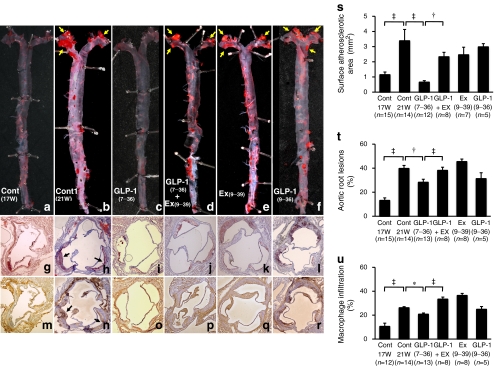
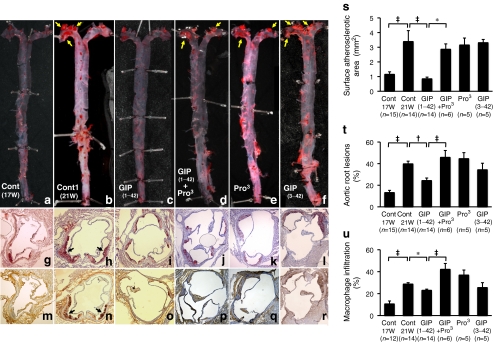
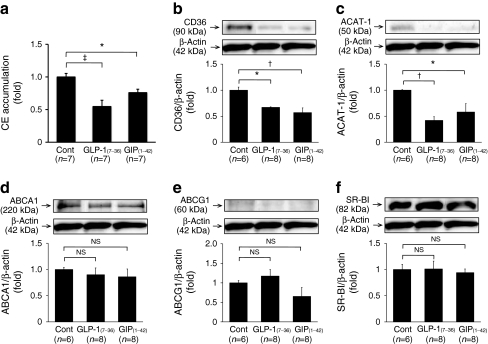
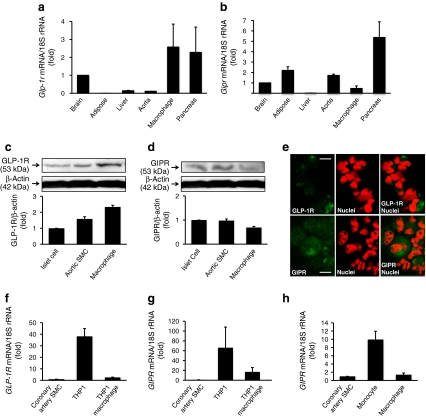
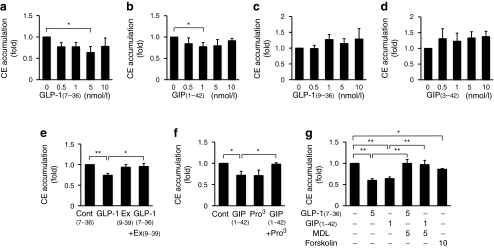
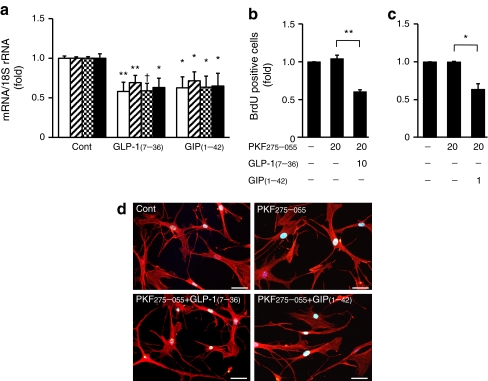
AIMS/HYPOTHESIS: Several lines of evidence suggest that incretin-based therapies suppress the development of cardiovascular disease in type 2 diabetes. We investigated the possibility that glucagon-like peptide-1 (GLP-1) and glucose-dependent insulinotropic polypeptide (GIP) can prevent the development of atherosclerosis in Apoe (-/-) mice. METHODS: Apoe (-/-) mice (17 weeks old) were administered GLP-1(7-36)amide, GLP-1(9-36)amide, GIP(1-42) or GIP(3-42) for 4 weeks. Aortic atherosclerosis, oxidised LDL-induced foam cell formation and related gene expression in exudate peritoneal macrophages were determined. RESULTS: Administration of GLP-1(7-36)amide or GIP(1-42) significantly suppressed atherosclerotic lesions and macrophage infiltration in the aortic wall, compared with vehicle controls. These effects were cancelled by co-infusion with specific antagonists for GLP-1 and GIP receptors, namely exendin(9-39) or Pro(3)(GIP). The anti-atherosclerotic effects of GLP-1(7-36)amide and GIP(1-42) were associated with significant decreases in foam cell formation and downregulation of CD36 and acyl-coenzyme A:cholesterol acyltransferase-1 (ACAT-1) in macrophages. GLP-1 and GIP receptors were both detected in Apoe (-/-) mouse macrophages. Ex vivo incubation of macrophages with GLP-1(7-36)amide or GIP(1-42) for 48 h significantly suppressed foam cell formation. This effect was wholly abolished in macrophages pretreated with exendin(9-39) or (Pro(3))GIP, or with an adenylate cyclase inhibitor, MDL12,330A, and was mimicked by incubation with an adenylate cyclase activator, forskolin. The inactive forms, GLP-1(9-36)amide and GIP(3-42), had no effects on atherosclerosis and macrophage foam cell formation. CONCLUSIONS/INTERPRETATION: Our study is the first to demonstrate that active forms of GLP-1 and GIP exert anti-atherogenic effects by suppressing macrophage foam cell formation via their own receptors, followed by cAMP activation. Molecular mechanisms underlying these effects are associated with the downregulation of CD36 and ACAT-1 by incretins.
Overview
The claims and statistics of this paper haven’t been checked yet.
Free: it reads the open-access text and checks the first 5 claims that cite a source we can check. Create a free account to check every claim.
Integrity signals
Registry
Cites
Statistics
Figures
Verification
Claims the paper makes
The claims and statistics of this paper haven’t been checked yet.
Free: it reads the open-access text and checks the first 5 claims that cite a source we can check. Create a free account to check every claim.
Claims other papers make about this one
Each is checked against this paper’s own text: does it say what the citing paper says it does?
The cited source says what the claim attributes to it.
In the citing paper
“GIPR agonism further promotes bone formation [40], has beneficial effects in animal models for atherosclerosis [41–43] and neurodegenerative diseases [44, 45], and decreases body weight in obese rodents via inhibition of food intake [46, 47].”
From Dual and Triple Incretin-Based Co-agonists: Novel Therapeutics for Obesity and Diabetes (2024) · cites this paper as [42]
Self-check
Percentages, sums and reported differences re-computed from the paper’s own numbers.
The self-check needs the paper’s full text.
Citations
Cites
The biology of incretin hormones
Drucker, D. J. (2006) · Cell Metabolism · doi:10.1016/j.cmet.2006.01.004 · Cited by 2,210 · cited 5×
“Both GLP-1 and GIP are rapidly metabolised via enzymatic degradation by the dipeptidyl peptidase-4 (DPP-4) [2].”
InfluentialThe role of incretins in glucose homeostasis and diabetes treatment
Kim, W., & Egan, J. M. (2008) · Pharmacological Reviews · doi:10.1124/pr.108.000604 · Cited by 824 · cited 4×
“Several lines of evidence suggest that GLP-1 and its receptor agonists, but not GIP, have vasoprotective effects [1, 2].”
InfluentialNyström, T., Gutniak, M. K., Zhang, Q., Zhang, F., Holst, J. J., Ahrén, B., & Sjöholm, Å. (2004) · American Journal of Physiology-Endocrinology and Metabolism · doi:10.1152/ajpendo.00237.2004 · Cited by 680
Arakawa, M., Mita, T., Azuma, K., Ebato, C., Goto, H., Nomiyama, T., Fujitani, Y., Hirose, T., Kawamori, R., & Watada, H. (2010) · Diabetes · doi:10.2337/db09-1694 · Cited by 548 · cited 3×
“[5] reported that exendin-4 suppresses the lipopolysaccharide-induced mRNA expression of TNF-α (also known as TNF) and MCP1 via the cAMP/PKA pathway.”
Kodera, R., Shikata, K., Kataoka, H. U., Takatsuka, T., Miyamoto, S., Sasaki, M., Kajitani, N., Nishishita, S., Sarai, K., Hirota, D., et al. (2011) · Diabetologia · doi:10.1007/s00125-010-2028-x · Cited by 394 · cited 1×
“Exendin-4 suppresses high glucose-induced TNF-α and IL- 1β levels in THP1 cells, and TNF-α-induced ICAM-1 production in human glomerular microvascular endothelial cells [ 18 ].”
BackgroundOeseburg, H., de Boer, R. A., Buikema, H., van der Harst, P., van Gilst, W. H., & Silljé, H. H. W. (2010) · Arteriosclerosis, Thrombosis, and Vascular Biology · doi:10.1161/atvbaha.110.206425 · Cited by 267 · cited 1×
“GLP-1 and exendin-4 have a protective effect on oxidative stress-induced DNA damage in HUVECs [17].”
Feng, J., Han, J., Pearce, S. F. A., Silverstein, R. L., Gotto, A. M., Hajjar, D. P., & Nicholson, A. C. (2000) · Journal of Lipid Research · doi:10.1016/s0022-2275(20)32377-4 · Cited by 241
Liu, H., Dear, A. E., Knudsen, L. B., & Simpson, R. W. (2009) · Journal of Endocrinology · doi:10.1677/joe-08-0468 · Cited by 187 · cited 1×
“Liraglutide, a long-acting GLP-1R agonist, and vildagliptin, a DPP-4 inhibitor, attenuate production of plasminogen activator inhibitor 1 (PAI-1) and vascular cell adhesion molecule-1 (VCAM-1) in vascular cells [7, 8].”
GIP and GLP-1 as incretin hormones: lessons from single and double incretin receptor knockout mice
Hansotia, T., & Drucker, D. J. (2005) · Regulatory Peptides · doi:10.1016/j.regpep.2004.07.019 · Cited by 183 · cited 2×
“The effect of GIP on the cardiovascular system is largely unknown, although GIP receptors (GIPR) have been detected in vascular tissues [4].”
Impact of Salusin-α and -β on Human Macrophage Foam Cell Formation and Coronary Atherosclerosis
Watanabe, T., Nishio, K., Kanome, T., Matsuyama, T.-A., Koba, S., Sakai, T., Sato, K., Hongo, S., Nose, K., Ota, H., et al. (2008) · Circulation · doi:10.1161/circulationaha.107.712539 · Cited by 130 · cited 1×
“Human peripheral mononuclear cells were isolated from the blood of six healthy volunteers (four men, two women, age 25±2 years) as described previously [10, 15].”
Self-citationGoto, H., Nomiyama, T., Mita, T., Yasunari, E., Azuma, K., Komiya, K., Arakawa, M., Jin, W. L., Kanazawa, A., Kawamori, R., et al. (2011) · Biochemical and Biophysical Research Communications · doi:10.1016/j.bbrc.2010.12.131 · Cited by 127 · cited 1×
“Exendin-4, a GLP-1R agonist, suppresses monocytic adhesion to the aortic wall and aortic smooth muscle cell (SMC) proliferation [5, 6 ]. Liraglutide, a long-acting GLP-1R agonist, and vildagliptin, a DPP-4 inhibitor, attenuate production of plasminogen activator inhibitor 1 (PAI-1) and vascular cell adhesion molecule-…”
BackgroundHuman Urotensin II Accelerates Foam Cell Formation in Human Monocyte-Derived Macrophages
Watanabe, T., Suguro, T., Kanome, T., Sakamoto, Y.-I., Kodate, S., Hagiwara, T., Hongo, S., Hirano, T., Adachi, M., & Miyazaki, A. (2005) · Hypertension · doi:10.1161/01.hyp.0000184226.99196.b5 · Cited by 108 · cited 3×
“Previous studies have shown that CD36 and ACAT-1 levels were unrelated to cAMP and PKA [20–22], but related to PI3K, PKC and ERK [23, 24].”
Self-citationThe monocyte/macrophage as a therapeutic target in atherosclerosis
Saha, P., Modarai, B., Humphries, J., Mattock, K., Waltham, M., Burnand, K. G., & Smith, A. (2009) · Current Opinion in Pharmacology · doi:10.1016/j.coph.2008.12.017 · Cited by 105 · cited 10×
“Cell protein (30 μg aliquots) was separated by 10% SDS-PAGE and subjected to immunoblotting with the following antibodies: rabbit polyclonal antibody against human ACAT-1 ( .”
InfluentialMatsui, T., Nishino, Y., Takeuchi, M., & Yamagishi, S. (2011) · Pharmacological Research · doi:10.1016/j.phrs.2011.02.003 · Cited by 103 · cited 1×
“Exendin-4, a GLP-1R agonist, suppresses monocytic adhesion to the aortic wall and aortic smooth muscle cell (SMC) proliferation [5, 6]. Liraglutide, a long-acting GLP-1R agonist, and vildagliptin, a DPP-4 inhibitor, attenuate production of plasminogen activator inhibitor 1 (PAI-1) and vascular cell adhesion molecule-1…”
BackgroundZhang, J., Tokui, Y., Yamagata, K., Kozawa, J., Sayama, K., Iwahashi, H., Okita, K., Miuchi, M., Konya, H., Hamaguchi, T., et al. (2007) · Diabetologia · doi:10.1007/s00125-007-0737-6 · Cited by 84 · cited 1×
“The doses for the incretin infusions in the present study were the same as those usually used in studies by others [ 11 , 12].”
ResultLeptin modulates ACAT1 expression and cholesterol efflux from human macrophages
Hongo, S., Watanabe, T., Arita, S., Kanome, T., Kageyama, H., Shioda, S., & Miyazaki, A. (2009) · American Journal of Physiology-Endocrinology and Metabolism · doi:10.1152/ajpendo.90369.2008 · Cited by 75 · cited 3×
“Previous studies have shown that CD36 and ACAT-1 levels were unrelated to cAMP and PKA [20–22], but related to PI3K, PKC and ERK [23, 24].”
Self-citationIntact Glucagon-like Peptide-1 Levels are not Decreased in Japanese Patients with Type 2 Diabetes
LEE, S., YABE, D., NOHTOMI, K., TAKADA, M., MORITA, R., SEINO, Y., & HIRANO, T. (2010) · Endocrine Journal · doi:10.1507/endocrj.k09e-269 · Cited by 73 · cited 1×
“The increased plasma levels of GLP-1 and GIP are comparable to the average physiological concentrations of incretins after a meal tolerance test in humans [25].”
Self-citationPreventive Effects of Heregulin-β 1 on Macrophage Foam Cell Formation and Atherosclerosis
Xu, G., Watanabe, T., Iso, Y., Koba, S., Sakai, T., Nagashima, M., Arita, S., Hongo, S., Ota, H., Kobayashi, Y., et al. (2009) · Circulation Research · doi:10.1161/circresaha.109.193870 · Cited by 65 · cited 7×
“It is decreased by the efflux of non-esterified cholesterol mediated by ATP-binding cassette transporter (ABC) A1, ABCG1 or scavenger receptor class B type I (SR-BI) [10].”
BackgroundMethodInfluentialSelf-citationNagashima, M., Watanabe, T., Shiraishi, Y., Morita, R., Terasaki, M., Arita, S., Hongo, S., Sato, K., Shichiri, M., Miyazaki, A., et al. (2010) · Atherosclerosis · doi:10.1016/j.atherosclerosis.2010.04.027 · Cited by 59
Self-citationMcClean, P. L., Irwin, N., Hunter, K., Gault, V. A., & Flatt, P. R. (2008) · British Journal of Pharmacology · doi:10.1038/bjp.2008.317 · Cited by 49 · cited 2×
“The doses for the incretin infusions in the present study were the same as those usually used in studies by others [11, 12].”
Murthy, S. N., Hilaire, R. S., Casey, D. B., Badejo, A. M., McGee, J., McNamara, D. B., Kadowitz, P. J., & Fonseca, V. A. (2010) · Diabetes and Vascular Disease Research · doi:10.1177/1479164109360269 · Cited by 33 · cited 1×
“Exenatide (synthetic exendin-4) reduces intimal hyperplasia in balloon-injured carotid arteries of insulinresistant Zucker fatty rats [19].”
BackgroundShiraishi, Y., Watanabe, T., Suguro, T., Nagashima, M., Kato, R., Hongo, S., Itabe, H., Miyazaki, A., Hirano, T., & Adachi, M. (2008) · Journal of Hypertension · doi:10.1097/hjh.0b013e32830b61d8 · Cited by 30 · cited 6×
“After 1 h incubation at 37°C in 5% CO2 to allow adhesion, the medium was discarded to remove non-adherent cells [13, 14].”
InfluentialSelf-citationOkutsu, R., Yoshikawa, T., Nagasawa, M., Hirose, Y., Takase, H., Mitani, K., Okada, K., Miyakoda, G., & Yabuuchi, Y. (2008) · Atherosclerosis · doi:10.1016/j.atherosclerosis.2008.10.042 · Cited by 23 · cited 1×
“Previous studies have shown that CD36 and ACAT-1 levels were unrelated to cAMP and PKA [20–22], but related to PI3K, PKC and ERK [23, 24].”
Palmieri, F. E., & Ward, P. E. (1989) · Advances in experimental medicine and biology · doi:10.1007/978-1-4615-9543-4_45 · Cited by 19 · cited 1×
“The cells were incubated for 29 h with GLP-1(7–36)amide or GIP(1–42) along with PKF275-055 in order to prevent degradation of incretins, as DDP-4 activity is far higher in aortic SMCs than in aortic endothelial cells [16].”
Cyclic AMP and the regulation of cholesterol metabolism
Botham, K. M. (1992) · Biochemical Society Transactions · doi:10.1042/bst0200454 · Cited by 14 · cited 1×
“Previous studies have shown that CD36 and ACAT-1 levels were unrelated to cAMP and PKA [20–22], but related to PI3K, PKC and ERK [23, 24].”
Cited by
GLP-1 receptor agonists in the treatment of type 2 diabetes - state-of-the-art
Nauck, M. A., Quast, D. R., Wefers, J., & Meier, J. J. (2021) · Molecular Metabolism · doi:10.1016/j.molmet.2020.101102 · Cited by 1,647
“, GLP-1 [148,149] and liraglutide [150]) and reduces caspase-mediated apoptosis of foam cells (e.”
BackgroundResearch Progress on the Relationship between Atherosclerosis and Inflammation
Zhu, Y., Xian, X., Wang, Z., Bi, Y., Chen, Q., Han, X., Tang, D., & Chen, R. (2018) · Biomolecules · doi:10.3390/biom8030080 · Cited by 872
“Glucagon-like peptide-1 with its receptor (GLP-1R) suppress exudate peritoneal macrophage foam cell formation induced by oxLDL [76].”
BackgroundYu, X.-H., Fu, Y.-C., Zhang, D.-W., Yin, K., & Tang, C.-K. (2013) · Clinica Chimica Acta · doi:10.1016/j.cca.2013.06.006 · Cited by 768
Mechanisms of foam cell formation in atherosclerosis
Chistiakov, D. A., Melnichenko, A. A., Myasoedova, V. A., Grechko, A. V., & Orekhov, A. N. (2017) · Journal of Molecular Medicine · doi:10.1007/s00109-017-1575-8 · Cited by 742
“Dipeptidylpeptidase 4 (DPP4) is involved in proteolysis of GLP-1 [81].”
The Cardiovascular Biology of Glucagon-like Peptide-1
Drucker, D. J. (2016) · Cell Metabolism · doi:10.1016/j.cmet.2016.06.009 · Cited by 665
Metadata
- Authors
- Nagashima, M., Watanabe, T., Terasaki, M., Tomoyasu, M., Nohtomi, K., Kim-Kaneyama, J., Miyazaki, A., & Hirano, T.
- Affiliations
- SHOWA Medical University (JP)
- Tokyo University of Pharmacy and Life Sciences (JP)
- Corresponding author
- Hirano, T.
- Venue
- Diabetologia
- Published
- 2011-07-24
- Volume
- 54
- Issue
- 10
- Pages
- 2649-2659
- ISSN
- 0012-186X (ISSN-L)
- 1432-0428
- PMC
- PMC3168747
- OpenAlex
- W2075567076
- Cited by
- 259
- References
- 25
- Citations by year
- 2026: 22 · 2025: 15 · 2024: 16 · 2023: 14 · 2022: 19 · 2021: 22 · 2020: 11 · 2019: 20 · 2018: 17 · 2017: 14 · 2016: 18 · 2015: 22 · 2014: 12 · 2013: 23 · 2012: 13
- FWCI
- 12.60
- Type
- journal article
- Language
- en
- Open access
- hybrid
- doi.org
- Licence
- cc-by-nc
- Locations
- Diabetologia (publishedVersion, cc-by-nc)
- Europe PMC (PubMed Central) (publishedVersion, cc-by-nc)
- PubMed Central (publishedVersion, cc-by-nc)
- PubMed (publishedVersion)
- Funders
- American Diabetes Association
- American Heart Association
- European Foundation for the Study of Diabetes
- Japan Society for the Promotion of Science (19-24, 22590831, 23591341)
- Topics
- Health Sciences › Medicine › Endocrinology, Diabetes and Metabolism › Diabetes Treatment and Management
- Life Sciences › Immunology and Microbiology › Immunology › Atherosclerosis and Cardiovascular Diseases
- Life Sciences › Biochemistry, Genetics and Molecular Biology › Biochemistry › Cholesterol and Lipid Metabolism
- Keywords
- incretins, glucagon-like peptide-1, glucose-dependent insulinotropic polypeptide, atherosclerosis, ApoE-deficient mice, foam cell formation, macrophages, oxidized LDL, CD36, ACAT1, GLP-1 receptor, GIP receptor, exendin-9-39, adenylate cyclase, type 2 diabetes, antiatherogenic effects
- MeSH terms
- Acetyl-CoA C-Acetyltransferase, Animals, Apolipoproteins E, Cell Line, Cells, Cultured, Foam Cells, Gastric Inhibitory Polypeptide, Humans, Male, Peptide Fragments, Peptides, Blotting, Western, Mice, Knockout, Microscopy, Confocal, CD36 Antigens, Atherosclerosis, Mice, Glucagon-Like Peptide 1, Incretins, Real-Time Polymerase Chain Reaction
About these checks
Registry, retraction, Cites and statistics results are computed, not judged, with one exception: a printed reference that no index lists is read once by a model before it counts as a citation error. Claims are extracted by a model and kept only when their quote appears verbatim in the text; each cited source is then checked, with a model’s help, for whether it says what the claim relies on. Those verdicts can be wrong — read the claim’s quote and the cited source before relying on one.
Statistics and arithmetic are recomputed, not judged.
Confidence bands are shown only for fields calibrated on our annotated test set. None is calibrated yet, so no band is shown.
What counts as a claim ›How we measure confidence ›How we check this ›
Are you an author, or do you see a problem with this page? Request a review
Data sources
Bibliographic data: Semantic Scholar, OpenAlex, Crossref.
Contains information from the Semantic Scholar Academic Graph Datasets, made available under the ODC Attribution License (ODC-BY 1.0).
Semantic Scholar’s data is described in: Kinney, R., et al. (2023). The Semantic Scholar Open Data Platform. arXiv:2301.10140.
