

Native incretins prevent the development of atherosclerotic lesions in apolipoprotein E knockout mice
Open accessThe DOI matches its Crossref record; 25 of the 25 references it cites were found in a registry or an index.
Abstract
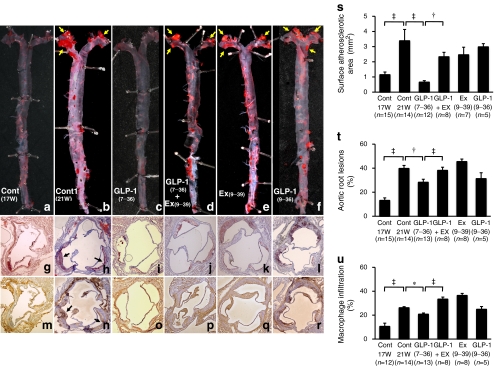
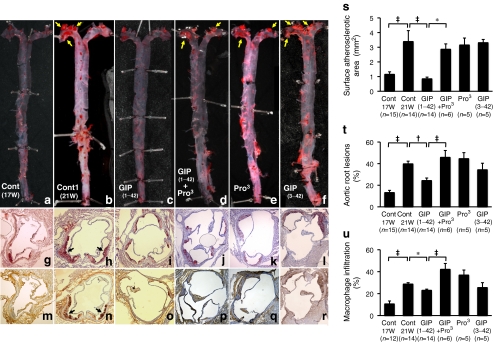
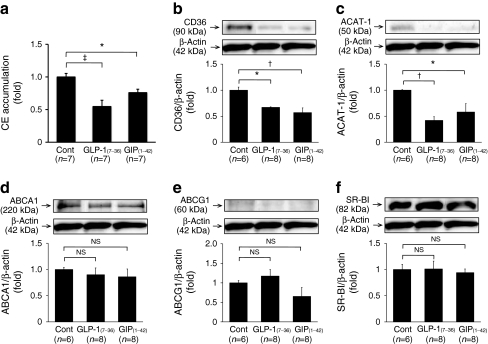
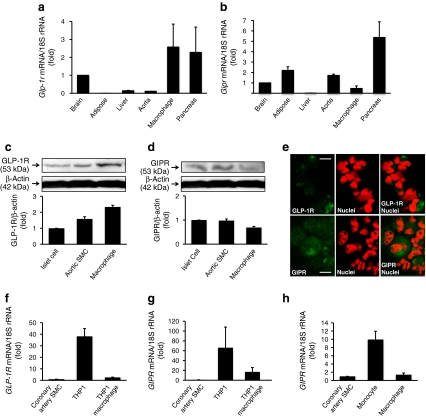
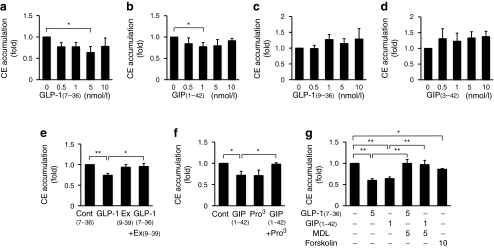
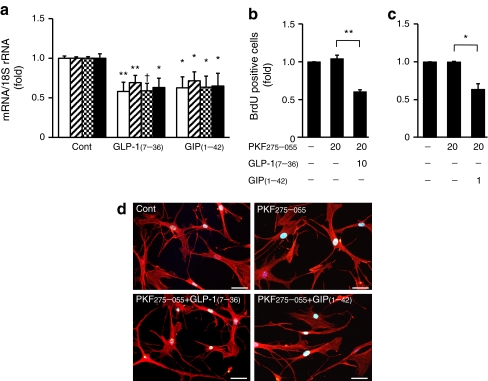
AIMS/HYPOTHESIS: Several lines of evidence suggest that incretin-based therapies suppress the development of cardiovascular disease in type 2 diabetes. We investigated the possibility that glucagon-like peptide-1 (GLP-1) and glucose-dependent insulinotropic polypeptide (GIP) can prevent the development of atherosclerosis in Apoe (-/-) mice. METHODS: Apoe (-/-) mice (17 weeks old) were administered GLP-1(7-36)amide, GLP-1(9-36)amide, GIP(1-42) or GIP(3-42) for 4 weeks. Aortic atherosclerosis, oxidised LDL-induced foam cell formation and related gene expression in exudate peritoneal macrophages were determined. RESULTS: Administration of GLP-1(7-36)amide or GIP(1-42) significantly suppressed atherosclerotic lesions and macrophage infiltration in the aortic wall, compared with vehicle controls. These effects were cancelled by co-infusion with specific antagonists for GLP-1 and GIP receptors, namely exendin(9-39) or Pro(3)(GIP). The anti-atherosclerotic effects of GLP-1(7-36)amide and GIP(1-42) were associated with significant decreases in foam cell formation and downregulation of CD36 and acyl-coenzyme A:cholesterol acyltransferase-1 (ACAT-1) in macrophages. GLP-1 and GIP receptors were both detected in Apoe (-/-) mouse macrophages. Ex vivo incubation of macrophages with GLP-1(7-36)amide or GIP(1-42) for 48 h significantly suppressed foam cell formation. This effect was wholly abolished in macrophages pretreated with exendin(9-39) or (Pro(3))GIP, or with an adenylate cyclase inhibitor, MDL12,330A, and was mimicked by incubation with an adenylate cyclase activator, forskolin. The inactive forms, GLP-1(9-36)amide and GIP(3-42), had no effects on atherosclerosis and macrophage foam cell formation. CONCLUSIONS/INTERPRETATION: Our study is the first to demonstrate that active forms of GLP-1 and GIP exert anti-atherogenic effects by suppressing macrophage foam cell formation via their own receptors, followed by cAMP activation. Molecular mechanisms underlying these effects are associated with the downregulation of CD36 and ACAT-1 by incretins.
Overview
The claims and statistics of this paper haven’t been checked yet.
Free: it reads the open-access text and checks the first 5 claims that cite a source we can check. Create a free account to check every claim.
Integrity signals
Registry
Cites
Statistics
Figures
Verification
Claims the paper makes
The claims and statistics of this paper haven’t been checked yet.
Free: it reads the open-access text and checks the first 5 claims that cite a source we can check. Create a free account to check every claim.
Claims other papers make about this one
Each is checked against this paper’s own text: does it say what the citing paper says it does?
The cited source says what the claim attributes to it.
In the citing paper
“GIPR agonism further promotes bone formation [40], has beneficial effects in animal models for atherosclerosis [41–43] and neurodegenerative diseases [44, 45], and decreases body weight in obese rodents via inhibition of food intake [46, 47].”
From Dual and Triple Incretin-Based Co-agonists: Novel Therapeutics for Obesity and Diabetes (2024) · cites this paper as [42]
Self-check
Percentages, sums and reported differences re-computed from the paper’s own numbers.
The self-check needs the paper’s full text.
Citations
Cites
The biology of incretin hormones
Drucker, D. J. (2006) · Cell Metabolism · doi:10.1016/j.cmet.2006.01.004 · Cited by 2,210 · cited 5×
“Both GLP-1 and GIP are rapidly metabolised via enzymatic degradation by the dipeptidyl peptidase-4 (DPP-4) [2].”
InfluentialThe role of incretins in glucose homeostasis and diabetes treatment
Kim, W., & Egan, J. M. (2008) · Pharmacological Reviews · doi:10.1124/pr.108.000604 · Cited by 824 · cited 4×
“Several lines of evidence suggest that GLP-1 and its receptor agonists, but not GIP, have vasoprotective effects [1, 2].”
InfluentialNyström, T., Gutniak, M. K., Zhang, Q., Zhang, F., Holst, J. J., Ahrén, B., & Sjöholm, Å. (2004) · American Journal of Physiology-Endocrinology and Metabolism · doi:10.1152/ajpendo.00237.2004 · Cited by 680
Arakawa, M., Mita, T., Azuma, K., Ebato, C., Goto, H., Nomiyama, T., Fujitani, Y., Hirose, T., Kawamori, R., & Watada, H. (2010) · Diabetes · doi:10.2337/db09-1694 · Cited by 548 · cited 3×
“[5] reported that exendin-4 suppresses the lipopolysaccharide-induced mRNA expression of TNF-α (also known as TNF) and MCP1 via the cAMP/PKA pathway.”
Kodera, R., Shikata, K., Kataoka, H. U., Takatsuka, T., Miyamoto, S., Sasaki, M., Kajitani, N., Nishishita, S., Sarai, K., Hirota, D., et al. (2011) · Diabetologia · doi:10.1007/s00125-010-2028-x · Cited by 394 · cited 1×
“Exendin-4 suppresses high glucose-induced TNF-α and IL- 1β levels in THP1 cells, and TNF-α-induced ICAM-1 production in human glomerular microvascular endothelial cells [ 18 ].”
BackgroundOeseburg, H., de Boer, R. A., Buikema, H., van der Harst, P., van Gilst, W. H., & Silljé, H. H. W. (2010) · Arteriosclerosis, Thrombosis, and Vascular Biology · doi:10.1161/atvbaha.110.206425 · Cited by 267 · cited 1×
“GLP-1 and exendin-4 have a protective effect on oxidative stress-induced DNA damage in HUVECs [17].”
Feng, J., Han, J., Pearce, S. F. A., Silverstein, R. L., Gotto, A. M., Hajjar, D. P., & Nicholson, A. C. (2000) · Journal of Lipid Research · doi:10.1016/s0022-2275(20)32377-4 · Cited by 241
Liu, H., Dear, A. E., Knudsen, L. B., & Simpson, R. W. (2009) · Journal of Endocrinology · doi:10.1677/joe-08-0468 · Cited by 187 · cited 1×
“Liraglutide, a long-acting GLP-1R agonist, and vildagliptin, a DPP-4 inhibitor, attenuate production of plasminogen activator inhibitor 1 (PAI-1) and vascular cell adhesion molecule-1 (VCAM-1) in vascular cells [7, 8].”
GIP and GLP-1 as incretin hormones: lessons from single and double incretin receptor knockout mice
Hansotia, T., & Drucker, D. J. (2005) · Regulatory Peptides · doi:10.1016/j.regpep.2004.07.019 · Cited by 183 · cited 2×
“The effect of GIP on the cardiovascular system is largely unknown, although GIP receptors (GIPR) have been detected in vascular tissues [4].”
Impact of Salusin-α and -β on Human Macrophage Foam Cell Formation and Coronary Atherosclerosis
Watanabe, T., Nishio, K., Kanome, T., Matsuyama, T.-A., Koba, S., Sakai, T., Sato, K., Hongo, S., Nose, K., Ota, H., et al. (2008) · Circulation · doi:10.1161/circulationaha.107.712539 · Cited by 130 · cited 1×
“Human peripheral mononuclear cells were isolated from the blood of six healthy volunteers (four men, two women, age 25±2 years) as described previously [10, 15].”
Self-citation
Cited by
GLP-1 receptor agonists in the treatment of type 2 diabetes - state-of-the-art
Nauck, M. A., Quast, D. R., Wefers, J., & Meier, J. J. (2021) · Molecular Metabolism · doi:10.1016/j.molmet.2020.101102 · Cited by 1,647
“, GLP-1 [148,149] and liraglutide [150]) and reduces caspase-mediated apoptosis of foam cells (e.”
BackgroundResearch Progress on the Relationship between Atherosclerosis and Inflammation
Zhu, Y., Xian, X., Wang, Z., Bi, Y., Chen, Q., Han, X., Tang, D., & Chen, R. (2018) · Biomolecules · doi:10.3390/biom8030080 · Cited by 872
“Glucagon-like peptide-1 with its receptor (GLP-1R) suppress exudate peritoneal macrophage foam cell formation induced by oxLDL [76].”
BackgroundYu, X.-H., Fu, Y.-C., Zhang, D.-W., Yin, K., & Tang, C.-K. (2013) · Clinica Chimica Acta · doi:10.1016/j.cca.2013.06.006 · Cited by 768
Mechanisms of foam cell formation in atherosclerosis
Chistiakov, D. A., Melnichenko, A. A., Myasoedova, V. A., Grechko, A. V., & Orekhov, A. N. (2017) · Journal of Molecular Medicine · doi:10.1007/s00109-017-1575-8 · Cited by 742
“Dipeptidylpeptidase 4 (DPP4) is involved in proteolysis of GLP-1 [81].”
The Cardiovascular Biology of Glucagon-like Peptide-1
Drucker, D. J. (2016) · Cell Metabolism · doi:10.1016/j.cmet.2016.06.009 · Cited by 665
Dysregulated lipid metabolism links NAFLD to cardiovascular disease
Deprince, A., Haas, J. T., & Staels, B. (2020) · Molecular Metabolism · doi:10.1016/j.molmet.2020.101092 · Cited by 554
“Moreover, GLP1 may prevent macrophage foam cell formation [186].”
BackgroundCardiovascular Biology of the Incretin System
Ussher, J. R., & Drucker, D. J. (2012) · Endocrine Reviews · doi:10.1210/er.2011-1052 · Cited by 530
“Moreover, administration of native GIP (25 nmol/kg d) via continuous infusion with osmotic mini-pumps prevented atherosclerotic lesion development and macrophage infiltration in the aortic wall of ApoE / mice (142).”
BackgroundInfluentialMacrophage‐mediated cholesterol handling in atherosclerosis
Chistiakov, D. A., Bobryshev, Y. V., & Orekhov, A. N. (2016) · Journal of Cellular and Molecular Medicine · doi:10.1111/jcmm.12689 · Cited by 510
“In contrast, glucagon-like peptide-1 (GLP-1) and glucose-dependent insulinotropic polypeptide (GIP) reduce ACAT1 levels through PKA-mediated pathway [81].”
BackgroundRakipovski, G., Rolin, B., Nøhr, J., Klewe, I., Frederiksen, K. S., Augustin, R., Hecksher-Sørensen, J., Ingvorsen, C., Polex-Wolf, J., & Knudsen, L. B. (2018) · JACC: Basic to Translational Science · doi:10.1016/j.jacbts.2018.09.004 · Cited by 509
“In line with our findings, continuous infusion of native GLP-1 at weightneutral doses in ApoE / mice lowered the amount of atherosclerotic lesions accompanied with reduced macrophage infiltration in the vasculature (24).”
ResultMolecular Biology of Atherosclerosis
Hopkins, P. N. (2013) · Physiological Reviews · doi:10.1152/physrev.00004.2012 · Cited by 459
Cardiovascular Actions of Incretin-Based Therapies
Ussher, J. R., & Drucker, D. J. (2014) · Circulation Research · doi:10.1161/circresaha.114.301958 · Cited by 358
“Endothelial cells and macrophages may also express the GIP receptor.(105,110,111) The available data on the cardiovascular importance of GIP alone, or as a cardioactive substrate mediating the actions of DPP-4 inhibitors, are limited.”
BackgroundPanjwani, N., Mulvihill, E. E., Longuet, C., Yusta, B., Campbell, J. E., Brown, T. J., Streutker, C., Holland, D., Cao, X., Baggio, L. L., et al. (2013) · Endocrinology · doi:10.1210/en.2012-1937 · Cited by 346
“Taspoglutide treatment of ApoE / mice The results of previous studies demonstrated that continuous GLP-1 or exendin-4 administration attenuated the development of atherosclerosis in normoglycemic ApoE / mice (7, 10).”
InfluentialHelmstädter, J., Frenis, K., Filippou, K., Grill, A., Dib, M., Kalinovic, S., Pawelke, F., Kus, K., Kröller-Schön, S., Oelze, M., et al. (2020) · Arteriosclerosis, Thrombosis, and Vascular Biology · doi:10.1161/atv.0000615456.97862.30 · Cited by 283
Trevaskis, J. L., Griffin, P. S., Wittmer, C., Neuschwander-Tetri, B. A., Brunt, E. M., Dolman, C. S., Erickson, M. R., Napora, J., Parkes, D. G., & Roth, J. D. (2012) · American Journal of Physiology-Gastrointestinal and Liver Physiology · doi:10.1152/ajpgi.00476.2011 · Cited by 277
“The presence of GLP-1R have been demonstrated on mouse macrophages in apolipoprotein E knockout mice and GLP-1 treatment attenuated foam cell formation, aortic infiltration of macrophages, and ultimately suppressed the development of atherosclerotic lesions (26).”
BackgroundSeino, Y., & Yabe, D. (2013) · Journal of Diabetes Investigation · doi:10.1111/jdi.12065 · Cited by 247
“These effects were significantly blocked by the GLP-1 antagonist, exendin (9-39)(120).”
BackgroundInfluentialNicholls, S. J., Bhatt, D. L., Buse, J. B., Prato, S. D., Kahn, S. E., Lincoff, A. M., McGuire, D. K., Nauck, M. A., Nissen, S. E., Sattar, N., et al. (2024) · American Heart Journal · doi:10.1016/j.ahj.2023.09.007 · Cited by 248
Beyond the pancreas: contrasting cardiometabolic actions of GIP and GLP1
Hammoud, R., & Drucker, D. J. (2023) · Nature Reviews Endocrinology · doi:10.1038/s41574-022-00783-3 · Cited by 244
“GLP1RAs also reduce plaque burden and aortic inflammation in mice with experimental atherosclerosis 127,128 .”
The expanding incretin universe: from basic biology to clinical translation
Drucker, D. J., & Holst, J. J. (2023) · Diabetologia · doi:10.1007/s00125-023-05906-7 · Cited by 243
“development of aortic inflammation and atherosclerosis [122, 123].”
Targeting Foam Cell Formation in Atherosclerosis: Therapeutic Potential of Natural Products
Wang, D., Yang, Y., Lei, Y., Tzvetkov, N. T., Liu, X., Yeung, A. W. K., Xu, S., & Atanasov, A. G. (2019) · Pharmacological Reviews · doi:10.1124/pr.118.017178 · Cited by 226
“, 2009)], incretins [via cyclic AMP (cAMP) activation (Nagashima et al., 2011)], and the vasoprotective gasotransmitter hydrogen sulfide (H2S) [via KATP/ERK1/2 pathway (Zhao et al.”
BackgroundMarsico, F., Paolillo, S., Gargiulo, P., Bruzzese, D., Dell’Aversana, S., Esposito, I., Renga, F., Esposito, L., Marciano, C., Dellegrottaglie, S., et al. (2020) · European Heart Journal · doi:10.1093/eurheartj/ehaa082 · Cited by 191
Zhong, J., Maiseyeu, A., Davis, S. N., & Rajagopalan, S. (2015) · Circulation Research · doi:10.1161/circresaha.116.305665 · Cited by 189
“Infusion of exendin-4 for 4 weeks reduces neointimal formation,(101) foam cells,(102) and atherosclerotic lesion size.(102,103) In support of a role for GLP-1 in DPP4-mediated effects, administration of antagonists to GLP-1 and GIP (exendin(9–39) and Pro(3) GIP) attenuated antiatherosclerotic effects of vildagliptin o…”
Gut intraepithelial T cells calibrate metabolism and accelerate cardiovascular disease
He, S., Kahles, F., Rattik, S., Nairz, M., McAlpine, C. S., Anzai, A., Selgrade, D., Fenn, A. M., Chan, C. T., Mindur, J. E., et al. (2019) · Nature · doi:10.1038/s41586-018-0849-9 · Cited by 167
Batchuluun, B., Inoguchi, T., Sonoda, N., Sasaki, S., Inoue, T., Fujimura, Y., Miura, D., & Takayanagi, R. (2014) · Atherosclerosis · doi:10.1016/j.atherosclerosis.2013.10.025 · Cited by 161
“Based on its various biological properties [12-15], incretin-based drugs aim to increase and maintain the concentration of GLP-1, such as using its analogs and inhibitors of DPP4, the enzyme that degrades GLP-1.”
BackgroundImmunobiology of Atherosclerosis: A Complex Net of Interactions
Herrero‐Fernández, B., Gómez-Bris, R., Somovilla-Crespo, B., & González, J. M. (2019) · International Journal of Molecular Sciences · doi:10.3390/ijms20215293 · Cited by 168
Mita, T., Katakami, N., Yoshii, H., Onuma, T., Kaneto, H., Osonoi, T., Shiraiwa, T., Kosugi, K., Umayahara, Y., Yamamoto, T., et al. (2016) · Diabetes Care · doi:10.2337/dc15-0781 · Cited by 152
“(35) demonstrated Table 4—Effects of alogliptin on markers of renal function, inflammation, and endothelial injury”
BackgroundTashiro, Y., Sato, K., Watanabe, T., Nohtomi, K., Terasaki, M., Nagashima, M., & Hirano, T. (2014) · Peptides · doi:10.1016/j.peptides.2013.12.015 · Cited by 149
Self-citationGaspari, T., Welungoda, I., Widdop, R. E., Simpson, R. W., & Dear, A. E. (2013) · Diabetes and Vascular Disease Research · doi:10.1177/1479164113481817 · Cited by 148
The effect of glucagon-like peptide 1 on cardiovascular risk
Sivertsen, J., Rosenmeier, J. B., Holst, J. J., & Vilsbøll, T. (2012) · Nature Reviews Cardiology · doi:10.1038/nrcardio.2011.211 · Cited by 158
“Administration of GLP-1 to apoE-knockout mice suppressed the formation of atherosclerotic lesions and macrophage infiltration in the aortic wall, and also decreased foam cell formation”
BackgroundCounteractive effects of omentin-1 against atherogenesis
Watanabe, K., Watanabe, R., Konii, H., Shirai, R., Sato, K., Matsuyama, T.-A., Ishibashi-Ueda, H., Koba, S., Kobayashi, Y., Hirano, T., et al. (2016) · Cardiovascular Research · doi:10.1093/cvr/cvw016 · Cited by 143
“After a 1 h incubation at 378C in 5% CO2 to allow adhesion, the medium was discarded to remove non-adherent cells.(4,29) Adherent macrophages were immediately harvested after washing the dishes with PBS twice for immunoblotting with specific antibodies to human omentin-1 (LifeSpan BioSciences), C-reactive protein, MAR…”
BackgroundMethodInfluentialSelf-citationCardiovascular effects of Glucagon-like peptide 1 (GLP-1) receptor agonists
Saraiva, F. K., & Sposito, A. C. (2014) · Cardiovascular Diabetology · doi:10.1186/s12933-014-0142-7 · Cited by 143
“03)], [66] but further studies are required to confirm these observations.”
Mita, T., Katakami, N., Shiraiwa, T., Yoshii, H., Onuma, T., Kuribayashi, N., Osonoi, T., Kaneto, H., Kosugi, K., Umayahara, Y., et al. (2016) · Diabetes Care · doi:10.2337/dc15-2145 · Cited by 136
Clinical Outcomes of Tirzepatide or GLP-1 Receptor Agonists in Individuals With Type 2 Diabetes
Chuang, M.-H., Chen, J.-Y., Wang, H.-Y., Jiang, Z.-H., & Wu, V.-C. (2024) · JAMA Network Open · doi:10.1001/jamanetworkopen.2024.27258 · Cited by 133
Tremblay, A. J., Lamarche, B., Deacon, C. F., Weisnagel, S. J., & Couture, P. (2014) · Metabolism · doi:10.1016/j.metabol.2014.06.004 · Cited by 132
“[41] NagashimaM,Watanabe T, Terasaki M, et al.”
BackgroundWang, Y., Parlevliet, E. T., Geerling, J. J., van der Tuin, S. J. L., Zhang, H., Bieghs, V, Jawad, A. H. M., Shiri‐Sverdlov, R., Bot, I., de Jager, S. C. A., et al. (2014) · British Journal of Pharmacology · doi:10.1111/bph.12490 · Cited by 126
“These data are in full accordance with previous observations showing that native GLP-1 also reduces oxLDL uptake by peritoneal macrophages, thereby reducing atherosclerosis development from ApoE−/− mice (Nagashima et al., 2011).”
BackgroundResultInfluentialGLP-1 receptor agonists and atherosclerosis protection: the vascular endothelium takes center stage
Park, B., Bakbak, E., Teoh, H., Krishnaraj, A., Dennis, F., Quan, A., Rotstein, O. D., Butler, J., Hess, D. A., & Verma, S. (2024) · American Journal of Physiology-Heart and Circulatory Physiology · doi:10.1152/ajpheart.00574.2023 · Cited by 131
Nauck, M. A., & Quast, D. R. (2021) · Frontiers in Endocrinology · doi:10.3389/fendo.2021.645566 · Cited by 112
“Furthermore, GLP-1 (43, 44) and liraglutide (45) may suppress oxLDL-induced foam-cell formation from M2macrophages, retarding atherosclerotic lesion development in experimental models (45).”
BackgroundMuzurović, E. M., Volčanšek, Š., Zibar, K., Janež, A., Mikhailidis, D. P., Rizzo, M., & Mantzoros, C. S. (2022) · Journal of Cardiovascular Pharmacology and Therapeutics · doi:10.1177/10742484221146371 · Cited by 126
“It could lead to the progression of atherosclerosis in obese humans but prevent plaque formation in mice.(93,94) In addition, in vivo, pharmacological concentrations of GIP are likely to be protective against atherosclerosis in both, DM and non-DM patients.”
BackgroundTerasaki, M., Hiromura, M., Mori, Y., Kohashi, K., Nagashima, M., Kushima, H., Watanabe, T., & Hirano, T. (2015) · PLOS ONE · doi:10.1371/journal.pone.0143396 · Cited by 107
Self-citationJojima, T., Uchida, K., Akimoto, K., Tomotsune, T., Yanagi, K., Iijima, T., Suzuki, K., Kasai, K., & Aso, Y. (2017) · Atherosclerosis · doi:10.1016/j.atherosclerosis.2017.04.001 · Cited by 105
Glucose-dependent insulinotropic polypeptide (GIP)
Müller, T. D., Adriaenssens, A. E., Ahrén, B., Blüher, M., Birkenfeld, A. L., Campbell, J. E., Coghlan, M. P., D’Alessio, D. D., Deacon, C. F., DelPrato, S., et al. (2025) · Molecular Metabolism · doi:10.1016/j.molmet.2025.102118 · Cited by 114
Helmstädter, J., Keppeler, K., Küster, L., Münzel, T., Daiber, A., & Steven, S. (2022) · British Journal of Pharmacology · doi:10.1111/bph.15462 · Cited by 99
“…and liraglutide attenuated the development of atherosclerosis and cardiac dysfunction in mice, actions that were associated with reduced vascular monocyte adhesion and/or macrophage infiltration within blood vessels (Arakawa et al., 2010; Nagashima et al., 2011; Noyan-Ashraf et al., 2013).”
BackgroundNogi, Y., Nagashima, M., Terasaki, M., Nohtomi, K., Watanabe, T., & Hirano, T. (2012) · PLoS ONE · doi:10.1371/journal.pone.0035683 · Cited by 96
Self-citationShi, L., Ji, Y., Jiang, X., Zhou, L., Xu, Y., Li, Y., Jiang, W., Meng, P., & Liu, X. (2015) · Cardiovascular Diabetology · doi:10.1186/s12933-015-0177-4 · Cited by 91
“GLP-1 also has multiple therapeutic effects on the cardiovascular system, improving cardiac function and exerting direct protective effects on cardiomyocytes [29-31], endothelial cells [32,33], macrophages [34-36], and VSMCs [37].”
BackgroundComing full circle in diabetes mellitus: from complications to initiation
Harcourt, B. E., Penfold, S. A., & Forbes, J. M. (2013) · Nature Reviews Endocrinology · doi:10.1038/nrendo.2012.236 · Cited by 101
Varol, C., Zvibel, I., Spektor, L., Mantelmacher, F. D., Vugman, M., Thurm, T., Khatib, M., Elmaliah, E., Halpern, Z., & Fishman, S. (2014) · The Journal of Immunology · doi:10.4049/jimmunol.1401149 · Cited by 89
“The in vivo anti-inflammatory effect of GIP was suggested by studies showing reduced adipose tissue inflammatory cytokines in GIP-overexpressing transgenic mice (23) and by reduced atherosclerosis following administration of exogenous GIP (24, 25).”
BackgroundGLP-1 Inhibits High-Glucose-Induced Oxidative Injury of Vascular Endothelial Cells
Li, Q., Lin, Y., Wang, S., Zhang, L., & Guo, L. (2017) · Scientific Reports · doi:10.1038/s41598-017-06712-z · Cited by 87
Matheeussen, V., Waumans, Y., Martinet, W., Goethem, S. V., der Veken, P. V., Scharpé, S., Augustyns, K., Meyer, G. R. Y. D., & Meester, I. D. (2013) · Basic Research in Cardiology · doi:10.1007/s00395-013-0350-4 · Cited by 90
“The most extensively studied member of the family is DPP4, which is a validated drug target in type 2 diabetes as it inactivates the incretin hormone glucagon-like peptide-1 (GLP-1) and thus induces insulin and suppresses glucagon secretion in the pancreas [24].”
BackgroundBułdak, Ł., Machnik, G., Bułdak, R. J., Łabuzek, K., Bołdys, A., Belowski, D., Basiak, M., & Okopień, B. (2015) · Pharmacological Reports · doi:10.1016/j.pharep.2015.10.008 · Cited by 85
“The background for improved cardiovascular outcomes may stem from improvements in atherosclerosis during incretin-based therapies that were showed both in in vitro and in vivo studies [1,2].”
BackgroundRizvi, A. A., & Rizzo, M. (2022) · Diabetes, Metabolic Syndrome and Obesity: Targets and Therapy · doi:10.2147/dmso.s351982 · Cited by 65
“Anti-atherogenic effects of GIP inmousemodels point to its protective effects at pharmacological concentrations).(50,51) GIP infusion reduced aortic plaque formation, intra-plaque macrophage accumulation, and foam cell formation in diabetic mice, while its overexpression stabilizes the atherosclerotic plaque in non-di…”
BackgroundZhong, J., Gong, Q., Goud, A., Srinivasamaharaj, S., & Rajagopalan, S. (2015) · Journal of Diabetes Research · doi:10.1155/2015/606031 · Cited by 72
“Continuous infusion of exendin-4 for 4 weeks reduced neointimal formation [108], foam cell formation [109], and atherosclerotic lesion size [109, 110].”
BackgroundProper Management of People with Obesity during the COVID-19 Pandemic
Lim, S. K., Shin, S. M., Nam, G. E., Jung, C. H., & Koo, B. K. (2020) · Journal of Obesity & Metabolic Syndrome · doi:10.7570/jomes20056 · Cited by 78
“11 macrophages.(64) Treatment with exendin-4 decreases monocyte/macrophage accumulation and mRNA expression of inflammatory markers such as TNF- and MCP1 in the arterial wall of ApoE mice.”
BackgroundTerasaki, M., Nagashima, M., Nohtomi, K., Kohashi, K., Tomoyasu, M., Sinmura, K., Nogi, Y., Katayama, Y., Sato, K., Itoh, F., et al. (2013) · PLoS ONE · doi:10.1371/journal.pone.0070933 · Cited by 71
“Real-time RT-PCR was performed using TaqMan Gene Expression Assays (Applied Biosystems).”
BackgroundMethodSelf-citationLim, S. K., Kim, K. M., & Nauck, M. A. (2018) · Trends in Endocrinology and Metabolism · doi:10.1016/j.tem.2018.01.011 · Cited by 77
Bifari, F., Manfrini, R., Dei Cas, M., Berra, C., Siano, M., Zuin, M., Paroni, R., & Folli, F. (2018) · Pharmacological Research · doi:10.1016/j.phrs.2018.09.025 · Cited by 69
GIP regulates inflammation and body weight by restraining myeloid-cell-derived S100A8/A9
Mantelmacher, F. D., Zvibel, I., Cohen, K., Epshtein, A., Pasmanik-Chor, M., Vogl, T., Kuperman, Y., Weiss, S., Drucker, D. J., Varol, C., et al. (2018) · Nature Metabolism · doi:10.1038/s42255-018-0001-z · Cited by 70
Taktaz, F., Fontanella, R. A., Scisciola, L., Pesapane, A., Basilicata, M. G., Ghosh, P., Franzese, M., Tortorella, G., Puocci, A., Vietri, M. T., et al. (2024) · Cardiovascular Diabetology · doi:10.1186/s12933-024-02319-7 · Cited by 74
GLP-1 agonist to treat obesity and prevent cardiovascular disease: what have we achieved so far
Pedrosa, M. R., Franco, D. R., Gieremek, H. W., Vidal, C. M., Bronzeri, F., de Cassia Rocha, A., de Carvalho Cara, L. G., Fogo, S. L., & Eliaschewitz, F. G. (2022) · Current Atherosclerosis Reports · doi:10.1007/s11883-022-01062-2 · Cited by 68
Berglund, L. M., Lyssenko, V., Ladenvall, C., Kotova, O., Edsfeldt, A., Pilgaard, K., Alkayyali, S., Brøns, C., Forsblom, C., Jonsson, A., et al. (2016) · Diabetes · doi:10.2337/db15-0122 · Cited by 65
Torres, G., Morales, P. E., García-Miguel, M., Norambuena-Soto, I., Cartes-Saavedra, B., Vidal-Peña, G., Moncada-Ruff, D., Sanhueza-Olivares, F., San Martín, A., & Chiong, M. (2016) · Biochemical Pharmacology · doi:10.1016/j.bcp.2016.01.013 · Cited by 67
Vascular Biology of Glucagon Receptor Superfamily Peptides: Mechanistic and Clinical Relevance
Pujadas, G., & Drucker, D. J. (2016) · Endocrine Reviews · doi:10.1210/er.2016-1078 · Cited by 65
“Coinfusion of either exendin (9–39) or the non-selective GIPR antagonist and partial agonist (Pro3)GIP attenuated the therapeutic actions of GLP-1 (7–36) amide and GIP (1– 42), respectively (147).”
MethodGlucose-dependent insulinotropic polypeptide (GIP) and cardiovascular disease
Heimbürger, S. M., Bergmann, N. C., Augustin, R., Gasbjerg, L. S., Christensen, M. B., & Knop, F. K. (2020) · Peptides · doi:10.1016/j.peptides.2019.170174 · Cited by 67
Yin, Q.-H., Zhang, R., Li, L., Wang, Y.-T., Liu, J.-P., Zhang, J., Bai, L., Cheng, J.-Q., Fu, P., & Liu, F. (2016) · Journal of Biological Chemistry · doi:10.1074/jbc.m116.730564 · Cited by 66
“In animal models of diabetes, exendin-4 activates GLP-1R in THP-1 macrophages, thereby increasing ABCA1 expression, enhancing reverse cholesterol transport, and preventing the maturation of oxidized LDL and atherogenic foam cell formation (54,55).”
BackgroundGoncalves, E., & Bell, D. S. H. (2018) · Diabetes Therapy · doi:10.1007/s13300-018-0420-6 · Cited by 61
Kahles, F., Liberman, A., Halim, C., Rau, M., Möllmann, J., Mertens, R. W., Rückbeil, M., Diepolder, I., Walla, B., Diebold, S., et al. (2018) · Molecular Metabolism · doi:10.1016/j.molmet.2018.05.014 · Cited by 64
“However, compared to previous work [8, 9], we could not recapitulate a reduction of atherosclerotic lesion size by chronic GIP treatment, which might be attributable to different methodical approaches and treatment duration (osmotic minipumps and 4 weeks treatment vs.”
BackgroundResultTerasaki, M., Nagashima, M., Watanabe, T., Nohtomi, K., Mori, Y., Miyazaki, A., & Hirano, T. (2012) · Metabolism · doi:10.1016/j.metabol.2011.11.011 · Cited by 69
“[5] Nagashima M, Watanabe T, Terasaki M, et al.”
BackgroundSelf-citationBonfioli, G. B., Rodella, L., Metra, M., & Vizzardi, E. (2024) · Heart Failure Reviews · doi:10.1007/s10741-024-10450-6 · Cited by 65
Cardiovascular safety profile of currently available diabetic drugs.
Azimova, K., Juan, Z. T. S., & Mukherjee, D. (2014) · PubMed Central · Cited by 82
Exploring the effects of DPP-4 inhibitors on the kidney from the bench to clinical trials
Coppolino, G., Leporini, C., Rivoli, L., Ursini, F., Paola, E. D. D., Cernaro, V., Arturi, F., Bolignano, D., Russo, E., Sarro, G. D., et al. (2017) · Pharmacological Research · doi:10.1016/j.phrs.2017.12.001 · Cited by 64
“Particularly, GLP-1 has been reported to inhibit macrophage-driven atherosclerosis in healthy and diabetic apolipoprotein E-deficient mice [60,61].”
Long-chain monounsaturated fatty acids improve endothelial function with altering microbial flora
Tsutsumi, R., Yamasaki, Y., Takeo, J., Miyahara, H., Sebe, M., Bando, M., Tanba, Y., Izumi-Mishima, Y., Takeji, K., Ueshima, N., et al. (2021) · Translational research · doi:10.1016/j.trsl.2021.03.016 · Cited by 64
Dual and Triple Incretin-Based Co-agonists: Novel Therapeutics for Obesity and Diabetes
Gutgesell, R. M., Nogueiras, R., Tschöp, M. H., & Müller, T. D. (2024) · Diabetes Therapy · doi:10.1007/s13300-024-01566-x · Cited by 61
Targeting metabolic disturbance in the diabetic heart
Fuentes-Antrás, J., Picatoste, B., Ramírez, E., Egido, J., Tuñón, J., & Lorenzo, Ó. (2015) · Cardiovascular Diabetology · doi:10.1186/s12933-015-0173-8 · Cited by 60
“GLP-1 has been shown to enhance glucose uptake and limit FA consumption and lipotoxicity, likely by increasing GLUT-1 translocation and down-regulating the main cardiac FA transporter FAT/CD36 [30,50,51].”
BackgroundGIP as a Potential Therapeutic Target for Atherosclerotic Cardiovascular Disease–A Systematic Review
Mori, Y., Matsui, T., Hirano, T., & Yamagishi, S.-I. (2020) · International Journal of Molecular Sciences · doi:10.3390/ijms21041509 · Cited by 60
“We have previously found that GIPR is expressed in monocytes, but its level is considerably downregulated after differentiation to macrophages, thereby indicating the involvement of GIP in the inflammatory responses [19].”
BackgroundInfluentialSelf-citationHelmstädter, J., Keppeler, K., Aust, F., Küster, L., Frenis, K., Filippou, K., Vujacic-Mirski, K., Tsohataridis, S., Kalinovic, S., Kröller-Schön, S., et al. (2021) · Antioxidants · doi:10.3390/antiox10081175 · Cited by 53
Ripa, R. S., Zobel, E. H., von Scholten, B. J., Jensen, J. K., Binderup, T., Diaz, L. J., Curovic, V. R., Hansen, T. W., Rossing, P., & Kjaer, A. (2021) · Circulation: Cardiovascular Imaging · doi:10.1161/circimaging.120.012174 · Cited by 53
Nrf2 Pathway and Oxidative Stress as a Common Target for Treatment of Diabetes and Its Comorbidities
Yi, M., Cisneros, L., Cho, E. J., Alexander, M., Kimelman, F. A., Swentek, L., Ferrey, A., Tantisattamo, E., & Ichii, H. (2024) · International Journal of Molecular Sciences · doi:10.3390/ijms25020821 · Cited by 63
“Another in vivo study explained the anti-atherosclerotic effects of incretin-based drugs like liraglutide through their ability to downregulate CD36 in macrophages [54].”
BackgroundBruen, R., Curley, S., Kajani, S., Lynch, G., O’Reilly, M. E., Dillon, E. T., Brennan, E. P., Barry, M., Sheehan, S., McGillicuddy, F. C., et al. (2019) · The Journal of Pharmacology and Experimental Therapeutics · doi:10.1124/jpet.119.258343 · Cited by 52
“Indeed, increased circulating MCP-1 levels are related to increased risk of CVD and CVD mortality in patients with coronary artery disease (Ding et al., 2015).”
BackgroundInfluentialHirano, T., & Mori, Y. (2016) · Journal of Diabetes Investigation · doi:10.1111/jdi.12446 · Cited by 55
“In U937 human monocytes, the active form of the incretin receptor agonists, Ex-4, GIP(1-42), and D-(Ala2) GIP, elicited cAMP generation, whereas the inactive form, GLP-1(9-36)amide and GIP (3-42), did not, suggesting that the incretins’ signal enters monocytes through classical incretin receptors.”
BackgroundSelf-citationNeopterin Counters Vascular Inflammation and Atherosclerosis
Shirai, R., Sato, K., Yamashita, T., Yamaguchi, M., Okano, T., Watanabe‐Kominato, K., Watanabe, R., Matsuyama, T., Ishibashi‐Ueda, H., Koba, S., et al. (2018) · Journal of the American Heart Association · doi:10.1161/jaha.117.007359 · Cited by 57
Self-citationNovel Therapeutical Approaches to Managing Atherosclerotic Risk
Giglio, R. V., Pantea Stoian, A., Al-Rasadi, K., Banach, M., Patti, A. M., Ciaccio, M., Rizvi, A. A., & Rizzo, M. (2021) · International Journal of Molecular Sciences · doi:10.3390/ijms22094633 · Cited by 54
Jensen, J. K., Binderup, T., Grandjean, C. E., Bentsen, S., Ripa, R. S., & Kjaer, A. (2022) · Atherosclerosis · doi:10.1016/j.atherosclerosis.2022.03.032 · Cited by 49
Incretin actions beyond the pancreas: lessons from knockout mice
Yabe, D., & Seino, Y. (2013) · Current Opinion in Pharmacology · doi:10.1016/j.coph.2013.09.013 · Cited by 58
“GIP inhibits infiltration of macrophages and atherosclerosis in diabetic and non-diabetic mice lacking apolipoprotein E [23,24].”
BackgroundKhound, R., Taher, J., Baker, C., Adeli, K., & Su, Q. (2017) · Arteriosclerosis, Thrombosis, and Vascular Biology · doi:10.1161/atvbaha.117.310251 · Cited by 51
Zhao, T., Chen, H., Cheng, C., Zhang, J., Yan, Z., Kuang, J., Kong, F., Li, C., & Lu, Q. (2019) · Biomedicine & Pharmacotherapy · doi:10.1016/j.biopha.2019.109224 · Cited by 52
Hiromura, M., Mori, Y., Kohashi, K., Terasaki, M., Shinmura, K., Negoro, T., Kawashima, H., Kogure, M., Wachi, T., Watanabe, R., et al. (2016) · Circulation Journal · doi:10.1253/circj.cj-16-0152 · Cited by 52
“Then, the cells were incubated in phosphate-buffered saline (PBS) containing 10 nmol/L of an adenyl cyclase activator, folskolin (positive control; SigmaAldrich), 10 nmol/L of GLP-1 (human GLP-1(7–36); AnaSpec), or 1 or 10 nmol/L of GIP (human GIP(1-42); AnaSpec) at 37°C for 20 min.”
MethodSelf-citationTomo, P. D., Lanuti, P., Pietro, N. D., BALDASSARRE, M. P. A., Marchisio, M., Pandolfi, A., Consoli, A., & Formoso, G. (2017) · Diabetes/Metabolism Research and Reviews · doi:10.1002/dmrr.2925 · Cited by 53
“The mitigation of the pro‐atherosclerotic changes we observed in vitro is in keeping with the observations in vivo by Nagashima et al, who demonstrated reduced foam cell formation and atherosclerotic lesion development following GLP‐ 1 infusion in apolipoprotein E‐deficient mice.(31) Our observations are”
ResultLiraglutide Reduces Both Atherosclerosis and Kidney Inflammation in Moderately Uremic LDLr-/- Mice
Bisgaard, L. S., Bosteen, M. H., Fink, L. N., Sørensen, C. M., Rosendahl, A., Mogensen, C. K., Rasmussen, S. E., Rolin, B., Nielsen, L. B., & Pedersen, T. X. (2016) · PLOS ONE · doi:10.1371/journal.pone.0168396 · Cited by 47
Antidiabetic Agents and Endothelial Dysfunction – Beyond Glucose Control
Eriksson, L., & Nyström, T. (2015) · Basic & Clinical Pharmacology & Toxicology · doi:10.1111/bcpt.12402 · Cited by 52
Nagayama, K., Kyotani, Y., Zhao, J., Ito, S., Ozawa, K., Bolstad, F. A., & Yoshizumi, M. (2015) · PLOS ONE · doi:10.1371/journal.pone.0137960 · Cited by 48
“Other researchers have also reported that GLP-1 prevented the development of atherosclerosis in apolipoprotein E knockout mice [26].”
BackgroundKushima, H., Mori, Y., Koshibu, M., Hiromura, M., Kohashi, K., Terasaki, M., Fukui, T., & Hirano, T. (2017) · Cardiovascular Diabetology · doi:10.1186/s12933-017-0603-x · Cited by 48
Self-citationGLP‐1 receptor agonists: effects on the progression of non‐alcoholic fatty liver disease
Liu, J., Wang, G., Jia, Y., & Xu, Y. (2015) · Diabetes/Metabolism Research and Reviews · doi:10.1002/dmrr.2580 · Cited by 48
“Macrophages express GLP-1 receptors [63], and recent studies have shown GLP-1 had the capacity to regulate the function of macrophages [46–48].”
ResultMetabolic responses and benefits of glucagon‐like peptide‐1 (GLP‐1) receptor ligands
Tanday, N., Flatt, P. R., & Irwin, N. (2022) · British Journal of Pharmacology · doi:10.1111/bph.15485 · Cited by 41
Lim, S., Oh, T. J., Dawson, J., & Sattar, N. (2020) · Diabetes, Obesity and Metabolism · doi:10.1111/dom.13850 · Cited by 45
“Treatment with exendin-4, a GLP1RA, inhibited inflammatory response,(61) and active GLP-1 treatment suppressed the development of atherosclerosis in animal models.(62) More directly, intracerebroventricular administration of liraglutide reduced the cerebral infarct volume in rats with ischaemia– reperfusion injury.”
BackgroundJensen, J. K., Zobel, E. H., von Scholten, B. J., Rotbain Curovic, V., Hansen, T. W., Rossing, P., Kjaer, A., & Ripa, R. S. (2021) · Frontiers in Endocrinology · doi:10.3389/fendo.2021.790405 · Cited by 47
“The evidence regarding the effect of GLP-1RA’s on macrophages in atherosclerosis is somewhat disputed.”
BackgroundInfluentialIncretin-Based Therapies for Diabetic Complications: Basic Mechanisms and Clinical Evidence
Kawanami, D., Matoba, K., Sango, K., & Utsunomiya, K. (2016) · International Journal of Molecular Sciences · doi:10.3390/ijms17081223 · Cited by 46
“Indeed, native incretins (both GLP-1 and GIP) have been shown to attenuate atherosclerotic lesions and macrophage infiltration in the aortic wall in apoE knockout mice [92,93].”
BackgroundDirect cardiovascular effects of glucagon like peptide-1
Sheikh, A. (2013) · Diabetology & Metabolic Syndrome · doi:10.1186/1758-5996-5-47 · Cited by 45
“These effects were found to be associated with downregulation of CD36 and ACAT-1 [93].”
BackgroundGLP-1 Agonists Inhibit ox-LDL Uptake in Macrophages by Activating Protein Kinase A
Dai, Y., Dai, D., Wang, X., Ding, Z., Li, C., & Mehta, J. L. (2014) · Journal of Cardiovascular Pharmacology · doi:10.1097/fjc.0000000000000087 · Cited by 44
“As shown in Figure 3A, PKI (6-22) amide significantly inhibited PKA activity and blocked the effect of nGLP-1 and liraglutide on the expression of CD36 (P , 0.05 vs. non-PKA inhibitor–treated cells) (Fig.”
BackgroundMethodInfluentialShao, S., Zhang, X., Xu, Q., Pan, R., & Chen, Y. (2022) · Pharmacology & Therapeutics · doi:10.1016/j.pharmthera.2022.108270 · Cited by 46
Bułdak, Ł., Łabuzek, K., Bułdak, R. J., Machnik, G., Bołdys, A., & Okopień, B. (2015) · Naunyn-Schmiedeberg s Archives of Pharmacology · doi:10.1007/s00210-015-1124-3 · Cited by 44
Anti-inflammatory effects of sodium-glucose co-transporter 2 inhibitors on atherosclerosis
Kang, Y.-X., Zhan, F., He, M., Liu, Z., & Song, X. (2020) · Vascular Pharmacology · doi:10.1016/j.vph.2020.106779 · Cited by 47
Heinonen, S. E., Genové, G., Bengtsson, E., Hübschle, T., Åkesson, L., Hiss, K., Benardeau, A. M., Ylä‐Herttuala, S., Jönsson‐Rylander, A., & Gomez, M. F. (2015) · Journal of Diabetes Research · doi:10.1155/2015/404085 · Cited by 44
Metadata
- Authors
- Nagashima, M., Watanabe, T., Terasaki, M., Tomoyasu, M., Nohtomi, K., Kim-Kaneyama, J., Miyazaki, A., & Hirano, T.
- Affiliations
- SHOWA Medical University (JP)
- Tokyo University of Pharmacy and Life Sciences (JP)
- Corresponding author
- Hirano, T.
- Venue
- Diabetologia
- Published
- 2011-07-24
- Volume
- 54
- Issue
- 10
- Pages
- 2649-2659
- ISSN
- 0012-186X (ISSN-L)
- 1432-0428
- PMC
- PMC3168747
- OpenAlex
- W2075567076
- Cited by
- 259
- References
- 25
- Citations by year
- 2026: 22 · 2025: 15 · 2024: 16 · 2023: 14 · 2022: 19 · 2021: 22 · 2020: 11 · 2019: 20 · 2018: 17 · 2017: 14 · 2016: 18 · 2015: 22 · 2014: 12 · 2013: 23 · 2012: 13
- FWCI
- 12.60
- Type
- journal article
- Language
- en
- Open access
- hybrid
- doi.org
- Licence
- cc-by-nc
- Locations
- Diabetologia (publishedVersion, cc-by-nc)
- Europe PMC (PubMed Central) (publishedVersion, cc-by-nc)
- PubMed Central (publishedVersion, cc-by-nc)
- PubMed (publishedVersion)
- Funders
- American Diabetes Association
- American Heart Association
- European Foundation for the Study of Diabetes
- Japan Society for the Promotion of Science (19-24, 22590831, 23591341)
- Topics
- Health Sciences › Medicine › Endocrinology, Diabetes and Metabolism › Diabetes Treatment and Management
- Life Sciences › Immunology and Microbiology › Immunology › Atherosclerosis and Cardiovascular Diseases
- Life Sciences › Biochemistry, Genetics and Molecular Biology › Biochemistry › Cholesterol and Lipid Metabolism
- Keywords
- incretins, glucagon-like peptide-1, glucose-dependent insulinotropic polypeptide, atherosclerosis, ApoE-deficient mice, foam cell formation, macrophages, oxidized LDL, CD36, ACAT1, GLP-1 receptor, GIP receptor, exendin-9-39, adenylate cyclase, type 2 diabetes, antiatherogenic effects
- MeSH terms
- Acetyl-CoA C-Acetyltransferase, Animals, Apolipoproteins E, Cell Line, Cells, Cultured, Foam Cells, Gastric Inhibitory Polypeptide, Humans, Male, Peptide Fragments, Peptides, Blotting, Western, Mice, Knockout, Microscopy, Confocal, CD36 Antigens, Atherosclerosis, Mice, Glucagon-Like Peptide 1, Incretins, Real-Time Polymerase Chain Reaction
About these checks
Registry, retraction, Cites and statistics results are computed, not judged, with one exception: a printed reference that no index lists is read once by a model before it counts as a citation error. Claims are extracted by a model and kept only when their quote appears verbatim in the text; each cited source is then checked, with a model’s help, for whether it says what the claim relies on. Those verdicts can be wrong — read the claim’s quote and the cited source before relying on one.
Statistics and arithmetic are recomputed, not judged.
Confidence bands are shown only for fields calibrated on our annotated test set. None is calibrated yet, so no band is shown.
What counts as a claim ›How we measure confidence ›How we check this ›
Are you an author, or do you see a problem with this page? Request a review
Data sources
Bibliographic data: Semantic Scholar, OpenAlex, Crossref.
Contains information from the Semantic Scholar Academic Graph Datasets, made available under the ODC Attribution License (ODC-BY 1.0).
Semantic Scholar’s data is described in: Kinney, R., et al. (2023). The Semantic Scholar Open Data Platform. arXiv:2301.10140.
