

Risk of death following admission to a UK hospital with diabetic ketoacidosis
Open accessThe DOI matches its Crossref record; 18 of the 18 references it cites were found in a registry or an index.
Abstract
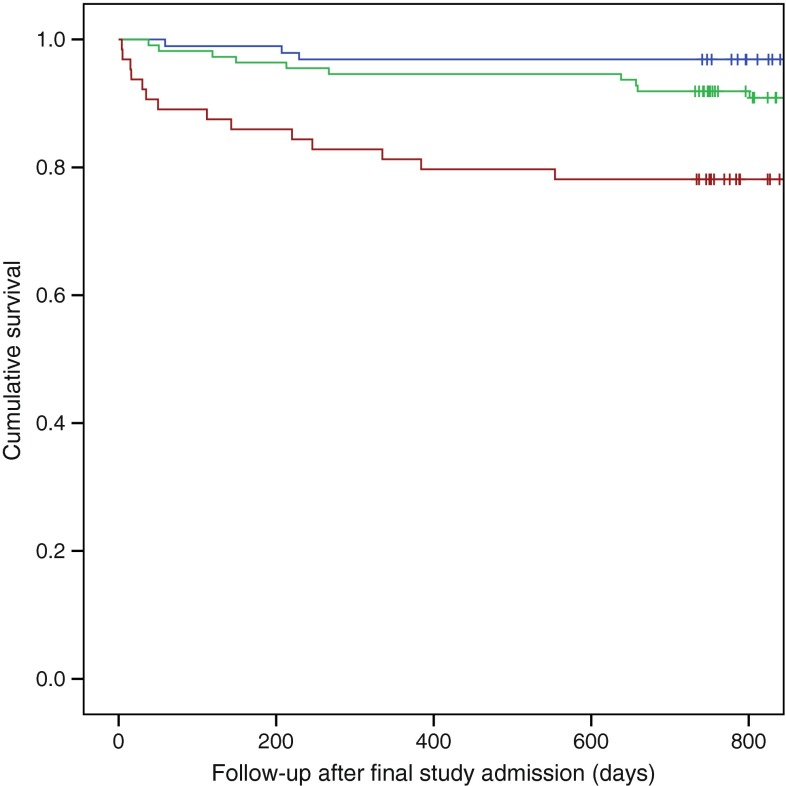
AIMS/HYPOTHESIS: The aim of this study was to assess the risk of death during hospital admission for diabetic ketoacidosis (DKA) and, subsequently, following discharge. In addition, we aimed to characterise the risk factors for multiple presentations with DKA. METHODS: We conducted a retrospective cohort study of all DKA admissions between 2007 and 2012 at a university teaching hospital. All patients with type 1 diabetes who were admitted with DKA (628 admissions of 298 individuals) were identified by discharge coding. Clinical, biochemical and mortality data were obtained from electronic patient records and national databases. Follow-up continued until the end of 2014. RESULTS: Compared with patients with a single DKA admission, those with recurrent DKA (more than five episodes) were diagnosed with diabetes at an earlier age (median 14 [interquartile range 9-23] vs 24 [16-34] years, p < 0.001), had higher levels of social deprivation (p = 0.005) and higher HbA1c values (103 [89-108] vs 79 [66-96] mmol/mol; 11.6% [10.3-12.0%] vs 9.4% [8.2-10.9%], p < 0.001), and tended to be younger (25 [22-36] vs 31 [23-42] years, p = 0.079). Antidepressant use was greater in those with recurrent DKA compared with those with a single episode (47.5% vs 12.6%, p = 0.001). The inpatient DKA mortality rate was no greater than 0.16%. A single episode of DKA was associated with a 5.2% risk of death (4.1 [2.8-6.0] years of follow-up) compared with 23.4% in those with recurrent DKA admissions (2.4 [2.0-3.8] years of follow-up) (HR 6.18, p = 0.001). CONCLUSIONS/INTERPRETATION: Recurrent DKA is associated with substantial mortality, particularly among young, socially disadvantaged adults with very high HbA1c levels.
Overview
The claims and statistics of this paper haven’t been checked yet.
Free: it reads the open-access text and checks the first 5 claims that cite a source we can check. Create a free account to check every claim.
Integrity signals
Registry
Cites
Statistics
Figures
Verification
Claims the paper makes
The claims and statistics of this paper haven’t been checked yet.
Free: it reads the open-access text and checks the first 5 claims that cite a source we can check. Create a free account to check every claim.
Claims other papers make about this one
Each is checked against this paper’s own text: does it say what the citing paper says it does?
The source backs part of the claim, not all of it — or backs it for a different population, condition or comparison.
In the citing paper
“There are a number of clinical factors associated with an increased risk of hyperglycemic crises (Table 6.8).”
From 6. Glycemic Goals, Hypoglycemia, and Hyperglycemic Crises: Standards of Care in Diabetes-2026. (2026) · cites this paper as [195]
Experimental — accuracy not yet measured
Self-check
Percentages, sums and reported differences re-computed from the paper’s own numbers.
The self-check needs the paper’s full text.
Citations
Cites
Hyperglycemic crises in adult patients with diabetes
Kitabchi, A. E., Umpierrez, G. E., Miles, J. M., & Fisher, J. N. (2009) · Diabetes Care · doi:10.2337/dc09-9032 · Cited by 2,062 · cited 2×
“Recent estimates of inpatient DKAmortality have varied between <1% [2] and up to 1.”
BackgroundResultEstimated life expectancy in a Scottish cohort with type 1 diabetes, 2008-2010
Livingstone, S. J., Levin, D., Looker, H. C., Lindsay, R. S., Wild, S. H., Joss, N., Leese, G., Leslie, P., McCrimmon, R. J., Metcalfe, W., et al. (2015) · JAMA · doi:10.1001/jama.2014.16425 · Cited by 621 · cited 1×
“3 per 1000 person-years in men and women with type 1 diabetes, respectively, in the 30–34 years age bracket [4].”
BackgroundMorris, A. D., Boyle, D. I., McMahon, A. D., Greene, S. A., MacDonald, T. M., & Newton, R. W. (1997) · The Lancet · doi:10.1016/s0140-6736(97)06234-x · Cited by 507 · cited 1×
“is associated with social deprivation [5, 6], high HbA1c levels [5–8], reduced concordance with insulin therapy [9] and”
Weinstock, R. S., Xing, D., Maahs, D. M., Michels, A., Rickels, M. R., Peters, A. L., Bergenstal, R. M., Harris, B., DuBose, S. N., Miller, K. M., et al. (2013) · The Journal of Clinical Endocrinology & Metabolism · doi:10.1210/jc.2013-1589 · Cited by 338 · cited 11×
“Conclusions/interpretation Recurrent DKA is associated with substantial mortality, particularly among young, socially disadvantaged adults with very high HbA1c levels.”
BackgroundResultInfluentialRecurrent Diabetic Ketoacidosis in Inner-City Minority Patients
Randall, L., Begovic, J., Hudson, M., Smiley, D., Peng, L., Pitre, N., Umpierrez, D., & Umpierrez, G. (2011) · Diabetes Care · doi:10.2337/dc11-0701 · Cited by 207 · cited 1×
“The nationwide German/Austrian Diabetes Survey recently reported higher DKA rates in patients receiving antipsychotic medication [15] and, in a US series, depression and substance abuse were more common in those with multiple DKA presentations [16].”
BackgroundNational survey of the management of Diabetic Ketoacidosis (DKA) in the UK in 2014
Dhatariya, K. K., Nunney, I., Higgins, K., Sampson, M. J., & Iceton, G. (2016) · Diabetic Medicine · doi:10.1111/dme.12875 · Cited by 115 · cited 1×
“Although recent evidence suggests suboptimal adherence to DKA management protocols in the UK [14], inpatient outcomes are almost always satisfactory.”
BackgroundElliott, J., Jacques, R. M., Kruger, J., Campbell, M. J., Amiel, S. A., Mansell, P., Speight, J., Brennan, A., & Heller, S. R. (2014) · Diabetic Medicine · doi:10.1111/dme.12441 · Cited by 112
Declining Death Rates From Hyperglycemic Crisis Among Adults With Diabetes, U.S., 1985–2002
Wang, J., Williams, D. E., Narayan, K. M. V., & Geiss, L. S. (2006) · Diabetes Care · doi:10.2337/dc06-0311 · Cited by 93
Mortality and outcome of patients with brittle diabetes and recurrent ketoacidosis
Kent, L., Williams, G., & Gill, G. (1994) · The Lancet · doi:10.1016/s0140-6736(94)92340-x · Cited by 83 · cited 2×
“Case series describing the experiences of patients with ‘brittle diabetes’ have recognised the potential impact of adjusting to a diagnosis of diabetes during adolescence [12].”
BackgroundButalia, S., Johnson, J. A., Ghali, W. A., & Rabi, D. M. (2013) · Diabetic Medicine · doi:10.1111/dme.12127 · Cited by 48 · cited 2×
“In defence of the wider applicability of these data, the characteristics of our patients seem broadly comparable with those described in several other series [6–8].”
BackgroundResult
Cited by
Items 101–184 of 184
Successful management of diabetic ketoacidosis: an innovative protocol
Phillips, C., & Sinha, A. (2018) · Practical Diabetes · doi:10.1002/pdi.2161 · Cited by 4
Paragas, S. M. O., & Acampado, L. T. (2020) · Acta Medica Philippina · doi:10.47895/amp.v54i3.1645 · Cited by 4
Mooney, S. P., Booth, G. L., Shulman, R. M., Na, Y., Weisman, A., Shah, B. R., Perkins, B. A., & Lipscombe, L. L. (2021) · Diabetic Medicine · doi:10.1111/dme.14618 · Cited by 4
Lactate kinetics in intensive care unit admissions due to diabetic ketoacidosis
Taşkın, G., Yilmaz, M. I., Yılmaz, S., Şirin, H., Sapmaz, H., Taşlıgil, S., Güneş, İ. S., & Yamanel, L. (2021) · Gulhane Medical Journal · doi:10.4274/gulhane.galenos.2021.29290 · Cited by 4
“In the US and UK, the mortality rate has been reported to be less than 1% (24,25).”
BackgroundInfluentialKariyawasam, D., Soukup, T., Parsons, J., Sevdalis, N., Lopez, M. B., Forde, R., Ismail, K., Jones, M., Ford‐Adams, M., Yemane, N., et al. (2022) · BMJ Open · doi:10.1136/bmjopen-2022-062971 · Cited by 4
Gupta, A., Brazier, B., Rengarajan, L. N., Narendran, P., & Kempegowda, P. (2024) · Clinical Medicine · doi:10.1016/j.clinme.2024.100255 · Cited by 3
Otto, M. E., Burckhardt, M., Szinnai, G., Pfister, M., & Gotta, V. (2022) · CPT Pharmacometrics & Systems Pharmacology · doi:10.1002/psp4.12891 · Cited by 3
“8– 14] years, weight 36 [33– 49] kg, n [%] newly diagnosed T1D 14 [70%], n [%] with mild/moderate/severe DKA 1 [5]/9 [45]/10 [50]).”
Leyden, J., Uber, A. J., Herrera‐Escobar, J. P., & Levy‐Carrick, N. C. (2024) · Journal of the Academy of Consultation-Liaison Psychiatry · doi:10.1016/j.jaclp.2024.02.007 · Cited by 3
Xu, C., Wen, S., Gong, M., Dong, M., Yuan, Y., Li, Y., Zhou, M., & Zhou, L. (2024) · Diabetes Metabolic Syndrome and Obesity · doi:10.2147/dmso.s465311 · Cited by 3
Agboghoroma, O., Jobe, M., & Forrest, K. (2022) · Journal of Endocrinology Metabolism and Diabetes of South Africa · doi:10.1080/16089677.2022.2083391 · Cited by 3
Diabetic keto-acidosis in pancreatic diabetes – how is it different from DKA in type 1 or type 2 DM?
Mondal, S., Dasgupta, R., Lodh, M., Parida, A. K., Haldar, M., & Ganguly, A. (2023) · International Journal of Diabetes in Developing Countries · doi:10.1007/s13410-023-01244-x · Cited by 3
Higuchi, R., Iwane, T., Suwa, K., & Nakajima, K. (2018) · Canadian Journal of Diabetes · doi:10.1016/j.jcjd.2018.09.007 · Cited by 3
Aldossari, B., & Aldossari, S. (2025) · International Medical Case Reports Journal · doi:10.2147/imcrj.s537615 · Cited by 2
Kohlenberg, J. D., Xu, M., Coopergard, R. B., Helgeson, E. S., Gross, A. C., Mathioudakis, N. N., Vandervelden, C. A., Clements, M. A., Chow, L. S., & Ma, S. (2025) · Diabetes Technology & Therapeutics · doi:10.1177/15209156251387161 · Cited by 2
Ji, H., & Hwang, S.-K. (2025) · Journal of Korean Academy of Nursing · doi:10.4040/jkan.25072 · Cited by 2
Role of Continuous Dual Glucose–Ketone Monitoring in Diabetes Care
Garg, S. K., & Parkin, C. G. (2025) · Diabetes Technology & Therapeutics · doi:10.1177/15209156251369529 · Cited by 3
“36 Although protocols for staging T1D onset make it possible to identify individuals with presymptomatic disease, 37 current methods for monitoring the progression of T1D may be inadequate for many individuals.”
Riddell, M. C., Parkin, C. G., Turner, L. V., & Aktürk, H. K. (2026) · Diabetes Technology & Therapeutics · doi:10.1177/15209156251408036 · Cited by 2
“16 23 A study by Shand et al. involving 818 DKA admissions among 284 individuals with T1D reported a 1-year age-adjusted mortality rate 13 times higher than that of individuals without DKA events.”
Abegaz, A. K., Mekonen, A. M., Mekonnen, R. A., & Muche, A. (2026) · BMC Endocrine Disorders · doi:10.1186/s12902-026-02329-4 · Cited by 2
“Conversely, prolonged metabolic derangement increases susceptibility to serious complications, including hypoglycemia, hypokalemia, renal impairment, cerebral edema, cardiac arrhythmias, pulmonary edema, and mortality [20–23].”
Li, Q., Lv, L., Chen, Y., & Zhou, Y. (2021) · Medicine · doi:10.1097/md.0000000000026113 · Cited by 2
“4%.([8,9]) There are 3 main diagnostic bases for DKA: first, blood glucose level; second, ketone body (including urine ketone body and serum ketone body); third, acid poisoning.”
BackgroundKariyawasam, D., Marsh, D., Pender, S., Jones, M., Rogers, R. L., Chapman, S., SINGHAM, S. M., Lamb, S., Bhatti, R. S., Walker, S., et al. (2022) · International Diabetes Nursing · doi:10.57177/idn.v15.325 · Cited by 2
Šitina, M., & Šrámek, V. (2024) · Anesteziologie a intenzivní medicína · doi:10.36290/aim.2024.019 · Cited by 2
Pathogenesis of euglycemic ketoacidosis associated with SGLT2 inhibitors
Šitina, M., & Šrámek, V. (2024) · Anesteziologie a intenzivní medicína · doi:10.36290/aim.2024.018 · Cited by 2
Клинические рекомендации. Сахарный диабет 1 типа у детей
Peterkova, V. A., Bezlepkina, O. B., Лаптев, Д. Н., Кураева, Т. Л., Eremina, I. A., Титович, Е. В., Олегович, Е. А., & Svetlova, G. N. (2025) · doi:10.14341/dm1_ch_sd_2025 · Cited by 2
Stieben, L. A. R., Noble, P. M. G., & Jaimet, M. C. (2022) · Revista de la Facultad de Ciencias Médicas de Córdoba · doi:10.31053/1853.0605.v79.n3.34968 · Cited by 2
“6% en los ancianos.(4,5) La CAD es una emergencia médica que requiere un tratamiento oportuno en un hospital.”
BackgroundCurran, M. A. (2024) · Wiley eBooks · doi:10.1002/9781119820260.ch34 · Cited by 2
The effect of type 1 diabetes on executive function in young adults
Reid, M. D. (2017) · Research Commons (University of Waikato) · Cited by 2
Recognising and treating diabetic ketoacidosis
Mendes, A. (2025) · Journal of Prescribing Practice · doi:10.12968/jprp.2025.0023 · Cited by 2
Case Report: Diabetic ketoacidosis after co-administration of empagliflozin and probenecid
Martin, W. P., Reidy, N., Low, J., & Ahern, T. (2023) · Wellcome Open Research · doi:10.12688/wellcomeopenres.19148.1 · Cited by 1
Liu, Y., Hu, L., Zhu, M., Chen, X., Yu, Z., Peng, D., Dong, G., Ni, Y., & Fu, J. (2026) · Journal of Endocrinological Investigation · doi:10.1007/s40618-026-02932-1 · Cited by 1
“Diabetic ketoacidosis (DKA), the most common acute complication, is the leading cause of death in children with T1D [8].”
Abebe, G. K., Aynalem, Z. B., Meseret, F., Abate, M. D., & Muhamed, A. N. (2025) · F1000Research · doi:10.12688/f1000research.169430.1 · Cited by 1
Hoxhaj, R., & WEBSTER, S. C. M. (2026) · Medical Clinics of North America · doi:10.1016/j.mcna.2025.11.014 · Cited by 1
Eisenhofer, S., Neininger, M. P., Bertsche, A., Kiess, W., Bertsche, T., & Kapellen, T. (2026) · Children · doi:10.3390/children13050592 · Cited by 1
Miyazaki, R., Okano, H., Goto, S., Tanaka, H., & Okamoto, H. (2026) · Critical Care Explorations · doi:10.1097/cce.0000000000001449 · Cited by 1
“Our finding of low mortality despite substantial physiologic heterogeneity aligns with contemporary reports from high-income settings (4–6), where pro-tocolized DKA care yields favorable short-term outcomes.”
ภาวะเลือดเป็นกรดจากเบาหวาน (DKA) ในผู้ป่วยผู้ใหญ่ โรงพยาบาลเซกา
Rattanawannee, P. (2021) · Nakhonphanom Hospital Journal · Cited by 1
Sonwani, S., & Sonwani, S. (2019) · International Journal of Research in Medical Sciences · doi:10.18203/2320-6012.ijrms20192891 · Cited by 1
“004).(12) However, T1DM Exchange Clinic Registry also confirmed progressive increase in DKA with increasing HbA1c levels.”
Curran, M. A. (2018) · Wiley eBooks · doi:10.1002/9781119129400.ch34 · Cited by 1
Rengarajan, L. N., Nash, K., Ooi, E., Cooper, C., Birchenough, A., Owen, M., Saraf, S., Karamat, A., De, P., Krishnasamy, S., et al. (2022) · British Journal of Diabetes · doi:10.15277/bjd.2022.398 · Cited by 1
Clinical characteristics and prognoses of patients with diabetic ketoacidosis in Finland
Putula, E., Huhtala, H., Vanhamäki, S., Laatikainen, T. K., Tahkola, A., Hannula, P. M., & Metso, S. (2023) · Diabetes Epidemiology and Management · doi:10.1016/j.deman.2023.100129 · Cited by 1
Ibrahimi, I., Ahmadzai, H., & Shams, S. J. (2024) · Interdisciplinary Approaches to Medicine · doi:10.26577/appmed2023v4i2a8 · Cited by 1
“However, up to 30% deaths are reported in hospitalized DKA patients in India (Gibb et al., 2016).”
BackgroundPerioperative management in patients treated with gliflozins
Šitina, M., & Šrámek, V. (2024) · Anesteziologie a intenzivní medicína · doi:10.36290/aim.2024.021 · Cited by 1
Mustonen, J. (2025) · UEF eRepo (University of Eastern Finland) · Cited by 1
Endocrine and Metabolic Emergencies in Transitional Care
Yau, M., & Sperling, M. A. (2018) · Wiley eBooks · doi:10.1002/9781119374800.ch6
Greener, M. (2016) · Nurse Prescribing · doi:10.12968/npre.2016.14.8.378
Gao, L., Wang, X., Shu, J., Zhang, M., Zhi, X., Guan, J., Gu, C., Pu, L., Cai, C., Yang, W., et al. (2021) · Research Square · doi:10.21203/rs.3.rs-340966/v1
Shu, J., Wang, X., Zhang, M., Zhi, X., Guan, J., Gu, C., Pu, L., Gao, L., Cai, C., Yang, W. Y., et al. (2021) · Research Square · doi:10.21203/rs.3.rs-323788/v1
DIABETINĖ KETOACIDOZĖ: EPIDEMIOLOGIJA, KLINIKA IR GYDYMO PRINCIPAI
Judickas, M. (2021) · Health Sciences · doi:10.35988/sm-hs.2021.189
Hassan, A., Jaja, M. B., & Elamin, M. M. A. H. (2021) · Pakistan Journal of Medical and Health Sciences · doi:10.53350/pjmhs2115113148
Akutkomplikationen des Diabetes mellitus – Schulungsinhalte richtig vermitteln
Ehrmann, D. (2022) · Diabetologie und Stoffwechsel · doi:10.1055/a-1723-5181
Ghosn, D. S. N. B. (2023) · Digital Library of Theses and Dissertations (Universidade de São Paulo) · doi:10.11606/t.5.2023.tde-29052023-121859
Suleman, Y. J. A., Alhassani, M. Y., & Hammoud, T. (2024) · Research Square · doi:10.21203/rs.3.rs-4717324/v1
Managing diabetic emergencies: hyperglycemia and diabetic ketoacidosis
Alhazmi, F. K. M., Gaddourah, A. M. I., Alrasheedi, B. B., Aleiid, A. S., & Alsayyari, A. M. (2017) · International Journal of Health Sciences · doi:10.53730/ijhs.v1ns1.15209
“A history of recurrent DKA episodes considerably elevates long-term mortality risk following discharge, particularly among young, socioeconomically disadvantaged adults with significantly high HbA1c levels [33].”
BackgroundResultInfluentialBidari, A. R., Sudhir, Nag, S., & Anil, X. (2024) · International Journal of Science and Research (IJSR) · doi:10.21275/sr241002163613
Rouland, A. (2024) · theses.fr (ABES) · doi:10.70675/6af70b1eze632z469ez88c8zdb045a5e78c6
Warunyuwong, W., Boucsein, A., & Wheeler, B. J. (2025) · Diabetes Technology and Obesity Medicine · doi:10.1089/dtom.2025.0006
“33 Safely commencing AID in any person with diabetes requires regular anticipatory guidance on DKA and infusion set failure, 34 both commonly described in the literature.”
Negash, B., Bahre, W., Abebe, A., Tesfaye, B., & Bitsa, Y. (2025) · Research Square · doi:10.21203/rs.3.rs-7175579/v1
Diabetic ketoacidosis knowledge in type 1 diabetes: a Brazilian perspective
Pisani, R. B. F., Gonzalez, V. V., Witte, B. R., Gonçalves, T. G., Santiago, L. A., Moreno, A. M., & Siqueira, R. D. A. (2025) · Archives of Endocrinology and Metabolism · doi:10.20945/2359-4292-2025-0036
Shegene, B., Tesfaye, A., Abate, M. S., Negasa, A. G., Kassa, O., & Firdisa, D. (2025) · Research Square · doi:10.21203/rs.3.rs-7278066/v1
Ammar, R. D., Tereshchenko, E., Abdujabborov, K. M., Tokteeva, A. O., & Горева, Л. А. (2025) · Сибирский журнал клинической и экспериментальной медицины · doi:10.29001/2073-8552-2025-40-3-68-75
Harris, F. C., Hutchings, J., & Narsinghani, U. (2025) · Journal of Pediatric Endocrinology and Diabetes · doi:10.25259/jped_24_2025
Vakharia, J. D., Theodorakakis, M. D., Schulte, C. C. M., Shinnick, D. J., Thaweethai, T., O’Donnell, E., & Wexler, D. J. (2025) · Endocrine Practice · doi:10.1016/j.eprac.2025.11.003
Batth, J., Langworthy, B., Kumar, A. D., Alvear, A. B., Chow, L. S., & Kohlenberg, J. D. (2025) · AACE Endocrinology and Diabetes · doi:10.1016/j.aed.2025.11.006
Diabetic emergencies and glucose control in the ICU
Ramanan, M., & Ekinci, E. I. (2025) · Elsevier eBooks · doi:10.1016/b978-0-443-11611-7.00068-2
Fatima, S., Seto, N., Batra, K., Goel, V. S., Ortiz-Malave, C., & Izuora, K. E. (2025) · Endocrine Practice · doi:10.1016/j.eprac.2025.11.015
Innes, E. (2024) · Worcester Research and Publications (University of Worcester)
Holt, J. (2023) · ORCA Online Research @Cardiff (Cardiff University)
Perna, D. (2021) · Electronic Theses and Dissertations Repository (University of Pisa)
Umaipalan, V., Tan, R., Harris, S. M., & Mustafa, O. G. (2025) · Diabetic Medicine · doi:10.1111/dme.70209
Stimson, R. H., Dover, A. R., Lyall, M. J., Barclay, J., Mackenzie, S. D., Forbes, S., & Gibb, F. W. (2026) · Diabetic Medicine · doi:10.1111/dme.70228
“Although prior DKA is associated with collecting ketone test strips, 39% of those with DKA had not collected a single prescription and those at highest risk of DKA (e.g. high HbA1c and greater socioeconomic deprivation 6 ) were no more likely to have obtained test strips.”
Self-citationRECURRENT DIABETIC KETOACIDOSIS: DATA FROM A MULTIDISCIPLINARY HOSPITAL IN ST. PETERSBURG
Dmitriev, A. V., Chernaya, M. E., Sadykhova, A. B., Shushunina, U. A., Lisker, A. V., Реутский, И. А., & Khalimov, Y. S. (2025) · Современные проблемы науки и образования · doi:10.17513/spno.34392
Лаптев, Д. Н., Титович, Е. В., Федоринин, А. А., Bezlepkina, O. B., Peterkova, V. A., Рамилевич, М. И., & Mokrysheva, N. G. (2026) · Diabetes Mellitus · doi:10.14341/dm13361
“Острые последствия ДКА включают повышенный риск летального исхода, развитие осложнений и необ-ходимость госпитализации, что оказывает существенное влияние на здоровье и жизнь пациентов, пациентов, чле-нов их семьи и системы здравоохранения [26, 27].”
Hyperglycemic emergencies: Hyperglycemic hyperosmolar state and diabetic ketoacidosis
Maletkovic, J., & Rebelos, E. (2026) · Elsevier eBooks · doi:10.1016/b978-0-443-13825-6.00377-0
Characteristics, Risk Factors, and Outcome of Recurrent Diabetic Ketoacidosis in Adults
Eledrisi, M. S., ALKABBANI, H. M., ABOAWON, M. K., ALI, A. A., Alabdulrazzak, I., Elhaj, M. F., Ahmed, A., Alqahwachi, H., Daghfal, J., Beshyah, S., et al. (2026) · Journal of Diabetes and Endocrine Practice · doi:10.1055/s-0046-1818535
“22 The increased mortality in patients with recurrent DKA is associated with a higher number of hospital admissions for DKA, older age, longer duration of diabetes, and the presence of psychological disorders.”
Recognising disordered eating in type 1 diabetes
Mendes, A. (2026) · Journal of Prescribing Practice · doi:10.12968/jprp.2026.0026
Dawson, C., Earnest, A., Zomer, E., Paul, E., Pourghaderi, A. R., Gašević, D., Russell, A. W., & Zoungas, S. (2026) · Diabetes Research and Clinical Practice · doi:10.1016/j.diabres.2026.113241
Prognosis of Type 1 Diabetes in Finland and its Determinants
Keisala, E. (2026) · Tampere University Institutional Repository (Tampere University)
Mapping the storm: a scoping review of diabetic emergencies in Africa
Harerimana, A., & Mchunu, G. (2026) · Frontiers in Clinical Diabetes and Healthcare · doi:10.3389/fcdhc.2026.1822436
“Those with a single DKA episode had a 5.2% risk of death over an average follow-up period of 4.1 years, whereas patients admitted multiple times for DKA exhibited a 23.4% risk of death over approximately 2.4 years of follow-up (64).”
InfluentialMichalak, A., Pernak, B., Chrzanowski, J., Pietrzak, I., Beń‐Skowronek, I., Bossowski, A., Chobot, A. P., Bednarska, M., Dżygało, K., Fendler, W., et al. (2026) · Frontiers in Endocrinology · doi:10.3389/fendo.2026.1861694
Alam, R., Memon, F., Haryani, A., Ishaq, A., Idrees, H., Amjad, F., Lang, E., Soofi, S. B., & Ariff, S. (2026) · Journal of the Endocrine Society · doi:10.1210/jendso/bvag148
“Among children with type 1 DM, poorly managed DKA can be a potential cause of mortality [3].”
Socioeconomic determinants of recurrent DKA in US children
Al-Saidi, N., Fatima, Z., Esseili, A. S., Ziehl, E., Siddiqui, H., Kizy, S., & Rain, U. Z. (2026) · Journal of Pediatric Endocrinology and Metabolism · doi:10.1515/jpem-2026-0352
“Repeated DKA episodes are associated with substantially increased mortality risk as well as long-term health consequences [13], and because many recurrent DKA episodes arise from modi fi able factors such as insulin access, insurance coverage, healthcare utilization, and social barriers, recurrent…”
Shrivastava, Y., Kumar, S., Gupta, A., Poonia, H., Parihar, M., Chakrabarti, S., Tiwari, L. K., & Patnaik, I. (2026) · Journal of Diabetology · doi:10.4103/jod.jod_232_25
The Role of Continuous Ketone Monitoring in Diabetes Management
Nally, L. M., & Sherr, J. L. (2026) · Endocrinology and Metabolism Clinics of North America · doi:10.1016/j.ecl.2026.08.013
Liu, W., Ji, L., Chen, Y., Li, X., Li, W., Li, M., Zhang, M., Tan, J., & Song, M. (2026) · Journal of Medical Economics · doi:10.1080/13696998.2026.2738350
Akute Komplikationen bei Diabetes
Freibothe, I., & Then, C. (2026) · Elsevier eBooks · doi:10.1016/b978-3-437-23857-4.00034-5
Soleim, S. B., Løvås, K., Søfteland, E. W., & Ueland, G. Å. (2026) · PLoS ONE · doi:10.1371/journal.pone.0362629
Metadata
- Authors
- Gibb, F. W., Teoh, W. L., Graham, J., & Lockman, K. A.
- Affiliations
- Edinburgh Royal Infirmary (GB)
- Corresponding author
- Gibb, Fraser W.
- ORCID
- Gibb, Fraser W.
- Venue
- Diabetologia
- Published
- 2016-07-11
- Volume
- 59
- Issue
- 10
- Pages
- 2082-2087
- ISSN
- 0012-186X (ISSN-L)
- 1432-0428
- PMC
- PMC5016550
- OpenAlex
- W2473916110
- Cited by
- 170
- References
- 18
- Citations by year
- 2026: 19 · 2025: 26 · 2024: 19 · 2023: 14 · 2022: 17 · 2021: 22 · 2020: 15 · 2019: 15 · 2018: 13 · 2017: 6 · 2016: 3
- FWCI
- 12.39
- Type
- journal article
- Language
- en
- Open access
- hybrid
- doi.org
- Locations
- Diabetologia (publishedVersion, cc-by)
- Europe PMC (PubMed Central) (publishedVersion, cc-by)
- PubMed Central (publishedVersion, cc-by)
- PubMed (publishedVersion)
- Funders
- American Diabetes Association
- Topics
- Health Sciences › Medicine › Endocrinology, Diabetes and Metabolism › Diabetes Management and Research
- Health Sciences › Medicine › Endocrinology, Diabetes and Metabolism › Diabetes Management and Education
- Health Sciences › Medicine › Endocrinology, Diabetes and Metabolism › Diabetes Treatment and Management
- Keywords
- diabetic ketoacidosis, type 1 diabetes, in-hospital mortality, post-discharge mortality, risk factors, HbA1c, social deprivation, antidepressant use, young adults, hospitalization
- MeSH terms
- Adult, Diabetes Mellitus, Type 1, Female, United Kingdom, Glycated Hemoglobin, Hospitalization, Humans, Male, Middle Aged, Retrospective Studies, Risk Factors, Diabetic Ketoacidosis, Young Adult
About these checks
Registry, retraction, Cites and statistics results are computed, not judged, with one exception: a printed reference that no index lists is read once by a model before it counts as a citation error. Claims are extracted by a model and kept only when their quote appears verbatim in the text; each cited source is then checked, with a model’s help, for whether it says what the claim relies on. Those verdicts can be wrong — read the claim’s quote and the cited source before relying on one.
Statistics and arithmetic are recomputed, not judged.
Confidence bands are shown only for fields calibrated on our annotated test set. None is calibrated yet, so no band is shown.
What counts as a claim ›How we measure confidence ›How we check this ›
Are you an author, or do you see a problem with this page? Request a review
Data sources
Bibliographic data: Semantic Scholar, OpenAlex, Crossref.
Contains information from the Semantic Scholar Academic Graph Datasets, made available under the ODC Attribution License (ODC-BY 1.0).
Semantic Scholar’s data is described in: Kinney, R., et al. (2023). The Semantic Scholar Open Data Platform. arXiv:2301.10140.
