

Risk of death following admission to a UK hospital with diabetic ketoacidosis
Open accessThe DOI matches its Crossref record; 18 of the 18 references it cites were found in a registry or an index.
Abstract
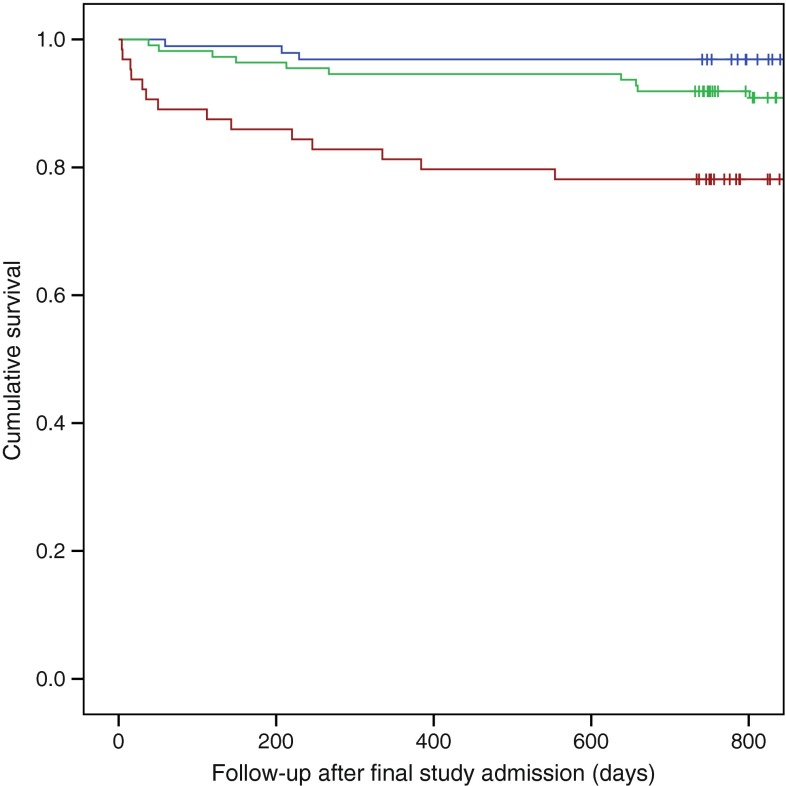
AIMS/HYPOTHESIS: The aim of this study was to assess the risk of death during hospital admission for diabetic ketoacidosis (DKA) and, subsequently, following discharge. In addition, we aimed to characterise the risk factors for multiple presentations with DKA. METHODS: We conducted a retrospective cohort study of all DKA admissions between 2007 and 2012 at a university teaching hospital. All patients with type 1 diabetes who were admitted with DKA (628 admissions of 298 individuals) were identified by discharge coding. Clinical, biochemical and mortality data were obtained from electronic patient records and national databases. Follow-up continued until the end of 2014. RESULTS: Compared with patients with a single DKA admission, those with recurrent DKA (more than five episodes) were diagnosed with diabetes at an earlier age (median 14 [interquartile range 9-23] vs 24 [16-34] years, p < 0.001), had higher levels of social deprivation (p = 0.005) and higher HbA1c values (103 [89-108] vs 79 [66-96] mmol/mol; 11.6% [10.3-12.0%] vs 9.4% [8.2-10.9%], p < 0.001), and tended to be younger (25 [22-36] vs 31 [23-42] years, p = 0.079). Antidepressant use was greater in those with recurrent DKA compared with those with a single episode (47.5% vs 12.6%, p = 0.001). The inpatient DKA mortality rate was no greater than 0.16%. A single episode of DKA was associated with a 5.2% risk of death (4.1 [2.8-6.0] years of follow-up) compared with 23.4% in those with recurrent DKA admissions (2.4 [2.0-3.8] years of follow-up) (HR 6.18, p = 0.001). CONCLUSIONS/INTERPRETATION: Recurrent DKA is associated with substantial mortality, particularly among young, socially disadvantaged adults with very high HbA1c levels.
Overview
The claims and statistics of this paper haven’t been checked yet.
Free: it reads the open-access text and checks the first 5 claims that cite a source we can check. Create a free account to check every claim.
Integrity signals
Registry
Cites
Statistics
Figures
Verification
Claims the paper makes
The claims and statistics of this paper haven’t been checked yet.
Free: it reads the open-access text and checks the first 5 claims that cite a source we can check. Create a free account to check every claim.
Claims other papers make about this one
Each is checked against this paper’s own text: does it say what the citing paper says it does?
The source backs part of the claim, not all of it — or backs it for a different population, condition or comparison.
In the citing paper
“There are a number of clinical factors associated with an increased risk of hyperglycemic crises (Table 6.8).”
From 6. Glycemic Goals, Hypoglycemia, and Hyperglycemic Crises: Standards of Care in Diabetes-2026. (2026) · cites this paper as [195]
Experimental — accuracy not yet measured
Self-check
Percentages, sums and reported differences re-computed from the paper’s own numbers.
The self-check needs the paper’s full text.
Citations
Cites
Hyperglycemic crises in adult patients with diabetes
Kitabchi, A. E., Umpierrez, G. E., Miles, J. M., & Fisher, J. N. (2009) · Diabetes Care · doi:10.2337/dc09-9032 · Cited by 2,062 · cited 2×
“Recent estimates of inpatient DKAmortality have varied between <1% [2] and up to 1.”
BackgroundResultEstimated life expectancy in a Scottish cohort with type 1 diabetes, 2008-2010
Livingstone, S. J., Levin, D., Looker, H. C., Lindsay, R. S., Wild, S. H., Joss, N., Leese, G., Leslie, P., McCrimmon, R. J., Metcalfe, W., et al. (2015) · JAMA · doi:10.1001/jama.2014.16425 · Cited by 621 · cited 1×
“3 per 1000 person-years in men and women with type 1 diabetes, respectively, in the 30–34 years age bracket [4].”
BackgroundMorris, A. D., Boyle, D. I., McMahon, A. D., Greene, S. A., MacDonald, T. M., & Newton, R. W. (1997) · The Lancet · doi:10.1016/s0140-6736(97)06234-x · Cited by 507 · cited 1×
“is associated with social deprivation [5, 6], high HbA1c levels [5–8], reduced concordance with insulin therapy [9] and”
Weinstock, R. S., Xing, D., Maahs, D. M., Michels, A., Rickels, M. R., Peters, A. L., Bergenstal, R. M., Harris, B., DuBose, S. N., Miller, K. M., et al. (2013) · The Journal of Clinical Endocrinology & Metabolism · doi:10.1210/jc.2013-1589 · Cited by 338 · cited 11×
“Conclusions/interpretation Recurrent DKA is associated with substantial mortality, particularly among young, socially disadvantaged adults with very high HbA1c levels.”
BackgroundResultInfluentialRecurrent Diabetic Ketoacidosis in Inner-City Minority Patients
Randall, L., Begovic, J., Hudson, M., Smiley, D., Peng, L., Pitre, N., Umpierrez, D., & Umpierrez, G. (2011) · Diabetes Care · doi:10.2337/dc11-0701 · Cited by 207 · cited 1×
“The nationwide German/Austrian Diabetes Survey recently reported higher DKA rates in patients receiving antipsychotic medication [15] and, in a US series, depression and substance abuse were more common in those with multiple DKA presentations [16].”
BackgroundNational survey of the management of Diabetic Ketoacidosis (DKA) in the UK in 2014
Dhatariya, K. K., Nunney, I., Higgins, K., Sampson, M. J., & Iceton, G. (2016) · Diabetic Medicine · doi:10.1111/dme.12875 · Cited by 115 · cited 1×
“Although recent evidence suggests suboptimal adherence to DKA management protocols in the UK [14], inpatient outcomes are almost always satisfactory.”
BackgroundElliott, J., Jacques, R. M., Kruger, J., Campbell, M. J., Amiel, S. A., Mansell, P., Speight, J., Brennan, A., & Heller, S. R. (2014) · Diabetic Medicine · doi:10.1111/dme.12441 · Cited by 112
Declining Death Rates From Hyperglycemic Crisis Among Adults With Diabetes, U.S., 1985–2002
Wang, J., Williams, D. E., Narayan, K. M. V., & Geiss, L. S. (2006) · Diabetes Care · doi:10.2337/dc06-0311 · Cited by 93
Mortality and outcome of patients with brittle diabetes and recurrent ketoacidosis
Kent, L., Williams, G., & Gill, G. (1994) · The Lancet · doi:10.1016/s0140-6736(94)92340-x · Cited by 83 · cited 2×
“Case series describing the experiences of patients with ‘brittle diabetes’ have recognised the potential impact of adjusting to a diagnosis of diabetes during adolescence [12].”
BackgroundButalia, S., Johnson, J. A., Ghali, W. A., & Rabi, D. M. (2013) · Diabetic Medicine · doi:10.1111/dme.12127 · Cited by 48 · cited 2×
“In defence of the wider applicability of these data, the characteristics of our patients seem broadly comparable with those described in several other series [6–8].”
BackgroundResult
Cited by
Wolfsdorf, J. I., Glaser, N., Agus, M., Fritsch, M., Hanas, R., Rewers, A., Sperling, M. A., & Codner, E. (2018) · Pediatric Diabetes · doi:10.1111/pedi.12701 · Cited by 710
“199,200 Cerebral injury is the major cause of mortality and morbidity 195,201 and cerebral edema accounts for 60% to 90% of all DKA deaths.”
Dhatariya, K. K., Glaser, N. S., Codner, E., & Umpierrez, G. E. (2020) · Nature Reviews Disease Primers · doi:10.1038/s41572-020-0165-1 · Cited by 461
6. Glycemic Goals and Hypoglycemia: Standards of Care in Diabetes—2025
American Diabetes Association Professional Practice Committee, ElSayed, N. A., McCoy, R. G., Aleppo, G., Balapattabi, K., Beverly, E. A., Briggs Early, K., Bruemmer, D., Echouffo-Tcheugui, J. B., Ekhlaspour, L., et al. (2025) · Diabetes Care · doi:10.2337/dc25-s006 · Cited by 440
Hyperglycemic crises in adults with diabetes: a consensus report
Umpierrez, G. E., Davis, G. M., ElSayed, N. A., Fadini, G. P., Galindo, R. J., Hirsch, I. B., Klonoff, D. C., McCoy, R. G., Misra, S., Gabbay, R. A., et al. (2024) · Diabetes Care · doi:10.2337/dci24-0032 · Cited by 278
Management of Hyperglycemic Crises
Fayfman, M., Pasquel, F. J., & Umpierrez, G. E. (2017) · Medical Clinics of North America · doi:10.1016/j.mcna.2016.12.011 · Cited by 278
Farsani, S. F., Brodovicz, K., Soleymanlou, N., Marquard, J., Wissinger, E., & Maiese, B. A. (2017) · BMJ Open · doi:10.1136/bmjopen-2017-016587 · Cited by 251
Hyperglycaemic crises in adults with diabetes: a consensus report
Umpierrez, G. E., Davis, G. M., ElSayed, N. A., Fadini, G. P., Galindo, R. J., Hirsch, I. B., Klonoff, D. C., McCoy, R. G., Misra, S., Gabbay, R. A., et al. (2024) · Diabetologia · doi:10.1007/s00125-024-06183-8 · Cited by 233
“Compared with patients with a single DKA admission, those with 2–5 admissions have a threefold higher risk of death, while those with six or more admissions have a sixfold higher risk of death [42].”
Karslioglu French, E., Donihi, A. C., & Korytkowski, M. T. (2019) · BMJ · doi:10.1136/bmj.l1114 · Cited by 200
Dhatariya, K. K., & Care, T. J. B. D. S. F. I. (2022) · Diabetic Medicine · doi:10.1111/dme.14788 · Cited by 186
6. Glycemic Goals, Hypoglycemia, and Hyperglycemic Crises: Standards of Care in Diabetes-2026.
American Diabetes Association Professional Practice Committee for Diabetes*, Bajaj, M., McCoy, R. G., Balapattabi, K., Bannuru, R. R., Bellini, N. J., Bennett, A. K., Beverly, E. A., Briggs Early, K., ChallaSivaKanaka, S., et al. (2026) · Diabetes Care · doi:10.2337/dc26-s006 · Cited by 172
Tyndall, V., Stimson, R. H., Zammitt, N. N., Ritchie, S. A., McKnight, J. A., Dover, A. R., & Gibb, F. W. (2019) · Diabetologia · doi:10.1007/s00125-019-4894-1 · Cited by 165
“Although this is potentially important, caution should be exercised in extrapolating these findings to people with recurrent DKA admissions as this study cohort has different clinical and demographic characteristics [23].”
BackgroundSelf-citationDhatariya, K. K., & Vellanki, P. (2017) · Current Diabetes Reports · doi:10.1007/s11892-017-0857-4 · Cited by 162
Pasquel, F. J., Tsegka, K., Wang, H., Cardona, S., Galindo, R. J., Fayfman, M., Davis, G., Vellanki, P., Migdal, A., Gujral, U., et al. (2020) · Diabetes Care · doi:10.2337/dc19-1168 · Cited by 161
“noted that those with two to five DKA-related admissions had a threefold increase of mortality, while those with more than five admissions had a sixfold mortality increase (34).”
BackgroundEhrmann, D., Kulzer, B., Roos, T., Haak, T., Al-Khatib, M., & Hermanns, N. (2020) · The Lancet Diabetes & Endocrinology · doi:10.1016/s2213-8587(20)30042-5 · Cited by 141
Jensen, E. T., Stafford, J. M., Saydah, S., D’Agostino, R. B., Dolan, L. M., Lawrence, J. M., Marcovina, S., Mayer-Davis, E. J., Pihoker, C., Rewers, A., et al. (2021) · Diabetes Care · doi:10.2337/dc20-0389 · Cited by 137
“The increase in DKA at or near type 1 diabetes diagnosis is of considerable concern, as DKA is not only associated with acute complications and mortality (1,2), but also with risk of long-term poorly managed diabetes, diabetes-associated complications and comorbidities, and significant health care costs (25,26,29–32).”
BackgroundNew advances in type 1 diabetes
Subramanian, S., Khan, F., & Hirsch, I. B. (2024) · BMJ · doi:10.1136/bmj-2023-075681 · Cited by 88
Management of diabetic ketoacidosis in adults: A narrative review
Elzouki, A.-N. Y., & Eledrisi, M. S. (2020) · Saudi Journal of Medicine and Medical Sciences · doi:10.4103/sjmms.sjmms_478_19 · Cited by 120
“6% in the elderly.[11,18] However, studies from different developing countries have revealed mortality rates as high as 10%–30% for patients hospitalized for DKA.”
BackgroundDefining and characterising diabetic ketoacidosis in adults
Dhatariya, K. K. (2019) · Diabetes Research and Clinical Practice · doi:10.1016/j.diabres.2019.107797 · Cited by 93
“4% whilst in the UK, mortality has also been reported at <1% [6,22,31,32].”
BackgroundDiabetic Ketoacidosis in Children and Adolescents; Diagnostic and Therapeutic Pitfalls
Kostopoulou, E., Sinopidis, X., Fouzas, S., Gkentzi, D., Dassios, T. G., Roupakias, S., & Dimitriou, G. (2023) · Diagnostics · doi:10.3390/diagnostics13152602 · Cited by 91
“Nonetheless, among children with T1DM, DKA is the leading cause of mortality accounting for >50% of all deaths [15].”
BackgroundIncreasing Hospitalizations for DKA: A Need for Prevention Programs
Vellanki, P., & Umpierrez, G. E. (2018) · Diabetes Care · doi:10.2337/dci18-0004 · Cited by 78
Ebekozien, O. A., Agarwal, S., Noor, N., Albanese-O’Neill, A., Wong, J. C., Seeherunvong, T., Sanchez, J. E., DeSalvo, D. J., Lyons, S. K., Majidi, S., et al. (2020) · The Journal of Clinical Endocrinology & Metabolism · doi:10.1210/clinem/dgaa920 · Cited by 73
“Prior T1D Exchange network data before the COVID19 pandemic had demonstrated significant disparities in race and ethnicity among patients with T1D (12, 15-17).”
BackgroundContinuous Ketone Monitoring Consensus Report 2021
Nguyen, K. T., Xu, N. Y., Zhang, J. Y., Shang, T., Basu, A., Bergenstal, R. M., Castorino, K., Chen, K. Y., Kerr, D., Koliwad, S. K., et al. (2022) · Journal of Diabetes Science and Technology · doi:10.1177/19322968211042656 · Cited by 54
Everett, E., & Mathioudakis, N. N. (2019) · BMJ Open Diabetes Research & Care · doi:10.1136/bmjdrc-2018-000621 · Cited by 54
“No of admissions 1 (1,1) 1 (1,1) 2 (2,3) 6 (5,8) <0.”
BackgroundContinuous ketone monitoring: Exciting implications for clinical practice
Kong, Y. W., Morrison, D., Lu, J., Lee, M. H., Jenkins, A. J., & O'Neal, D. N. (2024) · Diabetes Obesity and Metabolism · doi:10.1111/dom.15921 · Cited by 61
Everett, E., & Mathioudakis, N. (2019) · The Journal of Clinical Endocrinology & Metabolism · doi:10.1210/jc.2018-02232 · Cited by 50
Wu, X.-Y., She, D.-M., Wang, F., Guo, G., Li, R., Fang, P., Li, L., Zhou, Y., Zhang, K.-Q., & Xue, Y. (2020) · BMC Endocrine Disorders · doi:10.1186/s12902-020-00659-5 · Cited by 49
Risk factors for recurrent admissions with diabetic ketoacidosis: a case–control observational study
Cooper, H., Tekiteki, A., Khanolkar, M., & Braatvedt, G. (2016) · Diabetic Medicine · doi:10.1111/dme.13004 · Cited by 41
Type 1 diabetes impairs female fertility even before it is diagnosed
Lin, Y., Chen, K., Peng, Y., Chen, P.-C., & Yang, Y.-H. (2018) · Diabetes Research and Clinical Practice · doi:10.1016/j.diabres.2018.07.010 · Cited by 44
Disparities in Care Delivery and Outcomes in Young Adults With Diabetes
Agarwal, S., Hilliard, M. E., & Butler, A. M. (2018) · Current Diabetes Reports · doi:10.1007/s11892-018-1037-x · Cited by 44
Flores, M., Amir, M., Ahmed, R., Alashi, S., Li, M., Wang, X., Lansang, M. C., & Al-Jaghbeer, M. J. (2020) · BMJ Open Diabetes Research & Care · doi:10.1136/bmjdrc-2020-001329 · Cited by 43
Controversies in the management of hyperglycaemic emergencies in adults with diabetes
Cardoso, L., Vicente, N., Rodrigues, D. M., Gomes, L., & Carrilho, F. (2016) · Metabolism · doi:10.1016/j.metabol.2016.11.010 · Cited by 43
“[8] Gibb FW, Teoh WL, Graham J, Lockman KA.”
BackgroundFeatures and long‐term outcomes of patients hospitalized for diabetic ketoacidosis
Michaelis, M., Shochat, T., Shimon, I., & Akirov, A. (2020) · Diabetes/Metabolism Research and Reviews · doi:10.1002/dmrr.3408 · Cited by 43
“Throughout most of the world, mortality rate was lower than in our study—about 1%.(18,24) Possible explanations for such a difference is that our study included patients who were hospitalized for DKA, naturally these episodes were more serious in comparison to DKA events which didn't required hospitalization and were…”
Recurrent hospitalizations for severe hypoglycemia and hyperglycemia among U.S. adults with diabetes
McCoy, R. G., Herrin, J., Lipska, K. J., & Shah, N. D. (2018) · Journal of Diabetes and its Complications · doi:10.1016/j.jdiacomp.2018.04.007 · Cited by 40
Garrett, C. J., Choudhary, P., Amiel, S. A., Fonagy, P., & Ismail, K. (2019) · Diabetic Medicine · doi:10.1111/dme.14109 · Cited by 37
“Mortality for an inpatient DKA episode in a developed world healthcare service is less than 1% (4,14).”
BackgroundSiregar, N. N., Soewondo, P., Subekti, I., & Muhadi, M. (2018) · Journal of the ASEAN Federation of Endocrine Societies · doi:10.15605/jafes.033.02.03 · Cited by 37
LACY, M. E., Gilsanz, P., Eng, C. W., Beeri, M. S., Karter, A. J., & Whitmer, R. A. (2020) · BMJ Open Diabetes Research & Care · doi:10.1136/bmjdrc-2020-001173 · Cited by 38
“40 41 It is possible that recurrent DKA has a cumulative negative impact on both mortality and brain health that single DKA does not; this is an area for future study.”
Clinical characteristics and outcomes of care in patients hospitalized with diabetic ketoacidosis
Eledrisi, M. S., ALKABBANI, H. M., ABOAWON, M. K., Ali, A., Alabdulrazzak, I., Elhaj, M. F., Ahmed, A., Alqahwachi, H., Daghfal, J., Beshyah, S., et al. (2022) · Diabetes Research and Clinical Practice · doi:10.1016/j.diabres.2022.110041 · Cited by 33
Bariatric surgery in patients with type 1 diabetes: special considerations are warranted
Landau, Z., Sandbank, G. K., Jakubowicz, D. J., Raziel, A., Sakran, N., Zaslavsky‐Paltiel, I., Lerner‐Geva, L., & Pinhas‐Hamiel, O. (2019) · Therapeutic Advances in Endocrinology and Metabolism · doi:10.1177/2042018818822207 · Cited by 30
Acute Kidney Injury in Pediatric Diabetic Ketoacidosis
Yang, E. M., Lee, H. G., Oh, K. Y., & Kim, C. J. (2020) · The Indian Journal of Pediatrics · doi:10.1007/s12098-020-03549-9 · Cited by 27
Singh, H., Saroch, A., Pannu, A. K., Sachin, H. J., Sharma, N., & Dutta, P. R. (2019) · Diabetes & Metabolic Syndrome Clinical Research & Reviews · doi:10.1016/j.dsx.2019.06.002 · Cited by 27
Gomes, M. B., Rodacki, M., Pavin, E. J., Cobas, R. A., Felicio, J. S., Zajdenverg, L., & Negrato, C. A. (2017) · Diabetes Research and Clinical Practice · doi:10.1016/j.diabres.2017.09.013 · Cited by 26
Euglycemic ketoacidosis induced by therapeutic fasting in a non-diabetic patient
Larroumet, A., Camoin, M., Foussard, N., Alexandre, L., Mesli, S., Redonnet‐Vernhet, I., Baillet‐Blanco, L., Rigalleau, V., & Mohammedi, K. (2019) · Nutrition · doi:10.1016/j.nut.2019.110668 · Cited by 26
O’Reilly, J. E., Jeyam, A., Caparrotta, T. M., Mellor, J., Hohn, A., McKeigue, P. M., McGurnaghan, S. J., Blackbourn, L. A. K., McCrimmon, R., Wild, S. H., et al. (2021) · Diabetes Care · doi:10.2337/dc21-0689 · Cited by 25
Self-citationHepprich, M., Roser, P., Stiebitz, S., Felix, B., Schultes, B., Schmitz, D., Rutishauser, J., Schubert, S., Aberle, J., & Rudofsky, G. (2023) · BMJ Open Diabetes Research & Care · doi:10.1136/bmjdrc-2023-003662 · Cited by 24
Iradukunda, A., Kembabazi, S., Ssewante, N., Kazibwe, A., & Kabakambira, J. D. (2021) · Diabetes Metabolic Syndrome and Obesity · doi:10.2147/dmso.s343974 · Cited by 24
“Diabetes, Metabolic Syndrome and Obesity: Targets and Therapy 2021:14 https://doi.org/10.2147/DMSO.S343974 DovePress 4807 Powered by TCPDF (www.tcpdf.org) DKA is estimated to have mortality rate of 5.2% which increases to 23.4% in those with recurrent DKA admissions according to Gibb et al.31 This could be even higher…”
BackgroundInfluentialPolcwiartek, C., Kragholm, K. H., Rohde, C., Hashemi, N., Vang, T., & Nielsen, J. (2017) · Diabetologia · doi:10.1007/s00125-017-4320-5 · Cited by 24
Hepatic non-parenchymal S100A9-TLR4-mTORC1 axis normalizes diabetic ketogenesis
Ursino, G., Ramadori, G., Höfler, A., Odouard, S., Teixeira, P. D. S., Visentin, F., Veyrat‐Durebex, C., Lucibello, G., Firnkes, R., Ricci, S., et al. (2022) · Nature Communications · doi:10.1038/s41467-022-31803-5 · Cited by 24
O’Reilly, J. E., Blackbourn, L. A. K., Caparrotta, T. M., Jeyam, A., Kennon, B., Leese, G., Lindsay, R. S., McCrimmon, R. J., McGurnaghan, S. J., McKeigue, P., et al. (2020) · Diabetologia · doi:10.1007/s00125-020-05173-w · Cited by 22
Allcock, B., Stewart, R., & Jackson, M. C. (2021) · Diabetic Medicine · doi:10.1111/dme.14663 · Cited by 21
“…female:male ratio) Definition of repeat diabetic ketoacidosis Reported psychosocial associates of repeat diabetic ketoacidosis Main limitations Gibb et al. (2016)9UK Retrospective cohort file and database review n = 298 T1D Age range not reported 134 (f), 164 (m) >1 diabetic ketoacidosis…”
BackgroundInfluentialDiabetic ketoacidosis in Saudi Arabia: factors precipitating initial admission and readmission
Alotaibi, R. K., Alsulami, M., Hijji, S., AlGhamdi, S. A., Alnahdi, Y. A., Alnahdi, H., & Samargandy, S. A. (2022) · Annals of Saudi Medicine · doi:10.5144/0256-4947.2022.119 · Cited by 21
Biester, T., Schwandt, A., Heidtmann, B., Rami-Merhar, B. M., Haak, T., Festa, A., Kostow, S., Müller, A., Mönkemöller, K., Danne, T., et al. (2021) · Diabetes Technology & Therapeutics · doi:10.1089/dia.2020.0675 · Cited by 21
Galindo, R. J., Pasquel, F. J., Vellanki, P., Zambrano, C., Albury, B., Perez-Guzman, C., Ziduo, Z., & Umpierrez, G. E. (2021) · The Journal of Clinical Endocrinology & Metabolism · doi:10.1210/clinem/dgab126 · Cited by 17
Khan, A. A., Ata, F., Yousaf, Z., Aljafar, M. S., Seijari, M. N., Matarneh, A. S., Dakkak, B., Halabiya, M., Muthanna, B., Maliyakkal, A. M., et al. (2023) · Scientific Reports · doi:10.1038/s41598-023-31465-3 · Cited by 17
A Future for Autologous Hematopoietic Stem Cell Transplantation in Type 1 Diabetes
van Megen, K. M., Wout, E.-J. T. V. ’., Forman, S. J., & Roep, B. O. (2018) · Frontiers in Immunology · doi:10.3389/fimmu.2018.00690 · Cited by 17
“To summarize, patients with sufficient beta-cell function at baseline, no DKA at diagnosis, and treated early after diagnosis appear to benefit most.”
BackgroundInfluentialMyers, L. A., Swanson, K. M., Glasgow, A. E., & McCoy, R. G. (2022) · Diabetes Care · doi:10.2337/dc21-1811 · Cited by 16
Bennie, M., Malcolm, W., McTaggart, S., & Mueller, T. (2019) · British Journal of Clinical Pharmacology · doi:10.1111/bcp.14184 · Cited by 16
“screening titles and abstracts, and removing duplicates and conference abstracts, 40 full publication articles were included and reviewed [19, 24-62].”
MethodMortality after discharge from hospital following an episode of diabetic ketoacidosis
Shand, J. A. D., Morrow, P., & Braatvedt, G. (2022) · Acta Diabetologica · doi:10.1007/s00592-022-01953-5 · Cited by 15
Lotter, N., Lahri, S., & van Hoving, D. J. (2021) · African Journal of Emergency Medicine · doi:10.1016/j.afjem.2021.05.004 · Cited by 15
Elkituni, A., Elshwekh, H., Bendala, N. M., Atwear, W. S., Aldaba, F. A., & Fellah, A. (2021) · Diabetes & Metabolic Syndrome Clinical Research & Reviews · doi:10.1016/j.dsx.2021.03.014 · Cited by 15
Mustonen, J., Rautiainen, P., Lamidi, M., Lavikainen, P., Martikainen, J. A., & Laatikainen, T. K. (2023) · Acta Diabetologica · doi:10.1007/s00592-023-02079-y · Cited by 15
“The reduction of DKA is important because it has been shown that recurrent DKA is associated with increased mortality [31].”
BackgroundTakahashi, K., Uenishi, N., Sanui, M., Uchino, S., Yonezawa, N., Takei, T., Nishioka, N., Kobayashi, H., Otaka, S., Yamamoto, K., et al. (2023) · Acta Diabetologica · doi:10.1007/s00592-023-02181-1 · Cited by 15
“The reported mortality rate of patients with DKA in developed countries ranges from 0.16% to 4.1% [6–8], whereas in developing countries it is higher [9, 10].”
InfluentialPillai, S., Davies, G. R., Lawrence, M. J., Whitley, J., Stephens, J. W., Williams, P. R., Morris, K., & Evans, P. A. (2020) · Clinical Hemorheology and Microcirculation · doi:10.3233/ch-200957 · Cited by 14
“DKA is associated with a very high mortality rate of 5.2% for a single admission and 23.4% for recurrent admissions [3].”
InfluentialDiabetic ketoacidosis: a canary in the mine for mental health disorders?
Hamblin, P. S., Abdul‐Wahab, A., Xu, S., Steele, C. E., & Vogrin, S. (2021) · Internal Medicine Journal · doi:10.1111/imj.15214 · Cited by 14
Global Burden of Diabetic Ketoacidosis
Mohan, V., & Lee, K. (2025) · Diabetes Technology & Therapeutics · doi:10.1177/15209156251390828 · Cited by 13
“10 17 – 19 In a recent study of 818 DKA admissions among 284 individuals with T1D, Shand et al. found that the 1-year age-adjusted mortality rate was 13 times greater than that among individuals who did not experience a DKA event.”
Sperling, M. A., Wolfsdorf, J. I., Menon, R. K., Tamborlane, W. V., Maahs, D. M., Battelino, T., & Phillip, M. (2021) · Elsevier eBooks · doi:10.1016/b978-0-323-62520-3.00021-x · Cited by 14
Delagrange, M., Dalla‐Vale, F., Salet, R., Asensio‐Weiss, V., Moulin, P., Cabaret, B., Colmel, C., Morin, C., Talvard, M., & LeTallec, C. (2021) · Pediatric Diabetes · doi:10.1111/pedi.13156 · Cited by 12
Treatment of Diabetes Mellitus in Children and Adolescents
Yau, M., & Sperling, M. A. (2021) · Cited by 13
Sierra-Vargas, E. C., Muñoz-Mejía, Ó. A., Zamudio-Burbano, M. Á., Gómez-Corrales, J. D., Barrera, C. A. B., & Román-Gonzaléz, A. (2020) · IATREIA · doi:10.17533/udea.iatreia.63 · Cited by 12
“La letalidad intrahospitalaria en nuestro estudio fue más alta comparada con los reportes de Brasil (1,2 %) o Reino Unido (0,16 %) (6,18).”
BackgroundInfluentialPredictors and outcomes of recurrent diabetic ketoacidosis in Israeli adults
Golbets, E., Brandstaetter, E., Sagy, I., Zimhony‐Nissim, N., Lipnitzki, I., Musa, H., Jotkowitz, A., Schwarzfuchs, D., & Barski, L. (2021) · Diabetes & Metabolic Syndrome Clinical Research & Reviews · doi:10.1016/j.dsx.2021.102276 · Cited by 12
Treatment of insulin-dependent diabetes by hematopoietic stem cell transplantation
Nikoonezhad, M., Lasemi, M. V., Alamdari, S., Mohammadian, M., Tabarraee, M., Ghadyani, M., Hamidpour, M., & Roshandel, E. (2022) · Transplant Immunology · doi:10.1016/j.trim.2022.101682 · Cited by 11
Alsabri, M., Rath, S., Okaruefe, C. O., Yoo, P., Aziz, M. M., Shehada, W., Abdelrahman, S. T., & Carr, L. A. (2025) · Current Emergency and Hospital Medicine Reports · doi:10.1007/s40138-025-00311-3 · Cited by 10
“DKA has been associated with increased rates of long-term mortality, particularly in the adult population and often with some link to poor glycemic control [39– 41 ].”
Odeh, R., Gharaibeh, L. F., Daher, A. H., Albaramki, J., Ashour, B., Barakat, F. A., Dahabreh, D., Hadadin, H., Melhem, T., & Alassaf, A. A. (2023) · Journal of Clinical Research in Pediatric Endocrinology · doi:10.4274/jcrpe.galenos.2022.2022-5-8 · Cited by 10
Recurrent DKA — for whom the bell tolls
Sperling, M. A. (2016) · Nature Reviews Endocrinology · doi:10.1038/nrendo.2016.137 · Cited by 10
Fluid Composition, Infusion Rate, and Brain Injury in Diabetic Ketoacidosis
Sperling, M. A. (2018) · New England Journal of Medicine · doi:10.1056/nejme1806017 · Cited by 10
Kelly, L., & Tuthill, A. (2023) · Irish Journal of Medical Science (1971 -) · doi:10.1007/s11845-023-03345-2 · Cited by 9
dos Santos, S. S., Ramaldes, L. A., Dualib, P. M., Gabbay, M. A. L., de Sá, J. R., & Dib, S. A. (2023) · Diabetology & Metabolic Syndrome · doi:10.1186/s13098-023-01054-5 · Cited by 9
“In patients with rDKA, death usually occurs relatively early (4th decade of life), following hospital discharge, in those with > 5 DKA admissions [11].”
BackgroundRobbins, T., Keung, S. N. L. C., Sankar, S., Randeva, H. S., & Arvanitis, T. N. (2018) · Digital Health · doi:10.1177/2055207618804650 · Cited by 8
“The most commonly reported limitation was that of missing data values,(29) examples include failures to record whether glucose values were fasting or random(30) and limited information on diabetes-specific outcome measures such as foot amputation(31) or cause of death in the community following hypoglycaemia or diabet…”
BackgroundTemesgen, D., Miskir, Y., Dessie, G., Muhamed, A. N., Bantie, B., Azmeraw, M., Teym, A., & Abate, M. D. (2022) · medRxiv · doi:10.1101/2022.04.12.22273779 · Cited by 8
Weissenbacher, S., Yang, C., Kuan, T.-C., Demircik, F., Hanna, M., & Pfützner, A. (2019) · Expert Review of Molecular Diagnostics · doi:10.1080/14737159.2019.1662300 · Cited by 7
Deng, X., Yi, M., Li, W., Ye, H., Chen, Z.-S., & Zhang, X. (2023) · BMC Endocrine Disorders · doi:10.1186/s12902-023-01451-x · Cited by 7
“The mortality of DKA has declined dramatically these years, especially in the developed countries [3].”
BackgroundAlshaikh, L., & Doherty, A. M. (2023) · Journal of Clinical & Translational Endocrinology · doi:10.1016/j.jcte.2023.100325 · Cited by 7
“People with recurrent episodes of DKA have six-year mortality rates of 23.4 %, four-times the mortality rates of those who have only one episode of DKA [8].”
BackgroundInfluentialAltabas, V., Radošević, J. M., & Grubiješić, N. (2025) · Current Diabetes Reviews · doi:10.2174/0115733998347278250309180707 · Cited by 6
Impact of Atrial Fibrillation on In-Hospital Outcomes in Patients With Diabetic Ketoacidosis
Yang, Y., Liu, B., He, J., Gupta, S., Thumma, S., Luo, Y., Everett, G. D., & Mattana, J. (2019) · The American Journal of the Medical Sciences · doi:10.1016/j.amjms.2019.07.009 · Cited by 6
Parent Preferences for Delaying Insulin Dependence in Children at Risk of Stage III Type 1 Diabetes
DiSantostefano, R. L., Sutphin, J., Hedrick, J. A., Klein, K., & Mansfield, C. A. (2020) · Diabetes Technology & Therapeutics · doi:10.1089/dia.2019.0444 · Cited by 6
“8 ,9–12 The primary benefit of T1D screening is avoiding DKA at diagnosis and its complications, which can be life threatening, and associated costs.”
Schwartz, D. D., Erraguntla, M., DeSalvo, D. J., Buckingham, D., Dave, D., Sonabend, R., & Lyons, S. K. (2025) · Diabetes Technology & Therapeutics · doi:10.1089/dia.2025.0128 · Cited by 5
“11 Patients with severe and recurrent DKA therefore comprise one of the highest risk groups of individuals with diabetes.”
He, R., Zhang, K., Li, H., Fu, S., Chen, Z. B., & Gu, M. (2024) · Journal of Evaluation in Clinical Practice · doi:10.1111/jep.14005 · Cited by 5
Ciafardini, A., Vena, W., Betella, N., Pigni, S., Mirani, M., Altieri, V. M., Mazziotti, G., Lania, A. G., & Bossi, A. C. (2025) · Endocrine Metabolic & Immune Disorders - Drug Targets · doi:10.2174/0118715303374972250407065308 · Cited by 5
Current Clinical Features of Diabetic Ketoacidosis in Adults: A German Multicenter Study 2022–2023
Linck, J. A., Michels, C., Schwanstecher, A., Schamarek, I., Hinsch, D., Terkamp, C., Ringel, C., Hoyer, A., Holstein, D. J. F., Altmeier, M., et al. (2025) · Diabetes Technology & Therapeutics · doi:10.1177/15209156251380863 · Cited by 5
“Previous analyses from the pre-COVID-19 period reported inpatient mortality rates of £ 1% for Scotland and the United States, 26 – 28 whereas an analysis from India showed a rate of up to 30% in hospitalized cases of DKA.”
InfluentialThe Future of Dual Glucose–Ketone Monitoring in Youth with Diabetes
Sherr, J. L., & Cobry, E. C. (2025) · Diabetes Technology & Therapeutics · doi:10.1177/15209156251370944 · Cited by 5
“26 However, socioeconomic factors (e.g., ethnic/racial minority status, psychosocial factors, use of public health, and underinsurance) also play a role in recurrence.”
Rode, M. M., Boggust, B., Manggaard, J. M., Myers, L. A., Swanson, K. M., & McCoy, R. G. (2024) · Diabetes Research and Clinical Practice · doi:10.1016/j.diabres.2024.111741 · Cited by 5
Bhagra, S., Ducharme‐Smith, A., Juntunen, M. B., Liedl, C. P., Golembiewski, E. H., Sundt, W. J. S., Krpata, T. S., Lampman, M. A., Espinoza, A. L., & McCoy, R. R. (2025) · PLoS ONE · doi:10.1371/journal.pone.0322177 · Cited by 5
Pannu, A. K., Sharma, R., Sharma, N., Kaur, J., Walia, R., & Kumar, S. (2021) · International Journal of Diabetes in Developing Countries · doi:10.1007/s13410-021-00927-7 · Cited by 5
Significant ketoacidosis at autopsy: a single-centre systematic review
Gwiti, P., Davidson, F., Beresford, P., & Gallagher, P. J. (2022) · Journal of Clinical Pathology · doi:10.1136/jclinpath-2021-207681 · Cited by 5
Nguyen, A. D., Luong, C. Q., Chu, H. C., Nguyen, C. V., Nguyen, T. A., Nguyen, T. A., Nguyen, D. V., Mai, T. D., Nguyen, D. V., Nguyen, B. Q., et al. (2019) · BMC Endocrine Disorders · doi:10.1186/s12902-019-0451-7 · Cited by 5
McCafferty, K., Hollowood, Z., Allan, M., Lockhart, D., Chorlton, J., & Martin, J. F. (2021) · BMJ Open · doi:10.1136/bmjopen-2021-049650 · Cited by 5
Pollard, D. J., Besser, R. E. J., Dayan, C. M., Townson, J. K., Singh, H., Greenwood, R., Farmer, A. A., Aveyard, P. N., & Brennan, A. (2025) · NIHR Open Research · doi:10.3310/nihropenres.14026.1 · Cited by 4
Osei, E. P., Campos, S., & Martyn-Nemeth, P. A. (2025) · The Science of Diabetes Self-Management and Care · doi:10.1177/26350106251397917 · Cited by 4
Periyasami, R. K., Lim, A. P. W., Jayatilake, D. C., & Oyibo, S. O. (2024) · Cureus · doi:10.7759/cureus.56723 · Cited by 4
“However, on closer inspection, one death was discovered where DKA was reported as a contributory factor: giving an inpatient mortality rate of 0.16% [10].”
BackgroundInfluentialKaewkrasaesin, C., Kositanurit, W., Chotwanvirat, P., & Laichuthai, N. (2024) · Diabetes & Metabolic Syndrome Clinical Research & Reviews · doi:10.1016/j.dsx.2024.103012 · Cited by 4
Hsu, T., Chen, M., Bai, Y., Chang, W.-H., Cheng, C., Su, T., Chen, T., Tsai, S., & Liang, C. (2023) · Acta Diabetologica · doi:10.1007/s00592-022-02025-4 · Cited by 4
“Otherwise, the high mortality risk and poor long-term outcomes for patients with DKA [27, 28] might also impact the mental health of their family members, especially for their parents [29].”
Background
Metadata
- Authors
- Gibb, F. W., Teoh, W. L., Graham, J., & Lockman, K. A.
- Affiliations
- Edinburgh Royal Infirmary (GB)
- Corresponding author
- Gibb, Fraser W.
- ORCID
- Gibb, Fraser W.
- Venue
- Diabetologia
- Published
- 2016-07-11
- Volume
- 59
- Issue
- 10
- Pages
- 2082-2087
- ISSN
- 0012-186X (ISSN-L)
- 1432-0428
- PMC
- PMC5016550
- OpenAlex
- W2473916110
- Cited by
- 170
- References
- 18
- Citations by year
- 2026: 19 · 2025: 26 · 2024: 19 · 2023: 14 · 2022: 17 · 2021: 22 · 2020: 15 · 2019: 15 · 2018: 13 · 2017: 6 · 2016: 3
- FWCI
- 12.39
- Type
- journal article
- Language
- en
- Open access
- hybrid
- doi.org
- Locations
- Diabetologia (publishedVersion, cc-by)
- Europe PMC (PubMed Central) (publishedVersion, cc-by)
- PubMed Central (publishedVersion, cc-by)
- PubMed (publishedVersion)
- Funders
- American Diabetes Association
- Topics
- Health Sciences › Medicine › Endocrinology, Diabetes and Metabolism › Diabetes Management and Research
- Health Sciences › Medicine › Endocrinology, Diabetes and Metabolism › Diabetes Management and Education
- Health Sciences › Medicine › Endocrinology, Diabetes and Metabolism › Diabetes Treatment and Management
- Keywords
- diabetic ketoacidosis, type 1 diabetes, in-hospital mortality, post-discharge mortality, risk factors, HbA1c, social deprivation, antidepressant use, young adults, hospitalization
- MeSH terms
- Adult, Diabetes Mellitus, Type 1, Female, United Kingdom, Glycated Hemoglobin, Hospitalization, Humans, Male, Middle Aged, Retrospective Studies, Risk Factors, Diabetic Ketoacidosis, Young Adult
About these checks
Registry, retraction, Cites and statistics results are computed, not judged, with one exception: a printed reference that no index lists is read once by a model before it counts as a citation error. Claims are extracted by a model and kept only when their quote appears verbatim in the text; each cited source is then checked, with a model’s help, for whether it says what the claim relies on. Those verdicts can be wrong — read the claim’s quote and the cited source before relying on one.
Statistics and arithmetic are recomputed, not judged.
Confidence bands are shown only for fields calibrated on our annotated test set. None is calibrated yet, so no band is shown.
What counts as a claim ›How we measure confidence ›How we check this ›
Are you an author, or do you see a problem with this page? Request a review
Data sources
Bibliographic data: Semantic Scholar, OpenAlex, Crossref.
Contains information from the Semantic Scholar Academic Graph Datasets, made available under the ODC Attribution License (ODC-BY 1.0).
Semantic Scholar’s data is described in: Kinney, R., et al. (2023). The Semantic Scholar Open Data Platform. arXiv:2301.10140.
