

Risk of hypoglycaemia with insulin degludec versus insulin glargine U300 in insulin-treated patients with type 2 diabetes: the randomised, head-to-head CONCLUDE trial
Open accessThe DOI matches its Crossref record; 30 of the 30 references it cites were found in a registry or an index.
Abstract
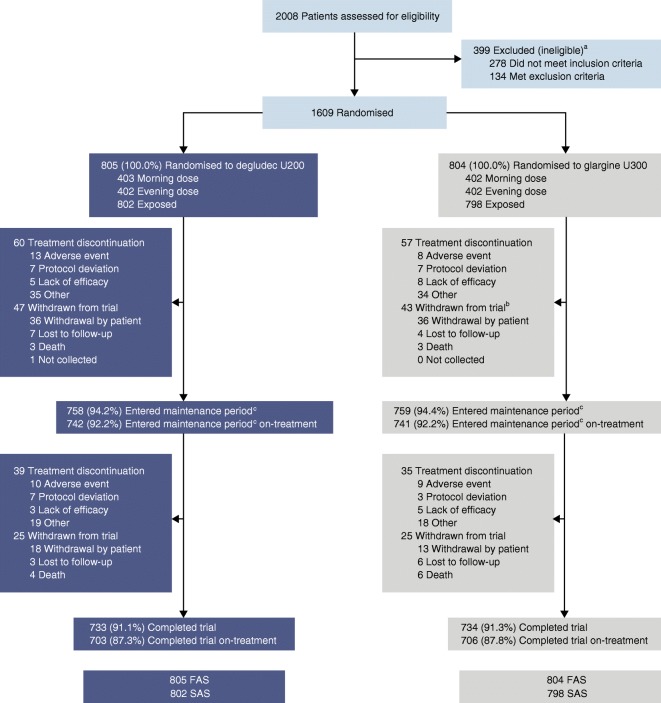
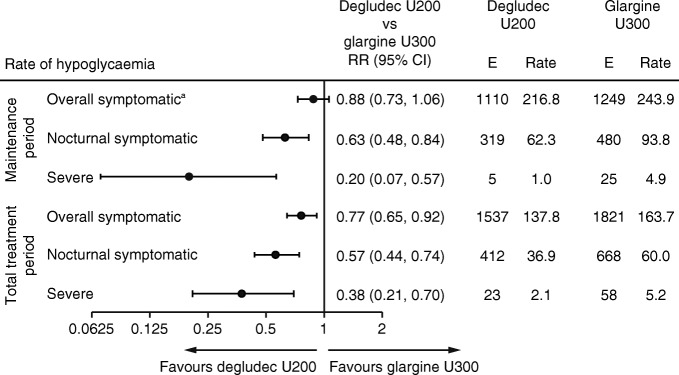
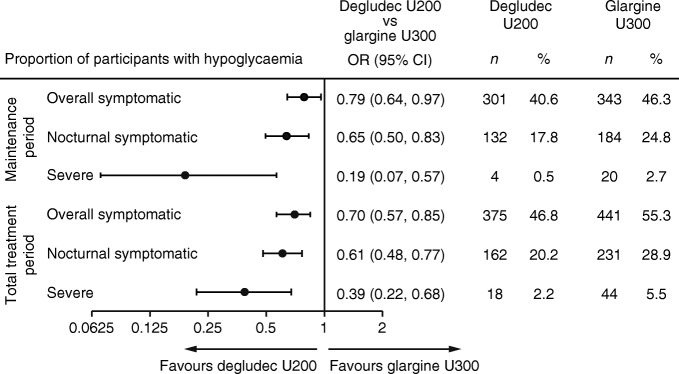
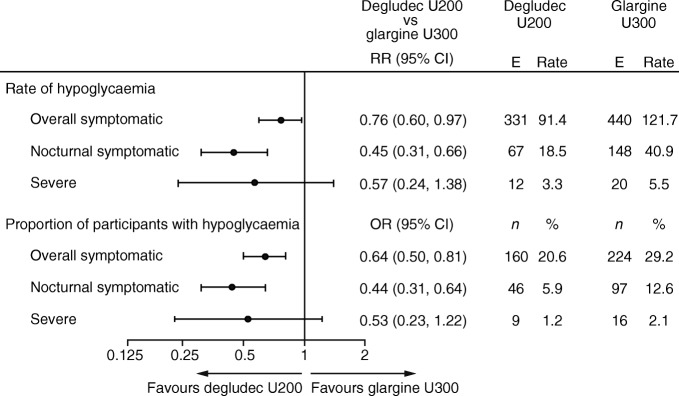
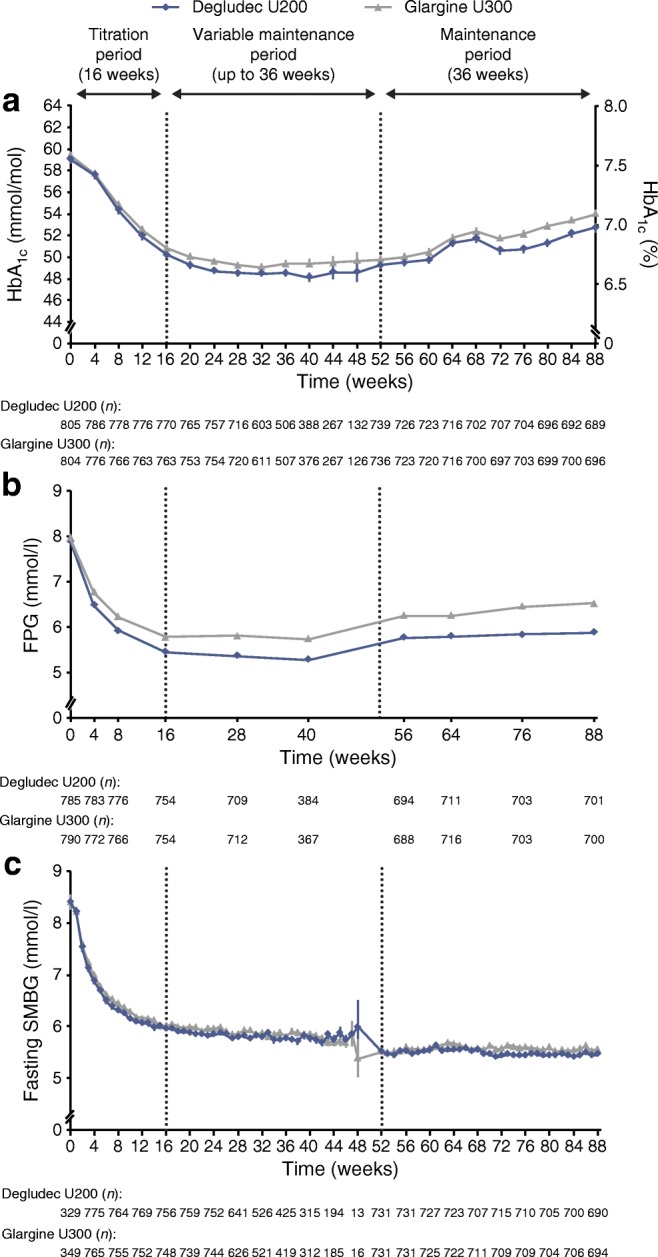
Aims/hypothesis: A head-to-head randomised trial was conducted to evaluate hypoglycaemia safety with insulin degludec 200 U/ml (degludec U200) and insulin glargine 300 U/ml (glargine U300) in individuals with type 2 diabetes treated with basal insulin. Methods: This randomised (1:1), open-label, treat-to-target, multinational trial included individuals with type 2 diabetes, aged ≥18 years with HbA 1c ≤80 mmol/mol (9.5%) and BMI ≤45 kg/m 2. Participants were previously treated with basal insulin with or without oral glucose-lowering drugs (excluding insulin secretagogues) and had to fulfil at least one predefined criterion for hypoglycaemia risk. Both degludec U200 and glargine U300 were similarly titrated to a fasting blood glucose target of 4.0–5.0 mmol/l. Endpoints were assessed during a 36 week maintenance period and a total treatment period up to 88 weeks. There were three hypoglycaemia endpoints: (1) overall symptomatic hypoglycaemia (either severe, an event requiring third-party assistance, or confirmed by blood glucose [<3.1 mmol/l] with symptoms); (2) nocturnal symptomatic hypoglycaemia (severe or confirmed by blood glucose with symptoms, between 00:01 and 05:59 h); and (3) severe hypoglycaemia. The primary endpoint was the number of overall symptomatic hypoglycaemic events in the maintenance period. Secondary hypoglycaemia endpoints included the number of nocturnal symptomatic events and number of severe hypoglycaemic events during the maintenance period. Results: Of the 1609 randomised participants, 733 of 805 (91.1%) in the degludec U200 arm and 734 of 804 (91.3%) in the glargine U300 arm completed the trial (87.3% and 87.8% completed on treatment, respectively). Baseline characteristics were comparable between the two treatment arms. For the primary endpoint, the rate of overall symptomatic hypoglycaemia was not significantly lower with degludec U200 vs glargine U300 (rate ratio [RR] 0.88 [95% CI 0.73, 1.06]). As there was no significant difference between treatments for the primary endpoint, the confirmatory testing procedure for superiority was stopped. The pre-specified confirmatory secondary hypoglycaemia endpoints were analysed using pre-specified statistical models but were now considered exploratory. These endpoints showed a lower rate of nocturnal symptomatic hypoglycaemia (RR 0.63 [95% CI 0.48, 0.84]) and severe hypoglycaemia (RR 0.20 [95% CI 0.07, 0.57]) with degludec U200 vs glargine U300. Conclusions/interpretation: There was no significant difference in the rate of overall symptomatic hypoglycaemia with degludec U200 vs glargine U300 in the maintenance period. The rates of nocturnal symptomatic and severe hypoglycaemia were nominally significantly lower with degludec U200 during the maintenance period compared with glargine U300. Trial registration: ClinicalTrials.gov NCT03078478 Funding: This trial was funded by Novo Nordisk (Bagsvaerd, Denmark)
Overview
The claims and statistics of this paper haven’t been checked yet.
Free: it reads the open-access text and checks the first 5 claims that cite a source we can check. Create a free account to check every claim.
Integrity signals
Registry
Cites
Statistics
Figures
Verification
Claims the paper makes
The claims and statistics of this paper haven’t been checked yet.
Free: it reads the open-access text and checks the first 5 claims that cite a source we can check. Create a free account to check every claim.
Self-check
Percentages, sums and reported differences re-computed from the paper’s own numbers.
The self-check needs the paper’s full text.
Citations
Cites
Statistical Analysis With Missing Data
Lahiff, M., Little, R. J. A., & Rubin, D. B. (1989) · Journal of the American Statistical Association · doi:10.2307/2289883 · Cited by 17,265
Cook, R. J., Dickens, B. M., & Fathalla, M. F. (2003) · Reproductive Health and Human Rights · doi:10.1093/acprof:oso/9780199241323.003.0025 · Cited by 10,769
Statistical Analysis With Missing Data
Ghosh, S. (1988) · Technometrics · doi:10.1080/00401706.1988.10488446 · Cited by 4,576
Seaquist, E. R., Anderson, J., Childs, B., Cryer, P., Dagogo-Jack, S., Fish, L., Heller, S. R., Rodriguez, H., Rosenzweig, J., & Vigersky, R. (2013) · Diabetes Care · doi:10.2337/dc12-2480 · Cited by 1,389
Self-citationEfficacy and safety of degludec versus glargine in type 2 diabetes.
Marso, S. P., McGuire, D. K., Zinman, B., Poulter, N. R., Emerson, S. S., Pieber, T. R., Pratley, R. E., Haahr, P.-M., Lange, M., Brown-Frandsen, K., et al. (2017) · New England Journal of Medicine · doi:10.1056/nejmoa1615692 · Cited by 574
Self-citationICH Harmonised Tripartite Guideline: Guideline for Good Clinical Practice.
Bhuiyan, P. S., & Rege, N. N. (2001) · PubMed · Cited by 527
Becker, R. H. A., Dahmen, R., Bergmann, K., Lehmann, A., Jax, T., & Heise, T. (2015) · Diabetes Care · doi:10.2337/dc14-0006 · Cited by 407
Heise, T., Hermanski, L., Nosek, L., Feldman, A., Rasmussen, S., & Haahr, H. (2012) · Diabetes, Obesity and Metabolism · doi:10.1111/j.1463-1326.2012.01627.x · Cited by 397 · cited 1×
“Insulin degludec has a lower day-to-day variability in glucose-lowering effect compared with glargine U100 and glargine U300 [6, 7], whereas there are contradictory reports regarding within-day variability when comparing insulin degludec and glargine U300 [7, 8].”
Riddle, M. C., Bolli, G. B., Ziemen, M., Muehlen-Bartmer, I., Bizet, F., & Home, P. D. (2014) · Diabetes Care · doi:10.2337/dc14-0991 · Cited by 354
Cited by
One hundred years of insulin therapy
Mathieu, C., Martens, P.-J., & Vangoitsenhoven, R. (2021) · Nature Reviews Endocrinology · doi:10.1038/s41574-021-00542-w · Cited by 164
Hanefeld, M., Fleischmann, H., Siegmund, T., & Seufert, J. (2020) · Diabetes Therapy · doi:10.1007/s13300-020-00855-5 · Cited by 73
Recent Advances in Insulin Therapy
Wilson, L. M., & Castle, J. R. (2020) · Diabetes Technology & Therapeutics · doi:10.1089/dia.2020.0065 · Cited by 65
“In a randomized study of 1609 adults with T2D (CONCLUDE), the rates of nocturnal symptomatic and severe hypoglycemia were modestly lower with degludec U-200 compared with glargine U-300, with no significant difference in the rate of overall symptomatic hypoglycemia.(21) One possible advantage of ultra-long-acting basa…”
BackgroundConcentrated insulins: Clinical update of therapeutic options
Umpierrez, G. E., Holt, E. H., Einhorn, D., & McGill, J. B. (2020) · Endocrine Practice · doi:10.4158/ep-2019-0607 · Cited by 44
100 years on: the impact of the discovery of insulin on clinical outcomes
Buse, J. B., Davies, M. J., Frier, B. M., & Philis‐Tsimikas, A. (2021) · BMJ Open Diabetes Research & Care · doi:10.1136/bmjdrc-2021-002373 · Cited by 43
Self-citationKalra, S., Shaikh, S. S., Priya, G., Baruah, M., Verma, A., Das, A. K., Shah, M., Das, S., Khandelwal, D., Sanyal, D., et al. (2020) · Diabetes Therapy · doi:10.1007/s13300-020-00973-0 · Cited by 37
Mannucci, E., Caiulo, C., Naletto, L., Madama, G., & Monami, M. (2021) · Endocrine · doi:10.1007/s12020-021-02889-6 · Cited by 30
Lucidi, P., Candeloro, P., Cioli, P., Andreoli, A. M., Pascucci, C., Gambelunghe, A., Bolli, G. B., Fanelli, C. G., & Porcellati, F. (2020) · Diabetes Care · doi:10.2337/dc20-1033 · Cited by 30
Drug-induced hypoglycemia: a disproportionality analysis of the FAERS database
Li, J., Wang, Y., Yang, X., Zhu, H., & Jiang, Z. (2023) · Expert Opinion on Drug Safety · doi:10.1080/14740338.2023.2278700 · Cited by 29
“Meanwhile, the clinical trials of drug-induced hypoglycemia were primarily conducted on hypoglycemic drugs in order to verify their safety before marketing [8,9].”
Moser, O., Müller, A., Aberer, F., Aziz, F., Kojzar, H., Sourij, C., Obermayer, A. M., Abbas, F. N., Birnbaumer, P., Lenz, J., et al. (2023) · Diabetes Technology & Therapeutics · doi:10.1089/dia.2022.0422 · Cited by 24
“20,21 As every physical activity and exercise session bears an additional hypoglycemic risk, a thorough exploration of this setting is warranted.”
Battelino, T., Bosnyak, Z., Danne, T., Mukherjee, B., Edelman, S., Pilorget, V., Choudhary, P., Renard, E., & Bergenstal, R. (2020) · Diabetes Therapy · doi:10.1007/s13300-020-00781-6 · Cited by 23
Comprehensive Cardiovascular and Renal Protection in Patients with Type 2 Diabetes
Conde, A. C., Martín, D. M., Ruíz, R. C., Olmo, M. R. F., Ariño, C. M., Gómez‐Doblas, J. J., Górriz, J. L., Mazón‐Ramos, P., García–Moll, X., Soler, M. J., et al. (2023) · Journal of Clinical Medicine · doi:10.3390/jcm12123925 · Cited by 23
Bedros, J. R., Jermendy, G., Gaál, Z., Gerő, L., Hídvégi, T., Kempler, P., Lengyel, C., Várkonyi, T. T., Winkler, G., & Wittmann, I. (2023) · Diabetologia Hungarica · doi:10.24121/dh.2023.20 · Cited by 21
Insulin Centennial: Milestones influencing the development of insulin preparations since 1922
Owens, D. R., Monnier, L., Ceriello, A., & Bolli, G. B. (2021) · Diabetes Obesity and Metabolism · doi:10.1111/dom.14587 · Cited by 22
“In contrast, the CONCLUDE study that compared degludec U200 with glargine U300, no significant difference in the overall symptomatic hypoglycaemia was.(130) It is possible that these contrasting findings reflect differences in study design, execution and study populations.”
ResultCheng, A. Y. Y., Wong, J., Freemantle, N., Acharya, S. H., & Ekinci, E. (2020) · Diabetes Therapy · doi:10.1007/s13300-020-00925-8 · Cited by 20
Dong, Z.-Y., Feng, J., & Zhang, J. (2022) · Clinical Therapeutics · doi:10.1016/j.clinthera.2022.09.012 · Cited by 20
Transforming type 1 diabetes: the next wave of innovation
Drucker, D. J. (2021) · Diabetologia · doi:10.1007/s00125-021-05396-5 · Cited by 19
“Flexibility in the time of dosing of insulin degludec may also be useful for some individuals with type 1 or type 2 diabetes [1].”
BackgroundLefever, E., Vliebergh, J., & Mathieu, C. (2021) · Expert Opinion on Drug Safety · doi:10.1080/14740338.2021.1856813 · Cited by 17
How conclusive is the CONCLUDE trial?
Prato, S. D. (2020) · Diabetologia · doi:10.1007/s00125-020-05086-8 · Cited by 16
Blonde, L., Bailey, T. S., Sullivan, S. D., & Freemantle, N. (2021) · Diabetes Obesity and Metabolism · doi:10.1111/dom.14405 · Cited by 15
“In CONCLUDE, Gla-300 and the 200 U/mL formulation of IDeg were compared in people with T2D with one or more hypoglycaemia risk factor, previously treated with BI (insulin glargine 100 U/mL [Gla-100], insulin detemir [IDet] or neutral protamine Hagedorn insulin), with or without oral antihyperglycaemic drugs (excluding…”
BackgroundMethodEvans, M., Moes, R. G. J., Pedersen, K. S., Gundgaard, J., & Pieber, T. R. (2020) · Advances in Therapy · doi:10.1007/s12325-020-01332-y · Cited by 14
Self-citationBattelino, T., Edelman, S. V., Nishimura, R., & Bergenstal, R. M. (2021) · Diabetes Technology & Therapeutics · doi:10.1089/dia.2020.0180 · Cited by 13
“19,20 Exploratory secondary analyses showed lower rates of nocturnal symptomatic hypoglycemia and severe hypoglycemia with IDeg versus Gla-300, 20 but these analyses cannot be considered to be conclusive.”
Current State and Principles of Basal Insulin Therapy in Type 2 Diabetes
Vargas‐Uricoechea, H. (2022) · Journal of Clinical Medicine Research · doi:10.14740/jocmr4660 · Cited by 14
“Likewise, a lower weight gain was documented with Glar300 than Glar-100 (Table 5) [38-40, 56-63].”
BackgroundLega, I. C., Yale, J.-F., Chadha, A., Paty, B., Roscoe, R., Snider, M., Steier, J., Bajaj, H. S., Barnes, T., Gilbert, J., et al. (2023) · Canadian Journal of Diabetes · doi:10.1016/j.jcjd.2023.08.003 · Cited by 12
“Studies comparing insulin glargine-300 to insulin degludec show similar rates of hypoglycemia [90,91].”
BackgroundSelf-citationMartín, Zhou, Y., Takagi, T., & Tian, Y. (2022) · International Journal of Clinical Pharmacy · doi:10.1007/s11096-022-01410-x · Cited by 11
“This study provided new insights into the potential clinical and economic advantages of degludec U100 in T1D adults, as reflected in a larger trial of type 2 diabetes [11, 28] even though not comparable with T1D.”
BackgroundResultYang, Y., Long, C., Li, T., & Chen, Q. (2022) · Frontiers in Endocrinology · doi:10.3389/fendo.2022.890090 · Cited by 11
Ingrasciotta, Y., Vitturi, G., & Trifirò, G. (2024) · Journal of Clinical Medicine · doi:10.3390/jcm13072113 · Cited by 11
“In particular, insulin degludec has demonstrated a reduction in severe and symptomatic nocturnal hypoglycemia, and a reduction in insulin dose and greater flexibility, compared to insulin glargine 300 [12,13].”
BackgroundCurrent usage of long-acting insulin analogs in patients with type 2 diabetes mellitus
Aktaş, G., & Duman, T. T. (2024) · Expert Review of Endocrinology & Metabolism · doi:10.1080/17446651.2024.2320631 · Cited by 10
Dehghani, M., Sadeghi, M., Barzkar, F., Maghsoomi, Z., Janani, L., Motevalian, S. A., Loke, Y. K., Ismail‐Beigi, F., Baradaran, H. R., & Khamseh, M. E. (2024) · Frontiers in Endocrinology · doi:10.3389/fendo.2024.1286827 · Cited by 9
Alhmoud, E., Saad, M. O., & Omar, N. E. (2024) · Frontiers in Endocrinology · doi:10.3389/fendo.2023.1285147 · Cited by 9
Current treatment for diabetes: a holistic approach
Mourelatou, N. G., Kounatidis, D. C., Vallianou, N. G., Daniele, G., Dardano, A., & Rebelos, E. (2025) · HORMONES · doi:10.1007/s42000-025-00734-3 · Cited by 8
“…by 32% over a median Novel insulin glargine 300 U/mL versus insulin DeglUdec in type 2 Diabetes patients with hypoglyCaEmia risk) trial, which involved patients with prior insulin use, showed lower rates of nocturnal symptomatic and severe hypo-glycemia with degludec compared to glargine U300 [91].”
Hundert Jahre – Insulin bleibt aktuell und notwendig
Landgraf, R., & Aberle, J. (2021) · Diabetologie und Stoffwechsel · doi:10.1055/a-1386-0011 · Cited by 8
“[114] Philis-Tsimikas A, Klonoff DC, Khunti K et al.”
BackgroundOya, J., Nakagami, T., Hasegawa, Y., Katamine, A., Kondo, Y., & Babazono, T. (2021) · Journal of Diabetes Investigation · doi:10.1111/jdi.13559 · Cited by 8
Vargas‐Uricoechea, H., Núñez, J. L. B., Guzmán, J. R., Silva‐Gomez, L., Beltran, S., & Sañudo‐Maury, M. E. (2022) · Diabetes Obesity and Metabolism · doi:10.1111/dom.14868 · Cited by 8
“This finding is consistent with the aforementioned real-world studies,(20,23,26) RCTs(15,19) and the CONCLUDE trial.(31) It is important to note that none of the participants showed clinically relevant documented hypoglycaemia (blood glucose < 54 mg/dl [<3.”
ResultEvolution of insulin therapy: past, present, future
Куркин, Д. В., Bakulin, D. A., Robertus, A. I., Kolosov, Y. A., Сергеевич, К. И., Morkovin, E. I., Strygin, A. V., Gorbunova, Y. V., Макаренко, И. Е., Васильевич, Д. Р., et al. (2024) · Problems of Endocrinology · doi:10.14341/probl13251 · Cited by 7
“При этом в иссле-довании BRIGHT показано, что инсулин гларгин 300 ЕД/мл вызывает меньший риск гипогликемии в течение периода подбора дозы, тогда как в исследовании CONCLUDE стол-кнулись с техническими проблемами, которые затрудни-ли интерпретацию его результатов [22, 23].”
D’Souza, S., & Kruger, D. F. (2020) · Diabetes Therapy · doi:10.1007/s13300-020-00920-z · Cited by 7
Pieber, T. R., BAJAJ, H. S., Heller, S. R., Jia, T., Khunti, K., Klonoff, D. C., Ladelund, S., Leiter, L. A., Wagner, L., & Philis‐Tsimikas, A. (2021) · Diabetes Obesity and Metabolism · doi:10.1111/dom.14564 · Cited by 7
“CI, confidence interval; degludec, insulin degludec 200 units/mL; glargineU300, insulin glargine 300 units/mL; SD, standard deviation As the risk criteria for hypoglycaemia in CONCLUDE included moderate CKD,11 the study allowed additional analyses on the impact of renal function on the safety and efficacy of degludec…”
BackgroundMethodResultSelf-citationBuzzetti, R., Fadini, G. P., Nicolucci, A., Larosa, M., Rossi, M. C., Cucinotta, D., Gabellieri, E., Mauro, A., Alberto, M., del Grappa, B., et al. (2022) · Nutrition Metabolism and Cardiovascular Diseases · doi:10.1016/j.numecd.2022.06.003 · Cited by 7
Fadini, G. P., Buzzetti, R., Nicolucci, A., Larosa, M., Rossi, M. C., Cucinotta, D., On behalf of the RESTORE-2 Study Group, Gabellieri, E., Alberto, M., Pagotto, U., et al. (2022) · Acta Diabetologica · doi:10.1007/s00592-022-01925-9 · Cited by 7
“The CONCLUDE trial, involving people with T2D switching from 1BIs to Gla-300 or the new 200 U/mL formulation of insulin degludec, documented a similar rate of overall symptomatic hypoglycemia during the 36-week maintenance period [20].”
BackgroundSelf-citationBasal insulin analogues in people with diabetes and chronic kidney disease
Jiménez, D. L., Miramontes‐González, J. P., Márquez‐López, L., Astudillo‐Martín, F., Beltrán, L. M., Obregón, F. M., & Martín, J. E. (2021) · Diabetic Medicine · doi:10.1111/dme.14679 · Cited by 7
Tabák, Á. G., Kempler, P., Guja, C., Eldor, R., Haluzík, M., Klupa, T., Παπάνας, Ν., Stoian, A. P., & Mankovsky, B. (2024) · Diabetes Therapy · doi:10.1007/s13300-024-01556-z · Cited by 5
Mauricio, D., Westerbacka, J., Nicholls, C. J., Wu, J., Gupta, R., & Eliasson, B. (2020) · Diabetes Obesity and Metabolism · doi:10.1111/dom.14264 · Cited by 5
“CONCLUDE eligibility criteria were not pooled with those of EDITION 1, 2 and 3 and BRIGHT, as CONCLUDE purposefully included only those people who had at least one risk factor for hypoglycaemia.(6) As these analyses were exploratory and hypothesis-generating, all analyses were descriptive and no statistical comparison…”
MethodHarris, S. B., Ajala, O., Bari, B., Liutkus, J., Hahn, J., Martyn, O., & Zwicker, D. (2021) · Diabetes Therapy · doi:10.1007/s13300-021-01063-5 · Cited by 5
“the maintenance period (secondary endpoints) [11].”
Si l'ère des insulines semi-synthétiques et biosynthétiques nous était contée
Monnier, L., Colette, C., & Owens, D. R. (2021) · Médecine des Maladies Métaboliques · doi:10.1016/s1957-2557(21)00178-4 · Cited by 5
Ragonese, M., Larosa, M., Angotti, S., Annese, S., Cruciani, L., Dainelli, M., Lucisano, G., Prosperini, G., Sacco, M., Salomone, E., et al. (2020) · Diabetes Therapy · doi:10.1007/s13300-020-00902-1 · Cited by 5
“A trial involving individuals with T2DM treated with basal insulin showed there was no significant difference in the rate of overall symptomatic hypoglycemia between Deg-200 and Gla-300 in the maintenance period in insulin-treated individuals [17, 18].”
BackgroundInsulin Analogs and the Mode of Insulin Delivery: Recent Advances and Challenges
Bhagi, M., Kaur, J., Dhar, A., & Bhat, A. (2024) · Current Pharmaceutical Biotechnology · doi:10.2174/0113892010287216240324050651 · Cited by 4
Clinical Use of Insulin Glargine 300 U/mL in Adults with Type 2 Diabetes: Hypothetical Case Studies
Harris, S. B., Parente, E. B., & Karalliedde, J. J. (2022) · Diabetes Therapy · doi:10.1007/s13300-022-01247-7 · Cited by 3
“The CONCLUDE study examined switching of BI to IDeg (200 U/mL) or Gla-300, with both insulins demonstrating similar hypoglycaemia risk on the primary outcome [55], thereby affirming the overall results of the BRIGHT study of the superior safety benefits for second-generation BIs.”
Resultde Adana, M. S. R., Domínguez, M., Morillas, V., Colomo, N., Mora, M. R. V., Guerrero, M., García‐Escobar, E., Carreira, M., Romero‐Zerbo, S., Linares, F., et al. (2023) · Diabetes Research and Clinical Practice · doi:10.1016/j.diabres.2023.110238 · Cited by 3
Kosjerina, V., Carstensen, B., Amadid, H., & Vistisen, D. (2023) · Diabetologia · doi:10.1007/s00125-023-05971-y · Cited by 3
Kumar, A., Sharma, S., Gupta, A., Dasgupta, A., Asirvatham, A. J., Talwalkar, P., Das, A., & Mohan, V. (2020) · Journal of Diabetology · doi:10.4103/jod.jod_59_20 · Cited by 3
Lindsay, R. S. (2022) · Wiley eBooks · doi:10.1002/9781119785033.ch9 · Cited by 3
CADTH (2024) · Canadian Journal of Health Technologies · doi:10.51731/cjht.2024.993 · Cited by 2
Koutroukas, V., Thomas, J., Martine‐Edith, G., Divilly, P., Meek, C. L., Pouwer, F., Amiel, S. A., & Choudhary, P. (2025) · Diabetes Obesity and Metabolism · doi:10.1111/dom.70238 · Cited by 2
Hamann, A. (2020) · Die Diabetologie · doi:10.1007/s11428-020-00627-6 · Cited by 2
Out of Sight, Out of Mind: A Call to Action for the Treatment of Hypoglycemia
Goldman, J. D., & Isaacs, D. M. (2024) · Clinical Diabetes · doi:10.2337/cd24-0014 · Cited by 3
Klimontov, V. V. (2022) · Diabetes Mellitus · doi:10.14341/dm12950 · Cited by 2
Comparative efficacy and safety of basal insulins: A review
Vargas‐Uricoechea, H., & Montoya, P. A. (2021) · Diabetes & Metabolic Syndrome Clinical Research & Reviews · doi:10.1016/j.dsx.2021.102318 · Cited by 2
Clemens, K. K., Ouédraogo, A. M., Lam, M., Muanda, F. T., Loeschnik, E., Wilk, P., & Shariff, S. Z. (2022) · Diabetes Obesity and Metabolism · doi:10.1111/dom.14622 · Cited by 2
Kalra, S., Shaikh, S. S., Priya, G., Baruah, M., Verma, A., Das, A. K., Shah, M., Das, S., Khandelwal, D., Sanyal, D., et al. (2021) · Diabetes Therapy · doi:10.1007/s13300-021-01120-z · Cited by 2
A prandialis glükózkontroll elérése gyors aszpart inzulinnal
Kis, J. T. (2020) · Diabetologia Hungarica · doi:10.24121/dh.2020.8 · Cited by 1
Cost-Effectiveness of Monitoring Metabolic Control
Smokovski, I. (2020) · Springer eBooks · doi:10.1007/978-3-030-51469-3_5 · Cited by 1
Hamann, A. (2021) · Der Diabetologe · doi:10.1007/s11428-021-00783-3 · Cited by 1
Nedogoda, S. V., Barykina, I. N., Salasyuk, A. S., Lutova, V. O., & Popova, E. A. (2022) · Diabetes Mellitus · doi:10.14341/dm12774 · Cited by 1
Randomised Controlled Trials in Diabetes Research: A Pathway to Interpreting Published Results
Battelino, T., & Mauricio, D. (2021) · Diabetes Therapy · doi:10.1007/s13300-021-01143-6 · Cited by 1
New Insulins, Biosimilars, and Insulin Therapy
Danne, T., Heinemann, L., & Bolinder, J. (2022) · Diabetes Technology & Therapeutics · doi:10.1089/dia.2022.2503 · Cited by 1
“However, as somewhat higher doses of glargine U300 compared with degludec have been needed to attain similar glycemic control in clinical trials (17,18), it might be more appropriate to study PK/PD profiles in individualized, clinically titrated doses of the two insulin analogs, as was done by…”
Abdelfattah, O., Sayed, A., Al-Refaei, A., Abdeldayem, J., Moustafa, K., Elias, N., & Saleh, Y. (2023) · Frontiers in clinical drug research. Diabetes and obesity · doi:10.2174/9789815123586123070008 · Cited by 1
Zúñiga, C., & Machado‐Duque, M. E. (2023) · Revista Colombiana de Endocrinología Diabetes & Metabolismo · doi:10.53853/encr.10.4.810 · Cited by 1
“…estudiada, las insulinas de ultra larga acción no estarían siendo empleadas en todos los casos con base en las recomendaciones para su uso y las condiciones en las que han mostrado evidencia de mayor seguridad por la disminución de hipoglicemias encontradas en la literatura (19, 22, 23, 24).”
BackgroundInsulin therapy: a century of continuing progress
Bolli, G. B., Fanelli, C. G., Lucidi, P., & Porcellati, F. (2023) · Elsevier eBooks · doi:10.1016/b978-0-323-91707-0.00006-1 · Cited by 1
Kamrul-Hasan, A. B. M., Borozan, S., Fernandez, C. J., Dutta, D., Nagendra, L., & Pappachan, J. M. (2025) · British Journal of Hospital Medicine · doi:10.12968/hmed.2024.0716 · Cited by 1
Battelino, T., Bosnyák, Z., Danne, T., Mukherjee, B., Edelman, S. V., Pilorget, V., Choudhary, P., Renard, É., & Bergenstal, R. M. (2020) · Diabetes Therapy · doi:10.1007/s13300-020-00853-7 · Cited by 1
Praktische Umsetzung einer Insulintherapie bei Typ-2-Diabetes: Einfache und komplizierte Fälle
Liebl, A. (2021) · Diabetes aktuell · doi:10.1055/a-1576-9316
“Nach der vorliegenden Evidenz dürfte zwischen Insulin Glargin U300 und Degludec kein wesentlicher Unterschied im Hinblick auf das Hypoglykämie-Risiko bestehen [8, 9].”
BackgroundKosteneffektivität der Überwachung der metabolischen Kontrolle
Smokovski, I. (2023) · Springer eBooks · doi:10.1007/978-3-031-27793-1_5
Fekete, C., Kis, J. T., Kiss, K. A., Schandl, L., & Winkler, G. (2023) · Diabetologia Hungarica · doi:10.24121/dh.2023.9
Glargin U300'ün etkinliğinin geriye yönelik olarak değerlendirilmesi: Tek merkez deneyimi
Gezer, D., & YURTSEVER, A. S. (2023) · Mersin üniversitesi sağlık bilimleri dergisi/Mersin üniversitesi sağlık bilimleri dergisi
Local Manufacturing of Insulin in Saudi Arabia: Advancing Healthcare and Economic Growth
Albarakah, Y., Alsaeed, A. H., Alshahrani, A., Alamri, M. M., Alamri, A. A., Alsaedi, A., Bokhari, S., Alshereef, M., Aldahash, R., Alharbi, I., et al. (2025) · Saudi Journal of Medicine · doi:10.36348/sjm.2025.v10i08.008
Insulin in Its Second Century: History, Evolution, and Aspirations
Mayer, J. P., Thalluri, K., Mickelson, E., Stowell, M. H. B., & DiMarchi, R. D. (2025) · Wiley eBooks · doi:10.1002/9781119824701.ch08
Affan, Y. (2023) · DiVA (Digitala Vetenskapliga Arkivet)
Dong, R., Liu, H., Gu, L., Zhao, Q., Luo, C., Zhang, T., Kou, X., Hu, Y., Shi, B., Guo, H., et al. (2026) · BMC Endocrine Disorders · doi:10.1186/s12902-026-02291-1
“Insulin degludec (IDeg) and insulin glargine U300 (IGlar U300) are both long-acting insulin analogues that have been widely studied for their efficacy and safety in T2DM management [4, 5].”
A Patient- and Function-Centric Model/Approach for Hypoglycemia Management in Older Adults
Alagiakrishnan, K., Mereu, L., Rahim, G., Ghosh, M., & Vu, A. (2026) · Geriatrics · doi:10.3390/geriatrics11050118
“Second-generation basal insulin analogues (e.g., insulin degludec, insulin glargine U-300) carry a lower hypoglycemia risk compared to earlier basal insulins (like NPH insulin, Insulin detemir and Insulin glargine U-100) [134,135].”
Rodbard, H. W., Irace, C., Lobo, J., Makrilakis, K., Priyadarshini, P., Sivalingam, S., Tofé, S., & Bhargava, A. (2026) · Diabetes Obesity and Metabolism · doi:10.1111/dom.71132
“Furthermore, titration of IGlar U100 was expected to result in at least 0.5%- points improvement in HbA 1c , justifying the smaller margin of 0.3%- point specified below (see Outcomes) as the threshold for the primary objective in this study [15–17].”
InfluentialPancreas and pancreatic hormones: Insulin dosing behavior and “insulin metrics”
Xue, J., & Chang, X. (2026) · Elsevier eBooks · doi:10.1016/b978-0-443-30263-3.00006-3
Miller, J. A. (2026) · Elsevier eBooks · doi:10.1016/b978-0-443-44037-3.00004-x
Hjelp! Insulatard forsvinner fra markedet
Meling, S., Finnes, T., Carlsen, S., Birkeland, K. I., Berg, T. J., Hofsø, D., Sætherhaug, T., & Nøkleby, K. (2026) · Tidsskrift for Den norske legeforening · doi:10.4045/tidsskr.26.0684
Metadata
- Authors
- on behalf of the CONCLUDE Study Group, Philis-Tsimikas, A., Klonoff, D. C., Khunti, K., Bajaj, H. S., Leiter, L. A., Hansen, M. V., Troelsen, L. N., Ladelund, S., Heller, S., & Pieber, T. R.
- Affiliations
- Scripps Whittier Diabetes Institute (US)
- University of Leicester (GB)
- St. Michael's Hospital (CA)
- Novo Nordisk (Denmark) (DK)
- Medical University of Graz (AT)
- ORCID
- Venue
- Diabetologia
- Published
- 2020-01-27
- Volume
- 63
- Issue
- 4
- Pages
- 698-710
- ISSN
- 0012-186X (ISSN-L)
- 1432-0428
- PMC
- PMC7054369
- OpenAlex
- W3002620086
- Cited by
- 73
- References
- 30
- Citations by year
- 2026: 4 · 2025: 3 · 2024: 8 · 2023: 10 · 2022: 13 · 2021: 17 · 2020: 18
- FWCI
- 10.94
- Type
- journal article
- Language
- en
- Open access
- hybrid
- doi.org
- Licence
- cc-by
- creativecommons.org/licenses/by/4.0 (tdm)
- creativecommons.org/licenses/by/4.0 (vor)
- Locations
- Diabetologia (publishedVersion, cc-by)
- PubMed Central (publishedVersion, cc-by)
- PubMed (publishedVersion)
- White Rose Research Online (University of Leeds, The University of Sheffield, University of York) (acceptedVersion)
- Minerva Access (University of Melbourne) (submittedVersion, cc-by)
- Funders
- Novo Nordisk
- Topics
- Health Sciences › Medicine › Endocrinology, Diabetes and Metabolism › Diabetes Management and Research
- Health Sciences › Medicine › Endocrinology, Diabetes and Metabolism › Diabetes Treatment and Management
- Health Sciences › Medicine › Public Health, Environmental and Occupational Health › Patient Safety and Medication Errors
- Keywords
- insulin degludec, insulin glargine 300 U/mL, type 2 diabetes, hypoglycemia, basal insulin, nocturnal hypoglycemia, severe hypoglycemia, hypoglycemia risk, treatment discontinuation
- MeSH terms
- Insulin Glargine, Aged, Blood Glucose, Diabetes Mellitus, Type 2, Dose-Response Relationship, Drug, Female, Glycated Hemoglobin, Humans, Hypoglycemia, Male, Middle Aged, Risk Factors, Treatment Outcome, Insulin, Long-Acting
About these checks
Registry, retraction, Cites and statistics results are computed, not judged, with one exception: a printed reference that no index lists is read once by a model before it counts as a citation error. Claims are extracted by a model and kept only when their quote appears verbatim in the text; each cited source is then checked, with a model’s help, for whether it says what the claim relies on. Those verdicts can be wrong — read the claim’s quote and the cited source before relying on one.
Statistics and arithmetic are recomputed, not judged.
Confidence bands are shown only for fields calibrated on our annotated test set. None is calibrated yet, so no band is shown.
What counts as a claim ›How we measure confidence ›How we check this ›
Are you an author, or do you see a problem with this page? Request a review
Data sources
Bibliographic data: Semantic Scholar, OpenAlex, Crossref.
Contains information from the Semantic Scholar Academic Graph Datasets, made available under the ODC Attribution License (ODC-BY 1.0).
Semantic Scholar’s data is described in: Kinney, R., et al. (2023). The Semantic Scholar Open Data Platform. arXiv:2301.10140.
