

Efficacy and safety of evolocumab in individuals with type 2 diabetes mellitus: primary results of the randomised controlled BANTING study
Open accessThe DOI matches its Crossref record; 22 of the 22 references it cites were found in a registry or an index.
Abstract
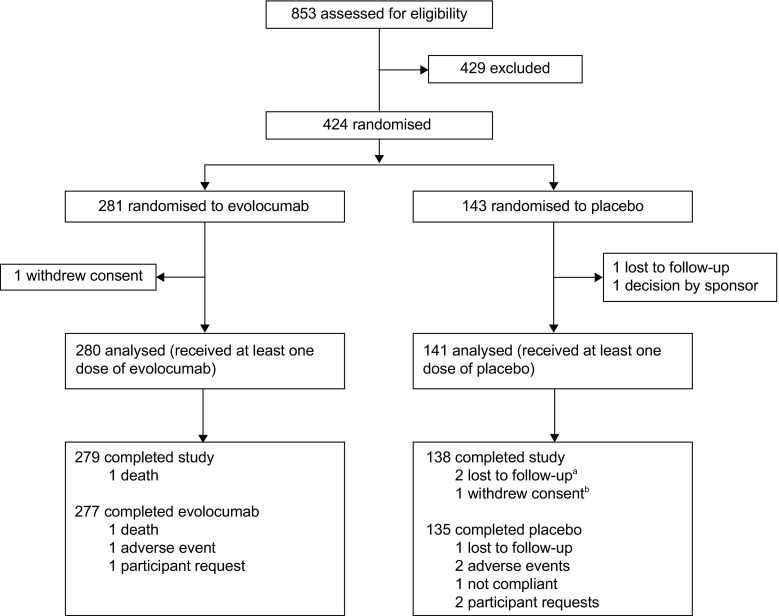
AIMS/HYPOTHESIS: The study aimed to examine the efficacy of 12 weeks of monthly evolocumab or placebo in lowering LDL-cholesterol (LDL-C) in individuals with type 2 diabetes and hypercholesterolaemia or mixed dyslipidaemia and on a maximum-tolerated statin of at least moderate intensity. METHODS: <10% (86 mmol/mol), had been on stable pharmacological therapy for diabetes for ≥6 months and were taking a maximum-tolerated statin dose of at least moderate intensity. Lipid eligibility criteria varied by history of clinical cardiovascular disease. Participants were randomised 2:1 to evolocumab 420 mg s.c. or placebo. Randomisation was performed centrally via an interactive web-based or voice recognition system. Allocation was concealed using the centralised randomisation process. Treatment assignment was blinded to the sponsor study team, investigators, site staff and patients throughout the study. Co-primary endpoints were mean percentage change in LDL-C from baseline to week 12 and to the mean of weeks 10 and 12. Additional endpoints included LDL-C <1.81 mmol/l, LDL-C reduction ≥50% and other lipids. Exploratory analyses included percentage changes in fasting and post mixed-meal tolerance test (MMTT) lipoproteins and lipids, glucose metabolism variables and inflammatory biomarkers. RESULTS: In total, 421 individuals were randomised and analysed, having received evolocumab (280 participants) or placebo (141 participants) (mean [SD] age 62 [8] years; 44% women; 77% white). Evolocumab decreased LDL-C by 54.3% (1.4%) at week 12 (vs 1.1% [1.9%] decrease with placebo; p < 0.0001) and by 65.0% (1.3%) at the mean of weeks 10 and 12 (vs 0.8% [1.8%] decrease with placebo; p < 0.0001); it also decreased non-HDL-cholesterol (HDL-C) by 46.9% (1.3%) at week 12 (vs 0.6% [1.8%] decrease with placebo) and by 56.6% (1.2%) at the mean of weeks 10 and 12 (vs 0.1% [1.6%] decrease with placebo). Evolocumab significantly improved levels of other lipids and allowed more participants to reach LDL-C <1.81 mmol/l or a reduction in LDL-C levels ≥50%. After an MMTT (120 min), there were favourable changes (p < 0.05; nominal, post hoc, no multiplicity adjustment) in chylomicron triacylglycerol (triglycerides), chylomicron cholesterol, VLDL-C and LDL-C. Evolocumab had no effect on glycaemic variables and was well tolerated. CONCLUSIONS/INTERPRETATION: In statin-treated individuals with type 2 diabetes and hypercholesterolaemia or mixed dyslipidaemia, evolocumab significantly reduced LDL-C and non-HDL-C. Favourable changes (p < 0.05) were observed in postprandial levels of chylomicrons, VLDL-C and LDL-C. TRIAL REGISTRATION: ClinicalTrials.gov NCT02739984 FUNDING: This study was funded by Amgen Inc. DATA AVAILABILITY: Qualified researchers may request data from Amgen clinical studies. Complete details are available at www.amgen.com/datasharing .
Overview
The claims and statistics of this paper haven’t been checked yet.
Free: it reads the open-access text and checks the first 5 claims that cite a source we can check. Create a free account to check every claim.
Integrity signals
Registry
Cites
Statistics
Figures
Verification
Claims the paper makes
The claims and statistics of this paper haven’t been checked yet.
Free: it reads the open-access text and checks the first 5 claims that cite a source we can check. Create a free account to check every claim.
Claims other papers make about this one
Each is checked against this paper’s own text: does it say what the citing paper says it does?
In the citing paper
“Compared with placebo, evolocumab also significantly reduced other atherogenic lipids (i.e.TGs, non-HDL-C, apolipoprotein B-containing particles) in patients with diabetes and mixed dyslipidaemia enrolled in the BANTING (Evaluation of Evolocumab Efficacy in Diabetic Adults With Hypercholesterolemia/Mixed Dyslipidemia) and BERSON (Safety and Efficacy of Evolocumab in Combination With Statin Therapy”
From 2023 ESC guidelines for the management of cardiovascular disease in patients with diabetes. (2023) · cites this paper as [265]
Self-check
Percentages, sums and reported differences re-computed from the paper’s own numbers.
The self-check needs the paper’s full text.
Citations
Cites
Stone, N. J., Robinson, J. G., Lichtenstein, A. H., Bairey Merz, C. N., Blum, C. B., Eckel, R. H., Goldberg, A. C., Gordon, D., Levy, D., Lloyd-Jones, D. M., et al. (2014) · Circulation · doi:10.1161/01.cir.0000437738.63853.7a · Cited by 7,081
Evolocumab and Clinical Outcomes in Patients with Cardiovascular Disease
Sabatine, M. S., Giugliano, R. P., Keech, A. C., Honarpour, N., Wiviott, S. D., Murphy, S. A., Kuder, J. F., Wang, H., Liu, T., Wasserman, S. M., et al. (2017) · New England Journal of Medicine · doi:10.1056/nejmoa1615664 · Cited by 6,138
Stone, N. J., Robinson, J. G., Lichtenstein, A. H., Bairey Merz, C. N., Blum, C. B., Eckel, R. H., Goldberg, A. C., Gordon, D., Levy, D., Lloyd-Jones, D. M., et al. (2014) · Journal of the American College of Cardiology · doi:10.1016/j.jacc.2013.11.002 · Cited by 3,845
Collaborators, C. T. T. (. (2008) · The Lancet · doi:10.1016/s0140-6736(08)60104-x · Cited by 2,081
Jellinger, P. S., Handelsman, Y., Rosenblit, P. D., Bloomgarden, Z. T., Fonseca, V. A., Garber, A. J., Grunberger, G., Guerin, C. K., Bell, D. S. H., Mechanick, J. I., et al. (2017) · Endocrine Practice · doi:10.4158/ep171764.appgl · Cited by 1,094
Self-citationSabatine, M. S., Leiter, L. A., Wiviott, S. D., Giugliano, R. P., Deedwania, P., De Ferrari, G. M., Murphy, S. A., Kuder, J. F., Gouni-Berthold, I., Lewis, B. S., et al. (2017) · The Lancet Diabetes & Endocrinology · doi:10.1016/s2213-8587(17)30313-3 · Cited by 603 · cited 4×
“FOURIER included 11,031 (40%) participants with diabetes who received treatment with moderate- to high-intensity statin over a median follow-up of 26 months [8, 15].”
BackgroundResultInfluentialSelf-citationGiugliano, R. P., Cannon, C. P., Blazing, M. A., Nicolau, J. C., Corbalán, R., Špinar, J., Park, J.-G., White, J. A., Bohula, E. A., & Braunwald, E. (2018) · Circulation · doi:10.1161/circulationaha.117.030950 · Cited by 427
Anti-PCSK9 Monotherapy for Hypercholesterolemia
Koren, M. J., Lundqvist, P., Bolognese, M., Neutel, J. M., Monsalvo, M. L., Yang, J., Kim, J. B., Scott, R., Wasserman, S. M., & Bays, H. (2014) · Journal of the American College of Cardiology · doi:10.1016/j.jacc.2014.03.018 · Cited by 411
Self-citationPCSK9 genetic variants and risk of type 2 diabetes: a mendelian randomisation study
Schmidt, A. F., Swerdlow, D. I., Holmes, M. V., Patel, R. S., Fairhurst-Hunter, Z., Lyall, D. M., Hartwig, F. P., Horta, B. L., Hyppönen, E., Power, C., et al. (2017) · The Lancet Diabetes & Endocrinology · doi:10.1016/s2213-8587(16)30396-5 · Cited by 380
Lloyd-Jones, D. M., Morris, P. B., Ballantyne, C. M., Birtcher, K. K., Daly, D. D., DePalma, S. M., Minissian, M. B., Orringer, C. E., & Smith, S. C. (2017) · Journal of the American College of Cardiology · doi:10.1016/j.jacc.2017.07.745 · Cited by 377
Cited by
2023 ESC guidelines for the management of cardiovascular disease in patients with diabetes.
Marx, N., Federici, M., Schütt, K., Müller-Wieland, D., Ajjan, R. A., Antunes, M. J., Christodorescu, R. M., Crawford, C., Di Angelantonio, E., Eliasson, B., et al. (2023) · European Heart Journal · doi:10.1093/eurheartj/ehad192 · Cited by 1,642
Ginsberg, H. N., Packard, C. J., Chapman, M. J., Borén, J., Aguilar-Salinas, C. A., Averna, M., Ference, B. A., Gaudet, D., Hegele, R. A., Kersten, S., et al. (2021) · European Heart Journal · doi:10.1093/eurheartj/ehab551 · Cited by 979
“196 Effects on VLDL clearance are less than with statins, with only modest TG lowering in hypertriglyceridaemia, 197 implying a capacity to reduce plasma levels of smaller-sized remnants at lower TG levels, but not remnants at higher TG levels.”
BackgroundCauses and consequences of hypertriglyceridemia
Packard, C. J., Boren, J., & Taskinen, M.-R. (2020) · Frontiers in Endocrinology · doi:10.3389/fendo.2020.00252 · Cited by 239
“In a recent study in patients with diabetes, it was observed that plasma triglyceride was reduced about 15% (122), and we saw a similar, small but significant drop in diabetic patients with borderline raised triglyceride treated with evolocumab that was accompanied by a decrease in apoCIII, a reduced post-prandial ris…”
BackgroundPCSK9 inhibition and inflammation: A narrative review
Ruscica, M., Tokgözoğlu, L., Corsini, A., & Sirtori, C. R. (2019) · Atherosclerosis · doi:10.1016/j.atherosclerosis.2019.07.015 · Cited by 130
Novel and future lipid-modulating therapies for the prevention of cardiovascular disease
Brandts, J., & Ray, K. K. (2023) · Nature Reviews Cardiology · doi:10.1038/s41569-023-00860-8 · Cited by 120
Moon, J. S., Kang, S., Choi, J. H., Lee, K. A., Moon, J. H., Chon, S., Kim, D. J., Kim, H. J., Seo, J. A., Kim, M. K., et al. (2024) · Diabetes & Metabolism Journal · doi:10.4093/dmj.2024.0249 · Cited by 90
Kang, S., Kang, S. M., Choi, J. H., Ko, S., Koo, B. K., Kwon, H.-S., Kim, M. K., Kim, S. Y., Kim, S., Kim, Y., et al. (2025) · Diabetes & Metabolism Journal · doi:10.4093/dmj.2025.0469 · Cited by 85
New Perspectives on Atherogenic Dyslipidaemia and Cardiovascular Disease
Lorenzatti, A. J., & Toth, P. P. (2020) · European Cardiology Review · doi:10.15420/ecr.2019.06 · Cited by 72
Evolocumab in HIV-Infected Patients With Dyslipidemia
Boccara, F., Kumar, P. N., Caramelli, B., Calmy, A., López, J. A. G., Bray, S., Cyrille, M., Rosenson, R. S., Baker, D., Bloch, M., et al. (2020) · Journal of the American College of Cardiology · doi:10.1016/j.jacc.2020.03.025 · Cited by 63
Self-citationFarmakis, I., Doundoulakis, I., Pagiantza, A., Zafeiropoulos, S., Antza, C., Karvounis, H., & Giannakoulas, G. (2021) · Journal of Cardiovascular Pharmacology · doi:10.1097/fjc.0000000000000963 · Cited by 63
Toth, P. P., Bray, S., Villa, G., Palagashvili, T., Sattar, N., Stroes, E. S. G., & Worth, G. M. (2022) · Journal of the American Heart Association · doi:10.1161/jaha.122.025551 · Cited by 56
the DARWIN-T2D Network of the Italian Diabetes Society, Morieri, M. L., Avogaro, A., & Fadini, G. P. (2020) · Cardiovascular Diabetology · doi:10.1186/s12933-020-01164-8 · Cited by 51
PCSK9 Inhibition and Risk of Diabetes: Should We Worry?
Carugo, S., Sirtori, C. R., Corsini, A., Tokgözoğlu, L. S., & Ruscica, M. (2022) · Current Atherosclerosis Reports · doi:10.1007/s11883-022-01074-y · Cited by 45
Imbalzano, E., Ilardi, F., Orlando, L., Pintaudi, B., Savarese, G., & Rosano, G. M. C. (2023) · European Heart Journal - Cardiovascular Pharmacotherapy · doi:10.1093/ehjcvp/pvad019 · Cited by 44
Chinese expert consensus on blood lipid management in patients with diabetes (2024 edition)
Xiao, Y., Yu, B., Chen, C., Wang, S., Hu, D., Wu, C., Luo, Y., Xie, L., Li, C., Peng, D., et al. (2024) · Journal of Translational Internal Medicine · doi:10.2478/jtim-2024-0014 · Cited by 42
Mu, G., Xiang, Q., Zhou, S., Liu, Z., Qi, L., Jiang, J., Gong, Y., Xie, Q., Wang, Z., Zhang, H., et al. (2020) · Advances in Therapy · doi:10.1007/s12325-020-01259-4 · Cited by 39
Standards of Care in Diabetes. The position of Diabetes Poland – 2025
Araszkiewicz, A., Borys, S., Broncel, M., Budzynski, A. Z., Cyganek, K., Cypryk, K., CYRANKA, K. M., Czupryniak, L., Dąbrowski, M., Dzida, G. J., et al. (2025) · Current Topics in Diabetes · doi:10.5114/ctd/203685 · Cited by 38
Long-Term Efficacy and Tolerability of PCSK9 Targeted Therapy: A Review of the Literature
Schonck, W. A. M., Stroes, E. S. G., Hovingh, G. K., & Reeskamp, L. F. (2024) · Drugs · doi:10.1007/s40265-024-01995-9 · Cited by 38
“Evolocumab on top of statin therapy in the BANTING trial [71] and BERSON trial [72] showed no notable effect on glucose metabolism in patients with type 2 diabetes after 12 weeks.”
BackgroundLorenzatti, A. J., Monsalvo, M. L., López, J. A. G., Wang, H., & Rosenson, R. S. (2021) · Cardiovascular Diabetology · doi:10.1186/s12933-021-01287-6 · Cited by 34
“For both studies, detailed methods, participant inclusion/exclusion criteria, and primary results have been previously published [24, 25, 29].”
BackgroundMethodResultInfluentialSelf-citationColhoun, H. M., Leiter, L. A., Müller-Wieland, D., Cariou, B., Ray, K. K., Tinahones, F. J., Domenger, C., Letierce, A., Israel, M., Samuel, R., et al. (2020) · Cardiovascular Diabetology · doi:10.1186/s12933-020-0991-1 · Cited by 33
Efficacy and safety of PCSK9 monoclonal antibodies: an evidence-based review and update
Kaddoura, R., Orabi, B., & Salam, A. M. (2020) · Journal of Drug Assessment · doi:10.1080/21556660.2020.1801452 · Cited by 34
An Updated Meta-Analysis for Safety Evaluation of Alirocumab and Evolocumab as PCSK9 Inhibitors
Choi, H. D., & Kim, J. H. (2023) · Cardiovascular Therapeutics · doi:10.1155/2023/7362551 · Cited by 33
Standards of Care in Diabetes. The position of Diabetes Poland – 2024
Araszkiewicz, A., Bandurska-Stankiewicz, E. M., Borys, S., Broncel, M., Budzynski, A. Z., Cyganek, K., Cypryk, K., CYRANKA, K. M., Czupryniak, L., Dzida, G. J., et al. (2024) · Current Topics in Diabetes · doi:10.5114/ctd/183052 · Cited by 33
Taskinen, M.-R., Björnson, E., Andersson, L., Kahri, J., Porthan, K., Matikainen, N., Söderlund, S., Pietiläinen, K., Hakkarainen, A., Lundbom, N., et al. (2020) · Journal of Clinical Lipidology · doi:10.1016/j.jacl.2019.12.003 · Cited by 30
Taskinen, M.-R., Björnson, E., Kahri, J., Söderlund, S., Matikainen, N., Porthan, K., Ainola, M., Hakkarainen, A., Lundbom, N., Fermanelli, V., et al. (2021) · Arteriosclerosis, Thrombosis, and Vascular Biology · doi:10.1161/atvbaha.120.315446 · Cited by 30
Yang, Y., Kim, H., Kim, S., & Moon, M. K. (2023) · Journal of Lipid and Atherosclerosis · doi:10.12997/jla.2023.12.1.12 · Cited by 30
Garçon, D., Moreau, F., Ayer, A., Dijk, W., Prieur, X., Arnaud, L., Roubtsova, A., Seidah, N., Prat, A., Cariou, B., et al. (2020) · Arteriosclerosis, Thrombosis, and Vascular Biology · doi:10.1161/atvbaha.120.314194 · Cited by 22
Quantification of LDL-Cholesterol Corrected for Molar Concentration of Lipoprotein(a)
Rosenson, R. S., López, J. A. G., Monsalvo, M. L., Wu, Y., Wang, H., & Marcovina, S. M. (2022) · Cardiovascular Drugs and Therapy · doi:10.1007/s10557-022-07407-y · Cited by 29
Self-citationFischer, L. T., Hochfellner, D. A., Knoll, L., Pöttler, T., Mader, J. K., & Aberer, F. (2021) · Cardiovascular Diabetology · doi:10.1186/s12933-021-01283-w · Cited by 26
Yang, Y., Kim, H., Kim, S., Moon, M. K., & Korean Society of Lipid and Atherosclerosis (2023) · Diabetes & Metabolism Journal · doi:10.4093/dmj.2022.0448 · Cited by 26
Impact of Proprotein Convertase Subtilisin/Kexin Type 9 Inhibitors on Lipoprotein(a)
Rivera, F. B., Cha, S. W., Linnaeus Louisse, C., Carado, G. P., Magalong, J. V., Tang, V. A., Enriquez, M. G., Gulati, M., Enkhmaa, B., Pagidipati, N., et al. (2025) · JACC: Advances · doi:10.1016/j.jacadv.2024.101549 · Cited by 25
Chen, T., Wang, Z., Xie, J., Xiao, S., Li, W., & Liu, N. (2023) · Nutrition Metabolism and Cardiovascular Diseases · doi:10.1016/j.numecd.2023.05.033 · Cited by 20
Gurevitz, C., & Rosenson, R. S. (2024) · European Journal of Preventive Cardiology · doi:10.1093/eurjpc/zwae388 · Cited by 19
Self-citationDaviglus, M. L., Ferdinand, K. C., López, J. A. G., Wu, Y., Monsalvo, M. L., & Rodríguez, C. J. (2020) · Journal of the American Heart Association · doi:10.1161/jaha.120.016839 · Cited by 18
Self-citationMa, W., Guo, X., Ma, Y., & Hu, Z. (2021) · Atherosclerosis · doi:10.1016/j.atherosclerosis.2021.04.008 · Cited by 18
Zhou, Z., Zhang, W., Burgner, D. P., Tonkin, A. M., Zhu, C., Sun, C., Magnussen, C. G., Ernst, M. E., Breslin, M. C., Nicholls, S. J., et al. (2023) · The American Journal of Medicine · doi:10.1016/j.amjmed.2023.02.025 · Cited by 18
Shaik, A., & Rosenson, R. S. (2021) · Cardiovascular Drugs and Therapy · doi:10.1007/s10557-021-07168-0 · Cited by 16
Self-citationKayani, T., Ahmad, B., Chang, R., Qian, F., Sahinoz, M., Rehan, M., Giaimo, A., Spatz, E. S., & Hu, J. (2024) · Pharmacoepidemiology · doi:10.3390/pharma3010009 · Cited by 17
Heidemann, B. E., Koopal, C., van Lennep, J. E. R., Stroes, E. S. G., Riksen, N. P., Mulder, M. T., van der Zee, L. C. V. V. –., Blackhurst, D., Marais, A. D., & Visseren, F. L. J. (2022) · Journal of clinical lipidology · doi:10.1016/j.jacl.2022.10.006 · Cited by 16
Proprotein convertase subtilisin/kexin type 9 inhibition as the next statin?
Rakipovski, G., Hovingh, G. K., & Nyberg, M. (2020) · Current Opinion in Lipidology · doi:10.1097/mol.0000000000000718 · Cited by 15
Yu, Z., Hu, L., Sun, C., Wang, Z., Zhang, X., Wu, M., & Liu, L. (2023) · Journal of Cardiovascular Pharmacology · doi:10.1097/fjc.0000000000001419 · Cited by 14
Rosenson, R. S., Tate, A., Mar, P., Grushko, O. G., Chen, Q., & Goonewardena, S. N. (2024) · Atherosclerosis · doi:10.1016/j.atherosclerosis.2024.117529 · Cited by 14
Self-citationYang, S., Shen, W., Zhang, H., Wang, C., Yang, P., & Wu, Q. (2022) · Cardiovascular Drugs and Therapy · doi:10.1007/s10557-022-07338-8 · Cited by 14
“Finally, 21 studies containing 26 RCTs were included in this meta-analysis upon the deletion of duplicate records and irrelative studies [ 14– 34”
BackgroundPCSK9 Inhibitor: Safe Alternative to Fill the Treatment Gap in Statin-Limited Conditions?
Xiao, Y., Ba, Z., Pang, S., Liu, D., Wang, H., Liang, H., Wang, Y., & Yuan, J. (2022) · Reviews in Cardiovascular Medicine · doi:10.31083/j.rcm2311380 · Cited by 12
Leiter, L. A., Hegele, R. A., Brown, V., Bergeron, J., Mackinnon, E. S., & Mancini, G. B. J. (2024) · Reviews in Cardiovascular Medicine · doi:10.31083/j.rcm2505190 · Cited by 12
“The BANTING study investigated the impact of evolocumab in patients with type 2 diabetes mellitus and hypercholesterolemia or mixed dyslipidemia and on background statin therapy (Table 6) [39].”
BackgroundMethodInfluentialJha, M., Agrawal, S. P., Maheta, D., Bhattacharjee, P., Jain, H., Zacks, J. S., Frishman, W. H., & Aronow, W. S. (2025) · Expert Opinion on Biological Therapy · doi:10.1080/14712598.2025.2511063 · Cited by 11
“Ultimately, five studies met the eligibility criteria and were included in this systematic review [27–31].”
Biotechnology Approaches for the Treatment of Dyslipidemia
Parolini, C. (2020) · Cardiovascular Drugs and Therapy · doi:10.1007/s10557-020-07017-6 · Cited by 10
Ahmad, W. A. W., Rosman, A., Bavanandan, S., Mohamed, M., Kader, M. A. S. A., Muthusamy, T. S., Cardiology, C. V. S., Lam, K. H., Kasim, S. S., Hoo, F. K., et al. (2023) · Malaysian Journal of Medical Sciences · doi:10.21315/mjms2023.30.1.6 · Cited by 9
Velidakis, N., Stachteas, P., Gkougkoudi, E., Papadopoulos, C. E., & Kadoglou, N. P. E. (2024) · Pharmaceuticals · doi:10.3390/ph17050568 · Cited by 9
“Notably, both alirocumab and evolocumab have shown acceptable safety profiles with very limited adverse effects and a neutral impact on glycemic control in the diabetic population [68].”
BackgroundMulligan, M. D., Gandhi, R. S., Vishwakarma, R., & Bhattacharya, R. (2026) · Journal of clinical lipidology · doi:10.1016/j.jacl.2026.03.019 · Cited by 8
Rajendran, Y., Nandhakumar, M., Eerike, M., Kondampati, N., Mali, K. R., Chalissery, L. F., Konda, V. G. R., & Nagireddy, U. M. (2024) · Cureus · doi:10.7759/cureus.69900 · Cited by 8
Zhang, T., Zhang, Y., Yang, Y. P., Liao, H., Li, X., Liu, R., Liu, X., Yang, L., & Yue, W. (2023) · Journal of Thrombosis and Thrombolysis · doi:10.1007/s11239-023-02925-4 · Cited by 7
“As a new class of cholesterol-lowering drugs, several studies have been published to demonstrate the clinical efficacy and safety of PCSK9 inhibitors (evolocumab) in patients with familial hypercholesterolemia [16], stable ASCVD [17], type 2 diabetes [18] or ACS with hypercholesterolemia [13 ].”
InfluentialChen, R., Wang, Q., Wang, Y. Y., Wang, Y., Liu, J., Liao, Z., & Xiao, X. (2023) · Frontiers in Endocrinology · doi:10.3389/fendo.2023.1094458 · Cited by 7
Linee guida ESC 2023 per il trattamento delle malattie cardiovascolari nei pazienti diabetici
Marx, N., Federici, M., Schütt, K. S., Müller‐Wieland, D., Ajjan, R., Antunes, M. J., Christodorescu, R., Crawford, C. A., Angelantonio, E. D., Eliasson, B., et al. (2024) · Giornale Ialiano di Cardiologia · doi:10.1714/4162.41558 · Cited by 6
Araszkiewicz, A., Borys, S., Broncel, M., Budzynski, A. Z., Cyganek, K., Cypryk, K., CYRANKA, K. M., Czupryniak, L., Dąbrowski, M., Dzida, G. J., et al. (2026) · Current Topics in Diabetes · doi:10.5114/ctd/219306 · Cited by 5
Lian, P., Zhu, W.-Q., Zhao, W.-X., Huang, P., Ran, J., Tang, Y., Huang, X., & Li, R. (2024) · Clinica Chimica Acta · doi:10.1016/j.cca.2024.119982 · Cited by 5
Rivera, F. B., Cha, S. W., Magalong, J. V., Bantayan, N. R. B., Cruz, L. L. A., Arias-Aguirre, E., Aguirre, Z., Varona, M. C., Co, E. M. F., Lumbang, G. N. O., et al. (2024) · Current Medical Research and Opinion · doi:10.1080/03007995.2024.2363971 · Cited by 5
“The randomized controlled BANTING study 57 showed that evolocumab had no effects on glycemic variables and was well-tolerated in type 2 DM patients, while the BERSON trial 58 also found no clinically meaningful difference in glycemic variables after 12 weeks of evolocumab use.”
BackgroundGinsberg, H. N., & Bornfeldt, K. (2026) · Circulation Research · doi:10.1161/circresaha.125.327267 · Cited by 4
Targeting PCSK9 beyond the liver: evidence from experimental and clinical studies
Dalt, L. D., Baragetti, A., & Norata, G. D. (2025) · Expert Opinion on Therapeutic Targets · doi:10.1080/14728222.2025.2482545 · Cited by 4
“Other studies with evolocumab (the BANTING-1 [77], the BERSON trial [78], the GLAGOV trial [79], the GAUSS study [80], as like as the 4-years and the 5-years follow-up, open-label, OSLER-1 studies [81,82]) or alirocumab (the ODISSEY OUTCOMES trial [83]) were all concordant in ruling out an effect…”
Lu, J., Liu, Y., Wang, Z., Zhou, K., Pan, Y., Zhong, S., & Jiang, G. (2024) · JACC Asia · doi:10.1016/j.jacasi.2024.07.011 · Cited by 4
Bao, L., Shi, X.-G., & Shao, Y. (2025) · Drugs · doi:10.1007/s40265-025-02221-w · Cited by 3
The Impact of PCSK9 on Diabetic Cardiomyopathy: Mechanisms and Implications
Wang, H., Wang, P., Wang, Y., Du, S., Zhao, J., & Zhang, Z. (2025) · Biomolecules · doi:10.3390/biom15091240 · Cited by 3
Ma, H., Ma, W., Liu, Y., Chen, L., & Ding, P. (2025) · Reviews in Cardiovascular Medicine · doi:10.31083/rcm26980 · Cited by 3
“Evolocumab was given in 18 RCTs [2, 36–52] of these, 7 trials [2,39,41,45,47–49] provided data for cardiovascular events.”
Zhang, R., Wang, Y., Peng, Y., Zhao, J., & Zhang, Z. (2023) · Frontiers in Cardiovascular Medicine · doi:10.3389/fcvm.2023.1117143 · Cited by 2
Lipid-lowering effect of evolocumab in hypertriglyceridemia-induced acute pancreatitis
Chen, H., Li, X., Chen, J., Zhao, Y., Zhang, W., Li, H., & Qi, X. (2025) · European Journal of Pharmacology · doi:10.1016/j.ejphar.2025.178148 · Cited by 2
Zayed, J. A., Al‐Awamleh, N. A., Hamad, M., Hdaib, M. I. M., & Ayesh, H. (2026) · Diabetes Obesity and Metabolism · doi:10.1111/dom.70944 · Cited by 3
Yasumura, K., Vengrenyuk, Y., Liu, J., Revaiah, P. C., Hooda, A., Sharma, R., Khera, S., Kapur, V., Sweeny, J. M., Krishnan, P., et al. (2026) · Cardiovascular Drugs and Therapy · doi:10.1007/s10557-026-07962-8 · Cited by 2
Cardiologist's approach to the diabetic patient: No further delay for a paradigm shift
Maranta, F., Cianfanelli, L., Gaspardone, C., Rizza, V., Grippo, R., Ambrosetti, M., & Cianflone, D. (2021) · International Journal of Cardiology · doi:10.1016/j.ijcard.2021.05.050 · Cited by 2
Evolocumab Reduces Oxidative Stress and Lipid Peroxidation in Obese Zucker Rats
Cebová, M., Bulkova, R., & Pecháňová, O. (2025) · Pathophysiology · doi:10.3390/pathophysiology32010005 · Cited by 3
“Moreover, Shin et al. [48] reported that PCSK9 activates tyrosine kinase, protein kinase C delta, and NF-κ B, leading to the progression of the atherosclerotic process independently of LDL receptors [48].”
EvidenceOutcomes: A Dataset of Clinical Trial Publications with Clinically Meaningful Outcomes
Zhou, Y., Newbury, A. M., Zhang, G., Idnay, B., Liu, H., Weng, C., & Peng, Y. (2025) · Studies in health technology and informatics · doi:10.3233/shti250935 · Cited by 2
“EvidenceOutcomes is an open-access corpus compiled to assist researchers in designing and developing NER models.”
Cariou, B., Thys, A., Oliveira, A. R., Letertre, M. P. M., Guyomarch, B., Carpentier, M., Cannet, C., Morcel, P., Ernould, A., Flet, L., et al. (2025) · Diabetes Obesity and Metabolism · doi:10.1111/dom.16305 · Cited by 1
“21 The reduction in apoB48 AUC 0-2h ( (cid:1) 14.5”
InfluentialAlHabeeb, W., Alamri, H., Elbadawi, H., AlRuthia, Y. S., Alharbi, W., Alshammeri, O., Tash, A. A., Almoziny, S., Kholaif, N., Halawani, H., et al. (2026) · Journal of the Saudi Heart Association · doi:10.37616/2212-5043.1488 · Cited by 1
How safe are proprotein convertase subtilisinekexin type 9 inhibitors in diabetes?
Chen, T., & Liu, N. (2024) · Current Opinion in Lipidology · doi:10.1097/mol.0000000000000934 · Cited by 1
Do Statins “Shape” Diabetes Risk?
Simha, V. (2025) · Mayo Clinic Proceedings · doi:10.1016/j.mayocp.2025.01.013 · Cited by 1
Genetic lipid disorders, the APOE gene and Familial Dysbetalipoproteinemia
Heidemann, B. E. (2022) · Utrecht University Repository (Utrecht University) · doi:10.33540/1408
Wang, X., Tie, R., Cao, R., Yang, X., Xiao, W., Li, S., & Ye, P. (2023) · Cardiology Discovery · doi:10.1097/cd9.0000000000000088
(2024) · JACC Asia · doi:10.1016/s2772-3747(24)00371-5
Hörner, D. (2025) · eDiss (Georg-August-Universität Göttingen) · doi:10.53846/goediss-10989
Morieri, M. L., Avogaro, A., & Fadini, G. P. (2020) · Figshare · doi:10.6084/m9.figshare.13219472
Fischer, L. T., Hochfellner, D. A., Knoll, L., Pöttler, T., Mader, J. K., & Aberer, F. (2021) · Figshare · doi:10.6084/m9.figshare.14479997
Effect of Lipid Management on Coronary Heart Disease Risk in Persons With Type 2 Diabetes
Brandts, J., & Ray, K. K. (2026) · Elsevier eBooks · doi:10.1016/b978-0-323-87862-3.00019-7
PCSK9 in the Immunometabolism of Type 2 Diabetes
Villari, P., & Labate, A. M. (2026) · International Journal of Molecular Sciences · doi:10.3390/ijms27219723
Metadata
- Authors
- Rosenson, R. S., Daviglus, M. L., Handelsman, Y., Pozzilli, P., Bays, H., Monsalvo, M. L., Elliott-Davey, M., Somaratne, R., & Reaven, P.
- Affiliations
- Icahn School of Medicine at Mount Sinai (US)
- University of Illinois Chicago (US)
- Università Campus Bio-Medico (IT)
- Louisville Metabolic and Atherosclerosis Research Center (US)
- Amgen (United States) (US)
- Phoenix VA Health Care System (US)
- Corresponding author
- Rosenson, Robert S.
- ORCID
- Venue
- Diabetologia
- Published
- 2019-04-05
- Volume
- 62
- Issue
- 6
- Pages
- 948-958
- ISSN
- 0012-186X (ISSN-L)
- 1432-0428
- PMC
- PMC6509076
- OpenAlex
- W2925864422
- Cited by
- 73
- References
- 22
- Citations by year
- 2026: 5 · 2025: 11 · 2024: 14 · 2023: 13 · 2022: 7 · 2021: 7 · 2020: 14 · 2019: 2
- FWCI
- 7.16
- Type
- journal article
- Language
- en
- Open access
- hybrid
- doi.org
- Licence
- cc-by
- creativecommons.org/licenses/by/4.0 (tdm)
- Locations
- Diabetologia (publishedVersion, cc-by)
- Europe PMC (PubMed Central) (publishedVersion, cc-by)
- PubMed Central (publishedVersion, cc-by)
- PubMed (publishedVersion)
- Funders
- Amgen Inc. (N/A)
- Topics
- Health Sciences › Medicine › Cardiology and Cardiovascular Medicine › Lipoproteins and Cardiovascular Health
- Health Sciences › Medicine › Endocrinology, Diabetes and Metabolism › Diabetes, Cardiovascular Risks, and Lipoproteins
- Life Sciences › Biochemistry, Genetics and Molecular Biology › Biochemistry › Cholesterol and Lipid Metabolism
- Keywords
- evolocumab, PCSK9 inhibitors, type 2 diabetes, hypercholesterolemia, mixed dyslipidemia, LDL cholesterol lowering, statin intolerance, non-HDL cholesterol, triglycerides, lipoproteins, mixed meal tolerance test, postprandial lipemia, glucose metabolism, inflammatory markers, cardiovascular risk reduction, Banting
- MeSH terms
- Aged, Anticholesteremic Agents, Diabetes Mellitus, Type 2, Female, Humans, Hypercholesterolemia, Cholesterol, LDL, Male, Middle Aged, Hydroxymethylglutaryl-CoA Reductase Inhibitors, Antibodies, Monoclonal, Humanized
About these checks
Registry, retraction, Cites and statistics results are computed, not judged, with one exception: a printed reference that no index lists is read once by a model before it counts as a citation error. Claims are extracted by a model and kept only when their quote appears verbatim in the text; each cited source is then checked, with a model’s help, for whether it says what the claim relies on. Those verdicts can be wrong — read the claim’s quote and the cited source before relying on one.
Statistics and arithmetic are recomputed, not judged.
Confidence bands are shown only for fields calibrated on our annotated test set. None is calibrated yet, so no band is shown.
What counts as a claim ›How we measure confidence ›How we check this ›
Are you an author, or do you see a problem with this page? Request a review
Data sources
Bibliographic data: Semantic Scholar, OpenAlex, Crossref.
Contains information from the Semantic Scholar Academic Graph Datasets, made available under the ODC Attribution License (ODC-BY 1.0).
Semantic Scholar’s data is described in: Kinney, R., et al. (2023). The Semantic Scholar Open Data Platform. arXiv:2301.10140.
