

Age-, sex-and ethnicity-related differences in body weight, blood pressure, HbA1c and lipid levels at the diagnosis of type 2 diabetes relative to people without diabetes
Open accessThe DOI matches its Crossref record; 41 of the 41 references it cites were found in a registry or an index.
Abstract
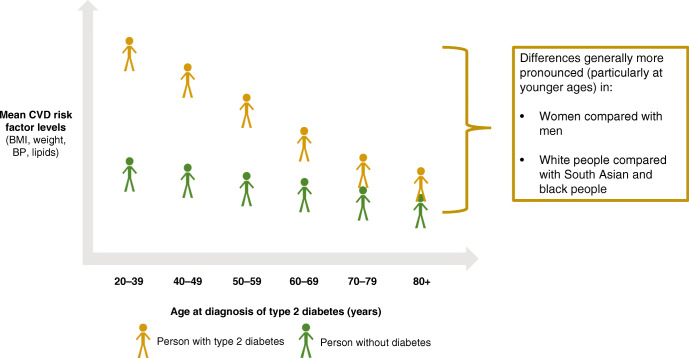
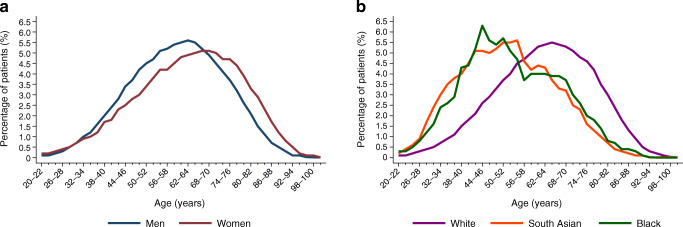
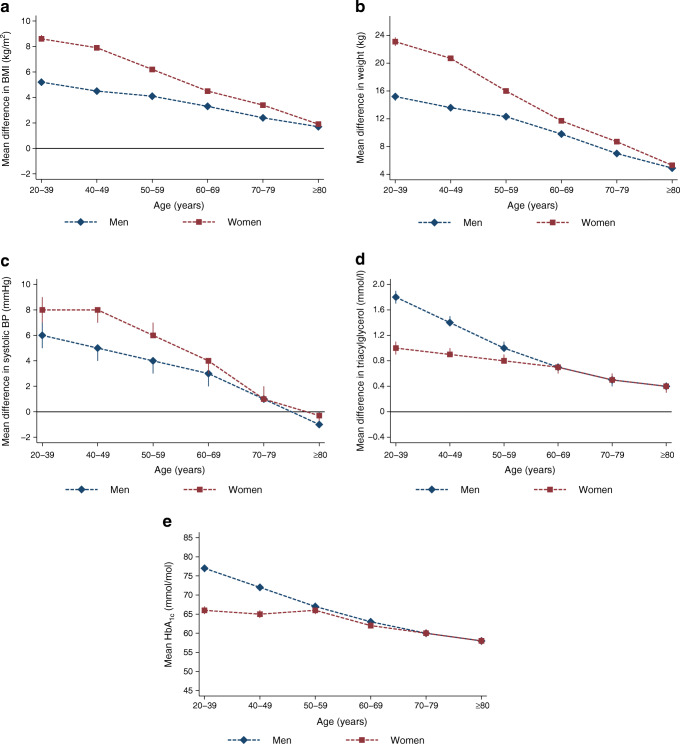
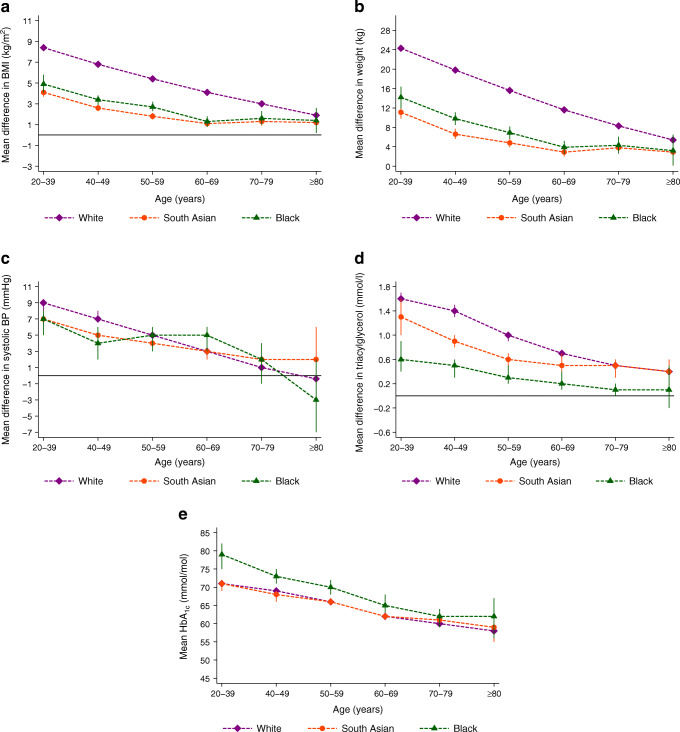
Aims/hypothesis: The aim of this work was to determine how weight patterns together with blood glucose, BP and lipids vary at diagnosis of diabetes by age, sex and ethnicity. Methods: Using the UK Clinical Practice Research Datalink, we identified people with type 2 diabetes (n = 187,601) diagnosed in 1998–2015 and compared their weights, HbA 1c, BP and lipid levels at diagnosis with age-matched people without diabetes (n = 906,182), by sex and ethnic group. Results: Younger age at diagnosis was associated with greater adjusted mean difference (95% CI) in weight between those with vs without type 2 diabetes: 18.7 (18.3, 19.1) kg at age 20–39 years and 5.3 (5.0, 5.5) kg at age ≥ 80 years. Weight differentials were maximal in white women, and were around double in white people compared with South Asian and black people. Despite lower absolute values, BP differences were also greater at younger age of diabetes onset: 7 (6, 7) mmHg at age 20–39 years vs −0.5 (−0.9, −0.2) at age ≥ 80 years. BP differences were greatest in white people, and especially in women. Triacylglycerol level differences were greatest in younger men. Finally, HbA 1c levels were also higher with younger onset diabetes, particularly in black people. Conclusions/interpretation: At diagnosis of type 2 diabetes, when compared with people without diabetes, weight and BP differentials were greater in younger vs older people, in women vs men and in white vs South Asian and black people. These differences were observed even though South Asian and black people tend to develop diabetes a decade earlier with either similar or greater dysglycaemia. These striking patterns may have implications for management and prevention.
Overview
The claims and statistics of this paper haven’t been checked yet.
Free: it reads the open-access text and checks the first 5 claims that cite a source we can check. Create a free account to check every claim.
Integrity signals
Registry
Cites
Statistics
Figures
Verification
Claims the paper makes
The claims and statistics of this paper haven’t been checked yet.
Free: it reads the open-access text and checks the first 5 claims that cite a source we can check. Create a free account to check every claim.
Claims other papers make about this one
Each is checked against this paper’s own text: does it say what the citing paper says it does?
The source backs part of the claim, not all of it — or backs it for a different population, condition or comparison.
In the citing paper
“Women usually show greater differences in BP and higher proportions of hypertension than men already at diagnosis of T2DM compared with women and men without T2DM, and worse BP control thereafter.191,230”
From 2023 ESC guidelines for the management of cardiovascular disease in patients with diabetes. (2023) · cites this paper as [230]
Experimental — accuracy not yet measuredIn the citing paper
“In a UK study of data from Clinical Practice Research Datalink, people with early onset type 2 diabetes had significantly more cardiovascular risk factors compared to age‐matched controls. However, the difference was attenuated for Asian and Black individuals with type 2 diabetes. 13”
From Developing services to support the delivery of care to people with early‐onset type 2 diabetes (2022) · cites this paper as [13]
In the citing paper
“Type 2 diabetes also presents at lower BMI in some ethnic groups, for example, south Asian people who are relatively leaner at diagnosis, 54 , 55 although significant obesity appears to accompany a diagnosis of early‐onset type 2 diabetes in most cases coded by practitioners. 13”
From Developing services to support the delivery of care to people with early‐onset type 2 diabetes (2022) · cites this paper as [13]
Self-check
Percentages, sums and reported differences re-computed from the paper’s own numbers.
The self-check needs the paper’s full text.
Citations
Cites
Multiple imputation after 18+ years
Rubin, D. B. (1996) · Journal of the American Statistical Association · doi:10.1080/01621459.1996.10476908 · Cited by 4,072
Multiple Imputation After 18+ Years
Rubin, D. B. (1996) · Journal of the American Statistical Association · doi:10.2307/2291635 · Cited by 2,686 · cited 1×
“Estimates were combined across the five datasets using Rubin’s rules [22].”
MethodData Resource Profile: Clinical Practice Research Datalink (CPRD)
Herrett, E., Gallagher, A. M., Bhaskaran, K., Forbes, H., Mathur, R., van Staa, T., & Smeeth, L. (2015) · International Journal of Epidemiology · doi:10.1093/ije/dyv098 · Cited by 2,667
Huxley, R., Barzi, F., & Woodward, M. (2006) · BMJ · doi:10.1136/bmj.38678.389583.7c · Cited by 1,534
Screening for type 2 diabetes.
Engelgau, M. M., Narayan, K. M., & Herman, W. H. (2000) · Diabetes Care · doi:10.2337/diacare.23.10.1563 · Cited by 1,027
Peters, S. A. E., Huxley, R. R., & Woodward, M. (2014) · The Lancet · doi:10.1016/s0140-6736(14)60040-4 · Cited by 805
Peters, S. A. E., Huxley, R. R., & Woodward, M. (2014) · Diabetologia · doi:10.1007/s00125-014-3260-6 · Cited by 701
JBS3 Board (2014) · Heart · doi:10.1136/heartjnl-2014-305693 · Cited by 608
College of General Practitioners
Abercrombie, G. F., Hughes, H. L. G., & Hunt, J. H. (1954) · BMJ · doi:10.1136/bmj.1.4857.336-c · Cited by 504
Sex Disparities in Treatment of Cardiac Risk Factors in Patients With Type 2 Diabetes
Wexler, D. J., Grant, R. W., Meigs, J. B., Nathan, D. M., & Cagliero, E. (2005) · Diabetes Care · doi:10.2337/diacare.28.3.514 · Cited by 339
Cited by
2023 ESC guidelines for the management of cardiovascular disease in patients with diabetes.
Marx, N., Federici, M., Schütt, K., Müller-Wieland, D., Ajjan, R. A., Antunes, M. J., Christodorescu, R. M., Crawford, C., Di Angelantonio, E., Eliasson, B., et al. (2023) · European Heart Journal · doi:10.1093/eurheartj/ehad192 · Cited by 1,642
Self-citationSex differences in type 2 diabetes
Kautzky-Willer, A., Leutner, M., & Harreiter, J. (2023) · Diabetologia · doi:10.1007/s00125-023-05891-x · Cited by 624
“This particularly applies to white women and younger women [14, 15].”
BackgroundCardiovascular risk in diabetes mellitus: Epidemiology, assessment and prevention
Wong, N. D., & Sattar, N. (2023) · Nature Reviews Cardiology · doi:10.1038/s41569-023-00877-z · Cited by 495
Self-citationKaptoge, S., Seshasai, S., Sun, L., Walker, M., Bolton, T., Spackman, S., Ataklte, F., Willeit, P., Bell, S., Burgess, S., et al. (2023) · The Lancet Diabetes & Endocrinology · doi:10.1016/s2213-8587(23)00223-1 · Cited by 231
“Adjusted HR (95% CI)”
Self-citationCurrent insights and emerging trends in early-onset type 2 diabetes
Misra, S., Ke, C., Srinivasan, S., Goyal, A., Nyriyenda, M. J., Florez, J. C., Khunti, K., Magliano, D. J., & Luk, A. (2023) · The Lancet Diabetes & Endocrinology · doi:10.1016/s2213-8587(23)00225-5 · Cited by 222
Precision subclassification of type 2 diabetes: a systematic review
Misra, S., Wagner, R. J., Özkan, B., Schön, M., Sevilla-González, M. D. R., Prystupa, K., Wang, C. C., Kreienkamp, R. J., CROMER, S. J., Rooney, M. R., et al. (2023) · Communications Medicine · doi:10.1038/s43856-023-00360-3 · Cited by 152
“…or macrovascular complications in early-onset type 2 diabetes has focussed on comparing people with type 2 diabetes to those without diabetes in different age groups 39,50 or studied cohorts of early-onset cases in isolation 51 and, thus, would not have been captured in our search strategy.”
BackgroundSattar, N., McMurray, J., Borén, J., Rawshani, A., Omerovic, E., Berg, N., Halminen, J., Skoglund, K., Eliasson, B., Gerstein, H. C., et al. (2023) · Circulation · doi:10.1161/circulationaha.122.063374 · Cited by 116
Self-citationHodkinson, A., Tsimpida, D., Kontopantelis, E., Rutter, M. K., Mamas, M. A., & Panagioti, M. (2022) · BMJ · doi:10.1136/bmj-2021-067731 · Cited by 107
Self-citationSiddiqui, M. K., Anjana, R. M., Dawed, A. Y., Martoeau, C., Srinivasan, S., Saravanan, J., Madanagopal, S. K., Taylor, A., Bell, S., Veluchamy, A., et al. (2022) · Diabetologia · doi:10.1007/s00125-022-05671-z · Cited by 88
Self-citationEarly-onset type 2 diabetes: the next major diabetes transition
Luk, A., Wild, S. H., Jones, S., Anjana, R. M., Hivert, M.-F., McCaffrey, J., Gregg, E. W., & Misra, S. (2025) · The Lancet · doi:10.1016/s0140-6736(25)00830-x · Cited by 81
Genetic basis of early onset and progression of type 2 diabetes in South Asians
Hodgson, S., Williamson, A., Bigossi, M., Stow, D., Jacobs, B. M., Samuel, M., Gafton, J., Zöllner, J., Spreckley, M., Akhtar, S., et al. (2024) · Nature Medicine · doi:10.1038/s41591-024-03317-8 · Cited by 79
“This effect is mirrored in epidemiological studies that showed that South Asians who develop T2D at younger ages have increased weight over those who do not but that this weight difference is relatively smaller than that observed in Europeans or Black individuals 3 .”
Lee, M. M. Y., Ghouri, N., McGuire, D. K., Rutter, M. K., & Sattar, N. A. (2021) · Diabetes Care · doi:10.2337/dc20-3007 · Cited by 73
Self-citationSattar, N., Presslie, C., Rutter, M. K., & McGuire, D. K. (2024) · Diabetes Care · doi:10.2337/dci23-0041 · Cited by 70
Self-citationHolman, N., Wild, S. H., Khunti, K., Knighton, P., O’Keefe, J., Bakhai, C., Young, B., Sattar, N., Valabhji, J., & Gregg, E. W. (2022) · Diabetes Care · doi:10.2337/dc21-2136 · Cited by 55
Self-citationUnderstanding the drivers and consequences of early-onset type 2 diabetes
Lim, L.-L., Jones, S., Cikomola, J. C., Hivert, M.-F., & Misra, S. (2025) · The Lancet · doi:10.1016/s0140-6736(25)01012-8 · Cited by 59
Wu, H., Lau, E. S. H., Yang, A., Fan, B., Ronald, C. W., Kong, A. P. S., Chow, E., So, W. Y., Chan, J. C. N., & Luk, A. O. Y. (2021) · Diabetologia · doi:10.1007/s00125-021-05494-4 · Cited by 63
“First, people with young-onset diabetes have worse glycaemic control and higher BMI compared with their late-onset counterparts [25, 26].”
BackgroundSattar, N., Welsh, P., Leslie, W. S., Thom, G., McCombie, L., Brosnahan, N., Richardson, J., Gill, J. M. R., Crawford, L., & Lean, M. E. J. (2023) · The Lancet Regional Health - Southeast Asia · doi:10.1016/j.lansea.2022.100111 · Cited by 58
Self-citationSattar, N. A., & Lee, M. M. Y. (2025) · The Lancet Diabetes & Endocrinology · doi:10.1016/s2213-8587(24)00363-2 · Cited by 58
Self-citationThe challenges of identifying and studying type 1 diabetes in adults
Thomas, N. J., & Jones, A. G. (2023) · Diabetologia · doi:10.1007/s00125-023-06004-4 · Cited by 54
“For BMI, this is further exacerbated by the inverse relationship between onset age and BMI [21].”
BackgroundRosenfeld, R. M., Grega, M. L., Karlsen, M. C., Dabrh, A. M. A., Aurora, R. N., Bonnet, J. P., Donnell, L., Fitzpatrick, S. L., Frates, E. P., Joy, E. A., et al. (2025) · American Journal of Lifestyle Medicine · doi:10.1177/15598276251325488 · Cited by 55
Misra, S., Holman, N., Barron, E., Knighton, P., Warner, J., Kar, P., Young, B., & Valabhji, J. (2023) · Diabetic Medicine · doi:10.1111/dme.14940 · Cited by 46
Tian, Y., Qiu, Z., Wang, F., Deng, S., Wang, Y., Wang, Z., Yin, P., Huo, Y., Zhou, M., Liu, G., et al. (2024) · Diabetes Care · doi:10.2337/dca24-0012 · Cited by 50
Lessons Learned From Epidemiology of Type 2 Diabetes in South Asians: Kelly West Award Lecture 2024
Mohan, V. (2025) · Diabetes Care · doi:10.2337/dci24-0046 · Cited by 50
Type 2 diabetes in South Asians
Misra, A., Sattar, N. A., Ghosh, A., Nassar, M., Jayawardena, R., & Gupta, R. (2025) · BMJ · doi:10.1136/bmj-2024-079801 · Cited by 48
“129 In contrast to these findings, peripheral neuropathy and peripheral vascular disease show lower prevalence among South Asians, potentially because of their characteristically lower height and reduced smoking rates compared with white Europeans.”
InfluentialSelf-citationThe challenges of assessing adiposity in a clinical setting
Börgeson, E., Tavajoh, S., Lange, S., & Jessen, N. (2024) · Nature Reviews Endocrinology · doi:10.1038/s41574-024-01012-9 · Cited by 49
“Furthermore, T2DM onset occurs at a younger age and at lower BMI thresholds in African and Asian populations compared with European populations 29,30 .”
Antonio‐Villa, N. E., Fernández‐Chirino, L., Vargas‐Vázquez, A., Fermín‐Martínez, C. A., Aguilar-Salinas, C. A., & Bello‐Chavolla, O. Y. (2021) · The Journal of Clinical Endocrinology & Metabolism · doi:10.1210/clinem/dgab762 · Cited by 45
Global risk factors, epidemiology, and disease burden of type 2 diabetes
Chen, K., Zhang, H., Wu, N., Li, B., Li, S., & Mu, Y. (2025) · Science China Life Sciences · doi:10.1007/s11427-024-3036-4 · Cited by 42
“This is particularly true for white and younger women (Tramunt et al., 2020; Wright et al., 2020).”
McLaren, J. B., Gao, X., Ghouri, N., Freeman, D. J., Richardson, J., Sattar, N. A., & Gill, J. M. R. (2024) · Nature Metabolism · doi:10.1038/s42255-024-01101-z · Cited by 39
“…complication of controlling for menstrual cycle in an already challenging protocol—there is clear evidence that metabolic responses can differ substantially between follicular and luteal phases 32 —and because women need to gain more weight than men to develop similar metabolic perturbances 33 .”
BackgroundSelf-citationMarassi, M., Cignarella, A., Russo, G. T., Nollino, L., Strazzabosco, M., Marzullo, P., Leonetti, F., Avogaro, A., Consoli, A., & Fadini, G. P. (2025) · Pharmacological Research · doi:10.1016/j.phrs.2025.107866 · Cited by 38
Sex differences in type 2 diabetes: an opportunity for personalized medicine
Johnson, M. L., Preston, J. D., Rashid, C. S., Pearson, K. J., & Ham, J. N. (2023) · Biology of Sex Differences · doi:10.1186/s13293-023-00571-2 · Cited by 36
“First, at diagnosis of T2D, women were on average 3 years older than men and had higher mean BMI, cholesterol, and lower hemoglobin A1c (HbA1c), contributing to the idea that the timing of screening is an important step in the development of sex-based care [3].”
BackgroundNoordam, R., Läll, K., Smit, R. A. J., Laisk, T., Metspalu, A., Esko, T., Milani, L. A., Loos, R. J. F., Mägi, R., van Dijk, K. W., et al. (2021) · Diabetes · doi:10.2337/db20-0602 · Cited by 37
“This hypothesis is supported by recent observations that the impact of obesity is lesser in older-aged individuals with respect to the development of T2D (12) and that the increased risk of cardiovascular disease and mortality in T2D case subjects was diminished in those diagnosed after the age of 80 years (13).”
ResultWu, H., Yang, A., Lau, E. S. H., Zhang, X., Fan, B., Shi, M., Huang, C., Ronald, C. W., Kong, A. P. S., Chow, E., et al. (2023) · PLoS Medicine · doi:10.1371/journal.pmed.1004261 · Cited by 31
Jesuthasan, A., Zhyzhneuskaya, S., Peters, C., Barnes, A. C., Hollingsworth, K. G., Sattar, N., Lean, M. E. J., Taylor, R., & Al-Mrabeh, A. H. (2022) · Diabetologia · doi:10.1007/s00125-021-05583-4 · Cited by 30
Self-citationSrinivasan, S., Liju, S., Sathish, N., Siddiqui, M. K., Anjana, R. M., Pearson, E. R., Doney, A. S. F., Mohan, V., Radha, V., & Palmer, C. N. A. (2023) · Diabetes Care · doi:10.2337/dc23-0243 · Cited by 30
Muniyappa, R., & Narayanappa, S. B. K. (2023) · Journal of the Endocrine Society · doi:10.1210/jendso/bvad167 · Cited by 31
Deng, Y., Moniruzzaman, M., Rogers, B., Hu, L., Jagannathan, R., & Tamura, K. (2024) · Preventive Medicine Reports · doi:10.1016/j.pmedr.2024.102957 · Cited by 30
“Other sociodemographic factors, such as age and sex, were also significant risk factors for diabetes (Cheng et al., 2013; Fagot-Campagna et al., 2005; Fang et al., 2023; Liu et al., 2023; Wright et al., 2020).”
Sex differences in skeletal muscle metabolism in exercise and type 2 diabetes mellitus
MacGregor, K. A., Ellefsen, S., Pillon, N. J., Hammarström, D., & Krook, A. (2024) · Nature Reviews Endocrinology · doi:10.1038/s41574-024-01058-9 · Cited by 29
“Men with T2DM pre-sent with lower BMI, weight, systolic blood pressure and cholesterol level, and higher triacylglycerol and glucose levels, than age-matched women 86 .”
Carey, I. M., Critchley, J., Chaudhry, U. A. R., DeWilde, S., Limb, E. S., Bowen, L., Audi, S., Cook, D. G., Whincup, P. H., Sattar, N. A., et al. (2024) · The Lancet Regional Health - Europe · doi:10.1016/j.lanepe.2024.101147 · Cited by 28
“27 A potential limitation of the present analysis was only including people aged 41 – 90 at the start of the follow-up period in 2015 in the cohort to enable the ethnicity matching.”
Self-citationOhkuma, T., Iwase, M., Fujii, H., & Kitazono, T. (2023) · Biology of Sex Differences · doi:10.1186/s13293-023-00517-8 · Cited by 27
“Ethnic differences in the management of cardiovascular risk factors have also been reported [7], but the available evidence on this topic is limited in Asia, especially in Japan.”
BackgroundCao, Y., Widyahening, I. S., Sun, X., & Li, S. (2025) · Diabetes Obesity and Metabolism · doi:10.1111/dom.70060 · Cited by 25
Jiang, Y., & Lai, X. (2024) · Frontiers in Endocrinology · doi:10.3389/fendo.2024.1356942 · Cited by 25
Developing services to support the delivery of care to people with early‐onset type 2 diabetes
Misra, S., Gable, D., Khunti, K., Barron, E., Young, B., Kar, P., & Valabhji, J. (2022) · Diabetic Medicine · doi:10.1111/dme.14927 · Cited by 23
Carey, I. M., Critchley, J., Chaudhry, U. A. R., DeWilde, S., Limb, E. S., Cook, D. G., Whincup, P. H., & Harris, T. J. (2023) · Diabetes Care · doi:10.2337/dc22-2394 · Cited by 23
“ies (27), resulting in a stronger design for”
BackgroundWiegand, T. L. T., Jung, L., Gudera, J. A., Schuhmacher, L. S., Moehrle, P., Rischewski, J., Mehrzad, P., Jeong, S., Nguyen, L. H., Poeschla, M., et al. (2025) · npj Digital Medicine · doi:10.1038/s41746-025-01817-6 · Cited by 22
“However, there are also studies suggesting an earlier symptom onset in males in other diseases, e.g., schizophrenia 35 or diabetes type 2 36 ; or no known sex differences, e.g., in multiple sclerosis 37 or malaria 38 .”
Siebert, S., Sattar, N. A., & Ferguson, L. D. (2025) · Joint Bone Spine · doi:10.1016/j.jbspin.2025.105904 · Cited by 21
Self-citationMnatzaganian, G., Lee, C., Cowen, G., Boyd, J., Varhol, R., Randall, S. M., & Robinson, S. (2024) · BMC Medicine · doi:10.1186/s12916-024-03698-0 · Cited by 20
Revisiting sex as a biological variable in hypertension research
Ryan, M. J., Clemmer, J. S., Mathew, R. O., Faulkner, J., Taylor, E. B., Abais‐Battad, J. M., Hollis, F., & Sullivan, J. C. (2024) · Journal of Clinical Investigation · doi:10.1172/jci180078 · Cited by 18
“…analysis showed no difference between men and women with diabetes for the primary outcome, diabetes reportedly reverses the cardiovascular protection in young women: women with diabetes have poorer cardiovascular outcomes (39) and are more likely to be hypertensive than diabetic men (40, 41).”
BackgroundGesuita, R., Eckert, A. J., Besançon, S., Crimmins, N. A., Aita, F. C., Kim, J. H., Jefferies, C., Gevers, E. F., Vamvakis, A., Shah, S., et al. (2024) · Diabetologia · doi:10.1007/s00125-024-06283-5 · Cited by 20
Abubakar, M., Saleem, A., Hajjaj, M., Faiz, H., Pragya, A., Jamil, R., Salim, S. S., Lateef, I. K., Singla, D. K., Ramar, R., et al. (2023) · Heart Failure Reviews · doi:10.1007/s10741-023-10369-4 · Cited by 17
“However, women with T2DM face a greater burden of risk factors, particularly obesity, at the time of diagnosis [73].”
Xue, Y., Zheng, M. W., Hou, Y., Zhou, F., Li, J. H., Wang, Y. N., Liu, C. Y., Zhou, C. S., Zhang, J. Y., Yu, M. M., et al. (2022) · European Radiology · doi:10.1007/s00330-021-08468-7 · Cited by 15
“In addition to gender, there are other factors such as age, smoking, hypertension, hyperlipidemia, and stenosis degree, which have different effects on microvascular disease in DM patients [39–42].”
BackgroundWang, S., Lau, Y., Sutton, M., Anderson, M., Kypridemos, C., Head, A., Barr, B., Cookson, R., Bentley, C., & Anselmi, L. (2024) · BMC Medicine · doi:10.1186/s12916-024-03767-4 · Cited by 14
“From linked records, we identified ethnicity for 88.33% of individuals (Additional File S2 [16, 17]).”
InfluentialStedman, M., Heald, A. H., Holland, D., Halsall, I., Green, L., Wu, P., Patel, K., Scargill, J., Gibson, M., Hanna, F., et al. (2024) · Diabetes Therapy · doi:10.1007/s13300-024-01680-w · Cited by 15
Al‐Salameh, A., Bouzegaoui, N. E., & Saraval, M. (2022) · Annales d Endocrinologie · doi:10.1016/j.ando.2022.09.023 · Cited by 14
Potential Biomarkers to Predict Acute Ischemic Stroke in Type 2 Diabetes
Moin, A. S. M., Nandakumar, M., Al‐Qaissi, A., Sathyapalan, T., Atkin, S. L., & Butler, A. E. (2021) · Frontiers in Molecular Biosciences · doi:10.3389/fmolb.2021.744459 · Cited by 13
“The higher systolic and diastolic blood pressures in diabetes are in accord with data showing that those with diabetes may have a higher blood pressure than those without diabetes (Wright et al., 2020) and with a much higher incidence of progressing to frank hypertension.”
Resultvan Niel, J., Geelhoed-Duijvestijn, P. H. L. M., Numans, M. E., Kharagjitsingh, A. V., & Vos, R. C. (2021) · Endocrinology Diabetes & Metabolism · doi:10.1002/edm2.242 · Cited by 13
Wu, H., Zhou, H., Huang, C., Yang, A., Lau, E. S. H., Zhang, X., Fan, B., Ronald, C. W., Kong, A. P. S., Chow, E., et al. (2025) · The Lancet Regional Health - Western Pacific · doi:10.1016/j.lanwpc.2025.101585 · Cited by 12
“Women with diabetes are at a higher relative risk of cardiovascular complications, 32 experience faster deterioration in metabolic pro fi les, 33,34 and also face additional challenges related to reproductive health compared to men.”
Adiposity at the core of the rising tide of young-onset type 2 diabetes worldwide
Sattar, N. A., & Misra, A. (2025) · Diabetes & Metabolic Syndrome Clinical Research & Reviews · doi:10.1016/j.dsx.2025.103249 · Cited by 12
Self-citationHammer, A., Hofer, F., Kazem, N., Koller, L., Steinacher, E., Baumer, U., Wollmann, F., Kautzky‐Willer, A., Beitl, K., Remer, F., et al. (2023) · Journal of Women s Health · doi:10.1089/jwh.2023.0059 · Cited by 10
“20 Interestingly, more males are diagnosed with T2DM globally.”
Rivera, F. B., Bantayan, N. R. B., Aparece, J. P., Cruz, L. L. A., Magallong, J. V., Pine, P. L. S., Idian, A. M. N., Lumbang, G. N. O., Lerma, E. V., Lara-Breitinger, K. M., et al. (2024) · Journal of clinical lipidology · doi:10.1016/j.jacl.2024.03.011 · Cited by 10
Hadaegh, F., Abdi, A., Kohansal, K., Hadaegh, P., Azizi, F., & Tohidi, M. (2023) · Frontiers in Endocrinology · doi:10.3389/fendo.2023.1164771 · Cited by 10
Tejani, S., Linge, J., Neeland, I. J., Gill, J. M. R., Leinhard, O. D., Sattar, N. A., & Rohatgi, A. K. (2025) · American Journal of Preventive Cardiology · doi:10.1016/j.ajpc.2025.101284 · Cited by 9
“…performance and increased metabolic co-morbidity, as well as all-cause mortality in those with liver fibrosis, cancer, or critical illness [16 – 18, 26 Additionally, the higher levels of VAT, liver fat and MFI in SAs compared to EUR observed in this study supports the idea that adverse body…”
Self-citationFarhat, G., Mellor, D. D., Sattar, N. A., Harvie, M., Issa, B. G., & Rutter, M. K. (2024) · Journal of Human Nutrition and Dietetics · doi:10.1111/jhn.13279 · Cited by 9
Self-citationCarey, I. M., Critchley, J., Chaudhry, U. A. R., Cook, D. G., DeWilde, S., Limb, E. S., Bowen, L., Woolford, S. J., Whincup, P. H., Sattar, N. A., et al. (2024) · Diabetes Research and Clinical Practice · doi:10.1016/j.diabres.2024.111641 · Cited by 9
“Despite this, the interaction between HbA1c mean and variability has not been fully explored, and it has not been established whether the risks associated with variability differ by patient characteristics such as age, sex and ethnicity, which are already known to influence overall HbA1c level[5].”
Self-citationIncreased prevalence of younger onset type 2 diabetes: why and what could be done?
Sattar, N. A., Kennon, B., & White, A. D. (2024) · The Lancet Diabetes & Endocrinology · doi:10.1016/s2213-8587(24)00231-6 · Cited by 10
Self-citationResearch progress on risk prediction models for the diabetic foot
Qi, H., Zhang, T., Hou, L., Li, Q., Huang, R., & Ma, L. (2025) · Acta Diabetologica · doi:10.1007/s00592-025-02505-3 · Cited by 7
“However, female diabetic patients face a greater burden of risk factors at diagnosis, such as higher blood pressure and weight gain, a trend that is particularly prominent among white women and younger women [24 , 25 ].”
Prevention of Diabetes Macrovascular Complications and Heart Failure
Sattar, N. A. (2021) · Endocrinology and Metabolism Clinics of North America · doi:10.1016/j.ecl.2021.05.004 · Cited by 7
Self-citationCheng, W., Geng, S., Li, Y., Chen, R., & Du, Z. (2024) · The Journal of Clinical Endocrinology & Metabolism · doi:10.1210/clinem/dgae557 · Cited by 6
Ghouri, N., Javed, H., & Sattar, N. A. (2020) · Current Diabetes Reviews · doi:10.2174/1573399817666201228120725 · Cited by 6
“More recently, in keeping with their greater susceptibility to diabetes, we showed that South Asians are much lighter at diagnosis than whites, with lesser increments in blood pressure or triglycerides compared to their ethnicity matched controls without diabetes [12].”
BackgroundSelf-citationNieuwenhuijse, E. A., van Hof, T. B., Numans, M. E., Struijs, J. N., & Vos, R. C. (2023) · Primary care diabetes · doi:10.1016/j.pcd.2023.01.002 · Cited by 6
Linee guida ESC 2023 per il trattamento delle malattie cardiovascolari nei pazienti diabetici
Marx, N., Federici, M., Schütt, K. S., Müller‐Wieland, D., Ajjan, R., Antunes, M. J., Christodorescu, R., Crawford, C. A., Angelantonio, E. D., Eliasson, B., et al. (2024) · Giornale Ialiano di Cardiologia · doi:10.1714/4162.41558 · Cited by 6
Self-citationIdentification of effect modifiers using a stratified Mendelian randomization algorithmic framework
Man, A., Knüsel, L., Graf, J., Lali, R., Le, A., Scipio, M. D., Mohammadi‐Shemirani, P., Chong, M., Pigeyre, M., Kutalik, Z., et al. (2025) · European Journal of Epidemiology · doi:10.1007/s10654-025-01213-0 · Cited by 5
“Overall, given the strength of the association, supporting evidence from an observational study less susceptible to participation bias [41], and findings from studies highlighting biological changes associated with aging, it remains plausible that age serves as a true effect modifier of the…”
Anh, N. V., Gil, H., Park, S., & Ryu, S. (2025) · Endocrinology and Metabolism · doi:10.3803/enm.2025.2297 · Cited by 5
“Clinical studies indicate that women present with a higher burden of risk factors at the time of type 2 diabetes diagnosis, including excess weight gain and hypertension [5,6].”
Why Early, Large-scale Weight Loss Is the Future of Type 2 Diabetes Care
Sattar, N. A., & Buse, J. B. (2025) · Diabetes Care · doi:10.2337/dci25-0069 · Cited by 6
“In many non-white populations, a greater susceptibility to type 2 diabetes at lower BMIs means its development often occurs a decade earlier (28), so that many ethnicities face greater and earlier exposure to hyperglycemia which also progresses more rapidly.”
InfluentialSelf-citationBiological sex affects human islet gene expression and mitochondrial function in type 2 diabetes
Chen, S.-Y., Cen, H. H., Chao, C. F., Pepper, A. R., Johnson, J. D., & Rideout, E. J. (2026) · Endocrinology · doi:10.1210/endocr/bqag032 · Cited by 6
“A potential explanation for the absence of mitochondrial impairment in female islets is the higher baseline expression of these genes, which may provide greater for adaptation, possibly contributing to the lower risk of T2D (1-4) and later age of diagnosis (79) in women than in men.”
From pancreas and islet resources to diabetes insights
Chen, S.-Y., Lekka, C., Lemvig, J., Yi, X., Cnop, M., Marchetti, P., Marselli, L., Xia, J., Madsen, J. G. S., Calvo, T. R., et al. (2026) · Diabetologia · doi:10.1007/s00125-026-06731-4 · Cited by 5
Precision Medicine in Diabetes
Dawed, A. Y., Haider, E., & Pearson, E. R. (2022) · Handbook of experimental pharmacology · doi:10.1007/164_2022_590 · Cited by 5
Nasr, H., Alsomali, H., Saad, I. E., Abdelaal, A., & Mohamadien, N. R. A. (2023) · The Egyptian Journal of Radiology and Nuclear Medicine · doi:10.1186/s43055-023-01036-7 · Cited by 5
Shiekh, S. I., Williams, R., & Axson, E. L. (2025) · BMJ Open · doi:10.1136/bmjopen-2025-100533 · Cited by 4
Tan, C. S. H., Xiang, K. K., Zheng, H., Wong, K. W. S., Chan, W. T. L., Song, Y., Ang, K., Subramaniam, T., Sum, C. F., & Lim, S. C. (2025) · Diabetes · doi:10.2337/db25-0871 · Cited by 4
Wang, Q., Long, L., Liu, L., Zhang, S., Li, X., Shen, Q., Wang, S., Liu, P., Liu, H., Zhang, C., et al. (2026) · Progress in Cardiovascular Diseases · doi:10.1016/j.pcad.2026.07.006 · Cited by 4
Asgari, S., Masrouri, S., Khalili, D., Lotfaliany, M., & Hadaegh, F. (2025) · Endocrinology Diabetes & Metabolism · doi:10.1002/edm2.70040 · Cited by 3
Tailoring cardiovascular risk prediction to females
Ashcroft, T., de Bakker, M., Anand, A., Sattar, N. A., Maybin, J. A., & Kimenai, D. M. (2025) · Journal of Endocrinology · doi:10.1530/joe-25-0084 · Cited by 3
“…systolic blood pressure, with adjusted mean difference being higher for females than males (in 20 – 39 years age group, adjusted mean difference of systolic blood pressure between those with and without type 2 diabetes: females 8 (95% CI, 7 – 9); for males 6 (95% CI, 5 – 7)) (Wright et al. 2020).”
InfluentialSelf-citationWang, B., Liu, K. S. N., Mak, I. L., Choi, E. P. H., Lam, C. L. K., & Wan, E. Y. F. (2025) · Diabetes Obesity and Metabolism · doi:10.1111/dom.70061 · Cited by 3
Sattar, N. A. (2025) · Diabetes · doi:10.2337/dbi25-0025 · Cited by 3
“They also display markedly lower circulating triglyceride levels in both prediabetes and diabetes states (9,31).”
InfluentialSelf-citationCuthbertson, D. J., Whyte, M., Henney, A. E., Alam, U., Goff, L. M., Fielding, B. A., & Umpleby, A. M. (2026) · Obesity Reviews · doi:10.1111/obr.70104 · Cited by 3
Holman, N., OʼKeefe, J., Gregg, E. W., Tan, G. D., Khunti, K., Valabhji, J., Bakhai, C., Hambling, C. E., Young, B., & Misra, S. (2026) · The Lancet Regional Health - Europe · doi:10.1016/j.lanepe.2026.101764 · Cited by 4
“Early-onset of type 2 diabetes demonstrates a greater deviation of metabolic risk factors from ‘healthy’ compared to later-onset type 2 diabetes 36 ; the greater increase in BMI among younger adults suggests that successive cohorts are developing type 2 diabetes at higher levels of obesity driving…”
Zhang, Z., Chen, H., Chen, L., Liang, W., Hu, T., Sun, N., Zhao, Y., & Wei, X. (2025) · Journal of Diabetes Investigation · doi:10.1111/jdi.70029 · Cited by 3
Huang, W., Tang, H., Li, Y., Chen, W., Chang, S., Bian, J., Ahmed, M. M., Kimmel, S. E., & Guo, J. S. (2025) · American Journal of Cardiovascular Drugs · doi:10.1007/s40256-025-00745-w · Cited by 3
“For example, Asians tend to develop diabetes at lower body mass indices and may have different insulin sensitivity or glucose metabolism, which could enhance the cardiovascular benefits of SGLT2 inhibitors [21].”
Extending precision medicine tools to populations at high risk of type 2 diabetes
Misra, S., & Florez, J. C. (2022) · PLoS Medicine · doi:10.1371/journal.pmed.1003989 · Cited by 3
Watkinson, R., McManus, E., Meacock, R., & Sutton, M. (2024) · BMC Public Health · doi:10.1186/s12889-024-19571-x · Cited by 3
“In addition, people with young-onset T2DM (aged under 40) typically experience more rapid progression from NDH to T2DM, higher severity T2DM at the time of diagnosis, and more T2DM-related complications compared to people who are diagnosed with T2DM later in life [4, 12–15].”
BackgroundResultAhmed, A., Rikabi, H. A., Soomro, S., Em, A. E.-K., Estabrag, S. H., & Ali Elham, A. (2024) · PubMed Central · doi:10.48305/arya.2024.42582.2952 · Cited by 2
A New Score for Metabolic Age in Type 2 Diabetes Mellitus: Physical Rating Score
Yücel, H. E., Ulcay, T., Görgülü, Ö., Öncü, R., Uğuz, E., & Dulkadiroğlu, E. (2025) · Journal of Clinical Medicine · doi:10.3390/jcm14092868 · Cited by 2
“Compared with male patients, female patients with T2DM were reported to have higher rates of important risk factors, such as overweight, excess fat mass, obesity indices, BMI, and high blood pressure [18,19].”
Scilletta, S., Welsh, P. I., Pino, A. D., & Sattar, N. A. (2025) · Diabetes Obesity and Metabolism · doi:10.1111/dom.70248 · Cited by 2
“34 In that study, individuals diagnosed with diabetes at age 20 – 39 had an average weight excess of (cid:1) 18.7 kg compared to their non-diabetic peers, while those diagnosed at age ≥ 80 had a difference of only (cid:1) 5.3 kg.”
InfluentialSelf-citationYasa, I. D. P. G. P., Surasta, I. W., Rasdini, I. A., Iblasi, A. S., Polsook, R., & Juanamasta, I. G. (2025) · Jurnal Keperawatan Padjadjaran · doi:10.24198/jkp.v13i3.2741 · Cited by 2
Diabetes prevalence in the state of Alabama: identifying the risk factors
Manu, K. K., & Appiah‐Opoku, S. (2026) · Geospatial health · doi:10.4081/gh.2026.1465 · Cited by 2
“Other studies globally have also confirmed diabetes typically kicks in mostly amongst the elderly (Cox et al. , 2022; Pan et al. , 2025; Wright et al ., 2020).”
FEATURES OF CLINICAL COURSE OF DIABETES MELLITUS IN PATIENTS DEPENDING ON GENDER
Malyugin, D. A., Volkova, S. A., Pastukhova, L. A., & Negulyaev, A. V. (2024) · Современные проблемы науки и образования · doi:10.17513/spno.33336 · Cited by 2
Standard of Care in Diagnosis of Diabetes Mellitus: HbA1c
(2023) · doi:10.55162/mcms.05.171 · Cited by 2
Yang, H., Wang, X., Xi, X., Xia, Y., Jiang, M., & Zuo, H. (2024) · Frontiers in Nutrition · doi:10.3389/fnut.2024.1510096 · Cited by 2
Konkong, C. (2022) · Life Sciences and Environment Journal · doi:10.14456/lsej.2022.40 · Cited by 2
Lim, K. K., Lee, V. S. Y., Tan, C. S., Kwan, Y. H., Lim, Z. H. X., Wee, H. L., Østbye, T., & Low, L. L. (2020) · Diabetes Research and Clinical Practice · doi:10.1016/j.diabres.2020.108551 · Cited by 2
Metadata
- Authors
- Wright, A. K., Welsh, P., Gill, J. M. R., Kontopantelis, E., Emsley, R., Buchan, I., Ashcroft, D. M., Rutter, M. K., & Sattar, N.
- Affiliations
- Manchester Academic Health Science Centre (GB)
- University of Glasgow (GB)
- University of Manchester (GB)
- King's College London (GB)
- University of Liverpool (GB)
- Corresponding author
- Sattar, Naveed
- ORCID
- Venue
- Diabetologia
- Published
- 2020-05-21
- Volume
- 63
- Issue
- 8
- Pages
- 1542-1553
- ISSN
- 0012-186X (ISSN-L)
- 1432-0428
- PMC
- PMC7351865
- OpenAlex
- W3014213400
- Cited by
- 124
- References
- 40
- Citations by year
- 2026: 17 · 2025: 32 · 2024: 26 · 2023: 21 · 2022: 13 · 2021: 10 · 2020: 5
- FWCI
- 9.24
- Type
- journal article
- Language
- en
- Open access
- hybrid
- doi.org
- Licence
- cc-by
- creativecommons.org/licenses/by/4.0 (tdm)
- creativecommons.org/licenses/by/4.0 (vor)
- Locations
- Diabetologia (publishedVersion, cc-by)
- PubMed Central (publishedVersion, cc-by)
- PubMed (publishedVersion)
- Research Explorer (The University of Manchester) (publishedVersion, other-oa)
- ENLIGHTEN (Jurnal Bimbingan dan Konseling Islam) (acceptedVersion, cc-by-sa)
- Funders
- Diabetes UK (BDA: 14/0004971)
- Topics
- Health Sciences › Medicine › Endocrinology, Diabetes and Metabolism › Diabetes, Cardiovascular Risks, and Lipoproteins
- Health Sciences › Medicine › Endocrinology, Diabetes and Metabolism › Diabetes Treatment and Management
- Health Sciences › Medicine › Endocrinology, Diabetes and Metabolism › Diabetes Management and Research
- Keywords
- type 2 diabetes, age at diagnosis, sex differences, ethnic differences, body weight, blood pressure, HbA1c, serum lipids, triglycerides, South Asian ethnicity, Black ethnicity, white ethnicity, young-onset diabetes, dysglycemia
- MeSH terms
- Adult, Age Factors, Aged, Blood Glucose, Blood Pressure, Diabetes Mellitus, Type 2, Female, Glycated Hemoglobin, Humans, Male, Middle Aged, Sex Factors, White People, Young Adult
About these checks
Registry, retraction, Cites and statistics results are computed, not judged, with one exception: a printed reference that no index lists is read once by a model before it counts as a citation error. Claims are extracted by a model and kept only when their quote appears verbatim in the text; each cited source is then checked, with a model’s help, for whether it says what the claim relies on. Those verdicts can be wrong — read the claim’s quote and the cited source before relying on one.
Statistics and arithmetic are recomputed, not judged.
Confidence bands are shown only for fields calibrated on our annotated test set. None is calibrated yet, so no band is shown.
What counts as a claim ›How we measure confidence ›How we check this ›
Are you an author, or do you see a problem with this page? Request a review
Data sources
Bibliographic data: Semantic Scholar, OpenAlex, Crossref.
Contains information from the Semantic Scholar Academic Graph Datasets, made available under the ODC Attribution License (ODC-BY 1.0).
Semantic Scholar’s data is described in: Kinney, R., et al. (2023). The Semantic Scholar Open Data Platform. arXiv:2301.10140.
