

Development and validation of a cardiovascular risk prediction model in type 1 diabetes
Open accessThe DOI matches its Crossref record; 23 of the 23 references it cites were found in a registry or an index.
Abstract
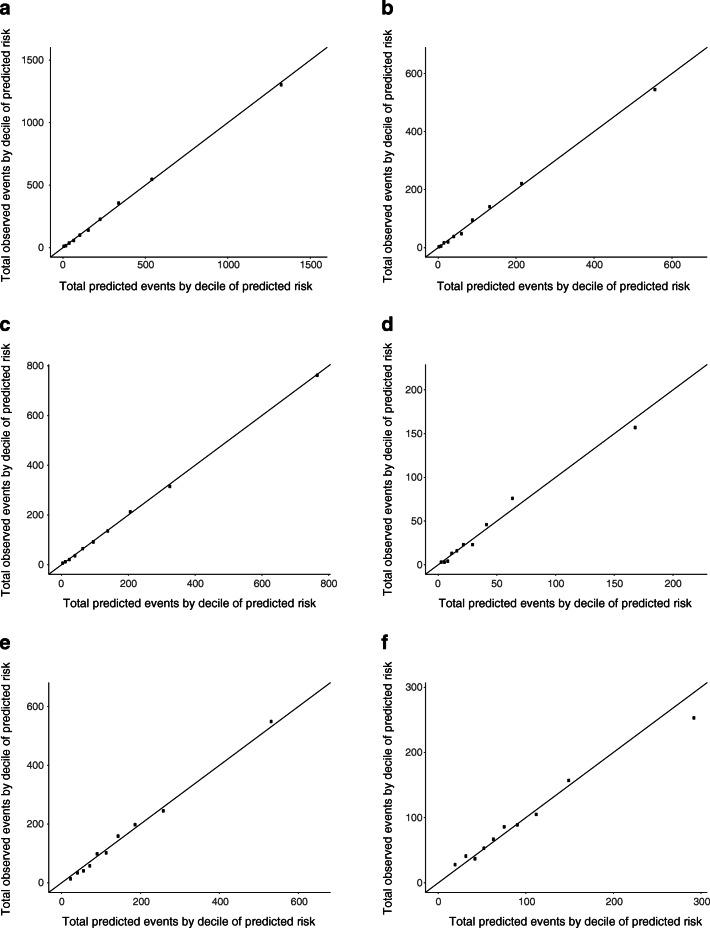
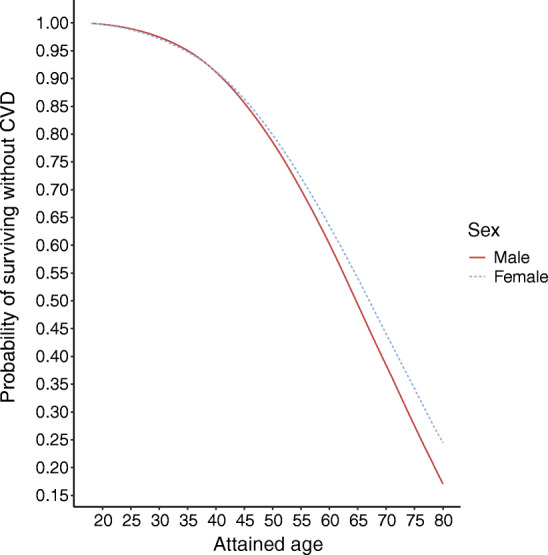
Aims/hypothesis: We aimed to report current rates of CVD in type 1 diabetes and to develop a CVD risk prediction tool for type 1 diabetes. Methods: A cohort of 27,527 people with type 1 diabetes without prior CVD was derived from the national register in Scotland. Incident CVD events during 199,552 person-years of follow-up were ascertained using hospital admissions and death registers. A Poisson regression model of CVD was developed and then validated in the Swedish National Diabetes Register (n = 33,183). We compared the percentage with a high 10 year CVD risk (i.e., ≥10%) using the model with the percentage eligible for statins using current guidelines by age. Results: The age-standardised rate of CVD per 100,000 person-years was 4070 and 3429 in men and women, respectively, with type 1 diabetes in Scotland, and 4014 and 3956 in men and women in Sweden. The final model was well calibrated (Hosmer–Lemeshow test p > 0.05) and included a further 22 terms over a base model of age, sex and diabetes duration (C statistic 0.82; 95% CI 0.81, 0.83). The model increased the base model C statistic from 0.66 to 0.80, from 0.60 to 0.75 and from 0.62 to 0.68 in those aged <40, 40–59 and ≥ 60 years, respectively (all p values <0.005). The model required minimal calibration in Sweden and had a C statistic of 0.85. Under current guidelines, >90% of those aged 20–39 years and 100% of those≥40 years with type 1 diabetes were eligible for statins, but it was not until age 65 upwards that 100% had a modelled risk of CVD≥10% in 10 years. Conclusions/interpretation: A prediction tool such as that developed here can provide individualised risk predictions. This 10 year CVD risk prediction tool could facilitate patient discussions regarding appropriate statin prescribing. Apart from 10 year risk, such discussions may also consider longer-term CVD risk, the potential for greater benefits from early vs later statin intervention, the potential impact on quality of life of an early CVD event and evidence on safety, all of which could influence treatment decisions, particularly in younger people with type 1 diabetes. Graphical abstract:
Overview
The claims and statistics of this paper haven’t been checked yet.
Free: it reads the open-access text and checks the first 5 claims that cite a source we can check. Create a free account to check every claim.
Integrity signals
Registry
Cites
Statistics
Figures
Verification
Claims the paper makes
The claims and statistics of this paper haven’t been checked yet.
Free: it reads the open-access text and checks the first 5 claims that cite a source we can check. Create a free account to check every claim.
Claims other papers make about this one
Each is checked against this paper’s own text: does it say what the citing paper says it does?
The check wasn’t confident either way, so it gives no verdict — never disputed.
In the citing paper
“Aerobic fitness improved HbA1c in patients with T1DM”
From 2023 ESC guidelines for the management of cardiovascular disease in patients with diabetes. (2023) · cites this paper as [795]
Experimental — accuracy not yet measuredIn the citing paper
“but did not affect BMI, BP, and lipids.795”
From 2023 ESC guidelines for the management of cardiovascular disease in patients with diabetes. (2023) · cites this paper as [795]
Self-check
Percentages, sums and reported differences re-computed from the paper’s own numbers.
The self-check needs the paper’s full text.
Citations
Cites
European Guidelines on cardiovascular disease prevention in clinical practice (version 2012)
Authors/Task Force Members:, Perk, J., De Backer, G., Gohlke, H., Graham, I., Reiner, Ž., Verschuren, M., Albus, C., Benlian, P., Boysen, G., et al. (2012) · European Heart Journal · doi:10.1093/eurheartj/ehs092 · Cited by 8,490
Cosentino, F., Grant, P. J., Aboyans, V., Bailey, C. J., Ceriello, A., Delgado, V., Federici, M., Filippatos, G., Grobbee, D. E., Hansen, T. B., et al. (2020) · European Heart Journal · doi:10.1093/eurheartj/ehz486 · Cited by 4,763
Self-citationCollaborators, C. T. T. (. (2012) · The Lancet · doi:10.1016/s0140-6736(12)60367-5 · Cited by 2,833
Amelia II: A Program for Missing Data
Honaker, J., King, G., & Blackwell, M. (2011) · Journal of Statistical Software · doi:10.18637/jss.v045.i07 · Cited by 2,552
Hippisley-Cox, J., Coupland, C., & Brindle, P. (2017) · BMJ · doi:10.1136/bmj.j2099 · Cited by 1,703
Predicting cardiovascular risk in England and Wales: prospective derivation and validation of QRISK2
Hippisley-Cox, J., Coupland, C., Vinogradova, Y., Robson, J., Minhas, R., Sheikh, A., & Brindle, P. (2008) · BMJ · doi:10.1136/bmj.39609.449676.25 · Cited by 1,459
Mortality and cardiovascular disease in type 1 and type 2 diabetes
Rawshani, A., Rawshani, A., Franzén, S., Eliasson, B., Svensson, A.-M., Miftaraj, M., McGuire, D. K., Sattar, N., Rosengren, A., & Gudbjörnsdottir, S. (2017) · New England Journal of Medicine · doi:10.1056/nejmoa1608664 · Cited by 1,389
Self-citationAuthors/Task Force Members, Piepoli, M. F., Hoes, A. W., Agewall, S., Albus, C., Brotons, C., Catapano, A. L., Cooney, M.-T., Corrà, U., Cosyns, B., et al. (2016) · European Journal of Preventive Cardiology · doi:10.1177/2047487316653709 · Cited by 1,334
Self-citationAn asymptotic equivalence of choice of model by cross validation and Akaike's criterion
Stone, M. (1977) · Journal of the Royal Statistical Society Series B (Statistical Methodology) · doi:10.1111/j.2517-6161.1977.tb01603.x · Cited by 1,286
Estimated life expectancy in a Scottish cohort with type 1 diabetes, 2008-2010
Livingstone, S. J., Levin, D., Looker, H. C., Lindsay, R. S., Wild, S. H., Joss, N., Leese, G., Leslie, P., McCrimmon, R. J., Metcalfe, W., et al. (2015) · JAMA · doi:10.1001/jama.2014.16425 · Cited by 621
Self-citation
Cited by
2023 ESC guidelines for the management of cardiovascular disease in patients with diabetes.
Marx, N., Federici, M., Schütt, K., Müller-Wieland, D., Ajjan, R. A., Antunes, M. J., Christodorescu, R. M., Crawford, C., Di Angelantonio, E., Eliasson, B., et al. (2023) · European Heart Journal · doi:10.1093/eurheartj/ehad192 · Cited by 1,642
Self-citation2024 ESC Guidelines for the management of peripheral arterial and aortic diseases
Mazzolai, L., Teixido-Tura, G., Lanzi, S., Boc, V., Bossone, E., Brodmann, M., Bura-Rivière, A., De Backer, J., Deglise, S., Della Corte, A., et al. (2024) · European Heart Journal · doi:10.1093/eurheartj/ehae179 · Cited by 993
Precision prognostics for the development of complications in diabetes
Schiborn, C., & Schulze, M. B. (2022) · Diabetologia · doi:10.1007/s00125-022-05731-4 · Cited by 108
“Fewer models have been developed for the prediction of macrovascular complications in type 1 diabetes; such models include the externally validated Steno T1D Risk Engine [42], the Swedish NDR [43] and the Scottish NDR risk score for type 1 diabetes [44].”
MethodDiabetes risk prediction model based on community follow-up data using machine learning
Jiang, L., Xia, Z., Zhu, R., Gong, H., Wang, J., Li, J., & Wang, L. (2023) · Preventive Medicine Reports · doi:10.1016/j.pmedr.2023.102358 · Cited by 66
Serés‐Noriega, T., Giménez, M., Perea, V., Boswell, L., Viñals, C., Blanco, J., Vinagre, I., Pané, A., Esmatjes, E., Conget, I., et al. (2022) · Diabetes Care · doi:10.2337/dc22-0118 · Cited by 39
Helleputte, S., Bortel, L. M. V., Verbeke, F., Roodt, J. O. ’., Calders, P., Lapauw, B., & Backer, T. L. M. D. (2022) · Cardiovascular Diabetology · doi:10.1186/s12933-022-01537-1 · Cited by 30
“Hence, there is a need for refined CV risk classification in T1D and the development of prediction models specific for this high-risk group [9, 39].”
BackgroundMellor, J., Jiang, W., Fleming, A., McGurnaghan, S. J., Blackbourn, L. A. K., Styles, C., Storkey, A., McKeigue, P., & Colhoun, H. M. (2023) · International Journal of Medical Informatics · doi:10.1016/j.ijmedinf.2023.105072 · Cited by 26
“For the T1DM cohort, we included risk factors reported in previous studies including the average HbA1c in the preceding years [14 – 16].”
Self-citationViñals, C., Conget, I., Granados, M., Giménez, M., & Amor, A. J. (2024) · Diabetes Therapy · doi:10.1007/s13300-024-01616-4 · Cited by 19
Standards of Care in Diabetes. The position of Diabetes Poland – 2024
Araszkiewicz, A., Bandurska-Stankiewicz, E. M., Borys, S., Broncel, M., Budzynski, A. Z., Cyganek, K., Cypryk, K., CYRANKA, K. M., Czupryniak, L., Dzida, G. J., et al. (2024) · Current Topics in Diabetes · doi:10.5114/ctd/183052 · Cited by 33
Chushig-Muzo, D., Calero-Díaz, H., Lara-Abelenda, F. J., Gómez-Martínez, V., Granja, C., & Soguero-Ruíz, C. (2024) · IEEE Access · doi:10.1109/access.2024.3412789 · Cited by 17
“In the literature, some studies have proposed risk engines focused on T1D, such as the Swedish T1D risk score (SWT1RS) [23], the Scottish T1D risk score (SCT1RE) [24] and the Danish Steno T1 Risk Engine (ST1RE) [22].”
BackgroundGiménez‐Pérez, G., Viñals, C., Mata‐Cases, M., Vlacho, B., Real, J., Franch‐Nadal, J., Ortega, E., & Mauricio, D. (2023) · Cardiovascular Diabetology · doi:10.1186/s12933-023-01917-1 · Cited by 15
Serés‐Noriega, T., Perea, V., & Amor, A. J. (2024) · Journal of Clinical Medicine · doi:10.3390/jcm13041097 · Cited by 17
“Although several methods have been developed for this purpose [24,25], most assessments of CVR and cardiovascular management are based on extrapolations from studies in people with T2D.”
MethodSheela, A. J., & Krishnamurthy, M. (2023) · Biomedical Signal Processing and Control · doi:10.1016/j.bspc.2023.105781 · Cited by 20
Lara-Abelenda, F. J., Chushig-Muzo, D., Peiro-Corbacho, P., Gómez-Martínez, V., Wägner, A. M., Granja, C., & Soguero-Ruíz, C. (2025) · Journal of Biomedical Informatics · doi:10.1016/j.jbi.2025.104821 · Cited by 24
Lan, N. S. R., Bell, D. A., Watts, G. F., & Fegan, P. G. (2022) · Current Opinion in Endocrinology Diabetes and Obesity · doi:10.1097/med.0000000000000790 · Cited by 13
Helmink, M. A. G., Hageman, S. H. J., Eliasson, B., Sattar, N. A., Visseren, F. L. J., Dorresteijn, J. A. N., Harris, K., Peters, S. A. E., Woodward, M., Szentkúti, P., et al. (2024) · Diabetes Obesity and Metabolism · doi:10.1111/dom.15531 · Cited by 18
Self-citationCardiovascular Risk Prediction Scores in Type 1 Diabetes
Erqou, S. A., Shahab, A., Fayad, F. H., Haji, M. S., Yuyun, M. F., Joseph, J., Wu, W., Adler, A., Orchard, T. J., & Echouffo-Tcheugui, J. B. (2024) · JACC Advances · doi:10.1016/j.jacadv.2024.101462 · Cited by 13
Boswell, L., Serés‐Noriega, T., Mesa, A., Perea, V., Pané, A., Viñals, C., Blanco, J., Giménez, M., Vinagre, I., Esmatjes, E., et al. (2022) · Acta Diabetologica · doi:10.1007/s00592-022-01959-z · Cited by 12
“Although some clinical scores seem promising in this field [31, 32], more studies are needed to ascertain their usefulness in populations other than those where they were described [33].”
BackgroundNardone, M., Kugathasan, L., Sridhar, V. S., Dutta, P., Campbell, D. J. T., Layton, A. T., Perkins, B. A., Barbour, S. J., Lam, T. K. T., Levin, A., et al. (2025) · Clinical Journal of the American Society of Nephrology · doi:10.2215/cjn.0000000641 · Cited by 11
“25 The effects of SGLT2 inhibition on these risk estimates is unknown.”
InfluentialPintaudi, B., Scatena, A., Piscitelli, G., Frison, V., Corrao, S., Manicardi, V., Graziano, G., Rossi, M. C., Gallo, M., Mannino, D., et al. (2021) · Diabetes Research and Clinical Practice · doi:10.1016/j.diabres.2021.109131 · Cited by 10
Tecce, N., Masulli, M., Palmisano, L., Gianfrancesco, S., Piccolo, R., Pacella, D., Bozzetto, L., Massimino, E., Pepa, G. D., Lupoli, R., et al. (2022) · Diabetes Research and Clinical Practice · doi:10.1016/j.diabres.2022.110001 · Cited by 11
Zubkiewicz‐Kucharska, A., Wikiera, B., & Noczyńska, A. (2022) · Frontiers in Endocrinology · doi:10.3389/fendo.2022.991269 · Cited by 8
Guthrie, B., Rogers, G., Livingstone, S. J., Morales, D. R., Donnan, P. T., Davis, S., Youn, J.-H., Hainsworth, R., Thompson, A., & Payne, K. (2024) · Health and Social Care Delivery Research · doi:10.3310/kltr7714 · Cited by 11
Self-citationCardiovascular Disease in Adults with Type 1 Diabetes: Looking Beyond Glycemic Control
Miller, R. G., & Costacou, T. (2022) · Current Cardiology Reports · doi:10.1007/s11886-022-01763-9 · Cited by 7
Serés‐Noriega, T., Ortega, E., Perea, V., Giménez, M., Boswell, L., Mariaca, K., Font, C., Mesa, A., Viñals, C., Blanco, J., et al. (2023) · Diabetes Therapy · doi:10.1007/s13300-023-01372-x · Cited by 7
“Although there are several clinical scores validated for estimating such cardiovascular risk in this population [28, 29], some of them often fail when applied in daily practice [15].”
BackgroundMcGurnaghan, S. J., McKeigue, P., Blackbourn, L. A. K., Mellor, J., Caparrotta, T. M., Sattar, N. A., Kennon, B., McAllister, D., Wild, S. H., & Colhoun, H. M. (2024) · Diabetes Care · doi:10.2337/dc24-0124 · Cited by 7
Self-citationKamiński, M., Kulecki, M., Kasprzak, D., Lachowski, P., Kulczycka, A., Kozłowska, M., Klause, D., Naskręt, D., Flotyńska, J., Zozulińska‐Ziółkiewicz, D., et al. (2025) · Nutrition Metabolism and Cardiovascular Diseases · doi:10.1016/j.numecd.2025.103853 · Cited by 5
Paliares, I. C., Dualib, P. M., Aroucha, P. M. T., Torres, L. S. N., de Sá, J. R., & Dib, S. A. (2025) · Diabetes Research and Clinical Practice · doi:10.1016/j.diabres.2025.112386 · Cited by 6
Zhao, D., Sun, H., Li, H., Li, C., & Zhou, B. (2023) · Journal of Translational Medicine · doi:10.1186/s12967-023-03899-w · Cited by 5
“created a 10-year CVD risk prediction model for type 1 diabetic patients [9].”
BackgroundType 1 Diabetes and Cardiovascular Health
Pesantez, M., Ebekozien, O. A., & Vendrame, F. (2023) · Endocrinology and Metabolism Clinics of North America · doi:10.1016/j.ecl.2023.07.003 · Cited by 5
Petty, L., Soto‐Pedre, E., McCrimmon, R. J., & Pearson, E. R. (2024) · Journal of Diabetes and its Complications · doi:10.1016/j.jdiacomp.2024.108747 · Cited by 4
Comparison of cardiovascular risk prediction in type 1 diabetes: an Australian viewpoint
Wimalarathne, S., Goh, Y. A., Fegan, P. G., Yeap, B. B., & Lan, N. S. R. (2024) · Internal Medicine Journal · doi:10.1111/imj.16599 · Cited by 4
Comprehensive Factors for Predicting the Complications of Diabetes Mellitus: A Systematic Review
Erandathi, M., Wang, W. Y. C., Mayo, M., & Lee, C. (2024) · Current Diabetes Reviews · doi:10.2174/0115733998271863231116062601 · Cited by 8
Priya, A. M., Kanna, P. R., Vanithamani, S., & Kumar, G. S. (2025) · Biomedical Signal Processing and Control · doi:10.1016/j.bspc.2025.108161 · Cited by 3
Cao, Q., Meng, H., Bai, S., Dong, H., Zhang, S., & Fan, C. (2025) · International Journal of Nursing Practice · doi:10.1111/ijn.70041 · Cited by 2
Lan, N. S. R., Ryan, C. D., Rudén, A., Glasby, J. R. K., Nanayakkara, N., Elghattis, Y., Brazionis, L., Huang, M., Lum, S., Januszewski, A. S., et al. (2025) · Internal Medicine Journal · doi:10.1111/imj.70276 · Cited by 3
Lan, N. S. R., Fegan, P. G., & Jenkins, A. J. (2026) · Journal of Diabetes and its Complications · doi:10.1016/j.jdiacomp.2026.109268 · Cited by 2
Helmink, M. A. G., Hageman, S. H. J., Visseren, F. L. J., de Ranitz‐Greven, W. L., de Valk, H. W., van Sloten, T. T., & Westerink, J. (2023) · Diabetic Medicine · doi:10.1111/dme.15183 · Cited by 3
Cardiovascular risk equations in type 1 diabetes: from generic models to personalized prediction
Serés‐Noriega, T., Lafarga, I. A., Perea, V., Viñals, C., & Amor, A. J. (2026) · Annals of Medicine · doi:10.1080/07853890.2026.2642404 · Cited by 2
“Subsequently, the same group assessed the predictive utility of two specific equations (Steno-Risk [40] and McGurnaghan [42]) in this population.”
Typ-1-Diabetes: Vorhersagetool für kardiovaskuläres Risiko
Simon, A. (2021) · Diabetologie und Stoffwechsel · doi:10.1055/a-1647-6622
Zhao, D., Sun, H., Li, H., Li, C., & Zhou, B. (2023) · Figshare · doi:10.6084/m9.figshare.22610903
He, Z. (2025) · The Anatolian Journal of Cardiology · doi:10.14744/anatoljcardiol.2024.4674
Factors Involved in the Progression of Preclinical Atherosclerosis in People with Type 1 Diabetes
Viñals, C., Conget, I., Granados, M., Solà, C., Ayala, D., Mesa, A., Serés‐Noriega, T., Doménech, M., Perea, V., Blanco, J., et al. (2025) · Journal of Clinical Medicine · doi:10.3390/jcm14176004 · Cited by 1
“Although new lifetime CVR models are emerging [40,41], further validation is needed before routine use.”
Sridhar, V. S., Odutayo, A., Davies, M. J., & Cherney, D. Z. I. (2025) · Journal of the American Society of Nephrology · doi:10.1681/asn.0000000868
Giménez‐Pérez, G., Viñals, C., Mata-Cases, M., Vlacho, B., Real, J., Franch‐Nadal, J., Ortega, E., & Mauricio, D. (2024) · Figshare · doi:10.6084/m9.figshare.26604307
Kugathasan, L., Tsoukas, M. A., Nardone, M., Sridhar, V. S., Muskiet, M. H. A., Cherney, D. Z. I., Haidar, A., & Pasqua, M. (2026) · Diabetes Obesity and Metabolism · doi:10.1111/dom.70525
“In the absence of cardiovascular outcome trials, T1D-validated risk prediction models (e.g., the Steno Type 1 Risk Engine [ST1RE] 8 and the Scottish Diabetes Research Network [SDRN] 9 ) may offer insight into potential cardiovascular benefits of semaglutide.”
Kugathasan, L., Sridhar, V. S., Davies, M. J., Girard, M., Hardin, B., Campbell, D. J. T., Layton, A. T., Perkins, B. A., Barbour, S. J., Lam, T. K. T., et al. (2026) · Diabetes Obesity and Cardiometabolic CARE · doi:10.2337/doc25-0028
Berg, D. D. (2026) · Elsevier eBooks · doi:10.1016/b978-0-323-87862-3.00008-2
Metabolic dysfunction and the use of adjunct medications in type 1 diabetes
Luk, A., Cheah, Y. S., Misra, S., & Salem, V. (2026) · Current Opinion in Endocrinology Diabetes and Obesity · doi:10.1097/med.0000000000000956
Kiernan, E. A., & de Boer, I. H. (2026) · Diabetes Obesity and Cardiometabolic CARE · doi:10.2337/doci25-0009
Viñals, C., Conget, I., Milad, C., Granados, M., Blanco, J., Claro, M. I., Perea, V., Serés‐Noriega, T., Vinagre, I., Giménez, M., et al. (2026) · Cardiovascular Diabetology · doi:10.1186/s12933-026-03300-2
“Although type 1 diabetes-specific risk engines have been developed and validated in selected cohorts [7, 8], their clinical utility remains limited, as they have not been sufficiently established nor extensively evaluated across diverse populations with type 1 diabetes.”
Gomes, M. B., de Albuquerque, F. O. B., Matheus, A. S. D. M., Canani, L. H. S., Forti, A. C. E., Chaves, R. M., Pavin, E. J., Montenegro, R. M., Dib, S. A., Felício, J. S., et al. (2026) · Clinics · doi:10.1016/j.clinsp.2026.101082
“…most used calculators for the prediction of CVD risk in patients with T1D are the Steno Type 1 Risk Engine (ST1RE), 12 the Sweden National Register, 13 the European Society of Cardiology (ESC), 14 the QRISK3 (ClinRisk, UK), 15 a calculator developed in Scotland 16 and another developed in Brazil.”
InfluentialType 1 diabetes and cardiovascular medicine
Jenkins, A. J., Huang, M., Hemphill, M., Chen, D., Ha, J. T., Sata, Y., Sindone, A. P., Gnanenthiran, S. R., & Lan, N. S. R. (2026) · Cardiovascular Diabetology – Endocrinology Reports · doi:10.1186/s40842-026-00338-9
Oliveira, M., Aguayo, G., Canha, D., Benhamou, P., Briet, C., Imberti, C. C., Disse, E., Hadjadj, S., Hanaire, H., Jeandidier, N., et al. (2026) · Diabetes & Metabolism · doi:10.1016/j.diabet.2026.101801
Metadata
- Authors
- McGurnaghan, S. J., McKeigue, P. M., Read, S. H., Franzen, S., Svensson, A.-M., Colombo, M., Livingstone, S., Farran, B., Caparrotta, T. M., Blackbourn, L. A. K., Mellor, J., Thoma, I., Sattar, N., Wild, S. H., Gudbjörnsdottir, S., Colhoun, H. M., & on behalf of the Swedish National Diabetes Register and the Scottish Diabetes Research Network Epidemiology Group
- Affiliations
- Institute of Genetics and Cancer (GB)
- University of Edinburgh (GB)
- Women's College Hospital (CA)
- Sahlgrenska University Hospital (SE)
- University of Dundee (GB)
- University of Glasgow (GB)
- NHS Fife (GB)
- Corresponding author
- McGurnaghan, Stuart J.
- Colhoun, Helen M.
- ORCID
- Venue
- Diabetologia
- Published
- 2021-06-09
- Volume
- 64
- Issue
- 9
- Pages
- 2001-2011
- ISSN
- 0012-186X (ISSN-L)
- 1432-0428
- PMC
- PMC8382639
- OpenAlex
- W3172852952
- Cited by
- 53
- References
- 23
- Citations by year
- 2026: 11 · 2025: 10 · 2024: 13 · 2023: 9 · 2022: 8 · 2021: 2
- FWCI
- 6.15
- Type
- journal article
- Language
- en
- Open access
- hybrid
- doi.org
- Licence
- cc-by
- creativecommons.org/licenses/by/4.0 (tdm)
- creativecommons.org/licenses/by/4.0 (vor)
- Locations
- Diabetologia (publishedVersion, cc-by)
- PubMed Central (publishedVersion, cc-by)
- PubMed (publishedVersion)
- LSHTM Research Online (London School of Hygiene and Tropical Medicine) (acceptedVersion)
- Discovery Research Portal (University of Dundee) (submittedVersion, cc-by)
- Edinburgh Research Explorer (University of Edinburgh) (submittedVersion, cc-by)
- Funders
- Chief Scientist Office (ETM/47)
- Topics
- Health Sciences › Medicine › Endocrinology, Diabetes and Metabolism › Diabetes Management and Research
- Health Sciences › Medicine › Endocrinology, Diabetes and Metabolism › Diabetes, Cardiovascular Risks, and Lipoproteins
- Health Sciences › Medicine › Endocrinology, Diabetes and Metabolism › Diabetes Treatment and Management
- Keywords
- type 1 diabetes, cardiovascular disease, cardiovascular risk prediction models, statin eligibility, statin prescribing, diabetes duration, sex differences, Scotland, Sweden, model validation, calibration, hypercholesterolemia, dyslipidemia, smoking
- MeSH terms
- Heart Disease Risk Factors, Adult, Aged, Cardiovascular Diseases, Diabetes Mellitus, Type 1, Female, Humans, Male, Middle Aged, Quality of Life, Risk Factors, Young Adult
About these checks
Registry, retraction, Cites and statistics results are computed, not judged, with one exception: a printed reference that no index lists is read once by a model before it counts as a citation error. Claims are extracted by a model and kept only when their quote appears verbatim in the text; each cited source is then checked, with a model’s help, for whether it says what the claim relies on. Those verdicts can be wrong — read the claim’s quote and the cited source before relying on one.
Statistics and arithmetic are recomputed, not judged.
Confidence bands are shown only for fields calibrated on our annotated test set. None is calibrated yet, so no band is shown.
What counts as a claim ›How we measure confidence ›How we check this ›
Are you an author, or do you see a problem with this page? Request a review
Data sources
Bibliographic data: Semantic Scholar, OpenAlex, Crossref.
Contains information from the Semantic Scholar Academic Graph Datasets, made available under the ODC Attribution License (ODC-BY 1.0).
Semantic Scholar’s data is described in: Kinney, R., et al. (2023). The Semantic Scholar Open Data Platform. arXiv:2301.10140.
