

Thinking with external representations
Open accessThe DOI matches its Crossref record; 38 of the 39 references it cites were found in a registry or an index.
Abstract
Why do people create extra representations to help them make sense of situations, diagrams, illustrations, instructions and problems? The obvious explanation—external representations save internal memory and computation—is only part of the story. I discuss seven ways external representations enhance cognitive power: they change the cost structure of the inferential landscape; they provide a structure that can serve as a shareable object of thought; they create persistent referents; they facilitate re-representation; they are often a more natural representation of structure than mental representations; they facilitate the computation of more explicit encoding of information; they enable the construction of arbitrarily complex structure; and they lower the cost of controlling thought—they help coordinate thought. Jointly, these functions allow people to think more powerfully with external representations than without. They allow us to think the previously unthinkable.
Overview
The claims and statistics of this paper haven’t been checked yet.
Free: it reads the open-access text and checks the first 5 claims that cite a source we can check. Create a free account to check every claim.
Integrity signals
Registry
Cites
Statistics
Figures

Verification
Claims the paper makes
The claims and statistics of this paper haven’t been checked yet.
Free: it reads the open-access text and checks the first 5 claims that cite a source we can check. Create a free account to check every claim.
Claims other papers make about this one
Each is checked against this paper’s own text: does it say what the citing paper says it does?
The source backs part of the claim, not all of it — or backs it for a different population, condition or comparison.
In the citing paper
“Teams of knowledge workers rely heavily on shared representations such as documents, visual diagrams and spreadsheets to externalize thoughts, organize data, and facilitate coordination [21, 23, 37, 43, 78], all necessary towards accomplishing their goals.”
From Accessibility-Driven Information Transformations in Mixed-Visual Ability Work Teams (2026) · cites this paper as [43]
Experimental — accuracy not yet measuredThe cited source says what the claim attributes to it.
In the citing paper
“For instance, it is commonly argued that cognitive offloading releases internal cognitive resources (Kirsh, 2010).”
From Consequences of cognitive offloading: Boosting performance but diminishing memory (2021) · cites this paper as Kirsh, 2010
The cited source says what the claim attributes to it.
In the citing paper
“One might consider that such released resources which come along with externalisations (Kirsh, 2010) could serve a deeper elaboration of the processed information (Sweller et al., 1998). In return, such a deeper elaboration could cause stronger memory representations (Craik & Lockhart, 1972).”
From Consequences of cognitive offloading: Boosting performance but diminishing memory (2021) · cites this paper as Kirsh, 2010
Self-check
Percentages, sums and reported differences re-computed from the paper’s own numbers.
The self-check needs the paper’s full text.
Citations
Cites
Ambrose, A., Wittgenstein, L., & Anscombe, G. E. M. (1954) · Philosophy and Phenomenological Research · doi:10.2307/2103745 · Cited by 12,192
The episodic buffer: a new component of working memory?
Baddeley, A. (2000) · Trends in Cognitive Sciences · doi:10.1016/s1364-6613(00)01538-2 · Cited by 7,359 · cited 2×
“The current view in psychology is that when we visually perceive an external structure, the information that enters is stored first in visuo-spatial store (Baddeley 2000; Logie 1995), before being processed for use in later mental processes.”
Background(1960) · Medical Entomology and Zoology · Cited by 5,851
The way we think: conceptual blending and the mind's hidden complexities
(2002) · Choice Reviews Online · doi:10.5860/choice.40-1223 · Cited by 5,327
Hollan, J., Hutchins, E., & Kirsh, D. (2000) · ACM Transactions on Computer-Human Interaction · doi:10.1145/353485.353487 · Cited by 2,300 · cited 2×
“…Cognitive Science, University of California, San Diego, La Jolla, CA 92093-0515, USA e-mail: kirsh@ucsd.edu DOI 10.1007/s00146-010-0272-8 Anyone who believes in situated (Robbins and Ayedede 2009), distributed (Hollan et al. 2000), or extended cognition will have a ready explanation (Clark 2008).”
BackgroundInfluentialSelf-citationSupersizing the mind: embodiment, action, and cognitive extension
(2009) · Choice Reviews Online · doi:10.5860/choice.47-0788 · Cited by 2,209
Supersizing the Mind: Embodiment, Action, and Cognitive Extension
Clark, A. (2008) · doi:10.1093/acprof:oso/9780195333213.001.0001 · Cited by 2,201 · cited 3×
“…Cognitive Science, University of California, San Diego, La Jolla, CA 92093-0515, USA e-mail: kirsh@ucsd.edu DOI 10.1007/s00146-010-0272-8 Anyone who believes in situated (Robbins and Ayedede 2009), distributed (Hollan et al. 2000), or extended cognition will have a ready explanation (Clark 2008).”
BackgroundInfluentialIndividuals: An Essay in Descriptive Metaphysics
Strawson, P. F. (1979) · Medical Entomology and Zoology · Cited by 1,753
On Distinguishing Epistemic from Pragmatic Action
Kirsh, D., & Maglio, P. (1994) · Cognitive Science · doi:10.1207/s15516709cog1804_1 · Cited by 1,641 · cited 1×
“…argument others and I have long advanced is that people interact and create external structure when thinking because: Through interaction it is easier to process more efficiently and more effectively than by working inside the head alone (Clark 2008; Kirsh 1995, 1996, 2009; Kirsh and Maglio 1994).”
BackgroundSelf-citationExternal cognition: how do graphical representations work?
Scaife, M., & Rogers, Y. (1996) · International Journal of Human-Computer Studies · doi:10.1006/ijhc.1996.0048 · Cited by 1,066 · cited 2×
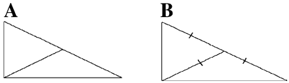
“…by operating with external material, pen, paper, ruler, and then working to meet one’s goals and sub- goals using that external material—draw a triangle, mark the half point of the hypotenuse—subjects benefit from physical constraint and visual hints that help cognition (Scaife and Rogers 1996).”
Background
Research works printed but not linked: 4
- Kirsh D (1992) When is information explicitly represented? The vancouver studies in cognitive science. Oxford University Press, Oxford, pp 340-365
- Kirsh D (2009c) Interaction, external representation and sensemaking. In: Taatgen N, van Rijn H, Nerbonne J, Schomaker L (eds) Proceedings of the 31st annual conference of the cognitive science society. Cognitive Science Society, Austin, TX, pp 1103-1108
- Von Neumann J (1948/1961) General and logical theory of automata. In: Taub AH (ed) John von Neumann: collected works. Volume V: design of computers, theory of automata and numerical analysis. Oxford, Pergamon Press, pp 288-326
- Vygotsky L (1986) Thought and language, revised edn. MIT Press, Cambridge
Cited by
Handbook of Self-Regulation of Learning and Performance
(2017) · Routledge eBooks · doi:10.4324/9781315697048 · Cited by 1,816
Risko, E. F., & Gilbert, S. J. (2016) · Trends in Cognitive Sciences · doi:10.1016/j.tics.2016.07.002 · Cited by 1,502
HCI Theory: Classical, Modern, and Contemporary
Rogers, Y. (2012) · Synthesis Lectures on Human-Centered Informatics · doi:10.2200/s00418ed1v01y201205hci014 · Cited by 299
Artificial Intelligence in the 21st Century
Liu, J., Kong, X., Xia, F., Bai, X., Wang, L., Qing, Q., & Lee, I. (2018) · IEEE Access · doi:10.1109/access.2018.2819688 · Cited by 270
“In this era of interdisciplinary science, of computer science, cybernetics, automation, mathematical logic, and linguistics [1], questions have been raised about the specific concept of AI [2].”
BackgroundOpportunities as Artifacts and Entrepreneurship as Design
Berglund, H., Bousfiha, M., & Mansoori, Y. (2020) · Academy of Management Review · doi:10.5465/amr.2018.0285 · Cited by 231
“…previously unrelated ideas and concepts (e.g. brainstorming business ideas us-ing mind-mapping software), and make it easier to rerepresent and simplify complex ideas (e.g. writing down business model assumptions using a framework to cluster and reduce them) (Kirsh, 2010; Simon, 1996: 131).”
Metadata
- Authors
- Kirsh, D.
- Affiliations
- University of California San Diego (US)
- Corresponding author
- Kirsh, David
- ORCID
- Kirsh, David
- Venue
- AI & SOCIETY
- Published
- 2010-02-10
- Volume
- 25
- Issue
- 4
- Pages
- 441-454
- ISSN
- 0951-5666 (ISSN-L)
- 1435-5655
- OpenAlex
- W2152364132
- Cited by
- 525
- References
- 39
- Citations by year
- 2026: 53 · 2025: 38 · 2024: 23 · 2023: 38 · 2022: 40 · 2021: 34 · 2020: 37 · 2019: 54 · 2018: 28 · 2017: 27 · 2016: 28 · 2015: 29 · 2014: 21 · 2013: 44 · 2012: 15
- FWCI
- 14.51
- Type
- journal article
- Language
- en
- Open access
- hybrid
- doi.org
- Licence
- cc-by-nc
- Locations
- AI & Society (publishedVersion, cc-by-nc)
- eScholarship (California Digital Library) (submittedVersion)
- PhilPapers (PhilPapers Foundation) (submittedVersion)
- Topics
- Life Sciences › Neuroscience › Cognitive Neuroscience › Embodied and Extended Cognition
- Social Sciences › Psychology › Experimental and Cognitive Psychology › Visual and Cognitive Learning Processes
- Physical Sciences › Computer Science › Artificial Intelligence › Cognitive Computing and Networks
- Keywords
- external representations, cognitive ability, mental representation, re-representation, problem solving, information encoding
About these checks
Registry, retraction, Cites and statistics results are computed, not judged, with one exception: a printed reference that no index lists is read once by a model before it counts as a citation error. Claims are extracted by a model and kept only when their quote appears verbatim in the text; each cited source is then checked, with a model’s help, for whether it says what the claim relies on. Those verdicts can be wrong — read the claim’s quote and the cited source before relying on one.
Statistics and arithmetic are recomputed, not judged.
Confidence bands are shown only for fields calibrated on our annotated test set. None is calibrated yet, so no band is shown.
What counts as a claim ›How we measure confidence ›How we check this ›
Are you an author, or do you see a problem with this page? Request a review
Data sources
Bibliographic data: Semantic Scholar, OpenAlex, Crossref.
Contains information from the Semantic Scholar Academic Graph Datasets, made available under the ODC Attribution License (ODC-BY 1.0).
Semantic Scholar’s data is described in: Kinney, R., et al. (2023). The Semantic Scholar Open Data Platform. arXiv:2301.10140.
