

The DOI matches its Crossref record; 80 of the 87 references it cites were found in a registry or an index, and 2 are not checked yet; 29 of the 82 sources its claims cite were checked for support.
Accessibility-Driven Information Transformations in Mixed-Visual Ability Work Teams
Open accessAbstract
Blind and low-vision (BLV) employees in mixed-visual ability teams often encounter information (e.g., PDFs, diagrams) in inaccessible formats. To enable teamwork, teams must transform these representations by modifying or re-creating them into accessible forms. However, these transformations are frequently overlooked, lack infrastructural support, and cause additional labour. To design systems that move beyond one-off accommodations to effective mixed-ability collaboration, we need a deeper understanding of the representations, their transformations and how they occur. We conducted a week-long diary study with follow-up interviews with 23 BLV and sighted professionals from five legal, non-profit, and consulting teams, documenting 36 transformation cases. Our analysis characterizes how teams perform representational transformations for accessibility: how they are triggered proactively or reactively, how they simplify or enhance, and four common patterns in which workers coordinate with each other to address representational incompatibility. Our findings uncover opportunities for designing systems that can better support mixed-visual ability work.
Verified 2026-10-05 · 2 references not checked yet
Overview
CoChat Summary
TL;DR
This paper reports an in-the-wild qualitative study of how mixed-visual ability work teams transform information representations to address accessibility barriers. It characterizes transformations as triggered reactively or proactively, as simplifying or enhancing, and as unfolding through four recurring coordination patterns with consequences for labour, collaboration, and equity.
Key findings
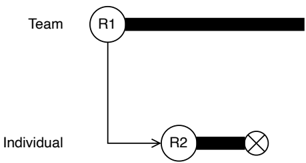
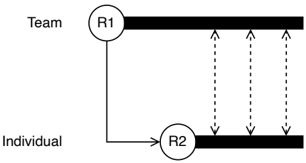
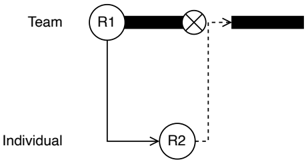
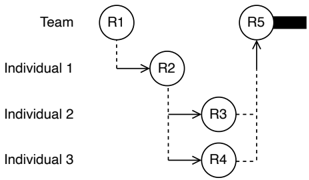
- Across 23 diary-study participants from five teams and 7 focus-group participants from two teams, the authors documented 36 transformation cases from diaries and six from focus groups (42 total), distributed across four patterns: disposable fixes (19 cases), transformed becomes the standard (9), parallel representations (8), and assembly (6).
- Transformations either simplified representations (n=19) or enhanced them (n=13); enhancement was often technically challenging (n=15), and simplification was a common fallback, such as copying inaccessible content into plain text (shared by 11 participants), which lost information fidelity (n=9).
- Coordination was negotiated differently across patterns: reactive triggers were unexpected (n=16), proactive triggers were anticipated (n=9), and negotiation could carry social cost (n=13) and professional cost (n=8), while a supportive open work culture (n=21) made negotiation an opportunity for trust and understanding.
- Consequences included individual enablement and efficiency (n=18) and increased workload (n=13); team increased awareness of others (n=14) and fragile workflow (n=9); and representational increased universal access (n=14), information silo (n=10), and decreased fidelity (n=9).
Methods
- Five-day diary study with follow-up individual interviews with 23 professionals (14 BLV, 9 sighted) from five legal, non-profit, and consulting teams, plus two one-hour focus groups with 7 participants (4 BLV, 3 sighted) from two other teams.
- Data included 404 diary entries, 209 unique representation examples, 29 hours and 42 minutes of interview recordings, and two hours of focus group recordings; analysis used open coding, deductive coding, and thematic analysis, resulting in a final codebook of 96 codes.
- The authors deconstructed cases into triggers, actions, and consequences, identified 36 diary cases and six focus-group cases, and selected 10 representative cases from the diary study for detailed presentation.
Limitations
- The paper states that sample representativeness across industries and geographic locations is difficult to assess; the three non-profit teams may have fostered greater accessibility awareness; cases and patterns may not be exhaustive; and the findings are biased toward problems because participants more readily discussed barriers than successes.
- The paper also states that the analysis examines processes and functional consequences of transformations, not outcome quality or participants’ subjective attitudes, and that the study occurred during a July 2024 period of transition in workplace tools with growing GenAI influence, when organizational policies often prevented use of such tools.
- Evident from the text: focus-group data were less granular than diary data, the 10 illustrative cases all came from the diary study, and the non-interventional design makes it difficult to establish causal connections between practices or patterns and “better” outcomes.
Model-written summary. Check it against the paper before relying on it.
Integrity signals
Registry
Cites
Statistics
Figures
Verification
Claims the paper makes
21 Valid · 2 Not valid · 13 Not checked · 129 Own results and interpretations
The sources with a verdict support this claim; the rest weren’t checked yet, have no full text we could read, or their verdicts aren’t rated yet.
In the paper
“Although this type of invisible labour has been touched upon in previous analyses of mixed-ability teams (in work activities [9, 19, 41, 48, 61] and other contexts [75]), there has not been an examination of mixed ability teams that considers specifically how representational barriers impede work, and how different teams engage in representational transformation to address these barriers.”
What the sources say
- Not checked — no full text of the sourcecites [9] [9] Stacy M. Branham and Shaun K. Kane. 2015. The Invisible Work of Accessibility: How Blind Employees Manage Accessibility in Mixed-Ability Workplaces. In Proceedings of the 17th International ACM SIGACCESS Conference on Computers & Accessibility (ASSETS '15) . Association for Computing Machinery, New York, NY, USA, 163-171. doi:10.1145/2700648.2809864 - source
- Not checked — no full text of the sourcecites [19] [19] Maitraye Das, Abigale Stangl, and Leah Findlater. 2024. "That comes with a huge career cost:" Understanding Collaborative Ideation Experiences of Disabled Professionals. Proc. ACM Hum.-Comput. Interact. 8, CSCW1, Article 179 (April 2024), 28 pages. doi:10.1145/3641018 - source
- Not checked — no full text of the sourcecites [41] [41] Francesca Kaschnig, Thomas Neumayr, and Mirjam Augstein. 2024. Remote Collaboration Between Sighted and Non-Sighted People in Mixed-Ability Teams. In Computers Helping People with Special Needs , Klaus Miesenberger, Petr Peňáz, and Makato Kobayashi (Eds.). Springer Nature Switzerland, Cham, 505-516. doi:10.1007/978-3-031-62846-7\_60 - source
- Not checked — no full text of the sourcecites [48] [48] Kelly Mack, Maitraye Das, Dhruv Jain, Danielle Bragg, John Tang, Andrew Begel, Erin Beneteau, Josh Urban Davis, Abraham Glasser, Joon Sung Park, and Venkatesh Potluri. 2021. Mixed Abilities and Varied Experiences: a group autoethnography of a virtual summer internship. In Proceedings of the 23rd International ACM SIGACCESS Conference on Computers and Accessibility (ASSETS '21) . Association for Computing Machinery, New York, NY, USA, 1-13. doi:10.1145/3441852.3471199 - source
- Not checked — no full text of the sourcecites [61] [61] Venkatesh Potluri, Maulishree Pandey, Andrew Begel, Michael Barnett, and Scott Reitherman. 2022. CodeWalk: Facilitating Shared Awareness in MixedAbility Collaborative Software Development. In Proceedings of the 24th International ACM SIGACCESS Conference on Computers and Accessibility (ASSETS '22) . Association for Computing Machinery, New York, NY, USA, 1-16. doi:10.1145/3517428.3544812 - source
- Supportedcites [75] [75] Lan Xiao, Maryam Bandukda, Katrin Angerbauer, Weiyue Lin, Tigmanshu Bhatnagar, Michael Sedlmair, and Catherine Holloway. 2024. A Systematic Review of Ability-diverse Collaboration through Ability-based Lens in HCI. In Proceedings of the CHI Conference on Human Factors in Computing Systems . ACM, Honolulu HI USA, 1-21. doi:10.1145/3613904.3641930 - source
The citation is attached to the statement that earlier work touched on invisible labour in ability-diverse collaboration, not to the citing authors’ claim about a gap in research on representational barriers. Section 5.1 (p. 12) discusses people with disabilities doing additional, sometimes ‘invisible’ work to overcome accessibility gaps. (LLM, conf=0.88)
plain- Asserted: passes — The authors put it forward as true.
- Checkable: passes — It can be checked against evidence.
- Load-bearing: passes — The paper’s conclusions depend on it.
- Based: passes — The paper gives a reason why it holds.
The cited sources support only part of this claim — read each source’s verdict below.
In the paper
“Teams of knowledge workers rely heavily on shared representations such as documents, visual diagrams and spreadsheets to externalize thoughts, organize data, and facilitate coordination [21, 23, 37, 43, 78], all necessary towards accomplishing their goals.”
What the sources say
- Not checked — no full text of the sourcecites [21] [21] Randall Davis, Howard Shrobe, and Peter Szolovits. 1993. What Is a Knowledge Representation? AI Magazine 14, 11 (March 1993), 17-17. doi:10.1609/aimag. v14i1.1029 - doi:10.1609/aimag.v14i1.1029
- Not checked — no full text of the sourcecites [23] [23] Erica de Vries. 2012. Learning with External Representations. In Encyclopedia of the Sciences of Learning , Norbert M. Seel (Ed.). Springer US, Boston, MA, 20162019. doi:10.1007/978-1-4419-1428-6\_675 - source
- Not checked — no full text of the sourcecites [37] [37] Edwin Hutchins. 1995. Cognition in the Wild . The MIT Press. doi:10.7551/ mitpress/1881.001.0001 - source
- Partly supportedcites [43] [43] David Kirsh. 2010. Thinking with external representations. AI & SOCIETY 25, 4 (Nov. 2010), 441-454. doi:10.1007/s00146-010-0272-8 - sourceExperimental — accuracy not yet measured
Section 3, “Shareable and identifiable objects of thought” (page not available), says externalized structures let people share a common focus and describes colleagues using visual annotations. This supports externalizing and sharing thoughts, but the paper does not establish that teams of knowledge workers rely heavily on documents or spreadsheets to organize data and coordinate their work. (LLM, conf=0.86)
- Not checked — no full text of the sourcecites [78] [78] Jiaje Zhang and Donald A. Norman. 1994. Representations in distributed cognitive tasks. Cognitive Science 18, 1 (Jan. 1994), 87-122. doi:10.1016/0364-0213(94)900213 - source
plain- Asserted: passes — The authors put it forward as true.
- Checkable: passes — It can be checked against evidence.
- Load-bearing: passes — The paper’s conclusions depend on it.
- Based: passes — The paper gives a reason why it holds.
The sources with a verdict support this claim; the rest weren’t checked yet, have no full text we could read, or their verdicts aren’t rated yet.
In the paper
“This is particularly applicable in inaccessible software development environments, project management tools, and collaborative platforms [12, 19, 36], forcing BLV employees to use do-it-yourself (DIY) tools to simply do their work [13].”
What the sources say
- Not checked — no full text of the sourcecites [12] [12] Yoonha Cha, Isabela Figueira, Jessy Ayala, Emory James Edwards, Joshua Garcia, André Van Der Hoek, and Stacy Marie Branham. 2024. 'Do You Want Me to Participate or Not?': Investigating the Accessibility of Software Development Meetings for Blind and Low Vision Professionals. In Proceedings of the CHI Conference on Human Factors in Computing Systems . ACM, Honolulu HI USA, 1-17. doi:10.1145/3613904.3642130 - source
- Not checked — no full text of the sourcecites [19] [19] Maitraye Das, Abigale Stangl, and Leah Findlater. 2024. "That comes with a huge career cost:" Understanding Collaborative Ideation Experiences of Disabled Professionals. Proc. ACM Hum.-Comput. Interact. 8, CSCW1, Article 179 (April 2024), 28 pages. doi:10.1145/3641018 - source
- Not checked — no full text of the sourcecites [36] [36] Earl W. Huff, Kwajo Boateng, Makayla Moster, Paige Rodeghero, and Julian Brinkley. 2020. Examining The Work Experience of Programmers with Visual Impairments. In 2020 IEEE International Conference on Software Maintenance and Evolution (ICSME) . 707-711. doi:10.1109/ICSME46990.2020.00077 - source
- Supportedcites [13] [13] Yoonha Cha, Victoria Jackson, Karina Kohl, Rafael Prikladnicki, André van der Hoek, and Stacy Branham. 2025. The Dilemma of Building Do-It-Yourself (DIY) Solutions For Workplace Accessibility. In Proceedings of the 2025 CHI Conference on Human Factors in Computing Systems (CHI '25) . Association for Computing Machinery, New York, NY, USA, Article 47, 17 pages. doi:10.1145/3706598.3713302 - source
Section 4.2.1 describes participants creating DIY solutions after inaccessible tools and inadequate workarounds left their needs unmet, calling this DIY work “involuntary.” Section 5.1 says that work on the job was sometimes made possible only by this behind-the-scenes access labor. The citation to this paper supports the DIY-tools portion of the sentence; the specific platform examples are cited separately. (LLM, conf=0.91)
plainstates a cause- Asserted: passes — The authors put it forward as true.
- Checkable: passes — It can be checked against evidence.
- Load-bearing: passes — The paper’s conclusions depend on it.
- Based: passes — The paper gives a reason why it holds.
Every source the paper cites for this claim was checked and supports it.
In the paper
“The multiplicity of representational forms of information is particularly critical for accessibility in mixed-visual ability work, because workers might transform one type of representation into an accessible form (like an alternative text for screen-reading [39]).”
What the sources say
- Supportedcites [39] [39] Crescentia Jung, Shubham Mehta, Atharva Kulkarni, Yuhang Zhao, and YeaSeul Kim. 2022. Communicating Visualizations without Visuals: Investigation of Visualization Alternative Text for People with Visual Impairments. IEEE Transactions on Visualization and Computer Graphics 28, 1 (Jan. 2022), 1095-1105. doi:10.1109/TVCG.2021.3114846 - source
The citation is attached to alternative text for screen-reading as an example of an accessible representation, not to the broader claim about mixed-visual-ability work. The paper’s opening summary (p. 1) identifies alternative text as a way to communicate visualizations to people with visual impairments, and §6.2 (p. 9) explicitly discusses screen readers delivering that text. (LLM, conf=0.91)
hedgedstates a cause- Asserted: passes — The authors put it forward as true.
- Checkable: passes — It can be checked against evidence.
- Load-bearing: passes — The paper’s conclusions depend on it.
- Based: passes — The paper gives a reason why it holds.
- Supported
The cited sources support only part of this claim — read each source’s verdict below.
In the paper
“This form of 'working to work' places burdens on BLV workers [7, 13].”
What the sources say
- Partly supportedcites [7] [7] Peter Bloom and Martyna Śliwa. 2022. Hacking work: Critically examining the implications of the new discourse and practices of hacking for work intensification and organisational control. Human Relations 75, 5 (2022), 795-816. doi:10.1177/0018726721996763 arXiv:https://doi.org/10.1177/0018726721996763 - sourceExperimental — accuracy not yet measured
The ‘Working to work’ section (p. 14) describes employees doing additional work to overcome barriers to doing their jobs, and ‘Implications for research and practice’ (p. 16) describes the resulting responsibilities and risks. The paper supports the general point that this places burdens on workers, but it does not address BLV workers specifically. (LLM, conf=0.86)
- Supportedcites [13] [13] Yoonha Cha, Victoria Jackson, Karina Kohl, Rafael Prikladnicki, André van der Hoek, and Stacy Branham. 2025. The Dilemma of Building Do-It-Yourself (DIY) Solutions For Workplace Accessibility. In Proceedings of the 2025 CHI Conference on Human Factors in Computing Systems (CHI '25) . Association for Computing Machinery, New York, NY, USA, Article 47, 17 pages. doi:10.1145/3706598.3713302 - source
Section 2.1 says workplace challenges faced by BLV workers typically result in additional access labor. Section 5.1 describes the intense, uncompensated labor that BLV software professionals perform behind the scenes to make their work possible, supporting the description of this labor as burdensome. (LLM, conf=0.90)
plainstates a cause- Asserted: passes — The authors put it forward as true.
- Checkable: passes — It can be checked against evidence.
- Load-bearing: passes — The paper’s conclusions depend on it.
- Based: passes — The paper gives a reason why it holds.
- Partly supported
80 more claims · 3 with their cited sources checked
Create a free account to see all 165 claims and every source verdict.
- It may state two separate claims as one. 57
- Probably not a substantial claim. 49
Self-check
Percentages, sums and reported differences re-computed from the paper’s own numbers.
Each contradiction between two passages listed here was confirmed by an independent check.
Rated minor: it would not touch a result — a value no result rests on, a p-value that stays on the same side of the significance level, or a conflict that is clerical, resolved elsewhere in the paper, or outside its own findings.
In the paper
§ 5.2 Patterns of Transformations, Coordination, and Their Consequences · p. 6
“This can concentrate the increased workload on one individual ( n =19)”
§ (c) Consequences · p. 14
“Increased workload ( n =13)”
Rated minor: it would not touch a result — a value no result rests on, a p-value that stays on the same side of the significance level, or a conflict that is clerical, resolved elsewhere in the paper, or outside its own findings.
In the paper
§ Legend · p. 9
“As P23LB said of the co-creation process:”
§ 4.2 Cases · p. 5
“| T5 | P23 S | 20s | Male | Sighted | | |”
Citations
Cites
Hutchins, E. (1995) · doi:10.7551/mitpress/1881.001.0001 · Cited by 10,801 · cited 2×
“Such representations are fundamental tools for knowledge work [14, 15, 37, 38, 57, 65, 68] used by employees to manage information and carry out tasks [27, 37, 68].”
Awareness and coordination in shared workspaces
Dourish, P., & Bellotti, V. (1992) · Proceedings of the 1992 ACM conference on Computer-supported cooperative work - CSCW '92 · doi:10.1145/143457.143468 · Cited by 2,550 · cited 1×
“This labour is a specific type of awareness and coordination work, as defined in the computer-supported cooperative work (CSCW) field [25, 34], that is required to maintain a shared understanding in the face of representational breakdowns.”
Representations in Distributed Cognitive Tasks
Zhang, J., & Norman, D. A. (1994) · Cognitive Science · doi:10.1207/s15516709cog1801_3 · Cited by 1,203
Encyclopedia of the Sciences of Learning
(2012) · doi:10.1007/978-1-4419-1428-6 · Cited by 1,091
External cognition: how do graphical representations work?
Scaife, M., & Rogers, Y. (1996) · International Journal of Human-Computer Studies · doi:10.1006/ijhc.1996.0048 · Cited by 1,066
Social translucence: an approach to designing systems that support social processes
Erickson, T., & Kellogg, W. A. (2000) · ACM Transactions on Computer-Human Interaction · doi:10.1145/344949.345004 · Cited by 998
Suchman, L. (1995) · Communications of the ACM · doi:10.1145/223248.223263 · Cited by 991 · cited 2×
“Such representations are fundamental tools for knowledge work [14, 15, 37, 38, 57, 65, 68] used by employees to manage information and carry out tasks [27, 37, 68].”
The nature of external representations in problem solving
Zhang, J. (1997) · Cognitive Science · doi:10.1016/s0364-0213(99)80022-6 · Cited by 896
Vega-Lite: A Grammar of Interactive Graphics
Satyanarayan, A., Moritz, D., Wongsuphasawat, K., & Heer, J. (2017) · IEEE Transactions on Visualization and Computer Graphics · doi:10.1109/tvcg.2016.2599030 · Cited by 883
Focus group methodology: a review
Wilkinson, S. (1998) · International Journal of Social Research Methodology · doi:10.1080/13645579.1998.10846874 · Cited by 861
Research works printed but not linked: 1
- Maitraye Das Abigale Stangl and Leah Findlater. 2024. “That comes with a huge career cost:” Understanding Collaborative Ideation Experiences of Disabled Professionals. Proceedings of the ACM on Human-Computer Interaction 8 CSCW1 (April 2024) 1–28. 10.1145/3641018 · DOI · Paper page
Cited by
Tang, X., & Piper, A. M. (2026) · Designing Interactive Systems Conference · doi:10.1145/3800645.3813075 · Cited by 5
(2000) · Time to knit · doi:10.1145/3772318.3808903
Metadata
- Authors
- Zhao, Y., A. Nacenta, M., A. Sukhai, M., & Somanath, S.
- Affiliations
- University of Victoria (CA)
- Department of Computer Science, University of Victoria, Victoria, British Columbia, Canada
- IDEA-STEM, Kingston, Ontario, Canada and Canadian National Institute for the Blind, Kingston, Ontario, Canada
- Venue
- Proceedings of the 2026 CHI Conference on Human Factors in Computing Systems
- Publisher
- ACM
- Published
- 2026-04-13
- Pages
- 1-14
- OpenAlex
- W7126217092
- Cited by
- 4
- References
- 79
- Citations by year
- 2026: 4
- FWCI
- 19.07
- Type
- conference paper
- Language
- en
- Open access
- hybrid
- doi.org
- Licence
- cc-by
- Locations
- CHI Conference on Human Factors in Computing Systems (publishedVersion, cc-by)
- arXiv (Cornell University) (submittedVersion, cc-by)
- arXiv (Cornell University) (cc-by)
- Funders
- NSERC (CGS D - 588775 - 2024, DG 2020-04401)
- University of Victoria
- Topics
- Social Sciences › Human Factors and Ergonomics › Digital Accessibility for Disabilities
- Physical Sciences › Computer Science › Human-Computer Interaction › Usability and User Interface Design
- Social Sciences › Education › Disability Education and Employment
- Keywords
- accessibility, information accessibility, team collaboration, visual impairment, assistive technology design
About these checks
Registry, retraction, Cites and statistics results are computed, not judged, with one exception: a printed reference that no index lists is read once by a model before it counts as a citation error. Claims are extracted by a model and kept only when their quote appears verbatim in the text; each cited source is then checked, with a model’s help, for whether it says what the claim relies on. Those verdicts can be wrong — read the claim’s quote and the cited source before relying on one.
The claim verdicts this report counts are experimental: their accuracy is not yet measured.
A language model drew the claims from the paper on 2026-10-05, under version 3 of the claim definition (model deepseek-v4.1-flash, prompt extract-v3).
A second model labelled each claim on 2026-10-05 (model jev-1.13-20260917, definition revision gold-guideline-v0.2).
Cited sources are checked with a language model’s help (gpt-6-sol).
Statistics and arithmetic are recomputed, not judged.
Confidence bands are shown only for fields calibrated on our annotated test set. None is calibrated yet, so no band is shown.
What counts as a claim ›How we measure confidence ›How we check this ›
Are you an author, or do you see a problem with this page? Request a review
How to cite
Cite CoChat for the checks on this page, and the paper for its own findings.
- This page
- CoChat. (2026). Citation check: Accessibility-Driven Information Transformations in Mixed-Visual Ability Work Teams. https://app.cochat.ai/papers/10.1145/3772318.3790872
- The paper
- Zhao, Y., A. Nacenta, M., A. Sukhai, M., & Somanath, S. (2026). Accessibility-Driven Information Transformations in Mixed-Visual Ability Work Teams. Proceedings of the 2026 CHI Conference on Human Factors in Computing Systems. https://doi.org/10.1145/3772318.3790872
Data sources
Bibliographic data: Semantic Scholar, OpenAlex, Crossref.
Contains information from the Semantic Scholar Academic Graph Datasets, made available under the ODC Attribution License (ODC-BY 1.0).
Semantic Scholar’s data is described in: Kinney, R., et al. (2023). The Semantic Scholar Open Data Platform. arXiv:2301.10140.
