

Obesity is associated with early hip fracture risk in postmenopausal women: a 25-year follow-up
Open accessThe DOI matches its Crossref record; 39 of the 39 references it cites were found in a registry or an index.
Abstract
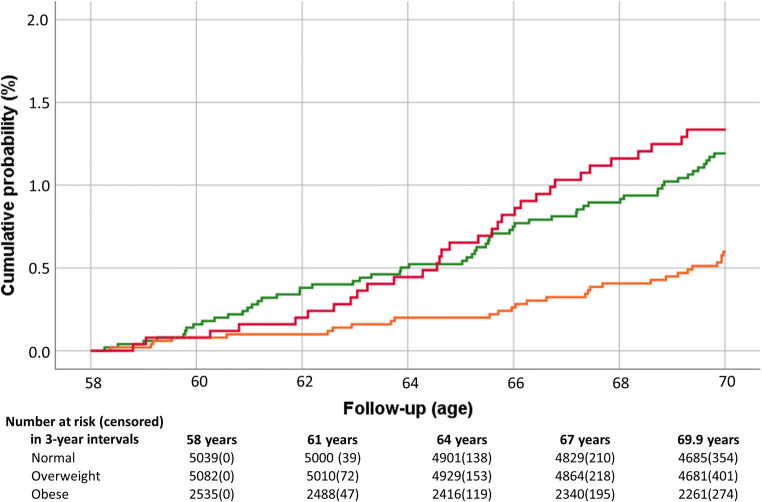
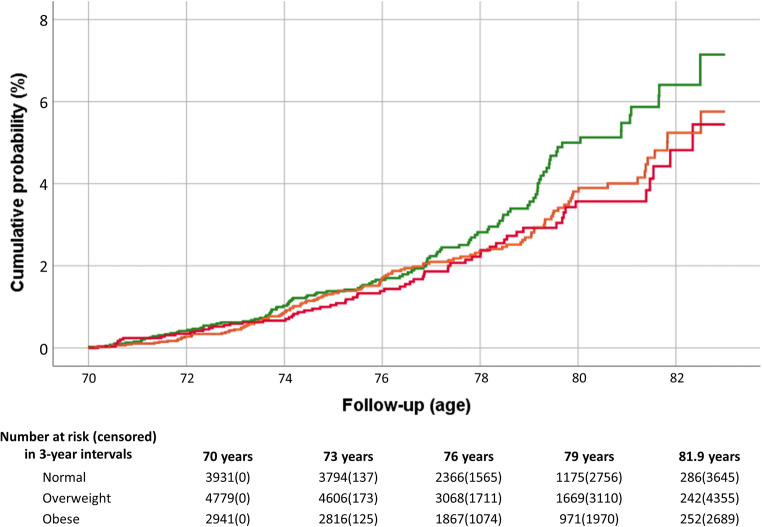
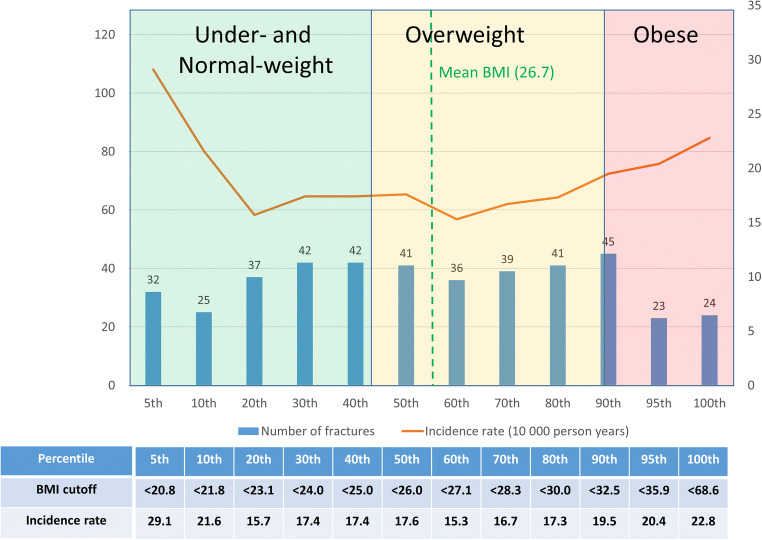
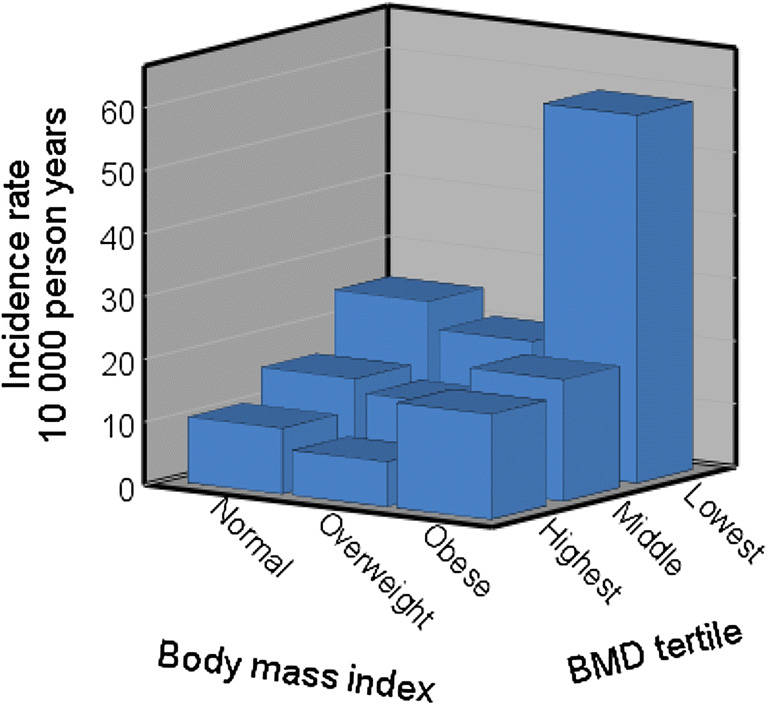
Association of body mass index and hip fracture has been controversial. In this study, women with lowest and highest body weight had the highest fracture incidence. A 25-year follow-up indicated that obesity associates with early hip fracture risk and suggested increasing trend in normal-weight women at a later stage. INTRODUCTION: Obesity is a pandemic health issue. Its association with hip fracture risk remains controversial. We studied the long-term relationship of body mass index and hip fracture incidence in postmenopausal women. METHODS: The cohort of 12,715 Finnish women born in 1932-1941 was followed for 25 years, covering ages from 58 up to 83. Fractures and deaths were obtained from national registries. Women were investigated in deciles of BMI as well as in WHO weight categories (normal, overweight, or obese). The follow-up analysis was carried out in two age strata as "early" (58-70 years) and "late" (> 70 years). Body weight information was updated accordingly. Femoral neck BMD was recorded for a subsample (n = 3163). Altogether, 427 hip fractures were observed. RESULTS: A higher risk of early hip fracture was observed in obese and normal-weight compared with overweight women with hazard ratios (HRs) of 2.3 ((95% CI) 1.4-3.7) and 2.0 (1.3-3.1) while no difference was observed in late hip fracture risk between the three WHO categories (log rank p = 0.14). All-cause mortality during the follow-up was 19.3%. Compared with normal weight women, the obese women had a higher risk of death with an HR of 1.6 (1.4-1.8) and higher baseline BMD (p < 0.001). Faster bone loss was observed in the obese compared with other women (p < 0.001). CONCLUSION: Obesity associates with earlier hip fracture and higher postfracture mortality. The obese women with low BMD have clearly the highest risk of hip fracture. This combination increases hip fracture risk more than either of the factors alone. After 75 years of age, risk appears to increase more in normal weight women, but this trend is in need of further confirmation.
Overview
The claims and statistics of this paper haven’t been checked yet.
Free: it reads the open-access text and checks the first 5 claims that cite a source we can check. Create a free account to check every claim.
Integrity signals
Registry
Cites
Statistics
Figures
Verification
Claims the paper makes
The claims and statistics of this paper haven’t been checked yet.
Free: it reads the open-access text and checks the first 5 claims that cite a source we can check. Create a free account to check every claim.
Claims other papers make about this one
Each is checked against this paper’s own text: does it say what the citing paper says it does?
In the citing paper
“Up to a point, heavier individuals tend to have a higher BMD, however, the correlation between the body mass index and bone mass appeared to be U-shaped [64].”
From Emerging role of liver-bone axis in osteoporosis (2024) · cites this paper as [64]
Self-check
Percentages, sums and reported differences re-computed from the paper’s own numbers.
The self-check needs the paper’s full text.
Citations
Cites
Overweight, obesity, and mortality from cancer in a prospectively studied cohort of U.S. Adults
Calle, E. E., Rodriguez, C., Walker-Thurmond, K., & Thun, M. J. (2003) · New England Journal of Medicine · doi:10.1056/nejmoa021423 · Cited by 7,696
Flegal, K. M., Kit, B. K., Orpana, H., & Graubard, B. I. (2013) · JAMA · doi:10.1001/jama.2012.113905 · Cited by 3,998 · cited 1×
“A similar reduction associatedwith overweight women has also been reported in all-cause mortality [33].”
BackgroundBody-Mass Index and Mortality in a Prospective Cohort of U.S. Adults
Calle, E. E., Thun, M. J., Petrelli, J. M., Rodriguez, C., & Heath, C. W. (1999) · New England Journal of Medicine · doi:10.1056/nejm199910073411501 · Cited by 3,643
Risk Factors for Hip Fracture in White Women
Cummings, S. R., Nevitt, M. C., Browner, W. S., Stone, K., Fox, K. M., Ensrud, K. E., Cauley, J., Black, D., & Vogt, T. M. (1995) · New England Journal of Medicine · doi:10.1056/nejm199503233321202 · Cited by 3,595
Body-mass index and mortality among 1.46 million white adults
Berrington de Gonzalez, A., Hartge, P., Cerhan, J. R., Flint, A. J., Hannan, L., MacInnis, R. J., Moore, S. C., Tobias, G. S., Anton-Culver, H., Freeman, L. B., et al. (2010) · New England Journal of Medicine · doi:10.1056/nejmoa1000367 · Cited by 2,317
Vestergaard, P. (2007) · Osteoporosis International · doi:10.1007/s00198-006-0253-4 · Cited by 1,808 · cited 1×
“Paradoxically, obesity and T2DM also have a positive association with BMD [13, 14].”
BackgroundBody mass index as a predictor of fracture risk: A meta-analysis
De Laet, C., Kanis, J. A., Odén, A., Johanson, H., Johnell, O., Delmas, P., Eisman, J. A., Kroger, H., Fujiwara, S., Garnero, P., et al. (2005) · Osteoporosis International · doi:10.1007/s00198-005-1863-y · Cited by 1,622
Self-citationPrevalence of low femoral bone density in older U.S. women from NHANES III
Looker, A. C., Johnston, C. C., Wahner, H. W., Dunn, W. L., Calvo, M. S., Harris, T. B., Heyse, S. P., & Lindsay, R. L. (1995) · Journal of Bone and Mineral Research · doi:10.1002/jbmr.5650100517 · Cited by 1,379
Bhaskaran, K., dos-Santos-Silva, I., Leon, D. A., Douglas, I. J., & Smeeth, L. (2018) · The Lancet Diabetes & Endocrinology · doi:10.1016/s2213-8587(18)30288-2 · Cited by 1,228
Quality of the Finnish Hospital Discharge Register: A systematic review
Sund, R. (2012) · Scandinavian Journal of Public Health · doi:10.1177/1403494812456637 · Cited by 1,185
Self-citation
Cited by
Turcotte, A.-F., O’Connor, S., Morin, S. N., Gibbs, J. C., Willie, B. M., Jean, S., & Gagnon, C. (2021) · PLOS ONE · doi:10.1371/journal.pone.0252487 · Cited by 166
Ali, D., Figeac, F., Caci, A., Ditzel, N., Schmal, C., Kerckhofs, G., Havelund, J. F., Færgeman, N. J., Rauch, A., Tencerová, M., et al. (2022) · Aging Cell · doi:10.1111/acel.13726 · Cited by 68
Tang, G. H., Feng, L., Pei, Y., Gu, Z., Chen, T., & Feng, Z. (2023) · Frontiers in Endocrinology · doi:10.3389/fendo.2023.1154927 · Cited by 57
“Another study reported an inverted U-shaped relationship between BMI and lumbar BMD in women and neonates.”
BackgroundInfluentialPrevalence and Risk Factors of Osteoporosis: A Cross-Sectional Study in a Tertiary Center
Özmen, S., Kurt, S., Timur, H. T., Yavuz, O., Kula, H., Demir, A. Y., & Balcı, A. (2024) · Medicina · doi:10.3390/medicina60122109 · Cited by 70
“It has also been shown that BMD is lower in underweight individuals [23,32,33].”
Obesity and risk of fracture in postmenopausal women: a meta-analysis of cohort studies
Liu, H.-F., Meng, D., Yu, P., De, J.-C., & Li, H. (2023) · Annals of Medicine · doi:10.1080/07853890.2023.2203515 · Cited by 42
“In particular, obese women had a 25%–30% lower risk of hip fracture, but our meta-analysis, which included three high-quality cohort studies [21,25,27], found no statistical difference in the risk of hip fracture in obese postmenopausal women compared with normal-weight women.”
ResultEmerging role of liver-bone axis in osteoporosis
Gao, H., Peng, X., Li, N., Gou, L., Xu, T., Wang, Y., Qin, J., Liang, H., Ma, P., Li, S., et al. (2024) · Journal of Orthopaedic Translation · doi:10.1016/j.jot.2024.07.008 · Cited by 36
“Up to a point, heavier individuals tend to have a higher BMD, however, the correlation between the body mass index and bone mass appeared to be U-shaped [64].”
BackgroundD-galactose-induced aging aggravates obesity-induced bone dyshomeostasis
Imerb, N., Thonusin, C., Pratchayasakul, W., Arunsak, B., Nawara, W., Ongnok, B., Aeimlapa, R., Charoenphandhu, N., Chattipakorn, N., & Chattipakorn, S. C. (2022) · Scientific Reports · doi:10.1038/s41598-022-12206-4 · Cited by 33
Trends in neck of femur fracture incidence in EU15+ Countries from 1990-2017
Sugand, K., Ali, R., Goodall, R. J., Salciccioli, J. D., Marshall, D. C., Schuster‐Bruce, J., Abdul-Jabar, H. B., & Shalhoub, J. (2022) · Injury · doi:10.1016/j.injury.2022.11.038 · Cited by 22
Madanhire, T., Goedecke, J. H., Ward, K. A., Jaff, N. G., Crowther, N. J., Norris, S. A., Ferrand, R. A., Rehman, A. M., Micklesfield, L. K., & Gregson, C. L. (2020) · Journal of Bone and Mineral Research · doi:10.1002/jbmr.4765 · Cited by 24
“A 25-year longitudinal study in Finnish postmenopausal women reported that those with obesity were 30% more likely to experience hip fractures at a younger age than normal-weight women, with higher postfracture mortality.((58)) A meta-analysis of 25 prospective cohort studies showed that upper-arm fractures weremore c…”
BackgroundBone and the Unfolded Protein Response: In Sickness and in Health
Iyer, S. V., & Adams, D. J. (2023) · Calcified Tissue International · doi:10.1007/s00223-023-01096-x · Cited by 21
Juopperi, S., Sund, R., Rikkonen, T., Kröger, H., & Sirola, J. P. (2021) · BMC Musculoskeletal Disorders · doi:10.1186/s12891-021-04056-4 · Cited by 20
“The randomisation process has been described earlier in detail [11].”
MethodSelf-citationExploring the Interplay between Vitamin D, Insulin Resistance, Obesity and Skeletal Health
Abed, M. N., Alassaf, F. A., & Qazzaz, M. E. (2024) · Journal of Bone Metabolism · doi:10.11005/jbm.2024.31.2.75 · Cited by 22
“[35 ,36] The primary molecular mechanisms linked to both obesity and bone reduction include increased oxidative stress, disrupting bone-regulating hormones, Ins-R, interference by non-coding RNA, inflammation (via the production of proinflammatory adipokines and osteokines), altering bone cell…”
BackgroundEffects of weight-loss interventions on bone health in people living with obesity
Paccou, J., Gagnon, C., Yu, E. W.-Y., & Rosen, C. J. (2025) · Journal of Bone and Mineral Research · doi:10.1093/jbmr/zjaf135 · Cited by 18
Zhu, X., Chen, L., Pan, L., Zeng, Y., Fu, Q., Liu, Y., Peng, Y., Wang, Y., & Li, Y. (2022) · BMC Women s Health · doi:10.1186/s12905-022-02034-z · Cited by 18
“Obese women have a higher incidence of vertebral, ankle and humeral fractures and a lower incidence of hip fractures compared to non-obese women [21, 22].”
BackgroundRisk factors for future osteoporosis in perimenopausal Japanese women
Kanto, A., Kotani, Y., Murakami, K., Tamaki, J., Sato, Y., Kagamimori, S., Matsumura, N., & Iki, M. (2022) · Menopause The Journal of The North American Menopause Society · doi:10.1097/gme.0000000000002034 · Cited by 17
Selected musculoskeletal disorders in patients with thyroid dysfunction, diabetes, and obesity
Dyrek, N., Wikarek, A., Niemiec, M., & Kocełak, P. (2023) · Reumatologia/Rheumatology · doi:10.5114/reum/170312 · Cited by 13
“It is worth noting that differences in fat distribution also play a role in fracture susceptibility, with abdominal obesity increasing the risk of hip fractures [46].”
BackgroundDeclining hip fracture burden in Sweden 1998–2019 and consequences for projections through 2050
Michaëlsson, K., Baron, J. A., Byberg, L., Larsson, S. C., Melhus, H., & Gedeborg, R. (2024) · Scientific Reports · doi:10.1038/s41598-024-51363-6 · Cited by 21
“Moreover, there have been increases in body weight 54–56 and more common use of hip arthroplasties, precluding hip fracture injuries 57 .”
BackgroundShiomoto, K., Babazono, A., Harano, Y., Fujita, T., Jiang, P., Kim, S. A., & Nakashima, Y. (2021) · BMJ Open · doi:10.1136/bmjopen-2021-049157 · Cited by 15
Fracture risk in obesity: a narrative review
Kupisz-Urbańska, M., Stuss, M., Kuryłowicz, A., Jankowski, P., Pilz, S., Sewerynek, E., & Marcinowska-Suchowierska, E. (2022) · Endokrynologia Polska · doi:10.5603/ep.a2022.0077 · Cited by 14
“In 2021, data from a 25-year cohort study involving Finnish women were published [5].”
BackgroundBody composition, balance, functional capacity and falls in older women
Nordling, Y., Sund, R., Sirola, J. P., Kröger, H., Isanejad, M., & Rikkonen, T. (2024) · Aging Clinical and Experimental Research · doi:10.1007/s40520-024-02719-5 · Cited by 17
“The results may be due to the homogenous study population since the mean value of BMI in this study was 27 kg/m 2 (SD 4.5), which is associated with the lowest mortality rate in older adults [32] and lower hip fracture risk [12] compared to lower and higher BMI.”
BackgroundInfluentialSelf-citationVinogradova, Y., Iyen, B., Masud, T., Taylor, L. R., & Kai, J. (2025) · The Lancet Healthy Longevity · doi:10.1016/j.lanhl.2025.100729 · Cited by 14
Xiong, M.-F., He, P., Chen, Y., Cao, R., & Lei, S. (2022) · Journal of Orthopaedic Science · doi:10.1016/j.jos.2022.11.018 · Cited by 10
Imerb, N., Thonusin, C., Pratchayasakul, W., Chanpaisaeng, K., Aeimlapa, R., Charoenphandhu, N., Chattipakorn, N., & Chattipakorn, S. C. (2023) · The FASEB Journal · doi:10.1096/fj.202301197rr · Cited by 11
Bone Density and Structure in Overweight Men With and Without Diabetes
Starup‐Linde, J., Ørnstrup, M. J., Kjær, T. N., Lykkeboe, S., Handberg, A., Gregersen, S., Harsløf, T., Pedersen, S. B., Vestergaard, P., & Langdahl, B. L. (2022) · Frontiers in Endocrinology · doi:10.3389/fendo.2022.837084 · Cited by 9
Ohlsson, C., Lawenius, L., Jiang, Y., Horkeby, K., Wu, J., Nilsson, K. H., Koskela, A., Tuukkanen, J., Movérare‐Skrtic, S., Henning, P., et al. (2025) · Scientific Reports · doi:10.1038/s41598-025-91056-2 · Cited by 8
“High-fat diet causes obesity and studies in both humans 11–17 and rodents 18–23 have demonstrated that severe obesity reduces bone density and quality.”
Bone mass in Saudi women aged 20–40 years: the association with obesity and vitamin D deficiency
Albaik, M., Khan, J. A., Sindi, I. A., Åkesson, K., & McGuigan, F. E. (2022) · Archives of Osteoporosis · doi:10.1007/s11657-022-01164-z · Cited by 8
“The high incidence of both conditions demonstrates why osteoporosis and obesity are global public health problems in terms of personal health and the associated economic costs [6].”
BackgroundEffects of the energy balance transition on bone mass and strength
Wallace, I. J., Toya, C., Muñoz, M. A. P., Meyer, J. V., Busby, T., Reynolds, A. Z., Martinez, J., Thompson, T. T., Miller‐Moore, M., Harris, A. R., et al. (2023) · Scientific Reports · doi:10.1038/s41598-023-42467-6 · Cited by 7
“Many people today have more slender, weaker bones that must sustain heavier loads (due to greater body weight), potentially increasing the likelihood of a bone fracture, especially during a traumatic event such as a fall 28,32–34 .”
BackgroundGrowth Hormone and Bone: Preclinical and Clinical Perspectives
Yuen, K. C. J. (2025) · Endocrine Practice · doi:10.1016/j.eprac.2025.07.005 · Cited by 11
Li, H., Xu, Q., Ye, Y., Chang, B., Wang, R., & Li, G. (2024) · BMC Public Health · doi:10.1186/s12889-023-17494-7 · Cited by 5
Singhal, V., Kaur, S., Haidar, L. A., Lee, H., Bredella, M. A., & Misra, M. (2023) · Bone · doi:10.1016/j.bone.2023.116757 · Cited by 4
Liang, H., Jiajue, R., Qi, W., Jiang, Y., Cui, L., Pang, Q., Chi, Y., Liu, W., Wang, Q., Wang, W., et al. (2023) · Calcified Tissue International · doi:10.1007/s00223-023-01129-5 · Cited by 5
“However, a 25-year follow-up study confirmed a faster rate of bone loss in obese postmenopausal women than in underweight, normal weight, and overweight participants [12].”
BackgroundResultDevelopment and Comparison of Treatment Decision Tools for Glucocorticoid-Induced Osteoporosis
Chen, J., Yu, S., Chiu, W.-C., Ko, C., Hsu, C., Lai, H., Chen, Y., Su, Y., Kang, H., & Cheng, T. (2024) · Diagnostics · doi:10.3390/diagnostics14040452 · Cited by 6
“A Finnish prospective cohort study followed-up with for 25-years also indicated that a low or high BMI could be a risk factor for fractures, as well as high mortality [47].”
BackgroundCanto‐Cetina, T., Rojano‐Mejía, D., Coral‐Vázquez, R. M., Cetina-Manzanilla, J. A., Polanco-Reyes, L. E., & Canto, P. (2021) · Annals of Human Biology · doi:10.1080/03014460.2022.2041093 · Cited by 4
Wang, J., Zhao, C., & Yang, B. (2022) · Journal of Back and Musculoskeletal Rehabilitation · doi:10.3233/bmr-220044 · Cited by 4
“Obesity not only associates with earlier hip fracture and higher post-fracture mortality [18], but also with impaired wound healing and prosthetic joint infection after arthroplasty [19].”
Lari, A., Haidar, A., Mohammad, H., Makhseed, M., Alajmi, M., Bahbahani, R., Almutairi, M., Alnusif, N., & Lari, E. (2024) · European Journal of Orthopaedic Surgery & Traumatology · doi:10.1007/s00590-024-03832-x · Cited by 4
“However, more recent evidence refutes this notion, suggesting that obesity, in fact, increases the risk of fractures [6–8].”
Alaghehband, F. R., Lyytinen, A., Isanejad, M., Kopra, J., Kröger, H., & Rikkonen, T. (2025) · European Journal of Nutrition · doi:10.1007/s00394-025-03709-7 · Cited by 3
“The questionnaire response rate ranged between 80% and 93% [25].”
Self-citationJadzic, J. S., Andjelic, U., Milovanovic, P. D., Živković, V., Nikolić, S., Djonić, D., & Djuric, M. P. (2023) · International Journal of Obesity · doi:10.1038/s41366-023-01389-z · Cited by 2
“These data may imply that BMI above eutrophic ranges could be protective against femoral fractures, but this effect tends to disappear in individuals with advanced stages of obesity (class II and class III obesity) [1, 2, 13].”
InfluentialRiest, J., Friedrich, N., Nauck, M. A., Völzke, H., Gärtner, S., & Hannemann, A. (2024) · Nutrients · doi:10.3390/nu16244288 · Cited by 2
Body Mass as a Biomarker and Femoral Fracture
Nishioka, S., Inoue, T., & Onizuka, S. (2022) · Biomarkers in disease · doi:10.1007/978-3-030-87302-8_57-1
Obesity and bone health: key 2020–2022 highlights and implications
Marks, R. (2022) · Advances in Obesity Weight Management & Control · doi:10.15406/aowmc.2022.12.00378
Body Mass as a Biomarker and Femoral Fracture
Nishioka, S., Inoue, T., & Onizuka, S. (2023) · Biomarkers in disease · doi:10.1007/978-3-031-07395-3_57
Obesity, bariatric surgery, sarcopenia, and fracture risk
Paccou, J., & Gagnon, C. (2024) · Elsevier eBooks · doi:10.1016/b978-0-443-13825-6.00083-2
The Effect of Exercise to Prevent Osteoporosis on Bone Mineral Density in Women Aged 25-35 Years
Suwarno, S., Suwarno, B. S. S., & Suwarno, D. R. S. (2024) · Jurnal Sains Keolahragaan dan Kesehatan · doi:10.5614/jskk.2024.9.2.2
ANALYSIS OF TREATMENT METHODS FOR FEMORAL NECK FRACTURES BASED ON THE EXPERIENCE OF A SINGLE CENTER
Pomianowski, B., Smółka, L., Strugała, M., Karaś, R., Blady, K., & Woźniak, A. (2025) · Health Problems of Civilization · doi:10.5114/hpc.2024.146016
Predicting Osteoporosis in Elderly Cancer Patients Using the Modified Glasgow Prognostic Index
Ustuner, M., Aydın, S. G., Aydın, A., Ozguzel, B., Duran, E. N., Yeniyurt, E. K., Taşçı, E. Ş., & Bayramova, B. (2025) · Cancer Control · doi:10.1177/10732748251337601
“31,32 However, studies on cancer patients have con fl icting results.”
Cruz-Priego, G.-A., Guagnelli, M. Á., Santiago, S. O., Castelan, K. G. G., Gómez-Díaz, R. A., Humbert, L., & Clark, P. (2025) · Archives of Medical Research · doi:10.1016/j.arcmed.2025.103269
van der Merwe, C., Ukegbu, P., & Kruger, H. S. (2025) · Journal of Endocrinology Metabolism and Diabetes of South Africa · doi:10.1080/16089677.2025.2574154
“23,48,49 Race plays a modifying role in the relationship between HIV and fracture risk.”
Appropriate Weight Management for Osteoporosis Prevention
Kim, W. (2025) · Korean Journal of Family Practice · doi:10.21215/kjfp.2025.15.4.181
Jung, S.-H., Kwon, Y.-U., & Park, J. (2026) · Journal of Musculoskeletal Trauma · doi:10.12671/jmt.2025.00269
Midlife risk factors predict long-term hip fracture risk in women: a 35-yr follow-up
Mustonen, O. A., Sund, R., Kröger, H., Sirola, J. P., Poole, K. E. S., & Rikkonen, T. (2026) · JBMR Plus · doi:10.1093/jbmrpl/ziag083
“11 However, the midlife BMI alone did not sustain a clear lifelong difference between the categories of normal weight , over weight , and obese into old age.”
Self-citationAssociations between sarcopenia components with bone health in older women with obesity
Júnior, G. N. D. O., Dolan, E., Genário, R., Leitão, A. E., Gil, S. D. S., Longobardi, I., Franco, T. C., Ferriolli, E., Gualano, B., & Roschel, H. (2026) · The Journal of Nutritional Physiology · doi:10.1016/j.jnphys.2026.100035
Healthy life awareness in postmenopausal women with hip fracture
Özberk, H., Bilgiç, D., & Coşkun, M. (2026) · Sağlık akademisyenleri dergisi/Sağlık akademisyenler dergisi · doi:10.52880/sagakaderg.1868798
Metadata
- Authors
- Rikkonen, T., Sund, R., Sirola, J., Honkanen, R., Poole, K. E. S., & Kröger, H.
- Affiliations
- University of Eastern Finland (FI)
- University of Cambridge (GB)
- Corresponding author
- Rikkonen, T.
- Venue
- Osteoporosis International
- Published
- 2020-10-23
- Volume
- 32
- Issue
- 4
- Pages
- 769-777
- ISSN
- 0937-941X (ISSN-L)
- 1433-2965
- PMC
- PMC8026440
- OpenAlex
- W3094437112
- Cited by
- 52
- References
- 39
- Citations by year
- 2026: 4 · 2025: 10 · 2024: 11 · 2023: 10 · 2022: 12 · 2021: 4 · 2020: 1
- FWCI
- 6.75
- Type
- journal article
- Language
- en
- Open access
- hybrid
- doi.org
- Licence
- cc-by-nc
- creativecommons.org/licenses/by-nc/4.0 (tdm)
- creativecommons.org/licenses/by-nc/4.0 (vor)
- Locations
- Osteoporosis International (publishedVersion, cc-by-nc)
- PubMed Central (publishedVersion, cc-by-nc)
- PubMed (publishedVersion)
- Apollo (University of Cambridge) (submittedVersion, cc-by-nc)
- Apollo
- Funders
- Juho Vainion Säätiö
- Suomalainen Tiedeakatemia (310831/2017)
- Pohjois-Savon Rahasto
- Sigrid Juséliuksen Säätiö
- Topics
- Health Sciences › Medicine › Orthopedics and Sports Medicine › Bone health and osteoporosis research
- Health Sciences › Medicine › Surgery › Hip and Femur Fractures
- Health Sciences › Medicine › Endocrinology, Diabetes and Metabolism › Menopause: Health Impacts and Treatments
- Keywords
- obesity, hip fracture, postmenopausal women, body mass index, fracture risk, bone mineral density, bone loss, all-cause mortality, normal-weight women, long-term follow-up
- MeSH terms
- Aged, Aged, 80 and over, Female, Finland, Follow-Up Studies, Hip Fractures, Humans, Middle Aged, Obesity, Risk Factors, Bone Density, Body Mass Index, Postmenopause
About these checks
Registry, retraction, Cites and statistics results are computed, not judged, with one exception: a printed reference that no index lists is read once by a model before it counts as a citation error. Claims are extracted by a model and kept only when their quote appears verbatim in the text; each cited source is then checked, with a model’s help, for whether it says what the claim relies on. Those verdicts can be wrong — read the claim’s quote and the cited source before relying on one.
Statistics and arithmetic are recomputed, not judged.
Confidence bands are shown only for fields calibrated on our annotated test set. None is calibrated yet, so no band is shown.
What counts as a claim ›How we measure confidence ›How we check this ›
Are you an author, or do you see a problem with this page? Request a review
Data sources
Bibliographic data: Semantic Scholar, OpenAlex, Crossref.
Contains information from the Semantic Scholar Academic Graph Datasets, made available under the ODC Attribution License (ODC-BY 1.0).
Semantic Scholar’s data is described in: Kinney, R., et al. (2023). The Semantic Scholar Open Data Platform. arXiv:2301.10140.
