

The DOI matches its Crossref record; 27 of the 27 references it cites were found in a registry or an index.
Reference database design for the automated analysis of microplastic samples based on Fourier transform infrared (FTIR) spectroscopy
Open accessAbstract
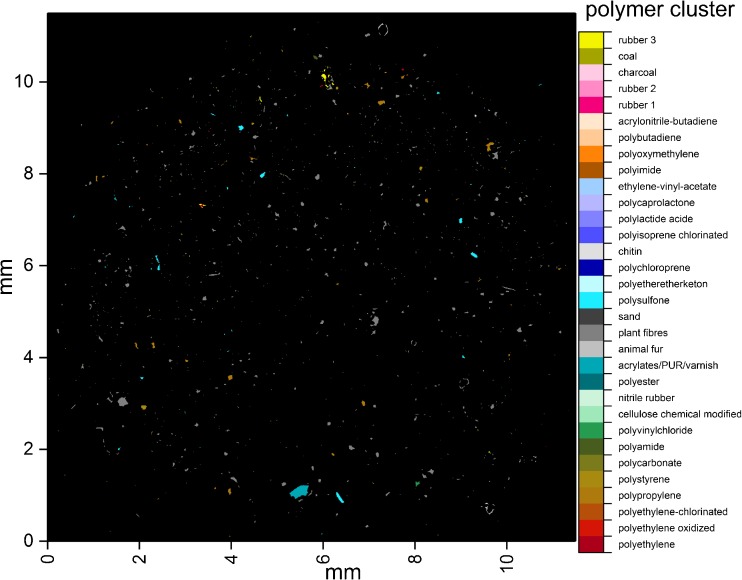
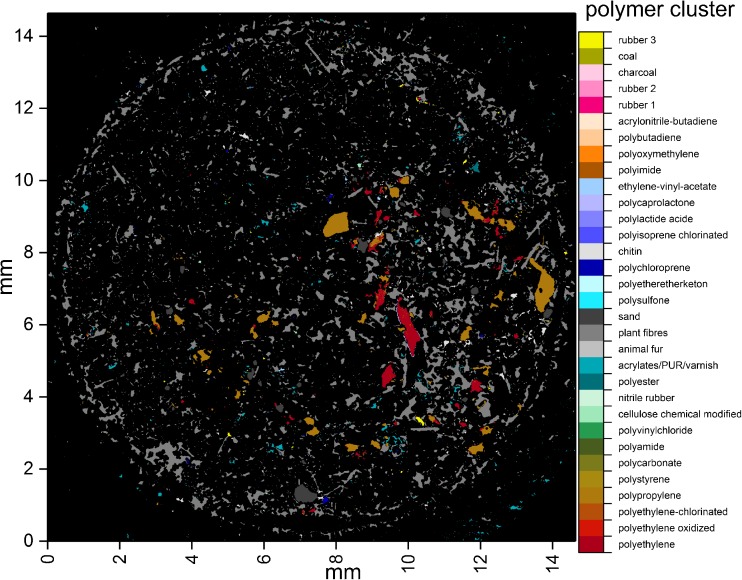
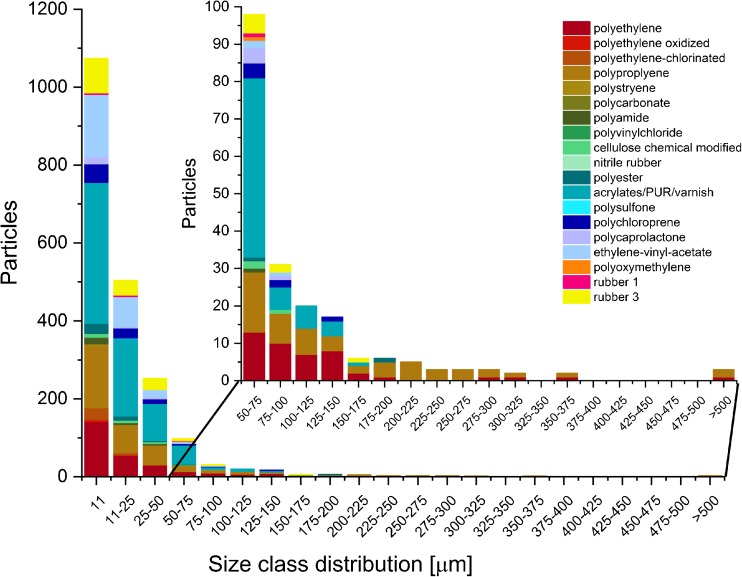
The identification of microplastics becomes increasingly challenging with decreasing particle size and increasing sample heterogeneity. The analysis of microplastic samples by Fourier transform infrared (FTIR) spectroscopy is a versatile, bias-free tool to succeed at this task. In this study, we provide an adaptable reference database, which can be applied to single-particle identification as well as methods like chemical imaging based on FTIR microscopy. The large datasets generated by chemical imaging can be further investigated by automated analysis, which does, however, require a carefully designed database. The novel database design is based on the hierarchical cluster analysis of reference spectra in the spectral range from 3600 to 1250 cm−1. The hereby generated database entries were optimized for the automated analysis software with defined reference datasets. The design was further tested for its customizability with additional entries. The final reference database was extensively tested on reference datasets and environmental samples. Data quality by means of correct particle identification and depiction significantly increased compared to that of previous databases, proving the applicability of the concept and highlighting the importance of this work. Our novel database provides a reference point for data comparison with future and previous microplastic studies that are based on different databases.
Overview
The claims and statistics of this paper haven’t been checked yet.
Run the check — free, no account needed. It reads the open-access text and checks the sources it cites.
Integrity signals
Registry
Cites
Statistics
Figures
Verification
Claims the paper makes
The claims and statistics of this paper haven’t been checked yet.
Run the check — free, no account needed. It reads the open-access text and checks the sources it cites.
Self-check
Percentages, sums and reported differences re-computed from the paper’s own numbers.
The self-check needs the paper’s full text.
Citations
Cites
Lost at sea: where is all the plastic?
Thompson, R. C., Olsen, Y., Mitchell, R. P., Davis, A., Rowland, S. J., John, A. W. G., McGonigle, D., & Russell, A. E. (2004) · Science · doi:10.1126/science.1094559 · Cited by 7,765
Hidalgo-Ruz, V., Gutow, L., Thompson, R. C., & Thiel, M. (2012) · Environmental Science & Technology · doi:10.1021/es2031505 · Cited by 5,440
Horton, A. A., Walton, A., Spurgeon, D. J., Lahive, E., & Svendsen, C. (2017) · Science of The Total Environment · doi:10.1016/j.scitotenv.2017.01.190 · Cited by 3,756
The plastic in microplastics: A review
Andrady, A. L. (2017) · Marine Pollution Bulletin · doi:10.1016/j.marpolbul.2017.01.082 · Cited by 2,372
Mintenig, S. M., Int-Veen, I., Löder, M. G. J., Primpke, S., & Gerdts, G. (2016) · Water Research · doi:10.1016/j.watres.2016.11.015 · Cited by 1,490
Self-citationIdentification methods in microplastic analysis: a review
Shim, W. J., Hong, S. H., & Eo, S. (2016) · Analytical Methods · doi:10.1039/c6ay02558g · Cited by 1,124
Analysis of environmental microplastics by vibrational microspectroscopy: FTIR, Raman or both?
Kaeppler, A., Fischer, D., Oberbeckmann, S., Schernewski, G., Labrenz, M., Eichhorn, K., & Voit, B. I. (2016) · Analytical and Bioanalytical Chemistry · doi:10.1007/s00216-016-9956-3 · Cited by 1,112
Clarke, K. R., Somerfield, P. J., & Gorley, R. N. (2008) · Journal of Experimental Marine Biology and Ecology · doi:10.1016/j.jembe.2008.07.009 · Cited by 1,072
Arctic sea ice is an important temporal sink and means of transport for microplastic
Peeken, I., Primpke, S., Beyer, B., Gütermann, J., Katlein, C., Krumpen, T., Bergmann, M., Hehemann, L., & Gerdts, G. (2018) · Nature Communications · doi:10.1038/s41467-018-03825-5 · Cited by 1,066
Self-citationMicroplastic in Aquatic Ecosystems
Ivleva, N. P., Wiesheu, A. C., & Nießner, R. (2016) · Angewandte Chemie International Edition · doi:10.1002/anie.201606957 · Cited by 982
Research works printed but not linked: 2
- Fischer D, Kaeppler A, Eichhorn K-J. Identification of microplastics in the marine environment by Raman microspectroscopy and imaging. Am Lab. 2015;47(3):32–4.
- Bienz S, Bigler L, Fox T, Meier H. Spektroskopische Methoden in der organischen Chemie / Hesse-Meier-Zeeh. Stuttgart: Georg Thieme Verlag; 2016.
Cited by
Sorted by citations
Detection of microplastics in human lung tissue using μFTIR spectroscopy
Jenner, L. C., Rotchell, J. M., Bennett, R. T., Cowen, M., Tentzeris, V., & Sadofsky, L. R. (2022) · Science of The Total Environment · doi:10.1016/j.scitotenv.2022.154907 · Cited by 1,536
Twenty years of microplastic pollution research—what have we learned?
Thompson, R. C., Courtene-Jones, W., Boucher, J., Pahl, S., Raubenheimer, K., & Koelmans, A. A. (2024) · Science · doi:10.1126/science.adl2746 · Cited by 1,521
“Polymer identification has long used Fourier transform infrared (FTIR) spectroscopy ( 5 ) and, more recently, Raman spectroscopy( 132 ), and open-source spectral libraries and software have been made available to facilitate data processing ( 133 , 134 ).”
White and wonderful? Microplastics prevail in snow from the Alps to the Arctic
Bergmann, M., Mützel, S., Primpke, S., Tekman, M. B., Trachsel, J. C., & Gerdts, G. (2019) · Science Advances · doi:10.1126/sciadv.aax1157 · Cited by 1,487
“Briefly, each spectrum in the measurement file was analyzed via two library searches to confirm polymer identity using an adaptable database design (25).”
Self-citationPlastic rain in protected areas of the United States
Brahney, J., Hallerud, M., Heim, E., Hahnenberger, M., & Sukumaran, S. (2020) · Science · doi:10.1126/science.aaz5819 · Cited by 1,237
Chemical Analysis of Microplastics and Nanoplastics: Challenges, Advanced Methods, and Perspectives
Ivleva, N. P. (2021) · Chemical Reviews · doi:10.1021/acs.chemrev.1c00178 · Cited by 1,172
Metadata
- Authors
- Primpke, S., Wirth, M., Lorenz, C., & Gerdts, G.
- Affiliations
- Alfred-Wegener-Institut Helmholtz-Zentrum für Polar- und Meeresforschung (DE)
- Corresponding author
- Primpke, Sebastian
- Venue
- Analytical and Bioanalytical Chemistry
- Published
- 2018-07-06
- Volume
- 410
- Issue
- 21
- Pages
- 5131-5141
- ISSN
- 1618-2642 (ISSN-L)
- 1618-2650
- PMC
- PMC6113679
- OpenAlex
- W2856517393
- Cited by
- 584
- References
- 27
- Citations by year
- 2026: 89 · 2025: 75 · 2024: 90 · 2023: 92 · 2022: 82 · 2021: 75 · 2020: 50 · 2019: 25 · 2018: 4
- FWCI
- 14.52
- Type
- journal article
- Language
- en
- Open access
- hybrid
- doi.org
- Licence
- Locations
- Analytical and Bioanalytical Chemistry (publishedVersion, cc-by)
- Europe PMC (PubMed Central) (publishedVersion, other-oa)
- PubMed Central (publishedVersion, cc-by)
- PubMed (publishedVersion)
- Helmholtz-Zentrum für Polar-und Meeresforschung (Alfred-Wegener-Institut) (submittedVersion)
- VBN Forskningsportal (Aalborg Universitet) (submittedVersion, other-oa)
- Funders
- Bundesministerium für Bildung und Forschung (03F0734A)
- Topics
- Physical Sciences › Environmental Science › Pollution › Microplastics and Plastic Pollution
- Physical Sciences › Chemistry › Analytical Chemistry › Spectroscopy and Chemometric Analyses
- Social Sciences › Arts and Humanities › Archeology (arts and humanities) › Cultural Heritage Materials Analysis
- Keywords
- microplastics, FTIR spectroscopy, FTIR microscopy, chemical imaging, hierarchical clustering, reference spectra, automated analysis, environmental samples, microplastic detection
About these checks
Registry, retraction, Cites and statistics results are computed, not judged, with one exception: a printed reference that no index lists is read once by a model before it counts as a citation error. Claims are extracted by a model and kept only when their quote appears verbatim in the text; each cited source is then checked, with a model’s help, for whether it says what the claim relies on. Those verdicts can be wrong — read the claim’s quote and the cited source before relying on one.
Statistics and arithmetic are recomputed, not judged.
Confidence bands are shown only for fields calibrated on our annotated test set. None is calibrated yet, so no band is shown.
What counts as a claim ›How we measure confidence ›How we check this ›
Are you an author, or do you see a problem with this page? Request a review
