

Insulin Treatment Attenuates Decline of Muscle Mass in Japanese Patients with Type 2 Diabetes
Open accessThe DOI matches its Crossref record; 27 of the 27 references it cites were found in a registry or an index.
Abstract
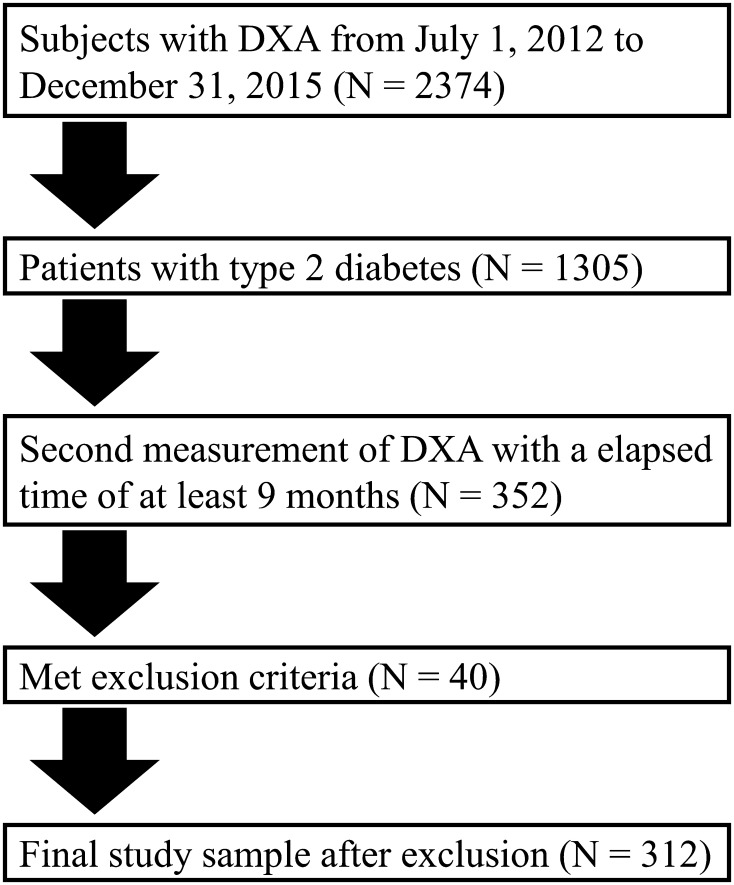
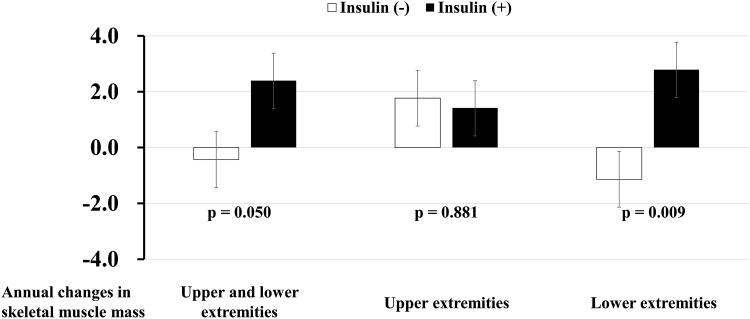
Sarcopenia is defined as an age-related loss of skeletal muscle mass and strength, and is a major cause of disability and mobility limitations. Recent studies have demonstrated that type 2 diabetes and insulin signaling deficiencies contribute to the progression of sarcopenia, suggesting that a sufficient supply of insulin to the skeletal muscles may be important for the maintenance of muscle function; however, little has been reported regarding whether insulin treatment can protect against sarcopenia. We conducted a retrospective observational study to examine the impact of insulin treatment on the muscle mass of patients with type 2 diabetes. A total of 312 patients (mean age: 64 ± 11 years; 40.8% female; 27.6% treated with insulin) were studied in this retrospective observational study. Skeletal muscle index (SMI) and grip strength (kg) were used to assess sarcopenia. The prevalence of sarcopenia was 18.0%. Insulin treatment was shown to be protective against the annual decline of SMI (standardized β 0.195; p = 0.025) even after adjusting for covariates, including age, gender, duration of diabetes, and body mass index. In a cohort matched by propensity scores, insulin treatment significantly increased the 1-year change in SMI (mean ± SE) compared with non-insulin-treated group (2.40 ± 0.98% vs. -0.43 ± 0.98%; p = 0.050). Our data suggest that insulin treatment could attenuate the progression of sarcopenia in patients with type 2 diabetes.
Overview
The claims and statistics of this paper haven’t been checked yet.
Free: it reads the open-access text and checks the first 5 claims that cite a source we can check. Create a free account to check every claim.
Integrity signals
Registry
Cites
Statistics
Figures
Verification
Claims the paper makes
The claims and statistics of this paper haven’t been checked yet.
Free: it reads the open-access text and checks the first 5 claims that cite a source we can check. Create a free account to check every claim.
Claims other papers make about this one
Each is checked against this paper’s own text: does it say what the citing paper says it does?
In the citing paper
“While existing clinical trial and epidemiological data demonstrate a positive correlation between insulin use and measures related to sarcopenia,43–45”
From Imaging of Sarcopenia in Type 2 Diabetes Mellitus (2024) · cites this paper as [45]
Self-check
Percentages, sums and reported differences re-computed from the paper’s own numbers.
The self-check needs the paper’s full text.
Citations
Cites
Sarcopenia: European consensus on definition and diagnosis
Cruz-Jentoft, A. J., Baeyens, J. P., Bauer, J. M., Boirie, Y., Cederholm, T., Landi, F., Martin, F. C., Michel, J.-P., Rolland, Y., Schneider, S. M., et al. (2010) · Age and Ageing · doi:10.1093/ageing/afq034 · Cited by 11,601
Revised Equations for Estimated GFR From Serum Creatinine in Japan
Matsuo, S., Imai, E., Horio, M., Yasuda, Y., Tomita, K., Nitta, K., Yamagata, K., Tomino, Y., Yokoyama, H., & Hishida, A. (2009) · American Journal of Kidney Diseases · doi:10.1053/j.ajkd.2008.12.034 · Cited by 6,422
Sarcopenia in Asia: Consensus Report of the Asian Working Group for Sarcopenia
Chen, L.-K., Liu, L.-K., Woo, J., Assantachai, P., Auyeung, T.-W., Bahyah, K. S., Chou, M.-Y., Chen, L.-Y., Hsu, P.-S., Krairit, O., et al. (2014) · Journal of the American Medical Directors Association · doi:10.1016/j.jamda.2013.11.025 · Cited by 4,051 · cited 2×
“According to the Asian sarcopenia criteria [3], an SMI <7.”
BackgroundMethodFielding, R. A., Vellas, B., Evans, W. J., Bhasin, S., Morley, J. E., Newman, A. B., Abellan van Kan, G., Andrieu, S., Bauer, J., Breuille, D., et al. (2011) · Journal of the American Medical Directors Association · doi:10.1016/j.jamda.2011.01.003 · Cited by 3,256 · cited 6×
“Sarcopenia occurs with advancing age (aging is the strongest contributor to the progression of sarcopenia); therefore, age differences could influence the outcome data, particularly regarding the effect of insulin treatment on muscle mass; however, insulin treatment was significantly associated with preserved muscle m…”
BackgroundMethodInfluentialRoberts, H. C., Denison, H. J., Martin, H. J., Patel, H. P., Syddall, H., Cooper, C., & Sayer, A. A. (2011) · Age and Ageing · doi:10.1093/ageing/afr051 · Cited by 3,001 · cited 1×
“to improve the assessment of sarcopenia [27].”
Fox, C. S., Massaro, J. M., Hoffmann, U., Pou, K. M., Maurovich-Horvat, P., Liu, C.-Y., Vasan, R. S., Murabito, J. M., Meigs, J. B., Cupples, L. A., et al. (2007) · Circulation · doi:10.1161/circulationaha.106.675355 · Cited by 2,882
Age-related and disease-related muscle loss: The effect of diabetes, obesity, and other diseases
Kalyani, R. R., Corriere, M., & Ferrucci, L. (2014) · The Lancet Diabetes & Endocrinology · doi:10.1016/s2213-8587(14)70034-8 · Cited by 1,102 · cited 2×
“Moreover, the presence of diabetes, poor glycemic control, and insulin resistance have been reported to increase the risk for lowering muscle mass and function in elderly individuals [5, 7, 8, 13, 26].”
BackgroundSkyler, J. S., Bergenstal, R., Bonow, R. O., Buse, J., Deedwania, P., Gale, E. A. M., Howard, B. V., Kirkman, M. S., Kosiborod, M., Reaven, P., et al. (2009) · Diabetes Care · doi:10.2337/dc08-9026 · Cited by 881
Cermak, N. M., Res, P. T., de Groot, L. C., Saris, W. H., & van Loon, L. J. (2012) · The American Journal of Clinical Nutrition · doi:10.3945/ajcn.112.037556 · Cited by 827 · cited 1×
“Resistance training with protein supplementation was reported to be the most effective form of treatment for sarcopenia, [9, 10].”
BackgroundExcessive Loss of Skeletal Muscle Mass in Older Adults With Type 2 Diabetes
Park, S. W., Goodpaster, B. H., Lee, J. S., Kuller, L. H., Boudreau, R., de Rekeneire, N., Harris, T. B., Kritchevsky, S., Tylavsky, F. A., Nevitt, M., et al. (2009) · Diabetes Care · doi:10.2337/dc09-0264 · Cited by 778
Cited by
A Narrative Review on Sarcopenia in Type 2 Diabetes Mellitus: Prevalence and Associated Factors
Izzo, A., Massimino, E., Riccardi, G., & Della Pepa, G. (2021) · Nutrients · doi:10.3390/nu13010183 · Cited by 418
“[55] retrospective 312 M/W 64 years 24.”
Impact of diabetes on sarcopenia and mortality in patients undergoing hemodialysis
Mori, K., Nishide, K., Okuno, S., Shoji, T., Emoto, M., Tsuda, A., Nakatani, S., Imanishi, Y., Ishimura, E., Yamakawa, T., et al. (2019) · BMC Nephrology · doi:10.1186/s12882-019-1271-8 · Cited by 155
Inactivity and Skeletal Muscle Metabolism: A Vicious Cycle in Old Age
Rezuş, E., Burlui, A., Cardoneanu, A., Rezuş, C., Codreanu, C., Pârvu, M., Rusu Zota, G., & Tamba, B. I. (2020) · International Journal of Molecular Sciences · doi:10.3390/ijms21020592 · Cited by 116
Massimino, E., Izzo, A., Riccardi, G., & Della Pepa, G. (2021) · Cells · doi:10.3390/cells10081958 · Cited by 102
Anti‐diabetic drugs and sarcopenia: emerging links, mechanistic insights, and clinical implications
Zhang, X., Zhao, Y., Chen, S., & Shao, H. (2021) · Journal of Cachexia, Sarcopenia and Muscle · doi:10.1002/jcsm.12838 · Cited by 92
Sugimoto, K., Ikegami, H., Takata, Y., Katsuya, T., Fukuda, M., Akasaka, H., Tabara, Y., Osawa, H., Hiromine, Y., & Rakugi, H. (2020) · Journal of the American Medical Directors Association · doi:10.1016/j.jamda.2020.11.003 · Cited by 95
Mori, K. (2021) · Nutrients · doi:10.3390/nu13051538 · Cited by 92
Sarcopenia, frailty and type 2 diabetes mellitus (Review)
Nishikawa, H., Fukunishi, S., Asai, A., Yokohama, K., Ohama, H., Nishiguchi, S., & Higuchi, K. (2021) · Molecular Medicine Reports · doi:10.3892/mmr.2021.12494 · Cited by 84
Hou, Y., Xiang, J., Wang, B., Duan, S., Song, R., Zhou, W., Tan, S., & He, B. (2024) · Frontiers in Endocrinology · doi:10.3389/fendo.2023.1263650 · Cited by 84
Contribution of muscle satellite cells to sarcopenia
Huo, F., Liu, Q., & Liu, H. (2022) · Frontiers in Physiology · doi:10.3389/fphys.2022.892749 · Cited by 74
Diabetic Sarcopenia. A proposed muscle screening protocol in people with diabetes: Expert document
de Luis, D. A., Carretero‐Gómez, J., García‐Almeida, J. M., Vallo, F. G., Rolo, G. G., Gómez, J. J. L., Tarazona‐Santabalbina, F. J., & Sanz‐París, A. (2024) · Reviews in Endocrine and Metabolic Disorders · doi:10.1007/s11154-023-09871-9 · Cited by 72
“Other treatments like insulin [66] or metformin [67–69] have shown positive effects.”
BackgroundHormonal regulation of metabolism—recent lessons learned from insulin and estrogen
Tao, Z., & Cheng, Z. (2023) · Clinical Science · doi:10.1042/cs20210519 · Cited by 75
Sarcopenia – Endocrinological and Neurological Aspects
Stangl, M. K., Böcker, W., Chubanov, V., Ferrari, U., Fischereder, M., Gudermann, T. W., Hesse, E., Meinke, P., Reincke, M., Reisch, N., et al. (2018) · Experimental and Clinical Endocrinology & Diabetes · doi:10.1055/a-0672-1007 · Cited by 68
“In a retrospective observational study, insulin treatment was protective against the decline of skeletal muscle index (SMI) in the lower, but not the upper extremities [17].”
Welch, A. A., Hayhoe, R. P. G., & Cameron, D. (2020) · Proceedings of the Nutrition Society · doi:10.1017/s0029665119001150 · Cited by 51
Ferrari, U., Then, C., Rottenkolber, M., Selte, C., Seissler, J., Conzade, R., Linkohr, B., Peters, A., Drey, M., & Thorand, B. (2020) · Acta Diabetologica · doi:10.1007/s00592-020-01523-7 · Cited by 52
Sinclair, A. J., Pennells, D., & Abdelhafiz, A. H. (2022) · Aging Clinical and Experimental Research · doi:10.1007/s40520-022-02142-8 · Cited by 48
“Previous study have shown a positive effect of insulin on skeletal muscle index and improvement of sarcopenia in the lower extremities in a relatively younger 312 participants with type 2 diabetes, mean (SD) age 64 (11) years [158].”
ResultMetabolic Impact of Frailty Changes Diabetes Trajectory
Sinclair, A. J., & Abdelhafiz, A. H. (2023) · Metabolites · doi:10.3390/metabo13020295 · Cited by 47
Clinical impact of sarcopenia and dynapenia on diabetes
Mori, H., Kuroda, A., & Matsuhisa, M. (2019) · Diabetology International · doi:10.1007/s13340-019-00400-1 · Cited by 46
Sarcopenia in Type 2 Diabetes Mellitus: Study of the Modifiable Risk Factors Involved
Sravya, S. L., Swain, J., Sahoo, A., Mangaraj, S., Kanwar, J., Jadhao, P. A., & Das, S. (2023) · Journal of Clinical Medicine · doi:10.3390/jcm12175499 · Cited by 47
The Impact of Antidiabetic Agents on Sarcopenia in Type 2 Diabetes: A Literature Review
Wu, C.-N., & Tien, K. (2020) · Journal of Diabetes Research · doi:10.1155/2020/9368583 · Cited by 40
“After propensity score matching, the insulin treatment group had a significantly higher skeletal muscle index compared to the control group [57].”
ResultCurrent Nutritional and Pharmacological Approaches for Attenuating Sarcopenia
Sakuma, K., Hamada, K., Yamaguchi, A., & Aoi, W. (2023) · Cells · doi:10.3390/cells12192422 · Cited by 39
“Observational studies have reported that insulin administration prevents a decrease in SMI in diabetic patients [98].”
BackgroundTack, W., Cock, A. D., Dirinck, E. L., Bastijns, S., Ariën, F., & Perkisas, S. (2023) · Diabetes Obesity and Metabolism · doi:10.1111/dom.15321 · Cited by 42
“113 The use of insulin is also associated with functional improvements, such as an increase in the gait speed in people with diabetes, 114 although these findings are not consistent.”
BackgroundMatsuura, S., Shibazaki, K., Uchida, R., Imai, Y., Mukoyama, T., Shibata, S., & Morita, H. (2022) · Journal of Diabetes Investigation · doi:10.1111/jdi.13792 · Cited by 40
Hiromine, Y., Noso, S., Rakugi, H., Sugimoto, K., Takata, Y., Katsuya, T., Fukuda, M., Akasaka, H., Osawa, H., Tabara, Y., et al. (2022) · Journal of Diabetes Investigation · doi:10.1111/jdi.13882 · Cited by 36
Alfaro-Alvarado, F. A., Rosas-Barrientos, J. V., Ocharan-Hernández, M. E., Díaz-Chiguer, D. L., & Vargas‐De‐León, C. (2023) · Diseases · doi:10.3390/diseases11040175 · Cited by 36
“Our findings indicate that poor glycemic control is associated with sarcopenia and low muscle mass, which determines the need to implement better treatment strategies to reduce the loss of muscle mass.”
BackgroundAnoveros‐Barrera, A., Bhullar, A. S., Stretch, C., Esfandiari, N., Dunichand‐Hoedl, A. R., Martins, K. J. B., Bigam, D. L., Khadaroo, R. G., McMullen, T. P. W., Bathe, O. F., et al. (2019) · Journal of Cachexia Sarcopenia and Muscle · doi:10.1002/jcsm.12466 · Cited by 38
A review on associated factors and management measures for sarcopenia in type 2 diabetes mellitus
Zhang, Y., Zhang, K., Huang, S., Li, W., & He, P. (2024) · Medicine · doi:10.1097/md.0000000000037666 · Cited by 30
Sarcopenia in elderly diabetes
Wen, C., Lien, A. S., & Jiang, Y. (2022) · Journal of Diabetes Investigation · doi:10.1111/jdi.13752 · Cited by 25
Sencan, C., Dost, F. S., Bulut, E. A., & Işık, A. T. (2022) · Experimental Gerontology · doi:10.1016/j.exger.2022.111832 · Cited by 28
Lu, Y., Lim, W. S., Jin, X., Nyunt, M. S. Z., Fülöp, T., Gao, Q., Lim, S. C., Larbi, A., & Ng, T. P. (2022) · Frontiers in Medicine · doi:10.3389/fmed.2022.971622 · Cited by 20
The crosstalk between BAT thermogenesis and skeletal muscle dysfunction
Chen, Y., Hu, Q., Wang, C., & Wang, T. (2023) · Frontiers in Physiology · doi:10.3389/fphys.2023.1132830 · Cited by 19
“Thus, insulin treatment may attenuate the progression of sarcopenia in patients with T2DM (Bouchi et al., 2017).”
BackgroundInfluentialAbdelhafiz, A. H., Keegan, G. L., & Sinclair, A. J. (2023) · Metabolites · doi:10.3390/metabo13060705 · Cited by 16
Insulin in Frail, Older People with Type 2 Diabetes—Low Threshold for Therapy
Abdelhafiz, A. H., Bisht, S., Kovacevic, I., Pennells, D., & Sinclair, A. J. (2022) · Diabetology · doi:10.3390/diabetology3020028 · Cited by 14
Li, M., Liu, Y., Gao, L., Zheng, Y., Chen, L., Wang, Y., & Zhang, W. (2025) · Frontiers in Public Health · doi:10.3389/fpubh.2024.1475330 · Cited by 13
Imaging of Sarcopenia in Type 2 Diabetes Mellitus
Wang, D., Zhang, G., Yu, Y., & Zhang, Z. (2024) · Clinical Interventions in Aging · doi:10.2147/cia.s443572 · Cited by 11
“41,42 While existing clinical trial and epidemiological data demonstrate a positive correlation between insulin use and measures related to sarcopenia, 43–45 the effect of insulin on overall body weight cannot be disregarded.”
BackgroundZhang, H., Wang, J., Xi, J., Xu, J., & Wang, L. (2023) · Nursing Open · doi:10.1002/nop2.2042 · Cited by 13
“Insulin treatment has been found to alleviate the loss of muscle mass in patients with type 2 diabetes (Bouchi et al., 2017 was within the range of mild abnormality.”
BackgroundNutritional Approach to Diabetic Sarcopenia: A Comprehensive Review
Kılınç, G. E., & Vergi, Y. (2025) · Current Nutrition Reports · doi:10.1007/s13668-025-00637-0 · Cited by 11
“The study suggested that this may support the clinical use of insulin to reduce the risk of sar-copenia in patients with T2DM [ 109 ].”
Jiang, L., Xu, X., Luo, M.-H., Wang, H., Ding, B., Yan, R., Hu, Y., & Ma, J. (2021) · Diabetes Therapy · doi:10.1007/s13300-021-01151-6 · Cited by 10
“showed that insulin treatment could attenuate the progression of sarcopenia in patients with type 2 diabetes [41].”
BackgroundChen, H., Lou, J., Dong, M., Liu, X., Yan, S., Wen, S., Zhou, L., Liu, X., & Yuan, X. (2024) · BMC Geriatrics · doi:10.1186/s12877-024-04827-3 · Cited by 8
“Poor glycemic control in patients with type 2 diabetes was reported to be a risk factor for sarcopenia [17].”
BackgroundTaşkent, İ., Ece, B., & Aydın, S. (2024) · Tomography · doi:10.3390/tomography10070079 · Cited by 7
“In another study, Bouchi et al. [23] discovered that patients with type 2 diabetes treated with insulin may be at a lower risk for the loss of skeletal muscle mass in the lower extremities compared with those who do not receive insulin treatment.”
BackgroundAlves, F. C. B., de Oliveira, R. G., Reyes, D. R. A., Garcia, G. A., Floriano, J. F., Hallur, R. L. S., Mareco, E. A., Dal‐Pai‐Silva, M., Payão, S. L. M., de Souza, F. P., et al. (2022) · International Journal of Molecular Sciences · doi:10.3390/ijms232112864 · Cited by 7
“This depends on phosphorylation and the expression of new specific regulatory proteins [43,44].”
BackgroundKawabata, N., Okada, K., Ando, A., Kurashina, T., Takahashi, M., Wakabayashi, T., Nagata, D., Arakawa, Y., Atsuko, H., Kogure, A., et al. (2022) · Journal of Diabetes Investigation · doi:10.1111/jdi.13890 · Cited by 7
Diabetes Pharmacotherapy and its effects on the Skeletal Muscle Energy Metabolism
Yu, B., Wang, D., Zhou, J., Huang, R., Cai, T., Hu, Y., Zhou, Y., & Ma, J. (2024) · Mini-Reviews in Medicinal Chemistry · doi:10.2174/0113895575299439240216081711 · Cited by 5
Liu, L., Wang, R., Gao, J., Yan, J., Zhang, J., Zhang, Z., Liu, J., Lin, H., Rao, S., Yao, X., et al. (2023) · Experimental and Clinical Endocrinology & Diabetes · doi:10.1055/a-2145-1004 · Cited by 4
“A retrospective observational study had shown that insulin could attenuate the progression of sarcopenia in Japanese T2DM patients [19].”
BackgroundKim, J., Yi, J., Kim, J. H., Kim, K., Song, J. H., Lee, S. W., & Hwang, S. D. (2025) · Scientific Reports · doi:10.1038/s41598-025-85994-0 · Cited by 4
Al‐Taie, A., Arueyingho, O., Khoshnaw, J., & Hafeez, A. (2022) · Archives of Physiology and Biochemistry · doi:10.1080/13813455.2022.2086265 · Cited by 3
貞夫, 吉. (2019) · The Japanese Journal of SURGICAL METABOLISM and NUTRITION · doi:10.11638/jssmn.53.2_97 · Cited by 2
İmre, E., Apaydın, T., Günhan, H. G., & Yavuz, D. G. (2020) · Canadian Journal of Diabetes · doi:10.1016/j.jcjd.2020.10.003 · Cited by 1
Yang, Q., Zhao, Y., Han, L., Cha, Y., & Yang, L. (2024) · Journal of Biosciences and Medicines · doi:10.4236/jbm.2024.123018 · Cited by 1
Tajik, A., Mahdavizadeh, V., Hadizadeh, F., & Shakour, N. (2025) · Current Diabetes Reviews · doi:10.2174/0115733998349193250207045239 · Cited by 1
Sun, G., Liang, J., Chen, D., Zhao, K., & Liu, W. (2025) · BMC Musculoskeletal Disorders · doi:10.1186/s12891-025-08542-x · Cited by 1
“Therefore, insulin therapy slows the progression of sarcopenia in individuals with DM [31].”
Association Between Muscle Quality and GNRI in Patients with Type 2 Diabetes
Yamamoto, S., Hashimoto, Y., Takahashi, F., Murai, M., Yoshioka, N., Saijo, Y., Munekawa, C., Nakajima, H., Kitagawa, N., Osaka, T., et al. (2026) · Nutrients · doi:10.3390/nu18020275 · Cited by 1
“In participants with poor glycemic control, chronic hyperglycemia may lead to oxidative stress and the accumulation of advanced glycation end products, which contribute to reductions in muscle mass and muscle strength [31].”
Diabetes mellitus and sarcopenia
Lee, P., & Tan, M. (2020) · Elsevier eBooks · doi:10.1016/b978-0-12-820605-8.00009-7 · Cited by 1
Cruz, H. S., Pinheiro, P. K., & Silva, V. Z. M. D. (2022) · Brazilian Journal of Health Review · doi:10.34119/bjhrv5n3-041 · Cited by 2
Koçak, F. Ö. K., Savaş, S., & Akçiçek, S. (2021) · Ege Tıp Dergisi · doi:10.19161/etd.915688
Extension of Healthy Life Span of Dialysis Patients in the Era of a 100-Year Life
Inaba, M., & Mori, K. (2021) · MDPI eBooks · doi:10.3390/books978-3-0365-2345-3
Prevalence of Sarcopenia in Insulin Treated Older Adults with Type 2 DiabetesPreprint
Leite, S. A. O., Bastos, M., da Silva, M. P., Lavalle, A. C. R., Bertogy, M. C. V., Kuklik, S. C. V., & Umpierrez, G. E. (2023) · Research Square · doi:10.21203/rs.3.rs-3216192/v1
Souza, A. P. D., Jardim, N. A., Júnior, J. G. B., & Reis, D. S. D. (2023) · Revista Contemporânea · doi:10.56083/rcv3n12-160
Micah Isaac Anand, W. (2023) · International Journal of Science and Research (IJSR) · doi:10.21275/sr23516191456
“In past studies in Japanese patients, it has appeared that attack treatment might choke the decrease of muscle quality inside the lower limits but not inside the upper extremities, [46] supporting the clinical usage of insulin to decrease sarcopenia risk in T2DM patients.”
BackgroundFrailty in Older People with Diabetes Mellitus
Sinclair, A. J., & Abdelhafiz, A. H. (2024) · Springer eBooks · doi:10.1007/978-3-031-57361-3_42
Büyük, G. N., Kokanalı, M. K., Özdemir, E. Ü., Seven, B., & Doğanay, M. (2025) · Journal of Clinical Ultrasound · doi:10.1002/jcu.24038
Kosasih, R., Frisca, F., Santoso, A. H., Destra, E., Gunaidi, F. C., Jap, A. N., & Gracienne, G. (2025) · JURNAL RISET RUMPUN ILMU KESEHATAN · doi:10.55606/jurrikes.v4i1.4881
Zhou, Q., Liu, P., Li, L., Yin, T., Bai, H., & Li, Y. (2025) · The FASEB Journal · doi:10.1096/fj.202503502r
“Furthermore, earlier research has indicated a tripling in the occurrence of sarcopenia among diabetic patients compared to those without diabetes [20].”
Psychoneurologische und muskuläre Mechanismen in der Diabetesentstehung
Ferrari, U. (2021) · Electronic Theses of LMU Munich (Ludwig-Maximilians-Universität München) · doi:10.5282/edoc.28129
Anyiam, O. (2025) · Nottingham ePrints (University of Nottingham) · Cited by 1
Shiravand, Z., Abiri, B., Mahdavi, M., Valizadeh, M., Vasheghani, M., Niroomand, M., Azizi, F., Momenan, A., & Hosseinpanah, F. (2026) · Journal of Diabetes & Metabolic Disorders · doi:10.1007/s40200-026-02020-4
“The critical role of insulin in muscle health is further evidenced by the effi - cacy of insulin therapy in preserving muscle mass [24, 25] and the correlation between low circulating insulin levels and sarcopenia [26].”
Metadata
- Authors
- Bouchi, R., Fukuda, T., Takeuchi, T., Nakano, Y., Murakami, M., Minami, I., Izumiyama, H., Hashimoto, K., Yoshimoto, T., & Ogawa, Y.
- Affiliations
- Tokyo Medical and Dental University (JP)
- Corresponding author
- Bouchi, Ryotaro
- ORCID
- Venue
- Calcified Tissue International
- Published
- 2017-02-28
- Volume
- 101
- Issue
- 1
- Pages
- 1-8
- ISSN
- 0171-967X (ISSN-L)
- 1432-0827
- PMC
- PMC5486921
- OpenAlex
- W2593371426
- Cited by
- 64
- References
- 27
- Citations by year
- 2026: 2 · 2025: 7 · 2024: 10 · 2023: 13 · 2022: 12 · 2021: 8 · 2020: 6 · 2019: 5 · 2018: 1
- FWCI
- 2.43
- Type
- journal article
- Language
- en
- Open access
- hybrid
- doi.org
- Locations
- Calcified Tissue International (publishedVersion, cc-by)
- Europe PMC (PubMed Central) (publishedVersion, cc-by)
- PubMed Central (publishedVersion, cc-by)
- PubMed (publishedVersion)
- Funders
- Grants-in-Aid for Scientific Research from the Ministry of Education, Culture, Sports, Science and Technology of Japan
- Topics
- Health Sciences › Medicine › Physiology (medical) › Nutrition and Health in Aging
- Health Sciences › Medicine › Endocrinology, Diabetes and Metabolism › Diabetes Treatment and Management
- Life Sciences › Biochemistry, Genetics and Molecular Biology › Molecular Biology › Muscle Physiology and Disorders
- Keywords
- insulin therapy, sarcopenia, type 2 diabetes, skeletal muscle mass, skeletal muscle index, grip strength, muscle mass loss, insulin resistance, Japanese patients
- MeSH terms
- Adult, Aged, Aged, 80 and over, Diabetes Mellitus, Type 2, Female, Humans, Hypoglycemic Agents, Insulin, Male, Middle Aged, Retrospective Studies, Muscle, Skeletal, Young Adult, Sarcopenia
About these checks
Registry, retraction, Cites and statistics results are computed, not judged, with one exception: a printed reference that no index lists is read once by a model before it counts as a citation error. Claims are extracted by a model and kept only when their quote appears verbatim in the text; each cited source is then checked, with a model’s help, for whether it says what the claim relies on. Those verdicts can be wrong — read the claim’s quote and the cited source before relying on one.
Statistics and arithmetic are recomputed, not judged.
Confidence bands are shown only for fields calibrated on our annotated test set. None is calibrated yet, so no band is shown.
What counts as a claim ›How we measure confidence ›How we check this ›
Are you an author, or do you see a problem with this page? Request a review
Data sources
Bibliographic data: Semantic Scholar, OpenAlex, Crossref.
Contains information from the Semantic Scholar Academic Graph Datasets, made available under the ODC Attribution License (ODC-BY 1.0).
Semantic Scholar’s data is described in: Kinney, R., et al. (2023). The Semantic Scholar Open Data Platform. arXiv:2301.10140.
