

Plant cell culture technology in the cosmetics and food industries: current state and future trends
Open accessThe DOI matches its Crossref record; 99 of the 102 references it cites were found in a registry or an index.
Abstract
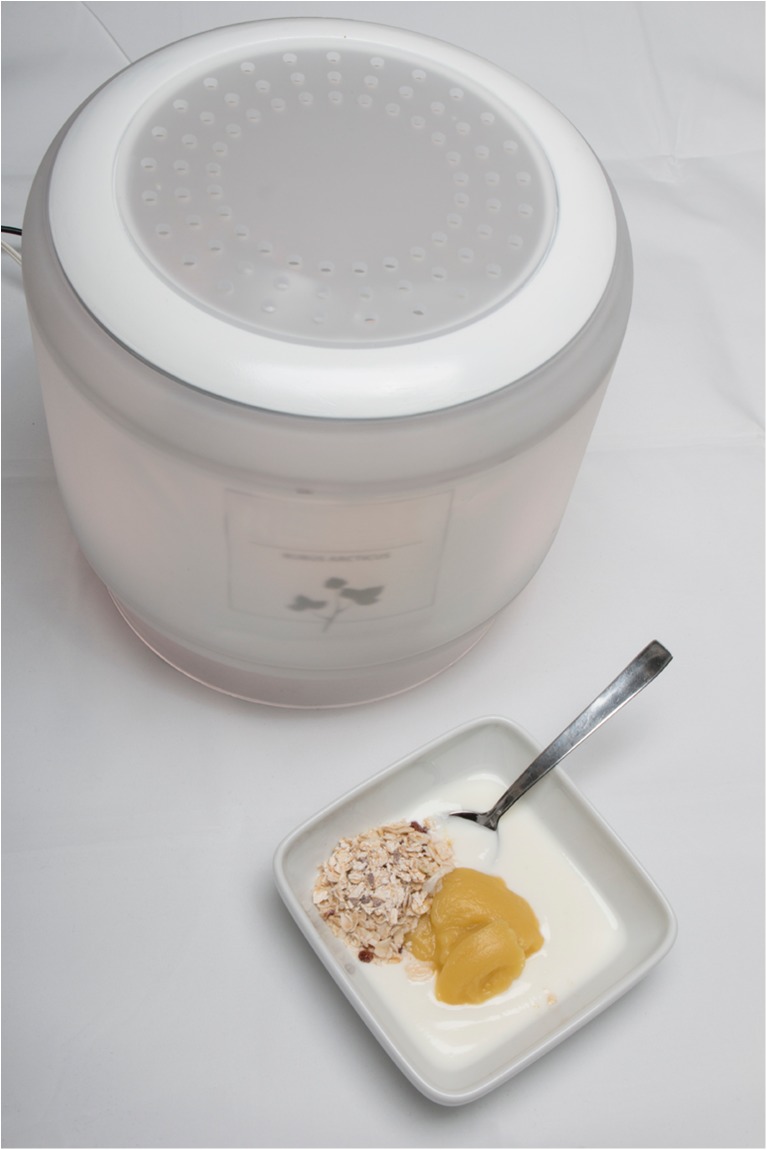
The production of drugs, cosmetics, and food which are derived from plant cell and tissue cultures has a long tradition. The emerging trend of manufacturing cosmetics and food products in a natural and sustainable manner has brought a new wave in plant cell culture technology over the past 10 years. More than 50 products based on extracts from plant cell cultures have made their way into the cosmetics industry during this time, whereby the majority is produced with plant cell suspension cultures. In addition, the first plant cell culture-based food supplement ingredients, such as Echigena Plus and Teoside 10, are now produced at production scale. In this mini review, we discuss the reasons for and the characteristics as well as the challenges of plant cell culture-based productions for the cosmetics and food industries. It focuses on the current state of the art in this field. In addition, two examples of the latest developments in plant cell culture-based food production are presented, that is, superfood which boosts health and food that can be produced in the lab or at home.
Overview
The claims and statistics of this paper haven’t been checked yet.
Free: it reads the open-access text and checks the first 5 claims that cite a source we can check. Create a free account to check every claim.
Integrity signals
Registry
Cites
Statistics
Figures
Verification
Claims the paper makes
The claims and statistics of this paper haven’t been checked yet.
Free: it reads the open-access text and checks the first 5 claims that cite a source we can check. Create a free account to check every claim.
Claims other papers make about this one
Each is checked against this paper’s own text: does it say what the citing paper says it does?
The cited source says what the claim attributes to it.
In the citing paper
“Other benefits are the elimination of seasonality of the vegetable; ecological friendliness; use of less water volume; elimination of pest control; and use of less energy [68].”
From Innovative Approaches to an Eco-Friendly Cosmetic Industry: A Review of Sustainable Ingredients (2024) · cites this paper as [68]
Self-check
Percentages, sums and reported differences re-computed from the paper’s own numbers.
The self-check needs the paper’s full text.
Citations
Cites
A Revised Medium for Rapid Growth and Bio Assays with Tobacco Tissue Cultures
Murashige, T., & Skoog, F. (1962) · Physiologia Plantarum · doi:10.1111/j.1399-3054.1962.tb08052.x · Cited by 67,392
Nutrient requirements of suspension cultures of soybean root cells
Gamborg, O. L., Miller, R. A., & Ojima, K. (1968) · Experimental Cell Research · doi:10.1016/0014-4827(68)90403-5 · Cited by 9,427
Plant Propagation by Tissue Culture
(2007) · doi:10.1007/978-1-4020-5005-3 · Cited by 2,531 · cited 1×
“Both type and concentration of the growth regulators have an influence on callus growth and morphology as well as on secondary metabolite synthesis (Evans et al. 2003; George et al. 2008; Gutzeit and LudwigMüller 2014).”
Schenk, R. U., & Hildebrandt, A. C. (1972) · Canadian Journal of Botany · doi:10.1139/b72-026 · Cited by 2,368
Murthy, H. N., Lee, E.-J., & Paek, K.-Y. (2014) · Plant Cell, Tissue and Organ Culture (PCTOC) · doi:10.1007/s11240-014-0467-7 · Cited by 679
Current approaches toward production of secondary plant metabolites
Hussain, M. S., Fareed, S., Ansari, S., Rahman, M. A., Ahmad, I., & Saeed, M. (2012) · Journal of Pharmacy And Bioallied Sciences · doi:10.4103/0975-7406.92725 · Cited by 636
Somatic embryogenesis — Stress-induced remodeling of plant cell fate
Fehér, A. (2015) · Biochimica et Biophysica Acta (BBA) - Gene Regulatory Mechanisms · doi:10.1016/j.bbagrm.2014.07.005 · Cited by 478 · cited 1×
“This phenomenon, also known as cellular totipotency of plant cells, was experimentally demonstrated by growing carrot cells in vitro by Haberlandt in 1958 (Fehér 2015).”
BackgroundAbiotic and Biotic Stress in Plants - Recent Advances and Future Perspectives
(2016) · InTech eBooks · doi:10.5772/60477 · Cited by 377
Hairy root type plant in vitro systems as sources of bioactive substances
Georgiev, M. I., Pavlov, A. I., & Bley, T. (2007) · Applied Microbiology and Biotechnology · doi:10.1007/s00253-007-0856-5 · Cited by 362
Bioprocessing of plant cell cultures for mass production of targeted compounds
Georgiev, M. I., Weber, J., & Maciuk, A. (2009) · Applied Microbiology and Biotechnology · doi:10.1007/s00253-009-2049-x · Cited by 276
Research works printed but not linked: 15
- Belser E Anti-ageing hair care: preventing hair loss and ensuring fuller hair COSMA 2015 1 10 11
- Bimonte M Tito A Carola A Barbulova A Monoli I Cucchiara M Hill J Colucci G Apone F A new active extract obtained from Coffea bengalensis stem cells acts on different skin cell types attenuating signs of ageing Cosmet Toilet 2011 126 644 650
- Carola A Tito A Bimonte M Mustilli A Cucchiara M Monoli I Hill J Apone F Colucci G Liposoluble extracts of Vitis vinifera grape marc and cell cultures with synergistic anti-ageing effects Househ Pers Care Today 2012 1 42 46
- Dal Toso R Melandri F Plant cell culture technology: a new ingredient source Pers CARE 2010 28 35 38
- Dal Toso R Melandri F Sustainable sourcing of natural food ingredients by plant cell cultures Agro Food Ind Hi Tech 2011 22 30 32
- Haberlandt G Kulturversuche mit isolierten Pflanzenzellen: Math-Naturwiss Kl. Abt J Sitzungsber Akad Wiss Wien 1902 111 69 92
- Hess D Biotechnologie der Pflanzen: Eine Einführung 1992 Stuttgart Ulmer
- Imseng N, Schillberg S, Schürch C, Schmid N, Schütte K, Gorr G, Eibl D, Eibl R (2014) Industrial scale suspension culture of living cells. In: Meyer HP, Schmidhalter DR (eds) Suspension culture of plant cells under heterotrophic conditions, Wiley Blackwell, pp 224–258
- Lonza (2014) ReGeniStemTM Brightening: a brighter solution for even skin tone. https://www.semanticscholar.org/paper/ReGeniStemTM-Brightening-A-Brighter-Solution-for-Brightening/59e6fcd41e1bfd5a666ece8ae45fcd330a760085?tab=references. Accessed 2 Jan 2018
- Reynolds J Bying local food products Food Serv Nutr 2016 1 5 10
- Ritterhaus E Ulrich J Westphal L Large-scale production of plant cell cultures Int Assoc Plant Tissue Cult Newsl 1990 62 2 10
- Schmid D Zülli F Use of plant cell cultures for a sustainable production of innovative ingredients SOFW J 2012 138 2 10
- Sena M (2015) Hairy root culture as a source of novel plant-derived active compounds with applications in cosmetics. Dissertation, Universita Degli Studi di Salerno
- Sevón N Tropan alkaloids in hairy roots and regenerated plants of Hyoscyamus muticus 1997 Dissertation University of Helsinki
- Stutz I Cell culture chocolate: plant cell culture based production of food and food supplement ingredients 2018 Master thesis Zurich University of Applied Sciences
Cited by
Ginsenosides in Panax genus and their biosynthesis
Hou, M., Wang, R., Zhao, S., & Wang, Z. (2021) · Acta Pharmaceutica Sinica B · doi:10.1016/j.apsb.2020.12.017 · Cited by 370
Production of secondary metabolites using tissue culture-based biotechnological applications
Ozyigit, I. I., Dogan, I., Hocaoglu-Ozyigit, A., Yalcin, B., Erdogan, A., Yalcin, I. E., Cabi, E., & Kaya, Y. (2023) · Frontiers in Plant Science · doi:10.3389/fpls.2023.1132555 · Cited by 261
“Due to excessive branching of hairy roots causing self-immobilization by forming an interlocked matrix in the bioreactor, the biochemical mass transfer of nutrients and oxygen becomes limited (Eibl et al., 2018; Srikantan and Srivastava, 2018, Angulo-Bejarano et al., 2019).”
BackgroundUnraveling Plant Natural Chemical Diversity for Drug Discovery Purposes
Lautié, E., Russo, O., Ducrot, P., & Boutin, J. A. (2020) · Frontiers in Pharmacology · doi:10.3389/fphar.2020.00397 · Cited by 233
““Research and Discovery”: In Vitro Culture Regarding plant cell culture, several recent reviews bring a new light to in vitro culture, for investigation purposes as well as for its uses as a valuable platform for high-value metabolite production (Wilson and Roberts, 2012; Moscatiello et al., 2013; Ochoa-Villarreal et…”
BackgroundHasnain, A., Naqvi, S. A. H., Ayesha, S. I., Khalid, F., Ellahi, M., Iqbal, S., Hassan, M. Z., Abbas, A., Adamski, R., Markowska, D., et al. (2022) · Frontiers in Plant Science · doi:10.3389/fpls.2022.1009395 · Cited by 226
Cellular agriculture — industrial biotechnology for food and materials
Rischer, H., Szilvay, G. R., & Oksman-Caldentey, K.-M. (2020) · Current Opinion in Biotechnology · doi:10.1016/j.copbio.2019.12.003 · Cited by 201
Metadata
- Authors
- Eibl, R., Meier, P., Stutz, I., Schildberger, D., Hühn, T., & Eibl, D.
- Affiliations
- ZHAW Zurich University of Applied Sciences (CH)
- Corresponding author
- Eibl, Regine
- Venue
- Applied Microbiology and Biotechnology
- Published
- 2018-08-11
- Volume
- 102
- Issue
- 20
- Pages
- 8661-8675
- ISSN
- 0175-7598 (ISSN-L)
- 1432-0614
- PMC
- PMC6153648
- OpenAlex
- W2887326842
- Cited by
- 228
- References
- 102
- Citations by year
- 2026: 26 · 2025: 20 · 2024: 33 · 2023: 23 · 2022: 42 · 2021: 39 · 2020: 29 · 2019: 14 · 2018: 1
- FWCI
- 2.03
- Type
- journal article
- Language
- en
- Open access
- hybrid
- doi.org
- Licence
- cc-by
- creativecommons.org/licenses/by/4.0 (tdm)
- Locations
- Applied Microbiology and Biotechnology (publishedVersion, cc-by)
- Europe PMC (PubMed Central) (publishedVersion, cc-by)
- PubMed Central (publishedVersion, cc-by)
- PubMed (publishedVersion)
- Zürcher Hochschule für Angewandte Wissenschaften digital collection (Zurich University of Applied Sciences) (submittedVersion, cc-by-nc-nd)
- ZHAW Digital Collection (cc-by)
- Funders
- Zürcher Hochschule für Angewandte Wissenschaften
- Topics
- Life Sciences › Agricultural and Biological Sciences › Plant Science › Plant tissue culture and regeneration
- Life Sciences › Biochemistry, Genetics and Molecular Biology › Biotechnology › Transgenic Plants and Applications
- Life Sciences › Biochemistry, Genetics and Molecular Biology › Molecular Biology › Viral Infectious Diseases and Gene Expression in Insects
- Keywords
- plant cell culture, plant cell suspension culture, cosmetics, food industry, superfoods, dietary supplements, sustainable production, bioreactors
- MeSH terms
- Cosmetics, Humans, Cell Culture Techniques, Dietary Supplements, Food Industry, Plant Cells
About these checks
Registry, retraction, Cites and statistics results are computed, not judged, with one exception: a printed reference that no index lists is read once by a model before it counts as a citation error. Claims are extracted by a model and kept only when their quote appears verbatim in the text; each cited source is then checked, with a model’s help, for whether it says what the claim relies on. Those verdicts can be wrong — read the claim’s quote and the cited source before relying on one.
Statistics and arithmetic are recomputed, not judged.
Confidence bands are shown only for fields calibrated on our annotated test set. None is calibrated yet, so no band is shown.
What counts as a claim ›How we measure confidence ›How we check this ›
Are you an author, or do you see a problem with this page? Request a review
Data sources
Bibliographic data: Semantic Scholar, OpenAlex, Crossref.
Contains information from the Semantic Scholar Academic Graph Datasets, made available under the ODC Attribution License (ODC-BY 1.0).
Semantic Scholar’s data is described in: Kinney, R., et al. (2023). The Semantic Scholar Open Data Platform. arXiv:2301.10140.
