

Liver-resident memory T cells: life in lockdown
Open accessThe DOI matches its Crossref record; 130 of the 130 references it cites were found in a registry or an index.
Abstract
A subset of memory T cells has been identified in the liver with a tissue-resident profile and the capacity for long-term ‘lockdown’. Here we review how they are retained in, and adapted to, the hepatic microenvironment, including its unique anatomical features and metabolic challenges. We describe potential interactions with other local cell types and the need for a better understanding of this complex bidirectional crosstalk. Pathogen or tumour antigen-specific tissue-resident memory T cells (T RM) can provide rapid frontline immune surveillance; we review the evidence for this in hepatotropic infections of major worldwide importance like hepatitis B and malaria and in liver cancers like hepatocellular carcinoma. Conversely, T RM can be triggered by pro-inflammatory and metabolic signals to mediate bystander tissue damage, with an emerging role in a number of liver pathologies. We discuss the need for liver sampling to gain a window into these compartmentalised T cells, allowing more accurate disease monitoring and future locally targeted immunotherapies.
Overview
The claims and statistics of this paper haven’t been checked yet.
Free: it reads the open-access text and checks the first 5 claims that cite a source we can check. Create a free account to check every claim.
Integrity signals
Registry
Cites
Statistics
Figures
Verification
Claims the paper makes
The claims and statistics of this paper haven’t been checked yet.
Free: it reads the open-access text and checks the first 5 claims that cite a source we can check. Create a free account to check every claim.
Claims other papers make about this one
Each is checked against this paper’s own text: does it say what the citing paper says it does?
The source backs part of the claim, not all of it — or backs it for a different population, condition or comparison.
In the citing paper
“They provide sustained local intravascular immunosurveillance, rapidly responding to threats such as hepatitis B, malaria, and even liver cancers like hepatocellular carcinoma(107).”
From The liver as a central "hub" of the immune system: pathophysiological implications (2025) · cites this paper as [107]
Experimental — accuracy not yet measured
Self-check
Percentages, sums and reported differences re-computed from the paper’s own numbers.
The self-check needs the paper’s full text.
Citations
Cites
Resolving the fibrotic niche of human liver cirrhosis at single-cell level
Ramachandran, P., Dobie, R., Wilson-Kanamori, J. R., Dora, E. F., Henderson, B. E. P., Luu, N. T., Portman, J. R., Matchett, K. P., Brice, M., Marwick, J. A., et al. (2019) · Nature · doi:10.1038/s41586-019-1631-3 · Cited by 1,784
L-Arginine Modulates T Cell Metabolism and Enhances Survival and Anti-tumor Activity
Geiger, R., Rieckmann, J. C., Wolf, T., Basso, C., Feng, Y., Fuhrer, T., Kogadeeva, M., Picotti, P., Meissner, F., Mann, M., et al. (2016) · Cell · doi:10.1016/j.cell.2016.09.031 · Cited by 1,775 · cited 1×
“T cells need to take up large quantities of arginine for successful metabolic reprogramming [84] and hepatocellular carcinoma (HCC) can further exacerbate the competition since it is also auxotrophic for this amino acid [85].”
The Liver as an Immunological Organ
Racanelli, V., & Rehermann, B. (2006) · Hepatology · doi:10.1002/hep.21060 · Cited by 1,377 · cited 1×
“In addition to nutrient storage and detoxification, its anatomical and physiological features shape an array of immune cell populations and functions that are highly specialised to this organ [1–4].”
NASH limits anti-tumour surveillance in immunotherapy-treated HCC
Pfister, D., Núñez, N. G., Pinyol, R., Govaere, O., Pinter, M., Szydlowska, M., Gupta, R., Qiu, M., Deczkowska, A., Weiner, A., et al. (2021) · Nature · doi:10.1038/s41586-021-03362-0 · Cited by 1,294 · cited 3×
“Instead, the study by Pfister et al. suggested the aberrantly activated, PD-1 + CD8 + T RM produced large amounts of TNF, that led to ineffective immunosurveillance, contributed to tumour progression, and decreased immunotherapy efficacy [117].”
InfluentialKumar, B. V., Ma, W., Miron, M., Granot, T., Guyer, R. S., Carpenter, D. J., Senda, T., Sun, X., Ho, S.-H., Lerner, H., et al. (2017) · Cell Reports · doi:10.1016/j.celrep.2017.08.078 · Cited by 1,068 · cited 5×
“To define T RM in humans the field has largely relied on the finding that responses with prototypic [26] surface markers, transcription factors and functional features are com-partmentalised within the liver and excluded from blood [27–30].”
InfluentialTissue-Resident Memory T Cells
Schenkel, J. M., & Masopust, D. (2014) · Immunity · doi:10.1016/j.immuni.2014.12.007 · Cited by 1,059 · cited 1×
“…of an immune response, undergoing transcriptional reprogramming in response to antigen and/or other microenvironmental signals, and remaining ‘parked’ there [10, 55, 56]; this provides a mechanism to bias T cell specificities at tissue sites most vulnerable to re-infection or repetitive injury.”
Cholesterol Induces CD8+ T Cell Exhaustion in the Tumor Microenvironment
Ma, X., Bi, E., Lu, Y., Su, P., Huang, C., Liu, L., Wang, Q., Yang, M., Kalady, M. F., Qian, J., et al. (2019) · Cell Metabolism · doi:10.1016/j.cmet.2019.04.002 · Cited by 1,033 · cited 1×
“Whilst liver T RM may struggle to obtain sufficient supplies of oxygen and some nutrients, they should be bathed in an excess of cholesterol [88], which has been reported to contribute to the upregulation of PD-1 in the cholesterol-rich tumour niche [89].”
Hobit and Blimp1 instruct a universal transcriptional program of tissue residency in lymphocytes
Mackay, L. K., Minnich, M., Kragten, N. A. M., Liao, Y., Nota, B., Seillet, C., Zaid, A., Man, K., Preston, S., Freestone, D., et al. (2016) · Science · doi:10.1126/science.aad2035 · Cited by 1,010 · cited 1×
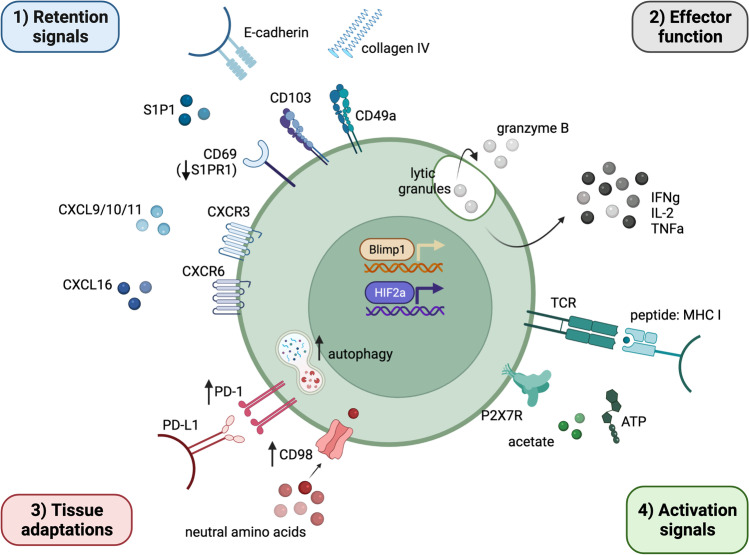
“For example, the αE integrin, CD103 is co-expressed by the majority of gut T RM [21] but not on murine liver T RM [13, 23, 35, 36], and only by approximately 10% of memory CD8 + T cells in the human liver [27] (Fig.”
Tissue-resident memory T cells: local specialists in immune defence
Mueller, S. N., & Mackay, L. K. (2016) · Nature Reviews Immunology · doi:10.1038/nri.2015.3 · Cited by 1,006 · cited 1×
“TRM in other organs are typically extravascular, stationed in close proximity to epithelial cells in order to sensitively monitor their health and respond rapidly with frontline immunosurveillance [8, 16].”
BackgroundCrispe, I. N. (2009) · Annual Review of Immunology · doi:10.1146/annurev.immunol.021908.132629 · Cited by 986
Research works printed but not linked: 1
- Kok L Masopust D Schumacher TN The precursors of CD8+ tissue resident memory T cells: from lymphoid organs to infected tissues Nat Rev Immunol 2021 10.1038/s41577-021-00590-3 34480118 PMC8415193 · DOI · Paper page
Cited by
Tissue CD14+CD8+ T cells reprogrammed by myeloid cells and modulated by LPS
Pallett, L. J., Swadling, L., Diniz, M., Maini, A. A., Schwabenland, M., Gasull, A. D., Davies, J., Kucykowicz, S., Skelton, J. K., Thomas, N., et al. (2023) · Nature · doi:10.1038/s41586-022-05645-6 · Cited by 73
“Hepatic myeloid cells can shape the tolerance and/or activation of neighbouring T cells through local cytokine release or transpresentation, exchange of metabolites, antigen presentation and co-stimulation 16,19–23 .”
Self-citationAttenuated effector T cells are linked to control of chronic HBV infection
Heim, K., Sagar, Sogukpinar, Ö., Llewellyn‐Lacey, S., Price, D. A., Emmerich, F., Kraft, A. R. M., Cornberg, M., Kielbassa, S., Knolle, P. A., et al. (2024) · Nature Immunology · doi:10.1038/s41590-024-01928-4 · Cited by 79
Boháčová, P., Terekhova, M., Tsurinov, P., Mullins, R. D. Z., Husarcikova, K., Shchukina, I., Antonova, A. U., Echalar, B., Kössl, J., Saidu, A., et al. (2024) · Immunity · doi:10.1016/j.immuni.2024.08.019 · Cited by 74
The liver as a central "hub" of the immune system: pathophysiological implications
Ronca, V., Gerussi, A., Collins, P., Parente, A., Oo, Y. H., & Invernizzi, P. (2025) · Physiological Reviews · doi:10.1152/physrev.00004.2023 · Cited by 59
Priming and Maintenance of Adaptive Immunity in the Liver
Kawashima, K., Andreata, F., Beccaría, C. G., & Iannacone, M. (2024) · Annual Review of Immunology · doi:10.1146/annurev-immunol-090122-041354 · Cited by 64
Insights into phenotypic and functional CD8 + TRM heterogeneity
Heeg, M., & Goldrath, A. W. (2023) · Immunological Reviews · doi:10.1111/imr.13218 · Cited by 47
Metabolic reprogramming of immune cells in MASH
Ma, C., Wang, S., Dong, B., & Tian, Y. (2025) · Hepatology · doi:10.1097/hep.0000000000001371 · Cited by 36
Zhang, N., Yao, H., Zhang, Z., Li, Z., Chen, X., Zhao, Y., Ju, R., He, J., Pan, H., Liu, X., et al. (2023) · Frontiers in Immunology · doi:10.3389/fimmu.2023.1131588 · Cited by 35
Axes of heterogeneity in human tissue‐resident memory T cells
Szabo, P. A. (2023) · Immunological Reviews · doi:10.1111/imr.13210 · Cited by 31
Cardon, A., Guinebretière, T., Dong, C., Gil, L., Ado, S., Gavlovsky, P.-J., Braud, M., Danger, R., Schultheiß, C., Doméné, A., et al. (2025) · Nature Communications · doi:10.1038/s41467-025-56363-2 · Cited by 28
CXCR6+CD69+ CD8+ T cells in ascites are associated with disease severity in patients with cirrhosis
Niehaus, C., Klein, S., Strunz, B., Freyer, E., Maasoumy, B., Wedemeyer, H. H., Björkström, N. K., Kraft, A. R. M., & Cornberg, M. (2024) · JHEP Reports · doi:10.1016/j.jhepr.2024.101074 · Cited by 16
Tissue-resident memory CD8+ T cells: master deciphers of the hepatic environment
Romero, D. B., Finney, G. E., Dudek, M., & Pallett, L. J. (2025) · Nature Reviews Gastroenterology & Hepatology · doi:10.1038/s41575-025-01118-z · Cited by 18
“These phenotypic markers for CD8 + T RM cells, along with key transcription factors regulating their function, are highlighted and further explained in Table 2 and reviewed elsewhere in greater detail 2,58,59 .”
Self-citationConsiderations on the Design of Lipid-based mRNA Vaccines Against Cancer
Meulewaeter, S., Zhang, Y., Wadhwa, A., Fox, K., Lentacker, I., Harder, K. W., Cullis, P. R., Smedt, S. C. D., Cheng, M. H. Y., & Verbeke, R. (2023) · Journal of Molecular Biology · doi:10.1016/j.jmb.2023.168385 · Cited by 13
Moine, M. L., Azouz, A., Sanchez, G. S., Dejolier, S., Nguyen, M., Thomas, S., Shala, V., Dreidi, H., Denanglaire, S., Libert, F., et al. (2023) · Cell Reports · doi:10.1016/j.celrep.2023.112876 · Cited by 9
Tu, T., Wettengel, J. M., Xia, Y., Testoni, B., Littlejohn, M., Bert, N. L., Ebert, G., Verrier, E. R., Tavis, J. E., & Cohen, C. A. (2024) · Virology · doi:10.1016/j.virol.2024.110089 · Cited by 5
Immunological Monitoring in Hepatitis C Virus Controlled Human Infection Model
Shoukry, N. H., Cox, A. L., & Walker, C. M. (2023) · Clinical Infectious Diseases · doi:10.1093/cid/ciad359 · Cited by 5
Jang, E. J., Choi, H. J., You, Y. K., Seo, D. H., Kwon, M. H., Yang, K., Lee, J., Jang, J. W., Yoon, S. K., Han, J. W., et al. (2025) · Cancers · doi:10.3390/cancers17091548 · Cited by 3
Sibbertsen, F., Dress, R. J., Weidemann, S. A., Möller, K., Herden, U., Fischer, L., Paul, K., Oh, J. S., Tolosa, E., Schulz‐Jürgensen, S., et al. (2025) · Frontiers in Immunology · doi:10.3389/fimmu.2025.1567645 · Cited by 4
“Cholestatic diseases in infancy, especially biliary atresia, are the leading causes of end-stage liver cirrhosis necessitating liver transplantation early in life 4 .”
InfluentialWu, Y., Xie, Y., Lin, J., Cui, J., Yang, H., Alenzi, M., Huang, P., Huang, A., & Huang, M. (2025) · Annals of Surgical Oncology · doi:10.1245/s10434-025-17977-4 · Cited by 2
“44,50 This adaptation not only facilitates their long-term survival amidst antigenic challenges but also positions them for rapid frontline immune surveillance.”
Li, X., Ding, R., & Cai, J. (2026) · Inflammation and Regeneration · doi:10.1186/s41232-026-00422-8 · Cited by 2
“TRMs are defined by their permanent residency in non-lymphoid tissues and are characterized by the expression of molecules such as CD69, CD103, and CD49a, which facilitate tissue retention and barrier immunity [6].”
Heterogeneity of tissue-resident immunity across organs and in health and disease
Arck, P., & Sallusto, F. (2022) · Seminars in Immunopathology · doi:10.1007/s00281-022-00967-z · Cited by 2
“Also, the understanding of memory T cells in the liver opens avenues for locally targeted immunotherapies [5].”
BackgroundAidoo-Micah, G., Kucykowicz, S., Schmidt, N. M., Naidu, V., Shah, R., Khara, S., Mckinnon-Snell, T., Zhong, Y., Romero, D. B., Davies, J. E., et al. (2025) · JHEP Reports · doi:10.1016/j.jhepr.2025.101637 · Cited by 2
“16,18,38 Despite their adaptations for tight retention within tissues, we were able to aspirate CD8 + T RM from HCC, with a highly variable frequency (mean 10%, range 0.4-40% CD69 + CD103 + of total CD8 + T cells, Fig.”
InfluentialSelf-citationTissue T cells in prophylactic and therapeutic vaccination responses
Maini, M. K. (2023) · Seminars in Arthritis and Rheumatism · doi:10.1016/j.semarthrit.2023.152287 · Cited by 1
“Our research focuses on tissue-resident memory T cells (T RM ) because these are increasingly recognised to be optimally adapted to their local niche and able to provide rapid and sustained frontline defence at the site of infection [1,2].”
Self-citationHepatic stellate cells remodel liver-resident CD8+ T cells and constrain immunosurveillance
Finney, G. E., Romero, D. B., James, B. H., Davies, S. P., Kucykowicz, S., Mathur, A., Rao, K., Pistocchi, G., Kong, K., Tam, J., et al. (2026) · The Journal of Experimental Medicine · doi:10.64898/2025.11.28.691193 · Cited by 1
Self-citationCRX-527 modulates IL-10 expression in BCG-MSP1C-immunized mice
Zakaria, N. M., Suppıan, R., & Hanifi, N. (2025) · Asian Pacific Journal of Tropical Biomedicine · doi:10.4103/apjtb.apjtb_392_25
Öz, E. A., Protzer-Knolle, U., & München, T. U. (2024) · mediaTUM – the media and publications repository of the Technical University Munich (Technical University Munich)
Tuning tissue-resident memory T cells to fuel cancer immunotherapy
Zhang, Y., Fang, Y.-X., Xiao, Y., Li, S., & Sun, Z.-J. (2026) · International Immunopharmacology · doi:10.1016/j.intimp.2026.116308
High HBV antigen levels drive loss of vaccine-induced CD8+ T-cell function in carrier mice over time
Öz, E. A., Su, J., Gültan, M., Tulessin, M., Müller, N., Kerth, H. A., Singh, S., Mogler, C., Steiger, K., Wettengel, J. M., et al. (2026) · JHEP Reports · doi:10.1016/j.jhepr.2026.102033
Adjah, J., Musimbi, Z. D., Midha, A., Hartmann, S., & Rausch, S. (2026) · bioRxiv (Cold Spring Harbor Laboratory) · doi:10.64898/2026.09.21.752666
“While the liver is traditionally viewed as tolerogenic due to constant exposure to dietary and microbial antigens and as a site of exhausted T cell depletion (Crispe et al., 2000), our and other data challenge this paradigm (Ghilas et al., 2020; Pallett et al., 2017; Pallett & Maini, 2022).”
Stary, V., Losek, S., Mairinger, M., Prager, G., Santol, J., Starlinger, P. P., Reiberger, T., Stättermayer, A. F., & Stary, G. (2026) · Liver International · doi:10.1111/liv.70897 · Cited by 1
“Together, these findings identify compartmentalized, tissue-adapted T-cell programmes associated with chronic hepatic immune remodelling in AIH [8, 11].”
Histone methyltransferase NSD2 shapes CD8 + T cell fates through the H3K36me2- Zbtb20 axis
Yuan, S., Xu, Y., Liu, H., Xue, Y., Zhu, M., Xie, X., Wu, X., Xia, Y., Li, L., Luo, Y., et al. (2026) · Science Advances · doi:10.1126/sciadv.aee9670
Metadata
- Authors
- Pallett, L. J., & Maini, M. K.
- Affiliations
- University College London (GB)
- Corresponding author
- Pallett, Laura J.
- Maini, Mala K.
- Venue
- Seminars in Immunopathology
- Published
- 2022-04-28
- Volume
- 44
- Issue
- 6
- Pages
- 813-825
- ISSN
- 1863-2297 (ISSN-L)
- 1863-2300
- PMC
- PMC9708784
- OpenAlex
- W4225004501
- Semantic Scholar
- 3b0af06f63ff6f1a467b56bed8b96ed88d1282f0
- Cited by
- 28
- References
- 130
- Citations by year
- 2026: 4 · 2025: 9 · 2024: 6 · 2023: 8 · 2022: 1
- FWCI
- 0.63
- Type
- journal article
- Language
- en
- Open access
- hybrid
- doi.org
- Licence
- cc-by
- creativecommons.org/licenses/by/4.0 (tdm)
- creativecommons.org/licenses/by/4.0 (vor)
- Locations
- Seminars in Immunopathology (publishedVersion, cc-by)
- PubMed Central (publishedVersion, cc-by)
- PubMed (publishedVersion)
- UCL Discovery (University College London) (submittedVersion)
- Funders
- Wellcome Trust (214191/Z/18/Z)
- Medical Research Council (MR/V02423X/1)
- Topics
- Life Sciences › Immunology and Microbiology › Immunology › T-cell and B-cell Immunology
- Health Sciences › Medicine › Epidemiology › Hepatitis B Virus Studies
- Health Sciences › Medicine › Hepatology › Liver physiology and pathology
- Keywords
- tissue-resident memory T cells, liver, hepatic microenvironment, immune surveillance, hepatitis B, malaria, hepatocellular carcinoma, immunotherapy, T cell metabolism
- MeSH terms
- Memory T Cells, Humans, Immunologic Memory, Immunologic Surveillance, Liver, Neoplasms, CD8-Positive T-Lymphocytes, Tumor Microenvironment
About these checks
Registry, retraction, Cites and statistics results are computed, not judged, with one exception: a printed reference that no index lists is read once by a model before it counts as a citation error. Claims are extracted by a model and kept only when their quote appears verbatim in the text; each cited source is then checked, with a model’s help, for whether it says what the claim relies on. Those verdicts can be wrong — read the claim’s quote and the cited source before relying on one.
Statistics and arithmetic are recomputed, not judged.
Confidence bands are shown only for fields calibrated on our annotated test set. None is calibrated yet, so no band is shown.
What counts as a claim ›How we measure confidence ›How we check this ›
Are you an author, or do you see a problem with this page? Request a review
Data sources
Bibliographic data: Semantic Scholar, OpenAlex, Crossref.
Contains information from the Semantic Scholar Academic Graph Datasets, made available under the ODC Attribution License (ODC-BY 1.0).
Semantic Scholar’s data is described in: Kinney, R., et al. (2023). The Semantic Scholar Open Data Platform. arXiv:2301.10140.
