

Implementation of eHealth and AI integrated diagnostics with multidisciplinary digitized data: are we ready from an international perspective?
Open accessThe DOI matches its Crossref record; 59 of the 60 references it cites were found in a registry or an index.
Abstract
Digitization of medicine requires systematic handling of the increasing amount of health data to improve medical diagnosis. In this context, the integration of the versatile diagnostic information, e.g., from anamnesis, imaging, histopathology, and clinical chemistry, and its comprehensive analysis by artificial intelligence (AI)–based tools is expected to improve diagnostic precision and the therapeutic conduct. However, the complex medical environment poses a major obstacle to the translation of integrated diagnostics into clinical research and routine. There is a high need to address aspects like data privacy, data integration, interoperability standards, appropriate IT infrastructure, and education of staff. Besides this, a plethora of technical, political, and ethical challenges exists. This is complicated by the high diversity of approaches across Europe. Thus, we here provide insights into current international activities on the way to digital comprehensive diagnostics. This includes a technical view on challenges and solutions for comprehensive diagnostics in terms of data integration and analysis. Current data communications standards and common IT solutions that are in place in hospitals are reported. Furthermore, the international hospital digitalization scoring and the European funding situation were analyzed. In addition, the regional activities in radiomics and the related publication trends are discussed. Our findings show that prerequisites for comprehensive diagnostics have not yet been sufficiently established throughout Europe. The manifold activities are characterized by a heterogeneous digitization progress and they are driven by national efforts. This emphasizes the importance of clear governance, concerted investments, and cooperation at various levels in the health systems. Key Points •Europe is characterized by heterogeneity in its digitization progress with predominantly national efforts. Infrastructural prerequisites for comprehensive diagnostics are not given and not sufficiently funded throughout Europe, which is particularly true for data integration. •The clinical establishment of comprehensive diagnostics demands for a clear governance, significant investments, and cooperation at various levels in the healthcare systems. •While comprehensive diagnostics is on its way, concerted efforts should be taken in Europe to get consensus concerning interoperability and standards, security, and privacy as well as ethical and legal concerns.
Overview
The claims and statistics of this paper haven’t been checked yet.
Free: it reads the open-access text and checks the first 5 claims that cite a source we can check. Create a free account to check every claim.
Integrity signals
Registry
Cites
Statistics
Figures
Verification
Claims the paper makes
The claims and statistics of this paper haven’t been checked yet.
Free: it reads the open-access text and checks the first 5 claims that cite a source we can check. Create a free account to check every claim.
Claims other papers make about this one
Each is checked against this paper’s own text: does it say what the citing paper says it does?
The source backs part of the claim, not all of it — or backs it for a different population, condition or comparison.
In the citing paper
“we focus on six key ethical characteristics that emerged from AI ethics literaturefairness, transparency, trustworthiness, accountability, privacy, and empathythat are deemed to be important and most cited in healthcare AI research for developing our initial understanding of responsible AI (Blobel et al., 2020;Bukowski et al., 2020;Floridi et al., 2019;Reddy et al., 2020).”
From SHIFTing artificial intelligence to be responsible in healthcare: a systematic review (2022) · cites this paper as Bukowski et al., 2020
Experimental — accuracy not yet measuredThe source backs part of the claim, not all of it — or backs it for a different population, condition or comparison.
In the citing paper
“Data privacy and ethical issues surrounding the use and storage of patient data were highlighted as major hurdles to the ownership of data in AI-powered digital health ecosystems”
From SHIFTing artificial intelligence to be responsible in healthcare: a systematic review (2022) · cites this paper as Bukowski et al., 2020
Experimental — accuracy not yet measuredThe source backs part of the claim, not all of it — or backs it for a different population, condition or comparison.
In the citing paper
“we focus on six key ethical characteristics that emerged from AI ethics literaturefairness, transparency, trustworthiness, accountability, privacy, and empathythat are deemed to be important and most cited in healthcare AI research”
From SHIFTing artificial intelligence to be responsible in healthcare: a systematic review (2022) · cites this paper as Bukowski et al., 2020
Experimental — accuracy not yet measured
Self-check
Percentages, sums and reported differences re-computed from the paper’s own numbers.
The self-check needs the paper’s full text.
Citations
Cites
The FAIR Guiding Principles for scientific data management and stewardship
Wilkinson, M. D., Dumontier, M., Aalbersberg, I. J., Appleton, G., Axton, M., Baak, A., Blomberg, N., Boiten, J.-W., da Silva Santos, L. B., Bourne, P. E., et al. (2016) · Scientific Data · doi:10.1038/sdata.2016.18 · Cited by 18,423 · cited 1×
“A specific emphasis is on supporting the reuse by individuals and enhancing the ability of machines to automatically find and use the data [19, 20].”
BackgroundSudlow, C., Gallacher, J., Allen, N., Beral, V., Burton, P., Danesh, J., Downey, P., Elliott, P., Green, J., Landray, M., et al. (2015) · PLOS Medicine · doi:10.1371/journal.pmed.1001779 · Cited by 12,728
High-performance medicine: the convergence of human and artificial intelligence
Topol, E. J. (2019) · Nature Medicine · doi:10.1038/s41591-018-0300-7 · Cited by 10,450
Radiomics: Images Are More than Pictures, They Are Data
Gillies, R. J., Kinahan, P. E., & Hricak, H. (2016) · Radiology · doi:10.1148/radiol.2015151169 · Cited by 8,421
Radiomics: extracting more information from medical images using advanced feature analysis
Lambin, P., Rios-Velazquez, E., Leijenaar, R., Carvalho, S., van Stiphout, R. G. P. M., Granton, P., Zegers, C. M. L., Gillies, R., Boellard, R., Dekker, A., et al. (2012) · European Journal of Cancer · doi:10.1016/j.ejca.2011.11.036 · Cited by 6,084
Benchimol, E. I., Smeeth, L., Guttmann, A., Harron, K., Moher, D., Petersen, I., Sørensen, H. T., von Elm, E., Langan, S. M., & RECORD Working Committee (2015) · PLOS Medicine · doi:10.1371/journal.pmed.1001885 · Cited by 5,749
A guide to deep learning in healthcare
Esteva, A., Robicquet, A., Ramsundar, B., Kuleshov, V., DePristo, M., Chou, K., Cui, C., Corrado, G., Thrun, S., & Dean, J. (2019) · Nature Medicine · doi:10.1038/s41591-018-0316-z · Cited by 5,312
Decoding tumour phenotype by noninvasive imaging using a quantitative radiomics approach
Aerts, H. J. W. L., Velazquez, E. R., Leijenaar, R. T. H., Parmar, C., Grossmann, P., Carvalho, S., Bussink, J., Monshouwer, R., Haibe-Kains, B., Rietveld, D., et al. (2014) · Nature Communications · doi:10.1038/ncomms5006 · Cited by 5,132 · cited 1×
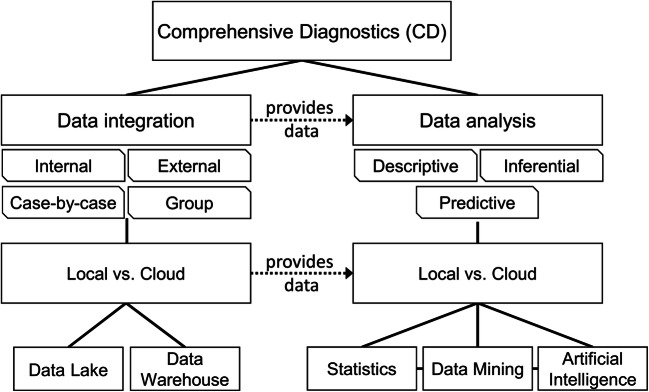
“Radiomics is a part of CD and describes the extraction of quantifiable features from radiologic images and its analysis by machine or deep learning [68, 69].”
BackgroundArtificial intelligence in healthcare
Yu, K.-H., Beam, A. L., & Kohane, I. S. (2018) · Nature Biomedical Engineering · doi:10.1038/s41551-018-0305-z · Cited by 2,817
Radiomics: the process and the challenges
Kumar, V., Gu, Y., Basu, S., Berglund, A., Eschrich, S. A., Schabath, M. B., Forster, K., Aerts, H. J. W. L., Dekker, A., Fenstermacher, D., et al. (2012) · Magnetic Resonance Imaging · doi:10.1016/j.mri.2012.06.010 · Cited by 2,258
Research works printed but not linked: 1
- ISO/IEEE (2019) ISO/IEEE 11073; Available via https://www.iso.org/search.html?q=11073. Accessed 07 Oct 2019
Cited by
Digital transformation in healthcare: technology acceptance and its applications
Stoumpos, A. I., Kitsios, F., & Talias, M. A. (2023) · International Journal of Environmental Research and Public Health · doi:10.3390/ijerph20043407 · Cited by 939
SHIFTing artificial intelligence to be responsible in healthcare: a systematic review
Siala, H., & Wang, Y. (2022) · Social Science & Medicine · doi:10.1016/j.socscimed.2022.114782 · Cited by 358
Artificial intelligence and machine learning in cancer imaging
Koh, D.-M., Papanikolaou, N., Bick, U., Illing, R., Kahn, C. E., Kalpathi-Cramer, J., Matos, C., Martí-Bonmatí, L., Miles, A., Mun, S. K., et al. (2022) · Communications Medicine · doi:10.1038/s43856-022-00199-0 · Cited by 311
“Precision oncology is likely to bene fi t from integrated diagnostics 84,85 (e.g. radiogenomics, which combines radiomics and genomics analyses) to provide robust computational tools for investigating cancer biology, as well as for predicting treatment response (Fig.”
Nair, M., Svedberg, P., Larsson, I., & Nygren, J. M. (2024) · PLOS ONE · doi:10.1371/journal.pone.0305949 · Cited by 179
Machine learning and artificial intelligence in haematology
Shouval, R., Fein, J. A., Savani, B. N., Mohty, M., & Nagler, A. (2020) · British Journal of Haematology · doi:10.1111/bjh.16915 · Cited by 140
Chauhan, C., & Gullapalli, R. R. (2021) · American Journal Of Pathology · doi:10.1016/j.ajpath.2021.06.011 · Cited by 127
“However, large-scale data analytics across these health care subdomains are lagging.(4,5)Computational algorithmsbased onprinciples of machine learning and natural language processing are expected to automate big data analytics, identify patterns to improve our understanding of health care processes, and improve effic…”
BackgroundArtificial intelligence in healthcare: a comprehensive review of its ethical concerns
Kooli, C., & Al Muftah, H. (2022) · Technological Sustainability · doi:10.1108/techs-12-2021-0029 · Cited by 83
Petersen, E., Potdevin, Y., Mohammadi, E., Zidowitz, S., Breyer, S., Nowotka, D., Henn, S., Pechmann, L., Leucker, M., Rostalski, P., et al. (2022) · IEEE Access · doi:10.1109/access.2022.3178382 · Cited by 113
“Finally, proper operator training is essential [43], [260], [261]: users — be it patients or healthcare workers — must be educated about the capabilities and limitations of a machine learning system in order to prevent incorrect and potentially unsafe usage.”
BackgroundThe Ethics of Artificial Intelligence in Pathology and Laboratory Medicine: Principles and Practice
Jackson, B. R., Ye, Y., Crawford, J. M., Becich, M. J., Roy, S., Botkin, J. R., de Baca, M. E., & Pantanowitz, L. (2021) · Academic Pathology · doi:10.1177/2374289521990784 · Cited by 96
“52 This issue also is under discussion in the field of medical imaging.”
BackgroundProgress in the Application of Artificial Intelligence in Ultrasound-Assisted Medical Diagnosis
Li, Y., Li, Q., Fu, K., Zhou, X., & Zhang, K. (2025) · Bioengineering · doi:10.3390/bioengineering12030288 · Cited by 89
Heinrichs, H., Kies, A., Nagel, S. K., & Kiessling, F. (2025) · Journal of Medical Internet Research · doi:10.2196/74187 · Cited by 66
“Another key barrier is the lack of standardized and interoperable digital infrastructure, with data fragmented across incompatible systems, hindering seamless data exchange [15].”
Self-citationA hybrid deep-learning approach for complex biochemical named entity recognition
Liu, J., Gao, L., Guo, S., Ding, R., Huang, X., Ye, L., Meng, Q., Nazari, A., & Thiruvady, D. (2021) · Knowledge-Based Systems · doi:10.1016/j.knosys.2021.106958 · Cited by 72
An Overview on the Challenges and Limitations Using Cloud Computing in Healthcare Corporations
Agapito, G., & Cannataro, M. (2023) · Big Data and Cognitive Computing · doi:10.3390/bdcc7020068 · Cited by 58
The Impact of Digital Transformation on Inpatient Care: Mixed Methods Study
Köbe, P., & Bohnet-Joschko, S. (2023) · JMIR Public Health and Surveillance · doi:10.2196/40622 · Cited by 51
“Regulation of service delivery [60,74] • Data protection regulations [40,46] • Uniformity of data structures [41,46,49,55,75] • Lack of interfaces for data exchange [50,71,76] • Insufficient investment in technical infrastructure [68,70,74] • Lack of political understanding of appropriate…”
InfluentialEvolving and Novel Applications of Artificial Intelligence in Cancer Imaging
Pallumeera, M., Giang, J. C., Singh, R., Pracha, N. S., & Makary, M. S. (2025) · Cancers · doi:10.3390/cancers17091510 · Cited by 44
“The ideal solution involves large-scale data collection from multiple institutions that can also anticipate privacy issues and emphasize patient confidentiality, while also supporting longitudinal learning [82].”
Health Care Digital Revolution During COVID-19
Shah, I. A., Jhanjhi, N. Z., Humayun, M., & Ghosh, U. (2022) · Springer eBooks · doi:10.1007/978-3-030-98167-9_2 · Cited by 39
Gurnani, B., Kaur, K., Lalgudi, V. G., Kundu, G., Mimouni, M., Liu, H., Jhanji, V., Prakash, G., Roy, A., Shetty, R., et al. (2024) · Journal Français d Ophtalmologie · doi:10.1016/j.jfo.2024.104242 · Cited by 32
Jeong, C., Goh, Y., & Kwak, J. (2024) · Ewha Medical Journal · doi:10.12771/emj.2024.e49 · Cited by 26
“Developing common data standards, such as Digital Imaging and Communications in Medicine (DICOM), is essential for enabling data exchange and integration [66,67].”
Integrating Radiogenomics and Machine Learning in Musculoskeletal Oncology Care
Kumar, R. R., Sporn, K., Khanna, A., Paladugu, P., Gowda, C., Ngo, A., Jagadeesan, R., Zaman, N., & Tavakkoli, A. (2025) · Diagnostics · doi:10.3390/diagnostics15111377 · Cited by 24
“This progress is supported by improved data standards and cross-institutional platforms, facilitating larger and more diverse datasets [46].”
Rane, N. L., Choudhary, S., & Rane, J. (2023) · SSRN Electronic Journal · doi:10.2139/ssrn.4637894 · Cited by 30
Ethics of AI in pathology: Current paradigms and emerging issues
Chauhan, C., & Gullapalli, R. R. (2024) · Elsevier eBooks · doi:10.1016/b978-0-323-95359-7.00009-1 · Cited by 22
Floca, R. O., Bohn, J. R., Haux, C., Wiestler, B., Zöllner, F. G., Reinke, A., Weiß, J., Nolden, M., Albert, S., Persigehl, T., et al. (2024) · Insights into Imaging · doi:10.1186/s13244-024-01704-w · Cited by 14
“These ML-based approaches are only emerging and therefore, their role in a radiomics work fl ow is not settled yet [33, 34].”
Self-citationTheek, B., Magnuska, Z., Gremse, F., Hahn, H. K., Schulz, V., & Kiessling, F. M. (2020) · Methods · doi:10.1016/j.ymeth.2020.06.019 · Cited by 15
Self-citationTheek, B., Nolte, T., Pantke, D., Schrank, F., Gremse, F., Schulz, V., & Kiessling, F. M. (2020) · Der Radiologe · doi:10.1007/s00117-020-00696-0 · Cited by 13
Self-citationWeinert, L., Klass, M., Schneider, G., & Heinze, O. (2023) · JMIR Formative Research · doi:10.2196/43958 · Cited by 8
“This gap has been attributed, in part, to low availability of large and high-quality data sets that are necessary for the development of AI tools [12,13].”
BackgroundMateus, M., Alho, I., Neves, A. L., Lopes, H. F. M., & Correia, M. M. B. (2026) · BMC Medical Ethics · doi:10.1186/s12910-025-01372-5 · Cited by 10
“[ 97 ] 2020 I m p l e m e n t a t i o n o f e H e a l t h a n d A I i n t e g r a t e d d i a g n o s t i c s w i t h m u l t i d i s c i p l i n a r y d i g i t i z e d d a t a • T h e i n t e g r a t i o n o f v e r s a t i l e d i a g n o s t i c i n f o r m a t i o n a n d A I - b a s e d a n a…”
Saxena, R., Sharma, V., & Gupta, M. (2023) · International Conference on Advances in Computation, Communication and Information Technology (ICAICCIT) · doi:10.1109/icaiccit60255.2023.10465870 · Cited by 9
“One major moral issue connected to computer vision and AI-integrated IoT technologies in the medical domain is maintaining the privacy and security of patients' records [12].”
BackgroundDas, S., Ahmed, N. T. B., Rahbi, I. A., Al-Jubori, Y., Albusaidi, R., Harbi, A. A., Tobi, M. A., & Albalushi, H. M. A. (2025) · International Journal of Environmental Research and Public Health · doi:10.3390/ijerph22081193 · Cited by 6
“Use of AI for e-Health could also increase diagnostic precision and better therapeutic outcomes [17].”
Privacy-Preserving Deep Learning Models for Analysis of Patient Data in Cloud Environment
Avasthi, S., & Chauhan, R. (2024) · Studies in computational intelligence · doi:10.1007/978-981-99-8853-2_20 · Cited by 8
Artificial Intelligence and Machine Learning in Integrated Diagnostic
Milan, L. (2023) · Springer eBooks · doi:10.1007/978-3-031-35213-3_2 · Cited by 5
Artificial Intelligence (AI) in Healthcare: A Comprehensive Overview
Dutta, U., Baruah, S., & Baruah, S. (2025) · Advances in computational intelligence and robotics book series · doi:10.4018/979-8-3693-9735-0.ch001 · Cited by 4
Afifi, S. M., Faragallah, M. H., Taha, R., Baig, M., Ullah, E., GholamHosseini, H., & Hassanein, S. I. (2024) · Journal of Engineering and Science in Medical Diagnostics and Therapy · doi:10.1115/1.4067302 · Cited by 7
Artificial Intelligence in Mental Healthcare: Opportunities, Risks, and Regulations
Jafar, A., Shabnam, S., & Khan, A. (2025) · Advances in computational intelligence and robotics book series · doi:10.4018/979-8-3373-5072-1.ch014 · Cited by 3
Al‐Yateem, N., Marzooqi, A. A., Dias, J. M., Subu, M. A., Rahman, S. A., Ahamed, I. S., & Al-Shabi, M. A. (2021) · IEEE Annual International Computer Software and Applications Conference (COMPSAC) · doi:10.1109/compsac51774.2021.00198 · Cited by 4
Digitalization of Prison Records Supports Artificial Intelligence Application
Whitford, W. G. (2025) · Journal of Correctional Health Care · doi:10.1177/10783458251359627 · Cited by 3
“The digitalization of medical records is essential for enabling the application of arti fi cial intelligence (AI) in health care (Bukowski, 2020).”
To the question of the digital platform “bioinformatics” creating and its system-forming solutions
Kratov, S. V., & Zybarev, Y. (2020) · Berichte aus der medizinischen Informatik und Bioinformatik/Journal of integrative bioinformatics · doi:10.1515/jib-2020-0029 · Cited by 3
Assessment of digital transformation levels in hospitals: A case study of Hanoi, Vietnam
Ha, D. T., Vinh, H. X., Huyen, H. M., & Phong, B. Q. (2024) · VNU JOURNAL OF ECONOMICS AND BUSINESS · doi:10.57110/vnu-jeb.v4i6.347 · Cited by 2
“(Bukowski et al., 2020).”
Kimiagari, S. (2025) · International Journal of Knowledge Management · doi:10.4018/ijkm.384590 · Cited by 3
Suresh, M., & Paul, R. (2025) · Disaster risk reduction · doi:10.1007/978-981-95-0317-9_5 · Cited by 3
Bardmann, M.-M., & Ruiner, C. (2026) · Social Science & Medicine · doi:10.1016/j.socscimed.2026.119470 · Cited by 2
Weinert, L., Klass, M., Schneider, G., & Heinze, O. (2022) · JMIR Research Protocols · doi:10.2196/42208 · Cited by 2
“Hospitals and other health care facilities inherently store the large amounts of data needed for AI development, but access to these data can pose legal and ethical challenges [12,13].”
Hehakaya, C., & Moors, E. H. M. (2023) · Innovation · doi:10.1080/14479338.2023.2213212 · Cited by 3
“Digitalisation, an illustrative converging trend in health care (e.g., artificial intelligence, machine learning and deep learning), is often used to support users’ decision-making, and frequently requires and provides multidisciplinary knowledge (Bukowski et al., 2020; Dougherty & Dunne, 2012).”
Applications of Federated Learning in Healthcare—A New Paradigm for Digital Health
Singh, A., Biswas, S., Samui, S., Mondal, A. K., Karmakar, K., Banerjee, J. S., & Sarigiannidis, P. G. (2024) · Smart innovation, systems and technologies · doi:10.1007/978-981-99-7711-6_47 · Cited by 2
Shutova, А. A., & Begishev, I. R. (2024) · Law Enforcement Review · doi:10.52468/2542-1514.2024.8(1).34-43 · Cited by 2
Establishing Artificial Intelligence-Powered Virtual Tumor Board Meetings in Pakistan
Khan, S. R., Khan, A., & Tareen, A. (2025) · Cancer Control · doi:10.1177/10732748251331753 · Cited by 2
Multiparametric Oncologic Hybrid Imaging: Machine Learning Challenges and Opportunities
Küstner, T., Hepp, T., & Seith, F. (2022) · RöFo - Fortschritte auf dem Gebiet der Röntgenstrahlen und der bildgebenden Verfahren · doi:10.1055/a-1718-4128 · Cited by 2
“[92] Bukowski M, Farkas R, Beyan O et al.”
BackgroundImpact of Digital Transformation on Hospital Efficiency and Quality of Care
Alruwaili, A. M. W., Majrishi Awaei Ali, H., Alruwaili, R. M. W., Almatrafi, H. K. N., Anazi, T. K. A. A., Alharthi, M. M., Alhabanji, K. K. K., Almurayhil, N. M. M., Hakami, T. Y. A., Alenezi, S. L. A., et al. (2024) · International Journal of Computational and Experimental Science and Engineering · doi:10.22399/ijcesen.4288 · Cited by 1
“By eliminating illegible handwriting and automating the routing of orders, CPOE systems have demonstrated a 55% reduction in medication prescribing errors and a 48% decrease in transcription errors for laboratory tests [15].”
AI in geriatric psychiatry: precision meets human experience
Mizuno, A. N., Erickson, Z., Jimenez, D. E., & Aizenstein, H. J. (2026) · Neuropsychopharmacology · doi:10.1038/s41386-026-02328-y · Cited by 3
Malathy, V., Pasupulla, A. P., Srivastava, D., Hymavathi, J., Pandian, P. M., & Acharjee, P. B. (2024) · Smart innovation, systems and technologies · doi:10.1007/978-981-97-2716-2_14 · Cited by 1
AI and Medicine: Separating Fact from Fiction in the Quest for Effective and High Quality Healthcare
Graßmann, S., & Pfeiffer, S. (2024) · Springer eBooks · doi:10.1007/978-3-658-45708-2_18 · Cited by 1
AI in nuclear medicine – what, why and how?
Rogasch, J. M. M., & Penzkofer, T. (2021) · Nuklearmedizin - NuclearMedicine · doi:10.1055/a-1542-6231
“In contrast, ML could access previously inaccessible image information and allow its multimodal integration with clinical, pathological, and other data ( integrated diagnostics ) [17].”
BackgroundNarrative Disruptions in Composition's Culture of Scholarship
Madan, R. S. (2012) · D-Scholarship@Pitt (University of Pittsburgh) · Cited by 1
Multiparametric Oncologic Hybrid Imaging: Machine Learning Challenges and Opportunities
Küstner, T., Hepp, T., & Seith, F. (2023) · Nuklearmedizin - NuclearMedicine · doi:10.1055/a-2157-6670
“Therefore, the patchwork of regulations throughout the European health systems including strategies for data security, privacy, as well as ethical and legal concerns need to be overcome [92].”
BackgroundAnálise inteligente de dados para o combate da Covid-19 na cidade de Recife
Ospina, R., Wanderley, A., & Magalhães, A. (2020) · Anais do Simpósio Brasileiro de Pesquisa Operacional · doi:10.59254/sbpo-2020-122798
DEVELOPING NOVEL IMAGING MODALITIES FOR EARLY CANCER DETECTION
Murad, S. F. (2024) · Journal of Higher Education and Academic Advancement · doi:10.61796/ejheaa.v1i3.418
Identification of Barriers to AI Implementation in Medical Information Systems
Pilch, A., Zygała, R., Gryncewicz, W., Dyvak, M., & Melnyk, A. (2024) · Lecture notes in networks and systems · doi:10.1007/978-3-031-66761-9_6 · Cited by 2
Ethical consideration & role of AI in Unani system of medicine: An exploration
Shafia, Siddiqui, B., Saleem, M. N., & Siddiqui, A. I. (2025) · International Journal of Unani and Integrative Medicine · doi:10.33545/2616454x.2025.v9.i2a.343 · Cited by 1
Ethics in Artificial Intelligence: Constructs and Applications in Indian Healthcare
Mary, S. S. C., Xavier, M. J., & Arun, C. J. (2025) · Studies in applied philosophy, epistemology and rational ethics · doi:10.1007/978-3-031-92139-1_15
Cancer Cells and Normal Cells Identification—Automated Analysis by Machine Learning
Vishwakarma, R., Patidar, K., & Tiwari, D. P. (2025) · Lecture notes in networks and systems · doi:10.1007/978-981-96-6515-0_40
Determinants of Quality in the Design, Development and Evaluation of Digital Health Programs
Stoyanov, S. R. (2025) · Queensland University of Technology · doi:10.5204/thesis.eprints.261406
On-Chip Sensors Commercialized for Medical Diagnostics Applications
Shukla, V. K., & Tanushri (2026) · Springer eBooks · doi:10.1007/978-981-95-5519-2_14
Navigating Digital Transformation in Healthcare: Challenges and Opportunities
Asli, N. E., & BoukherroubTasseda (2025) · International Conference on Artificial Intelligence Science and Applications in Industry and Society (CAISAIS) · doi:10.1109/caisais68078.2025.11440923
“…Lack of Skills and talents [2], [7], [44], [50] Leadership [3], [44], [51], [61], [62], [63] Skilled workforce and competence building [11], [17], [36] Clear vision/ Clear governance [3], [17], [50], [57], [65] Stakeholder collaboration and co-creation [36], [49], [62] IT infrastructure [56] III.”
AI in cancer education and screening: Improving patient awareness and quality of life
Sharma, D., Pal, D., & Sharma, L. (2026) · Elsevier eBooks · doi:10.1016/b978-0-443-45004-4.00001-3
AI Regulations in Medical Devices
Khinvasara, T. (2026) · Springer handbooks · doi:10.1007/978-3-032-01636-2_40 · Cited by 1
Nawaf, G. (2026) · European Journal of Public Health Studies · doi:10.46827/ejphs.v9i2.267
“This has broadened the definition of healthcare system performance and now embraces not only clinical outcomes but also organizational efficiency, service access, patient experiences, and equitable healthcare provision (Bao & Bihn, 2021; Bukowski et al. , 2020; Nataliia et al. , 2021).”
InfluentialKI-Health Canvas: Ein Dynamic Capabilities Ansatz zur Implementierung von KI im Gesundheitswesen
Hammer, J., Aptyka, M., & Teuteberg, F. (2026) · Edition HMD · doi:10.1007/978-3-658-51795-3_15
Laajava, J. (2025) · Jyväskylä University Digital Archive (University of Jyväskylä)
Rai, R., & Singh, K. K. (2026) · International Journal of Innovative Research in Engineering & Management · doi:10.55524/ijirem.2026.13.4.7
Duhan, P., D’Souza, M., Kel, J., Kappos, L., Papadopoulou, A., Brodbeck, D., & Weise, G. (2026) · doi:10.2196/preprints.98106
Besma, D. D., & Yamina, A. (2026) · Revista Infoacceso
Metadata
- Authors
- Bukowski, M., Farkas, R., Beyan, O., Moll, L., Hahn, H., Kiessling, F., & Schmitz-Rode, T.
- Affiliations
- Universitätsklinikum Aachen (DE)
- Fraunhofer Institute for Applied Information Technology (DE)
- Fraunhofer Institute for Digital Medicine (DE)
- Corresponding author
- Kiessling, Fabian
- Venue
- European Radiology
- Published
- 2020-05-06
- Volume
- 30
- Issue
- 10
- Pages
- 5510-5524
- ISSN
- 0938-7994 (ISSN-L)
- 1432-1084
- PMC
- PMC7476980
- OpenAlex
- W3021191805
- Cited by
- 67
- References
- 60
- Citations by year
- 2026: 8 · 2025: 15 · 2024: 15 · 2023: 9 · 2022: 8 · 2021: 6 · 2020: 5
- FWCI
- 2.07
- Type
- journal article
- Language
- en
- Open access
- hybrid
- doi.org
- Licence
- cc-by
- creativecommons.org/licenses/by/4.0 (tdm)
- creativecommons.org/licenses/by/4.0 (vor)
- Locations
- European Radiology (publishedVersion, cc-by)
- PubMed Central (publishedVersion, cc-by)
- PubMed (publishedVersion)
- Informationszentrum Lebenswissenschaften (ZB MED) (submittedVersion, cc-by)
- Publikationsdatenbank der Fraunhofer-Gesellschaft (Fraunhofer-Gesellschaft) (submittedVersion, other-oa)
- Fraunhofer-Publica (Fraunhofer-Gesellschaft) (submittedVersion)
- RWTH Publications (RWTH Aachen) (submittedVersion, other-oa)
- RWTH Publications (RWTH Aachen)
- Funders
- RWTH Aachen University (none)
- Topics
- Health Sciences › Medicine › Health Informatics › Artificial Intelligence in Healthcare and Education
- Health Sciences › Health Professions › Health Information Management › Electronic Health Records Systems
- Health Sciences › Medicine › Public Health, Environmental and Occupational Health › Technology and Human Factors in Education and Health
- Keywords
- e-health, artificial intelligence in diagnostics, integrated diagnostics, health data integration, interoperability standards, data privacy, hospital digitalization, radiomics, health data governance, legal and ethical issues
- MeSH terms
- Interdisciplinary Research, Artificial Intelligence, Computer Systems, Europe, Humans, Medical Informatics, Publishing, Radiology, Software, Telemedicine, Privacy, Internationality, Data Mining
About these checks
Registry, retraction, Cites and statistics results are computed, not judged, with one exception: a printed reference that no index lists is read once by a model before it counts as a citation error. Claims are extracted by a model and kept only when their quote appears verbatim in the text; each cited source is then checked, with a model’s help, for whether it says what the claim relies on. Those verdicts can be wrong — read the claim’s quote and the cited source before relying on one.
Statistics and arithmetic are recomputed, not judged.
Confidence bands are shown only for fields calibrated on our annotated test set. None is calibrated yet, so no band is shown.
What counts as a claim ›How we measure confidence ›How we check this ›
Are you an author, or do you see a problem with this page? Request a review
Data sources
Bibliographic data: Semantic Scholar, OpenAlex, Crossref.
Contains information from the Semantic Scholar Academic Graph Datasets, made available under the ODC Attribution License (ODC-BY 1.0).
Semantic Scholar’s data is described in: Kinney, R., et al. (2023). The Semantic Scholar Open Data Platform. arXiv:2301.10140.
