

LMDZ5B: the atmospheric component of the IPSL climate model with revisited parameterizations for clouds and convection
Open accessThe DOI matches its Crossref record; 83 of the 84 references it cites were found in a registry or an index.
Abstract
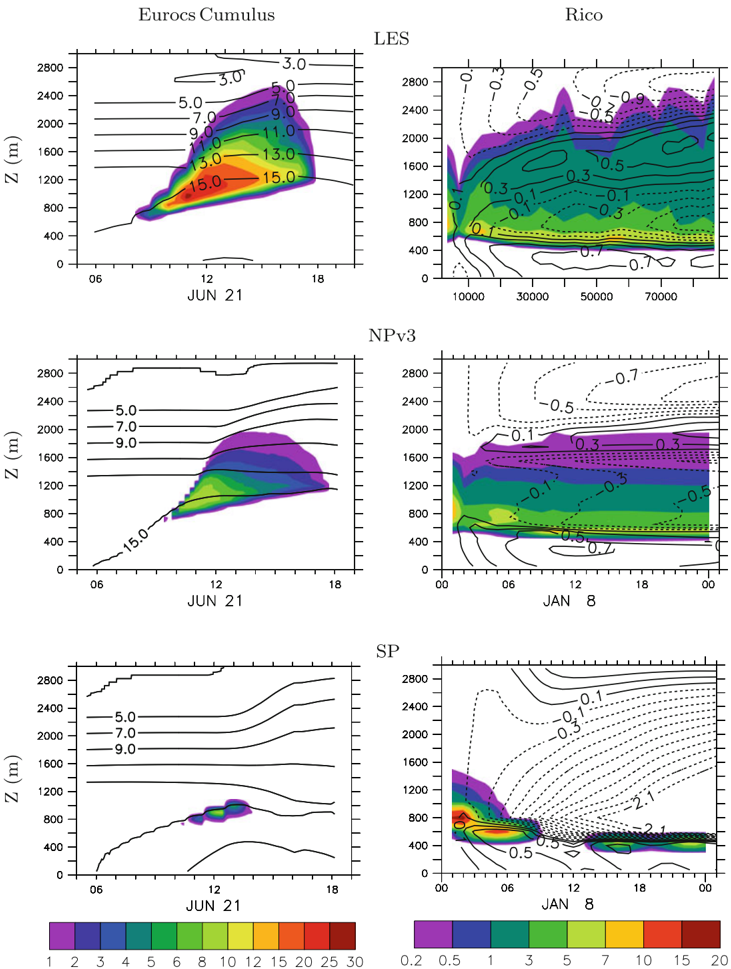
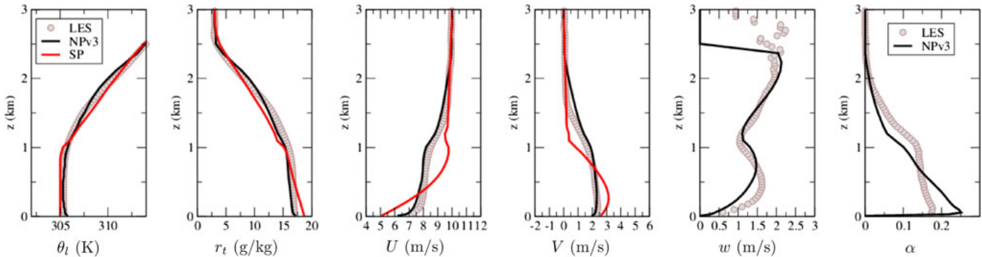
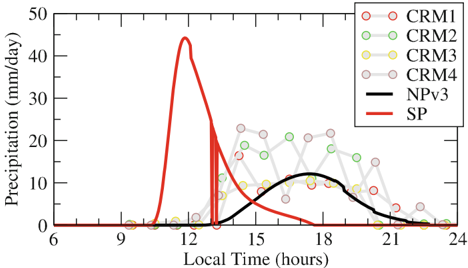
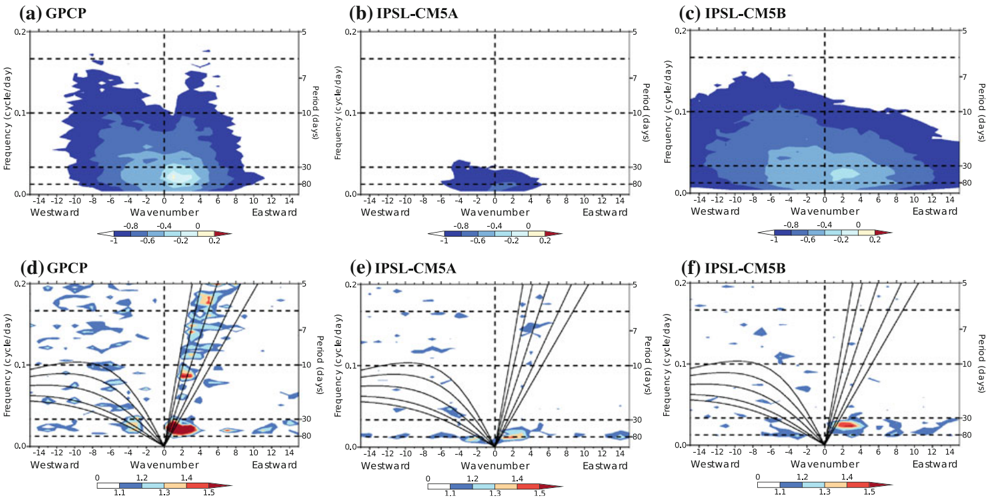
Based on a decade of research on cloud processes, a new version of the LMDZ atmospheric general circulation model has been developed that corresponds to a complete recasting of the parameterization of turbulence, convection and clouds. This LMDZ5B version includes a mass-flux representation of the thermal plumes or rolls of the convective boundary layer, coupled to a bi-Gaussian statistical cloud scheme, as well as a parameterization of the cold pools generated below cumulonimbus by re-evaporation of convective precipitation. The triggering and closure of deep convection are now controlled by lifting processes in the sub-cloud layer. An available lifting energy and lifting power are provided both by the thermal plumes and by the spread of cold pools. The individual parameterizations were carefully validated against the results of explicit high resolution simulations. Here we present the work done to go from those new concepts and developments to a full 3D atmospheric model, used in particular for climate change projections with the IPSL-CM5B coupled model. Based on a series of sensitivity experiments, we document the differences with the previous LMDZ5A version distinguishing the role of parameterization changes from that of model tuning. Improvements found previously in single-column simulations of case studies are confirmed in the 3D model: (1) the convective boundary layer and cumulus clouds are better represented and (2) the diurnal cycle of convective rainfall over continents is delayed by several hours, solving a longstanding problem in climate modeling. The variability of tropical rainfall is also larger in LMDZ5B at intraseasonal time-scales. Significant biases of the LMDZ5A model however remain, or are even sometimes amplified. The paper emphasizes the importance of parameterization improvements and model tuning in the frame of climate change studies as well as the new paradigm that represents the improvement of 3D climate models under the control of single-column case studies simulations.
Overview
The claims and statistics of this paper haven’t been checked yet.
Free: it reads the open-access text and checks the first 5 claims that cite a source we can check. Create a free account to check every claim.
Integrity signals
Registry
Cites
Statistics
Figures



Verification
Claims the paper makes
The claims and statistics of this paper haven’t been checked yet.
Free: it reads the open-access text and checks the first 5 claims that cite a source we can check. Create a free account to check every claim.
Claims other papers make about this one
Each is checked against this paper’s own text: does it say what the citing paper says it does?
The source backs part of the claim, not all of it — or backs it for a different population, condition or comparison.
In the citing paper
“This success of the automated procedure benefited from the expertise gained in the team from decades of practice of by-hand tuning of the IPSL model (14, 17, 18, 37).”
From Toward machine-assisted tuning avoiding the underestimation of uncertainty in climate change projections (2023) · cites this paper as [18]
Experimental — accuracy not yet measured
Self-check
Percentages, sums and reported differences re-computed from the paper’s own numbers.
The self-check needs the paper’s full text.
Citations
Cites
The ERA‐Interim reanalysis: configuration and performance of the data assimilation system
Dee, D. P., Uppala, S. M., Simmons, A. J., Berrisford, P., Poli, P., Kobayashi, S., Andrae, U., Balmaseda, M. A., Balsamo, G., Bauer, P., et al. (2011) · Quarterly Journal of the Royal Meteorological Society · doi:10.1002/qj.828 · Cited by 24,480
Robust Responses of the Hydrological Cycle to Global Warming
Held, I. M., & Soden, B. J. (2006) · Journal of Climate · doi:10.1175/jcli3990.1 · Cited by 4,959 · cited 1×
“Regarding rainfall, some aspects appear to be robust as well, such as the global increase of rainfall in the ITCZ/ SPCZ region, and a relative drying at around 30–40 degrees latitude in both hemispheres, also a rather robust feature of CMIP3 projections (Held and Soden 2006).”
BackgroundMeehl, G. A., Stocker, T. F., Collins, W. D., Friedlingstein, P., Gaye, A. T., Gregory, J. M., Kitoh, A., Knutti, R., Murphy, J. M., Noda, A., et al. (n.d.) · Bern Open Repository and Information System (University of Bern) · doi:10.48350/25539 · Cited by 3,726
A dynamic global vegetation model for studies of the coupled atmosphere‐biosphere system
Krinner, G., Viovy, N., de Noblet‐Ducoudré, N., Ogée, J., Polcher, J., Friedlingstein, P., Ciais, P., Sitch, S., & Prentice, I. C. (2005) · Global Biogeochemical Cycles · doi:10.1029/2003gb002199 · Cited by 2,496 · cited 2×
“In IPSL-CM5, LMDZ is coupled to Orchidee over continental surfaces (Krinner et al, 2005) and Nemo3.”
BackgroundZhang, C. (2005) · Reviews of Geophysics · doi:10.1029/2004rg000158 · Cited by 2,178 · cited 1×
“Their representation is key for the simulation of prominent climate features such as the Inter Tropical Convergence Zone (ITCZ) organization (Lindzen and Hou, 1988; Hou and Lindzen, 1992) or Madden-Julian Oscillation (Zhang, 2005).”
BackgroundWheeler, M., & Kiladis, G. N. (1999) · Journal of the Atmospheric Sciences · doi:10.1175/1520-0469(1999)056<0374:ccewao>2.0.co;2 · Cited by 1,809 · cited 2×
“A space-time analysis of tropical rainfall anomalies, similar to that of Wheeler and Kiladis (1999) was then performed (Fig.”
MethodInitial performance assessment of CALIOP
Winker, D. M., Hunt, W. H., & McGill, M. J. (2007) · Geophysical Research Letters · doi:10.1029/2007gl030135 · Cited by 1,395 · cited 1×
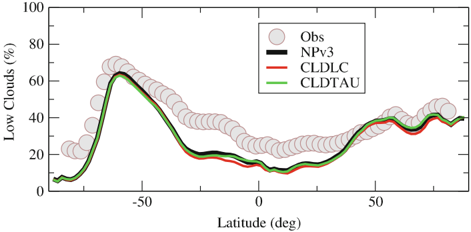
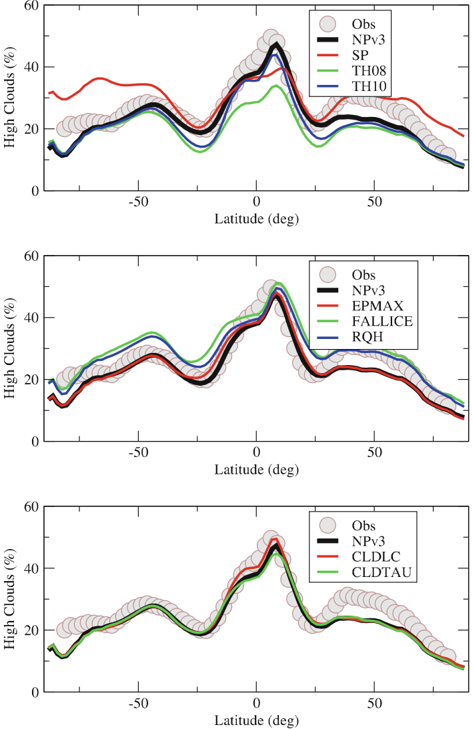
“6 shows the zonal and annual mean of the cloud fraction as simulated with the NPv3 version of the model and as observed by the Caliop Lidar onboard the Calipso satellite (Winker et al, 2007).”
MethodMarine boundary layer clouds at the heart of tropical cloud feedback uncertainties in climate models
Bony, S., & Dufresne, J. (2005) · Geophysical Research Letters · doi:10.1029/2005gl023851 · Cited by 1,302 · cited 1×
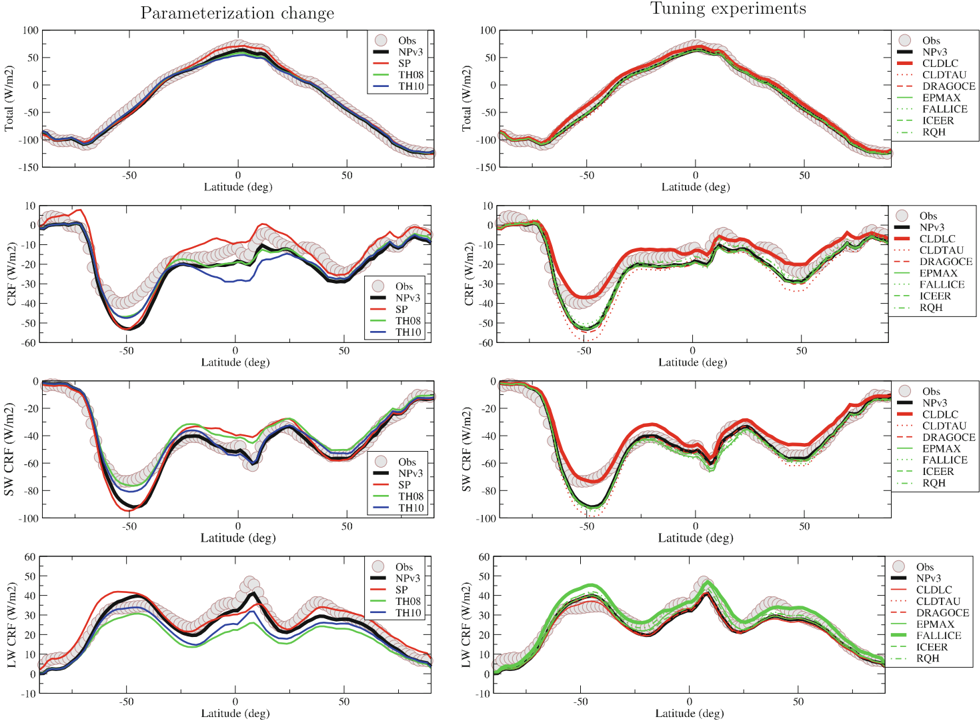
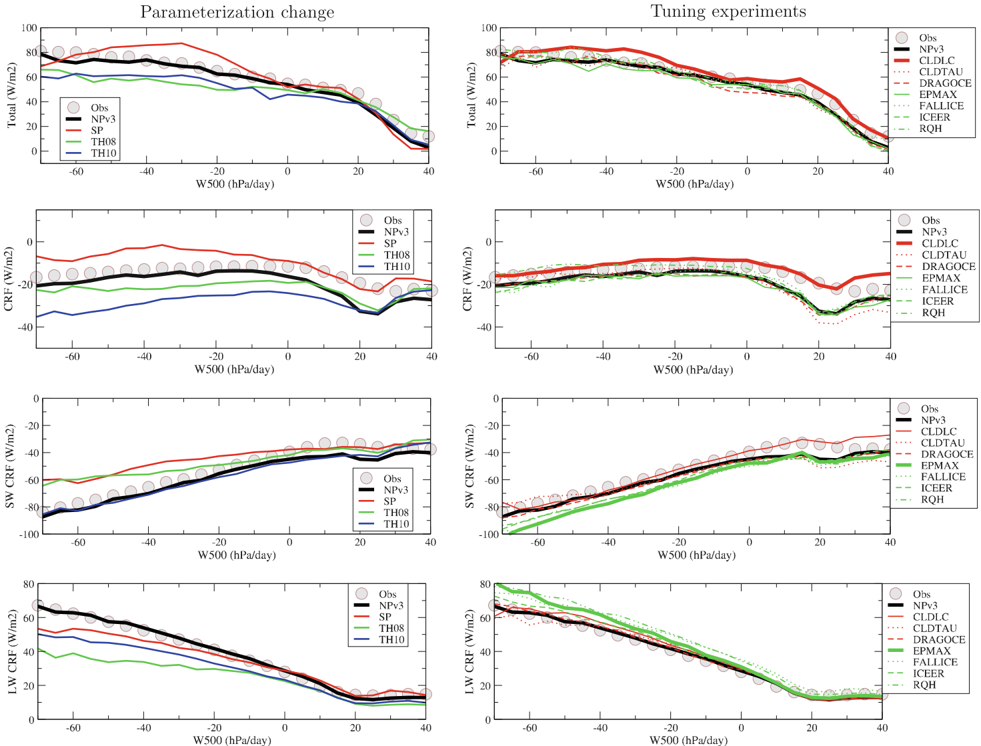
“…; 3. the decomposition between clear sky fluxes and cloud radiative forcing (CRF) ; 4. the dependency of the radiative flux on the large scale dynamics, using the ω500 regime sorting of Bony et al (1997) ; 5. ocean/continent contrasts, in the tropics, which is a key for monsoon circulation.”
MethodSelf-citationA Global Climatic Model Based on the Energy Balance of the Earth-Atmosphere System
Sellers, W. D. (1969) · Journal of Applied Meteorology · doi:10.1175/1520-0450(1969)008<0392:agcmbo>2.0.co;2 · Cited by 1,124
A new method for diagnosing radiative forcing and climate sensitivity
Gregory, J. M., Ingram, W. J., Palmer, M. A., Jones, G. S., Stott, P. A., Thorpe, R. B., Lowe, J. A., Johns, T. C., & Williams, K. D. (2004) · Geophysical Research Letters · doi:10.1029/2003gl018747 · Cited by 1,075 · cited 1×
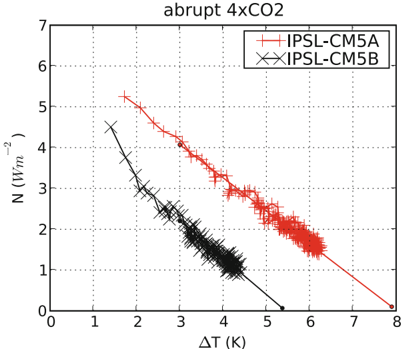
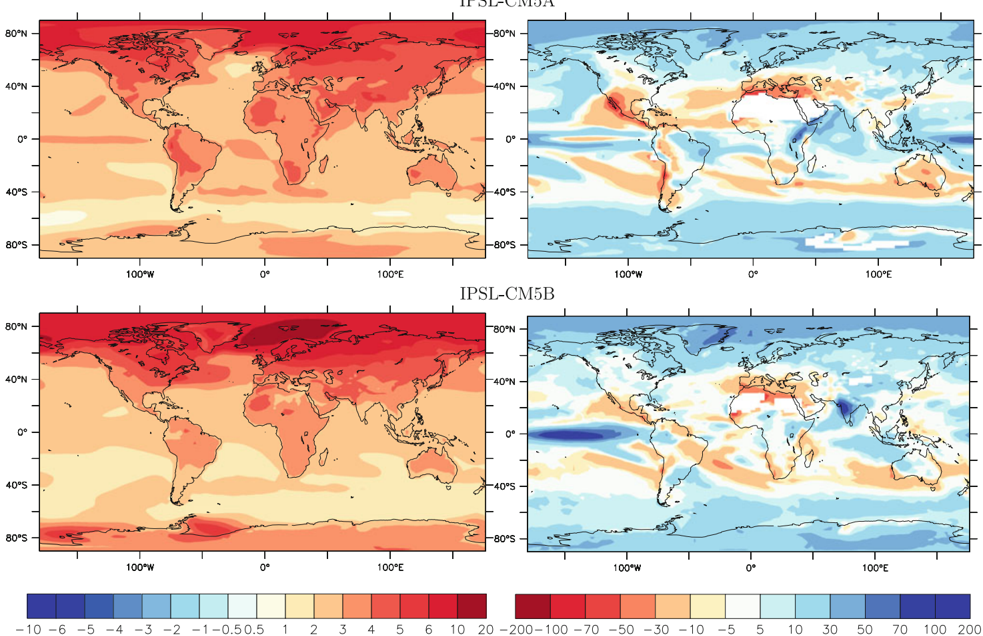
“For such experiments, Gregory et al. (2004) suggest to use a regression of the perturbation of the net flux at TOA (N) as a function of the perturbation DT of the global mean surface temperature in order to estimate the radiative forcing, the total climate feedback and the temperature change at Fig.”
Method
Research works printed but not linked: 4
- Heymsfield AJ, Donner LJ (1990) A scheme for parameterizing ice- cloud water content in general circulation models. J Atmos Sci 47:1865-1877. doi:10.1175/1520-0469(1990)047\1865:ASF PIC[2.0.CO;2 · doi:10.1175/1520-0469(1990)047\1865:asf
- Lindzen RS, Hou A (1988) Hadley circulation for zonally averaged heating centered off the equator. J Atmos Sci 45:2416-2427 · doi:10.1175/1520-0469(1988)045
- Moeng C, Wyngaard JC (1988) Spectral analysis of large-eddy simulations of the convective boundary layer. J Atmos Sci 45(23):3573-3587 · doi:10.1175/1520-0469(1988)045
- Zipser EJ (1969) The role of organized unsaturated convective downdrafts in the structure and rapid decay of an equatorial disturbance. J Appl Meteorol 8:799-814 · doi:10.1175/1520-0450(1969)008
Cited by
Items 101–200 of 319
Climate System Dynamics and Modelling
Goosse, H. (2015) · Cambridge University Press eBooks · doi:10.1017/cbo9781316018682 · Cited by 75
Neggers, R., Ackerman, A. S., Angevine, W. M., Bazile, É., Beau, I., Blossey, P. N., Boutle, I., de Bruijn, E. I. F., Cheng, A., van der Dussen, J. J., et al. (2017) · Journal of Advances in Modeling Earth Systems · doi:10.1002/2017ms001064 · Cited by 57
“…www.ecmwf.int K1 M1 M1 P SRTM RRTM JMA-GSM v1 Kawai and Inoue (2006) K1 Sp B1 S1 d-E bE Kawai (2012b) JMA-GSM v2 Kawai (2012a) K1 Sp B1 S1 d-E bE Kawai (2012b) LaRC Cheng and Xu (2006) HOC HOC HOC B1 S2 RRTMG RRTMG LMDZ-AR4 Hourdin et al. (2013) K1 M1 B1 B1 LMDZ-THPL Hourdin et al. (2006) K2.”
BackgroundSelf-citationVattioni, S., Weisenstein, D., Keith, D., Feinberg, A., Peter, T., & Stenke, A. (2019) · Atmospheric Chemistry and Physics · doi:10.5194/acp-19-4877-2019 · Cited by 48
Rochetin, N., Grandpeix, J.-Y., Rio, C., & Couvreux, F. (2014) · Journal of the Atmospheric Sciences · doi:10.1175/jas-d-12-0337.1 · Cited by 52
Self-citationFlaounas, E., Drobinski, P., & Bastin, S. (2012) · Climate Dynamics · doi:10.1007/s00382-012-1606-7 · Cited by 53
Hourdin, F., Jam, A., Rio, C., Couvreux, F., Sandu, I., Lefebvre, M., Brient, F., & Idelkadi, A. (2019) · Journal of Advances in Modeling Earth Systems · doi:10.1029/2019ms001666 · Cited by 45
“, 2013) and in 3-D global climate simulation with the LMDZ model (Hourdin et al., 2013).”
BackgroundMethodSelf-citationWang, F., Cheruy, F., & Dufresne, J. (2016) · Geoscientific model development · doi:10.5194/gmd-9-363-2016 · Cited by 52
“The ORCHIDEE LSM is coupled to the atmospheric model LMDZ (developed at the Laboratoire de Météorologie Dynamique), whose physical parameterizations are described in Hourdin et al. (2013) and in Rio et al. (2013).”
MethodSelf-citationZhang, Y., Klein, S. A., Fan, J., Chandra, A. S., Kollias, P., Xie, S., & Tang, S. (2017) · Journal of the Atmospheric Sciences · doi:10.1175/jas-d-16-0317.1 · Cited by 52
Toumoulin, A., Tardif, D., Donnadieu, Y., Licht, A., Ladant, J., Kunzmann, L., & Dupont‐Nivet, G. (2022) · Climate of the past · doi:10.5194/cp-18-341-2022 · Cited by 56
Lauer, A., Bock, L., Haßler, B., Schröder, M., & Stengel, M. (2022) · Journal of Climate · doi:10.1175/jcli-d-22-0181.1 · Cited by 53
A thermal plume model for the Martian convective boundary layerPreprint
Spiga, A., Millour, E., & Marie, U. ́. P. E. (n.d.) · Cited by 51
Escribano, J., Boucher, O., Chevallier, F., & Huneeus, N. (2017) · Atmospheric chemistry and physics · doi:10.5194/acp-17-7111-2017 · Cited by 50
“As a brief summary, the observation operator consists of the AOD estimation given by the coupling of the LMDZ meteorological model (Hourdin et al., 2013) with a simplified aerosol model (Huneeus et al., 2009, hereafter referred to as SPLA).”
MethodHourdin, F., Ferster, B., Deshayes, J., Mignot, J., Musat, I., & Williamson, D. (2023) · Science Advances · doi:10.1126/sciadv.adf2758 · Cited by 49
Self-citationCoupling of South and East Asian Monsoon Precipitation in July–August*
Day, J. A., FUNG, I. Y., & Risi, C. (2015) · Journal of Climate · doi:10.1175/jcli-d-14-00393.1 · Cited by 49
The influence of orography on modern ocean circulation
Maffre, P., Ladant, J., Donnadieu, Y., Sepulchre, P., & Goddéris, Y. (2017) · Climate Dynamics · doi:10.1007/s00382-017-3683-0 · Cited by 50
“The atmospheric component LMDz (Hourdin et al. 2013) solves the equation of atmospheric motion on a regular longitude-latitude grid using the so-called σ-P vertical coordinate.”
MethodCouvreux, F., Roehrig, R., Rio, C., Lefebvre, M., Caian, M., Komori, T., Derbyshire, S. H., Guichard, F., Favot, F., D’Andrea, F., et al. (2015) · Quarterly Journal of the Royal Meteorological Society · doi:10.1002/qj.2517 · Cited by 47
“, 1993) for the development of parametrizations (Siebesma and Cuijpers, 1995; Hourdin et al., 2013).”
BackgroundMethodSelf-citationVignon, E., Hourdin, F., Genthon, C., Gallée, H., Bazile, E., Lefebvre, M., Madeleine, J., & Van de Wiel, B. J. H. (2017) · Journal of Geophysical Research: Atmospheres · doi:10.1002/2017jd026802 · Cited by 42
“The model we use is an improved version of the LMDZ5B model [Hourdin et al., 2013], atmospheric component of the IPSL Earth System Model (IPSL-CM5) used for climate studies and climate change projections, and in particular involved in the last CMIP5 exercise.”
MethodSelf-citationArctic Radiative Fluxes: Present-Day Biases and Future Projections in CMIP5 Models
English, J. M., Gettelman, A., & Henderson, G. R. (2015) · Journal of Climate · doi:10.1175/jcli-d-14-00801.1 · Cited by 48
Song, J., Song, F., Feng, Z., Leung, L.-Y. R., Li, C., & Wu, L. (2024) · Geophysical Research Letters · doi:10.1029/2024gl109945 · Cited by 45
“10.1029/2024GL109945 (Christopoulos & Schneider, 2021; Feng et al., 2021; Hourdin et al., 2013; Park et al., 2019), even with improved resolution (Vergara‐Temprado et al., 2020).”
InfluentialEmpirical values and assumptions in the convection schemes of numerical models
Pradas, A. V., & Tapiador, F. J. (2022) · Geoscientific model development · doi:10.5194/gmd-15-3447-2022 · Cited by 46
Jam, A., Hourdin, F., Rio, C., & Couvreux, F. (2012) · Boundary-Layer Meteorology · doi:10.1007/s10546-012-9789-3 · Cited by 44
Self-citationEvaluation of a Buoyancy and Shear Based Mixing Length for a Turbulence Scheme
Rodier, Q., Masson, V., Couvreux, F., & Paci, A. (2017) · Frontiers in Earth Science · doi:10.3389/feart.2017.00065 · Cited by 47
“LES statistics to single column model (SCM; Randall et al., 1996; Hourdin et al., 2013).”
MethodSpace lidar observations constrain longwave cloud feedback
de Guélis, T. V., Chepfer, H., Guzman, R., Bonazzola, M., Winker, D. M. M., & Noël, V. (2018) · Scientific Reports · doi:10.1038/s41598-018-34943-1 · Cited by 44
An EarthCARE/ATLID simulator to evaluate cloud description in climate models
Reverdy, M., Chepfer, H., Donovan, D. P., Noël, V., Cesana, G., Hoareau, C., Chiriaco, M., & Bastin, S. (2015) · Journal of Geophysical Research Atmospheres · doi:10.1002/2015jd023919 · Cited by 43
Jiang, J. H., Su, H., Zhai, C., Shen, T. J., Wu, T., Zhang, J., Cole, J. N. S., von Salzen, K., Donner, L. J., Seman, C. J., et al. (2014) · Journal of the Atmospheric Sciences · doi:10.1175/jas-d-14-0124.1 · Cited by 43
Self-citationShortwave forcing and feedbacks in Last Glacial Maximum and Mid-Holocene PMIP3 simulations
Braconnot, P., & Kageyama, M. (2015) · Philosophical Transactions of the Royal Society A: Mathematical, Physical and Engineering Sciences · doi:10.1098/rsta.2014.0424 · Cited by 39
“Both versions use the same atmospheric deep convection scheme, but the IPSL_CM5B_LR version of the atmospheric component (LMDZ5B) includes a mass flux representation of the thermal plumes or rolls of the convective boundary layer, coupled to a bi-Gaussian statistical cloud scheme, as well as a parametrization of the c…”
Hydrologic implications of projected changes in rain-on-snow melt for Great Lakes Basin watersheds
Myers, D. T., Ficklin, D. L., & Robeson, S. M. (2023) · Hydrology and earth system sciences · doi:10.5194/hess-27-1755-2023 · Cited by 41
Cloud properties and their projected changes in CMIP models with low to high climate sensitivity
Bock, L., & Lauer, A. (2024) · Atmospheric chemistry and physics · doi:10.5194/acp-24-1587-2024 · Cited by 44
Crop physiology calibration in the CLM
Bilionis, I., Drewniak, B. A., & Constantinescu, E. M. (2015) · Geoscientific model development · doi:10.5194/gmd-8-1071-2015 · Cited by 46
A quantitative assessment of precipitation associated with the ITCZ in the CMIP5 GCM simulations
Stanfield, R. E., Jiang, J. H., Dong, X., Xi, B., Su, H., Donner, L. J., Rotstayn, L. D., Wu, T., Cole, J. N. S., & Shindo, E. (2015) · Climate Dynamics · doi:10.1007/s00382-015-2937-y · Cited by 38
Early Eocene vigorous ocean overturning and its contribution to a warm Southern Ocean
Zhang, Y., Huck, T., Lique, C., Donnadieu, Y., Ladant, J., Rabineau, M., & Aslanian, D. (2020) · Climate of the past · doi:10.5194/cp-16-1263-2020 · Cited by 44
Subregional inversion of North African dust sources
Escribano, J., Boucher, O., Chevallier, F., & Huneeus, N. (2016) · Journal of Geophysical Research Atmospheres · doi:10.1002/2016jd025020 · Cited by 40
Risi, C., Galewsky, J., Reverdin, G., & Brient, F. (2019) · Atmospheric chemistry and physics · doi:10.5194/acp-19-12235-2019 · Cited by 37
The Tuning Strategy of IPSL‐CM6A‐LR
Mignot, J., Hourdin, F., Deshayes, J., Boucher, O., Gastineau, G., Musat, I., Vancoppenolle, M., Servonnat, J., Caubel, A., Chéruy, F., et al. (2021) · Journal of Advances in Modeling Earth Systems · doi:10.1029/2020ms002340 · Cited by 36
Self-citationCalibrating climate models using inverse methods: case studies with HadAM3, HadAM3P and HadCM3
Tett, S. F. B., Yamazaki, K., Mineter, M. J., Cartis, C., & Eizenberg, N. (2017) · Geoscientific model development · doi:10.5194/gmd-10-3567-2017 · Cited by 40
“Tuning or calibration of climate models by finding parameter combinations or introducing new processes is rarely well documented, often time consuming, and the metrics used opaque (Mauritsen et al., 2012; Hourdin et al., 2013) with the main approach being trial 5”
BackgroundMethodLi, Y., Thompson, D. W. J., Bony, S., & Merlis, T. M. (2018) · Journal of Climate · doi:10.1175/jcli-d-18-0417.1 · Cited by 36
“…(e.g., Li et al. 2015, 2017; Watt-Meyer and Frierson 2017), and 2) the circulation response to global warming is sensitive to the climatological-mean state on which the surface warming is applied (Barnes and Hartmann 2010; Kidston and Gerber 2010; Barnes and Polvani 2013; Simpson and Polvani 2016).”
BackgroundSelf-citationRepresentation of Arctic Moist Intrusions in CMIP5 Models and Implications for Winter Climate Biases
Woods, C., Caballero, R., & Svensson, G. (2017) · Journal of Climate · doi:10.1175/jcli-d-16-0710.1 · Cited by 35
A Regime-Oriented Approach to Observationally Constraining Extratropical Shortwave Cloud Feedbacks
McCoy, D. T., Field, P. R., Bodas‐Salcedo, A., Elsaesser, G. S., & Zelinka, M. D. (2020) · Journal of Climate · doi:10.1175/jcli-d-19-0987.1 · Cited by 35
“741 Hourdin, F., and Coauthors, 2013: LMDZ5B: the atmospheric component of the IPSL climate model with revisited 742 parameterizations for clouds and convection.”
BackgroundMethodInfluentialAit-Mesbah, S. S., Dufresne, J., Cheruy, F., & Hourdin, F. (2015) · Geophysical Research Letters · doi:10.1002/2015gl065553 · Cited by 36
Self-citationNagura, M., Sasaki, W., Tozuka, T., Luo, J., Behera, S. K., & Yamagata, T. (2012) · Journal of Geophysical Research Oceans · doi:10.1029/2012jc008352 · Cited by 33
Convective Transition Statistics over Tropical Oceans for Climate Model Diagnostics: GCM Evaluation
Kuo, Y., Neelin, J. D., Chen, C., Chen, W., Donner, L. J., Gettelman, A., Jiang, X., Kuo, K., Maloney, E. D., Mechoso, C. R., et al. (2019) · Journal of the Atmospheric Sciences · doi:10.1175/jas-d-19-0132.1 · Cited by 34
Holism, or the Erosion of Modularity: A Methodological Challenge for Validation
Lenhard, J. (2018) · Philosophy of Science · doi:10.1086/699675 · Cited by 32
“Building parameterization schemes that work with “ physical ” parameters (that have a straightforward physical interpretation) is still a big challenge (Hourdin et al. 2013).”
BackgroundParameter Uncertainty Quantification in an Idealized GCM With a Seasonal Cycle
Howland, M. F., Dunbar, O. R. A., & Schneider, T. (2022) · Journal of Advances in Modeling Earth Systems · doi:10.1029/2021ms002735 · Cited by 35
“Climate simulations rely on physically motivated parameterizations that model the effects of subgrid-scale processes such as clouds and turbulence on the resolved scales [13].”
BackgroundControls on and impacts of the diurnal cycle of deep convective precipitation
Hohenegger, C., & Stevens, B. (2013) · Journal of Advances in Modeling Earth Systems · doi:10.1002/2012ms000216 · Cited by 32
“This eliminated the bias in the timing of the diurnal cycle of convective precipitation in single column model experiments and strongly reduced the phase bias over land in full climate simulations [see Hourdin et al., 2013]. Amongst GCMs, the Institut Pierre Simon Laplace (IPSL) GCM [Hourdin et al., 2013], based on th…”
BackgroundMethodInfluentialKonsta, D., Dufresne, J., Chepfer, H., Idelkadi, A., & Cesana, G. (2015) · Climate Dynamics · doi:10.1007/s00382-015-2900-y · Cited by 32
“Two versions of this 90 atmospheric model (LMDZ5A [Hourdin et al., 2013-a] and LMDZ5B [Hourdin et al., 2013-b]) are evaluated.”
MethodSelf-citationLocal and Remote Impacts of Atmospheric Cloud Radiative Effects Onto the Eddy‐Driven Jet
Watt‐Meyer, O., & Frierson, D. M. W. (2017) · Geophysical Research Letters · doi:10.1002/2017gl074901 · Cited by 33
Hourdin, F., Gueye, M., Diallo, B., Dufresne, J., Escribano, J., Menut, L., Marticorena, B., Siour, G., & Guichard, F. (2015) · Atmospheric chemistry and physics · doi:10.5194/acp-15-6775-2015 · Cited by 32
Self-citationInternal variability in simulated and observed tropical tropospheric temperature trends
Suarez‐Gutierrez, L., Li, C., Thorne, P., & Marotzke, J. (2017) · Geophysical Research Letters · doi:10.1002/2017gl073798 · Cited by 32
“…et al., 2011; Schmidt et al., 2014; Smith et al., 2010; Collins et al., 2011; Jones et al., 2011; Volodin et al., 2010; Dufresne et al., 2013; Hourdin et al., 2013; Sakamoto et al., 2012; Watanabe et al., 2010, 2011; Giorgetta et al., 2013; Yukimoto et al., 2012; Bentsen et al., 2013], and…”
Lavergne, A., Gennaretti, F., Risi, C., Daux, V., Boucher, É., Savard, M. M., Naulier, M., Villalba, R., Bégin, C., & Guiot, J. (2017) · Climate of the past · doi:10.5194/cp-13-1515-2017 · Cited by 30
Serva, F., Anstey, J. A., Bushell, A. C., Butchart, N., Cagnazzo, C., Gray, L. J., Kawatani, Y., Osprey, S., Richter, J. H., & Simpson, I. R. (2022) · Quarterly Journal of the Royal Meteorological Society · doi:10.1002/qj.4287 · Cited by 31
“Vert. lev. dz [m] NOGW Convection 60LCAM5 1975–2012 (2) 100 km 60 500 Lindzen (1981) Richter et al. (2010) Zhang and McFarlane (1995) AGCM-CMAM 1979–2009 (3) 281 km 113 500 Scinocca (2003) Zhang and McFarlane (1995) ECHAM5sh 1979–2008 (1) 210 km 95 650 Serva et al. (2018) Tiedtke (1989) Nordeng (1994) EMAC 1979–2012 (…”
InfluentialMaritime Continent seasonal climate biases in AMIP experiments of the CMIP5 multimodel ensemble
Toh, Y. Y., Turner, A. G., Johnson, S. J., & Holloway, C. E. (2017) · Climate Dynamics · doi:10.1007/s00382-017-3641-x · Cited by 29
Observational constraint on a feedback from supercooled clouds reduces projected warming uncertainty
Cesana, G., Ackerman, A. S., Fridlind, A. M., Silber, I., Genio, A. D. D., Zelinka, M. D., Chepfer, H., Khadir, T., & Roehrig, R. (2024) · Communications Earth & Environment · doi:10.1038/s43247-024-01339-1 · Cited by 28
“Constraining simulated cloud phase using observations Earthsystemmodels(ESMs)usevariousmethodstopartitionliquidandice phasesinclouds,fromasimpletemperature-baseddependence 16,17 to more sophisticated microphysical schemes 18,19 .”
Self-citationDevilliers, M., Swingedouw, D., Mignot, J., Deshayes, J., Garric, G., & Ayache, M. (2021) · Climate Dynamics · doi:10.1007/s00382-021-05816-7 · Cited by 29
“2020), which is the updated version of LMDZ5B (Hourdin et al. 2013), with a 144×142 regular grid (horizontal resolution around 2.”
BackgroundMartin, G., Peyrillé, P., Roehrig, R., Rio, C., Caian, M., Bellon, G., Codron, F., Lafore, J., Poan, D. E., & Idelkadi, A. (2017) · Journal of Advances in Modeling Earth Systems · doi:10.1002/2016ms000697 · Cited by 30
Self-citationMcCoy, D. T., Field, P. R., Elsaesser, G. S., Bodas‐Salcedo, A., Kahn, B. H., Zelinka, M. D., Kodama, C., Mauritsen, T., Vannière, B., Roberts, M. J., et al. (2019) · Atmospheric chemistry and physics · doi:10.5194/acp-19-1147-2019 · Cited by 28
Diagnosing errors in climate model intercomparisons
O’Loughlin, R. (2023) · European Journal for Philosophy of Science · doi:10.1007/s13194-023-00522-z · Cited by 26
Diallo, F. B., Hourdin, F., Rio, C., Traore, A. K., Mellul, L., Guichard, F., & Kergoat, L. (2017) · Journal of Advances in Modeling Earth Systems · doi:10.1002/2017ms001081 · Cited by 29
Self-citationO’Loughlin, R., Li, D., Neale, R., & O'Brien, T. A. (2025) · Geoscientific model development · doi:10.5194/gmd-18-787-2025 · Cited by 33
Convective Boundary Layer Control of the Sea Surface Temperature in the Tropics
Hourdin, F., Rio, C., Jam, A., Traore, A., & Musat, I. (2020) · Journal of Advances in Modeling Earth Systems · doi:10.1029/2019ms001988 · Cited by 24
Self-citationClimate Models Lack Jet–Rainfall Coupling over West Africa
Whittleston, D. P., Nicholson, S. E., Schlosser, A., & Entekhabi, D. (2017) · Journal of Climate · doi:10.1175/jcli-d-16-0579.1 · Cited by 24
Lu, Y., Wu, T., Li, Y., & Yang, B. (2021) · Geoscientific model development · doi:10.5194/gmd-14-5183-2021 · Cited by 24
Tropical cyclone genesis potential index over the western North Pacific simulated by CMIP5 models
Song, Y., Wang, L., Lei, X., & Wang, X. (2015) · Advances in Atmospheric Sciences · doi:10.1007/s00376-015-4162-3 · Cited by 24
Li, Y., Giuliani, M., & Castelletti, A. F. (2017) · Hydrology and earth system sciences · doi:10.5194/hess-21-4693-2017 · Cited by 25
Li, S., Rupp, D. E., Hawkins, L., Mote, P. W., McNeall, D., Sparrow, S., Wallom, D. C. H., Betts, R., & Wettstein, J. J. (2019) · Geoscientific model development · doi:10.5194/gmd-12-3017-2019 · Cited by 24
Zhang, C., Wang, Y., & Xue, M. (2020) · Monthly Weather Review · doi:10.1175/mwr-d-19-0084.1 · Cited by 21
Changes in summer precipitation variability in central Brazil over the past eight decades
Prado, L. F., Wainer, I. E. K. C., Yokoyama, E., Khodri, M., & Garnier, J. (2021) · International Journal of Climatology · doi:10.1002/joc.7065 · Cited by 21
“However, the adoption of different cloud parameterizations may imply biased latitudinal gradients of diabatic heating in the atmosphere (Hourdin et al., 2013a) and also timing and intensity of precipitation compared to observations (DeMott et al., 2007).”
BackgroundMethodInfluentialImportance of Minor‐Looking Treatments in Global Climate Models
Kawai, H., Yoshida, K., Koshiro, T., & Yukimoto, S. (2022) · Journal of Advances in Modeling Earth Systems · doi:10.1029/2022ms003128 · Cited by 20
Leroux, S., Bellon, G., Roehrig, R., Caian, M., Klingaman, N. P., Lafore, J., Musat, I., Rio, C., & Tytéca, S. (2016) · Journal of Advances in Modeling Earth Systems · doi:10.1002/2016ms000683 · Cited by 22
Self-citationEstimated cloud-top entrainment index explains positive low-cloud-cover feedback
Koshiro, T., Kawai, H., & Noda, A. (2022) · Proceedings of the National Academy of Sciences · doi:10.1073/pnas.2200635119 · Cited by 21
Tsushima, Y., Brient, F., Klein, S. A., Konsta, D., Nam, C., Qu, X., Williams, K. D., Sherwood, S. C., Suzuki, K., & Zelinka, M. D. (2017) · Geoscientific model development · doi:10.5194/gmd-10-4285-2017 · Cited by 20
Effects of a Simple Convective Organization Scheme in a Two‐Plume GCM
Chen, B., & Mapes, B. E. (2017) · Journal of Advances in Modeling Earth Systems · doi:10.1002/2017ms001106 · Cited by 19
A Subsurface Indian Ocean Dipole Response to Tropical Volcanic Eruptions
Izumo, T., Khodri, M., Lengaigne, M., & Suresh, I. (2018) · Geophysical Research Letters · doi:10.1029/2018gl078515 · Cited by 20
“This model couples the LMDZ5B (Hourdin et al., 2013) atmospheric and NEMO3.”
MethodFläschner, D., Mauritsen, T., Stevens, B., & Bony, S. (2018) · Journal of Climate · doi:10.1175/jcli-d-18-0230.1 · Cited by 19
Self-citationDiagnostics-Driven Nonstationary Emulators Using Kernel Mixtures
Volodina, V., & Williamson, D. (2020) · SIAM/ASA Journal on Uncertainty Quantification · doi:10.1137/19m124438x · Cited by 23
New Cloud System Metrics to Assess Bulk Ice Cloud Schemes in a GCM
Stubenrauch, C. J., Bonazzola, M., Protopapadaki, S. E., & Musat, I. (2019) · Journal of Advances in Modeling Earth Systems · doi:10.1029/2019ms001642 · Cited by 18
Self-citationEmmenegger, T., Ahmed, F., Kuo, Y., Xie, S., Zhang, C., Tao, C., & Neelin, J. D. (2024) · Journal of Climate · doi:10.1175/jcli-d-23-0227.1 · Cited by 18
Allan, R. P., Liu, C., Zahn, M., Lavers, D. A., Koukouvagias, E., & Bodas‐Salcedo, A. (2013) · Space sciences series of ISSI · doi:10.1007/978-94-017-8789-5_4 · Cited by 18
Radiative–Convective Equilibrium over a Land Surface
Rochetin, N., Lintner, B. R., Findell, K. L., Sobel, A. H., & Gentine, P. (2014) · Journal of Climate · doi:10.1175/jcli-d-13-00654.1 · Cited by 20
Self-citationSummertime precipitation over northern Australia in AMIP simulations from CMIP5
Ackerley, D., Berry, G. J., Jakob, C., Reeder, M. J., & Schwendike, J. (2014) · Quarterly Journal of the Royal Meteorological Society · doi:10.1002/qj.2476 · Cited by 18
“Indeed, Dufresne et al. (2013) show that increasing the resolution alone in IPSL-CM5A does not improve the representation of tropical rainfall; it is only when the convection scheme is changed (IPSL-CM5B; Hourdin et al., 2013) that there is improvement.”
BackgroundRen, X., Lunt, D. J., Hendy, E., von der Heydt, A. S., Abe‐Ouchi, A., Otto‐Bliesner, B. L., Williams, C. J. R., Stepanek, C., Guo, C., Chandan, D., et al. (2023) · Climate of the past · doi:10.5194/cp-19-2053-2023 · Cited by 17
Evaluation of the eastern equatorial Pacific SST seasonal cycle in CMIP5 models
Song, Z., Liu, H., Wang, C. Z., Zhang, L., & Qiao, F. (2014) · Ocean science · doi:10.5194/os-10-837-2014 · Cited by 17
“Among the models in group 1, CanESM2, FIOESM, GISS-E2-H, GISS-E2-R, HadCM3, and IPSL-CM5B-LR have a weaker seasonal variation in the EP1 region in comparison with the observations.”
Influentialde Trenquelléon, B. D. B., Rosset, L., d’Ollone, J. V., Lebonnois, S., Rannou, P., Burgalat, J., & Vinatier, S. (2025) · The Planetary Science Journal · doi:10.3847/psj/adbbe7 · Cited by 18
Audouin, O., Roehrig, R., Couvreux, F., & Williamson, D. (2020) · Journal of Advances in Modeling Earth Systems · doi:10.1029/2020ms002269 · Cited by 16
“As discussed in Hourdin et al. (2017) and in Williamson et al. (2015), this may lead to overtuning issues.”
BackgroundMethodResultSelf-citationThe New Titan Planetary Climate Model. II. Titan’s Haze and Cloud Cycles
de Trenquelléon, B. D. B., Rannou, P., Burgalat, J., Lebonnois, S., & d’Ollone, J. V. (2025) · The Planetary Science Journal · doi:10.3847/psj/adbb6c · Cited by 17
Use of GNSS Tropospheric Products for Climate Monitoring (Working Group 3)
Bock, O., Pacione, R., Ahmed, F., Araszkiewicz, A., Bałdysz, Z., Balidakis, K., Barroso, C. S., Bastin, S., Beirle, S., Berckmans, J., et al. (2019) · Springer eBooks · doi:10.1007/978-3-030-13901-8_5 · Cited by 17
Accounting for Vertical Subgrid‐Scale Heterogeneity in Low‐Level Cloud Fraction Parameterizations
Jouhaud, J., Dufresne, J., Madeleine, J., Hourdin, F., Couvreux, F., Villefranque, N., & Jam, A. (2018) · Journal of Advances in Modeling Earth Systems · doi:10.1029/2018ms001379 · Cited by 14
“CF by Volume and Condensed Water We keep the bi-Gaussian model proposed by Jam et al. (2013) and its approximation of the plumes as vertical cylinders.”
BackgroundMethodInfluentialSelf-citationEvaluating Tropical Precipitation Relations in CMIP6 Models with ARM Data
Emmenegger, T., Kuo, Y., Xie, S., Zhang, C., Tao, C., & Neelin, J. D. (2022) · Journal of Climate · doi:10.1175/jcli-d-21-0386.1 · Cited by 12
Kawai, H., Koshiro, T., Endo, H., & Arakawa, O. (2018) · Journal of Geophysical Research Atmospheres · doi:10.1029/2018jd028899 · Cited by 13
Projected climate change impacts on North Sea and Baltic Sea: CMIP3 and CMIP5 model based scenariosPreprint
Pushpadas, D., Schrum, C., & Daewel, U. (2015) · doi:10.5194/bgd-12-12229-2015 · Cited by 12
Lafore, J., Biasutti, M., Knippertz, P., & Taylor, C. M. (2017) · World Scientific series on Asia-Pacific weather and climate · doi:10.1142/9789813200913_0004 · Cited by 11
The central role of the Atlantic meridional overturning circulation in the Bjerknes compensation
Pérez, Y. P., Guilyardi, É., Fedorov, A. V., & Ferster, B. S. (2023) · Climate Dynamics · doi:10.1007/s00382-023-06926-0 · Cited by 11
Koshiro, T., Shiotani, M., Kawai, H., & Yukimoto, S. (2018) · SOLA · doi:10.2151/sola.2018-005 · Cited by 10
Simulation of 210Pb and 7Be scavenging in the tropics by the LMDz general circulation model
Heinrich, P., & Pilon, R. (2013) · Atmospheric Research · doi:10.1016/j.atmosres.2013.07.004 · Cited by 10
Morcrette, C. J., Cave, T., Reid, H., Rodrigues, J., Deveney, T., Kreußer, L. M., Weverberg, K. V., & Budd, C. J. (2025) · Journal of Advances in Modeling Earth Systems · doi:10.1029/2024ms004651 · Cited by 10
“This is not altogether surprising, as the implementation of new parameterization schemes often necessitates the retuning of other parameterization schemes (Hourdin et al., 2013; Walters et al., 2019).”
Role of the stratospheric chemistry–climate interactions in the hot climate conditions of the Eocene
Szopa, S., Thiéblemont, R., Bekki, S., Botsyun, S., & Sepulchre, P. (2019) · Climate of the past · doi:10.5194/cp-15-1187-2019 · Cited by 9
The Temperature Control of Cloud Adiabatic Fraction and Coverage
Lü, X., Mao, F., Rosenfeld, D., Zhu, Y., Zang, L., Pan, Z., & Gong, W. Y. (2023) · Geophysical Research Letters · doi:10.1029/2023gl105831 · Cited by 11
QBOi El Niño Southern Oscillation experiments: assessing relationships between ENSO, MJO, and QBO
Elsbury, D., Serva, F., Caron, J. M., Back, S., Orbe, C., Richter, J. H., Anstey, J. A., Butchart, N., Chen, C. C., García‐Serrano, J., et al. (2026) · Weather and Climate Dynamics · doi:10.5194/wcd-7-317-2026 · Cited by 9
Return times of hot and cold days via recurrences and extreme value theory
Faranda, D., Álvarez-Castro, M. C., & Yiou, P. (2016) · Climate Dynamics · doi:10.1007/s00382-016-3042-6 · Cited by 10
“…observed in the model can be therefore due to307 an insufficient representation of the compensation mechanisms, like the parametrization of the low level308 clouds and of the snow/ice graying that affect the surface albedo (Hourdin et al 2013a,b).309 310 On the other hand, by looking at Fig.”
BackgroundMethodCrétat, J., Harrison, S. P., Braconnot, P., D’Agostino, R., Jungclaus, J. H., Lohmann, G., Shi, X., & Marti, O. (2023) · Climate Dynamics · doi:10.1007/s00382-023-07023-y · Cited by 11
“The drying trend in West Africa is more extensive in the AWI and MPI than in the two IPSL simulations, a difference which reflects the fact that the mid-Holocene and present-day West African rain band is too far south in these IPSL models (Hourdin et al. 2013; Braconnot et al. 2019a).”
BackgroundEvaluation of Surface Radiative Fluxes over the Tropical Oceans in AMIP Simulations
Zhou, X., Ray, P., Boykin, K., Barrett, B. S., & Hsu, P. (2019) · Atmosphere · doi:10.3390/atmos10100606 · Cited by 9
Metadata
- Authors
- Hourdin, F., Grandpeix, J.-Y., Rio, C., Bony, S., Jam, A., Cheruy, F., Rochetin, N., Fairhead, L., Idelkadi, A., Musat, I., Dufresne, J.-L., Lahellec, A., Lefebvre, M.-P., & Roehrig, R.
- Affiliations
- Laboratoire de Météorologie Dynamique (FR)
- Centre National de la Recherche Scientifique (FR)
- Centre National de Recherches Météorologiques (FR)
- Corresponding author
- Hourdin, Frédéric
- ORCID
- Venue
- Climate Dynamics
- Published
- 2012-04-28
- Volume
- 40
- Issue
- 9-10
- Pages
- 2193-2222
- ISSN
- 0930-7575 (ISSN-L)
- 1432-0894
- OpenAlex
- W2084308561
- Cited by
- 299
- References
- 84
- Citations by year
- 2026: 6 · 2025: 6 · 2024: 14 · 2023: 13 · 2022: 17 · 2021: 17 · 2020: 25 · 2019: 35 · 2018: 29 · 2017: 34 · 2016: 15 · 2015: 45 · 2014: 10 · 2013: 20 · 2012: 10
- FWCI
- 18.57
- Type
- journal article
- Language
- en
- Open access
- hybrid
- doi.org
- Licence
- cc-by
- Locations
- Climate Dynamics (publishedVersion, cc-by)
- HAL (submittedVersion, other-oa)
- Funders
- Centre National de la Recherche Scientifique
- Grand Équipement National De Calcul Intensif
- Center for Neuroscience and Regenerative Medicine
- Topics
- Physical Sciences › Earth and Planetary Sciences › Atmospheric Science › Meteorological Phenomena and Simulations
- Physical Sciences › Environmental Science › Global and Planetary Change › Climate variability and models
- Physical Sciences › Environmental Science › Global and Planetary Change › Atmospheric aerosols and clouds
- Keywords
- cloud parameterization, convection parameterization, convective boundary layer, thermal plume, cold pools, cumulus clouds, tropical rainfall variability, intraseasonal variability, model calibration, climate change projections
About these checks
Registry, retraction, Cites and statistics results are computed, not judged, with one exception: a printed reference that no index lists is read once by a model before it counts as a citation error. Claims are extracted by a model and kept only when their quote appears verbatim in the text; each cited source is then checked, with a model’s help, for whether it says what the claim relies on. Those verdicts can be wrong — read the claim’s quote and the cited source before relying on one.
Statistics and arithmetic are recomputed, not judged.
Confidence bands are shown only for fields calibrated on our annotated test set. None is calibrated yet, so no band is shown.
What counts as a claim ›How we measure confidence ›How we check this ›
Are you an author, or do you see a problem with this page? Request a review
Data sources
Bibliographic data: Semantic Scholar, OpenAlex, Crossref.
Contains information from the Semantic Scholar Academic Graph Datasets, made available under the ODC Attribution License (ODC-BY 1.0).
Semantic Scholar’s data is described in: Kinney, R., et al. (2023). The Semantic Scholar Open Data Platform. arXiv:2301.10140.
