

The DOI matches its Crossref record; 276 of the 277 references it cites were found in a registry or an index.
Leukodystrophies: a proposed classification system based on pathological changes and pathogenetic mechanisms
Open accessAbstract
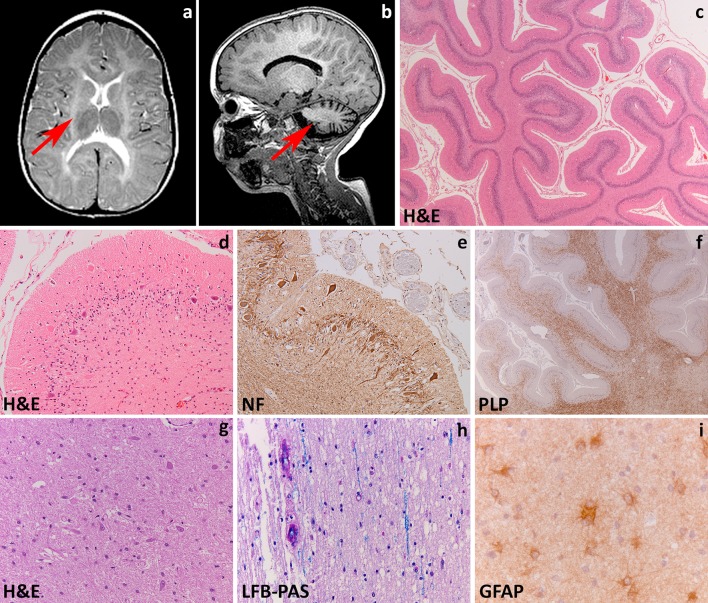
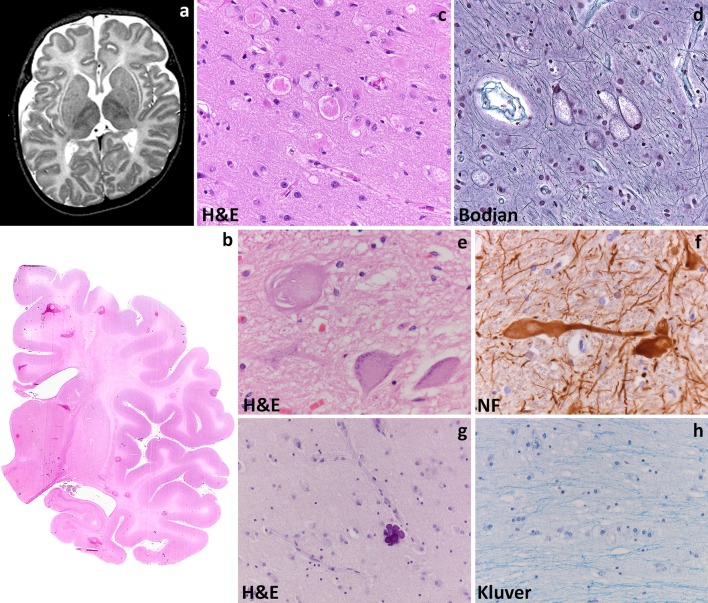
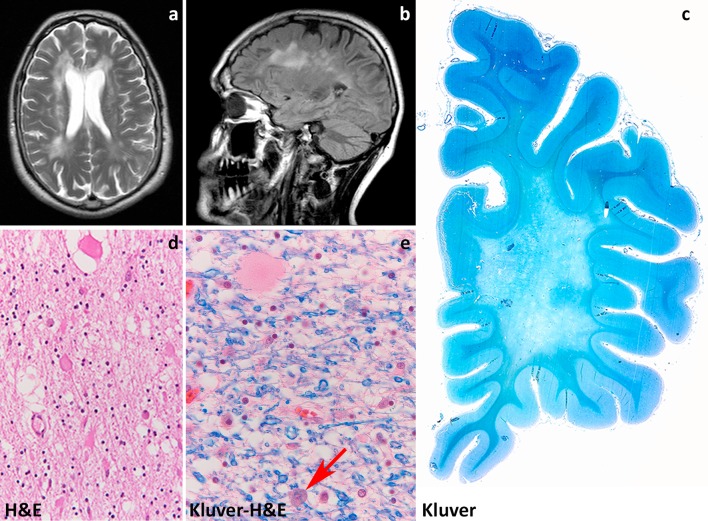
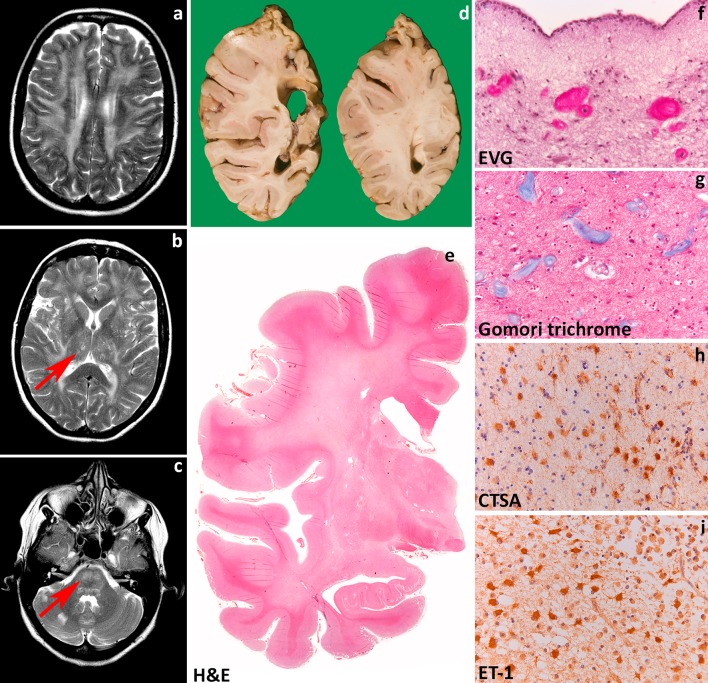
Leukodystrophies are genetically determined disorders characterized by the selective involvement of the central nervous system white matter. Onset may be at any age, from prenatal life to senescence. Many leukodystrophies are degenerative in nature, but some only impair white matter function. The clinical course is mostly progressive, but may also be static or even improving with time. Progressive leukodystrophies are often fatal, and no curative treatment is known. The last decade has witnessed a tremendous increase in the number of defined leukodystrophies also owing to a diagnostic approach combining magnetic resonance imaging pattern recognition and next generation sequencing. Knowledge on white matter physiology and pathology has also dramatically built up. This led to the recognition that only few leukodystrophies are due to mutations in myelin- or oligodendrocyte-specific genes, and many are rather caused by defects in other white matter structural components, including astrocytes, microglia, axons and blood vessels. We here propose a novel classification of leukodystrophies that takes into account the primary involvement of any white matter component. Categories in this classification are the myelin disorders due to a primary defect in oligodendrocytes or myelin (hypomyelinating and demyelinating leukodystrophies, leukodystrophies with myelin vacuolization); astrocytopathies; leuko-axonopathies; microgliopathies; and leuko-vasculopathies. Following this classification, we illustrate the neuropathology and disease mechanisms of some leukodystrophies taken as example for each category. Some leukodystrophies fall into more than one category. Given the complex molecular and cellular interplay underlying white matter pathology, recognition of the cellular pathology behind a disease becomes crucial in addressing possible treatment strategies.
Overview
The claims and statistics of this paper haven’t been checked yet.
Run the check — free, no account needed. It reads the open-access text and checks the sources it cites.
Integrity signals
Registry
Cites
Statistics
Figures
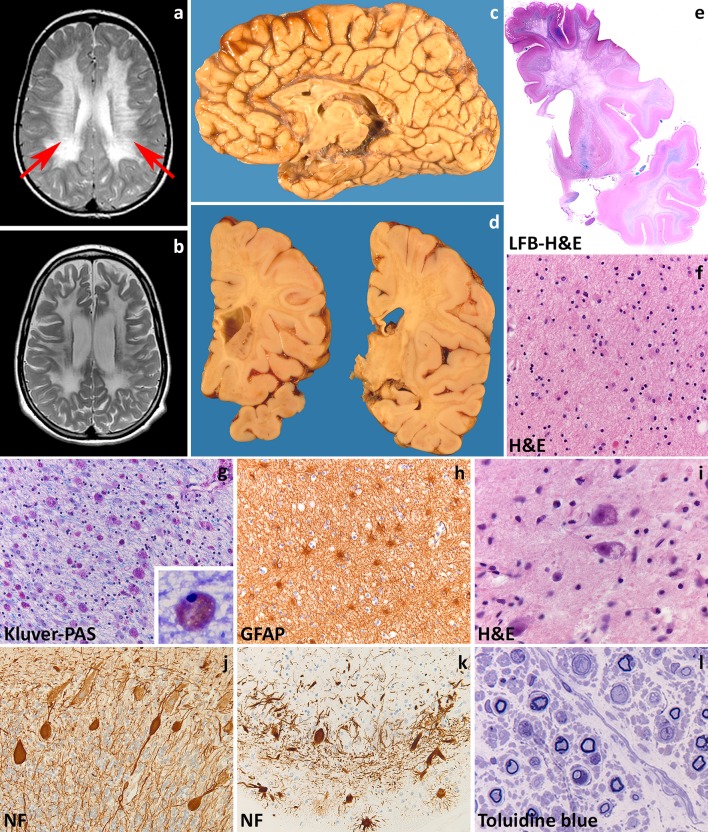
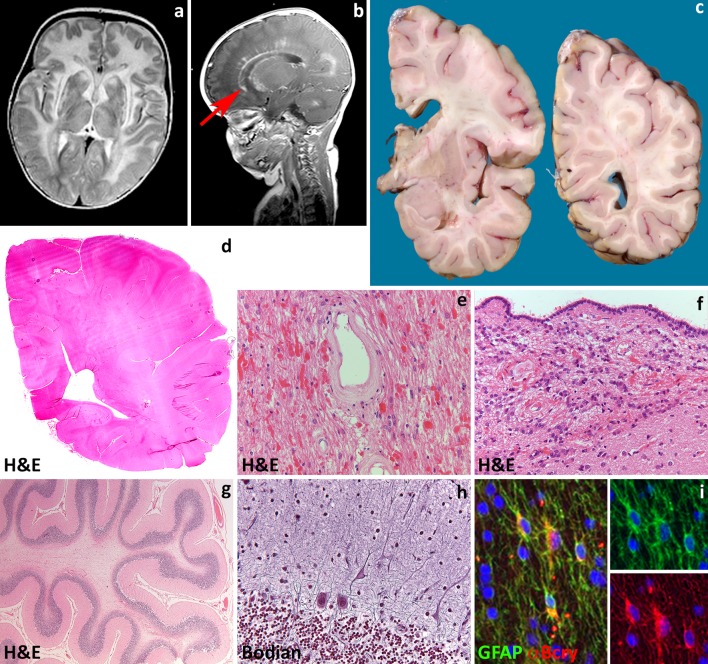
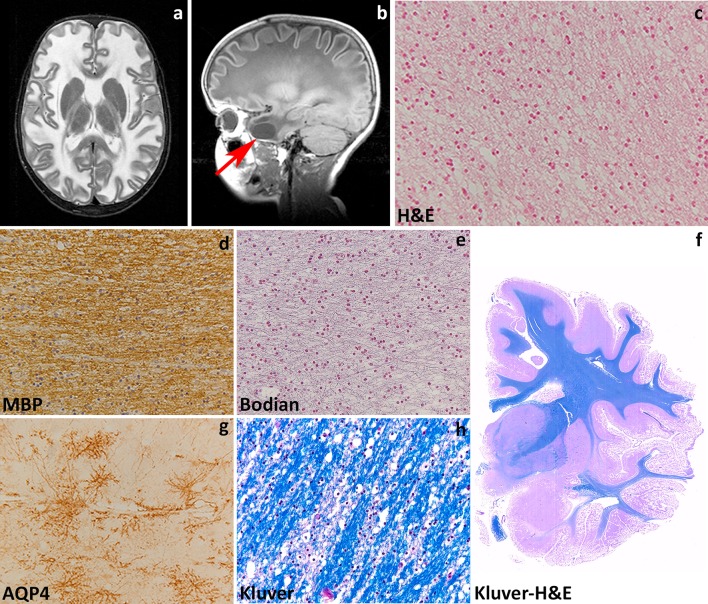
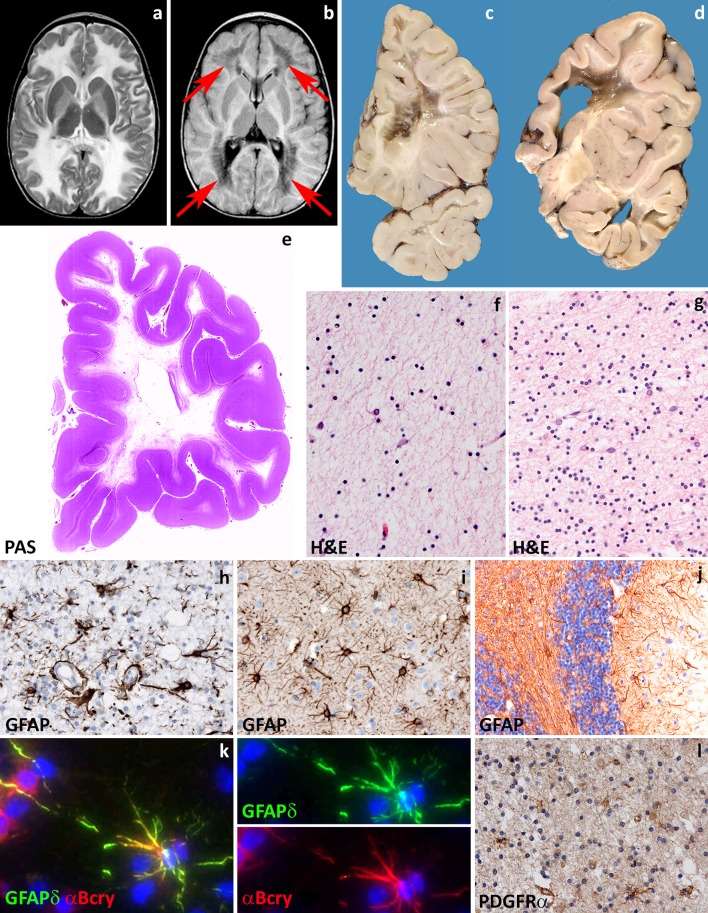
Verification
Claims the paper makes
The claims and statistics of this paper haven’t been checked yet.
Run the check — free, no account needed. It reads the open-access text and checks the sources it cites.
Claims other papers make about this one
Each is checked against this paper’s own text: does it say what the citing paper says it does?
The source backs part of the claim, not all of it — or backs it for a different population, condition or comparison.
In the citing paper
“The astrocytic contribution of the TSPO signal could also complicate differentiation of multiple sclerosis from leukodystrophies that have significant astrocytic but not microglial involvement (van der Knaap and Bugiani, 2017).”
From A quantitative neuropathological assessment of translocator protein expression in multiple sclerosis (2019) · cites this paper as van der Knaap and Bugiani, 2017
Experimental — accuracy not yet measured
Self-check
Percentages, sums and reported differences re-computed from the paper’s own numbers.
The self-check needs the paper’s full text.
Citations
Cites
The Metabolic and Molecular Bases of Inherited Disease
Scriver, R. C. (1995) · Medical Entomology and Zoology · Cited by 12,101
Polazzi, E., Mengoni, I., Caprini, M., Peña‐Altamira, E., Kurtys, E., & Monti, B. (2012) · Neurosignals · doi:10.1159/000337115 · Cited by 9,023
Astrocytes: Biology and pathology
Sofroniew, M. V., & Vinters, H. V. (2010) · Acta Neuropathologica · doi:10.1007/s00401-009-0619-8 · Cited by 5,196
Microglia: Active sensor and versatile effector cells in the normal and pathologic brain
Hanisch, U.-K., & Kettenmann, H. (2007) · Nature Neuroscience · doi:10.1038/nn1997 · Cited by 3,676
Pantoni, L. (2010) · The Lancet Neurology · doi:10.1016/s1474-4422(10)70104-6 · Cited by 3,405
Dynamic instability of microtubule growth
Mitchison, T., & Kirschner, M. (1984) · Nature · doi:10.1038/312237a0 · Cited by 3,337
M2 microglia and macrophages drive oligodendrocyte differentiation during CNS remyelination
Miron, V. E., Boyd, A., Zhao, J.-W., Yuen, T. J., Ruckh, J. M., Shadrach, J. L., van Wijngaarden, P., Wagers, A. J., Williams, A., Franklin, R. J. M., et al. (2013) · Nature Neuroscience · doi:10.1038/nn.3469 · Cited by 1,777
Mechanisms of sporadic cerebral small vessel disease: insights from neuroimaging
Wardlaw, J. M., Smith, C., & Dichgans, M. (2013) · The Lancet Neurology · doi:10.1016/s1474-4422(13)70060-7 · Cited by 1,657
Glycolytic oligodendrocytes maintain myelin and long-term axonal integrity
Fünfschilling, U., Supplie, L. M., Mahad, D., Boretius, S., Saab, A. S., Edgar, J., Brinkmann, B. G., Kassmann, C. M., Tzvetanova, I. D., Möbius, W., et al. (2012) · Nature · doi:10.1038/nature11007 · Cited by 1,523
Neuronal activity promotes oligodendrogenesis and adaptive myelination in the mammalian brain
Gibson, E. M., Purger, D., Mount, C. W., Goldstein, A. K., Lin, G. L., Wood, L. S., Inema, I., Miller, S. E., Bieri, G., Zuchero, J. B., et al. (2014) · Science · doi:10.1126/science.1252304 · Cited by 1,472
Research works printed but not linked: 6
- Agamanolis DP (2004) Pathology & genetics. Developmental neuropathology. ISN Neuropath, City
- Bielschowsky MH, Henneberg R (1928) Über familiäre diffuse Sklerose (Leukodystrophia cerebri progressiva hereditaria). J Psychol Neurol 36:131–181
- Pelizaeus F (1899) Überr eine eigenartige faimiliäre Entwicklungshemmung cornehmlich auf motorischem Gebiete. Archiv Psych 31:100
- Powers JM (2004) Peroxisomal disorders. In: Pathology & genetics. Developmental neuropathology. JA Golden, BN Harding (eds). ISN Neuropath Press, Basel. pp.287–295
- Suzuki K, Suzuki K (1996) The gangliosidoses. In: handbook of clinical neurology, RJ Vinken and GW Bruyn, Revised series Vol 22 (66) Neurodystrophies and neurolipidoses, HW Moser (ed) Elsevier Science B.V., Amsterdam, pp.247-280.
- Suzuki KV, Vanier M.T. (2004) Sphingolipidoses. In: Pathology & genetics. Developmental neuropathology. JA Golden, BN Arding (eds). ISN Neuropath, Basel. pp.235-236.
Cited by
Sorted by citations
Myelin in the Central Nervous System: Structure, Function, and Pathology
Stadelmann, C., Timmler, S., Barrantes‐Freer, A., & Simons, M. (2019) · Physiological Reviews · doi:10.1152/physrev.00031.2018 · Cited by 799
Oosterhof, N., Chang, I. J., Karimiani, E. G., Kuil, L. E., Jensen, D. M., Daza, R., Young, E., Astle, L., van der Linde, H. C., Shivaram, G. M., et al. (2019) · The American Journal of Human Genetics · doi:10.1016/j.ajhg.2019.03.010 · Cited by 247
Disease-associated oligodendrocyte responses across neurodegenerative diseases
Pandey, S., Shen, K., Lee, S.-H., Shen, Y.-A. A., Wang, Y., Otero-García, M., Kotova, N., Vito, S. T., Laufer, B. I., Newton, D. F., et al. (2022) · Cell Reports · doi:10.1016/j.celrep.2022.111189 · Cited by 227
CSF1R -related leukoencephalopathy: A major player in primary microgliopathies
Konno, T., Kasanuki, K., Ikeuchi, T., Dickson, D. W., & Wszolek, Z. K. (2018) · Neurology · doi:10.1212/wnl.0000000000006642 · Cited by 208
White matter degeneration in vascular and other ageing‐related dementias
Hase, Y., Horsburgh, K. J., Ihara, M., & Kalaria, R. N. (2017) · Journal of Neurochemistry · doi:10.1111/jnc.14271 · Cited by 214
Metadata
- Authors
- van der Knaap, M. S., & Bugiani, M.
- Affiliations
- Amsterdam Neuroscience (NL)
- Corresponding author
- Bugiani, Marianna
- Venue
- Acta Neuropathologica
- Published
- 2017-06-21
- Volume
- 134
- Issue
- 3
- Pages
- 351-382
- ISSN
- 0001-6322 (ISSN-L)
- 1432-0533
- PMC
- PMC5563342
- OpenAlex
- W2653495475
- Cited by
- 403
- References
- 276
- Citations by year
- 2026: 32 · 2025: 49 · 2024: 79 · 2023: 52 · 2022: 36 · 2021: 51 · 2020: 39 · 2019: 45 · 2018: 13 · 2017: 5
- FWCI
- 3.44
- Type
- journal article
- Language
- en
- Open access
- hybrid
- doi.org
- Locations
- Acta Neuropathologica (publishedVersion, cc-by)
- PubMed Central (publishedVersion, cc-by)
- PubMed (publishedVersion)
- Pure Amsterdam UMC (publishedVersion, other-oa)
- Amsterdam UMC (VU Amsterdam) - Institutional Repository (publishedVersion)
- VU Research Portal (publishedVersion, other-oa)
- Data Archiving and Networked Services (DANS) (submittedVersion, other-oa)
- Data Archiving and Networked Services (DANS) (submittedVersion)
- Funders
- Vrije Universiteit Amsterdam
- Fonds NutsOhra
- Topics
- Life Sciences › Neuroscience › Cellular and Molecular Neuroscience › Hereditary Neurological Disorders
- Life Sciences › Biochemistry, Genetics and Molecular Biology › Clinical Biochemistry › Metabolism and Genetic Disorders
- Health Sciences › Medicine › Clinical Neurology › Cerebrovascular and genetic disorders
- Keywords
- leukodystrophy, white matter pathology, hypomyelinating leukodystrophy, astrocytopathy, oligodendrocytes, myelin disorders, neuropathology, disease mechanisms
- MeSH terms
- Axons, Demyelinating Diseases, Humans, Myelin Sheath, Neuroglia, White Matter
About these checks
Registry, retraction, Cites and statistics results are computed, not judged, with one exception: a printed reference that no index lists is read once by a model before it counts as a citation error. Claims are extracted by a model and kept only when their quote appears verbatim in the text; each cited source is then checked, with a model’s help, for whether it says what the claim relies on. Those verdicts can be wrong — read the claim’s quote and the cited source before relying on one.
Statistics and arithmetic are recomputed, not judged.
Confidence bands are shown only for fields calibrated on our annotated test set. None is calibrated yet, so no band is shown.
What counts as a claim ›How we measure confidence ›How we check this ›
Are you an author, or do you see a problem with this page? Request a review
