

The DOI matches its Crossref record; 48 of the 48 references it cites were found in a registry or an index.
Seeding selectivity and ultrasensitive detection of tau aggregate conformers of Alzheimer disease
Open accessAbstract
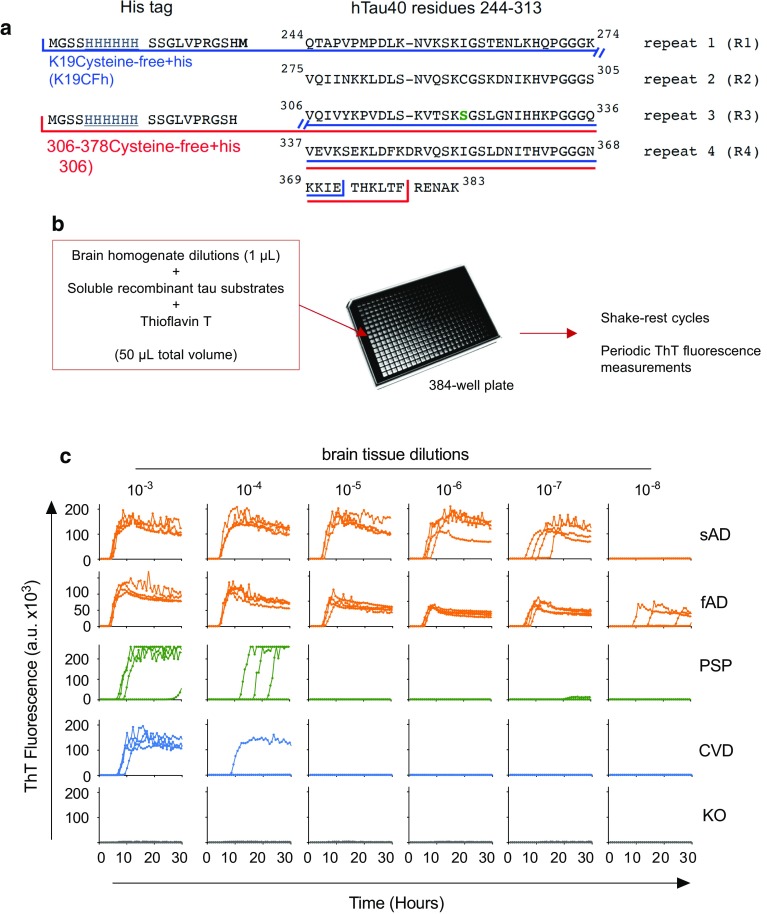
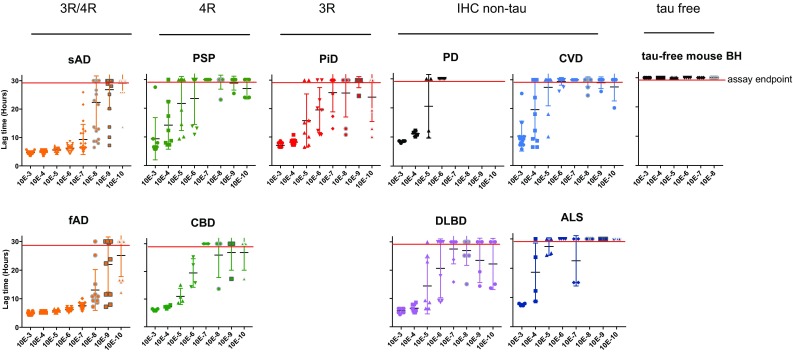
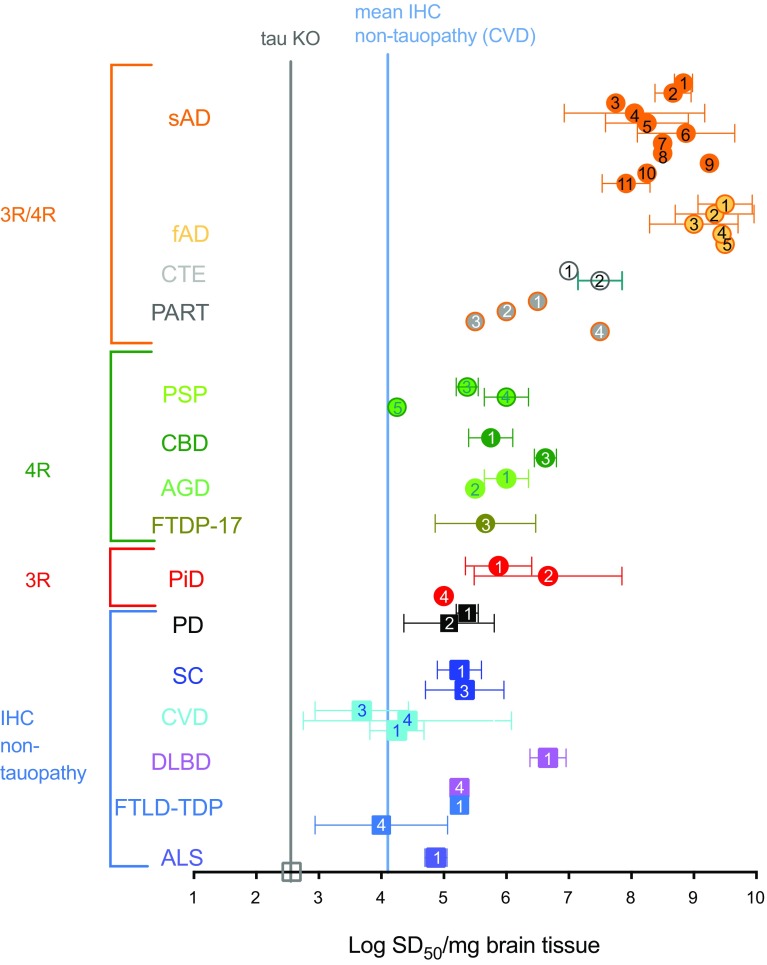
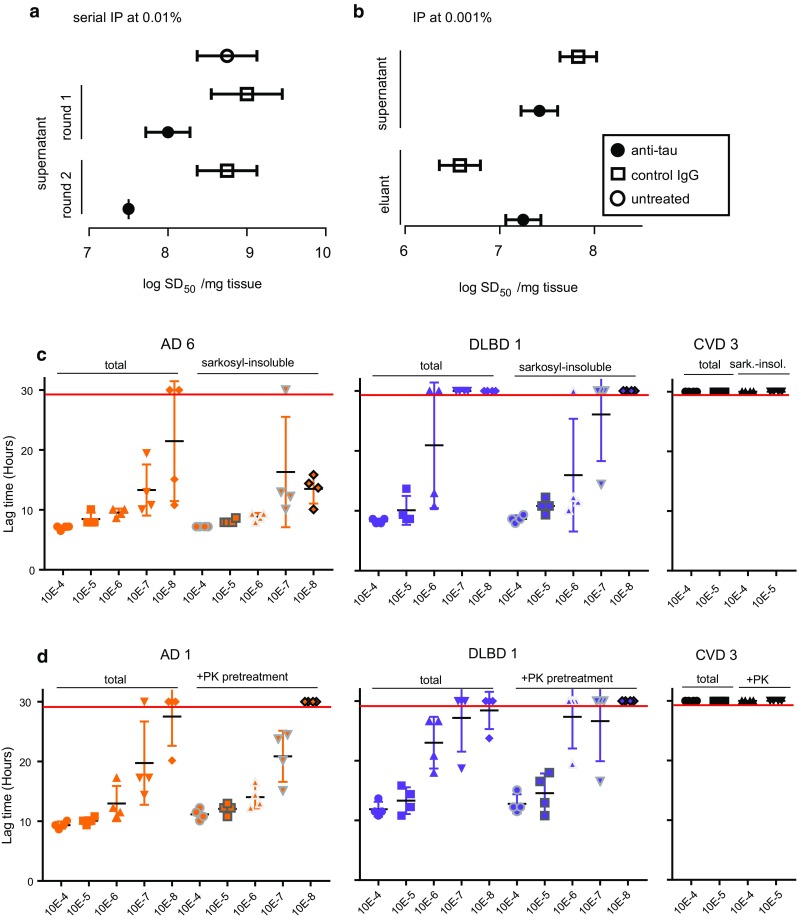
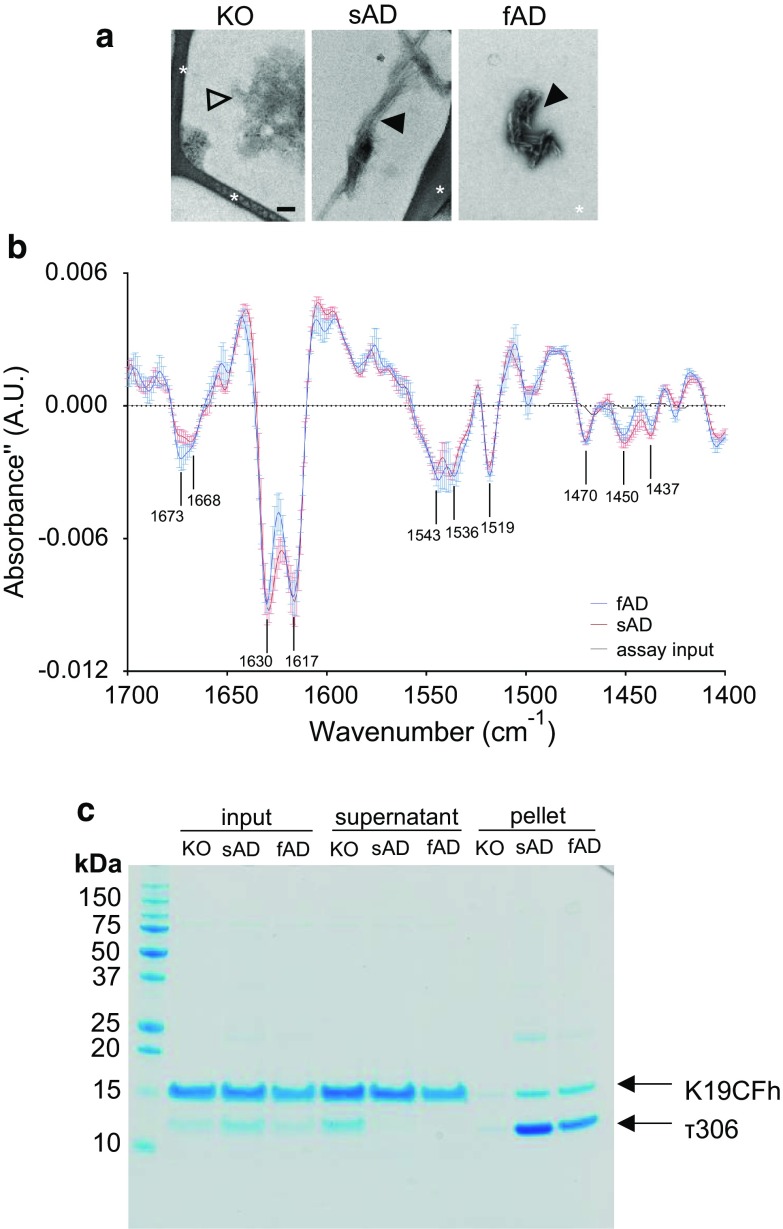
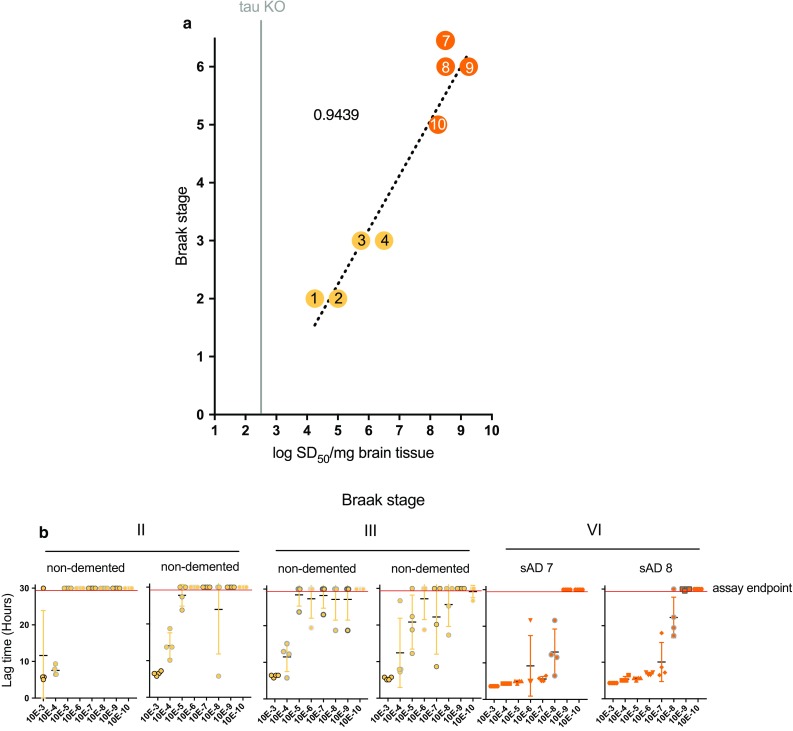
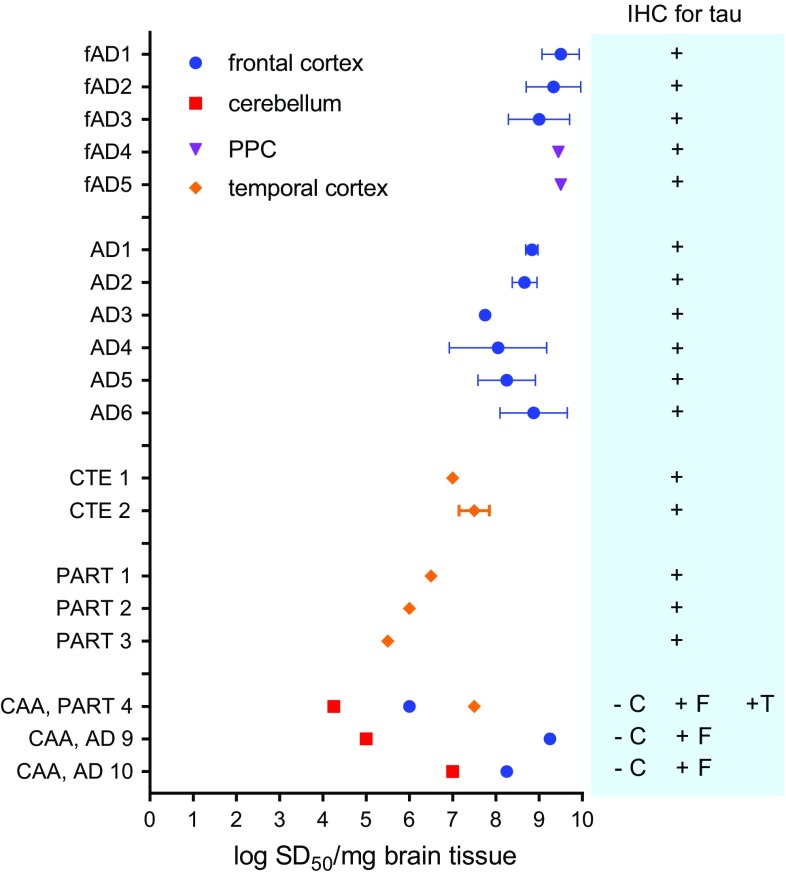
Alzheimer disease (AD) and chronic traumatic encephalopathy (CTE) involve the abnormal accumulation in the brain of filaments composed of both three-repeat (3R) and four-repeat (4R) (3R/4R) tau isoforms. To probe the molecular basis for AD’s tau filament propagation and to improve detection of tau aggregates as potential biomarkers, we have exploited the seeded polymerization growth mechanism of tau filaments to develop a highly selective and ultrasensitive cell-free tau seed amplification assay optimized for AD (AD real-time quaking-induced conversion or AD RT-QuIC). The reaction is based on the ability of AD tau aggregates to seed the formation of amyloid fibrils made of certain recombinant tau fragments. AD RT-QuIC detected seeding activity in AD ( n = 16) brains at dilutions as extreme as 10 7 –10 10 -fold, but was 10 2 –10 6 -fold less responsive when seeded with brain from most cases of other types of tauopathy with comparable loads of predominant 3R or 4R tau aggregates. For example, AD brains had average seeding activities that were orders of magnitude higher than Pick disease brains with predominant 3R tau deposits, but the opposite was true using our previously described Pick-optimized tau RT-QuIC assay. CTE brains ( n = 2) had seed concentrations comparable to the weakest of the AD specimens, and higher than 3 of 4 specimens with 3R/4R primary age-related tauopathy. AD seeds shared properties with the tau filaments found in AD brains, as AD seeds were sarkosyl-insoluble, protease resistant, and reactive with tau antibodies. Moreover, AD RT-QuIC detected as little as 16 fg of pure synthetic tau fibrils. The distinctive seeding activity exhibited by AD and CTE tau filaments compared to other types of tauopathies in these seeded polymerization reactions provides a mechanistic basis for their consistent propagation as specific conformers in patients with 3R/4R tau diseases. Importantly, AD RT-QuIC also provides rapid ultrasensitive quantitation of 3R/4R tau-seeding activity as a biomarker.
Overview
The claims and statistics of this paper haven’t been checked yet.
Run the check — free, no account needed. It reads the open-access text and checks the sources it cites.
Integrity signals
Registry
Cites
Statistics
Figures
Verification
Claims the paper makes
The claims and statistics of this paper haven’t been checked yet.
Run the check — free, no account needed. It reads the open-access text and checks the sources it cites.
Claims other papers make about this one
Each is checked against this paper’s own text: does it say what the citing paper says it does?
The cited source says what the claim attributes to it.
In the citing paper
“As a pathological readout, seeding activity has been shown to identify the action of high molecular weight tau (Martinez et al., 2022) and even differentiate between specific conformers in 3R/4R tau diseases (Kraus et al., 2019).”
From Network analysis identifies strain-dependent response to tau and tau seeding-associated genes (2023) · cites this paper as Kraus et al., 2019
Self-check
Percentages, sums and reported differences re-computed from the paper’s own numbers.
The self-check needs the paper’s full text.
Citations
Cites
Staging of brain pathology related to sporadic Parkinson’s disease
Braak, H., Tredici, K. D., Rüb, U., de Vos, R. A. I., Jansen Steur, E. N. H., & Braak, E. (2003) · Neurobiology of Aging · doi:10.1016/s0197-4580(02)00065-9 · Cited by 10,777
NIA‐AA Research Framework: Toward a biological definition of Alzheimer's disease
Jack, C. R., Bennett, D. A., Blennow, K., Carrillo, M. C., Dunn, B., Haeberlein, S. B., Holtzman, D. M., Jagust, W., Jessen, F., Karlawish, J., et al. (2018) · Alzheimer's & Dementia · doi:10.1016/j.jalz.2018.02.018 · Cited by 10,537
Protein production by auto-induction in high-density shaking cultures
Studier, F. W. (2005) · Protein Expression and Purification · doi:10.1016/j.pep.2005.01.016 · Cited by 5,949
Hyman, B. T., Phelps, C. H., Beach, T. G., Bigio, E. H., Cairns, N. J., Carrillo, M. C., Dickson, D. W., Duyckaerts, C., Frosch, M. P., Masliah, E., et al. (2012) · Alzheimer's & Dementia · doi:10.1016/j.jalz.2011.10.007 · Cited by 3,092
Cryo-EM structures of tau filaments from Alzheimer’s disease
Fitzpatrick, A. W. P., Falcon, B., He, S., Murzin, A. G., Murshudov, G., Garringer, H. J., Crowther, R. A., Ghetti, B., Goedert, M., & Scheres, S. H. W. (2017) · Nature · doi:10.1038/nature23002 · Cited by 2,061
Self-citationCaughey, B., & Lansbury, P. T. (2003) · Annual Review of Neuroscience · doi:10.1146/annurev.neuro.26.010302.081142 · Cited by 1,650
Self-citationProtein secondary structures in water from second-derivative amide I infrared spectra
Dong, A., Huang, P., & Caughey, W. S. (1990) · Biochemistry · doi:10.1021/bi00465a022 · Cited by 1,333
New insight into protein secondary structure from resolution-enhanced infrared spectra.
Surewicz, W., & Mantsch, H. (1988) · Biochimica et Biophysica Acta · doi:10.1016/0167-4838(88)90107-0 · Cited by 1,184
A mutation in the Amyloid Precursor Protein Associated with Hereditary Alzheimer's Disease
Murrell, J. R., Farlow, M. R., Ghetti, B. F., & Benson, M. D. (1991) · Science · doi:10.1126/science.1925564 · Cited by 1,142
Self-citationGoedert, M., Spillantini, M. G., Cairns, N. J., & Crowther, R. A. (1992) · Neuron · doi:10.1016/0896-6273(92)90117-v · Cited by 1,122
Cited by
Sorted by citations
Items 101–143 of 143
Design and application of a Tau seed amplification assay for screening inhibitors of Tau seeding
Gorski, D., Evans, H., Allison, T., Barria, C., Harrison, D., Banerjee, V., Méndez, N., Shahnawaz, M., Kaalund, S. S., Folke, J., et al. (2025) · Alzheimer s Research & Therapy · doi:10.1186/s13195-025-01855-y · Cited by 5
Zeng, Z., Fichou, Y., Vigers, M. P., Tsay, K., & Han, S. (2022) · The Journal of Physical Chemistry B · doi:10.1021/acs.jpcb.2c02022 · Cited by 4
Böken, D., Cox, D., Burke, M., Lam, J. Y. L., Katsinelos, T., Danial, J. S. H., Fertan, E., McEwan, W. A., Rowe, J. B., & Klenerman, D. (2024) · Angewandte Chemie · doi:10.1002/ange.202317756 · Cited by 4
Zeng, Z., Tsay, K., Vijayan, V., Frost, M. P., Prakash, S., Quddus, A., Albert, A., Vigers, M. P., Srivastava, M., Woerman, A. L., et al. (2023) · bioRxiv (Cold Spring Harbor Laboratory) · doi:10.1101/2023.07.19.549721 · Cited by 4
Network analysis identifies strain-dependent response to tau and tau seeding-associated genes
Acri, D. J., You, Y., Tate, M. D., Karahan, H., Martinez, P., McCord, B., Sharify, A. D., John, S., Kim, B., Dabin, L. C., et al. (2023) · Journal of Experimental Medicine · doi:10.1084/jem.20230180 · Cited by 3
“As a pathological readout, seeding activity has been shown to identify the action of high molecular weight tau (Martinez et al., 2022) and even differentiate between specific conformers in 3R/4R tau diseases (Kraus et al., 2019).”
Houzé, L., Dhénain, M., Lam, S., Petit, F., Haı̈k, S., Mouton‐Liger, F., Hugon, J., Dam, J., Paquet, C., Jockers, R., et al. (2025) · Alzheimer s Research & Therapy · doi:10.1186/s13195-025-01792-w · Cited by 3
Tau seeding activity in Alzheimer's disease: Characteristics, factors, and applications
Liu, Y., Chen, Y., Chen, Z., Wan, H., & Wu, C. (2025) · Journal of Alzheimer s Disease · doi:10.1177/13872877251378772 · Cited by 4
Feleke, R., Jogaudaite, S., Velentza‐Almpani, E., Yeung-Yeung, L., Clode, D., Ko, J. H., Shin, B., Matthews, S., Otero‐Jimenez, M., Wojewska, M. J., et al. (2025) · Acta Neuropathologica · doi:10.1007/s00401-025-02869-4 · Cited by 4
Classification of tauopathies from human brain homogenates through salt‐modulated tau amplification
Santambrogio, A., Metrick, M. A., Xu, P., Gallagher, N. C. T., Koga, S., Ghetti, B. F., Dickson, D. W., Caughey, B. W., & Vendruscolo, M. (2026) · Alzheimer s & Dementia · doi:10.1002/alz.71112 · Cited by 2
Self-citationAntibacterial microcins self-assemble to promote biofilm formation in Acinetobacter baumannii
Telford, M. S., Mikesh, M., Parker, J. K., Beckman, R. L., Newberry, R. W., Fleeman, R. M., & Davies, B. W. (2026) · Cell Reports · doi:10.1016/j.celrep.2026.117156 · Cited by 3
Creutzfeldt–Jakob disease is an Alzheimer’s disease-related dementia
Watts, J. C., Sigurdson, C. J., Yobs, D., & Soto, C. A. (2026) · Trends in Molecular Medicine · doi:10.1016/j.molmed.2026.03.009 · Cited by 2
Self-citationA New Assay to Identify Specific Tauopathies
Talan, J. (2019) · Neurology Today · doi:10.1097/01.nt.0000615632.73773.71 · Cited by 2
In Vitro Amplification of Pathogenic Tau Seeds from Neurodegenerative Disease Patient Brains
Xu, H. W., & Lee, V. M. Y. (2022) · Methods in molecular biology · doi:10.1007/978-1-0716-2655-9_15 · Cited by 3
Seeding Activity of Skin Misfolded Proteins as a Biomarker in Prion and Prion-Like Diseases
Zou, W., & Wang, Z. (2023) · Springer eBooks · doi:10.1007/978-3-031-20565-1_32 · Cited by 1
Hromádková, L., Kim, C., Haldiman, T., Siddiqi, M. K., Surewicz, K. A., Urquhart, K., Sadruddin, D.-E.-N., Peng, L., Zhu, X., Surewicz, W. K., et al. (2025) · PLoS Pathogens · doi:10.1371/journal.ppat.1012926 · Cited by 2
Application of protein misfolding amplification techniques in prion diseases
Liu, R., Chen, Z., Wang, Y., & Wu, L. (2025) · Ageing and Neurodegenerative Diseases · doi:10.20517/and.2025.18 · Cited by 1
Yang, Y., Guan, H., Zhang, Z., Wu, H., Xiong, Y., Xu, C., Mao, H., You, W., Kuang, Y., Zhang, Q., et al. (2025) · npj Biosensing · doi:10.1038/s44328-025-00056-9 · Cited by 1
Full-length tau seeded by C-shaped tau fibrils is conformationally variable
Zhang, J. Y., Mammeri, N. E., & Hong, M. (2026) · Journal of Biological Chemistry · doi:10.1016/j.jbc.2026.111315 · Cited by 1
Gabani, Z. Y., Singh, J., Hamlett, E. D., Granholm, A., & Margittai, M. (2026) · JACS Au · doi:10.1021/jacsau.5c01693 · Cited by 2
Fluid and Imaging Markers of Frontotemporal Lobar Degeneration
Prinse, F., Houwer, J. F. H. D., Dopper, E. G. P., & Seelaar, H. (2025) · Springer eBooks · doi:10.1007/978-3-031-80849-4_9 · Cited by 1
Classification of Tauopathies from Human Brain Homogenates through Salt-Modulated Tau AmplificationPreprint
Santambrogio, A., Metrick, M. A., Xu, P., Koga, S., Ghetti, B. F., Dickson, D. W., Caughey, B. W., & Vendruscolo, M. (2025) · medRxiv · doi:10.1101/2025.08.05.25331458 · Cited by 1
Self-citationSeeding Activity of Skin Misfolded Tau as a Novel Biomarker for TauopathiesPreprint
Wang, Z., Wu, L., Gerasimenko, M., Gilliland, T., Shah, Z. S. A., Gunzler, S. A., Donadio, V. A., Liguori, R., Xu, B., & Zou, W. (2023) · bioRxiv (Cold Spring Harbor Laboratory) · doi:10.1101/2023.09.07.556724
Intracellular anionic substances cause tau liquid-liquid phase separation
Muguruma, K., Takahashi, T., Tagane, Y., Nazere, K., Hara, N., Nakamori, M., Yamazaki, Y., Morino, H., & Maruyama, H. (2025) · Biochemical and Biophysical Research Communications · doi:10.1016/j.bbrc.2025.151605
Skin Biomarkers of Neurodegenerative Diseases
Reilly-Jankowiak, L., Bargar, C., Bunn, D., & Chen, S. G. (2025) · Springer eBooks · doi:10.1007/978-3-031-66513-4_6
Mao, H., Kuang, Y., Wang, Z., Lin, H., Dai, W., Lin, H., Gan, T., He, Z., Zou, W.-Q., Ma, C., et al. (2025) · bioRxiv (Cold Spring Harbor Laboratory) · doi:10.1101/2025.03.26.645411
Development of a Procedure for Prion Surveillance in the Laboratory Setting
Gorski, D., Schauer, I., Spicker, K., Tupaki‐Sreepurna, A., Wang, F., Soto, C. A., & Pritzkow, S. (2025) · The Journal of Infectious Diseases · doi:10.1093/infdis/jiaf205
Castilla‐Silgado, J., Pérez‐Oliveira, S., Pinto-Hernández, P., Fernández‐Sanjurjo, M., Corte-Torres, M. D., Fernandez-Alvarez, O., Iglesias‐Gutiérrez, E., Menéndez‐González, M., Álvarez, V., & Tomás‐Zapico, C. (2026) · Alzheimer s Research & Therapy · doi:10.1186/s13195-026-02039-y
Antimicrobial peptides act as a component of brain immunity against microbes in Alzheimer’s disease
Chandrashekar, M., Velmurugan, G., Mishra, A., & Chinnathambi, S. (2025) · Advances in protein chemistry and structural biology · doi:10.1016/bs.apcsb.2025.10.016
Signaling cascades of microtubule-associated protein Tau in Alzheimer’s disease
Velmurugan, G., Krishnan, D., Upadhyay, R., Sivasamy, R., Sevanan, M., & Chinnathambi, S. (2025) · Advances in protein chemistry and structural biology · doi:10.1016/bs.apcsb.2025.10.013
iPSC-derived neurospheres: A cellular platform for Tau and Alzheimer’s disease immunotherapy
Chinnathambi, S., Adityan, A., Chandrashekar, M., & Velmurugan, G. (2025) · Advances in immunology · doi:10.1016/bs.ai.2025.11.001 · Cited by 1
Schmitz, M., Thüne, K., Fischer, A., Hermann, P., Cramm, M., Kadel, L. S., Möbius, W., Matschke, J., Saleem, T., Younas, N., et al. (2025) · Brain Pathology · doi:10.1111/bpa.70054 · Cited by 1
Lathuilière, A., Jo, Y., Perbet, R., Donahue, C., Commins, C., Quittot, N., Fan, Z., Bennett, R. E., & Hyman, B. T. (2023) · Figshare · doi:10.6084/m9.figshare.23908793
Frey, B., Holzinger, D., Taylor, K. C., Ehrnhoefer, D. E., Striebinger, A., Biesinger, S., Gasparini, L., O’Neill, M. J., Wegner, F., Barghorn, S., et al. (2024) · Figshare · doi:10.6084/m9.figshare.26639710
Lam, S. (2021) · theses.fr (ABES) · doi:10.70675/60b353ffz56fcz41a2z9e53zf0d9ac078167 · Cited by 1
Barinova, K. V., Kudryavtseva, S. S., Kurochkina, L. P., Golyshev, S. A., Kolotyeva, N. A., Illarioshkin, S., Piradov, M., & Muronetz, V. I. (2026) · Life · doi:10.3390/life16040675
Cellular clearance mechanisms in neurodegenerative diseases
Velmurugan, G., Mishra, A., & Chinnathambi, S. (2026) · Advances in protein chemistry and structural biology · doi:10.1016/bs.apcsb.2026.06.004
Neurotoxic Tau Oligomers: Isolation, Preparation, and Characterization
Khan, S., Haque, M. A., & Kayed, R. (2026) · Neuromethods · doi:10.1007/978-1-0716-5234-3_9
Amplification of seeding-competent tau aggregates by PMCA in human and experimental tauopathies
Almela, F., Bélondrade, M., Caillierez, R., Leclercq, S., Bouillet, T., Bégard, S., Oosterlynck, M., Eddarkaoui, S., Boluda, S., Buée, L., et al. (2026) · Acta Neuropathologica Communications · doi:10.1186/s40478-026-02345-4 · Cited by 1
Protocol for efficient purification of endotoxin-free human recombinant tau protein
Karabova, M. K., del Ser‐Badia, A., James, W., & Cowley, S. A. (2026) · STAR Protocols · doi:10.1016/j.xpro.2026.104800
Yanamandra, K., Romanul, N., Patel, H., Sanders, H., Chang, R., Darcy, A., Brown, N., Kane, C. A., Wu, H.-Y., Jagtap, K., et al. (2026) · Molecular Neurodegeneration Advances · doi:10.1186/s44477-026-00049-6
Groveman, B. R., Vascellari, S., Bongianni, M., Hughson, A. G., Zanusso, G., & Orru, C. D. (2026) · Acta Neuropathologica · doi:10.1007/s00401-026-03094-3
Self-citationFluid Biomarkers for the Antemortem Detection of Chronic Traumatic Encephalopathy: A Critical Review
Shatirishvili, N. (2026) · Neurology International · doi:10.3390/neurolint18100195
Metadata
- Authors
- Kraus, A., Saijo, E., Metrick, M. A., Newell, K., Sigurdson, C. J., Zanusso, G., Ghetti, B., & Caughey, B.
- Affiliations
- Rocky Mountain Laboratories (US)
- University of Kansas (US)
- University of California San Diego (US)
- University of Verona (IT)
- Indiana University School of Medicine (US)
- Corresponding author
- Caughey, Byron
- ORCID
- Venue
- Acta Neuropathologica
- Published
- 2018-12-20
- Volume
- 137
- Issue
- 4
- Pages
- 585-598
- ISSN
- 0001-6322 (ISSN-L)
- 1432-0533
- PMC
- PMC6426988
- OpenAlex
- W2906247002
- Cited by
- 143
- References
- 48
- Citations by year
- 2026: 15 · 2025: 25 · 2024: 17 · 2023: 18 · 2022: 20 · 2021: 17 · 2020: 17 · 2019: 14
- FWCI
- 8.25
- Type
- journal article
- Language
- en
- Open access
- hybrid
- doi.org
- Locations
- Acta Neuropathologica (publishedVersion, cc-by)
- Europe PMC (PubMed Central) (publishedVersion, cc-by)
- PubMed Central (publishedVersion, cc-by)
- PubMed (publishedVersion)
- Funders
- National Institute of Allergy and Infectious Diseases (ZIA AI001086-08)
- The CJD Foundation (none)
- National Institute on Aging (PHS P30-AG010133, P30- AG035982, P50 AG005131, P30 AG19610)
- Japan Society for the Promotion of Science (Fellowship for Japanese Biochemical, Behavioral Researchers at NIH)
- National Institute of Neurological Disorders and Stroke (none)
- National Institute of Mental Health (none)
- National Multiple Sclerosis Society (none)
- U.S. Department of Veterans Affairs (none)
- Arizona Biomedical Research Commission (4001, 0011, 05-901, 1001)
- Michael J. Fox Foundation for Parkinson's Research (none)
- Massachusetts Alzheimer's Disease Research Center (P50 AG005134)
- Topics
- Life Sciences › Neuroscience › Cellular and Molecular Neuroscience › Alzheimer's disease research and treatments
- Health Sciences › Medicine › Psychiatry and Mental health › Dementia and Cognitive Impairment Research
- Life Sciences › Biochemistry, Genetics and Molecular Biology › Molecular Biology › Prion Diseases and Protein Misfolding
- Keywords
- Alzheimer's disease, tau aggregates, RT-QuIC, tauopathy, chronic traumatic encephalopathy, Pick's disease, primary age-related tauopathy, ultrasensitive detection, biomarkers, sarkosyl-insoluble tau, protease resistance
- MeSH terms
- Alzheimer Disease, Animals, Brain, Humans, tau Proteins, Mice, Knockout, Tauopathies, Mice, Protein Aggregates
About these checks
Registry, retraction, Cites and statistics results are computed, not judged, with one exception: a printed reference that no index lists is read once by a model before it counts as a citation error. Claims are extracted by a model and kept only when their quote appears verbatim in the text; each cited source is then checked, with a model’s help, for whether it says what the claim relies on. Those verdicts can be wrong — read the claim’s quote and the cited source before relying on one.
Statistics and arithmetic are recomputed, not judged.
Confidence bands are shown only for fields calibrated on our annotated test set. None is calibrated yet, so no band is shown.
What counts as a claim ›How we measure confidence ›How we check this ›
Are you an author, or do you see a problem with this page? Request a review
