

The DOI matches its Crossref record; 48 of the 48 references it cites were found in a registry or an index.
Dissecting the genetic basis of focal cortical dysplasia: a large cohort study
Open accessAbstract
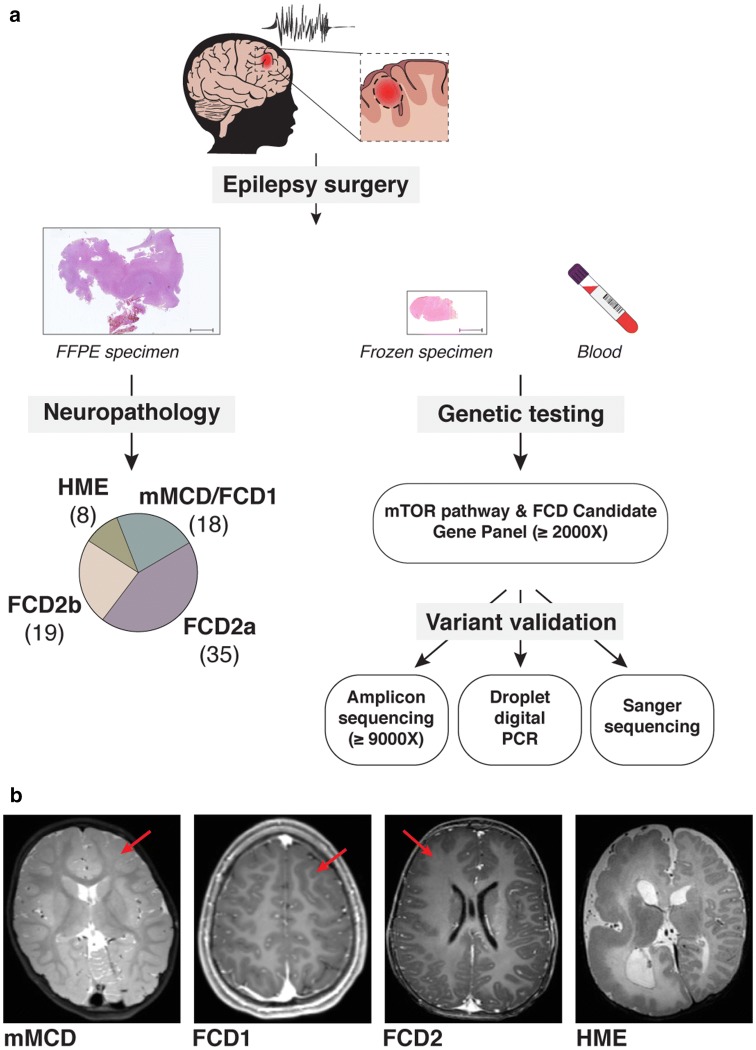
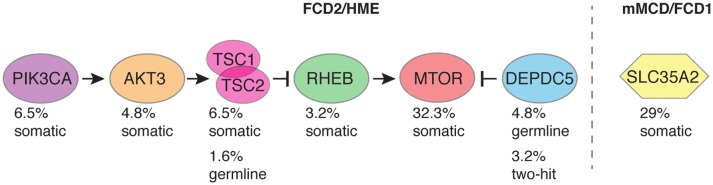
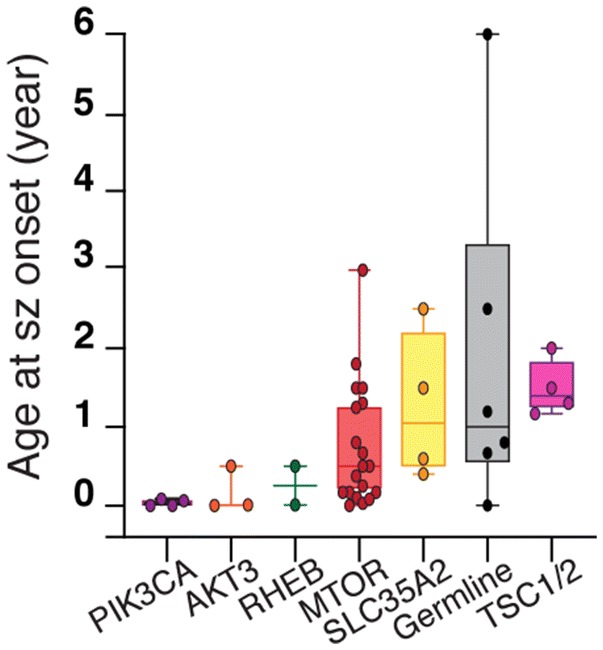
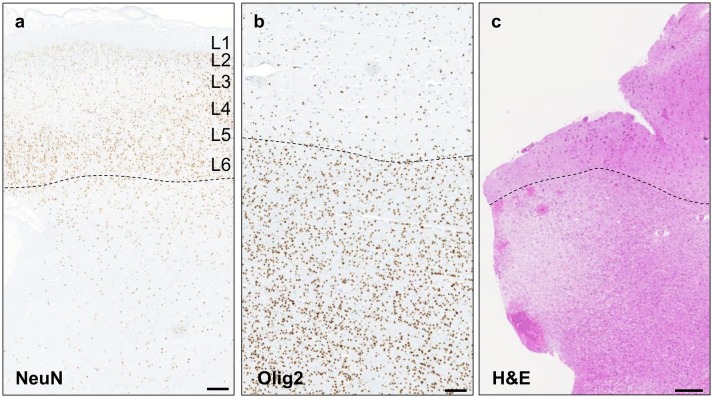
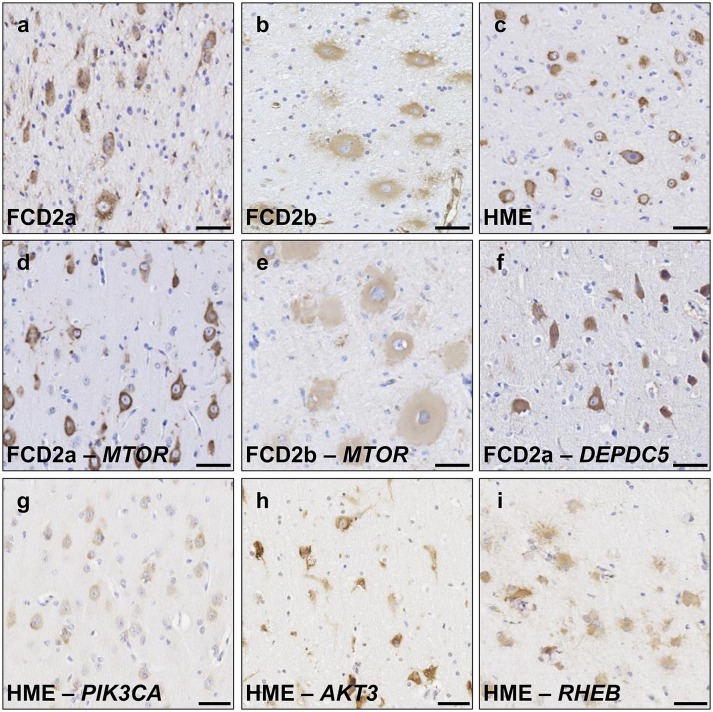
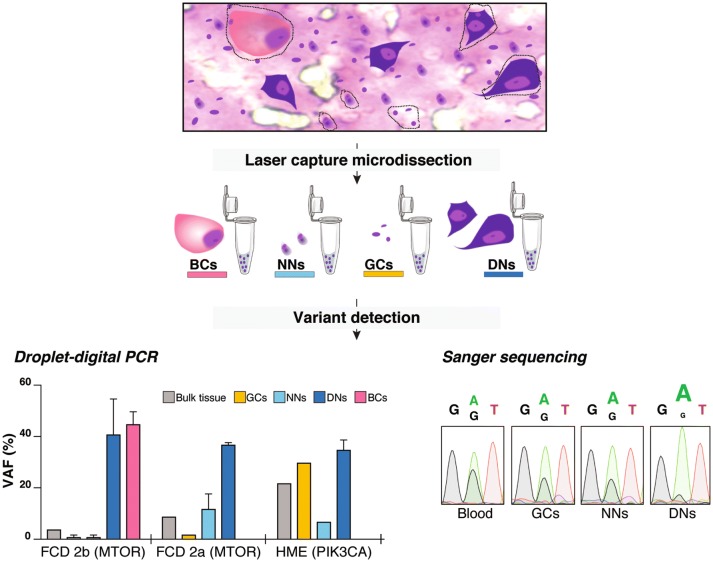
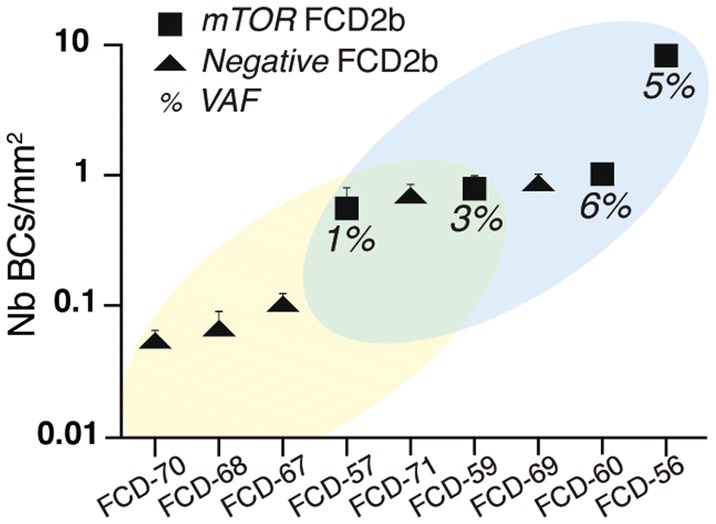
Genetic malformations of cortical development (MCDs), such as mild MCDs (mMCD), focal cortical dysplasia (FCD), and hemimegalencephaly (HME), are major causes of severe pediatric refractory epilepsies subjected to neurosurgery. FCD2 are characterized by neuropathological hallmarks that include enlarged dysmorphic neurons (DNs) and balloon cells (BCs). Here, we provide a comprehensive assessment of the contribution of germline and somatic variants in a large cohort of surgical MCD cases. We enrolled in a monocentric study 80 children with drug-resistant epilepsy and a postsurgical neuropathological diagnosis of mMCD, FCD1, FCD2, or HME. We performed targeted gene sequencing ( ≥ 2000X read depth) on matched blood-brain samples to search for low-allele frequency variants in mTOR pathway and FCD genes. We were able to elucidate 29% of mMCD/FCD1 patients and 63% of FCD2/HME patients. Somatic loss-of-function variants in the N-glycosylation pathway-associated SLC35A2 gene were found in mMCD/FCD1 cases. Somatic gain-of-function variants in MTOR and its activators (AKT3, PIK3CA, RHEB), as well as germline, somatic and two-hit loss-of-function variants in its repressors (DEPDC5, TSC1, TSC2) were found exclusively in FCD2/HME cases. We show that panel-negative FCD2 cases display strong pS6-immunostaining, stressing that all FCD2 are mTORopathies. Analysis of microdissected cells demonstrated that DNs and BCs carry the pathogenic variants. We further observed a correlation between the density of pathological cells and the variant-detection likelihood. Single-cell microdissection followed by sequencing of enriched pools of DNs unveiled a somatic second-hit loss-of-heterozygosity in a DEPDC5 germline case. In conclusion, this study indicates that mMCD/FCD1 and FCD2/HME are two distinct genetic entities: while all FCD2/HME are mosaic mTORopathies, mMCD/FCD1 are not caused by mTOR-pathway-hyperactivating variants, and ~ 30% of the cases are related to glycosylation defects. We provide a framework for efficient genetic testing in FCD/HME, linking neuropathology to genetic findings and emphasizing the usefulness of molecular evaluation in the pediatric epileptic neurosurgical population.
Overview
The claims and statistics of this paper haven’t been checked yet.
Run the check — free, no account needed. It reads the open-access text and checks the sources it cites.
Integrity signals
Registry
Cites
Statistics
Figures
Verification
Claims the paper makes
The claims and statistics of this paper haven’t been checked yet.
Run the check — free, no account needed. It reads the open-access text and checks the sources it cites.
Claims other papers make about this one
Each is checked against this paper’s own text: does it say what the citing paper says it does?
The cited source says what the claim attributes to it.
In the citing paper
“In addition, somatic mutations in mTOR pathway regulators are often found in focal cortical dysplasia type II, which has overlapping histological and clinical features with TSC24,25.”
From mTORC1 drives cell-autonomous astrocyte reactivity in tuberous sclerosis (2026) · cites this paper as [25]
Self-check
Percentages, sums and reported differences re-computed from the paper’s own numbers.
The self-check needs the paper’s full text.
Citations
Cites
Richards, S., Aziz, N., Bale, S., Bick, D., Das, S., Gastier-Foster, J., Grody, W. W., Hegde, M., Lyon, E., Spector, E., et al. (2015) · Genetics in Medicine · doi:10.1038/gim.2015.30 · Cited by 32,594
mTOR Signaling in Growth Control and Disease
Laplante, M., & Sabatini, D. M. (2012) · Cell · doi:10.1016/j.cell.2012.03.017 · Cited by 8,509
Mutation and cancer: statistical study of retinoblastoma
Knudson, A. G. (1971) · Proceedings of the National Academy of Sciences · doi:10.1073/pnas.68.4.820 · Cited by 7,612
Blümcke, I., Thom, M., Aronica, E., Armstrong, D. D., Vinters, H. V., Palmini, A., Jacques, T. S., AVANZINI, G., Barkovich, A. J., Battaglia, G. S., et al. (2010) · Epilepsia · doi:10.1111/j.1528-1167.2010.02777.x · Cited by 1,746
Terminology and classification of the cortical dysplasias
Palmini, A., Najm, I., AVANZINI, G., Babb, T. L., Guerrini, R., Foldvary‐Schaefer, N., Jackson, G. D., Lüders, H. O., Prayson, R. A., Spreafico, R., et al. (2004) · Neurology · doi:10.1212/01.wnl.0000114507.30388.7e · Cited by 948
Histopathological Findings in Brain Tissue Obtained during Epilepsy Surgery
Blümcke, I., Spreafico, R., Haaker, G., Coras, R., Kobow, K., Bien, C. G., Pfäfflin, M., Elger, C. E., Widman, G., Schramm, J., et al. (2017) · New England Journal of Medicine · doi:10.1056/nejmoa1703784 · Cited by 935
De novo somatic mutations in components of the PI3K-AKT3-mTOR pathway cause hemimegalencephaly
Lee, J. H., Huynh, M., Silhavy, J. L., Kim, S., Dixon-Salazar, T., Heiberg, A., Scott, E., Bafna, V., Hill, K. J., Collazo, A., et al. (2012) · Nature Genetics · doi:10.1038/ng.2329 · Cited by 703
Targeted therapy in patients with PIK3CA-related overgrowth syndrome
Venot, Q., Blanc, T., Hadj-Rabia, S., Berteloot, L., Ladraa, S., Huyen, J. D. V., Blanc, E., Johnson, S. C., Hoguin, C., Boccara, O., et al. (2018) · Nature · doi:10.1038/s41586-018-0217-9 · Cited by 597
Somatic mutation, genomic variation, and neurological disease
Poduri, A., Evrony, G. D., Cai, X., & Walsh, C. A. (2013) · Science · doi:10.1126/science.1237758 · Cited by 584
Lim, J. S., Kim, W.-I., Kang, H., Kim, S. H., Park, A. H., Park, E. K., Cho, Y., Kim, H. M., Kim, J. A., Kim, J. A., et al. (2015) · Nature Medicine · doi:10.1038/nm.3824 · Cited by 518
Malformations of cortical development: clinical features and genetic causes
Guerrini, R., & Dobyns, W. B. (2014) · The Lancet Neurology · doi:10.1016/s1474-4422(14)70040-7 · Cited by 513
Somatic activation of AKT3 causes hemispheric developmental brain malformations
Poduri, A., Evrony, G. D., Cai, X., Elhosary, P. C., Beroukhim, R., Lehtinen, M. K., Hills, L. B., Heinzen, E. L., Hill, A., Hill, R. S., et al. (2012) · Neuron · doi:10.1016/j.neuron.2012.03.010 · Cited by 478
Chassoux, F. (2000) · Brain · doi:10.1093/brain/123.8.1733 · Cited by 392
Jansen, L. A., Mirzaa, G. M., Ishak, G. E., O'Roak, B. J., Hiatt, J. B., Roden, W. H., Gunter, S. A., Christian, S. L., Collins, S., Adams, C., et al. (2015) · Brain · doi:10.1093/brain/awv045 · Cited by 364
D’Gama, A. M., Woodworth, M. B., Hossain, A. A., Bizzotto, S., Hatem, N. E., LaCoursiere, C. M., Najm, I., Ying, Z., Yang, E., Barkovich, A. J., et al. (2017) · Cell Reports · doi:10.1016/j.celrep.2017.11.106 · Cited by 333
D’Gama, A. M., Geng, Y., Couto, J. A., Martin, B., Boyle, E. A., LaCoursiere, C. M., Hossain, A. A., Hatem, N. E., Barry, B. J., Kwiatkowski, D. J., et al. (2015) · Annals of Neurology · doi:10.1002/ana.24357 · Cited by 290
Familial focal epilepsy with focal cortical dysplasia due to DEPDC5 mutations
Baulac, S., Ishida, S., Marsan, E., Miquel, C., Biraben, A., Nguyen, D., Nordli, D., Cossette, P., Nguyen, S., Lambrecq, V., et al. (2015) · Annals of Neurology · doi:10.1002/ana.24368 · Cited by 279
Self-citationDefective mitochondrial DNA homeostasis in the substantia nigra in Parkinson disease
Dölle, C., Flønes, I. H., Nido, G. S., Miletić, H., Osuagwu, N., Kristoffersen, S., Lilleng, P. K., Larsen, J. P., Tysnes, O., Haugarvoll, K., et al. (2016) · Nature Communications · doi:10.1038/ncomms13548 · Cited by 271
The landscape of epilepsy-related GATOR1 variants
Baldassari, S., Picard, F., Verbeek, N. E., van Kempen, M. J. A., Brilstra, E. H., Lesca, G., Conti, V., Guerrini, R., Bisulli, F., Licchetta, L., et al. (2018) · Genetics in Medicine · doi:10.1038/s41436-018-0060-2 · Cited by 251
Self-citationMirzaa, G., Campbell, C., Solovieff, N., Goold, C. P., Jansen, L., Menon, S., Timms, A., Conti, V., Biag, J., Adams, C., et al. (2016) · JAMA Neurology · doi:10.1001/jamaneurol.2016.0363 · Cited by 246
Ribierre, T., Deleuze, C., Bacq, A., Baldassari, S., Marsan, E., Chipaux, M., Muraca, G., Roussel, D., Navarro, V., Leguern, E., et al. (2018) · Journal of Clinical Investigation · doi:10.1172/jci99384 · Cited by 241
Self-citationThe genomic landscape of tuberous sclerosis complex
Martin, K. R., Zhou, W., Bowman, M. J., Shih, J., Au, K. S., Dittenhafer-Reed, K. E., Sisson, K. A., Koeman, J., Weisenberger, D. J., Cottingham, S. L., et al. (2017) · Nature Communications · doi:10.1038/ncomms15816 · Cited by 238
Diagnostic methods and treatment options for focal cortical dysplasia
Guerrini, R., DUCHOWNY, M. S., Jayakar, P., Kršek, P., Kahane, P., Tassi, L., Melani, F., Polster, T., André, V., Cepeda, C., et al. (2015) · Epilepsia · doi:10.1111/epi.13200 · Cited by 229
Somatic Mutations in TSC1 and TSC2 Cause Focal Cortical Dysplasia
Lim, J. S., Gopalappa, R., Kim, S. H., Ramakrishna, S., Lee, M., Kim, J., Kim, J., Park, S. M., Lee, J., Oh, J., et al. (2017) · The American Journal of Human Genetics · doi:10.1016/j.ajhg.2017.01.030 · Cited by 205
LaSarge, C. L., & Danzer, S. C. (2014) · Frontiers in Molecular Neuroscience · doi:10.3389/fnmol.2014.00018 · Cited by 202
Najm, I., Sarnat, H. B., & Blümcke, I. (2018) · Neuropathology and Applied Neurobiology · doi:10.1111/nan.12462 · Cited by 202
Somatic Mutations in the MTOR gene cause focal cortical dysplasia type II b
Nakashima, M., Saitsu, H., Takei, N., Tohyama, J., Kato, M., Kitaura, H., Shiina, M., Shirozu, H., Masuda, H., Watanabe, K., et al. (2015) · Annals of Neurology · doi:10.1002/ana.24444 · Cited by 198
Malformations of Cortical Development and EpilepsyPreprint
Barkovich, A. J., Dobyns, W. B., & Guerrini, R. (2015) · Cold Spring Harbor Perspectives in Medicine · doi:10.1101/cshperspect.a022392 · Cited by 174
Review: Mechanistic target of rapamycin (mTOR) pathway, focal cortical dysplasia and epilepsy
Marsan, E., & Baulac, S. (2018) · Neuropathology and Applied Neurobiology · doi:10.1111/nan.12463 · Cited by 162
Self-citationGermline and somatic mutations in the MTOR gene in focal cortical dysplasia and epilepsy
Møller, R. S., Weckhuysen, S., Chipaux, M., Marsan, E., Taly, V., Bebin, E. M., Hiatt, S. M., Prokop, J. W., Bowling, K. M., Mei, D., et al. (2016) · Neurology Genetics · doi:10.1212/nxg.0000000000000118 · Cited by 152
Self-citationFocal Cortical Dysplasia: Gene Mutations, Cell Signaling, and Therapeutic Implications
Iffland, P. H., & Crino, P. B. (2017) · Annual Review of Pathology Mechanisms of Disease · doi:10.1146/annurev-pathol-052016-100138 · Cited by 152
Somatic SLC35A2 variants in the brain are associated with intractable neocortical epilepsy
Winawer, M. R., Griffin, N. G., Samanamud, J. L., Baugh, E. H., Rathakrishnan, D., Ramalingam, S., Zagzag, D., Schevon, C. A., Dugan, P. C., Hegde, M., et al. (2018) · Annals of Neurology · doi:10.1002/ana.25243 · Cited by 135
Mosaicism of the UDP-Galactose Transporter SLC35A2 Causes a Congenital Disorder of Glycosylation
Ng, B. G., Buckingham, K. J., Raymond, K., Kircher, M., Turner, E. H., He, M., Smith, J. D., Eroshkin, A. M., Szybowska, M., Losfeld, M. E., et al. (2013) · The American Journal of Human Genetics · doi:10.1016/j.ajhg.2013.03.012 · Cited by 132
Baek, S. T., Copeland, B. R., Yun, E.-J., Kwon, S., Guemez‐Gamboa, A., Schaffer, A. E., Kim, S., Kang, H., Song, S., Mathern, G. W., et al. (2015) · Nature Medicine · doi:10.1038/nm.3982 · Cited by 126
Hsieh, L. S., Wen, J. H., Claycomb, K. I., Huang, Y., Harrsch, F. A., Naegele, J. R., Hyder, F., Buchanan, G. F., & Bordey, A. (2016) · Nature Communications · doi:10.1038/ncomms11753 · Cited by 116
Basic Mechanisms of Epileptogenesis in Pediatric Cortical Dysplasia
Abdijadid, S., Mathern, G. W., Levine, M. S., & Cepeda, C. (2014) · CNS Neuroscience & Therapeutics · doi:10.1111/cns.12345 · Cited by 99
Dörre, K., Olczak, M., Wada, Y., Sosicka, P., Grüneberg, M., Reunert, J., Kurlemann, G., Fiedler, B., Biskup, S., Hörtnagel, K., et al. (2015) · Journal of Inherited Metabolic Disease · doi:10.1007/s10545-015-9828-6 · Cited by 88
Genomic DNA methylation distinguishes subtypes of human focal cortical dysplasia
Kobow, K., Ziemann, M., Kaipananickal, H., Khurana, I., Mühlebner, A., Feucht, M., Hainfellner, J. A., Czech, T., Aronica, E., Pieper, T., et al. (2019) · Epilepsia · doi:10.1111/epi.14934 · Cited by 85
Early Progenitor Cell Marker Expression Distinguishes Type II From Type I Focal Cortical Dysplasias
Orlova, K. A., Tsai, V., Baybis, M., Heuer, G. G., Sisodiya, S. M., Thom, M., Strauss, K. A., Aronica, E., Storm, P. B., & Crino, P. B. (2010) · Journal of Neuropathology & Experimental Neurology · doi:10.1097/nen.0b013e3181eac1f5 · Cited by 84
Kim, J., Kim, D., Lim, J. S., Maeng, J. H., Son, H., Kang, H., Nam, H., Lee, J. H., & Kim, S. (2019) · Nature Communications · doi:10.1038/s41467-019-09026-y · Cited by 81
Hemispheric cortical dysplasia secondary to a mosaic somatic mutation in MTOR
Leventer, R. J., Scerri, T. S., Marsh, A. P. L., Pope, K., Gillies, G., Maixner, W. J., MacGregor, D. P., Harvey, A. S., Delatycki, M. B., Amor, D. J., et al. (2015) · Neurology · doi:10.1212/wnl.0000000000001594 · Cited by 80
Brain somatic mutations in SLC35A2 cause intractable epilepsy with aberrant N-glycosylation
Sim, N. S., Seo, Y., Lim, J. S., Kim, W. K., Son, H., Kim, H. D., Kim, S., An, H. J., Kang, H., Kim, S. H., et al. (2018) · Neurology Genetics · doi:10.1212/nxg.0000000000000294 · Cited by 79
Nichterwitz, S., Benitez, J. A., Hoogstraaten, R. I., Deng, Q., & Hedlund, E. (2017) · Methods in molecular biology · doi:10.1007/978-1-4939-7213-5_6 · Cited by 77
Dorfmüller, G., Ferrand‐Sorbets, S., Fohlen, M., Bulteau, C., Archambaud, F., Delalande, O., Chipaux, M., & Taussig, D. (2014) · Child s Nervous System · doi:10.1007/s00381-014-2464-x · Cited by 56
Self-citationCortical neuronal densities and lamination in focal cortical dysplasia
Thom, M., Martinian, L., Sen, A., Cross, J. H., Harding, B. N., & Sisodiya, S. M. (2005) · Acta Neuropathologica · doi:10.1007/s00401-005-1062-0 · Cited by 54
Hu, S., Knowlton, R., Watson, B., Glanowska, K. M., Murphy, G. G., Parent, J., & Wang, Y. (2018) · Annals of Neurology · doi:10.1002/ana.25272 · Cited by 44
Rossini, L., Villani, F. S., Granata, T., Tassi, L., Tringali, G., Cardinale, F., Aronica, E., Spreafico, R., & Garbelli, R. (2016) · Epilepsy Research · doi:10.1016/j.eplepsyres.2016.12.002 · Cited by 34
Salinas, V., Vega, P., Piccirilli, M. V., Chicco, C., Ciraolo, C. A., Christiansen, S. B., Consalvo, D., Perez-Maturo, J., Medina, N., González‐Morón, D., et al. (2018) · European Journal of Medical Genetics · doi:10.1016/j.ejmg.2018.11.005 · Cited by 34
Cited by
Sorted by citations
Najm, I., Lal, D., Alonso‐Vanegas, M., Cendes, F., Lopes‐Cendes, Í., Palmini, A., Paglioli, E., Sarnat, H. B., Walsh, C. A., Wiebe, S., et al. (2022) · Epilepsia · doi:10.1111/epi.17301 · Cited by 368
Self-citationDevelopmental and epileptic encephalopathies: from genetic heterogeneity to phenotypic continuum
Guerrini, R., Conti, V., Mantegazza, M., Balestrini, S., Galanopoulou, A. S., & Benfenati, F. (2023) · Physiological Reviews · doi:10.1152/physrev.00063.2021 · Cited by 196
Conte, F., van Buuringen, N., Voermans, N. C., & Lefeber, D. J. (2021) · Biochimica et Biophysica Acta (BBA) - General Subjects · doi:10.1016/j.bbagen.2021.129898 · Cited by 195
Genetic testing for the epilepsies: A systematic review
Sheidley, B. R., Malinowski, J. R., Bergner, A. L., Bier, L., Gloss, D. S., Mu, W., Mulhern, M., Partack, E., & Poduri, A. (2021) · Epilepsia · doi:10.1111/epi.17141 · Cited by 156
Precision medicine and therapies of the future
Sisodiya, S. (2020) · Epilepsia · doi:10.1111/epi.16539 · Cited by 139
Metadata
- Authors
- Baldassari, S., Ribierre, T., Marsan, E., Adle-Biassette, H., Ferrand-Sorbets, S., Bulteau, C., Dorison, N., Fohlen, M., Polivka, M., Weckhuysen, S., Dorfmüller, G., Chipaux, M., & Baulac, S.
- Affiliations
- Centre National de la Recherche Scientifique (FR)
- Hôpital Rothschild (FR)
- Hôpital Lariboisière (FR)
- Corresponding author
- Baulac, Stéphanie
- ORCID
- Venue
- Acta Neuropathologica
- Published
- 2019-08-23
- Volume
- 138
- Issue
- 6
- Pages
- 885-900
- ISSN
- 0001-6322 (ISSN-L)
- 1432-0533
- PMC
- PMC6851393
- OpenAlex
- W2969667716
- Cited by
- 356
- References
- 48
- Citations by year
- 2026: 29 · 2025: 49 · 2024: 69 · 2023: 61 · 2022: 48 · 2021: 62 · 2020: 33 · 2019: 3
- FWCI
- 29.08
- Type
- journal article
- Language
- en
- Open access
- hybrid
- doi.org
- Locations
- Acta Neuropathologica (publishedVersion, cc-by)
- Europe PMC (PubMed Central) (publishedVersion, cc-by)
- PubMed Central (publishedVersion, cc-by)
- PubMed (publishedVersion)
- HAL (submittedVersion, other-oa)
- Funders
- European Research Council (No682345)
- Topics
- Health Sciences › Medicine › Clinical Neurology › Epilepsy research and treatment
- Health Sciences › Medicine › Genetics (clinical) › Tuberous Sclerosis Complex Research
- Life Sciences › Biochemistry, Genetics and Molecular Biology › Genetics › Genetics and Neurodevelopmental Disorders
- Keywords
- focal cortical dysplasia, hemimegalencephaly, drug-resistant epilepsy, mTOR signaling, mTORopathies, SLC35A2, N-glycosylation defects, DEPDC5, TSC1, TSC2, loss-of-function mutations, balloon cells, dysmorphic neurons, genetic testing, pS6
- MeSH terms
- Adolescent, Brain, Child, Child, Preschool, Epilepsy, Female, Humans, Infant, Male, Mutation, Neurons, Cohort Studies, Malformations of Cortical Development, Hemimegalencephaly
About these checks
Registry, retraction, Cites and statistics results are computed, not judged, with one exception: a printed reference that no index lists is read once by a model before it counts as a citation error. Claims are extracted by a model and kept only when their quote appears verbatim in the text; each cited source is then checked, with a model’s help, for whether it says what the claim relies on. Those verdicts can be wrong — read the claim’s quote and the cited source before relying on one.
Statistics and arithmetic are recomputed, not judged.
Confidence bands are shown only for fields calibrated on our annotated test set. None is calibrated yet, so no band is shown.
What counts as a claim ›How we measure confidence ›How we check this ›
Are you an author, or do you see a problem with this page? Request a review
