

The effects of a music and singing intervention during pregnancy on maternal well-being and mother-infant bonding: a randomised, controlled study.
Open accessThe DOI matches its Crossref record; 90 of the 91 references it cites were found in a registry or an index; 23 of the 104 sources its claims cite were checked for support.
Abstract
A randomized controlled study of 172 pregnant women found immediate positive effects of music and singing interventions on emotional state, stress (cortisol) and bonding (oxytocin), with singing showing a larger reduction in cortisol and larger improvement in valence than music.
Overview
CoChat Summary
TL;DR
In a three-armed randomized controlled trial with 172 pregnant women, prenatal music and singing interventions improved immediate emotional state, salivary cortisol, and salivary oxytocin, with singing showing larger effects than music on valence and cortisol. Short-term effects appeared for perceived closeness to the unborn child and general self-efficacy, but not for the mother–infant bonding questionnaire or depressive symptoms.
Key findings
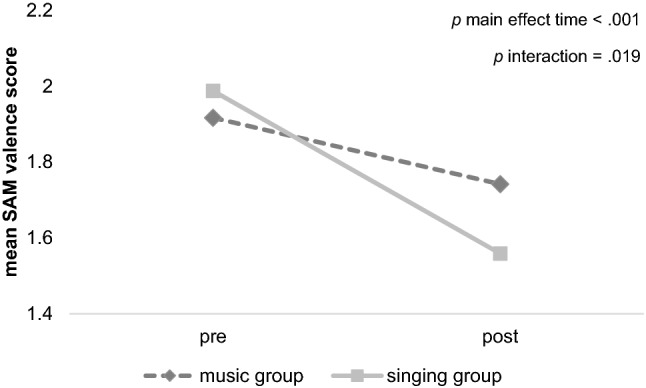
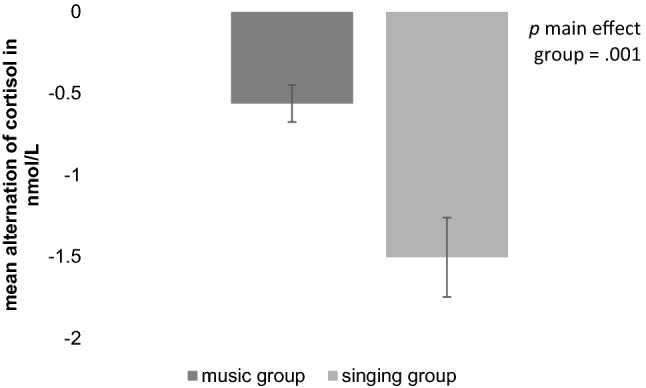
- Immediate effects: both music and singing improved SAM valence, arousal, and dominance; salivary cortisol decreased and salivary oxytocin increased. Singing showed a larger valence improvement than music (M = −0.45 vs. −0.18, p = 0.014) and a larger cortisol reduction (M = −1.53 vs. −0.58 nmol/l, p = 0.001). Alpha-amylase showed no significant effects.
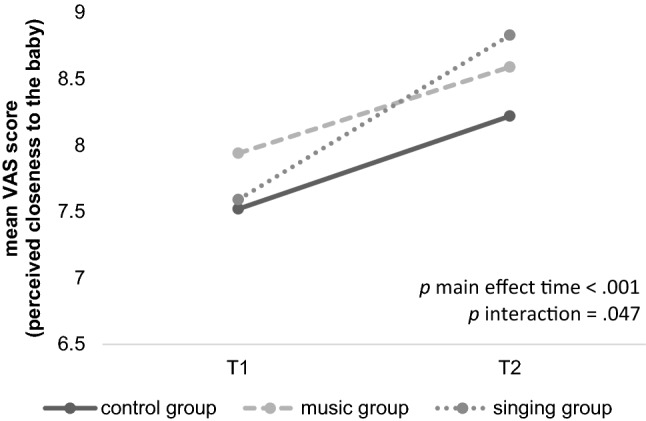
- Short-term effects: VAS closeness to the baby increased in all groups, with a significant time × group interaction [F(2,138) = 3.12, p = 0.047]; the singing group had the greatest increase (M = 1.23) vs. music (M = 0.64) and control (M = 0.70), though post-hoc group differences were non-significant (p ≥ 0.065).
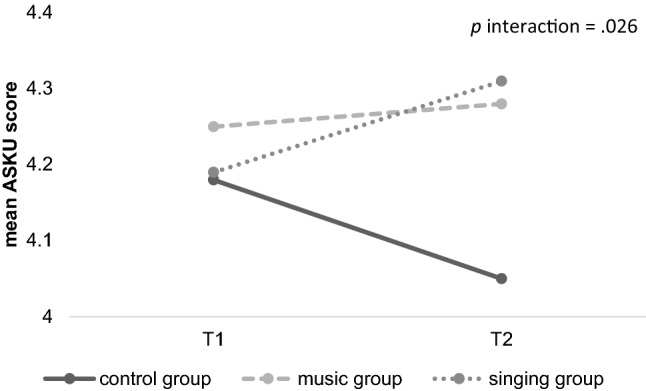
- General self-efficacy showed a significant time × group interaction [F(2,143) = 3.75, p = 0.026]; only the singing group increased significantly (p = 0.038), and the control vs. singing difference was significant (p = 0.021).
- No significant effects were found for the MAAS bonding questionnaire (quality or intensity) or for depressive symptoms (EPDS).
Methods
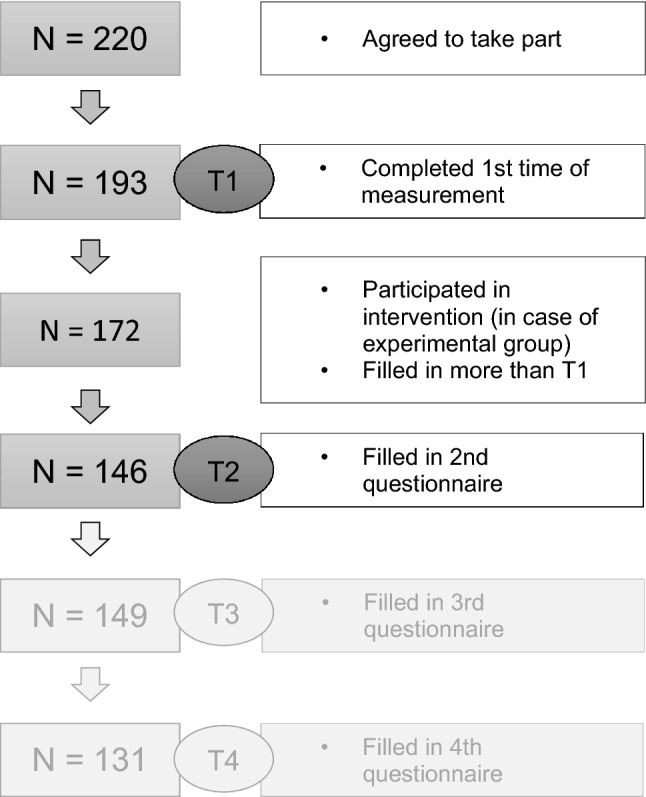
- Prospective, randomized, three-armed study (music, singing, control) in pregnant women; 743 were screened, 220 agreed, and the final sample was 172 (music n = 64, singing n = 59, control n = 49). Eligibility included age > 18 years, no serious comorbidities or pregnancy risks, and sufficient German language knowledge.
- Assessments occurred around the 30th gestational week (T1) and 36th gestational week (T2) using STAI-Trait, EPDS, MAAS, ASKU, and VAS closeness; immediate pre/post intervention measures included SAM and saliva samples for cortisol, alpha-amylase, and oxytocin. Music group had one session of passive music listening plus daily home listening for 10–15 min; singing group had approximately two sessions with a music therapist plus daily home singing for 10–15 min.
- Analysis used SPSS 24 with mixed-factorial ANOVAs (2 × 2 for immediate effects; 3 × 2 for short-term effects), post-hoc t-tests, and baseline comparisons via ANOVA/chi-square; power analysis required 156 participants (52 per group).
Limitations
- The paper states that missing questionnaire values may have biased results; women who were extremely stressed or had higher depressive symptoms may not have completed T2; at-home interventions were self-reported and not standardized or well controlled; selection bias is possible because women averse to singing may have declined participation; and baseline age and gestational week differed between groups, though additional covariate analyses showed no statistical influence on reported effects.
- The paper acknowledges that the singing intervention occurred earlier in the day than the music intervention, so circadian rhythm may have influenced cortisol; future studies should conduct interventions at the same time.
- The paper notes that VAS post-hoc group comparisons were non-significant despite a significant interaction, and that the few comparable studies on musical interventions and bonding during pregnancy vary in context, gestational age, and intervention frequency.
Model-written summary. Check it against the paper before relying on it.
Integrity signals
Registry
Cites
Statistics
Figures
Verification
Claims the paper makes
16 Valid · 3 Not valid · 47 Not checked · 107 Own results and interpretations
At least one cited source doesn’t support this claim or points to a different paper, and none confirmed it — see the verdicts below.
In the paper
“The significant reduction of salivary cortisol levels is in line with other studies which investigated the impact of relaxation techniques on salivary cortisol levels also revealing a decline from before until after the intervention [64, 82].”
§ The effects of a music and singing intervention during pregnancy on maternal well-being and mother–infant bonding: a randomised, controlled study > Discussion
What the sources say
- Disputedcites [64] Ooishi Y Mukai H Watanabe K Kawato S Kashino M Increase in salivary oxytocin and decrease in salivary cortisol after listening to relaxing slow-tempo and exciting fast-tempo music PLoS ONE 2017 10.1371/journal.pone.0189075 29211795 PMC5718605 sourceExperimental — accuracy not yet measured
The Results (page unavailable) report no significant change in salivary cortisol after relaxing slow-tempo music. Cortisol fell significantly only after exciting fast-tempo music, contrary to the claim that this study found a decline following a relaxation intervention. (LLM, conf=0.87)
Checked by a reasoning model — may be wrong.
- Not checked — no full text of the sourcecites [82] Ventura T Gomes MC Carreira T Cortisol and anxiety response to a relaxing intervention on pregnant women awaiting amniocentesis Psychoneuroendocrinology 2012 37 1 148 156 10.1016/j.psyneuen.2011.05.016 21705148 source
plainstates a cause- Asserted: passes — The authors put it forward as true.
- Checkable: passes — It can be checked against evidence.
- Load-bearing: unclear — It is unclear whether the paper’s conclusions depend on it.
- Based: passes — The paper gives a reason why it holds.
- Disputed
The cited sources support only part of this claim — read each source’s verdict below.
In the paper
“Several reviews highlight that music interventions during pregnancy also have a general anxiety reducing effect [50, 80, 84].”
§ The effects of a music and singing intervention during pregnancy on maternal well-being and mother–infant bonding: a randomised, controlled study > Introduction
What the sources say
- Supportedcites [50] Lin CJ Chang YC Chang YH Hsiao YH Lin HH Liu SJ Yeh TL Music interventions for anxiety in pregnant women: a systematic review and meta-analysis of randomized controlled trials J Clin Med 2019 8 11 12 10.3390/jcm8111884 PMC6912569 31698704 source
The Results (section 3.2; page not provided) report significantly lower anxiety in the music-intervention group than in controls across the pooled studies. The Conclusions (section 5; page not provided) describe the benefit as possible, which is consistent with the citing sentence’s broad summary of an anxiety-reducing effect. (LLM, conf=0.91)
- Partly supportedcites [80] van Willenswaard KC Lynn F McNeill J McQueen K Dennis CL Lobel M Alderdice F Music interventions to reduce stress and anxiety in pregnancy: a systematic review and meta-analysis Bmc Psychiatry 2017 17 9 10.1186/s12888-017-1432-x 28750631 PMC5531014 sourceExperimental — accuracy not yet measured
The Abstract Results report a significant reduction in maternal anxiety across five studies. The Conclusion calls this preliminary evidence that music interventions *may* reduce anxiety during pregnancy, citing moderate-to-weak study quality; the claim presents the effect more definitively. (LLM, conf=0.85)
- Supportedcites [84] Wulff V Hepp P Fehm T Schaal NK Music in obstetrics: an intervention option to reduce tension pain and stress Geburtshilfe Frauenheilkd 2017 77 9 967 975 10.1055/s-0043-118414 28959060 PMC5612774 source
The Discussion (page not supplied) says the majority of studies suggest music has potential for anxiety reduction during pregnancy and childbirth. The Music During Pregnancy section also reports lower anxiety among pregnant women after a two-week music intervention than in a control group. (LLM, conf=0.93)
plainstates a cause- Asserted: passes — The authors put it forward as true.
- Checkable: passes — It can be checked against evidence.
- Load-bearing: passes — The paper’s conclusions depend on it.
- Based: passes — The paper gives a reason why it holds.
- Supported
The cited sources support only part of this claim — read each source’s verdict below.
In the paper
“Due to the active part of breathing and using the own voice as an instrument, it has been shown that singing has a positive impact on the cardiorespiratory system [4, 83].”
§ The effects of a music and singing intervention during pregnancy on maternal well-being and mother–infant bonding: a randomised, controlled study > Introduction
What the sources say
- Partly supportedcites [4] Bernardi NF Snow S Peretz I Perez HDO Sabet-Kassouf N Lehmann A Cardiorespiratory optimization during improvised singing and toning Sci Rep 2017 10.1038/s41598-017-07171-2 28808334 PMC5556092 sourceExperimental — accuracy not yet measured
The Abstract reports improved cardiorespiratory measures during toning and a smaller positive effect during singing in 20 healthy adults. But the Discussion (‘Toning, singing and breathing’) says matched breathing without vocal production was sufficient to produce the physiological benefits, so the paper does not support attributing those benefits to using the voice as an instrument. (LLM, conf=0.88)
- Partly supportedcites [83] Vickhoff B Malmgren H Astrom R Nyberg G Ekstrom SR Engwall M Jornsten R Music structure determines heart rate variability of singers Front Psychol 2013 10.3389/fpsyg.2013.00334 23847555 PMC3705176 sourceExperimental — accuracy not yet measured
The Conclusion (page not available) says singing produces slow, regular, deep breathing that triggers respiratory sinus arrhythmia; the Introduction says pronounced RSA benefits circulation. This supports a breathing-related cardiovascular benefit, but the paper does not identify using one’s voice as an instrument as a cause or establish a general positive effect on the entire cardiorespiratory system. (LLM, conf=0.86)
plainstates a cause- Asserted: passes — The authors put it forward as true.
- Checkable: passes — It can be checked against evidence.
- Load-bearing: unclear — It is unclear whether the paper’s conclusions depend on it.
- Based: passes — The paper gives a reason why it holds.
- Partly supported
The sources with a verdict support this claim; the rest weren’t checked yet, have no full text we could read, or their verdicts aren’t rated yet.
In the paper
“The significant increase of oxytocin in both interventions fits well to previous research [45, 62, 64].”
§ The effects of a music and singing intervention during pregnancy on maternal well-being and mother–infant bonding: a randomised, controlled study > Discussion
What the sources say
- Not checked — no full text of the sourcecites [45] Kreutz G Does singing facilitate social bonding Music Med 2014 6 2 51 60 10.47513/mmd.v6i2.180 source
- Not checked — no full text of the sourcecites [62] Nilsson U Soothing music can increase oxytocin levels during bed rest after open-heart surgery: a randomised control trial J Clin Nurs 2009 18 15 2153 2161 10.1111/j.1365-2702.2008.02718.x 19583647 source
- Supportedcites [64] Ooishi Y Mukai H Watanabe K Kawato S Kashino M Increase in salivary oxytocin and decrease in salivary cortisol after listening to relaxing slow-tempo and exciting fast-tempo music PLoS ONE 2017 10.1371/journal.pone.0189075 29211795 PMC5718605 sourceExperimental — accuracy not yet measured
The Results section reports a significant increase in salivary oxytocin after participants listened to slow-tempo music. That supports citing this paper as previous research consistent with an oxytocin increase. “Both interventions” refers to the citing study’s findings; it does not require this source to show an increase under both music conditions. (LLM, conf=0.87)
boostedstates an association- Asserted: passes — The authors put it forward as true.
- Checkable: passes — It can be checked against evidence.
- Load-bearing: unclear — It is unclear whether the paper’s conclusions depend on it.
- Based: passes — The paper gives a reason why it holds.
The sources with a verdict support this claim; the rest weren’t checked yet, have no full text we could read, or their verdicts aren’t rated yet.
In the paper
“Taken together, the studies by Carolan et al. [9] and Persico et al. [67] as well as the results reported after birth [17, 56] highlight that maternal singing can have positive effects on relaxation, well-being and mother-infant bonding.”
§ The effects of a music and singing intervention during pregnancy on maternal well-being and mother–infant bonding: a randomised, controlled study > Introduction
What the sources say
- Not checked — no full text of the sourcecites [9] Carolan M Barry M Gamble M Turner K Mascarenas O The Limerick Lullaby project: an intervention to relieve prenatal stress Midwifery 2012 28 2 173 180 10.1016/j.midw.2010.12.006 21371795 source
- Not checked — no full text of the sourcecites [67] Persico G Antolini L Vergani P Costantini W Nardi MT Bellotti L Maternal singing of lullabies during pregnancy and after birth: effects on mother-infant bonding and on newborns' behavior. Concurrent Cohort Study Women Birth 2017 30 4 E214 E220 10.1016/j.wombi.2017.01.007 28169158 source
- Supportedcites [17] Fancourt D Perkins R Associations between singing to babies and symptoms of postnatal depression, wellbeing, self-esteem and mother-infant bond Public Health 2017 145 149 152 10.1016/j.puhe.2017.01.016 28359384 source
The Results (abstract, p. 1) associate daily singing to babies with enhanced maternal wellbeing and self-reported mother-infant bond. The Discussion (p. 3) also reports calmer mood and reduced maternal anxiety in earlier singing studies. The paper cautions that its own observational findings do not establish causality, consistent with the citing sentence’s qualified “can have” phrasing. (LLM, conf=0.88)
- Not checked — no full text of the sourcecites [56] Milligan K Atkinson L Trehub SE Benoit D Poulton L Maternal attachment and the communication of emotion through song Infant Behav Dev 2003 26 1 1 13 10.1016/s0163-6383(02)00165-0 source
plainstates a possible cause- Asserted: passes — The authors put it forward as true.
- Checkable: passes — It can be checked against evidence.
- Load-bearing: passes — The paper’s conclusions depend on it.
- Based: passes — The paper gives a reason why it holds.
77 more claims · 2 with their cited sources checked
Create a free account to see all 173 claims and to verify the 1 reference still open.
- Probably not a substantial claim. 50
- It may state two separate claims as one. 57
Claims other papers make about this one
Each is checked against this paper’s own text: does it say what the citing paper says it does?
The source backs part of the claim, not all of it — or backs it for a different population, condition or comparison.
In the citing paper
“Listening to slow-tempo music generally triggered OXT release in several populations, including healthy males Ooishi et al., (2017), pregnant women with trait anxiety Wulff et al., (2021), and post-surgical patients Nilsson, (2009).”
From Music's context-dependent influence on oxytocin, social bonding, and emotion regulation: a systematic review (2026) · cites this paper as Wulff et al., (2021)
Experimental — accuracy not yet measuredThe source backs part of the claim, not all of it — or backs it for a different population, condition or comparison.
In the citing paper
“In pregnant and postpartum mothers (Filippa et al., 2023; Wulff et al., 2021), baseline peripheral OXT levels were low, with small yet statistically significant changes after musical activities.”
From Music's context-dependent influence on oxytocin, social bonding, and emotion regulation: a systematic review (2026) · cites this paper as Wulff et al., 2021
Experimental — accuracy not yet measuredThe source backs part of the claim, not all of it — or backs it for a different population, condition or comparison.
In the citing paper
“Slow-tempo music is more likely to induce OXT release without inhibition by the HPA axis (Ooishi et al., 2017; Wulff et al., 2021), as it is usually perceived as more pleasant and relaxing (Ooishi et al., 2017).”
From Music's context-dependent influence on oxytocin, social bonding, and emotion regulation: a systematic review (2026) · cites this paper as Wulff et al., 2021
Experimental — accuracy not yet measuredThe cited source says what the claim attributes to it.
In the citing paper
“For preterm infants Filippa et al., (2021) and their mothers Filippa et al., (2023), as well as pregnant women Wulff et al., (2021), maternal singing to infants or fetuses increased their OXT levels.”
From Music's context-dependent influence on oxytocin, social bonding, and emotion regulation: a systematic review (2026) · cites this paper as Wulff et al., (2021)
The cited source says what the claim attributes to it.
In the citing paper
“Other studies examined clinical populations, including cancer patients and their carers Fancourt et al., (2016), pregnant women Wulff et al., (2021), preterm infants Filippa et al., (2021) and their mothers Filippa et al., (2023), individuals with Williams syndrome Dai et al., (2012), post-surgical patients (Nilsson, 2009), post-stroke patients (Palumbo et al., 2022), children with autism spectrum”
From Music's context-dependent influence on oxytocin, social bonding, and emotion regulation: a systematic review (2026) · cites this paper as Wulff et al., (2021)
1 more claim about this paper
Create a free account to see every claim other papers make about this one.
Statistics that don’t add up
Each reported p-value recomputed from its test statistic and degrees of freedom, each partial η² from its F, and each ratio, mean difference or B printed with a p checked against its own confidence interval.
Rated minor: it would not touch a result — a value no result rests on, a p-value that stays on the same side of the significance level, or a conflict that is clerical, resolved elsewhere in the paper, or outside its own findings.
In the paper
“F(1,115) = 0.06, p = 0.553”
§ The effects of a music and singing intervention during pregnancy on maternal well-being and mother–infant bonding: a randomised, controlled study > Results > Immediate effects—subjective measurements
Reported p = .553 · recomputed p = .807
Rated minor: it would not touch a result — a value no result rests on, a p-value that stays on the same side of the significance level, or a conflict that is clerical, resolved elsewhere in the paper, or outside its own findings.
In the paper
“F(2,141) = 1.70, p = 0.194”
§ The effects of a music and singing intervention during pregnancy on maternal well-being and mother–infant bonding: a randomised, controlled study > Results > Short-term effects
Reported p = .194 · recomputed p = .186
Statistics recomputed
Every reported test result, recomputed from its test statistic and degrees of freedom. A result shows as not adding up only once an independent check has confirmed it.
- Doesn’t add upF(1, 115) = 0.06reported p = .553 · recomputed p = .807
“F(1,115) = 0.06, p = .553”
- Doesn’t add upF(2, 141) = 1.7reported p = .194 · recomputed p = .186
“F(2,141) = 1.70, p = .194”
- ConsistentF(2, 153) = 4.05reported p = .019 · recomputed p = .019
“F(2,153) = 4.05, p = .019”
- ConsistentF(2, 169) = 5.99reported p = .003 · recomputed p = .003
“F(2,169) = 5.99, p = .003”
- ConsistentF(1, 117) = 31.76reported p < .001 · recomputed p < .001
“F(1,117) = 31.76, p < .001”
40 more recomputed tests
Create a free account to see every test the Stats check recomputed.
Self-check
Percentages, sums and reported differences re-computed from the paper’s own numbers.
Each contradiction between two passages listed here was confirmed by an independent check.
Rated major: it would touch a result — a value a result rests on, reported and recomputed p-values on opposite sides of the significance level, two passages that conflict with no sign which is right, or a cited work retracted before this paper was published.
In the paper
§ The effects of a music and singing intervention during pregnancy on maternal well-being and mother–infant bonding: a randomised, controlled study > Discussion
“In regard to perceived closeness (VAS), the intervention groups showed a significant larger improvement over time with overall higher values in comparison to the control group.”
§ The effects of a music and singing intervention during pregnancy on maternal well-being and mother–infant bonding: a randomised, controlled study > Results > Short-term effects
“Post-hoc comparisons regarding the amount of increase revealed no significant differences between groups but a trend (p ≥ 0.065).”
Rated minor: it would not touch a result — a value no result rests on, a p-value that stays on the same side of the significance level, or a conflict that is clerical, resolved elsewhere in the paper, or outside its own findings.
In the paper
§ The effects of a music and singing intervention during pregnancy on maternal well-being and mother–infant bonding: a randomised, controlled study > Discussion
“For self-efficacy as well, a significant greater improvement was revealed for the intervention groups compared to the control group.”
§ The effects of a music and singing intervention during pregnancy on maternal well-being and mother–infant bonding: a randomised, controlled study > Results > Short-term effects
“post-hoc comparisons between groups regarding the alternation were conducted that showed a significant difference between the control and the singing group (p = 0.021) but not between the others (p > 0.05).”
Rated minor: it would not touch a result — a value no result rests on, a p-value that stays on the same side of the significance level, or a conflict that is clerical, resolved elsewhere in the paper, or outside its own findings.
In the paper
§ The effects of a music and singing intervention during pregnancy on maternal well-being and mother–infant bonding: a randomised, controlled study > Results > Immediate effects—subjective measurements
“| | Post | 4.25 (0.66) | 4.94 (5.36) |”
§ The effects of a music and singing intervention during pregnancy on maternal well-being and mother–infant bonding: a randomised, controlled study > Methods > Material
“For each dimension, the score varies between zero and five.”
Citations
Cites
Faul, F., Erdfelder, E., Lang, A.-G., & Buchner, A. (2007) · Behavior Research Methods · doi:10.3758/bf03193146 · Cited by 65,971
Detection of Postnatal Depression: Development of the 10-item Edinburgh Postnatal Depression Scale
Cox, J. L., Holden, J. M., & Sagovsky, R. (1987) · British Journal of Psychiatry · doi:10.1192/bjp.150.6.782 · Cited by 14,183
Measuring emotion: The self-assessment manikin and the semantic differential
Bradley, M. M., & Lang, P. J. (1994) · Journal of Behavior Therapy and Experimental Psychiatry · doi:10.1016/0005-7916(94)90063-9 · Cited by 9,538
Heinrichs, M., Baumgartner, T., Kirschbaum, C., & Ehlert, U. (2003) · Biological Psychiatry · doi:10.1016/s0006-3223(03)00465-7 · Cited by 2,091
Salivary cortisol as a biomarker in stress research
Hellhammer, D. H., Wüst, S., & Kudielka, B. M. (2009) · Psychoneuroendocrinology · doi:10.1016/j.psyneuen.2008.10.026 · Cited by 1,925
Antenatal risk factors for postpartum depression: a synthesis of recent literature
Robertson, E., Grace, S., Wallington, T., & Stewart, D. E. (2004) · General Hospital Psychiatry · doi:10.1016/j.genhosppsych.2004.02.006 · Cited by 1,886
Salivary Cortisol in Psychobiological Research: An Overview
Kirschbaum, C., & Hellhammer, D. H. (2008) · Neuropsychobiology · doi:10.1159/000118611 · Cited by 1,532
Nater, U. M., & Rohleder, N. (2009) · Psychoneuroendocrinology · doi:10.1016/j.psyneuen.2009.01.014 · Cited by 1,370
Feldman, R., Weller, A., Zagoory-Sharon, O., & Levine, A. (2007) · Psychological Science · doi:10.1111/j.1467-9280.2007.02010.x · Cited by 787
Prenatal maternal stress: effects on pregnancy and the (unborn) child
Mulder, E. J. H., Robles de Medina, P. G., Huizink, A. C., Van den Bergh, B. R. H., Buitelaar, J. K., & Visser, G. H. A. (2002) · Early Human Development · doi:10.1016/s0378-3782(02)00075-0 · Cited by 779
Research works printed but not linked: 2
- Cao SL Sun J Wang YX Zhao YM Sheng YB Xu AG Music therapy improves pregnancy-induced hypertension treatment efficacy Int J Clin Exp Med 2016 9 5 8833 8838
- Laux L Glanzmann P Schaffner P Spielberger C Das State-Trait-Angstinventar (STAI) [State-Trait-Anxiety Inventory] 1981 Göttingen Beltz Test GmbH
Cited by
The transformative power of music: Insights into neuroplasticity, health, and disease
Zaatar, M. T., Alhakim, K., Enayeh, M., & Tamer, R. (2023) · Brain Behavior & Immunity - Health · doi:10.1016/j.bbih.2023.100716 · Cited by 197
“Engaging with music by either performing it or simply listening to it improves the mood and well-being during pregnancy, and strengthens the bond between a mother and her infant (Corbijn van Willenswaard et al., 2017; García Gonz ´ alez et al., 2018; Hepp et al., 2018; Wulff et al., 2021).”
BackgroundHow music may support perinatal mental health: an overview
Sanfilippo, K. R. M., Stewart, L., & Glover, V. A. S. (2021) · Archives of Women s Mental Health · doi:10.1007/s00737-021-01178-5 · Cited by 75
Ji, C., Zhao, J., Nie, Q., & Wang, S. (2023) · Journal of Psychosomatic Obstetrics & Gynecology · doi:10.1080/0167482x.2023.2291635 · Cited by 57
“Through the results of visual analogue scale and maternal antenatal attachment scale [45], it was confirmed that the perceived closeness between pregnant women and their babies increased over time.”
Wulff, V., Hepp, P. G., Wolf, O. T., Fehm, T. N., & Schaal, N. K. (2021) · BMC Pregnancy and Childbirth · doi:10.1186/s12884-021-03933-z · Cited by 48
“[20] the immediate and more prolonged effects of a music and a singing intervention were explored in pregnant women during the last trimester of pregnancy.”
BackgroundSelf-citationCırık, V. A., Gül, U., Kıhtır, Z., Arayıcı, S., Efe, E., Çakmak, H., & Çalişkan, F. (2023) · Journal of Pediatric Nursing · doi:10.1016/j.pedn.2023.01.005 · Cited by 30
The molecular basis of music-induced neuroplasticity in humans: A systematic review
Kunikullaya, K. U., Pranjić, P., Rigby, A. M., Pallás-Ferrer, I., Anand, H. J., Kunnavil, R., & Jaschke, A. C. (2025) · Neuroscience & Biobehavioral Reviews · doi:10.1016/j.neubiorev.2025.106219 · Cited by 34
“…influence of OT on social bonding (Bowling et al., 2022; Eerola et al., 2021; Hansen and Keller, 2021; Ooishi et al., 2017; Os ´ orio et al., 2022; Wulff et al., 2021; Yuhi et al., 2017), providing evidence for its evolutionary significance for musical perception and cognition (Fukui and…”
OKYAY, E. K., & Uçar, T. (2023) · Archives of Psychiatric Nursing · doi:10.1016/j.apnu.2023.04.027 · Cited by 27
Estevao, C., Bind, R. H., Fancourt, D. E., Sawyer, K. M., Dazzan, P., Sevdalis, N., Woods, A., Crane, N., Rebecchini, L., Hazelgrove, K. M., et al. (2021) · BMJ Open · doi:10.1136/bmjopen-2021-052133 · Cited by 21
He, H., Huang, J., Zhao, X., & Li, Z. (2021) · Complementary Therapies in Medicine · doi:10.1016/j.ctim.2021.102756 · Cited by 24
Qian, J., Sun, S., Wang, M., Sun, X., & Yu, X. (2023) · Frontiers in Psychiatry · doi:10.3389/fpsyt.2023.1112951 · Cited by 24
BALTACI, N., & Başer, M. (2021) · Complementary Medicine Research · doi:10.1159/000520139 · Cited by 22
Papatzikis, E., Agapaki, M., Selvan, R. N., Hanson-Abromeit, D., Gold, C., Epstein, S., Lok, U. W. V., Barda, E., & Pandey, V. (2024) · BMC Pediatrics · doi:10.1186/s12887-024-05275-z · Cited by 16
“Active musical engagement in this framework, involving singing and musical interaction with caregivers, can enhance attachment and bonding while also promoting empathy, emotional regulation, and social communication skills [22, 40, 42].”
Bekar, P., & Efe, E. (2022) · Journal of Pediatric Nursing · doi:10.1016/j.pedn.2022.03.003 · Cited by 15
A developmental framework of interpersonal neural synchrony
Hoehl, S., Bánki, A., Brzozowska, A., Carollo, A., Kostorz, K., Nguyen, T., Pletti, C., Reisner, S., Schäfer, V. T., Schaetz, C., et al. (2025) · Developmental Review · doi:10.1016/j.dr.2025.101234 · Cited by 22
“While some of the interventions centered on parental wellbeing (Baltacı et al., 2024; Bauer et al., 2010; Chang et al., 2008), others aimed at processes within the parent-infant dyad, including emotional connection (Branson Dame et al., 2024) and bonding (Persico et al., 2017; Wulff et al., 2021).”
Hennenberg, J., Hecking, M., Sterz, F. R., Hassemer, S., Kropiunigg, U., Debus, S. E., Stastka, K., & Löffler‐Stastka, H. (2023) · International Journal of Environmental Research and Public Health · doi:10.3390/ijerph20146386 · Cited by 18
Effect of Singing on Symptoms in Stable COPD: A Systematic Review and Meta-Analysis
Fang, X., Qiao, Z., Yu, X., Tian, R., Liu, K., & Han, W. (2022) · International Journal of COPD · doi:10.2147/copd.s382037 · Cited by 14
Functionality of self-care for pregnancy mobile applications: A review study
Pouriayevali, B., Ehteshami, A., Kohan, S., & Isfahani, S. S. (2022) · Journal of Education and Health Promotion · doi:10.4103/jehp.jehp_1429_21 · Cited by 18
“Wulff et al.[24] believe that stress and impaired mother‐fetus bonding can lead to maternal and fetal adverse effects.”
BackgroundO'Reilly, G., Cheung, P. S., & McCaffrey, T. (2023) · Journal of Midwifery & Women s Health · doi:10.1111/jmwh.13463 · Cited by 14
Dou, A., & Cirelli, L. K. (2025) · Infancy · doi:10.1111/infa.12648 · Cited by 10
Cheung, P. S., McCaffrey, T., Tighe, S. M., & Mohamad, M. M. (2023) · Midwifery · doi:10.1016/j.midw.2023.103811 · Cited by 18
Maul, J., Behnam, S., Wimberger, P., Henrich, W., & Arabin, B. (2024) · American Journal of Obstetrics & Gynecology MFM · doi:10.1016/j.ajogmf.2024.101400 · Cited by 14
Carvalho, M. E. S., Rincón, R., Gameiro, M., & Rodrigues, H. F. (2021) · Nordic Journal of Music Therapy · doi:10.1080/08098131.2021.2004612 · Cited by 10
Treatments and regulatory mechanisms of acoustic stimuli on mood disorders and neurological diseases
Chen, Y., Sun, J., Tao, J., & Sun, T. (2024) · Frontiers in Neuroscience · doi:10.3389/fnins.2023.1322486 · Cited by 16
Bauer, I., Hartkopf, J., Wikström, A., Schaal, N. K., Preissl, H. T., Derntl, B., & Schleger, F. (2021) · BMC Pregnancy and Childbirth · doi:10.1186/s12884-021-04099-4 · Cited by 22
Self-citationMusic Therapy for Hospitalized Antepartum Patients: A Mixed Methods Study
Horn, J., Robinson, J., Tolliver, M., Gollenberg, A., & Meadows, A. (2022) · Music Therapy Perspectives · doi:10.1093/mtp/miab022 · Cited by 10
Anggraini, M. S., Hidayat, A., & Fernandez, R. L. (2022) · International Journal of Advanced Health Science and Technology · doi:10.35882/ijahst.v2i5.158 · Cited by 12
Effect of music intervention on perinatal depressive symptoms: A meta-analysis
Sun, X., Wang, R., Cong, S., Fan, X., Sha, L., Feng, J., Xie, H., Han, J., Ni, S., & Zhang, A. (2024) · Journal of Psychiatric Research · doi:10.1016/j.jpsychires.2024.08.004 · Cited by 11
Cheung, P. S., McCaffrey, T., Tighe, S. M., & Mohamad, M. M. (2024) · Midwifery · doi:10.1016/j.midw.2024.103987 · Cited by 8
The effect of music intervention on depression in perinatal women: A systematic review
Han, J., Cong, S., Sun, X., Xie, H., Ni, S., Wu, Y., Wang, M., & Zhang, A. (2024) · Heliyon · doi:10.1016/j.heliyon.2024.e38476 · Cited by 10
“…for researchers and subjects involved in intervention implementation [25], 3 studies provided blinding methods for outcome measurement [18,23,25], 9 studies described the dropout rate and reasons for dropout of samples, and all outcome measures data were basically complete [14,15, 17 – 20 ,22 ,”
BackgroundPsychosocial needs of inpatient women with gestational diabetes mellitus: a qualitative study
Siahkal, S. F., Javadifar, N., Najafian, M., Iravani, M., Zakerkish, M., & Heshmati, R. (2022) · Journal of Reproductive and Infant Psychology · doi:10.1080/02646838.2022.2110221 · Cited by 10
“It is well known that pregnancy is an important period with significant changes in the mother’s body, which in addition to feelings of excitement and happiness, is also associated with stress and negative emotions (Wulff et al., 2021).”
BackgroundChu, T.-H., & Tsai, C.-G. (2026) · Frontiers in cognition · doi:10.3389/fcogn.2025.1678665 · Cited by 8
Effect of music therapy on anxiety in full-term pregnant women
Ji, C., Li, J., Nie, Q., & Wang, S. (2024) · Frontiers in Psychiatry · doi:10.3389/fpsyt.2024.1429999 · Cited by 14
The Effect of Music Intervention on Fetal Education via Doppler Fetal Monitor
Lee, L., Chang, Y., Liang, W.-J., & Huang, Y.-C. (2022) · Children · doi:10.3390/children9060918 · Cited by 7
“At the same time, parents use songs to communicate [5] so that there is emotional support from the other half in the process.”
BackgroundInfluentialBest Practices in Maternal and Child Health from the Perspective of Healthcare Professionals
Santini, T. P., Muhlen, E. S. V., Marchiori, M. R. C. T., Kruel, C. S., & Backes, D. S. (2023) · Aquichan · doi:10.5294/aqui.2023.23.1.2 · Cited by 5
Slabu, L., Coombes, E., Mangiacotti, A. M. A., Hadar, T., & Franco, F. (2025) · Frontiers in Psychiatry · doi:10.3389/fpsyt.2025.1707023 · Cited by 6
Konsam, M., Praharaj, S. K., Panda, S., Shetty, J., Ravishankar, N., & D’Souza, S. R. B. (2023) · Indian Journal of Psychiatry · doi:10.4103/indianjpsychiatry.indianjpsychiatry_180_23 · Cited by 5
“[42] A prospective cohort study also supported the finding that listening to music during the pregnancy period was significantly associated with a reduction in postnatal depression symptoms and increased well-being among the pregnant women.”
Dame, K. B., Harvey, M. J., Aichele, S., Denburg, A. K. V., Hoyer, L., Joslin, S., McKenna, A. R., Lincoln, M., Closson, L., Flykt, M. S., et al. (2023) · Infant Mental Health Journal · doi:10.1002/imhj.22093 · Cited by 7
Musical care in infancy: Supporting infants and their caregivers
Sanfilippo, K. R. M., de l’Etoile, S. K., & Trehub, S. E. (2022) · Oxford University Press eBooks · doi:10.1093/oso/9780197535011.003.0002 · Cited by 7
Tan, R. K. J., Mpofu, R., Kay, P., Sebastian, D., Novakovic, D., Lo, Y.-R. J., & Tucker, J. D. (2022) · BMJ Innovations · doi:10.1136/bmjinnov-2021-000905 · Cited by 6
Nombela, E., Marchena, C., Duque, A., & Chaves, C. (2025) · General Hospital Psychiatry · doi:10.1016/j.genhosppsych.2025.01.006 · Cited by 6
Değirmenci, F., Kisaçam, K. P. A., & YILMAZ, D. V. (2025) · Worldviews on Evidence-Based Nursing · doi:10.1111/wvn.70034 · Cited by 12
Cheung, P. S., MOHAMAD, M. R., Fitzpatrick, K., Tighe, S. M., Clifford, A. M., & McCaffrey, T. (2024) · Nordic Journal of Music Therapy · doi:10.1080/08098131.2024.2396099 · Cited by 5
“To quickly assess the immediate impact of a single SAMT session, VAS-anxiety and VAS-closeness, adopted from previous studies (Shimada et al., 2021; Wulff et al., 2021), were used.”
Arioli, M., Consales, A., Melissa., S., Mastroianni, I., Giannì, M. L., Colombo, L., Giovannini, N., Sacchi, C., & Cassia, V. M. (2025) · Frontiers in Psychology · doi:10.3389/fpsyg.2025.1553946 · Cited by 7
Hugoson, P., Haslbeck, F. B., Ådén, U., & Eulau, L. (2025) · Frontiers in Psychology · doi:10.3389/fpsyg.2025.1440905 · Cited by 7
Miao, C., Chen, F., Chen, Q., Li, S., Li, D., Fu, W., Yu, Y., Zhou, Y., Liu, C., Chung, J. W. Y., et al. (2026) · Journal of Affective Disorders · doi:10.1016/j.jad.2026.121549 · Cited by 6
Dewan, M. V., Ader, M., Kleinbeck, T., Dathe, A.-K., Schedlowski, M., Engler, H., Felderhoff‐Mueser, U., Bruns, N., & Kobus, S. (2024) · Frontiers in Psychology · doi:10.3389/fpsyg.2024.1441824 · Cited by 4
Fuller‐Tyszkiewicz, M., Vassallo, S., Evans-Whipp, T., Mansour, K. A., Misuraca, G. O., Zoumboulis, G., Newman, L. K., Olsson, C. A., the Australian Early Relational Health Network, Allen, J., et al. (2026) · Clinical Child and Family Psychology Review · doi:10.1007/s10567-026-00558-6 · Cited by 6
Jyoti, Babu, M., Shokanda, S., & Pareek, S. (2022) · Indian Journal of Health Sciences and Biomedical Research · doi:10.4103/kleuhsj.kleuhsj_178_21 · Cited by 2
The effect of music on pain, anxiety and satisfaction during nonstress testing
Özcan, H., Oral, S., Kuruay, Ş., & Yılmaz, M. B. (2024) · Journal of Evaluation in Clinical Practice · doi:10.1111/jep.14106 · Cited by 4
Developing Music Therapy in Maternity Care in Ireland: A Qualitative Study
Cheung, P. S., McCaffrey, T., Tighe, S. M., Lowther, T., & MOHAMAD, M. R. (2024) · Journal of Music Therapy · doi:10.1093/jmt/thae019 · Cited by 3
“Recent studies show that the positive impact of music therapy on bonding and stress relief can also be observed during pregnancy (Wulff et al., 2021), suggesting the preventive and protective potentials of antenatal music therapy (Edwards et al., 2013; Fancourt & Perkins, 2018).”
BackgroundCarvalho, E. D., Justo, J. M. R. D. M., Lã, F. M. B., Queirós, A., Panela, R., Botelho, M., & Roberto, M. S. (2025) · Early Human Development · doi:10.1016/j.earlhumdev.2025.106265 · Cited by 5
Sigwebela, S., McConnell, B. B., Waluwalu, N., Davies, T., Sanfilippo, K. R. M., Stewart, L., Field, S., Glover, V. A. S., & Honikman, S. (2026) · PLOS Global Public Health · doi:10.1371/journal.pgph.0004878 · Cited by 3
“Research in high income countries has shown that singing in groups can be a powerful modulator of mood and emotion, reducing symptoms of anxiety and depression, increasing well-being, social affiliation and group bonding, including in the perinatal period [13–18].”
Lega, I., Luzi, I., Mastroeni, S., Ferraro, C., Andreozzi, S., Donati, S., Grussu, P., Cavazzana, V., Proietti, P., Magliocchetti, P., et al. (2024) · Frontiers in Medicine · doi:10.3389/fmed.2024.1461965 · Cited by 2
Arts-based interventions for maternal well-being: a systematic review
Cluderay, E.-R., Barnes, C. R., Collard-Stokes, G., & Hogan, S. (2025) · Current Psychology · doi:10.1007/s12144-025-07496-6 · Cited by 3
Estevao, C., Chiarpenello, C., Kwok, W., Bhargav, H., Jasti, N., Chandra, P. S., Varambally, S. S., & Pariante, C. M. (2025) · Pilot and Feasibility Studies · doi:10.1186/s40814-025-01667-9 · Cited by 5
“Research has shown that both music and singing interventions during pregnancy can have immediate positive effects on emotional well-being and reduce stress [52].”
Gildon, W. F. (2021) · Digital Commons (Liberty University) · Cited by 3
Fritzson, A. E., Dimidjian, S., Hicks, L. M., Law, K., Nytch, J., & Park, B. (2023) · Psychology of Music · doi:10.1177/03057356231186958 · Cited by 4
“…al., 2016; Shakespeare & Whieldon, 2018) and with lullaby focus (Carolan et al., 2012; Wolf, 2017a, 2017b) offer social and emotional benefits, such as enhancing parent–child connection (Mehr et al., 2016; Wulff et al., 2020) and parental mental wellness (Carolan et al., 2012; Dayton et al., 2017).”
BackgroundTherapeutic Aspects of Traditional Music during Pregnancy, Childbirth and the Postpartum Period
Raguotienė, G., Aleksienė, V., & Zakarevičienė, J. (2024) · Tautosakos darbai · doi:10.51554/td.23.66.09 · Cited by 3
Chokrak, S., Chunuan, S., & Phumdoung, S. (2025) · Pacific Rim International Journal of Nursing Research · doi:10.60099/prijnr.2025.271293 · Cited by 1
“25 On the other hand, happiness triggers the release of endorphins, which extend pregnancy duration 26 and reduce the risk of preterm birth.”
Effect of ethnic origin and newborn gender on mother–infant bonding
Brami, H., Sheiner, E., Wainstock, T., Battat, T. L., Reuveni, I., Leibson, T., & Pariente, G. (2025) · Archives of Gynecology and Obstetrics · doi:10.1007/s00404-025-08003-9 · Cited by 1
“Adequate mother–infant bonding can have a positive effect on maternal mental health by reducing the risk for depressive symptoms [5].”
Scoping Review on Garbha Saṃskāra Practices: A Pathway for Achieving Śreyasī Prajā
Unnikrishnan, D., Choudhary, P., Shinsha, P., & Sharma, B. (2024) · Journal of Indian medical heritage · doi:10.4103/jimh.jimh_52_24 · Cited by 1
Jackson, L., Drury, R. E., Azzaro, G. P., Coutinho, E., Pascalis, L. D., Charnock, V., Davies, S. M., Jones, C., McIlroy, H., Remmington, S., et al. (2025) · INQUIRY The Journal of Health Care Organization Provision and Financing · doi:10.1177/00469580251375911 · Cited by 1
The science of bonding before birth: Non-clinical approaches to feto-maternal attachment
Kumari, P., Podder, L., & Kumarasamy, A. P. (2025) · Future Health · doi:10.25259/fh_39_2025 · Cited by 1
Yılmaz, B., & Öskay, Ü. (2026) · Maternal and Child Health Journal · doi:10.1007/s10995-026-04234-7 · Cited by 1
Mary, M., Kramer, B. E., Daggula, K., He, A., Clifford, S., Stierman, E. K., Spielman, K. L., Manandhar, P., & Creanga, A. A. (2026) · PLoS ONE · doi:10.1371/journal.pone.0339337 · Cited by 2
The Effect of Music on The Level of Happiness in Primigravida Women
Hoorijani, F., Manouchehri, B., Faridi, H., & Minaee, S. (2023) · The Egyptian Journal of Hospital Medicine · doi:10.21608/ejhm.2023.291346 · Cited by 1
Music and mutuality: The Lullaby Project
Wolf, D. P., Anderson, K. E., & Ortiz, T. (2024) · Oxford University Press eBooks · doi:10.1093/oso/9780192863287.003.0011 · Cited by 1
Fetuses can Listen, Learn, and Remember: We Need to be Cautious about What and How We Say It!
Maheshwari, A., Huisman, T. A. G. M., Singh, S., Athalye‐Jape, G., Frydrysiak-Brzozowska, A., Jape, K., & Piórkowska, K. (2024) · Newborn · doi:10.5005/jp-journals-11002-0102 · Cited by 1
Il canto nelle cure primarie pediatriche
Panza, C., & Maddalena, M. (2021) · QUADERNI ACP · doi:10.53141/qacp.2021.166-169 · Cited by 2
Perceptions of Pregnant Couples to Talking to Baby in the WombPreprint
Bhamani, S., Syed, A., Karim, Z., Faisal, A. B., Malik, H., Abbas, M., Attaullah, A., & Sheikh, L. (2023) · Research Square · doi:10.21203/rs.3.rs-2325280/v1
GANHOS EM SAÚDE COM O USO DA MÚSICA DURANTE A GRAVIDEZ: UMA REVISÃO INTEGRATIVA DA LITERATURA
Silva, A., Pereira, I., & Frias, A. M. A. (2023) · Editora Científica Digital eBooks · doi:10.37885/230613293
Enfermagem Materna e Obstétrica: cuidar na gravidez
Machado, F., Silva, L. V., Nahum Júnior, M. S., Santos, M. B. D., Souza Neto, O. A. D., Souza, P. C. D., Tito Lipa, J. P., Supo Gutierrez, J. A., Coyla Idme, L., Rodrigues, S., et al. (2023) · Editora Científica Digital eBooks · doi:10.37885/978-65-5360-374-5
Meditation and music intervention for improving pregnancy psychological health
Hussain, S., & Priya, M. (2023) · Yoga Mimamsa · doi:10.4103/ym.ym_34_23
Wirkung von Musik bei verschiedenen Krankheiten und besonderen medizinischen Situationen
Trappe, H. (2024) · Zeitschrift für Komplementärmedizin · doi:10.1055/a-2225-3278
Impact of Music Signals on the Human Mind and Body: Need of Natural/Green Music Signals
Batra, N., & Lakra, S. (2023) · International Conference on Information Management & Machine Intelligence (ICIMMI) · doi:10.1145/3647444.3647952
“Music Therapy (30 min rendition of the raga Malkauns and Yaman played on the flute) and No Music Therapy Used 29 mothers 4 Study to investigate the impact of music and singing during pregnancy on the maternal well-being and the mother–infant bonding [30].”
BackgroundMethodMusic and prenatal stress, anxiety, and depression
Sanfilippo, K. R. M., Stewart, L., & Glover, V. A. S. (2024) · Oxford University Press eBooks · doi:10.1093/oso/9780192863287.003.0002
Kıyak, S., & Koçoğlu, D. (2024) · Sağlık Bilimlerinde Değer · doi:10.33631/sabd.1381046 · Cited by 1
Barbeau, A. (2024) · Revue musicale OICRM · doi:10.7202/1113315ar
Musicoterapia: o Canto como ferramenta terapêutica – uma revisão narrativa
Censoni, M. C., Ferreira, R. D., & de Carvalho, L. B. C. (2024) · Revista Neurociências · doi:10.34024/rnc.2024.v32.19336
Psychosocial and mental health interventions developed by health professionals
Fragozo, G. J. B., Rueda, L. M. A., & Montes, M. A. P. (2025) · South Health and Policy · doi:10.56294/shp2026389
Comprehensive approach to mental health from nursing and evidence-based care
Fragozo, G. J. B., Rueda, L. M. A., & Montes, M. A. P. (2025) · South Health and Policy · doi:10.56294/shp2026388
Knoop, M. S., Trak, E., Possovre, M.-L., van de Looij, Y., Schirmbeck, G. H., Ceyzériat, K., Pitetti, J.-L., Sanches, E. F., Musardo, S., Millet, P., et al. (2025) · bioRxiv (Cold Spring Harbor Laboratory) · doi:10.1101/2025.06.02.652172
Sigwebela, S., McConnell, B. B., Waluwalu, N., Davies, T., Sanfilippo, K. R. M., Stewart, L., Field, S., Glover, V. A. S., & Honikman, S. (2025) · medRxiv · doi:10.1101/2025.06.17.25329746
“Research in high income countries has shown that singing in groups can be a powerful modulator of mood and emotion, reducing symptoms of anxiety and depression, increasing well-being, social affiliation and group bonding, including in the perinatal period (13–18).”
Pandya, S. (2025) · International Journal of Disability, Development and Education · doi:10.1080/1034912x.2025.2528192
“Mother-child bonds are known to strengthen with joint music activities or mothers singing to their children compared to non-musical play (Fancourt & Perkins, 2018; Wulff et al., 2021).”
(2025) · Journal of Psychology and Neuroscience · doi:10.47485//2693-2490.1119
(2025) · Journal of Psychology and Neuroscience · doi:10.47485/2693-2490.1119
Zão, A. (2025) · New paradigms in healthcare · doi:10.1007/978-3-031-86018-8_7
He, L., Hu, X., Xia, Y., & Wu, J. (2025) · Noise and Health · doi:10.4103/nah.nah_52_25 · Cited by 2
“[35,36] Patient-centered treatments that incorporate personal preferences often lead to improved satisfaction and adherence, which could amplify the therapeutic outcomes observed in this study.”
Volkos, P., Stachteas, P., Linardakis, M. K., Skouradaki, E., Baritaki, S., Koutonen, S., Malliaraki, N. E., Kampa, M., & Symvoulakis, E. K. (2025) · EXPLORE · doi:10.1016/j.explore.2025.103263 · Cited by 1
Keklik, D., Yıkar, S. K., & Nazik, E. (2025) · Journal of Holistic Nursing · doi:10.1177/08980101251377482
From maternal melodies to prenatal attachment: A qualitative study on expressive songwriting
Uyanık, A., & Demirdil, G. (2025) · Infant Mental Health Journal · doi:10.1002/imhj.70054
The role of oxytocin in music interventions: A systematic review
Busse, P., Anheyer, D., Stronski, J., & Ostermann, T. (2026) · Musicae Scientiae · doi:10.1177/10298649261419786 · Cited by 2
“Wulff et al. (2021), on the contrary, investigated the effect of music on the well-being of pregnant women and on mother–child bonding.”
InfluentialLi, Z., Nima, L., Song, Y., & Li, Y. (2026) · Current Psychiatry Reports · doi:10.1007/s11920-026-01672-6
Gebelikte Stres İle Baş Etmede Kullanılan Non-Farmakolojik Uygulamalar: Sistematik İnceleme
Haklı, S. B., & Kavlak, T. (2026) · Ordu Üniversitesi Hemşirelik Çalışmaları Dergisi · doi:10.38108/ouhcd.1515496
The Power of Passion: Self-discovery as a Pathway to Emotional Well-being
Sabesan, S., & Musale, S. N. (2026) · Emerald Group Publishing Limited eBooks · doi:10.1108/978-1-80686-185-920261007
How NeuroArts Aid in the Well-Being of People: A Scoping Review
Dy, J. S. H., Regala, J. G. E., Tan, K. C. B., Laya, B. F., & Cuanang, J. R. (2026) · Cureus · doi:10.7759/cureus.109729
SADEGHI, E., & Bozkurt, G. (2026) · European Journal of Integrative Medicine · doi:10.1016/j.eujim.2026.102763
« La musique est un médicament sans effet secondaire ! »
Peretz, I., & Clavere, A. (2026) · Cerveau & Psycho · doi:10.3917/cerpsy.191.0076
Metadata
- Authors
- Wulff, V., Hepp, P., Wolf, O. T., Balan, P., Hagenbeck, C., Fehm, T., & Schaal, N. K.
- Affiliations
- Heinrich Heine University Düsseldorf (DE)
- Witten/Herdecke University (DE)
- Ruhr University Bochum (DE)
- Corresponding author
- Wulff, Verena
- Venue
- Archives of gynecology and obstetrics
- Published
- 2020-08-10
- Volume
- 303
- Issue
- 1
- Pages
- 69-83
- ISSN
- 0003-9128 (ISSN-L)
- 0932-0067
- 1432-0711
- PMC
- PMC7854426
- OpenAlex
- W3048336743
- Cited by
- 101
- References
- 91
- Citations by year
- 2026: 15 · 2025: 27 · 2024: 21 · 2023: 18 · 2022: 10 · 2021: 10
- FWCI
- 10.38
- Type
- journal article
- Language
- en
- Open access
- hybrid
- doi.org
- Licence
- cc-by
- creativecommons.org/licenses/by/4.0 (tdm)
- creativecommons.org/licenses/by/4.0 (vor)
- Locations
- Archives of Gynecology and Obstetrics (publishedVersion, cc-by)
- Europe PMC (PubMed Central) (publishedVersion, other-oa)
- PubMed Central (publishedVersion, cc-by)
- PubMed (publishedVersion)
- OPUS (Augsburg University) (submittedVersion, cc-by)
- Informationszentrum Lebenswissenschaften (ZB MED) (submittedVersion, cc-by)
- Funders
- Else Kröner-Fresenius-Stiftung
- Topics
- Social Sciences › Psychology › Social Psychology › Music Therapy and Health
- Health Sciences › Medicine › Public Health, Environmental and Occupational Health › Maternal Mental Health During Pregnancy and Postpartum
- Life Sciences › Neuroscience › Cognitive Neuroscience › Neuroscience and Music Perception
- Keywords
- singing intervention, maternal well-being, mother-infant bonding, pregnancy, maternal stress, cortisol, oxytocin, alpha-amylase, depressive symptoms, self-efficacy, mood
- MeSH terms
- Adult, Female, Germany, Humans, Infant, Mental Health, Mother-Child Relations, Mothers, Music, Music Therapy, Object Attachment, Pregnancy, Prospective Studies, Surveys and Questionnaires, Young Adult, Singing
About these checks
Registry, retraction, Cites and statistics results are computed, not judged, with one exception: a printed reference that no index lists is read once by a model before it counts as a citation error. Claims are extracted by a model and kept only when their quote appears verbatim in the text; each cited source is then checked, with a model’s help, for whether it says what the claim relies on. Those verdicts can be wrong — read the claim’s quote and the cited source before relying on one.
The claim verdicts this report counts are experimental: their accuracy is not yet measured.
A language model drew the claims from the paper on 2026-10-10, under version 3 of the claim definition (model deepseek-v4.1-flash, prompt extract-v3).
A second model labelled each claim on 2026-10-10 (model jev-1.13-20260917, definition revision gold-guideline-v0.2).
Cited sources are checked with a language model’s help (gpt-6-sol).
Statistics and arithmetic are recomputed, not judged.
Confidence bands are shown only for fields calibrated on our annotated test set. None is calibrated yet, so no band is shown.
What counts as a claim ›How we measure confidence ›How we check this ›
Are you an author, or do you see a problem with this page? Request a review
Data sources
Bibliographic data: Semantic Scholar, OpenAlex, Crossref.
Contains information from the Semantic Scholar Academic Graph Datasets, made available under the ODC Attribution License (ODC-BY 1.0).
Semantic Scholar’s data is described in: Kinney, R., et al. (2023). The Semantic Scholar Open Data Platform. arXiv:2301.10140.
