

The German Guidelines for the treatment of anxiety disorders: first revision
Open accessThe DOI matches its Crossref record; 30 of the 30 references it cites were found in a registry or an index; 1 of the 29 sources its claims cite were checked for support.
Abstract
Starting in 2019, the 2014 German Guidelines for Anxiety Disorders (Bandelow et al. Eur Arch Psychiatry Clin Neurosci 265:363–373, 2015) have been revised by a consensus group consisting of 35 experts representing the 29 leading German specialist societies and patient self-help organizations. While the first version of the guideline was based on 403 randomized controlled studies (RCTs), 92 additional RCTs have been included in this revision. According to the consensus committee, anxiety disorders should be treated with psychotherapy, pharmacological drugs, or their combination. Cognitive behavioral therapy (CBT) was regarded as the psychological treatment with the highest level of evidence. Psychodynamic therapy (PDT) was recommended when CBT was not effective or unavailable or when PDT was preferred by the patient informed about more effective alternatives. Selective serotonin reuptake inhibitors (SSRIs) and serotonin-noradrenaline reuptake inhibitors (SNRIs) are recommended as first-line drugs for anxiety disorders. Medications should be continued for 6–12 months after remission. When either medications or psychotherapy were not effective, treatment should be switched to the other approach or to their combination. For patients non-responsive to standard treatments, a number of alternative strategies have been suggested. An individual treatment plan should consider efficacy, side effects, costs and the preference of the patient. Changes in the revision include recommendations regarding virtual reality exposure therapy, Internet interventions and systemic therapy. The recommendations are not only applicable for Germany but may also be helpful for developing treatment plans in all other countries.
Overview
CoChat Summary
TL;DR
This paper presents the first revision of the German S3 guideline for adult anxiety disorders, based on a broader RCT evidence base and a 35-member expert consensus. It keeps CBT and SSRIs/SNRIs as the mainstay of treatment, while adding recommendations for internet interventions, virtual/augmented reality exposure, and systemic therapy.
Key findings
- The revision adds 92 new randomized controlled studies (RCTs) to the evidence base, which the abstract says expanded the earlier guideline built on 403 RCTs.
- Anxiety disorders should be treated with psychotherapy, pharmacological drugs, or their combination; the paper states that CBT has the highest level of evidence among psychological treatments.
- SSRIs and SNRIs are recommended as first-line drugs for anxiety disorders, and medications should be continued for 6–12 months after remission.
- The guideline does not recommend internet-based psychological interventions as monotherapy, but allows them as a bridge during waiting periods or as an add-on; it also limits VR/AR exposure mainly to adjunctive use or when in vivo exposure is unavailable.
Methods
- The guideline was developed by a consensus group of 35 experts drawn from psychiatry, psychosomatics/psychotherapy, general practice, psychology, relevant professional societies, and patient self-help organizations.
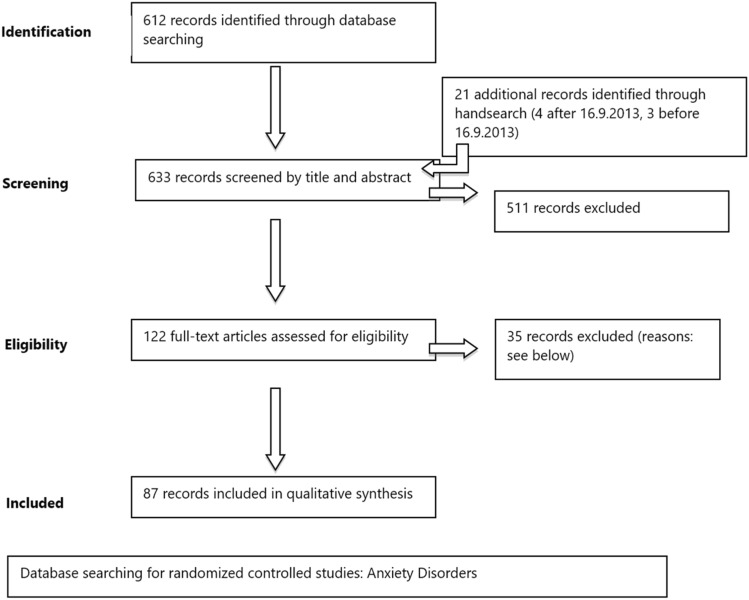
- The revision searched for RCTs published between 16/09/2013 and 20/06/2019, screened 638 newly found records plus prior guideline material, and ultimately included 92 new records.
- Study selection followed PRISMA, used explicit inclusion/exclusion criteria for adult anxiety disorders, and assessed RCT quality with SIGN Statement criteria; recommendations were approved by voting, requiring at least 75% of votes cast.
Limitations
- The paper states that for some topics there were too few studies or evidence was insufficient, such as VR for panic disorder and psychodynamic therapy relative to CBT.
- It also states that many IPI studies relied on unblinded self-ratings, and that in only 15% of those studies diagnoses were made by psychiatrists or psychologists in a personal interview; this is a limitation the text makes evident.
- The article notes that the full guideline contains 606 references and that not every statement is referenced in the paper itself, which limits how fully each recommendation can be traced in the article text.
Model-written summary. Check it against the paper before relying on it.
Integrity signals
Registry
Cites
Statistics
Figures
Verification
Claims the paper makes
1 Valid · 7 Not valid · 26 Not checked · 48 Own results and interpretations
In the paper
“Published randomized studies on psychological therapies had an average study duration of 12.4 weeks [9], therefore, little is known about the additional benefits of psychotherapies that have 25, 50 or more sessions.”
§ The German Guidelines for the treatment of anxiety disorders: first revision > Results > Treatment
What the sources say
- Not checked yetcites [9] Bandelow B Reitt M Rover C Michaelis S Gorlich Y Wedekind D Efficacy of treatments for anxiety disorders: a meta-analysis Int Clin Psychopharmacol 2015 30 183 192 10.1097/YIC.0000000000000078 25932596 source
plain- Asserted: passes — The authors put it forward as true.
- Checkable: passes — It can be checked against evidence.
- Load-bearing: passes — The paper’s conclusions depend on it.
- Based: passes — The paper gives a reason why it holds.
A result the paper states — it cites no source for it, so there is none to check. The quote shows it is in the paper.
In the paper
“Only for specific phobias, drug studies are scarce, and behavioral treatments should be preferred.”
§ The German Guidelines for the treatment of anxiety disorders: first revision > Results > Virtual and augmented reality exposure treatment
plain- Asserted: passes — The authors put it forward as true.
- Checkable: passes — It can be checked against evidence.
- Load-bearing: unclear — It is unclear whether the paper’s conclusions depend on it.
- Based: passes — The paper gives a reason why it holds.
A result the paper states — it cites no source for it, so there is none to check. The quote shows it is in the paper.
In the paper
“Most efficacy studies used treatment manuals guiding the intervention strategy.”
§ The German Guidelines for the treatment of anxiety disorders: first revision > Results > Treatment
plain- Asserted: passes — The authors put it forward as true.
- Checkable: passes — It can be checked against evidence.
- Load-bearing: passes — The paper’s conclusions depend on it.
- Based: passes — The paper gives a reason why it holds.
A result the paper states — it cites no source for it, so there is none to check. The quote shows it is in the paper.
In the paper
“However, evidence showing that IPIs are as effective as individual CBT with face-to-face contact is insufficient.”
§ The German Guidelines for the treatment of anxiety disorders: first revision > Results > Treatment
plain- Asserted: passes — The authors put it forward as true.
- Checkable: passes — It can be checked against evidence.
- Load-bearing: passes — The paper’s conclusions depend on it.
- Based: passes — The paper gives a reason why it holds.
A result the paper states — it cites no source for it, so there is none to check. The quote shows it is in the paper.
In the paper
“In comparison to CBT, the evidence for the efficacy of psychodynamic therapy (PDT) is weaker.”
§ The German Guidelines for the treatment of anxiety disorders: first revision > Results > Treatment
plain- Asserted: passes — The authors put it forward as true.
- Checkable: passes — It can be checked against evidence.
- Load-bearing: passes — The paper’s conclusions depend on it.
- Based: passes — The paper gives a reason why it holds.
31 more claims
Create a free account to see all 82 claims and to verify the 27 references still open.
- Probably not a substantial claim. 26
- It may state two separate claims as one. 29
- The quote only partly states this claim. 1
Claims other papers make about this one
Each is checked against this paper’s own text: does it say what the citing paper says it does?
The source backs part of the claim, not all of it — or backs it for a different population, condition or comparison.
In the citing paper
“The contents of Invirto are in line with national treatment guidelines for anxiety disorders [6], which are based on established German and international CBT treatment manuals for anxiety disorders [30–33].”
From Efficacy of an Internet-based intervention with self-applied exposure therapy in virtual reality for people with panic disorder: study protocol for a randomized controlled trial (2023) · cites this paper as [6]
Experimental — accuracy not yet measuredThe source backs part of the claim, not all of it — or backs it for a different population, condition or comparison.
In the citing paper
“According to German [6] and international guidelines such as the National Institute for Clinical Excellence (NICE; [7]), cognitive behavioral therapy (CBT) that includes exposure therapy is the first-line approach in the treatment of panic disorders (with or without agoraphobia).”
From Efficacy of an Internet-based intervention with self-applied exposure therapy in virtual reality for people with panic disorder: study protocol for a randomized controlled trial (2023) · cites this paper as [6]
Experimental — accuracy not yet measured
Citations
Cites
A Simple Sequentially Rejective Multiple Test Procedure
(1979) · Scandinavian Journal of Statistics · doi:10.2307/4615733 · Cited by 21,526 · cited 1×
“If a primary efficacy measure was not stated, results were re-evaluated using a Bonferroni-Holm correction [16] for multiple testing.”
MethodKessler, R. C. (1994) · Archives of General Psychiatry · doi:10.1001/archpsyc.1994.03950010008002 · Cited by 12,370 · cited 1×
“There is no evidence that anxiety disorders have occurred more frequently in recent years or decades [21, 22].”
BackgroundEpidemiology of anxiety disorders in the 21st century
Bandelow, B., & Michaelis, S. (2015) · Dialogues in Clinical Neuroscience · doi:10.31887/dcns.2015.17.3/bbandelow · Cited by 2,079 · cited 1×
“Anxiety disorders (Table 1) are the most prevalent psychiatric disorders and are associated with a high burden of illness [8].”
BackgroundSelf-citationPrevalence and Treatment of Mental Disorders, 1990 to 2003
Kessler, R. C., Demler, O., Frank, R. G., Olfson, M., Pincus, H. A., Walters, E. E., Wang, P., Wells, K. B., & Zaslavsky, A. M. (2005) · New England Journal of Medicine · doi:10.1056/nejmsa043266 · Cited by 1,910
JACOBI, F., WITTCHEN, H.-U., HÖLTING, C., HÖFLER, M., PFISTER, H., MÜLLER, N., & LIEB, R. (2004) · Psychological Medicine · doi:10.1017/s0033291703001399 · Cited by 1,097 · cited 1×
“These disorders often co-occur with other anxiety disorders, depression, somatoform, personality, and substance abuse disorders [19].”
BackgroundKatzman, M. A., Bleau, P., Blier, P., Chokka, P., Kjernisted, K., Van Ameringen, M., & the Canadian Anxiety Guidelines Initiative Group on behalf of the Anxiety Disorders Association of Canada/Association Canadienne des troubles anxieux and McGill University (2014) · BMC Psychiatry · doi:10.1186/1471-244x-14-s1-s1 · Cited by 1,090
Bandelow, B., Zohar, J., Hollander, E., Kasper, S., Möller, H.-J., WFSBP TASK FORCE ON TREATMENT GUIDE, Bandelow, B., Zohar, J., Hollander, E., Kasper, S., et al. (2008) · The World Journal of Biological Psychiatry · doi:10.1080/15622970802465807 · Cited by 854
Self-citationJacobi, F., Höfler, M., Strehle, J., Mack, S., Gerschler, A., Scholl, L., Busch, M. A., Maske, U., Hapke, U., Gaebel, W., et al. (2014) · Der Nervenarzt · doi:10.1007/s00115-013-3961-y · Cited by 750
Baldwin, D. S., Anderson, I. M., Nutt, D. J., Allgulander, C., Bandelow, B., den Boer, J. A., Christmas, D. M., Davies, S., Fineberg, N., Lidbetter, N., et al. (2014) · Journal of Psychopharmacology · doi:10.1177/0269881114525674 · Cited by 676
Self-citationPrevalence and Treatment of Mental Disorders
(2005) · New England Journal of Medicine · doi:10.1056/nejmc051936 · Cited by 650 · cited 1×
“There is no evidence that anxiety disorders have occurred more frequently in recent years or decades [21, 22].”
Background
Research works printed but not linked: 5
- ÄZQ/AWMF Deutsches instrument zur methodischen leitlinien-bewertung (delbi) 2008 AWMF 468 519
- Bandelow B Aden I Alpers GW Benecke A Benecke C Beutel ME Deckert J Domschke K Eckhardt-Henn A Geiser F Gerlach AL Harfst TH Hoffmann S Hoyer J Hunger-Schoppe C Kellner M Köllner V Kopp I Langs G Liebeck H Matzat J Ohly M Rüddel HP Rudolf S Scheufele E Simon R Staats H Ströhle A Waldherr B Wedekind D Werner AM Wiltink J Wolters JP Deutsche s3-leitlinie behandlung von angststörungen, version 2 2021 AWMF
- NICE Social anxiety disorder: recognition, assessment and treatment (full guideline) 2013 The British Psychological Society 25577940
- SIGN A guideline developer’s handbook (sign publication no. 50) 2019 Edinburgh Scottish Intercollegiate Guidelines Network (SIGN)
- WHO Tenth revision of the international classification of diseases, chapter v (f): mental and behavioural disorders (including disorders of psychological development). Clinical descriptions and diagnostic guidelines 1991 Geneva World Health Organization
Cited by
Bandelow, B., Allgulander, C., Baldwin, D. S., Costa, D. L. D. C., Denys, D., Dilbaz, N., Domschke, K., Eriksson, E., Fineberg, N. A., Hättenschwiler, J., et al. (2023) · The World Journal of Biological Psychiatry · doi:10.1080/15622975.2022.2086295 · Cited by 158
Self-citationBrandt, J., Bressi, J., Lê, M.-L., Neal, D., Cadogan, C., Witt-Doerring, J., Witt-Doerring, M., & Wright, S. (2024) · eClinicalMedicine · doi:10.1016/j.eclinm.2024.102507 · Cited by 77
Pharmacological Management of Borderline Personality Disorder and Common Comorbidities
Pascual, J. C., Arias, L., & Soler, J. (2023) · CNS Drugs · doi:10.1007/s40263-023-01015-6 · Cited by 71
“The psychological intervention with the highest level of evidence for the treatment of anxiety disorders is CBT [33].”
BackgroundInfluentialUpdate on treatments for anxiety-related disorders
Lee, H. J., & Stein, M. B. (2023) · Current Opinion in Psychiatry · doi:10.1097/yco.0000000000000841 · Cited by 43
Racz, J. I., Bialocerkowski, A., Calteaux, I. G., & Farrell, L. J. (2024) · Clinical Child and Family Psychology Review · doi:10.1007/s10567-024-00478-3 · Cited by 45
“ET is consistently identified as an essential component of CBT for the treatment of anxiety disorders (e.g., Bandelow et al., 2022), OCD (e.g., National Institute for Health and Care Excellence, 2005), and PTSD (e.g., American Psychological Association, 2017) in clients from across the lifespan…”
BackgroundStrategies to cope with stress and anxiety during the menopausal transition
Stute, P., & Fiacco, S. (2022) · Maturitas · doi:10.1016/j.maturitas.2022.07.015 · Cited by 46
Liou, Y., Bai, Y., Tsai, S., Chen, T., Chen, M., & Lo, W. (2023) · Journal of Evidence Based Dental Practice · doi:10.1016/j.jebdp.2023.101860 · Cited by 43
Bellinger, D., Wehrmann, K., Rohde, A., Schuppert, M., Störk, S., Flohr-Jost, M., Gall, D., Pauli, P., Deckert, J., Herrmann, M. J., et al. (2023) · BMC Psychiatry · doi:10.1186/s12888-023-05040-z · Cited by 45
“psychotherapy and MPA According to the German S3 guidelines for anxiety disorders, the therapy recommendation with the highest level of evidence is CBT, which includes exposure accompanied by a therapist [26].”
BackgroundDold, M., Bartova, L., Volz, H., Seifritz, E., Möller, H., Schläfke, S., & Kasper, S. F. (2023) · European Archives of Psychiatry and Clinical Neuroscience · doi:10.1007/s00406-022-01547-w · Cited by 35
“Since anxiety disorders are associated with a high burden of illness [5, 7], they may have negative consequences, including disability, low life-quality, reduced ability to work leading to loss of productivity, and a high suicidal risk when remaining un- and undertreated [31].”
BackgroundInfluentialCrocamo, C., Palpella, D., Cavaleri, D., Nasti, C., Piacenti, S., Morello, P., Lauria, G., Villa, O., Riboldi, I., Bartoli, F., et al. (2025) · The Lancet Digital Health · doi:10.1016/j.landig.2025.100878 · Cited by 33
A review on the efficacy of artificial intelligence for managing anxiety disorders
Das, K. P., & Gavade, P. (2024) · Frontiers in Artificial Intelligence · doi:10.3389/frai.2024.1435895 · Cited by 28
“…guidelines across countries endorse psychotherapy as the primary therapeutic approach, including modalities such as cognitive behavioral therapy, relaxation therapy, exposure-response prevention, and several other psychotherapeutic interventions (Katzman et al., 2014; Bandelow et al., 2022).”
BackgroundSu, S., Wang, Y., Jiang, W., Zhao, W., Gao, R., Wu, Y., Tao, J., Su, Y., Zhang, J., Li, K., et al. (2022) · Frontiers in Psychiatry · doi:10.3389/fpsyt.2021.799917 · Cited by 24
Internet psychotherapeutic interventions for anxiety disorders – a critical evaluation
Bandelow, B., & Wedekind, D. (2022) · BMC Psychiatry · doi:10.1186/s12888-022-04002-1 · Cited by 22
“We also used a large database of all studies for anxiety disorders collected for the German guidelines for anxiety disorders [9] which was updated for the 2021 version of the guideline [10].”
MethodSelf-citationPharmacological treatment of anxiety in older adults: a systematic review and meta-analysis
Neil‐Sztramko, S., Levy, A., Flint, A. J., Goodarzi, Z., Gough, A., Trenaman, S. C., Ameringen, M. V., Weir, E. L., Yeung, A., Akram, M., et al. (2025) · The Lancet Psychiatry · doi:10.1016/s2215-0366(25)00100-2 · Cited by 21
Ribé-Viñes, J. M., Gutiérrez-Maldonado, J., Zabolipour, Z., & Ferrer-Garcia, M. (2023) · The Cognitive Behaviour Therapist · doi:10.1017/s1754470x23000119 · Cited by 19
Li, S., Rong, X., Wang, C., Li, C., Liu, Q., Zhang, Y., Liu, Z., Zhang, L., & Zhang, M. (2024) · Frontiers in Psychology · doi:10.3389/fpsyg.2024.1467830 · Cited by 19
A review of the phenomenology, aetiology and treatment of animal phobia and insights for biophobia
Norberg, M. M., Visvalingam, S., Stevenson, R. J., & Saluja, S. (2023) · People and Nature · doi:10.1002/pan3.10514 · Cited by 17
Mendez, E. M., Mills, J. A., Suresh, V., Stimpfl, J. N., & Strawn, J. R. (2024) · CNS Spectrums · doi:10.1017/s1092852924000142 · Cited by 16
“27 Most current treatment guidelines and recommendations focus on overall improvement 28-31 rather than on the trajectory of improvement.”
BackgroundAmeringen, M. V., Fineberg, N. A., Ravindran, A. V., Arnold, P. D., Beaulieu, S., Brakoulias, V., Brietzke, E. M., Dowlati, Y., Drummond, L. M., Ferretti, C. J., et al. (2026) · Journal of Psychiatric Research · doi:10.1016/j.jpsychires.2025.12.039 · Cited by 15
Caldiroli, A., Colzani, L. C., Capuzzi, E., Quitadamo, C., Tegola, D. L., Surace, T., Russo, S., Capetti, M., Leo, S., Tringali, A. G. M., et al. (2023) · Journal of Personalized Medicine · doi:10.3390/jpm13030491 · Cited by 12
Sakai, M., Yoshinaga, N., Thew, G. R., & Clark, D. M. (2024) · Frontiers in Psychiatry · doi:10.3389/fpsyt.2024.1368722 · Cited by 12
Psychotherapy of generalized anxiety disorder
Jargin, S. V. (2024) · Сибирский научный медицинский журнал · doi:10.18699/ssmj20240401 · Cited by 11
Zhao, F.-Y., Kennedy, G. A., Xu, P., Conduit, R., Wang, Y., Zhang, W., Wang, H., Yue, L.-P., Huang, Y., Wang, Y., et al. (2023) · Frontiers in Psychiatry · doi:10.3389/fpsyt.2023.1290580 · Cited by 11
Zhao, B., Jia, X., Feng, H., Tang, C. C., Huang, Y., Zhao, Z., Hao, J., Li, H., Du, J., Liu, Y., et al. (2023) · Frontiers in Nutrition · doi:10.3389/fnut.2022.996692 · Cited by 11
Bhuller, R., Schlage, W. K., & Hoeng, J. (2024) · Journal of Cannabis Research · doi:10.1186/s42238-024-00250-y · Cited by 13
Schultz, J., Baumeister, A., Schmotz, S., Moritz, S., & Jelinek, L. (2023) · Trials · doi:10.1186/s13063-023-07536-1 · Cited by 8
“According to German [6] and international guidelines such as the National Institute for Clinical Excellence (NICE; [7]), cognitive behavioral therapy (CBT) that includes exposure therapy is the first-line approach in the treatment of panic disorders (with or without agorapho-bia).”
MethodCharacteristics of and treatment outcome in inpatients with emetophobia and other specific phobias
Meule, A., Zisler, E. M., Metzner, M. S., Voderholzer, U., & Kolar, D. R. (2025) · Journal of Psychiatric Research · doi:10.1016/j.jpsychires.2025.06.028 · Cited by 8
“…symptoms severely impact daily life (e.g., being unable to attend work, school, or university) and the treatment at the hospital adheres to the German S3-guidelines for the treatment of anxiety disorders in terms of admission criteria, treatment elements, and therapy goals (Bandelow et al., 2022).”
Beyond mental well-being: A One Health perspective on biophobias
Mammola, S., Nanni, V., Martino, S., Correia, R., Eckert, E. M., Norberg, M. M., & Soga, M. (2025) · BioScience · doi:10.1093/biosci/biaf084 · Cited by 8
Fi, B., Sumin, A. N., Garganeeva, N. P., Ларева, Н. В., Петрова, М. М., Петрунько, О. В., Попонина, Т. М., Repin, A. N., & Собенников, В. С. (2024) · Complex Issues of Cardiovascular Diseases · doi:10.17802/2306-1278-2024-13-3s-222-253 · Cited by 9
Antidepressant drug use in Europe: past consumption, prescribing patterns and forecast until 2030
Bindel, L. J., & Seifert, R. (2026) · International Journal of Clinical Pharmacy · doi:10.1007/s11096-025-02078-9 · Cited by 7
“…the largest share of ADs is prescribed for [100], a considerable amount of ADs is used for other indications, e.g. being a first-choice treatment in anxiety disorders, as well as their off-label use [7, 8, 17, 62, 101, 102] (Table 5), resulting in a potential overestimation of treatment coverage.”
Efficacy and safety studies review of Teraligen usage in psychiatric practice and general medicine
Shmilovich, A. A., & Goncharenko, S. N. (2022) · S S Korsakov Journal of Neurology and Psychiatry · doi:10.17116/jnevro202212206155 · Cited by 7
Bartova, L., Fugger, G., Dold, M., Kautzky, A., Fanelli, G., Zanardi, R., Albani, D., Weidenauer, A., Rujescu, D., Souery, D., et al. (2023) · Journal of Affective Disorders · doi:10.1016/j.jad.2023.03.068 · Cited by 7
Dold, M., Möller, H., Volz, H., Seifritz, E., Schläfke, S., Bartova, L., & Kasper, S. F. (2024) · European Psychiatry · doi:10.1192/j.eurpsy.2024.16 · Cited by 7
“Selective serotonin reuptake inhibitors (SSRIs) and serotonin and noradrenaline reuptake inhibitors (SNRIs) are recommended as first-line psychopharmacotherapy for anxiety disorders [e.g., 6 – 11].”
BackgroundАрхангельська, М. В. (2024) · Scientific Bulletin of Kherson State University Series Psychological Sciences · doi:10.32999/ksu2312-3206/2024-2-7 · Cited by 6
Lukaschek, K., Haas, C., Wannemüller, A., Brettschneider, C., Dreischulte, T., Margraf, J., Gensichen, J. S., & on behalf of the PARADIES study group (2023) · PLoS ONE · doi:10.1371/journal.pone.0287718 · Cited by 6
Pittig, A., Heinig, I., Arolt, V., Bartnick, C., Dannlowski, U., Deckert, J., Domschke, K., Fydrich, T., Goerigk, S. A., Hamm, A. O., et al. (2025) · Psychotherapy and Psychosomatics · doi:10.1159/000549073 · Cited by 5
Brakoulias, V., Albert, U., Chamberlain, S. R., Dell’Osso, B. M., Ferretti, C. J., Girone, N., Hollander, E., Ioannidis, K., Löchner, C., Menchón, J. M., et al. (2026) · Comprehensive Psychiatry · doi:10.1016/j.comppsych.2026.152689 · Cited by 5
Pharmacological management of panic disorder
Guaiana, G., & Davies, S. (2025) · BJPsych Advances · doi:10.1192/bja.2025.10117 · Cited by 6
[Research advances in the correlation between chronic subjective tinnitus and anxiety state].
Wang, X., Jin, Y., Cui, Z., Yu, C., Jin, Y., & Yang, J. J. (2023) · PubMed Central · doi:10.13201/j.issn.2096-7993.2023.05.015 · Cited by 7
The causal relationship between anxiety and tinnitus severity: a Mendelian randomization study
Yang, L., & Ding, Y. (2024) · Egyptian Journal of Medical Human Genetics · doi:10.1186/s43042-024-00520-7 · Cited by 5
Chu, C., Chang, C., Pan, C., Chiang, Y., Kuo, H.-Y., Hsu, T., Chen, S., & Chen, C. (2024) · Journal of the Formosan Medical Association · doi:10.1016/j.jfma.2023.12.002 · Cited by 4
Guillén, J. M. B. (2023) · American Journal of Psychiatry and Neuroscience · doi:10.11648/j.ajpn.20231101.12 · Cited by 5
Angst- und Abhängigkeitserkrankungen – Fokus Alkohol und Cannabis
Hellwig, S., & Domschke, K. (2023) · Der Nervenarzt · doi:10.1007/s00115-023-01502-7 · Cited by 3
“Atypische Antipsychotika Die Wirksamkeit von Quetiapin bei der Behandlung der generalisierten Angsterkrankung ist evident [31].”
BackgroundInfluentialSchultz, J., Baumeister, A., Schmotz, S., Schuurmans, L., & Jelinek, L. (2025) · Deutsches Ärzteblatt international · doi:10.3238/arztebl.m2024.0246 · Cited by 4
Arnfred, B. T., Zeka, F., Hjorthøj, C. R., Winding, C., Moeller, K. S., Pedersen, M. Ø., Rosenberg, N., Clemmensen, L., Glenthøj, L. B., & Nordentoft, M. (2025) · JMIR Mental Health · doi:10.2196/73815 · Cited by 4
“…biased cognitions and dysfunctional behaviors [9, 10], is the recommended first-line treatment for SAD and panic disorder with agoraphobia (PD/A) [11-14], demonstrating lasting efficacy [15-21], minimal side effects [15], and being generally preferred over psychopharmacological treatment [22].”
Andreoli, G., Kasch, C., Lindsay, C. E., & Hofmann, S. G. (2026) · Expert Review of Neurotherapeutics · doi:10.1080/14737175.2025.2604303 · Cited by 2
“However, other forms of therapy like virtual exposure, systemic therapy or self-help groups represent second line options if the first fails [20].”
InfluentialBadeja, D., Schier, F., McGinity, M., & Hoyer, J. (2026) · Psychotherapy Research · doi:10.1080/10503307.2025.2534978 · Cited by 2
“(Bandelow et al., 2022), exposure-focused interventions are estimated to be applied in less than 50% of suitable cases (Pittig et al., 2019), partly due to implementation barriers (Deacon et al., 2013; Pittig et al., 2019).”
Innovative opportunities of pharmakotherapy of generalized anxiety disorder
DENYSOV, Y., & Putyatin, G. G. (2024) · Ukrains kyi Visnyk Psykhonevrolohii · doi:10.36927/2079-0325-v32-is2-2024-5 · Cited by 2
Baumeister, A., Schuurmans, L., Bruhns, A., & Moritz, S. (2025) · JMIR Mental Health · doi:10.2196/71274 · Cited by 2
Context controls the ability of unconditional stimulus deflation to mitigate fear relapse
Robinson, P. K., & Trask, S. (2025) · Brain Research · doi:10.1016/j.brainres.2025.149877 · Cited by 2
Schmidt, A. L., Staunton, H., Stein, M. B., Hayes, A. M., Rodriguez‐Esteban, R., Fischer, K., McIver, T., & Suter, E. E. (2026) · Journal of Anxiety Disorders · doi:10.1016/j.janxdis.2026.103129 · Cited by 3
OTSUBO, T., Watanabe, K., Inoue, T., Inagaki, A., Kikuchi, T., Nomoto, K., Higa, S., Asami, Y., Sun, B., & Marschall, K. (2026) · Psychiatry and Clinical Neurosciences Reports · doi:10.1002/pcn5.70371 · Cited by 2
“19 According to major international clinical guidelines, 10,26,27 pharmacological treatment for anxiety disorders including GAD is recommended to be maintained for 6 – 12 months following remission, in order to reduce the risk of relapse.”
Mori, K., Kodaka, F., Yamamoto, A., Yamazaki, R., Ishii, J., Yamadera, W., Miyata, H., & Shigeta, M. (2023) · Neuropsychopharmacology Reports · doi:10.1002/npr2.12379 · Cited by 2
Ataei, S., Jahangard, L., Anaraki, S., Dastan, D., & Khazaei, S. (2023) · Current Psychiatry Research and Reviews · doi:10.2174/0126660822258340231025171755 · Cited by 2
Fi, B., Veltishchev, D. Y., Volel, B. A., Garganeeva, N. P., Kopylov, F. Y., Lareva, N. V., Medvedev, V. E., Mosolov, S. N., Petrova, M. M., Петрунько, О. В., et al. (2025) · Kardiologiia · doi:10.18087/cardio.2025.6.n2921 · Cited by 3
Young, J., Widdowson, M., & Tate, D. (2023) · Counselling and Psychotherapy Research · doi:10.1002/capr.12651 · Cited by 2
Interpretation Biases in Anxiety – A Three-Level Meta-AnalysisPreprint
Würtz, F., Kunna, M., Lindgraf, C., Abado, E., Amanvermez, Y., Blackwell, S. E., Margraf, J., Everaert, J., & Woud, M. L. (2025) · PsyArXiv (OSF Preprints) · doi:10.31234/osf.io/7zkvr_v2 · Cited by 4
Überarbeitete S3-Leitlinie: Behandlung von Angststörungen
Beutel, M. E., Wiltink, J., Werner, A. M., & Bandelow, B. (2022) · PiD - Psychotherapie im Dialog · doi:10.1055/a-1686-2030 · Cited by 1
Self-citationExercise Therapy to Reduce Anxiety (ExTRA) in mid-life and later-life adults: study protocol
Chong, T. W. H., McCurry, J., Partovi, A., Southam, J., Bryant, C., Cox, K. L., Westphal, A., Curran, E. M., Loi, S. M., Anstey, K. J., et al. (2024) · Archives of Gerontology and Geriatrics Plus · doi:10.1016/j.aggp.2024.100064 · Cited by 1
Prevalencia de ansiedad y depresión en mujeres con menopausia
Hoz, F. J. E. D. L. (2024) · REVISTA ARGENTINA DE MEDICINA · doi:10.61222/ram.v12i4.1039 · Cited by 1
Baldaçara, L., Veiga, D. D. L., Gaiotto, L. A. V., Paschoal, A. B., Pinto, A. F., Almeida, T. M., Santos, D. C. D., Loureiro, F. F., Malloy‐Diniz, L. F., Lacerda, A. L. T., et al. (2025) · Brazilian Journal of Psychiatry · doi:10.47626/1516-4446-2025-4349 · Cited by 2
Psychosocial interventions for anxiety disorders in adults: evidence mapping and guideline appraisal
Huang, C., Liu, X., Liu, Y., Luo, C., Cai, J., Wang, Y., Chen, J., Shi, Z., & Jin, X. (2025) · Frontiers in Psychiatry · doi:10.3389/fpsyt.2025.1677705 · Cited by 2
“There were 6 overlapping guidelines between this study and the two aforementioned studies (16, 18, 20, 21, 24, 27), accounting for 42.9% of all guidelines included in this study.”
InfluentialNovák, L., Maliňáková, K., Juklová, K., Koláček, J., Žídková, R., Meier, Z., Tavel, P., van Dijk, J. P., & de Winter, A. F. (2025) · Scientific Reports · doi:10.1038/s41598-025-24677-2 · Cited by 1
Interpretation Biases in Anxiety: A Three-Level Meta-Analysis
Würtz, F., Kunna, M., Blackwell, S. E., Lindgraf, C., Abado, E., Amanvermez, Y., Margraf, J., Everaert, J., & Woud, M. L. (2026) · Clinical Psychological Science · doi:10.1177/21677026251392855 · Cited by 1
Antipsychotic treatment patterns and cardiometabolic medicine use: current real-world evidence
Krishnan, R. P. R., Zoëga, H., Buckley, N. A., & Raubenheimer, J. (2026) · Epidemiology and Psychiatric Sciences · doi:10.1017/s2045796026100468 · Cited by 1
“…for many non-psychotic disorders recommend against antipsychotic use (e.g., insomnia) or advise cautious use in treatment-refractory individuals (e.g., anxiety disorders and depression) (Bandelow et al. , 2022; National Institute for Health and Care Excellence, 2022; Riemann et al. , 2023).”
Wolf, L., & Pedersen, A. (2026) · Zeitschrift für Klinische Psychologie und Psychotherapie · doi:10.1026/1616-3443/a000851 · Cited by 1
Galindo-Vázquez, Ó., Ruíz-García, E., Álvarez-Gómez, R. M., Lerma, A., Ling, A. M. G., Orozco, M. R., Espinoza, R., Garduño, A. B. U., Núñez-Hernández, J., Bello, M. E., et al. (2026) · Palliative & Supportive Care · doi:10.1017/s1478951526102752 · Cited by 1
Calabretti, I., Caviglia, S., Lötscher, K. C. Q., Ochsenbein‐Kölble, N., & Simões‐Wüst, A. P. (2026) · Swiss Medical Weekly · doi:10.57187/5069 · Cited by 1
Janeczek, P. (2022) · Journal of Education Health and Sport · doi:10.12775/jehs.2022.12.07.065 · Cited by 1
Murawiec, S., Olejnik, N., & Kudlik, A. (2023) · Psychiatria Spersonalizowana · doi:10.5114/psychs.2023.125705 · Cited by 1
Galarça, A. M. S. D. S., Kantorski, L. P., Porto, A. R., & de Menezes, E. S. (2024) · Journal of Nursing and Health · doi:10.15210/jonah.v14i3.26260 · Cited by 1
Bichler, C. S., Rausch, L. K., Unterholzner, J., Kopp, M., Sperner‐Unterweger, B., & Hüfner, K. (2025) · Neuropsychiatrie · doi:10.1007/s40211-025-00535-5 · Cited by 1
Interpretation Biases in Anxiety – A Three-Level Meta-AnalysisPreprint
Würtz, F., Kunna, M., Lindgraf, C., Abado, E., Amanvermez, Y., Blackwell, S. E., Margraf, J., Everaert, J., & Woud, M. L. (2023) · PsyArXiv (OSF Preprints) · doi:10.31234/osf.io/7zkvr · Cited by 1
Scaling New Heights: A Psychometric Analysis of Interpretation Bias Measures for AcrophobiaPreprint
Macit, B., Würtz, F., Lipp, A., Schiemann, S., Steinman, S. A., Zlomuzica, A., Margraf, J., & Woud, M. L. (2025) · PsyArXiv (OSF Preprints) · doi:10.31234/osf.io/nu5p6_v1 · Cited by 1
Using phytopharmaceuticals in the management of chronic stress
Vranová, V. (2022) · Praktické lékárenství · doi:10.36290/lek.2022.006
Hintergrund: Gesundheitswesen in der Schweiz
Schlander, M., Schäfer, R., & Selberg, L. (2023) · Springer eBooks · doi:10.1007/978-3-662-66825-2_2
Caldirola, D., Donatis, D. D., Alciati, A., Daccò, S., & Perna, G. (2023) · Expert Review of Neurotherapeutics · doi:10.1080/14737175.2023.2254938
“…(SSRIs) and the serotonin – norepinephrine reuptake inhibitor (SNRI) venlafaxine, as first-line options; tricyclic anti-depressants (TCAs) and benzodiazepines (BDZs) as second-line alternatives; and cognitive – behavioral therapy (CBT) as the first-line non-pharmacological intervention [12–15].”
BackgroundInfluentialArjmandi, M., Poudineh, S., Sarlak, A., Eghbali, M., Barghgir, B., Poudineh, M., A, A., & A, A. (2023) · Galen Medical Journal · doi:10.31661/gmj.v12i.3072 · Cited by 2
“Recently, some guidelines have been published to describe how to use pharmacotherapies based on serotonin-dependent mechanisms in patients with SAD, which psychologists and psychiatrists vitally need to be familiar with [63, 62].”
BackgroundLiterature Review: Types and Prospects of Post-Traumatic Stress Disorder
Zhang, R. (2024) · Lecture Notes in Education Psychology and Public Media · doi:10.54254/2753-7048/46/20230789
Panic Disorder with Agoraphobia in Post-Trauma Epilepsy Patient: a Case Report
Fitriani, F. N., Putra, G. F. A., & Syulthoni, Z. B. (2024) · Journal of Medicine and Health Technology · doi:10.12962/j30466865.v1i1.1116
Wechsler, T. F., & Mühlberger, A. (2024) · DNP – Die Neurologie & Psychiatrie · doi:10.1007/s15202-024-6239-2 · Cited by 1
Biochemical challenges for testing novel anti-panic drugs in humans
Abrams, K. B., Folger, I. T., Cullen, N. A., & Wichlinski, L. J. (2024) · Pharmacology Biochemistry and Behavior · doi:10.1016/j.pbb.2024.173825
Angst im Klimakterium: Ein Vergleich von Hormonersatz- und Psychotherapie
Kränzlin, S. (2024) · Journal für Gynäkologische Endokrinologie/Schweiz · doi:10.1007/s41975-024-00364-9
Virtual Mental Health Counselling
CDA-AMC (2025) · Canadian Journal of Health Technologies · doi:10.51731/cjht.25.1061
Grundlagen der Diagnostik und Therapie
(2024) · Elsevier eBooks · doi:10.1016/b978-3-437-22487-4.16001-0
(2025) · Elsevier eBooks · doi:10.1016/b978-3-437-21835-4.00116-5
Stute, P. (2025) · Springer eBooks · doi:10.1007/978-3-662-70494-3_4
Марциняк-Дорош, О., Yaroshchuk, M., & Ляска, О. П. (2025) · Habitus · doi:10.32782/hbts.75.2.41
Gosmann, N. P., Dreher, C. B., & Manfro, G. G. (2025) · Elsevier eBooks · doi:10.1016/b978-0-443-29025-1.00004-7
Klinische Signifikanz von Angststörungen im akutpsychiatrischen stationären Behandlungsrahmen
Korošek, R. (2024) · Dokumentenrepositorium der RUB (Ruhr University Bochum) · doi:10.13154/294-12132
Realidade virtual no tratamento da Fobia Social
Mendes, V. D. N. (2022) · Portuguese National Funding Agency for Science, Research and Technology (RCAAP Project by FCT) · doi:10.34626/nwxq-k295 · Cited by 1
Schultz, J., Baumeister, A., Schmotz, S., Moritz, S., & Jelinek, L. (2024) · Figshare · doi:10.6084/m9.figshare.26610066
Mental health in elite sports: Epidemiology, risk factors, and treatment experiences
Andersson, M. J. (2025) · Lund University Publications (Lund University)
MisuMedPT : use and misuse of psychoactive medicines in Portugal
Carmona Araújo, A. (2024) · Portuguese National Funding Agency for Science, Research and Technology (RCAAP Project by FCT)
Posledice okužbe s SARS-CoV-2 na duševnem zdravju in intervencije zdravstvene nege
Jerman, T. (2023) · Repository of the University of Ljubljana (University of Ljubljana)
An Educational Intervention on the Efficacy of Ketamine- Assisted Psychotherapy for Anxiety
Meaux, A., & Meaux, A. (2024) · UA Campus Repository (The University of Arizona)
Розроблення кисломолочного напою з алое вера
Сторож, Л. А., & Назарко, І. С. (2024) · ELARTU (Ternopil National Technical University)
Blas Medina, S. A., & Gosher Torre, G. C. (2024) · renati
Peyrot, C. (2024) · Papyrus : Institutional Repository (Université de Montréal) · doi:10.71781/26033
Metadata
- Authors
- Bandelow, B., Werner, A. M., Kopp, I., Rudolf, S., Wiltink, J., & Beutel, M. E.
- Affiliations
- Universitätsmedizin Göttingen (DE)
- University Medical Center of the Johannes Gutenberg University Mainz (DE)
- Association of the Scientific Medical Societies (DE)
- Helios Kliniken (DE)
- Corresponding author
- Bandelow, Borwin
- Venue
- European Archives of Psychiatry and Clinical Neuroscience
- Published
- 2021-10-05
- Volume
- 272
- Issue
- 4
- Pages
- 571-582
- ISSN
- 0003-9373 (ISSN-L)
- 0940-1334
- 1433-8491
- PMC
- PMC8490968
- OpenAlex
- W3204892548
- Cited by
- 90
- References
- 30
- Citations by year
- 2026: 15 · 2025: 20 · 2024: 24 · 2023: 22 · 2022: 9
- FWCI
- 13.29
- Type
- journal article
- Language
- en
- Open access
- hybrid
- doi.org
- Licence
- cc-by
- creativecommons.org/licenses/by/4.0 (tdm)
- creativecommons.org/licenses/by/4.0 (vor)
- Locations
- European Archives of Psychiatry and Clinical Neuroscience (publishedVersion, cc-by)
- PubMed Central (publishedVersion, cc-by)
- PubMed (publishedVersion)
- Informationszentrum Lebenswissenschaften (ZB MED) (submittedVersion, cc-by)
- GoeScholar The Publication Server of the Georg-August-Universität Göttingen (Georg-August-Universität Göttingen) (submittedVersion, cc-by)
- Funders
- Georg-August-Universität Göttingen
- Topics
- Social Sciences › Psychology › Experimental and Cognitive Psychology › Anxiety, Depression, Psychometrics, Treatment, Cognitive Processes
- Social Sciences › Psychology › Clinical Psychology › Psychotherapy Techniques and Applications
- Social Sciences › Psychology › Clinical Psychology › Psychological Treatments and Disorders
- Keywords
- anxiety disorders, cognitive behavioral therapy, psychodynamic psychotherapy, selective serotonin reuptake inhibitors, serotonin-norepinephrine reuptake inhibitors, pharmacotherapy, psychotherapy, virtual reality exposure therapy, online intervention, systemic therapy, treatment-resistant anxiety, patient preferences
- MeSH terms
- Internet-Based Intervention, Anxiety Disorders, Humans, Psychotherapy, Cognitive Behavioral Therapy, Selective Serotonin Reuptake Inhibitors
About these checks
Registry, retraction, Cites and statistics results are computed, not judged, with one exception: a printed reference that no index lists is read once by a model before it counts as a citation error. Claims are extracted by a model and kept only when their quote appears verbatim in the text; each cited source is then checked, with a model’s help, for whether it says what the claim relies on. Those verdicts can be wrong — read the claim’s quote and the cited source before relying on one.
A language model drew the claims from the paper on 2026-10-11, under version 3 of the claim definition (model deepseek-v4.1-flash, prompt extract-v3).
A second model labelled each claim on 2026-10-11 (model jev-1.13-20260917, definition revision gold-guideline-v0.2).
Statistics and arithmetic are recomputed, not judged.
Confidence bands are shown only for fields calibrated on our annotated test set. None is calibrated yet, so no band is shown.
What counts as a claim ›How we measure confidence ›How we check this ›
Are you an author, or do you see a problem with this page? Request a review
Data sources
Bibliographic data: Semantic Scholar, OpenAlex, Crossref.
Contains information from the Semantic Scholar Academic Graph Datasets, made available under the ODC Attribution License (ODC-BY 1.0).
Semantic Scholar’s data is described in: Kinney, R., et al. (2023). The Semantic Scholar Open Data Platform. arXiv:2301.10140.
