

Do pain, anxiety and depression influence quality of life for people with amyotrophic lateral sclerosis/motor neuron disease? A national study reconciling previous conflicting literature
Open accessThe DOI matches its Crossref record; 49 of the 49 references it cites were found in a registry or an index; 2 of the 36 sources its claims cite were checked for support.
Abstract
Introduction: The importance of elucidating the relationships between pain, mood and quality of life (QoL) amongst people with amyotrophic lateral sclerosis/motor neuron disease is evident to clinicians, yet the literature is limited and inconsistent. We explored the relationships between pain, depression, anxiety and QoL to reconcile the previous contrasting findings and inform future research and clinical practice. Methods: Patient-reported outcomes were obtained as part of the Trajectories of Outcomes in Neurological Conditions study. Mood and QoL scales underwent Rasch analysis. Correlation coefficients examined the strength of association between variables of interest. A bivariate regression model was developed to examine the effects of pain, depression and anxiety on joint psychological and physical QoL domains. Results: Of 636 people with ALS, 69% reported pain, of these most had mild pain. Seven percent (7%) of participants exceeded published cutoffs for probable depression and 14% had probable anxiety. Pain, depression and anxiety all influence quality of life; depression has a significant effect on both physical and psychological domains of QoL, whereas pain affects physical QoL and anxiety psychological QoL. Conclusions: These results show the importance of expressing quality of life in a conceptually appropriate way, as failing to take account of the multidimensional nature of QoL can result in important nuances being overlooked. Clinicians must be aware that pain, depression and anxiety all worsen QoL across their ranges, and not just when pain is severe or when anxiety or depression reach case level.
Overview
CoChat Summary
## TL;DR
In this national ALS/MND study of 636 participants, pain, depression, and anxiety were all associated with worse quality of life, but different symptoms related to different QoL domains. Depression had the broadest impact, while pain was more tied to physical QoL and anxiety to psychological QoL.
## Key findings
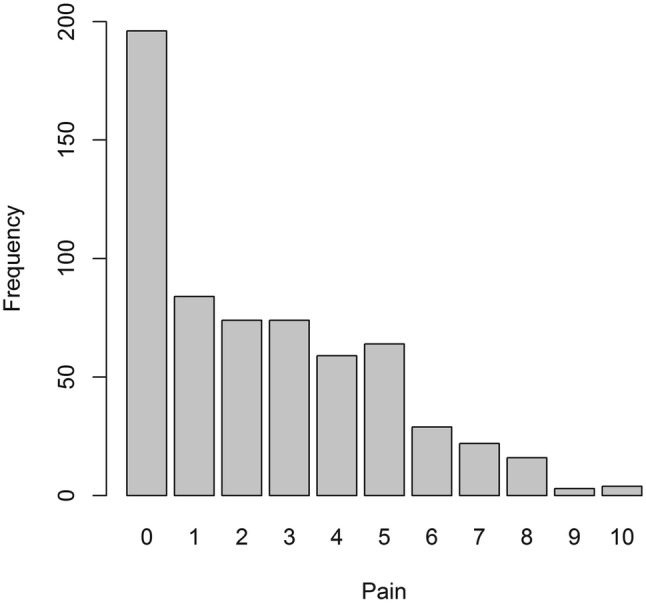
- Of 636 people with ALS, 69% reported pain; among those with pain, most had mild pain, and the pain NRS was completed by 625/636 (98.3%) participants.
- 7% of participants exceeded published cutoffs for probable depression and 14% for probable anxiety; in the raw mHADS cut-point summary, 29.1% were above the possible/probable depression threshold and 27.4% above the possible/probable anxiety threshold.
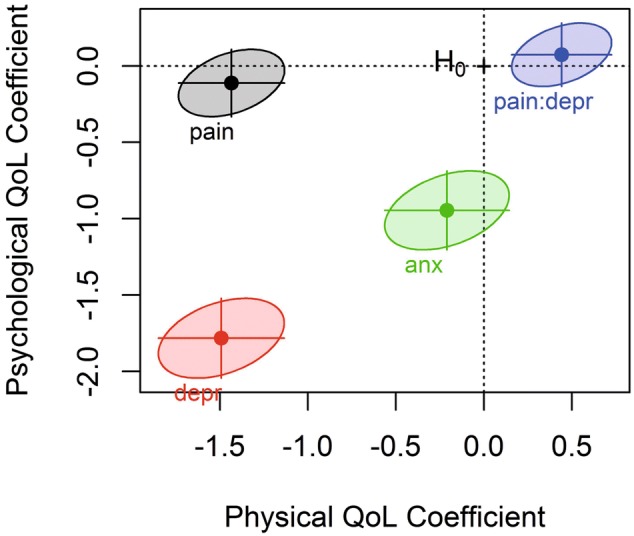
- In the bivariate model, the null hypothesis was rejected for pain, depression, and anxiety, and depression explained more variance than the other variables (Pillai test statistic = 0.33).
- The final model found that increased pain, depression, and anxiety were associated with reduced QoL; depression was the most influential factor for both QoL domains, pain affected physical QoL more, and anxiety psychological QoL more.
## Methods
- Design/data: Cross-sectional analysis of patient-reported outcomes from the ongoing Trajectories of Outcomes in Neurological Conditions (TONiC) study; participants had ALS/MND and were recruited from specialist clinics across the UK using convenience sampling.
- Sample/measures: 636 participants completed questionnaires; measures included WHOQOL-BREF physical and psychological domains, mHADS anxiety/depression, and a 0–10 numeric rating scale for pain.
- Analysis: Mood and QoL scales underwent Rasch analysis; associations were examined with Pearson/Kendall correlations, a type 2 MANOVA, and a bivariate regression model with forward selection and interaction testing.
## Limitations
- The paper explicitly states the study is cross-sectional, so causality cannot be determined.
- Patients with cognitive impairment were ineligible, so the findings may not be relevant to ALS/MND patients with cognitive impairment; the paper also notes that minor cognitive impairment was not assessed.
- Evident from the text: recruitment used convenience sampling from specialist clinics, and some approached patients did not participate, which may limit representativeness.
Model-written summary. Check it against the paper before relying on it.
Integrity signals
Registry
Cites
Statistics
Figures
Verification
Claims the paper makes
2 Valid · 0 Not valid · 11 Not checked · 46 Own results and interpretations
A result the paper reports from its own data — it cites no other source for it, so there is none to check. The quote shows it is in the paper.
In the paper
“These processes showed that despite the variation in the literature findings, patients and professionals alike believe that pain, anxiety and depression all influence QoL for people with ALS/MND.”
§ Do pain, anxiety and depression influence quality of life for people with amyotrophic lateral sclerosis/motor neuron disease? A national study reconciling previous conflicting literature > Introduction
plain- Asserted: passes — The authors put it forward as true.
- Checkable: passes — It can be checked against evidence.
- Load-bearing: passes — The paper’s conclusions depend on it.
- Based: passes — The paper gives a reason why it holds.
A result the paper reports from its own data — it cites no other source for it, so there is none to check. The quote shows it is in the paper.
In the paper
“whereas pain affects physical QoL”
§ Do pain, anxiety and depression influence quality of life for people with amyotrophic lateral sclerosis/motor neuron disease? A national study reconciling previous conflicting literature > Abstract > Results
plainstates a causen = 636- Asserted: passes — The authors put it forward as true.
- Checkable: passes — It can be checked against evidence.
- Load-bearing: passes — The paper’s conclusions depend on it.
- Based: passes — The paper gives a reason why it holds.
A result the paper reports from its own data — it cites no other source for it, so there is none to check. The quote shows it is in the paper.
In the paper
“Depression explains more of the variance in the response variables than the other explanatory variables (Pillai test statistic = 0.33).”
§ Do pain, anxiety and depression influence quality of life for people with amyotrophic lateral sclerosis/motor neuron disease? A national study reconciling previous conflicting literature > Results > Statistical model of physical and psychological quality of life domains
plainstates an association- Asserted: passes — The authors put it forward as true.
- Checkable: passes — It can be checked against evidence.
- Load-bearing: passes — The paper’s conclusions depend on it.
- Based: passes — The paper gives a reason why it holds.
A result the paper reports from its own data — it cites no other source for it, so there is none to check. The quote shows it is in the paper.
In the paper
“The null hypothesis was rejected for each explanatory variable (Table 4).”
§ Do pain, anxiety and depression influence quality of life for people with amyotrophic lateral sclerosis/motor neuron disease? A national study reconciling previous conflicting literature > Results > Statistical model of physical and psychological quality of life domains
plainstates an association- Asserted: passes — The authors put it forward as true.
- Checkable: passes — It can be checked against evidence.
- Load-bearing: passes — The paper’s conclusions depend on it.
- Based: passes — The paper gives a reason why it holds.
A result the paper reports from its own data — it cites no other source for it, so there is none to check. The quote shows it is in the paper.
In the paper
“There were some strong correlations between these variables, for example, physical QoL was associated with psychological QoL (Table 3).”
§ Do pain, anxiety and depression influence quality of life for people with amyotrophic lateral sclerosis/motor neuron disease? A national study reconciling previous conflicting literature > Results > Correlations between pain, mood and quality of life
plainstates an associationn = 597- Asserted: passes — The authors put it forward as true.
- Checkable: passes — It can be checked against evidence.
- Load-bearing: unclear — It is unclear whether the paper’s conclusions depend on it.
- Based: passes — The paper gives a reason why it holds.
19 more claims
Create a free account to see all 59 claims and to verify the 34 references still open.
- Probably not a substantial claim. 14
- It may state two separate claims as one. 20
- The quote only partly states this claim. 5
Citations
Cites
Depression and quality of life in older persons: A review
Sivertsen, H., Bjørkløf, G. H., Engedal, K., Selbæk, G., & Helvik, A.-S. (2015) · Dementia and Geriatric Cognitive Disorders · doi:10.1159/000437299 · Cited by 14,152
Development of the World Health Organization WHOQOL-BREF Quality of Life Assessment
THE WHOQOL GROUP (1998) · Psychological Medicine · doi:10.1017/s0033291798006667 · Cited by 7,933
Self-citationProbabilistic Models for Some Intelligence and Attainment Tests
(1961) · Information and Control · doi:10.1016/s0019-9958(61)80061-2 · Cited by 6,939
(1999) · Cited by 5,934
Skevington, S. M., Lotfy, M., & O'Connell, K. A. (2004) · Quality of Life Research · doi:10.1023/b:qure.0000018486.91360.00 · Cited by 4,686
Methods of multivariate analysis
(1995) · Choice Reviews Online · doi:10.5860/choice.33-1586 · Cited by 2,281
Brooks, B. R. (1994) · Journal of the Neurological Sciences · doi:10.1016/0022-510x(94)90191-0 · Cited by 2,140
Methods of Multivariate Analysis
Rencher, A. C. (2002) · Wiley Series in Probability and Statistics · doi:10.1002/0471271357 · Cited by 2,040
Tennant, A., & Conaghan, P. G. (2007) · Arthritis Care & Research · doi:10.1002/art.23108 · Cited by 1,638
Self-citationEvaluating Bifactor Models: Calculating and Interpreting Statistical Indices
Rodriguez, A., Reise, S. P., & Haviland, M. G. (2016) · Psychological Methods · doi:10.1037/met0000045 · Cited by 1,599
Research works printed but not linked: 1
- O’Sullivan B Rose N Griffiths J Young C Trajectories of Outcome in Neurological Conditions (TONiC) Study Group Professionals’ opinions on the physical factors affecting quality of life in multiple sclerosis and motor neurone disease: pilot work from the Trajectories of Outcomes in Neurological Conditions study J Neurol 2013 260 S1 26
Cited by
Heidari, M. E., Nadali, J., Parouhan, A., Azarafraz, M., tabatabai, S. M., Irvani, S. S. N., eskandari, F., & Gharebaghi, A. (2021) · Journal of Affective Disorders · doi:10.1016/j.jad.2021.03.015 · Cited by 69
Iazzolino, B., Peotta, L., Zucchetti, J. P., Canosa, A., Manera, U., Vasta, R., Grassano, M., Palumbo, F., Brunetti, M., Barberis, M., et al. (2020) · Neurology · doi:10.1212/wnl.0000000000011093 · Cited by 33
Quality of life, disability, and clinical variables in amyotrophic lateral sclerosis
Alencar, M. A., da Silva, I. M. M., Hilário, S. M., Rangel, M. F. D. A., Abdo, J. S., de Araújo, C. M., & de Souza, L. C. (2022) · Arquivos de Neuro-Psiquiatria · doi:10.1590/0004-282x-anp-2021-0201 · Cited by 33
Larsson, B., Nordin, K., & Nygren, I. (2023) · Journal of the Neurological Sciences · doi:10.1016/j.jns.2023.122780 · Cited by 23
“Most studies indicate that clinically significant depression and anxiety are not as present or as severe as might be expected in ALS patients (8 – 15), while other studies show that emotional distress is common (10,16 – 19).”
BackgroundAmyotrophic Lateral Sclerosis and Pain: A Narrative Review from Pain Assessment to Therapy
Pota, V., Sansone, P., Sarno, S. D., Aurilio, C., Coppolino, F., Barbarisi, M., Barbato, F., Fiore, M., Cosenza, G., Passavanti, M. B., et al. (2024) · Behavioural Neurology · doi:10.1155/2024/1228194 · Cited by 23
“Its simplicity allows the NRS to be used even in subjects with limited communication skills [30, 69, 87].”
Non-motor symptoms in motor neuron disease: prevalence, assessment and impact
Beswick, E., Forbes, D., Johnson, M., Newton, J. L., Dakin, R. S., Glasmcher, S., Abrahams, S., Carson, A. J., Chandran, S., & Pal, S. (2023) · Brain Communications · doi:10.1093/braincomms/fcad336 · Cited by 19
“21 The prevalence of non-motor symptoms also varied with the clinical characteristics of participants, with those who were long survivors and those with worse physical function (as indicated by lower ALS-FRS(R) scores) more likely to report more non-motor symptoms.”
BackgroundAn, R., Cheng, L., Li, X., Wu, Y., He, X., Ai, S., Xu, Y., & He, C. (2022) · Frontiers in Neurology · doi:10.3389/fneur.2022.806577 · Cited by 15
“Previous research has reported depression scores can significantly decrease QoL, in both physical and psychological domains (4, 25).”
BackgroundInfluentialDevelopments in the assessment of non-motor disease progression in amyotrophic lateral sclerosis
Chiò, A., Canosa, A., Calvo, A., Moglia, C., Cicolin, A., & Mora, G. (2021) · Expert Review of Neurotherapeutics · doi:10.1080/14737175.2021.1984883 · Cited by 14
“Despite the growing awareness of the profound detrimental effects of pain on ALS patients’ and caregivers’ quality of life [77,103,104] pain remains a relatively neglected symptom in ALS [105] owing to a misconception of the disease as purely”
BackgroundYoung, C. A., Ealing, J., McDermott, C. J., Williams, T. L., Al‐Chalabi, A., Majeed, T., Roberts, R. C., Mills, R. J., & Tennant, A. (2021) · Amyotrophic Lateral Sclerosis and Frontotemporal Degeneration · doi:10.1080/21678421.2021.1990343 · Cited by 15
Self-citationThe spectrum of behavioral disorders in amyotrophic lateral sclerosis: current view
Jellinger, K. A. (2024) · Journal of Neural Transmission · doi:10.1007/s00702-024-02841-8 · Cited by 13
Wigand, B., Schlichte, I., Schreiber, S., Heitmann, J., Meyer, T., Dengler, R., Petri, S., Haghikia, A., Vielhaber, S., & Vogt, S. (2021) · Amyotrophic Lateral Sclerosis and Frontotemporal Degeneration · doi:10.1080/21678421.2021.1962354 · Cited by 13
An, R., Wu, Y., Li, Y., Li, X., Ai, S., Xu, Y., & He, C. (2022) · Frontiers in Neuroscience · doi:10.3389/fnins.2022.897598 · Cited by 13
“Some studies suggested that pain was associated with deterioration of QoL in ALS patients (Pagnini et al., 2012; Edge et al., 2020), while others indicated that pain intensity was not related to QoL (Pizzimenti et al.”
BackgroundMethodResultInfluentialGentili, D., Deiana, G., Chessa, V., Calabretta, A., Marras, E., Solinas, C., Gugliotta, C., & Azara, A. (2023) · Healthcare · doi:10.3390/healthcare11111641 · Cited by 11
Predictors of self-perceived health worsening over COVID-19 emergency in ALS
Cabona, C., Ferraro, P. M., Meo, G., Roccatagliata, L., Schenone, A., Inglese, M., Villani, F., & Caponnetto, C. (2021) · Neurological Sciences · doi:10.1007/s10072-020-04997-z · Cited by 10
Wu, W. (2025) · International Journal of Fuzzy Systems · doi:10.1007/s40815-024-01926-6 · Cited by 10
“Fuzzy control theory is adept at handling uncertain models and is suitable for fields such as industrial control [16].”
Jellinger, K. A. (2023) · Journal of Neural Transmission · doi:10.1007/s00702-023-02714-6 · Cited by 9
“While according to the majority of studies depression was associated with lower QoL (Ciecwierska et al. 2023; Edge et al. 2020; Gould et al. 2015; Heidari et al. 2021; Körner et al. 2015; Lou et al. 2003; Paganoni et al. 2017; Pizzimenti et al. 2013; Rabkin et al. 2016; Sandstedt et al. 2016;…”
Hardy, M. S., Castle, C., & Jackson, C. E. (2021) · Journal of Neuropsychiatry · doi:10.1176/appi.neuropsych.21040092 · Cited by 9
Schlichte, I., Petri, S., Dengler, R., Meyer, T., Haghikia, A., Vielhaber, S., & Vogt, S. (2022) · Journal of Clinical Medicine · doi:10.3390/jcm11040944 · Cited by 9
“but do not necessarily determine each other [8].”
BackgroundRadaković, R., Carroll, A., Altiero, A., Reichwein, C., Walsh, S. M., Niven, E., Abrahams, S., & Simmons, Z. (2024) · Journal of Neurology · doi:10.1007/s00415-024-12639-z · Cited by 8
“Mental health problems (anxiety and low mood or depression) have been associated with lower QoL [21, 22].”
BackgroundVogt, S., Schlichte, I., Schreiber, S., Wigand, B., Dębska–Vielhaber, G., Heitmann, J., Meyer, T., Dengler, R., Petri, S., Haghikia, A., et al. (2021) · Journal of Clinical Medicine · doi:10.3390/jcm10194552 · Cited by 9
“A recent study demonstrated that pain also worsens quality of life, and not only when it is severe [9].”
BackgroundSancho-Cantus, D., Cubero-Plazas, L., Privado, J., Aguilar, E. J., Ros, M. C., Navarro-Illana, E., & Ortí, J. E. D. L. R. (2023) · Archives of Medical Research · doi:10.1016/j.arcmed.2023.102936 · Cited by 5
Perceived Pain in People Living with Amyotrophic Lateral Sclerosis—A Scoping Review
Rosa, D., Ingrande, L., Marcomini, I., Poliani, A., Villa, G., Sodano, M., & Manara, D. F. (2024) · Nursing Reports · doi:10.3390/nursrep14040220 · Cited by 5
Rawlinson, C. V., Gould, R. L., McDermott, C. J., Thompson, B. T., Weeks, K., Gossage-Worrall, R., Serfaty, M. A., Graham, C. D., McCracken, L. M., White, D. A., et al. (2024) · The Cognitive Behaviour Therapist · doi:10.1017/s1754470x24000333 · Cited by 5
“Psychological distress in plwMND is associated with numerous factors, including poorer quality of life (Edge et al ., 2020; van Groenestijn et al ., 2016), increased hopelessness (Paganoni et al ., 2017) and increased risk of suicide (Fang et al ., 2008).”
Self-citationAn, R., Li, Y., He, X., Li, C., Li, X., Xu, Y., & He, C. (2021) · Neural Plasticity · doi:10.1155/2021/5537892 · Cited by 6
Albuquerque, K. M. D. F., Pernambuco, L. D. A., & Lopes, L. G. (2022) · Audiology - Communication Research · doi:10.1590/2317-6431-2021-2599 · Cited by 6
Rojas-López, J. C., Estrada-Gualdron, P. I., Ramírez-Guerrero, S., Velásquez-Cárdenas, M. J., Redondo-Escobar, J., Vargas-Arenas, S., Palacios-Sánchez, L., & Palacios‐Espinosa, X. (2024) · Neurological Sciences · doi:10.1007/s10072-024-07643-0 · Cited by 4
“It is essential to remain vigilant in monitoring such symptoms that may not pose an immediate threat to a patient's life, but significantly impact their quality of life [53].”
BackgroundMilano–Torino Staging and Long-Term Survival in Chinese Patients with Amyotrophic Lateral Sclerosis
He, R., Zheng, M., Lian, L., & Yao, X. (2021) · Cells · doi:10.3390/cells10051220 · Cited by 3
“Apart from motor function disorders, cognitive impairment and neuropsychiatric symptoms are also common nonmotor manifestations in ALS patients [33,34].”
BackgroundHigh doses of opioids usage for amyotrophic lateral sclerosis patients with non-invasive ventilation
Morishima, R., Shimizu, T., Kimura, H., Bokuda, K., Saotome, T., Nakayama, Y., & Takahashi, K. (2023) · Acta Neurologica Belgica · doi:10.1007/s13760-023-02344-5 · Cited by 3
Abnormal brain functional network dynamics in amyotrophic lateral sclerosis patients with depression
Sun, S., Chen, Y., Zhao, B. Q., Zhu, J., Wen, T., Peng, B., Ren, Q., Sun, X., Lin, P., Zhang, D., et al. (2024) · Brain Imaging and Behavior · doi:10.1007/s11682-024-00896-5 · Cited by 3
“For example, depression may increase the risk of cognitive impairment and negatively influence quality of life and survival in ALS patients (Wei et al., 2016; Liu et al., 2018; Chen et al., 2015; Marchi et al., 2019; Edge et al., 2020).”
Phua, C. S., Ng, A. Y. T., Brooks, C. A., Harrington, Z., Vedam, H., Huynh, T. D., Seccombe, D., Aouad, P., & Cordato, D. J. (2020) · Postgraduate Medical Journal · doi:10.1136/postgradmedj-2020-138184 · Cited by 3
Keetharuth, A. D., Gould, R. L., McDermott, C. J., Thompson, B. J., Rawlinson, C., Bradburn, M., Bursnall, M., Kumar, P., Turton, E. J., Tappenden, P., et al. (2024) · European Journal of Neurology · doi:10.1111/ene.16317 · Cited by 2
“The rapid progression of the disease poses considerable psychological burden on people living with MND (plwMND) leading to significant changes to daily living and a shortened lifespan which can also result in psychological distress [2, 3].”
Huang, X., Hou, G., Li, H., Zhu, Y., Yin, T., Zhang, N., Liu, H., Yang, Y., Bai, L., Ban, W., et al. (2025) · Neurology and Therapy · doi:10.1007/s40120-025-00816-9 · Cited by 2
“Considering the incurable nature of ALS, improving QOL—encom-passing physical, psychological, and social dimensions—is of paramount importance [8, 9].”
Vovard, B., Baets, J. F.-D., Codron, P., Allain, P., & Cassereau, J. (2025) · Revue Neurologique · doi:10.1016/j.neurol.2025.11.003 · Cited by 2
Shimizu, T., Shimizu, N., Onozaki, K., Arai, T., Kimura, H., Morishima, R., Bokuda, K., Saotome, T., Sato, A., Nakayama, Y., et al. (2021) · Rinsho Shinkeigaku · doi:10.5692/clinicalneurol.cn-001571 · Cited by 2
Dhakal, D., Chen, C., Zhang, B., & Li, G. (2025) · Brain Sciences · doi:10.3390/brainsci15070696 · Cited by 2
Prevalence and determinants of anxiety in amyotrophic lateral sclerosis
Aiello, E. N., Luca, G. D., Curti, B., Torre, S., Gendarini, C., Cocuzza, A., Colombo, E., Sandi, A. D., Mellace, D., Ferrucci, R., et al. (2026) · BJPsych Open · doi:10.1192/bjo.2026.11025 · Cited by 1
“8,13,14 Accordingly, its pharmacological and non-pharmacological treatment is a recognised clinical need.”
Polese, J. C., Pessoa, B. P., Morais, L. C., & Harriman, M. (2020) · Conexão Ciência (Online) · doi:10.24862/cco.v15i2.1243 · Cited by 2
Segerstrom, S. C., & Kasarskis, E. J. (2024) · Health Psychology and Behavioral Medicine · doi:10.1080/21642850.2024.2396137 · Cited by 1
“…Spataro et al., 2017); determinants of QOL for pwALS and their spouses or caregivers (Averill et al., 2007; Caga et al., 2021; de Wit et al., 2018; Edge et al., 2020; Radakovic et al., 2024; Segerstrom et al., 2019); and the effects of interventions on psychosocial health and QOL (Chang et al.,…”
The Interplay between Pain, Anxiety and Depression
Owoyele, B. V., & Abolarin, P. O. (2022) · NIgerian Journal of Neuroscience · doi:10.47081/njn2022.13.2/001
Charlier, R., Lavandier, K., Thiltges, I., Evon, P., Gory, B., Brin-Henry, F., & Richard, S. (2022) · Revue Francophone Internationale de Recherche Infirmière · doi:10.1016/j.refiri.2022.100270 · Cited by 1
Lobo, H. H., & Dattan, V. (2023) · Sparklinglight Transactions on Artificial Intelligence and Quantum Computing · doi:10.55011/staiqc.2023.3202
Care of the person with motor neurone disease: a case study
Mighten, J., & Jones, J. (2025) · British Journal of Nursing · doi:10.12968/bjon.2025.0069
A Systematic Review of Management of Cramping Pain in Patients with Amyotrophic Lateral Sclerosis
Hall, H. K., Austin, E., Hutchinson, K., Cheek, C., & Clay‐Williams, R. (2025) · European Neurology · doi:10.1159/000548820
Self-reported initiation apathy is related to worse quality of life in amyotrophic lateral sclerosis
Radaković, R., Gray, D., Trucco, A. P., Mioshi, E., Copsey, H., Dick, D. J., Newton, J. L., Pal, S., Simmons, Z., & Abrahams, S. (2025) · Amyotrophic Lateral Sclerosis and Frontotemporal Degeneration · doi:10.1080/21678421.2025.2574684
“…this corroborates the QoL-depressive symptom relationships observed in this study, where previous research has observed that depression can be associated with worse QoL overall and across different domains (e.g. associated with physical functioning and role, emotional role, mental health) (25,26).”
Patient and Care-Partner Voices in ALS: Shaping Behavioral Health and Collaborative Care
Rush, C. L., Lester, E. G., Mehta, K., Seward, M., & Vranceanu, A. (2025) · Journal of Pain and Symptom Management · doi:10.1016/j.jpainsymman.2025.10.020
Hu, Y., Lu, Y., & Lan, D.-M. (2025) · Clinical Case Reports · doi:10.1002/ccr3.71486
Hu, N., Shen, D., Yang, X., Niu, J., Cui, L., & Liu, M. (2025) · Neurology Asia · doi:10.54029/2025emi
Specialist psychology provision for ALS/MND: results from a survey of UK ALS/MND services
Mayberry, E. J., Creer, S., Griffiths, A. W., Hobson, E., Davies, S., Bedford, J., Gould, R. L., & McDermott, C. J. (2026) · Amyotrophic Lateral Sclerosis and Frontotemporal Degeneration · doi:10.1080/21678421.2026.2742816
Domínguez, M. I. P. (2024) · Deposito de Investigacion Universidad de Sevilla (University of Seville)
Metadata
- Authors
- the TONiC study group, Edge, R., Mills, R., Tennant, A., Diggle, P. J., & Young, C. A.
- Affiliations
- Lancaster University (GB)
- Walton Centre (GB)
- University of Leeds (GB)
- University of Liverpool (GB)
- Corresponding author
- Edge, Rhiannon
- Venue
- Journal of Neurology
- Published
- 2019-11-07
- Volume
- 267
- Issue
- 3
- Pages
- 607-615
- ISSN
- 0012-1037 (ISSN-L)
- 0340-5354
- 1432-1459
- PMC
- PMC7035222
- OpenAlex
- W2988311951
- Cited by
- 47
- References
- 49
- Citations by year
- 2026: 2 · 2025: 8 · 2024: 9 · 2023: 7 · 2022: 6 · 2021: 12 · 2020: 3
- FWCI
- 3.55
- Type
- journal article
- Language
- en
- Update notices
- correction (2020-01-28)
- Open access
- hybrid
- doi.org
- Licence
- cc-by
- creativecommons.org/licenses/by/4.0 (tdm)
- creativecommons.org/licenses/by/4.0 (vor)
- Locations
- Journal of Neurology (publishedVersion, cc-by)
- PubMed Central (publishedVersion, cc-by)
- PubMed (publishedVersion)
- PEARL (University of Plymouth) (submittedVersion, cc-by)
- Research Portal (King's College London) (submittedVersion, other-oa)
- PEARL (University of Plymouth) (submittedVersion)
- Funders
- Motor Neurone Disease Association
- NIHR Clinical Research Network Thames Valley and South Midlands
- Walton Centre Charity
- Topics
- Health Sciences › Medicine › Clinical Neurology › Amyotrophic Lateral Sclerosis Research
- Health Sciences › Medicine › Oncology › Cancer survivorship and care
- Health Sciences › Medicine › Genetics (clinical) › Neurogenetic and Muscular Disorders Research
- Keywords
- amyotrophic lateral sclerosis, motor neuron disease, pain, depression, anxiety, quality of life, psychological well-being, physical function, patient-reported outcomes, Rasch analysis
- MeSH terms
- Aged, Amyotrophic Lateral Sclerosis, Anxiety, Depression, Female, Humans, Male, Middle Aged, Pain, Quality of Life
About these checks
Registry, retraction, Cites and statistics results are computed, not judged, with one exception: a printed reference that no index lists is read once by a model before it counts as a citation error. Claims are extracted by a model and kept only when their quote appears verbatim in the text; each cited source is then checked, with a model’s help, for whether it says what the claim relies on. Those verdicts can be wrong — read the claim’s quote and the cited source before relying on one.
A language model drew the claims from the paper on 2026-10-11, under version 3 of the claim definition (model deepseek-v4.1-flash, prompt extract-v3).
A second model labelled each claim on 2026-10-11 (model jev-1.13-20260917, definition revision gold-guideline-v0.2).
Statistics and arithmetic are recomputed, not judged.
Confidence bands are shown only for fields calibrated on our annotated test set. None is calibrated yet, so no band is shown.
What counts as a claim ›How we measure confidence ›How we check this ›
Are you an author, or do you see a problem with this page? Request a review
Data sources
Bibliographic data: Semantic Scholar, OpenAlex, Crossref.
Contains information from the Semantic Scholar Academic Graph Datasets, made available under the ODC Attribution License (ODC-BY 1.0).
Semantic Scholar’s data is described in: Kinney, R., et al. (2023). The Semantic Scholar Open Data Platform. arXiv:2301.10140.
