

An introduction to the sugar code
Open accessThe DOI matches its Crossref record; 68 of the 69 references it cites were found in a registry or an index, and 1 are not checked yet; 3 of the 17 sources its claims cite were checked for support.
Abstract
Explains that carbohydrates function in energy metabolism, nucleic acids, cell walls, and cell recognition through structurally diverse glycans.
Verified 2026-11-22 · 1 reference not checked yet
Overview
CoChat Summary
TL;DR
This editorial introduces the “sugar code” concept, arguing that monosaccharides form a third alphabet of life whose oligomers/glycans encode high-density biological information. It previews a special issue on glycosylation, sialylation, lectin structure/function, and glycan-lectin recognition.
Key findings
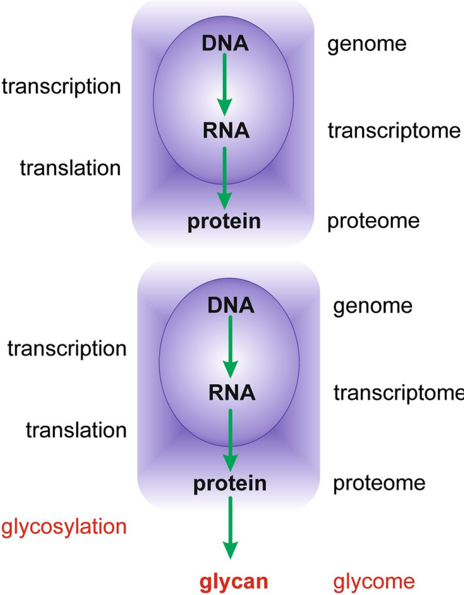
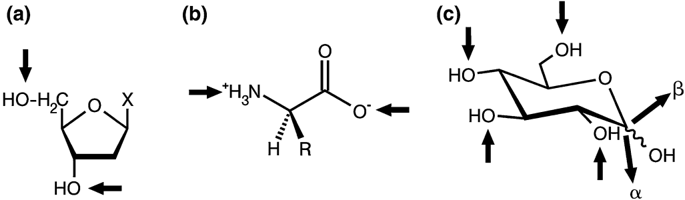
- Carbohydrates have physiological roles beyond energy metabolism and structural functions; their oligomers (glycans) show unsurpassed compositional and structural variability because monosaccharides can combine anomeric status, linkage positions, ring size, branching, and site-specific substitutions with sequence.
- Monosaccharides are described as the “letters of the third alphabet of life,” generating glycan “words” (signals) with high-density coding capacity; the glycome has cell type-dependent features.
- Glycan-based “words” are “read” and translated into cellular effects by receptors called lectins; more than a dozen protein folds exist for lectins, matching glycan diversity.
- Glycans can reach about 3 nm from the core linkage on a protein and are major components/determinants for contact building and extracellular matrix composition; infections can exploit glycans as docking sites for bacteria and viruses.
Methods
- Design: editorial introduction to a special issue, not a primary research study.
- Data/sample: conceptual synthesis of literature and preview of special-issue contributions on glycosylation, sialylation, lectins, and functional glycomics.
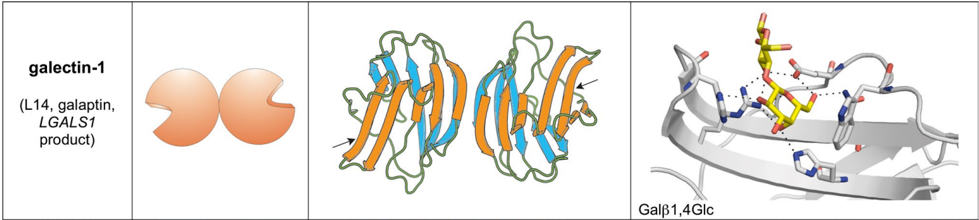
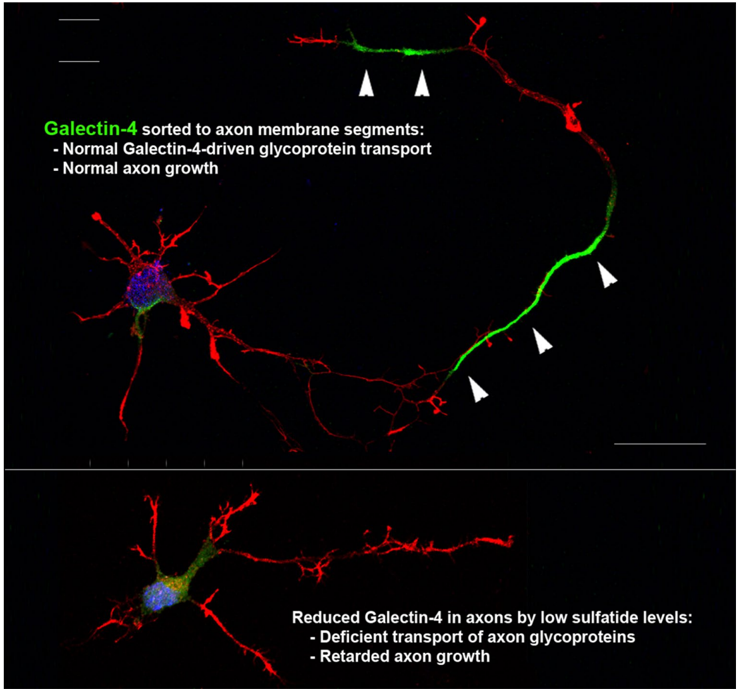
- Main analysis: narrative exposition of the sugar code concept, including glycan structural diversity, lectin recognition, and examples such as galectin-1 and galectin-4.
Limitations
- The paper states no limitations.
- Evident from the text: it is an editorial overview without primary data, systematic review methods, or quantitative synthesis.
- Evident from the text: many claims are supported by references and examples rather than new experimental results.
Model-written summary. Check it against the paper before relying on it.
Integrity signals
Registry
Cites
Statistics
Figures
Verification
Claims the paper makes
2 Valid · 3 Not valid · 5 Not checked · 10 Own results and interpretations
The cited sources support only part of this claim — read each source’s verdict below.
In the paper
“It thus comes as no surprise that infections can start by exploiting glycans as docking sites for bacteria and viruses (Holgersson et al. 2009; van Breedam et al. 2014; Tan et al. 2015).”
What the sources say
- Not matchedcites Holgersson et al. 2009
An author–year citation the paper’s reference list doesn’t settle. We don’t search these by name.
- Partly supportedcites van Breedam et al. 2014 matched to “Bitter-sweet symphony: glycan–lectin interactions in virus biology” (2014) sourceExperimental — accuracy not yet measured
The section ‘Glycan-lectin interactions that benefit the virus’ says that viral contact with cell-surface glycosaminoglycans is often the first contact with a target cell and can increase infection efficiency. This supports the claim for viruses, but the paper does not establish the bacterial part of the claim. (LLM, conf=0.88)
- Not checked — no full text of the sourcecites Tan et al. 2015 matched to “Sugar coating: bacterial protein glycosylation and host–microbe interactions” (2015) source
plainstates a cause- Asserted: passes — The authors put it forward as true.
- Checkable: passes — It can be checked against evidence.
- Load-bearing: unclear — It is unclear whether the paper’s conclusions depend on it.
- Based: passes — The paper gives a reason why it holds.
- Not matched
The cited sources support only part of this claim — read each source’s verdict below.
In the paper
“As consequence, cells must be equipped with the respective enzymatic machinery, which must be spatially organized to guarantee ordered glycan assembly with the possibility for dynamic switches between glycan structures, a complex process assigned to the cisternal organization of the Golgi apparatus (Roth and Berger 1982; Tartakoff and Vassalli 1983; Roth et al. 1985, 1986; Roth 1987; Velasco et al”
What the sources say
- Partly supportedcites Roth and Berger 1982 matched to “Immunocytochemical localization of galactosyltransferase in HeLa cells: codistribution with thiamine pyrophosphatase in trans-Golgi cisternae.” (1982) sourceExperimental — accuracy not yet measured
The paper’s discussion (p. 228) reports that galactosyltransferase is localized with TPPase in trans-Golgi cisternae, supporting enzymatic subcompartmentalization. It also describes sequential glycan processing. It does not establish that cisternal organization guarantees ordered assembly or enables dynamic switches between glycan structures. (LLM, conf=0.86)
- Partly supportedcites Tartakoff and Vassalli 1983 matched to “Lectin-binding sites as markers of Golgi subcompartments: proximal-to-distal maturation of oligosaccharides.” (1983) sourceExperimental — accuracy not yet measured
The Discussion (page not provided) describes Golgi trimming and elongation reactions and identifies proximal cisternae rich in immature oligosaccharides and distal cisternae containing mature ones. This supports spatially ordered glycan maturation, but the paper does not establish that this organization guarantees assembly or enables dynamic switches between glycan structures. (LLM, conf=0.83)
- Not checked — no full text of the sourcecites Roth et al. 1985 matched to “Demonstration of an extensive trans-tubular network continuous with the Golgi apparatus stack that may function in glycosylation” (1985) source
plainstates a cause- Asserted: passes — The authors put it forward as true.
- Checkable: passes — It can be checked against evidence.
- Load-bearing: passes — The paper’s conclusions depend on it.
- Based: passes — The paper gives a reason why it holds.
- Partly supported
A claim is checked only against the cited paper’s full text, never its abstract, and none is available for its sources.
In the paper
“As is the case for glycoproteins, sialic acids on glycans of gangliosides exert much more than merely a structural role (Schnaar et al. 2014; Ledeen and Wu 2015; Schengrund 2015; Kopitz 2017).”
What the sources say
- Not checked — no full text of the sourcecites Schnaar et al. 2014 matched to “Sialic Acids in the Brain: Gangliosides and Polysialic Acid in Nervous System Development, Stability, Disease, and Regeneration” (2014) source
- Not checked — no full text of the sourcecites Ledeen and Wu 2015 matched to “The multi-tasked life of GM1 ganglioside, a true factotum of nature” (2015) source
- Not checked — no full text of the sourcecites Schengrund 2015 matched to “Gangliosides: glycosphingolipids essential for normal neural development and function” (2015) source
plainstates a cause- Asserted: passes — The authors put it forward as true.
- Checkable: passes — It can be checked against evidence.
- Load-bearing: unclear — It is unclear whether the paper’s conclusions depend on it.
- Based: passes — The paper gives a reason why it holds.
A conclusion the paper draws from its own results — it cites no other source for it, so there is none to check. The quote shows it is in the paper.
In the paper
“The often limited intramolecular flexibility of oligosaccharides along with an abundance of contact points for intermolecular interactions is ideal for binding processes.”
plainstates a cause- Asserted: passes — The authors put it forward as true.
- Checkable: passes — It can be checked against evidence.
- Load-bearing: passes — The paper’s conclusions depend on it.
- Based: unclear — It is unclear why the paper says it holds.
The paper states this without a source or data behind it here, so there is nothing to check it against. The quote shows it is in the paper.
In the paper
“The extent of compositional and structural variability of their oligomers (glycans) is unsurpassed in Nature due to the unique property of independently combining the following parameters with sequence: anomeric status, linkage positions, ring size, addition of branches and site-specific introduction of substitutions.”
plainstates a cause- Asserted: passes — The authors put it forward as true.
- Checkable: passes — It can be checked against evidence.
- Load-bearing: passes — The paper’s conclusions depend on it.
- Based: unclear — It is unclear why the paper says it holds.
8 more claims
Create a free account to see all 20 claims and every source verdict.
- Probably not a substantial claim. 5
- It may state two separate claims as one. 2
Citations
Cites
Vertebrate protein glycosylation: diversity, synthesis and function
Moremen, K. W., Tiemeyer, M., & Nairn, A. V. (2012) · Nature Reviews Molecular Cell Biology · doi:10.1038/nrm3383 · Cited by 1,677
Role of Glycosylation in Development
Haltiwanger, R. S., & Lowe, J. B. (2004) · Annual Review of Biochemistry · doi:10.1146/annurev.biochem.73.011303.074043 · Cited by 757
Schnaar, R. L., Gerardy-Schahn, R., & Hildebrandt, H. (2014) · Physiological Reviews · doi:10.1152/physrev.00033.2013 · Cited by 745
Roth, J., & Berger, E. G. (1982) · The Journal of cell biology · doi:10.1083/jcb.93.1.223 · Cited by 619
Self-citationFrom lectin structure to functional glycomics: principles of the sugar code
Gabius, H.-J., André, S., Jiménez-Barbero, J., Romero, A., & Solís, D. (2011) · Trends in Biochemical Sciences · doi:10.1016/j.tibs.2011.01.005 · Cited by 483
Self-citationRoth, J. (1985) · Cell · doi:10.1016/0092-8674(85)90034-0 · Cited by 453
Self-citationHuman plasma protein N-glycosylation
Clerc, F., Reiding, K. R., Jansen, B. C., Kammeijer, G. S. M., Bondt, A., & Wuhrer, M. (2016) · Glycoconjugate Journal · doi:10.1007/s10719-015-9626-2 · Cited by 450
Roth, J. (2002) · Chemical Reviews · doi:10.1021/cr000423j · Cited by 398
Self-citationGlycosciences: Status and Perspectives
Gabius, H., & Gabius, S. (2002) · Medical Entomology and Zoology · Cited by 384
Self-citationThe sugar code : fundamentals of glycosciences
Gabius, H. (2009) · Cited by 366
Self-citation
Research works printed but not linked: 5
- Holgersson S, Gustafsson A, Gaunitz S (2009) Bacterial and viral lectins. In: Gabius H-J (ed) The sugar code. Fundamentals of glycosciences. Wiley, Weinheim, pp 279-300
- Honke K, Taniguchi N (2009) Animal models to delineate glycan functionality. In: Gabius H-J (ed) The sugar code. Fundamentals of glycosciences. Wiley, Weinheim, pp 385-401
- Kopitz J (2009) Glycolipids. In: Gabius H-J (ed) The sugar code. Fundamentals of glycosciences. Wiley, Weinheim, pp 177-198
- Rüdiger H, Gabius H-J (2009) The biochemical basis and coding capacity of the sugar code. In: Gabius H-J (ed) The sugar code. Fundamentals of glycosciences. Wiley, Weinheim, pp 3-13
- Zuber C, Roth J (2009) N -Glycosylation. In: Gabius H-J (ed) The sugar code. Fundamentals of glycosciences. Wiley, Weinheim, pp 87-110
Cited by
C-type lectins: their network and roles in pathogen recognition and immunity
Mayer, S., Raulf, M.-K., & Lepenies, B. (2017) · Histochemistry and Cell Biology · doi:10.1007/s00418-016-1523-7 · Cited by 256
Sialylation of N-glycans: mechanism, cellular compartmentalization and function
Bhide, G. P., & Colley, K. J. (2017) · Histochemistry and Cell Biology · doi:10.1007/s00418-016-1520-x · Cited by 238
“As highlighted in the introduction to this thematic issue (Gabius and Roth 2017), glycan structures, including those that contain sialic acid (Sia), encode an amazing array of information that is essential for health and can be altered in disease.”
BackgroundConte, F., van Buuringen, N., Voermans, N. C., & Lefeber, D. J. (2021) · Biochimica et Biophysica Acta (BBA) - General Subjects · doi:10.1016/j.bbagen.2021.129898 · Cited by 170
The Interaction of the Gut Microbiota with the Mucus Barrier in Health and Disease in Human
Corfield, A. P. (2018) · Microorganisms · doi:10.3390/microorganisms6030078 · Cited by 133
Lectins: a primer for histochemists and cell biologists
Manning, J. C., Romero, A., Habermann, F. A., García Caballero, G., Kaltner, H., & Gabius, H.-J. (2017) · Histochemistry and Cell Biology · doi:10.1007/s00418-016-1524-6 · Cited by 133
Self-citationThe sugar code: Why glycans are so important
Gabius, H. (2017) · Biosystems · doi:10.1016/j.biosystems.2017.07.003 · Cited by 140
Self-citationEukaryotic protein glycosylation: a primer for histochemists and cell biologists
Corfield, A. (2017) · Histochemistry and Cell Biology · doi:10.1007/s00418-016-1526-4 · Cited by 121
Galectins: their network and roles in immunity/tumor growth control
Kaltner, H., Toegel, S., Caballero, G. G., Manning, J. C., Ledeen, R. W., & Gabius, H. (2016) · Histochemistry and Cell Biology · doi:10.1007/s00418-016-1522-8 · Cited by 128
Self-citationKaltner, H., Abad‐Rodríguez, J., Corfield, A. P., Kopitz, J., & Gabius, H. (2019) · Biochemical Journal · doi:10.1042/bcj20170853 · Cited by 112
Self-citationLipid glycosylation: a primer for histochemists and cell biologists
Kopitz, J. (2016) · Histochemistry and Cell Biology · doi:10.1007/s00418-016-1518-4 · Cited by 104
Xiao, Q., Ludwig, A., Romanò, C., Buzzacchera, I., Sherman, S. E., Vetro, M., Vértesy, S., Kaltner, H., Reed, E. H., Möller, M., et al. (2018) · Proceedings of the National Academy of Sciences · doi:10.1073/pnas.1720055115 · Cited by 92
Self-citationChemokines and galectins form heterodimers to modulate inflammation
Eckardt, V., Miller, M. C., Blanchet, X., Duan, R., Leberzammer, J., Duchêne, J., Soehnlein, O., Megens, R. T. A., Ludwig, A., Dregni, A. J., et al. (2020) · EMBO Reports · doi:10.15252/embr.201947852 · Cited by 82
Self-citationNutritional strategies for mucosal health: the interplay between microbes and mucin glycans
Belzer, C. (2021) · Trends in Microbiology · doi:10.1016/j.tim.2021.06.003 · Cited by 92
Design–functionality relationships for adhesion/growth-regulatory galectins
Ludwig, A., Michalak, M., Xiao, Q., Gilles, U., Medrano, F. J., Ma, H., FitzGerald, F. G., Hasley, W. D., Melendez-Davila, A., Liu, M., et al. (2019) · Proceedings of the National Academy of Sciences · doi:10.1073/pnas.1813515116 · Cited by 73
Self-citationMechanisms of noncanonical binding dynamics in multivalent protein–protein interactions
Errington, W. J., Bruncsics, B., & Sarkar, C. A. (2019) · Proceedings of the National Academy of Sciences · doi:10.1073/pnas.1902909116 · Cited by 65
Sialometabolism in Brain Health and Alzheimer’s Disease
Rawal, P., & Zhao, L. (2021) · Frontiers in Neuroscience · doi:10.3389/fnins.2021.648617 · Cited by 60
Vrablova, V., Košútová, N., Blšáková, A., Bertóková, A., Kasák, P., Bertók, T., & Tkáč, J. (2023) · Biotechnology Advances · doi:10.1016/j.biotechadv.2023.108196 · Cited by 65
Weinmann, D., Kenn, M., Schmidt, S., Schmidt, K., Walzer, S. M., Kubista, B., Windhager, R., Schreiner, W., Toegel, S., & Gabius, H. (2018) · Cellular and Molecular Life Sciences · doi:10.1007/s00018-018-2856-2 · Cited by 59
Self-citationMicrobe–Mucus Interface in the Pathogenesis of Colorectal Cancer
Coleman, O. I., & Haller, D. (2021) · Cancers · doi:10.3390/cancers13040616 · Cited by 57
Kopitz, J., Xiao, Q., Ludwig, A., Romero, A., Michalak, M., Sherman, S. E., Zhou, X., Dazen, C. M., Vértesy, S., Kaltner, H., et al. (2017) · Angewandte Chemie International Edition · doi:10.1002/anie.201708237 · Cited by 53
Self-citationDiercks, T., Infantino, A. S., Unione, L., Jiménez‐Barbero, J., Oscarson, S., & Gabius, H. (2018) · Chemistry - A European Journal · doi:10.1002/chem.201803217 · Cited by 67
Self-citationFlores-Ibarra, A., Vértesy, S., Medrano, F. J., Gabius, H., & Romero, A. (2018) · Scientific Reports · doi:10.1038/s41598-018-28235-x · Cited by 50
Self-citationHow galectins have become multifunctional proteins.
Caballero, G. G., Kaltner, H., Kutzner, T. J., Ludwig, A.-K., Manning, J. C., Schmidt, S., Sinowatz, F., & Gabius, H. (2020) · PubMed · doi:10.14670/hh-18-199 · Cited by 59
Self-citationGabius, H., Čudić, M., Diercks, T., Kaltner, H., Kopitz, J., Mayo, K. H., Murphy, P. V., Oscarson, S., Roy, R., Schedlbauer, A., et al. (2021) · ChemBioChem · doi:10.1002/cbic.202100327 · Cited by 55
Self-citationMicrobe–MUC1 Crosstalk in Cancer-Associated Infections
Bose, M., & Mukherjee, P. (2019) · Trends in Molecular Medicine · doi:10.1016/j.molmed.2019.10.003 · Cited by 48
Kaltner, H., Caballero, G. G., Ludwig, A., Manning, J. C., & Gabius, H. (2018) · Histochemistry and Cell Biology · doi:10.1007/s00418-018-1676-7 · Cited by 44
Self-citationde Jong, C. G. H. M., Gabius, H., & Baron, W. (2019) · Cellular and Molecular Life Sciences · doi:10.1007/s00018-019-03327-7 · Cited by 44
Self-citationHernández, E. R., Sánchez-Maldonado, C., Mayoral, M. Á., Mendieta, L., Alatriste, V., Patricio-Martínez, A., & Limón, I. D. (2019) · Neuropeptides · doi:10.1016/j.npep.2019.02.001 · Cited by 42
Josenhans, C., Müthing, J., Elling, L., Bartfeld, S., & Schmidt, H. (2020) · International Journal of Medical Microbiology · doi:10.1016/j.ijmm.2020.151392 · Cited by 44
Roy, R., Cao, Y., Kaltner, H., Naresh, K., Shiao, T. C., Belkhadem, K., André, S., Manning, J. C., Murphy, P. V., & Gabius, H. (2016) · Histochemistry and Cell Biology · doi:10.1007/s00418-016-1525-5 · Cited by 39
Self-citationGlycans in autophagy, endocytosis and lysosomal functions
Reggiori, F., Gabius, H., Aureli, M., Römer, W., Sonnino, S., & Eskelinen, E. (2021) · Glycoconjugate Journal · doi:10.1007/s10719-021-10007-x · Cited by 42
Self-citationGlycan Chains of Gangliosides: Functional Ligands for Tissue Lectins (Siglecs/Galectins)
Ledeen, R. W., Kopitz, J., Abad‐Rodríguez, J., & Gabius, H. (2018) · Progress in molecular biology and translational science · doi:10.1016/bs.pmbts.2017.12.004 · Cited by 38
Self-citationHeadgroup-Ordered Monolayers of Uncharged Glycolipids Exhibit Selective Interactions with Ions
Stefaniu, C., Latza, V. M., Gutowski, O., et al. (2019) · The Journal of Physical Chemistry Letters · doi:10.1021/acs.jpclett.8b03865 · Cited by 36
Romero, A., & Gabius, H. (2019) · Expert Opinion on Therapeutic Targets · doi:10.1080/14728222.2019.1675638 · Cited by 40
Self-citationGabius, H.-J. (2017) · Folia Biologica · doi:10.14712/fb2017063040121 · Cited by 35
Self-citationMiller, M. C., Ludwig, A., Wichapong, K., Kaltner, H., Kopitz, J., Gabius, H., & Mayo, K. H. (2018) · Biochemical Journal · doi:10.1042/bcj20170658 · Cited by 36
Self-citationDíez‐Revuelta, N., Higuero, A. M., Velasco, S., Peñas-de-la-Iglesia, M., Gabius, H., & Abad‐Rodríguez, J. (2017) · Scientific Reports · doi:10.1038/s41598-017-12295-6 · Cited by 37
Self-citationThe sugar code in neuronal physiology
Higuero, A. M., Díez‐Revuelta, N., & Abad‐Rodríguez, J. (2016) · Histochemistry and Cell Biology · doi:10.1007/s00418-016-1519-3 · Cited by 32
Manning, J. C., Caballero, G. G., Knospe, C., Kaltner, H., & Gabius, H. (2017) · Journal of Anatomy · doi:10.1111/joa.12612 · Cited by 33
Self-citationÖzdemir, V., Arğa, K. Y., Aziz, R. K., Bayram, M., Conley, S. N., Dandara, C., Endrényi, L., Fisher, E., Garvey, C. K., Hekim, N., et al. (2020) · OMICS A Journal of Integrative Biology · doi:10.1089/omi.2019.0220 · Cited by 31
Ludwig, A., Kaltner, H., Kopitz, J., & Gabius, H. (2019) · Biochimica et Biophysica Acta (BBA) - General Subjects · doi:10.1016/j.bbagen.2019.03.005 · Cited by 31
Self-citationKutzner, T. J., Gabba, A., FitzGerald, F. G., Shilova, N. V., Caballero, G. G., Ludwig, A., Manning, J. C., Knospe, C., Kaltner, H., Sinowatz, F., et al. (2019) · Glycobiology · doi:10.1093/glycob/cwz034 · Cited by 27
Self-citationInfluence of protein (human galectin-3) design on aspects of lectin activity
Caballero, G. G., Beckwith, D. M., Shilova, N. V., Gabba, A., Kutzner, T. J., Ludwig, A., Manning, J. C., Kaltner, H., Sinowatz, F., Čudić, M., et al. (2020) · Histochemistry and Cell Biology · doi:10.1007/s00418-020-01859-9 · Cited by 26
Self-citationProbing sulfatide-tissue lectin recognition with functionalized glycodendrimersomes
Murphy, P. V., Romero, A., Xiao, Q., Ludwig, A., Jogula, S., Shilova, N. V., Singh, T., Gabba, A., Javed, B., Zhang, D., et al. (2020) · iScience · doi:10.1016/j.isci.2020.101919 · Cited by 24
Self-citationKaltner, H., & Gabius, H. (2019) · Thrombosis and Haemostasis · doi:10.1055/s-0038-1676968 · Cited by 27
Self-citationThio-functionalized carbohydrate thiosemicarbazones and evaluation of their anticancer activity
Czubatka-Bieńkowska, A., Sarnik, J., Macieja, A., et al. (2017) · Bioorganic & Medicinal Chemistry Letters · doi:10.1016/j.bmcl.2017.04.051 · Cited by 23
Kutzner, T. J., Higuero, A. M., Süßmair, M., Kopitz, J., Hingar, M., Díez‐Revuelta, N., Caballero, G. G., Kaltner, H., Lindner, I., Abad‐Rodríguez, J., et al. (2019) · Biochimica et Biophysica Acta (BBA) - General Subjects · doi:10.1016/j.bbagen.2019.129449 · Cited by 23
Self-citationMiller, M. C., Cai, C. Y. L., Wichapong, K., Bhaduri, S., Pohl, N. L. B., Linhardt, R. J., Gabius, H., & Mayo, K. H. (2020) · Scientific Reports · doi:10.1038/s41598-020-72645-9 · Cited by 24
Self-citationde Jong, C. G. H. M., Stancic, M., Pinxterhuis, T. H., van Horssen, J., van Dam, A., Gabius, H., & Baron, W. (2018) · Journal of Neuropathology & Experimental Neurology · doi:10.1093/jnen/nly081 · Cited by 22
Self-citationBeckwith, D. M., FitzGerald, F. G., Rodríguez, M. C., Mercer, E. R., Ludwig, A., Michalak, M., Kaltner, H., Kopitz, J., Gabius, H., & Čudić, M. (2021) · Biochemistry · doi:10.1021/acs.biochem.0c00942 · Cited by 23
Self-citationCaballero, G. G., Schmidt, S., Manning, J. C., Michalak, M., Schlötzer-Schrehardt, U. M., Ludwig, A., Kaltner, H., Sinowatz, F., Schnölzer, M., Kopitz, J., et al. (2019) · Cell and Tissue Research · doi:10.1007/s00441-019-03129-0 · Cited by 19
Self-citationTaatjes, D. J., & Roth, J. (2017) · Histochemistry and Cell Biology · doi:10.1007/s00418-017-1541-0 · Cited by 19
Self-citationFuehrer, J., Pichler, K., Fischer, A., Giurea, A., Weinmann, D., Altmann, F., Windhager, R., Gabius, H., & Toegel, S. (2021) · PROTEOMICS - Clinical Applications · doi:10.1002/prca.202000057 · Cited by 9
Self-citationMolecular Recognition of a Thomsen–Friedenreich Antigen Mimetic Targeting Human Galectin‐3
Santarsia, S., Grosso, A. S., Trovão, F., Jiménez‐Barbero, J., Carvalho, A. L., Nativi, C., & Marcelo, F. (2018) · ChemMedChem · doi:10.1002/cmdc.201800525 · Cited by 22
The marriage of chemokines and galectins as functional heterodimers
von Hundelshausen, P., Wichapong, K., Gabius, H., & Mayo, K. H. (2021) · Cellular and Molecular Life Sciences · doi:10.1007/s00018-021-04010-6 · Cited by 20
Self-citationManning, J. C., Caballero, G. G., Knospe, C., Kaltner, H., & Gabius, H. (2018) · Annals of Anatomy - Anatomischer Anzeiger · doi:10.1016/j.aanat.2018.02.002 · Cited by 16
Self-citationMicroscopy examination of red blood and yeast cell agglutination induced by bacterial lectins
Mrázková, J., Malinovská, L., & Wimmerová, M. (2019) · PLoS ONE · doi:10.1371/journal.pone.0220318 · Cited by 16
Michalak, M., Warnken, U. H., Schnölzer, M., Gabius, H., & Kopitz, J. (2018) · IUBMB Life · doi:10.1002/iub.1987 · Cited by 16
Self-citationKaltner, H., Szabó, T., Fehér, K., André, S., Balla, S., Manning, J. C., Szilágyi, L. S., & Gabius, H. (2017) · Bioorganic & Medicinal Chemistry · doi:10.1016/j.bmc.2017.04.011 · Cited by 15
Self-citationBandúrová, V., Brož, P., Fík, Z., Fíková, A., Plzák, J., Čada, Z., Kaltner, H., Kučerová, J., Gabius, H., & Smetana, K. (2017) · Anticancer Research · doi:10.21873/anticanres.11565 · Cited by 15
Self-citationLudwig, A., Michalak, M., Shilova, N. V., André, S., Kaltner, H., Bovin, N. V., Kopitz, J., & Gabius, H. (2017) · Molecules · doi:10.3390/molecules22091572 · Cited by 15
Self-citationElshamly, M., Kinslechner, K., Grohs, J. G., Weinmann, D., Walzer, S. M., Windhager, R., Gabius, H., & Toegel, S. (2019) · Journal of Orthopaedic Research® · doi:10.1002/jor.24351 · Cited by 15
Self-citationDiercks, T., Medrano, F. J., FitzGerald, F. G., Beckwith, D. M., Pedersen, M. J., Reihill, M., Ludwig, A., Romero, A., Oscarson, S., Čudić, M., et al. (2020) · Chemistry - A European Journal · doi:10.1002/chem.202003143 · Cited by 15
Self-citationRaics, M., Timári, I., Diercks, T., Szilágyi, L. S., Gabius, H., & Kövér, K. E. (2019) · ChemBioChem · doi:10.1002/cbic.201900088 · Cited by 16
Self-citationThe glycan alphabet is not universal: a hypothesis
Srivastava, J., Sunthar, P., & Balaji, P. V. (2020) · Microbial Genomics · doi:10.1099/mgen.0.000452 · Cited by 15
Manning, J. C., Caballero, G. G., Ruiz, F. M., Romero, A., Kaltner, H., & Gabius, H. (2018) · Trends in Glycoscience and Glycotechnology · doi:10.4052/tigg.1727.1se · Cited by 15
Self-citationSite-Selective Acylation of Pyranosides with Oligopeptide Catalysts
Seitz, A., Wende, R. C., Roesner, E. K., Niedek, D., Topp, C., Colgan, A. C., McGarrigle, E. M., & Schreiner, P. R. (2021) · The Journal of Organic Chemistry · doi:10.1021/acs.joc.0c02772 · Cited by 15
What Cyto- and Histochemistry Can Do to Crack the Sugar Code
Habermann, F. A., Kaltner, H., Higuero, A. M., Caballero, G. G., Ludwig, A., Manning, J. C., Abad‐Rodríguez, J., & Gabius, H. (2021) · ACTA HISTOCHEMICA ET CYTOCHEMICA · doi:10.1267/ahc.21-00017 · Cited by 13
Self-citationKaltner, H., Manning, J. C., Caballero, G. G., Salvo, C. D., Gabba, A., Romero-Hernández, L. L., Knospe, C., Wu, D., Daly, H. C., O’Shea, D. F., et al. (2018) · RSC Advances · doi:10.1039/c8ra05382k · Cited by 13
Self-citationUnal, K. I., Chang, L. S., Mustapha, W. A. W., Razali, N. S. M., Babji, A. S., & Lim, S. J. (2024) · Food Bioscience · doi:10.1016/j.fbio.2024.104791 · Cited by 12
Miller, M. C., Nesmelova, I. V., Daragan, V. A., Ippel, H., Michalak, M., Dregni, A. J., Kaltner, H., Kopitz, J., Gabius, H., & Mayo, K. H. (2020) · Biochemical Journal · doi:10.1042/bcj20200499 · Cited by 12
Self-citationTherapeutic properties of lectins in herbal supplements
Mbae, K. M., Umesha, S., & Manukumar, H. M. G. (2018) · Phytochemistry Reviews · doi:10.1007/s11101-018-9572-2 · Cited by 17
Popławski, T., Galita, G., Sarnik, J., et al. (2024) · Cancers · doi:10.3390/cancers16010216 · Cited by 10
Banger, A., Pasch, P., Blawitzki, L., Weber, S., Otten, M., Monzel, C., Schmidt, S., Voskuhl, J., & Hartmann, L. (2022) · Macromolecular Chemistry and Physics · doi:10.1002/macp.202200314 · Cited by 11
Ludwig, A., Michalak, M., Gabba, A., Kutzner, T. J., Beckwith, D. M., FitzGerald, F. G., Caballero, G. G., Manning, J. C., Kriegsmann, M., Kaltner, H., et al. (2021) · Histochemistry and Cell Biology · doi:10.1007/s00418-021-02004-w · Cited by 10
Self-citationStructural Analysis and Characterization of an Antiproliferative Lectin from Canavalia villosa Seeds
Lóssio, C. F., Osterne, V. J. S., Pinto‐Junior, V. R., Chen, S., Oliveira, M. V., Verduijn, J., Verbeke, I., Serna, S., Reichardt, N., Skirtach, A. G., et al. (2023) · International Journal of Molecular Sciences · doi:10.3390/ijms242115966 · Cited by 11
Kopitz, J., Xiao, Q., Ludwig, A., Romero, A., Michalak, M., Sherman, S. E., Zhou, X., Dazen, C. M., Vértesy, S., Kaltner, H., et al. (2017) · Angewandte Chemie · doi:10.1002/ange.201708237 · Cited by 10
Self-citationFrom examining the relationship between (corona)viral adhesins and galectins to glyco-perspectives
Klein, M. L., Romero, A., Kaltner, H., Percec, V., & Gabius, H. (2020) · Biophysical Journal · doi:10.1016/j.bpj.2020.11.020 · Cited by 8
Self-citationSimulating cellular galectin networks by mixing galectins in vitro reveals synergistic activity
Dings, R. P. M., Kumar, N., Mikkelson, S., et al. (2021) · Biochemistry and Biophysics Reports · doi:10.1016/j.bbrep.2021.101116 · Cited by 8
Self-citationPichler, K. M., Fischer, A., Alphonsus, J., Chiari, C., Schmidt, S., Kenn, M., Schreiner, W., Weinmann, D., Rothbauer, M., Windhager, R., et al. (2021) · Histochemistry and Cell Biology · doi:10.1007/s00418-021-02053-1 · Cited by 8
Self-citationHistochemistry and Cell Biology: 61 years and not tired at all
Taatjes, D. J., Schrader, M., Koji, T., & Roth, J. (2019) · Histochemistry and Cell Biology · doi:10.1007/s00418-019-01796-2 · Cited by 7
Self-citationHernández, E. R., Hernández-Zimbrón, L. F., Pérez, E. S., Sánchez‐Salgado, J. L., Morales, M. A. P., & Zenteno, E. (2024) · Neuropeptides · doi:10.1016/j.npep.2024.102426 · Cited by 11
Panchak, L. V. (2019) · Biotechnologia Acta · doi:10.15407/biotech12.01.029 · Cited by 6
Glycan Carriers As Glycotools for Medicinal Chemistry Applications
Vacchini, M., Edwards, R., Guizzardi, R., Palmioli, A., Ciaramelli, C., Paiotta, A., Airoldi, C., Ferla, B. L., & Cipolla, L. (2019) · Current Medicinal Chemistry · doi:10.2174/0929867326666190104164653 · Cited by 7
Cuffaro, D., Landi, M., D’Andrea, F., & Guazzelli, L. (2019) · Carbohydrate Research · doi:10.1016/j.carres.2019.107744 · Cited by 7
Glycobiology of developing chicken kidney: Profiling the galectin family and selected β‐galactosides
Manning, J. C., Caballero, G. G., Ludwig, A., Kaltner, H., Sinowatz, F., & Gabius, H. (2020) · The Anatomical Record · doi:10.1002/ar.24557 · Cited by 6
Self-citationIntroducing 77Se NMR Spectroscopy to Analyzing Galectin–Ligand Interaction
Raics, M., Timári, I., Szilágyi, L. S., Gabius, H., & Kövér, K. E. (2022) · Methods in molecular biology · doi:10.1007/978-1-0716-2055-7_6 · Cited by 6
Self-citationSchedlbauer, A., Gilles, U., Ludwig, A., Adler, A., Kaltner, H., Lindner, I., Mayo, K. H., Diercks, T., Reusch, D., & Gabius, H. (2021) · Biochimie · doi:10.1016/j.biochi.2021.05.008 · Cited by 4
Self-citationTaatjes, D. J., & Roth, J. (2019) · Histochemistry and Cell Biology · doi:10.1007/s00418-019-01831-2 · Cited by 4
Self-citationStructural Characterization of Rat Galectin-5, an N-Tailed Monomeric Proto-Type-like Galectin
Ruiz, F. M., Medrano, F. J., Ludwig, A., Kaltner, H., Shilova, N. V., Bovin, N. V., Gabius, H., & Romero, A. (2021) · Biomolecules · doi:10.3390/biom11121854 · Cited by 3
Self-citationWhat Happens If a Human Galectin Enters the Endoplasmic Reticulum?
Kutzner, T. J., Higuero, A. M., Süßmair, M., Hingar, M., Kaltner, H., Lindner, I., Kopitz, J., Abad‐Rodríguez, J., Reusch, D., & Gabius, H. (2022) · Methods in molecular biology · doi:10.1007/978-1-0716-2055-7_15 · Cited by 3
Self-citationExploring the Galectin Network by Light and Fluorescence Microscopy
Caballero, G. G., Manning, J. C., Gabba, A., Beckwith, D. M., FitzGerald, F. G., Kutzner, T. J., Ludwig, A., Kaltner, H., Murphy, P. V., Čudić, M., et al. (2022) · Methods in molecular biology · doi:10.1007/978-1-0716-2055-7_17 · Cited by 3
Self-citationAdvances in biomacromolecule-functionalized magnetic particles for phytopathogen detection
Zhang, L., Ma, D., Yu, Y., Luo, W., Jiang, S., Feng, S., & Chen, Z. (2024) · Talanta · doi:10.1016/j.talanta.2024.126876 · Cited by 3
Lectins: obtaining, properties, application in biology and medicine
Turanska, S. P., Petranovska, A. L., Turov, V. V., & Gorbyk, P. P. (2020) · Poverhnostʹ · doi:10.15407/surface.2020.12.289 · Cited by 4
Villones, L. L., Ludwig, A., Kikuchi, S., Ochi, R., Nishimura, S., Gabius, H., Kaltner, H., & Hinou, H. (2023) · ChemBioChem · doi:10.1002/cbic.202200783 · Cited by 5
Self-citationComplete tetraglycosylation of a calix[4]arene by a chemo-enzymatic approach
Bernardi, S., Yi, D., He, N., Casnati, A., Fessner, W., & Sansone, F. (2017) · Organic & Biomolecular Chemistry · doi:10.1039/c7ob02448g · Cited by 2
Examining Galectin Gene Regulation by Reporter Assays
Schmidt, S., Kaltner, H., & Gabius, H. (2022) · Methods in molecular biology · doi:10.1007/978-1-0716-2055-7_24 · Cited by 2
Self-citationFreckelton, M. L., Nedved, B. T., & Hadfield, M. G. . (2026) · PNAS Nexus · doi:10.1093/pnasnexus/pgag159 · Cited by 1
Manning, J. C., Baldoneschi, V., Romero-Hernández, L. L., Pichler, K. M., Caballero, G. G., André, S., Kutzner, T. J., Ludwig, A., Zullo, V., Richichi, B., et al. (2022) · Bioorganic & Medicinal Chemistry · doi:10.1016/j.bmc.2022.117068 · Cited by 1
Self-citationFranz, A. H., Bromley, K. S., Aung, E. T., Do, S. Q. L., Rosenblatt, H. M., & Watson, A. J. (2024) · Magnetic Resonance in Chemistry · doi:10.1002/mrc.5483 · Cited by 1
Metadata
- Authors
- Gabius, H.-J., & Roth, J.
- Affiliations
- Ludwig-Maximilians-Universität München (DE)
- University of Zurich (CH)
- Corresponding author
- Gabius, Hans-Joachim
- Venue
- Histochemistry and Cell Biology
- Published
- 2016-12-14
- Volume
- 147
- Issue
- 2
- Pages
- 111-117
- ISSN
- 0948-6143 (ISSN-L)
- 1432-119X
- OpenAlex
- W2564930808
- Semantic Scholar
- 550a6451efdc907d61cf75c49688fa68c2eb6612
- Cited by
- 112
- References
- 64
- Citations by year
- 2026: 3 · 2024: 5 · 2023: 3 · 2022: 7 · 2021: 19 · 2020: 16 · 2019: 23 · 2018: 16 · 2017: 12 · 2016: 8
- FWCI
- 10.39
- Type
- journal article
- Language
- en
- Open access
- bronze
- doi.org
- Locations
- Histochemistry and Cell Biology (publishedVersion)
- PubMed (publishedVersion)
- Topics
- Life Sciences › Biochemistry, Genetics and Molecular Biology › Molecular Biology › Glycosylation and Glycoproteins Research
- Physical Sciences › Chemistry › Organic Chemistry › Carbohydrate Chemistry and Synthesis
- Life Sciences › Biochemistry, Genetics and Molecular Biology › Cell Biology › Proteoglycans and glycosaminoglycans research
- Keywords
- sugar code, glycans, carbohydrate signaling, glycosylation, lectins, oligosaccharide structure, glycome, glycoproteins, glycolipids
- MeSH terms
- Animals, Glycoproteins, Models, Molecular, Oligosaccharides, Plants, Polysaccharides, Molecular Structure, Lectins, Galectin 1
About these checks
Registry, retraction, Cites and statistics results are computed, not judged, with one exception: a printed reference that no index lists is read once by a model before it counts as a citation error. Claims are extracted by a model and kept only when their quote appears verbatim in the text; each cited source is then checked, with a model’s help, for whether it says what the claim relies on. Those verdicts can be wrong — read the claim’s quote and the cited source before relying on one.
The claim verdicts this report counts are experimental: their accuracy is not yet measured.
A language model drew the claims from the paper on 2026-10-10, under version 3 of the claim definition (model deepseek-v4.1-flash, prompt extract-v3).
A second model labelled each claim on 2026-10-10 (model jev-1.13-20260917, definition revision gold-guideline-v0.2).
Cited sources are checked with a language model’s help (gpt-6-sol).
Statistics and arithmetic are recomputed, not judged.
Confidence bands are shown only for fields calibrated on our annotated test set. None is calibrated yet, so no band is shown.
What counts as a claim ›How we measure confidence ›How we check this ›
Are you an author, or do you see a problem with this page? Request a review
Data sources
Bibliographic data: Semantic Scholar, OpenAlex, Crossref.
Contains information from the Semantic Scholar Academic Graph Datasets, made available under the ODC Attribution License (ODC-BY 1.0).
Semantic Scholar’s data is described in: Kinney, R., et al. (2023). The Semantic Scholar Open Data Platform. arXiv:2301.10140.
