

An introduction to the sugar code
Open accessThe DOI matches its Crossref record; 68 of the 69 references it cites were found in a registry or an index, and 1 are not checked yet; 3 of the 17 sources its claims cite were checked for support.
Abstract
Explains that carbohydrates function in energy metabolism, nucleic acids, cell walls, and cell recognition through structurally diverse glycans.
Verified 2026-11-22 · 1 reference not checked yet
Overview
CoChat Summary
TL;DR
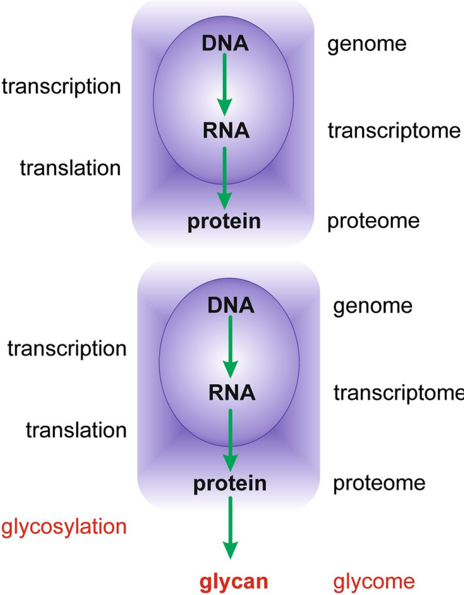
This editorial introduces the “sugar code” concept, arguing that monosaccharides form a third alphabet of life whose oligomers/glycans encode high-density biological information. It previews a special issue on glycosylation, sialylation, lectin structure/function, and glycan-lectin recognition.
Key findings
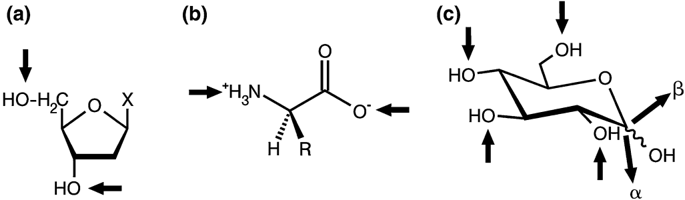
- Carbohydrates have physiological roles beyond energy metabolism and structural functions; their oligomers (glycans) show unsurpassed compositional and structural variability because monosaccharides can combine anomeric status, linkage positions, ring size, branching, and site-specific substitutions with sequence.
- Monosaccharides are described as the “letters of the third alphabet of life,” generating glycan “words” (signals) with high-density coding capacity; the glycome has cell type-dependent features.
- Glycan-based “words” are “read” and translated into cellular effects by receptors called lectins; more than a dozen protein folds exist for lectins, matching glycan diversity.
- Glycans can reach about 3 nm from the core linkage on a protein and are major components/determinants for contact building and extracellular matrix composition; infections can exploit glycans as docking sites for bacteria and viruses.
Methods
- Design: editorial introduction to a special issue, not a primary research study.
- Data/sample: conceptual synthesis of literature and preview of special-issue contributions on glycosylation, sialylation, lectins, and functional glycomics.
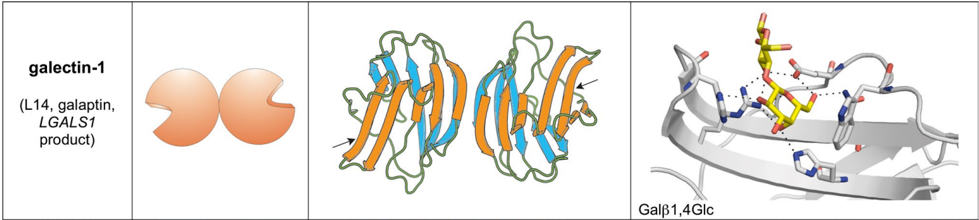
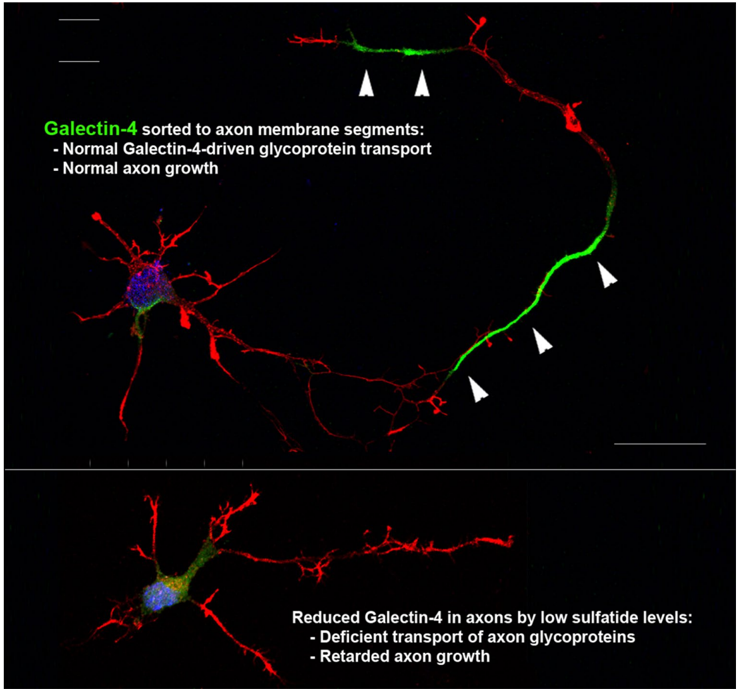
- Main analysis: narrative exposition of the sugar code concept, including glycan structural diversity, lectin recognition, and examples such as galectin-1 and galectin-4.
Limitations
- The paper states no limitations.
- Evident from the text: it is an editorial overview without primary data, systematic review methods, or quantitative synthesis.
- Evident from the text: many claims are supported by references and examples rather than new experimental results.
Model-written summary. Check it against the paper before relying on it.
Integrity signals
Registry
Cites
Statistics
Figures
Verification
Claims the paper makes
2 Valid · 3 Not valid · 5 Not checked · 10 Own results and interpretations
The cited sources support only part of this claim — read each source’s verdict below.
In the paper
“It thus comes as no surprise that infections can start by exploiting glycans as docking sites for bacteria and viruses (Holgersson et al. 2009; van Breedam et al. 2014; Tan et al. 2015).”
What the sources say
- Not matchedcites Holgersson et al. 2009
An author–year citation the paper’s reference list doesn’t settle. We don’t search these by name.
- Partly supportedcites van Breedam et al. 2014 matched to “Bitter-sweet symphony: glycan–lectin interactions in virus biology” (2014) sourceExperimental — accuracy not yet measured
The section ‘Glycan-lectin interactions that benefit the virus’ says that viral contact with cell-surface glycosaminoglycans is often the first contact with a target cell and can increase infection efficiency. This supports the claim for viruses, but the paper does not establish the bacterial part of the claim. (LLM, conf=0.88)
- Not checked — no full text of the sourcecites Tan et al. 2015 matched to “Sugar coating: bacterial protein glycosylation and host–microbe interactions” (2015) source
plainstates a cause- Asserted: passes — The authors put it forward as true.
- Checkable: passes — It can be checked against evidence.
- Load-bearing: unclear — It is unclear whether the paper’s conclusions depend on it.
- Based: passes — The paper gives a reason why it holds.
- Not matched
The cited sources support only part of this claim — read each source’s verdict below.
In the paper
“As consequence, cells must be equipped with the respective enzymatic machinery, which must be spatially organized to guarantee ordered glycan assembly with the possibility for dynamic switches between glycan structures, a complex process assigned to the cisternal organization of the Golgi apparatus (Roth and Berger 1982; Tartakoff and Vassalli 1983; Roth et al. 1985, 1986; Roth 1987; Velasco et al”
What the sources say
- Partly supportedcites Roth and Berger 1982 matched to “Immunocytochemical localization of galactosyltransferase in HeLa cells: codistribution with thiamine pyrophosphatase in trans-Golgi cisternae.” (1982) sourceExperimental — accuracy not yet measured
The paper’s discussion (p. 228) reports that galactosyltransferase is localized with TPPase in trans-Golgi cisternae, supporting enzymatic subcompartmentalization. It also describes sequential glycan processing. It does not establish that cisternal organization guarantees ordered assembly or enables dynamic switches between glycan structures. (LLM, conf=0.86)
- Partly supportedcites Tartakoff and Vassalli 1983 matched to “Lectin-binding sites as markers of Golgi subcompartments: proximal-to-distal maturation of oligosaccharides.” (1983) sourceExperimental — accuracy not yet measured
The Discussion (page not provided) describes Golgi trimming and elongation reactions and identifies proximal cisternae rich in immature oligosaccharides and distal cisternae containing mature ones. This supports spatially ordered glycan maturation, but the paper does not establish that this organization guarantees assembly or enables dynamic switches between glycan structures. (LLM, conf=0.83)
- Not checked — no full text of the sourcecites Roth et al. 1985 matched to “Demonstration of an extensive trans-tubular network continuous with the Golgi apparatus stack that may function in glycosylation” (1985) source
plainstates a cause- Asserted: passes — The authors put it forward as true.
- Checkable: passes — It can be checked against evidence.
- Load-bearing: passes — The paper’s conclusions depend on it.
- Based: passes — The paper gives a reason why it holds.
- Partly supported
A claim is checked only against the cited paper’s full text, never its abstract, and none is available for its sources.
In the paper
“As is the case for glycoproteins, sialic acids on glycans of gangliosides exert much more than merely a structural role (Schnaar et al. 2014; Ledeen and Wu 2015; Schengrund 2015; Kopitz 2017).”
What the sources say
- Not checked — no full text of the sourcecites Schnaar et al. 2014 matched to “Sialic Acids in the Brain: Gangliosides and Polysialic Acid in Nervous System Development, Stability, Disease, and Regeneration” (2014) source
- Not checked — no full text of the sourcecites Ledeen and Wu 2015 matched to “The multi-tasked life of GM1 ganglioside, a true factotum of nature” (2015) source
- Not checked — no full text of the sourcecites Schengrund 2015 matched to “Gangliosides: glycosphingolipids essential for normal neural development and function” (2015) source
plainstates a cause- Asserted: passes — The authors put it forward as true.
- Checkable: passes — It can be checked against evidence.
- Load-bearing: unclear — It is unclear whether the paper’s conclusions depend on it.
- Based: passes — The paper gives a reason why it holds.
A conclusion the paper draws from its own results — it cites no other source for it, so there is none to check. The quote shows it is in the paper.
In the paper
“The often limited intramolecular flexibility of oligosaccharides along with an abundance of contact points for intermolecular interactions is ideal for binding processes.”
plainstates a cause- Asserted: passes — The authors put it forward as true.
- Checkable: passes — It can be checked against evidence.
- Load-bearing: passes — The paper’s conclusions depend on it.
- Based: unclear — It is unclear why the paper says it holds.
The paper states this without a source or data behind it here, so there is nothing to check it against. The quote shows it is in the paper.
In the paper
“The extent of compositional and structural variability of their oligomers (glycans) is unsurpassed in Nature due to the unique property of independently combining the following parameters with sequence: anomeric status, linkage positions, ring size, addition of branches and site-specific introduction of substitutions.”
plainstates a cause- Asserted: passes — The authors put it forward as true.
- Checkable: passes — It can be checked against evidence.
- Load-bearing: passes — The paper’s conclusions depend on it.
- Based: unclear — It is unclear why the paper says it holds.
8 more claims
Create a free account to see all 20 claims and every source verdict.
- Probably not a substantial claim. 5
- It may state two separate claims as one. 2
Citations
Cites
Vertebrate protein glycosylation: diversity, synthesis and function
Moremen, K. W., Tiemeyer, M., & Nairn, A. V. (2012) · Nature Reviews Molecular Cell Biology · doi:10.1038/nrm3383 · Cited by 1,677
Role of Glycosylation in Development
Haltiwanger, R. S., & Lowe, J. B. (2004) · Annual Review of Biochemistry · doi:10.1146/annurev.biochem.73.011303.074043 · Cited by 757
Schnaar, R. L., Gerardy-Schahn, R., & Hildebrandt, H. (2014) · Physiological Reviews · doi:10.1152/physrev.00033.2013 · Cited by 745
Roth, J., & Berger, E. G. (1982) · The Journal of cell biology · doi:10.1083/jcb.93.1.223 · Cited by 619
Self-citationFrom lectin structure to functional glycomics: principles of the sugar code
Gabius, H.-J., André, S., Jiménez-Barbero, J., Romero, A., & Solís, D. (2011) · Trends in Biochemical Sciences · doi:10.1016/j.tibs.2011.01.005 · Cited by 483
Self-citationRoth, J. (1985) · Cell · doi:10.1016/0092-8674(85)90034-0 · Cited by 453
Self-citationHuman plasma protein N-glycosylation
Clerc, F., Reiding, K. R., Jansen, B. C., Kammeijer, G. S. M., Bondt, A., & Wuhrer, M. (2016) · Glycoconjugate Journal · doi:10.1007/s10719-015-9626-2 · Cited by 450
Roth, J. (2002) · Chemical Reviews · doi:10.1021/cr000423j · Cited by 398
Self-citationGlycosciences: Status and Perspectives
Gabius, H., & Gabius, S. (2002) · Medical Entomology and Zoology · Cited by 384
Self-citationThe sugar code : fundamentals of glycosciences
Gabius, H. (2009) · Cited by 366
Self-citationMapping the distribution of Golgi enzymes involved in the construction of complex oligosaccharides
Rabouille, C., Hui, N., Hunte, F., Kieckbusch, R., Berger, E. G., Warren, G., & Nilsson, T. (1995) · Journal of Cell Science · doi:10.1242/jcs.108.4.1617 · Cited by 365
Golgi Architecture and Inheritance
Shorter, J., & Warren, G. (2002) · Annual Review of Cell and Developmental Biology · doi:10.1146/annurev.cellbio.18.030602.133733 · Cited by 352
Cell type-dependent variations in the subcellular distribution of alpha-mannosidase I and II
Velasco, A., Hendricks, L., Moremen, K., Tulsiani, D., Touster, O., & Farquhar, M. (1993) · The Journal of cell biology · doi:10.1083/jcb.122.1.39 · Cited by 337
Golgi localization of glycosyltransferases: more questions than answers
Colley, K. J. (1997) · Glycobiology · doi:10.1093/glycob/7.1.1-b · Cited by 321
Percec, V., Leowanawat, P., Sun, H.-J., Kulikov, O., Nusbaum, C. D., Tran, T. M., Bertin, A., Wilson, D. A., Peterca, M., Zhang, S., et al. (2013) · Journal of the American Chemical Society · doi:10.1021/ja403323y · Cited by 310
Self-citationSubcellular organization of glycosylation in mammalian cells
Roth, J. (1987) · Biochimica et Biophysica Acta (BBA) - Reviews on Biomembranes · doi:10.1016/0304-4157(87)90018-9 · Cited by 270
Self-citationC-type lectins: their network and roles in pathogen recognition and immunity
Mayer, S., Raulf, M.-K., & Lepenies, B. (2017) · Histochemistry and Cell Biology · doi:10.1007/s00418-016-1523-7 · Cited by 256
Sialylation of N-glycans: mechanism, cellular compartmentalization and function
Bhide, G. P., & Colley, K. J. (2017) · Histochemistry and Cell Biology · doi:10.1007/s00418-016-1520-x · Cited by 238
Eukaryotic glycosylation: whim of nature or multipurpose tool?
Reuter, G., & Gabius, H.-J. (1999) · Cellular and Molecular Life Sciences (CMLS) · doi:10.1007/s000180050298 · Cited by 233
Self-citationSolís, D., Bovin, N. V., Davis, A. P., Jiménez-Barbero, J., Romero, A., Roy, R., Smetana, K., & Gabius, H.-J. (2015) · Biochimica et Biophysica Acta (BBA) - General Subjects · doi:10.1016/j.bbagen.2014.03.016 · Cited by 222
Self-citationThe Significance of Glycosylated Proteins
WINTERBURN, P. J., & PHELPS, C. F. (1972) · Nature · doi:10.1038/236147a0 · Cited by 213
The multi-tasked life of GM1 ganglioside, a true factotum of nature
Ledeen, R. W., & Wu, G. (2015) · Trends in Biochemical Sciences · doi:10.1016/j.tibs.2015.04.005 · Cited by 212
Gangliosides: glycosphingolipids essential for normal neural development and function
Schengrund, C.-L. (2015) · Trends in Biochemical Sciences · doi:10.1016/j.tibs.2015.03.007 · Cited by 211
Tartakoff, A. M., & Vassalli, P. (1983) · The Journal of cell biology · doi:10.1083/jcb.97.4.1243 · Cited by 202
Hart, G. W. (1992) · Current Opinion in Cell Biology · doi:10.1016/0955-0674(92)90134-x · Cited by 193
Oxidative release of natural glycans for functional glycomics
Song, X., Ju, H., Lasanajak, Y., Kudelka, M. R., Smith, D. F., & Cummings, R. D. (2016) · Nature Methods · doi:10.1038/nmeth.3861 · Cited by 191
(1997) · Birkhäuser Basel eBooks · doi:10.1007/978-3-0348-8876-9 · Cited by 183
Self-citationWhy mammalian cell surface proteins are glycoproteins
Gahmberg, C. G., & Tolvanen, M. (1996) · Trends in Biochemical Sciences · doi:10.1016/s0968-0004(96)10034-7 · Cited by 177
Roth, J., Taatjes, D. J., Weinstein, J., Paulson, J. C., Greenwell, P., & Watkins, W. M. (1986) · Journal of Biological Chemistry · doi:10.1016/s0021-9258(18)67019-x · Cited by 170
Self-citationGlycan variation and evolution in the eukaryotes
Corfield, A. P., & Berry, M. (2015) · Trends in Biochemical Sciences · doi:10.1016/j.tibs.2015.04.004 · Cited by 149
Bitter-sweet symphony: glycan–lectin interactions in virus biology
Van Breedam, W., Pöhlmann, S., Favoreel, H. W., de Groot, R. J., & Nauwynck, H. J. (2014) · FEMS Microbiology Reviews · doi:10.1111/1574-6976.12052 · Cited by 141
Lectins: a primer for histochemists and cell biologists
Manning, J. C., Romero, A., Habermann, F. A., García Caballero, G., Kaltner, H., & Gabius, H.-J. (2017) · Histochemistry and Cell Biology · doi:10.1007/s00418-016-1524-6 · Cited by 133
Self-citationGalectins: their network and roles in immunity/tumor growth control
Kaltner, H., Toegel, S., Caballero, G. G., Manning, J. C., Ledeen, R. W., & Gabius, H. (2016) · Histochemistry and Cell Biology · doi:10.1007/s00418-016-1522-8 · Cited by 128
Self-citationKaltner, H., & Gabius, H. (2012) · PubMed · doi:10.14670/hh-27.397 · Cited by 127
Self-citationEukaryotic protein glycosylation: a primer for histochemists and cell biologists
Corfield, A. (2017) · Histochemistry and Cell Biology · doi:10.1007/s00418-016-1526-4 · Cited by 121
Congenital disorders of glycosylation: a concise chart of glycocalyx dysfunction
Hennet, T., & Cabalzar, J. (2015) · Trends in Biochemical Sciences · doi:10.1016/j.tibs.2015.03.002 · Cited by 117
Engineering a Therapeutic Lectin by Uncoupling Mitogenicity from Antiviral Activity
Swanson, M. D., Boudreaux, D. M., Salmon, L., Chugh, J., Winter, H. C., Meagher, J. L., André, S., Murphy, P. V., Oscarson, S., Roy, R., et al. (2015) · Cell · doi:10.1016/j.cell.2015.09.056 · Cited by 115
Self-citationAmano, M., Eriksson, H., Manning, J. C., Detjen, K. M., André, S., Nishimura, S., Lehtiö, J., & Gabius, H. (2012) · The FEBS Journal · doi:10.1111/febs.12001 · Cited by 111
Self-citationThe Information‐Storing Potential of the Sugar Code
Laine, R. A. (1996) · Glycosciences · doi:10.1002/9783527614738.ch1 · Cited by 109
Zhang, S., Moussodia, R., Murzeau, C., Sun, H., Klein, M. L., Vértesy, S., André, S., Roy, R., Gabius, H., & Percec, V. (2015) · Angewandte Chemie International Edition · doi:10.1002/anie.201410882 · Cited by 109
Self-citationLipid glycosylation: a primer for histochemists and cell biologists
Kopitz, J. (2016) · Histochemistry and Cell Biology · doi:10.1007/s00418-016-1518-4 · Cited by 104
Sugar coating: bacterial protein glycosylation and host–microbe interactions
Tan, F. Y. Y., Tang, C. M., & Exley, R. M. (2015) · Trends in Biochemical Sciences · doi:10.1016/j.tibs.2015.03.016 · Cited by 103
Xiao, Q., Zhang, S., Wang, Z., Sherman, S. E., Moussodia, R.-O., Peterca, M., Muncan, A., Williams, D. R., Hammer, D. A., Vértesy, S., et al. (2016) · Proceedings of the National Academy of Sciences · doi:10.1073/pnas.1524976113 · Cited by 100
Self-citationLectins for histochemical demonstration of glycans
Roth, J. (2011) · Histochemistry and Cell Biology · doi:10.1007/s00418-011-0848-5 · Cited by 99
Self-citationQuality control of glycoprotein folding and ERAD: the role of N-glycan handling, EDEM1 and OS-9
Roth, J., & Zuber, C. (2016) · Histochemistry and Cell Biology · doi:10.1007/s00418-016-1513-9 · Cited by 97
Self-citationGabius, H., Kaltner, H., Kopitz, J., & André, S. (2015) · Trends in Biochemical Sciences · doi:10.1016/j.tibs.2015.03.013 · Cited by 90
Self-citationZhang, S., Moussodia, R.-O., Vértesy, S., André, S., Klein, M. L., Gabius, H.-J., & Percec, V. (2015) · Proceedings of the National Academy of Sciences · doi:10.1073/pnas.1506220112 · Cited by 84
Self-citationThe lectins : molecular probes in cell biology and membrane research
Roth, J. (1978) · Medical Entomology and Zoology · Cited by 82
Self-citationToward automated glycan analysis
Nishimura, S. (2011) · Advances in carbohydrate chemistry and biochemistry · doi:10.1016/b978-0-12-385520-6.00005-4 · Cited by 76
Roy, R., Murphy, P., & Gabius, H.-J. (2016) · Molecules · doi:10.3390/molecules21050629 · Cited by 76
Self-citationSweet complementarity: the functional pairing of glycans with lectins
Gabius, H.-J., Manning, J. C., Kopitz, J., André, S., & Kaltner, H. (2016) · Cellular and Molecular Life Sciences · doi:10.1007/s00018-016-2163-8 · Cited by 74
Self-citationGabius, H. (2015) · Trends in Biochemical Sciences · doi:10.1016/j.tibs.2015.04.003 · Cited by 70
Self-citationVelasco, S., Díez‐Revuelta, N., Hernández‐Iglesias, T., Kaltner, H., André, S., Gabius, H., & Abad‐Rodríguez, J. (2013) · Journal of Neurochemistry · doi:10.1111/jnc.12148 · Cited by 68
Self-citationGain-of-glycosylation mutations
Vogt, G., Vogt, B., Chuzhanova, N., Julenius, K., Cooper, D. N., & Casanova, J.-L. (2007) · Current Opinion in Genetics & Development · doi:10.1016/j.gde.2007.04.008 · Cited by 67
Murphy, P., André, S., & Gabius, H.-J. (2013) · Molecules · doi:10.3390/molecules18044026 · Cited by 54
Self-citationA Half Century of Blood-Group Antigen Research. Some Personal Recollections.
Watkins, W. M. (1999) · Trends in Glycoscience and Glycotechnology · doi:10.4052/tigg.11.391 · Cited by 40
Roy, R., Cao, Y., Kaltner, H., Naresh, K., Shiao, T. C., Belkhadem, K., André, S., Manning, J. C., Murphy, P. V., & Gabius, H. (2016) · Histochemistry and Cell Biology · doi:10.1007/s00418-016-1525-5 · Cited by 39
Self-citationThe Proteins of Immune Reactions
Boyd, W. C. (1954) · Elsevier eBooks · doi:10.1016/b978-0-12-395721-4.50008-1 · Cited by 35
The sugar code in neuronal physiology
Higuero, A. M., Díez‐Revuelta, N., & Abad‐Rodríguez, J. (2016) · Histochemistry and Cell Biology · doi:10.1007/s00418-016-1519-3 · Cited by 32
Glycolipids: Structure and Function
Kopitz, J. (1996) · doi:10.1002/9783527614738.ch9 · Cited by 30
Hart, G. W. (2013) · Journal of Biological Chemistry · doi:10.1074/jbc.r113.453977 · Cited by 21
Zhang, S., Moussodia, R., Murzeau, C., Sun, H., Klein, M. L., Vértesy, S., André, S., Roy, R., Gabius, H., & Percec, V. (2015) · Angewandte Chemie · doi:10.1002/ange.201410882 · Cited by 21
Self-citationCook, G. M. W. (1995) · Glycobiology · doi:10.1093/glycob/5.5.449 · Cited by 19
The Golgi apparatus: From discovery to contemporary studies
Berger, E. G. (1997) · Birkhäuser Basel eBooks · doi:10.1007/978-3-0348-8876-9_1 · Cited by 19
Topology of Glycosylation — a Histochemist's View
Pavelka, M. (1996) · Wiley eBooks · doi:10.1002/9783527614738.ch6 · Cited by 18
André, S., Kaltner, H., Kayser, K., Murphy, P. V., & Gabius, H.-J. (2016) · Histochemistry and Cell Biology · doi:10.1007/s00418-015-1383-6 · Cited by 18
Self-citationTracing the development of Structural Elucidation of N-glycans
Chuan, L. Y. (2009) · Trends in Glycoscience and Glycotechnology · doi:10.4052/tigg.21.53 · Cited by 5
Localization of Golgi Glycosyltransferases.
Colley, K. (1997) · Trends in Glycoscience and Glycotechnology · doi:10.4052/tigg.9.267 · Cited by 4
Roth, J. (2002) · ChemInform · doi:10.1002/chin.200220288
Self-citation
Research works printed but not linked: 5
- Holgersson S, Gustafsson A, Gaunitz S (2009) Bacterial and viral lectins. In: Gabius H-J (ed) The sugar code. Fundamentals of glycosciences. Wiley, Weinheim, pp 279-300
- Honke K, Taniguchi N (2009) Animal models to delineate glycan functionality. In: Gabius H-J (ed) The sugar code. Fundamentals of glycosciences. Wiley, Weinheim, pp 385-401
- Kopitz J (2009) Glycolipids. In: Gabius H-J (ed) The sugar code. Fundamentals of glycosciences. Wiley, Weinheim, pp 177-198
- Rüdiger H, Gabius H-J (2009) The biochemical basis and coding capacity of the sugar code. In: Gabius H-J (ed) The sugar code. Fundamentals of glycosciences. Wiley, Weinheim, pp 3-13
- Zuber C, Roth J (2009) N -Glycosylation. In: Gabius H-J (ed) The sugar code. Fundamentals of glycosciences. Wiley, Weinheim, pp 87-110
Cited by
C-type lectins: their network and roles in pathogen recognition and immunity
Mayer, S., Raulf, M.-K., & Lepenies, B. (2017) · Histochemistry and Cell Biology · doi:10.1007/s00418-016-1523-7 · Cited by 256
Sialylation of N-glycans: mechanism, cellular compartmentalization and function
Bhide, G. P., & Colley, K. J. (2017) · Histochemistry and Cell Biology · doi:10.1007/s00418-016-1520-x · Cited by 238
Conte, F., van Buuringen, N., Voermans, N. C., & Lefeber, D. J. (2021) · Biochimica et Biophysica Acta (BBA) - General Subjects · doi:10.1016/j.bbagen.2021.129898 · Cited by 170
The Interaction of the Gut Microbiota with the Mucus Barrier in Health and Disease in Human
Corfield, A. P. (2018) · Microorganisms · doi:10.3390/microorganisms6030078 · Cited by 133
Lectins: a primer for histochemists and cell biologists
Manning, J. C., Romero, A., Habermann, F. A., García Caballero, G., Kaltner, H., & Gabius, H.-J. (2017) · Histochemistry and Cell Biology · doi:10.1007/s00418-016-1524-6 · Cited by 133
Self-citation
Metadata
- Authors
- Gabius, H.-J., & Roth, J.
- Affiliations
- Ludwig-Maximilians-Universität München (DE)
- University of Zurich (CH)
- Corresponding author
- Gabius, Hans-Joachim
- Venue
- Histochemistry and Cell Biology
- Published
- 2016-12-14
- Volume
- 147
- Issue
- 2
- Pages
- 111-117
- ISSN
- 0948-6143 (ISSN-L)
- 1432-119X
- OpenAlex
- W2564930808
- Semantic Scholar
- 550a6451efdc907d61cf75c49688fa68c2eb6612
- Cited by
- 112
- References
- 64
- Citations by year
- 2026: 3 · 2024: 5 · 2023: 3 · 2022: 7 · 2021: 19 · 2020: 16 · 2019: 23 · 2018: 16 · 2017: 12 · 2016: 8
- FWCI
- 10.39
- Type
- journal article
- Language
- en
- Open access
- bronze
- doi.org
- Locations
- Histochemistry and Cell Biology (publishedVersion)
- PubMed (publishedVersion)
- Topics
- Life Sciences › Biochemistry, Genetics and Molecular Biology › Molecular Biology › Glycosylation and Glycoproteins Research
- Physical Sciences › Chemistry › Organic Chemistry › Carbohydrate Chemistry and Synthesis
- Life Sciences › Biochemistry, Genetics and Molecular Biology › Cell Biology › Proteoglycans and glycosaminoglycans research
- Keywords
- sugar code, glycans, carbohydrate signaling, glycosylation, lectins, oligosaccharide structure, glycome, glycoproteins, glycolipids
- MeSH terms
- Animals, Glycoproteins, Models, Molecular, Oligosaccharides, Plants, Polysaccharides, Molecular Structure, Lectins, Galectin 1
About these checks
Registry, retraction, Cites and statistics results are computed, not judged, with one exception: a printed reference that no index lists is read once by a model before it counts as a citation error. Claims are extracted by a model and kept only when their quote appears verbatim in the text; each cited source is then checked, with a model’s help, for whether it says what the claim relies on. Those verdicts can be wrong — read the claim’s quote and the cited source before relying on one.
The claim verdicts this report counts are experimental: their accuracy is not yet measured.
A language model drew the claims from the paper on 2026-10-10, under version 3 of the claim definition (model deepseek-v4.1-flash, prompt extract-v3).
A second model labelled each claim on 2026-10-10 (model jev-1.13-20260917, definition revision gold-guideline-v0.2).
Cited sources are checked with a language model’s help (gpt-6-sol).
Statistics and arithmetic are recomputed, not judged.
Confidence bands are shown only for fields calibrated on our annotated test set. None is calibrated yet, so no band is shown.
What counts as a claim ›How we measure confidence ›How we check this ›
Are you an author, or do you see a problem with this page? Request a review
Data sources
Bibliographic data: Semantic Scholar, OpenAlex, Crossref.
Contains information from the Semantic Scholar Academic Graph Datasets, made available under the ODC Attribution License (ODC-BY 1.0).
Semantic Scholar’s data is described in: Kinney, R., et al. (2023). The Semantic Scholar Open Data Platform. arXiv:2301.10140.
