

BDNF signaling during the lifetime of dendritic spines
Open accessThe DOI matches its Crossref record; 203 of the 203 references it cites were found in a registry or an index.
Abstract
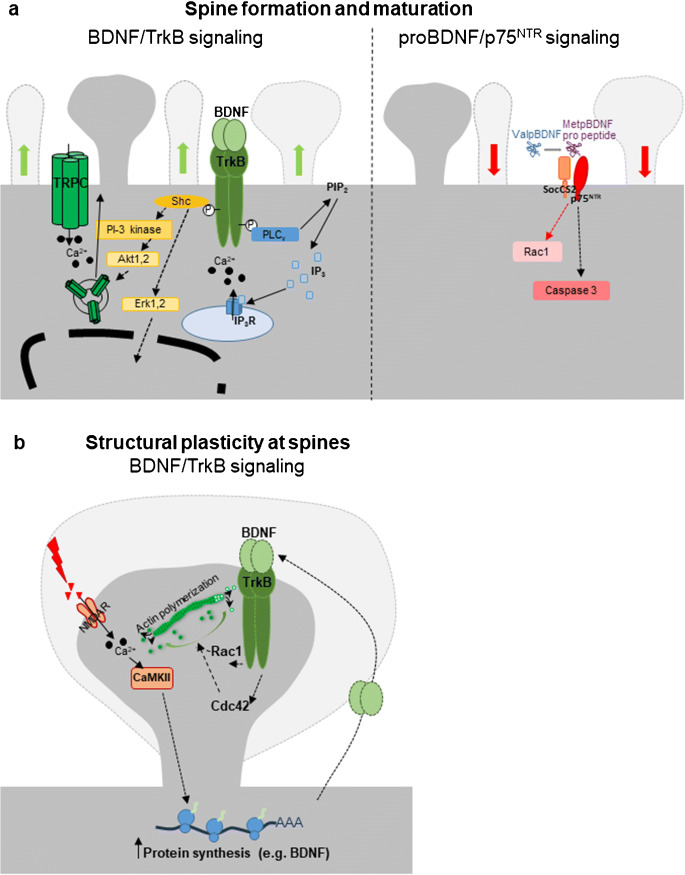
Dendritic spines are tiny membrane specialization forming the postsynaptic part of most excitatory synapses. They have been suggested to play a crucial role in regulating synaptic transmission during development and in adult learning processes. Changes in their number, size, and shape are correlated with processes of structural synaptic plasticity and learning and memory and also with neurodegenerative diseases, when spines are lost. Thus, their alterations can correlate with neuronal homeostasis, but also with dysfunction in several neurological disorders characterized by cognitive impairment. Therefore, it is important to understand how different stages in the life of a dendritic spine, including formation, maturation, and plasticity, are strictly regulated. In this context, brain-derived neurotrophic factor (BDNF), belonging to the NGF-neurotrophin family, is among the most intensively investigated molecule. This review would like to report the current knowledge regarding the role of BDNF in regulating dendritic spine number, structure, and plasticity concentrating especially on its signaling via its two often functionally antagonistic receptors, TrkB and p75 NTR. In addition, we point out a series of open points in which, while the role of BDNF signaling is extremely likely conclusive, evidence is still missing.
Overview
The claims and statistics of this paper haven’t been checked yet.
Free: it reads the open-access text and checks the first 5 claims that cite a source we can check. Create a free account to check every claim.
Integrity signals
Registry
Cites
Statistics
Figures
Verification
Claims the paper makes
The claims and statistics of this paper haven’t been checked yet.
Free: it reads the open-access text and checks the first 5 claims that cite a source we can check. Create a free account to check every claim.
Claims other papers make about this one
Each is checked against this paper’s own text: does it say what the citing paper says it does?
The cited source says what the claim attributes to it.
In the citing paper
“At the level of individual spines, activity-dependent BDNF release activates TrkB in an autocrine loop that is essential for both structural and functional long-term potentiation [105,107,108].”
From Synaptic Plasticity—Intrinsic Excitability and Antidepressant Discovery (2026) · cites this paper as [108]
The cited source says what the claim attributes to it.
In the citing paper
“mBDNF-TrkB-signaling pathways regulate multiple events, such as apoptosis and survival of neurons [90,91,92], dendritic growth [93,94,95,96], spine maturation and stabilization, development of synapses [96,97,98], learning- and memory-processes-dependent synaptic plasticity [99,100].”
From Neurotrophic Factor BDNF, Physiological Functions and Therapeutic Potential in Depression, Neurodegeneration and Brain Cancer (2020) · cites this paper as [96]
Self-check
Percentages, sums and reported differences re-computed from the paper’s own numbers.
The self-check needs the paper’s full text.
Citations
Cites
Shrestha, S., & Offer, S. M. (2016) · Medical Epigenetics · doi:10.1159/000444713 · Cited by 8,914
Domingos da Silveira da Luz, A. C., Pereira Dias, G., do Nascimento Bevilaqua, M. C., Cocks, G., Gardino, P. F., Thuret, S., & Nardi, A. E. (2013) · Neuropsychobiology · doi:10.1159/000353269 · Cited by 3,995
Egan, M. F., Kojima, M., Callicott, J. H., Goldberg, T. E., Kolachana, B. S., Bertolino, A., Zaitsev, E., Gold, B., Goldman, D., Dean, M., et al. (2003) · Cell · doi:10.1016/s0092-8674(03)00035-7 · Cited by 3,888
Microglia promote learning-dependent synapse formation through brain-derived neurotrophic factor
Parkhurst, C. N., Yang, G., Ninan, I., Savas, J. N., Yates, J. R., Lafaille, J. J., Hempstead, B. L., Littman, D. R., & Gan, W.-B. (2013) · Cell · doi:10.1016/j.cell.2013.11.030 · Cited by 2,599 · cited 2×
“…in the impairment of motor learning associated to an impairment in the learning-induced formation of new dendritic spines in the motor cortex (Parkhurst et al. 2013) suggesting a new BDNF-mediated role for microglia in locally modulating specific subsets of synaptic connections possibly…”
BackgroundStructural basis of long-term potentiation in single dendritic spines
Matsuzaki, M., Honkura, N., Ellis-Davies, G. C. R., & Kasai, H. (2004) · Nature · doi:10.1038/nature02617 · Cited by 2,483
Neurotrophin regulation of neural circuit development and function
Park, H., & Poo, M.-M. (2013) · Nature Reviews Neuroscience · doi:10.1038/nrn3379 · Cited by 2,060
Experience-dependent structural synaptic plasticity in the mammalian brain
Holtmaat, A., & Svoboda, K. (2009) · Nature Reviews Neuroscience · doi:10.1038/nrn2699 · Cited by 1,934
Long-term in vivo imaging of experience-dependent synaptic plasticity in adult cortex
Trachtenberg, J. T., Chen, B. E., Knott, G. W., Feng, G., Sanes, J. R., Welker, E., & Svoboda, K. (2002) · Nature · doi:10.1038/nature01273 · Cited by 1,927 · cited 2×
“While in vivo dendritic spines have been shown to remain stable over months (Grutzendler et al. 2002; Trachtenberg et al. 2002), providing the structural correlate for the long-term storage of information, structural plasticity of dendritic spines is required for learning and memory formation…”
BackgroundNeuroligins and neurexins link synaptic function to cognitive disease
Südhof, T. C. (2008) · Nature · doi:10.1038/nature07456 · Cited by 1,849 · cited 1×
“…(von Bohlen und Halbach et al. 2006) as well as to several neuropsychiatric, neurodevelopmental, and neurodegenerative diseases including autisms (Sudhof 2008), mental retardation (Purpura 1974), and Alzheimer’s disease * Marta Zagrebelsky m.zagrebelsky@tu-bs.de * Martin Korte m.korte@tu-bs.de 1…”
BackgroundRegulation of Cell Survival by Secreted Proneurotrophins
Lee, R., Kermani, P., Teng, K. K., & Hempstead, B. L. (2001) · Science · doi:10.1126/science.1065057 · Cited by 1,670
Cited by
Colucci-D’Amato, L., Speranza, L., & Volpicelli, F. (2020) · International Journal of Molecular Sciences · doi:10.3390/ijms21207777 · Cited by 991
The physiology of regulated BDNF release
Brigadski, T., & Leßmann, V. (2020) · Cell and Tissue Research · doi:10.1007/s00441-020-03253-2 · Cited by 209
“Although the BDNF-dependent LTP-inducing protocols seem to be very similar, the release sites of BDNF as well as the site of BDNF action depend on brain region and context (reviewed in Edelmann et al. 2014; Zagrebelsky et al. 2020).”
BackgroundButyrate ameliorates quinolinic acid–induced cognitive decline in obesity models
Ge, X., Zheng, M., Hu, M., Fang, X., Geng, D., Liu, S., Wang, L., Zhang, J., Guan, L., Zheng, P., et al. (2023) · Journal of Clinical Investigation · doi:10.1172/jci154612 · Cited by 130
“The prevalence of asymmetrical cerebral alterations has been extensively documented in integrity are essential in synaptic transmission and plasticity, linking their morphophysiology to cognition processes (83).”
Camuso, S., Rosa, P. L., Fiorenza, M. T., & Canterini, S. (2021) · Neurobiology of Disease · doi:10.1016/j.nbd.2021.105606 · Cited by 131
Advantages and Limitations of Animal Schizophrenia Models
Białoń, M., & Wąsik, A. (2022) · International Journal of Molecular Sciences · doi:10.3390/ijms23115968 · Cited by 113
“Forming and maintaining the spine density and proper morphology are closely related to BDNF/TrkB signaling [219].”
BackgroundMechanisms Controlling the Expression and Secretion of BDNF
Arévalo, J. C., & Deogracias, R. (2023) · Biomolecules · doi:10.3390/biom13050789 · Cited by 98
Solana‐Balaguer, J., Campoy‐Campos, G., Martín‐Flores, N., Pérez‐Sisqués, L., Sitjà‐Roqueta, L., Küçükerden, M., Gámez‐Valero, A., Coll‐Manzano, A., Martí, E., Pérez‐Navarro, E., et al. (2023) · Journal of Extracellular Vesicles · doi:10.1002/jev2.12355 · Cited by 77
“Enriched levels of TrkB, p75 and BDNF, which have been extensively linked with synaptic processes (Chapleau & Pozzo-Miller, 2012; Zagrebelsky et al., 2020; Zanin et al., 2019), were also detected in the EVs fraction (Figure 1D), suggesting a plausible synaptic effect of EVs on neighbouring neurons.”
Matosin, N., Arloth, J., Czamara, D., Edmond, K. Z., Maitra, M., Fröhlich, A. S., Martinelli, S., Kaul, D., Bartlett, R., Curry, A. R., et al. (2023) · Acta Neuropathologica · doi:10.1007/s00401-023-02541-9 · Cited by 63
“Given brain-derived neurotrophic factor (BDNF) is a crucial modulator of dendritic spines [27, 73], and a strong relationship between FKBP5 and BDNF gex levels have been reported [41], we investigated correlations of both FKBP5 gex with BDNF and mushroom spines within the superficial layer neurons in Cohort 5 (BDNF UM…”
BackgroundWong, L., Chong, Y. S., Lin, W., Kisiswa, L., Sim, E., Ibáñez, C. F., & Sajikumar, S. (2021) · Aging Cell · doi:10.1111/acel.13305 · Cited by 56
A theory of the neural mechanisms underlying negative cognitive bias in major depression
Jiang, Y. (2024) · Frontiers in Psychiatry · doi:10.3389/fpsyt.2024.1348474 · Cited by 49
Szarowicz, C. A., Steece‐Collier, K., & Caulfield, M. E. (2022) · International Journal of Molecular Sciences · doi:10.3390/ijms23148011 · Cited by 47
Serotonin Receptor 5-HT2A Regulates TrkB Receptor Function in Heteroreceptor Complexes
Ilchibaeva, T., Tsybko, A., Zeug, A., Müller, F. E., Guseva, D., Bischoff, S., Ponimaskin, E., & Naumenko, V. (2022) · Cells · doi:10.3390/cells11152384 · Cited by 35
Kastellakis, G., Tasciotti, S., Pandi, I., & Poirazi, P. (2023) · Frontiers in Behavioral Neuroscience · doi:10.3389/fnbeh.2023.1212139 · Cited by 41
“This event triggers the beginning of an autocrine feedback loop in which BDNF induces the local synthesis and the secretion of more BDNF, facilitating also the transportation and targeting of newly synthesized BDNF mRNA (Harward et al., 2016).”
BackgroundInfluentialKetamine – A New Antidepressant Drug with Anti-Inflammatory Properties
Jóźwiak-Bębenista, M., Sokołowska, P., Wiktorowska‐Owczarek, A., Kowalczyk, E., & Sienkiewicz, M. (2023) · Journal of Pharmacology and Experimental Therapeutics · doi:10.1124/jpet.123.001823 · Cited by 39
EPO prevents neuroinflammation and relieves depression via JAK/STAT signaling
Luo, Y., Ali, T., Liu, Z., Gao, R., Li, A., Yang, C., Ling, L., He, L., & Li, S. (2023) · Life Sciences · doi:10.1016/j.lfs.2023.122102 · Cited by 36
Pagliusi, M., Franco, D., Cole, S. L., Morais‐Silva, G., Chandra, R., Fox, M. E., Iñiguez, S. D., Sartori, C. R., & Lobo, M. K. (2022) · Frontiers in Psychiatry · doi:10.3389/fpsyt.2022.854494 · Cited by 36
“The pro-plasticity effects of BDNF are triggered by the activation of the full-length BDNF receptor tyrosine kinase B (here called TrkB), initiating a specific intracellular signaling pathway (6, 9, 10).”
BackgroundAstroglial Mechanisms Underlying Chronic Insomnia Disorder: A Clinical Study
Zhang, P., Li, Y., Zhang, Z., Yang, Y., Rao, J.-X., Xia, L., Li, X.-Y., Chen, G.-H., & Wang, F. (2020) · Nature and Science of Sleep · doi:10.2147/nss.s263528 · Cited by 35
Neurotrophins: Expression of Brain–Lung Axis Development
Manti, S., Xerra, F., Spoto, G., Butera, A., Gitto, E., Rosa, G. D., & Nicotera, A. G. (2023) · International Journal of Molecular Sciences · doi:10.3390/ijms24087089 · Cited by 35
“It has been demonstrated that the interaction pro-BDNF/p75NTR exerts an opposite action to the antiapoptotic effect of BDNF/TrkB [22].”
BackgroundInfluentialThe role of dendritic spines in epileptogenesis
Jean, G., Carton, J., Haq, K., & Musto, A. E. (2023) · Frontiers in Cellular Neuroscience · doi:10.3389/fncel.2023.1173694 · Cited by 34
“Moreover, another study explains the role of BDNF in regulating dendritic spine number, structure, and plasticity (Zagrebelsky et al., 2020).”
BackgroundDavis, N., Taylor, B., Abelleira, L. E., Karimian‐Marnani, N., Aleksynas, R., Syed, N., Giovanni, S. D., Palmisano, I., & Sastre, M. (2024) · The FASEB Journal · doi:10.1096/fj.202301762rr · Cited by 32
“A similar finding was shown in vivo in APP/PS1 mice whereby HDAC3 inhibition increased spine density, which was accompanied by increases in important synaptic proteins such as synaptophysin, BDNF, and p-CREB in the hippocampus of these animals.”
BackgroundInfluentialNeurotrophic factor-based pharmacological approaches in neurological disorders
Castelli, V., Alfonsetti, M., & d’Angelo, M. (2022) · Neural Regeneration Research · doi:10.4103/1673-5374.358619 · Cited by 33
“Every existing pharmacological agent with these characteristics could be taken into account for AD treatment (Zagrebelsky et al., 2020).”
BackgroundRole of BDNF in Neuroplasticity Associated with Alcohol Dependence
Peregud, D., Baronets, V. Y., Terebilina, N. N., & Gulyaeva, N. V. (2023) · Biochemistry (Moscow) · doi:10.1134/s0006297923030094 · Cited by 32
“Interaction of mature BDNF with the tyrosine kinase receptor TrkB induces its homodimerization, autophosphorylation, and activation of intracellular signaling pathways [20-23].”
BackgroundZhang, Y., Bai, X., Zhang, Y., Yao, S., Cui, Y., You, L., Yu, P., Chang, Y., & Gao, G. (2022) · Molecular Neurobiology · doi:10.1007/s12035-022-02929-w · Cited by 31
Tassinari, M., Mottolese, N., Galvani, G., Ferrara, D., Gennaccaro, L., Loi, M., Medici, G., Candini, G., Rimondini, R., Ciani, E., et al. (2022) · International Journal of Molecular Sciences · doi:10.3390/ijms23158719 · Cited by 31
Zagrebelsky, M., & Körte, M. (2023) · Neural Regeneration Research · doi:10.4103/1673-5374.374138 · Cited by 30
“Furthermore, it promotes adult neurogenesis (Vilar and Mira, 2016) and activity-dependent synaptic plasticity (Korte et al., 1995; see also for reviews; Zagrebelsky and Korte, 2014; Zagrebelsky et al., 2020) and exerts powerful neuroprotective actions.”
BackgroundSelf-citationHarnessing BDNF Signaling to Promote Resilience in Aging
Faraji, J., & Metz, G. A. S. (2024) · Aging and Disease · doi:10.14336/ad.2024.0961 · Cited by 29
“Secondly, BDNF mRNA can be transported in neuronal dendrites in an activity-dependent manner [168, 169].”
Gupta, G. L., Sharma, L. K., & Sharma, M. (2022) · Neurochemical Research · doi:10.1007/s11064-022-03779-7 · Cited by 29
“BDNFTrkB impacts neurons’ existence, growth, and activities and stimulates synapse formation and transmission capability [84].”
BackgroundA comprehensive review on adaptive plasticity and recovery mechanisms post‐acquired brain injury
Rajan, R. K. (2025) · Neuroprotection/Neuroprotection (Chichester, England. Print) · doi:10.1002/nep3.70006 · Cited by 28
“25 Dendritic remodeling is a vital process in recovery after ABI, such as TBI or stroke.”
Paulo, D. C., Bento‐Torres, J., Filho, C. S., de Oliveira, T. C. G., de Sousa, A. A., dos Reis, R. R., dos Santos, Z. A., de Lima, C. M., Augusto‐Oliveira, M., Said, N. M., et al. (2021) · Frontiers in Immunology · doi:10.3389/fimmu.2021.683026 · Cited by 29
“Dendritic spines (the post synaptic membrane of most excitatory synapses) have a crucial role in synaptic transmission and plasticity underlying cognitive processes (70, 75) and in BDNF signaling through functionally antagonistic receptors, such as the tropomyosin receptor kinase B (TrkB) and the p75, over the lifetim…”
BackgroundRole of PPARs in Progression of Anxiety: Literature Analysis and Signaling Pathways Reconstruction
Рудько, О. И., Tretiakov, A. V., Наумова, Е. А., & Климов, Е. А. (2020) · PPAR Research · doi:10.1155/2020/8859017 · Cited by 27
“Protein’s main function is nerve growth and neuron homeostasis [27].”
BackgroundMeng, P., Zhang, X., Liu, T., Liu, J., Luo, Y., Xie, M.-X., Yang, H., Fang, R. M., Guo, D., Zhong, Z., et al. (2023) · BMC Complementary Medicine and Therapies · doi:10.1186/s12906-023-04000-0 · Cited by 28
Osthole Ameliorates Estrogen Deficiency-Induced Cognitive Impairment in Female Mice
Adu‐Nti, F., Gao, X., Wu, J.-M., Li, J., Iqbal, J., Ahmad, R., & Ma, X. (2021) · Frontiers in Pharmacology · doi:10.3389/fphar.2021.641909 · Cited by 25
“Alterations in dendritic spines and synapse are closely associatedwith learning andmemory, anxiety- and depression-like behaviors (Qiao et al., 2016; Zagrebelsky et al., 2020).”
BackgroundBan, Y., Yu, T., Feng, B., Lorenz, C., Wang, X., Baker, C., & Zou, Y. (2021) · Science Advances · doi:10.1126/sciadv.abh2974 · Cited by 24
ProBDNF signaling is involved in periodontitis-induced depression-like behavior in mouse hippocampus
Li, Y., Guan, X., He, Y., Jia, X., Pan, L., Wang, Y., Han, Y., Zhao, R., Yang, J., & Hou, T. (2022) · International Immunopharmacology · doi:10.1016/j.intimp.2023.109767 · Cited by 24
Biochemical Mechanisms of Beneficial Effects of Beta-Alanine Supplements on Cognition
Meftahi, G. H., & Jahromi, G. P. (2023) · Biochemistry (Moscow) · doi:10.1134/s0006297923080114 · Cited by 24
“This phosphorylation of TrkB activates several signaling pathways, which initiate various processes such as programmed cell death [26] and neuronal viability [27], dendritic branching growth [28], dendritic spine formation and stabilization, synaptic development [29], cognitive dependent processes on synaptic plastici…”
BackgroundHan, M., Zeng, D., Tan, W., Chen, X.-X., Bai, S.-Y., Wu, Q., Chen, Y., Wei, Z., Mei, Y., & Zeng, Y. (2024) · Neural Regeneration Research · doi:10.4103/nrr.nrr-d-23-01419 · Cited by 23
“Additionally, a single nucleotide polymorphism in human BDNF (Val66Met) is associated with increased anxiety and an increased risk of stress-related depression in patients with depression (Wei et al., 2017; Zagrebelsky et al., 2020; Ma et al., 2023).”
BackgroundEmerging Insights into the Role of BDNF on Health and Disease in Periphery
Ichimura‐Shimizu, M., Kurrey, K., Miyata, M., Dezawa, T., Tsuneyama, K., & Kojima, M. (2024) · Biomolecules · doi:10.3390/biom14040444 · Cited by 22
Galanis, C., Hananeia, N., Lenz, M., Farahani, M. V., Jedlička, P., & Vlachos, A. (2025) · Brain stimulation · doi:10.1016/j.brs.2025.08.019 · Cited by 21
Jager, J. E. D., Boesjes, R., Roelandt, G. H. J., Koliaki, I., Sommer, I. E., Schoevers, R. A., & Nuninga, J. O. (2024) · Neuroscience & Biobehavioral Reviews · doi:10.1016/j.neubiorev.2024.105796 · Cited by 21
The influence of sensory experience on the glutamatergic synapse
Cooper, D. D., & Frenguelli, B. G. (2021) · Neuropharmacology · doi:10.1016/j.neuropharm.2021.108620 · Cited by 21
Modarresi, F., Fatemi, R. P., Razavipour, S. F., Ricciardi, N. R., Makhmutova, M., Khoury, N., Magistri, M., Volmar, C., Wahlestedt, C., & Faghihi, M. A. (2020) · Heliyon · doi:10.1016/j.heliyon.2021.e07570 · Cited by 20
“BDNF is found in hippocampal synapses where it is a potent regulator of neurons that play a key role in learning and memory, in part by altering synaptic spines (Wurzelmann et al., 2017; Zagrebelsky et al., 2020).”
BackgroundInsulin-like growth factor 5 associates with human Aß plaques and promotes cognitive impairment
Rauskolb, S., Andreska, T., Fries, S., von Collenberg, C. R., Blum, R., Monoranu, C., Villmann, C., & Sendtner, M. (2022) · Acta Neuropathologica Communications · doi:10.1186/s40478-022-01352-5 · Cited by 20
Zong, W., Lu, X., Dong, G., Zhang, L., & Li, K. (2023) · Frontiers in Psychiatry · doi:10.3389/fpsyt.2023.1096503 · Cited by 21
“Therefore, BDNF has been considered a biomarker for different brain pathologies (31).”
BackgroundInfluentialFading memories in aging and neurodegeneration: Is p75 neurotrophin receptor a culprit?
Wong, L., Wang, Z., Ang, S. R. X., & Sajikumar, S. (2022) · Ageing Research Reviews · doi:10.1016/j.arr.2022.101567 · Cited by 20
The Neuron Navigators: Structure, function, and evolutionary history
Powers, R. M., Hevner, R. F., & Halpain, S. (2023) · Frontiers in Molecular Neuroscience · doi:10.3389/fnmol.2022.1099554 · Cited by 20
“, 2022), a neurotrophin that regulates neuritogenesis and synaptic function (Sonoyama et al., 2020; Zagrebelsky et al., 2020).”
BackgroundMohandas, K., Rishikesh, R., Balan, Y. M., Deepti, A., Hosseini, S., Körte, M., & Sasidharan, B. C. P. (2025) · Molecular Neurobiology · doi:10.1007/s12035-025-05238-0 · Cited by 19
“• While the role of BDNF in promoting synaptic plasticity is well-established [30], it is also important to consider that dysregulation of BDNF signaling can lead to cognitive impairments and neurodegenerative diseases, highlighting the delicate balance required for optimal neuronal function.”
Mahalakshmi, A. M., Ray, B., Tuladhar, S., Hediyal, T. A., Raj, P., Rathipriya, A. G., Qoronfleh, M. W., Essa, M. M., & Chidambaram, S. B. (2021) · Cells · doi:10.3390/cells10123405 · Cited by 18
“Increased spine density in hippocampal neurons is also reported by promoting transactivation of TrKB, mediated by D1 receptors [100].”
BackgroundRusso, L., Giacomelli, C., Fortino, M., Marzo, T., Ferri, G., Calvello, M., Viegi, A., Magrì, A. L., Pratesi, A., Pietropaolo, A., et al. (2022) · ACS Chemical Neuroscience · doi:10.1021/acschemneuro.2c00463 · Cited by 18
The role of BDNF on food intake and overweight: Linking neuroplasticity and obesity
Sequeira‐Cordero, A., Brenes, J. C., & Vindas-Smith, R. (2025) · Progress in Neuro-Psychopharmacology and Biological Psychiatry · doi:10.1016/j.pnpbp.2025.111457 · Cited by 16
Engineering a switchable single‐chain TEV protease to control protein maturation in living neurons
Renna, P., Ripoli, C., Dağliyan, O., Pastore, F., Rinaudo, M., Re, A., Paciello, F., & Grassi, C. (2022) · Bioengineering & Translational Medicine · doi:10.1002/btm2.10292 · Cited by 16
“vesicle granules in a Ca-independent manner but it can also be released from larger vesicles upon Ca influx induced by neuronal depolarization.(25) As a proof-of-concept, we used uniRapR-TEV to control BDNF”
BackgroundMethodPopovic, D., & Dragić, M. (2025) · Neurochemistry International · doi:10.1016/j.neuint.2025.106021 · Cited by 15
Henshall, C., Randle, H., Francis, N., & Freire, R. (2022) · Animals · doi:10.3390/ani12202818 · Cited by 15
Afshari, M., Gharibzadeh, S., Pouretemad, H., & Roghani, M. (2024) · Scientific Reports · doi:10.1038/s41598-024-58871-5 · Cited by 15
Sun, Y., Shi, X., Ohm, M., Körte, M., & Zagrebelsky, M. (2025) · Scientific Reports · doi:10.1038/s41598-025-95546-1 · Cited by 15
“In addition, Han et al. showed that BDNF overexpression in the hippocampus suppressed microglial activation and expression of TNF-α and IL-6 in streptozotocin-induced Type I diabetes 27 .”
Self-citationRibeiro-Davis, A., Saeedy, D. A., Jahr, F. M., Hawkins, E., McClay, J. L., & Deshpande, L. S. (2023) · Journal of Pharmacology and Experimental Therapeutics · doi:10.1124/jpet.123.001824 · Cited by 14
“Speci fi cally, BDNF is required for maintenance of the spine phenotype (Zagrebelsky et al., 2020).”
BackgroundDavri, A. S., Katsenos, A. P., Tulyaganova, G. K., Tzavellas, N. P., Simos, Y. V., Kanellos, F. S., Konitsiotis, S., Dounousi, E. C., Niaka, K., Bellou, S., et al. (2024) · Metabolic Brain Disease · doi:10.1007/s11011-024-01478-6 · Cited by 14
“BDNF pathway is considered crucial in the regulation of dendritic spine formation, maintenance, and maturation (Zagrebelsky et al. 2020).”
Brain-Derived Neurotrophic Factor – The Protective Agent Against Neurological Disorders
Koyya, P., Manthari, R. K., & Pandrangi, S. L. (2023) · CNS & Neurological Disorders - Drug Targets · doi:10.2174/1871527322666230607110617 · Cited by 12
“(2020), pyramidal nerve cells of the visual cortex and the hippocampus exhibit dendrite spines that are denser and more complex after long-term exogenous BDNF treatment in vitro [70].”
BackgroundGross, J., Knipper, M., & Mazurek, B. (2023) · Cellular and Molecular Neurobiology · doi:10.1007/s10571-023-01405-w · Cited by 12
“The BDNF-NTRK2 axis is also involved in the formation of synaptic spines (Zagrebelsky et al. 2020).”
BackgroundAdvancements in the study of synaptic plasticity and mitochondrial autophagy relationship
Zhu, Y., Hui, Q., Zhang, Z., Fu, H., Qin, Y., Zhao, Q., Li, Q., Zhang, J., Guo, L., He, W., et al. (2024) · Journal of Neuroscience Research · doi:10.1002/jnr.25309 · Cited by 13
Tacke, C., DiStefano, P. S., Lindsay, R. M., Metzdorf, K., Zagrebelsky, M., & Körte, M. (2022) · Frontiers in Molecular Neuroscience · doi:10.3389/fnmol.2022.945348 · Cited by 12
“Moreover, BDNF is involved in the maintenance of neuronal architecture including number, size and shape of dendritic spines (Kellner et al., 2014; Zagrebelsky et al., 2020), and is crucial for synaptic plasticity (Zagrebelsky and Korte, 2014; Kowianski et al.”
BackgroundSelf-citationBrain-derived neurotrophic factor and physical activity: A review
Владимировна, С. Н. (2022) · Comprehensive Child Studies · doi:10.33910/2687-0223-2022-4-2-124-133 · Cited by 13
Entacapone promotes hippocampal neurogenesis in mice
Hwang, I., Yoo, D., Jung, H. Y., Kim, W., Hahn, K. R., Kwon, H., Nam, S. M., Chung, J., Yoon, Y., & Kim, D. (2020) · Neural Regeneration Research · doi:10.4103/1673-5374.300447 · Cited by 12
“The BDNF-TrkB signaling induces the phosphorylation of CREB, which regulates synaptic plasticity and memory formation (Silva et al., 1998; Foltran and Diaz, 2016; Zagrebelsky et al., 2020), and the phosphorylation of CREB was prevented by an anti-BDNF antibody treatment (Simonetti et al., 2008).”
BackgroundIdentification of Novel BDNF-Specific Corticostriatal Circuitries
Ehinger, Y., Soneja, D., Phamluong, K., Salvi, A., & Ron, D. (2023) · eNeuro · doi:10.1523/eneuro.0238-21.2023 · Cited by 11
“cascades resulting in the initiation of transcriptional and translational machineries (Huang and 67 Reichardt, 2003; Leal et al., 2014; Zagrebelsky et al., 2020).”
BackgroundZhang, Z., Wu, H., Wang, S., Li, Y., Yang, P., Xu, L., Liu, Y., & Liu, M. (2024) · Phytomedicine · doi:10.1016/j.phymed.2024.155671 · Cited by 11
The role of progesterone in memory bias during spatial navigation in females
Gomez‐Perales, E. L., & Brake, W. G. (2022) · Journal of Neuroendocrinology · doi:10.1111/jne.13197 · Cited by 10
“Brain-derived neurotrophic factor (BDNF) is involved in the formation and maturation of dendritic spines.(29) Multiple studies have demonstrated that E2 increases BDNF levels in the hippocampus.”
BackgroundMorin improves learning and memory in healthy adult mice
Martínez‐Coria, H., Serrano‐García, N., López-Valdés, H. E., López‐Chávez, G. S., Alvarez, J. R., Romero‐Hernández, Á., Valverde, F. F., Orozco‐Ibarra, M., & Torres-Ramos, M. (2024) · Brain and Behavior · doi:10.1002/brb3.3444 · Cited by 10
“The rise in BDNF is related to the increase in the number and extension of dendrites, which in turn is a reflection of synaptic plasticity and is related to the acquisition of new information (Holtmaat & Caroni, 2016; Zagrebelsky et al., 2020).”
BackgroundResultBright light exposure induces dynamic changes of spatial memory in nocturnal rodents
Shang, M., Zhang, J., Shen, M., Sun, Z., Gao, P., Li, J., Xing, J.-L., & Guo, G. (2021) · Brain Research Bulletin · doi:10.1016/j.brainresbull.2021.06.019 · Cited by 10
Sarkar, S., Gharami, K., Mondal, A., Padmanabhan, K., Paidi, R. K., Srikumar, B. N., & Biswas, S. C. (2025) · Acta Neuropathologica Communications · doi:10.1186/s40478-025-02060-6 · Cited by 9
“Hence, we questioned whether this effect was direct or indirect by induction of brain-derived neurotrophic factor (BDNF), an important regulator of spine properties [72] and synaptic plasticity [73] by using whole hippocampal tissue and synaptosome lysates (Fig.”
Spatiotemporal diversity in molecular and functional abnormalities in the mdx dystrophic brain
Pomeroy, J., Borczyk, M., Kawalec, M., Hajto, J., Carlson, E., Svärd, S., Verma, S., Bareke, E., Boratyńska-Jasińska, A., Dymkowska, D., et al. (2025) · Molecular Medicine · doi:10.1186/s10020-025-01109-5 · Cited by 9
“In inflammation, ubiquitination manages protein activity and stability (Humphries et al. 2018; Ohtake et al. 2016; Zagrebelsky et al. 2020), while the Regulation of Intrinsic Apoptotic Signalling Pathway in Response to DNA Damage can be secondary to inflammation.”
Zhang, J., Zheng, X., Zhang, G., Cheng, Z., Liu, Y., Zhang, L., Zhang, J., Liu, X., & Yang, Z. (2025) · Translational Psychiatry · doi:10.1038/s41398-025-03417-0 · Cited by 8
Mottolese, N., Uguagliati, B., Tassinari, M., Cerchier, C. B., Loi, M., Candini, G., Rimondini, R., Medici, G., Trazzi, S., & Ciani, E. (2023) · Biomolecules · doi:10.3390/biom13091396 · Cited by 8
“The physiological relevance of the positive effects of BDNF signaling on dendritic spine formation/maturation is supported by several observations [95].”
BackgroundBimbi, G., & Tongiorgi, E. (2024) · Frontiers in Molecular Neuroscience · doi:10.3389/fnmol.2024.1348445 · Cited by 8
Mapping the Ischemic Continuum: Dynamic Multi-Omic Biomarker and AI for Personalized Stroke Care
Grigorean, V. T., Panţu, C., Breazu, A., Oprea, S., Munteanu, O., Rădoi, M. P., Giuglea, C., & Marin, A. (2026) · International Journal of Molecular Sciences · doi:10.3390/ijms27010502 · Cited by 8
“Transcortical reorganization exceeds the peri-infarct cortex: new transcallosal connective fibers in the zone of deafferented areas; new corticothalamic, corticostriatal projections synapse following sprouting; and the previously expressed network hub genes are redirected [145].”
Yılmaz, E., Baltacı, S. B., Moğulkoç, R., & Baltacı, A. K. (2023) · Nutritional Neuroscience · doi:10.1080/1028415x.2023.2296165 · Cited by 7
“These intra-cellular signaling pathways regulate many events such as apoptosis and survival of neurons [64], dendritic growth [65, 66], maturation and stabilization of spines, development of synapses [67, 68], synaptic plasticity and its relationship with learning and memory [11, 69] (Figure 2).”
Neurotrophic Factors and Dendritic Spines
Halbach, O. V. B. U. (2023) · Advances in neurobiology · doi:10.1007/978-3-031-36159-3_5 · Cited by 7
The Ca2+ Bridge: From Neurons to Circuits in Rett Syndrome
Molina, L., Arancibia, Y., Alarcón, J., & Torres, R. F. (2025) · International Journal of Molecular Sciences · doi:10.3390/ijms262110490 · Cited by 6
“This neurotrophic factor is processed and released upon neuronal activity, contributing to axonal guidance, dendritic arborization and dendritic spine formation and maintenance [67].”
Uju, C. N., Karimzadeh, K., & Unniappan, S. (2024) · Reproduction · doi:10.1530/rep-24-0233 · Cited by 6
Jung, S., Kayser, E., Johnson, S. C., Li, L., Worstman, H. M., Sun, G. X., Sedensky, M. M., & Morgan, P. G. (2021) · British Journal of Anaesthesia · doi:10.1016/j.bja.2021.09.036 · Cited by 6
Brain-Derived Neurotrophic Factor And Coronary Artery Disease
Kytikovа, O. Y., Novgorodtseva, T. P., Denisenko, Y., Antonyuk, M. V., Gvozdenko, T. A., & Atamas, O. V. (2022) · Russian Open Medical Journal · doi:10.15275/rusomj.2022.0202 · Cited by 6
“focused on the role of BDNF in regulating the activity of dendritic cells through TrkB and p75NTR, which provide communication between nerve cells [71].”
BackgroundPeregud, D., & Gulyaeva, N. V. (2026) · Biochemistry (Moscow) · doi:10.1134/s000629792660078x · Cited by 5
“BDNF regulates the number, structure, and plasticity of dendritic spines through two functionally antagonistic receptors, TrkB and p75NTR [17].”
Fursa, G. A., Andretsova, S. S., Shishkina, V. S., Voronova, A. D., Karsuntseva, E. K., Chadin, A. V., Reshetov, I. V., Stepanova, O. V., & Chekhonin, V. P. (2024) · Bulletin of Experimental Biology and Medicine · doi:10.1007/s10517-024-06218-5 · Cited by 5
de Oca, A. B.-M., Tendilla‐Beltrán, H., Bringas, M. E., Flores, G., & Aceves, J. (2024) · Journal of Chemical Neuroanatomy · doi:10.1016/j.jchemneu.2024.102468 · Cited by 5
“BDNF is the most abundant neurotrophic factor in the mammalian brain and is crucial for dendritic spine dynamics, specifically promoting the transition to mushroom-shaped structures which has been linked with a synaptic strengthening (Zagrebelsky et al., 2020).”
Sleep and memory: Elucidating the effects of sleep deprivation on different types of memory
Sarma, A., & Havekes, R. (2024) · Elsevier eBooks · doi:10.1016/b978-0-443-15754-7.00048-1 · Cited by 5
Tendilla‐Beltrán, H., Perez-Osornio, D. L., Apam-Castillejos, D. J., & Flores, G. (2024) · Behavioural Brain Research · doi:10.1016/j.bbr.2024.115341 · Cited by 5
“BDNF is crucial for dendritic spine dynamics, and alterations in its related signaling pathways can impair spinogenesis [28].”
Wood, J. A., Chaparala, S., Bantang, C., Chattopadhyay, A., Wesesky, M. A., Kinchington, P. R., Nimgaonkar, V. L., Bloom, D. C., & D’Aiuto, L. (2024) · Journal of NeuroVirology · doi:10.1007/s13365-024-01198-8 · Cited by 4
“NTRK2 (Zagrebelsky et al. 2020), KIF1A (Fan and Lai 2022), and PDLIM5 (Herrick et al. 2010) genes regulate dendritic spine formation, and were downregulated in all the conditions (Fig.”
BackgroundDistinct Alterations in Dendritic Spine Morphology in the Absence of β-Neurexins
Mohrmann, L., Seebach, J., Missler, M., & Rohlmann, A. (2024) · International Journal of Molecular Sciences · doi:10.3390/ijms25021285 · Cited by 4
“Strikingly, neuromodulators such as brain-derived neurotrophic factor (BDNF) are secreted from presynaptic DCVs [48–50] and play a major role in spine development and plasticity [51,52].”
BackgroundAlsallum, M., Kaminskaya, Y. P., Tsybko, A. S., Kolosova, N. G., & Naumenko, V. S. (2023) · Advances in Gerontology · doi:10.1134/s207905702360026x · Cited by 5
“The brain-derived neurotrophic factor (BDNF) maintains neuronal survival and plays the leading role in synaptic plasticity, being one of the key elements in long-term potentiation [3].”
Cui, K., Zhou, Y., Zhang, L., Ying, Y., Xue, Y., Zhang, X., Wang, Q., Shen, H., Zhou, W., Gao, F., et al. (2024) · Molecular Neurobiology · doi:10.1007/s12035-024-04653-z · Cited by 4
“2G, R 2”
An astrocyte-derived cytokine TIMP-1 restores synaptic plasticity in an Alzheimer’s disease modelPreprint
Sarkar, S., Gharami, K., Paidi, R. K., Srikumar, B. N., & Biswas, S. C. (2023) · bioRxiv (Cold Spring Harbor Laboratory) · doi:10.1101/2023.03.18.533245 · Cited by 4
Park, D., Lee, G., Kim, B. S., Seong, M., & Kim, J. (2025) · Neuropsychopharmacology · doi:10.1038/s41386-025-02288-9 · Cited by 4
Shokr, M. M., Fawzy, M. N., & Abdelaziz, A. M. (2026) · Molecular and Cellular Neuroscience · doi:10.1016/j.mcn.2026.104076 · Cited by 3
Mey, M., Bhatta, S., Suresh, S., Labrador, L., Piontkivska, H., & Casadesús, G. (2024) · Biochimica et Biophysica Acta (BBA) - Molecular Basis of Disease · doi:10.1016/j.bbadis.2024.167165 · Cited by 3
Pinkston, B. T. C., Browning, J. L., Larson, A. P., & Olsen, M. L. (2026) · Journal of Neuroscience · doi:10.1523/jneurosci.2002-24.2026 · Cited by 3
Bulava, A., & Alexandrov, Y. I. (2025) · Neuroscience and Behavioral Physiology · doi:10.1007/s11055-025-01851-7 · Cited by 3
“…and Xapelli, 2021; Gao et al., 2009], their migration [Snapyan et al., 2009], and dendrito-and synaptogenesis [Gehler et al., 2004; Gao et al., 2009; Zagrebelsky et al., 2020], as well as apoptosis [Tyler et al., 2002; Gehler et al., 2004; Gonzalez et al., 2016; Borodinova and Salozhin, 2016].”
Suo, X., Wang, Z., & Zhu, Y. (2022) · PubMed · Cited by 3
Aptamer-based expansion microscopy platform enables signal-amplified imaging of dendritic spines
Zhuo, Y., Fu, B., Peng, R., Ma, C., Xie, S., & Qiu, L. (2023) · Talanta · doi:10.1016/j.talanta.2023.124541 · Cited by 3
Lin, J., Jiang, T., Zhang, X., Lu, X., Gong, Y., & Liao, W. (2025) · Food Science & Nutrition · doi:10.1002/fsn3.71010 · Cited by 2
“Dendritic spines, which are minuscule membrane specializations that form the postsynaptic components of most excitatory synapses, play an indispensable role in the regulation of synaptic transmission (Zagrebelsky et al. 2020).”
Popović, D., Kontić, M. Z., Zeljković, M., Milosevic, M. M., Martić, T., Radukic, T., Stekić, A., Glavonic, E., Jakovljević, A., Mihajlović, K., et al. (2026) · Frontiers in Aging Neuroscience · doi:10.3389/fnagi.2026.1757554 · Cited by 2
“Since activation of the TrkB–BDNF pathway is known to promote spine growth and protein synthesis (Zagrebelsky et al., 2020), the expression of downstream kinases involved in this process, Akt, ERK1/2, and mTOR, was examined.”
Ballesio, A., & Rosa, P. L. (2026) · Current Sleep Medicine Reports · doi:10.1007/s40675-026-00372-0 · Cited by 2
Ketone metabolism at the interface of atherosclerosis and brain dysfunction
Kim, Y., & Song, J. (2026) · Pharmacological Research · doi:10.1016/j.phrs.2026.108301 · Cited by 2
Metadata
- Authors
- Zagrebelsky, M., Tacke, C., & Korte, M.
- Affiliations
- Helmholtz Centre for Infection Research (DE)
- Technische Universität Braunschweig (DE)
- Corresponding author
- Zagrebelsky, Marta
- Venue
- Cell and Tissue Research
- Published
- 2020-06-14
- Volume
- 382
- Issue
- 1
- Pages
- 185-199
- ISSN
- 0302-766X (ISSN-L)
- 1432-0878
- PMC
- PMC7529616
- OpenAlex
- W3035089933
- Cited by
- 147
- References
- 203
- Citations by year
- 2026: 34 · 2025: 18 · 2024: 27 · 2023: 31 · 2022: 19 · 2021: 12 · 2020: 6
- FWCI
- 2.35
- Type
- journal article
- Language
- en
- Open access
- hybrid
- doi.org
- Licence
- cc-by
- creativecommons.org/licenses/by/4.0 (tdm)
- creativecommons.org/licenses/by/4.0 (vor)
- Locations
- Cell and Tissue Research (publishedVersion, cc-by)
- PubMed Central (publishedVersion, cc-by)
- PubMed (publishedVersion)
- Informationszentrum Lebenswissenschaften (ZB MED) (submittedVersion, cc-by)
- HZI (Helmholtz Centre for Infection Research) (submittedVersion, cc-by-nc-sa)
- Funders
- DFG (DFG grant KO 1674/5-1)
- Topics
- Life Sciences › Neuroscience › Cellular and Molecular Neuroscience › Nerve injury and regeneration
- Life Sciences › Neuroscience › Cellular and Molecular Neuroscience › Neuroscience and Neuropharmacology Research
- Life Sciences › Neuroscience › Developmental Neuroscience › Neurogenesis and neuroplasticity mechanisms
- Keywords
- dendritic spines, brain-derived neurotrophic factor, BDNF signaling, TrkB receptor, p75 neurotrophin receptor, synaptic plasticity, spine maturation, spine formation, excitatory synapses, learning and memory, neurodegenerative diseases, neuronal homeostasis
- MeSH terms
- Animals, Humans, Neurons, Signal Transduction, Brain-Derived Neurotrophic Factor, Dendritic Spines
About these checks
Registry, retraction, Cites and statistics results are computed, not judged, with one exception: a printed reference that no index lists is read once by a model before it counts as a citation error. Claims are extracted by a model and kept only when their quote appears verbatim in the text; each cited source is then checked, with a model’s help, for whether it says what the claim relies on. Those verdicts can be wrong — read the claim’s quote and the cited source before relying on one.
Statistics and arithmetic are recomputed, not judged.
Confidence bands are shown only for fields calibrated on our annotated test set. None is calibrated yet, so no band is shown.
What counts as a claim ›How we measure confidence ›How we check this ›
Are you an author, or do you see a problem with this page? Request a review
Data sources
Bibliographic data: Semantic Scholar, OpenAlex, Crossref.
Contains information from the Semantic Scholar Academic Graph Datasets, made available under the ODC Attribution License (ODC-BY 1.0).
Semantic Scholar’s data is described in: Kinney, R., et al. (2023). The Semantic Scholar Open Data Platform. arXiv:2301.10140.
