

Leptin and the intervertebral disc: A biochemical link exists between obesity, intervertebral disc degeneration and low back pain-an in vitro study in a bovine model
Open accessThe DOI matches its Crossref record; 62 of the 63 references it cites were found in a registry or an index, and 1 are not checked yet.
Abstract
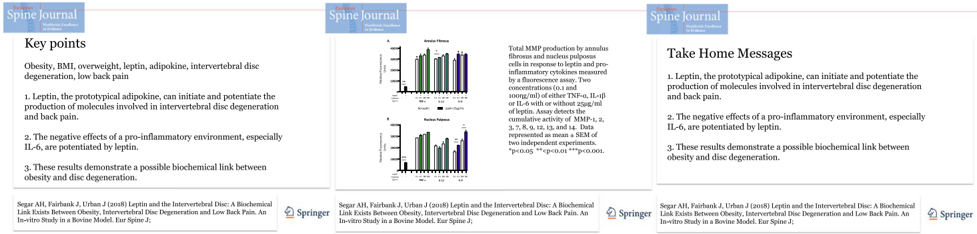
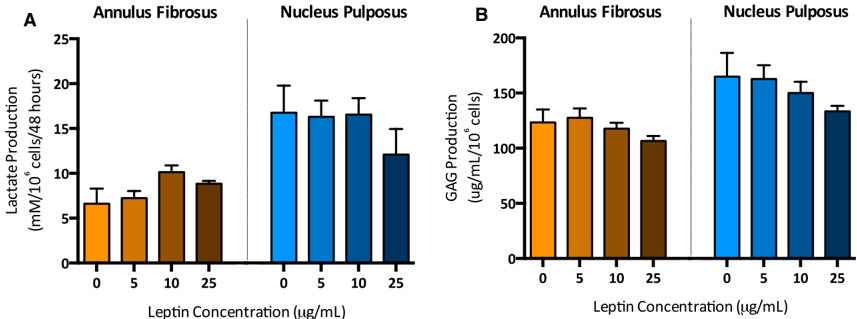
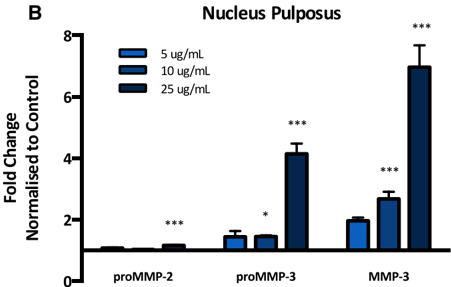
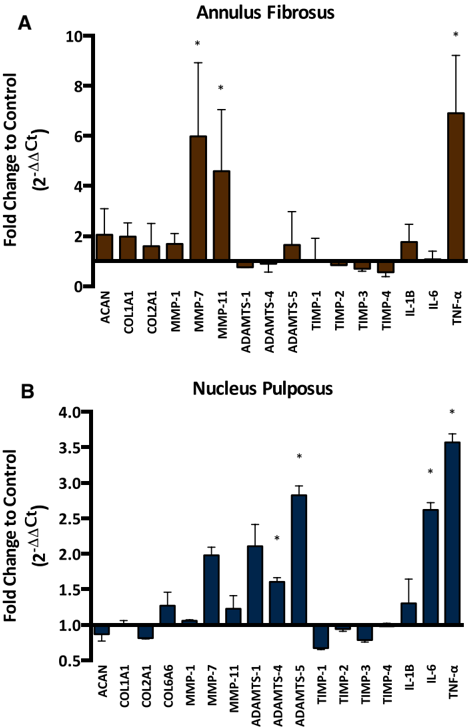
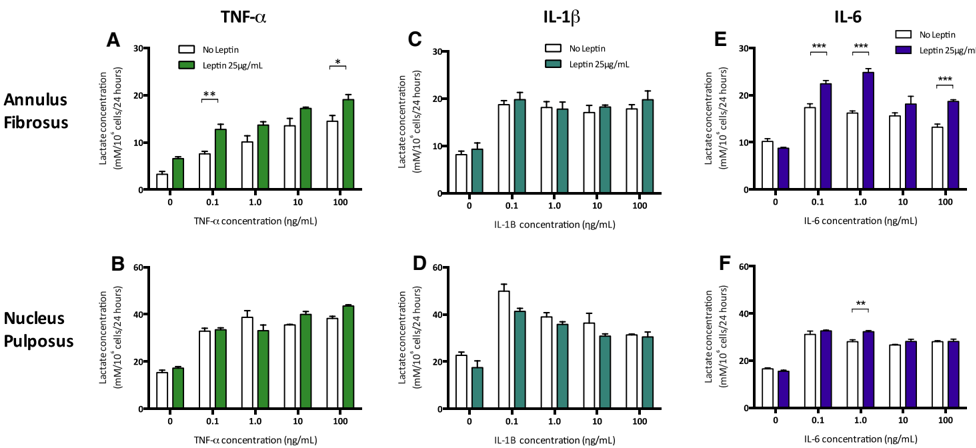
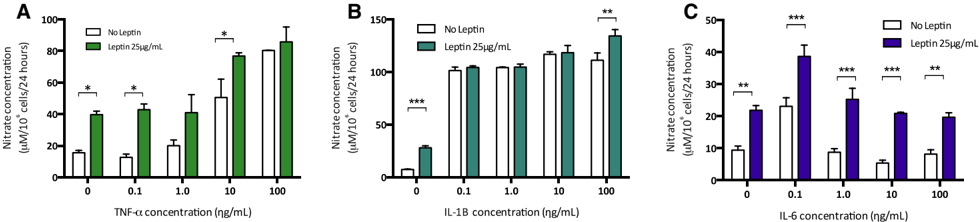
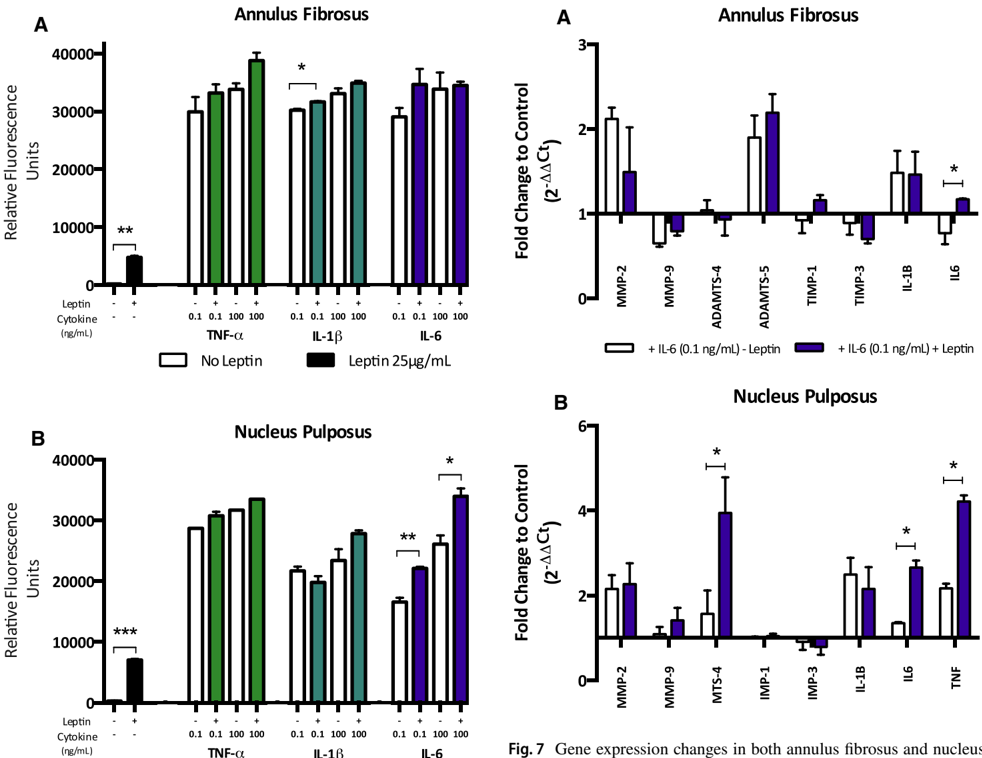
PURPOSE: The aim of this study was to identify the effects of leptin upon the intervertebral disc (IVD) and to determine whether these responses are potentiated within an environment of existing degeneration. Obesity is a significant risk factor for low back pain (LBP) and IVD degeneration. Adipokines, such as leptin, are novel cytokines produced primarily by adipose tissue and have been implicated in degradative and inflammatory processes. Obese individuals are known to have higher concentrations of serum leptin, and IVD cells express leptin receptors. We hypothesise that adipokines, such as leptin, mediate a biochemical link between obesity, IVD degeneration and LBP. METHODS: The bovine intervertebral disc was used as a model system to investigate the biochemical effects of obesity, mediated by leptin, upon the intervertebral disc. Freshly isolated cells, embedded in 3D alginate beads, were subsequently cultured under varying concentrations of leptin, alone or together with the pro-inflammatory cytokines TNF-α, IL-1β or IL-6. Responses in relation to production of nitric oxide, lactate, glycosaminoglycans and expression of anabolic and catabolic genes were analysed. RESULTS: Leptin influenced the cellular metabolism leading particularly to greater production of proteases and NO. Addition of leptin to an inflammatory environment demonstrated a marked deleterious synergistic effect with greater production of NO, MMPs and potentiation of pro-inflammatory cytokine production. CONCLUSIONS: Leptin can initiate processes involved in IVD degeneration. This effect is potentiated in an environment of existing degeneration and inflammation. Hence, a biochemical mechanism may underlie the link between obesity, intervertebral disc degeneration and low back pain. These slides can be retrieved under Electronic Supplementary Material.
Overview
The claims and statistics of this paper haven’t been checked yet.
Free: it reads the open-access text and checks the first 5 claims that cite a source we can check. Create a free account to check every claim.
Integrity signals
Registry
Cites
Statistics
Figures

Verification
Claims the paper makes
The claims and statistics of this paper haven’t been checked yet.
Free: it reads the open-access text and checks the first 5 claims that cite a source we can check. Create a free account to check every claim.
Claims other papers make about this one
Each is checked against this paper’s own text: does it say what the citing paper says it does?
The cited source says what the claim attributes to it.
In the citing paper
“Specifically, leptin promotes matrix degradation and inflammation within the disc [133], whereas adiponectin may paradoxically offer protection by lowering proinflammatory cytokines in degenerated nucleus pulposus cells [134].”
From Interorgan Communications in Skeletal Pathophysiology: From Molecular Pathways to Multidisciplinary Therapies (2026) · cites this paper as [133]
Self-check
Percentages, sums and reported differences re-computed from the paper’s own numbers.
The self-check needs the paper’s full text.
Citations
Cites
2 retracted
Li, Z., Shen, J., Wu, W. K. K., Yu, X., Liang, J., Qiu, G., & Liu, J. (2012) · PLoS ONE · doi:10.1371/journal.pone.0053176 · Cited by 98
RetractedLeptin Downregulates Aggrecan through the p38-ADAMST Pathway in Human Nucleus Pulposus Cells
Li, Z., Yu, X., Liang, J., Wu, W. K. K., Yu, J. Q., & Shen, J. (2014) · PLoS ONE · doi:10.1371/journal.pone.0109595 · Cited by 35
RetractedAnalyzing real-time PCR data by the comparative CT method
Schmittgen, T. D., & Livak, K. J. (2008) · Nature Protocols · doi:10.1038/nprot.2008.73 · Cited by 26,190
Vandesompele, J., De Preter, K., Pattyn, F., Poppe, B., Van Roy, N., De Paepe, A., & Speleman, F. (2002) · Genome Biology · doi:10.1186/gb-2002-3-7-research0034 · Cited by 20,038
‘Small Changes' to Diet and Physical Activity Behaviors for Weight Management
Hills, A. P., Byrne, N. M., Lindstrom, R., & Hill, J. O. (2013) · Obesity Facts · doi:10.1159/000345030 · Cited by 9,493
Vos, T., Flaxman, A. D., Naghavi, M., Lozano, R., Michaud, C., Ezzati, M., Shibuya, K., Salomon, J. A., Abdalla, S., Aboyans, V., et al. (2012) · The Lancet · doi:10.1016/s0140-6736(12)61729-2 · Cited by 8,291
A Rapid, Simple Spectrophotometric Method for Simultaneous Detection of Nitrate and Nitrite
Miranda, K. M., Espey, M. G., & Wink, D. A. (2001) · Nitric Oxide · doi:10.1006/niox.2000.0319 · Cited by 3,860
Guh, D. P., Zhang, W., Bansback, N., Amarsi, Z., Birmingham, C. L., & Anis, A. H. (2009) · BMC Public Health · doi:10.1186/1471-2458-9-88 · Cited by 3,855
Haslam, D. W., & James, W. P. T. (2005) · The Lancet · doi:10.1016/s0140-6736(05)67483-1 · Cited by 3,757
FARNDALE, R., BUTTLE, D., & BARRETT, A. (1986) · Biochimica et Biophysica Acta (BBA) - General Subjects · doi:10.1016/0304-4165(86)90306-5 · Cited by 3,312
Research works printed but not linked: 2
- Gruber HE, Ingram JA, Hoelscher GL, Hanley EN Jr (2007) Lep- tin expression by annulus cells in the human intervertebral disc. Spine J 7:437-443. https ://doi.org/10.1016/j.spine e.2006.08.001 · DOI
- Tang C-H, Tang CH, Lu DY et al (2007) Leptin-induced IL-6 production is mediated by leptin receptor, insulin receptor sub- strate-1, phosphatidylinositol 3-kinase, Akt, NF-kappaB, and p300 pathway in microglia. J Immunol 179:1292-1302 · DOI · Paper page
Cited by
A new immunometabolic perspective of intervertebral disc degeneration
Francisco, V., Pino, J., González-Gay, M. Á., Lago, F., Karppinen, J., Tervonen, O., Mobasheri, A., & Gualillo, O. (2022) · Nature Reviews Rheumatology · doi:10.1038/s41584-021-00713-z · Cited by 462
Zhang, X., Huang, Z., Xie, Z., Chen, Y., Zheng, Z., Wei, X., Huang, B., Shan, Z., Liu, J., Fan, S., et al. (2020) · Free Radical Biology and Medicine · doi:10.1016/j.freeradbiomed.2020.08.029 · Cited by 188
Ruiz‐Fernández, C., Francisco, V., Pino, J., Mera, A., González-Gay, M. Á., Gómez, R., Lago, F., & Gualillo, O. (2019) · International Journal of Molecular Sciences · doi:10.3390/ijms20082030 · Cited by 169
“These data indicated that leptin can initiate degradative and inflammatory cascades in disc cells, being its deleterious effects potentiated by an existing inflammatory environment [31].”
BackgroundZhang, H., Liao, H.-Y., Bai, D.-Y., Wang, Z., & Xie, X. (2021) · Biomedicine & Pharmacotherapy · doi:10.1016/j.biopha.2021.112170 · Cited by 142
Fan, C., Wang, W. J., Yu, Z., Wang, J., Xu, W., Ji, Z., He, W., Hua, D., Wang, W., Yao, L., et al. (2024) · Journal of Nanobiotechnology · doi:10.1186/s12951-024-02556-8 · Cited by 118
Wang, X., Yang, S., He, G., & Xie, L. (2023) · Frontiers in Endocrinology · doi:10.3389/fendo.2023.1191501 · Cited by 87
“The expansion of adipocytes in the bone marrow microenvironment not only stimulates osteoclastogenesis and activation but also restricts osteoprotegerin secretion, inhibits osteoblast differentiation, and expedites the release of inflammatory and immunomodulatory factors that facilitate osteoclast formation (53, 54).”
BackgroundDiabetes mellitus as a risk factor for intervertebral disc degeneration: a critical review
Alpantaki, K., Kampouroglou, A., Koutserimpas, C., Effraimidis, G., & Hadjipavlou, A. G. (2019) · European Spine Journal · doi:10.1007/s00586-019-06029-7 · Cited by 86
Zhou, M., Theologis, A. A., & O’Connell, G. D. (2023) · JOR Spine · doi:10.1002/jsp2.1289 · Cited by 86
Lipid metabolism disorder promotes the development of intervertebral disc degeneration
Yi, J., Zhou, Q., Huang, J., Niu, S., Ji, G., & Zheng, T. (2023) · Biomedicine & Pharmacotherapy · doi:10.1016/j.biopha.2023.115401 · Cited by 67
Cellular and molecular mechanisms underlying obesity in degenerative spine and joint diseases
Xiang, Q., Wu, Z., Zhao, Y., Tian, S., Lin, J., Wang, L., Jiang, S., Sun, Z., & Li, W. (2024) · Bone Research · doi:10.1038/s41413-024-00388-8 · Cited by 59
The Role of Adipokines in Intervertebral Disc Degeneration
Sharma, A. (2018) · Medical Sciences · doi:10.3390/medsci6020034 · Cited by 56
Francisco, V., Eldjoudi, D. A., González‐Rodríguez, M., Ruiz‐Fernández, C., Barreal, A. C., Marqués, P., Sanz, M., Real, J. T., Lago, F., Pino, J., et al. (2023) · The Spine Journal · doi:10.1016/j.spinee.2023.06.005 · Cited by 53
Cui, H., Du, X., Liu, C., Chen, S., Cui, H., Liu, H., Wang, J., & Zheng, Z. (2021) · Adipocyte · doi:10.1080/21623945.2021.1910155 · Cited by 50
“remains strongly associated with disc degeneration [14,38].”
BackgroundOverweight and smoking promote recurrent lumbar disk herniation after discectomy
Siccoli, A., Staartjes, V. E., Klukowska, A. M., Muizelaar, J. P., & Schröder, M. L. (2022) · European Spine Journal · doi:10.1007/s00586-022-07116-y · Cited by 50
“On the other hand, adipose tissue produces and releases adipokines such as leptin and adiponectin, which in turn induce inflammatory and degrading processes leading to disk degeneration [42, 43].”
BackgroundMaurer, E., Klinger, C., Lorbeer, R., Rathmann, W., Peters, A., Schlett, C. L., Nikolaou, K., Bamberg, F., Notohamiprodjo, M., & Walter, S. S. (2020) · The Spine Journal · doi:10.1016/j.spinee.2020.04.016 · Cited by 47
Shin, J. H., Park, S., Cho, H., Kim, J. H., & Choi, H. (2022) · Scientific Reports · doi:10.1038/s41598-022-12793-2 · Cited by 47
Saes-Silva, E., Vieira, Y. P., Saes, M. D. O., Meucci, R. D., Aikawa, P., Cousin, E., da Silva, L. M. A., & Dumith, S. C. (2020) · Brazilian Journal of Physical Therapy · doi:10.1016/j.bjpt.2020.12.005 · Cited by 46
Advances in research on fat infiltration and lumbar intervertebral disc degeneration
Wang, Z., Zhao, Z., Han, S., Hu, X., Ye, L., Li, Y., & Gao, J. (2022) · Frontiers in Endocrinology · doi:10.3389/fendo.2022.1067373 · Cited by 43
“These processes further initiate the degradation of disc cells and the inflammatory cascade response, thereby accelerating the degenerative process (92).”
BackgroundHu, S., Shao, Z., Zhang, C., Chen, L., Mamun, A. A., Zhao, N., Cai, J., Lou, Z., Wang, X., & Chen, J. (2020) · Aging · doi:10.18632/aging.103339 · Cited by 40
Chen, X., Tang, H., Lin, J., & Zeng, R. (2022) · Frontiers in Endocrinology · doi:10.3389/fendo.2022.971997 · Cited by 37
“Some studies illustrated that leptin, one of the adipokines related to obesity, could increase the production of proteases and nitric oxide so as to cause low back pain (34).”
BackgroundSegar, A. H., Baroncini, A., Urban, J., Fairbank, J. C. T., Judge, A., & McCall, I. W. (2024) · European Spine Journal · doi:10.1007/s00586-024-08154-4 · Cited by 35
Self-citationWang, G., Fang, Z.-B., Li, H., Liu, D., Chu, S.-F., & Zhao, H. (2022) · Frontiers in Endocrinology · doi:10.3389/fendo.2022.994406 · Cited by 31
“In addition to accelerating the production and activation of osteoclasts, these inflammatory substances also limit the release of osteoprotegerin, diminish the differentiation of osteoblasts, and induce osteoclasts (41).”
BackgroundGao, B., Yin, J., Xu, X., Fan, J., Wang, D., Zheng, C., Lu, W., Cheng, P., Sun, J., Wang, D., et al. (2019) · Journal of Orthopaedic Translation · doi:10.1016/j.jot.2019.11.005 · Cited by 29
“Interestingly, IVD cells express the LepR at embryonic stages, and people with obesity are reported to have higher levels of serum leptin [14,15,42,43].”
BackgroundMukka, S., Rolfson, O., Mohaddes, M., & Sayed‐Noor, A. S. (2020) · JBJS Open Access · doi:10.2106/jbjs.oa.20.00100 · Cited by 28
Natelson, D. M., Lai, A., Krishnamoorthy, D., Hoy, R. C., Iatridis, J. C., & Illien‐Jünger, S. (2020) · PLoS ONE · doi:10.1371/journal.pone.0227527 · Cited by 27
Intervertebral Disc and Adipokine Leptin—Loves Me, Loves Me Not
Ćurić, G. (2020) · International Journal of Molecular Sciences · doi:10.3390/ijms22010375 · Cited by 26
“The major proteoglycan is aggrecan—a large molecule aggregating with GAGs and stabilized by protein links.”
BackgroundInfluentialStaszkiewicz, R., Sobański, D., Ulasavets, U., Wieczorek, J., Golec, E., Marcol, W., & Grabarek, B. O. (2023) · Journal of Trace Elements in Medicine and Biology · doi:10.1016/j.jtemb.2023.127145 · Cited by 26
The Vicious Cycle of Obesity and Low Back Pain: A Comprehensive Review
Ruiz‐Fernández, C., Schol, J., Ambrosio, L., & Sakai, D. (2025) · Applied Sciences · doi:10.3390/app15126660 · Cited by 26
Shi, S., Zhou, Z., Liao, J.-J., Yang, Y., Wu, J., Zheng, S., & He, S. (2020) · Journal of Translational Medicine · doi:10.1186/s12967-020-02382-0 · Cited by 24
“[5] also pointed out that leptin can result in a degenerative and inflammatory cascade in the intervertebral disc.”
BackgroundObesity phenotypes related to musculoskeletal disorders; a cross-sectional study from RaNCD cohort
Karimi, S., Pasdar, Y., Hamzeh, B., Ayenehpour, A., Heydarpour, F., & Goudarzi, F. (2022) · Archives of Public Health · doi:10.1186/s13690-022-00947-7 · Cited by 22
“Leptin is a pro-inflammatory adipokine that is highly elevated in obese individuals in which leads to deforming cartilage and be involved in the pathogenesis of arthralgia [26, 27].”
BackgroundChen, H.-H., Hsu, H.-T., Liao, M.-H., & Teng, M. (2022) · International Journal of Molecular Sciences · doi:10.3390/ijms232012275 · Cited by 22
“obesity-associated chronic low-grade inflammation, and plays an important role in IVDD pathophysiology [29].”
BackgroundRole of lncRNA PART1 in intervertebral disc degeneration and associated underlying mechanism
Zhang, Z., Huo, Y., Zhou, Z., Zhang, P., & Hu, J. X. (2020) · Experimental and Therapeutic Medicine · doi:10.3892/etm.2020.9563 · Cited by 21
“Recent reports have demonstrated that several risk factors are associated with IDD progression, including ageing and obesity (5,6).”
BackgroundBrady, S. R. E., Mousa, A., Naderpoor, N., de Courten, M., Cicuttini, F., & de Courten, B. V. (2018) · Frontiers in Physiology · doi:10.3389/fphys.2018.00093 · Cited by 21
Chen, Z.-H., Zhou, T., Bu, Y., & Yang, L. (2023) · Lipids in Health and Disease · doi:10.1186/s12944-023-01931-y · Cited by 20
“These inflammatory chemicals may increase osteoclast formation and activation, reduce osteoblast differentiation, and stimulate osteo-clasts [38].”
BackgroundCui, P., Wang, W. J., Wang, Z., Hu, X., Liu, X., Kong, C., & Lu, S. (2024) · BMC Musculoskeletal Disorders · doi:10.1186/s12891-024-07782-7 · Cited by 20
“…proliferation of adipocytes in the bone marrow microenvironment has-tens the release of proinflammatory and immunoregulatory substances, which accelerates the production and activation of osteoclasts [28, 29], while diminishing the differentiation of osteoblasts and inducing osteoclasts [28, 30].”
BackgroundHuang, J., Peng, D., & Wang, X. (2024) · BMC Public Health · doi:10.1186/s12889-024-19851-6 · Cited by 20
“It is worth noting that the mechanism by which metabolic adversities affect LBP may be mediated by factors such as systemic inflammation and altered pain perception [13, 14], which are also affected by mental disorders such as DS [15, 16].”
BackgroundHainsworth, K. R., Simpson, P. M., Raff, H., Grayson, M. H., Zhang, L., & Weisman, S. J. (2021) · PAIN Reports · doi:10.1097/pr9.0000000000000916 · Cited by 20
“markers, and evidence that elevated biomarkers increase risk of pain and have long-lasting effects.(60,64,68,77) For example,”
BackgroundAdipokines as targets in musculoskeletal immune and inflammatory diseases
González‐Rodríguez, M., Ruiz‐Fernández, C., Barreal, A. C., Eldjoudi, D. A., Pino, J., Farrag, Y., & Gualillo, O. (2022) · Drug Discovery Today · doi:10.1016/j.drudis.2022.103352 · Cited by 20
Jiang, J., Huang, Y., & He, B. (2024) · Frontiers in Endocrinology · doi:10.3389/fendo.2024.1353087 · Cited by 19
Omentin-1 alleviate interleukin-1β(IL-1β)-induced nucleus pulposus cells senescence
Huang, X., Chen, C., Chen, Y., Xu, J. C., & Liu, L. (2022) · Bioengineered · doi:10.1080/21655979.2022.2084495 · Cited by 19
“enhances intervertebral disc cells proliferation [29], cytoskeletal remodeling [30–32], and production of pro-inflammatory cytokines [33].”
BackgroundRetractedTeixeira, J. H., Pereira, C. L., Almeida, M. I., Teixeira, G. Q., Gonçalves, R. M., Barbosa, M. A., & Santos, S. G. (2020) · Advanced Functional Materials · doi:10.1002/adfm.201909523 · Cited by 18
Andersson, M., Thoren, E., Sylwander, C., & Bergman, S. (2023) · BMC Musculoskeletal Disorders · doi:10.1186/s12891-023-06773-4 · Cited by 18
“Other studies have reported increased leptin levels in migraine [49], pelvic pain in endometriosis [50], lipedema [27], low back pain [51], and multisomatoform disorder (MSD) [52].”
BackgroundKoremans, F. W., Chen, X., Das, A., & Diwan, A. D. (2021) · Journal of Clinical Medicine · doi:10.3390/jcm10071443 · Cited by 17
Wu, R., Zhao, X., Du, Y., Dong, Y., Song, X., & Zhu, Y. (2025) · Frontiers in Nutrition · doi:10.3389/fnut.2025.1533264 · Cited by 15
Zhang, J., Wang, B., Zou, C., Wang, T., Yang, L., & Zhou, Y. (2025) · Frontiers in Nutrition · doi:10.3389/fnut.2024.1521567 · Cited by 12
Back pain and sagittal spine alignment in obese patients eligible for bariatric surgery
Peixoto, A., Martins, G. C., Raposo, A. H., Gamallo, R. B., Filho, L. F. M., de Abreu, A. V., Carvalho, A. C. P., & Gama, M. D. P. (2019) · European Spine Journal · doi:10.1007/s00586-019-05935-0 · Cited by 12
Hua, K., Li, L.-H., Yu, H.-C., Wong, W.-T., & Hsu, H.-T. (2023) · Journal of Inflammation Research · doi:10.2147/jir.s431026 · Cited by 11
“26 This observation can be elucidated by the fact that leptin activates B cells to produce cytokines and induces B cell differentiation into plasma cells via the ERK1/2 pathway.”
BackgroundVisualizing the bibliometrics of the inflammatory mechanisms in intervertebral disc degeneration
Wang, N., Rong, W., Xie, Y., Chen, S., Xi, Z., & Deng, R. (2024) · Experimental Gerontology · doi:10.1016/j.exger.2024.112380 · Cited by 11
“Researchers have observed significant detrimental synergistic effects upon adding leptin to the inflammatory milieu, resulting in elevated production of NO and MMP, as well as a substantial increase in pro-inflammatory cytokine production (Segar et al., 2019).”
Roles of organokines in intervertebral disc homeostasis and degeneration
He, Y., Liu, S., Lin, H., Ding, F., Shao, Z., & Xiong, L. (2024) · Frontiers in Endocrinology · doi:10.3389/fendo.2024.1340625 · Cited by 11
Ratajczak, M., Wendt, M., Śliwicka, E., Skrypnik, D., Zieliński, J., Kusy, K., Krutki, P., & Waszak, M. (2023) · BMC Musculoskeletal Disorders · doi:10.1186/s12891-023-06300-5 · Cited by 11
“It is suspected that high leptin concentration is associated with the reorganization of the atherosclerotic cytoskeleton [33], and its role in the degeneration of intervertebral discs has been so far confirmed in vitro [34].”
BackgroundGonzalez, C. E., Vaidya, R., Clayton, S. W., & Tang, S. Y. (2025) · Disease Models & Mechanisms · doi:10.1242/dmm.052384 · Cited by 9
Wang, Z., Qi, L., Huang, Y. X., Liu, Z., Wu, R., Zhao, Y., Li, H., Wang, S., Liu, L., Zhang, L., et al. (2024) · ACS Applied Materials & Interfaces · doi:10.1021/acsami.4c15099 · Cited by 8
The Role of Adipokines in Spinal Disease: A Narrative Review
McDonnell, J. M., Darwish, S. L., Butler, J. S., & Buckley, C. T. (2025) · JOR Spine · doi:10.1002/jsp2.70083 · Cited by 7
“Radiological and histological analyses corroborate these findings, with decreased disc height index (DHI) and increased overall degradation grades evident on histological scoring systems [41, 42].”
Li, G., Feng, C., Huang, H., Deng, J., Yang, F., & Chen, R. (2026) · Orthopaedic Surgery · doi:10.1111/os.70291 · Cited by 6
Juković-Bihorac, F., Bečulić, H., Begagić, E., Pugonja, R., Radovanović, J., Džidić-Krivić, A., Bašić, B., Popov, A., Sefo, H., & Iljazović, E. (2023) · Medicinski Glasnik · doi:10.17392/1698-23 · Cited by 6
Xu, B., Ma, G.-L., Chen, X., Yang, B., Zhang, D., Qin, X., Lou, T.-W., Duan, W.-L., Yu, L., Feng, M., et al. (2025) · Journal of Orthopaedic Surgery and Research · doi:10.1186/s13018-025-05460-5 · Cited by 6
“These inflammatory chemicals accelerate osteoclast formation and activation, limit osteoprotegerin release, hinder osteoblast differentiation, and induce osteoclasts [52].”
He, Y., Du, L., Li, Q., Ren, X., Chen, S., & Pan, Y. (2024) · Frontiers in Medicine · doi:10.3389/fmed.2024.1395790 · Cited by 5
Chen, S., LIU, H., Wang, K., Wang, H. Y., Xu, A., Suo, M., Chen, X., & Li, Z. (2026) · Frontiers in Immunology · doi:10.3389/fimmu.2026.1843872 · Cited by 5
“In degenerated IVDs, there is a considerable increase in the expression of ATGs, such as Beclin-1, Atg8, Atg12, Cathepsin B, Presenilin 1, and p62 (124).”
InfluentialInvestigating the epigenetic landscape of symptomatic disk degeneration: a case study
Yeater, T. D., Kawarai, Y., Lee, S., Belani, K. G., Beebe, D. S., Sheyn, D., Pinto, M. R., & Stone, L. S. (2025) · PAIN Reports · doi:10.1097/pr9.0000000000001237 · Cited by 3
“27,39 However, how differential methylation of peptide hormone promoter regions affects the IVD environment and leads to pain is still largely unknown.”
Ren, L., Li, C., Guo, X., Zhao, Y., Du, P., Chen, P., & Ma, X. (2025) · Biochemical and Biophysical Research Communications · doi:10.1016/j.bbrc.2025.152513 · Cited by 3
[Research progress on the role of adipokines in intervertebral disc degeneration].
Gong, C.-Y., Zhao, G., Gao, X., Liu, K., & Zhang, H. (2020) · PubMed · doi:10.7507/1002-1892.201906004 · Cited by 3
E74 ‐like ETS transcription factor 3 expression and regulation in human intervertebral disc
González‐Rodríguez, M., Eldjoudi, D. A., Barreal, A. C., Farrag, M., Varela‐García, M., Ruiz‐Fernández, C., Torrijos, C., Lago, F., García‐Caballero, L., Farrag, Y., et al. (2025) · JOR Spine · doi:10.1002/jsp2.70016 · Cited by 4
Musical therapy attenuates neuroma pain by modifying leptin expression
Lv, Y., Wu, J., Xu, Y., Pu, S., Li, C., & Du, D. (2022) · BMC Complementary Medicine and Therapies · doi:10.1186/s12906-022-03795-8 · Cited by 2
Al, Z., Otoum, O., Alsmadi, M., Muhaidat, R., Albdour, A., Mohaidat, Z. M., Issam, A., Al-Zoubi, R., & Al‐Batayneh, K. (2020) · Journal of Medical Biochemistry · doi:10.5937/jomb0-26367 · Cited by 2
Taş, N. D., Tur, B. S., Ergüder, B. İ., & Durmaz, M. (2024) · Turkish Journal of Physical Medicine and Rehabilitation · doi:10.5606/tftrd.2024.14272 · Cited by 2
“In addition, Segar et al. [26] showed that the addition of leptin to the inflammatory disc environment has a deleterious synergistic effect by increasing NO, matrix metalloproteinase (MMP) production and pro-inflammatory cytokine production.”
Strojny, D., Sobański, D., Wojdyła, R. M., Skóra, K., Hoczela, M., Wyczarska-Dziki, K., Miller, M., Masternak, M., Staszkiewicz, R., Wieczorek, J., et al. (2025) · Journal of Clinical Medicine · doi:10.3390/jcm14041252 · Cited by 2
Wang, S., Jia, J., & Chen, C. (2022) · JOM · doi:10.1007/s11837-022-05486-8 · Cited by 2
Gan, D., Qin, L., & Xiao, G. (2026) · Research · doi:10.34133/research.1319 · Cited by 1
“Specifically, leptin promotes matrix degradation and inflammation within the disc [ 133 ], whereas adiponectin may para-doxically offer protection by lowering proinflammatory cytokines in degenerated nucleus pulposus cells [ 134 ].”
Feng, D., Liu, J., Bai, N., Chen, S., Zhou, L., He, X., Zhao, K., Wang, S., Wan, J., Ouyang, S., et al. (2025) · Diabetology & Metabolic Syndrome · doi:10.1186/s13098-025-01740-6 · Cited by 1
“These inflammatory factors not only stimulate osteoclastogenesis but also inhibit osteo-blast differentiation, leading to an imbalance in bone remodeling [37].”
Azad, T. D., Li, M., Chiu, P.-Y., Jones, K. E., Lord, E. L., Molina, C. A., Walker, C. T., Osorio, J. A., Pizones, J., Theologis, A. A., et al. (2025) · Spine Deformity · doi:10.1007/s43390-025-01124-w · Cited by 1
Fakulti Teknologi dan Kejuruteraan Mekanikal (FTKM), U. T. M. M. (., & Latif, M. J. A. (2025) · Journal of Mechanical Engineering · doi:10.24191/jmeche.v22i2.6180 · Cited by 1
Aboushaala, K. A., Ibrahim, O., Ahmed, N., Aboushaala, R., Patel, S., Ward, S. J., Savoia, A., Westrick, J. C., Juarez, L., Hilton, S., et al. (2025) · The Spine Journal · doi:10.1016/j.spinee.2025.10.014 · Cited by 1
Li, H., Yu, C., Li, Z., Yao, S., Mo, K., Peng, G., Huang, Y., & Wei, J. (2025) · Journal of Cellular and Molecular Medicine · doi:10.1111/jcmm.71008 · Cited by 1
Benoist, M. (2019) · European Spine Journal · doi:10.1007/s00586-019-06246-0 · Cited by 1
Zhao, P., Ma, D., Zan, X., Guo, X., Han, M., & Liu, J. (2025) · International Journal of Diabetes in Developing Countries · doi:10.1007/s13410-025-01465-2 · Cited by 1
“Adipocyte proliferation in the bone marrow microenvironment may promote inflammatory factor release, causing osteoclast formation and activation and reducing osteoblast differentiation [40].”
Wu, M., Lü, B., Wang, Y., Zhang, A., Zhou, X. H., Zeng, X., Zhu, Y., Chen, S. M., & Lin, R. (2025) · Medicine · doi:10.1097/md.0000000000042652 · Cited by 1
“[38] These mechanisms suggest that in the obese bone marrow microenvironment, the proliferation and secretory actions of adipocytes may influence bone metabolism and lead to a decrease in BMD through multiple inflammatory pathways.”
Zhao, Z., Ji, H., Liu, W., Wang, Z., Ren, S., Liu, C., Wu, C., Wang, J., & Ding, X. (2025) · PLoS ONE · doi:10.1371/journal.pone.0324160 · Cited by 1
“…limits osteoblast differentiation, hinders osteoprotegerin release, promotes the formation and activation of osteoclasts, and accelerates the secretion of inflammatory and immunoregulatory substances which stimulate the production of osteoclasts [71,72].”
ELABORAÇÃO DE UMA CARTILHA PARA ESTÍMULO COGNITIVO EM IDOSOS
de Leão, R. J., Magno, I. M. N., Júnior, G. D. S. S., & Santos, F. E. D. O. (2022) · doi:10.22533/at.ed.5442215024
Araújo, E. R. D. S., da Silva, C. H., de Albuquerque, E. A., da Silva, É. H., dos Santos, E. C. S., Albuquerque, J. A. D. S., da Silva, J. F., Costa, R. C. D. S., Filho, E. D. C. L., dos Santos, A. M. C., et al. (2022) · doi:10.22533/at.ed.5442215027
NEURALGIA DO TRIGÊMEO: MANIFESTAÇÕES CLÍNICAS, DIAGNÓSTICO E TRATAMENTO
Freitas, F. R. N., Júnior, E. J. F., Souza, A. T. D. S., Neto, R. G. A. L., Filho, G. S. D. O., Freitas, D. J. N., Teixeira, H. M., de Matos, E. M., de Araújo, R. M. L., Meneses, A. D. O., et al. (2022) · doi:10.22533/at.ed.5442215026
MECANISMOS FISIOPATOLÓGICOS DA ENCEFALOPATIA ASSOCIADA À SEPSE NEONATAL
de Salles, G. E. B., Copello, A. L., de Pádua, G. S., Santos, I. C. D. B., de Aragão, L. F., Crespo, M. M. Q., Ferreira, N. R., Oliva, R. A., Granja, M. G., & Neto, H. C. D. C. F. (2022) · doi:10.22533/at.ed.5442215025
DOR NA COSTAS: ASPECTOS FISIOLÓGICOS, COMPORTAMENTAIS E SOCIAIS
Saes-Silva, E., Belarmino, V., & Vieira, Y. P. (2022) · doi:10.22533/at.ed.5442215023
Souza, S. P. L., Coletta, M. V. D., & Ferreira, G. B. M. (2022) · doi:10.22533/at.ed.5442215021
ACIDÚRIA ORGÂNICA D-2-HIDROXIGLUTÁRICA: RELATO DE CASO
Aguiar, R. S., de Andrade, C. E. F., & da Rocha, C. M. (2022) · doi:10.22533/at.ed.5442215022
(2019) · Bone and Joint 360 · doi:10.1302/2048-0105.81.360665
Consequences of inflammation in obesity
Adewale, M., Ruediger, D., & Zaman, J. A. (2022) · Elsevier eBooks · doi:10.1016/b978-0-323-90960-0.00002-3
Yang, B., Zhang, Y., Qi, H., & Zhang, Y. (2023) · Chinese medicine and natural products · doi:10.1055/s-0043-1764131
Yang, Y., Zhang, N.-J., Chen, J., Guo, T., Yang, Z.-H., Liu, A., Jiang, X., & Wang, P. (2023) · Research Square · doi:10.21203/rs.3.rs-3221400/v1
Serum Biomarkers Discovered by SomaScan in Patients with Severe Low Back PainPreprint
Zhang, Y., Tate, Q., Markova, D., Shofer, F. S., Chen, K., Kepler, C. K., Canseco, J. A., & Dillingham, T. R. (2023) · Research Square · doi:10.21203/rs.3.rs-3308199/v1
Kolesnichenko, V., Piontkovskyi, V., Holbaum, M., Chernyshov, O., Palkin, O. V., & Palkin, B. (2025) · ORTHOPAEDICS TRAUMATOLOGY and PROSTHETICS · doi:10.15674/0030-59872025292-98
Zhao, Z., Ji, H., Liu, W., Wang, Z., Ren, S., Liu, C., Wu, C., Wang, J., & Ding, X. (2025) · Medicine · doi:10.1097/md.0000000000043750
“[64,65] Admittedly, this study has several limitations.”
Daher, M., Boishardy, A., Monsaingeon, M., Obeid, I., Gille, O., Sebaaly, A., Gatta‐Cherifi, B., & Boissière, L. (2025) · Clinical Neurology and Neurosurgery · doi:10.1016/j.clineuro.2025.109175
Andersson, M. L. E., Thoren, E., Sylwander, C., & Bergman, S. (2023) · Figshare · doi:10.6084/m9.figshare.23917018
Andersson, M. L. E., Thoren, E., Sylwander, C., & Bergman, S. (2023) · Figshare · doi:10.6084/m9.figshare.23917027
Andersson, M. L. E., Thoren, E., Sylwander, C., & Bergman, S. (2023) · Figshare · doi:10.6084/m9.figshare.23917021
Fan, C., Wang, W., Yu, Z., Wang, J., Xu, W., Ji, Z., He, W., Hua, D., Wang, W., Yao, L., et al. (2024) · Figshare · doi:10.6084/m9.figshare.25940094
Andersson, M. L. E., Thoren, E., Sylwander, C., & Bergman, S. (2023) · Figshare · doi:10.6084/m9.figshare.23917015
Andersson, M. L. E., Thoren, E., Sylwander, C., & Bergman, S. (2023) · Figshare · doi:10.6084/m9.figshare.23917024
Rahman, P. A. (2024) · Indonesian Journal of Rheumatology · doi:10.37275/ijr.v16i2.50
“43,44 Besides, leptin with inflammatory properties can lead to degeneration of the intervertebral discs and consequently low back pain.”
Moghamis, I. S., Elshoeibi, A. M., Abdulrazzaq, S., Derbas, J., Alamlih, M. I., Baazaoui, J., Akhal, L. E., & Baco, A. M. (2026) · Journal of Orthopaedic Reports · doi:10.1016/j.jorep.2026.100994
Metadata
- Authors
- Segar, A. H., Fairbank, J. C. T., & Urban, J.
- Affiliations
- Nuffield Orthopaedic Centre (GB)
- University of Oxford (GB)
- Corresponding author
- Segar, Anand H
- Venue
- European Spine Journal
- Published
- 2018-10-15
- Volume
- 28
- Issue
- 2
- Pages
- 214-223
- ISSN
- 0940-6719 (ISSN-L)
- 1432-0932
- OpenAlex
- W2895998803
- Cited by
- 101
- References
- 62
- Citations by year
- 2026: 9 · 2025: 19 · 2024: 12 · 2023: 18 · 2022: 18 · 2021: 5 · 2020: 12 · 2019: 6 · 2018: 2
- FWCI
- 4.75
- Type
- journal article
- Language
- en
- Open access
- hybrid
- doi.org
- Licence
- cc-by
- creativecommons.org/licenses/by/4.0 (tdm)
- Locations
- European Spine Journal (publishedVersion, cc-by)
- PubMed (publishedVersion)
- Funders
- Wishbone Trust of New Zealand
- Royal Australasian College of Surgeons
- Oxford Nuffield Medical Trust
- Commonwealth Scholarships Commission
- Topics
- Health Sciences › Medicine › Orthopedics and Sports Medicine › Spine and Intervertebral Disc Pathology
- Health Sciences › Health Professions › Physical Therapy, Sports Therapy and Rehabilitation › Musculoskeletal pain and rehabilitation
- Health Sciences › Medicine › Rheumatology › Osteoarthritis Treatment and Mechanisms
- Keywords
- leptin, intervertebral disc degeneration, low back pain, obesity, adipokines, inflammatory cytokines, nitric oxide, matrix metalloproteinases, proteolytic enzymes, glycosaminoglycans, bovine intervertebral disc
- MeSH terms
- Animals, Cattle, Cells, Cultured, Disease Models, Animal, Intervertebral Disc, Obesity, Cytokines, Low Back Pain, Inflammation Mediators, Leptin, Interleukin-1beta, Intervertebral Disc Degeneration
About these checks
Registry, retraction, Cites and statistics results are computed, not judged, with one exception: a printed reference that no index lists is read once by a model before it counts as a citation error. Claims are extracted by a model and kept only when their quote appears verbatim in the text; each cited source is then checked, with a model’s help, for whether it says what the claim relies on. Those verdicts can be wrong — read the claim’s quote and the cited source before relying on one.
Statistics and arithmetic are recomputed, not judged.
Confidence bands are shown only for fields calibrated on our annotated test set. None is calibrated yet, so no band is shown.
What counts as a claim ›How we measure confidence ›How we check this ›
Are you an author, or do you see a problem with this page? Request a review
Data sources
Bibliographic data: Semantic Scholar, OpenAlex, Crossref.
Contains information from the Semantic Scholar Academic Graph Datasets, made available under the ODC Attribution License (ODC-BY 1.0).
Semantic Scholar’s data is described in: Kinney, R., et al. (2023). The Semantic Scholar Open Data Platform. arXiv:2301.10140.
