

Structural brain imaging correlates of ASD and ADHD across the lifespan: a hypothesis-generating review on developmental ASD–ADHD subtypes
Open accessThe DOI matches its Crossref record; 116 of the 116 references it cites were found in a registry or an index.
Abstract
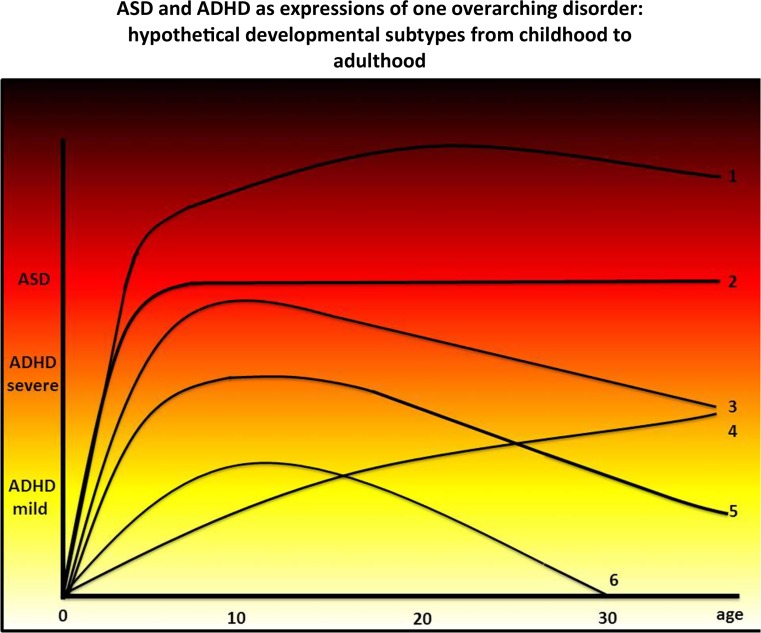
We hypothesize that it is plausible that biologically distinct developmental ASD-ADHD subtypes are present, each characterized by a distinct time of onset of symptoms, progression and combination of symptoms. The aim of the present narrative review was to explore if structural brain imaging studies may shed light on key brain areas that are linked to both ASD and ADHD symptoms and undergo significant changes during development. These findings may possibly pinpoint to brain mechanisms underlying differential developmental ASD-ADHD subtypes. To this end we brought together the literature on ASD and ADHD structural brain imaging symptoms and particularly highlight the adolescent years and beyond. Findings indicate that the vast majority of existing MRI studies has been cross-sectional and conducted in children, and sometimes did include adolescents as well, but without explicitly documenting on this age group. MRI studies documenting on age effects in adults with ASD and/or ADHD are rare, and if age is taken into account, only linear effects are examined. Data from various studies suggest that a crucial distinctive feature underlying different developmental ASD-ADHD subtypes may be the differential developmental thinning patterns of the anterior cingulate cortex and related connections towards other prefrontal regions. These regions are crucial for the development of cognitive/effortful control and socio-emotional functioning, with impairments in these features as key to both ASD and ADHD.
Overview
The claims and statistics of this paper haven’t been checked yet.
Free: it reads the open-access text and checks the first 5 claims that cite a source we can check. Create a free account to check every claim.
Integrity signals
Registry
Cites
Statistics
Figures
Verification
Claims the paper makes
The claims and statistics of this paper haven’t been checked yet.
Free: it reads the open-access text and checks the first 5 claims that cite a source we can check. Create a free account to check every claim.
Claims other papers make about this one
Each is checked against this paper’s own text: does it say what the citing paper says it does?
The source backs part of the claim, not all of it — or backs it for a different population, condition or comparison.
In the citing paper
“Previous studies found both structural and functional brain abnormalities in ADHD and ASD [15, 16].”
From Confound Controlled Multimodal Neuroimaging Data Fusion and Its Application to Developmental Disorders (2025) · cites this paper as [15]
Experimental — accuracy not yet measuredThe cited source says what the claim attributes to it.
In the citing paper
“These results indicate that while ASD and ADHD share some etiological basis, there may be more than one sole “cause” of any given phenotype (Musser et al., 2014; Reiersen & Todd, 2008) and such causes may also be shared and distinct, both between and within the disorders (Karalunas et al., 2018; Rommelse et al., 2017; Vaidya et al., 2020).”
From Heterogeneity of executive function revealed by a functional random forest approach across ADHD and ASD (2020) · cites this paper as Rommelse et al., 2017
The cited source says what the claim attributes to it.
In the citing paper
“those with ASD have shown differences in neuroimaging studies when compared to TD and ADHD groups (Karalunas et al., 2018; Ray et al., 2014; Rommelse et al., 2017)”
From Heterogeneity of executive function revealed by a functional random forest approach across ADHD and ASD (2020) · cites this paper as Rommelse et al., 2017
Self-check
Percentages, sums and reported differences re-computed from the paper’s own numbers.
The self-check needs the paper’s full text.
Citations
Cites
Effects of stress throughout the lifespan on the brain, behaviour and cognition
Lupien, S. J., McEwen, B. S., Gunnar, M. R., & Heim, C. (2009) · Nature Reviews Neuroscience · doi:10.1038/nrn2639 · Cited by 6,256
Attention-deficit/hyperactivity disorder is characterized by a delay in cortical maturation
Shaw, P., Eckstrand, K., Sharp, W., Blumenthal, J., Lerch, J. P., Greenstein, D., Clasen, L., Evans, A., Giedd, J., & Rapoport, J. L. (2007) · Proceedings of the National Academy of Sciences · doi:10.1073/pnas.0707741104 · Cited by 1,819 · cited 1×
“…with ADHD showed relative slow cortical thinning in regions important for attentional control between the ages of *9 years and *14.5 years (Shaw et al. 2006, Shaw et al. 2007a, b; later (also independently) replicated using dimensional measures of ADHD: Ducharme et al. 2012; Shaw et al. 2011).”
InfluentialSexual dimorphism of brain developmental trajectories during childhood and adolescence
Lenroot, R. K., Gogtay, N., Greenstein, D. K., Wells, E. M., Wallace, G. L., Clasen, L. S., Blumenthal, J. D., Lerch, J., Zijdenbos, A. P., Evans, A. C., et al. (2007) · NeuroImage · doi:10.1016/j.neuroimage.2007.03.053 · Cited by 1,309 · cited 1×
“Studies that do report on sex differences suggest brain volume may peak earlier in girls than in boys with a greater decline in cerebral volume in girls as compared with boys during adolescence (Lenroot et al. 2007; but see Ment et al. 2009).”
BackgroundGalvan, A., Hare, T. A., Parra, C. E., Penn, J., Voss, H., Glover, G., & Casey, B. J. (2006) · Journal of Neuroscience · doi:10.1523/jneurosci.1062-06.2006 · Cited by 1,282 · cited 2×
“Initial evidence suggests that complex executive functions (EFs), based on ratings in daily life, likewise show the greatest deviance in adolescence relative to normative development (Hartman et al. 2016).”
BackgroundLongitudinal Development of Human Brain Wiring Continues from Childhood into Adulthood
Lebel, C., & Beaulieu, C. (2011) · Journal of Neuroscience · doi:10.1523/jneurosci.5302-10.2011 · Cited by 1,193 · cited 1×
“From childhood to young adulthood, several studies using magnetic resonance imaging (MRI) scans have shown developmental changes of white and gray matter volumes and overall brain volume (see for reviews Hedman et al. 2012; Lebel and Beaulieu 2011; Mills and Tamnes 2014).”
BackgroundToward systems neuroscience of ADHD: a meta-analysis of 55 fMRI studies
Cortese, S., Kelly, C., Chabernaud, C., Proal, E., Di Martino, A., Milham, M. P., & Castellanos, F. X. (2012) · American Journal of Psychiatry · doi:10.1176/appi.ajp.2012.11101521 · Cited by 1,067 · cited 2×
“…correlates of ADHD across the lifespan During the last two decades, a large number of imaging studies have documented on structural brain characteristics in children with ADHD (see for reviews Cortese et al. 2012; McCarthy et al. 2014; Kasparek et al. 2015; Philip et al. 2012; Via et al. 2011).”
BackgroundSingle subject prediction of brain disorders in neuroimaging: Promises and pitfalls
Arbabshirani, M. R., Plis, S., Sui, J., & Calhoun, V. D. (2017) · NeuroImage · doi:10.1016/j.neuroimage.2016.02.079 · Cited by 912 · cited 2×
“Findings will be summarized and in the discussion we elaborate on new insights in the light of the overarching disorder hypothesis.”
BackgroundSchumann, C. M., Hamstra, J., Goodlin-Jones, B. L., Lotspeich, L. J., Kwon, H., Buonocore, M. H., Lammers, C. R., Reiss, A. L., & Amaral, D. G. (2004) · The Journal of Neuroscience · doi:10.1523/jneurosci.1297-04.2004 · Cited by 840 · cited 2×
“…moderating effects of age on brain anatomy in ASD (e.g., Ismail et al. 2016; Itahashi et al. 2014; Kleinhans et al. 2012; Saitoh et al. 2001; Schumann et al. 2004), with potentially nonlinear relationships between subcortical volumes and brain volumes inducing heterogeneous findings in…”
BackgroundShaw, M., Hodgkins, P., Caci, H., Young, S., Kahle, J., Woods, A. G., & Arnold, L. E. (2012) · BMC Medicine · doi:10.1186/1741-7015-10-99 · Cited by 759 · cited 1×
“…thinning was found to be related to a delay in the developmental trajectories of the surface area, but not in those of cortical gyrification (Shaw et al. Shaw et al. 2012a, b) and cortical thickening or minimal thinning was found exclusively among individuals who remitted (Shaw et al. 2013).”
BackgroundLuby, J., Belden, A., Botteron, K., Marrus, N., Harms, M. P., Babb, C., Nishino, T., & Barch, D. (2013) · JAMA Pediatrics · doi:10.1001/jamapediatrics.2013.3139 · Cited by 733 · cited 2×
“2014), stressful life events (Luby et al. 2013; Lupien et al. 2009), or alcohol consumption (Luciana et al.”
Background
Cited by
Antshel, K. M., & Russo, N. (2019) · Current Psychiatry Reports · doi:10.1007/s11920-019-1020-5 · Cited by 450
Neuroinflammation as a risk factor for attention deficit hyperactivity disorder
Dunn, G. A., Nigg, J. T., & Sullivan, E. L. (2019) · Pharmacology Biochemistry and Behavior · doi:10.1016/j.pbb.2019.05.005 · Cited by 299
“While space does not permit a comprehensive coverage of neurobiological correlates of ADHD and other developmental psychopathologies (for extended discussions see (Aoki et al., 2017; Bilbo and Schwarz, 2009; Dougherty et al., 2016; Lim et al., 2015; Martin et al., 2014; Rommelse et al., 2017), here we highlight salien…”
BackgroundAltered structural brain asymmetry in autism spectrum disorder in a study of 54 datasets
Postema, M. C., van Rooij, D., Anagnostou, E., Arango, C., Auzias, G., Behrmann, M., Filho, G. B., Calderoni, S., Calvo, R., Daly, E., et al. (2019) · Nature Communications · doi:10.1038/s41467-019-13005-8 · Cited by 267
Self-citationExamining overlap and homogeneity in ASD, ADHD, and OCD: a data-driven, diagnosis-agnostic approach
Kushki, A., Anagnostou, E., Hammill, C., Duez, P., Brian, J., Iaboni, A., Schachar, R., Crosbie, J., Arnold, P., & Lerch, J. P. (2019) · Translational Psychiatry · doi:10.1038/s41398-019-0631-2 · Cited by 134
Hoogman, M., van Rooij, D., Klein, M., Boedhoe, P. S. W., Ilioska, I., Li, T., Patel, Y., Postema, M. C., Zhang‐James, Y., Anagnostou, E. A., et al. (2020) · Human Brain Mapping · doi:10.1002/hbm.25029 · Cited by 136
Self-citationMizuno, Y., Kagitani‐Shimono, K., Jung, M., Makita, K., Takiguchi, S., Fujisawa, T. X., Tachibana, M., Nakanishi, M., Mohri, I., Taniike, M., et al. (2019) · Translational Psychiatry · doi:10.1038/s41398-019-0679-z · Cited by 98
Resting-State Neurophysiological Activity Patterns in Young People with ASD, ADHD, and ASD + ADHD
Shephard, E., Tye, C., Ashwood, K. L., Azadi, B., Asherson, P., Bolton, P. F., & McLoughlin, G. (2018) · Journal of Autism and Developmental Disorders · doi:10.1007/s10803-017-3300-4 · Cited by 79
“For example, a recent review indicates developmental subtypes of ASD and ADHD may be related to changing connectivity in frontal brain regions with age (Rommelse et al. 2017).”
BackgroundBerridge, M. J. (2017) · American Journal of Physiology-Cell Physiology · doi:10.1152/ajpcell.00188.2017 · Cited by 81
Vahabzadeh, A. B. N., Keshav, N. U., Salisbury, J. P., & Sahin, N. T. (2018) · JMIR Mental Health · doi:10.2196/mental.9631 · Cited by 80
“Evidence from genetic, cognitive, and behavioral research suggests that when ADHD and ASD co-occur, they may be considered a separate overarching condition [6-8], and a variety of ASD-ADHD developmental subtypes have already been proposed [9].”
BackgroundBedford, S. A., Lai, M., Lombardo, M. V., Chakrabarti, B., Ruigrok, A. N. V., Suckling, J., Anagnostou, E. A., Lerch, J. P., Taylor, M. J., Nicolson, R., et al. (2024) · Biological Psychiatry · doi:10.1016/j.biopsych.2024.07.024 · Cited by 74
Cordova, M., Shada, K., Demeter, D. V., Doyle, O., Miranda-Dominguez, O., Perrone, A., Schifsky, E., Graham, A., Fombonne, E., Langhorst, B., et al. (2020) · NeuroImage: Clinical · doi:10.1016/j.nicl.2020.102245 · Cited by 54
Krakowski, A. D., Cost, K. T., Anagnostou, E., Lai, M.-C., Crosbie, J., Schachar, R., Georgiades, S., Duku, E., & Szatmari, P. (2020) · Molecular Autism · doi:10.1186/s13229-020-00338-1 · Cited by 50
“This suggests a possible mechanism for the increasing literature showing an overlap between ASD and ADHD on genetic and neuroimaging levels [7, 52].”
BackgroundTopal, Z., Tufan, A. E., Karadağ, M., Gökçen, C., Akkaya, C., Sarp, A. S., Bahşi, İ., & Kilinc, M. (2021) · Nordic Journal of Psychiatry · doi:10.1080/08039488.2021.1946712 · Cited by 45
You, W., Li, Q., Chen, L., He, N., Li, Y., Long, F., Wang, Y., Chen, Y. A., McNamara, R. K., Sweeney, J. A., et al. (2024) · BMC Medicine · doi:10.1186/s12916-024-03313-2 · Cited by 53
“More recently, neuroimaging studies have begun to directly compare patients with ASD, ADHD, and comorbid individuals, and the findings of such studies have been inconsistent [12].”
BackgroundDecreased Cortical Thickness in the Anterior Cingulate Cortex in Adults with Autism
Laidi, C., Boisgontier, J., de Pierrefeu, A., Duchesnay, É., Hotier, S., d’Albis, M.-A., Delorme, R., Bolognani, F., Czech, C., Bouquet, C., et al. (2018) · Journal of Autism and Developmental Disorders · doi:10.1007/s10803-018-3807-3 · Cited by 47
Alemany, S., Blok, E., Jansen, P. R., Muetzel, R. L., & White, T. J. H. (2021) · Autism Research · doi:10.1002/aur.2576 · Cited by 45
Dense attentive GAN-based one-class model for detection of autism and ADHD
Devika, K. N., Mahapatra, D., Subramanian, R., & Oruganti, V. R. M. (2022) · Journal of King Saud University - Computer and Information Sciences · doi:10.1016/j.jksuci.2022.11.001 · Cited by 40
Nickel, K., van Elst, L. T., Mańko, J., Unterrainer, J. M., Rauh, R., Klein, C., Endres, D., Kaller, C. P., Mader, I., Riedel, A., et al. (2018) · Frontiers in Psychiatry · doi:10.3389/fpsyt.2018.00521 · Cited by 51
“Heterogeneous findings are difficult to interpret due to the often arbitrary distinction between both clinical groups without careful consideration of ASD/ADHD comorbidities (74).”
BackgroundASD symptoms in adults with ADHD: a preliminary study using the ADOS-2
Hayashi, W., Hanawa, Y., Iwami, Y., Aoyagi, K., Saga, N., Nakamura, D., & Iwanami, A. (2021) · European Archives of Psychiatry and Clinical Neuroscience · doi:10.1007/s00406-021-01250-2 · Cited by 36
“As such, some researchers have postulated that ADHD and ASD are different manifestations of one broad, overarching disorder [11, 12] and that ADHD-ASD symptom manifestations or symptom clusters change throughout development [13].”
BackgroundNigg, J. T., Karalunas, S. L., Mooney, M. A., Wilmot, B., Nikolas, M. A., Martel, M. M., Tipsord, J. M., Nousen, E. K., Schmitt, C. F., Ryabinin, P., et al. (2023) · Developmental Cognitive Neuroscience · doi:10.1016/j.dcn.2023.101222 · Cited by 36
Bellato, A., Arora, I., Kochhar, P., Hollis, C. P., & Groom, M. J. (2020) · Brain Sciences · doi:10.3390/brainsci10050272 · Cited by 32
“Moreover, although the presence of co-occurring symptoms of autism in people with ADHD is likely to have an interactive effect, further impacting brain functioning and development [26], only few studies focused on investigating alpha oscillatory patterns in children with co-occurring ADHD + autism.”
BackgroundPehlivanidis, A., Papanikolaou, Κ., Korobili, K., Kalantzi, E., Mantas, V., Pappa, D., & Papageorgiou, C. (2020) · Brain Sciences · doi:10.3390/brainsci11010018 · Cited by 35
“Some researchers have even categorized ADHD and ASD as falling on the same continuum of neurodevelopmental disorders, with ADHD representing a less severe presentation of ASD [21,22].”
BackgroundIncreased risk of ADHD in families with ASD
Septier, M., Peyre, H., Amsellem, F., Beggiato, A., Maruani, A., Poumeyreau, M., Amestoy, A., Scheid, I., Gaman, A., Bolognani, F., et al. (2018) · European Child & Adolescent Psychiatry · doi:10.1007/s00787-018-1206-0 · Cited by 33
Wang, K., Xu, M., Ji, Y., Zhang, L., Du, X., Li, J., Luo, Q., & Li, F. Y. (2019) · Australian & New Zealand Journal of Psychiatry · doi:10.1177/0004867419836031 · Cited by 30
Chien, Y.-L., Lin, H.-Y., Tung, Y.-H., Hwang, T.-J., Chen, C.-L., Wu, C.-S., Shang, C.-Y., Hwu, H.-G., Tseng, W.-Y. I., Liu, C.-M., et al. (2022) · Molecular Psychiatry · doi:10.1038/s41380-022-01636-1 · Cited by 24
“There appears to be a complex relationship between age and ASD, ADHD, respectively, in terms of brain and behavioral presentation [59, 60].”
BackgroundBellato, A., Arora, I., Kochhar, P., Hollis, C. P., & Groom, M. J. (2021) · Journal of Attention Disorders · doi:10.1177/1087054720972793 · Cited by 27
Khadem-Reza, Z. K., & Zare, H. (2022) · Middle East Current Psychiatry · doi:10.1186/s43045-022-00220-1 · Cited by 33
“Exact comorbidity rates are not well known due to the DSM-IV restriction of diagnosing ASD and ADHD in the same individual [16].”
BackgroundO’Hearn, K. M., & Lynn, A. (2023) · Frontiers in Human Neuroscience · doi:10.3389/fnhum.2022.957375 · Cited by 29
“, 2019), potentially reflecting subtypes of ASD (Rommelse et al., 2017; van Rooij et al., 2018; The EU-AIMS Leap Group et al., 2020c).”
BackgroundYeh, C., Tseng, R.-Y., Ni, H., Cocchi, L., Chang, J.-C., Hsu, M.-Y., Tu, E., Wu, Y., Chou, T., Gau, S. S., et al. (2022) · Molecular Autism · doi:10.1186/s13229-022-00499-1 · Cited by 24
Schulz, S. E., Kelley, E. A., Anagnostou, E. A., Nicolson, R., Georgiades, S., Crosbie, J., Schachar, R. J., Ayub, M., & Stevenson, R. A. (2022) · Advances in Neurodevelopmental Disorders · doi:10.1007/s41252-022-00269-3 · Cited by 33
“, 2019), hypothesized underlying mechanisms (Rommelse et al., 2017), and the frequent occurrence of comorbidity (Dewey, 2018; Hansen et al.”
BackgroundKurkin, S., Smirnov, N. M., Николаевна, П. Е., Kabir, M. S., Martynova, O., Sysoeva, O., Portnova, G. V., & Hramov, A. E. (2022) · The European Physical Journal Special Topics · doi:10.1140/epjs/s11734-022-00717-0 · Cited by 24
Grazioli, S., Crippa, A., Rosi, E., Candelieri, A., Ceccarelli, S. B., Mauri, M., Manzoni, M., Mauri, V., Trabattoni, S., Molteni, M., et al. (2023) · European Child & Adolescent Psychiatry · doi:10.1007/s00787-023-02145-4 · Cited by 27
“The present finding is in line with a recent review, which reported higher externalizing difficulties in children with ASD [40] and with previous evidence describing an additive effect of symptom severity in children with an ADHD/ASD comorbid state [43, 44].”
ResultZhang, K., Fu, Z., Lai, Q.-J., Zhao, Y., Liu, J., & Cao, Q. (2023) · Progress in Neuro-Psychopharmacology and Biological Psychiatry · doi:10.1016/j.pnpbp.2023.110731 · Cited by 23
Finding Essential Parts of the Brain in rs-fMRI Can Improve ADHD Diagnosis Using Deep Learning
Kim, B., Park, J., Kim, T., & Kwon, Y. (2023) · IEEE Access · doi:10.1109/access.2023.3324670 · Cited by 26
“It is known that Autism spectrum disorder (ASD) may have a close relation with ADHD [51], [52].”
BackgroundLi, C. S.-P., Chen, Y. S., & Ide, J. S. (2022) · Scientific Reports · doi:10.1038/s41598-022-15124-7 · Cited by 23
Li, C., Zhang, R., Zhou, Y., Li, T., Qin, R., Li, L., Yuan, X., Wang, L., & Wang, X. (2023) · European Child & Adolescent Psychiatry · doi:10.1007/s00787-023-02323-4 · Cited by 19
“This demonstrates that the neurobiology basis of ADHD + ASD may be different from that of ASD-only or ADHD-only [42, 43].”
Ioannou, C., Seernani, D. P., Stefanou, M. E., Riedel, A., van Elst, L. T., Smyrnis, N., Fleischhaker, C., Biscaldi-Schaefer, M., Boccignone, G., & Klein, C. (2020) · Frontiers in Psychiatry · doi:10.3389/fpsyt.2020.545567 · Cited by 22
“Other scenarios refer to comorbidity as a separate nosology (77) or propose the existence of subtypes of these two neurodevelopmental disorders (78).”
BackgroundDupont, G., van Rooij, D., Buitelaar, J. K., Reif, A., & Grimm, O. (2022) · Frontiers in Psychiatry · doi:10.3389/fpsyt.2022.962911 · Cited by 12
“, attention problems are much more persistent in adulthood than hyperactivity (2, 3).”
BackgroundSelf-citationSolomon, M., Hogeveen, J., Libero, L. E., & Nordahl, C. W. (2017) · Biological Psychiatry Cognitive Neuroscience and Neuroimaging · doi:10.1016/j.bpsc.2017.06.002 · Cited by 14
“Furthermore, several dimensional psychopathology studies illustrate that the ACC is implicated in ASD-like symptoms across multiple neurodevelopmental disorders such as attention deficits in attention deficit hyperactivity disorder [98], and repetitive behaviors in obsessive compulsive disorder [99].”
BackgroundTransdiagnostic subtyping of males with developmental disorders using cortical characteristics
Itahashi, T., Fujino, J., Hashimoto, R., Tachibana, Y., Sato, T., Ohta, H., Nakamura, M., Kato, N., Eickhoff, S. B., Cortese, S., et al. (2020) · NeuroImage Clinical · doi:10.1016/j.nicl.2020.102288 · Cited by 15
ASD symptoms in adults with ADHD: a comparative study using ADOS-2
Hayashi, W., Hanawa, Y., Saga, N., Nakamura, D., & Iwanami, A. (2022) · European Archives of Psychiatry and Clinical Neuroscience · doi:10.1007/s00406-021-01362-9 · Cited by 13
“Recent neuroimaging studies have identified several overlapping and distinctive cortical and subcortical structural changes between ADHD and ASD [32, 45, 46].”
BackgroundInfluentialMyers, L., Anderlid, B., Nordgren, A., Remnélius, K. L., Kuja‐Halkola, R., Tammimies, K., & Bölte, S. (2020) · American Journal of Medical Genetics Part A · doi:10.1002/ajmg.a.61545 · Cited by 11
Gray matter asymmetry atypical patterns in subgrouping minors with autism based on core symptoms
Li, C., Chen, W., Li, X., Li, T., Chen, Y., Zhang, C., Ning, M., & Wang, X. (2023) · Frontiers in Neuroscience · doi:10.3389/fnins.2022.1077908 · Cited by 10
“, 2019); atypical cortical thickness development with accelerated expansion followed by accelerated thinning and atypical cortical volume development with increased cortical total volume (especially in the frontal and temporal lobes) in young ASD children (Li et al., 2017; Rommelse et al., 2017); and altered brain str…”
BackgroundBerenguer, C., Miranda, B. R., & Leader, G. (2018) · Journal of Educational and Developmental Psychology · doi:10.5539/jedp.v8n2p107 · Cited by 9
Liu, C., Xue, J., Cheng, X., Zhan, W., Xiong, X., & Wang, B. (2019) · Computational Intelligence and Neuroscience · doi:10.1155/2019/9027803 · Cited by 11
Sadat-Nejad, Y., Vandewouw, M. M., Cardy, R. E., Lerch, J. P., Taylor, M. J., Iaboni, A., Hammill, C. F., Syed, B., Brian, J. A., Kelley, E. A., et al. (2023) · Frontiers in Child and Adolescent Psychiatry · doi:10.3389/frcha.2023.1171337 · Cited by 13
Lin, G., & Roth, R. M. (2017) · Psychological Injury and Law · doi:10.1007/s12207-017-9296-4 · Cited by 8
Li, Y., Guan, S., Yang, D., Li, D., Xu, Q., Zhang, Y., & Li, R. (2025) · Psychoradiology · doi:10.1093/psyrad/kkaf025 · Cited by 6
Liu, H., Li, C., Qin, R., Li, L., Yuan, X., Chen, B., Chen, L., Li, T., & Wang, X. (2025) · Cerebral Cortex · doi:10.1093/cercor/bhaf047 · Cited by 6
Cha, J. H., Cho, Y., Moon, J., Lee, J., Na, J. Y., & Kim, Y. J. (2023) · European Journal of Pediatrics · doi:10.1007/s00431-023-05022-z · Cited by 8
“We assume that LC-PUFAs may affect brain maturation and accelerates neural development [31, 32].”
BackgroundPaquette, N., Gajawelli, N., & Leporé, N. (2020) · Handbook of clinical neurology · doi:10.1016/b978-0-444-64148-9.00018-1 · Cited by 8
Cid-Duarte, S., Departamento de Psicología, U. D. O. (., Areces, D., Departamento de Psicología, U. D. O. (., Núñez, J. C., & Departamento de Psicología, U. D. O. (. (2022) · Revista de Psicología y Educación - Journal of Psychology and Education · doi:10.23923/rpye2023.01.232 · Cited by 13
More similarities than differences between ADHD and ASD in functional brain connectivityPreprint
Bathelt, J., Caan, M. W. A., & Geurts, H. M. (2020) · PsyArXiv (OSF Preprints) · doi:10.31234/osf.io/4tfmn · Cited by 7
Samadi, M., Gholami, F., Seyedi, M., Jalali, M., Effatpanah, M., Yekaninejad, M. S., Abdolahi, M., Chamari, M., & Honarvar, N. M. (2022) · International Journal of Clinical Practice · doi:10.1155/2022/1256408 · Cited by 7
“Prior studies reported that vitamin D deficiency interferes with the brain development [25] and has been associated with ADHD in children [20, 21, 23, 26, 27].”
Liang, C., Silva, R. F., Adali, T., Jiang, R., Zhang, D., Qi, S., & Calhoun, V. D. (2025) · IEEE Transactions on Image Processing · doi:10.1109/tip.2025.3597045 · Cited by 3
“Previous studies found both structural and functional brain abnormalities in ADHD and ASD [15], [16].”
Uygun, S. D., Kose, T. B., Bahadır‐Varol, A., Uzay, B., & Eren‐Koçak, E. (2025) · Acta Neuropsychiatrica · doi:10.1017/neu.2025.2 · Cited by 4
“Structural imaging studies have revealed that children with ADHD exhibit relatively slow cortical thinning, particularly in attention-associated regions such as the ACC (Rommelse et al ., 2017).”
Liu, H., Li, T., Qin, R., Li, L., Ji, C., Yuan, X., Chen, B., Li, C., & Wang, X. (2025) · Behavioural Brain Research · doi:10.1016/j.bbr.2025.115787 · Cited by 3
Im, S.-J., Shim, J., Kim, J.-Y., & Baek, H. (2020) · Applied Magnetic Resonance · doi:10.1007/s00723-020-01192-3 · Cited by 3
He, Q., Keding, T. J., Zhang, Q., Miao, J., Russell, J. D., Herringa, R. J., Lu, Q., Travers, B. G., & Li, J. J. (2023) · Journal of Neurodevelopmental Disorders · doi:10.1186/s11689-023-09498-6 · Cited by 7
“In our age-stratified analyses, we also observed a negative association between the traditional ADHD PGS and DLPFC volume in adolescents specifically, which might be attributable to an increased heritability of DLPFC volume from childhood to adolescence [59, 60].”
Vahabzadeh, A. B. N., Keshav, N. U., Salisbury, J. P., & Sahin, N. T. (2017) · bioRxiv (Cold Spring Harbor Laboratory) · doi:10.1101/165514 · Cited by 4
“Evidence from genetic, cognitive, and behavioral research suggests that when ADHD and ASD co-occur, they may be considered a separate overarching condition [6-8], and a variety of ASD-ADHD developmental subtypes have already been proposed [9].”
Actionable and incidental neuroradiological findings in twins with neurodevelopmental disorders
Myers, L., Ho, M., Cauvet, É., Remnélius, K. L., Carlsson, T., Kuja‐Halkola, R., Tammimies, K., & Bölte, S. (2020) · Scientific Reports · doi:10.1038/s41598-020-79959-8 · Cited by 2
Wang, X., Zhao, K., Yao, L., Fonzo, G. A., Satterthwaite, T. D., Rekik, I., & Zhang, Y. (2024) · bioRxiv (Cold Spring Harbor Laboratory) · doi:10.1101/2024.02.29.582790 · Cited by 4
“Building on the hypothesis that ADHD and ASD present varying manifestations of an overarching neurodevelopmental disorder 23 , our objective was to uncover novel transdiagnostic subtypes within these diagnoses.”
BackgroundEnriquez‐Geppert, S., Smit, D., Eschmann, K. C. J., Marcos-Martínez, D., Hornero, R., Hsieh, S., Dehais, F., & Huster, R. J. (2026) · NeuroImage · doi:10.1016/j.neuroimage.2026.121820 · Cited by 4
fMRI-Based Multi-class DMDC Model Efficiently Decodes the Overlaps between ASD and ADHD
Zolghadr, Z., Batouli, S. A. H., Majd, H. A., Shafaghi, L., & Mehrabi, Y. (2024) · Basic and Clinical Neuroscience Journal · doi:10.32598/bcn.2023.4302.1 · Cited by 2
Interpretable and integrative deep learning for discovering brain-behaviour associations
Ambroise, C., Grigis, A., Houenou, J., & Frouin, V. (2025) · Scientific Reports · doi:10.1038/s41598-024-85032-5 · Cited by 2
“Such findings have also been specifically highlighted in ASD 39,60–62 or ADHD 63–65 studies, as well as in studies jointly examining these two conditions 66,67 .”
Attention deficit hyperactivity disorder
Lazar, S. M., & Voigt, R. G. (2024) · Elsevier eBooks · doi:10.1016/b978-0-12-824060-1.00017-1 · Cited by 1
Yeh, C., Tseng, R.-Y., Ni, H., Cocchi, L., Chang, J.-C., Hsu, M.-Y., Tu, E., Wu, Y., Chou, T., Gau, S. S., et al. (2021) · bioRxiv (Cold Spring Harbor Laboratory) · doi:10.1101/2021.10.11.464005 · Cited by 1
Rosi, E., Grazioli, S., Crippa, A., Candelieri, A., Ceccarelli, S. B., Mauri, M., Manzoni, M., Mauri, V., Trabattoni, S., Molteni, M., et al. (2022) · Research Square · doi:10.21203/rs.3.rs-1666183/v1 · Cited by 1
Ambroise, C. (2024) · theses.fr (ABES) · doi:10.70675/d2529d35z93e6z4d60zb2c5z752d5f0edda3 · Cited by 2
Computational Analysis of Developmental Disorders in Children
Sambatur, S. C. (2018) · Syracuse University Libraries (Syracuse University)
Friendship Quality in Adolescents with Attention-deficit Hyperactivity Disorder
Rokeach, A. (2019) · TSpace (University of Toronto)
Boushel, S. (2022) · Carleton University's Institutional Repository (MacOdrum Library, Carleton University) · doi:10.22215/etd/2022-14896
He, Q.-F., Keding, T. J., Zhang, Q., Miao, J.-C., Herringa, R., Lu, Q.-S., Travers, B., & Li, J. J. (2022) · medRxiv · doi:10.1101/2022.12.12.22283356
“adolescents specifically, which might be attributable to an increased heritability of DLPFC 381 volume from childhood to adolescence (56,57).”
BackgroundTang, X., Ma, Z., Kat, S., Xu, L., Liu, Q., Yang, L., Wang, Y., Cao, Q., Li, X., & Liu, J. (2024) · Journal of Attention Disorders · doi:10.1177/10870547241233207
“The conjecture of offset effect or compensation effect may provide some pathological explanations for the model proposed by N. N. Rommelse et al. (2011) and N. Rommelse et al. (2017): Both ASD and ADHD actually compose a continuous spectrum.”
BackgroundResultالغنيمي, إ. ع. ا., & حلمي, أ. ح. م. (2024) · المجلة التربوية لکلية التربية بسوهاج · doi:10.21608/edusohag.2023.250019.1375 · Cited by 1
Slayen, C. E., Morton, B., Ronaghan, D., Cochrane, K., Romaniuk, A., Hogan, E., Penner‐Goeke, L., & Theule, J. (2024) · Advances in Neurodevelopmental Disorders · doi:10.1007/s41252-024-00400-6 · Cited by 1
Smit, D. (2024) · University of Groningen research database (University of Groningen / Centre for Information Technology) · doi:10.33612/diss.987834322 · Cited by 2
Female Autism and Externalizing Disorders
Davico, C., Lux, C., & Vitiello, B. (2024) · Springer eBooks · doi:10.1007/978-3-031-62072-0_7
Ogundele, M. O. (2025) · European Journal of Therapeutics · doi:10.58600/eurjther2502
“Some authors have described six subcategories of this hypothesised ASD-ADHD spectrum, using evidence gathered from extant literature and clinical experience [54].”
ADHD comorbidity in adolescents: A thematic analysis of systematic and narrative reviews
Giannakopoulos, G., & Prassou, A. (2025) · doi:10.70462/acim.2025.1.002
Yeh, C.-H., Tseng, R.-Y., Ni, H.-C., Cocchi, L., Chang, J.-C., Hsu, M.-Y., Tu, E.-N., Wu, Y.-Y., Chou, T., Gau, S., et al. (2022) · Figshare · doi:10.6084/m9.figshare.19793463
You, W., Li, Q., Chen, L., He, N., Li, Y., Long, F., Wang, Y., Chen, Y., McNamara, R. K., Sweeney, J. A., et al. (2024) · Figshare · doi:10.6084/m9.figshare.25333997
Brain morphological changes across behaviour spectrums in attention‐deficit/hyperactivity disorder
Zhong, T., Wang, F. H., Qiu, J., & Lu, W. (2025) · General Psychiatry · doi:10.1136/gpsych-2025-102340 · Cited by 1
Similitudes et différences entre le TDAH et le TSA, illustrées par l’étude du défaut d’inhibition
Septier, M. (2019) · theses.fr (ABES) · doi:10.70675/22fe83c2z678fz4b7ezac95z1af4554dfcbf
Metadata
- Authors
- Rommelse, N., Buitelaar, J. K., & Hartman, C. A.
- Affiliations
- Radboud University Nijmegen (NL)
- Radboud University Medical Center (NL)
- University Medical Center Groningen (NL)
- Corresponding author
- Rommelse, Nanda
- Venue
- Journal of Neural Transmission
- Published
- 2016-12-21
- Volume
- 124
- Issue
- 2
- Pages
- 259-271
- ISSN
- 0300-9564 (ISSN-L)
- 1435-1463
- PMC
- PMC5285408
- OpenAlex
- W2563638146
- Semantic Scholar
- ca2291978fe53c692b710eee483cdcf9a18ff512
- Cited by
- 85
- References
- 115
- Citations by year
- 2026: 1 · 2025: 9 · 2024: 12 · 2023: 10 · 2022: 16 · 2021: 5 · 2020: 12 · 2019: 9 · 2018: 6 · 2017: 5
- FWCI
- 0.71
- Type
- journal article
- Language
- en
- Open access
- hybrid
- doi.org
- Locations
- Journal of Neural Transmission (publishedVersion, cc-by)
- PubMed Central (publishedVersion, cc-by)
- PubMed (publishedVersion)
- University of Groningen research database (University of Groningen / Centre for Information Technology) (publishedVersion, cc-by)
- Radboud Repository (Radboud University) (submittedVersion)
- Radboud Repository (Radboud University) (submittedVersion, other-oa)
- University of Groningen research database (University of Groningen / Centre for Information Technology) (submittedVersion, cc-by)
- Topics
- Life Sciences › Neuroscience › Cognitive Neuroscience › Autism Spectrum Disorder Research
- Health Sciences › Medicine › Psychiatry and Mental health › Attention Deficit Hyperactivity Disorder
- Life Sciences › Biochemistry, Genetics and Molecular Biology › Genetics › Genetics and Neurodevelopmental Disorders
- Keywords
- autism spectrum disorder, attention deficit hyperactivity disorder, structural neuroimaging, brain development, anterior cingulate cortex, cortical thinning, prefrontal cortex, effortful control, social-emotional functioning, symptom onset, adolescence, lifespan development
- MeSH terms
- Autism Spectrum Disorder, Attention Deficit Disorder with Hyperactivity, Brain, Humans, Neuroimaging
About these checks
Registry, retraction, Cites and statistics results are computed, not judged, with one exception: a printed reference that no index lists is read once by a model before it counts as a citation error. Claims are extracted by a model and kept only when their quote appears verbatim in the text; each cited source is then checked, with a model’s help, for whether it says what the claim relies on. Those verdicts can be wrong — read the claim’s quote and the cited source before relying on one.
Statistics and arithmetic are recomputed, not judged.
Confidence bands are shown only for fields calibrated on our annotated test set. None is calibrated yet, so no band is shown.
What counts as a claim ›How we measure confidence ›How we check this ›
Are you an author, or do you see a problem with this page? Request a review
Data sources
Bibliographic data: Semantic Scholar, OpenAlex, Crossref.
Contains information from the Semantic Scholar Academic Graph Datasets, made available under the ODC Attribution License (ODC-BY 1.0).
Semantic Scholar’s data is described in: Kinney, R., et al. (2023). The Semantic Scholar Open Data Platform. arXiv:2301.10140.
