

Associations between maternal psychological distress and mother-infant bonding: a systematic review and meta-analysis
Open accessThe DOI matches its Crossref record; 54 of the 54 references it cites were found in a registry or an index; 13 of the 45 sources its claims cite were checked for support.
Abstract
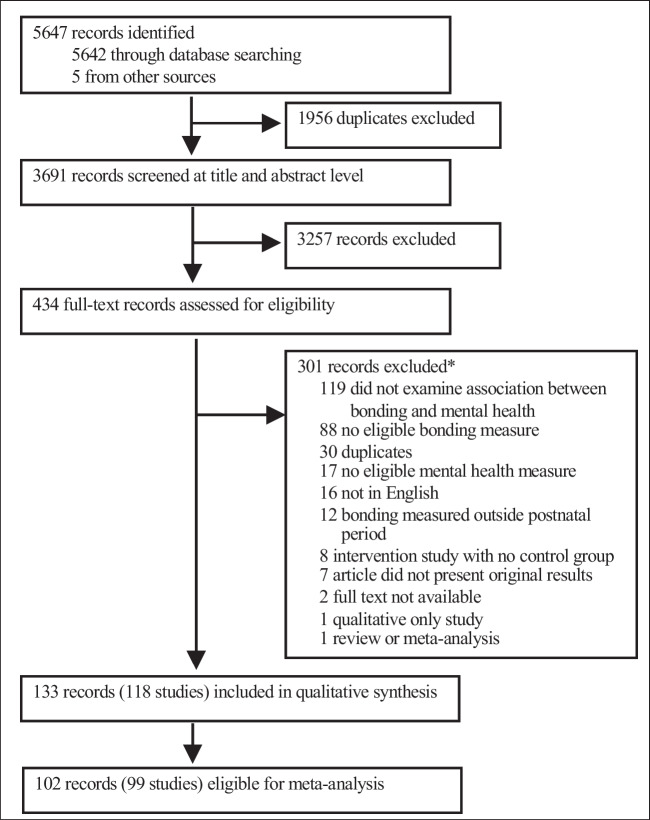
Purpose: Maternal psychological distress and mother-infant bonding problems each predict poorer offspring outcomes. They are also related to each other, yet the extensive literature reporting their association has not been meta-analysed. Methods: We searched MEDLINE, PsycINFO, CINAHL, Embase, ProQuest DTG, and OATD for English-language peer-reviewed and grey literature reporting an association between mother-infant bonding, and multiple indicators of maternal psychological distress. Results: We included 133 studies representing 118 samples; 99 samples (110,968 mothers) were eligible for meta-analysis. Results showed concurrent associations across a range of timepoints during the first year postpartum, between bonding problems and depression ( r = .27 [95% CI 0.20, 0.35] to r = .47 [95% CI 0.41, 0.53]), anxiety ( r = .27 [95% CI 0.24, 0.31] to r = .39 [95% CI 0.15, 0.59]), and stress ( r = .46 [95% CI 0.40, 0.52]). Associations between antenatal distress and subsequent postpartum bonding problems were mostly weaker and with wider confidence intervals: depression ( r = .20 [95% CI 0.14, 0.50] to r = .25 [95% CI 0.64, 0.85]), anxiety ( r = .16 [95% CI 0.10, 0.22]), and stress ( r = .15 [95% CI − 0.67, 0.80]). Pre-conception depression and anxiety were associated with postpartum bonding problems ( r = − 0.17 [95% CI − 0.22, − 0.11]). Conclusion: Maternal psychological distress is associated with postpartum mother-infant bonding problems. Co-occurrence of psychological distress and bonding problems is common, but should not be assumed. There may be benefit in augmenting existing perinatal screening programs with well-validated mother-infant bonding measures.
Overview
CoChat Summary
TL;DR
This systematic review and meta-analysis found that maternal psychological distress is associated with postpartum mother-infant bonding problems, with the strongest pooled association for depression. Co-occurrence is common but should not be assumed, and the authors suggest augmenting perinatal screening with validated bonding measures.
Key findings
- Across 99 samples (110,968 mothers; 368 effects), overall maternal psychological distress was strongly associated with mother-infant bonding problems: r = .38 (95% CI 0.34, 0.41); 367 of 368 effects were in the same direction.
- Domain-specific pooled associations were strongest for depression (r = .39 [95% CI 0.35, 0.42]), followed by anxiety (r = .26 [95% CI 0.22, 0.31]), stress (r = .24 [95% CI 0.09, 0.38]), and postpartum blues (r = .23 [95% CI −0.11, 0.52]); depression was significantly stronger than anxiety (p < .001) and stress (p < .05).
- Postpartum timing analyses showed depression-bonding associations from r = .27 (95% CI 0.20, 0.35) at birth to 1 week up to r = .47 (95% CI 0.41, 0.53) at 3 to <6 months; anxiety ranged r = .27 to .39, and stress ranged r = .28 to .46. Antenatal distress showed mostly weaker associations with later bonding: depression r = .20 to .25, anxiety r = .16 (95% CI 0.10, 0.22), stress r = .15 (95% CI −0.67, 0.80).
- Persistent preconception depression/anxiety across adolescence and young adulthood predicted poorer postpartum bonding (d = −0.34 [95% CI −0.44, −0.23]; r = −0.17 [95% CI −0.22, −0.11]). Associations were moderated by bonding measure: MIBS effects were smaller than MPAS or PBQ effects; no moderation was found by sample type, parity, country income classification, or publication type.
Methods
- PRISMA/MOOSE systematic review and meta-analysis (PROSPERO CRD42018107218); searched MEDLINE, PsycINFO, CINAHL, Embase, ProQuest DTG, and OATD up to 9 October 2020 for English-language peer-reviewed and grey literature. Inclusion required a standardized self-report mother-infant bonding measure between birth and 12 months postpartum and an association with depression, anxiety, stress, psychological distress, or postpartum blues.
- The search identified 133 records representing 118 samples and 119,498 mothers; 102 records representing 99 samples (110,968 mothers) were eligible for meta-analysis. Random-effects meta-analyses were conducted in R, stratified by distress domain and postpartum timepoint; clustered effects used robumeta, independent effects used metafor, and meta-regressions examined moderators.
- Included studies used 43 mental health measures; the Edinburgh Postnatal Depression Scale was most common (88 samples in 96 articles), and the State Trait Anxiety Scale was the most common anxiety measure (12 samples in 13 articles). Fourteen self-report bonding instruments were used; the PBQ (67 studies in 71 articles) and MPAS (21 studies in 24 articles) were most common.
Limitations
- The paper states that only unadjusted associations were examined; directionality could not be established because distress was predominantly measured prior to or concurrently with postpartum bonding. It also states there were limited studies on anxiety, stress, blues, and preconception exposures, producing lower precision for some estimates, and that quality assessment suggested possible bias from non-representative samples or attrition.
- The paper states the search was limited to English-language studies, which may introduce bias and limit generalisability, and that 90% of included studies were from high-income countries, limiting generalisability to low-income settings. It also notes funnel plots showed variability in effect sizes even among large studies.
- Evident from the text: heterogeneity was very high for several pooled estimates (e.g., overall I² = 97.30; depression I² = 97.46), and some confidence intervals were wide or crossed zero, especially for stress, blues, and antenatal/preconception analyses. No studies measuring “psychological distress” as a construct (e.g., Kessler scale) were eligible for meta-analysis.
Model-written summary. Check it against the paper before relying on it.
Integrity signals
Registry
Cites
Statistics
Figures
Verification
Claims the paper makes
10 Valid · 1 Not valid · 18 Not checked · 87 Own results and interpretations
The cited sources support only part of this claim — read each source’s verdict below.
In the paper
“Three prior narrative reviews (Edwards, 2017; McNamara et al., 2019; Tichelman et al., 2019) reported that maternal depression, anxiety, and stress symptoms were associated with mother-infant bonding problems”
§ Associations between maternal psychological distress and mother-infant bonding: a systematic review and meta-analysis > Introduction
What the sources say
- Not matchedcites Edwards, 2017
An author–year citation the paper’s reference list doesn’t settle. We don’t search these by name.
- Partly supportedcites McNamara et al., 2019 matched to “A systemic review of maternal wellbeing and its relationship with maternal fetal attachment and early postpartum bonding” (2019) sourceExperimental — accuracy not yet measured
The Results (page not provided) report associations of depression and anxiety with poorer early postpartum bonding. But the Results also state that no included studies investigated stress in relation to early postpartum bonding. The cited paper identifies itself as a systematic review, not a narrative review. (LLM, conf=0.91)
- Partly supportedcites Tichelman et al., 2019 matched to “Correlates of prenatal and postnatal mother-to-infant bonding quality: A systematic review” (2019) sourceExperimental — accuracy not yet measured
The Results > Correlates section (page unavailable) reports that 28 of 29 studies found more depressive symptoms associated with poorer postnatal bonding, but prenatal findings were less conclusive. The Discussion > Interpretation section (page unavailable) says findings for general anxiety and stress were mixed, so the citation does not support presenting all three symptoms as consistently associated with bonding problems. Tichelman et al. is also a systematic review, not a narrative review. (LLM, conf=0.88)
plainstates an association- Asserted: passes — The authors put it forward as true.
- Checkable: passes — It can be checked against evidence.
- Load-bearing: passes — The paper’s conclusions depend on it.
- Based: passes — The paper gives a reason why it holds.
- Not matched
Every source the paper cites for this claim was checked and supports it.
In the paper
“The weaker associations observed in the first postpartum week may be explained by evidence suggesting the formation of the mother-infant bond is a dynamic process that, for some mothers, is not yet established during the first postpartum week (Yoshida et al., 2012).”
§ Associations between maternal psychological distress and mother-infant bonding: a systematic review and meta-analysis > Discussion
What the sources say
- Supportedcites Yoshida et al., 2012 matched to “A Japanese version of Mother-to-Infant Bonding Scale: factor structure, longitudinal changes and links with maternal mood during the early postnatal period in Japanese mothers” (2012) source
Split into 2 atoms — 2 confirmed, 0 partially supported, 0 disputed, 0 misattributed, 0 unverifiable. Expand the claim to see per-atom verdicts.
hedgedstates a possible cause- Asserted: passes — The authors put it forward as true.
- Checkable: passes — It can be checked against evidence.
- Load-bearing: unclear — It is unclear whether the paper’s conclusions depend on it.
- Based: passes — The paper gives a reason why it holds.
- Supported
Every source the paper cites for this claim was checked and supports it.
In the paper
“Psychotherapeutic programs aimed at depression are not always effective in improving mother-infant bonding (O'Mahen et al., 2014), however, combined programs specifically targeting both mood and bonding problems have shown some success (Holt et al., 2021).”
§ Associations between maternal psychological distress and mother-infant bonding: a systematic review and meta-analysis > Discussion
What the sources say
- Supportedcites O'Mahen et al., 2014 matched to “Netmums: a phase II randomized controlled trial of a guided Internet behavioural activation treatment for postpartum depression” (2014) source
The Results report improved depression scores with NetmumsHWD versus treatment as usual, but no between-group difference in maternal self-reported postnatal bonding. The Discussion describes only a small trend toward improved bonding and suggests that bonding difficulties may require targeted intervention. This supports the qualified claim that depression-focused psychotherapy does not always improve bonding. (LLM, conf=0.91)
plain- Asserted: passes — The authors put it forward as true.
- Checkable: passes — It can be checked against evidence.
- Load-bearing: passes — The paper’s conclusions depend on it.
- Based: passes — The paper gives a reason why it holds.
- Supported
The sources with a verdict support this claim; the rest weren’t checked yet, have no full text we could read, or their verdicts aren’t rated yet.
In the paper
“While most guidelines support assessment of mother-infant relationships through brief observation or verbal self-report (Austin et al., 2017), this may not be sufficient to detect problems in the affective bond (Brockington et al., 2017a) that are associated with adverse offspring outcomes (Le Bas et al., 2020).”
§ Associations between maternal psychological distress and mother-infant bonding: a systematic review and meta-analysis > Discussion
What the sources say
- Supportedcites Brockington et al., 2017a matched to “An international position paper on mother-infant (perinatal) mental health, with guidelines for clinical practice” (2017) source
The Part 3 ‘Investigation and intervention’ passages (page not supplied) recommend assessing the quality of the mother’s emotional response and evidence of rejection through a detailed interview, with observation and bonding scales also described. This supports the qualified point that brief observation or verbal self-report alone may miss problems in the affective bond. The adverse-offspring-outcomes clause is attributed to Le Bas et al., not to this source. (LLM, conf=0.85)
- Not checked — no full text of the sourcecites Le Bas et al., 2020 matched to “The role of antenatal and postnatal maternal bonding in infant development: A systematic review and meta‐analysis” (2020) source
hedgedstates an association- Asserted: passes — The authors put it forward as true.
- Checkable: passes — It can be checked against evidence.
- Load-bearing: passes — The paper’s conclusions depend on it.
- Based: passes — The paper gives a reason why it holds.
- Supported
A result the paper reports from its own data — it cites no other source for it, so there is none to check. The quote shows it is in the paper.
In the paper
“stress (r = .15 [95% CI − 0.67, 0.80])”
- Also stated in: § Results · plain
“| Time 2 (> 1 week to < 3 months) | 2 | 4 | 1802 | 0.15 (− 0.67, 0.80) | 81.46 | 0.01 |”
§ Associations between maternal psychological distress and mother-infant bonding: a systematic review and meta-analysis > Abstract > Results
plainstates an association- Asserted: passes — The authors put it forward as true.
- Checkable: passes — It can be checked against evidence.
- Load-bearing: passes — The paper’s conclusions depend on it.
- Based: passes — The paper gives a reason why it holds.
- Also stated in: § Results · plain
54 more claims
Create a free account to see all 116 claims and every source verdict.
- Probably not a substantial claim. 23
- It may state two separate claims as one. 42
- The quote only partly states this claim. 3
Self-check
Percentages, sums and reported differences re-computed from the paper’s own numbers.
Each contradiction between two passages listed here was confirmed by an independent check.
Rated minor: it would not touch a result — a value no result rests on, a p-value that stays on the same side of the significance level, or a conflict that is clerical, resolved elsewhere in the paper, or outside its own findings.
In the paper
§ Associations between maternal psychological distress and mother-infant bonding: a systematic review and meta-analysis > Abstract > Results
“depression (r = .20 [95% CI 0.14, 0.50] to r = .25 [95% CI 0.64, 0.85])”
§ Associations between maternal psychological distress and mother-infant bonding: a systematic review and meta-analysis > Results
“| Time 3 (3 months to < 6 months) | 2 | 5 | 497 | 0.25 (− 0.64, 0.85) | 57.78 | 0.01 |”
Citations
Cites
Preferred Reporting Items for Systematic Reviews and Meta-Analyses: the PRISMA statement
Moher, D., Liberati, A., Tetzlaff, J., Altman, D. G., & for the PRISMA Group (2009) · BMJ · doi:10.1136/bmj.b2535 · Cited by 83,823
Conducting Meta-Analyses in R with the metafor Package
Viechtbauer, W. (2010) · Journal of Statistical Software · doi:10.18637/jss.v036.i03 · Cited by 20,464
Wang, G., Ma, R., Qiao, G., Wada, K., Aizawa, Y., & Satoh, T. (2015) · Integrative Medicine International · doi:10.1159/000368408 · Cited by 18,657
Detection of Postnatal Depression: Development of the 10-item Edinburgh Postnatal Depression Scale
Cox, J. L., Holden, J. M., & Sagovsky, R. (1987) · British Journal of Psychiatry · doi:10.1192/bjp.150.6.782 · Cited by 14,183
KESSLER, R. C., ANDREWS, G., COLPE, L. J., HIRIPI, E., MROCZEK, D. K., NORMAND, S.-L. T., WALTERS, E. E., & ZASLAVSKY, A. M. (2002) · Psychological Medicine · doi:10.1017/s0033291702006074 · Cited by 10,327
Effect size guidelines for individual differences researchers
Gignac, G. E., & Szodorai, E. T. (2016) · Personality and Individual Differences · doi:10.1016/j.paid.2016.06.069 · Cited by 2,860
Non-psychotic mental disorders in the perinatal period
Howard, L. M., Molyneaux, E., Dennis, C.-L., Rochat, T., Stein, A., & Milgrom, J. (2014) · The Lancet · doi:10.1016/s0140-6736(14)61276-9 · Cited by 1,328
ACOG Committee Opinion No. 757: Screening for Perinatal Depression
(2018) · Obstetrics & Gynecology · doi:10.1097/aog.0000000000002927 · Cited by 771
MOOSE Reporting Guidelines for Meta-analyses of Observational Studies
Brooke, B. S., Schwartz, T. A., & Pawlik, T. M. (2021) · JAMA Surgery · doi:10.1001/jamasurg.2021.0522 · Cited by 742
Rogers, A., Obst, S., Teague, S. J., Rossen, L., Spry, E. A., Macdonald, J. A., Sunderland, M., Olsson, C. A., Youssef, G., & Hutchinson, D. (2020) · JAMA Pediatrics · doi:10.1001/jamapediatrics.2020.2910 · Cited by 620
Self-citation
Research works printed but not linked: 7
- Austin M-P Highet N COPE Expert Working Group Mental Health Care in the Perinatal Period 2017 Australian Clinical Practice Guideline
- Edwards H Risk factors and assessment tools for mother-infant bonding: a scoping review to assist future research Evid Based Midwifery 2017 15 4 128 134
- Fisher Z Tipton E Zhipeng H robumeta: Robust Variance Meta-Regression. In (Version R package version 2.0) 2017
- National Institute for Health and Care Excellence Antenatal and postnatal mental health: clinical management and service guidance. CG192 2014 National Institute for Health and Care Excellence 31990493
- Pustejovsky J clubSandwich: Cluster-Robust (Sandwich) Variance Estimators with Small-Sample Corrections R package version 0.5.3 2021
- R Core Team R: A language and environment for statistical computing (Version 4.0.5) R Foundation for Statistical Computing 2021
- Veritas Health Innovation (n.d.) Covidence systematic review software. In Veritas Health Innovation www.covidence.org
Cited by
Zaman, A. Y., Fadlalmola, H. A., Ibrahem, S., Ismail, F. H., Abedelwahed, H. H., Ali, A. M., Abdelgadim, N. H., Mustafa, A. M. A., Ahmed, I. H., Ahmed, N. M., et al. (2025) · European Journal of Midwifery · doi:10.18332/ejm/200747 · Cited by 105
“Additionally, fear of birth has been linked to an increased risk of postpartum depression and difficulties in mother-infant bonding 16 .”
Neighborhood Disadvantage, Race and Ethnicity, and Postpartum Depression
Onyewuenyi, T. L., Peterman, K., Zaritsky, E. F., Weintraub, M. R., Pettway, B. L., Quesenberry, C. P., Nance, N., Surmava, A.-M., & Avalos, L. A. (2023) · JAMA Network Open · doi:10.1001/jamanetworkopen.2023.42398 · Cited by 52
Wang, Y., Gu, J. H., Zhang, F., & Xu, X. (2023) · BMC Women s Health · doi:10.1186/s12905-023-02593-9 · Cited by 66
“Maternal psychological distress is associated with postpartum mother-infant bonding problems [28], and maternal postnatal attachment is significantly negatively associated with postpartum stress [29, 30].”
BackgroundWorrall, S., Christiansen, P., Khalil, A. A., Silverio, S. A., & Fallon, V. (2024) · Frontiers in Psychiatry · doi:10.3389/fpsyt.2024.1323773 · Cited by 25
“PPA has been linked to negative consequences in mothers of term infants (17), including impaired mother – infant bonding (18) and irritability towards the infant (19).”
BackgroundAntenatal Depression and its Associated Factors: Findings from Kuwait Birth Cohort Study
Al‐Sabah, R., Al‐Taiar, A., Ziyab, A. H., Akhtar, S., & Hammoud, M. S. (2024) · Journal of Epidemiology and Global Health · doi:10.1007/s44197-024-00223-7 · Cited by 25
“…and the fetus [12 ], risky behavior such as smoking or drug abuse [12], risk of suicide [15], delivery by elective cesarean section [ 16], risk of postpartum depression [17, 18 ], having difficulty bonding with the child [19, 20], decreased breast feeding [21], and prolonged sick leave [ 12, 16].”
Backgroundden Bergh, B. R. H. V., Antonelli, M. C., & Stein, D. J. (2024) · Current Opinion in Psychiatry · doi:10.1097/yco.0000000000000932 · Cited by 18
Fındık, E., Sezer, N. Y., Aker, M. N., & Badur, D. (2025) · Journal of Affective Disorders · doi:10.1016/j.jad.2025.02.030 · Cited by 22
Schuijers, M., Greenwood, C. J., McIntosh, J. E., Youssef, G. J., Letcher, P., Macdonald, J. A., Spry, E., Bas, G. A. L., Teague, S. J., Biden, E. J., et al. (2024) · Archives of Women s Mental Health · doi:10.1007/s00737-024-01473-x · Cited by 19
“Importantly, psychological distress during the peri-natal period has been associated with both mother-infant bonding problems, and poorer offspring social-emotional development (Le Bas et al. 2020, 2021, 2022; O’Dea et al. 2023; Rogers et al. 2020, 2023).”
Self-citationAmin, S. M., El‐Monshed, A. H., Khedr, M. A., Awad, A. G. E., & Atta, M. H. R. (2024) · Journal of Advanced Nursing · doi:10.1111/jan.16549 · Cited by 23
Göbel, A., Lüersen, L., Asselmann, E., Arck, P., Diemert, A., Garthus‐Niegel, S., Mudra, S., & Martini, J. (2024) · BMC Pregnancy and Childbirth · doi:10.1186/s12884-024-06964-4 · Cited by 16
“These associations might be explained by an interference of MIB by the experienced symptoms [16].”
InfluentialFirk, C., & Großheinrich, N. (2024) · Infant Mental Health Journal · doi:10.1002/imhj.22106 · Cited by 12
Blecker, M. K., Klusmann, H., Engel, S., Haering, S., Meyer, C., Skoluda, N., Nater, U. M., Knaevelsrud, C., & Schumacher, S. (2025) · Journal of Affective Disorders · doi:10.1016/j.jad.2025.119914 · Cited by 11
Abdi, F., Pakzad, R., Shaterian, N., Ashtari, M., Ashtari, S., Khoramabadi, Z. K., & Jandaghian-Bidgoli, M. (2024) · BMC Psychology · doi:10.1186/s40359-024-02154-1 · Cited by 12
“A study emphasized the importance of maternal mental health, showing that mothers’ psychological distress is directly correlated with the anxiety levels of hospitalized children [19].”
Aldinger, J. K., Abele, H., & Kranz, A. (2024) · Healthcare · doi:10.3390/healthcare12232431 · Cited by 17
Harasawa, N., Chen, C., Okawa, S., Okubo, R., Matsubara, T., Nakagawa, S., & Tabuchi, T. (2025) · Communications Psychology · doi:10.1038/s44271-024-00171-9 · Cited by 17
Vinberg, M., McIntyre, R. S., Giraldi, A. G. E., & Coello, K. (2024) · Neuropsychiatric Disease and Treatment · doi:10.2147/ndt.s383322 · Cited by 7
Fijean, A., Marçais, M., Banasiak, C., Morel, O., Dahlhoff, S., Oliéric, M.-F., Mottet, N., Epstein, J., & Bertholdt, C. (2024) · International Journal of Gynecology & Obstetrics · doi:10.1002/ijgo.15722 · Cited by 7
The Effect of Maternal Attitudes and Depression on Bonding During the Postpartum Period
Meterelliyoz, K. Ş., Mengi, K. Ç., Yazar, M. S., & Kısa, A. S. A. (2025) · International Journal of Women s Health · doi:10.2147/ijwh.s504763 · Cited by 9
Irfan, N., Zafar, S., Shakil, K. A., Wani, M. A., Kumar, S. N., Jaiganesh, A., & Abubeker, K. M. (2025) · Scientific Reports · doi:10.1038/s41598-025-07885-8 · Cited by 11
“Medical practitioners have researched pregnant women who practice yoga, finding that this practice yields results in mental health, stress reduction, and improved sleep quality 11,12,17 .”
Sójta, K., Margulska, A., Plewka, M. K., Płeska, K., Strzelecki, D., & Gawlik-Kotelnicka, O. (2023) · Journal of Clinical Medicine · doi:10.3390/jcm12196279 · Cited by 8
Levy, J. C. P., Yatziv, T., Bunderson, M., Bartz, C., Vancor, E. A., & Rutherford, H. J. V. (2024) · Archives of Women s Mental Health · doi:10.1007/s00737-024-01505-6 · Cited by 10
Vega-Sanz, M., Pedro-Viejo, A. B., & Sánchez-López, Á. (2025) · Journal of Clinical Medicine · doi:10.3390/jcm14103424 · Cited by 8
“Like P-PTSSs, PoDSs are another significant predictor of bonding difficulties during the postpartum period [5].”
InfluentialVélez, O. C., Besa, M. E., Sanromà‐Ortíz, M., Espada-Trespalacios, X., Escuriet, R., Viedma, B. P., Cobo, J., Ollé-Gonzalez, J., Vela, E., & Casañas, R. (2024) · Healthcare · doi:10.3390/healthcare12080826 · Cited by 7
“These clinical situations lead to an increased risk of postpartum mother–child bonding problems, as the biobehavioral synchrony that under-pins attachment is altered [60].”
BackgroundGanho-Ávila, A., Sobral, M., & den Berg, M. P. L. (2024) · Current Opinion in Psychiatry · doi:10.1097/yco.0000000000000954 · Cited by 7
Shebelsky, R., Sadi, W., Heesen, P., Aber, R. N., Fein, S., Iluz‐Freundlich, D., Shmueli, A., Azem, K., Tamayev, I. R., Binyamin, Y., et al. (2023) · Anaesthesia Critical Care & Pain Medicine · doi:10.1016/j.accpm.2023.101315 · Cited by 10
Wenze, S. J., Mikula, C. M., & Battle, C. L. (2024) · Infant Mental Health Journal · doi:10.1002/imhj.22108 · Cited by 4
Association of maternal psychological distress and milk cortisol with infant temperament and growth
Feizabad, M., Pourhabibi‐Zarandi, F., Barati‐Boldaji, R., Hashemzadeh, M., Eskandari, M. H., & Akhlaghi, M. (2025) · Scientific Reports · doi:10.1038/s41598-025-93568-3 · Cited by 6
Göbel, A., Hilpert, C., Weise, V., Mack, J. T., & Garthus‐Niegel, S. (2025) · BMC Pediatrics · doi:10.1186/s12887-025-05730-5 · Cited by 8
Khalil, D., George, Z., Dannawey, E., Hijawi, J., ElFishawy, S., & Jenuwine, E. (2023) · Research in Nursing & Health · doi:10.1002/nur.22365 · Cited by 11
Cherry, K. E., Li, J. D., & Brent, R. J. (2024) · Archives of Women s Mental Health · doi:10.1007/s00737-024-01480-y · Cited by 3
Wolf, M. F., Montoya‐Williams, D., & Peña, M.-M. (2025) · Seminars in Perinatology · doi:10.1016/j.semperi.2025.152141 · Cited by 4
Nshimyumukiza, M., Niyonsenga, J., Kanazayire, C., Sebatukura, S. G., & Mutabaruka, J. (2024) · European Journal of Psychotraumatology · doi:10.1080/20008066.2024.2387521 · Cited by 5
“…findings align with existing literature, showing that these variables significantly explain the variance in ADs among children (Adar et al., 2022; Dubber et al., 2015; Gilden et al., 2020; Huth-Bocks et al., 2004; Muzik et al., 2017; O’Dea et al., 2023; Pang & Thomas, 2020; Schröder et al., 2022).”
ResultZietlow, A., & Krumpholtz, L. (2024) · Bundesgesundheitsblatt - Gesundheitsforschung - Gesundheitsschutz · doi:10.1007/s00103-024-03978-3 · Cited by 3
Rousseau, S., Katz, D., Schussheim, A., & Frenkel, T. I. (2024) · Archives of Women s Mental Health · doi:10.1007/s00737-024-01475-9 · Cited by 4
Kain, V. J., Phumdoung, S., Vetcho, S., & Chaisri, P. (2024) · Advances in Neonatal Care · doi:10.1097/anc.0000000000001213 · Cited by 3
“41 The results also highlight the importance of acknowledging and integrating local cultural, social, and healthcare contexts when addressing maternal mental health in neonatal units.”
Ye, F., Chen, J., Gao, X., Lin, H. D., Chen, Y., Liu, J., Sun, Q., & Zhang, Q. (2024) · BMC Pediatrics · doi:10.1186/s12887-024-05244-6 · Cited by 3
“The stress levels of pregnant women can impinge on the growth of fetuses and infants via diverse conduits, including modifying the endocrine milieu of the mother, influencing the constitution of breast milk, and through the tenor of mother-infant interactions [6–8].”
Silvan, E., Saisto, T., Mäkelä, T., Salmela‐Aro, K., Gissler, M., & Lampio, L. (2025) · Reproductive Health · doi:10.1186/s12978-025-01949-8 · Cited by 7
The mediating role of delivery mode on postpartum maternal depression and mother-infant bonding
Kaşalı, K., Şenocak, G. N. C., Dostbil, A., Yılmaz, E. P. T., Kahramanlar, A. A., & Atamanalp, S. S. (2025) · Pakistan Journal of Medical Sciences · doi:10.12669/pjms.41.6.11759 · Cited by 4
Andrei, A., & Enea, V. (2025) · Scandinavian Journal of Psychology · doi:10.1111/sjop.70031 · Cited by 5
Dewantiningrum, J., Andonotopo, W., Lukas, E., Pramono, M. B. A., Prabowo, W., Bachnas, M. A., Sanjaya, I. N. H., Wiradnyana, A. A. G. P., Kusuma, A. A. N. J., Gumilar, K. E., et al. (2025) · Journal of Perinatal Medicine · doi:10.1515/jpm-2025-0300 · Cited by 3
Srichalerm, T., Kamkhoad, D., & Phonyiam, R. (2025) · JBI Evidence Synthesis · doi:10.11124/jbies-25-00194 · Cited by 7
Impact of Prematurity and Maternal Bonding on Sensory Processing at 12 Months
Yıldız, A., Yıldız, R., Başaran, Z., Efkere, P. A., Zorlular, R., Çelik, H. İ., & Elbasan, B. (2025) · Children · doi:10.3390/children12121581 · Cited by 3
Huang, Y., Nie, S., Yang, P., Pei, Y., Dong, M., Cui, N., Zhang, X., & Cao, F. (2026) · Journal of Affective Disorders · doi:10.1016/j.jad.2025.121118 · Cited by 4
Swift, E., Nasir, N., & Parry, K. (2025) · Obstetrics Gynaecology & Reproductive Medicine · doi:10.1016/j.ogrm.2025.03.002 · Cited by 2
Postpartum Depression and Child Mental Health Outcomes: Evidenced-Based Interventions
Wierzbinska, E. M., & Susser, L. C. (2025) · Current Treatment Options in Psychiatry · doi:10.1007/s40501-025-00347-y · Cited by 4
“These attachment issues compromise emotional security, adversely affecting social and emotional development and potentially leading to long-term relational difficulties [29].”
Khan, B., Soremekun, S., Hameed, W., & Avan, B. I. (2025) · PLoS ONE · doi:10.1371/journal.pone.0317936 · Cited by 4
“In LMIC settings, however, several unique challenges can affect maternal bonding, for example, poor maternal mental health [36,37], poverty, lack of social support, illiteracy and maternal malnutrition [38] may negatively affect a mother’s interaction with her child.”
Kaneko, H., Makino, Y., Nakano, M., Takahashi, Y., Matsui, M., & Ogawa, K. (2025) · BMC Pregnancy and Childbirth · doi:10.1186/s12884-025-07642-9 · Cited by 2
“A recent meta-analysis indicated that maternal bonding impairment is associated with maternal depression and anxiety [5].”
Wahyu, M. D., Zain, E., Watanabe, Y., Fukui, N., Hashijiri, K., Motegi, T., Ogawa, M., Egawa, J., Nishijima, K., & Someya, T. (2025) · Journal of Affective Disorders · doi:10.1016/j.jad.2025.119763 · Cited by 2
Health professionals' practice experiences of infant mental health
Phillips, S., & Davenport, C. (2025) · Journal of family & child health. · doi:10.12968/jfch.2025.2.2.72 · Cited by 1
Assessing Parent–Infant Bonding in a Community Perinatal Mental Health Service
Baptie, G., Yirmiya, K., Rosan, C., Coombs, C., & Dijk, K. A. (2025) · Clinical Psychology & Psychotherapy · doi:10.1002/cpp.70036 · Cited by 2
Cárdenas, E. F., Jackson, M., Garon‐Bissonnette, J., Humphreys, K. L., & Kujawa, A. (2025) · Cognitive Affective & Behavioral Neuroscience · doi:10.3758/s13415-025-01286-0 · Cited by 2
“Women with preexisting tendencies to experience low reward responsiveness, particularly in the social domain, may also experience more difficulty in the transition to parenting when difficulties also exist in the mother-infant bonds (Admon & Pizzagalli, 2015; O’Dea et al., 2023).”
Al-Shamali, H. F., Dong, R., Jackson, M., Burback, L., Wong, G., Cao, B., Li, X., Greenshaw, A. J., & Zhang, Y. (2025) · PLoS ONE · doi:10.1371/journal.pone.0321813 · Cited by 5
Chronopoulou, N., Zaravinos-Tsakos, F., Kolaitis, G. A., & Giannakopoulos, G. (2025) · Adolescents · doi:10.3390/adolescents5020017 · Cited by 4
“When mothers experience elevated levels of depression, anxiety, or stress, these symptoms can interfere with their ability to provide consistent emotional support and effective discipline [21,22].”
Sari, I. N., Sansuwito, T. B., & Prihadianto, D. G. (2025) · F1000Research · doi:10.12688/f1000research.168513.2 · Cited by 1
A Brief Introduction to Infant Temperament and Parent-Infant Bonding
Power, C. (2025) · Springer eBooks · doi:10.1007/978-3-032-05845-4_2 · Cited by 1
Kam, H. A., Chan, S. J., Arora, I. H., Pham, C. T., Reuveni, I., Sheiner, E., & Dekel, S. (2025) · Archives of Women s Mental Health · doi:10.1007/s00737-025-01629-3 · Cited by 3
“This bond is derived from daily, positive mother-infant interactions that are instrumental to the child’s emotional and social development (Moehler et al. 2006; O’Dea et al. 2023).”
Başgöl, Ş., Koç, E., & Çankaya, S. (2025) · Journal of Psychosocial Nursing and Mental Health Services · doi:10.3928/02793695-20251104-01 · Cited by 1
Im Einklang – Rhythmus für Kind und Eltern
Hurst, N. (2025) · JuKiP - Ihr Fachmagazin für Gesundheits- und Kinderkrankenpflege · doi:10.1055/a-2693-7734 · Cited by 1
Lomotey, A. Y., James, S., & Ricks, E. J. (2026) · BMC Pregnancy and Childbirth · doi:10.1186/s12884-026-08669-2 · Cited by 1
“Psychological stress has the potential to impact the mother‒infant relationship, influence caregiving practices and ultimately affect the socioemotional development of the child [35].”
Breastfeeding in the Context of Trauma and Previous Psychological Experiences: A Narrative Review
Purkiewicz, A., Regin, K. J., & Pietrzak‐Fiećko, R. (2026) · Nutrients · doi:10.3390/nu18030455 · Cited by 5
Camoni, L., Mirabella, F., Gigantesco, A., Calamandrei, G., Stefana, A., Aceti, F., Adulti, I., Bagolan, P., Barbano, G., Bellomo, A., et al. (2026) · Frontiers in Psychology · doi:10.3389/fpsyg.2025.1724202 · Cited by 3
Ho, J., & Rahaman, M. A. (2026) · Frontiers in Psychology · doi:10.3389/fpsyg.2026.1745013 · Cited by 1
“Longitudinal studies (O’Dea et al., 2023) indicate that this association predicts the quality of postnatal bonding, parental sensitivity, and early caregiving behavior.”
InfluentialDoncarli, A., Demiguel, V., Ray, C. L., Deneux‐Tharaux, C., Lebreton, E., Apter, G., Boudet‐Berquier, J., Crenn‐Hébert, C., Dugravier, R., Vacheron, M.-N., et al. (2026) · Journal of Affective Disorders · doi:10.1016/j.jad.2026.121755 · Cited by 1
Yang, L., Jiang, M., Zhang, J., Xu, L., Zhang, X., Zhang, Y., & Yang, H. (2026) · BMC Psychiatry · doi:10.1186/s12888-026-08214-7 · Cited by 1
“Studies have demonstrated that maternal depressive and anxiety symptoms may influence the mental health development of children through various pathways, including genetic predispositions, parenting practices, and family environments [16, 17].”
Torres, A., Andrés-Perpiñá, S., Sureda, B., Gelabert, E., Solé, E., García-Esteve, L., & Roca, A. (2026) · Journal of Affective Disorders · doi:10.1016/j.jad.2026.122019 · Cited by 1
Unger, S., Weise, V., Mack, J. T., Göbel, A., Staudt, A., & Garthus‐Niegel, S. (2026) · BMC Psychology · doi:10.1186/s40359-026-04788-9 · Cited by 1
“In a meta-analysis by O’Dea et al. [37], depression exhibited the strongest correlation with maternal bonding among the various examined domains of maternal distress, which included anxiety symptoms, stress symptoms, and post-partum blues.”
Kawai, K., Tomioka, H., Yamada, H., Mamiya, S., Kato, A., Iwanami, A., & Inamoto, A. (2023) · Cureus · doi:10.7759/cureus.45585 · Cited by 5
“These findings complement previous results [7,17,18], stating that PPD symptoms affect the emotions involved in MIB differently.”
BackgroundResultGressier, F., Mezzacappa, A., Glangeaud-Freudenthal, N. M.-C., et al. (2024) · Archives of Women s Mental Health · doi:10.1007/s00737-024-01454-0 · Cited by 1
Benton, M., Ishikuro, M., Obara, T., Noda, A., Murakami, K., Kuriyama, S., & Ismail, K. (2024) · Preventive Medicine · doi:10.1016/j.ypmed.2024.108101 · Cited by 2
Baykoca, J., Barry, E. V. H., & Benton, M. (2024) · Reproductive Female and Child Health · doi:10.1002/rfc2.70006 · Cited by 1
Population Perspectives on Nurturing Relational Health from Early Life: A Systematic Review Series
Olsson, C. A., Macdonald, J. A., Evans-Whipp, T. J., Fischer, A., Letcher, P., Spry, E. A., Zubrick, S. R., the Australian Early Relational Health Network, Allen, J., Chamberlain, C., et al. (2026) · Clinical Child and Family Psychology Review · doi:10.1007/s10567-026-00565-7 · Cited by 2
“Good parental mental health, and quality parent-parent relational bonds, contribute key emotional resources important to building strong bonds of trust between parent and child (Le Bas et al., 2020; O’Dea et al., 2023).”
Self-citationvon Olberg, A. C., Weise, V., Mack, J. T., Weidner, K., & Garthus‐Niegel, S. (2025) · BMC Pregnancy and Childbirth · doi:10.1186/s12884-025-07846-z · Cited by 1
“Regarding the association between perinatal affective disorders and parent-child bonding, the review by O’Dea et al. [48] called for more longitudinal studies to further clarify the influence of prenatal affective disorders on postnatal parent-child bonding, and that studies on the influence of…”
InfluentialGürkan, M. D., Gürkan, E., & Gündoğdu, Ö. Y. (2025) · Research Square · doi:10.21203/rs.3.rs-7807915/v1 · Cited by 2
Benton, M., Ishikuro, M., Obara, T., et al. (2023) · SSRN Electronic Journal · doi:10.2139/ssrn.4595098
The Effect of Infant Massage on Postpartum Depression and Maternal Attachment: A Literature Review
Sarper, C., & Erenel, A. Ş. (2024) · Journal of Gazi University Health Sciences Institute · doi:10.59124/guhes.1477908 · Cited by 1
Izaddoost, N., Parsaie, S., Choobdarnezhad, M., Pezaro, S., & Amiri‐Farahani, L. (2024) · The Open Public Health Journal · doi:10.2174/0118749445342415240910050237
Kam, H. A., Chan, S. J., Arora, I. H., Pham, C. T., Reuveni, I., Sheiner, E., & Dekel, S. (2025) · medRxiv · doi:10.1101/2025.01.20.25320861
“This bond is derived from daily, positive mother-infant interactions that are instrumental to the child’s emotional and social development 74,75 .”
A New Measure for an Acceptable Level of Homogeneity in Meta-Informatics
Shanmugam, R., & Singh, K. P. (2025) · Mathematics · doi:10.3390/math13091364
Ogawa, M., Hashimoto, T., TANAKA, M., Ishii, H., Seki, R., Sato, A., Kimura, A., Okayama, J., Endo, M., Saito, N., et al. (2025) · Frontiers in Psychiatry · doi:10.3389/fpsyt.2025.1552740
Shiraishi, M., Kurashima, Y., Harada, R., & Ito, H. (2025) · Women & Health · doi:10.1080/03630242.2025.2509624 · Cited by 1
“…recognized as a risk factor for various adverse outcomes, including preterm birth, higher rates of operative delivery, impaired child growth and development, disrupted mother-child bonding, and an increased risk of maternal suicide (Howard and Khalifeh 2020; Jahan et al. 2021; O’Dea et al. 2023).”
The Bupa Arabia Value Pilot: A KSA-Based Payor-Provider Collaborative in Maternity CarePreprint
Taher, A., Sarkis, S., Khachfe, H. H., et al. (2025) · medRxiv · doi:10.1101/2025.06.07.25328955
“This also reinforces the relationship between psychological well-being and bonding outcomes as seen in previous studies as well (O'Dea GA, 2023 ).”
Sundari, S. W., Windiyani, W., Novayanti, N., Ratri, R., Purnamasari, F., & Sri, S. (2025) · Community Empowerment · doi:10.31603/ce.12959
Rates of fear of childbirth after previous cesarean section in Dire Dawa City, Ethiopia
Kedir, A., Bekele, H., & Tefera, M. (2025) · Women s Health · doi:10.1177/17455057251349628
“23 Women with a history of cesarean sections are especially vulnerable to FOC.”
Kalmbach, D. A., Swanson, L. M., & Raglan, G. B. (2025) · Springer eBooks · doi:10.1007/978-3-031-95948-6_3
Bilgiç, F. Ş., & Keskin, G. (2025) · Ordu Üniversitesi Hemşirelik Çalışmaları Dergisi · doi:10.38108/ouhcd.1407613
Imanishi, Y., Wada, I., Jwa, S., Uchida, M., & Tabuchi, T. (2025) · Nutrients · doi:10.3390/nu17172879
“Postpartum depression, in turn, has been suggested to potentially reduce a mother’s engagement and confidence in parenting, thereby affecting mother-infant bonding and subsequent parenting behaviors [8].”
Zeng, T., Huang, T., Deng, L., Xiong, L., Zeng, P., Peng, J., Wang, Q., Chen, L., Zhang, Y., & Zeng, D. (2025) · PLoS ONE · doi:10.1371/journal.pone.0333819
“Depression during or after pregnancy has been associated with unhealthy maternal behaviors, including reduced breastfeeding duration, disrupted mother–infant bonding, and increased use of formula feeding—all of which may contribute to rapid weight gain in early life [21,38,39].”
Angelakou, E.-P., Spyrilioti, A., Tsiakara, M., Vasilakaki, M., & Giaginis, C. (2025) · Diseases · doi:10.3390/diseases13100327
Wenn das Paracetamol nicht reicht
Krycki, J., & Odenbrett, K. (2025) · Hebamme · doi:10.1055/a-2663-0923
Sansone, A., Stapleton, P., Patching, A., & Lawrence, Z. (2025) · OBM Integrative and Complementary Medicine · doi:10.21926/obm.icm.2504046 · Cited by 1
Attachment, Bonding, Transition to Motherhood/Parenthood: The Keys to Humanised Society
Power, C., & Stoodley, C. (2025) · Springer eBooks · doi:10.1007/978-3-031-95827-4_12
The fourth trimester and challenges for the lupus patient
Fleming, E. G., Chen, J., Mohideen, S., Broder, A. R., & Oladipo, A. F. (2025) · EULAR Rheumatology Open · doi:10.1016/j.ero.2025.10.009 · Cited by 1
“However, maternal psychological distress, including PPD, is associated with impaired self-reported bonding [102].”
Tornyevah, L., Bosomprah, S., Sharma, A., de Jonge, A., & Henrichs, J. (2025) · Journal of Mental Health · doi:10.1080/09638237.2025.2595600
“While earlier studies identified biopsychosocial factors contributing to PPD (Agrawal et al., 2022; O’Dea et al., 2023; Xayyabouapha et al., 2022), the influence of the mode of birth—spontaneous vaginal birth (SVB) or caesarean section (CS)—remains poorly understood, especially in low-resource…”
Medeiros, E., Tótolo, P., Zuccolo, P., Fujita, A., Sugaya, L., Borja, T., Brentani, H., Polanczyk, G. V., & Fatori, D. (2025) · Infant Behavior and Development · doi:10.1016/j.infbeh.2025.102174
Wadji, D. L., Pirro, T., & Langevin, R. (2025) · Journal of Interpersonal Violence · doi:10.1177/08862605251399684 · Cited by 1
The Overlooked Burden: Maternal Stress in the Postpartum Period
Radoš, S. N., Žutić, M., & Kolić, L. (2025) · Springer eBooks · doi:10.1007/978-3-032-09245-8_3
Association between mode of delivery and early mother–infant bonding
Ozalp, E., Aktas, T. D., Üçok, B. S., Zincir, S., & Ağaoğlu, R. T. (2026) · International Journal of Gynecology & Obstetrics · doi:10.1002/ijgo.70787
“6,7,11,12 These findings indicate that maintaining mental well-being during pregnancy and the postpartum period is critical for the healthy development of the mother–infant relationship.”
The role of maternal prenatal attachment and postnatal stress on mother–infant bonding at 6 months
Frau, C., Carone, N., Vismara, L., Quintigliano, M., Murgatroyd, C., & Schechter, D. S. (2026) · Journal of Reproductive and Infant Psychology · doi:10.1080/02646838.2026.2613879 · Cited by 1
Islam, M. S., Park, S., Malik, A., Atif, N., Osborne, L. M., Perin, J., Rahman, A., & Surkan, P. J. (2026) · Archives of Women s Mental Health · doi:10.1007/s00737-025-01661-3
“A meta-analysis of 133 studies concluded that maternal psychological distress, defined as depression, anxiety, or stress, was positively associated with impaired bonding (O’Dea et al. 2023).”
Metadata
- Authors
- O’Dea, G. A., Youssef, G. J., Hagg, L. J., Francis, L. M., Spry, E. A., Rossen, L., Smith, I., Teague, S. J., Mansour, K., Booth, A., Davies, S., Hutchinson, D., & Macdonald, J. A.
- Affiliations
- Deakin University (AU)
- Trinity Western University (CA)
- La Trobe University (AU)
- Corresponding author
- O’Dea, Gypsy A.
- ORCID
- Venue
- Archives of Women's Mental Health
- Published
- 2023-06-15
- Volume
- 26
- Issue
- 4
- Pages
- 441-452
- ISSN
- 1434-1816 (ISSN-L)
- 1435-1102
- PMC
- PMC10333415
- OpenAlex
- W4380589691
- Semantic Scholar
- 50e84a27e22d3a6c431605d913c25bfc8e5481d5
- Cited by
- 213
- References
- 54
- Citations by year
- 2026: 109 · 2025: 67 · 2024: 30 · 2023: 6
- FWCI
- 8.18
- Type
- journal article
- Language
- en
- Open access
- hybrid
- doi.org
- Licence
- cc-by
- creativecommons.org/licenses/by/4.0 (tdm)
- creativecommons.org/licenses/by/4.0 (vor)
- Locations
- Archives of Women s Mental Health (publishedVersion, cc-by)
- PubMed Central (publishedVersion, cc-by)
- PubMed (publishedVersion)
- ResearchOnline - JCU (James Cook University) (acceptedVersion, other-oa)
- Figshare (submittedVersion, cc-by)
- Funders
- Deakin University
- Topics
- Health Sciences › Medicine › Public Health, Environmental and Occupational Health › Maternal Mental Health During Pregnancy and Postpartum
- Social Sciences › Psychology › Social Psychology › Attachment and Relationship Dynamics
- Health Sciences › Medicine › Pediatrics, Perinatology and Child Health › Infant Health and Development
- Keywords
- maternal distress, mother-infant bonding, postpartum depression, postpartum anxiety, maternal stress, antenatal depression, prenatal anxiety, perinatal mental health, perinatal screening
- MeSH terms
- Anxiety, Female, Humans, Infant, Obstetric Labor Complications, Mother-Child Relations, Mothers, Object Attachment, Pregnancy, Depression, Postpartum, Parturition, Postpartum Period
About these checks
Registry, retraction, Cites and statistics results are computed, not judged, with one exception: a printed reference that no index lists is read once by a model before it counts as a citation error. Claims are extracted by a model and kept only when their quote appears verbatim in the text; each cited source is then checked, with a model’s help, for whether it says what the claim relies on. Those verdicts can be wrong — read the claim’s quote and the cited source before relying on one.
The claim verdicts this report counts are experimental: their accuracy is not yet measured.
A language model drew the claims from the paper on 2026-10-05, under version 3 of the claim definition (model deepseek-v4.1-flash, prompt extract-v3).
A second model labelled each claim on 2026-10-05 (model jev-1.13-20260917, definition revision gold-guideline-v0.2).
Cited sources are checked with a language model’s help (gpt-6-sol).
Statistics and arithmetic are recomputed, not judged.
Confidence bands are shown only for fields calibrated on our annotated test set. None is calibrated yet, so no band is shown.
What counts as a claim ›How we measure confidence ›How we check this ›
Are you an author, or do you see a problem with this page? Request a review
Data sources
Bibliographic data: Semantic Scholar, OpenAlex, Crossref.
Contains information from the Semantic Scholar Academic Graph Datasets, made available under the ODC Attribution License (ODC-BY 1.0).
Semantic Scholar’s data is described in: Kinney, R., et al. (2023). The Semantic Scholar Open Data Platform. arXiv:2301.10140.
