

The effects of psychological treatments of depression in children and adolescents on response, reliable change, and deterioration: a systematic review and meta-analysis
Open accessThe DOI matches its Crossref record; 31 of the 31 references it cites were found in a registry or an index.
Abstract
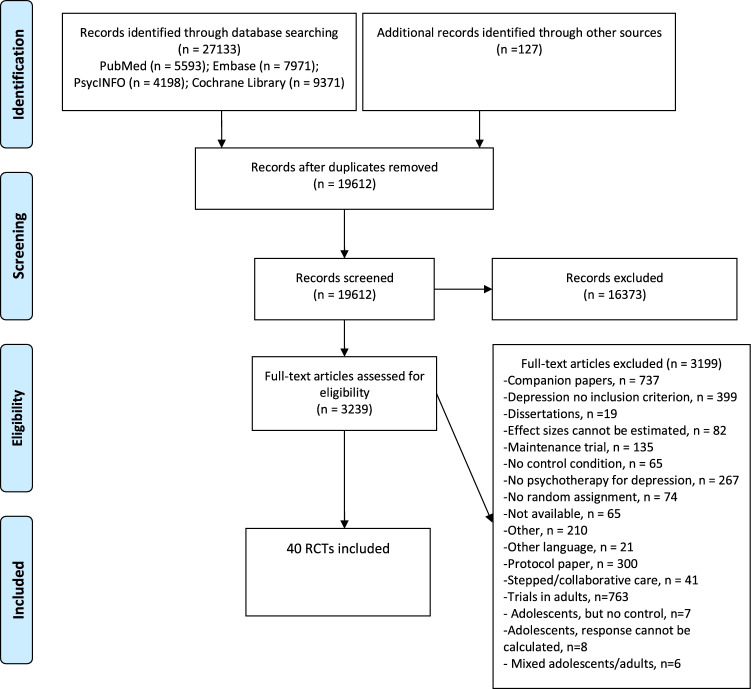
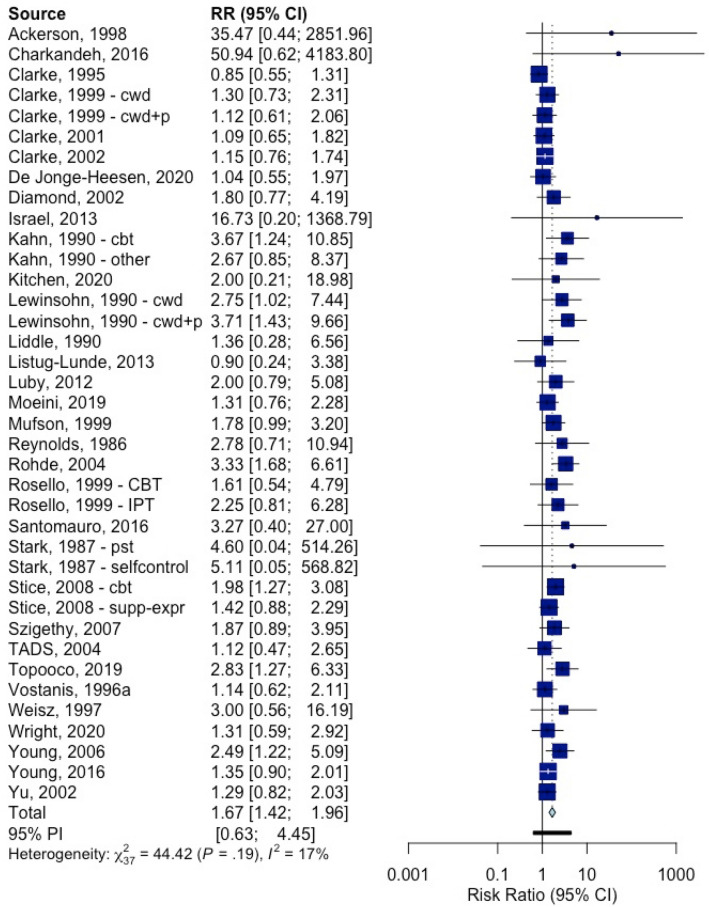
Meta-analyses show that psychotherapies are effective in the treatment of depression in children and adolescents. However, these effects are usually reported in terms of effect sizes. For patients and clinicians, it is important to know whether patients achieve a clinically significant improvement or deterioration. We conducted such a meta-analysis to examine response, clinically significant change, clinically significant deterioration and recovery as outcomes. We searched four bibliographic databases and included 40 randomised trials comparing psychotherapy for youth depression against control conditions. We used a validated method to estimate outcome rates, based on means, standard deviation and N at baseline and post-test. We also calculated numbers-need-to- treat (NNT). The overall response rate in psychotherapies at 2 (±1) months after baseline was 39% (95% CI: 34–45) and 24% (95% CI: 0.19–28) in control conditions (NNT: 6.2). The difference between therapy and control was still significant at 6–12 months after baseline (NNT=7.8). Clinically significant improvement was found in 54% of youth in therapy, compared with 32% in control groups (NNT=5.3); clinically significant deterioration was 6% in therapy, 13% in controls (NNT=5.1); recovery was 58% in therapy, 36% in controls (NNT=3.3). Smaller effects were found in studies with low risk of bias. Psychotherapies for depression in youth are effective compared to control conditions, but more than 60% of youth receiving therapy do not respond. More effective treatments and treatment strategies are clearly needed. Trial registrationhttps://osf.io/84xka
Overview
The claims and statistics of this paper haven’t been checked yet.
Free: it reads the open-access text and checks the first 5 claims that cite a source we can check. Create a free account to check every claim.
Integrity signals
Registry
Cites
Statistics
Figures
Verification
Claims the paper makes
The claims and statistics of this paper haven’t been checked yet.
Free: it reads the open-access text and checks the first 5 claims that cite a source we can check. Create a free account to check every claim.
Claims other papers make about this one
Each is checked against this paper’s own text: does it say what the citing paper says it does?
The source backs part of the claim, not all of it — or backs it for a different population, condition or comparison.
In the citing paper
“Psychological treatment is one of the important keys for the promotion of youth mental health, given the extensive evidence on the general effectiveness of psychotherapy for treating mental disorders in adolescence [3, 4].”
From Mediators of outcome in adolescent psychotherapy and their implications for theories and mechanisms of change: a systematic review (2024) · cites this paper as [3]
Experimental — accuracy not yet measured
Self-check
Percentages, sums and reported differences re-computed from the paper’s own numbers.
The self-check needs the paper’s full text.
Citations
Cites
Measuring inconsistency in meta-analyses
Higgins, J. P. T., Thompson, S. G., Deeks, J. J., & Altman, D. G. (2003) · BMJ · doi:10.1136/bmj.327.7414.557 · Cited by 63,139 · cited 1×
“As indicator of heterogeneity, we calculated the I2 statistic and its 95% CI [26].”
MethodThe Cochrane Collaboration's tool for assessing risk of bias in randomised trials
Higgins, J. P. T., Altman, D. G., Gotzsche, P. C., Juni, P., Moher, D., Oxman, A. D., Savovic, J., Schulz, K. F., Weeks, L., Sterne, J. A. C., et al. (2011) · BMJ · doi:10.1136/bmj.d5928 · Cited by 33,817
Dermyshi, E., Wang, Y., Yan, C., Hong, W., Qiu, G., Gong, X., & Zhang, T. (2017) · Neonatology · doi:10.1159/000454668 · Cited by 24,451
Duval, S., & Tweedie, R. (2000) · Biometrics · doi:10.1111/j.0006-341x.2000.00455.x · Cited by 14,099 · cited 1×
“We then examined the risk of small study effects by testing asymmetry through Egger’s test and adjusted the rates for the small study effects through Duval and Tweedie trimand-fill procedure (R0 estimator) [28].”
MethodJacobson, N. S., & Truax, P. (1991) · Journal of Consulting and Clinical Psychology · doi:10.1037/0022-006x.59.1.12 · Cited by 7,770
Merikangas, K. R., He, J.-P., Burstein, M., Swanson, S. A., Avenevoli, S., Cui, L., Benjet, C., Georgiades, K., & Swendsen, J. (2010) · Journal of the American Academy of Child & Adolescent Psychiatry · doi:10.1016/j.jaac.2010.05.017 · Cited by 6,278 · cited 3×
“It has been estimated that almost 14% of all adolescents will meet criteria for a depressive disorder before the age of 18 [1].”
BackgroundInfluentialPolanczyk, G. V., Salum, G. A., Sugaya, L. S., Caye, A., & Rohde, L. A. (2015) · Journal of Child Psychology and Psychiatry · doi:10.1111/jcpp.12381 · Cited by 3,990
An Assessment of Clinically Useful Measures of the Consequences of Treatment
Laupacis, A., Sackett, D. L., & Roberts, R. S. (1988) · New England Journal of Medicine · doi:10.1056/nejm198806303182605 · Cited by 1,681 · cited 1×
“This method not only allows to estimate binary outcomes, but also to calculate numbersneeded-to-treat (NNTs), indicating how many patients have to be treated to have one more positive outcome compared to the comparison group [19].”
MethodMeta-Analysis in Clinical Research
L'ABBÉ, K. A., DETSKY, A. S., & O'ROURKE, K. (1987) · Annals of Internal Medicine · doi:10.7326/0003-4819-107-2-224 · Cited by 1,267 · cited 1×
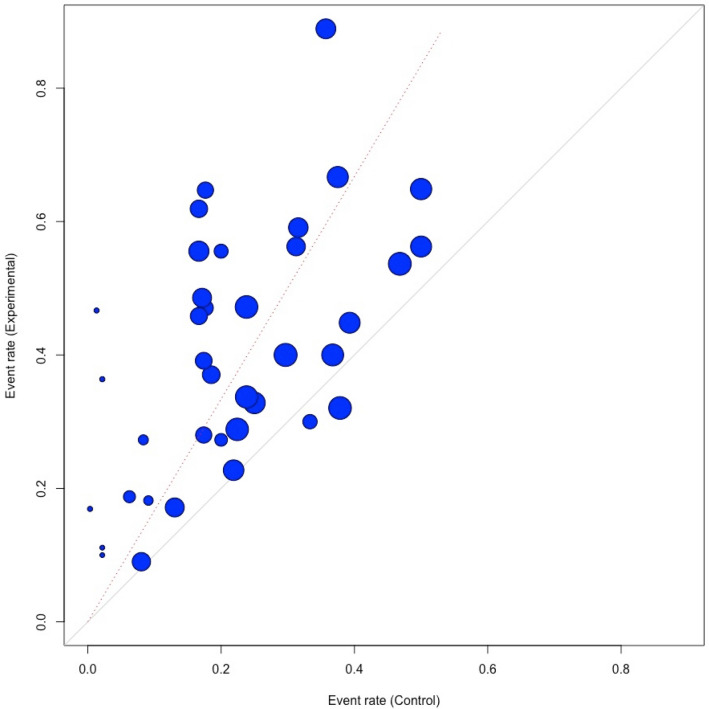
“To improve the interpretation of the results, we also generated an l’Abbé plot with the response rate in the control group at the horizontal axis and the response rates in the treatment group at the vertical axis [27].”
MethodSubthreshold Depression in Adolescence and Mental Health Outcomes in Adulthood
Fergusson, D. M., Horwood, L. J., Ridder, E. M., & Beautrais, A. L. (2005) · Archives of General Psychiatry · doi:10.1001/archpsyc.62.1.66 · Cited by 792
Research works printed but not linked: 33
- Ackerson, J., Scogin, F., McKend- ree-Smith, N., and Lyman, R. D. (1998). Cognitive bibliotherapy for mild and moderate adoles- cent depressive symptomatology. J Consult Clin Psychol, 66(4), 685-690.
- Clarke, G. N., Hawkins, W., Mur- phy, M., Sheeber, L. B., Lewin- sohn, P. M., and Seeley, J. R. (1995). Targeted prevention of unipolar depressive disorder in an at-risk sample of high school adolescents: A randomized trial of a group cognitive interven- tion. Journal of the American Academy of Child & Adolescent Psychiatry, 34(3), 312-321. Study Full references
- Clarke, G. N., Rohde, P., Lewin- sohn, P. M., Hops, H., and Seeley, J. R. (1999). Cogni- tive-behavioral treatment of adolescent depression: efficacy of acute group treatment and booster sessions. Journal of the American Academy of Child and Adolescent Psychiatry, 38(3), 272-279.
- Clarke, G. N., Hornbrook, M., Lynch, F., Polen, M., Gale, J., Beardslee, W., Seeley, J. (2001). A randomized trial of a group cognitive intervention for pre- venting depression in adolescent offspring of depressed parents. Archives of general psychiatry, 58(12), 1127-1134.
- Clarke, G. N., Hornbrook, M., Lynch, F., Polen, M., Gale, J., O'CONNOR, E., . . . Debar, L. (2002). Group cognitive- behavioral treatment for depressed adolescent offspring of depressed parents in a health maintenance organization. Jour- nal of the American Academy of Child and Adolescent Psychia- try, 41(3), 305-313.
- De Cuyper, S., Timbremont, B., Braet, C., De Backer, V., and Wullaert, T. (2004). Treat- ing depressive symptoms in schoolchildren. European child and adolescent psychiatry, 13(2), 105-114.
- Stark KD, Reynolds WM, Kaslow NJ (1987) A comparison of the relative efficacy of self-control therapy and a behavioral problem-solving therapy for depression in children. J Abnorm Child Psychol 15(1):91-113
- Diamond GS, Reis BF, Diamond GM, Siqueland L, Isaacs L (2002) Attachment-based family therapy for depressed adoles- cents: a treatment development study. J Am Acad Child Adolesc Psychiatry 41(10):1190-1196
- Lewinsohn, P. M., Clarke, G. N., Hops, H., and Andrews, J. (1990). Cognitive-behavioral treatment for depressed adoles- cents. Behavior Therapy, 21(4), 385-401. Study Full references
- Liddle, B., and Spence, S. H. (1990). Cognitive-Behaviour Therapy with Depressed Primary School Children: a Cautionary Note. Behavioural and Cognitive Psychotherapy, 18(2), 85-102.
- Listug-Lunde 2013 Listug-Lunde, L., Vogeltanz- Holm, N., and Collins, J. (2013). A cognitive-behavioral treatment for depression in rural American Indian middle school students. American Indian and Alaska Native Mental Health Research: The Journal of the National Center, 20(1), 16-34.
- Luby, J., Lenze, S., and Tillman, R. (2012). A novel early inter- vention for preschool depression: findings from a pilot randomized controlled trial. Journal of Child Psychology and Psychiatry, 53(3), 313-322.
- Martinović, Ž., Simonović, P., and Djokić, R. (2006). Preventing depression in adolescents with epilepsy. Epilepsy and behavior, 9(4), 619-624.
- McCarty, C. A., Violette, H. D., Duong, M. T., Cruz, R. A., and McCauley, E. (2013). A randomized trial of the positive thoughts and action program for depression among early adoles- cents. Journal of Clinical Child and Adolescent Psychology, 42(4), 554-563.
- Moeini, B., Bashirian, S., Soltanian, A. R., Ghaleiha, A., and Taheri, M. (2019). Examining the Effectiveness of a Web-Based Intervention for Depressive Symptoms in Female Adolescents: Applying Social Cognitive Theory. Journal of research in health sciences, 19(3), e00454-e00454.
- Mufson, L., Weissman, M. M., Moreau, D., and Garfinkel, R. (1999). Efficacy of interpersonal psychotherapy for depressed adolescents. Archives of general psychiatry, 56(6), 573-579.
- Mufson, L., Dorta, K. P., Wickra- maratne, P., Nomura, Y., Olfson, M., and Weissman, M. M. (2004). A randomized effec- tiveness trial of interpersonal psychotherapy fordepressed adolescents. Archives of general psychiatry, 61(6), 577-584. Study Full references Reynolds 1986
- Reynolds, W. M., and Coats, K. I. (1986). A comparison of cognitive-behavioral therapy and relaxation training for the treat- ment of depression in adoles- cents. Journal of Consulting and Clinical Psychology, 54(5), 653.
- Rohde, P., Clarke, G. N., Mace, D. E., Jorgensen, J. S., and Seeley, J. R. (2004). An efficacy/ effectiveness study of cognitive- behavioral treatment for ado- lescents with comorbid major depression and conduct disorder. Journal of the American Acad- emy of Child and Adolescent Psychiatry, 43(6), 660-668.
- Rosselló, J., and Bernal, G. (1999). The efficacy of cogni- tive-behavioral and interpersonal treatments for depression in Puerto Rican adolescents. Jour- nal of Consulting and Clinical Psychology, 67(5), 734.
- Santomauro, D., Sheffield, J., and Sofronoff, K. (2016). Depres- sion in adolescents with ASD: a pilot RCT of a group interven- tion. Journal of autism and developmental disorders, 46(2), 572-588.
- Stice, E., Rohde, P., Seeley, J. R., and Gau, J. M. (2008). Brief cognitive-behavioral depression prevention program for high-risk adolescents outperforms two alternative interventions: a rand- omized efficacy trial. Journal of Consulting and Clinical Psychol- ogy, 76(4), 595.
- Szigethy, E., Kenney, E., Carpen- ter, J., Hardy, D. M., Fairclough, D., Bousvaros, A., . . . Noll, R. (2007). Cognitive-behavioral therapy for adolescents with inflammatory bowel disease and subsyndromal depression. Jour- nal of the American Academy of Child and Adolescent Psychia- try, 46(10), 1290-1298. Study Full references TADS 2004 Treatment for Adolescents With Depression Study (TADS) Team. Fluoxetine, Cognitive- Behavioral Therapy, and Their Combination for Adolescents With Depression Treatment for Adolescents With Depression Study (TADS) Randomized Controlled Trial. JAMA. 2004;292:807-820
- Topooco, N., Byléhn, S., Dahl- ström Nysäter, E., Holmlund, J., Lindegaard, J., Johansson, S., . . . Andersson, G. (2019). Evaluating the Efficacy of Internet-Delivered Cognitive Behavioral Therapy Blended With Synchronous Chat Sessions to Treat Adolescent Depression: randomized Controlled Trial. Journal of medical Internet research, 21(11), e13393. 10.2196/13393 · DOI · Paper page
- Vostanis, P., Feehan, C., Grattan, E., and Bickerton, W.-L. (1996). Treatment for children and ado- lescents with depression: lessons from a controlled trial. Clinical child psychology and psychiatry, 1(2), 199-212.
- Weisz JR, Thurber CA, Sweeney L, Proffitt VD, LeGagnoux GL (1997). Brief treatment of mild- to-moderate child depression using primary and secondary control enhancement training. Journal of Consulting and Clini- cal Psychology, 65, 703-707.
- Young, J. F., Mufson, L., and Davies, M. (2006). Efficacy of interpersonal psychotherapy- adolescent skills training: An indicated preventive intervention for depression. Journal of Child Psychology and Psychiatry, 47(12), 1254-1262.
- Young, J. F., Benas, J. S., Schueler, C. M., Gallop, R., Gillham, J. E., and Mufson, L. (2016). A randomized depres- sion prevention trial comparing interpersonal psychotherapy- Adolescent skills training to group counseling in schools. Prevention Science, 17(3), 314- 324.
- Yu, D. L., and Seligman, M. E. (2002). Preventing depressive symptoms in Chinese children. Prevention and Treatment, 5(1), 9a. References
- Gillham, J. E., Hamilton, J., Freres, D. R., Patton, K., and Gallop, R. (2006). Preventing depression among early adoles- cents in the primary care setting: A randomized controlled study of the Penn Resiliency Program. J Abnorm Child Psychol, 34(2), 195-211.
- Idsoe, T., Keles, S., Olseth, A. R., and Ogden, T. (2019). Cogni- tive behavioral treatment for depressed adolescents: Results from a cluster randomized controlled trial of a group course. BMC Psychiatry, 19(1). 10.1186/s12888-019-2134-3 Israel 2013 Israel, P., and Diamond, G. S. (2013). Feasibility of attach- ment based family therapy for depressed clinic-referred Norwegian adolescents. Clinical child psychology and psychiatry, 18(3), 334-350. · doi:10.1186/s12888-019-2134-3israel2013
- Kahn, J. S., Kehle, T. J., Jenson, W. R., and Clark, E. (1990). Comparison of cognitive-behav- ioral, relaxation, and self-mode- ling interventions for depression among middle-school students. School Psychology Review, 19(2), 196-211.
- Cuijpers P, Karyotaki E, Ciharova M, Miguel C, Noma H, Furu- kawa TA (2021) The effects of psychotherapies for depression on response, remission, reliable change, and deterioration: a meta-analysis. Acta Psychiatr Scand. https:// doi. org/ 10. 1111/ acps. 13335 · DOI · Paper page
Cited by
Rickwood, D., McEachran, J., Saw, A., Telford, N., Trethowan, J., & McGorry, P. (2023) · PLOS ONE · doi:10.1371/journal.pone.0282040 · Cited by 73
Singh, B., Bennett, H., Miatke, A., Dumuid, D., Curtis, R., Ferguson, T., Brinsley, J., Szeto, K., Eglitis, E., Zhou, M., et al. (2025) · Journal of the American Academy of Child & Adolescent Psychiatry · doi:10.1016/j.jaac.2025.04.007 · Cited by 78
Interventions for Young Children’s Mental Health: A Review of Reviews
Hudson, J. L., Minihan, S., Chen, W., Carl, T., Fu, M., Tully, L. A., Kangas, M., Rosewell, L., McDermott, E. A., Wang, Y., et al. (2023) · Clinical Child and Family Psychology Review · doi:10.1007/s10567-023-00443-6 · Cited by 62
Taubner, S., Ioannou, Y., Saliba, A., Sales, C. M. D., Volkert, J., Protić, S., Adler, A., Barkauskiene, R., Conejo-Cerón, S., Di Giacomo, D., et al. (2024) · European Child & Adolescent Psychiatry · doi:10.1007/s00787-023-02186-9 · Cited by 36
“Psychological treatment is one of the important keys for the promotion of youth mental health, given the extensive evidence on the general effectiveness of psychotherapy for treating mental disorders in adolescence [3, 4].”
The effect of brief exposure to virtual nature on mental wellbeing in adolescents
Owens, M., & Bunce, H. L. I. (2023) · Scientific Reports · doi:10.1038/s41598-023-44717-z · Cited by 43
“While the World Health Organization defines adolescence as spanning the age range of 10–19 7 , it has been argued that expanding this to 10–24 is more meangingful 8 .”
BackgroundMethodCuijpers, P. J., Harrer, M., & Furukawa, T. A. (2026) · World Psychiatry · doi:10.1002/wps.70002 · Cited by 37
Self-citationContextualizing the negative effects of psychotherapy
Rosendahl, J., Klatte, R., Frenzl, D., Castonguay, L. G., Vybíral, Z., & Strauss, B. M. (2025) · Nature Reviews Psychology · doi:10.1038/s44159-025-00472-8 · Cited by 35
“88,166 .”
Legenbauer, T., Kirschbaum-Lesch, I., Jörke, C., Kölch, M., Reis, O., Berger, C., Dück, A., Schulte-Markwort, M., Becker-Hebly, I., Bienioschek, S., et al. (2024) · JAMA Psychiatry · doi:10.1001/jamapsychiatry.2024.0103 · Cited by 20
Tareke, M., Yirdaw, B. A., Worku, A. G., Gelaye, B., & Azale, T. (2023) · PLoS ONE · doi:10.1371/journal.pone.0293988 · Cited by 34
“This is supported with previous systematic review and meta-analysis that clinically significant improvement, less deterioration and better recovery rate was found compared to control groups [57].”
ResultLi, W. H. C., Gleeson, J., Fraser, M. I., Ciarrochi, J., Hofmann, S. G., Hayes, S. C., & Sahdra, B. K. (2024) · Frontiers in Psychology · doi:10.3389/fpsyg.2024.1470817 · Cited by 34
Courtney, D., Cheung, A., Henderson, J. L., BENNETT, K. J., Wang, W., Chen, S., Battaglia, M., Strauss, J., Mitchell, R. H. B., Wang, K., et al. (2022) · JCPP Advances · doi:10.1002/jcv2.12083 · Cited by 15
“Circumscribed evidence ‐ based treatment approaches like antidepressant medication and/or cognitive behavioural therapy (CBT) have had limited benefits, with up to 40% of adolescents unremitted at follow ‐ up (March et al., 2009; Vitiello et al., 2011; Cuijpers et al., 2021).”
van Aswegen, T., Samartzi, E., Morris, L. D., van der Spek, N., de Vries, R., Seedat, S., & van Straten, A. (2023) · International Journal of Psychology · doi:10.1002/ijop.12926 · Cited by 26
“The effectiveness of IPT-A and CBT for children and adolescents has been demonstrated in a number of meta-analyses (Cuijpers et al., 2020, 2021; Liang et al., 2021; Weisz et al., 2006; Zhou et al., 2015).”
BackgroundSchulte-Frankenfeld, P. M., Breedvelt, J., Brouwer, M. E., van der Spek, N., Bosmans, G., & Bockting, C. (2024) · Clinical Psychology in Europe · doi:10.32872/cpe.13717 · Cited by 18
“Subgroup analyses were not performed due to the low number of included studies (Cuijpers et al., 2021).”
Zhang, B., Yang, L., Sun, W., Xu, P., Ma, H., & Abdullah, A. B. (2025) · Clinics · doi:10.1016/j.clinsp.2025.100683 · Cited by 14
“…therapy, interpersonal therapy, and family therapy, are widely employed in the psychological management of adolescent depression 8 Although these therapies are generally regarded as beneficial, considerable evidence suggests that their underlying premise – cognition influencing…”
The Neurobiology of Infant Attachment-Trauma and Disruption of Parent–Infant Interactions
Naeem, N., Zanca, R. M., Weinstein, S., Urquieta, A., Sosa, A., Yu, B., & Sullivan, R. M. (2022) · Frontiers in Behavioral Neuroscience · doi:10.3389/fnbeh.2022.882464 · Cited by 28
Revisiting the use of adverse childhood experience screening in healthcare settings
Danese, A., Asmussen, K., MacLeod, J. G., Meehan, A. J., Sears, J., Slopen, N. B., Smith, P. A., & Sweeney, A. (2024) · Nature Reviews Psychology · doi:10.1038/s44159-024-00362-5 · Cited by 18
“A range of evidence-based therapies including cognitive behavioural therapy, interpersonal psychotherapy and short-term family therapy is effective for the treatment of depression 125 , and cognitive behavioural therapy is effective in treating anxiety disorders in young people 126 .”
Stringaris, A. K., Burman, C., Delpech, R., Uher, R., Bhudia, D., Miliou, D., Rokas, I.-M., Kyriakopoulos, M., Foulkes, L., Moreno, C., et al. (2025) · BMJ Mental Health · doi:10.1136/bmjment-2024-301162 · Cited by 14
“3 However, a recent network meta-analysis (NMA), 4 an established method of comparing treatments using both direct and indirect (ie, treatment A with treatment C, via studies that directly compare A with B and B with C) evidence, concluded that only fluoxetine alone and fluoxetine administered…”
Rickwood, D., McEachran, J., Saw, A., Telford, N., Trethowan, J., & McGorry, P. (2022) · doi:10.1101/2022.08.24.22279102 · Cited by 73
“receiving therapy do not respond within two months, and that 39% respond in 418 treatment conditions and 24% in control conditions [24].”
BackgroundBrown, F. L., Lee, C., Servili, C., Willhoite, A., van Ommeren, M., Hijazi, Z., Kieselbach, B. S., & Skeen, S. (2024) · Cambridge Prisms Global Mental Health · doi:10.1017/gmh.2024.57 · Cited by 17
“In contrast, there is limited evidence supporting the effectiveness of interventions for depression in young children (Cuijpers et al., 2021a,b; Liang et al., 2021).”
BackgroundRoach, A., Sureshkumar, D. S., Elliot, K., Hidalgo-Padilla, L., van Loggerenberg, F., Hounsell, L., Jakaite, Z., Esnal, F., Donaghy, J., Bird, V., et al. (2023) · BMJ Open · doi:10.1136/bmjopen-2023-072093 · Cited by 12
“26 Similarly, antidepressants have been found to have only a small therapeutic effect in this group.”
BackgroundPsychological interventions for depression in children and adolescents: A bibliometric analysis
Wang, N., Kong, J.-Q., Bai, N., Zhang, H.-Y., & Yin, M. (2024) · World Journal of Psychiatry · doi:10.5498/wjp.v14.i3.467 · Cited by 12
Koenig, J., & Vöckel, J. (2024) · The Journal of Pediatrics · doi:10.1016/j.jpeds.2024.114078 · Cited by 10
Designing Chatbots to Treat Depression in Youth: Qualitative Study
Kuhlmeier, F. O., Bauch, L., Gnewuch, U., & Lüttke, S. (2025) · JMIR Human Factors · doi:10.2196/66632 · Cited by 18
“…hesitate to disclose personal information to professionals due to fear of judgement or not being taken seriously [7], and question the effectiveness of professional treatment [7], a concern supported by evidence that 60% of youth with depression do not benefit from psychological treatments [55].”
Espada, J. P. (2023) · Revista de Psicología Clínica con Niños y Adolescentes · doi:10.21134/rpcna.2023.10.1.6 · Cited by 15
“(Cuijpers et al., 2020; Cuijpers et al., 2021; Forti-Buratti et al., 2016; Klein et al., 2007; Méndez et al., 2021; Weisz et al., 2006; Zhou et al., 2020), as well as interpersonal therapy (IPT) ( n =7; 87,5”
InfluentialMentalization-Based Treatment for Adolescent Depression
Luyten, P., Malcorps, S., & Fonagy, P. (2024) · Psychodynamic Psychiatry · doi:10.1521/pdps.2024.52.4.490 · Cited by 9
Dardas, L. A., Xu, H., Franklin, M. S., Scott, J., Vance, A. J., van de Water, B. J., & Pan, W. (2023) · Behavioural and Cognitive Psychotherapy · doi:10.1017/s1352465822000662 · Cited by 12
Nordmo, M., Kleppestø, T. H., Reme, B., Sunde, H. F., von Soest, T., & Torvik, F. A. (2024) · JCPP Advances · doi:10.1002/jcv2.12239 · Cited by 11
“However, is seems somewhat unlikely that treatment of internalizing disorders has resulted in large positive educational gains, given the discouraging research literature on the subject (Baker et al., 2021; Cuijpers et al., 2023).”
BackgroundThingbak, A., Wells, A., & O’Toole, M. S. (2024) · Journal of Anxiety Disorders · doi:10.1016/j.janxdis.2024.102926 · Cited by 13
Effects of Ketamine vs. Midazolam in Adolescent Treatment Resistant Depression
Macejova, A., Kovacova, V., Tonhajzerová, I., Višňovcová, Z., Ferencová, N., Mlyncekova, Z., Kukucka, T., & Ondrejka, I. (2024) · Pharmaceuticals · doi:10.3390/ph17121627 · Cited by 10
“Moreover, clinical response was defined as a ≥ 50% decrease in the MADRS [30], HAM-A [62], and CDI [63] scores from baseline.”
Lofthouse, K., Davies, A., Hodgekins, J., & Meiser‐Stedman, R. (2025) · Journal of the American Academy of Child & Adolescent Psychiatry · doi:10.1016/j.jaac.2024.12.014 · Cited by 15
A cognitive neuroscience approach to understanding aggression and its treatment
Blair, J., Habel, U., Votinov, M., Wagels, L., & Denson, T. F. (2025) · Neuroscience & Biobehavioral Reviews · doi:10.1016/j.neubiorev.2025.106386 · Cited by 11
Changes in Suicidality among Transgender Adolescents Following Hormone Therapy: An Extended Study
Allen, L. R., Dodd, C. G., Moser, C. N., & Knoll, M. M. (2025) · The Journal of Pediatrics · doi:10.1016/j.jpeds.2025.114883 · Cited by 11
Poetar, C.-R., Dobrean, A., & Andersson, G. (2024) · Child and Adolescent Psychiatry and Mental Health · doi:10.1186/s13034-024-00721-3 · Cited by 11
“…aspect to consider is the fact that a significant percentage of children (e.g., up to 60% of depressed youth) do not respond to such interventions [15, 16], and a possible explanation could be that these interventions are diagnostic-specific, targeting one condition at a time, while not focusing…”
BackgroundAngst und Depression bei Jugendlichen
Resch, F., & Parzer, P. (2024) · Bundesgesundheitsblatt - Gesundheitsforschung - Gesundheitsschutz · doi:10.1007/s00103-024-03849-x · Cited by 12
Li, Y., & Liu, X. (2024) · Frontiers in Psychiatry · doi:10.3389/fpsyt.2024.1288338 · Cited by 12
“The results of subgroup analysis further showed that there was no signi fi cant difference in response rate between children and adolescents (54).”
BackgroundHuang, Y., Hou, Y., Li, C., & Ren, P. (2025) · European Child & Adolescent Psychiatry · doi:10.1007/s00787-025-02672-2 · Cited by 8
O'Neil, A. E., John, T., Turner, A., Batterham, P. J., Barutchu, A., Fiddes, R., Chambers, J., Rossell, S. L., Davey, C. G., Carruthers, S. P., et al. (2025) · Australian & New Zealand Journal of Psychiatry · doi:10.1177/00048674251319680 · Cited by 6
“…trials) (Cuijpers et al., 2023; Rozental et al., 2017); null effects (50% of participants in psycho-therapy trials) (Boettcher et al., 2014; Cuijpers et al., 2021); simultaneous iatrogenic and non-iatrogenic effects (e.g. symptom improvement on one measure while deterioration on another);…”
Ndjatou, T., Qiu, Y., Gerber, L. M., & Chang, J. (2024) · The Journal of Pediatrics Clinical Practice · doi:10.1016/j.jpedcp.2024.200113 · Cited by 9
One in five, not one in 17, youth patients deteriorate during psychotherapy for depression
McAleavey, A. (2022) · European Child and Adolescent Psychiatry · doi:10.1007/s00787-022-01943-6 · Cited by 3
“I read the recent article “The effects of psychological treatments of depression in children and adolescents on response, reliable change, and deterioration: a systematic review and meta‐analysis” by Cuijpers and colleagues [1] with great interest.”
BackgroundMethodPile, V., Herring, G. T., Bullard, A., Loades, M. E., Chan, S. W. Y., Reynolds, S. A., & Orchard, F. (2022) · European Child & Adolescent Psychiatry · doi:10.1007/s00787-022-02001-x · Cited by 6
“[1] is highly valuable to the field of adolescent depression.”
BackgroundHall, M., Wagner, A. A., Scherner, P. V., Michael, K. L., Lawyer, G., Lutz, W., & Rubel, J. A. (2022) · PsyArXiv (OSF Preprints) · doi:10.31234/osf.io/8deyj · Cited by 9
Harper, N. J., Dobud, W. W., & Magnuson, D. (2024) · Youth · doi:10.3390/youth4010027 · Cited by 8
Identifying Reliable Change in Outcome Assessments for Behavioral Interventions
Frazier, T. W., Helton, M. R., Akouri, C., Chetcuti, L., & Uljarević, M. (2025) · Behavioral Interventions · doi:10.1002/bin.70007 · Cited by 5
Clinical Efficacy and Therapeutic Mechanism of Acupuncture in the Treatment of Adolescent Depression
Jiang, J., Ji, B., Jin, W., Zhang, P., Chen, H., Cong, W., Jin, X., & Li, L. (2025) · Journal of Integrative Neuroscience · doi:10.31083/jin38071 · Cited by 8
“However, the efficacy and adherence of both therapies are limited, and concerns about medication tolerance and suicide risk persist [9,10].”
Tang, M., Zheng, Y., Zhang, X., & Fan, X. (2024) · Psychiatry Research · doi:10.1016/j.psychres.2024.116329 · Cited by 6
Dippel, N., In‐Albon, T., Schneider, S., Christiansen, H., & Brakemeier, E.-L. (2022) · Pilot and Feasibility Studies · doi:10.1186/s40814-022-01091-3 · Cited by 6
“Considering the current low treatment outcomes [15] as well as the high proportion of interactional problems in the context of depressive disorders [77, 78], this treatment program is highly relevant.”
BackgroundPile, V., Tinch‐Taylor, R., Carter, B., Richardson, J., Rijk, L. D., Leamy, M. C., Blackwell, S. E., Meiser‐Stedman, R., Dunn, B. D., Byford, S., et al. (2025) · Trials · doi:10.1186/s13063-025-08920-9 · Cited by 4
“Yet, in the UK, 75% of adolescents with depression do not receive an intervention [8]; gold-standard interventions require several months of sessions with experienced therapists, and current evidence-based psychotherapies for youth to show only a modest advantage over usual care, if any [9, 10].”
Rognli, E. W., & Fjermestad, K. W. (2023) · Journal of Child and Family Studies · doi:10.1007/s10826-023-02610-3 · Cited by 5
“Despite good evidence for the efficacy of psychological treatments for adolescent depression, effect sizes are modest (Cuijpers et al., 2021; Eckshtain et al., 2019).”
BackgroundBiomarkers associated with treatment outcome in young people with depression: A systematic review
Zierotin, A., Mondelli, V., & Zajkowska, Z. (2024) · Neuroscience Applied · doi:10.1016/j.nsa.2024.104082 · Cited by 5
“However, many young people with depression do not respond to treatment, with response rates to psychotherapy or SSRI treatment estimated at 41% – 67% (Cuijpers et al., 2021; Hetrick et al., 2007).”
Testing Bidirectional Associations Between Maternal and Child Depression During Emerging Adolescence
Hewitt, J. M. A., McArthur, B. A., Neville, R. D., Park, J. L., Tough, S., & Madigan, S. L. (2025) · Archives of Pediatrics and Adolescent Medicine · doi:10.1001/jamapediatrics.2025.2822 · Cited by 4
Huang, X., Luo, W., Luo, J., Zhang, Y., Chen, Y., Luo, Y., Sun, B., & Zhou, Y. (2026) · Journal of the American Academy of Child & Adolescent Psychiatry · doi:10.1016/j.jaac.2025.12.019 · Cited by 4
Investigating the effects of a novel gamified cognitive training on adolescent mental health
Grunewald, K., Minihan, S., Andrews, J. L., Songco, A., Blakemore, S., Chau, A. K. C., Fischer, J., Fox, E., Nelissen, A. B., Raffe, W. L., et al. (2025) · Child and Adolescent Psychiatry and Mental Health · doi:10.1186/s13034-025-00917-1 · Cited by 5
“Meta-analytic evidence suggests that less than 40% of adolescents respond to psychological treatments for depression [9], and only 36% of adolescents receiving treatment for anxiety disorders were in remission post treatment [10].”
Krause, K. R., Calderón, A., Pino, V. G., Edbrooke-Childs, J. H., Moltrecht, B., & Wolpert, M. (2023) · European Child & Adolescent Psychiatry · doi:10.1007/s00787-023-02140-9 · Cited by 5
“Yet, in clinical trials and routine specialist care, around 40% of youth leave treatment without showing meaningful improvement [6, 7].”
BackgroundHickie, I. B., Cuijpers, P. J., Scott, E. M., Skinner, A., & Iorfino, F. (2023) · Research Directions Depression · doi:10.1017/dep.2023.29 · Cited by 5
Self-citationPotsch, L., & Rief, W. (2024) · Journal of Affective Disorders · doi:10.1016/j.jad.2024.09.007 · Cited by 4
van Seters, M. L. F. M., Rasing, S. P. A., Huvenaars, M. J., Vermulst, A. A., Bodden, D. H. M., & Stikkelbroek, Y. A. J. (2024) · Internet Interventions · doi:10.1016/j.invent.2024.100776 · Cited by 4
“…therapy (CBT) for adolescents with a depressive disorder show that treatment proves effective (Oud et al., 2019), though the outcomes are relatively modest (Zhou et al., 2015) with 60 % of the adolescents not responding to psychotherapy (Cuijpers et al., 2023) and a high drop-out rate (57”
BackgroundSelf-citationEmmelkamp, J., Wisman, M. A., Beuk, N., Stikkelbroek, Y. A. J., Nauta, M. H., Dekker, J., & Christ, C. (2022) · BMC Psychiatry · doi:10.1186/s12888-022-04291-6 · Cited by 6
“However, its mean effect compared to usual care is only modest [38], a considerable number of adolescents do not respond to CBT, or still have residual symptoms, that may – in turn – put them at risk for relapse [37, 39].”
BackgroundSelf-citationHanney, W. J., Anderson, A. W., Kolber, M. J., Gibbs, V., & Hanney, W. J. (2025) · Sci · doi:10.3390/sci7010010 · Cited by 3
“A separate systematic review and meta-analysis by Cujipers et al. [26] stated that only 60% of youth receiving psychotherapy responded to it [26].”
Preisig, M., Häberling, I. S., Smigielski, L., Emery, S., Baumgartner, N., Albermann, M., Strumberger, M. A., Schmeck, K., Wöckel, L., Erb, S., et al. (2025) · Frontiers in Child and Adolescent Psychiatry · doi:10.3389/frcha.2025.1567387 · Cited by 2
Beckett, C. W., & Lawson, R. P. (2025) · Journal of Affective Disorders · doi:10.1016/j.jad.2025.120731 · Cited by 5
Jackson, R., & Jordan, J. T. (2023) · Frontiers in Psychology · doi:10.3389/fpsyg.2023.1171936 · Cited by 4
“Other studies of children and adolescents with diagnoses of mental health disorders such as anxiety or depression show reliable change ranging from 17 to 54% following participation in youth mental health services and psychotherapies (Arons et al., 2002; Ash and Weis, 2009; Wolpert et al., 2015; Cross et al., 2018; Bo…”
BackgroundHuang, X., Chen, Y., Luo, J., Wang, D., Yang, C., Luo, W., & Zhou, Y. (2024) · PLoS ONE · doi:10.1371/journal.pone.0304084 · Cited by 5
“Notably, over 60% of adolescents who had received relevant psychological treatment did not respond to the treat-ment [18].”
Psychiatric Comorbidities in Children With Epilepsy
Chandra, V. N. V. S. J. S., Kamate, M., & Koparde, V. (2024) · Indian Pediatrics · doi:10.1007/s13312-024-3314-x · Cited by 2
Public mental health – a challenge for local communities and research
Priebe, S., & Reininghaus, U. (2024) · Psychological Medicine · doi:10.1017/s0033291724001478 · Cited by 2
“(D) Even if young people engage in conventional psychological therapies, these therapies have an only limited effect on a group level, and even the limited effect is often not lasting (Cuijpers et al., 2021).”
BackgroundCarson, J., Demetriou, K., Barlow, G., Wright, K. A., Loades, M. E., & Dunn, B. D. (2024) · Behaviour Research and Therapy · doi:10.1016/j.brat.2024.104646 · Cited by 3
Elansary, M., Barch, D. M., Tillman, R., D’Andrea, C. B., Vogel, A. C., Donohue, M. R., Hennefield, L., Gilbert, K., & Luby, J. L. (2025) · Journal of the American Academy of Child & Adolescent Psychiatry · doi:10.1016/j.jaac.2025.06.011 · Cited by 2
Li, S., Shang, L., Gong, N., & Zhang, L. (2025) · Journal of Affective Disorders · doi:10.1016/j.jad.2025.119799 · Cited by 3
Cliffe, B., Peck, A., Shafique, J., Hards, E., & Loades, M. E. (2022) · Clinical Child Psychology and Psychiatry · doi:10.1177/13591045221104570 · Cited by 3
“Meta-analyses have consistently shown that psychotherapies have moderate effects on adolescent depression (Eckshtain et al., 2020; Cuijpers et al., 2021; Weersing et al., 2017).”
BackgroundGliske, K., Berry, K. R., Ballard, J., Schmidt, C., Kroll, E., Kohlmeier, J., Killian, M., & Fenkel, C. (2023) · JMIR Formative Research · doi:10.2196/47917 · Cited by 3
Blais, A. Z., Holahan, A.-L. V., Helleman, A., PAJER, K. A., Honeywell, C. R., Salehi, R., Anderson, P., & Vasserman, M. (2024) · Archives of Clinical Neuropsychology · doi:10.1093/arclin/acae087 · Cited by 1
Triliegi, R., Fleming, E., LaBore, K., & Hurtley, K. (2025) · Journal of Forensic Nursing · doi:10.1097/jfn.0000000000000538 · Cited by 1
Velez, C. V., Campez, M., Canovas, J. M., Pedronzo, P. M., Ahn, Y. A., Dale, C. F., Dale, S. K., Gwynn, L. A., Jensen‐Doss, A., Pulgarón, E. R., et al. (2025) · JMIR Research Protocols · doi:10.2196/74080 · Cited by 1
“Psychologists have created a wide array of evidence-based treatments (EBTs) for adolescent emotional disorders [11,12].”
Nigro, L., Forte, A. M., Mantzouranis, G., Courossé, S., Kapp, C., Schneider, M., Plessen, K. J., Armando, M., & Urben, S. (2025) · Child and Adolescent Psychiatry and Mental Health · doi:10.1186/s13034-025-00972-8 · Cited by 2
“In this context, researchers and clinicians need effective methods to monitor clinical patient progress, and our study highlights the RCI’s value in detecting clinically significant improvements or deterioration to guide care [34, 61].”
Adolescents’ Experience with a Conversational Agent for Depression
Testerman, A., Bharat, A., Patterson, T., & Bunge, E. L. (2026) · Information · doi:10.3390/info17020204 · Cited by 1
“Moreover, only 39% of adolescents and children had a positive response to treatment for depression, and this positive response tends to diminish gradually over time [3].”
Philips, B., Mechler, J., Uckelstam, C.-J., Andersson, G., Carlbring, P., Edbrooke-Childs, J. H., Falkenström, F., Johansson, R., Lilliengren, P., Bergsten, K. L., et al. (2026) · Internet Interventions · doi:10.1016/j.invent.2026.100923 · Cited by 1
“Recent meta-analyses found that response rates for children and adolescents receiving psychotherapy on average were below 40%, and differences compared to control groups often disappear at follow-up (Cuijpers et al., 2021; Weersing et al., 2025).”
Deterioration in mental health: towards a conceptualization based on patients’ perspectives
Låver, J., McAleavey, A. A., Valaker, I., Øien, J.-M. T., & Moltu, C. (2026) · International Journal of Qualitative Studies on Health and Well-Being · doi:10.1080/17482631.2026.2644587 · Cited by 1
“Most of the studies of deterioration or adverse effects, focus on the context of a specific treatment (Cuijpers et al., 2023).”
Li, J., Chen, P., Chen, G., Guo, Z., Yang, Z., Sun, S., Qi, Z., Huang, L., Ma, W., Zhang, Y., et al. (2026) · Neural Regeneration Research · doi:10.4103/nrr.nrr-d-25-01170 · Cited by 1
Morse, I., Mannes, J., Pilimatalawwe, D., Phippard, S., Sousa, F. D. S., Samuel, R., Ganesalingam, M., Rengasamy, E. R., Pinto, C., Woolgar, M., et al. (2026) · European Child & Adolescent Psychiatry · doi:10.1007/s00787-026-03064-w · Cited by 4
Sweeny, K., Reavley, N. J., Rasmussen, B., Nenzhelele, H. Q., Jong, R. D., Ruiz, M. J. R., Okech, B. N., September, R., Mohan, A., & Kline, S. (2026) · Health Policy and Planning · doi:10.1093/heapol/czag075 · Cited by 1
“A systematic review and meta-analysis by Cuijpers et al. (2023) of psychotherapies in the treatment of depression in children and adolescents, found that there was a recovery rate of 58% compared to 36% rate in controls.”
Calderón, A., Storeide, K. A. H., Elvejord, C., Nissen‐Lie, H. A., Ulberg, R., & Dahl, H. J. (2022) · International Journal of Environmental Research and Public Health · doi:10.3390/ijerph192416939 · Cited by 1
“Cuijpers and colleagues [2] found that psychotherapies for depression in youth are effective compared to control conditions, but more than 60% of the adolescents receiving therapy do not respond adequately.”
BackgroundValidation of the Capacity for the Psychotherapy Process Scale for Use in Adolescent Patients
Hou, Y., Hu, J., Zhang, X., Zhao, J., Yang, X., Sun, X., Li, Y., Zhang, L., Lyu, Z., Fang, L., et al. (2024) · Research on Child and Adolescent Psychopathology · doi:10.1007/s10802-024-01209-6 · Cited by 1
“Despite substantial evidence supporting the general effectiveness of psychotherapy in treating mental disorders in adolescents (Cuijpers et al., 2023; Das et al., 2016), the effect sizes tend to be smaller than those in adults (Cuijpers et al., 2020).”
The Efficacy of Interpersonal Psychotherapy
Weissman, M. M., & Mootz, J. J. (2024) · Oxford University Press eBooks · doi:10.1093/oso/9780197652084.003.0003 · Cited by 1
Thingbak, A., Hudson, J. L., Wells, A., & O’Toole, M. S. (2025) · Clinical Psychology & Psychotherapy · doi:10.1002/cpp.70122
Miljevic, A., Hoath, K., Leggett, K. S., Hennessy, L. A., Boax, C. A., Hryniewicki, J., & Rodger, J. (2024) · medRxiv · doi:10.1101/2024.06.20.24309219 · Cited by 1
“Whilst moderately effective for most, ~30% of adolescents and youth with depression fail to respond to pharmacotherapy treatments 4,5 , and this response is suggested to be even lower for psychotherapies, especially in moderate to severe case of MDD 6,7 .”
BackgroundPreventing Depression in Children and Adolescents Through Mindfulness-Based Interventions in Schools
García‐Rubio, C., & Andreu, C. I. (2022) · Depression and personality · doi:10.1007/978-3-031-13029-8_3 · Cited by 3
Grunewald, K., Andrews, J. L., Minihan, S., Songco, A., Werner‐Seidler, A., Blakemore, S., Fox, E., Goodyer, I. M., Raffe, W. L., & Schweizer, S. (2023) · PsyArXiv (OSF Preprints) · doi:10.31234/osf.io/rpvh9 · Cited by 2
Boudoukha, A. H., Denis, H., & Villemonteix, T. (2000) · HAL · doi:10.1016/s0246-1072(23)43625-5
Thérapie Interpersonnelle (TIP) chez l’adolescent
Boudoukha, A. H., L’Hégaret, Y., & Neveux, N. (2023) · HAL · doi:10.1016/s0246-1072(23)47262-8
Li, W. H. C., Gleeson, J., Fraser, M., Ciarrochi, J., Hofmann, S. G., Hayes, S. C., & Sahdra, B. K. (2024) · doi:10.31234/osf.io/9j7xv
Stringaris, A. K., Burman, C., Delpech, R., Bhudia, D., Miliou, D., Rokas, I.-M., Kyriakopoulos, M., Foulkes, L., Moreno, C., Cortese, S., et al. (2024) · doi:10.31234/osf.io/jk4z7
Le linee guida internazionali per il trattamento dei disturbi psicologici in età evolutiva
Bertaccini, R., Girone, N., Nicolosi, V., & Baiardini, I. (2024) · QUADERNI DI PSICOTERAPIA COGNITIVA · doi:10.3280/qpc54-2024oa18657
van den Brink, C., Marić, M., Niels, H., & Stikkelbroek, Y. A. J. (2024) · Evaluation & the Health Professions · doi:10.1177/01632787241265440
“This intervention is expected to result in a decrease in depression diagnosis and depressive symptoms (Cuijpers et al., 2021), as well as a decrease in parent-child con fl ict and an increase in parental problem-solving skills, parental responsiveness, parental competence, and parental psychological…”
Self-citationInvestigating the effects of a novel gamified cognitive training on adolescent mental healthPreprint
Grunewald, K., Minihan, S., Andrews, J. L., Songco, A., Blakemore, S., Chau, A. K. C., Fischer, J., Fox, E., Nelissen, A. B., Raffe, W. L., et al. (2025) · Research Square · doi:10.21203/rs.3.rs-5900018/v1
Miljevic, A., Hoath, K., Leggett, K., Hennessy, L. A., Boax, C. A., Hryniewicki, J., & Rodger, J. (2025) · Frontiers in Psychiatry · doi:10.3389/fpsyt.2025.1513339 · Cited by 1
Kolobaric, A., Ladouceur, C. D., Morris, A., Methé, B. A., Jašarević, E., & Bylsma, L. M. (2025) · bioRxiv (Cold Spring Harbor Laboratory) · doi:10.1101/2025.08.07.669149
Ghelbash, Z., Vizeshfar, F., & Yektatalab, S. (2025) · Acta Psychologica · doi:10.1016/j.actpsy.2025.105604 · Cited by 1
Schäfer, S. K., Burmeister, C. F., Lottermoser, E., Schäfer, C. G., Ortolano, L. C., Stoffers‐Winterling, J., Flasinski, T., Equit, M., Schneider, S., Lieb, K., et al. (2025) · BMJ Open · doi:10.1136/bmjopen-2025-103872
“64 This approach is employed not only to assess statistically significant differences in symptom distress but also to explore a broad range of patient-and clinician-relevant treat-ment outcomes, allowing for comparisons across different outcome types.”
InfluentialBurkhouse, K. L., Thompson, M. B., Dinc, E. N., Kingston, N. H., Feurer, C., Welsh, R. C., Gotlib, I. H., Phan, K. L., & Langenecker, S. A. (2025) · Scientific Reports · doi:10.1038/s41598-025-24944-2
Wilms, M. H. E., Roelofs, J., Alma, M., & Rijkeboer, M. M. (2026) · medRxiv · doi:10.22541/au.177027679.94373636/v1
Metadata
- Authors
- Cuijpers, P., Karyotaki, E., Ciharova, M., Miguel, C., Noma, H., Stikkelbroek, Y., Weisz, J. R., & Furukawa, T. A.
- Affiliations
- Amsterdam Public Health (NL)
- The Institute of Statistical Mathematics (JP)
- Utrecht University (NL)
- Harvard University (US)
- Corresponding author
- Cuijpers, Pim
- ORCID
- Venue
- European Child & Adolescent Psychiatry
- Published
- 2021-10-06
- Volume
- 32
- Issue
- 1
- Pages
- 177-192
- ISSN
- 1018-8827 (ISSN-L)
- 1435-165X
- PMC
- PMC9908674
- OpenAlex
- W3203676985
- Cited by
- 118
- References
- 31
- Citations by year
- 2026: 26 · 2025: 31 · 2024: 32 · 2023: 17 · 2022: 10 · 2021: 1
- FWCI
- 1.99
- Type
- journal article
- Language
- en
- Open access
- hybrid
- doi.org
- Licence
- cc-by
- creativecommons.org/licenses/by/4.0 (tdm)
- creativecommons.org/licenses/by/4.0 (vor)
- Locations
- European Child & Adolescent Psychiatry (publishedVersion, cc-by)
- PubMed Central (publishedVersion, cc-by)
- PubMed (publishedVersion)
- VU Research Portal (publishedVersion, other-oa)
- Utrecht University Repository (Utrecht University) (submittedVersion, other-oa)
- Data Archiving and Networked Services (DANS) (submittedVersion, other-oa)
- Topics
- Social Sciences › Psychology › Clinical Psychology › Psychotherapy Techniques and Applications
- Social Sciences › Psychology › Clinical Psychology › Child and Adolescent Psychosocial and Emotional Development
- Social Sciences › Psychology › Experimental and Cognitive Psychology › Anxiety, Depression, Psychometrics, Treatment, Cognitive Processes
- Keywords
- adolescent depression, child and adolescent depression, psychotherapy, treatment response, reliable change, recovery, number needed to treat, treatment effectiveness, treatment non-response
- MeSH terms
- Adolescent, Child, Data Collection, Depression, Humans, Psychotherapy, Treatment Outcome, Control Groups
About these checks
Registry, retraction, Cites and statistics results are computed, not judged, with one exception: a printed reference that no index lists is read once by a model before it counts as a citation error. Claims are extracted by a model and kept only when their quote appears verbatim in the text; each cited source is then checked, with a model’s help, for whether it says what the claim relies on. Those verdicts can be wrong — read the claim’s quote and the cited source before relying on one.
Statistics and arithmetic are recomputed, not judged.
Confidence bands are shown only for fields calibrated on our annotated test set. None is calibrated yet, so no band is shown.
What counts as a claim ›How we measure confidence ›How we check this ›
Are you an author, or do you see a problem with this page? Request a review
Data sources
Bibliographic data: Semantic Scholar, OpenAlex, Crossref.
Contains information from the Semantic Scholar Academic Graph Datasets, made available under the ODC Attribution License (ODC-BY 1.0).
Semantic Scholar’s data is described in: Kinney, R., et al. (2023). The Semantic Scholar Open Data Platform. arXiv:2301.10140.
