

The effects of psychological treatments of depression in children and adolescents on response, reliable change, and deterioration: a systematic review and meta-analysis
Open accessThe DOI matches its Crossref record; 31 of the 31 references it cites were found in a registry or an index.
Abstract
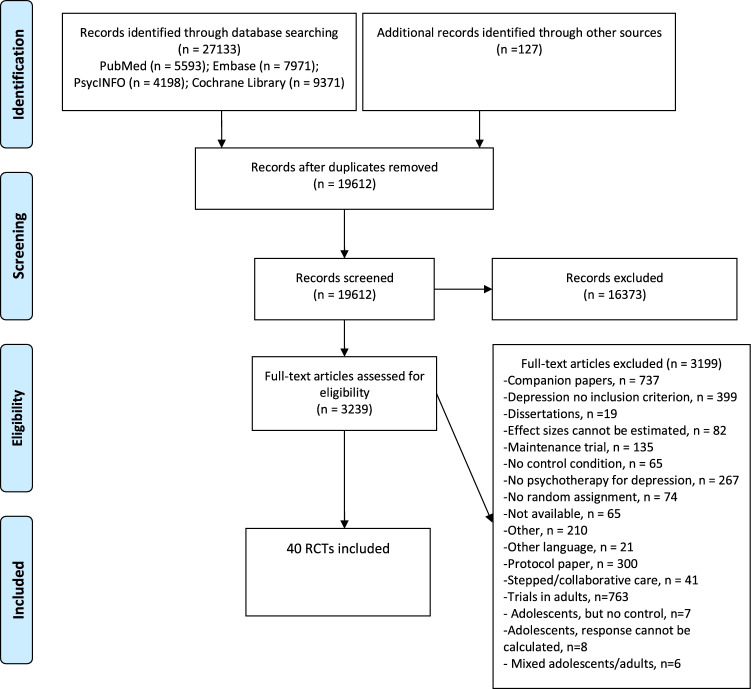
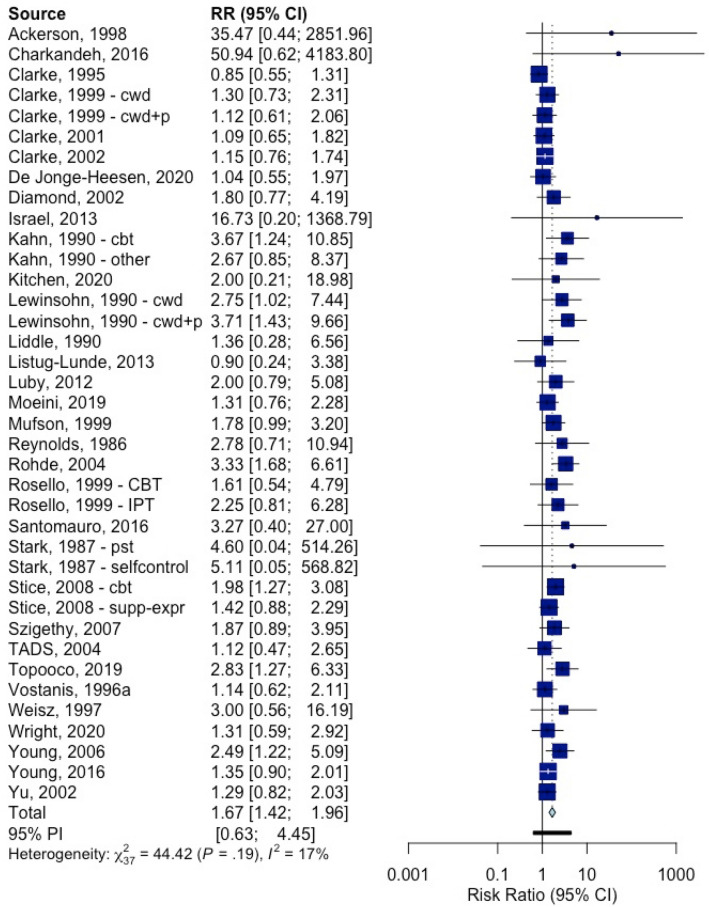
Meta-analyses show that psychotherapies are effective in the treatment of depression in children and adolescents. However, these effects are usually reported in terms of effect sizes. For patients and clinicians, it is important to know whether patients achieve a clinically significant improvement or deterioration. We conducted such a meta-analysis to examine response, clinically significant change, clinically significant deterioration and recovery as outcomes. We searched four bibliographic databases and included 40 randomised trials comparing psychotherapy for youth depression against control conditions. We used a validated method to estimate outcome rates, based on means, standard deviation and N at baseline and post-test. We also calculated numbers-need-to- treat (NNT). The overall response rate in psychotherapies at 2 (±1) months after baseline was 39% (95% CI: 34–45) and 24% (95% CI: 0.19–28) in control conditions (NNT: 6.2). The difference between therapy and control was still significant at 6–12 months after baseline (NNT=7.8). Clinically significant improvement was found in 54% of youth in therapy, compared with 32% in control groups (NNT=5.3); clinically significant deterioration was 6% in therapy, 13% in controls (NNT=5.1); recovery was 58% in therapy, 36% in controls (NNT=3.3). Smaller effects were found in studies with low risk of bias. Psychotherapies for depression in youth are effective compared to control conditions, but more than 60% of youth receiving therapy do not respond. More effective treatments and treatment strategies are clearly needed. Trial registrationhttps://osf.io/84xka
Overview
The claims and statistics of this paper haven’t been checked yet.
Free: it reads the open-access text and checks the first 5 claims that cite a source we can check. Create a free account to check every claim.
Integrity signals
Registry
Cites
Statistics
Figures
Verification
Claims the paper makes
The claims and statistics of this paper haven’t been checked yet.
Free: it reads the open-access text and checks the first 5 claims that cite a source we can check. Create a free account to check every claim.
Claims other papers make about this one
Each is checked against this paper’s own text: does it say what the citing paper says it does?
The source backs part of the claim, not all of it — or backs it for a different population, condition or comparison.
In the citing paper
“Psychological treatment is one of the important keys for the promotion of youth mental health, given the extensive evidence on the general effectiveness of psychotherapy for treating mental disorders in adolescence [3, 4].”
From Mediators of outcome in adolescent psychotherapy and their implications for theories and mechanisms of change: a systematic review (2024) · cites this paper as [3]
Experimental — accuracy not yet measured
Self-check
Percentages, sums and reported differences re-computed from the paper’s own numbers.
The self-check needs the paper’s full text.
Citations
Cites
Measuring inconsistency in meta-analyses
Higgins, J. P. T., Thompson, S. G., Deeks, J. J., & Altman, D. G. (2003) · BMJ · doi:10.1136/bmj.327.7414.557 · Cited by 63,139 · cited 1×
“As indicator of heterogeneity, we calculated the I2 statistic and its 95% CI [26].”
MethodThe Cochrane Collaboration's tool for assessing risk of bias in randomised trials
Higgins, J. P. T., Altman, D. G., Gotzsche, P. C., Juni, P., Moher, D., Oxman, A. D., Savovic, J., Schulz, K. F., Weeks, L., Sterne, J. A. C., et al. (2011) · BMJ · doi:10.1136/bmj.d5928 · Cited by 33,817
Dermyshi, E., Wang, Y., Yan, C., Hong, W., Qiu, G., Gong, X., & Zhang, T. (2017) · Neonatology · doi:10.1159/000454668 · Cited by 24,451
Duval, S., & Tweedie, R. (2000) · Biometrics · doi:10.1111/j.0006-341x.2000.00455.x · Cited by 14,099 · cited 1×
“We then examined the risk of small study effects by testing asymmetry through Egger’s test and adjusted the rates for the small study effects through Duval and Tweedie trimand-fill procedure (R0 estimator) [28].”
MethodJacobson, N. S., & Truax, P. (1991) · Journal of Consulting and Clinical Psychology · doi:10.1037/0022-006x.59.1.12 · Cited by 7,770
Merikangas, K. R., He, J.-P., Burstein, M., Swanson, S. A., Avenevoli, S., Cui, L., Benjet, C., Georgiades, K., & Swendsen, J. (2010) · Journal of the American Academy of Child & Adolescent Psychiatry · doi:10.1016/j.jaac.2010.05.017 · Cited by 6,278 · cited 3×
“It has been estimated that almost 14% of all adolescents will meet criteria for a depressive disorder before the age of 18 [1].”
BackgroundInfluentialPolanczyk, G. V., Salum, G. A., Sugaya, L. S., Caye, A., & Rohde, L. A. (2015) · Journal of Child Psychology and Psychiatry · doi:10.1111/jcpp.12381 · Cited by 3,990
An Assessment of Clinically Useful Measures of the Consequences of Treatment
Laupacis, A., Sackett, D. L., & Roberts, R. S. (1988) · New England Journal of Medicine · doi:10.1056/nejm198806303182605 · Cited by 1,681 · cited 1×
“This method not only allows to estimate binary outcomes, but also to calculate numbersneeded-to-treat (NNTs), indicating how many patients have to be treated to have one more positive outcome compared to the comparison group [19].”
MethodMeta-Analysis in Clinical Research
L'ABBÉ, K. A., DETSKY, A. S., & O'ROURKE, K. (1987) · Annals of Internal Medicine · doi:10.7326/0003-4819-107-2-224 · Cited by 1,267 · cited 1×
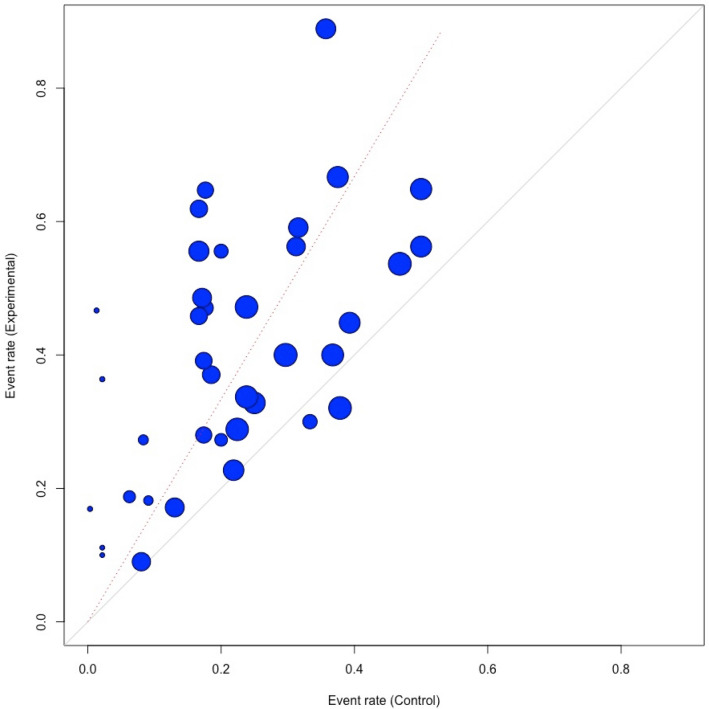
“To improve the interpretation of the results, we also generated an l’Abbé plot with the response rate in the control group at the horizontal axis and the response rates in the treatment group at the vertical axis [27].”
MethodSubthreshold Depression in Adolescence and Mental Health Outcomes in Adulthood
Fergusson, D. M., Horwood, L. J., Ridder, E. M., & Beautrais, A. L. (2005) · Archives of General Psychiatry · doi:10.1001/archpsyc.62.1.66 · Cited by 792
Research works printed but not linked: 33
- Ackerson, J., Scogin, F., McKend- ree-Smith, N., and Lyman, R. D. (1998). Cognitive bibliotherapy for mild and moderate adoles- cent depressive symptomatology. J Consult Clin Psychol, 66(4), 685-690.
- Clarke, G. N., Hawkins, W., Mur- phy, M., Sheeber, L. B., Lewin- sohn, P. M., and Seeley, J. R. (1995). Targeted prevention of unipolar depressive disorder in an at-risk sample of high school adolescents: A randomized trial of a group cognitive interven- tion. Journal of the American Academy of Child & Adolescent Psychiatry, 34(3), 312-321. Study Full references
- Clarke, G. N., Rohde, P., Lewin- sohn, P. M., Hops, H., and Seeley, J. R. (1999). Cogni- tive-behavioral treatment of adolescent depression: efficacy of acute group treatment and booster sessions. Journal of the American Academy of Child and Adolescent Psychiatry, 38(3), 272-279.
- Clarke, G. N., Hornbrook, M., Lynch, F., Polen, M., Gale, J., Beardslee, W., Seeley, J. (2001). A randomized trial of a group cognitive intervention for pre- venting depression in adolescent offspring of depressed parents. Archives of general psychiatry, 58(12), 1127-1134.
- Clarke, G. N., Hornbrook, M., Lynch, F., Polen, M., Gale, J., O'CONNOR, E., . . . Debar, L. (2002). Group cognitive- behavioral treatment for depressed adolescent offspring of depressed parents in a health maintenance organization. Jour- nal of the American Academy of Child and Adolescent Psychia- try, 41(3), 305-313.
- De Cuyper, S., Timbremont, B., Braet, C., De Backer, V., and Wullaert, T. (2004). Treat- ing depressive symptoms in schoolchildren. European child and adolescent psychiatry, 13(2), 105-114.
- Stark KD, Reynolds WM, Kaslow NJ (1987) A comparison of the relative efficacy of self-control therapy and a behavioral problem-solving therapy for depression in children. J Abnorm Child Psychol 15(1):91-113
- Diamond GS, Reis BF, Diamond GM, Siqueland L, Isaacs L (2002) Attachment-based family therapy for depressed adoles- cents: a treatment development study. J Am Acad Child Adolesc Psychiatry 41(10):1190-1196
- Lewinsohn, P. M., Clarke, G. N., Hops, H., and Andrews, J. (1990). Cognitive-behavioral treatment for depressed adoles- cents. Behavior Therapy, 21(4), 385-401. Study Full references
- Liddle, B., and Spence, S. H. (1990). Cognitive-Behaviour Therapy with Depressed Primary School Children: a Cautionary Note. Behavioural and Cognitive Psychotherapy, 18(2), 85-102.
- Listug-Lunde 2013 Listug-Lunde, L., Vogeltanz- Holm, N., and Collins, J. (2013). A cognitive-behavioral treatment for depression in rural American Indian middle school students. American Indian and Alaska Native Mental Health Research: The Journal of the National Center, 20(1), 16-34.
- Luby, J., Lenze, S., and Tillman, R. (2012). A novel early inter- vention for preschool depression: findings from a pilot randomized controlled trial. Journal of Child Psychology and Psychiatry, 53(3), 313-322.
- Martinović, Ž., Simonović, P., and Djokić, R. (2006). Preventing depression in adolescents with epilepsy. Epilepsy and behavior, 9(4), 619-624.
- McCarty, C. A., Violette, H. D., Duong, M. T., Cruz, R. A., and McCauley, E. (2013). A randomized trial of the positive thoughts and action program for depression among early adoles- cents. Journal of Clinical Child and Adolescent Psychology, 42(4), 554-563.
- Moeini, B., Bashirian, S., Soltanian, A. R., Ghaleiha, A., and Taheri, M. (2019). Examining the Effectiveness of a Web-Based Intervention for Depressive Symptoms in Female Adolescents: Applying Social Cognitive Theory. Journal of research in health sciences, 19(3), e00454-e00454.
- Mufson, L., Weissman, M. M., Moreau, D., and Garfinkel, R. (1999). Efficacy of interpersonal psychotherapy for depressed adolescents. Archives of general psychiatry, 56(6), 573-579.
- Mufson, L., Dorta, K. P., Wickra- maratne, P., Nomura, Y., Olfson, M., and Weissman, M. M. (2004). A randomized effec- tiveness trial of interpersonal psychotherapy fordepressed adolescents. Archives of general psychiatry, 61(6), 577-584. Study Full references Reynolds 1986
- Reynolds, W. M., and Coats, K. I. (1986). A comparison of cognitive-behavioral therapy and relaxation training for the treat- ment of depression in adoles- cents. Journal of Consulting and Clinical Psychology, 54(5), 653.
- Rohde, P., Clarke, G. N., Mace, D. E., Jorgensen, J. S., and Seeley, J. R. (2004). An efficacy/ effectiveness study of cognitive- behavioral treatment for ado- lescents with comorbid major depression and conduct disorder. Journal of the American Acad- emy of Child and Adolescent Psychiatry, 43(6), 660-668.
- Rosselló, J., and Bernal, G. (1999). The efficacy of cogni- tive-behavioral and interpersonal treatments for depression in Puerto Rican adolescents. Jour- nal of Consulting and Clinical Psychology, 67(5), 734.
- Santomauro, D., Sheffield, J., and Sofronoff, K. (2016). Depres- sion in adolescents with ASD: a pilot RCT of a group interven- tion. Journal of autism and developmental disorders, 46(2), 572-588.
- Stice, E., Rohde, P., Seeley, J. R., and Gau, J. M. (2008). Brief cognitive-behavioral depression prevention program for high-risk adolescents outperforms two alternative interventions: a rand- omized efficacy trial. Journal of Consulting and Clinical Psychol- ogy, 76(4), 595.
- Szigethy, E., Kenney, E., Carpen- ter, J., Hardy, D. M., Fairclough, D., Bousvaros, A., . . . Noll, R. (2007). Cognitive-behavioral therapy for adolescents with inflammatory bowel disease and subsyndromal depression. Jour- nal of the American Academy of Child and Adolescent Psychia- try, 46(10), 1290-1298. Study Full references TADS 2004 Treatment for Adolescents With Depression Study (TADS) Team. Fluoxetine, Cognitive- Behavioral Therapy, and Their Combination for Adolescents With Depression Treatment for Adolescents With Depression Study (TADS) Randomized Controlled Trial. JAMA. 2004;292:807-820
- Topooco, N., Byléhn, S., Dahl- ström Nysäter, E., Holmlund, J., Lindegaard, J., Johansson, S., . . . Andersson, G. (2019). Evaluating the Efficacy of Internet-Delivered Cognitive Behavioral Therapy Blended With Synchronous Chat Sessions to Treat Adolescent Depression: randomized Controlled Trial. Journal of medical Internet research, 21(11), e13393. 10.2196/13393 · DOI · Paper page
- Vostanis, P., Feehan, C., Grattan, E., and Bickerton, W.-L. (1996). Treatment for children and ado- lescents with depression: lessons from a controlled trial. Clinical child psychology and psychiatry, 1(2), 199-212.
- Weisz JR, Thurber CA, Sweeney L, Proffitt VD, LeGagnoux GL (1997). Brief treatment of mild- to-moderate child depression using primary and secondary control enhancement training. Journal of Consulting and Clini- cal Psychology, 65, 703-707.
- Young, J. F., Mufson, L., and Davies, M. (2006). Efficacy of interpersonal psychotherapy- adolescent skills training: An indicated preventive intervention for depression. Journal of Child Psychology and Psychiatry, 47(12), 1254-1262.
- Young, J. F., Benas, J. S., Schueler, C. M., Gallop, R., Gillham, J. E., and Mufson, L. (2016). A randomized depres- sion prevention trial comparing interpersonal psychotherapy- Adolescent skills training to group counseling in schools. Prevention Science, 17(3), 314- 324.
- Yu, D. L., and Seligman, M. E. (2002). Preventing depressive symptoms in Chinese children. Prevention and Treatment, 5(1), 9a. References
- Gillham, J. E., Hamilton, J., Freres, D. R., Patton, K., and Gallop, R. (2006). Preventing depression among early adoles- cents in the primary care setting: A randomized controlled study of the Penn Resiliency Program. J Abnorm Child Psychol, 34(2), 195-211.
- Idsoe, T., Keles, S., Olseth, A. R., and Ogden, T. (2019). Cogni- tive behavioral treatment for depressed adolescents: Results from a cluster randomized controlled trial of a group course. BMC Psychiatry, 19(1). 10.1186/s12888-019-2134-3 Israel 2013 Israel, P., and Diamond, G. S. (2013). Feasibility of attach- ment based family therapy for depressed clinic-referred Norwegian adolescents. Clinical child psychology and psychiatry, 18(3), 334-350. · doi:10.1186/s12888-019-2134-3israel2013
- Kahn, J. S., Kehle, T. J., Jenson, W. R., and Clark, E. (1990). Comparison of cognitive-behav- ioral, relaxation, and self-mode- ling interventions for depression among middle-school students. School Psychology Review, 19(2), 196-211.
- Cuijpers P, Karyotaki E, Ciharova M, Miguel C, Noma H, Furu- kawa TA (2021) The effects of psychotherapies for depression on response, remission, reliable change, and deterioration: a meta-analysis. Acta Psychiatr Scand. https:// doi. org/ 10. 1111/ acps. 13335 · DOI · Paper page
Cited by
Items 101–118 of 118
Kumar, G. M., Kathale, K., Rajratan, & Gupta, S. (2025) · Indian Journal of Psychiatric Nursing · doi:10.4103/iopn.iopn_64_25
When clients with increasing symptoms report improvement in psychotherapy: a qualitative analysis
Ghelfi, E. A., Top, D. N., Fox, S. T., Goates-Jones, M. K., Ogles, B. M., Bailey, R. J., Brown, B., Erekson, D. M., Bledsoe, A., Dixon, R. S., et al. (2026) · Counselling Psychology Quarterly · doi:10.1080/09515070.2026.2643866
McCauley, E., & Jenness, J. L. (2026) · Journal of the American Academy of Child & Adolescent Psychiatry · doi:10.1016/j.jaac.2026.04.006
Yang, L.-K., Ye, Y., Cheng, L.-L., LI, X. L. X., Ye, Z.-X., Zhu, Y.-H., Lin, Z.-Y., & Chen, X.-L. (2026) · World Journal of Psychiatry · doi:10.5498/wjp.v16.i5.116043
Johansen, R., Dahl, H. J., Lunde, A. G., Sem, R. T., Thorkildsen, M. S., Fahs, S. C., & Ulberg, R. (2026) · Frontiers in Child and Adolescent Psychiatry · doi:10.3389/frcha.2026.1789526
Sönmez, C. C., Shrestha, S., Tamang, S., Lamichaane, B., Verdeli, H., Jordans, M. J. D., Luitel, N. P., Bonell, C. P., & Rose‐Clarke, K. (2026) · Psychotherapy Research · doi:10.1080/10503307.2026.2667983
Lan, Z., Lv, M., Wang, Y., & Liu, Z. H. (2026) · Intelligence · doi:10.1016/j.intell.2026.102027
Görtz‐Dorten, A., Schindler, L., Klee, J., Wähnke, L., & Döpfner, M. (2026) · Trials · doi:10.1186/s13063-026-09806-0
“A significant proportion of affected youth are non-responders to therapy or continue to fulfill the criteria for a psychiatric diagnosis at the end of therapy [18–21].”
Course of Juvenile Depressive Disorders After Psychiatric Inpatient Treatment – A Follow-Up Study
Beer, C. S., Jörke, C. M., Kölch, M. G., Legenbauer, T., Holtmann, M. H., & Bienioschek, S. (2026) · Zeitschrift für Kinder- und Jugendpsychiatrie und Psychotherapie · doi:10.1024/1422-4917/a001086
Baksi, N., Gökdemir, G. Ş., ALKLAY, A. A., & Karakoç, Z. (2026) · Polish Journal of Veterinary Sciences · doi:10.24425/pjvs.2026.1267
“In adolescents, symptoms such as social withdrawal, anhedonia and suicidal ideation can significantly impair psychosocial functioning (Cuijpers et al. 2023).”
Lüttke, S. (2026) · Praxis der Kinderpsychologie und Kinderpsychiatrie · doi:10.13109/prkk.2026.75.4.337
Mechler, J., Lindqvist, K., Falkenström, F., Carlbring, P., Lilliengren, P., Andersson, G., & Philips, B. (2026) · Psychotherapy Research · doi:10.1080/10503307.2026.2686693 · Cited by 1
School Performance Explains Socioeconomic Differences in Mental HealthPreprint
Nordmo, M., Melby‐Lervåg, M., & Torvik, F. A. (2026) · Research Square · doi:10.21203/rs.3.rs-9550794/v1
Li, E. T., Dudley, K., & Lecchi, T. (2026) · Counselling Psychology Quarterly · doi:10.1080/09515070.2026.2741574
Makhashvili, N., Shengelia, N., Chikovani, I., Javakhishvili, J. D., Sikharulidze, K., Jones, R. B., Uchaneishvili, M., Pilauri, K., Marjanishvili, N., Sulaberidze, L., et al. (2026) · Cambridge Prisms Global Mental Health · doi:10.1017/gmh.2026.10303
“For instance, a systematic review and meta-analysis (Cuijpers et al., 2021) revealed that more than 60% of youth receiving therapy for depression using CBT treatment did not achieve a treatment response (Cuijpers et al., 2023).”
Hautmann, C., Oswald, F., Rausch, J., Geldermann, N., Hellmich, M., Rosenberger, K. D., de Jong, K., van Sonsbeek, M. A. M. S., Gehlen, D., Woitecki, K., et al. (2026) · Psychotherapy Research · doi:10.1080/10503307.2026.2721647
Ertl, R., & von Wirth, E. (2026) · Zeitschrift für Kinder- und Jugendpsychiatrie und Psychotherapie · doi:10.1024/1422-4917/a001104
Hong, S., Jameson, T., Jopling, E. N., Rnic, K., Battaglini, A. M., Grocott, B. B., Tracy, A., Sánchez-López, Á., & LeMoult, J. (2026) · Journal of Adolescence · doi:10.1002/jad.70303
Metadata
- Authors
- Cuijpers, P., Karyotaki, E., Ciharova, M., Miguel, C., Noma, H., Stikkelbroek, Y., Weisz, J. R., & Furukawa, T. A.
- Affiliations
- Amsterdam Public Health (NL)
- The Institute of Statistical Mathematics (JP)
- Utrecht University (NL)
- Harvard University (US)
- Corresponding author
- Cuijpers, Pim
- ORCID
- Venue
- European Child & Adolescent Psychiatry
- Published
- 2021-10-06
- Volume
- 32
- Issue
- 1
- Pages
- 177-192
- ISSN
- 1018-8827 (ISSN-L)
- 1435-165X
- PMC
- PMC9908674
- OpenAlex
- W3203676985
- Cited by
- 118
- References
- 31
- Citations by year
- 2026: 26 · 2025: 31 · 2024: 32 · 2023: 17 · 2022: 10 · 2021: 1
- FWCI
- 1.99
- Type
- journal article
- Language
- en
- Open access
- hybrid
- doi.org
- Licence
- cc-by
- creativecommons.org/licenses/by/4.0 (tdm)
- creativecommons.org/licenses/by/4.0 (vor)
- Locations
- European Child & Adolescent Psychiatry (publishedVersion, cc-by)
- PubMed Central (publishedVersion, cc-by)
- PubMed (publishedVersion)
- VU Research Portal (publishedVersion, other-oa)
- Utrecht University Repository (Utrecht University) (submittedVersion, other-oa)
- Data Archiving and Networked Services (DANS) (submittedVersion, other-oa)
- Topics
- Social Sciences › Psychology › Clinical Psychology › Psychotherapy Techniques and Applications
- Social Sciences › Psychology › Clinical Psychology › Child and Adolescent Psychosocial and Emotional Development
- Social Sciences › Psychology › Experimental and Cognitive Psychology › Anxiety, Depression, Psychometrics, Treatment, Cognitive Processes
- Keywords
- adolescent depression, child and adolescent depression, psychotherapy, treatment response, reliable change, recovery, number needed to treat, treatment effectiveness, treatment non-response
- MeSH terms
- Adolescent, Child, Data Collection, Depression, Humans, Psychotherapy, Treatment Outcome, Control Groups
About these checks
Registry, retraction, Cites and statistics results are computed, not judged, with one exception: a printed reference that no index lists is read once by a model before it counts as a citation error. Claims are extracted by a model and kept only when their quote appears verbatim in the text; each cited source is then checked, with a model’s help, for whether it says what the claim relies on. Those verdicts can be wrong — read the claim’s quote and the cited source before relying on one.
Statistics and arithmetic are recomputed, not judged.
Confidence bands are shown only for fields calibrated on our annotated test set. None is calibrated yet, so no band is shown.
What counts as a claim ›How we measure confidence ›How we check this ›
Are you an author, or do you see a problem with this page? Request a review
Data sources
Bibliographic data: Semantic Scholar, OpenAlex, Crossref.
Contains information from the Semantic Scholar Academic Graph Datasets, made available under the ODC Attribution License (ODC-BY 1.0).
Semantic Scholar’s data is described in: Kinney, R., et al. (2023). The Semantic Scholar Open Data Platform. arXiv:2301.10140.
