

How can humans understand their automated cars? HMI principles, problems and solutions
Open accessThe DOI matches its Crossref record; 46 of the 46 references it cites were found in a registry or an index.
Abstract
As long as vehicles do not provide full automation, the design and function of the Human Machine Interface (HMI) is crucial for ensuring that the human “driver” and the vehicle-based automated systems collaborate in a safe manner. When the driver is decoupled from active control, the design of the HMI becomes even more critical. Without mutual understanding, the two agents (human and vehicle) will fail to accurately comprehend each other’s intentions and actions. This paper proposes a set of design principles for in-vehicle HMI and reviews some current HMI designs in the light of those principles. We argue that in many respects, the current designs fall short of best practice and have the potential to confuse the driver. This can lead to a mismatch between the operation of the automation in the light of the current external situation and the driver’s awareness of how well the automation is currently handling that situation. A model to illustrate how the various principles are interrelated is proposed. Finally, recommendations are made on how, building on each principle, HMI design solutions can be adopted to address these challenges.
Overview
The claims and statistics of this paper haven’t been checked yet.
Free: it reads the open-access text and checks the first 5 claims that cite a source we can check. Create a free account to check every claim.
Integrity signals
Registry
Cites
Statistics
Figures


Verification
Claims the paper makes
The claims and statistics of this paper haven’t been checked yet.
Free: it reads the open-access text and checks the first 5 claims that cite a source we can check. Create a free account to check every claim.
Self-check
Percentages, sums and reported differences re-computed from the paper’s own numbers.
The self-check needs the paper’s full text.
Citations
Cites
An integrative model of organizational trust
Mayer, R. C., Davis, J. H., & Schoorman, F. D. (1995) · The Academy of Management Review · doi:10.2307/258792 · Cited by 10,736 · cited 1×
“Verberne adjusted his definition for automated vehicles based on Mayer et al. (1995) who used vulnerability to the action of another party.”
Trust in Automation: Designing for Appropriate Reliance
Lee, J. D., & See, K. A. (2004) · Human Factors: The Journal of the Human Factors and Ergonomics Society · doi:10.1518/hfes.46.1.50_30392 · Cited by 6,605 · cited 1×
“Lee and See (2004) specified calibration of trust as one of three components of appropriate trust.”
Lewis, J. D., & Weigert, A. (1985) · Social Forces · doi:10.2307/2578601 · Cited by 4,163 · cited 1×
“Trust has been referred to as having many different meanings (Williamson 1993), definitions being a confusing potpourri (Shapiro 1987) and leading to conceptual confusion (Lewis and Weigert 1985).”
Rasmussen, J. (1983) · IEEE Transactions on Systems, Man, and Cybernetics · doi:10.1109/tsmc.1983.6313160 · Cited by 3,434 · cited 1×
“…to maintain the human at the skills and, where needed, the rules levels, and thus to avoid the slower and less effective (and thus potentially more unsafe) knowledge level (for more information about the skill-based, rule-based and knowledge-based behaviour hierarchy, see Rasmussen 1983, 1987).”
Calculativeness, Trust, and Economic Organization
Williamson, O. E. (1993) · The Journal of Law and Economics · doi:10.1086/467284 · Cited by 2,998 · cited 1×
“Trust has been referred to as having many different meanings (Williamson 1993), definitions being a confusing potpourri (Shapiro 1987) and leading to conceptual confusion (Lewis and Weigert 1985).”
Bainbridge, L. (1983) · Automatica · doi:10.1016/0005-1098(83)90046-8 · Cited by 2,205 · cited 1×
“Here the reflections of Bainbridge (1983) are highly apposite: We know from many ‘vigilance’ studies … that it is impossible for even a highly motivated human being to maintain effective visual attention towards a source of information on which very little happens, for more than about half an hour.”
The social control of impersonal trust
Shapiro, S. P. (1987) · American Journal of Sociology · doi:10.1086/228791 · Cited by 1,725 · cited 1×
“Trust has been referred to as having many different meanings (Williamson 1993), definitions being a confusing potpourri (Shapiro 1987) and leading to conceptual confusion (Lewis and Weigert 1985).”
A Critical View of Driver Behavior Models: What Do We Know, What Should We Do?
Michon, J. A. (1985) · Human Behavior and Traffic Safety · doi:10.1007/978-1-4613-2173-6_19 · Cited by 1,230 · cited 1×
“If properly designed, the passenger then requires only journey-related (strategic) information as defined by Michon (1985) together with information about costs, ride sharing or emergency situations.”
Ecological interface design: theoretical foundations
Vicente, K. J., & Rasmussen, J. (1992) · IEEE Transactions on Systems, Man and Cybernetics · doi:10.1109/21.156574 · Cited by 1,084
MUIR, B. M., & MORAY, N. (1996) · Ergonomics · doi:10.1080/00140139608964474 · Cited by 993 · cited 1×
“A third explanation is that in questionnaires there is no direct risk perceived in case of automation failure (Lee 1991; Muir and Moray 1996).”
Research works printed but not linked: 10
- 4. Blanco M, Atwood J, Vasquez HM, Trimble TE, Fitchett VL, Radlbeck J, Fitch GM, Russell SM, Green CA, Cullinane B, Morgan JF (2015) Human factors evaluation of level 2 and level 3 automated driving concepts. Report No DOT HS 812 182. National Highway Traffic Safety Administration, Washington DC Bos JE, Hogervorst MA, Munnoch K, Perrault D (2008) Human perfor- mance at sea assessed by dynamic visual acuity. In: Proceedings of ABCS symposium human performance in the maritime envi- ronment. Pacific 2008 International Maritime Conference, Sydney
- 13. EASA (2017) Type rating & license endorsement list-all aircraft, excluding helicopters. European Aviation Safety Agency, Cologne
- 15. Fitch G (2015) The HMI for the automated vehicle: enabling safe inter- action with automated vehicles. TU Automotive, London
- 18. Gstalter H (1985) Workload and stress in driving. In: Ergonomics Inter- national 85: proceedings of the ninth congress of the international ergonomics association. Taylor & Francis, London, pp 994-996
- 20. Hurts K, de Boer RJ (2015) Automation surprise looked at from a demands-resources perspective. In: Proceedings of the human fac- tors and ergonomics society Europe chapter annual conference, pp 221-233
- 27. Lee JD, Young KL, Regan MA (2008) Defining driver distraction. In: Regan MA, Lee JD, Young K (eds) Driver distraction: theory, effects and mitigation. CRC Press, Boca Raton, pp 32-40
- 30. Malta L, Aust ML, Faber F, Metz B, Saint Pierre G, Benmimoun M, Schäfer R (2012) Final results: impacts on traffic safety. EuroFOT Deliverable D6.4. Ford Research Centre GmbH, Aachen
- 46. Sarter NB, Woods DD, Billings CE (1997) Automation surprise. In: Salvendy G (ed) Handbook of human factors & ergonomics, sec- ond edition, 1926-1943. Wiley, New York
- 47. Schieben A, Flemisch F, Temme G, Köster F (2011) What happens when I push the accelerator pedal? Exploration and proposal for the design of driver-initiated transitions between different automa- tion modes in a highly automated vehicle. In: Der Fahrer im 21. Jahrhundert. VDI Berichte, vol 2134, pp 1-21
- 56. White A (2009) From comfort zone to performance management: understanding development and performance. White & MacLean Publishing, Belgium
Cited by
Items 101–200 of 333
Yu, Z., Jiang, K., Huang, Z., Zhang, P., & Feng, Z. (2022) · Cognition Technology & Work · doi:10.1007/s10111-022-00706-2 · Cited by 13
“A better mechanism for the transition (Carsten and Martens 2019) from automated driving to manual driving should be designed to avoid anxiety, depression, and other emotions.”
BackgroundHuman-Machine Interface Evaluation Using EEG in Driving Simulator
Liu, Y.-C., Figalová, N., Baumann, M. R. K., & Bengler, K. J. (2023) · IEEE Intelligent Vehicles Symposium · doi:10.1109/iv55152.2023.10186567 · Cited by 13
“However, some researchers argued that current HMI designs are prone to error and confusing for users [5].”
BackgroundTransparency Assessment on Level 2 Automated Vehicle HMIs
Liu, Y.-C., Figalová, N., & Bengler, K. J. (2022) · Information · doi:10.3390/info13100489 · Cited by 13
“This was demonstrated by Carsten and Martens [4], who concluded that human drivers with more trust in the system tend to prefer HMI with less information.”
BackgroundInfluentialMuthumani, A., Diederichs, F., Galle, M., Schmid-Lorch, S., Forsberg, C., Widlroither, H., Feierle, A., & Bengler, K. J. (2020) · Advances in intelligent systems and computing · doi:10.1007/978-3-030-50943-9_24 · Cited by 13
Improving Takeover Requests in Automated Vehicles: The Role of Dynamic Alerts and Cognitive State
Umpaipant, W., Singh, A., Burns, C. M., & Samuel, S. (2024) · IEEE Transactions on Intelligent Vehicles · doi:10.1109/tiv.2024.3509315 · Cited by 12
“TheresultswithfindingsbyCarstenandMartens[56] thatengagementinNDRTssignificantlydivertsvisualattention awayfromthedrivingenvironment,potentiallycompromising situationalawareness.”
Disuse of advanced driver assistance systems (ADAS)
Kim, S., & Oviedo-Trespalacios, Ó. (2025) · Journal of Safety Research · doi:10.1016/j.jsr.2025.09.004 · Cited by 13
The well-being of Autonomous Vehicles (AVs) users under uncertain situations
Naiseh, M., & Shukla, P. (2023) · International Symposium on Trustworthy Autonomous Systems (TAS) · doi:10.1145/3597512.3603150 · Cited by 12
“Additionally, existing literature provides clear evidence that the public still experiences confusion regarding the distinctions within the 6-level SAE classification [25].”
BackgroundYou, F., Liang, Y., Fu, Q., & Zhang, J. (2024) · International Journal of Human-Computer Interaction · doi:10.1080/10447318.2023.2295695 · Cited by 13
“…the role of the HMI is not only to provide alerting information but also to ensure sufficient attention level and correct mutual expectations, Carsten and Martens (2019) proposed six key elements for in-vehicle HMI design to provide the necessary understanding of intelligent system functions…”
InfluentialHaselberger, J., Böhle, M., Schick, B., & Müller, S. (2025) · IEEE Transactions on Intelligent Transportation Systems · doi:10.1109/tits.2025.3534879 · Cited by 13
“The driving style of AVs should be reliable and familiar and avoid sudden surprise behaviors to enhance acceptance, satisfaction, and perceived safety [22, 142].”
Metzulat, M., Metz, B., Edelmann, A., Neukum, A., & Kunde, W. (2025) · Applied Ergonomics · doi:10.1016/j.apergo.2025.104590 · Cited by 12
Fluid Interface Concept for Automated Driving
Pretto, P., Moertl, P. M., & Neuhuber, N. (2020) · Lecture notes in computer science · doi:10.1007/978-3-030-50523-3_9 · Cited by 12
Do engineer perceptions about automated vehicles match user trust? Consequences for design
Walker, F., Steinke, J., Martens, M., & Verwey, W. B. (2020) · Transportation Research Interdisciplinary Perspectives · doi:10.1016/j.trip.2020.100251 · Cited by 12
Self-citationSubjektive Sicherheit zur Steigerung der Akzeptanz des automatisierten und vernetzten Fahrens
Drewitz, U., Wilbrink, M., Oehl, M., Jipp, M., & Ihme, K. A. (2021) · Forschung im Ingenieurwesen · doi:10.1007/s10010-021-00500-y · Cited by 12
Effect of Human Response on the Effectiveness of Advanced Vehicle Control Systems (HRAVCS)
Iskandarani, M. Z. (2023) · International Journal on Advanced Science Engineering and Information Technology · doi:10.18517/ijaseit.13.2.17836 · Cited by 11
“The main components of an automotive HMI are output channels, which inform the driver about the system's status through displays, and auditory and haptic messaging [13], [14].”
Vibrotactile Take-over Requests in Highly Automated Driving
Chu, D., Wang, R., Deng, Y., Lu, L., & Wu, C. (2020) · CAA International Conference on Vehicular Control and Intelligence (CVCI) · doi:10.1109/cvci51460.2020.9338667 · Cited by 11
“…from no driving automation to full automation, can be defined by reference to specific role the system plays on the longitudinal and lateral control of the vehicle and whether or not the driver is supposed to monitor the vehicle when it comes to the situations where the system cannot handle [1][2].”
BackgroundGetting back in the loop: Does autonomous driving duration affect driver's takeover performance?
Portron, A., Perrotte, G., Ollier, G., Bougard, C., Bourdin, C., & Vercher, J. (2024) · Heliyon · doi:10.1016/j.heliyon.2024.e24112 · Cited by 11
“A semi-autonomous vehicle thus requires drivers to develop new habits and routines, since conditional or highly automated levels change the range and even the nature of the interactions between the vehicle and its driver [7].”
BackgroundLeonardi, S., & Distefano, N. (2025) · Transportation Research Interdisciplinary Perspectives · doi:10.1016/j.trip.2025.101426 · Cited by 11
Kim, S., Novakazi, F., & Karlsson, M. (2025) · Applied Ergonomics · doi:10.1016/j.apergo.2025.104617 · Cited by 11
Context-Adaptive Availability Notifications for an SAE Level 3 Automation
Danner, S., Feierle, A., Manger, C., & Bengler, K. J. (2021) · Multimodal Technologies and Interaction · doi:10.3390/mti5040016 · Cited by 11
“The absence of availability might lead to automation surprise, which occurs when the behavior of the system is not congruent with the driver’s expectations [16].”
BackgroundDandekar, A., Mathis, L.-A., Berger, M., & Pfleging, B. (2022) · Proceedings of the ACM on Human-Computer Interaction · doi:10.1145/3546741 · Cited by 11
“Since there is very little information on how to combine and present these two aspects, we took design inspiration from various fields and results from previous studies [5, 26, 39].”
ResultAssessment of the cooperation between driver and vehicle automation: A framework
Tinga, A. M., Petermeijer, S. M., de Reus, A. J. C., Jansen, R. J., & van Waterschoot, B. M. (2023) · Transportation Research Part F Traffic Psychology and Behaviour · doi:10.1016/j.trf.2023.04.002 · Cited by 11
Mbelekani, N. Y., & Bengler, K. J. (2023) · Lecture notes in computer science · doi:10.1007/978-3-031-35678-0_6 · Cited by 11
Is it Good or Bad to Provide Driver Fatigue Warning During Take-Over in Highly Automated Driving?
Niu, J., & Ma, C. (2021) · Transportation Research Record Journal of the Transportation Research Board · doi:10.1177/03611981211046920 · Cited by 12
“Under actual road conditions, the time budget between the TOR and the collision is usually short ( 2 , 18 , 19 ).”
BackgroundNordhoff, S., Hagenzieker, M., Lehtonen, E., Oehl, M., Wilbrink, M., Öztürk, İ., Maggi, D., Métayer, N., Merlhiot, G., & Merat, N. (2023) · arXiv (Cornell University) · doi:10.13140/rg.2.2.25055.02728 · Cited by 11
“Reliability of automation is a key factor impacting trust, with an increase in reliability contributing to an increase in trust (Carsten & Martens, 2019).”
BackgroundHaghzare, S., Campos, J. L., & Mihailidis, A. (2022) · International Journal of Human-Computer Interaction · doi:10.1080/10447318.2022.2112933 · Cited by 12
“Factors such as AV naming conventions that misrepresent the AV functionality for marketing purposes (Abraham et al., 2017; Carsten & Martens, 2019; Dixon, 2020) or lack of education and training on AVs ’ limitations (Seppelt et al., 2017) can impede drivers ’ accurate mental model of an AV, which…”
BackgroundLiang, X., Li, J., Qin, R., & Wang, F. (2024) · IEEE Transactions on Intelligent Vehicles · doi:10.1109/tiv.2024.3358875 · Cited by 10
“Additionally,disparities inusers’visualinformation,balancesensation,andexpecta-tionscanpotentiallyleadtophysiologicaldiscomfort[25].”
Kim, S., Novakazi, F., van Grondelle, E. D., van Egmond, R., & Happee, R. (2024) · Applied Ergonomics · doi:10.1016/j.apergo.2024.104369 · Cited by 10
Kim, S., Nordhoff, S., van Egmond, R., & Happee, R. (2024) · Transportation Research Part F Traffic Psychology and Behaviour · doi:10.1016/j.trf.2024.12.006 · Cited by 10
Shi, Y., Azzolin, N., Picardi, A., Zhu, T., Bordegoni, M., & Caruso, G. (2020) · Computer-Aided Design and Applications · doi:10.14733/cadaps.2021.502-518 · Cited by 10
“…instance providing required understanding of the vehicle’s capabilities and status, stimulating appropriate level of attention and intervention (in case of emergency in automated driving scenarios), and providing comfort to the human user and reduce the uncertainty and stress level cognitively[6].”
BackgroundMethodUsers’ Internal HMI Information Requirements for Highly Automated Driving
Lau, M., Wilbrink, M., Dodiya, J., & Oehl, M. (2020) · Communications in computer and information science · doi:10.1007/978-3-030-60703-6_75 · Cited by 10
Schockenhoff, F., Zähringer, M., Brönner, M., & Lienkamp, M. (2021) · Systems · doi:10.3390/systems9020025 · Cited by 10
“[15], we proposed a total of 28 customer-relevant properties at the specification level by adapting existing customer-relevant properties [23,40,41] and adding new properties through studies and reports ([42], p.”
BackgroundEntangled Intelligent Driving: Relations with Automated Cars
Lindgren, T., Fors, V., & Pink, S. (2021) · International Journal of Human-Computer Interaction · doi:10.1080/10447318.2021.2009670 · Cited by 10
Autonomous Vehicle and its Adoption: Challenges, Opportunities, and Future Implications
Ahmed, M., Iqbal, R., Amin, S. A., Alhabshneh, O., & Garba, A. (2022) · International Conference on Emerging Trends in Computing and Engineering Applications (ETCEA) · doi:10.1109/etcea57049.2022.10009804 · Cited by 10
To trust or not to trust? : assessment and calibration of driver trust in automated vehicles
Walker, F. (2020) · doi:10.3990/1.9789055842766 · Cited by 13
Godthelp, H. (2023) · Traffic Safety Research · doi:10.55329/avnw4364 · Cited by 9
Consumer demand for partial driving automation and hands-free driving capability
Mueller, A. S., Cicchino, J. B., & Calvanelli, J. V. (2022) · Journal of Safety Research · doi:10.1016/j.jsr.2022.11.012 · Cited by 9
de Alteriis, G., Ruggiero, D., Prete, F. D., Conte, C., Caputo, E., Bottino, V., Fabiani, F. C., Accardo, D., & Moriello, R. S. L. (2023) · Sensors · doi:10.3390/s23136127 · Cited by 9
User Studies by Driving Simulators in the Era of Automated Vehicle
Shi, Y., Bordegoni, M., & Caruso, G. (2020) · Computer-Aided Design and Applications · doi:10.14733/cadaps.2021.211-226 · Cited by 9
“Multi-modality interactions have been introduced into the design of HMI in AVs[15].”
BackgroundInfluentialWhat Makes a Good Team? - Towards the Assessment of Driver-Vehicle Cooperation.
Petermeijer, S. M., Tinga, A. M., Jansen, R. J., de Reus, A. J. C., & van Waterschoot, B. M. (2021) · International Conference on Automotive User Interfaces and Interactive Vehicular Applications (AutomotiveUI) · doi:10.1145/3409118.3475153 · Cited by 9
“Similarly, Carsten and Martens [10] propose design principles, like “stimulate the appropriate level of attention and intervention” for the HMI of automated vehicles of the future.”
BackgroundGluck, A., Solini, H. M., & Brinkley, J. (2022) · International ACM SIGACCESS Conference on Computers and Accessibility (ASSETS) · doi:10.1145/3517428.3551351 · Cited by 9
“The problem with this approach is that design patterns for human-machine interfaces (HMIs) are being developed without standardization and without implementing accessibility features from the beginning [3,5].”
BackgroundZheng, Z., Akash, K., & Misu, T. (2022) · IEEE International Conference on Intelligent Transportation Systems (ITSC) · doi:10.1109/itsc55140.2022.9922161 · Cited by 9
“Automation may reduce driver workload and maneuvers and thus lead to increased comfort, which has been a main selling point for ADAS manufacturers [6].”
BackgroundDing, X., Xu, Y., Zheng, M., Kang, W., & Xiahou, X. (2025) · Systems · doi:10.3390/systems13110974 · Cited by 8
A review on motion sickness of autonomous driving vehicles
Fu, Z., Wu, J., Liu, X., Yin, Y., & Zhang, Z. (2024) · Journal of Vibroengineering · doi:10.21595/jve.2024.23947 · Cited by 8
“…in autonomous driving can be achieved by providing advanced indications about future vehicle movement directions through internal audio systems for guiding responses [82], or utilizing wearable devices employing various vibration methods to alert passengers about upcoming operations [83], [84].”
BackgroundSelf-perception versus objective driving behavior: Subject study of lateral vehicle guidance
Haselberger, J., Schick, B., & Müller, S. (2024) · Transportation Research Part F Traffic Psychology and Behaviour · doi:10.1016/j.trf.2024.12.012 · Cited by 8
A Comprehensive Survey on Driving Compliance Assessment Methodologies for Autonomous Vehicles
Zhang, S., Jiang, Z., Sang, M., Han, Y., Li, H., & Leong Hou, U. (2025) · IEEE Intelligent Transportation Systems Magazine · doi:10.1109/mits.2025.3548869 · Cited by 8
“This assessment extends beyond mere regulatory compliance to include psychological factors and user interaction, enhancing overall satisfaction and the perceived reliability of the AVs [13].”
Heikoop, D. D., Calvert, S. C., Mecacci, G., & Hagenzieker, M. (2020) · IEEE Forum on Integrated and Sustainable Transportation Systems (FISTS) · doi:10.1109/fists46898.2020.9264869 · Cited by 8
Monsaingeon, N., Carli, Y., Caroux, L., Langlois, S., & Lemercier, C. (2021) · Lecture notes in networks and systems · doi:10.1007/978-3-030-80012-3_9 · Cited by 8
Co-designing the Next Generation Automatic Driving Vehicle HMI Interface with Lead-Users
Zhang, N., & Jiang, A. (2022) · Lecture notes in computer science · doi:10.1007/978-3-031-04987-3_16 · Cited by 8
Exploring, developing and evaluating in-car HMI to support appropriate use of automated cars
Boelhouwer, A. (2020) · doi:10.3990/1.9789036551069 · Cited by 10
Driver Training for Future Automated Vehicles: Introducing CHAT (CHeck, Assess, Takeover)
Large, D., Shaw, E., & Burnett, G. (2020) · Repository@Nottingham (University of Nottingham) · Cited by 8
iRisk: Towards Responsible AI-Powered Automated Driving by Assessing Crash Risk and Prevention
Mbelekani, N. Y., & Bengler, K. J. (2025) · Electronics · doi:10.3390/electronics14122433 · Cited by 7
Human Machine Interaction Trustin Intelligentand Connected Vehicles: Overview and Perspectives
谭征宇, 张瑞佛, 刘芝孜, 金奕, & 贺刚 (2024) · Journal of Mechanical Engineering · doi:10.3901/jme.2024.10.366 · Cited by 7
Manger, C., Pusch, F., Thöne, M., Wenger, M., Löcken, A., & Riener, A. (2023) · International Conference on Mobile and Ubiquitous Multimedia (MUM) · doi:10.1145/3626705.3627796 · Cited by 7
“Earlier research showed that trust in automated systems can be built through predictability, observability, and transparency [5, 19].”
BackgroundZhou, C., Luo, Y., & Kaner, J. (2025) · PLoS ONE · doi:10.1371/journal.pone.0329760 · Cited by 7
“Research shows that in the lower levels of automated driving, the driver should maintain maximum focus on the road and that Head-up display (HUD) is the most effective means of providing information [14].”
Complementing Haptic Shared Control With Visual Feedback for Obstacle Avoidance
Vreugdenhil, W., Barendswaard, S., Abbink, D. A., Borst, C., & Petermeijer, S. M. (2019) · IFAC-PapersOnLine · doi:10.1016/j.ifacol.2019.12.091 · Cited by 7
“SAE level 2 or 3 automated driving systems (SAE, 2016) require drivers to be able to take over at unexpected moments, which comes with many known issues (Carsten and Martens, 2019).”
BackgroundInfluentialIdentifying Sources of Discomfort in Various Road Events While Riding Automated Vehicles
Cohen-Lazry, G., Telpaz, A., Degani, A., & Oron-Gilad, T. (2020) · IEEE International Conference on Human-Machine Systems (ICHMS) · doi:10.1109/ichms49158.2020.9209461 · Cited by 7
“[3] O. Carsten and M. H. Martens, “How can humans understand their automated cars?”
BackgroundInfluentialMonsaingeon, N., Caroux, L., Langlois, S., & Lemercier, C. (2022) · SSRN Electronic Journal · doi:10.2139/ssrn.4218430 · Cited by 7
Ryu, G., Lee, Y. J., Kim, Y., & Ji, Y. G. (2024) · International Journal of Human-Computer Interaction · doi:10.1080/10447318.2024.2385193 · Cited by 6
“This includes the ability to understand or detect when the driver is receiving system information and provide timely information to allow the driver to take appropriate action (Carsten & Martens, 2019).”
Sullivan, N. P., Aggarwal, R., Chatterjee, P., & Midha, V. (2025) · Production and Operations Management · doi:10.1177/10591478251333725 · Cited by 6
“Additionally, periodic certification would ensure that drivers understand the limitations of self-driving technology, addressing the risk that overestimating these capabilities poses to safety (Carsten and Martens, 2019).”
InfluentialLan, R., Sun, X. S., Zhu, L., Wang, Q., & Liu, B. (2025) · CHI Conference Extended Abstracts on Human Factors in Computing Systems (CHI EA) · doi:10.1145/3706599.3719994 · Cited by 6
Interface design for visual blind spots in cooperative driving
Liu, B., Zhang, J., & Luximon, Y. (2025) · Behaviour and Information Technology · doi:10.1080/0144929x.2025.2500448 · Cited by 6
“This is consistent with previous research, which indicates that the ‘ observability ’ and ‘ predictability ’ of intelligent agents contribute to increased trust (Carsten and Martens 2019).”
User Acceptance of AI in Transport: The Case of SAE Level 3 Conditional Automated Driving
Nordhoff, S., Calvert, S. C., Hagenzieker, M., Lee, Y. M., & Merat, N. (2025) · Transportation Research Part F Traffic Psychology and Behaviour · doi:10.1016/j.trf.2025.103359 · Cited by 6
Virtual Reality Tool for Human-Machine Interface Evaluation and Development (VRHEAD)
Aldea, A., Tinga, A. M., van Zeumeren, I. M., van Nes, N., & Aschenbrenner, D. (2022) · IEEE Intelligent Vehicles Symposium · doi:10.1109/iv51971.2022.9827375 · Cited by 6
Trends in Motion Sickness Countermeasures for Autonomous Driving: review and future research
Pereira, E., Macedo, H., Lisboa, I. C., de Sousa, E. A. F., Machado, D., Silva, E. T., Coelho, V., & Costa, N. (2023) · Transportation research procedia · doi:10.1016/j.trpro.2023.11.867 · Cited by 6
Situation Awareness for Driver-Centric Driving Style Adaptation
Haselberger, J., Stuhr, B., Schick, B., & Müller, S. (2024) · IEEE Transactions on Intelligent Vehicles · doi:10.1109/tiv.2024.3440634 · Cited by 6
Roberts, S. C., Ebadi, Y., Talreja, N., Knödler, M., & Fisher, D. L. (2022) · International Conference on Automotive User Interfaces and Interactive Vehicular Applications (AutomotiveUI) · doi:10.1145/3543174.3546839 · Cited by 6
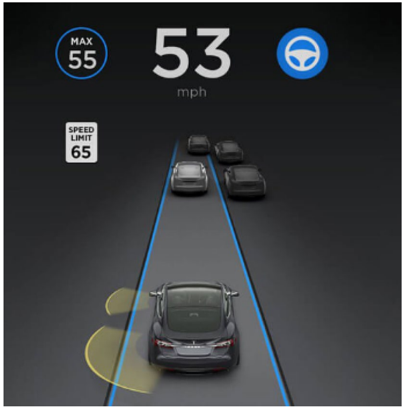
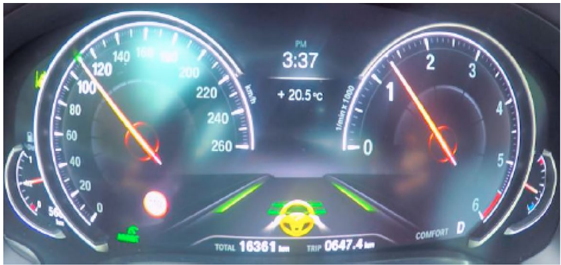
“These two elements were chosen based on the design of current HMIs in commercially available vehicles such as Cadillac CT6 [8], Tesla X [35] and BMW 7 [9].”
BackgroundMethodInfluentialLópez-Aguilar, A. A., Navarro-Tuch, S. A., Camacho-Bustamante, L. M., & Bustamante-Bello, R. (2023) · International Symposium on Electromobility (ISEM) · doi:10.1109/isem59023.2023.10334750 · Cited by 6
“However, a wide variety of non-driverless vehicles will still be available in the foreseeable future, each offering different levels of automation [12].”
BackgroundZhang, B., Lu, Z. J., Happee, R., de Winter, J., & Martens, M. (2019) · Research Repository (Delft University of Technology) · Cited by 6
Self-citationStadler, S., Cornet, H., Huang, D., & Frenkler, F. (2020) · Progress in IS · doi:10.1007/978-3-030-37869-1_13 · Cited by 6
Friedrich, C. M., Cleij, D., Ahlström, H., Bakker, B., Beggiato, M., Borowsky, A., van Egmond, R., van Grondelle, E. D., & de Ridder, H. (2019) · MPG.PuRe (Max Planck Society) · Cited by 6
Nordhoff, S., Hagenzieker, M., Wilbrink, M., & Oehl, M. (2025) · Transportation Research Part F Traffic Psychology and Behaviour · doi:10.1016/j.trf.2025.04.016 · Cited by 5
Iskandarani, M. Z. (2022) · Cogent Engineering · doi:10.1080/23311916.2021.2002793 · Cited by 5
“…to concentrate on the Human-Machine Interface (HMI) in the vehicles, which hold a bidirectional relation between the driver and the vehicle (Carsten & Martens, 2019); (Charissis et al., 2021); (Guo et al., 2019); (S. S. Li et al., 2019); (Lotz et al., 2020); (Nguyen et al., 2021); (Rukonic…”
BackgroundPayre, W., Perello-March, J. R., Sabaliauskaite, G., Jadidbonab, H., Shaikh, S. A., Nguyen, H. N., & Birrell, S. A. (2022) · AHFE international · doi:10.54941/ahfe1002463 · Cited by 5
“One example is that displaying the status and actions of the system enhances transparency and supports appropriate levels of trust in the system (Carsten and Martens, 2019).”
BackgroundDixon, L., Schneider, N., Mühlbacher, D., Befelein, D., Flemisch, F. O., & Baumann, M. R. K. (2025) · Transportation Research Part F Traffic Psychology and Behaviour · doi:10.1016/j.trf.2025.04.013 · Cited by 5
Novakazi, F., Kim, S., & Karlsson, M. (2025) · International Conference on Automotive User Interfaces and Interactive Vehicular Applications (AutomotiveUI) · doi:10.1145/3744333.3747835 · Cited by 5
In-Vehicle Information Design to Enhance the Experience of Passengers in Autonomous Public Buses
Kim, M., Heo, J., & Lee, J. (2021) · Lecture notes in computer science · doi:10.1007/978-3-030-78358-7_28 · Cited by 5
Towards Scenario-Based and Question-Driven Explanations in Autonomous Vehicles
Zhang, Y., Guo, W., Chi, C., Hou, L., & Sun, X. (2022) · Lecture notes in computer science · doi:10.1007/978-3-031-04987-3_7 · Cited by 5
Driesen-Micklitz, T., Michael Fellmann, M. A., & Röcker, C. (2023) · IEEE Intelligent Vehicles Symposium · doi:10.1109/iv55152.2023.10186755 · Cited by 5
“We identified the following types of information as most important in AD and as significantly related to user characteristics (dependent variables): • Surrounding traffic [38], • infrastructure such as lane markings, traffics signs, and lights [39], and • AD system limit explanation [40].”
BackgroundAdaptive Interactive Displaying System for In-Vehicle Use
Sburlan, D. F., Bãutu, E., Puchianu, C. M., & Popovici, D.-M. (2020) · Procedia Computer Science · doi:10.1016/j.procs.2020.08.021 · Cited by 5
Why is the Automation Not Available and When Can I Use It?
Danner, S., Hecht, T., Steidl, B., & Bengler, K. J. (2021) · Lecture notes in networks and systems · doi:10.1007/978-3-030-74608-7_76 · Cited by 5
Singh, R. K., & Gildhiyal, P. (2023) · International Conference on Integrated Circuits and Communication Systems (ICICACS) · doi:10.1109/icicacs57338.2023.10099732 · Cited by 5
Ding, T., Zhi, J., Yu, D., Li, R., He, S., Wu, W., & Jing, C. (2024) · Systems · doi:10.3390/systems12120576 · Cited by 4
“Human operators identify system states and intervene when faults are likely to occur [20].”
TRUCE-AV: A Multimodal Dataset for Trust and Comfort Estimation in Autonomous Vehicles
Bhalla, A., Hellert, C., Kasneci, E., & Becker, N. (2025) · Frontiers in artificial intelligence and applications · doi:10.3233/faia251122 · Cited by 4
Towards Adaptive Autonomous Vehicle Systems: Considering Trust and Risk Perception during Failures
Lim, C., & Rajivan, P. (2025) · Accident Analysis & Prevention · doi:10.1016/j.aap.2025.108267 · Cited by 4
Lan, R., Sun, X. S., Wang, Q., & Liu, B. (2026) · International Journal of Industrial Ergonomics · doi:10.1016/j.ergon.2026.103878 · Cited by 4
Lee, J., Rheem, H., Lee, J. D., Szczerba, J. F., Rajavenkatanarayanan, A., & Mathieu, R. (2026) · Human Factors The Journal of the Human Factors and Ergonomics Society · doi:10.1177/00187208261422917 · Cited by 4
“The design and function of the Human-Machine Interface (HMI) is crucial to support drivers ’ SA (Carsten & Martens, 2019).”
Sekadakis, M., Katrakazas, C., Clement, P., Prueggler, A., & Yannis, G. (2023) · Transportation research procedia · doi:10.1016/j.trpro.2023.11.740 · Cited by 4
Study and Analysis of Human Discomfort in Autonomous Vehicles
Su, H., & Jia, Y. (2024) · IEEE Transactions on Intelligent Vehicles · doi:10.1109/tiv.2024.3416212 · Cited by 4
“Among studies employing a single scale, two distinct definitions of comfort emerge: one defines comfort as the absence of discomfort [22], [23], while the other defines it as a state accompanied by additional pleasantness [24], [25].”
Frequency Shaping-Based Control Framework for Reducing Motion Sickness in Autonomous Vehicles
Lee, S., Lee, C., & Moon, C. (2025) · Sensors · doi:10.3390/s25030819 · Cited by 4
“For example, some studies predict the likelihood of motion sickness based on upcoming curves and notify passengers in advance [4], while others use onboard audio systems to improve passengers’ ability to anticipate vehicle movements [5].”
Perception’s Role for Mental Model Formation in Automated Driving: Insights From Four Studies
Novakazi, F. (2025) · Journal of Cognitive Engineering and Decision Making · doi:10.1177/15553434251334409 · Cited by 4
“Some work contends that the user interface (UI) is essential in addressing this issue (cf., Banks et al., 2018; Carsten & Martens, 2018).”
Driesen-Micklitz, T., Michael Fellmann, M. A., & Röcker, C. (2023) · IEEE Transactions on Intelligent Vehicles · doi:10.1109/tiv.2023.3322261 · Cited by 4
“In the AD context, the User Interface (UI) plays a decisive role in leveraging its potential as it is the socio-technical system connecting the human driver and the AD system[9],[10].”
BackgroundMethodChristy, A., Shyry, S. P., Gandhi, G. M., & Praveena, M. D. A. (2021) · Journal of Physics Conference Series · doi:10.1088/1742-6596/1770/1/012007 · Cited by 4
How to ensure control of cooperative vehicle and truck platoons using Meaningful Human Control
Calvert, S. C., Mecacci, G., Heikoop, D. D., & Janssen, R. (2021) · European journal of transport and infrastructure research · doi:10.18757/ejtir.2021.21.2.5354 · Cited by 4
“Also HMIs displaying various types of information are being developed (e.g., (Adell et al. 2008; Carsten and Martens 2019; Sadeghian Borojeni et al. 2016)).”
BackgroundTinga, A. M., de Zwart, R., Jansen, R. J., & Goede, M. D. (2021) · IEEE Intelligent Vehicles Symposium · doi:10.1109/iv48863.2021.9575959 · Cited by 4
Incorporating driver expectations into a taxonomy of transfers of control for automated vehicles
Lee, J., Lee, J. R., Koenig, M. L., Douglas, J. R., Domeyer, J. E., Lee, J. D., & Toyoda, H. (2022) · Proceedings of the Human Factors and Ergonomics Society Annual Meeting · doi:10.1177/1071181322661241 · Cited by 4
Huysamen, K., Collins, M., & Wardle, A. (2021) · doi:10.58446/tmfa9969 · Cited by 4
Understanding and Improving User Comfort in Automated Driving
Peng, C. (2024) · White Rose eTheses Online (University of Leeds, The University of Sheffield, University of York) · Cited by 4
Pongratz, V., Steckhan, L., & Bengler, K. J. (2024) · Lecture notes in computer science · doi:10.1007/978-3-031-76824-8_9 · Cited by 3
MIRAGE: Enabling Real-Time Automotive Mediated Reality
Jansen, P., Britten, J., Colley, M., Sasalovici, M., & Rukzio, E. (2026) · CHI Conference on Human Factors in Computing Systems · doi:10.1145/3772318.3791195 · Cited by 3
Dong, H., Kainth, S., Franssen, M., Bruns, M., & Martens, M. (2024) · International Conference on Automotive User Interfaces and Interactive Vehicular Applications (AutomotiveUI) · doi:10.1145/3641308.3685019 · Cited by 3
“Consequently, when the vehicle’s behaviour deviates from the user’s expectations or when the user fails to comprehend the vehicle’s behaviour, they may experience [7, 35].”
InfluentialSelf-citation
Metadata
- Authors
- Carsten, O., & Martens, M. H.
- Affiliations
- University of Leeds (GB)
- Netherlands Organisation for Applied Scientific Research (NL)
- Corresponding author
- Carsten, Oliver
- Venue
- Cognition, Technology & Work
- Published
- 2018-05-12
- Volume
- 21
- Issue
- 1
- Pages
- 3-20
- ISSN
- 1435-5558 (ISSN-L)
- 1435-5566
- OpenAlex
- W2799403119
- Cited by
- 284
- References
- 46
- Citations by year
- 2026: 43 · 2025: 36 · 2024: 38 · 2023: 37 · 2022: 44 · 2021: 47 · 2020: 30 · 2019: 8 · 2018: 1
- FWCI
- 29.11
- Type
- journal article
- Language
- en
- Open access
- hybrid
- doi.org
- Licence
- cc-by
- creativecommons.org/licenses/by/4.0 (tdm)
- Locations
- Cognition Technology & Work (publishedVersion, cc-by)
- University of Twente Research Information (publishedVersion, other-oa)
- White Rose Research Online (University of Leeds, The University of Sheffield, University of York) (acceptedVersion)
- TU/e Research Portal (submittedVersion)
- TNO Repository (submittedVersion)
- Repository hosted by TU Delft Library (TU Delft) (submittedVersion)
- Data Archiving and Networked Services (DANS) (submittedVersion, other-oa)
- University of Twente Research Information (submittedVersion, other-oa)
- Topics
- Social Sciences › Human Factors and Ergonomics › Human-Automation Interaction and Safety
- Social Sciences › Psychology › Social Psychology › Social Robot Interaction and HRI
- Physical Sciences › Computer Science › Human-Computer Interaction › Interactive and Immersive Displays
- Keywords
- human-machine interaction, autonomous driving, driver-vehicle interaction, driver awareness, in-vehicle displays, human-automation collaboration, driver confusion
About these checks
Registry, retraction, Cites and statistics results are computed, not judged, with one exception: a printed reference that no index lists is read once by a model before it counts as a citation error. Claims are extracted by a model and kept only when their quote appears verbatim in the text; each cited source is then checked, with a model’s help, for whether it says what the claim relies on. Those verdicts can be wrong — read the claim’s quote and the cited source before relying on one.
Statistics and arithmetic are recomputed, not judged.
Confidence bands are shown only for fields calibrated on our annotated test set. None is calibrated yet, so no band is shown.
What counts as a claim ›How we measure confidence ›How we check this ›
Are you an author, or do you see a problem with this page? Request a review
Data sources
Bibliographic data: Semantic Scholar, OpenAlex, Crossref.
Contains information from the Semantic Scholar Academic Graph Datasets, made available under the ODC Attribution License (ODC-BY 1.0).
Semantic Scholar’s data is described in: Kinney, R., et al. (2023). The Semantic Scholar Open Data Platform. arXiv:2301.10140.
